What Have I Been Reading: October – December 2015

Up-dated December 2015

imgres

Terry Gifford’s Cambridge Companion to Ted Hughes is a fantastic summing up of where Hughes’ reputation now is, including articles by various hands on Hughes and animals, Plath, myth, feminism (it’s complicated) and a clear account of the poet’s fascination with Shakespeare by Jonathan Bate.

imgres

Julian of Norwich: Revelations of Divine Love – a book I’ve intended to read for decades and though I baulk at much of it still  I love her focus on the visions taking place in “an ordinary, household light”, her vivid descriptions and tentative, undogmatic prose. She also boldly talks of Christ as our mother: “Who showed you this? Love. What did he show? Love. Why did he show it to you? For love.”

imgres

Few poets can travel such distances with such ease and brevity as Penelope Shuttle. I saw her read at the recent Second Light Festival in London and picked up her Templar Poetry chapbook, In the Snowy Air. It belies it’s rather Xmas-y title by being rather a hymn to London (with occasional snow showers) including the Shard, the Walbrook, the British Library and even Waitrose in Balham.

imgres

Hands and Wings: Poems for Freedom for Torture has been edited by Dorothy Yamamoto in support of the Freedom from Torture charity and includes work by Gillian Allnutt, Alison Brackenbury, David Constantine, Carrie Etter, Vicki Feaver, Pippa Little and Susan Wicks.


Up-dated November 2015

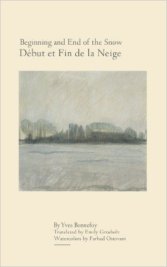
With the cold weather coming, Yves Bonnefoy’s 1991 Beginning and End of Snow(Bucknell University Press, 2012) is an exquisite read in Emily Grosholz’s translation, including an original essay by the poet on ‘Snow in French and English’.
31MuDc9AUxL._SX310_BO1,204,203,200_

I’m convinced Bonnefoy’s response to snow is not a million miles distant from the Daoist idea of the uncarved block and Rudolph G Wagner’s second magnificent volume on Wang Bi’s A Chinese Reading of the Daodejing is full of insights through its literal readings of the 81 chapters. I have been comparing his readings with my own new versions before going to press in the next few weeks.

images

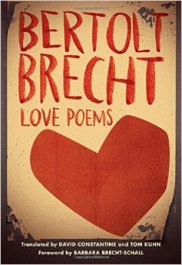
Bertolt Brecht: Love Poems (Norton, 2015) is the first instalment in David Constantine and Tom Kuhn’s project to translate anew Brecht’s complete poems. Ranging from the delicate, literary, erotic and plainly pornographic, here’s yet more evidence (should we need it) of Brecht’s breadth as a poet. The Introduction also reveals that Brecht refused to award any prizes in a poetry competition he was asked to judge – because none of the poems successfully communicated anything of any value to anybody, they were all of no use.
51c3fActf1L._SY344_BO1,204,203,200_

Maggie Butt’s new collection is published by The London Magazine and contains work from the period in which she also published the themed books Ally Pally Prison Camp(Oversteps, 2011) and Sancti-Clandestini – Undercover Saints (Ward-Wood, 2012). Though miscellaneous in nature, it is time that dominates this book – historical time in a variety of European locations and personal time in several moving elegies and acts of remembrance.

imgres

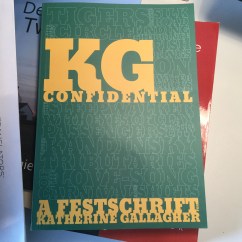
KG Confidential: a festschrift for Katherine Gallagher is a wonderful tribute to one of the great movers and shakers in poetry (in London and in her native Australia and in translation from the French). These tributes of poems or prose include contributions from Liz Berry, Jane Duran, Kate Foley, Mimi Khalvati and Les Murray.
File 22-11-2015, 12 37 53

Up-dated October 2015

Alan Brownjohn’s new book is full of excellent poems, several of which (a few decades ago) would have been designated ‘secret narratives’. The title poem, ‘A Bottle’, is a strange noir thriller set in some undefined coastal region, an enigma of messages, relationships, landscape and murder. Always surprising; no let up in vigour and inventiveness.

imgres

Kate Foley’s ‘The Don’t Touch Garden’ (Arachne Press) is a treatment of adoption to rival Jackie Kay’s ‘The Adoption Papers’. “Mirror, mirror, on the wall” the old joke says, “I am my mother after all”. But which one? Brilliantly focused and carefully sequenced, these poems provide a thrilling and moving account of the processes by which any of us – adopted or not – become who we are.

imgres

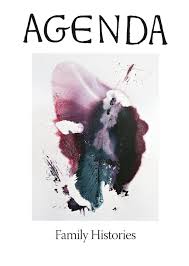
Agenda’s ‘Family Histories’ issue has poems from Tony Curtis, Claire Crowther, Sean Street, Peter McDonald, Sheenagh Pugh, Maitreyabandhu and Danielle Hope, an interview with Robin Robertson and reviews of Abse, Hugo Williams, Sebastian Barker, Bryce, Liardet, McVety and Eilean Ni Chuilleanain.
imgres

The new issue of Stand  has tributes to the late John Silkin from John Matthias and Anne Stevenson. I remember seeing Silkin selling Stand in the late 1970s on the campus at Lancaster University. This issue also has new poems from Muldoon, Mort, Valerie Jack, Sam Gardiner and (even) Martyn Crucefix.

imgres

What Have I Been Reading: July – September 2015

Up-dated September 2015

Don Paterson’s 101 Sonnets is certainly a varied selection of the form (it strikes me it would be a good, coherent text for students to study). The editor is never short of an opinion, ranging from the good sense of “Academics, in particular, have talked an awful lot of rubbish on the subject of rhyme” to the much more questionable “the whole point of [a] poem – that it should lodge itself permanently in our brains”
imgres

That the novelist Ursula K Le Guin should be a fan and translator of Lao Tzu’s 81 ancient poems/chapters known as the Tao Te Ching is perhaps less surprising than the fact that her translation is one of the most enjoyable around (and I’ve been reading plenty of them in preparation for my version’s appearance next Spring).

9781570623950_l

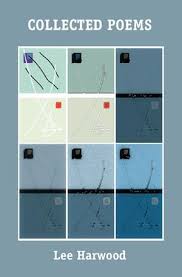
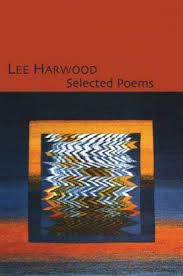
Two chunky collecteds have been pre-occupying me in the last month or so. Lee Harwood’s Collected Poems is – by the nature of his aesthetic perhaps – uneven, but almost every page turns up new ways of writing and reading poetry: an invigorating pleasure.

imgres

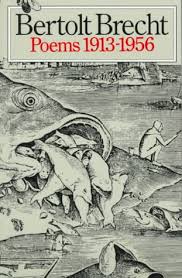
I have blogged on Bertolt Brecht’s Poems 1913-1956 before – in more recent weeks I have been tracking him out of Germany, to Denmark and hence to the USA. Extraordinary how contemporary most of these poems feel, though already 60 plus years old.

imgres

Updated August 2015

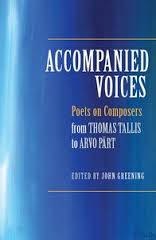
John Greening’s anthology of poems about music, Accompanied Voices (Boydell & Brewer),  is a lovely thing, full of variety, full of poems to be re-acquainted with from Hill, Hughes, Longley and Porter and brand new contemporary work including Stainer, Allnutt, O’Donoghue, Reid, Rumens, Shuttle and Greening’s own little gem on John Field (being walked all over by Chopin).

imgres

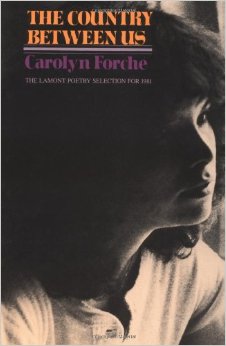
I tweeted a couple of weeks ago that I found Carolyn Forche’s second collection, The Country Between Us (HarperPerennial, 1982) in a Highgate secondhand bookshop and having raced through the poems before going away I’m now keen to get back to them for a more reflective read.

41KocAt6ntL._SY344_BO1,204,203,200_

Tim Liardet’s poem-sequence of self-portraits, The World before Snow (Carcanet) is actually motivated and (to some degree evokes) an illicit trans-Atlantic affair. The poems have the density and intensity of Liardet’s previous work with an even greater fertility and fluency of imagination.

imgres

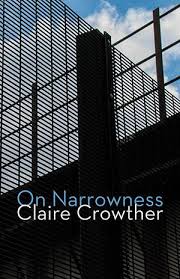
On Narrowness, Claire Crowther’s third collection from Shearsman is a chewy, twisting, sometimes vertiginous read; that’s another way of saying I don’t know what’s going on half the time. But the poems are confident in themselves and leap boldly from one image to another.

images

Up-dated July 2015

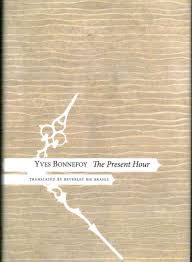
I find Yves Bonnefoy’s writing unfailingly nutritious though sometimes wonder if his ideas are at least as exciting as the classically restrained lexis of his verse. Beverley Bie Brahic’s 2013 translation of The Present Hour (2011) has Bonnefoy in sonnet-shaped Wordsworthian mood recalling his childhood, writing enigmatic prose pieces and a thought-provoking (because not always easy to follow) essay, ‘In a Piece of Broken Mirror’, once again discussing image, dream, reality and language.

imgres

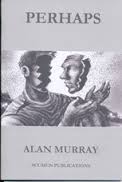
Perhaps is Alan Murray’s Acumen chapbook from 2013 and it quotes Nietzsche’s observation that the word ‘I’ is the point at which our ignorance begins and several poems do press at the boundaries and mysteries of the self. Murray is a philosopher as well as poet and his colloquial, skilfully turned verse sounds Larkinesque in its precision and equivocations. Great to read poems unafraid of complex ideas.

imgres

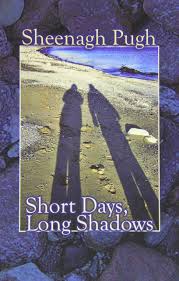
Sheenagh Pugh’s 12th book leaves Cardiff and Wales for the Shetland Islands. Wide skies, rough oceans, bright stars. But I share her obsession with the passage of time and there are some powerful poems here, though I find her historical delvings less enjoyable.

imgres

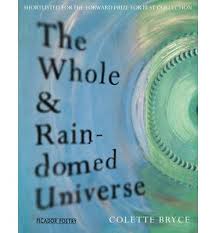
Collette Bryce’s ultra-brief outing (from 2014) into her childhood growing up in Derry during the Troubles is an object lesson in how to focus a collection (just 30 poems). She writes plain, rather withdrawn poems, but this seems right for the material which is therefore allowed to speak for itself.

imgres

What Have I Been Reading: April – June 2015

Up-dated June 2015

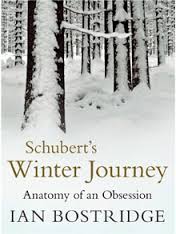
I’ve taken a while getting through the almost 500 pages of Ian Bostridge’s fascinating musical, artistic, poetical, historical, political discussion of Schubert’s Winter Journey.Taking Wilhelm Muller’s poem sequence Die Winterreise, Schubert re-organised it (otherwise changing little) to produce his own Winterreise and, discussing this process and his own performances of the piece over many years, Bostridge touches on Kant, Goethe, Darwin, Friedrich, Alfred Hitchcock, and Aristotle’sMeteorology among others. The Muller text would make an interesting translation project.

imgres

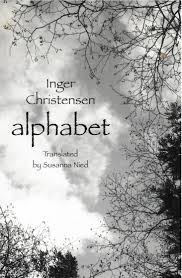
An earlier post about the abecedary form lead several people to ask me whether I’d read Inger Christensen’s 1981 sequence alphabet. Well I have now and it is just stunning. Based on the Fibonacci sequence and moving from A to N in alphabetical sequence too, Christensen writes fluid, Whitmanesque passages, laying aside ‘either/or’ for ‘and’, page after page of which reminds me of Rilke at his most passionate. This is a brilliant translation too by Susanna Nied. Christensen is a writer I need to explore more.

imgres

A few weeks ago I blogged on Lee Harwood’s work which I was also discovering for the first time. Since then I have read Selected Poems published by Shearsman; and I have the Collected Poems waiting for the summer holidays too.

imgres

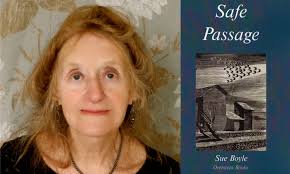
Sue Boyle is a poet I have followed since working with her as a tutor for the Poetry School. She has now published, Safe Passage, a first collection with Oversteps Books and I recommend it (though I confess to also being one of the blurbists on the back cover, where I quote one of her most interesting lines: “in seizing the unexpected lies the art”).

imgres

Updated May 2015

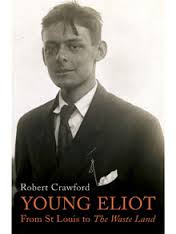
I’m still working through Robert Crawford’s magnificent biography of young Eliot up to The Waste Land. An almost day by day account of his youth, school and college days, Paris, Laforgue, Pound and Vivien Haigh-Wood. Particularly good on Eliot’s philosophical reading and development which I’m loving.

imgres

Mimi Khalvati’s The Weather Wheel consists wholly of 16-line poems – stretched sonnets or irregular ghazals – which seem able to encompass almost any mood, topic or subject matter. Particularly impressive is her desire to draw from the most ordinary of events lines which often soar to the complexly emotional and the (frankly) spiritual.

imgres

I’m also back re-reading Hughes because it looks like we’ll be teaching this from September onwards – surprisingly not something I have done (except one or two isolated poems). I first read many of these poems at Lancaster University in the late 1970s and nowadays many of these early poems read like objects of nature themselves: fixed as in granite, awe-inspiring, part of the mental landscape I have lived in for years.

images

As my most recent blog recounts, I have been also re-reading Transtromer’s work.

2Q==

imgres

Up-dated April 2015

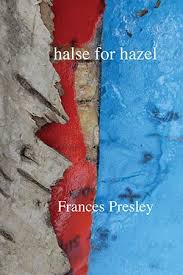
I’ve been reading two impressive contributions to the growing field of eco-poetics. Frances Presley’s halse for hazel is a visually pleasing book from Shearsman (illustrations by Irma Irsara) and the poems encompass geographical, linguistic, political and environmental issues without strain.

imgres

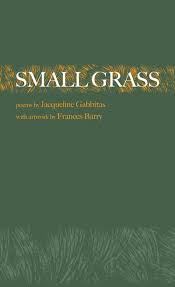
Jacqueline Gabbitas’ Small Grass gives grass a voice and runs with the idea with charm, cleverness and power: “From where I lie, I see man walking, / his legs sheathed in green, // I strop my edges. Soon, they’ll cut through / fabric, the tissue beneath”.

imgres

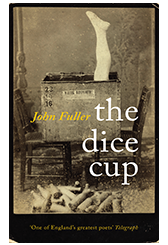
I’ve not always been an enthusiastic reader of John Fuller’s work but the recent The Dice Cup is a book of prose poem sequences full of his characteristic erudition, wit and observation.

thumbnailgenerator

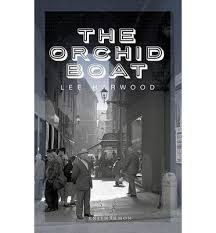
Lee Harwood is a poet who I’ve known of for years without really having read him much. I’d had him down as an English Ashbery/O’Hara and maybe I thought I ought to just go straight to the source. But Enitharmon’s The Orchid Boat is wonderful; full of fluid, sensuous, intelligent poems that twist and turn and take the reader by surprise. Not as flip as O’Hara, not as self-regarding as Ashbery.

imgres 

I confess to having a contribution in it but, apart from that, Tony Fraser’s new issue of Shearsman (103/4) is full of delightful things from the likes of Zoe Skoulding , James Byrne, Rupert Loydell and Kate Miller, plus translations of Virgil, Ponge and Jansma.

imgres

What Have I Been Reading: December 2014 – March 2015

Up-dated March 2015

Too little poetry-reading time recently has meant I’ve been thinking a lot about two texts we are using for A level coursework at the moment:

Tennessee Williams’ first great success, the autobiographical The Glass Menagerie, seems to strike chords in most modern teenagers and contains one of my favourite quotes: “I know I seem dreamy”, Tom says to Jim the Gentleman Caller, “but inside – well, I’m boiling!”

images

This is being read alongside Sylvia Plath’s only completed novel, The Bell Jar. Plath divides students every time – poetry or prose – my one observation is that with repeated teaching the book thins rather than deepens.

images

I’ve eventually got to read Colette Bryce’s recent new book, many of the poems about her childhood in Derry: short, focused, honest and managing memorable things within a very narrow linguistic palette.

imgres

Anna Robinson’s new collection also works within a narrowed range of language choices. She produces strange folk-tale-like poems, which keep rubbing their eyes, not sure whether what they are seeing is contemporary London or some mythic rural past. Mysterious poetry.

imgres

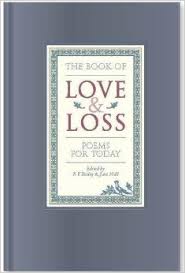
I’ve been dipping again into The Book of Love and Loss, eds., Rosie Bailey and June Hall (Belgrave Press, Bath, 2014), in part because I am reading from it at the end of next month at Heffers Bookshop, Cambridge.

imgres

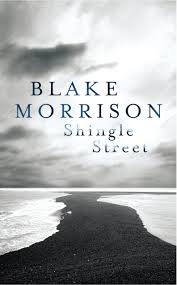
Blake Morrsion’s Shingle Street is his first full collection since 1987 and while there are flashes of the poet I once admired (I thought Dark Glasseswas very good) the book is full of rather dull thoughts – nature, ageing – and language that fails to lift off the page.

imgres

Up-dated February 2015

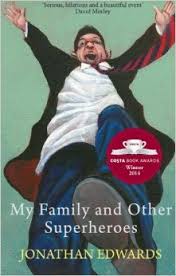
Jonathan Edwards’ Costa Poetry prize-winning first collection from Seren is as accessible and diverting as the front cover would suggest and any poet inspired to write by the Simpsons is OK with me. Whether the jokes, caricaturing, a rather sit-comy stories survive repeated reading is something I’m still debating.

imgres

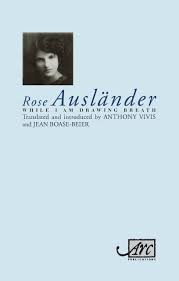
Rose Auslander’s minimalist gems are hewn out of the silences associated with her suffering in the ghetto in Czernowitz (and influenced by her friendship with Paul Celan). I am pleased to be reviewing this refreshed collection from Arc for a future Poetry London alongside Volker Braun’sRubble Flora – see below .

imgres

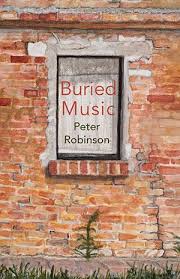
Peter Robinson’s most recent Shearsman collection continues his lyric exploration of the profundities to be found just beneath the surface of the everyday.

imgres

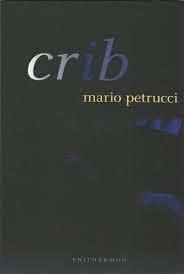
Mario Petrucci’s Crib from Enitharmon extends his experiments under the influence of Black Mountain. Poems sometimes stunning and economical, at others too self-consciously aware of language as an object (blocking the reader’s view). There’s certainly not much else like this around British poetry at the moment.

imgres

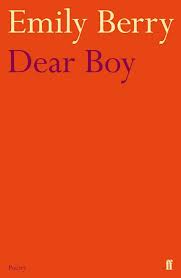
Emily Berry’s poems don’t attend much to Glyn Maxwell’s concerns with the tension between black ink and white space (see:https://martyncrucefix.com/2014/08/13/the-art-of-the-line-break/). The poetry is in the connections or lack of them and therefore leans to the surreal, with some palpable hits and other dead passages.

imgres

Up-dated January 2015

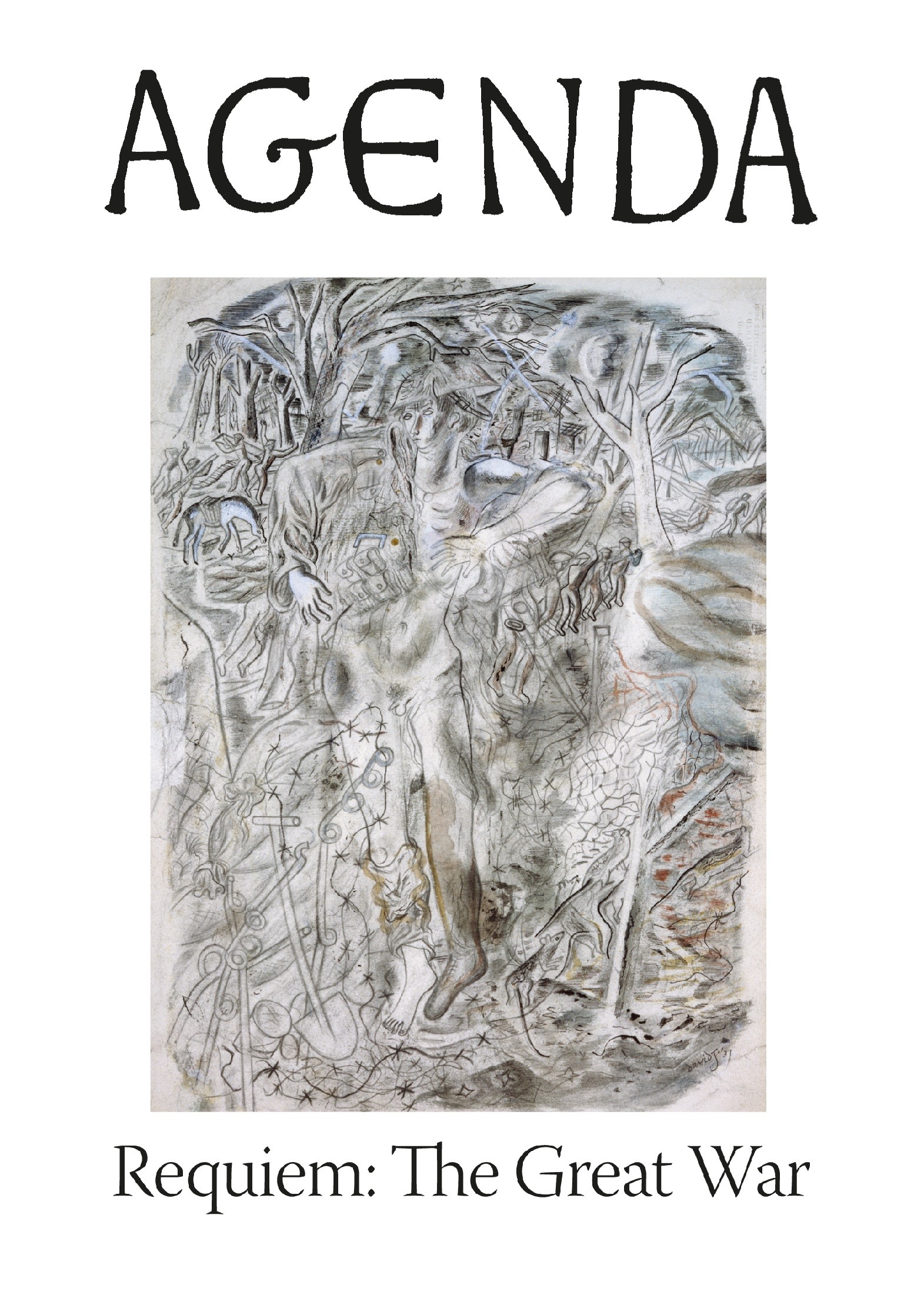
Patricia McCarthy’s chunky Agenda issue on The Great War is full of fascinating original poetry, translations and essays on French, German and Italian war poetry and reconsiderations of Edward Thomas, David Jones and Ivor Gurney among others.

agenda_-_requiem_the_great_war

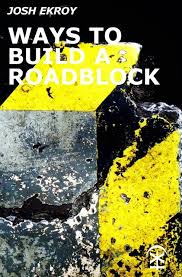
Josh Ekroy has been appearing on prize lists all over the place recently and his debut collection from Nine Arches Press is full of engaged, disturbing poems, capable of dealing with militarism and warfare:

imgres

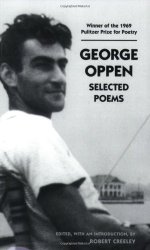
I’ve been reading George Oppen’s work via Louise Gluck’s admiration for him; I’m still working on it . . . .

41vxLKUGC3L._UY250_

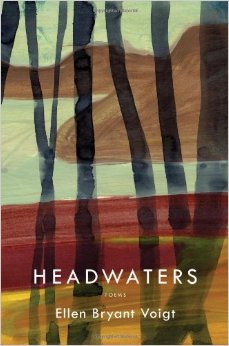
Debra Albery, an American friend who works at Warren Wilson, recommended this book of new poems by Ellen Bryant Voigt, full of the natural scenery of Vermont and fascinatingly eschewing all punctuation (like WS Merwin) to track the little manoeuvring negotiations of mind with world:

51z+jK085gL._SY344_BO1,204,203,200_

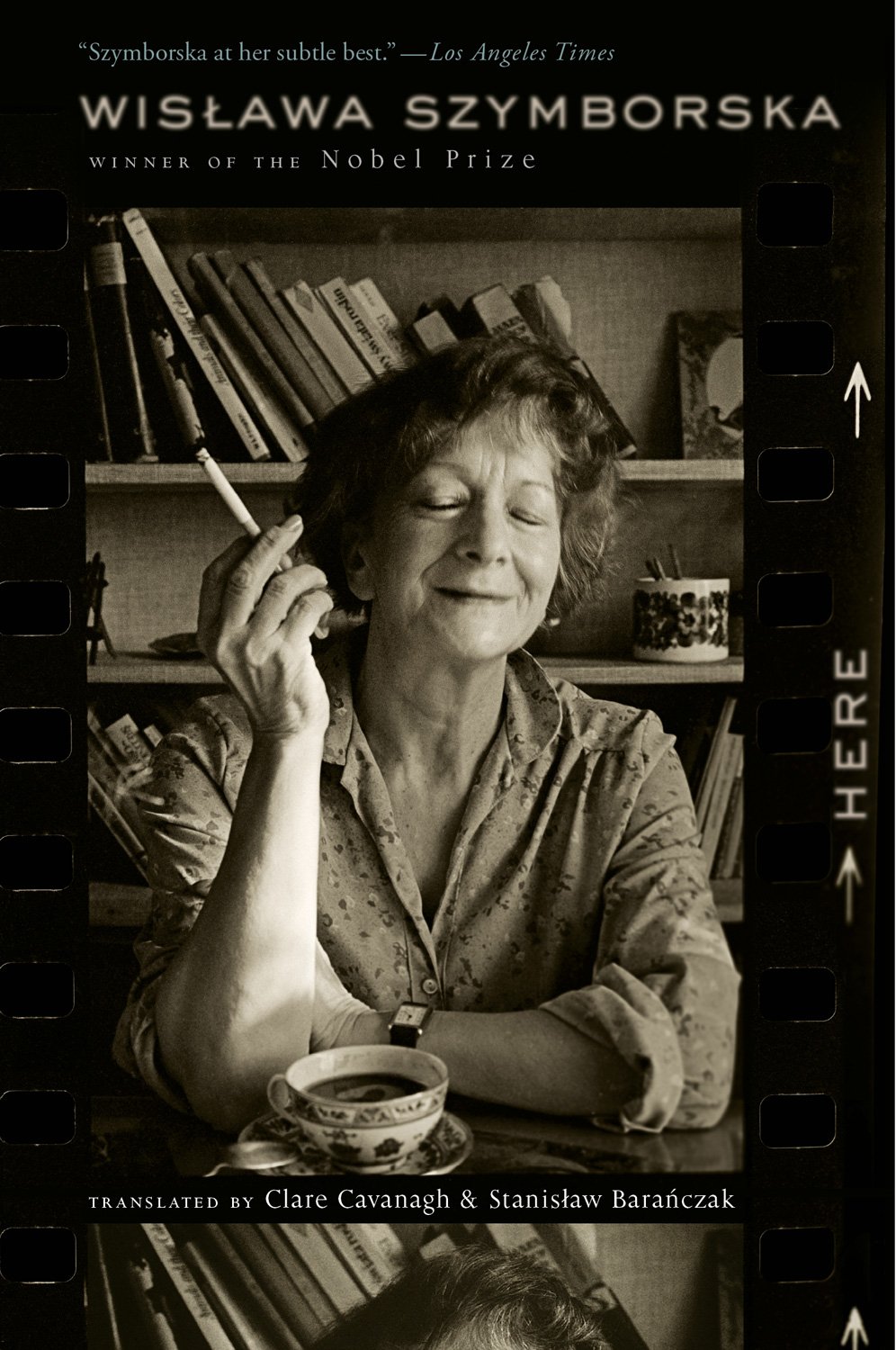
Wislawa Szymborska’s chatty, deceptively easy-listening poems in this 2010 translation make poetry writing look easy and able to encompass almost any topic:

71ceuvjjSJL

Up-dated December 2014

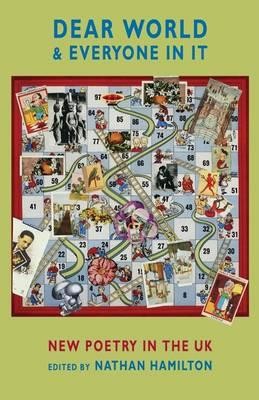
Nathan Hamilton’s big baggy collection of new poetry from Bloodaxe:672e5f96e2707467131a6f685241870c

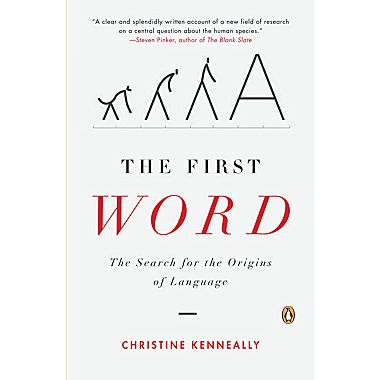
Christine Keneally’s comprehensive review of contemporary ideas on the evolution of language:m000463281_sc7

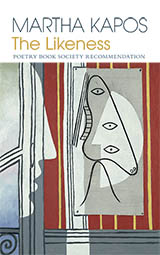
Martha Kapos’ powerful new collection from Enitharmon:Kapos_Likeness_cover_final.indd

Brilliant selected poems from German poet Volker Braun, translated by Karen Leeder and David Constantine (Seagull Books):Layout 1

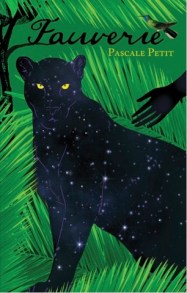
Pascale Petit’s powerful and strangely lit memorial to her father (Seren):

Here There Now Then – A Touch on the Remote

There are occasions when events from the past seem to become so fully present in the moment as we live it that it’s as if a gulf has been bridged between them. It’s a sort of redemption – though the events themselves may need no redeeming. What is salved is the permanent vanishing of the earlier through the intensity of attention accorded it by the later, perhaps especially so if our attention is manifested in language, a poem. There is an aspect here of Seamus Heaney’s idea of the redress of poetry which I ought to figure out more clearly.

images

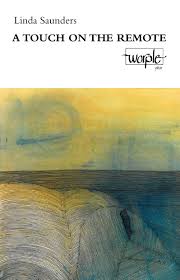
But I was left with thoughts such as these last week, having read for Dawn Gorman’s Words and Ears series of poetry readings in Bradford-on-Avon, Wiltshire. We’d set it up many months ago and I had been looking forward to it especially as this is close to my home town, Trowbridge, and my mother’s childhood and adolescence were spent in Bradford. I was also delighted to be reading with Linda Saunders who has just published a new collection with Worple Press, A Touch on the Remote. I’d had a few meetings with Linda many years ago (in the 1980s) when she would go up to Oxford to visit my old friend and mentor, Tom Rawling. There were several workshops at his house, I think, in that peculiarly intense summer sunshine of the past, full of hope and literary expectation. Like much of Rawling’s work, the opening sequence of Saunder’s new collection is composed of poems concerned with acutely observed landscape – in several cases observed with an almost visionary sense of history . . .

imgres
Linda Saunders

My mother was christened Bernice, first child of Graham and Elsie Hale in 1922. Her sister, Gwen, quickly followed. There was no immediate prospect of their leaving the White Hill house which was a one-up, one-down with attic. The two girls had to share the middle room with ‘Gran’ (as they called Elsie’s mother, Rhoda). They walked up White Hill to school at Christ Church. They skipped down to the sweet shop, to the ‘bake house’, to the centre of town. On Sundays they climbed Coppice Hill to the Methodist church and Sunday School.  In good weather, the two girls hooked their arms over the iron railings outside the house with Elsie in the doorway warning them not to stray far. They jumped up and down the high kerb stones, played whips and tops on the steep, quiet street. On wet days, they stared through the front window, across the roofs of the town below to the spire of Holy Trinity. Bernice was badly ill with scarlet fever when she was eight years old and for a long while afterwards was so weakened that she had to be helped everywhere in an old pushchair.

imgres

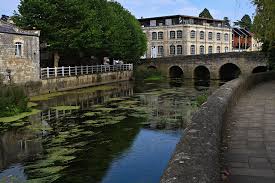
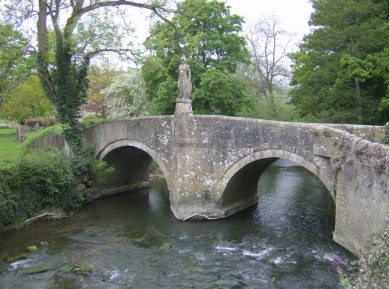
Saunders’ own strong sense of history can be seen in ‘Washing the Horses’ where the narrator watches people who “sleek soap-lather” on their horses’ wet hides. A bit later, the horses dry off on the bankside, “bays, pintos, strawberry roans, a shetland / with a foal no taller than an Eohippus. // This has been happening forever”. In ‘The Bridge at Iford’, a couple kneel as if in a ritual act, “like pilgrims” to watch the water flow under the bridge, themselves being watched by statues of “Greco-Roman deities”. Then the arrival of a newly-betrothed couple for photographs at the picturesque scene leads to thoughts of the future too – “Live happily. I think to them in passing, / ever after – the wish as ultrasonic as / the pipistrelle’s twitter”.

Britannia_at_Iford_Bridge_-_geograph.org.uk_-_438784
The Bridge at Iford Manor

The narrator’s image of the pipistrelle bat’s piercing signal could serve as one of the key images in Saunders’ work. Elsewhere she jokes about the onset of deafness: “Something I say, something she said / flies past us into the wood” (‘Hidden Valley’). It’s these forms of strained/successful communications across time and across distance (with a son living in the USA) that also provide material for a later sequence of poems: “I see him stepping over the door sill / across a crack of time” (‘Into the Blue’).

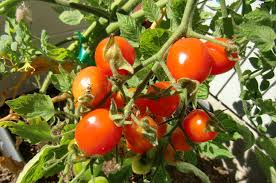
We would squeeze into the Standard 10 to visit my grandparents on Winsley Road, Bradford. It was a dark, terraced house which had an immense front garden with a pleasingly straight path from the front gate to the door in the centre of the facade. This path was lined with planted borders, the earth heaping up from the lower level of the path and there were roses and vegetables elsewhere and I am sure an allotment somewhere. At the back of the house was a tiny yard containing the outdoor toilet, a fascinatingly musty dark cramped garden shed, a sweltering little green house which seemed always full of tomato plants. There was also a raised piece of grass – you could not call it a lawn – where we tried to play football or cricket but the risk of the low walls was really too great. Instead, we often played on that long front path; Corgi cars pushed to and fro as we breathed in the acrid-sweet smell of lush cushions of blooming white alyssum.

images

Saunders’ background is in History of Art as well as literature. You can see this in ‘Reserve’ where she describes the processes of a painter preparing the ground for an object on the canvas, in this case an apple. The poet is interested in the absence, the vast potentiality before the object appears: “There are moments I sense // the inter-touch of me with everything – / this unselving reach”. During the Words and Ears evening, I read a number of poems from my Daodejing versions which also suggest that such an “unselving” might prove a happier and more fulfilling line to take in life. With our own “unselving”, the more aware we become of our surroundings, our context in both space and time.

It is Saturday tea – laid out on the living room table. There is a second front room hardly ever used which, if you open the door and peer in, feels chilled, dark, a little musty and formal and a baffling waste of space. We sit round the table and eat sandwiches, perhaps crumpets, malt loaf, Victoria sponge or the pink and yellow check of Battenberg cake which I loathe because of the marzipan covering. Nan or Mum often slice the rounded ribbed milk loaf that I have never seen anywhere else, turning it on its end and slicing horizontally, perilously.

imgres

In ‘Love Portrait’, Saunders describes a window on another canvas as yet “unpainted”. She wonders “could this be the light that slips / past time”. Because the artist has yet to define it, perhaps this is also the light that communicates between times.

We wore short trousers, of course, and I still can feel the way the thick dark tablecloth with its tasselled edges brushed my thighs making me want to scratch them. Elsie’s husband, Graham, was a quiet mild man, always limping because of a shrapnel wound in the leg from the battle of the Somme. He sang in a local choir, had worked all his life at Nestle in Staverton, gardened keenly and seemed a loving husband and father though to us he was a rather remote, taciturn grandfather. Just once he exploded at us for something I have now forgotten – perhaps just making too much noise or not clearing the table of toys or drawing books quickly enough when he wanted to swing the heavy cloth across it in readiness for the meal. Given his generally gentle demeanour, his blazing, brutal anger astonished and appalled us.

walk-15

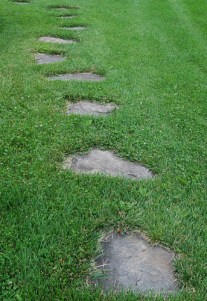
The final poem of Saunders collection is ‘Stepping Stones’. Another artist, a sculptor this time, makes “foot-shapes of stone”: “The child found them one at a time, / spotting the next from where she stood on the last / up to her thighs in seedheads and buttercups. / Where will they go? she asked the sculptor”. They lead onwards inevitably into the next moment, then the next – but to live wholly in the present, only in a language composed of present participles, is a form of dementia, a quite different and destructive form of “unselving”. Our making sense of things requires our awareness and exploration of the temporal.

Where’s My Master Gone – Don Paterson v Li Po

Don Paterson’s 1997 book, God’s Gift to Women (Faber) includes a poem sporting the title ‘On Going to Meet a Zen Master in the Kyushu Mountains and Not Finding Him’. The reader’s eye hops off the perch of this lengthy title only to flutter down, looking in vain for a foothold, for a line, even a word – it’s a completely blank page. In a collection that includes a poem called ‘Postmodern’ and another on ‘The Alexandrian Library’, the joke is obvious enough. Any search for ‘masterly’ advice in the Kyushu Mountains or closer to home in a post-modern, relativist world in which language hides as much as it might reveal, must draw a blank. I remember seeing the poem – probably heard Paterson ‘read’ it too – the long title building expectation, a too-long pause, the announcement of the next poem (cue laughter) – and something bothered me. I think now I know what it was.

imgres

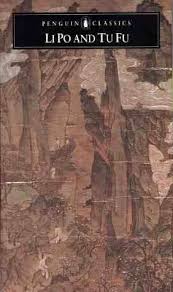
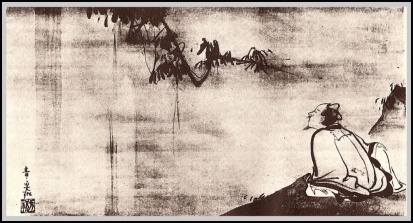
I wondered if Paterson had been reading the Penguin Classics selection of Li Po and Tu Fu (tr. Arthur Cooper, 1973). The Li Po selection opens with the poem ‘On Visiting a Taoist Master in the Tai-T’ien Mountains and Not Finding Him’. Cooper’s note tells us that ‘Visiting a Hermit and Not Finding Him’ is actually a very common theme in Chinese poetry. Such a poem (we are told) is not just an excuse for a “nature poem” but relates to the frequent “spirit-journeys” that Li Po was fond of writing. Here is Cooper’s translation:


Where the dogs bark

by roaring waters,

whose spray darkens

the petals’ colours,

deep in the woods

deer at times are seen;


the valley noon:

one can hear no bell,

but wild bamboos

cut across bright clouds,

flying cascades

hang from jasper peaks;


no one here knows

which way you have gone:

two, now three pines

I have leant against!

3-li-po

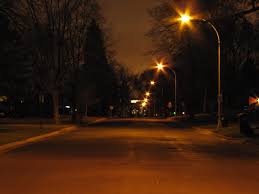
I had come across this poem while compiling my first book, Beneath Tremendous Rain (Enitharmon, 1990). I liked it for reasons I didn’t then understand and, in a very simple form of translation, I wrote an up-dated version:


Looking for an Old Man


Where red dogs bark

on the sodium ring-road

and traffic noise

blackens adjacent houses,

I’ve come to seek you.


In each garden I pass,

pale heads of bindweed.

The night is undistinguished.

The savour of coalsmoke

flattens across the kerb.


No-one here knows

which way you have gone:

two, now three lampposts

I’ve leant against.

images

Li Po is the more Daoist of the two poets presented as a complementary pair in this Penguin book. Now, with a bit more understanding of this tradition, I’m sure that 26 years ago I was responding to something at the heart of the poem. The fact that the Daoist master cannot be found by the searching student is precisely the point since the Daoist teacher teaches “in the absence of words” (Chapter 43, ‘Best Teaching’) as I translated it in my version of the Daodejing (Enitharmon, 2016).

Interestingly, Li Po’s poem expresses this not with a blank page but (as Cooper says) through further encounters with “nature” (petals, woods, deer, valley, bamboo, clouds) or, in my version, the natural and urban world (ring-road, traffic, houses, garden, bindweed, coalsmoke, kerb). Whether we designate this a ‘spiritual’ journey or not, the point remains that the student’s search for knowledge in the form of a direct download from some master must be denied. The student’s anxious search for guidance is reflected in the number of pines/lampposts he leans against as well as the geographical over-specificity of the titles of such poems. The student’s dependency and naïve optimism is the satirical butt of the poem as he is directed back to the source of all knowledge (the world surrounding him) even as he wanders in search of his master. So Paterson’s 1997 version achieves three things: it misrepresents the spirit of the original, it’s more dramatic (comic), it’s more superficial.

imgres

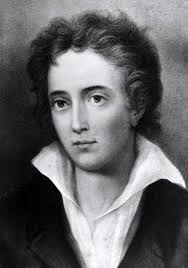
When I first read Li Po’s poem I was coming off the back of doctoral work on the Romantics, especially Shelley whose ‘A Defence of Poetry’ (1821) argues that the “poetry in [our] systems of thought is concealed by the accumulation of facts and calculating processes [. . .] we want the creative faculty to imagine that which we know”. This is succinctly put in Keats’ idea of Negative Capability, defined as a passive openness to the fullest range of human experience (“uncertainties, Mysteries, doubts”) without any imposition of preconceived notions, ideas or language: “without any irritable reaching after fact & reason”. The student in Li Po’s poem seeks just such certainties and facts and is gently deflected back into the world of observation where (I take it) he is encouraged to pursue a more full-blooded, full-bodied, open-minded encounter with the 10,000 things which (in Daoism) constitute the One, ‘what is’.

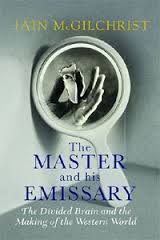
The two attitudes to knowledge here are really two ‘ways of being’ as Iain McGilchrist’s fascinating book, The Master and his Emissary (Yale, 2009) phrases it. McGilchrist argues that right and left human brain hemispheres deliver quite different kinds of attention to the world. The left perceives the world as “static, separable, bounded, but essentially fragmented [. . .] grouped into classes”. Shelley described this in 1821 and linked it to the processes of Reason and this is the attitude to knowledge and education that the anxious student of Li Po’s poem possesses. In contrast, what Shelley calls Poetry or the Imagination is what McGilchrist associates with the right brain. It tends to perceive “the live, complex, embodied, world of individual, always unique beings, forever in flux, a net of interdependencies, forming and reforming wholes, a world with which we are deeply connected”.

imgres

Without doubt, this is also the viewpoint of the Daoist master whose teaching evokes the uncarved block, the One, and who teaches best without words. Ordinary language usage is dependent on conceptual thought which is left-brain work – ordering, categorising, re-presenting the minute particulars of the world as they are perceived by the right brain. I imagine that Li Po’s master-teacher and sage is deliberately hiding somewhere beyond the bamboo canes – and this is part of the student’s lesson.

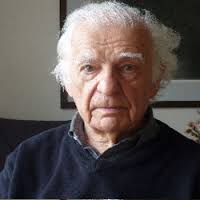
So Don Paterson’s blank page bothers me because – as McGilchrist expresses it – it represents a rather glib, post-modern position, a scepticism about language which is in danger of throwing out the interconnected real world along with the suspect tokens and counters of left-brain language: “To say that language holds truth concealed is not to say that language simply serves to conceal truth [. . .] or much worse, that there is no such thing as truth” (McGilchrist, p. 6). I’m also reminded of Yves Bonnefoy, engaging in his own battle with the early stirrings of French post-modernism. He writes: “This world here exists, of that I am certain [. . .] It is simply with us. In what can be felt and sensed”. In The Tombs of Ravenna (1953), he names this underlying truth, not as existence, but as “presence”. The right brain knows this; the left brain sets about fragmenting it, making use of it, disappearing it.

images
Yves Bonnefoy

Explaining Water Images in the ‘Daodejing’

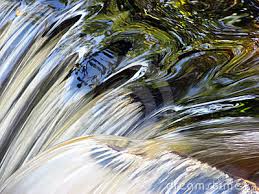
Daoism has been referred to as the Watercourse Way because of the importance of water images in its key source, the Daodejing. I thought much about these images in translating/versioning these ancient Chinese texts and I want to record a few thoughts systematically here. However, as you’ll see, trying to ‘fix’ something runs counter to the Way – yet even if what we seek runs through our hands, the effort to consider the role of such images is worthwhile. (I have blogged about other images in the Daodejing here).

images

The Daodejing uses water images in two ways. Firstly as an image of the ineffable One, the plenitude that lies at the heart of all its thinking – imagine the vastness of the ocean, the unfixable flux of flowing water, never the same river twice. The texts also use water images to suggest aspects of our behaviour (personal and political) if we are acting in accordance with the Dao or Way. Many use metaphors of water in such a way that the vehicles are clear and recurrent (ocean, pool, river, stream) but the tenor remains an empty set, never defined because in its nature indefinable in language or figures.

So Chapter 1, ‘Nursery’ (I’ll give my titles as well as traditional Chapter numbers), introduces water images while giving a clear indication of the short-comings of all language. It deploys a metaphor that immediately undermines the efficacy of its own figurative language: “the path I can put a name to / cannot take me the whole way”. Even what can be named can only be grasped through a further metaphor: the “nursery where ten thousand things / are raised each in their own way”. What lies behind the phenomena of our world can only be suggested through additional metaphors such as a “mould”, a “source”, a “mystery”. Even this is not enough; more than a mystery it is “a riddle set adrift on a mystery”. In my version I introduced a watery context for the source itself (indefinably, untrackably “adrift”). I then developed this to image it as a body of water held behind a “flood-gate” which only in release and inundation delivers “greater truth”. The original Chinese text shifts its metaphors rapidly in just this way and this is what gives this opening Chapter the peculiar sensation of telling a clear truth that remains just beyond our grasp.

images

A similar image of a body of water occurs in Chapter 4, ‘Something greater’. The tenor of the metaphor is again reduced to “it” in the opening line.  The context indicates that “it” is the Dao itself, the One that precedes and contains all things, that state of wholeness and plentitude towards which the path of the Dao leads. Here the tentative nature of the metaphor is indicated firstly through the opening imperative – “imagine” – and then because the text itself consists of proposed alternatives to this very image. The opening formulation emphasises the Dao’s infinite nature, its resource: “a vessel to be drawn from / one that never needs to be re-filled // the bottomless source of all things”. This image of a bottomless water source is revised a few lines later in the form of a question: “is it rather a pool that never runs dry” yet this follows 4 other metaphorical formulations of the Dao’s beneficial effects:


fretted edges are smoothed within it


knots untangled all dazzle eased

all blinding clouds of dust slowly cleared

images

And the poem calmly goes on to declare its own ineffectiveness: “we cannot know it as a bodiless image / it must pre-date every beginning”. Even the concept of origin, or beginnings, is not adequate to convey the full force of the Dao but the fluidity of water – impossible to grasp, capable of taking any shape, a life-giving source – seems to come close.

The second way in which water images are used in the Daodejing is as a gesture towards actual human behaviours which occur when we are influenced by the Dao: in knowing that the truth of the Dao is like a watery flood, we behave in a water-ish fashion. So ‘The great rivers’ (Chapter 32) reminds that the Dao “has no name” and uses one of the other recurring images of it (the uncarved block of wood). If “the powerful” would attend to the nature of the Dao they would be successful “without recourse / to compulsion or law”. One of the recurring political beliefs of these texts is that if society is organised and governed in accordance with the Dao then people will live in “harmony” without even trying (indeed it is the trying that causes the harm – see wu wei below). Metaphorically, this translates as a society knowing “when to call a halt” to our distancing from truth (the hacking of the block, the reliance on naming/language, our remoteness from the ‘water’ source that is the Dao). The poem ringingly concludes with the image of right human behaviours being likened to the natural flow of water:


all things come to those

who follow the way

as all wild streams

and all unruly torrents

drive eventually

to great rivers the sea

images

Water is also the image used to consider more individual behaviour. ‘Best teaching’ (Chapter 43) opens rhetorically, alluding again to water:


—what of all things is most yielding

tell me what overwhelms the hardest


without solid form itself what flows

penetrates even the smallest gap


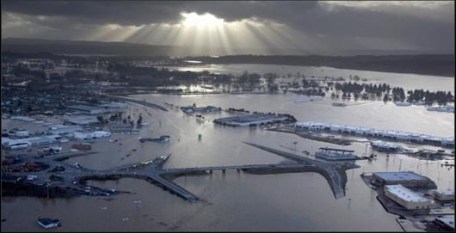
This understanding of the action of water in its pliability and fluidity, its erosion effects and its penetrability, reminds the poet of the concept of wu wei, or non-action, another untranslatable but key idea in the whole sequence. This is the wise person’s ability to achieve actions or goals without determined or intended pursuit of them. I have translated this as “unacted deed” and this poem immediately links this to the art of teaching, the best of which “occurs in the absence of words” (show not tell?). Water is an appropriate image for this in its passivity yet power, its pliability yet ineluctable nature. The poem ends almost with a shrug at the difficulty of grasping such concepts or behaviours:


the unacted deed the indirect

direction—it’s hard to comprehend

chehalis_flood_sunshine

The text of ‘Clearest words’ (Chapter 78) reinforces the image of water as a key aid to understanding Daoist thought:


—there is nothing in the world more soft

more yielding than water

yet in conflict with hard resistant things

there’s nothing better

and there is no way to alter this

what is yielding will defeat what resists

these are facts clearly known to all

why don’t we make better use of them


In these final lines we can perhaps hear Laozi’s legendary disgruntlement with the parlous state of the real world – why don’t we put known truths into action? Yet here again, the poem concludes by recognising how difficult such simple principles can be to grasp: “even clearest words are contradictory”.

Chapter 61, ‘Tributaries’, returns to a more political perspective with its comments on how “strong nations” ought to behave. The action of water in relation to both geography and gravity is the figure used on this occasion:


—strong nations must play the low ground

to which all contributing waters flow

the point to which all things converge


This ensures that any exercise of power by such nations will “issue from stillness” and “quiescence” (according to the principle of wu wei) rather than self-assertion, anxious, fearful imposition, bullying. It’s this (former) sort of behaviour that the Daodejing repeatedly returns to and characterises as “female” and what follows is one of the most beautiful passages where water images are integral to the meaning:


[ . . . ] and the male cannot

resist he brings his watery tributes

and she gains adherents he procures favour

as she looks to embrace and empower

he finds himself part of a greater thing

in this way becomes part of creation

so both thrive both discovering bliss—

real power is female it rises from beneath

url

This coincidence of water images and female images and the description of the passive exertion of power, nourishment, subtlety, irresistibility, is wholly characteristic of these poems. The image of water collecting at its lowest point – power exerted by doing nothing – is likewise the focus of ‘Influence’ (Chapter 66) which explicitly links such calculated passivity with virtuous potency:


—how do rivers and seas secure mastery

over the hundreds of lesser streams

through lying lower than they do


so to govern or teach you must stand

and acknowledge you are beneath the people

to guide them put yourself at the rear


only in this way can true leaders rise

not stifling people with their being on top

not bullying them into harm’s way


only this way all things under heaven

are content to range under your influence

not find instruction provocative—


a teacher achieves not by trying to achieve

and because she does not strain to succeed

there’s no-one comes forward to compete

File 03-03-2016, 09 02 50


Introduction to Laozi’s ‘Daodejing’ – Part 2

What follows is the second installment taken from the Introduction to my new versions of Laozi’s Daodejing, published by Enitharmon Press. More information and comments on the book can be found here. References to the traditional 81 chapters of this ancient text are accompanied here by the titles I have given them in my versions. The first section (to read it click here) concluded by indicating how the Dao becomes manifest in the individual objects, the actions and creatures of the world we are familiar with.

wings-snakes-satan-artwork-gustave-dore-paradise-lost-john-milton-1030x1280-wallpaper_www-paperhi-com_21

Proceeding to consider how such awareness (more commonly the absence of it) impacts on our personal (and hence political) lives is also a primary concern of the Daodejing. It comes as no surprise that our battle against the tyranny of the self, that intense, intoxicating selfishness that Coleridge calls “the alcohol of egotism” is the key (the phrase is from an unassigned lecture note, date unknown, on Milton’s Satan, specifically concerning his preference to reign in hell rather than serve in heaven. See S. T. Coleridge, Collected Works, ed. Foakes (Princeton UP, 1987), Volume 5, Part 1, p. 427). This is where the untranslatable idea of wu-wei arises. The phrase is intended to characterise actions performed in accordance with, in harmony with the Dao; hence they are driven not by the blinkered and shuttered individual self, but by a more open awareness of the expansive, interconnected reality of the Dao. This is the significance of the recurring idea that the follower of the way should attend not to ‘that’ but to ‘this’. The former implies a divided world (self and other – ‘that’ out there) whereas the latter is a gesture of encompassment of both self and other, the whole, the one. Hence, the narrow intentionality, the forcefulness of the self is withdrawn from actions performed in accordance with wu-wei.

IMG_0125

In translating these ideas, I have used the phrase ‘indirect direction’ to suggest the methods of our dealings with others and the ‘unacted deed’ in an attempt to characterise the pursuit of our own intentions. Both phrases are woefully inadequate, but I hope to convey as plainly as possible the paradoxical nature of these ideas. How they are played out in real human behaviours can be glimpsed through the ‘Three treasures’ (Chapter 67). These treasures are: to be compassionate, to be frugal, to lack personal ambition. In each behaviour, egocentricity is diminished through empathy and there is an inclination towards wise passivity. There is a corresponding reduction in the individual’s personally directed desires (‘Wishes’ (Chapter 3)); we are to act ‘Like water’ (Chapter 8), flowing passively, dispassionately towards lower ground in both personal and political spheres (‘Influence’ (Chapter 66)). We are being urged (to switch the metaphor as the Daodejing deliberately does) to work with the grain of the Dao.

This is what the sage pre-eminently promulgates and performs. I have consistently translated this figure as ‘teacher’, often ‘my teacher’ and (though literary Chinese does not mark gender) there is something unmistakably feminine about her behaviours. This is a point the poems declare insistently. The Dao itself has female qualities (‘Valley’ Chapter 6)) and the teacher also reflects this in her quietness, passivity, sensitivity, lack of overt force (‘Raw material’ (Chapter 27)). Stephen Mitchell’s much praised and popular version of the poems carefully uses ‘she’ at least as often as ‘he’ to refer to the teacher figure. (See Stephen Mitchell, Tao Te Ching: a New English Version (Harper and Row, 1988), p. xi). But I wanted to go further and have consistently feminised, even personalised this figure. Early on in the translation process, I felt a need to make this shadowy figure more manifest, to ground her pedagogic statements for our more liberal, democratic age with its absence of deference. As I set about this, it was clear she had to be female and she soon took on a dual role, both as representative or personification of the Dao itself and as its incarnation in actual human form, a mother figure, a female teacher, a friend.

images

The ways in which these teachings translate into the world of politics are summed up in the terse, witty, metaphor of ‘Recipe’ (Chapter 60). The art of good governance is like the art of cooking a delicate fish: don’t interfere, don’t force it, be watchful, assist, adapt, proceed only with the lightest of touches. Laozi’s politics are impossible to translate to our modern age but given the proviso that he is determined to preserve the simplicity and frugality of people’s lives, many of his sentiments read as politically anarchic, primitivist, conservative, environmentalist. For those of us from a Western tradition, there is a Rousseauistic quality to his thinking, a belief in the goodness of mankind as noble savage who has for too long been corrupted by interference, too many codes of behaviour imposed from above. This is where the poems’ anti-Confucian elements are most obvious (‘Codes of kindness’ (Chapter 18)). Laozi is certainly vigorously anti-war, the pursuit of which he regards as the quintessence of the over-determined masculine self in action in utter disregard of the Dao.

imgres

Historically, translators have approached these poems in many ways. Benjamin Penny’s recent review of the field shows how many early versions were motivated by a Western cultural imperialism, searching out affirmations of its own monotheistic tradition (See Benjamin Penny, Introduction to Laozi: Daodejing, tr. Edmund Ryden (OUP, 2008)). Later attempts were spurred by a contrasting desire to find something different, to revitalise moribund Western values in search of exoticism, anti-rationalism, the non-Christian. Still others, keeping a firm hold on a wide variety of already settled spiritual/religious beliefs, plumbed the frequent ambiguities and lacunae of the Daodejing to re-affirm those beliefs. More recently, scholars and academics have brought an ever-growing understanding of Chinese history and culture to bear on these delicate texts and it is surely impossible to avoid accusations of Westernisation in any English version of the Daodejing. Even Stephen Mitchell – who had “a fourteen-years-long course of Zen training” to draw on – has since been accused of colonial mis-appropriation (See Mitchell, ibid., translator’s Forward. For the vigorous accusation, see Russell Kirkland and his book Taoism: The Enduring Tradition (Routledge, 2004)).

sonnets_to_orpheus

In my case, it was as a long-standing teacher, poet and recent translator of Rainer Maria Rilke that I first came to the text. I found myself in astonishing sympathy with many of the things it has to say about language and poetry and especially about the pedagogic process, both formally and in our everyday interactions. Laozi suggests the teacher’s role is to show, facilitate, enthuse, give space, watch and approve. We must be honest, be ourselves, give the tools, give opportunities, do our job well, but then let go, don’t dwell. We need to be someone to emulate, be quiet, still, attentive, be present, not absent, be mindful, be welcoming. Our role is to synthesise and connect (not disconnect or sever), shed light (but without dazzling, even inadvertently), use a delicate touch, be tangential. Laozi knows that our teacherly interventions – whether physical or verbal – must inevitably alter the material we hope to engage with; we set in motion a swinging pendulum. Our actions call forth responses to the fact we act, plan, demand. Students may re-act to this (against this) simply because we are seen to act. Better back off, do not intervene, don’t use imperatives, perhaps use no words at all. It is better to play the female part, be passive, give space, encourage desired behaviours, neglect all else. Laozi believes students come upon discoveries by themselves. So we must work via indirect direction and the unacted deed. Progress will be seen to happen of its own accord. The deed we desire will remain undone; this is the best way of getting it done.

imgres

Idealistic? Of course, as can be seen most vividly in ‘The commonwealth’ (Chapter 80) which is Laozi’s evocation of the contented society adhering to the ways of the Dao. For Western readers, this poem echoes Gonzalo’s speech in Shakespeare’s The Tempest, in its turn lifted from Montaigne’s essay ‘On Cannibals’ (Montaigne, Essays (1580). Shakespeare read and paraphrased John Florio’s 1603 translation into English). Laozi’s original gift to the gatekeeper is not to be read as a handbook, not an instructional scripture, but as inspiration. Bearing that in mind, we ought correspondingly to resist the temptation to approach it with the dismissive cynicism of an Antonio or Sebastian, Shakespeare’s all-too-modern sounding cynical ‘evil men’. I think we ought to listen to these poems open-mindedly, mindfully. We ought to resist following the crowd so vividly portrayed in ‘Adrift’ (Chapter 20) who always say, “Prithee, no more; thou dost talk nothing to me” (The Tempest, Act 2, scene 1, l.169). When the true teacher stands in our house, no matter how detached, untidy, unimpressive, even muddled she may superficially appear, Laozi is reminding us “there are treasures beneath” (‘In your house’ (Chapter 70)).

daodejing


Introduction to Laozi’s ‘Daodejing’ – Part 1

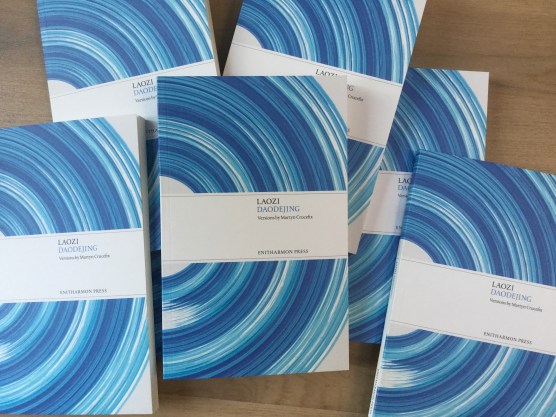
What follows is taken from the Introduction to my new versions of Laozi’s Daodejing. References to the tradition 81 chapters of this ancient text are accompanied here by the titles I have given them in my versions.

File 03-03-2016, 09 02 50

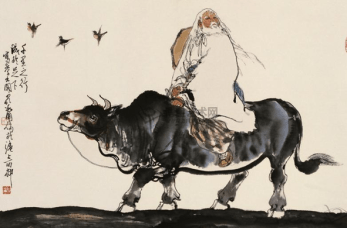
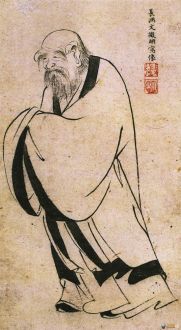
It’s said the keeper of the western gate, whose name was perhaps Yin Xi, realised the old librarian from the royal archives of the state of Zhou did not intend to return. He knew the old man as a quiet, wise character, never someone at the heart of activities, never excluded by others, an observer, seldom observed, always ready to offer advice, not eager to thrust himself forward, often ignored, never wisely. The gatekeeper called, ‘Old Master, Laozi! If you intend not to return, if you mean to renounce the world, then leave a record of your thoughts. Write me a book to remember you by.’ The old man climbed down from his humble oxcart, borrowed pen and ink. A few hours later, he handed Yin Xi a script of some 5000 characters and then continued westwards, never to be seen again.

a-journey-of-thousand-miles

So the poems of the Daodejing are a gift, freely given at a point of change, a gateway to new experience. They are also a turning away from the world (Laozi is said to have despaired of its venality and corruption), yet a transmission intended to aid, an inspired out-pouring of poetry as much as a moral and political handbook. Perhaps above all we should think of them as a response to a personal request. Bertolt Brecht’s 1938 poem, ‘Legend of the origin of the book Tao-Te-Ching on Lao-Tzu’s road into exile’, seeks to praise the “customs man” who “deserves his bit. / It was he who called for it” (tr. John Willett). Modern scholarship, of course, has long since stripped away such eloquent myths. Most likely, the current 5000 characters of the Daodejing were far fewer to begin with, a series of orally transmitted seed verses compiled by many hands, an aide memoire, certainly an aid to teaching from as far back as the 7th century BCE. Passed on orally, then transcribed, with the usual levels of error, displacement, ‘correction’ and happenstance, the text has also been subject to the Chinese tradition of written commentaries and these intercalated texts have themselves become vanishingly absorbed into the original. Such an uncertain state of the text legitimates considerable levels of ‘correction’ for most would-be translators; in this case, I have excised material only from ‘Dangers of prominence’ (Chapter 13) and ‘The great clamour’ (Chapter 23), silently removing a few lines of (what I thought of as) redundant repetition.

41mGYLTsCVL._SX331_BO1,204,203,200_

Yet the poems are still vivid, astonishingly fresh, irresistible. They are also still subject to continuing textual debate and archaeological inquiry. The standard text has long been the one associated with the scholar Wang Bi (226-49CE) which divides the Daodejing into 81 Chapters and those into two sections. On the importance and insights of Wang Bi, see Wagner, Rudolf G., The Craft of a Chinese Commentator: Wang Bi on the Laozi (SUNY Press, 2000). The Dao or Way is made up of the first 37 Chapters; the De or Power occupies Chapters 38 to 81. But an archaeological dig as recently as 1973 at Mawangdui revealed two new versions of the text, dating from around 200BCE. Surprisingly, both Mawangdui texts reverse this order and some recent versions into English have adopted this change. Most notably, see Robert G. Hendricks who produced a re-shaped Lao-tzu Te-Tao Ching: A New Translation Based on the Recently Discovered Ma-wang-tui Texts (Ballantine Books, 1989). Also see D. C. Lau’s second translation of the texts published as Lao-Tzu Tao Te Ching (Everyman Books, 1982). I have not done so. The traditional division between the Way and the Power of the Dao is by no means watertight or proven but I feel it makes more sense to explore the nature of the Way before considering its more specific manifestations. Also, as a sequence of poems, ‘Nursery’ (Chapter 1), summing up as it does so much of what is to follow, surely has to come first.

Though probably the work of many hands over many years, it’s still hard not to hear (with Wang Bi) a distinctive voice, a coherent poetic style – alluringly laconic, clipped, coolly enigmatic; it flaunts its paradoxes, is boldly metaphorical, juxtapositional, repetitive to the point of liturgical, urgent, unashamedly epigrammatic. In short, we seem to hear Laozi writing a kind of poetry which enthusiastically accepts that its profound and heartfelt messages are inevitably compromised by the need to express them in the form of language, hence demanding that it employ a variety of technical manoeuvres, that it stays light on its feet. Of course, language is imperfect but it’s what we must use and I have given titles to each of the Chapters to encourage contemporary readers to approach them in large part as language, I mean as poetry.

laozi-painting

For a text so geographically, culturally and temporally remote, some consideration of key images and ideas is necessary. The Dao is not an individual entity, still less anything divine, it is more a mode of being that is all encompassing, a phenomenal, an existential primacy – perhaps akin to the western idea of original chaos. It can usefully be seen from epistemological, temporal, perceptual, political or environmental perspectives, though none of these exhaust its real nature. It is not subject to time yet contains it. It is never fixed. It is the ever-here, both omnipresent and unchanging. We might be tempted to say the Dao is the substratum of all things, the ground base – but language’s introduction of levels and hierarchical ideas is not helpful to our already feeble grasp of it. Certainly, it is the whole, the one that precedes the many.

So these poems explore how the Dao becomes manifest in the individual objects, the actions and creatures of the world we are familiar with. They suggest the Dao initially gives rise to two things, heaven and earth (‘Nursery’ (Chapter 1)) and the poems subsequently make use of the formulation ‘the ten thousand things’ to suggest the Dao’s proliferation or subdivision into all there is. It is in this way that the Dao is the mother of all things (‘Of all things’ (Chapter 25)); it is like water, a pool from which all things draw life (‘Something greater’ (Chapter 4); it is the uncarved block of wood that has inherent within it all things that have been, are, will be (‘Uncarved wood’ (Chapter 15). Most importantly, the Dao is beyond conception and so beyond any conventional use of language, the limits of which constitute a recurring motif in the Daodejing: ‘Nursery’ (Chapter 1); ‘Awareness (Chapter 56); ‘Store (Chapter 81). Of course, our quotidian lives must pass in this ‘fallen’ state, full of a misplaced confidence in the reality of the ten thousand things, including our own discrete selves, so Laozi emphasises – in recurrent images of reprise or re-visiting – that only if we can return to a more clear awareness of the presence and reality of the Dao, can our behaviour and experience of life be more true, fulfilled, harmonious. Tennyson’s otherwise unremarkable poem, ‘The Ancient Sage’ (1885), describes approaching the “mortal limit of the Self” and passing “into the Nameless [. . .] and thro’ loss of Self / The gain of such large life as match’d with ours / Were sun to spark – unshadowable in words”.

images

 Part 2 of this Introduction to the Daodejing will be posted next week (and is now available by clicking here).


Two Great Days at StAnza Poetry

Writing is always a rough translation from wordlessness into words – Charles Simic

I arrived at about 8pm on the Friday evening. Leuchars station is not close to St Andrews itself and (it made me feel at home) there were roadworks disrupting the usual route so instead of 5 miles it was a 10 mile trip. Actually, it was dark and I had no idea where I was so I’m just quoting the chatty taxi driver here – who also lamented the decline in business in recent years. Lack of local money generally he said and the changing habits of students who go out less, pre-drink more and choose to stumble home rather than call his cab. We waited a few minutes for Pascale Petit’s train to arrive. She’d been travelling for 12 hours (from Cornwall) which made my 5 hour train ride feel like nothing much. Unpacking, I reflected north is a very long way north.

imgres

I was staying at the Greyfriars Hotel but walked up to the Byre Theatre on Abbey Street, the main Festival venue. The headline reading for the evening was Lemn Sissay (who I’d just missed) followed by Don Paterson. I arrived at the interval and the talk at the bar was of a local heckler interrupting Sissay. I never got to hear how he dealt with it but it seemed to say something about the tone of this festival that there was as much talk about inclusion as there was annoyance at the interruption. The auditorium was sold out (typical of this StAnza while I was there – you needed to book your event fast). I had no ticket but Jim Carruth took me to the studio theatre to a live relay of what remained of the event. Paterson read mostly from 40 Sonnets including ‘Here’, ‘Wave’, ‘A Powercut’, ‘Little Aster’ and the curiously moving death-of-a-dog poem ‘Mercies’. He also read aphorisms from an iPad and I remember ‘Poetry is not a vocation but a diagnosis’. And (one for his students, he said) ‘If a poem is read slowly enough we begin to hear things – which – are – not – there’.

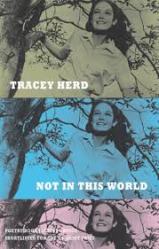
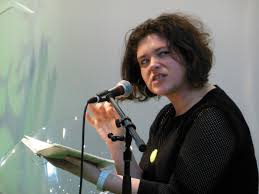
I was woken by seagulls in the grey dawn and through a gap in the Greyfriars curtains I could make out a CCTV camera on its right-angled gantry across the road, white and intent and about the size of a large gull. Perhaps I was dreaming. I was reading next morning with Tracey Herd in St John’s Undercroft, a long brick-arched room, with a great acoustic and atmospherically lit. Andrew Jackson generously introduced us and I read most of my A Hatfield Mass sequence which I think of as celebratory poetry about nature, perception, growing up/older, the body. Tracey’s book Not In This World was a PBS Choice and shortlisted for the TS Eliot Prize this year and is her first collection for 14 years. She did not read those poems about film stars or racehorses for which she’s justly renowned but powerful, recent poems of loss: “Somewhere, someone much loved is leaving”.

images

I was also reading in the afternoon at a ‘Past and Present’ event – where poets talk on writers from the past. This was the first occasion (in the Council Chamber of St Andrews’ Town Hall – where marriages are performed we were told) at which I could read some of my new, just-off-the-press versions of the Daodejing. Pascale Petit was also appearing and she talked about her enthusiasm for Tomas Transtromer, in particular the way in which his poems often use an aerial perspective; from his first published poem: “Waking up is a parachute jump from dreams”. I’m sure she said she’d consulted a Swedish friend who said his surname meant something like crane-over-water – ornithological crane obviously.

imgres

Later in the afternoon, at the Parliament Hall, Fiona Benson and Andrew McMillan read. Benson was nervous in front of the large crowd (and who can blame her) but she was soon absorbed in the poetry itself and her demeanour was not at odds with the work. Sections of ‘Love-Letter to Vincent’ (Van Gogh) were read with great intensity. Other poems of pregnancy, miscarriage, birth and motherhood were more moving and (as Dave Coates has suggested) her book’s up-beat title, Bright Travellers, misleads. The contrast with McMillan was not to either poet’s detriment. I reviewed physical on this blog back in July 2015 and his (in various senses) naked poems, even when sad, manage to stir great pleasure in the audience. In person, he adds to this a wise-cracking, witty style of introduction and between-poem chat. Given his marvellous success this year I wasn’t sure why he wanted to discuss some of the negative criticisms he’s had but even that does not prevent me wanting to use that old Hollywood term ‘star’ in listening to McMillan perform.

images
Nora Gomringer

It was another sell-out in the Byre Theatre on Saturday evening with an event indicative of the Director, Eleanor Livingstone’s innovative approach to programming (and part of the German poetry emphasis to this year). Nora Gomringer performed work (with percussionist Philipp Scholz) which reminded me at moments of Laurie Anderson, at others of the much-missed Bob Cobbing (who I saw read/sing in London in the 1980s), at all times evoking a jazz-like improvised feel. Quite brilliant. Jo Shapcott had the tricky job of following this and chose to read a number of ‘The Roses’ poems from Tender Taxes, her responses to Rilke’s poems in French. These are a bit delicate and brief to come over very strongly in a live reading and other new poems on pain (but without mentioning the word) I found not easy to appreciate. But the brilliant prose poem ‘Scorpion’, the touching ‘Somewhat Unravelled’ and the finisher, ‘Piss Flower’ ended the evening in style.

imgres

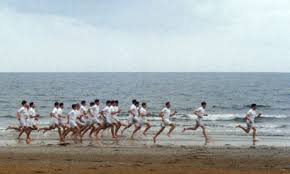
I had a train to catch next day but managed to get to stride along the Chariots of Fire beach early in the morning plus take a peek at St Andrews Old Course before the Poetry Breakfast discussion on translation. Diplomatically and informally chaired by Annie Rutherford, the theme emerged that we ought to think more loosely, more liberally about the idea of translation.  Aurelia Maurin suggested we should think of it more  as we do cover versions of songs. Claudia Daventry opened the field up by quoting Charles Simic’s idea that all poems are translations from silence. Nora Gomringer remembered a professor urging her to find ‘the game’ of any poem she intended to translate not merely to work line by line. She’d been asked to translate Yoko Ono’s poems into German but felt unable to and the importance of the rightness of a translator to a source text was demonstrated when, on another occasion, she’d translated from Russian (I think) and had actually been spat at by a disapproving reader. I was struck – as before – by what powerful emotions the idea of translation stirs up, involved as it is with ideas of truth, honesty and fidelity. I especially liked Daniela Seel’s take on the process, stressing the almost chance meeting of suitable translator with appropriate source text and the way in which the linguistic and emotional ‘body’ of the translator (his/her resources) need to be matched to the varied demands of the source text.

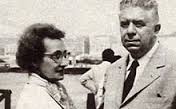
But I had to catch my train and, though exhausted, I spent some of the six hours back re-reading Montale’s loving lament and memorial to his wife, Drusilla Tanzi, here translated by G. Singh:

With my arm in yours I have descended at least a million stairs,

And now that you aren’t here, a void opens at each step.

Even so our long journey has been brief.

Mine continues still [. . . ]

url
Montale and Drusilla