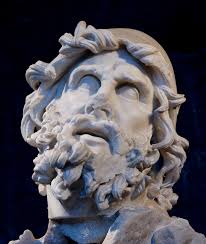
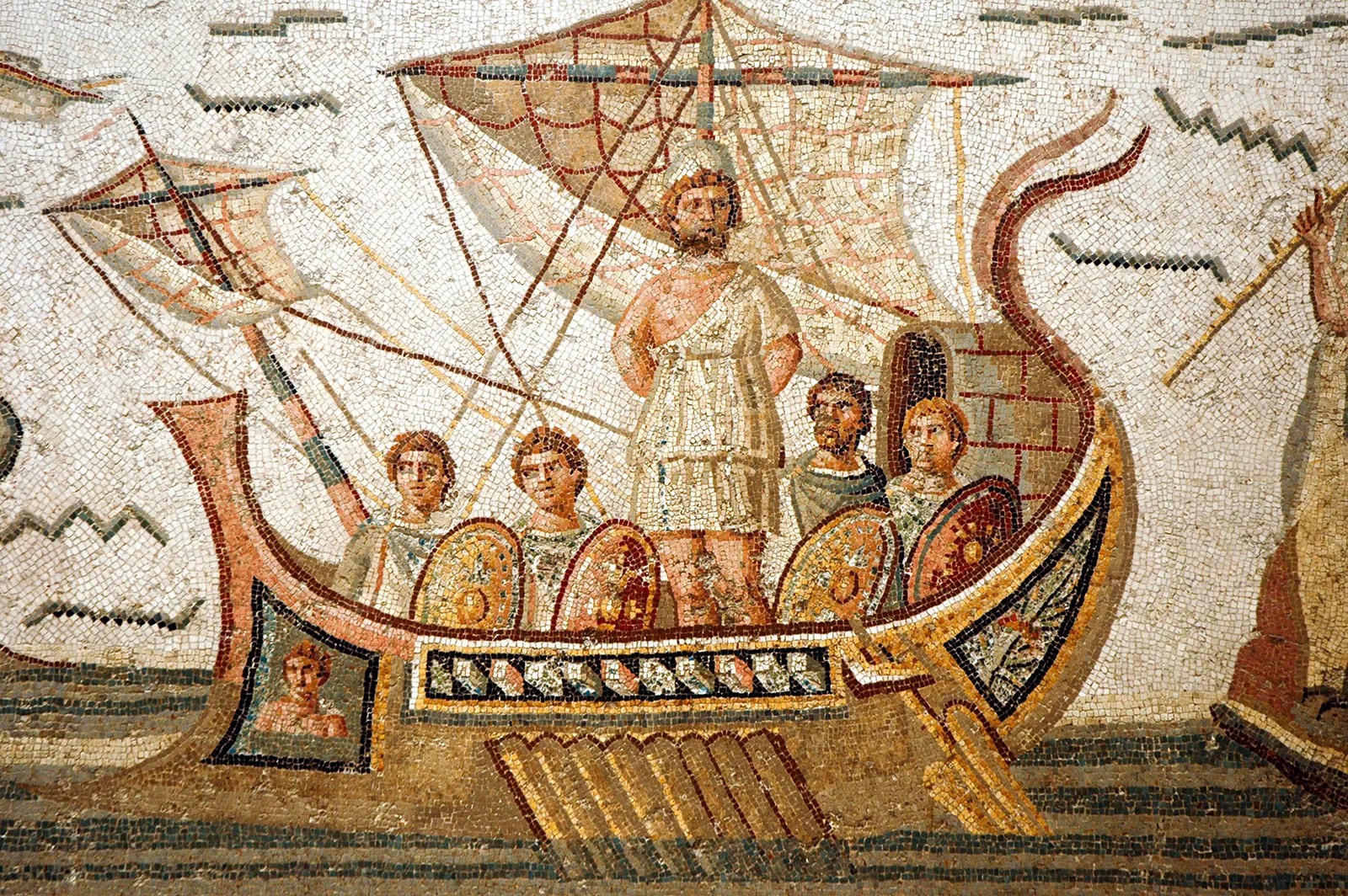
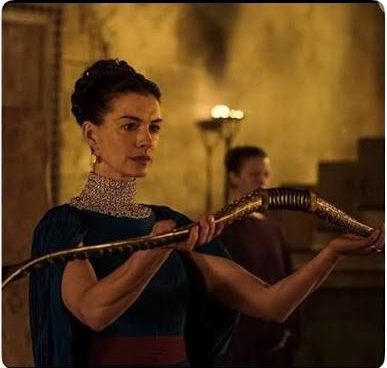
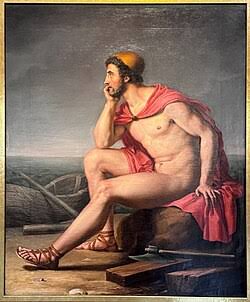
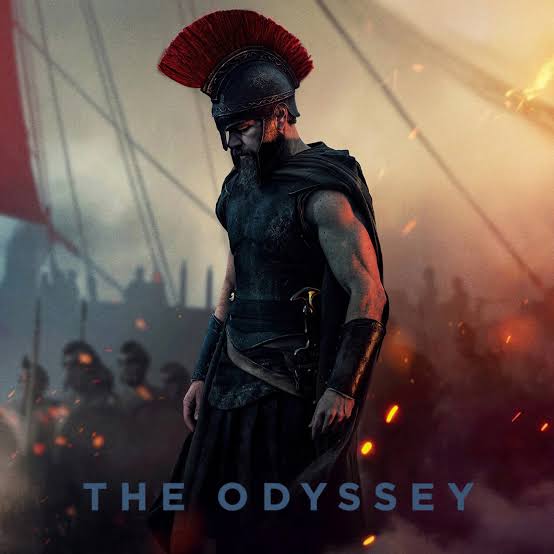
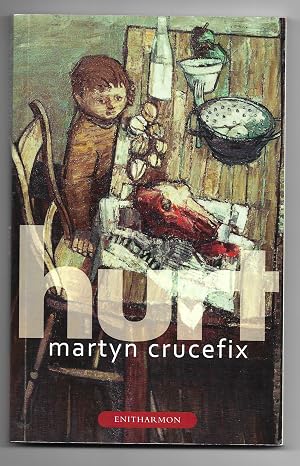
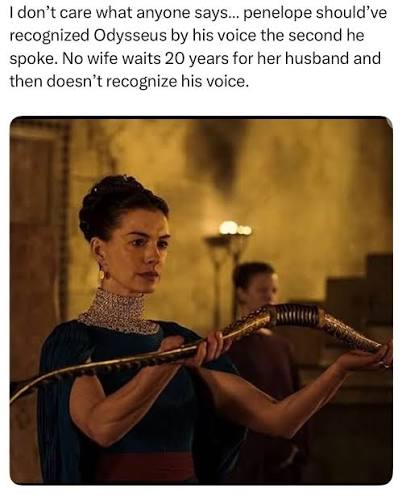
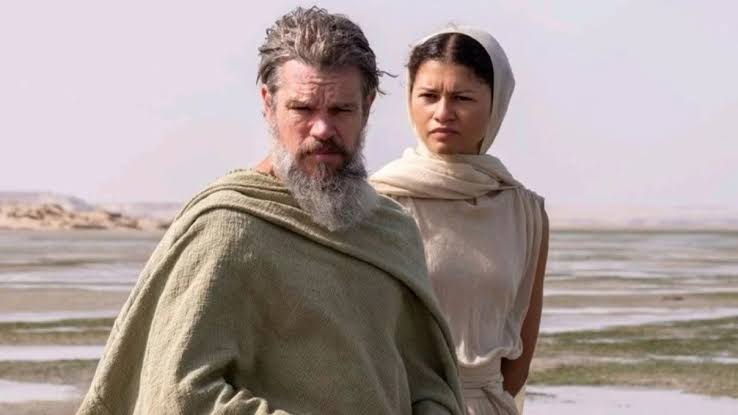
Watching Christopher Nolan’s film The Odyssey on the IMAX screen at Swiss Cottage recently reminded me of this …. Back in 2008, I was struggling to complete a sequence of poems – called ‘Essays in Island Logic’ – in which I had taken the three central figures of Homer’s The Odyssey and placed them on a modern Ithaca, by now become a popular holiday destination. On reflection, I realised I was struggling with the poems because I was labouring under a strong a desire to exert too much authorial control over a piece that in fact wanted to be set free. What follows derives from notes I made at the time, having discovered some of Boris Pasternak’s ideas about the writing of poetry which influenced my approach to the poem sequence which was completed and eventually published in my collection Hurt (Enitharmon, 2010).
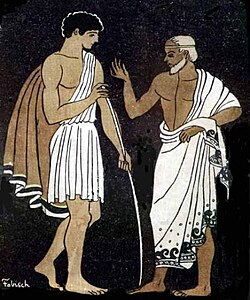
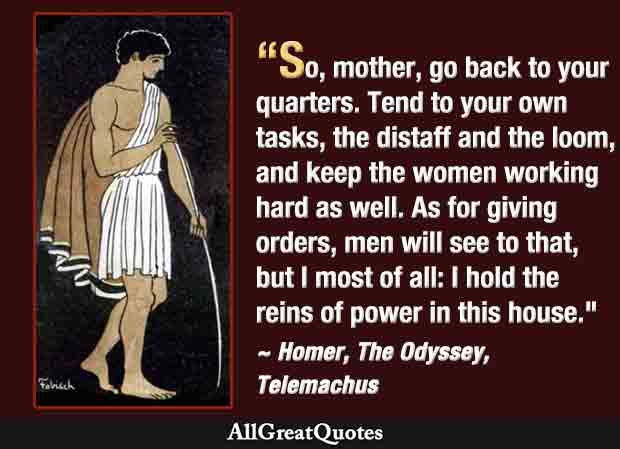
Over the next couple two weeks, I will publish here 15 poems from the sequence that resulted – featuring an ageing Odysseus, a frustrated and ill Penelope, and their son, the angry, unfulfilled, edgy Telemachus.
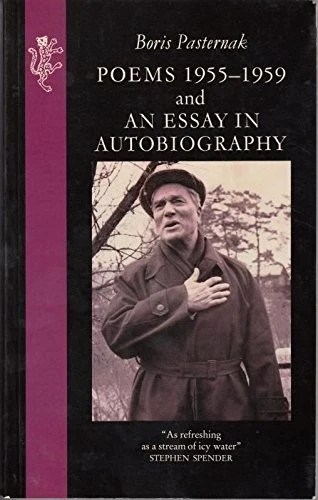
There is an early – now lost – paper by Boris Pasternak called ‘Symbolism and Immortality’ which argues that our impressions are subjective. However, he also argues that these subjective impressions are capable of being ‘the common property of man’. Pasternak is recalling this lost essay in his ‘Essay in Autobiography’ written in 1956 and he goes on, ‘I assumed that every human being leaves behind him when he dies his own share of this undying, racial subjectivity – the share contained in him in his lifetime . . . in this ultimate, subjective and yet universal area of the soul, art finds its . . . field of action and its main content’. He then remembers concluding that ‘the joy of living experienced by [the artist] is immortal and can be felt by others through his work . . . in a form approximating to that of his original, intimately personal experience’ (tr. Manya Harari, Poems 1955-1959 and The Essay in Autobiography, Collins Harvill, 1990).
In Pasternak’s own work these ideas emerge in poetic form in moments such as ‘I want the heart of the matter / Always in work, / The chaos of feelings’ (‘I want the heart of the matter’) and ‘Success is not your aim / Nor noise, but gift of self’ (‘Fame’s not a pretty sight’). In struggling to complete ‘Essays in Island Logic’ I felt I had been blocked because I have been too anxious to ascertain, or assert, its meaning. Returning to the sequence again after a few months I felt more sanguine about this – chilled and allowing. As Pasternak is saying, all my work argues my own matrix of experience – it’s not me but mine. The objective world (though unknowable still) is processed through my own particular mesh – my set of harmonies and disharmonies – and must emerge coloured, spun, almost texturised, according to my personal self. As Pasternak argues though, each individual self has sufficient in common with all mankind so that only the extremely eccentric individual will be unrecognisable to anybody else. Hence experiences are both unique and common. If this was not the case, then art would be either excruciatingly dull or utterly alien to us.
It strikes me this is not far from Keats’ valley of pain. We begin with the fundamental matrix of any human being – a body, drives, senses, loneliness, seeking love and companionship – and this is grown on through the hornbook of our individual experiences, becoming, as Keats says, more unique the more we experience. These days I feel the truth of this more and try to understand it far less – the accumulated complexity and richness of even my relatively narrow life. This is the root of my railing against fundamentalism (of any kind): that it denies access to mature experience. It short cuts the truth – at least the only one we can get to. It may seem attractive at times (of trouble) but it is always an error. Odysseus learns this I think in the ‘Essays’ sequence since his earlier self was a fundamentalist soldier (almost tautologous – the perceiver of vivid contrast of necessity, us and them, victory and defeat). His previous egotism, eloquence and persuasiveness suggest this. In the past he has always employed language as persuasion, and I remember how Auden became so wary of the persuasive powers of language around 1939. In my poem, the aging Odysseus no longer wishes to divide and persuade but rather to take life as a whole.
In contrast, his son, Telemachus, remains locked into his search for a form of fundamentalism – what he regards as a cause, a purpose. He has yet to (may never) grow into the more complex jacket that he needs to wear. Poor Penelope has led the restricted life of a conventional woman (her tending the geese as a child, her long waiting, her role in the house etc) and she quietly envies male mobility and their encounters with the world. I have not been radical with her portrayal – yet she too is best seen as seeking the complexity of truth. So there are three souls in the poem sequence, all variously encountering the world. The tourists are equally in search of a rather simplistic remedy to their lives elsewhere: vainly seeking in the wrong places, the beach, consumerism, sex, geographical escape. The solution – if we can speak in such terms – is an openness of soul. There: I’ve said it. This is the first occasion on which it does not feel pompous or laughable for me to talk in such terms. It is the goal of the wholeness of our awareness that suggests the holiness of self.
So we process our own experience. We find a locale, a niche for it within ourselves, thus adding it to ourselves, to our growing uniqueness. As a teacher, this has long been my model of the educative process and ought to find its way more often from my daily business into poems. And death? As Pasternak suggests, the artist leaves behind something of their own ‘take’ on their life experience – a poem, a piece of music, a painting. Did M——– leave something when she died in January 2006? (or more recently, rawly, tragically, K——– in April 2026?) Of course – her words, her way of life, her perception of things such as food, children, gardens, her husband. She contributed and still contributes to our ongoing life and thought processes. She remains one of the counterpoint of voices, part of the collaborative nature of life, incorporated (though bodiless) into our matrix, into our souls. Of course, we are aware of blind-spots in her individual perception of the world – these are part of her individual nature, her character. But this merely suggests that it is the most powerful personalities who are capable of incorporating most. Shakespeare – oh, Bill! – and Keats’ concept of negative capability. Then the driving force behind this emergence from the shell of the self into the world is surely what we call ‘love’. We are all artists of differing abilities in our everyday lives. What marks the ‘real’ artists? Surely only the choice of medium as a particular, recognisable form of expression. I have always been drawn to Virginia Woolf’s idea of the dinner-party as an art form as in Mrs Dalloway – perfectly valid, but seldom recognised. And my beef with work, the grind of the 9-to-5, is the way it demands and delivers the narrowing of experience. So my ‘Essays’ is a meaningless sequence – merely three souls engaged, at differing stages, on the common work of the creation of their own selves.
And so, more generally, to write a poem? It is the slow uncovering of these forged connections in our own minds. This is why it happens. It begins, unbidden, so often. But the process of recovery itself, with the intention of bringing it into the public sphere, so that it can be taken up and experienced by others, that is a process towards self-knowledge and is never (should never be) a representation of the already familiarly known, the preconceived. Writing a poem resembles the process of self-justification – but is not that. It is a process of analysis, discovery, comprehension of the negotiated ground between self and other. In Dr Zhivago, Pasternak attacks two types of journalists. The first has a pre-prepared construct, an agenda about the ‘people’ and, claiming to be an observer, in reality only collects supporting evidence of his own views. The second (and more recognisably modern type), is all clipped speech, sketches, and scenes of reality, scepticism and misanthropy. But Pasternak argues again: facts do not truly exist for us until man puts into them something of his own, some measure of his own wilful, human genius, of fairy tale and myth. As before, this seeming rampant individualism is counter-balanced by Pasternak’s unshakable belief that – for the most part (and I’m afraid it is this vague) – there does remain a sufficient commonality for art to speak.