My earlier postings on ekphrastic poetry – poems inspired by visual art – have proved astonishingly popular and, when Agenda magazine asked me to review two collections with exclusively ekphrastic intentions, I leaped at the chance. I’m posting this now because the reviews have just appeared in the latest Agenda, a journal well-worth subscribing to. As will become clear, in what follows I am more persuaded by Seamus Cashman’s book, The Sistine Gaze (Salmon Poetry, 2015) than David Pollard’s Three Artists (Lapwing Publications, 2017). But both provide much food for thought on the relationship between poetry and the visual arts and evidently there are a lot of us fascinated by this sort of writing.
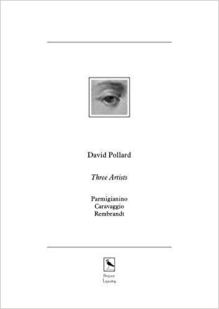 David Pollard’s book is divided into three sections, one each on Parmigianino, Rembrandt and Caravaggio. Initially, Pollard presents a set of 15 self-declared “meditations” on a single work of art – Parmigianino’s ‘Self Portrait in a Convex Mirror’ (c. 1524). This is a bold move, given that John Ashbery did the same thing in 1974 and Pollard does explore ideas also found in Ashbery’s poem. Both writers are intrigued by a self-portrait painted onto a half-spherical, contoured surface to simulate a mirror such as was once used by barbers. The viewer gazes at an image of a mirror in which is reflected an image of the artist’s youthful and girlish face. It’s this sense of doubling images – an obvious questioning of what is real – that Pollard begins with. “You are a double-dealer” he declares, addressing the artist directly, though the language is quickly thickened and abstracted into a less than easy, philosophical, meditative style. It is the paradoxes that draw the poet: “you allow the doublings / inherent in your task to hide themselves / in open show, display art that / understands itself too well”. Indeed, this seems to be something of a definition of art for Pollard. “Let us be clear”, he says definitively, though the irony lies in the fact that such art asks questions about clarity precisely to destabilise it.
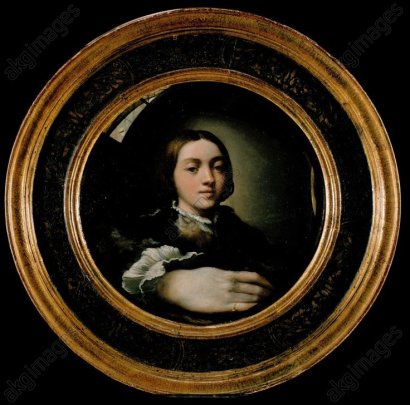 The 15 meditations are in free verse, the line endings often destabilising the sense, and they are lightly punctuated when I could have done with more conventional punctuation given the complex, involuted style. Pollard also likes to double up phrases, his second attempt often shifting ground or seeming propelled more by sound than sense. This is what the blurb calls Pollard’s “dense and febrile language” and it is fully self-conscious. In meditation 15, he observes that the artist’s paint is really “composed of almost nothing like words / that in their vanishings leave somewhat / of their meaning” – a ‘somewhat’ that falls well short of anything definitive. Of course, this again echoes Ashbery and appeals to our (post-)modern sensibility. Pollard images such a sense of loss with “a rustle of leaves among the winds / of autumn blowing in circles / back into seasons of the turning world”. He does not possess Ashbery’s originality of image, as here deploying the cliched autumnal leaves and then echoing Eliot’s “still point of the turning world”. Indeed, many poems are frequently allusive (particularly of Shakespearean phrases, Keats coming a close second) and for me this does not really work, the phrases striking as undigested shorthand for things that ought to be more freshly said.
The Rembrandt poems have a similar tone and style, not surprisingly when most of the focus is again on the mirroring and self-reflection of his self-portraits: “Skin and paint are different stuffs / as he was a different species from himself / reflected”. Perhaps there is less playfulness here than in Parmigianino’s trompe l’oeuil image, more of an obvious darkness in the dusky, obscure backgrounds: “These images were born in thoughts of his departing / and in the horror of identity, of selves, of ruins”. Yet there is more variety of tone to be found in these poems as Pollard develops Rembrandt’s social context, his painting of pictures to please Amsterdam’s wealthy burghers and corporations, images of their self-importance for which they “paid him well”. Yet the artist himself was more interested in other, more liminal figures:
And just beyond the door, always ajar,
there in the street canal side,
in a swift moment are his old hags
and poverty and Christ, the Jews
in fur and black passed down the ages,
too many beggars and those copulating dogs
and then again wives and washerwomen

The final Caravaggio section of this book makes different ekphrastic choices. Pollard allows the ageing artist a direct voice in one poem, then considers 7 individual images in separate poems, then concludes again with something close to a ‘meditation’. Hearing Caravaggio speak (in ‘Porto Ercole’) is a refreshing change to Pollard’s own rather too-consistent, sometimes haranguing voice. The artist is sailing to Rome, hoping to escape a death sentence, fretting about what he has achieved: “I am only spine and marrow of regret / and last prayers flail along my throat / and my weak blood is darker / than those holy tenebrae I drew art from”. Elsewhere we hear of the artist’s earlier life, hawking more conventional images on Rome’s street corners. Those familiar with Caravaggio will know what to expect: the play of light out of thick slabs of shadow and “[p]lain speech not mannered rhetoric”. Such a visual ‘plain speech’ is well described in ‘The Entombment’ with Christ’s “liminal grey flesh / full of the pure weight of the physicality of loss”. Also, in ‘The Rising of Lazarus’, it is suggested that Caravaggio employed grave robbers to “drag a grave” for a real, decaying corpse since “he only painted from grit and real”. The language here has some energy, but I doubt its precision in such choices as “drag” and “grit” – the former tries too hard, the latter not hard enough. Pollard’s liking for abstraction can also be harmful as in these final lines on Caravaggio, which leave me puzzling, though not in any good way:
Thus it can show only how
the insignificance of objects
waits for it, accepts it,
and then drowns in its almost too late a dusk
and ochre of our being
hewn out of nothing more than the liquidity
that holds invisibility at bay against oblivion.

In contrast to Pollard, Seamus Cashman lets us partake of the very moment when his single long poem began. Re-visiting the Sistine Chapel, we are told his eyes fall on a painted figure in a white, pseudo-architectural, triangular frame – a woman in a green jacket. He goes on: “Her eyes hold mine, and the word ‘gaze’ slips into my mind. As I stare she seems to invite me to converse”. The resulting ‘conversation’ is the extraordinarily ambitious poem that follows, drawing on Michelangelo’s work on the ceiling of the Chapel (completed in 1512) and the altar wall (completed 1541). This admittedly touristic, but originating moment is poetically recast in Cashman’s Prologue as an epiphanic encounter: “This face centres a still point, draws me up and in. She is waiting. I attend”.
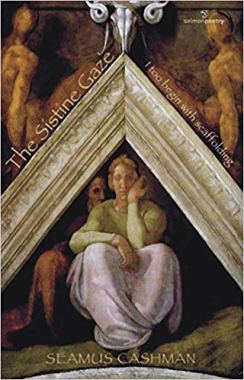 In fact, the woman is hardly given a voice and the substance of the sequence is dominated by the (male) artist’s reflections on his years-long task. He’s most often found “between this scaffold floor and ceiling”, complaining about his “craned neck”, pouring plaster, crushing pigments, enumerating at great length the qualities and shades of the paint he employs (Cashman risking an odd parody of a Dulux colour chart at times – “Variety is my clarity, / purity my colour power”). Later, we hear him complaining the plaster will not dry in the cold winter months. We even hear the artist reflecting on his own features, the famous “long white beard and beak-like nose”. These period and technical details work well, but Cashman’s Michelangelo sometimes also shades interestingly into a more future-aware voice, melding – I think – with the poet’s own voice. So he remarks: “Getting lost is not a condition men like me endure or venture on today. / All GPS and mobile interlinks enmesh our every step”. Later, a list of “everything there is” sweepingly includes “chair, man, woman; laptop or confession box”.
At one point, Michelangelo recalls working on a great marble block that fell and shattered, “bartering monumentalities / that break backs”. And I do worry that the sheer ambition of this project has led to awkward monumentalities in the texture of Cashman’s verse. He surrounds his poems with thickets of rubric. So on page 31, the reader is told that she is about to begin Book 1, called ‘Creation’, this being Part II, called ‘In the Mirror of Creation’s Dust’ and that this book consists of Verses 65-117 and that, firstly, comes Movement 9 (which runs from verses 65-67) and that the opening passage has been given the title ‘Convinced we are awake’. This gives the whole thing a clunky, pseudo-scriptural quality which (on my reading) doesn’t really fit with Cashman’s overall purpose and its enumerative, even obsessive titling and sub-titling certainly and frequently derailed this reader’s imaginative and emotional engagement with the poems. I suspect this decision arose as a response to the sheer fecundity, the multifarious nature, of Michelangelo’s Sistine work. It may also account for Cashman’s frequently rather grandiose register, his occasional drifts into archaism, the ubiquity of rhetorical gestures like lists of three (or even four) and the self-conscious habit of using nouns as verbs (thigh, sex, tray, story).
But as a result, Cashman’s verse has a Whitmanesque quality (the long lines) and can bring to mind Blake’s Prophetic Books; it has dashes of Hopkins’ alliterative energy. At one point the voice wants “to sing. I want to sing the body tune, / the rhythms of blood, the living heart” but I found myself wishing for a little less such effortful transcendence and a more Traherne-like, child-like, simplicity of diction which is still capable of conveying what Michelangelo declares, at a late stage, that “our instinct is infinity”. This might also sit more comfortably with Cashman’s Michelangelo’s intentions which seem to be to give “hope to some pilgrim searching my cabinet for direction and new ritual”. I think we are meant to see Cashman himself as this “pilgrim”, a latter-man, having lost his Catholic beliefs, but visiting the Chapel in search of a new vision.
Certainly, the Michelangelo-voice does not seem to be speaking of his works in a confined 16th century fashion as art in praise of God. More like a modern poet, he says “all we need / are words of admiration drafted with compassion for the flesh and bone we are”. Later, reflecting on the nature of the human self, he describes it as a “mobile installation, unfixed and indeterminate [. . .] emotion in the making”. Many verses in the poem celebrate the sexuality of “Eve ‘n Adam—penetration – vulva open to erection; risen nipples; hanging scrotum; nosing cheeks / all the open flesh and pleasured nerve-ends”. And alongside this, the poem works towards a modern – or perhaps it’s a Blakean – godless vision of human life where “heaven is adoration of knowledge, and god is who we know ourselves to be”.
Curious and bold then, that Cashman ekphrastically takes on the Sistine Chapel and then writes God out of the picture. Nor does he shrink from the shelf-clearing consequences for our conventional spiritual understanding. The idea of the “Soul” is now little more than a “word. It frightens children and old painter sculptors weakened by the weight of brush and mallet. Soul. / Nothing knows its place”. Likewise, The Sistine Gaze concludes its frequent lauding of human sexuality with a recognition of the plain fact of its opposite, death: “this finality, expired into a nothingness we each possess. Dead is dead”. Even the genius-artist himself is finally and ironically “absorbed in the great womb of chaos he created / leaving us to falter, wonder, and pass on / for we know nothing”. These lines are some of the concluding moments of the book and they possess a lighter touch than the majority of it. Cashman here allows the white space around his printed words to work its magic more effectively, creating a rhythm and a chain-link of tensions which add to the reader’s experience. For all its intended monumentality and dizzying ambition (which has led the poet to erect too much scaffolding around his poems), this quiet end-piece is for me the most affecting moment of the whole book: “our end is an endless breath / to fill – to vitalise / and imperceptibly / to let go— / never to know”.



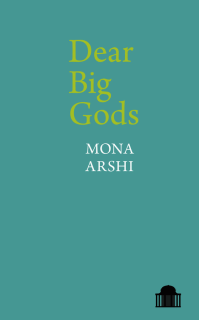 In a recent launch reading for her second collection, Dear Big Gods (Pavilion Poetry/Liverpool University Press, 2019), Mona Arshi suggested
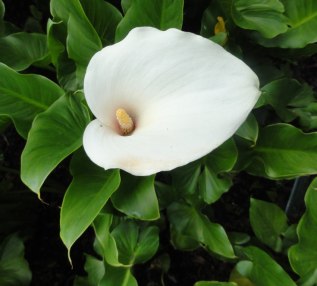 As the blurb suggests, these poems are indeed “lyrical and exact exploration[s] of the aftershocks of grief”. But ‘Everywhere’ adopts a little more distance and develops the kind of floating and delicate lyricism that Arshi does so well. The absent brother/uncle is still alluded to: “We tell the children, we should not / look for him. He is everywhere”. As that final phrase suggests, the rawness of the grief is being transmuted into a sense of otherness, beyond the quotidian and material. It’s when Arshi takes her brother’s advice and lets go of “definitive knowledge” that her poems promise so much. ‘Little Prayer’ might be spoken by the dead or the living, left abandoned, but either way it argues a stoical resistance: “I am still here // hunkered down”. In a more conventional mode, ‘The Lilies’ develops the objective correlative of the flowers suffering from blight as an image of a spoliation that hurts and reminds, yet is allowed to persist: “I let them live on / beauty-drained / in their altar beds”.
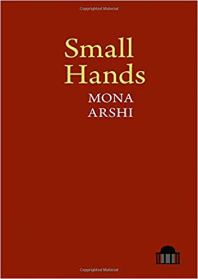 Arshi’s continuing love affair with ghazals also seems to me to be an aspect of this same search for a form that holds both the connected and the stand-alone in a creative tension. ‘Ghazal: Darkness’ is very successful with the second line of each couplet returning to the refrain word, “darkness”, while the connective tissue of the poem allows a roaming through woods, soil, mushrooms and a mother’s praise of her daughters. Poems based on – or at least with the qualities of – dreams also stand out. The doctor in ‘Delivery Room’ asks the mother in the midst of her contractions, “Do you prefer the geometric or lyrical approach?” In ‘The Sisters’ the narrator dreams of “all the sisters I never had” and within 10 lines Arshi has expressed complex yearnings about loneliness and protectiveness in relation to siblings and self.
 So, in ‘My Third Eye’, the narrator is “more perplexed than annoyed” that her own third eye – the mystical and esoteric belief in a speculative, spiritual perception – has not yet “opened”. The poem’s mode and tone is comic for the most part; there is a childish impatience in the voice, asking “Am I not as worthy as the buffalo, the ferryman, / the cook and the Dalit?”. But in the final lines, the holy man she visits is given more gravitas. He touches the narrator’s head “and with that my eyes suddenly watered, widened and / he sent me on my way as I was forever open open open”. The book also closes with the title poem, ‘Dear Big Gods’, which takes the form of a prayer: “all you have to do / is show yourself”, it pleads. The delicate probing of Arshi’s best poems, their stretching of perception and openness to unusual states of emotion are driven by this sort of spiritual quest. Personal tragedy has no doubt fed this creative drive but – as the poet seems to be aware – such grief is only an aspect of her vision and not the whole of it.
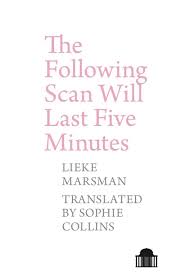 Lieke Marsman’s The Following Scan Will Last Five Minutes (Pavilion Poetry/Liverpool University Press, 2019) is an unlikely little gem of a book about cancer, language, poetry, Dutch politics, philosophy, the environment, the art of translation and friendship – all bound together by a burning desire (in both original author and her translator, Sophie Collins) to advocate the virtues of empathy. The PBS have chosen it as their Summer 2019 Recommended Translation.
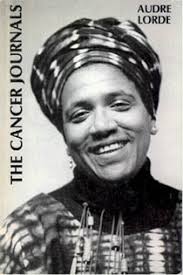 The sort of silence Lorde fears is evoked in the monitory opening poem. Its unusual, impersonal narration is acutely aware of the lure of sinking away into the “morphinesweet unreality of the everyday”, of the allure of self-imposed isolation (“unplugg[ing] your router”) in the face of the diagnosis of disease. What the voice advises is the recognition that freedom consists not in denial, in being free of pain or need, but in being able to recognise our needs and satisfy them: “to be able to get up and go outside”. It’s this continuing self-awareness and the drive to try to achieve it that Marsman hopes for and (happily) comes to embody. But it was never going to be easy and towards the end of the poem sequence, these needs are honed to the bone:
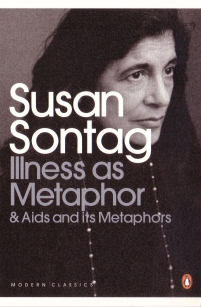 Marsman tells us she read Audre Lorde and Susan Sontag’s Illness as Metaphor after her operation and discharge from hospital. It’s Sontag who draws attention to the role of language in the way patients themselves and other people respond to cancer. Marsman asks herself: “Am I experiencing this cancer as an Actual Hell [. . .] or because that is the common perception of cancer?” The implied failure to achieve truly empathetic perception of the role and nature of the disease is echoed horribly in the empathetic failures and hypocrisies of Dutch politicians (UK readers will find this stuff all too familiar in our own politics). Prime Minister, Mark Rutte, blithely allocates billions of euros to multinationals like Shell and Unilever (on no valid basis) while overseeing cuts in health services. Marsman reads this as a failure to empathise with the ill. Another politician, Klaas Dijkhoff, reduces benefits on the basis that people encountering “bad luck” need to get themselves back on their own two feet. Bad luck here includes illness, disability, being born into poverty or abusive families, being compelled to flee your own country. Marsman’s own encounter with such ‘bad luck’ makes her rage all the more incandescent.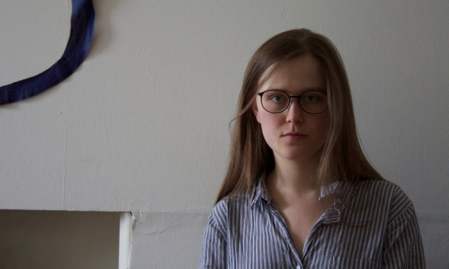
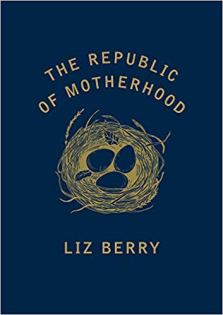
 It’s interesting then – in The Republic of Motherhood
 The mother in the poem also suffers postpartum depression and Berry seems here to allude to experiences of First World war soldiers, wounded, repaired and sent back out to fight again, without fundamental issues being addressed: “when I was well they gave me my pram again / so I could stare at the daffodils in the parks of Motherhood”. She ends up haunting cemeteries, both real and symbolic, and it is here she finds even more tragic victims of motherhood, of birth trauma and of psychosis. The final response of the poem is to pray – though it is a prayer that has scant sense of religion but combines empathy with other women with a great anger expressed in the phrase “the whole wild fucking queendom [of Motherhood]”. The paradoxically inextricable sorrow and beauty of motherhood becomes the subject of the rest of the pamphlet, but this poem ends with the mother echoing a baby’s “nightcry” and erasing her own self, “sunlight pixellating my face”. The poem’s rawness is unresolved. Having crossed the border into motherhood (that decision is never questioned here), the contradictory pulls of Motherhood (capital M) and the stresses of mothering (small m) have a devastating impact. In a recent poem called ‘The Suburbs’ – Berry’s contribution to the National Poetry Competition 40th Anniversary Anthology – she records the effect of mothering even more starkly: “my world miniaturised”.

 But such optimism is not a frequent note. Most of the remaining poems deal with the experience of depression in motherhood. ‘Early’ is almost as happy as it gets with mother and child now like “new sweethearts, / awake through the shining hours, close as spoons in the polishing cloth of dawn” (what a glorious image that is). But even here there are demands from the child that will need “forgiving” by the mother. One of these concerns her role as writer, particularly the difficulty of writing in the maelstrom of mothering: “every line I wanted to write for you / seems already written, read / and forgotten”. And this is why Berry chooses to co-opt lines from Charlotte Perkins Gillman’s terrifying story, The Yellow Wallpaper in ‘The Yellow Curtains’. Both texts can be read as studies of postpartum depression, but the despair has as much to do with the women as writers, confined, and – as in Gillman – the husband voices the demands and expectations of convention, of queendom: “He said [. . .] I must / take care of myself. For his sake.”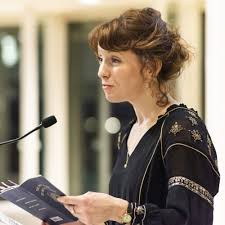
 In the summer of 2018, John Greening spent 2 weeks as artist-in-residence at the Heinrich Boll cottage in Dugort, Achill Island. The resulting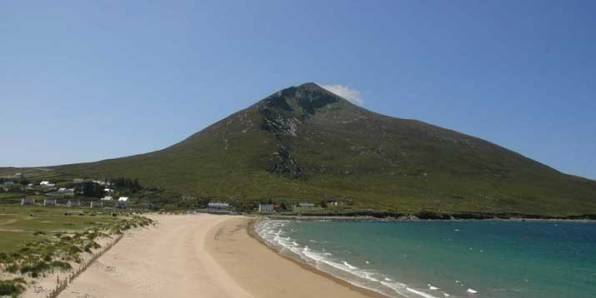
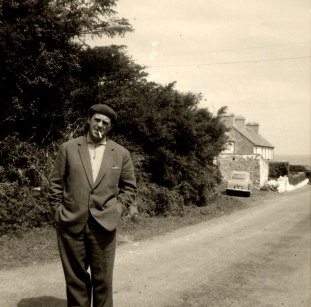
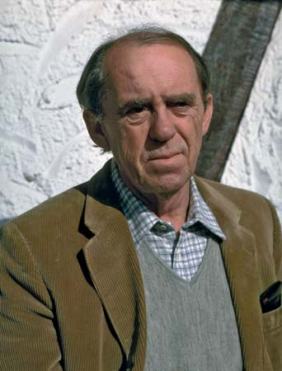
 One day around 1973/4, Ted Hughes bought or was given

 Ted Hughes began by modelling poems of his own closely on the work of the poet that Ramanujan places first in the collection, the 12th century Indian poet-saint, Basavanna. Early on Hughes adheres closely to the originals but gradually he distances himself, starting to create more original poems, often employing personal materials, and (as I have said) some of these little poems eventually found their way into the final section of Gaudete. The refrain and invocation that Basavanna uses in the majority of his poems is the address to Siva as “lord of the meeting rivers”. The influence of Robert Graves’ The White Goddess is well known on Hughes and he decided to experiment with addressing his own conception of the divinity – a female divinity – at once his muse and the fundamental animating force in the world, as “Lady of the Hill”.
 But as in the best poetry, such simplicity of language and tone belies the spiritual intentions of the originals and of Hughes’ experimental vacana poems too. As Ann Skea explains, in his turn, Hughes “becomes the spiritual bridegroom of the Lady of the Hill and struggles to be worthy of that union”. Unlike the original Indian poems, Hughes seems to see his Goddess in every human female and they are seen as testing and challenging the poet to further spiritual growth. In the end, just 18 of these experimental poems were chosen to form the Epilogue to Gaudete as the songs sung by the Reverend Nicholas Lumb on his return from the underworld: a man who had seen things and felt the need to communicate those things: “he saw the notebook again, lying on the table, and he remembered the otter and the strange way it had come up out of the lough because a man had whistled. He opened the notebook and began to decipher the words, he found a pen and clean paper and began to copy out the verses”.


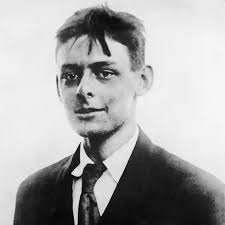
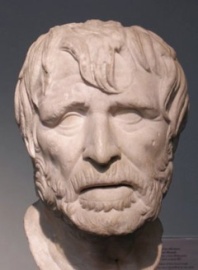 Did you know Hesiod probably pre-dates Homer? Hesiod is aware of the siege of Troy but he makes no reference to Homer’s Iliad. He’s usually placed before Homer in lists of the first poets. The other striking aspect of Works and Days is that (unlike Homer) he is not harking back to already lost eras and heroic actions. Hesiod talks about his own, contemporary workaday world, offering advice to his brother because they seem to be in a dispute with each other. Hesiod’ anti-heroic focus is an antidote to the Gods, the top brass and military heroes of Homer. Most of us live – and prefer to live – in Hesiod’s not Homer’s world.
 He seems to have been a poet-farmer who makes sure we are aware that he has already won a literary competition at a funeral games on the island of Euboea. His prize-winning piece may well have been his earlier
 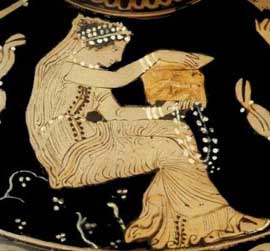 There are further reasons to set to work in the very nature of the cosmos and the human world. Hesiod tells the Pandora story here. Zeus causes the creation of a female figure, Pandora, as a way of avenging Prometheus’ pro-humankind actions (stealing fire from the gods, for example). Her name suggests she is a concoction or committee-created figure from contributions from all the Olympian Gods. She is given a jar which she opens: “ere this the tribes of men lived on earth remote and free from ills and hard toil and heavy sickness [. . .] But the woman took off the great lid of the jar with her hands and scattered all these and her thought caused sorrow and mischief to men” (tr. Evelyn-White). Hesiod’s locating of the root of human sorrow in the actions of a woman echoes the Christian story of the loss of Paradise and it is one of the reasons why Hesiod has been accused of misogyny, though as Stallings suggests, he’s not any more complimentary about the males of the human race.
 It’s certainly the lazy, self-serving, arrogant younger brother who forms the focus of the rest of the poem: “So Perses, you be heedful of what’s right . . . So Perses, mull these matters in your mind . . . Fool Perses, what I say’s for your own good” (tr. Stallings). It’s true that his name gradually fades from the text in the final 500 lines but the torrent of imperatives, offering advice and guidance on a range of practical issues, often sounds like haranguing from a concerned, perhaps slightly pissed off, brother. Much of this material is phenological – when to sow crops, when to harvest, when to shear your sheep. In winter, don’t hang around the blacksmith’s forge where other wasters gather to chat and pass the time. It’s safe to put to sea when the new fig leaves are the size of crow’s feet.
 These are the passages that, around 29BC, inspired Virgil to his own farmer’s manual, the Georgics. Hesiod ends his poem in a rather perfunctory manner, roughly saying he who follows this good advice will become “blessed and rich”. But given Pandora’s jar and the Iron Age we live in, even this seems a mite optimistic. And of course, Perses never gets the chance to speak for himself. But I guess the tensions between his brother’s call for social and religious conformity and Perses’ individualistic disobedience to the demands of the gods and the sense of what is best for a society have gone on to form the basis of the continuing Western literary canon. And does any of this help with Brexit? I conclude (largely with Hesiod) the bleeding obvious: it’s complicated – solutions must be negotiated, don’t hope for some golden age because in a fallen, less-than-ideal, complex society it’s better for the future to be decided in the glacier-slow committee rooms of a plurality of voices than in the stark divisions and dramas of the battlefield. Work hard – have patience – don’t buy into fairy tales of a recoverable golden age.
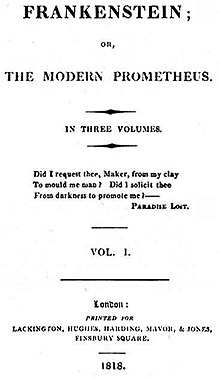 Earth continues by diagnosing the state of slavery into which England has fallen. This – and the following passage with its more positive analysis of what Freedom means to working people – makes for powerful, relevant, realistic reading in contrast to Shelley’s hard-to-pin-down mechanisms of political change. Slavery is to have to work and be paid only enough to live for another day’s work. It is to work not for oneself but for “tyrants”. It is to see family suffering and dying, to go hungry while the rich man surfeits his dogs. It is to suffer the “forgery” of paper money, to have no control over one’s own destiny. It is – when driven to the point of protest – a more direct reference to events in Manchester – “to see the Tyrant’s crew / Ride over your wives and you”.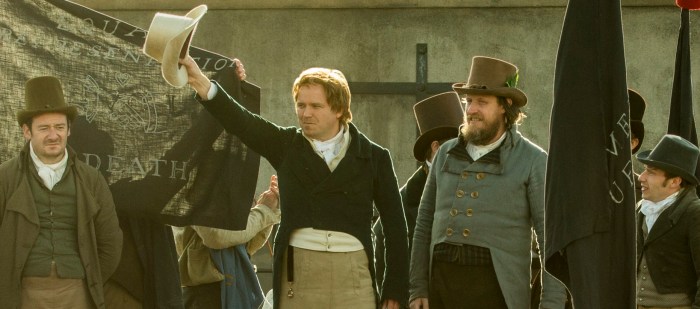

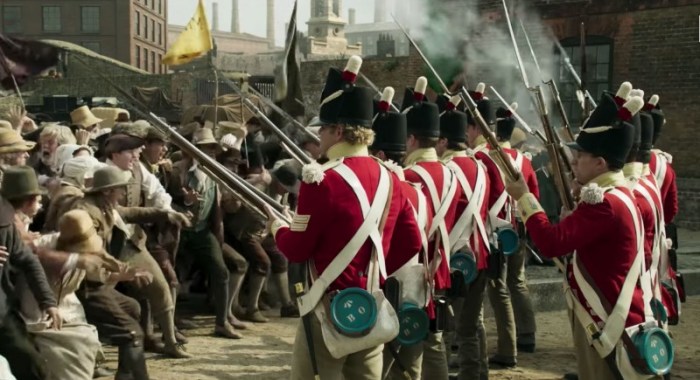
 The third reason Shelley gives – via the voice of the earth – also offers only equivocal, indeed very uncomfortable, hope. Offering little or no consolation to the victims and their relations – though a point proven true through many centuries – such massacres by repressive forces will prove an inspiration to those who come after them: “that slaughter to the Nation / Shall steam up like inspiration”. Using another of his images for revolutionary fervour, this steam will eventually result in a volcanic explosion, “heard afar”. Once more in this poem, these reverberations are translated into words to mark “Oppression’s thundered doom”, stirring the people in their on-going fight for justice and liberty. Shelley concludes with the actual words he imagines being uttered – and we have heard them before:
