Another Look at Odysseus #5

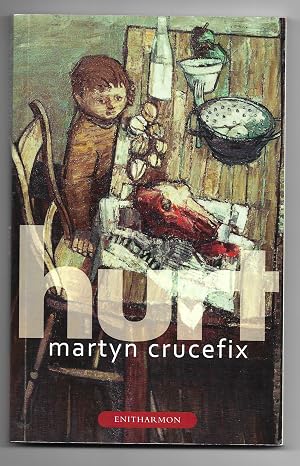
This is the fifth – and final – instalment of groups of 3 poems selected from my 2010 sequence of poems which takes Homer’s The Odyssey as its starting point. The full sequence of 22 poems first appeared in Hurt (Enitharmon Press). I have written about the development of the sequence in an earlier blog post here. The first 3 poems can be read here. The second 3 poems can be read here. The third 3 poems can be read here. The fourth 3 poems can be read here. In these concluding 3 poems, Odysseus catches sight – on the street – of a woman he used to love, who left him, who hurt him. Telemachus’s own erotic encounters with women never come to anything, yielding for him only further frustration and unanswerable questions. In Homer’s The Odyssey, Teiresias tells Odysseus, after he has killed the suitors, to continue on his travels, but this time to head inland, carrying an oar, in search of a people who know nothing of the sea.

from Essays in Island Logic

‘Same sea, same dangers waiting for him / As though he had got nowhere but older’ – W.S. Merwin – ‘Odysseus’

he considers the longevity of love

beside the plash of blue fountains

fronting the Paradise Hotel

the shade-end of Flamboyant Street

he glimpses

her unfashionable blonde

medium-cut not prison-razored or wrapped

not seen folded

to the clipped déshabillé the younger girls

begin to favour these days—

her body thickened

more severe in the black business suit

but the long swing of the left hand hers

pale strands

on the nape of the neck hers

hers that bold

address to the world’s sunny littoral

to the sunlit corner

beyond the blue of tumbling water

where now he is able to own the hurt—

no finer test

nor anything less than what his old self

would put to the sword

no more than the heart’s bloody rent

she made of him

the gaping wound surviving still

restless in its stony bed

man’s glittering and impassive ocean

to woman’s cold moon

his son finds himself looking at the moon

obscured by the flashing Bar Promo sign

the crescent moon

the night they met

the boy then with no thought of light

only gravity

her beauty as it drew him

across the dull universe of Tuesday night

the Place of Our Sacred Lady—

her glance across the tables

full of milky

outspokenness the whites of her eyes

the glossy black reserve in her pupil

those pale perfect breasts

his goal

in the ease of which he would find time

to reflect

on the nature the allure of such goals—

until the following Sunday evening

when they have outstripped

a whole series of unremarkable love songs

once more he walks

far out beyond the marina lights

once more to wrestle

with whether it’s the moon must envy

his agitation and immobility

or whether

it is he who must envy the moon’s

serenity

and slow movement

he fails to grasp good advice

what passes for gods have not finished

with him yet

says one in the bar

who had things gone better

should by rights have been forgotten—

when you think you are done

there is still further to go

with something across your shoulder

you are not sure is not a gun

because you find yourself

travelling amongst people

who know nothing of the sea

who eat no salt

who have not seen a ship’s purple sails

nor the long oars that drive them—

they ask

what is this something-something

across your shoulder

suggesting you lay it down

lay it right here

that you perform what rituals you recall

then perhaps if things had gone better

had this love

this hurt even the bright wind’s shifting

this dream this joy

at the glittering brink of sight

where the sea-rise sways

to bring in another

this next of catches

from the salt’s sharp throat

Another Look at Odysseus #4

This is the fourth instalment of groups of 3 poems selected from my 2010 sequence of poems which takes Homer’s The Odyssey as its starting point. The full sequence of 22 poems first appeared in Hurt (Enitharmon Press). I have written about the development of the sequence in an earlier blog post here. The first 3 poems can be read here. The second 3 poems can be read here. The third 3 poems can be read here. In these next 3 poems, Penelope tries to work out her understanding of the black, volcanic fields which lie high up at the centre of the island of Ithaca, but she feels the limitations of the life she has been expected to live make this impossible. Odysseus is wrestling with the facts of change and suffering. He thinks of his dog, Argos (who features a good deal in Nolan’s film), not merely their recognising each other, but their being capable of loving the apparently unlovable. Later, Penelope, knowing she is ill, drives up into the Ithacan hills in search of a shaman, in search of a cure.

from Essays in Island Logic

‘Same sea, same dangers waiting for him / As though he had got nowhere but older’ – W.S. Merwin – ‘Odysseus’

his wife remembers the High Centre

in the Crater Zone

curves like highways giant magma slicks

the cone’s last eruption

earth’s seismic sneezing

black peppercorns the size of footballs

the shape of human heads

the size of black refuse sacks

big as overturned cars—

the last thing old men remember

that there were years before this darkness

this turning inside-out

these older oxidised rust-red levels

that begin to wrap themselves

in pine and stonecrop

the age for which all subsequent ages

pay unwilling price—

yet what she saw was more like eternity

grown short-lived

and what she witnessed

everything getting ready to dissolve

where old men cry out

watch that mountain watch that mountain

the bravado

of youngsters sneering and shrugging up

fuck this shaking my fucking feet

her understanding how this must be

and that she can lay claim to neither

having waited too long

he considers what the young have to teach

to stand up invisible

as a forked child squalls in the whip

and withdrawal of waves

black sand thrown at shins and toes

sensing

the slither of ground beneath

and surely love this thrill of it

knifing him ecstatic

establishing its open wound

its soul-shaping progress the young know

yet unaware of—

trying to re-learn this

in part the effort not to flinch

as the dog he trained when young

coursing wild goat and deer and hare

like its master

no quarry able to slip away—

yet when he returned

almost unrecognisably changed infested

with ticks

half-dead from twenty years of neglect

an old rug

lay in the agave shade

dog and master thumping in recognition

barely able to drag themselves together

each as unpalatable

no finer test

the unlovable other

his wife drives herself there and back

only in the High Centre could the shaman

be uncovered

his reputation for re-building those

who ascend through the pine belts

women particularly

pick across the lava fields

put themselves in his hands

feeling disappointed or depressed

bringing their clicked back

or cracked heart—

she brings a lump in her right breast

he will spirit

to the basalt from which it was born

in its place

locates a piece of red coral

thought to transpose itself to human flesh

at his whirling prayer

though it must continue to ache

like a pulled tooth

to the probing helplessness of her tongue—

winding from the brutal fields

she tries the descent

crossing the long shadows of pine trees

enlivened by the hope of lying

precious again slowly

under a husband’s kiss that will be ready

to touch and test and find

her out again

Another Look at Odysseus #3

This is the third instalment of groups of 3 poems selected from my 2010 sequence of poems which takes Homer’s The Odyssey as its starting point. The full sequence of 22 poems first appeared in Hurt (Enitharmon Press). I have written about the development of the sequence in an earlier blog post here. The first 3 poems can be read here. The second three poems can be read here. In these next 3 poems, Penelope finds herself thinking about the island’s volcanic past and about the tourists who come to this modern version of Ithaca. What are they looking for? Odysseus has taken to reading Ibsen (of all writers) and questions his old attitudes to language, purpose, to the ‘things / laid open around him’. Telemachus, meanwhile, can only bitterly see reflections of himself in the island’s schoolchildren, even in the island’s desolate landscape.

from Essays in Island Logic

‘Same sea, same dangers waiting for him / As though he had got nowhere but older’ – W.S. Merwin – ‘Odysseus’

his wife watches a fragment of rock

where her husband

rakes black leaves from the blue water

she watches them ruddy their faces

off-comers holding their breath behind

the Paradise Hotel

words like appointment

second quarter cumulative results

becoming a strange language to them—

their longest meeting poolside at noon

where dolphin-like

they go ducking for silly-coloured stones

the stubbled father

resting one on his belly

floating

as youngsters splash to plunder it

folding up around the black

micro-aerated chunk of volcanic clinker

picked from the wall—

the eye of a shark

once punched well past the cruising height

of in-coming white jets

extruded at such extravagant pressures

superheated shot past

self-determination

the long wait paying off now time settles

to slower rhythms

it sidles

down through the clear blue water

he considers the uses of his mouth

sits down with one of those great writers

who managed to survive

nearer the Arctic Circle

who kept a scorpion under a glass

till he saw it visibly sickening

would fetch soft fruit

for it to sting

poison expelled it would be well again—

what has accumulated within him

over the years

he sees now as incoherence

as a submerged and unmapped ocean bed

invisible from the quayside

and the looked-for cure

to bring it into relation with language

though not mere eloquence this time

rather a purpose

more worthy than the need to persuade

than this blind

preservation of the healthy organism—

what must be loosed in his mouth

he thinks of these days

as some finer sense as stark contradiction

to his old occlusion

what must be loosened and laid open

to the multitude of things

laid open around him

more smile than sting

his son has a vision of the lava flows

after ten years

then ten more lost at sea

his son would sometimes catch him fretting

at the school’s new green security gate

watching each year-group

growing restive

fumbling with how to fulfil themselves

children

ignorant of how to work themselves

into their own lives—

like the island’s native rock

blackened and pocked as a fossil sponge

completely unworkable

so the art of sculpture never took root

where tarmac ribbons

cut across fields of lava

razor-edges murderous to shoe leather—

still boys free wheel off the road

at any hour of the day

to stand cooling

in the empty mouths of airless tunnels

no taller than themselves

where lava-flows boiled

each burrowing far beneath hardening crust

threads glowing huge and slug-like

undeflected heads down

single-mindedly

shouldering their way to the sea

Another Look at Odysseus #2

This is the second instalment of groups of 3 poems selected from my 2010 sequence of poems which takes Homer’s The Odyssey as its starting point. The full sequence of 22 poems first appeared in Hurt (Enitharmon Press). I have written about the development of the sequence in an earlier blog post here. The first 3 poems can be read here. In these next 3 poems, Odysseus considers Ithaca’s rise to fame – or notoriety – as a tourist destination, mirroring the decline in the kind of values to which he once aspired. The decommissioning of a lighthouse on the island reflects this – as does the plight of the now unemployed keeper of the lighthouse. Father and son often argue: Telemachus’ angry, cynical, frustrated searching for ‘definition’, versus his ageing father’s long-gestating, baffling, acceptance of ‘what is’.

from Essays in Island Logic

‘Same sea, same dangers waiting for him / As though he had got nowhere but older’ – W.S. Merwin – ‘Odysseus’

he considers the process of history

from his eyrie starting

awake to the increasing white cliffs

of tourist palaces

their long blue necklaces of pools

lessons in history in his morning glimpse

of black-rock coastline dragging itself

from the glittering ocean off-comers

come for—

a graph line of island population

first registering in rock-pool shallows

gathering to a barely visible invasion

of black-grit beaches

sudden

vertical lurching up the volcanic cliff-face

from which all the insular myths

have flowed—

the heroic defence of a once-chosen race

proud statues

of outstanding individualists

a glorious empire of ruins

and footholds explosive progress of suitors

and singles

sharks and shysters

piling their millions into breezeblock

apartments

lamps and leatherwear

cheques and beer and bermudas dropped

at twinkling nightfall

finding their way to washed-up dawn

he considers improvements on the island

hand-in-glove with mainland government

they automatise

the lighthouse

that has long set its foot

in basalt veins under Black Point

convert the lighthouse-keeper’s rooms

to holiday lets

as if we did not have enough

till the last keeper

is drunk all day on the marina wall

has visions

grows full of omens

the squabbling children

pelt him with crab shells and fish ends—

loitering for hours after nightfall

his quiet staring

into the rhythm of his usurped home

its appointment

flawless now the machinery pulses

and the human plays dumb—

as dough-bodied hermits

revert to submergence and silence

as he is driven

to and fro by the tide

striking out for borrowed shells

every gesture becoming more imprecise

every gesture

becoming obscured by the night

the ghostly

tongue-tied disenfranchised soul

his son rehearses one of their many arguments

petals! explodes the angry young man

stammering oath on oath

at what his own feet trample on

scarcely glorified seabed

nothing more than rock and sand

in the cold deeps

where light does not come

where life

is an afterthought if it’s anything at all—

such noisy convictions

that even earth’s imprisoned and incapable

it cannot choose

but rather balloons out at random

rupture! he cries

about which old men know fucking plenty!

innards extruded molten rock

earth of course in search of definition

gas and fire

mixed with the freeze of water

is all—

over and over this same mistake

this same spill spew going solid to pile

a homeland

its unforgiving soil

this scurf of life that sprawls across it

says his father

I know what you say but try to explain

purple petals

on my doorstep all summer long

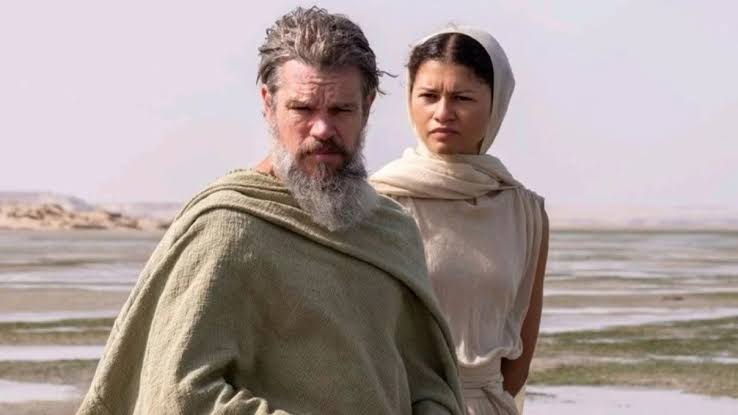
Another Look at Odysseus (after seeing Christopher Nolan’s ‘The Odyssey’)

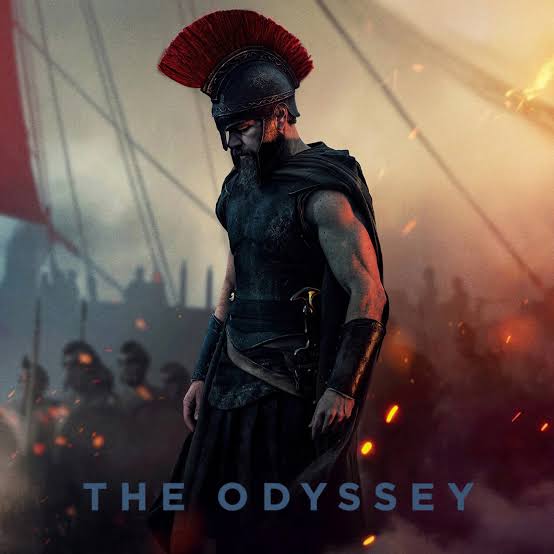
Watching Christopher Nolan’s film The Odyssey on the IMAX screen at Swiss Cottage recently reminded me of this …. Back in 2008, I was struggling to complete a sequence of poems – called ‘Essays in Island Logic’ – in which I had taken the three central figures of Homer’s The Odyssey and placed them on a modern Ithaca, by now become a popular holiday destination. On reflection, I realised I was struggling with the poems because I was labouring under a strong a desire to exert too much authorial control over a piece that in fact wanted to be set free. What follows derives from notes I made at the time, having discovered some of Boris Pasternak’s ideas about the writing of poetry which influenced my approach to the poem sequence which was completed and eventually published in my collection Hurt (Enitharmon, 2010).

Over the next couple two weeks, I will publish here 15 poems from the sequence that resulted – featuring an ageing Odysseus, a frustrated and ill Penelope, and their son, the angry, unfulfilled, edgy Telemachus.

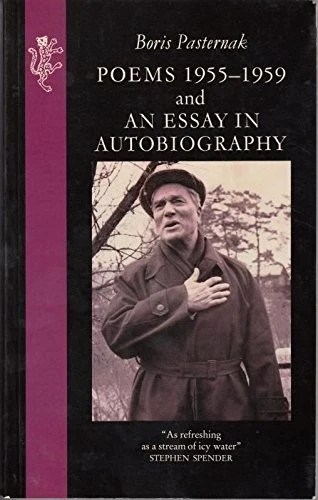
There is an early – now lost – paper by Boris Pasternak called ‘Symbolism and Immortality’ which argues that our impressions are subjective. However, he also argues that these subjective impressions are capable of being ‘the common property of man’. Pasternak is recalling this lost essay in his ‘Essay in Autobiography’ written in 1956 and he goes on, ‘I assumed that every human being leaves behind him when he dies his own share of this undying, racial subjectivity – the share contained in him in his lifetime . . . in this ultimate, subjective and yet universal area of the soul, art finds its . . . field of action and its main content’. He then remembers concluding that ‘the joy of living experienced by [the artist] is immortal and can be felt by others through his work . . . in a form approximating to that of his original, intimately personal experience’ (tr. Manya Harari, Poems 1955-1959 and The Essay in Autobiography, Collins Harvill, 1990).

In Pasternak’s own work these ideas emerge in poetic form in moments such as ‘I want the heart of the matter / Always in work, / The chaos of feelings’ (‘I want the heart of the matter’) and ‘Success is not your aim / Nor noise, but gift of self’ (‘Fame’s not a pretty sight’). In struggling to complete ‘Essays in Island Logic’ I felt I had been blocked because I have been too anxious to ascertain, or assert, its meaning. Returning to the sequence again after a few months I felt more sanguine about this – chilled and allowing. As Pasternak is saying, all my work argues my own matrix of experience – it’s not me but mine. The objective world (though unknowable still) is processed through my own particular mesh – my set of harmonies and disharmonies – and must emerge coloured, spun, almost texturised, according to my personal self. As Pasternak argues though, each individual self has sufficient in common with all mankind so that only the extremely eccentric individual will be unrecognisable to anybody else. Hence experiences are both unique and common. If this was not the case, then art would be either excruciatingly dull or utterly alien to us.

It strikes me this is not far from Keats’ valley of pain. We begin with the fundamental matrix of any human being – a body, drives, senses, loneliness, seeking love and companionship – and this is grown on through the hornbook of our individual experiences, becoming, as Keats says, more unique the more we experience. These days I feel the truth of this more and try to understand it far less – the accumulated complexity and richness of even my relatively narrow life. This is the root of my railing against fundamentalism (of any kind): that it denies access to mature experience. It short cuts the truth – at least the only one we can get to. It may seem attractive at times (of trouble) but it is always an error. Odysseus learns this I think in the ‘Essays’ sequence since his earlier self was a fundamentalist soldier (almost tautologous – the perceiver of vivid contrast of necessity, us and them, victory and defeat). His previous egotism, eloquence and persuasiveness suggest this. In the past he has always employed language as persuasion, and I remember how Auden became so wary of the persuasive powers of language around 1939. In my poem, the aging Odysseus no longer wishes to divide and persuade but rather to take life as a whole.

In contrast, his son, Telemachus, remains locked into his search for a form of fundamentalism – what he regards as a cause, a purpose. He has yet to (may never) grow into the more complex jacket that he needs to wear. Poor Penelope has led the restricted life of a conventional woman (her tending the geese as a child, her long waiting, her role in the house etc) and she quietly envies male mobility and their encounters with the world. I have not been radical with her portrayal – yet she too is best seen as seeking the complexity of truth. So there are three souls in the poem sequence, all variously encountering the world. The tourists are equally in search of a rather simplistic remedy to their lives elsewhere: vainly seeking in the wrong places, the beach, consumerism, sex, geographical escape. The solution – if we can speak in such terms – is an openness of soul. There: I’ve said it. This is the first occasion on which it does not feel pompous or laughable for me to talk in such terms. It is the goal of the wholeness of our awareness that suggests the holiness of self.

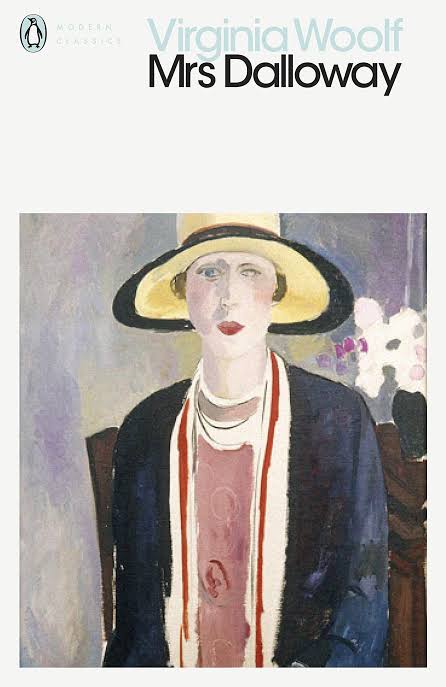
So we process our own experience. We find a locale, a niche for it within ourselves, thus adding it to ourselves, to our growing uniqueness. As a teacher, this has long been my model of the educative process and ought to find its way more often from my daily business into poems. And death? As Pasternak suggests, the artist leaves behind something of their own ‘take’ on their life experience – a poem, a piece of music, a painting. Did M——– leave something when she died in January 2006? (or more recently, rawly, tragically, K——– in April 2026?)  Of course – her words, her way of life, her perception of things such as food, children, gardens, her husband. She contributed and still contributes to our ongoing life and thought processes. She remains one of the counterpoint of voices, part of the collaborative nature of life, incorporated (though bodiless) into our matrix, into our souls. Of course, we are aware of blind-spots in her individual perception of the world – these are part of her individual nature, her character. But this merely suggests that it is the most powerful personalities who are capable of incorporating most. Shakespeare – oh, Bill! – and Keats’ concept of negative capability. Then the driving force behind this emergence from the shell of the self into the world is surely what we call ‘love’. We are all artists of differing abilities in our everyday lives. What marks the ‘real’ artists? Surely only the choice of medium as a particular, recognisable form of expression. I have always been drawn to Virginia Woolf’s idea of the dinner-party as an art form as in Mrs Dalloway – perfectly valid, but seldom recognised. And my beef with work, the grind of the 9-to-5, is the way it demands and delivers the narrowing of experience. So my ‘Essays’ is a meaningless sequence – merely three souls engaged, at differing stages, on the common work of the creation of their own selves.

And so, more generally, to write a poem? It is the slow uncovering of these forged connections in our own minds. This is why it happens. It begins, unbidden, so often. But the process of recovery itself, with the intention of bringing it into the public sphere, so that it can be taken up and experienced by others, that is a process towards self-knowledge and is never (should never be) a representation of the already familiarly known, the preconceived. Writing a poem resembles the process of self-justification – but is not that. It is a process of analysis, discovery, comprehension of the negotiated ground between self and other. In Dr Zhivago, Pasternak attacks two types of journalists. The first has a pre-prepared construct, an agenda about the ‘people’ and, claiming to be an observer, in reality only collects supporting evidence of his own views. The second (and more recognisably modern type), is all clipped speech, sketches, and scenes of reality, scepticism and misanthropy. But Pasternak argues again: facts do not truly exist for us until man puts into them something of his own, some measure of his own wilful, human genius, of fairy tale and myth. As before, this seeming rampant individualism is counter-balanced by Pasternak’s unshakable belief that – for the most part (and I’m afraid it is this vague) – there does remain a sufficient commonality for art to speak.

Hesiod Harangues His Lazy Brother

Happy New Year to all my readers. Stats from WordPress tell me that in 2018 there were 32,000 visitors to my website and they took a look at various pages on almost 50,000 occasions. Phew. It seems a lot to me. Many thanks.
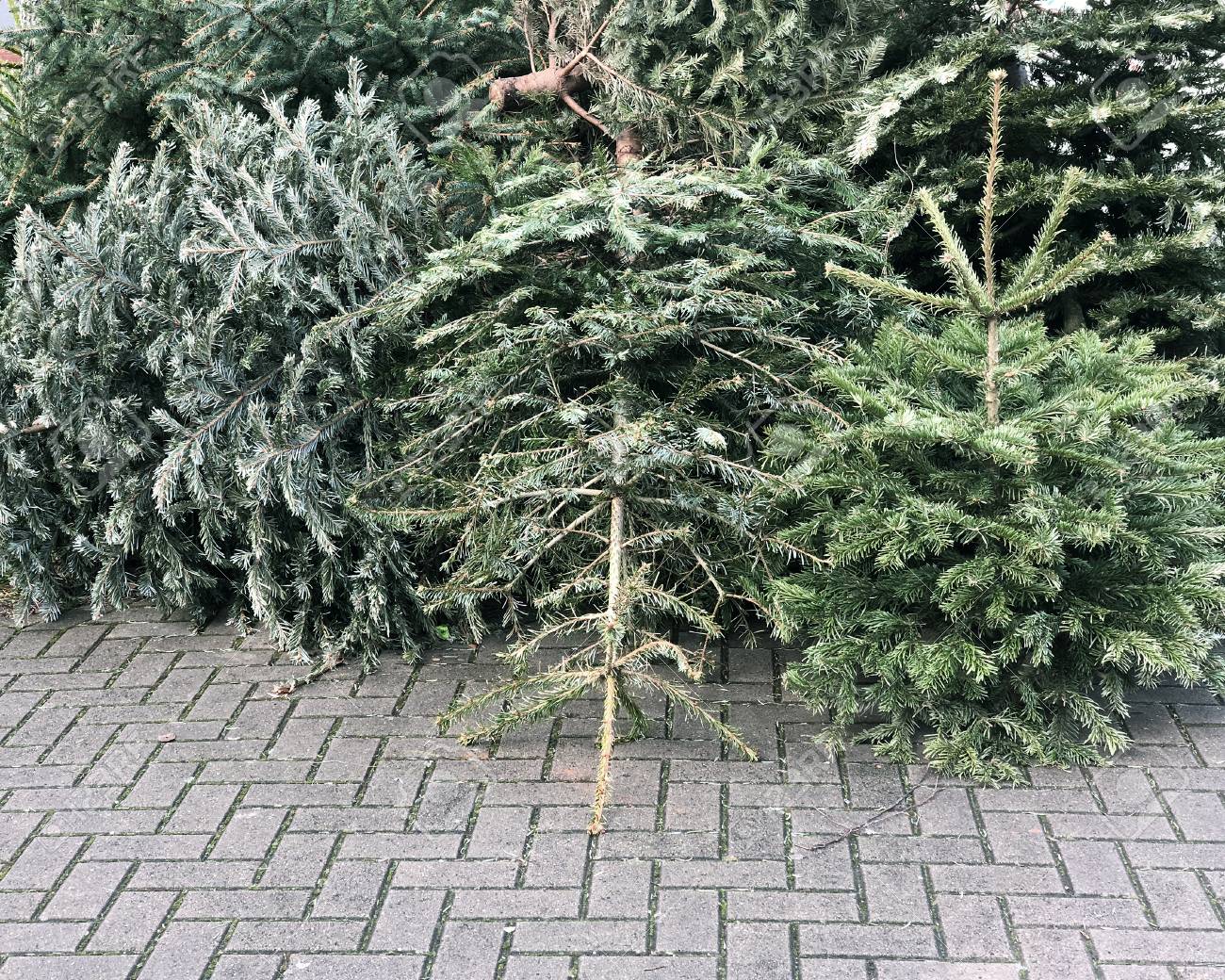
discarded christmas trees piled on pavement for trash collection

But with Christmas now over – my local park has a stack of Christmas trees the size of several London buses waiting to be shredded – with resolutions having been left unmade or already in pieces, I suspect I’m not the only one to be suffering a horrible sense of deja vue as the great Brexit debate and debacle has started up again. You thought it was safe to go back into the water? You thought you’d heard the last of the Irish Back Stop? It seems not. I’m as tempted as many to shriek ‘Oh get on with it!’ but what is ‘on’ and what is ‘it’?
91lk9o2gr0l

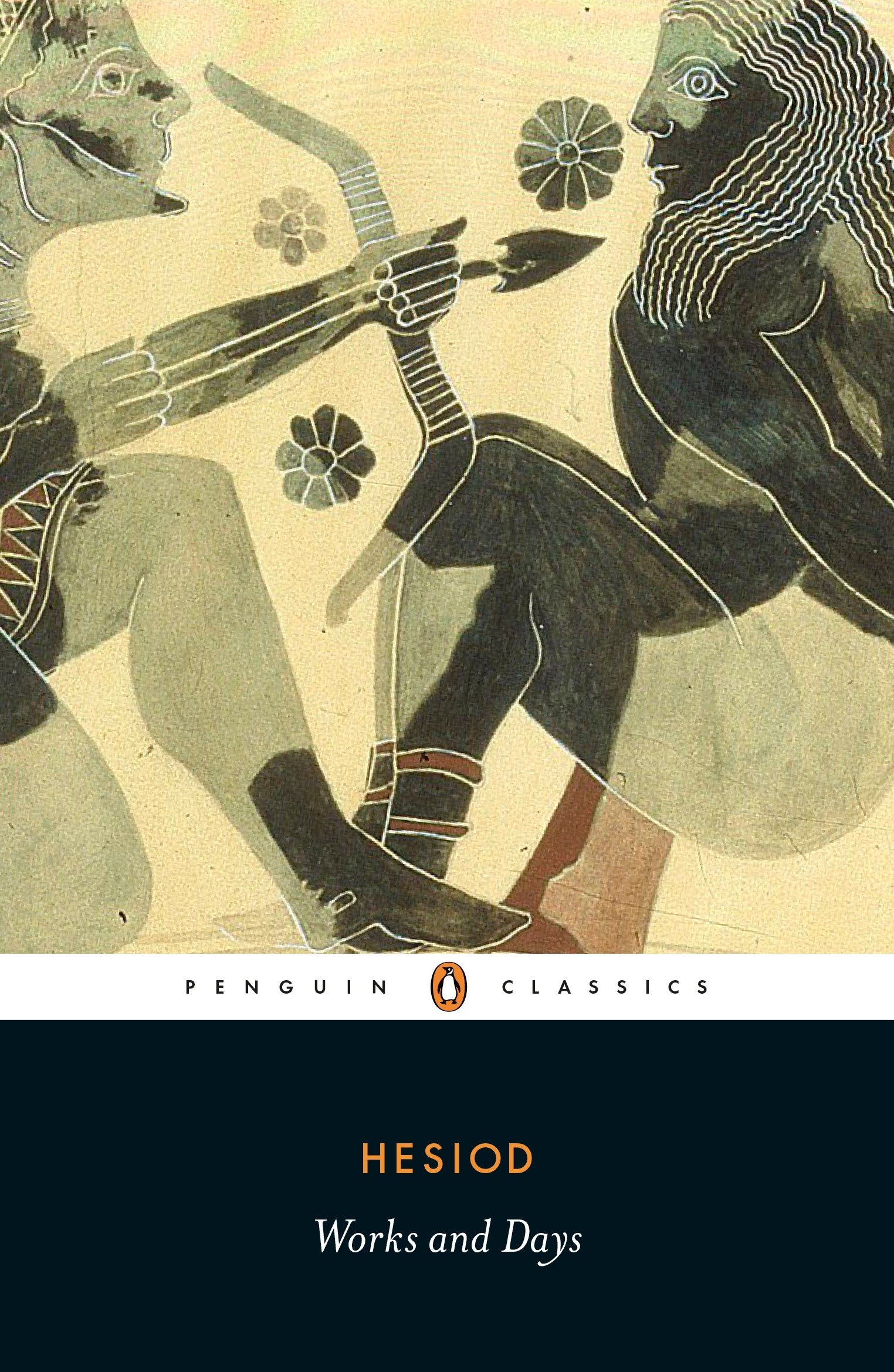
Actually, I have a genuine fear that the depth of national disillusion with the process and with conventional politicians makes this country more vulnerable to even more coarsened debate and extremism of various kinds, all promising to solve problems at a stroke. But really we know that’s pie in the sky. Right? Hesiod, of Ancient Greece, would agree. His Works and Days sounds very familiar. It is about conflict in a family, the problematic (perhaps intractable) nature of the world and the sense of a sequential decline in the fortunes of a society – all of which he counterbalances with advice, particularly about the importance of work – of keeping on keeping on.

To be honest, for many years, I’ve only known Works and Days by name. The title always attracted me with its Antaeus-like focus on groundedness, labour, the need to start from where ever we are now; it’s rejection of flighty idealism that quickly shades into the unconsidered fundamentalism. We need to work – nothing is given on a plate. And work needs to be sustained (through days) to be effective. Boring? Only if untrue and this is as true as anything can be.

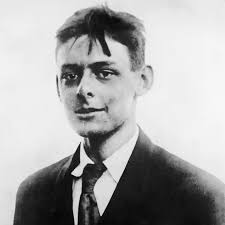
I first came across the title of Hesiod’s poem in T. S. Eliot’s ‘The Love Song of J. Alfred Prufrock’:


There will be time, there will be time

To prepare a face to meet the faces that you meet;

There will be time to murder and create,

And time for all the works and days of hands

That lift and drop a question on your plate;
 

download

My old student’s guide to Eliot (by B.C. Southam, published by Faber) told me the allusion was to the 8th century BC writer Hesiod – to a poem which “gives an account of the primitive conditions in the country, together with maxims and practical instructions adapted to the peasant’s life”. Last year, Penguin Classics published a new translation of the poem by A. E. Stallings. It’s a lively and very readable version, though her decision to convert Hesiod’s dactylic hexameters into iambic pentameter couplets makes the ancient poem sound too English and 18th century for me. Another older prose translation by H. G. Evelyn-White is freely available here. 
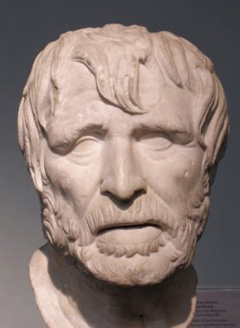
hesiod-smDid you know Hesiod probably pre-dates Homer? Hesiod is aware of the siege of Troy but he makes no reference to Homer’s Iliad. He’s usually placed before Homer in lists of the first poets. The other striking aspect of Works and Days is that (unlike Homer) he is not harking back to already lost eras and heroic actions. Hesiod talks about his own, contemporary workaday world, offering advice to his brother because they seem to be in a dispute with each other. Hesiod’ anti-heroic focus is an antidote to the Gods, the top brass and military heroes of Homer. Most of us live – and prefer to live – in Hesiod’s not Homer’s world.

Hesiod also talks about himself – his long poem has a lyric and personal quality to it. We hear that he grew up in the unremarkable town of Askra, in Boeotia. He disparagingly refers to it as “bad in winter, sultry in summer, and good at no time” (tr. Evelyn-White). In fact, his family were recent economic migrants from Aeolian Kyme in Asia Minor across the Aegean.  Hesiod’s father made the journey: “[he] used to sail on shipboard because he lacked sufficient livelihood. And one day he came to this very place crossing over a great stretch of sea; he left Aeolian Cyme and fled, not from riches and substance, but from wretched poverty” (tr. Evelyn-White). As Stallings points out, “Hesiod’s is not a static, stay-at-home sort of world, but one of opening horizons, widespread trade, far-flung Greek outposts with freedom of movement, cultural festivals [. . .] and social mobility.”
512pxannbrl._sx316_bo1,204,203,200_He seems to have been a poet-farmer who makes sure we are aware that he has already won a literary competition at a funeral games on the island of Euboea. His prize-winning piece may well have been his earlier Theogony, a cosmological work describing the origins and genealogy of the gods. But Works and Days presents him as something of a magpie writer rather than a poet with a neatly conceived architectonic design. The poem mashes together myth, allegory and personal asides, as well as more philosophical passages, theology, natural description, proverbial advice and an almanac or calendar based on phenology (the study of periodic plant and animal life cycle events and how these are influenced by seasonal variations in the climate).

The occasion of the poem is also very personal. Hesiod has a brother – Perses – and they seem to be in dispute (perhaps as a result of their intrepid and entrepreneurial father’s death and the inheritance of the estate). Stallings has this: “Already we’ve divvied up our lots, but you / Keep laying hold of more than is your due”. It is this inclination to give advice to his (younger?) brother that controls much of the text. The name ‘Perses’ is unusual and may mean something like ‘waster’ or ‘wastrel’ and the brother seems to be trying to take more than he is due and the motivation for this (according to Hesiod) is a mile-wide streak of laziness. Perses wants his fortune on a plate rather than having to work for it. His big brother intends to give him some “plain truths to steer him[self] by” (tr. Stallings).

By way of correcting his brother’s indolence, Hesiod firstly explains there are two types of strife. One of these is the kind of Brexit bickering (and potentially far worse) that we are all too familiar with: “One brings forth discord, nurtures evil war: / Wicked, there’s nothing mortals love her for” (tr. Stallings). But the other is a more benign sense of competitiveness based on envy: this sense of strife “spurs a man who otherwise would shirk, / Shiftless and lazy, to put his hands to work”. Wow! That’s telling your brother like it is. Is this being listened to? Hesiod makes sure: “Perses, take this to heart, lest Strife, whose quirk / Is mischief-making, draw your mind from work” (tr. Stallings).
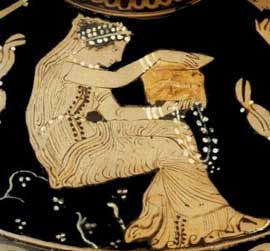
pandora2There are further reasons to set to work in the very nature of the cosmos and the human world. Hesiod tells the Pandora story here. Zeus causes the creation of a female figure, Pandora, as a way of avenging Prometheus’ pro-humankind actions (stealing fire from the gods, for example). Her name suggests she is a concoction or committee-created figure from contributions from all the Olympian Gods. She is given a jar which she opens: “ere this the tribes of men lived on earth remote and free from ills and hard toil and heavy sickness [. . .] But the woman took off the great lid of the jar with her hands and scattered all these and her thought caused sorrow and mischief to men” (tr. Evelyn-White). Hesiod’s locating of the root of human sorrow in the actions of a woman echoes the Christian story of the loss of Paradise and it is one of the reasons why Hesiod has been accused of misogyny, though as Stallings suggests, he’s not any more complimentary about the males of the human race.

Plagued by the ills of Pandora’s jar (only Hope is said to get lodged in the rim of the jar), Perses is then given a longer lecture on the decline of the human condition in Hesiod’s portrayal of the five ages of man. Here is the classic description of the Golden Age of man when we imagine we once lived “like gods [. . .] with spirits free from care; / And grim old age never encroached” (tr. Stallings). The ages of Silver, Bronze and (present-day) Iron are described. Between the latter two, Hesiod locates a brief Heroic age (the age of Thebes, Oedipus and the Trojan war). But despite this diversion, Works and Days makes it plain to Perses that the age he lives in is unpleasantly harsh and demands work work work to survive: “For now truly is a race of iron, and men never rest from labour and sorrow by day, and from perishing by night; and the gods shall lay sore trouble upon them. [. . .] The father will not agree with his children, nor the children with their father, nor guest with his host, nor comrade with comrade; nor will brother be dear to brother” (tr. Evelyn-White).

An obscure natural symbolic passage follows (a “fable” Hesiod calls it) in which a hawk has seized a song bird and mocks its struggles and shrieks: “Miserable thing, why do you cry out? One far stronger than you now holds you fast, and you must go wherever I take you, songstress as you are. And if I please I will make my meal of you, or let you go. He is a fool who tries to withstand the stronger” (tr. Evelyn-White). It’s tempting to see the songbird as the poet savaged by philistine powers though, in the Perses context, perhaps the songbird is a lazy good-for-nothing who is being shaken up and challenged by the world of necessity and work. A bit later Hesiod suggests another interpretation: that the natural world is red in tooth and claw, unlike human society which is governed by “law and right” (tr. Stallings) and so Perses ought to be obedient to Zeus’ powers out of gratitude for that. It’s interesting to think this of this as the first passage in Western Literature open to a variety of critical interpretations.
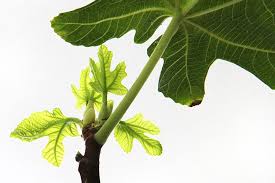
imagesIt’s certainly the lazy, self-serving, arrogant younger brother who forms the focus of the rest of the poem: “So Perses, you be heedful of what’s right . . . So Perses, mull these matters in your mind . . . Fool Perses, what I say’s for your own good” (tr. Stallings). It’s true that his name gradually fades from the text in the final 500 lines but the torrent of imperatives, offering advice and guidance on a range of practical issues, often sounds like haranguing from a concerned, perhaps slightly pissed off, brother. Much of this material is phenological – when to sow crops, when to harvest, when to shear your sheep. In winter, don’t hang around the blacksmith’s forge where other wasters gather to chat and pass the time. It’s safe to put to sea when the new fig leaves are the size of crow’s feet.
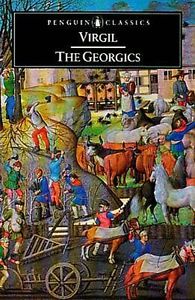
s-l300These are the passages that, around 29BC, inspired Virgil to his own farmer’s manual, the Georgics. Hesiod ends his poem in a rather perfunctory manner, roughly saying he who follows this good advice will become “blessed and rich”. But given Pandora’s jar and the Iron Age we live in, even this seems a mite optimistic. And of course, Perses never gets the chance to speak for himself. But I guess the tensions between his brother’s call for social and religious conformity and Perses’ individualistic disobedience to the demands of the gods and the sense of what is best for a society have gone on to form the basis of the continuing Western literary canon. And does any of this help with Brexit? I conclude (largely with Hesiod) the bleeding obvious: it’s complicated – solutions must be negotiated, don’t hope for some golden age because in a fallen, less-than-ideal, complex society it’s better for the future to be decided in the glacier-slow committee rooms of a plurality of voices than in the stark divisions and dramas of the battlefield. Work hard – have patience – don’t buy into fairy tales of a recoverable golden age.