Duino Elegies, Rainer Maria Rilke, tr. Matthew Barton (Shoestring Press, 2019).
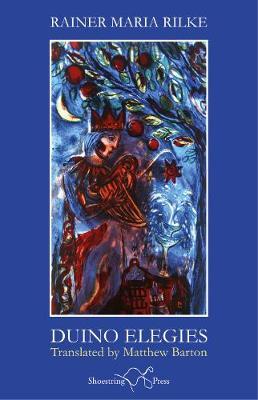 Matthew Barton himself raises the question as to whether anything could “possibly justify yet another English version” of Rilke’s Duino Elegies (1922). As someone who has contributed his own translation of the work (published by Enitharmon Press in 2006), I know the feeling of throwing a pebble into a landslide. But – as Barton also argues – it is at least our own pebble and Rilke’s work both allows and demands further translation and discussion; it is without doubt complex, profound and obscure enough. Perhaps the question for the would-be translator is more about the time and energy spent on such a widely available text when other works by other poets languish untranslated. But for Barton – as I guess it was for me – it is a personal issue and we are assuredly thankful to those who consider the results worthy of publication because there remains a hunger for Rilke’s work.
 So Barton has now produced a lively, English version which reads well (one of his aims). Apart from a brief Introduction and a few end notes on translation issues, the poems stand on their own here – there is no parallel German text, for instance. To see the German facing Barton’s text would be interesting for most readers, even without much facility in the source language, because he does make changes to the form of the poems. It’s true Rilke’s original plays pretty fast and loose with formal metre but the changes he rings are significant and Barton has a tendency to flatten out these differences by making firm (modern-looking) stanza breaks where Rilke often continues the flow of his argument. Rilke’s form is significantly much freer in the fifth Elegy, for example. This issue of the flow of the poems – and indeed through the whole sequence of 10 poems – is one of the difficulties in translating the work. It seems to me there is a clear progression across the poems and within each individual piece. To call this an ‘argument’ may seem too logical and abstract, of course, but any translator needs to try to follow it. To declare ‘it’s poetry’ and not try to see why one image or passage follows another is giving up too easily.
To be fair, Barton often does unfold the sequential argument. He’s well aware of the issue as he talks in the Introduction of coming across “knots” in the grain of the work which do not easily yield up there meaning. His solution was “not to translate them literally and hope for the best, but to live with them until I found a way through them that seemed, at least, to resonate with their larger context”. To translation purists this may sound a bit ‘version-y’ and Barton does indeed declare this book a series of “versions”, thanking Don Paterson for his thoughts on translation v versioning in his Orpheus (Faber, 2006). But, to my mind, Barton’s approach here is rather like Paterson’s in his version of Rilke’s Sonnets to Orpheus, in that the results mostly read as translation, but with the English granting itself the occasional liberty to paraphrase, extend or even substitute for the original. For me, a version would depart much further from the original than Barton does; so I’d call these translations because Barton is approaching the original with great respect – there is the sense of a service to the original being provided here and the point is that such a service must (without the need for too much arguing about it) include the re-ordering of syntax, an Englishing of rhythms, an aiming at contemporary accessibility without denaturing the flavour of Rilke’s original distinctiveness.
And as I’ve said, Barton’s English poems are good. Rilke is really communing with himself through the course of these poems, so he does tends to use the impersonal ‘you’. Barton often converts this to ‘I’ which skews the impact of many lines to the lyric. This fits contemporary taste perhaps – it deflates the rhetorical feel of these poems – but can be risky. In the opening lines of the sequence, Rilke acknowledges that crying out to angels for help in our existential darkness is largely futile (they’d not listen) but also dangerous because if an angel did approach us we’d be fried by the intensity of their existence. The opening paragraph ends abruptly with, “Ein jeder Engel ist schrecklich”. Stephen Mitchell rendered this as “Every angel is terrifying”. Barton has “I dread every angel”. This seems wrong, making a psychological point from an individual perspective when Rilke’s line is more about the different natures of humans and angels (if the latter existed, which they don’t).
The argument at the start of the fourth Elegy also gets a bit garbled here. The whole of this section argues that human self-consciousness divorces us from a primal sense of oneness with life which the natural world (in Rilke’s view) retains (named in the eighth Elegy as “das Offene”, the Open (tr. Mitchell)). Barton seems to read this as suggesting that we are not “in accord with ourselves”. So he loses the distinction between ourselves and lions (at the end of this opening stanza). Barton has the lions walking in “sheer potency while their glory lasts” (my italics). But Rilke’s contrast is with human consciousness of transience against the animal’s absence of that consciousness. Mitchell’s clearer version runs: “And somewhere lions still roam and never know, / in their majestic power, of any weakness” (my italics).
 These are small points in some ways but – as I’ve said – I think Rilke is pursuing a close-grained argument in these poems (albeit via poetic utterance rather than rational discourse). Barton is also liable on occasions to shift into an overly contemporary register (Rilke tends not to 1920s speech patterns but rather a Classically influence idiolect of his own). He replaces Rilke’s “wehe” which really is ‘alas’ with phrases like “god help me” or “heaven help us” which again propel the tone towards the personal (a rather English, bourgeois personal). In the ninth Elegy, Rilke is disparaging about the thin gruel of conventional human happiness in the face of death: “dieser voreilige Vorteil eines nahen Verlusts”. Mitchell translates this as “that too-hasty profit snatched from impending loss”. Barton tries a bit too hard with, “[this] is merely / easy credit with a looming payback date”. The same happens in the tenth Elegy, where Rilke is describing contemporary society’s shallow distractions from the fact of death. He describes; “die Kirche begrenzt, ihre fertig gekaufte: / reinlich und zu und enttäuscht wie ein Postamt am Sonntag”. Mitchell again: “bounded by the church with its ready-made consolations: / clean and disenchanted and shut as a post-office on Sunday”. Barton changes, up-dates, Americanises and so loses some of the irony: “the flatpack church, all safe and clean and shut / and dreary as an empty parking lot”.
But Barton’s rendering of Rilke’s satirical portrait of the “City of Hurt” (“der Leid-Stadt”) is enjoyably lively. Another infamously tricky moment is presented in this final poem by its personification of a tribe of people who have a far closer relationship with death and grief than Rilke sees is the case in modern Western culture. The German word “Klage” is used here and needs to work as the name of a young woman, the name of her tribe and her ancestors and her country. The word has to reflect the harshness of the grief felt, while at the same time suggesting a dignity in the powerful emotion. For Rilke, the role of this personification and her whole tribe is a consistently heroic one. But Barton chooses not to translate the word consistently, using “Elegia” for the young woman’s name, then variously “grief”, “woe”, “heartache” and “Lament” elsewhere. These are all individually sufficient to the word, but – as on other occasions in these otherwise admirable translations – there is a risk that in leaning on the freedoms of a ‘version’, the critical linguistic consistencies which are essential aspects of the argument in Rilke’s original, can get a bit lost in translation.









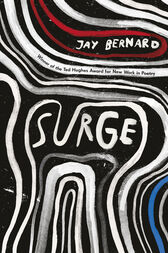
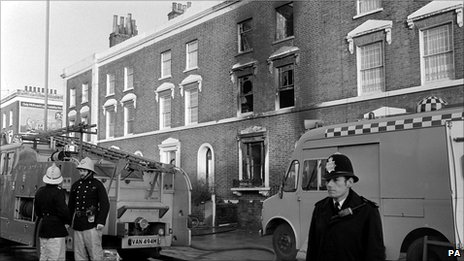 But Surge itself has since gone through various forms. There were 10 original poems written quickly in 2016. There was a performance piece (at London’s Roundhouse) in the summer of 2017 (it was this version that won the Ted Hughes Award for New Work in poetry in 2017). But it has taken 3 years for this Chatto book to be finalised. In an interview just last year, Bernard observed that they were still unclear what the “final structure” of the material would be. I’m possessed of no insider knowledge on this, but it looks as if this “final” version took some considerable effort – reading it makes me conscious of the strait-jacket that a conventional slim volume of poetry imposes – and I’m not sure the finalised 50-odd pages of the collection really act as the best foil for what are, without doubt, a series of stunningly powerful poems. The blurb and publicity present the book (as publishers so often do) as wholly focused on the New Cross and Grenfell fires but this isn’t really true and something is lost in including the more miscellaneous pieces, particularly towards the end of the book.
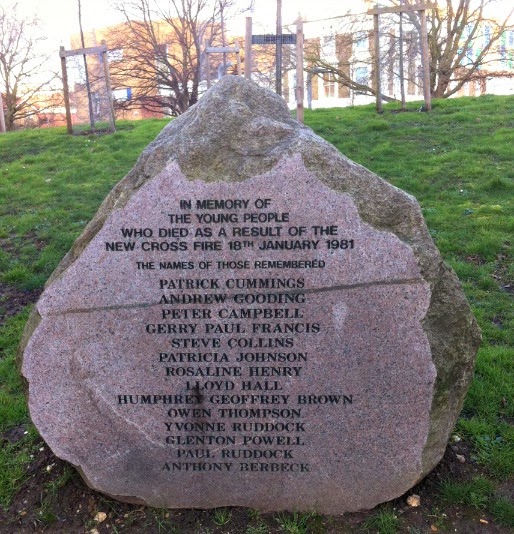 Bernard’s poetic voice is at its best when making full use of the licence of free forms, broken grammar, infrequent punctuation, the colloquial voice and often incantatory patois. So a voice in ‘Harbour’ wanders across the page, hesitantly, uncertainly, till images of heat, choking and breaking glass make it clear this is someone caught in the New Cross Fire. Another voice in ‘Clearing’ watches, in the aftermath of the blaze, as an officer collect body parts (including the voice’s own body): “from the bag I watch his face turn away”. The cryptically titled ‘+’ and ‘–’ shift to broken, dialogic prose as a father is asked to identify his dead son through the clothes he was wearing. Then the son’s voice cries out for and watches his father come to the morgue to identify his body. This skilful voice throwing is a vivid way of portraying a variety of individuals and their grief. ‘Kitchen’ offers a calmer voice re-visiting her mother’s house, the details and familiarity evoking simple things that have been lost in the death of the child:
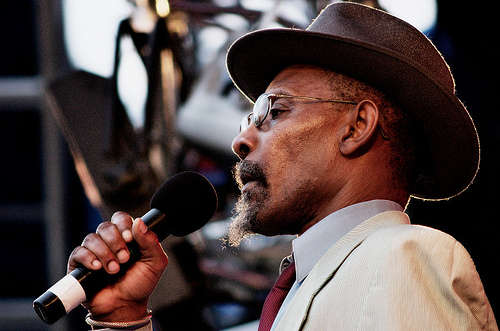 I’m guessing most of the poems I have referred to so far come from the early work of 2016. Other really strong pieces focus on events after the Fire itself. ‘Duppy’ is a sustained description – information slowly drip-fed – of a funeral or memorial meeting and it again becomes clear that the narrative voice is one of the dead: “No-one will tell me what happened to my body”. The title of the poem is a Jamaican word of African origin meaning spirit or ghost. ‘Stone’ is perhaps a rare recurrence of the author’s more autobiographical voice and in its scattered form and absence of punctuation reveals a tactful and beautiful lyrical gift as the narrator visits Fordham Park to sit beside the New Cross Fire’s memorial stone. ‘Songbook II’ is another chanted, hypnotic tribute to one of the mothers of the dead and is probably one of the poems Ali Smith is thinking of when she associates Bernard’s work with that of W.H. Auden.
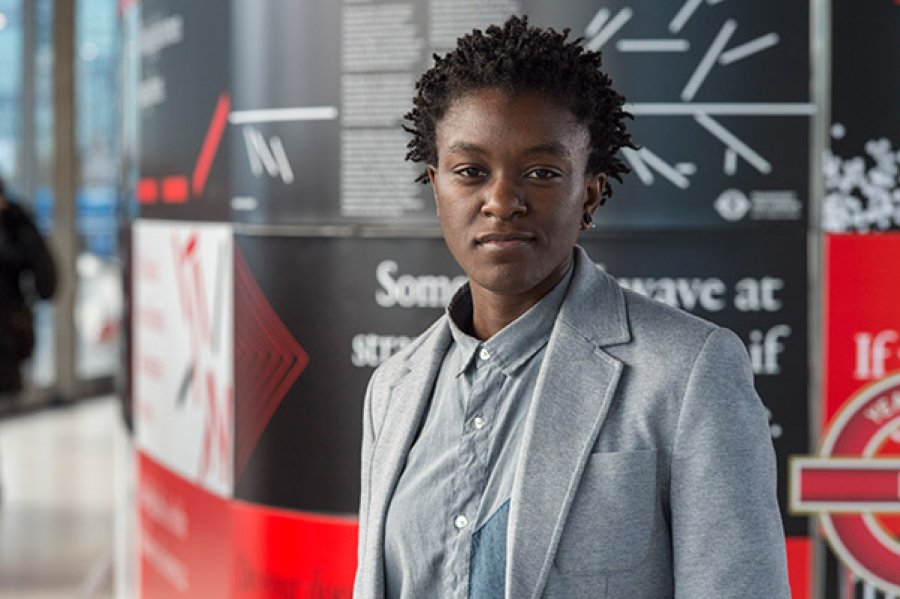 But when the device of haunting and haunted voices is abandoned, Bernard’s work drifts quickly towards the literal and succumbs to the pressure to record events and places (the downside of the archival instinct). A tribute to Naomi Hersi, a black trans-woman found murdered in 2018, sadly doesn’t get much beyond plain location, a kind of reportage and admission that it is difficult to articulate feelings (‘Pem-People’). There are interesting pieces which read as autobiography – a childhood holiday in Jamaica, joining a Pride march, a sexual encounter in Camberwell, but on their own behalf Bernard seems curiously to have lost their eagle eye for the selection of telling details and tone and tension flatten out:
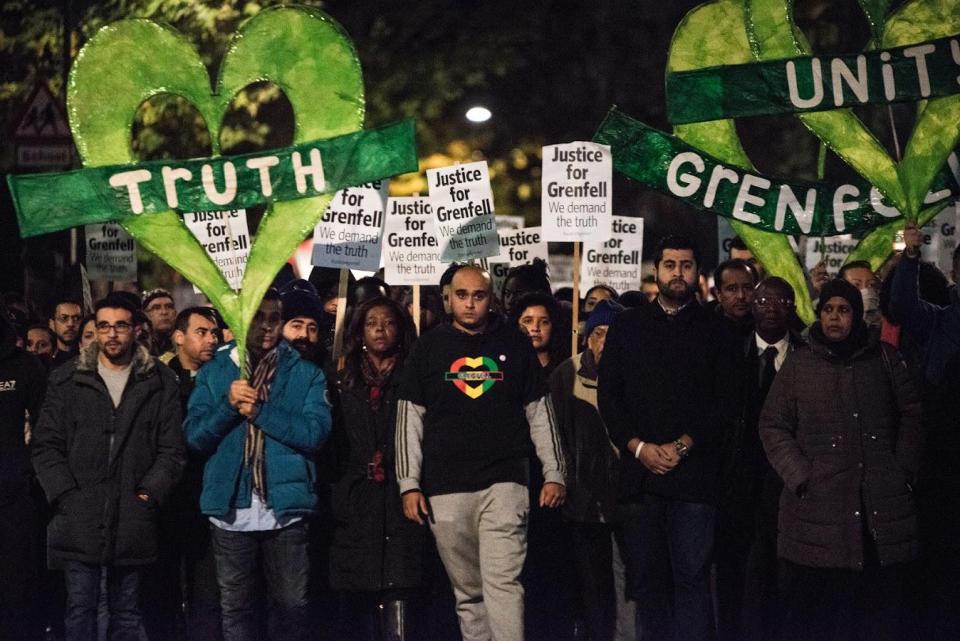 The mirroring architectonic of the collection emerges with the poems written about the Grenfell Tower fire. So we have ‘Ark II’, two pools of prose broken by slashes which seem to be fed by too many tributary streams: the silent marches in Ladbroke grove, the Michael Smithyman murder and abandoned investigation, Smithyman’s transition to Michelle, and the burning of the Grenfell Tower effigy, the video of which emerged in 2018.


 But Galleymore also sees dangers. In her 2014


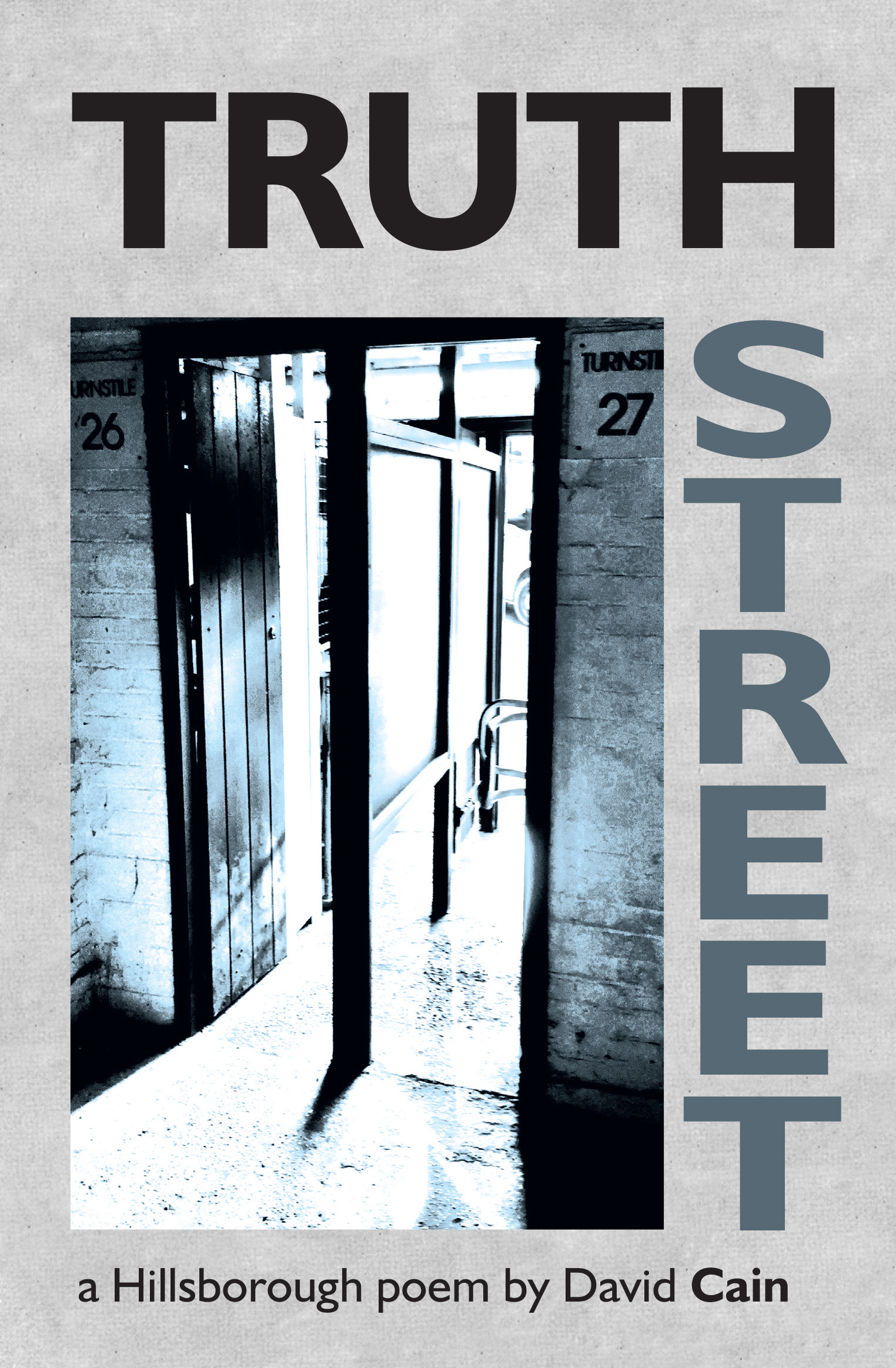
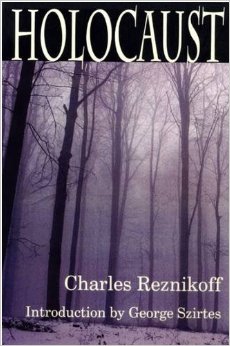 Cain also cites the work of Charles Reznikioff and Svetlana Alexievich as models. The former, an Objectivist poet, developed work from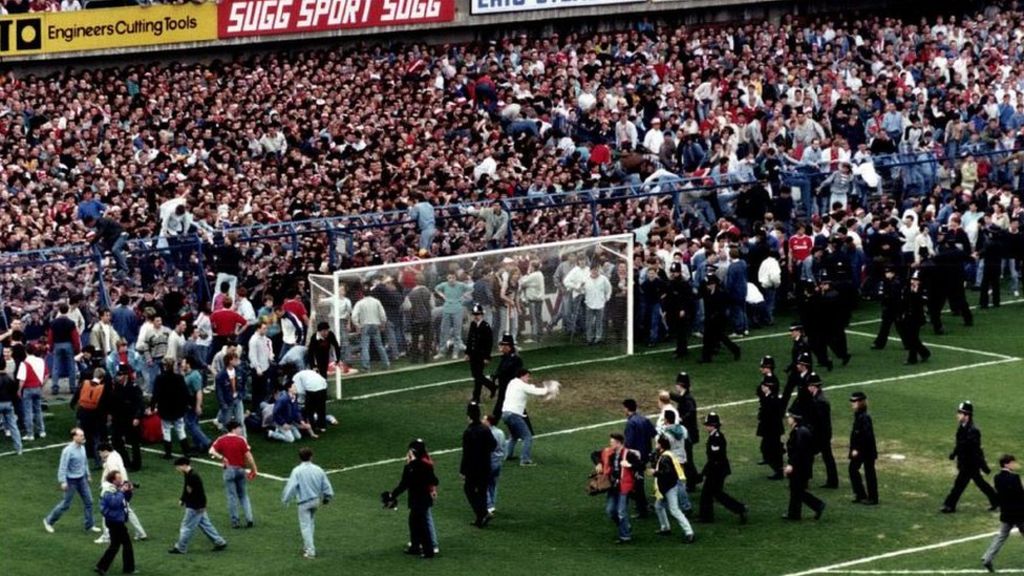

 In fact – as Cain’s sequence shows – what was being covered up was the original decision of Chief Superintendent David Duckenfield to open the exit gates at 2.47pm. One of his officers spoke to the inquiry: “I was quite shocked // It was totally unprecedented. // It was something you just didn’t do”. This was what caused the inflow of fans – “like sand into an egg timer”. Only at the second inquiry, did Duckenfield revise his earlier false statements: “I didn’t say, // ‘I have authorised the opening of the gates’”.
