As in the previous five years, I am posting – over the summer – my reviews of the 5 collections chosen for the Forward Prizes Felix Dennis award for best First Collection. This year’s £5000 prize will be decided on Sunday 25th October 2020. Click here to see my reviews of all the 2019 shortlisted books (eventual winner Stephen Sexton); here for my reviews of the 2018 shortlisted books (eventual winner Phoebe Power), here for my reviews of the 2017 shortlisted books (eventual winner Ocean Vuong), here for my reviews of the 2016 shortlisted books (eventual winner Tiphanie Yanique), here for my reviews of the 2015 shortlisted books (eventual winner Mona Arshi).
The full 2020 shortlist is:
Ella Frears – Shine, Darling (Offord Road Books) – reviewed here.
Will Harris – RENDANG (Granta Books) – reviewed here.
Rachel Long – My Darling from the Lions (Picador)
Nina Mingya Powles – Magnolia 木蘭 (Nine Arches Press) – reviewed here.
Martha Sprackland – Citadel (Pavilion Poetry)
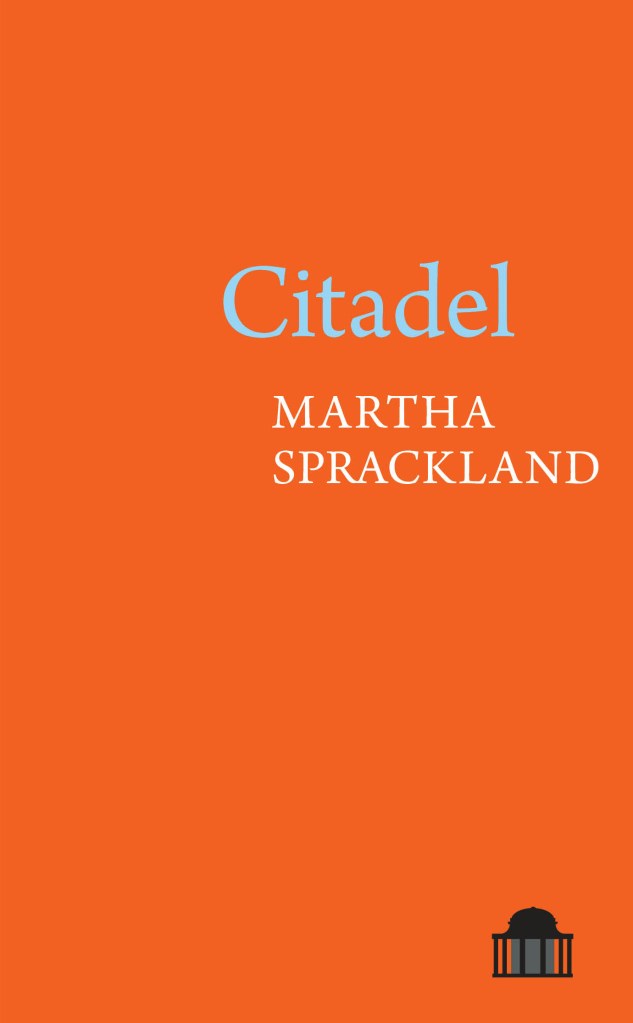
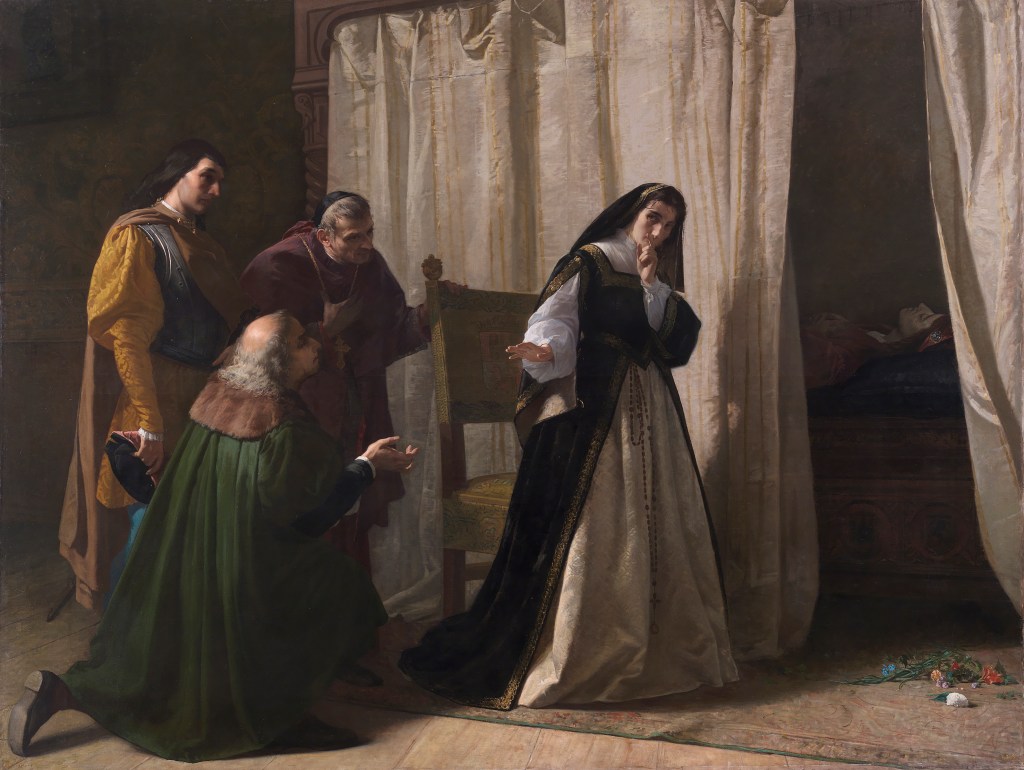
After her Gregory Award in 2014 and two chapbook publications since, Martha Sprackland has long been pondering those decisions about constructing a first full collection. (She talks briefly about that process here). Ought it to be a Rattle Bag of the best poems to date, or a more coherently shaped and organised ‘concept album’? Citadel is evidently being presented to readers as the latter – but with equivocal results. The first reference of the book’s blurb is to Juana of Castile, commonly referred to as Juana la Loca (Joanna the Mad), a 16th century Queen of Spain. She was daughter of Ferdinand and Isabella, instigators of the Spanish Inquisition, but was conspired against, declared mad, imprisoned and tortured by her father, husband and her son, leaving almost no written record of her own. Sprackland – having studied Spanish and spent time in Madrid – presents herself as becoming fixated on this earlier woman, engaged in conversations with her to such a degree that (according to the blurb again) the poems in Citadel are written by a “composite ‘I’ – part Reformation-era monarch, part twenty-first century poet”.
While happy to accept the desire of the poet to maintain a distance between the lyric/dramatic ‘I’ and her autobiographical self, I find the idea, the ‘as if’, of this composite authorship hard to take. There is even something disproportionate about the claim of identity between the two women, given the extremity of Juana’s life-long suffering. I’m reminded of Caroline Maldonado’s 2019 book, Isabella (Smokestack Books) in which she translates and writes poems to Isabella Morra, an Italian aristocrat of the 16th century who also suffered appalling hardship (and likely murder) at the hands of her male relations. But Maldonado’s interest in the historical figure is never claimed as an identity. (I reviewed this book here).
The awkwardness of the leap of faith in this alignment between Sprackland and Juana gives rise to several of the opening poems which seem to want to ‘explain’ empirically the (perfectly legitimately) imagined connection. ‘Beautiful Game’ is a family-holiday-in-Spain poem, in which the Martha figure (the collection does use its author’s name on several occasions) is hit on the head with a pool ball. The next but one poem takes this up. ‘A Blow to the Head’ takes the injury as a moment of profound psychological importance. The narrator is “cracked open” and in the same moment retreats into a psychological “citadel”. The protection this offers her becomes “habit-forming, I was fortified”. The latter pun is good and the poem suggests that it is in this state of defensive retreat, perhaps of ‘imprisonment’, that she passes through a portal, making first contact with “her”, Juana. One of the tortures that Juana faced, for her religious unorthodoxy, was la cuerda, being strung up with cord/rope, weights attached to her feet. In this poem, Martha loosens “the cord from her wrists”.

It’s the poem placed between these two that perhaps provides a further clue to the undoubtedly powerful link felt by Sprackland to Juana, the link between the personal and the historical. Much is left unsaid in ‘A Room in London’; the reluctance to reveal is part of the fortified ‘citadel’. In a vaguely defined medical environment there are several young women, one of them being given misoprostol (a drug used to induce abortion). Such a moment of profound emotional, physical and psychological experience must be the origins of the identification between two individuals so remote in time and Sprackland catches the paralleled shift of innocence to pained maturity in the brilliant final line: “Our little beds, bars of autumnal light falling through the curtains”.
The fact is that this identification of the two women does then give rise to several excellent (I’d describe them as uncanny) poems – though their existence does not need anything more by way of justification than a belief in language and the poetic imagination. In ‘They Admit Each Other to the Inquisitor’, the two women are bound together by the first-person plural pronouns: “We were eighteen and pregnant and mad”. The force and flow of the poem takes the reader quickly beyond questions of likelihood:
When we undid the cord that tied our wrists
it bound us; something in that blow
knocked through the city walls
and through it we are talking, still.
We can’t explain this.
The same device is used in ‘Juana and Martha in Therapy’; this time it’s the third person plural. They are as one and yet at the same time they are communicating down a cup-and-string telephone, made from a cord and two tins of cocido (chick-pea and meat stew). There is great humour here besides the serious experiment in imaginative identification: “Time is complicated, especially at these distances”. But also, Time can be collapsed into magically anachronistic moments of intimacy: “They are in the bland room / above the Pret in Bishopsgate, trying to understand. / The walls of the mind are deep and moated”. The final poem in Citadel is ‘Transcript’ which is a verbatim record of a conversation between the two women:
- i’ll sing you something, and you’ll sleep, tomorrow I will go falconing –
- and I will go to work and try to hold the yolk of myself together, try not to spill –
I wish there were more poems in the book in which this sort of unashamed, ludicrous, heartfelt and imaginatively suggestive communication was portrayed. There are a few other occasions where poems approach it, but the leap of faith required seems even too much for the poet and the results feel more willed than wholly convinced. Juana alone (though in the third person) appears to good effect in ‘Falconry’, an excellent poem that hovers, alongside the hunting bird, over the landscape of the Alhambra. The bird’s searching out of its prey represents the young Queen’s curiosity, her challenge to authority (that will soon get her into so much trouble), and its tearing up of a lark seems to foreshadow Juana’s own suffering.

Otherwise, Citadel contains plenty of poems more directly connected to what we might tactfully designate the author’s biography, poems which might have constituted a Rattle-Bag-style first collection. The five sections of ‘Melr’ read very autobiographically, a childhood in a village north of Liverpool: “I grew up coastal with the land to my back”. It’s portrayed as a place of shifting sands and, as teenage years advance, that sense of novelty-seeking (like Juana and deploying similar bird imagery) grows: “villagers heard / the clatter of the entire migratory flock / lifting off under cover of darkness”. Youthful experimentation, unpredictability and the allure of travel are all expressed in the excellent ‘Pimientos de Padron’. One imagines language students in Madrid, “lovesick, shamed or fleeing / or brisant and in shock”, then heading to the airport for “the first flight anywhere but home”.

There is a motif in the book of those brought up on sand finding it hard to settle. ‘Anti-metre’ suggest this even reaches the menstrual cycle which shifts, “mutable as a dune” and one recalls the clinical environment of ‘A Room in London’ when ‘Hunterian Triptych’ concludes with the narrator and her boyfriend running out in alarm at the sight of preserved foetuses in a museum, “ranged by month and weight”. I sense the Catholicism of Spain in general (and Juana’s wrestling with it, in particular) haunting Citadel. So a visit to an orthognathic surgeon is portrayed in terms of the confessional and a poem like ‘Charca’ is underscored by a baptismal or redemptive sense. A charka is a pool, here a natural bathing pool in a valley. The narrator and her friends go there and, beyond the hedonism and holiday pleasures, she finds something more profound shifting, beginning to lift and heal into freedom:
Something frozen
and distant starts to thaw in me
and to carve these deeper channels
into which we jump, again and again,
looked over by nothing but the mountains,
the overhanging leaves,
the lifted winter lived through and unbound.
This might suggest ‘Martha’ already outgrowing the need to speak to Juana. Another poem like ‘Still Life Moving’ – for me one of the best in the book – suggests the poet’s concern for Time as a theme, that “complicated” thing, here matched with Art (a still life, perhaps in the Prado) and, as time the destroyer creeps into the frame, rotting the lilies and spilling the apples, she utters a cry for some form of redemptive salvation, whether from God or Juana or elsewhere:
Are there hands, just out of the frame,
that might dart forward in time to catch them?
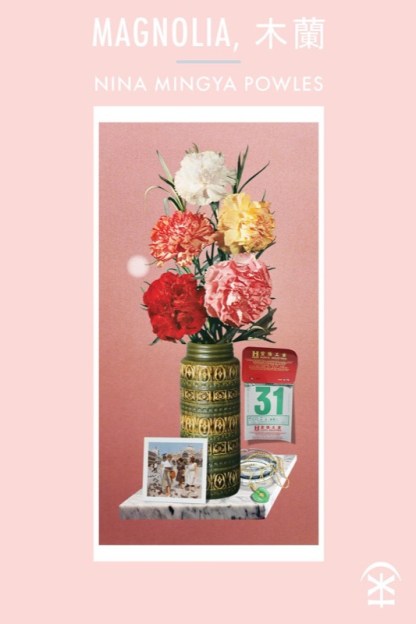 Nina Mingya Powles’ collection, Magnolia 木蘭, is an uneven book of great energy, of striking originality, but also of a great deal of borrowing. This is what good debut collections used to be like! I’m reminded of Glyn Maxwell’s disarming observation in On Poetry (Oberon Books, 2012) that he “had absolutely nothing to say till [he] was about thirty-four”. The originality of Magnolia 木蘭 is largely derived from Powles’ background and brief biographical journey. She is of mixed Malaysian-Chinese heritage, born and raised in New Zealand, spending a couple of years as a student in Shanghai and now living in the UK. Her subjects are language/s, exile and displacement, cultural loss/assimilation and identity. Shanghai is the setting for most of the poems here and behind them all loiter the shadows and models of
 I don’t think the intriguing glimpses of an individual young woman in this first poem are much developed in later ones. The Mulan figure makes a couple of other appearances in the book and is reprised in the concluding poem, ‘Magnolia, jade orchid, she-wolf’. This consists of even shorter prose observations. In Chinese, ‘mulan’ means magnolia so the fragments here cover the plant family Magnoliaceae, the film again, the Chinese characters for mulan, Shanghai moments, school days back in New Zealand and Adeline Yen Mah’s Chinese Cinderella. It’s hard not to think you are reading much the same poem, using similar techniques, though this one ends more strongly: “My mouth a river in full bloom”.
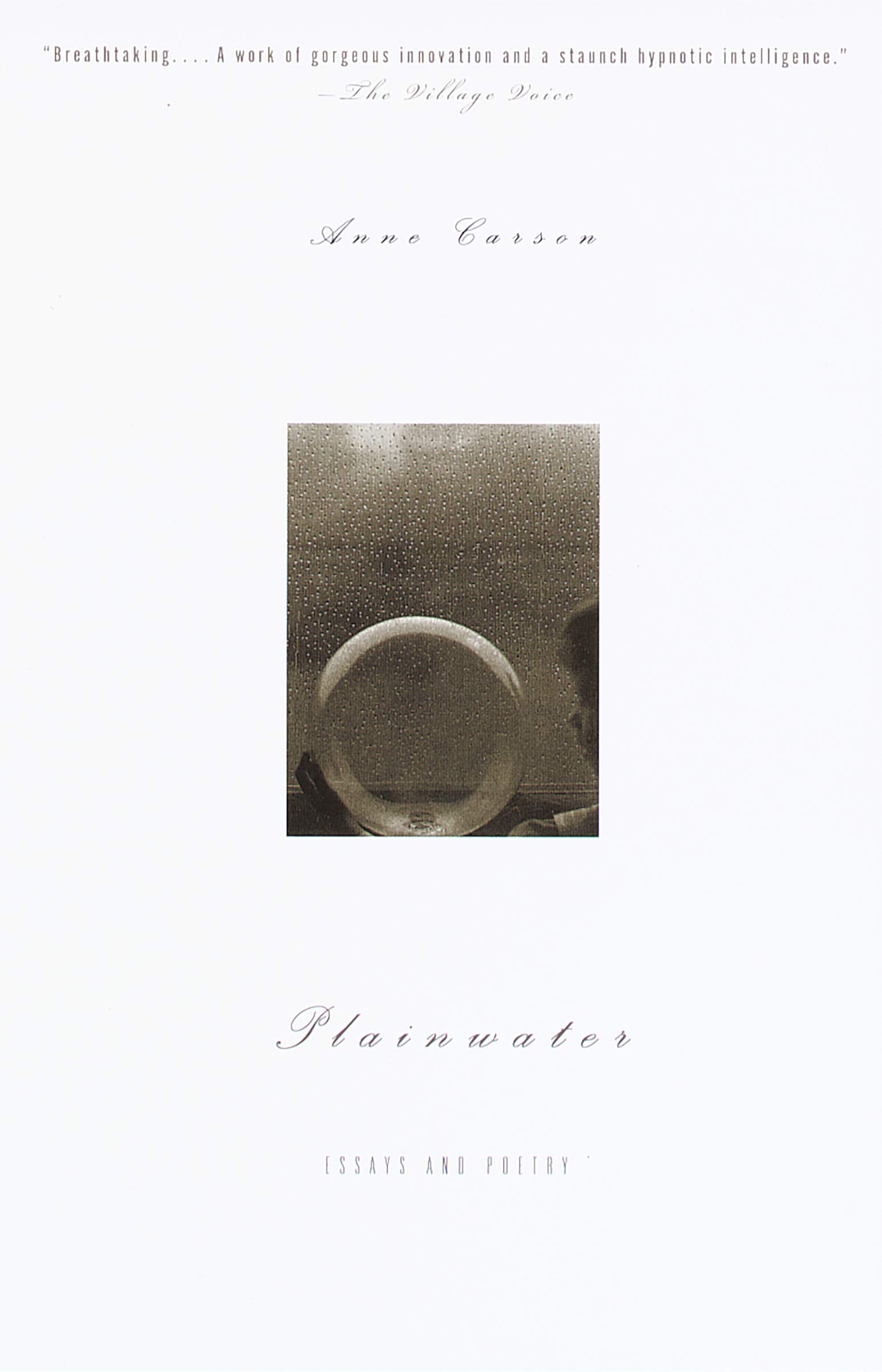 Unlike Carson’s use of fragmentary texts, Powles is less convincing and often gives the impression of casting around for links. This is intended to reflect a sense of rootlessness (cultural, racial, personal) but there is a willed quality to the composition. One of the things Powles does have to say (thinking again of Maxwell’s observation) is the doubting of what is dream and what is real. The prose piece, ‘Miyazaki bloom’, opens with this idea and the narrator’s sense of belonging “nowhere” is repeated. This is undoubtedly heartfelt – though students living in strange cities have often felt the same way. Powles also casts around for role models (beyond Mulan) and writes about the New Zealand poet, Robin Hyde and the great Chinese author Eileen Chang, both of whom resided in Shanghai for a time. ‘Falling City’ is a rather exhausting 32 section prose exploration of Chang’s residence, mixing academic observations, personal reminiscence and moments of fantasy to end (bathetically) with inspiration for Powles: “I sit down at one of the café tables and begin to write. It is the first day of spring”.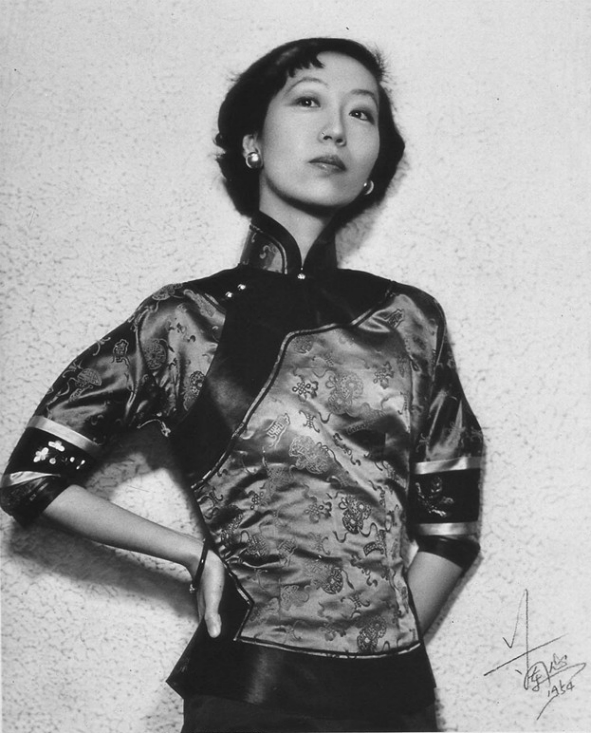


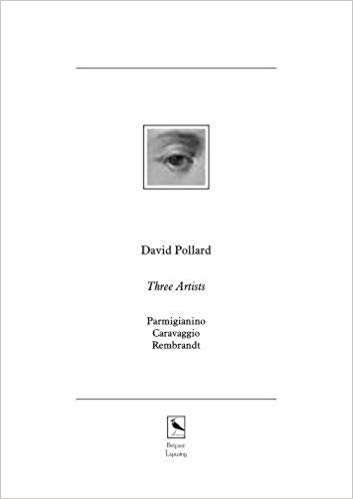 David Pollard’s book is divided into three sections, one each on Parmigianino, Rembrandt and Caravaggio. Initially, Pollard presents a set of 15 self-declared “meditations” on a single work of art – Parmigianino’s ‘Self Portrait in a Convex Mirror’ (c. 1524). This is a bold move, given that John Ashbery did the same thing in 1974 and Pollard does explore ideas also found in Ashbery’s poem. Both writers are intrigued by a self-portrait painted onto a half-spherical, contoured surface to simulate a mirror such as was once used by barbers. The viewer gazes at an image of a mirror in which is reflected an image of the artist’s youthful and girlish face. It’s this sense of doubling images – an obvious questioning of what is real – that Pollard begins with. “You are a double-dealer” he declares, addressing the artist directly, though the language is quickly thickened and abstracted into a less than easy, philosophical, meditative style. It is the paradoxes that draw the poet: “you allow the doublings / inherent in your task to hide themselves / in open show, display art that / understands itself too well”. Indeed, this seems to be something of a definition of art for Pollard. “Let us be clear”, he says definitively, though the irony lies in the fact that such art asks questions about clarity precisely to destabilise it.
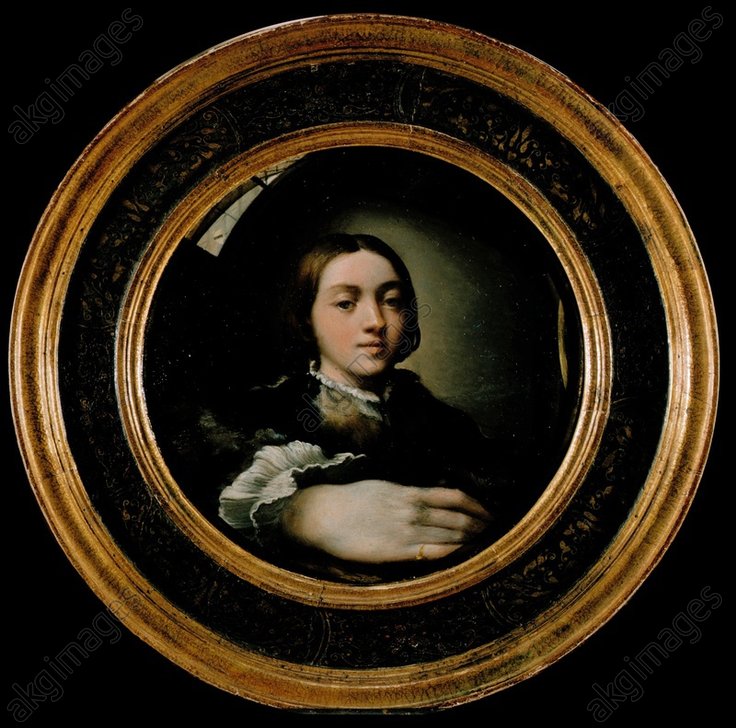 The 15 meditations are in free verse, the line endings often destabilising the sense, and they are lightly punctuated when I could have done with more conventional punctuation given the complex, involuted style. Pollard also likes to double up phrases, his second attempt often shifting ground or seeming propelled more by sound than sense. This is what the blurb calls Pollard’s “dense and febrile language” and it is fully self-conscious. In meditation 15, he observes that the artist’s paint is really “composed of almost nothing like words / that in their vanishings leave somewhat / of their meaning” – a ‘somewhat’ that falls well short of anything definitive. Of course, this again echoes Ashbery and appeals to our (post-)modern sensibility. Pollard images such a sense of loss with “a rustle of leaves among the winds / of autumn blowing in circles / back into seasons of the turning world”. He does not possess Ashbery’s originality of image, as here deploying the cliched autumnal leaves and then echoing Eliot’s “still point of the turning world”. Indeed, many poems are frequently allusive (particularly of Shakespearean phrases, Keats coming a close second) and for me this does not really work, the phrases striking as undigested shorthand for things that ought to be more freshly said.
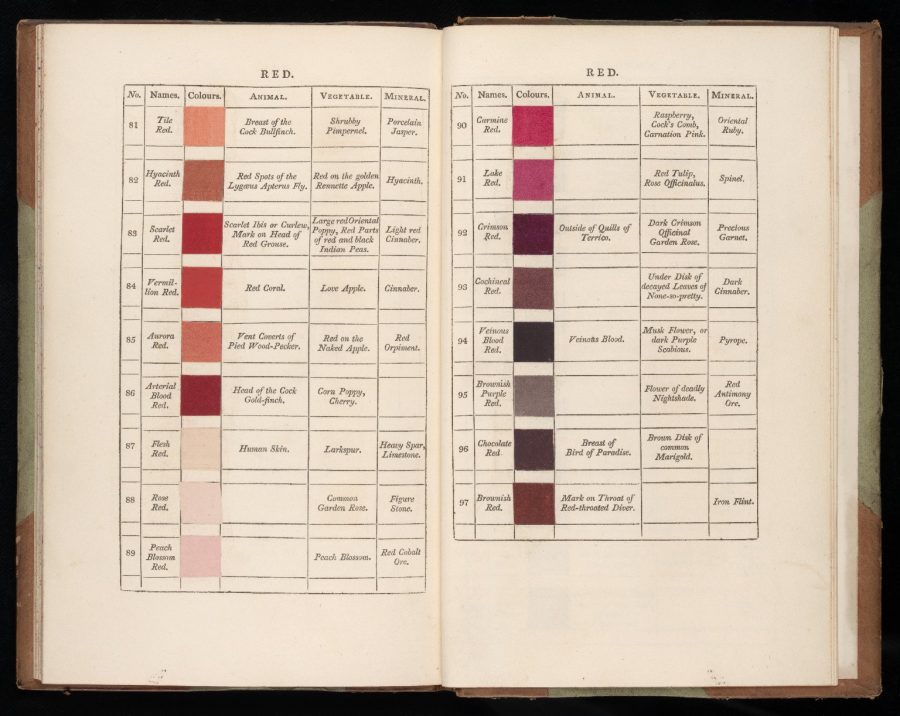
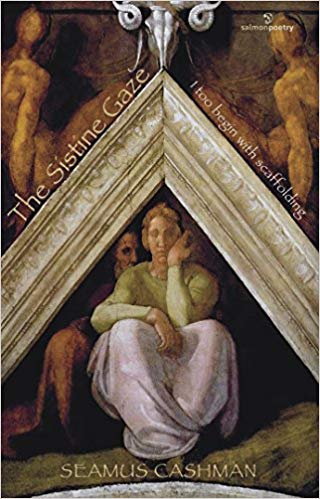 In fact, the woman is hardly given a voice and the substance of the sequence is dominated by the (male) artist’s reflections on his years-long task. He’s most often found “between this scaffold floor and ceiling”, complaining about his “craned neck”, pouring plaster, crushing pigments, enumerating at great length the qualities and shades of the paint he employs (Cashman risking an odd parody of a Dulux colour chart at times – “Variety is my clarity, / purity my colour power”). Later, we hear him complaining the plaster will not dry in the cold winter months. We even hear the artist reflecting on his own features, the famous “long white beard and beak-like nose”. These period and technical details work well, but Cashman’s Michelangelo sometimes also shades interestingly into a more future-aware voice, melding – I think – with the poet’s own voice. So he remarks: “Getting lost is not a condition men like me endure or venture on today. / All GPS and mobile interlinks enmesh our every step”. Later, a list of “everything there is” sweepingly includes “chair, man, woman; laptop or confession box”.
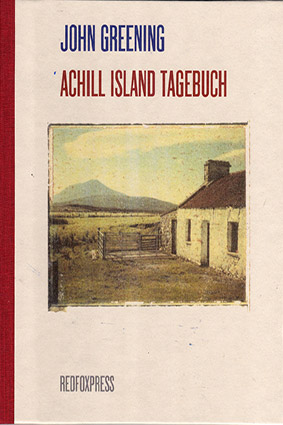 In the summer of 2018, John Greening spent 2 weeks as artist-in-residence at the Heinrich Boll cottage in Dugort, Achill Island. The resulting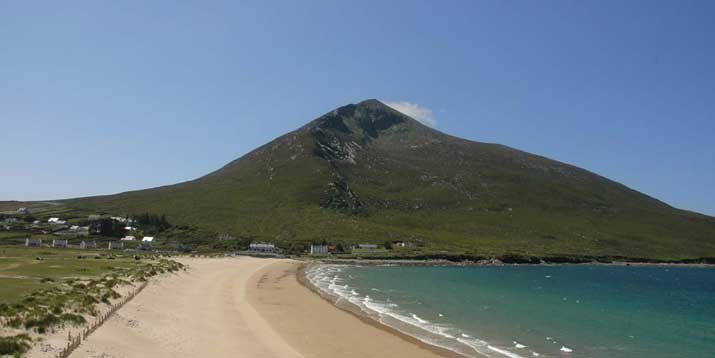

 The gateway to Richard Scott’s carefully structured first book is one of the most conventional poems in it. It’s a carefully punctuated, unrhymed sonnet. It is carefully placed (Public Library) and dated (1998). It’s the kind of poem and confinement Scott has fought to escape from and perhaps records the moment when that escape began: “In the library [. . .] there is not one gay poem, / not even Cavafy eyeing his grappa-sozzled lads”. The young Scott (I’ll come back to the biographical/authenticity question in a moment) takes an old copy of the Golden Treasury of Verse and writes COCK in the margin, then further obscene scrawls and doodles including, ironically a “biro-boy [who] rubs his hard-on against the body of a // sonnet”. Yet his literary vandalism leads to a new way of reading as – echoing the ideas of Eve Kosofsky Sedgwick – the narrator suddenly sees the “queer subtext” beneath many of the ‘straight’ poems till he is picking up a highlighter pen and “rimming each delicate / stanza in cerulean, illuminating the readers-to-come . . .”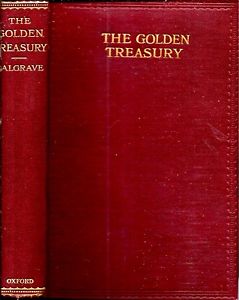
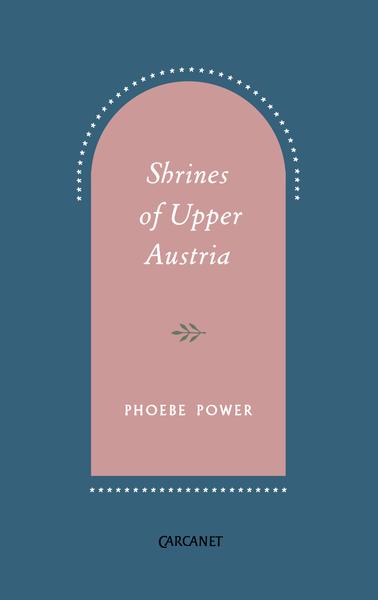
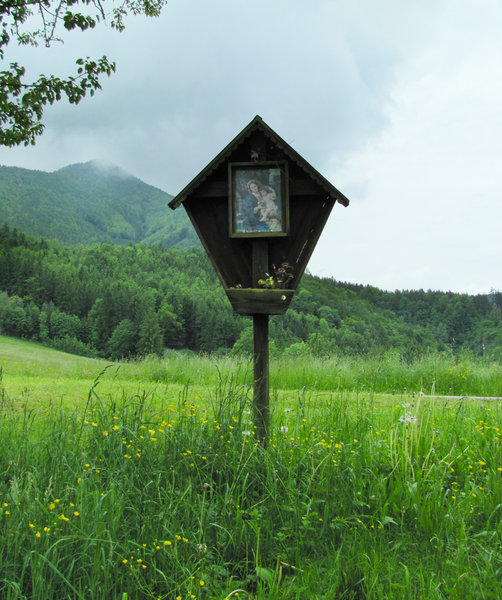

 You will have gathered that one of Power’s things is to mix English and Austrian German. This happens several times in ‘A Tour of Shrines of Upper Austria’ (though in this book we only get 7 parts of the full sequence). An observer stops at various shrine sites, jotting down some thoughts and taking a picture or two. Nothing is developed though Power’s poems do show an interest in religion on several other occasions. ‘The Moving Swan’ opens with a centre-justified prose description of candles flickering in a cathedral and another poem is drawn to the grave of two goats, observing: “two heaps of ivy/straw / one unlit red tealight”. And ‘Epiphany Night’ is a more extended series of notes recording a local celebration with bells, dressing-up, boats, lanterns. This is all observed in loosely irregular lines by the narrator from her “wohnung” (apartment). To wring all engagement or emotional or imaginative response from such a text is, I suppose, quite an achievement but to spend 70-odd pages in such company really is wearisome.


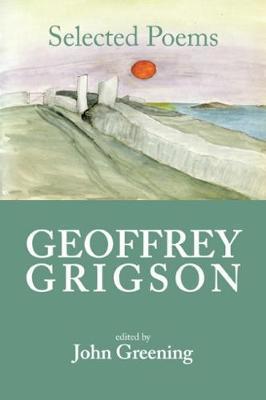

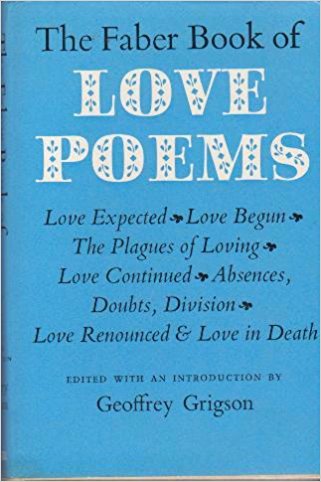
 *As a labouring translator myself, I have long remembered Grigson’s brilliant put-down in his Introduction to the Faber Book of Love Poems (1973). Explaining why he has not included any translations at all, he declares that their “unmeasured, thin-rolled short crust” would prove detrimental to the health of the nation’s poetic taste. Times have changed, thank goodness.
![DKKnm3zX0AAbJg_[1]](https://martyncrucefix.com/wp-content/uploads/2017/12/dkknm3zx0aabjg_1.jpg)
![Lee-Miller[1]](https://martyncrucefix.com/wp-content/uploads/2017/12/lee-miller1.jpg)
![Collaborators[1]](https://martyncrucefix.com/wp-content/uploads/2017/12/collaborators1.jpg)
![486434472_f02117992d_o[1]](https://martyncrucefix.com/wp-content/uploads/2017/12/486434472_f02117992d_o1.jpg)
![Saphra-interview[1]](https://martyncrucefix.com/wp-content/uploads/2017/12/saphra-interview1.jpg)
![lee_miller_biography_beautiful_young_thing_audacious_muse_photographer_3l[1]](https://martyncrucefix.com/wp-content/uploads/2017/12/lee_miller_biography_beautiful_young_thing_audacious_muse_photographer_3l1.jpg)

