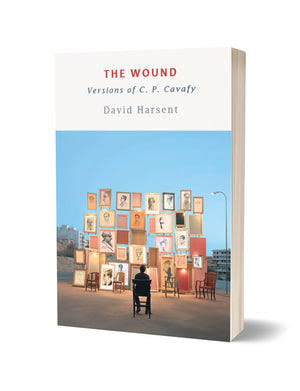
This review of David Harsent’s ‘The Wound’ – a chapbook which gives us the first sighting of Harsent’s versions of C.P. Cavafy – published in 2025 by Dare-Gale Press, was originally published in Acumen magazine. It was commissioned by reviews’ editor, Andrew Geary, for which many thanks. It has been fascinating to explore these versions and to begin the process of comparing them with other translations that are widely available.
Seamus Heaney once observed that the poems of Constantine Cavafy ‘survive translation better than most’. He thought this was because of the sheer interest of his subject matter(s) and the largely relaxed colloquialism of his voice (see Heaney’s Foreword to C.P. Cavafy: The Canon (tr. Stratis Haviaras; Hermes Publishing, 2004). In fact, over the years since his death in 1933, I’m not sure either of these aspects have necessarily proved quite so ‘easy’ to bring into effective English because of our changing sexual mores over the decades and the inevitable shifts in what a reader may register as colloquial language. In The Wound: Versions of C.P. Cavafy, David Harsent presents a small selection of his solutions to such issues.
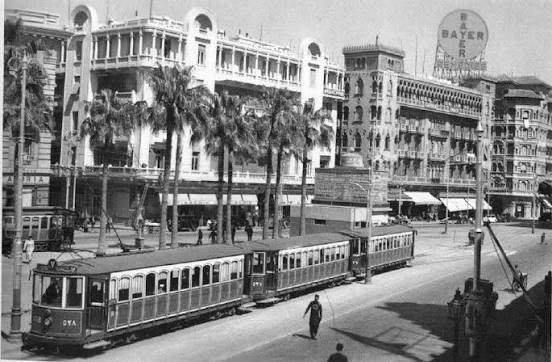
Cavafy was born in Alexandria in 1863. His family spent some of the 1870s in England, but the poet had returned by 1885 and rarely left the city after that. He’s perhaps best known for the poem ‘Ithaca’ (not included in Harsent’s selection here) in which the journey to the mythical island is presented as one of exploration, enrichment and experience. Such an attitude to ‘venturing’ is one of the things Heaney must have been thinking of with his comment about the relatability of Cavafy’s subject matter, our common wish for excitement, for the thrill of the voyage. The sort of content Heaney has in mind also includes ‘homoerotic amours in exotic settings, the dooms of tyrants, the . . . destinies of sophists and drifters and soothsayers’ and all conveyed in a calm, clear-sighted language, seldom figurative, never ‘over-elevated’.
David Harsent is especially good at capturing Cavafy’s voice and the colloquialism of the language, though these are certainly versions in the sense that there is some modernising of references, changes made to titles, some transposing and editing of the originals, and significant changes to the flow of Cavafy’s phrasing. There is also a curtailing of Cavafy’s range; as Harsent’s opening note advises: ‘I have chosen, most often, poems of love and loss’. Harsent chooses urban, contemporary scenes, almost wholly focused on homoerotic experiences (current or remembered). Of course, in Cavafy’s Alexandria such relationships would have had to remain hidden, illicit, even a matter of shame. In ‘What’s Hidden’, the final poem here, the liberalising shift in attitudes towards gay love in the future is predicted: ‘One day, / when times and laws and minds have changed, / someone who thinks and feels and loves like me / will live as I do now, but without fear.’ It is this fear, Harsent suggests, that is the ‘weight of sorrow’ carried in so many of these poems. Earlier translators, like Edmund Keeley and Philip Sharrard (1975) and Haviaras (2004), tend to translate Cavafy’s allusions to the ‘illicit’ quality of such encounters, but today this strikes a false note given that we no longer consider them in this light. Interestingly, Harsent has silently removed most of these judgemental allusions from the poems.
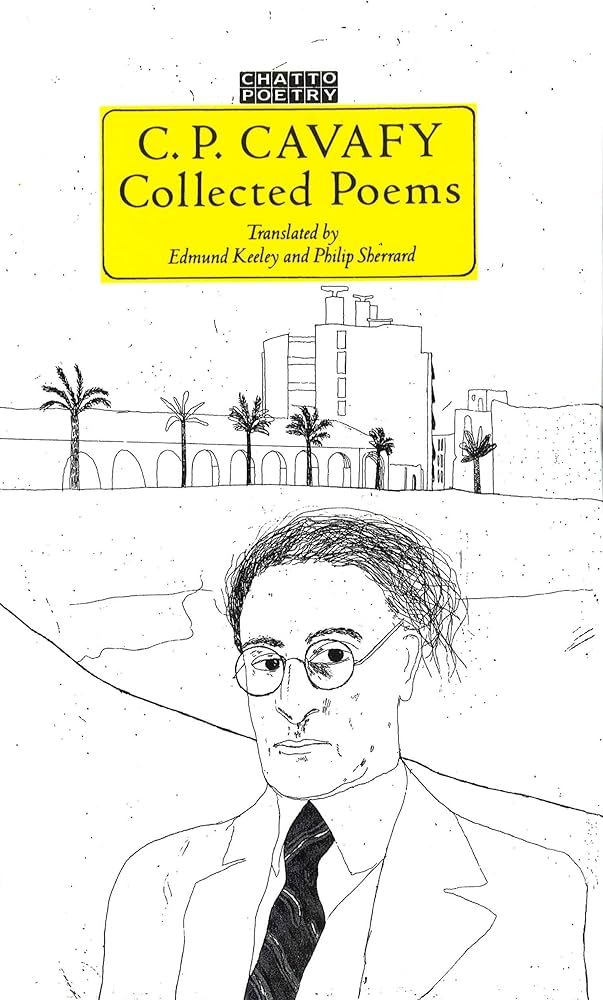
You can tell Harsent is a fine poet in these versions. For example, ‘At the Tobacconist’s Window’ is vivid and thrillingly erotic in comparison to the Keeley/Sherrard version, though it may be that Harsent is unwontedly dialling up Cavafy’s deliberately plain statements. Here, there is an immediate entry into the scene (‘A small crowd at the brightly-lit window’) and the reference to the two men is accentuated by repetition (‘these two, these among many’). The men’s eyes meet ‘by chance’ in most other translations, but Harsent writes their ‘eyes, as if meant to, snag softly’. In fact, this works really well, raising the excitement and tension of the possible encounter and the gentle feminine rhyme in ‘softly’ is repeated 6 times in a 10-line poem, building an undulating sense of erotic possibility. The word ‘snag’ falls more harshly and this rough/tender sense is echoed in the closing line when the two men ‘fall on each other, but gently’. By the end of the poem, Harsent’s two men have driven off together and parked up somewhere more private. In Cavafy’s original, of course, they take a closed, or covered, carriage.
Another example of the changes Harsent makes can be seen in the beautiful poem, ‘The Mirror in the Hallway’, in which a delivery boy brings a package to a big house, stands in the hallway and looks into a mirror. Cavafy’s original starts slowly – supplying context, I suppose – with the size of the house, the mirror and its age (eighty years old). Only then does the delivery boy appear. Harsent begins with the ‘beautiful’ boy who, in the original is described as an ‘amateur athlete’ (surely to increase his physical allure). Harsent goes for, ‘on Sundays / he played park football’, which is wonderfully modern, but perhaps doesn’t make him quite so attractive! Left alone, the boy looks at himself in the mirror. Not in the original, Harsent repeats the phrase ‘looked at himself’ in adjacent lines, again dialling up the intensity, but is this what Cavafy would have wanted? This poem ends in the original text with a (perhaps clunky) personification of the mirror which, despite its eighty years of existence, is now ‘bursting with pleasure’ (tr. Haviaras) at having had such a ‘beauty’ before it. Harsent streamlines the moment, though he punctuates into three sentences, interrupting the original’s single flow of one. He does retain the personification, but has the mirror bask, after the event, in its own erotic pleasure:
The mirror looked back. In eighty years
it had seen a thousand faces and shrugged them off.
It held that matchless beauty
long minutes after the boy had gone.
It is fascinating to look closely at Harsent’s decisions in his versioning of these poems. If the criterion of judgement is that a poem should come vividly off the page, then he is succeeding here, though as I have indicated, these are not faithful to the originals in the way that some might require of a translation. But such fidelity might well have been subject to a dose of Cavafy-esque scorn. John Kittmer’s comment on this beautifully produced chapbook, enthusiastically praises the modern poet’s engagement with the Greek originals as ‘examples of exchange, cross-over, transposition, modulation, sensitive homage and daring challenge’. I’d second that emotion and look forward to seeing more of these Cavafy-Harsent poems.
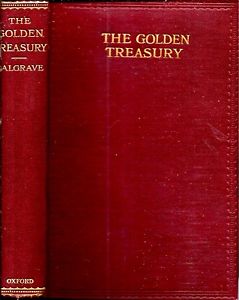
 The gateway to Richard Scott’s carefully structured first book is one of the most conventional poems in it. It’s a carefully punctuated, unrhymed sonnet. It is carefully placed (Public Library) and dated (1998). It’s the kind of poem and confinement Scott has fought to escape from and perhaps records the moment when that escape began: “In the library [. . .] there is not one gay poem, / not even Cavafy eyeing his grappa-sozzled lads”. The young Scott (I’ll come back to the biographical/authenticity question in a moment) takes an old copy of the Golden Treasury of Verse and writes COCK in the margin, then further obscene scrawls and doodles including, ironically a “biro-boy [who] rubs his hard-on against the body of a // sonnet”. Yet his literary vandalism leads to a new way of reading as – echoing the ideas of Eve Kosofsky Sedgwick – the narrator suddenly sees the “queer subtext” beneath many of the ‘straight’ poems till he is picking up a highlighter pen and “rimming each delicate / stanza in cerulean, illuminating the readers-to-come . . .”