i.m. Yves Bonnefoy: love the bouquet for its hour

images

The death of Yves Bonnefoy (on 1st July 2016) was marked last week by The Guardian and The New York Times and many others. Anybody who has followed this blog for a while will know that I have found considerable inspiration in Bonnefoy’s poetry and writing about poetry. John Naughton in The Guardian obit sums up the nub of Bonnefoy’s thought: “we tend to replace the reality of things and other people with an image or concept, which deprives us of a more direct and immediate experience he called the experience of “presence”, in which one has a fleeting apprehension of the essential oneness of all being”. That latter phrase will explain how I have stumbled my way in recent years from translating Rilke to versioning the texts of the Daodejing.

imgres

The NYT obit suggests Bonnefoy’s poetry has often been found “highly abstract and often obscure” and to counter this misleading impression I thought I’d post four sonnets from his 2011 collection L’heure presente (The Present Hour) in Beverley Bie Brahic’s pellucid translations. Bonnefoy is thinking of his own father here (who died when the poet was young) but the valedictory tone seemed right for the occasion. Bonnefoy translated a great deal of Shakespeare and (in part – he’s also arguing with Mallarme) the fourth of Bonnefoy’s sonnets is in dialogue with the ideas of Sonnet 63 (“His beauty shall in these black lines be seen, / And they shall live, and he in them still green”). It’s a mark of Bonnefoy’s achievement that even in such an emotional, personal context, he can still articulate ideas about language (“words cut”) and the way in which “the real flower becomes metaphor” by bleeding the temporal and in doing so yields up a great deal of what it means to be real. Instead, we must “love the bouquet for its hour. / Only at this price is beauty an offering”.


A Photograph

This photograph—what a paltry thing!

Crude colour disfigures

The mouth, the eyes. Back then

They used colour to mock life.


But I knew the man whose face

Is caught in this mesh. I see him

Climbing down to the boat. Obol

Already in his hand, as if for death.


Let the wind rise in the image, driving rain

Drench it, deface it! Show us

Under the colour the stairs streaming water!


Who was he? What were his hopes? I hear

Only his footsteps descending in the night,

Clumsily, no one to give him a hand.


Another Photograph

Who is he, astonished, wondering

Whether he should recognise himself in this picture?

Summer, it seems, and a garden

Where five or six people gather.


And when was it, and where, and after what?

What did these people mean to one another?

Did they even care? Indifferent

As their death already required of them.


But this person, who looks at—this other,

Intimidated all the same! Strange flower

This debris of a photograph!


Being crops up here and there. A weed

Struggling between house fronts and the sidewalk.

And some passers-by, already shadows.


A Memory

He seemed very old, almost a child;

He walked slowly, hand clutching

A remnant of muddied fabric.

Eyes closed, though. Oh—isn’t believing


You remember the worst kind of lure,

The hand that takes ours to lead us on?

Still, it struck me he was smiling

When, soon, night enveloped him.


It struck me? No, I must be wrong.

Memory is a broken voice,

We hardly hear it, even from up close.


Yet we listen, and for so long

That sometimes life goes by. And death

Already says no to any metaphor.


I Give You These Lines . . .

I give you these lines, not that your name

Might ever flourish, in this poor soil,

But because trying to remember—

This is cut flowers, which makes some sense.


Some, lost in their dream, say ‘a flower’,

But it’s not knowing how words cut

If they think they denote it in what they name,

Transmuting flower into its idea.


Snipped, the real flower becomes a metaphor,

This sap that trickles out is time

Relinquishing what remains of its dream.


Who wants now and then to have visits

Must love the bouquet for its hour.

Only at this price is beauty an offering.

06bonnefoy-obit-master768

2016 Forward First Collections Reviewed #2: Nancy Campbell

This is the second in the series of reviews I will post over the next two months of the 5 collections chosen for the 2016 Forward Prizes Felix Dennis award for best First Collection. The £5000 prize will be decided on 20th September. Click here for all 5 of my reviews of the 2015 shortlisted books (eventual winner Mona Arshi).

The 2016 shortlist is:

Nancy CampbellDisko Bay (Enitharmon Press)
Ron CareyDistance (Revival Press) – click here for my review of this book
Harry GilesTonguit (Freight Books)
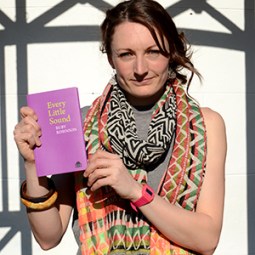
Ruby RobinsonEvery Little Sound (Liverpool University Press)
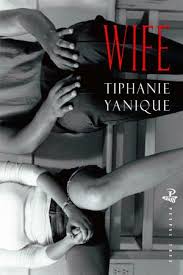
Tiphanie YaniqueWife (Peepal Tree Press)

disko_bay[1]

Thanks to Enitharmon Press for providing a copy of Nancy Campbell’s book for review purposes.

The concluding poem of Nancy Campbell’s collection Disko Bay is, I think, a good place to begin. In ‘Giving Up on Capitalism’, an unnamed boy makes kayaks and sells them for one, then two kroner (these poems are mostly set in Greenland). He hands his earnings to his mother who buys basics like coffee, sugar, needles, cotton and, more ominously, whisky. If this is the nirvana of capitalist enterprise it hardly gets beyond subsistence level and then only to poisonous effect. On the third occasion he instead decides to construct a kayak for himself: taking the few remaining skins, he “pegged them down deftly / and paddled away”. The point of rejection is simply made, but the simplicity has a mythic, typological impact. The poem’s form is simple, repetitive, like a piece of folklore, an oral transmission perhaps, and – characteristic of the whole collection – the vocabulary is plain to such a degree that the reader is impressed by a paucity or poverty or essentialism (depending on how successful you think it is). Certainly this is a book unlike any other you’ll read this year, drawing on myths and landscapes of the far north (the opening section of the book has poem titles in Greenlandic first, then English). Its impact is often impersonal but Campbell’s knowledge derives from her several residencies in the region and she deploys it in a skilful and poetically knowing fashion.

greenland5

Above all, these poems convey the harshness of scraping a human existence in the Arctic Circle, perhaps most obviously in the section called ‘Ruin Island’. An epigraph quotes the Eskimo, Osarqaq: “Our tales are narratives of human experience, and therefore do not always tell of beautiful things”. Several poems follow the exploits of Qujaavaarssuk, a heroic figure and general strong man, who is reduced to singing a dirge at the troubled fishing grounds and is advised by “a man who is not his father” (a break in traditional forms of transmission here?) that the one thing to be relied upon is that “hunger will come of its own accord”. ‘Hospitality’ in such circumstances may consist of feeding guests “the kidneys of a black seal / as the ice harden[s]”. Qujaavaarssuk’s immediate difficulty is the presence of too much ice (a deliberately ironic comment on the shrinking ice caps of our day): he sees the shadows of seals moving beneath it and sets out “to the ice edge to follow them” but what Campbell is interested in (these are contemporary poems, not slavish myth-reproductions) is the failure of the hunter. In ‘Danger of Snow Blindness’, Qujaavaarssuk returns for the first time “his sled empty, his kamiks [boots] clean”. ‘The Last Seal’ opens:

There was nothing left to feed the dogs.

Qujaavaarssuk shot them, one by one

and fed them to each other.

seal-5

To the contemporary reader, what lies largely unspoken beneath these chilly, often curt, unsentimental chips off a mythic block is, of course, our own awareness the adverse effects of climate change. ‘Ruin Island’ becomes apocalyptic in tone so that the words spoken by a hunter that conclude the sequence, words spoken by Jorsias Ammonsen in a real interview conducted in 2006, are presented as the reply of a hunter “who can no longer hear the question”. In this way, Campbell tragically ironises Ammonsen’s proud, nostalgic, heroic, perhaps hopeless comments:

When we were young

no place seemed too far away for hunting.


We travelled a long way,

too far to come back the same day.

We slept in stone caves

and were cold in winter.


Nothing is too harsh

when you are accustomed to it.

Nancy Campbell 2012

Campbell tries to remain true to the plain directness and dignity of such a voice in most of these poems. The figure of the poet seldom intrudes. When it does she is trying to learn the “soft uvulars” of a new language which seem like “dark flocks of sound I’ll never net, or say”. Difficulties of expression in one language are compounded by problems of communicating across distance to her own homeland: “Since I can’t post a letter this far north, / I’m sending you an Arctic snowstorm”. ‘The Night Hunter’ is typical in its use of a simple lexis – snow, door, harbour, boat, blood, sled, knife – and a repeating form of verse as if the polar climate has sheared away more baroque elaborations of language and form. At first this feels cramping, but as Campbell persists and insists this really is what she intends, the simplicity seems more likely to put us in touch with the elements, the elemental, the bottom line of harsh Arctic existence.

With figures like the hunter Qujaavaarssuk so prominent you might anticipate a macho sort of world but the harsh conditions seem to teach an underlying humility (even to men) and Campbell has a number of female narrators who are clearly no push over. In ‘The Seal People’ a seal hunter’s wife watches the vindictive spirits of killed seals approach by boat and though threatened by them her voice does not falter through three steady quatrains, the verse’s repetitions here expressive of her firm courage. ‘The Hunter’s Wife Becomes the Sun’ is a major poem (its form is a sestina with its obsessive recurrences). Here, a hunter’s wife gives him a tinny Christian memento for protection. The hunter is more concerned with the reality of death and an apocalyptic sense of the world’s end (Campbell’s chosen rhyme words are tin, angel, window, box, candle, darkness). But his wife insists on the need for “light”, transforming herself into a “vast white wake / of stars” which might be considered angels, though the man himself finds it hard to shrug off his pessimism: “At the world’s last window, I light another candle”. The shamanic implications of their exchange are more explicitly played out in three translations of crude Greenlandic Qavak songs, originally collected in the 1950s. They are spoken by a “terrible mother” a “female shaman” and an omniscient “wicked woman”, the latter advising the only way to tackle an enemy is to bite off and employ her clitoris as an arrowhead. Neither the blunt obscenity or implied moral judgement can hide the suggestion that this remote culture clearly understands the importance of the female in ultimate survival.

iceberg-in-disco-bay-greenland_6a7e

One of the impressive things about Disko Bay is that it is eco-poetry without shed loads of landscape description. Those vindictive seal spirits carry a powerful ecological message in their “round, black eyes” – less for the Greenland hunter and his wife (whose place and role within a traditional, sustainable Arctic ecosystem is be unlikely to unbalance things) but to us with our petrol engines, plastics and carbon complacencies. Another success of the book is its use of myths redolent of Nordic and North American materials without distracting echoes of Ted Hughes’ trickster figure Crow. In ‘Fragment’ a severed raven’s wing in the snow is enough to imply the global problem: “Never to breed, never to scavenge / on scarlet seal hearts by the ice edge”. It is brave of Campbell to delay the more eco-explicit poems to later sections of the book. Part three sets off from the premonition that “the future is full of riddles” and ‘Conversations’ conveys both the mystery and the certainty of climate change: “I don’t think it is one thing / I think it is a combination of things / a combination of everything”. The riddle-subjects appropriately include a tsunami and an iceberg but not the dirty complexities of the ever-hungry, seldom-satisfying capitalism rejected by the boy who constructs a kayak not to be sold but for his own setting out in this fine, unusual book’s concluding poem.

Read more on Nancy Campbell – in discussion with Forward Arts Foundation.


2016 Forward First Collections Reviewed #1 – Ron Carey

This is the first in a series of reviews I will post over the next two months of the 5 collections chosen for the 2016 Forward Prizes Felix Dennis award for best First Collection. The £5000 prize will be decided on 20th September. Click here for all 5 of my reviews of the 2015 shortlisted books (eventual winner Mona Arshi).

The 2016 shortlist is:

Nancy CampbellDisko Bay (Enitharmon Press)
Ron CareyDistance (Revival Press)
Harry GilesTonguit (Freight Books)
Ruby RobinsonEvery Little Sound (Liverpool University Press)
Tiphanie YaniqueWife (Peepal Tree Press)

imgres

Thanks to Revival Press for providing a copy of Ron Carey’s book for review purposes.

On the cover of Distance a male figure has already travelled well down a track through flat, open countryside. He’s heading determinedly away from us, hands thrust in his coat pockets. I think this is Ron Carey and though the image pretty literally evokes one aspect of the book’s title, it contradicts the stated direction of the poems within which hope to “bring us a little closer”. An epigraph from Elizabeth Burns suggests a more philosophical “sense / of time and place dissolving” so that (in an image that would have pleased Antonio Machado) “we are all / drops of water in this enormous breaking wave”. Ron Carey’s first collection sticks more firmly to the former, more commonplace, more personal of these formulations but is at its most interesting when it ventures an almost magic realist evocation of the latter.

The dissolution of strict linear time provides occasions for many of the most appealing poems here. They are acts of recall of a twentieth century childhood in Ireland (in this Carey invites comparisons with Heaney and, before him, Kavanagh). The boy who is the focus of these recollections is both highly observant and very imaginative. His conviction that there is a leopard in the coal-shed as he is tucked up in bed is grounded in vivid details of it tiptoeing “through the tin-pot Dulux jungle, on / Quick, painted feet”. ‘Breakfast’ is also troubled by imaginary big cats (lions this time) who chase his father from the house, their “claws pinging the spokes of [his] bicycle”. The idea of a ‘water-table’, as discussed by Driller Flanagan and the boy’s father, unleashes images of a real “table of Marian blue; its top shimmering” but when the geological reference is clarified for him, the boy swears never to ask “questions that have / The possibility of such dull answers”. We see the birth of a certain type of poet here, though Carey’s long wait for a first book reassures us that such unbridled (if vivid) fantasy will not be the whole story. So watching Aunt Babbie wring the necks of chickens, while blithely questioning him about his day at school, gives rise to more troubling childhood experiences as the birds’ “squawking souls” pursue him home and (the writing of the poem confirms) continue to haunt him forever.

imgres

Everyday remembrance seldom loses sight of the gulf between then and now, but Carey’s poems occasionally record more profound moments of the collapse of the temporal. ‘Moving’ records the day a family move to a newly built housing estate. All their belongings piled in a horse-drawn cart (old world), as they approach the house the boy’s mother runs ahead with a “100-watt Solus” light bulb in her hand (new world). The electricity that runs metaphorically through the boy’s hands as he is given the horse’s reins and literally through the bulb filament so that the “black eyes of the front-room suddenly blazed” form an instantaneous circuit in which the whole family experiences renewal, the mother now “a young girl” calling from an open window ahead. It is the intensity of the emotions which supercharges such changes in perception. ‘Kilkee’ sees the six-year-old boy partaking of the grief of another Aunt’s broken heart, lying like lovers themselves on sand dunes: “He put his finger into the ring of the sun / And pulled it down the sky till it entered the water”. This drawing down of blinds is a fantasy of sorts but far more profoundly linked to the truth of the moment than the boy’s water-table imaginings. It’s in ‘Upstairs’ that Carey brings this technique to its apogee where the boy (now grown but of an uncertain age) agrees to wear his father’s old coat and lie beside his ageing mother. It’s her desire to re-live earlier days and intimacies that dominates, but the poem cleverly reveals the boy’s own uncertainty of identity: “We pretend to sleep, Danny and me”. He feels he can’t get up, though she’s now asleep, “Because she will not let go of his hand” (my italics).

1899C_British_Bicycle_man

The figure of the father is a powerful one and recurs throughout the book. We see him relishing “pig’s toes with a pint”; elsewhere he comes home from work: “Your cold, great hands shocking / Our new skins; your goat’s kiss rough as love”. Even more memorably, in ‘My Father Built England’, he works as an immigrant labourer, a “solid Paddy full of gristle”, learning how to harden his hands with urine, then with the onset of World War Two, returning to Ireland to work for Hogan and Son. He is one of many characters who populate this enjoyable book – Miss O’Mahoney, a pub quiz-master, an irregular Postman, several Aunts, Grandmother and Grandfather – most of them firmly enough grounded in close observation to avoid caricature. And it’s the quietness with which Carey achieves his aims which is notable. New technologies are alluded to in the context of the past. ‘Churchfields’ makes familiar use of a photographic image but in ‘Background’ an image of a Grandfather is set as background on a computer screen, allowing Carey to “click a short-cut icon on his broad shoulders” in another striking image of the collapse of time differences. Elsewhere, the sweep of a dry stone wall is compared to the curve of a “Large Particle Collider” (unlikely, but successful). And a visit to Patrick Kavanagh’s grave yields an encounter with his ghost, in fact on film, “rasping and jumping on a screen”.

Inisheer_Gardens_2002_dry-stone_walls

Unfortunately, there is a rather soft middle to this book in the sections titled ‘The Beloved’ and ‘New Oceans’. The first seems a rather brief, miscellaneous collection of poems only vaguely linked to the theme of love and includes an up-dating of the Icarus myth and an incongruously Yeatsian lyric, ‘Diarmuid and Grainne’. ‘New Oceans’ appears to be an ill-judged venture into exotic climes and idioms (I think Central America). But there are more interesting poems in the final section of the book, ‘The World Will Break Your Heart’. Here Carey is less intent on conventional narrative and (in contrast to the youthful recall of earlier poems) focuses on the moment as it passes and on last things. ‘Lineage’ is a confident celebration of the Irish landscape – confident enough to admit ignorance of names as well as to leave the poem more open-ended, with no evident pay-off. ‘Catching My Death’ is short-lined, elegant, unpushy. Sounding more like Michael Longley here, the boy has grown up, encountered much:


I find life now – much the same

As the robin does – wriggling

In my mouth


Mortality is now envisaged as a return to the earth, though some sort of reawakening into the future is imagined:


Until

The earth warms

And the soil opens

To the resurrection of the worms

images

Philip Gross, Carey’s supervisor on the South Glamorgan Creative Writing MA course, has written of the tenderness and detail of his work and this is true. He has a long list of competition wins and placings behind him and individual poems are touching and colourful and well-done. Distance covers a great deal of ground between childhood and old age and Carey is above all honest. But as a first book there are trails here which come to nothing and others which promise poems of a more adventurous kind. I hope that’s where the man in the coat is really heading.

An interview with Ron Carey about his work can be read here. 

Reading Archive: April – June 2016

Up-dated June 2016

This is turning out to be the place where I often admit my lacks and ignorance. Elizabeth Bishop – apart from 3 or 4 of the obvious poems – has always been something of a blank spot with me. I have been re-reading her Complete Poems and understanding maybe my problem lies in getting to like her earlier work before A Cold Spring (1955). What I do begin to appreciate more clearly is her modesty, accuracy of observation and own-furrow-ploughing determination as a poet.

imgres

Anne Stevenson’s Five Looks at Elizabeth Bishop has been helpful with thoughts such as “Bishop’s instinct was to look hard enough at nature to lose herself in it – and thus, as in the Biblical paradox, find herself”.

imgres

As has Seamus Heaney’s ‘Counting to a Hundred: on Elizabeth Bishop’ (from The Redress of Poetry). He argues, at her best, she reveals how “obsessive attention to detail can come through into visionary understanding  [. . .] intense focus can amplify rather than narrow our sense of scope” (something I have written about in recent thoughts on McGilchrist’s ideas about right/left brain work).

images

I’ve also been reading two collections by friends . . .

imgres

Lynne Hjelmgaard’s A Boat Called Annalise (Seren) is a sequence of love poems to a husband and a sailing boat and vies with Bishop in some of its evocations of tropical harbours: “We fell asleep with the roosters, / the waves, rumblings in the bay”. For a land-lubber like me, there are powerful portraits of life at sea such as ‘That Feeling of Boat’: “We confide and trust in twenty tons, / talk to it, nurture it”. ‘White Clover’ is a delicately symbolic poem dedicated to the late, much-missed Dannie Abse.

imgres

Danielle Hope’s Mrs Uomo’s Yearbook (Rockingham), which I mentioned in an earlier blog, again shows how effective the Mrs Uomo character is (a near relation of Zbigniew Herbert’s Mr Cogito) as a vehicle for social commentary which is quirky, engagingly funny and incisive, particularly about the NHS for which Hope works as a doctor.

Up-dated May 2016

imgres

Last month it was heavy-Hughes (as you’ll see from my April up-date below) so half following that lead and half influenced by the 400th anniversary celebrations across the media, I have been swimming my way through Hughes’ A Choice of Shakespeare’s Verse. First published in 1971 and up-dated in 1991, Hughes is right in suggesting it’s been hard to “place” the bard amongst the “poets in English”. It’s not just because he wrote mostly drama (if mostly in verse) but also that critics retreat before his work feebly flapping and gesturing towards a special case. So Hughes’ “looting [of] portable chunks” from the plays serves largely to confirm two things: his plays consist often of the most astounding poetry and that – yes – special case status is hard to withhold.  But Hughes is onto something suggesting that Shakespare’s Catholicism in a world of Puritan jihad (Hughes’ word) has much to do with it. An astonishing read – whatever the rights and wrongs of the case.

imgres

Gill McEvoy’s HappenStance chapbook, The First Telling, is terrific. Told with exquisite poise, it recounts the after-shocks of a rape, the adjustments, the progressive self-forgiveness, the therapy sessions. You need to know the sequence is punctuated by poems about birds – this is not a plain sort of confessionalism, but rather work of great artistry, to be recommended for its use of the blank spaces on the page as much as for its exploration of traumatic experiences.

imgres

McEvoy’s book was noticed (winning the 2014 Michael Marks award); Simon Richey published Naming the Tree (Oversteps Books) in the same year and I’d not heard of it till I heard him read at Poetry in Palmers Green. Richey writes about abstract matters – language, time, consciousness – and material events with a wonderful precision and approaching a philosophical elegance. Something of the impersonality of TS Eliot is matched with personal attentiveness to detail – highly recommended.

Up-dated April 2016

imgres

It’s been a heavy-weight Ted Hughes month since I’ve been reading Jonathan Bates’ biography over several weeks and then supplementing it with the poems themselves. The Bate is far more comprehensive than Elaine Feinstein’s earlier biography and if nothing else shows how much material Hughes left behind (100,000 pages of unpublished drafts) so the academic exploration of it will clearly take many years. On the poetry itself Bate gets a bit irritating in relating  just everything back to Plath –  even the late work apparently shows unmistakable evidence of his continuing obsession with her!

imgres

Crow remains extraordinary though it makes more sense to see it as Bate suggests as the unfinished epic that Hughes had hoped to complete. There was to be a phase of restoration but Hughes never managed that – perhaps because this was too close to the two suicides of Plath and Assia Weevil.

imgres

I’d missed Remains of Elmet when it was originally published. With Bate’s help and Hughes’ own Note from 1993, it’s clear now that this is a very coherent and powerful portrait of the region of his childhood.

imgres

I loved Gaudete when it first appeared in 1977 as I was in the first flush of my Hughes period! Most commentators (including Hughes it seems) now consider the ‘filmic’ loosely-constructed narrative poems as not quite the real thing. It’s the strange, tough little songs of Nicholas Lumb that conclude the book that pay more dividends.

The Soviet Briar: poems of Vladislav Khodasevich

In the light of recent political events in the UK, it seemed important to be thinking about wider perspectives this week – Europe, Revolutions, the role of poetry. The poems of Vladislav Kodasevich came easily to mind and I have wanted to praise Peter Daniels’ translations of them for a while now.

What emerges from Peter Daniels’ Vladislav Khodasevich: Selected Poems (Angel Classics, 2013) is a vivid picture of a poet who was, both by temperament and historical circumstance, very much an individual. From a Lithuanian Polish background, coming to creativity at the fag end of Symbolism, witnessing Russia’s revolutionary year of 1917, going into permanent exile in 1922, Khodasevich (1886-1939) was perhaps inevitably a writer with little sense of belonging, of sure identity. It’s no surprise that he plays with images of doubles, often standing outside himself, then counters such doubts with rather grandiose claims to his poetic vocation.

imgres

The consequent difficulty of pigeon-holing him as a poet is one of the reasons why he is less well-known than his more familiar contemporaries – Mandelshtam, Akhmatova, Tsvetayeva and Pasternak. He is also difficult to pin down because he is “a modernist, but with a classical temperament” (Daniels’ Preface). In a period when others were tearing up rule books (poetical and political) Khodasevich harks back to the “eight little volumes” of Pushkin’s works. Amongst the ruck of Symbolists, Acmeists, Futurists and Cubo-Futurists, Khodasevich’s poems mostly retain traditional forms and he proudly declares: “I grafted the classic rose / to the Soviet briar bush” (‘Petersburg’). Such formalism presents great challenges for the translator, of course, with Khodasevich flaunting his conservative and poetic concerns – “O may my last expiring groan / be wrapped inside an articulate ode!” – and, like many before and since, he argues such formal frameworks are paradoxically the way to find release. (Carol Rumens has discussed some formal aspects of a Daniels/Khodasevich poem for The Guardian). Curiously, his last ever poem was in praise of the iambic tetrameter, the classic metre of the Russian tradition:


Its nature is mysterious,

where spondee sleeps and paeon sings,

one law is held within it – freedom.

Freedom is the law it brings . . .

imgres
Vladislav Khodasevich

If Khodasevich uneasily straddles a variety of poetic strategies, there is a fascinating parallel to this in his views on self and society. The self is at one moment urged to “be a star that breaks away from the night” but in the next is “grunt[ing] to yourself, / looking for spectacles or keys”. This “usual self” is preoccupied with tarnished spires, the tops of cars, old iron eaves, and in ‘Berlin View’ sits shivering and sneezing in a café, surrounded by “plate-glass” reflections of itself. A couple of years later, at what seems a Dantesque ‘mid-point’ in his life, Khodasevich stares hopelessly into a mirror: “Me, me, me. What a preposterous word! / Can that man there really be me?” This is the Modernist side of the poet, observing from “the gutter”, watching a sordid Parisian cabaret, a dismal demi-monde of “tinselled chaos”. Yet the poem quoted here – ‘The Stars’ – goes on to suggest our gaze may sometimes incline upwards, “from the horizon to the stars” and – at least on occasions – we are aware of a “starry universe in glory / and the primordial loveliness”.

180px-Hodasevich_Berberova
Khodasevich and Nina Berberova, Sorrento, 1926

This suggests Khodasevich was still enough of a Symbolist to see the poet’s role as seeking out such “loveliness”, the transcendent within the quotidian (as Michael Wachtel’s Introduction defines this key Symbolist intent). This accounts for Khodasevich’s repeated images of stars often unseen above us (but still there) and also of the flourishing of seeds in the earth as an image of personal and social growth. The title poem of The Way of the Seed (1920), in rhymed couplets, describes the traditional sower, with seed gleaming golden in his hand, but scattered into “the blackness of the land”. There it finds “its moment for dying, and for growth”. Latterly, the poem suggests this is also the path of the “soul” as well as “my native country, and her people”. This nicely sums up Khodasevich – the progressive conservative, these organic and traditional images of the farmer absorbed into bold ideas of growth and change incorporating both a dying back and re-birth. A similar pattern is reflected in ‘Gold’ – a coin is placed into the mouth of a corpse, buried, and after many years, in the unearthed skull, the coin is found again, rattling: “the gold will flash in the midst of bones, / a tiny sun, the imprint of my soul”.

img_0011a
Peter Daniels at Khodasevich’s grave

It is in such longevity, such insightfulness that continues to be true, that Khodasevich finds reasons to celebrate the poetic vocation. Though the names of the dead who fell at the Battle of Khotin (1739) are forgotten, “the Ode upon Khotin” by Lomonosov is still recited. ‘Ballad of the Heavy Lyre’ opens with Khodasevich in the Soviet-run House of the Arts, surveying his life and finding it “worthless, a quagmire”. But eventually verses burst from him till “a galaxy streams at my head” (those stars again) and a heavy lyre is mysteriously thrust into his hands and, in the final line, he understands this is the lyre of Orpheus. Written in 1921, this poem foreshadows Khodasevich’s departure from the Soviet restrictions in the following year with hopes (one imagines) of further freedoms to be enjoyed.

I was especially interested in the seven substantial blank verse poems Khodasevich wrote in a brief period between 1918-20 (David Cooke’s review of the book for London Grip makes the same observation). These in particular bring to mind the modernist-conservatism of Robert Frost (whose two first books were published in 1913 and 1914) and it’s astonishing that Khodasevich did not pursue these successful experiments with a less formal verse that seems an ideal vehicle for his quiet observational voice, his sense of the mystery or beauty that lies beneath the ordinary, his observations of a provisional self often encountering an unstable, uncertain world.

‘An Episode’ appears to record, moment by moment, an out-of-body experience Khodasevich had in 1915 (these blank verse poems are always keen to name times, places, people). At one moment, he sits before a shelf of books, at the next he is gazing at himself as if looking at “a simple, old, old friend”. The transitional moments are evoked through the marvellous image of feeling like a “diver, plunging to the deep, [hearing] / the running about on deck and the shouts / of the sailors”. ‘2nd November’ describes the aftermath of revolution – again the precision of street names, people’s responses as they emerge into the smashed and bullet-scarred streets makes this read as a very contemporary poem indeed. The narrator watches a neighbour, a joiner, building a coffin and painting it: “under the brush / the boards were turning crimson”. But the golden seed in black earth comes to mind again as a child is observed – a “four-year-old, chubby, in a flap-eared hat” – who manages a smile as if listening to Moscow’s “beating heart, / the moving fluids, growth” though for the narrator even Pushkin’s beloved works, on this occasion, fail to alleviate the shock of political change.
october-revolution-1917-cpm8fj

The unresolved tensions Khodasevich manages to hold together in these blank verse poems create a very modern impression. Another child appears in ‘Midday’, the narrator sitting in the most ordinary street scene, recalling a visit to Venice, fleeting glimpses of those “incandescent stars” once more. ‘An Encounter’ drops the star images for a more conventional image of beauty or inspiration, a “lovely English girl” glimpsed in Venice with its “black gondolas, / the fleeting shadows of pigeons, and the red / flow of the wine”. The extraordinary poem ‘The Monkey’ replaces the stars and the girl with the bizarre image of a tame monkey in a “red skirt”, led on a chain by an itinerant Serbian man (a much inferior translation of this poem by Alex Cigale can by read in The Kenyon Review). After a drink of water from a bowl, the monkey offers “her black and calloused hand” with such “nobility”. It’s the realism of the setting – the heat, the cock crow, the dusty lilacs – that enables Khodasevich to anthropomorphise the animal to such an extent and get away with it. It becomes another epiphanic moment in which the transcendent emerges from the quotidian. Here, a great chain of brotherhood seems implied and this makes the final line all the more devastating: “That was the day of the declaration of war”.

images

The two most Frost-like of these blank verse poems describe respectively a derelict house and a couple of neighbours chopping wood. ‘The House’ leads to reflections on transience, whether for a “palace” or a “shack”, the sudden advent of “war, plague, famine, or civil turmoil”. Such contrasts are again viewed from an Olympian height, an aloofness which has more negative capability about it than unfeeling Modernist cynicism. An old woman appears, scraping a living, and rather than pass judgement on her or her fate, the narrator joins her in stripping useful materials from the ruined house: “in pleasant harmony / we do some of the work of time”. A green moon rises ambiguously over the scene, casting light over a “tumbled” stove.  Khodasevich’s rich embrace and acceptance are also evident in ‘The Music’ as two neighbours chop wood. One suddenly claims to hear music but try as he might the other cannot hear it. In ‘Mending Wall’, Frost’s narrator likewise teased his farmer/neighbour and drew from him an old saying: “Good fences make good neighbours”. Khodasevich’s poem yields only a sense of earthly work well done together, the remoteness of the sky (from which perhaps that music fell), the clouds passing onward as “feathery angels”, or perhaps they are really no more than clouds.

imgres

England is Finished: Sean O’Brien’s ‘Hammersmith’ reviewed

In the week of the EU Referendum it seemed appropriate to review a beautiful little chapbook by one of the UK’s most prominent poets, Sean O’Brien. Appropriate because it is a book exploring both personal and national identity, issues of migration and how new lives are begun in a new country. In particular it is a work always aware of the need for – and the difficulty of – pragmatism, honesty and truth in both personal and political worlds. Whether it is our own or our nation’s past or future, the idealism or fundamentalism of the simplistically pure, clear and incontrovertible is a false god. Worship at such an altar is the old fearful yearning for security in a world that simply is both contingent and mysterious and can only possibly be faced with a sense of compromise, processes of negotiation.

images

Beside a photograph of his own 1952 birth certificate, Sean O’Brien’s foreword to Hammersmith (Hercules Editions, 2016) ponders other people’s interest in their family histories. Perhaps our ancestors “underwrite” our lives in a way we cannot do for ourselves – in ways religion might once have done. But O’Brien assures us the two cantos (of what seems to be a longer sequence of poems yet to appear) are more the “work of the imagination” than anything narrowly documentary. He alludes to Robert Lowell’s dictum – “why not say what happened?” – only to dismiss it, suggesting Hammersmith aspires more to the condition of a dream or reverie.

If this is teasing, then it continues into the poem. With a neat circuitousness, O’Brien’s rhyming alter ego, Ryan, wanders the streets of Hammersmith recalling his parents early days and places (days and places shared with O’Brien’s own mother and father), yet his search is an endless deferral, not arriving at any clear goal, a sense of not belonging which (the Foreword has already told us) is precisely O’Brien’s experience of London: “I never feel entirely present there”. So the irresolvable uncertainty about one’s true self is re-evoked here along with a scepticism about how far delving into ancestry can really help with it and this narrative set-up allows O’Brien to pursue the dream-like interweaving of reality and imagination which has become more familiar in his work since The Drowned Book (2007). It goes without saying that this fantasmagoric journey also takes the poet back to that post-war era that so fascinates him: “a place forever on the cusp of realising the welfare state” (from Ben Wilkinson’s Guardian review of The Beautiful Librarians).

imgres

Mixing the personal, the historical and the political, most of the optimism of that earlier time has gone. Canto 1 opens dismissively: “England is finished”. Initially this seems about to be cast as an epic/tragic moment as a rower in the University Boat Race catches a crab and, amidst allusions to the “fields of Hades”,  is compared to Palinurus, Aeneas’ drowned steersman from Virgil’s Aeneid Book 6. But within a few lines, the oarsman recovers and the incident ends only in petty recriminations and unsportsmanlike appeals to umpires – more comedy than tragedy, more satire than epic. The narrative voice concludes: “I’m losing my faith in this annual fiction”. Like Aintree and Wembley, those great sporting occasions that at least gave the impression of a nation united, a clearer sense of self-identity and “name”, the Boat Race too loses its power to inspire a faith in a certain type of Englishness, “a special and definitive order of reality” (Foreword).

BoatRace-Tatler-7apr15_rex_b

Perhaps it’s not wholly clear if this “order of reality” ever had any real existence and was lost, or whether the narrator lived the delusion of it briefly that was then corrected by his growing understanding of the significance of “class, the major stench of things”. And perhaps this is why the poem swings from imagined images of the 1940s and 1950s Hammersmith to the wanderings of Ryan/O’Brien in more contemporary settings (another photo in the chapbook is clearly O’Brien taking a selfie reflected in an underpass mirror). Canto 1 now more securely pursues the past, describing a young woman (the future mother) as nurse, teacher, doing the “pallais glide”. Such remembrance is labelled the “trap of elegy” at one moment. Ryan is caught in it and “Nor am I out of it” says another voice (O’Brien?) echoing Mephistophilis in Marlowe’s Doctor Faustus, that moment when he reveals the omnipresence of Hell.

HammersmithPalais_London_1970

What develops is a passage of a more documentary type (though no doubt the details are largely imagined) with an Irish ancestor stepping off the train at Euston, finding a room to rent: “Oh loneliness, your name is Hammersmith”. But canto 1 ends with an outbreak of irregular rhyming (the poem is written in triplets throughout) which holds together, as if in successful solution, references to Aneurin Bevan and Stafford Cripps, the ill-fated groundnut scheme of the late 1940s, Caliban and Ariel and a (more personal sounding) naïve, nursery-rhyme passage about “the boy with the curly brown hair”, who is perhaps the future father-to-be.

Canto 2 opens (having caught the habit of rhyme from the end of the preceding Canto) with another vision of the transience of London life, especially for migrants: “no fixed abode, where is no stay, / Not known at this address, / Or never known, or went away, // Gone where the post eventually goes”. This is both the contemporary figure’s fruitless search for an ancestral past as well as the post-war migrant’s experience where the world the nation fought for “admits / No Blacks and no dogs and no Irish”. There are passages here out of Dante, out of Yeats in which spectral figures go dancing through London streets “into Ravenscourt Park” and beyond the District Line. Once again, Ryan/O’Brien re-surfaces with a fierce thirst for Guinness which might “re-enchant / A world that is always and only prose”.

imgres

The earlier allusion (“where is no stay”) to Robert Frost’s comment that poetry can act as a “momentary stay against confusion” is repeated again in the context of what looks like suicidal thoughts, a personal as well as political history: “Here there is nowhere. Here is no stay”. It turns out the Ryan character has an engagement to read poems to an audience but the tone here is angrily dismissive (“Who gives a fuck?”) and heckled abuse from an audience is deemed appropriate somehow, the only thing to make sense “of a dying art”. O’Brien’s casting doubt on the efficacy – the very purpose – of poetry in the context of an ambitious poetic project like this might seem perverse but is perhaps just another de-stabilising element in the whole where past and present, political idealism and cynicism and failure battle it out across the fluid fields of the poet’s observation, memory and imagination (and anyway, if this is the opening of a long poem, this may not be the last word on the subject).

imgres

The poet’s heart seems most passionately engaged in passages concerning the mother figure, but Canto 2 ends, as did Canto 1, with allusions to the father. Like the son, he too seems to have looked always “for a sign”, for meaning in the bewildering flood and flow of the city’s life. What seems to be O’Brien’s pessimism again re-surfaces: “You will fail / Like your father before you”. The failure will be to “name” the waters (this leaves me thinking of Keats’ epitaph: one whose name was writ on water). The father’s ambition apparently yielded nothing more than a “suitcase – / Poems and politics, no fixed address” and later “Madness lay in wait”. Yet the narrative voice offers up the idea of witness, even if this does not lead to reassuring certainty: “You will lower your face to the water, // And through it, and open your eyes.” This is reminiscent of O’Brien’s poem ‘Cousin Coat’ with its self-urging to “Be memory, be conscience, will and rage” and to remain “cold and honest”, though since those lines were written in 1987 O’Brien’s range has continued to widen so that honesty in terms of documentary/historical evidence now also has to face new challenges, new types of honesty with regard to the imagination, in part those in-filling processes of personal memory, the making-up of our own past which many of us hope “underwrites” the people we have become.


tree in railing


What Have I Been Reading: January – March 2016

Up-dated March 2016

imgres

Tony Hoagland’s new collection from Bloodaxe introduces me to a poet I want to read more of (having missed him so far). Laugh-out-loud funny in the same breath as touching while being satirical and vividly descriptive of urban USA. Like Billy Collins, you relish the poem – then wonder how he managed to achieve it so apparently effortlessly.

imgres

I read with Tracey Herd recently at the StAnza Festival (see this post) and was impressed with the emotional honesty of her writing. This is her first book in almost 15 years and was short-listed for the Forward as well as being a PBS Choice.

images
imgres

In reviewing Choman Hardi’s recent Considering the Women for Poetry London, I also went back to re-read her first book, Life for Us (both published by Bloodaxe). Her unsparing exploration of the plight and flight of the Iraqi-Kurdish people in the 1980s is poetry of witness of a high order. This is a body of work which is unique and deserves as much notice as we can give it.

Up-dated January/February 2016

imgres

Macfarlane’s take on the significance of the loss of rural vocabulary and the danger that we will narrow our human experience as a result makes for powerful reading. Actually I found the word lists a bit dull (which I’m sure I shouldn’t as a poet) but perhaps most important of all he directs readers to previously little known writers about landscape like Nan Shepherd, J A Baker and Peter Davidson.

imgres

Popa’s unpunctuated, economical, elusive poems, many of them drawing on Serbo-Croat myth and legends, can be hard going. There is little sentiment or surface detail to hold on to. But reading them you hear where Ted Hughes found the idioms of Crow. Poems like little hard pebbles giving lessons  to the more windy and verbose among us (I include myself of course).

imgres

Addonizio can be verbose but what she evokes is a speaking voice, a chatting voice, driven on to revelation after revelation as if across a bar table littered with empties. She is a voice in your ear with all that implies about thrilling intimacy though on occasions I felt ‘give me a break’.

imgres

Stephen Payne’s poems emerge partly from his job as a Professor of Human-Centric Systems. He observes what people do and he wants to discuss it. He’s looking for the patterns which present themselves ‘beyond chance’. If that sounds a bit cool there is something of that here but the book overall is delicate, always thoughtful and often very moving.

What Have I Been Reading: October – December 2015

Up-dated December 2015

imgres

Terry Gifford’s Cambridge Companion to Ted Hughes is a fantastic summing up of where Hughes’ reputation now is, including articles by various hands on Hughes and animals, Plath, myth, feminism (it’s complicated) and a clear account of the poet’s fascination with Shakespeare by Jonathan Bate.

imgres

Julian of Norwich: Revelations of Divine Love – a book I’ve intended to read for decades and though I baulk at much of it still  I love her focus on the visions taking place in “an ordinary, household light”, her vivid descriptions and tentative, undogmatic prose. She also boldly talks of Christ as our mother: “Who showed you this? Love. What did he show? Love. Why did he show it to you? For love.”

imgres

Few poets can travel such distances with such ease and brevity as Penelope Shuttle. I saw her read at the recent Second Light Festival in London and picked up her Templar Poetry chapbook, In the Snowy Air. It belies it’s rather Xmas-y title by being rather a hymn to London (with occasional snow showers) including the Shard, the Walbrook, the British Library and even Waitrose in Balham.

imgres

Hands and Wings: Poems for Freedom for Torture has been edited by Dorothy Yamamoto in support of the Freedom from Torture charity and includes work by Gillian Allnutt, Alison Brackenbury, David Constantine, Carrie Etter, Vicki Feaver, Pippa Little and Susan Wicks.


Up-dated November 2015

With the cold weather coming, Yves Bonnefoy’s 1991 Beginning and End of Snow(Bucknell University Press, 2012) is an exquisite read in Emily Grosholz’s translation, including an original essay by the poet on ‘Snow in French and English’.

31MuDc9AUxL._SX310_BO1,204,203,200_

I’m convinced Bonnefoy’s response to snow is not a million miles distant from the Daoist idea of the uncarved block and Rudolph G Wagner’s second magnificent volume on Wang Bi’s A Chinese Reading of the Daodejing is full of insights through its literal readings of the 81 chapters. I have been comparing his readings with my own new versions before going to press in the next few weeks.

images

Bertolt Brecht: Love Poems (Norton, 2015) is the first instalment in David Constantine and Tom Kuhn’s project to translate anew Brecht’s complete poems. Ranging from the delicate, literary, erotic and plainly pornographic, here’s yet more evidence (should we need it) of Brecht’s breadth as a poet. The Introduction also reveals that Brecht refused to award any prizes in a poetry competition he was asked to judge – because none of the poems successfully communicated anything of any value to anybody, they were all of no use.

51c3fActf1L._SY344_BO1,204,203,200_

Maggie Butt’s new collection is published by The London Magazine and contains work from the period in which she also published the themed books Ally Pally Prison Camp(Oversteps, 2011) and Sancti-Clandestini – Undercover Saints (Ward-Wood, 2012). Though miscellaneous in nature, it is time that dominates this book – historical time in a variety of European locations and personal time in several moving elegies and acts of remembrance.

imgres

KG Confidential: a festschrift for Katherine Gallagher is a wonderful tribute to one of the great movers and shakers in poetry (in London and in her native Australia and in translation from the French). These tributes of poems or prose include contributions from Liz Berry, Jane Duran, Kate Foley, Mimi Khalvati and Les Murray.

File 22-11-2015, 12 37 53

Up-dated October 2015

Alan Brownjohn’s new book is full of excellent poems, several of which (a few decades ago) would have been designated ‘secret narratives’. The title poem, ‘A Bottle’, is a strange noir thriller set in some undefined coastal region, an enigma of messages, relationships, landscape and murder. Always surprising; no let up in vigour and inventiveness.

imgres

Kate Foley’s ‘The Don’t Touch Garden’ (Arachne Press) is a treatment of adoption to rival Jackie Kay’s ‘The Adoption Papers’. “Mirror, mirror, on the wall” the old joke says, “I am my mother after all”. But which one? Brilliantly focused and carefully sequenced, these poems provide a thrilling and moving account of the processes by which any of us – adopted or not – become who we are.

imgres

Agenda’s ‘Family Histories’ issue has poems from Tony Curtis, Claire Crowther, Sean Street, Peter McDonald, Sheenagh Pugh, Maitreyabandhu and Danielle Hope, an interview with Robin Robertson and reviews of Abse, Hugo Williams, Sebastian Barker, Bryce, Liardet, McVety and Eilean Ni Chuilleanain.

imgres

The new issue of Stand  has tributes to the late John Silkin from John Matthias and Anne Stevenson. I remember seeing Silkin selling Stand in the late 1970s on the campus at Lancaster University. This issue also has new poems from Muldoon, Mort, Valerie Jack, Sam Gardiner and (even) Martyn Crucefix.

imgres

What Have I Been Reading: July – September 2015

Up-dated September 2015

Don Paterson’s 101 Sonnets is certainly a varied selection of the form (it strikes me it would be a good, coherent text for students to study). The editor is never short of an opinion, ranging from the good sense of “Academics, in particular, have talked an awful lot of rubbish on the subject of rhyme” to the much more questionable “the whole point of [a] poem – that it should lodge itself permanently in our brains”

imgres

That the novelist Ursula K Le Guin should be a fan and translator of Lao Tzu’s 81 ancient poems/chapters known as the Tao Te Ching is perhaps less surprising than the fact that her translation is one of the most enjoyable around (and I’ve been reading plenty of them in preparation for my version’s appearance next Spring).

9781570623950_l

Two chunky collecteds have been pre-occupying me in the last month or so. Lee Harwood’s Collected Poems is – by the nature of his aesthetic perhaps – uneven, but almost every page turns up new ways of writing and reading poetry: an invigorating pleasure.

imgres

I have blogged on Bertolt Brecht’s Poems 1913-1956 before – in more recent weeks I have been tracking him out of Germany, to Denmark and hence to the USA. Extraordinary how contemporary most of these poems feel, though already 60 plus years old.

imgres

Updated August 2015

John Greening’s anthology of poems about music, Accompanied Voices (Boydell & Brewer),  is a lovely thing, full of variety, full of poems to be re-acquainted with from Hill, Hughes, Longley and Porter and brand new contemporary work including Stainer, Allnutt, O’Donoghue, Reid, Rumens, Shuttle and Greening’s own little gem on John Field (being walked all over by Chopin).

imgres

I tweeted a couple of weeks ago that I found Carolyn Forche’s second collection, The Country Between Us (HarperPerennial, 1982) in a Highgate secondhand bookshop and having raced through the poems before going away I’m now keen to get back to them for a more reflective read.

41KocAt6ntL._SY344_BO1,204,203,200_

Tim Liardet’s poem-sequence of self-portraits, The World before Snow (Carcanet) is actually motivated and (to some degree evokes) an illicit trans-Atlantic affair. The poems have the density and intensity of Liardet’s previous work with an even greater fertility and fluency of imagination.

imgres

On Narrowness, Claire Crowther’s third collection from Shearsman is a chewy, twisting, sometimes vertiginous read; that’s another way of saying I don’t know what’s going on half the time. But the poems are confident in themselves and leap boldly from one image to another.

images

Up-dated July 2015

I find Yves Bonnefoy’s writing unfailingly nutritious though sometimes wonder if his ideas are at least as exciting as the classically restrained lexis of his verse. Beverley Bie Brahic’s 2013 translation of The Present Hour (2011) has Bonnefoy in sonnet-shaped Wordsworthian mood recalling his childhood, writing enigmatic prose pieces and a thought-provoking (because not always easy to follow) essay, ‘In a Piece of Broken Mirror’, once again discussing image, dream, reality and language.

imgres

Perhaps is Alan Murray’s Acumen chapbook from 2013 and it quotes Nietzsche’s observation that the word ‘I’ is the point at which our ignorance begins and several poems do press at the boundaries and mysteries of the self. Murray is a philosopher as well as poet and his colloquial, skilfully turned verse sounds Larkinesque in its precision and equivocations. Great to read poems unafraid of complex ideas.

imgres

Sheenagh Pugh’s 12th book leaves Cardiff and Wales for the Shetland Islands. Wide skies, rough oceans, bright stars. But I share her obsession with the passage of time and there are some powerful poems here, though I find her historical delvings less enjoyable.

imgres

Collette Bryce’s ultra-brief outing (from 2014) into her childhood growing up in Derry during the Troubles is an object lesson in how to focus a collection (just 30 poems). She writes plain, rather withdrawn poems, but this seems right for the material which is therefore allowed to speak for itself.

imgres

What Have I Been Reading: April – June 2015

Up-dated June 2015

I’ve taken a while getting through the almost 500 pages of Ian Bostridge’s fascinating musical, artistic, poetical, historical, political discussion of Schubert’s Winter Journey.Taking Wilhelm Muller’s poem sequence Die Winterreise, Schubert re-organised it (otherwise changing little) to produce his own Winterreise and, discussing this process and his own performances of the piece over many years, Bostridge touches on Kant, Goethe, Darwin, Friedrich, Alfred Hitchcock, and Aristotle’sMeteorology among others. The Muller text would make an interesting translation project.

imgres

An earlier post about the abecedary form lead several people to ask me whether I’d read Inger Christensen’s 1981 sequence alphabet. Well I have now and it is just stunning. Based on the Fibonacci sequence and moving from A to N in alphabetical sequence too, Christensen writes fluid, Whitmanesque passages, laying aside ‘either/or’ for ‘and’, page after page of which reminds me of Rilke at his most passionate. This is a brilliant translation too by Susanna Nied. Christensen is a writer I need to explore more.

imgres

A few weeks ago I blogged on Lee Harwood’s work which I was also discovering for the first time. Since then I have read Selected Poems published by Shearsman; and I have the Collected Poems waiting for the summer holidays too.

imgres

Sue Boyle is a poet I have followed since working with her as a tutor for the Poetry School. She has now published, Safe Passage, a first collection with Oversteps Books and I recommend it (though I confess to also being one of the blurbists on the back cover, where I quote one of her most interesting lines: “in seizing the unexpected lies the art”).

imgres

Updated May 2015

I’m still working through Robert Crawford’s magnificent biography of young Eliot up to The Waste Land. An almost day by day account of his youth, school and college days, Paris, Laforgue, Pound and Vivien Haigh-Wood. Particularly good on Eliot’s philosophical reading and development which I’m loving.

imgres

Mimi Khalvati’s The Weather Wheel consists wholly of 16-line poems – stretched sonnets or irregular ghazals – which seem able to encompass almost any mood, topic or subject matter. Particularly impressive is her desire to draw from the most ordinary of events lines which often soar to the complexly emotional and the (frankly) spiritual.

imgres

I’m also back re-reading Hughes because it looks like we’ll be teaching this from September onwards – surprisingly not something I have done (except one or two isolated poems). I first read many of these poems at Lancaster University in the late 1970s and nowadays many of these early poems read like objects of nature themselves: fixed as in granite, awe-inspiring, part of the mental landscape I have lived in for years.

images

As my most recent blog recounts, I have been also re-reading Transtromer’s work.

2Q==

imgres

Up-dated April 2015

I’ve been reading two impressive contributions to the growing field of eco-poetics. Frances Presley’s halse for hazel is a visually pleasing book from Shearsman (illustrations by Irma Irsara) and the poems encompass geographical, linguistic, political and environmental issues without strain.

imgres

Jacqueline Gabbitas’ Small Grass gives grass a voice and runs with the idea with charm, cleverness and power: “From where I lie, I see man walking, / his legs sheathed in green, // I strop my edges. Soon, they’ll cut through / fabric, the tissue beneath”.

imgres

I’ve not always been an enthusiastic reader of John Fuller’s work but the recent The Dice Cup is a book of prose poem sequences full of his characteristic erudition, wit and observation.

thumbnailgenerator

Lee Harwood is a poet who I’ve known of for years without really having read him much. I’d had him down as an English Ashbery/O’Hara and maybe I thought I ought to just go straight to the source. But Enitharmon’s The Orchid Boat is wonderful; full of fluid, sensuous, intelligent poems that twist and turn and take the reader by surprise. Not as flip as O’Hara, not as self-regarding as Ashbery.

imgres 

I confess to having a contribution in it but, apart from that, Tony Fraser’s new issue of Shearsman (103/4) is full of delightful things from the likes of Zoe Skoulding , James Byrne, Rupert Loydell and Kate Miller, plus translations of Virgil, Ponge and Jansma.

imgres