Tearing Up Grass: on Holderlin’s Life and Madness

Hesperus Press are just about to publish Will Stone’s eminently readable and wonderfully grounded translation of a contemporary account of Friedrich Holderlin’s madness. This is a long essay by Wilhelm Waiblinger, written in Rome during the winter of 1827/8. It’s an astonishing and very moving document for those interested in German Romantic and Modern poetry or in early accounts of mental illness or – as I am aware is my own case – for those who will instantly recognise, in these brilliant and detailed observations, some of the behavioural elements of what we now loosely refer to as dementia.
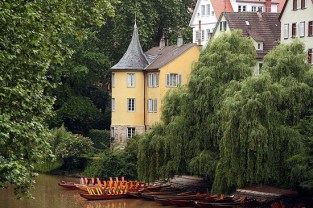
Holderlinturm
Holderlinturm

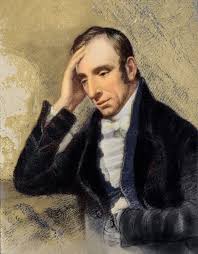
The essay first appeared in 1831, ironically only a year after its author’s death, though still a dozen years before its subject’s demise. Stone’s excellent introduction tells us that Waiblinger was an up-and-coming poet of the 1820s, “a rebel, a wayward fellow and a liberal maverick”. He studied at the same Protestant seminary (the ‘Tubinger Stift’) where Holderlin had studied from 1788 with Schelling and Hegel (imagine that team on University Challenge). But by 1806, the older poet had been confined to his tower in Tubingen (the ‘Holderlinturm’) because considered incurably mad. Waiblinger began visiting him in the summer of 1822. For four years, he saw Holderlin close-up, walking with him, trying to talk with him and enduring some pretty wild-sounding piano playing too.
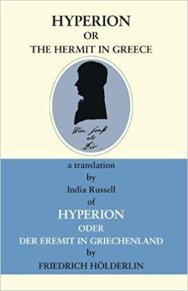
41+WrUaV5pL._SX320_BO1,204,203,200_Waiblinger was a real Holderlin fan. The older poet’s novel, Hyperion, had appeared in 1822 (I review a recent translation of it here) and the younger man found it “saturated with spirit: a fervent fully glowing soul swells there” He was swept away: “Holderlin shakes me to the core. I find in him an eternally rich form of sustenance”. The mad poet in his tower was not often amenable to being visited, but Waiblinger, for some reason, proved an exception: “This lunatic, sitting at the window [. . .] is far closer to me”, the young man wrote, “than the thousands out there who are said to be sane”. Stone makes it clear that Waiblinger not only admired Hyperion but voiced the need for Holderlin’s other poetry to be re-published. Gradually, having fallen into obscurity, “his special hymnic style, fusing Greek myth and Romantic mysticism” eventually started to attract new admirers including Nietzsche, Schumann, Brahms, Rilke, Hesse, Trakl, Benjamin and Celan.

Initially, Waiblinger seems to have intended to document: “It is not my place to offer some profound psychological insight, but rather to limit the quest to simple observation, a modest character sketch”. Filling in Holderlin’s earlier years he notes the uniqueness of his work in his “enthusiasm for Greek antiquity” which “left [its] mark on the tonality of his own creations” and led to a sense “of discontentment with the land of his birth”. This kind of sentiment dominates Hyperion and Waiblinger (sounding a bit prissily patriotic here) finds it elicits in him “a certain repugnance”. Waiblinger also reminds us of Holderlin’s doomed affair with the already-married Susette Gontard (the model for the Diotima figure in the poems and Hyperion). He sees the termination of the affair as the main contributory factor in Holderlin’s decline: “The coddled youth, lulled by the sweet intoxication of this love entanglement, was suddenly pitched back into bitter reality”. From here on, Holderlin was to carry “a fracture in his heart”, a wound barely transformed in Hyperion which Waiblinger reads as documenting “an unnatural struggle against destiny, a wounded mawkishness, a black melancholy and an ill-fated perverseness [that] cleaves a path into madness”.
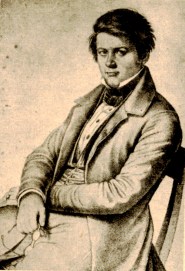
Wilhelm_Waiblinger
Wilhelm Waiblinger

No doubt the end of the affair did deeply affect Holderlin, but Waiblinger’s drawing a direct line from it to the ‘Holderlinturm’ is probably a bit simplistic. Sheltered from the “bitter reality” outside the tower, Holderlin continued to write letters in prose and verse. Given the period, it’s not surprising to hear Waiblinger describe the mockery of locals who caught Holderlin out walking – and good to hear that the old poet responded with mud and stones thrown at his attackers. Yet his behaviour was often like that of a small child: “When he leaves the house, they have to remind him in advance to wash and groom himself, for his hands are habitually soiled from spending half the day tearing up grass”. This tearing up grass seems to have been a common occupation as does, while out walking, flapping his handkerchief against fence posts. All the while, “he talks incessantly to himself, questioning and responding, sometimes yes sometimes no, and often both at the same time”.

One of Holderlin’s other occupations in his madness was re-reading his own Hyperion. He would read aloud, exclaiming “Wonderful, wonderful!” then go on, pausing only to remark, “You see gracious sir, a comma!” In true Romantic style, Waiblinger notices that the mad poet is more calm and more lucid in the open air: “he spoke to himself less [. . .] I was convinced this unceasing monologue with himself was nothing more than the disequilibrium of thought and his inability to gain significant purchase on any object”. For those who have witnessed a relative or friend suffering from dementia, this is a familiar thought and familiar also, perhaps, is the recourse to the phrase “It’s of no consequence to me” which Waiblinger heard repeatedly from the chattering Holderlin.

Playing a piano still gave him some pleasure it seems, beginning in childish simplicity, playing the same theme over and over hundreds of times. On other occasions, almost in spasmodic fits, he’d race across the keyboard, his long, uncut fingernails making an “unpleasant clattering sound”! He would also sing with great pathos – though not in any identifiable language. Holderlin’s family had completely abandoned him in his madness, but Waiblinger records him writing to his mother in the style of a child, “who cannot write in a fully developed way or sustain a thought”.
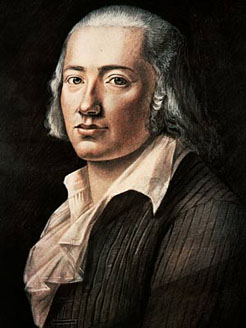
friedrich-hoelderlin-1-sized
Friedrich Holderlin

In fact, Waiblinger suggests that Holderlin’s difficulties lay in mental weakness rather than full-blown insanity. He is “incapable of holding a thought, of giving it clarity, of following it and linking it to another by way of analogy and thus to articulate a distant idea in a regular consistent sequence”. He has another go at describing what he imagines must be going on: “He wishes to affirm something, but since reality [. . .] does not concern him, he refuses it at the same moment, for his spirit is a realm which sustains only fog and what is feigned”. This is partly evident because of Holderlin’s habit (in his madness) of thinking out loud, so Waiblinger believes he can hear a thought being consumed even in the moment of its conception. In the grip of such fluidity and terrifying fog, Holderlin then would shake his head and cry out ‘No, no!’ and begin “firing out words without meaning or any signification, as if his spirit, in a sense overstretched by such a drawn-out thought, could restore itself only by having his mouth issue words which bore no relation to any of it”. Holderlin retreats from his own incoherence into the comfort of sheer random association.

untitled
Will Stone

The results are inevitable for the patient and (again recognisably) yield up a fierce, walled-in, self-involvement. Waiblinger describes a “complete lack of participation in and interest for any events outside himself”, and this, alongside an “incapacity to wish to grasp, recognise, understand, to allow in another individuality other than his own”, means there is no possibility of rational communication with the patient. And such solitude – experienced from the inside – results in such boredom that “he needs to speak to himself”, though lacking the ability to follow one thing with anything coherent, the result is “diabolical confusion” and mere “gibberish”. So it’s with some surprise that we find Waiblinger ending his essay with any thought at all of Holderlin’s recovery. He admits it’s unlikely – but does allow himself (surely consoling himself) with imagining an occasional “momentary restoration”, though even this might only be brief, perhaps no more than a fleeting prelude to the moment of death.

But perhaps such imagined lucid moments are less than consoling to those who spend time observing such distress. Leafing through his papers, Waiblinger says he discovered a quite terrifying phrase. Holderlin at one moment had scrawled down, “Now for the first time I understand humankind, because I dwell far from it and in solitude”. It is almost unbearably moving to imagine such flashes of conscious insight coming to the old poet in the midst of so much mental confusion and perceptual fragmentation. What Waiblinger here describes feels bang up to date and yet must be as old as the hills. Will Stone has done an important job in bringing this essay into English.
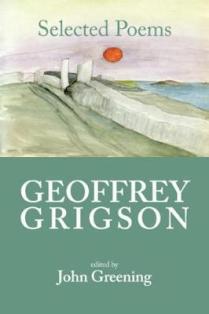

Flowers of Lime: Geoffrey Grigson’s ‘Selected Poems’

Surely we all have one or two Faber anthologies edited by Geoffrey Grigson on our shelves? Love Poems, Popular Verse, Reflective Verse, Nonsense Verse, Poems and Places, Epigrams and Epitaphs . . . As a critic he often wielded a savage power through his magazine New Verse. And as a big beast on the literary scene of the early 1980s, Hermione Lee interviewed him on Channel 4. But since his death in 1985, he’s better known merely as the husband of Jane Grigson, the celebrated cookery writer. His own poetry has been wholly neglected which makes John Greening’s new Selected Poems from Greenwich Exchange a welcome opportunity to re-consider it. I think Grigson’s contrasting themes were established early on. The influence of two great poets (not Eliot, not Yeats) is clear from the start and it may be that the limits of Grigson’s poetic achievement and the absence of much development in his style, are because he never chose one path or fully escaped either.


9781910996133

The influence of Auden is very clear in Grigson’s first collection, Several Observations (1939). ‘Meeting by the Gjulika Meadow’ presents an enigmatic narrative in a “frontier” landscape; a meeting between two men whose conversation is in large part concerned with “the thunder / about Europe”. There are sketched fragments of personal dependencies and guilts but the whole reads as a slice of narrative that has been carefully shorn of its explicatory elements. A poem from 1946 shows Grigson using similar methods but on matters much closer to home; ‘In a Dark Passage’ draws material from the deaths of two of Grigson’s brothers in WW1 and the early death of his first wife, Frances. The situations are still relatively distanced by being told in the third person and the timings of the incidents are compressed to form a litany of heartfelt if rhetorical griefs: “O floes of ice, you float downstream / But do not disappear”.

There is certainly a very dark river running through Grigson’s work. ‘Two A.M.’, from the 1970s, records a wakefulness at night filled – as so often – by nothing but questions: “all emptiness, all gravity, / Ultimacy, nothingness”. He captures vividly the way this kind of mood, at such an hour, insists on expanding exponentially, racing to fill the world’s “Sierras, monadnocks, lakes, prairies, taiga, ice”. On this occasion, there is the possibility of an erotic reply: “At least now, with our bodies close, / Be comforted”. But even that response is absent from ‘Again Discard the Night’ from the 1980 collection, History of Him. Written as a first person narrative this time, the poem pulls no punches in its flinty and unforgiving portrait of old age waking:


… you call, the kettle gathers

And talks, and Are you all right? comes your


Usual cry, and my habit insists, without sound, Reply,

Be bright, wash, shave, dress, and this once,

Again discard the night.


maxresdefault

Of course, Grigson’s sense of an ungoverned and likely meaningless universe matched with his frequent backward glances also calls to mind Hardy’s work. One of Grigson’s earliest poems, ‘The Children’, has an 11-line stanza of complex rhyme patterning that Hardy would have been proud of. The children are portrayed as playing in a natural environment and in a state of temporal innocence: “They looked for no clocks, noticed no hours”. But ending each stanza, the triple rhyme words with “hours” are (ambiguously) “sours” and “flowers”. Between the third and fourth stanza, there is the kind leap in time often found in folk songs. We have instantaneously passed many years: “The rooms were pulled down, but they always abide / In the minds of the children born in them”. These are the best lines in the poem with the much cooler closing lines for me falling flat:


They see the clocks and notice the hour

And aware that restriction of love turns sour,

They feel the cold wind and consider the flower.


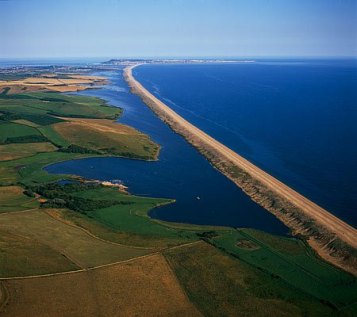
It is certainly Hardy that Grigson is thinking of in ‘In View of the Fleet’. The Fleet is the lagoon behind Chesil Beach in Dorset and the poem borrows phrases from Hardy, empathetically suggesting that each poet’s vision has the same sequential locus: “Things not as firstly well, a sparkling day, and / tolling of a bell”.


chesil-beach-aw-17-3
The Fleet and Chesil Beach


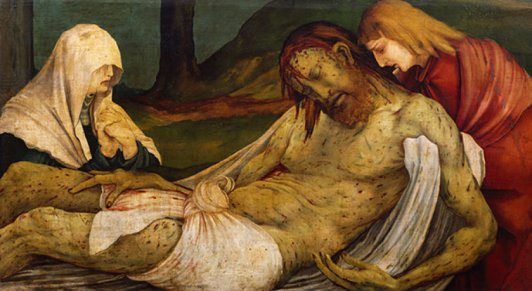
John Greening suggests in his very helpful Introduction that Grigson is also capable of an “extraordinary lyricism” and these are moments when he captures this “sparkling” quality of the natural world. In ‘A New Tree’, helped by the holding up of a child to a window, the narrator sees again with a newly cleansed perception, “a sun / being fiercely / let loose again”. Delight in the natural world recurs in a key poem, ‘Note on Grunewald’. In it, Grigson also expresses the scepticism about literary achievements which must have driven much of his own, often acerbic, critical comments on the work of others. In a man who devoted a lifetime to literary endeavours, it’s hard to take wholly seriously the poem’s assertion that he’d rather live to sniff the “scent of the flowers of lime” than to create lasting “poems”. But the scent is praised in contrast to the art of “Grunewald’s spotted green-rotted Christ”. Grigson sides with (“I join”) Cowper in deciding that death holds no attraction and that he too would choose to “leave this world never”. The perceived dichotomy between a vivid inhabiting of the world of the senses and the ‘rotten’ achievement of artists is by no means Grigson’s final comment on these issues, but the poem certainly expresses unresolved tensions.


stufftoblowyourmind-23-2014-08-isenheimdeadchrist-blog
Grunewald’s ‘spotted green-rotted Christ’


As Greening reminds us, Grigson as a critic was a feared and fearsome creature, liable to “dismissiveness and intolerance of shoddy work”. Perhaps, in his own mind, he never quite settled his assessment of his own poems. A lovely translation from Tu Fu was perhaps chosen because it laments lack of achievement, or at least of recognition: “Writing gives me no name”.*   More vigorously, ‘Lecture Note: Elizabethan period’ is an hilarious and outrageous account of a poet’s final work. While the ink was still wet on the page, he dropped dead. The poem fell to the floor only for the maid to drop it in “the jakes”. The final lines laugh cynically, sarcastically, as if this illustrates the fate of most artistic endeavours: “Now irretrievably beshitten, it was, dear sirs, / The one immortal poem he had written”. Yet this is delicate stuff compared to Grigson taking aim with both barrels in ‘Perhaps So’. The premise is that too much is being written:


Too much is told. Banish polymath Steiners

And seventy-seven other British Shiners,

Naturalists, archaeologists, publishers

Of publications in parts,

Norman Mailer

And all long-winded farts . . .


It’s hard to reconcile this voice with that of ‘A New Tree’. Interestingly, Grigson’s address to an ancestor whose name was ‘Nazareth Pitcher’ is critical on the surface, disparaging of Nazareth’s “pride”, suggesting his “lips were too thin”, that he might “be pleased” if he was to witness the parlous state of the world now (1960s). But it’s also difficult to dismiss the feeling that Grigson chose to address Nazareth because he sensed a kinship with this judgemental, sceptical and meanly satirical man.


2344
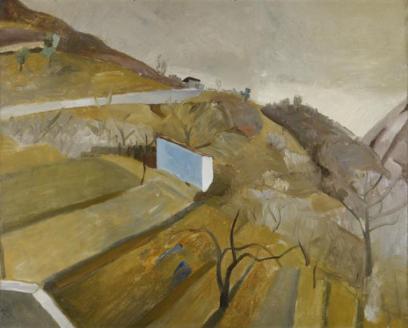
Castagnola (1923) – Ben Nicholson

But Grigson did admire, if very judiciously. Greening draws attention to an Eliotesque belief in tradition, that the best poems are made by “members of a long narrow community through time”. The word “narrow” here indicates Grigson felt that much of what was truly best was not appreciated by many. In one word perhaps, we see here his motivation to be harsh with what he felt not good enough and his hard work in anthologising what was. There are two tribute poems in Greening’s selection which show Grigson at his complimenting best. ‘A Painter of Our Day’ is about Ben Nicholson and has the feel of a Coleridgean conversation poem about it. Its tone is confiding, admiring, ranging from observations about playing with children, shared days out, discussions of Nicholson’s work, ageing and the nature of art. Nicholson seems to teach an appreciation of “what is” and an avoidance of nostalgia. But at the same time, he recognises the value of the “reiterated wisdom of perceiving”. That both poet and artist set the bar of achievement very high indeed is suggested by Grigson’s admission that, of their chosen role models, “most have been / Long dead”. I find it hard to pin down a more precisely articulated aesthetic, but these lines are revealing of any artist’s relation to his/her elders:


Suddenly when young or in our first ability

We find them, slowly we find the reasons

For our love, finding ourselves, and what we lack

As well or need the most


Finally, ‘To Wystan Auden’ records the moment Grigson learned of Auden’s death in the “English September” of 1973. His admiration for the younger poet is fulsome. With the appearance of his early work, Auden became “living’s healer, loving’s / Magician”. From the other end of the temporal telescope, now we can see what the young Grigson gleaned from Auden’s poetry:


You were our fixture, our rhythm,

Speaker, bestower, of love for us all

And forgiving, not condemning, extending

To all who would read or would hear

Your endowment of words.


41xZt262WYL._SL500_SX319_BO1,204,203,200_

For all Auden’s own protesting about poetry making nothing happen, for Grigson, “time, after you, by you / Is different by your defiance”. One might ungratefully gripe that these are rather vague compliments from one poet to another. But Greening quotes Grigson suggesting that Auden’s achievement was in destroying “a too familiar, too settled monotony in manner and subject”. This is undeniable and this selection shows Grigson following Auden’s lead, yet at the same time, through his life, also being drawn back to a different, more traditional poetic style in the model of Hardy. Here, for example, in his last years, he recalls his childhood in Cornwall:


Staring down from that broken, one-arched bridge,

In that vale of water-mint, saint, lead-mine and midge,

I was amazed by that fat black-and-white water bird

Hunting under the current, not at all disturbed.


How could I tell that what I saw then and there

Would live for me still in my eightieth year?


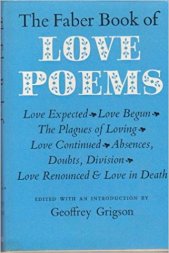
BookrideGrigsonPhoto£££*As a labouring translator myself, I have long remembered Grigson’s brilliant put-down in his Introduction to the Faber Book of Love Poems (1973). Explaining why he has not included any translations at all, he declares that their “unmeasured, thin-rolled short crust” would prove detrimental to the health of the nation’s poetic taste. Times have changed, thank goodness.

Being In and Above: on Friedrich Hölderlin’s ‘Hyperion’

This is my review of Friedrich Hölderlin’s only novel, Hyperion or The Hermit in Greece. The review first appeared in the Temenos Academy Review (No. 20, 2017).  The translation I am discussing is a very recent one by India Russell which was published by Melrose Books in 2016. 


untitled 1

Begun in Tübingen in 1792 in the aftermath of the French Revolution, and published in two volumes in 1797 and 1799, Hölderlin’s only novel is really a philosophical and spiritual biography of its eponymous hero. It does not deliver what a novel reader might expect in terms of characterisation, suspense or specificity of incident (though its retrospective narrative is cleverly designed). It is best read as a doorway to the more metaphysical thought that underpins the later poetry. But Hölderlin’s youthful passion and urgency are evident, for example, in the portrait of his native Germany. Its people and culture are subjected to a withering satirical attack, with the corrupt state of German life acting as the penultimate phase of Hyperion’s long education. He reports, ‘I can think of no people more torn than the Germans. Artisans you see, but no human beings, thinkers, but no human beings, priests, but no human beings […] – is that not like a battlefield, where hands and arms and all limbs lie dismembered amongst one another, whilst the shed life-blood runs away into the sand?’ Such vivid images of division – between warring powers, within bodies of individuals – are central to Hölderlin’s critique of what was wrong with late eighteenth-century Europe.

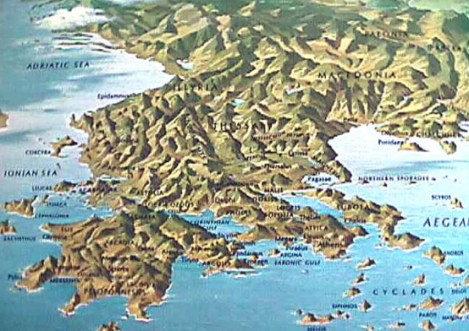
Hyperion is an epistolary novel, the narrator writing from his native Greece to a friend, Bellarmin, who lives in Germany. Hölderlin’s prose is heightened and mellifluous, dramatically ebbing and flowing; and India Russell’s translation catches this far better than Willard Trask’s 1965 version or David Schwartz’s from 1990. The writing is breathless and aspiring; it is Shelley’s prose not Keats’s. The novel’s picaresque narrative records Hyperion’s travels after his birth on the Greek island of Tenos, where he spends his childhood and school years. He moves to Smyrna, returns home, then travels again to Calaurea, an island close to the eastern coast of the Peloponnese. It is here he meets and falls in love with the young woman, Diotima. Called back to action in the world, he fights the Turkish forces occupying Greece and later fights alongside Russian troops. He is defeated and wounded, then travels to Sicily, thence to Germany, befriending Bellarmin. Only on his return to Tenos does the novel’s account of his life open. So the narrative trajectory means that Hyperion reflects on his own life’s journey in the letters. Importantly, though no significant external events intervene, we perceive a difference between the Hyperion of letter one and the man writing the final words of the novel.


friedrich-hoelderlin-1-sized
Holderlin

The retrospective nature of the narrative only partly accounts for what Hölderlin calls in the Preface Hyperion’s ‘elegiac character’. In his opening letters, the protagonist regards reflection/judgement (‘Urteil’) as a curse, cutting him off from an unthinking sense of oneness with the world. As the novel opens, it is especially in relation to the natural world that Hyperion feels this alienation, though the limits of his current understanding are revealed: ‘I know not what happens to me when I lift my eyes before your beauty […] My whole being becomes quiet and harkens’. He later exclaims, ‘To be one with all, that is the life of the Divine, that is the heaven of man’ and yet ‘a moment’s reflection casts me down […] Nature closes her arms and I stand like a stranger before her’. He identifies his schooling as having made the first break between the sense of oneness experienced by a child and this later sense of estrangement. The loss is blamed on ‘Knowledge’ which inculcates the desire to be ‘absolutely reasonable, [to] have thoroughly learnt to distinguish myself from that which surrounds me’; and in such a state of nurtured division he suffers solitude and rejection from the world about him.


Hölderlin’s preface to the Thalia fragment of Hyperion (published by Schiller in 1794) lays these issues out more philosophically. ‘Man would like to be in everything and above everything’ he argues, quoting Loyola: ‘Not to be confined by the largest, but to be contained in the smallest, is divinity’. He observes how this pronouncement ‘designates the all-desiring, all-subjugating dangerous side of man as well as the […] most beautiful condition he can achieve’. On one side, we desire the freedom to be above our lives, to shape them, yet on the other we long to feel at home in our world, to be in it at the cost of our liberty. With one eye on the Revolution in France, it seems to Hölderlin that pursuit of freedom at the expense of a sense of unity with the world leads to a deracinated fanaticism that harms both ourselves and the world. But on the other hand, to experience existence without liberty and self-determination is to be sunk deeply in a form of passivity verging on idiocy. Hölderlin’s originality lies in his view of human life as being endlessly dynamic, the two impulses – to be both in and above our own lives – are to be held in tension, the self drawn in contrary directions with no anticipation of a resolution.

1349998856

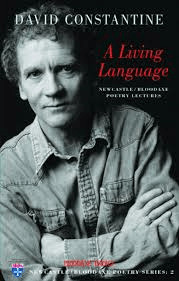
In the novel, Hyperion’s early and brief encounters with Adamas on Tenos present one possible easement of his sense of alienation. Excited by the older man’s devotion to the past, he reads the Classics and visits Mount Athos, Olympia, Mount Cynthus and the grave of Homer. Hölderlin’s earlier poems frequently echo just this nostalgic impulse in his idealisation of the Classical past. David Constantine points out that for Hölderlin, ‘the civilisation of Periclean Athens seemed to him the best the human race had ever achieved and he wanted an equivalent of it for his own day and age and even believed the French Revolution might bring it about’. So this is not, for Hölderlin, any simple nostalgia but rather a call to spiritual and philosophical revolution. A poem like ‘The Archipelago’ portrays the devastation of eighteenth-century Greece (under the rule of the ‘Persian’) but also anticipates its renovation:


Lovingly back to the waiting abandoned river

Come the people of Athens and down from the homeland’s mountains

The shining crowds, meeting like waters, replenish

The emptied plain with joy.


(tr. Constantine)


6777857-M

But in the novel, Adamas’ overly literal idealisation of the past is quickly dismissed by Hyperion. Alone, Adamas travels on into Asia in search of peoples of ‘rare excellence’ who, he hopes, are still living out such ancient virtues. Left dissatisfied, Hyperion is bored and restless on Tenos. He leaves for Smyrna and encounters a very different solution to his problems in the form of Alabanda, a man devoted not to the worship of a past age but to the struggle for social change. For a period Alabanda and Hyperion live ‘like two streams which roll down from the mountains and cast off the burden of earth and stone and rotten wood and the whole inert chaos that had impeded them, to forge the way to one another and break through until where, seizing and seized with equal strength, united in one majestic River, they then begin the journey in to the wide Sea’. Such a sentence is a good illustration of Russell’s skill in this translation – the results are flowing, energetic, with just the right degree of distancing from conventional language usage. For the two men, the present state of society is like a ‘barren, rotten tree’, needing to be felled so that a ‘new world’ can grow in its place. But Alabanda is too much a man of action, a fighter, consumed with the wish to exercise freedom to effect social change and (as the simile above suggests) liable to destructive violence and a moral fanaticism. His mode of operation is to ‘burn the weeds […] blast the dull clods from the Earth!’. He himself admits to being ‘rough and offensive and unsociable’. Hyperion finds he cannot commit himself to this course either and we become conscious of his tendency to vacillate between (again) being within and without, between commitment and alienation and aware too of the fact he perceives this as is a problem needing to be resolved.

untitled 2

It is on the visit to Calaurea that Hyperion meets Diotima, a young woman who is unreflectively at home in the natural world. This character was introduced into later drafts of the novel and is a portrait of Susette Gontard, the married woman whose children Hölderlin was appointed to tutor in 1795, the woman he loved. Though Susette seems to have reciprocated Hölderlin’s affections, the relationship was doomed. He dedicated the second volume of Hyperion to her. The name Diotima appears frequently in Hölderlin’s later poetry and is the name of the seer or priestess who first taught Socrates to regard love as the means of ascent to a contemplation of the Divine. In Hyperion she lives contentedly in the world as opposed to Alabanda’s position above the world, and his wish to change it. Her heart is most at home among flowers, ‘as though it were one of them’, and Hyperion enviously observes her unreflective unity with the natural world: ‘Diotima’s eyes opened wide and quietly, as a bud opens, her dear little face opened before the airs of Heaven, became pure speech and soul and, as though she began a flight into the clouds, her whole form stood stretched gently upwards in easy majesty, her feet hardly touching the Earth’.

Diotima is initially unconscious of the beauty Hyperion sees in her but she becomes more self-aware in the letters documenting their relationship. She also comes to understand the real nature of Hyperion himself, recognising that (as Hölderlin’s philosophical thinking suggests) he cannot remain content with what she has to offer. Though Hyperion may indeed wish for such oblivious contentment, it is ironically Diotima who suggests he must do otherwise: ‘Will you lock yourself in the heaven of your love, and leave the world that needs you? […] You must, like the ray of light, descend like the all-refreshing rain, you must go down into the land of the mortals, you must enlighten like Apollo’. Light, healing and poetry are, of course, among Apollo’s many attributes and it will be as an artist that Hyperion must give (as Diotima puts it) ‘what you have within you’. In ‘As on a holiday…’, one of his later hymns, Hölderlin advises his fellow poets:


us it behoves to stand

Bareheaded beneath God’s thunder-storms,

To grasp the Father’s ray, no less, with our two hands

And, wrapping in song the heavenly gift,

To offer it to the people.


(tr. Hamburger)


michaelhamburger
Michael Hamburger

It takes a long time for Hyperion to accept Diotima’s proposal that his true role must be that of an artist. Only after the process of recording his life for Bellarmin does Hyperion achieve what Hölderlin’s Preface refers to as the ‘resolution of dissonances’ in his character. At one point he notes, ‘I am an artist, but I am not skilled’. He returns to Alabanda for a period, fighting and being wounded in a war with the ‘Persians’, then suffers the loss of Diotima. Her last words to him suggest that he has been ‘put to the test and it is bound to become clear who you are’. Hyperion’s test will include the writing of his self-examining epistles. In effect, Hyperion ends by pursuing an art, like Hölderlin’s mature poetry, that essays some interim representations of the Heraclitean ‘One differentiated in itself’. Russell’s essay, accompanying her translation, interprets this as the lightning strike of a ‘Divine force’, an insight that (loosely) links Hölderlin, Shelley and Empedocles. She tends to replace philosophical incisiveness with a blustering, autobiographical style, but what her exposition lacks in rigour it makes up for in enthusiasm.


heart-veins-arteries-helps-blood-flow-40454786

In a letter of 1801, Hölderlin declares there ‘is only one quarrel in the world: which is more important, the whole or the individual part’. Hyperion finally accepts that the irresolvable tension, the pulse or heartbeat vital to the fully-lived human life is that between unity and freedom, Being and reflection, living in life and above it. With new-found optimism, he compares these ‘dissonances of the world’ to lovers’ quarrels, where ‘Reconciliation is in the midst of strife and all that is parted finds itself again’. He offers a further encouraging metaphor: ‘The arteries divide and return to the heart and one, eternal glowing life is All’. What remains to us is an unending quest or process not liable to completion or final stasis. The impossibility of completion is famously expressed in the novel’s final, almost throw-away phrase (‘Nächstens mehr’). In Russell’s fine translation this is rendered as ‘More shortly’ and the ‘more’ that followed was, of course, the poetry for which Hölderlin is now most famous.


Twenty Pointers to Translating Poetry

Writing_Real-

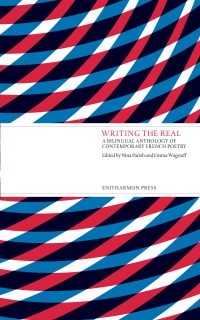
Recently I took part in a panel discussion about the art of translating poetry. It was chaired by Connie Bloomfield from UCL and held at the Enitharmon Gallery in Bloomsbury. I was joined by David Harsent (translating Yannis Ritsos), Emma Wagstaff and Nina Parish (co-editors of Writing the Real: A Bilingual Anthology of Contemporary French Poetry) and Jane Duran (translating Lorca). Part of the evening was spent comparing our differing approaches to translating a poem in Catalan by Josep Lluis Aguilo. Inevitably, we differed on our approaches both to the specific and general issues raised by poetry translation. But it has prompted me to gather up these 20 thoughts on the issues in this blog post.

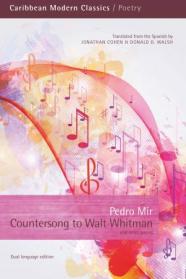
While preparing it, I also happened across further observations on the issue as quoted in the recently published Peepal Tree Press translation of Pedro Mir’s Countersong to Walt Whitman. The late Donald Walsh is quoted as saying “The translator’s first task is to discover exactly what the author has said . . . He must try to re-create in his language the miraculous fusion of thought and expression that produced the original work . . . the translator’s role is humble and secondary . . . he must do his best to circumvent obstacles . . . his duty is to express not himself but his author”.

As what follows will suggest, I find myself largely in agreement with such views – though the compromising, tentative, humble processes that Walsh describes here and the inevitably pyrrhic kind of victories one can expect from them are unlikely to make for dramatic headlines in literary journals or publishers’ blurbs – but I believe this is what the best translators do.

9781845233563_0

Twenty Pointers to Translating Poetry

  1. Ask the big question: can we translate a poem? Because there are so many uncertainties, so many sacrifices, the absolute and perhaps only truly safe reply is to say: ‘No – too much will be lost’. But see #13 below – and now go to #2 (who wants to be safe anyway?)


  1. Ignore such crushing absolutism as expressed in #1. Roll up your sleeves and, like Shakespeare’s Ferdinand believe “some sports are painful, and their labour / Delight in them sets off”. Whatever the apparent obstacles, just do it: start shifting those logs of poetry translation if only because you want the challenge, if only because it’s a fascinating process – but mainly because it’s important (see #20)


  1. Know that to translate is to incur guilt. The moralistic tone in discussions of translation proves the importance of the task and suggests the passionate intimacies involved in this weird relationship between source author, translator and reader

images91M7X9MY

  1. Define translation broadly (1): responding to the emoji on my phone is an act of translation. Plus, it is not merely to transpose to another language, but from one language period to another, one language level to another (formal to vernacular), to paraphrase with clarity, to lay out logical and grammatical links more clearly, to interpret signs, symbols, gestures, facial expressions


  1. Define translation broadly (2): any good poem is a form of translation. Transtromer saw poems as manifestations of invisible poems written beyond languages themselves. Rita Dove says translators often understand best that any poem is merely a silhouette of our attempt to capture elusive original communications – like stepping stones across a river, the better to hear the silence

floral_silhouette_vector_pack_572116

  1. Think of turning the original source into something in the target language with the same information and with the same force as the original


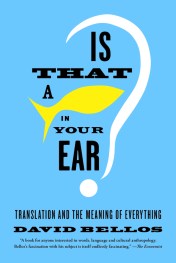
  1. Use these simple methods (naturally used by native speakers to achieve greater clarity in communication – thanks, David Bellos) to begin to convey information and force:
    1. Synonymy – word for word replacement (literal translation)
    2. Expansion – replacement of problematic words with longer versions in the target
    3. Contraction – replacement with nothing, elision, skipping, abbreviations – turning a blind eye
    4. Topic Shifting – rearranging the sequence of the expressions for more clarity
    5. Change of Emphasis – other methods of making parts of the original expression stand out from the rest, in order to assist communication
    6. Clarification – adding expressions (not in the original) – making what was implicit in the original more explicit

 9780865478763

  1. Accept it – poetry is poetry so its translation is mostly a question of force – the shades and emotional colours, the rhetorical temperature, the ramifications of meaning of a word/phrase/form


  1. Discuss this: force is what Robert Frost called the sound of sense – poetry’s confessedly ineffable tones, gestures, interrelations, patterns – and to convey it we need to match such constituents (though not necessarily preserve them like lifeless bones)

download

  1. Measure the force in a source poem via a process of triangulation – determine your direction of travel via multiple reference points connected to the source text – not only the text but also good old-fashioned literary interpretation, wider cultural perspectives, the source author’s wider oeuvre, anything you can lay your hands on


  1. Empathise and keep ego quiet – imagination is the major part of this triangulation process: so work hard to imagine what motivated the poem, re-live the act which gave rise to it and is enmeshed in it (thanks, Yves Bonnefoy). In translation we hope to release it from its source form into a new form that resembles/matches its original intention, intuition, yearning


  1. Measure the success of your empathetic act not by a term-for-term resemblance to the original poem (thanks again, Yves) but by the ontological necessity of your new words/forms/images


  1. Contradict my #1 – so it turns out, translation is possible if, with Bonnefoy, we regard the process of translation as poetry re-begun                                                                       . .
    images.
  2. Be inspired by Charles Tomlinson’s formulation of the task: we look to preserve not the metre, but the movement of each poem – its flight, or track through the mind


  1. Close the source text, says Michael Hofmann, rightly, once your translation is beginning to gain some height in its flight. Close it!

InternationalFlight_B2C_22-min

  1. Don’t confuse translation with versioning – the permission we give ourselves is different. To translate puts us in a position of responsibility to both the source text and a working English poem, equally. Versioning puts us in a position of responsibility only to a final working English poem


  1. Ask yourself how might I like my own poems to be treated – translation or version? Will you feel well served or misrepresented? Pleased or aggrieved? I’m not pre-judging your choices, but they will affect your view of your own translating processes


  1. Discuss this: Peter Robinson argues versions result in failures of tone or meaning, that they impoverish and almost invariably lower the tone, reducing the complexity of the original. But surely, such radical revisions might equally result in a better poem than the original? Still – neither will be a translation

 images0VYVDXZC

  1. Label versions and translations appropriately – we have a responsibility to the paying public who, in my experience, are always very clear about what they want to read


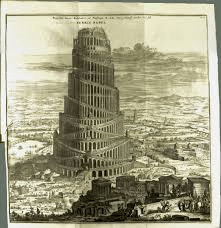
  1. Keep translating – because the desire to translate and read in translation is optimistic, humanistic and hopeful. Contra Babel, it provides evidence of a powerful urge towards community and communication. It shows there is more that unites us than divides us

untitled

Freshness of Words – George Herbert and Anna Akhmatova

The_Death_of_Stalin[1]

Last week, having seen Armando Ianucci’s film The Death of Stalin with its atmosphere of murder, fear, mutual suspicion and double-talk, I was sent back to Elaine Feinstein’s biography of Anna Akhmatova, Anna of All the Russias (2005). From there I moved on to Akhmatova’s work, where I found the opening lines of a poem she wrote in June 1915. Here are two versions – the first from Judith Hemschemeyer; the second (more version-y) from D.M. Thomas:


For us to lose freshness of words and simplicity of feeling,

Isn’t it the same as for a painter to lose—sight [. . .]


Freshness of words, simplicity of emotions,

If we lost these, would it not be as though

Blindness had stricken Fra Angelico [. . .]

anna_big[1]

Pinball that I am, this sent me off to notes I made a while ago on John Drury’s book about George Herbert, Music at Midnight (2013). Drury suggests that Herbert’s evident love of language is more apparent than real because of his ceaseless drive towards a linguistic simplicity (just the kind of simplicity of expression that Akhmatova sought and is praised for). Herbert wanted words to correspond to the truths of experience – an idea that has got very obscured in our post-modern age, but one that most poets still doggedly adhere to. So, in the opening stanza of ‘Jordan II’, Herbert confesses:


When first my lines of heav’nly joys made mention,

Such was their lustre, they did so excel,

That I sought out quaint words, and trim invention,

My thoughts began to burnish, sprout, and swell,

Curling with metaphors a plain intention,

Decking the sense, as if it were to sell.


The superficial glitter of such mistaken language is obvious and clinched by Herbert’s concluding mercantile image. The 3rd stanza of the poem identifies the problem: “So did I weave my self into the sense”. Language becomes a mode of self-display (a “long pretence”) rather than an effort to express the truth of the self’s relationship with experience (in Herbert’s case this is always the experience of God, but I don’t think that invalidates any lessons for writers then or now).

AdvancementOfLearning_sprea_1024x1024[1]

Herbert was drawing on Francis Bacon’s ideas in The Advancement of Learning (1620), where he argues that theological debate (ie. discourse, language) has achieved little other than obfuscation. Herbert follows this in ‘Divinity’ where “curious questions and divisions” have done nothing but “jagged” (ie. slashed and shredded) the metaphorical, seamless coat of Christ. Herbert’s poems are, in deliberate contrast, a sustained search for lucidity and truth (though both he and Bacon were happy to conceed that when it comes to God, man is only likely to approach a “broken” sort of knowledge).

In fact, Bacon distinguishes two types of knowledge. Most everyday knowledge consists of our knowing about – a transitive knowledge with a direct object. This – as Herbert’s market metaphor suggests – is always liable to slide towards an accumulative or acquisitive relation with the world (a delusory relation encouraged and denied us in 2017 by the ubiquity of Google and such apparently easy and limitless sources of knowledge). In Bacon’s memorable phrase, such continued acquisition of transitive knowledge leads to “ventosity and swelling”.

george-herbert[1]

Both he and Herbert knew what is needed as a corrective. Bacon: “This corrective spice, the mixture whereof maketh Knowledge so sovereign, is Charity”. The latter word is from the King James Version of The Bible – in the original Greek, the word is agape. As Drury beautifully says, Herbert always preferred to use the “warmer monosyllable” ‘love’. In this case (and in contrast to eros), love is a form of knowing without a direct object and without the temptation to either acquisitiveness or to the weaving in or promotion of self. This yields an attitude of restraint and delicacy, an attitude that Drury finds in Herbert’s poems: “he had the capacity to treat the recalcitrant matter of human life with a firm yet light touch. There is control and letting-be, the devising of frames for experience which lets it speak for itself while making it something manageable and, whether morally or poetically, elegant”.

Drury argues that, as preacher too, Herbert was consistent in eschewing the dominating style of many others for a more “two-way” approach. He rejected the conventional view of preaching in which power lies with the preacher and preferred a kind of communion with his parishioners which approached something more like prayer. In preaching, the clergyman is active, even hyperactive, the hearers, cowed, instructed (possibly bored). In prayer, what happens is more “communal, a traffic between minister and people, all together waiting on God”.

George_Herbert_and_his_times_1906_14758260256-1[1]

By implication, I’m sure there are two types of poetry here as well. One is flamboyant, rhetorical, draws attention to itself, hence draws attention to the poet who is very active, even hyperactive, keen to show learning and skills, making a splash on the page – the reader’s response is mostly to stand back and admire (or become bored). The other type of poem draws the reader into something resembling the community of prayer, both writer and reader in a state of alert passivity, a form of attendance. So, Herbert’s poem ‘Prayer I’ lists images of prayer itself from a multitude of perspectives, full of vigorous relish and un-churchy energy. The whole sonnet is one sentence, rushing across line breaks and quatrains:


A kind of tune, which all things hear and fear;

Softness, and peace, and joy, and love, and bliss,

Exalted manna, gladness of the best,

Heaven in ordinary, man well drest,

The milky way, the bird of Paradise [. . .]


The 4th line quoted here (balanced around the caesura) captures the role of prayer (and I would argue poetry) as go-between, conduit, glue between the height of heaven and the fallen state of man – the former leaning sympathetically down, ready to dine upon the ordinary, the latter aspiring to something above it. The four final phrases of the concluding couplet are remarkable for their speed, for their testing of the elasticity of the reader’s imagination (the ‘land of spices’ perhaps the least successful of the images), and for the extraordinary understatement of the two last words.


Church-bells beyond the stars heard, the soul’s blood,

The land of spices; something understood.


What the poem has done is prepare the ground for a phrase which might have struck the reader as an inadequate vagueness, but in fact reads as a fullness, a plenitude which encompasses all that has gone before and gestures towards more, the entire creation. ‘Understood’ has also been broken free of its moorings to suggest far more than an intellectual grasp – perhaps a literal under-standing or underpinning of our place in creation – and to imply the intransitive reach of agape in action.

Akhmatova_by_Altman.jpeg[1]

Joseph Brodsky (who met Anna Akhmatova in the early 1960s) believed that poetry accelerates our minds; here, the reader does not need to share Herbert’s religious views to experience the graceful acceleration and opening of our mind by the poem. The poem as prayer is, as Simone Weil thought, a state of “absolutely unmixed attention”, a rich mindfulness. Akhmatova’s early work has just this sort of attentiveness, though its subject (rather, its object) is eros and what she records are the contradictions and extra-conventional struggles of an individual woman. After 1917, with poems starting to be included in White Flock, still not losing their “freshness” and “simplicity”, it is agape that begins to displace eros as she faces not just her own suffering but the horrifying dismantling of Russia itself:


So many times . . . Soldiers, play on,

And I will look for my house,

I’ll recognise it by its sloping roof,

Its everlasting ivy.


But someone has carried it off,

Taken it to another town,

Or torn from my memory forever

The road that leads there . . .


The sound of the bagpipes dies down,

Snow flies, like cherry blossoms . . .

And it’s obvious nobody knows

That the white house is gone.

(‘The White House’ – tr. Hemschemeyer)

How to Answer the Poetic Influence Question #2

With my new collection just out from Seren Books, I’m happy to have a number of promotional events and readings coming up over the next couple of months. As I discussed in an earlier blog, though I love the business of giving a reading, there’s often a moment that arises that I’m always uneasy about. It’s the question of influence. In that previous blog I followed through, chronologically, those poets who have had a powerful influence over the style and direction of my work. That provides one possible answer to the question ‘what other poets do you consider to have been an influence on your poems?’ Another reply might be to look closely at very recent work to see which poets are present in it as ghosts. This is what I’m doing here.

A Boat..._quicksand cover

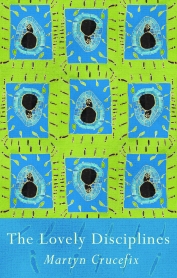
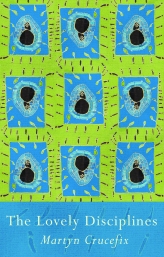
In preparing a new book for public reading, I tend to work through every poem making notes on the kind of thing an audience might need/like to know before hearing it (once and once only, in performance). I will often draw attention to the presence of a powerful poet figure that I’m aware of in the vicinity of the poem. So in The Lovely Disciplines, I can see influential roles of substance for Robert Hass (with Czeslaw Milosz), Ivan Lalic, Mary Oliver (with Emerson), Whitman and Edward Thomas.

Before looking at those in a little more detail, there are also two translations/versions from other poets in the collection. One is a version of Boris Pasternak’s poem from the 1950s called ‘In Hospital’. In the process of my versioning, the gender of the main protagonist was switched to female, more in line with most of the poems from the middle section of my book which forms a composite portrait of the passing of my parents’ generation.

Abbaye_de_Valsainte_2
Abbaye de Valsainte

I also include a loose translation of (plus a poem alluding to) the work of the French poet, Yves Bonnefoy, who I referred to in my earlier post on Poetic Influence. My poem ‘Valsaintes’ is named after the rural retreat in Haute-Provence where Bonnefoy lived in the 1960s. In many ways an idyllic place, in the end the renovation and up-keep of what was little more than an ancient ruin proved too much for him and the property was sold. For years afterwards, he harked back to it as a favoured, lost place. Bonnefoy’s ideas about what he calls ‘presence’ continue to fascinate me. My version, called ‘After Bonnefoy’, ends:


let’s bring ourselves one to another


as if each was at last all creatures

and all things all empty ways

all stones all metals and all streams

download
Sir Michael Tippett

Sir Michael Tippett’s 1944 secular oratorio, A Child of Our Time, is explicitly relevant to my poem ‘Listening to Tippett twice’. Tippett also wrote the libretto, inspired by the assassination in 1938 of a German diplomat by a young Jewish refugee and the Nazi government’s reaction to it. This took the form of a violent pogrom against its Jewish population – the infamous Kristallnacht, so called because of the broken glass which littered the streets the following morning. Tippett’s text and music deals with these incidents in the context of the experience of oppressed people more generally and the whole work carries a strongly pacifist message of understanding and the need for reconciliation.

I’m certainly aware of echoes of Wordsworth on a couple of occasions. In ‘The Toll Cottage’ – a dream-poem in which I am being driven by my father – there’s a mangled remembrance of a phrase Wordsworth uses in ‘Tintern Abbey’ – “Once again I see / These hedgerows, hardly hedgerows, little lines / Of sportive wood run wild”. Also ‘The girl who returned to Aix’, a sequence of three sonnets, includes the awkward fact that I cried on first seeing Steven Spielberg’s Close Encounters of the Third Kind. It was that moment when the huge alien spaceship finally appears, rising up from behind a mountain – just as Wordsworth’s mountain, Black Crag, rises up in the boat-stealing episode of The Prelude Book 1.

download
Enough to make a grown man weep

In my poem ‘Nocturne’, I was partly thinking of Whistler’s painting, ‘Nocturne in Black and Gold’ (c. 1875) but I like to think my (love) poem has more light in it than that, set as it is in the same Tuscan landscape as another poem called ‘The renovation near Sansepolcro’. ‘Nocturne’ also makes reference to ‘the poet’s kelson’ and this is Walt Whitman who, in the fifth part of ‘Song of Myself’, refers to love as a kelson of creation. A kelson (or keelson) is the structure running the length of a ship and fastening the timbers or plates of the floor to its keel giving stability and strength.

download

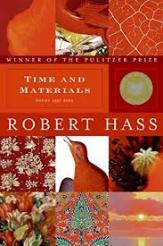
In his book, Time and Materials (2007), introducing the sequence ‘Czeslaw Milosz: In Memoriam’, Robert Hass recounts a discussion he had with Milosz (as his translator) about the different connotations in English of Oh! and O! As it turned out, the one Milosz intended in his poems was the second and this is the one that most interests me too. My poem opens:


Oh! is longer drawn already

beginning the button-down

of understanding

that well-I-never

with its freighting

of verb tense and identity

whereas O! is more sudden

more urgent surely

of the moment rapt

when we are prised open

by desire [. . .]


I wanted the title of my poem, ‘The lovely disciplines’, to feel paradoxical and in my mind it was related to the Serbo-Croat poet, Ivan Lalic. I remember reading his 1981 collection, translated by Francis R. Jones as The Passionate Measure. I remember Lalic explaining he hoped to suggest the fluidity or fluency of emotion as well as the orderliness or measured nature of a dance or verse. I hoped my title would suggest something of the same – a balanced response to experience, both our taking pleasure in it and searching it for order. My poem takes place on a women’s hospital ward.

download

Mary Oliver’s book, Swan, is not her best but I bought it in a secondhand bookshop once and inside discovered an ATM receipt with some cryptic notes on it. This provided the start of ‘As we live’, a poem which takes up Oliver’s sensitivity to nature (which she often gazes at with such precision of feeling as to achieve a visionary intensity) as well as her epigraphs from Rilke’s Duino Elegies and Ralph Waldo Emerson’s essay ‘Beauty’ in The Conduct of Life: “’Tis curious that we only believe as deep as we live”.

Finally, Edward Thomas (Ted Hughes’ “father of us all”) appears explicitly in relation to two poems in my book. Not a million miles from Oliver’s example, it’s his directness and love of what lies before him that I like. I like his sense that, in Robert Frost’s words, this world is the right place for love, combined with his intuitions about the human need to look beyond, perhaps into an inexpressible obscurity. ‘These things I remember’ is almost a found poem on these issues – taking phrases from a memoir written by Thomas’ friend Jesse Berridge (published with letters by Enitharmon Press).

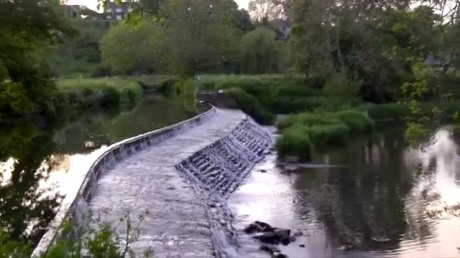
And ‘Rebuilding Tellisford weir’ has an epigraph from Thomas’ 1914 prose book, In Pursuit of Spring. His book recounts his 1913 journey – by bicycle – across southern England from London to the Quantock Hills. I was delighted to discover him passing through the landscape of my childhood: cycling down off Salisbury Plain, through Erlestoke and Edington, Steeple Ashton, North Bradley to stay with friends at Dillybrook Farm just outside Trowbridge, where I lived for 18 years. He writes about waking at night to the sound of falling water. The next day he is persuaded to visit Tellisford and its weir by the mysterious Other Man (a kind of alter ego for Thomas). My poem mixes some of these details with my own memories of visits to Tellisford. I like to think the poem has a lot of Thomas in it: a sense of history, the beauty of nature, strange encounters with others, a sad loneliness, the transience of all things.

maxresdefault
The weir at Tellisford, Wiltshire

How to Answer the Poetic Influence Question #1

A Boat..._quicksand cover

With my new collection just out from Seren Books, I’m happy to have a number of promotional events and readings coming up over the next couple of months. I love the business of giving a reading, but there’s often a moment that arises that makes me uneasy as to how to how to respond. It’s the question of influence; the hand going up to ask: what other poets do you consider to have been an influence on your own poems?

It’s my problem I’m sure, but I’ve always had two ludicrously extreme responses spring to mind on hearing the question. Firstly, to list pretty much every single poet I’ve read in the last 40 years because the truth is every single one has added a grain, a pebble (for better or worse) to the path I walk to write a poem. Alternatively, since I can’t think of one, or even two, clear contenders for powerful influence when I sit down at a blank page or screen, it must be that I have emerged ex nihilo, a peculiar original. The first would be a lengthy reply of little use or interest; the second would seem positively dripping with arrogance (and equally of little use or interest).

Actually, I can think of a third answer: it’s not for the poet to identify influences; it’s a job for a reader. But I wanted to use the next two posts to kick the idea of influence around, to sort out my own ideas and to answer it in two ways. Early in a writing career, the revelation of, or encounter with, a new voice, style, or even subject area can lead to great lurching changes of direction in a poet’s own work. The lurch or swerve becomes progressively less marked the older a poet gets. Put that down to a more confident self belief perhaps, or to a growing inertia, or a more sophisticated process of absorption of such novelty, or sheer bloody mindedness . . .

images

For me, I started in the business convinced that I was composing song lyrics because poetry as such was not a familiar thing – except in occasional English classes at school and I dropped that subject at the age of 16. As I’ve said elsewhere, science was what I did through most of my teens. With too much time on my hands and too little joy to be found elsewhere, in the mid 1970s I began to turn to other sorts of books. From Foyle’s in London, I stole a copy of Everyman’s Selected Poems of Wordsworth. They seemed a bit dull and plodding but reminded me of rural Wiltshire where I grew up. For a few months I copied Wordsworth. Perhaps a year later, after a good dose of Sartre, I was finding my way back to the academic study of literature. It was the poetry (and drama) of T S Eliot that I fell in love with (not Dylan Thomas – the other poet on the curriculum). I still have those early Eliotesque poems somewhere, mostly Prufrock period style, though also a horrifyingly pretentious sequence of poems like a clumsy, anaphora-laden Waste Land.

00014096-390x540

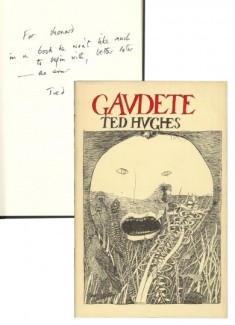
Re-starting my Higher Education took me to Lancaster University, studying Literature and Philosophy (and a few sessions of Creative Writing with poet, David Craig) and Hughes and Larkin were served up and readily ingested. At first, I swerved to the latter’s urban details and personal gloom; later it was the Hughes of Gaudete (recently published, 1977) that I copied, writing a long, quasi-mythic, magic-real, psychodrama about sex and power that I eventually self-published in Oxford. As a post-graduate among the dreaming spires, it was Percy Byshe Shelley who I was working on for several years and, though not a model for poems as such, his ideas about the role of the Imagination and poetry as an “Orphic language” have been important to me ever since.

md7773056273

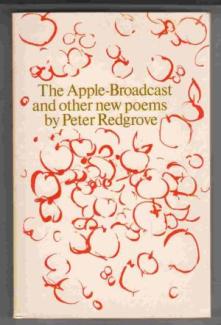
Among contemporary poets, I’d discovered Heaney (not the rural Ireland stuff so much as his wrestling with private and public responsibilities – Station Island, for example), Peter Redgrove’s fluid take on mind’s encounter with the natural world (The Apple Broadcast) and Ken Smith’s urban-political Americana (oh how I wanted to have written Fox Running). I wrote individual poems modelled on all these writers while absorbing much more deeply the work of the Romantic period – only now did I really find Keats, his poems and letters, Wordsworth still, Coleridge’s Conversation poems especially. What might have been expected – Hardy, Auden, Yeats, Frost, Stevens, Lowell, Bishop, Plath, Dickinson – were all missing or they missed me.


download
Ken Smith


A decade of writing, reading, plus some reviewing too. A couple of my own books published and I’d stumbled my way to Rilke’s New Poems, Elegies and Sonnets, the second and third of which I began to translate and (whether visible on the surface or not) were a great influence on me – the Duino Elegies  for their thoughtful drive from existential mourning to praise, the Sonnets to Orpheus for that same thought (more of the praise) and their use of form. From Whitman I found my way to W S Merwin’s marvellous fluidity (something I was comparing to Paul Eluard’s work too) and from Rilke it seemed a logical (not the right word at all) step towards the 81 texts of the Daodejing which again I felt I had to try to English because it both rhymed with what I already knew and I knew it would develop further what I needed to know.

daodejing

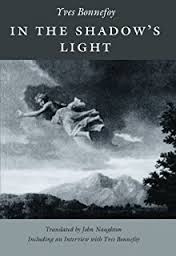
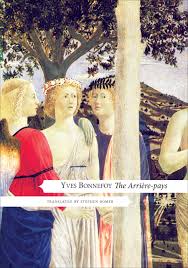
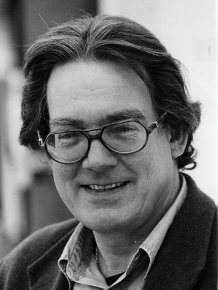
A few years back, an article in PN Review sent me to the work of Yves Bonnefoy. A heart-rate raising sense of another writer who had fought the two-faced dragon of language and seen enough to conclude that at the bottom of its filthy lair gleamed the concept and the concept promises a “strange immortality” but only if we can “forget brutal reality”. One reason (I’m now quoting an earlier blog post on a 1953 essay by Bonnefoy) we do this is that there are “general truths in conceptual thinking and a particular kind of power derived from it. It ‘allows thinking’ of a certain kind; it is linked with ‘the vast power of words’. But any gain is predicated on a significant loss, the abandonment of the actually existing ‘world of things’. Conceptual thinking is ‘systematized’, generalizing, categorizing; it’s in this that its ‘flight’ from the real is found. The only sort of thing that can be held up to counter the concept are specific particularities of human experience: Bonnefoy asks ‘Is there a concept for footsteps in the night, for a cry, for a stone rolling in the brushwood? For the feeling evoked by an empty house? No [. . . ]’”


images
Yves Bonnefoy


Reading Bonnefoy did not send me lurching to right or left but rather nudged, re-calibrated, re-assured me that my own direction of travel was not a wholly isolated one. I don’t write like Bonnefoy – there can be a dull abstraction to his poems which seems to me to contradict his ideas about real presence expressed as specific particularities – but I know what thought underlies my own work has close parallels to his (as far as I understand him). That’s influence, I’d say.

In my next blog, I’ll look at the question of influence from a different angle – what ghosts of other writers can be seen in more recent work?

On the Importance of Considering Nothing #2

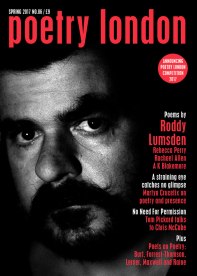
Last week I blogged the first part of a longer essay first published in the Spring 2017 issue of Poetry London. What follows is the second half of it. The whole piece starts and ends with thoughts prompted by my experiences with my father and his growing dementia. Dad has since suffered a series of heart attacks and died on May 24th. I am re-producing the essay unchanged in the hope that it still says something of value about types of ‘confusion’ and in memory of a man who would have had little time for such morbid reflections. Thanks to Tim Dooley who commissioned the essay for Poetry London and published it under the original title: A Straining Eye Catches no Glimpse.

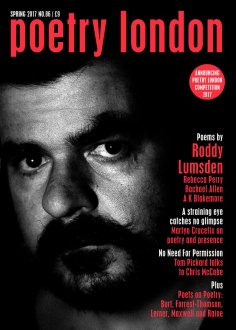
PL-COVER-Spr17-web

In Part 1, I linked my father’s forgetfulness and confusion with recurrent references to “nothing” in King Lear and to Anne Carson’s concept of “the dementia of the real”. I suggested this was also a correlative of Yves Bonnefoy’s interest in the “state of indifferentiation” he often refers to as “Presence”. For Bonnefoy, Presence contrasts the conceptual/linguistic world through which we most often move and we take to be real.

Part 2

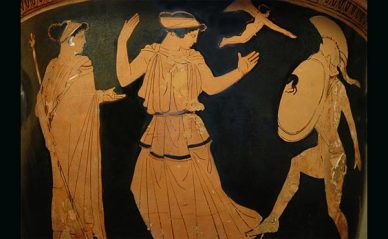
Yves Bonnefoy’s poem ‘Wind and Smoke’ (from The Wandering Life (1993)) has the abduction of Helen as its nominal subject. But he allows the poem to be taken over by dissenting voices, irritably seeking to “explain, to justify, ten years of war”. Such an expense of men, ships and spirit (argues one such “commentator”) must have been for the sake of something more permanent than the merely human figure of Helen. The poem entertains the suggestion that she herself was never abducted, “only an image: a statue”, something of great beauty to be displayed on the terraces of Troy, a fixed image of Helen, blessed with permanence, “always [. . .] this smile”. The poem is concerned then with the limitedness of the conceptual view which finds worth only in things of assured, definable permanence. In contrast, Part One of the poem ends with a proliferation of images of “spilling”, lovers as “clouds” or “lightning” on an “earthly bed”, so fully involved with time that their pleasures in the moment are “already empty, still full”. [i]


search-helen-troy
Helen of Troy (Red Figure Vase)


There’s that paradox again and Bonnefoy’s versions of it articulate the impossibility of capturing Presence because it encompasses and exists in time (and language wishes to stop time):


Every time that a poem,

A statue, even a painted image,

Prefers itself as form, breaks away

From the cloud’s sudden jolts of sparkling light,

Helen vanishes [. . . ][ii]


The “jolts” here are akin to Lily Briscoe’s “jar on the nerves” as our paradigms and preconceptions are challenged. The figure of Helen has become that visionary experience – for Bonnefoy usually of beauty, for Carson more often a violent disturbance – that we intuit exists just beyond the range of our usual instruments. Helen, the poem argues, “was only / That intuition which led Homer to bend / Over sounds that come from lower than his strings / In the clumsy lyre of earthly words”.

Part Two of ‘Wind and Smoke’ concludes with a child, an image of the poet, the last person to see the figure of Helen as Troy burns:


singing,

He had taken in his hands a little water,

The fire came to drink there, but the water

Leaked out from the imperfect cup, just as time

Ruins dreams and yet redeems them.[iii]


download
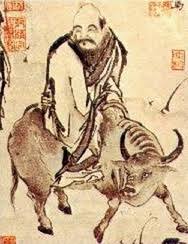
Traditional image of Laozi


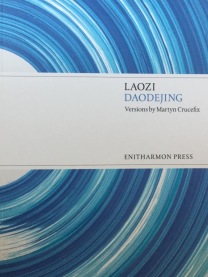
This same image of water slipping from our human grasp is recurrent in the Ancient Chinese writings that make up Laozi’s 4th/5th century BCE text, the Daodejing. Since they were published earlier this year, I have been reading my versions of these texts up and down the country and the one thing audiences want to say about them is they contain “wisdom”.[iv] It’s an old-fashioned word but it’s also bound up with the nothing that is really a fuller something we seldom manage to grasp. The Daodejing texts use water as an image of the ineffable One, the plenitude that lies behind all things. They employ water metaphors in such a way that the vehicles are clear and recurrent (ocean, pool, river, stream) but the tenor remains an empty set, never defined. So Chapter 1 deploys water imagery but is clear about the short-comings of all language: “the path I can put a name to / cannot take me the whole way”. Even what can be named can only be grasped through further metaphors: the “nursery where ten thousand things / are raised each in their own way”. What lies behind the phenomenal world can only be gestured towards through figures such as “mould”, “source”, “mystery”. Even then it’s “a riddle set adrift on a mystery”. The original Chinese text shifts its metaphors rapidly in just this way and this is what gives this opening Chapter the peculiar sensation of telling a clear truth that remains beyond our grasp. Chapter 14 puts it this way:


because a straining eye catches no glimpse

it is called elusive


as the ear attends but latches onto nothing

it is called rarefied


since a hand reaches but clasps only thin air

it is called infinitesimal


and these are resistant to further analysis

File 03-03-2016, 09 03 15

The difficulty of grasping this something that seems nothing is revisited in Chapter 4. There, the tenor of the metaphor is reduced to “it”, the context indicating this refers to the Dao itself, the One, that state of wholeness and plenitude towards which the path of the Dao leads. The opening formulation emphasises the Dao’s infinite nature, its resource as “a vessel to be drawn from / one that never needs to be re-filled // the bottomless source of all things”. But the image is revised a few lines later in the form of a question: “is it rather a pool that never runs dry”, yet this follows four other metaphorical formulations of the Dao’s beneficial effects: “fretted edges are smoothed within it / knots untangled all dazzle eased / all blinding clouds of dust slowly cleared”. The poem calmly declares its own ineffectiveness: “we cannot know it as a bodiless image / it must pre-date every beginning”. Even the concept of origin or beginning is not adequate to convey the nature of the Dao. But the fluidity of water – impossible to grasp, capable of taking any shape, a life-giving source – comes close.

That there is wisdom to be gained from such visionary encounters with the mystery of nothing is clear in Chapter 66. It’s no coincidence that these lines can serve as a commentary on Lear, his suffering bringing him low till he realises he has paid too little attention to the “looped and ragged” nature of his own nation:


—how do rivers and seas secure mastery

over the hundreds of lesser streams

through lying lower than they do


so to govern or teach you must stand

and acknowledge you are beneath the people

to guide them put yourself at the rear


md1187823288

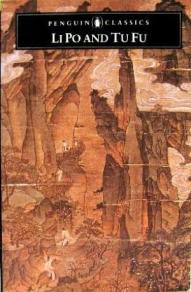
But as Auden suggested and Chinese tradition affirms, such visionary insight cannot be actively sought or taught. This is one of the points of the traditional narrative trope in Chinese poetry of ‘Visiting a Hermit and Not Finding Him’. Don Paterson turned this into a good joke in a poem called ‘On Going to Meet a Zen Master in the Kyushu Mountains and Not Finding Him’.[v] The reader’s eye descends from this lengthy title only to look in vain – it’s a blank page. Perhaps Paterson had been reading the Penguin Classics selection of Li Po and Tu Fu.[vi]  The Li Po selection opens with the poem ‘On Visiting a Taoist Master in the Tai-T’ien Mountains and Not Finding Him’. But such poems were never just an excuse for descriptive nature poetry but related to the frequent ‘spirit-journeys’ that Li Po was fond of writing. We are all like that student in Li Po’s poem, seeking out certainties and facts, a something to depend on when true wisdom gently (or violently) deflects us away from shelter towards a world where we glimpse a more full-blooded, full-bodied, open-minded encounter with what really is.


download
Iain McGilchrist


I have really been talking about two attitudes to knowledge or to put it more carefully, two contrasting “ways of being”.  This is how Iain McGilchrist’s book, The Master and his Emissary (Yale, 2009) expresses it.[vii] McGilchrist argues parts of the human brain deliver quite different kinds of attention to the world. The left brain perceives the world as “static, separable, bounded, but essentially fragmented [. . .] grouped into classes”.[viii] This is the attitude to knowledge and education the anxious student of Li Po’s poem possesses as well as the place where most of us live amongst Carson’s clichés and Bonnefoy’s conceptual language. In contrast, McGilchrist associates the right brain with the perception of “the live, complex, embodied, world of individual, always unique beings, forever in flux, a net of interdependencies, forming and reforming wholes, a world with which we are deeply connected”[ix] yet one at risk of being perceived or judged as a mere confusion, a seeming nothing.

This is the view of the Daoist master whose teaching evokes the as-yet-uncarved block of wood, who teaches best without words. Ordinary language usage, dependent as it is on conceptual thought, is left-brain work – ordering, categorising, re-presenting the minute particulars of the world as they are perceived by the right brain. Li Po’s teacher is surely hiding somewhere beyond the cherry blossom – and this is part of the student’s lesson. Don Paterson’s blank page represents a rather glib, post-modern joke, a scepticism about language in danger of throwing out the interconnected but bewildering “dementia” of the real world along with the suspect tokens and counters of left-brain language: “To say that language holds truth concealed is not to say that language simply serves to conceal truth [. . .] or much worse, that there is no such thing as truth”[x]. Bonnefoy, engaging in his own battles with the early stirrings of French post-modernism, declared: “This world here exists, of that I am certain [. . .] It is simply with us.”[xi] The right brain knows this and it’s from there we want to write poems; the left brain serves to fragment it, utilise it, get it under control, disappear it. And yet . . . there’s no much here suitable for a chat with a forgetful father. His visions are more frightening and may get worse; here, for a while, his son has been imagining ways of seeing that need not be so.

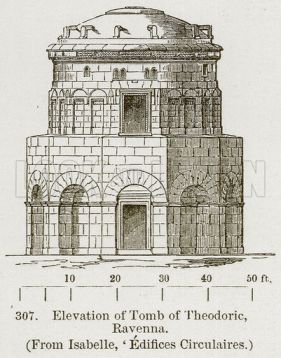
Elevation of Tomb of Theodoric, Ravenna

Notes

[i] tr. Naughton, Naughton and Rudolf, pp. 197-203.

[ii] tr. Naughton, Naughton and Rudolf, p. 201.

[iii] tr. Naughton, Naughton and Rudolf, p. 203.

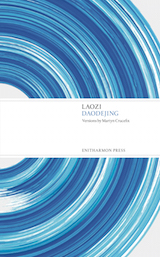
[iv] Laozi, Daodejing, versions by Martyn Crucefix (Enitharmon, 2016). All quotations are from this version.

[v] Don Paterson, God’s Gift to Women (Faber, 1997).

[vi] Li Po and Tu Fu, selected and translated by Arthur Cooper (Penguin Classics, 1973).

[vii] Iain McGilchrist, The Master and His Emissary (Yale UP, 2009), p. 25.

[viii] McGilchrist, p. 31.

[ix] McGilchrist, p. 31.

[x] McGilchrist, p. 6.

[xi] Yves Bonnefoy, The Tombs of Ravenna, tr. John Naughton (1953; PN Review (No. 226, Nov-Dec 2015), p. 62).

On the Importance of Considering Nothing #1

I have not blogged regularly since April 2017  as, having managed to get both my parents settled into a Care Home in Wiltshire, Dad suffered a series of heart attacks and died – fairly quickly and peacefully – on May 24th. Not wholly coincidentally, the Spring 2017 issue of Poetry London published an essay I had written which starts and ends with some thoughts on my experiences with my father and his growing dementia. In the next two blogs, I re-produce this essay unchanged in the hope that it still says something of value about types of ‘confusion’ and in memory of a man who would have had little time for such (in his view morbid and abstruse) reflections. Thanks to Tim Dooley who commissioned the essay for Poetry London and published it under the original title: A Straining Eye Catches no Glimpse.

 PL-COVER-Spr17-web

Part 1

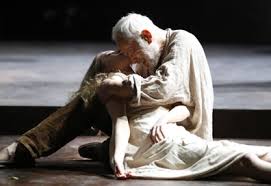
An old king leans over his daughter’s body seeking signs of life, yet he finds “Nothing, nothing, nothing, nothing, nothing”. Given that I teach literature and this is one of Shakespeare’s more famous lines with its repetition and trochaic revision of the iambic pentameter, I’m not proud of mis-remembering this moment in King Lear (the repeated word is, of course, ‘Never’). Yet I know why I mistake it, this year, in these fretful months. Seeing Anthony Sher play the role recently – haranguing a foot-stool, giving toasted cheese to a non-existent mouse – put me in mind of my father, though he’s not quite so far gone. These days he has trouble recognising the house he’s lived in for 60 years; he will refer to his wife as a woman from the village who has come to look after him; he seeks news of his mother (she died in the 1970s). What can this feel like? Years of memories gone; a whirling fantasmagoria that evidently frightens him; a something becoming nothing he makes too little sense of.

download

So it’s not just that the idea of nothing is prominent from the very start of Shakespeare’s play. Cordelia fails to reply flatteringly to Lear’s question about which of his daughters loves him most. The gist of her brutal answer is “Nothing, my lord”. Lear warns her: “Nothing will come of nothing. Speak again”. But she sticks to what she sees as her truth (as against her elder sisters’ oleaginous falsehoods) and pays the consequences. But so does the King. Reduced eventually to a wholly unexpected state of wretched nothingness in the storm scenes and beyond, he learns much from this nothing in pointed contradiction of his earlier warning. It doesn’t stop there; once reunited with Cordelia and faced with the prospect of prison, possible execution, what is remarkable is the King’s acceptance of his fate. Confronting this further reductio, he declares he’ll go and finds a reason to be cheerful: “we will take upon’s the mystery of things”. I’ve always been struck by Shakespeare’s phrasing here. The mystery of things is imaged not as some modernly pedagogic check-list, tabulated and absorbed like a set of principles, rather it’s something to be folded about us – a garment, an investiture, a way of seeing, feeling, not quite of self, not quite other either – and Shakespeare’s point is that Lear’s encounter with nothingness in various guises is what has prepared him for such a re-vision of his place in the world.

I’m interested in the idea that such a nothing can be worth something. Of course, it’s not exactly nothing, a void, that Cordelia’s father encounters. It is a bewildering set of experiences of which he can make nothing. Lear – I don’t know how far this is like my father – suffers because his previous paradigms are failing: he is shocked into his encounter with the mystery of things or what Anne Carson calls the “dementia of the real”. When my father talks, he yearns for the ordinary reassuring certainties of his old life, as if they would close round him with the feel of a comfortable coat. Carson has explored this reliance we all have on the familiar in her 2013 Poetry Society lecture concerned with ‘Stammering, Stops, Silence: on the Methods and Uses of Untranslation’.[i]  She explores moments when language ceases to perform what we consider its primary function and we are confronted with nothingness in the form of silence. In the fifth book of The Odyssey when Hermes gives Odysseus the herb “MVLU”, Homer intends the name of the plant to be untranslatable since this sort of arcane knowledge belongs only to the gods. In a second example, under interrogation at her trial, Joan of Arc refuses to employ any of the conventional tropes, images or narratives to explain the source of her inspiration. Carson wants to praise Joan’s genius as a “rage against cliché”, the latter defined as our resort to something pre-resolved, pre-shaped, because, in the face of something so unfamiliar that it may seem more like nothing, “it’s easier than trying to make up something new”.


images
Anne Carson


Carson associates this rage to ‘out’ the real with Lily Briscoe’s problems as an artist in Woolf’s To the Lighthouse. She struggles to complete her painting, aware that the issue is to “get hold of something that evaded her”.[ii] She dimly senses “Phrases came. Visions came. Beautiful pictures. Beautiful phrases. But what she wished to get hold of was that very jar on the nerves, the thing itself before it had been made anything”. Unlike Homer and Joan of Arc, the knowledge Lily seeks (undistracted by the divine) is not so much prohibited as, in a profound sense, beyond conception (it is a nothing before it has been made something). For Carson, we each dwell behind the “screens” of cliché for most of our lives, so when the artist pulls them aside the impact of the revelation may well have the force of violence. She suggests artistic freedom and practice lie in such a “gesture of rage”, the smashing of the pre-conceived to find the truth beyond it, her goal remaining the articulation of the nothing she insists is actually the “wide-open pointless meaningless directionless dementia of the real”.

This is the nothing I am interested in: it is no void or vacancy but, paradoxically, a wealth of experience, a “flux of phenomena” about which we cannot think in conventional ways. We cannot name the parts of it, so for convenience, maybe a bit defensively, we prefer to designate it nothing. The artist seeks to articulate such an “experience of what goes beyond words: call it the fleeting perception [. . . ] a state of indifferentiation”. [iii] This is one of the many formulations of the issue by the late Yves Bonnefoy who unrelentingly explored the limits of conceptual thinking in terms similar to Carson’s distrust of cliché: “It is not that I incriminate the concept – which is merely a tool we use to give form to a place where we can dwell. I am merely pointing out a bad tendency [ . . . ] of its discourse to close discussion down, to reduce to the schematic and to produce an ideology existing in negation of our full relation to what is and to whom we are”. He concludes it is a “temptation to stifle dissenting voices” – the kind of voices who see something in nothing. [iv]

images

The always evangelical Bonnefoy terms the mystery encountered in a “state of indifferentiation” as “Presence”. In 1991, Bonnefoy’s temporary residence in the snowy landscapes of Massachusetts gave him a new way of evoking these ideas. In The Beginning and the End of the Snow (1991) he reads a book only to find “Page after page, / Nothing but indecipherable signs, / [. . .] And beneath them the white of an abyss”[v]. Later, the abyss is more explicitly, if paradoxically, identified: “May the great snow be the whole, the nothingness”.[vi] These occasional moments when the screens of cliche and conceptual thought fall are moments of vision as sketched by Auden in his discussion of Shakespeare’s sonnets – they are given, not willed; are persuasively real, yet numinous; they demand a self-extinguishing attentiveness.[vii] The inadequate, provisional, always suspect nature of language to record such moments is clear in these lines from Bonnefoy’s poem ‘The Torches’:


. . . in spite of so much fever in speech,

And so much nostalgia in memory,

May our words no longer seek other words, but neighbour them,

Draw beside them, simply,

And if one has brushed another, if they unite,

This will still be only your light,

Our brevity scattering,

Our writing dissipating, its task finished.[viii]


Rather than the forced disjunctions and the quasi-dementia of Carson’s recommended methods, Bonnefoy is reluctant to abandon the lyric voice, though he still intends to acknowledge the provisional nature of language in relation to Presence. The “fever” and “nostalgia” we suffer is the retrogressive lure of conceptual simplification. Bonnefoy’s imagery suggests a more delicate, tentative relationship between words, a neighbouring, a brushing up against each other (like snowflakes), though even then, if they “unite” or manage to cast “light” on what is, this can only be brief, always subject to dissipation.

(to be continued)

download

Footnotes

[i] Poetry Review, Vol. 103, No. 4 (Winter 2013).

[ii] Virginia Woolf, To the Lighthouse (1927; Penguin Modern Classics, 1992), p. 209.

[iii] Yves Bonnefoy, In the Shadow’s Light, tr. Naughton (Chicago Press, 1991), interview with John Naughton, p. 162.

[iv] Yves Bonnefoy, ‘The Place of Grasses’ (2008), in The Arriere-pays, tr. Stephen Romer (Seagull Books, 2012), pp. 176/7.

[v] Yves Bonnefoy, ‘Hopkins Forest’, tr. Naughton in Yves Bonnefoy: New and Selected Poems, eds. Naughton and Rudolf (Carcanet, 1996), p. 181.

[vi] Yves Bonnefoy, ‘The Whole, the Nothingness’, tr. Naughton, Naughton and Rudolf, p. 187.

[vii] W. H. Auden, ‘Introduction to Shakespeare’s Sonnets’ (1964; reprinted in William Shakespeare: The Sonnets and Narrative Poems, ed. William Burto (Everyman, 1992)).

[viii] tr. Naughton, Naughton and Rudolf, p. 177.

What Love Is: Hilary Davies’ ‘Exile and the Kingdom’

9781910392171

I met poet, translator and critic, Hilary Davies, back in the early 1980s and our paths have kept crossing since. She was one of the first intake of women undergraduates at Wadham College, Oxford, where she read French and German. She won an Eric Gregory award in 1983, has been a Hawthornden Fellow and chair of the Poetry Society (1992–3). With David Constantine, she co-founded and edited the poetry magazine Argo and has three previous collections of poetry (published by Enitharmon): The Shanghai Owner of the Bonsai Shop (1991); In a Valley of This Restless Mind (1997); Imperium (2005). She was head of languages at St Paul’s Girls’ School, London, for 19 years and was married to the poet, Sebastian Barker, who died in 2014.

hilarydavies-180x235

Davies’ new collection, Exile and the Kingdom (Enitharmon, 2016), is framed by two very powerful sequences. It opens with ‘Across Country’, a series of seven poems which add up to an autobiographical ‘growth of the poet’s mind’. The book concludes with ‘Exile and the Kingdom’ itself, a further eight poems which are nothing less than a meditation on the poet’s raw grief and re-discovery, or reassertion, of her religious faith. Both sequences contain weddings.

‘Across Country’ opens with an evocation of a child’s first moments, “what gets forgotten”, in a state of inarticulacy, no ability to exert our own will, with no will even, language-less and effectively silent, being “carried by gods”.  Passive in the hands of mother and father, the journey variously begins in “The reindeer saddle and the motor car, / the sighing desert and the plateau wind”. Davies seems to suggest these first human experiences fall onto a tabula rasa as they “Etch the first surfaces of particularity / And settle in our souls”. The particular development traced here is Davies’ own, of course, and crucially this involves a later period of travel in France. Happily alluding to Wordsworth’s own tracing of his youthful days and Revolutionary enthusiasm in France (“Bliss it was in that dawn to be alive /But to be young was very heaven” – The Prelude, Book 11), Davies praises “the glory of the cornfield and belltower, / Granite, limestone, vineyard and cloister”. As with Wordsworth, France offers an experience of human love, but Davies is also drawn to intellectual pursuits, the thrilling confusion of “many minds passing”, arguments of “polity and governance” and to the “meretricious fruit / Of the ideology tree”. We are being told this in order for such concerns to be ultimately dismissed:


The lords of existence

Are neither economist nor philosopher

The Lord of existence

Shows himself not in systems


The fourth poem in ‘Across Country’ seems to record the young woman’s first realisation that religion was to be the answer to many of the questions she was asking: “I crossed into church after church that summer, / Thinking of erudition, but beside me trod Love”. The capitalisation and conventional personification makes it clear that Davies is deliberate and happy to place herself in a long tradition of poetry dealing with religious experience; there is no radical re-making of poetic form or language. Davies does not use masks. Discursive passages are in unrhymed, fairly irregular paragraphs which are punctuated every so often with more lyrical rhyming passages, song-like.

Poem five of ‘Across Country’ is just such a lyrical piece, portraying a wedding, but not one that lasts:


Hate has eaten my bridegroom’s heart

And remorse is become my fury

Now I must go the road of affliction

Searching for mercy.


That search, Davies argues, is more a matter of “Waiting, not willing”. It is the traditional negative road in the sense of the centrality of “self-surrender”, imaged in the seventh poem as the sensation of being on a boat on a threatening ocean: “No measure but the dark blue breathing of the opening deep, / Where personhood dissolves beyond mere terror”. I don’t share Davies’ faith but I share her belief that, in terms of our daily acts and choices, we are to be judged in the long run: “Only perdurance delivers”. And in terms of the nature of those acts and choices, whatever set-backs are faced, we need to be accompanied by that same figure who walked beside her into the churches in France: “what love is, and does”. Read as the record of the poet’s experiences, it’s likely that this opening sequence concludes with Davies meeting with Sebastian Barker, the beginning of new happiness (“I knew instantly I had to go the hard way with you / To learn how to love better”).

.

p46-sebastian-barker
Sebastian Barker


The central sections of this collection are made up of poems more directly engaged with the contemporary world of north London, Stamford Hill, Walthamstow, the valley of the River Lee, Abney Park in Stoke Newington (I blogged one of these poem’s a few weeks ago). There are also poems more explicitly concerned with the relationship with Barker with titles like ‘Night’s Cloak’, ‘Aubade’, ‘Love Song’. I’ve always thought it a premature admission of defeat to declare ‘happiness writes white’ but some of these poems slip too easily into a mode in which this reader feels more like eavesdropping than sharing the experience of years of happy marriage; technically there is a flowering of lyricism and some softening of the vocabulary. On the other hand nobody is going to read these poems and not be thinking of Hardy’s tributes to Emma Gifford – it seems whether the marriage was mutually loving or not, the sense of loss remains overwhelming.

Lee Valley Park.  Photo: Eleanor Bentall 2nd June 2007 Tel: 07768 377413
River Lee and Valley Park

This is where the concluding sequence picks up though there is no need to narrow Davies’ focus wholly to the autobiographical. As I’ve said, these poems are in the tradition of religious verse and there are passages here that stand comparison with the Eliot of the Four Quartets. The opening poem – a little sequence in itself – paints a state of despair, initially social and political, latterly more personal:


Then there’s the heartache

At the core of things: attachment, the blank certainty

Of letting go, the arbitrary wing of accident,

Wrong gene or partner, a lifetime bled into the dusty ground

Of non-fulfilment, the waste [. . . ]”


The temptation is to try to counter this by accepting “ourselves as measure”, to focus simply on career, material gain, simply being busy, keeping warm. That this is never enough in itself is suggested when Davies recalls a favourite uncle who, having apparently a comfortable and successful life kills himself. For the young Davies what this taught was clear: “the impossibility of loving begets despair, / And despair kills”. The third poem of ‘Exile and the Kingdom’ seems to mark the beginning of the end of exile and returns to one of the many French churches mentioned in the earlier sequence.


300px-facade_st-gervais_st-protais
Church of St-Gervais-et-St-Protais, Paris


Out of the bustling Parisian streets, the narrator turns aside and understands, “Even if I have all gifts without love I am nothing”. As in Four Quartets, Davies mixes philosophical discursiveness with personal reminiscence and poem four recalls a Christmas morning in a country church. The priest, apparently ill, still takes the service, his gasping for breath making his faith even more memorable, a Wordsworthian spot of time worthy of recall in darker moments in the struggle to “retain that sudden downrush / Of the numinous that was supposed to change us”.  Poem seven expresses the sense of hard-won joy through another lyrical presentation of a second wedding. On this occasion, no clouds foreshadow failure but as the bride stands at the door, a wind blows her veil up like a candle flame or flower:


The guests are gathered in the church at Salle

The light falls on the floor;

For all eternity the rose

Stands at heaven’s door.


But the sequence and whole book ends in the altogether wilder landscape of St David’s, Wales. The final poem suggests such rose and flame moments are but parts of the coherence of a life where experience must inevitably consist of “Innocence and loss, hope, wisdom, regret and thanksgiving”. Exile and the Kingdom intends to convey this in full. Although propelled most often by loss of a loved one, the burden of the book remains love not grief. It matters little whether we share Davies’ particular form of faith, since what comes strongly from these pages is her concern for the way we treat each other, our overloaded preoccupation with ourselves, how our acts and choices are affected. Poems like these themselves form spots of time for the reader and I’m not going to forget their human concern for what love is and does.