‘Muzzle’ – a new poem for the New Year

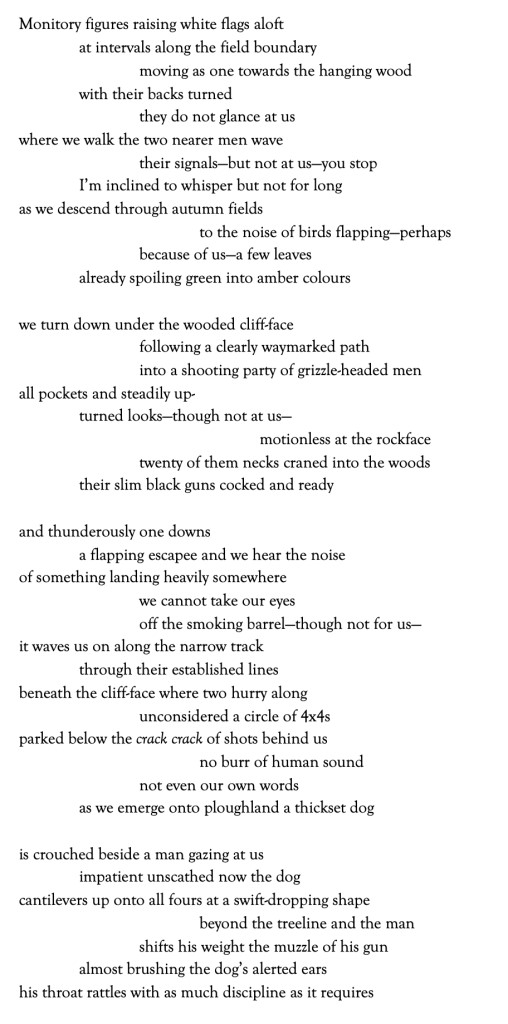
Happy New Year to all of you. We are hoping for the best aren’t we? Come rain, shine or named storm, the poems go on, saying something at least for the individual, the social, for careful consideration of the world out there, the world in here, and the languages we use. I’m posting a poem which has just appeared on New Year’s Day at the excellent Modron Magazine, its strap line is ‘Writing on Nature and the Ecological Crisis’. Glyn F Edwards also interviewed me about the making of the poem and I’ll post the text of that below, along with the link to Modron. Do go and take a good look at what other work they have put up in this new Issue 5. And then subscribe to them. My poem is weirdly formatted – so here is an image of it, lacking its title which is: ‘Muzzle’
On the Writing of ‘Muzzle’

MC: It’s so interesting to be encouraged to look back at the process of writing a poem. I seldom do it (I suspect I’m not alone), forever rushing on to the next ‘best’ thing (we think, we hope). In looking back at ‘Muzzle’ (I find I have the very first draft and several subsequent ones) two things strike me: that it took so long to get to a ‘finish’, and that I’d forgotten how important the context of the poem was to what it might be expressing.

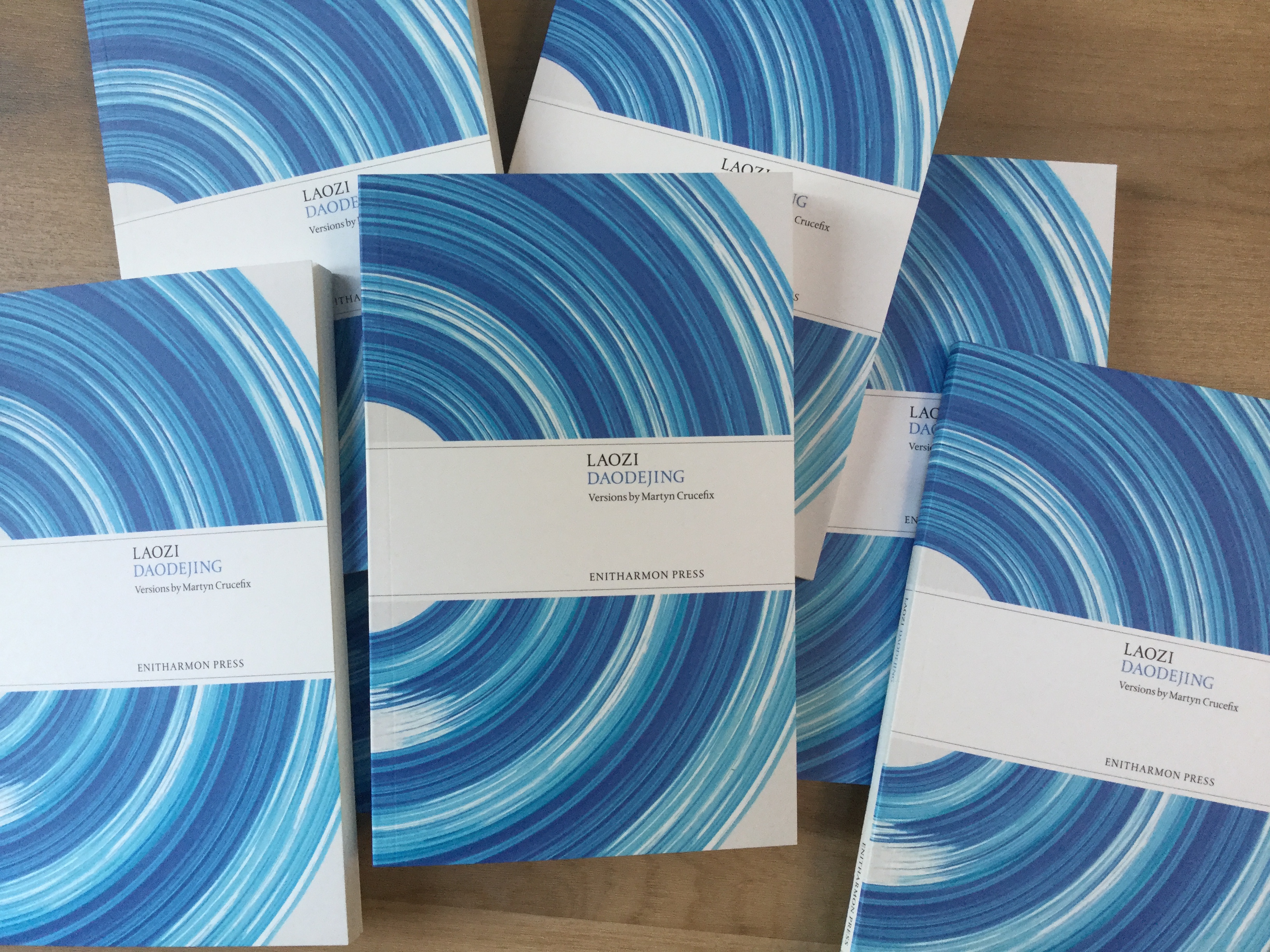
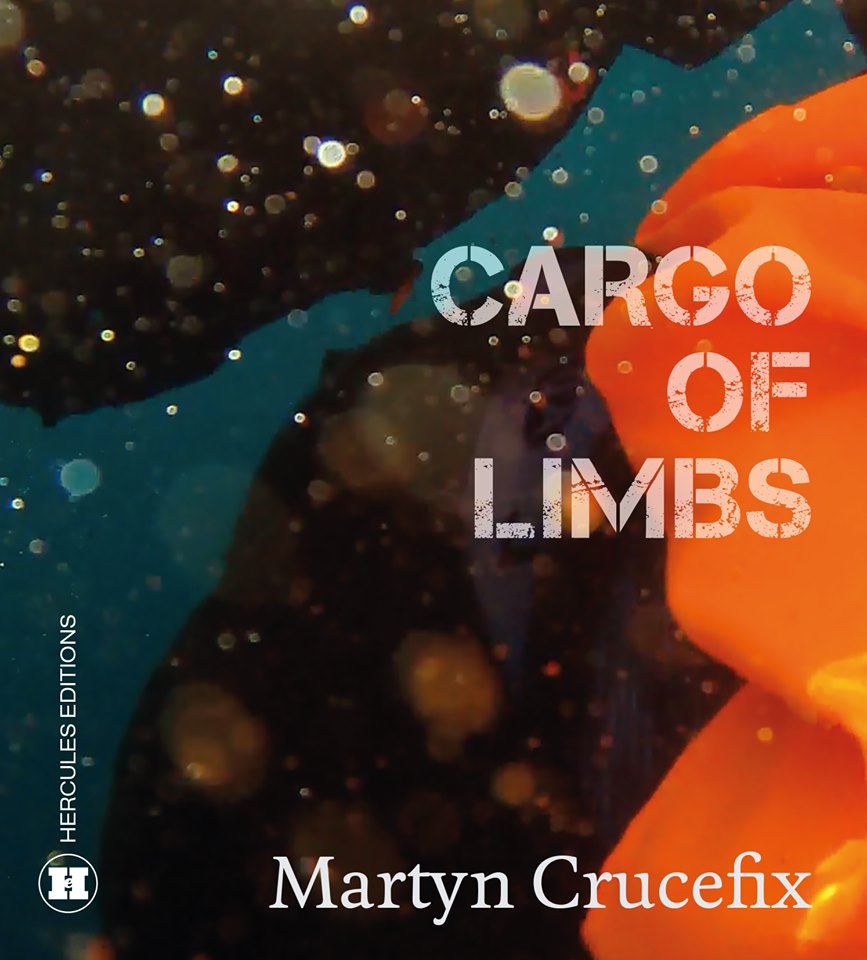
The first draft was scribbled in a notebook in the autumn of 2016. Earlier in the same notebook, I was sketching out thoughts on my, then, just-published version of the classic Chinese poems, the Daodejing (Enitharmon, 2016), preparing for readings I was to give from the book. Elsewhere there are fragments about my parents’ growing difficulties at home and (later) in their care home, plus some quite late drafts of the longish poem about the plight of refugees in the Mediterranean which was published as Cargo of Limbs (Hercules, 2019), and even first drafts of the poems which have eventually come to make up my most recent collection, Between a Drowning Man (Salt, 2023). Remember, the Brexit referendum took place in June 2016 and if there is an idea that links all these differing creative endeavours (including ‘Muzzle’) it is the idea of ‘division’.

Q1 – Only with the word ‘dog’ at the end of the third stanza does the reader gain a semantic connection to the ‘Muzzle’ in the title of the poem. Of course, Chekhov’s gun was ‘cocked’ all along, and the ‘muzzle’ becomes the open end of a weapon where a bullet escapes. Can you explain a little more of the rationale for this subtle title? 

MC: To my surprise, I find, the first draft has no ‘muzzle’ mentioned in it at all. But the shape and a lot of the substance of the finished poem is already there: the flag-waving men during an idyllic autumn walk (on the Sussex Downs, as far as I remember), the shooting party, even the man and his dog at the end of the poem. The muzzle of a ‘smoking gun’ is clearly implied but the final dog’s muzzle does not make an appearance till quite late (I mean 2020 or so!). In fact, in the first draft I clearly don’t know how to end the poem. There, the walking couple emerge from the wood ‘unscathed’, the dog in the field grows tense, and there’s a sense of the man’s day being ‘interrupted’ by the couple. But these final 5 lines are crossed through. In the later draft, the dog now ‘cantilevers up’ onto all fours (the mechanisation of the creature is part of the male group’s malign influence in my mind) – but still no muzzle as such. That only comes via a reference to the man’s gun and, with its proximity to the dog’s head and ears, there is a transference of the word/idea to the dog itself. I’m pretty sure it wasn’t till this point that I thought of calling the poem ‘Muzzle’ and that I also wanted the word to apply to the walking couple who have been (by the experience, by their apprehension, if not their genuine fear) muted or muzzled themselves. The idea was actually there early on; the first draft briefly sketched in, ‘no human voice we do not talk’.

Q2 – The refrain ‘not at us’ is repeated, and echoes again in ‘not for us’ – amongst the ‘white flags’, and the reassurances of safety, there appears a growing threat to the speaker. The reader is left with the feeling that somehow this danger extends beyond the shooting party, and beyond bloodsports. Did you seek for the poem to act as a wider allegorical foreboding, and, if so, would you elaborate on the metaphor? 

MC: Yes, the ‘not at us’ phrase or versions of it are already in the first draft, indeed on four occasions. This is one of the main sources of the idea of ‘division’ in the poem. It’s a simple ‘us’ and ‘them’ situation. The white flags – I think these would simply be the shooting-party’s beaters’ flags being waved to move the birds across the field into the woods, or possibly they are genuinely ‘monitory’ (meaning simply to warn or admonish), but in being white they also have (ironic) resonances of surrender (these guys were not going to surrender anything). The repeating phrase emphasises the gulf between the two elements of the encounter and particularly the sense (clear on the actual occasion) that those holding guns did not seem much concerned that unsuspecting, endangered walkers might be near at hand. We felt ignored; they seemed not to look at us. Being England, there is a strong class element here, which does not map easily onto the question of the voting intentions by class in the Brexit referendum, but factions on all sides seemed not to be paying much attention to any other. The devastating Tory defeat of 2024 should be regarded as reflecting much of this: eventually the country at large felt those in government were simply not paying any attention ‘to us’. I’ve always been pleased with the adjective ‘established’ to describe the shooting-party’s positioning, their being arrayed as the ‘establishment’. The finished poem ends ambivalently. The walking couple escape the shooting-party but are faced with another threatening situation: the gun, the dog. The ‘guard-like’ posture now puts me in mind of prison camp patrols the world over and I’d be happy for readers to get there too: there is a policing of freedoms going on here, a sliding scale from rural pastimes, to political enforcement, to genocidal pograms.

Q3 – ‘Muzzle’ zigzags, indents, retraces its steps. Some stanzas loop longer, and when the final sestet ends abruptly, without full stop, the reader becomes aware of the absence of punctuation throughout. You have a very idiosyncratic approach to presenting and punctuating the poem – could you share your intentions in this poem, and elaborate on whether these ally or counter your conventional style?

MC: The final form of the poem – which you describe so well – came very late. Most often my poems ‘find’ their own form – they don’t begin with any sense of the shape they will eventually take. The 2020 draft was coming out in tercets and I remember liking the ‘walking pace’, step by step, which that shape suggested. But in the end I wanted the poem to be more radical, to suggest a sense of freedom (in contrast to what is felt by the couple during the incident), a freedom to roam as it were, for lines to wander across the page and back again, while also acknowledging that this meandering might well yield some uneasiness in the reader (where’s he going?!). Both freedom and anxiety would be appropriate here. The form and the absence of punctuation (the latter I have been working with for several years now) are intended to generate some ambiguity. For example, I’m hoping for a fluidity in the opening lines, with the putative subject or focus being the flag-waving men, eliding to the walking couple – the ‘you’, then the ‘I’ – the birds, the leaves turning, finally to the ‘grizzle-headed men’. Within this fluency, a bit later, I want several adjectives to be hovering between subjects. The word ‘unconsidered’ floats between the lack of consideration given to the couple and the waiting circle of parked cars. Similarly, ‘impatient unscathed’ buzzes between the couple (again) and the waiting man and dog. This culminates in the rattling throat in the final line which (I want) to be as much about the man as the dog itself and so the ‘discipline’ demanded of the situation ought to be seen as human as much as canine. I guess I’m trying for fertile ambiguities, trying to suggest two things at once. The opening of the Daodejing says: ‘the path I can put a name to / cannot take me the whole way’ (my version).

Q4 – The shooting party negatively influences their surroundings, their presence ‘Hanging’ and ‘spoiling’ the woods, and the walk of the speaker. How much familiarity do you have with these ‘grizzle-headed men’, and do any occasions, such as the one in ‘Muzzle’ stand out as memorable, or significant? 

MC: As you suggest, I have allowed the shooting-party to be, and remain, those wearing the black hats. More often than not I feel the need, the wish, to revisit such emphatic designations: what’s to be said ‘on the other hand’ (ever the wishy-washy liberal). The jaw-dropping presumption of the shooters in the original incident (the poem says pretty much exactly what happened), coupled with the generally felt anger and dividedness of the UK at the time (and since) goes to explain why I have not done so here. Do I know people like this? I guess not. A remote acquaintance likes to share his stories of attending such exciting shooting-parties, but it’s hard even to find the language to create much common ground. Perhaps I am just too urban, metropolitan even. About hunting wild animals, Rilke says, ‘to kill is one form of our restless grief’ (Sonnets to Orpheus, II, 11; my translation). Nothing I witnessed on that day in 2016 served to convince me otherwise; the taking out of another living thing for no useful purpose seems to require an arrogant presumption that I cannot get my head around and I find rather terrifying; the ‘monitory’ urgency in the final poem is as much concerned with how this sort of attitude plays out in the political, even in the military, sphere as it is with ‘blood sports’ more narrowly defined.

December 2024

Here’s the direct link to Modron – https://modronmagazine.com/a-poem-and-interview-with-martin-crucefix/
On Revisiting Blockley

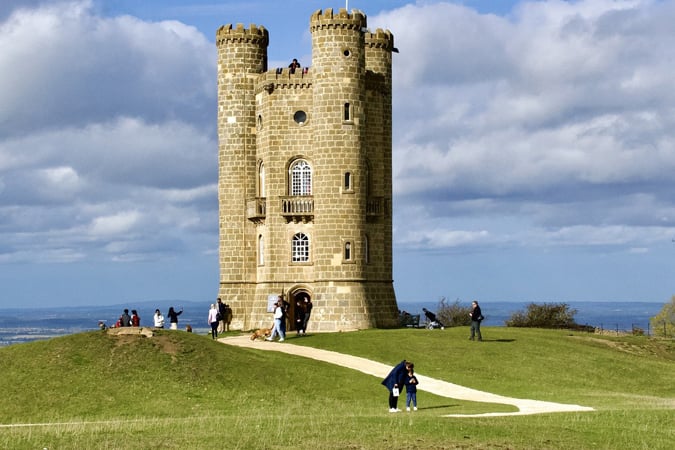
A rather more personal post than usual, though a poem (an older one of my own) is attached to it. Last week, I spent a few days with family in the beautiful village of Blockley, in the Cotswolds. The weather was very good for late November and we walked a couple of times – from Broadway up the muddy hill to the folly of Broadway Tower (once frequented by William Morris apparently) and around Hailes Abbey (now a ruin, local lore has it that Thomas Cromwell watched the destruction of the Abbey from a nearby hilltop). Blockley itself is near Moreton-in-Marsh, a place almost destroyed by the volume of traffic flowing through it (even in November), where The Bell Inn was once a favourite of JRR Tolkein, and is supposedly the model for The Prancing Pony in The Lord of the Rings. But Blockley, for me at least, had another powerful ghost haunting it.

As a couple, with young children, we stayed in the village over 20 years ago, in one of the original silk weavers cottages built along Park Road, which looks down over the village and valley. The house was owned by a colleague of mine at the time, Laurence Bowkett. He taught Classics and Latin and often spent the summer vacations away on archaeological digs of various kinds. That must have been the situation then as he’d allowed us to use the house in his absence. His early death, within a year or two of this, was a shock to us all. He had no family of his own and I don’t know what happened to the house later. So, fast forward to 2024, and here we are staying in Blockley again, only partly by coincidence. We have always had good memories of the place and (again, partly by an AirB&B chance) we ended up renting an almost identical cottage in the very same terrace above the village. Indeed, maybe it was the same cottage – I couldn’t remember enough of the details. The layout was certainly the same – the front door in off the road, straight into a little front room, a chilly basement kitchen and upstairs two small bedrooms.

Laurence’s was not the first death of a contemporary I knew well, but it greatly affected me and I tried to express something of this in the poem – an elegy – I wrote for him later. It is called ‘The umbrella and the bay tree’ and it mixes memories of him, his enthusiasms (he had a lot of those – all his students loved him for it), with details from my own family life at the time. It opens with an imagined scene, all his teaching colleagues gathered (as we often did then) in the local pub, remembering him in his absence. The ‘laral gods’ – the Lares – are Classical Roman guardian deities. The laurus nobilis refers to a little bay tree I bought after our first stay in Blockley as a thank you gift . . .

By seven-thirty, you are with us all

tonight in the gloom of The Washington,

though we omit you from every round.

Powerless as laral gods who gave you

no protection, even laurus nobilis,

the bay tree I bought you, proved no use.

Our children were at Infant and Junior School at the time and – to be honest – I can’t now remember if the details the poem goes on to mention are truth or fiction. But Laurence was the kind of guy who’d keep his own books in scrupulous order (as he did with his extensive collection of Marvel comics) so the library setting has always felt right . . .

Today, I searched 570 and 790,

in the Dewey decimal classification

your fingers ran through a thousand times,

for the facts of death and irrepressible life,

as if I looked for you now and you then.

You taught shard-life and careful fieldwork,

the near-dead language of not giving in.

You offered the heroic a modern face,

though death proved the more determined.

You understood lives alter what they touch:

a house, a street, a flowering tree,

for those who know us are not struck dumb,

a library unread the moment we die.

They roar like a lantern with our life inside.

The idea of lives of the dead altering the lives of those they have touched in life is familiar enough, though I was working on my translations of Rainer Maria Rilke around this time and I’m sure his influence is in here. It is not just the remembering of a friend who has passed away, but also that our own perceptions of ‘a house, a street, a flowering tree’, for want of a better word, spiritualises the material object, giving it a life, a light, an existence, beyond the ordinary. The resurrection of the bugs stomped by my daughter in what follows is probably an allusion to the early primitive computer games the kids used to play in which a failed – hence fatal – leap from a high building would result only in a brief ‘death’ and their 1st person avatar would soon revive and carry on in pursuit of adventure.

In Hornsey Central at 570

this morning, I found books to undermine

my daughter’s smiling confidence

that bugs she crushes beneath her shoe

lie dead a while, then revive good as new.

At 790, I leafed through life and death

in Ancient Egypt for her older brother:

how they wash their dead in water and oil,

then bind them in linen smeared with gum

and priests wrap lucky charms inside

in hope that none will break the seal

till the dead themselves in time of need.

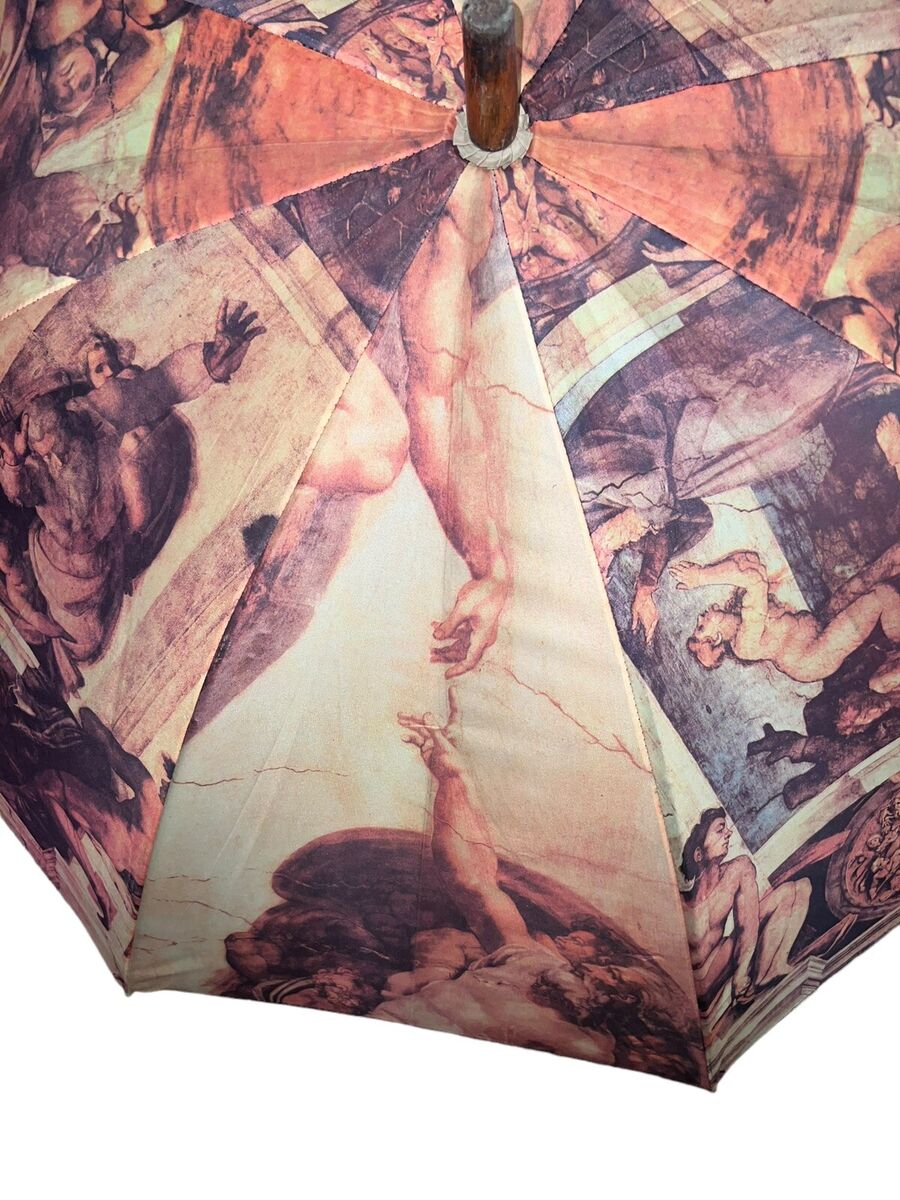
The ‘lucky charms’ idea naturally led the poem on to what I myself might place in a good friend’s sarcophagus and gave rise to a list of his multifarious likes and loves, concluding with the heartfelt wish that his (prematurely unhirsute) head might – even in death (though he had no religious belief as far as I know) – remain somehow protected. The image on the underside of Laurence’s umbrella is a truth!

Then I’ll wrap Homer for you, Wolves black-

and-gold, your Micra, Marvel, Blockley

and booze, moist, sweet cake for the road,

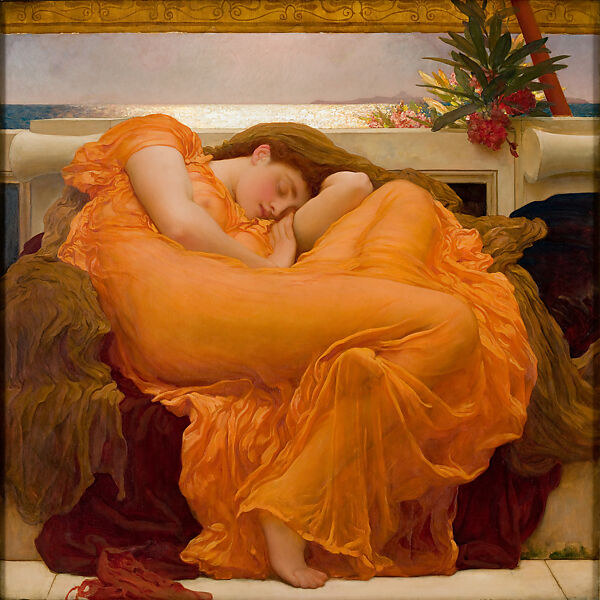
Frederick Leighton, Sir Frankie Howerd,

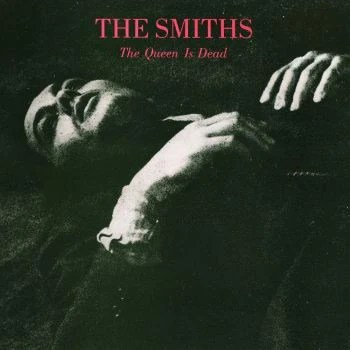
Wisden, The Smiths and that Italian umbrella

you flourished one day and thundered open –

behold! the Sistine roof appeared

to keep your bald head from the hissing rain.

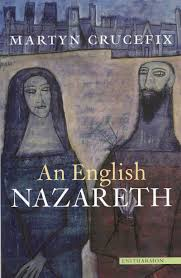
‘The umbrella and the bay tree’ was originally published in An English Nazareth (Enitharmon Press, 2004).

New Review of ‘Between a Drowning Man’ – from Shanta Acharya

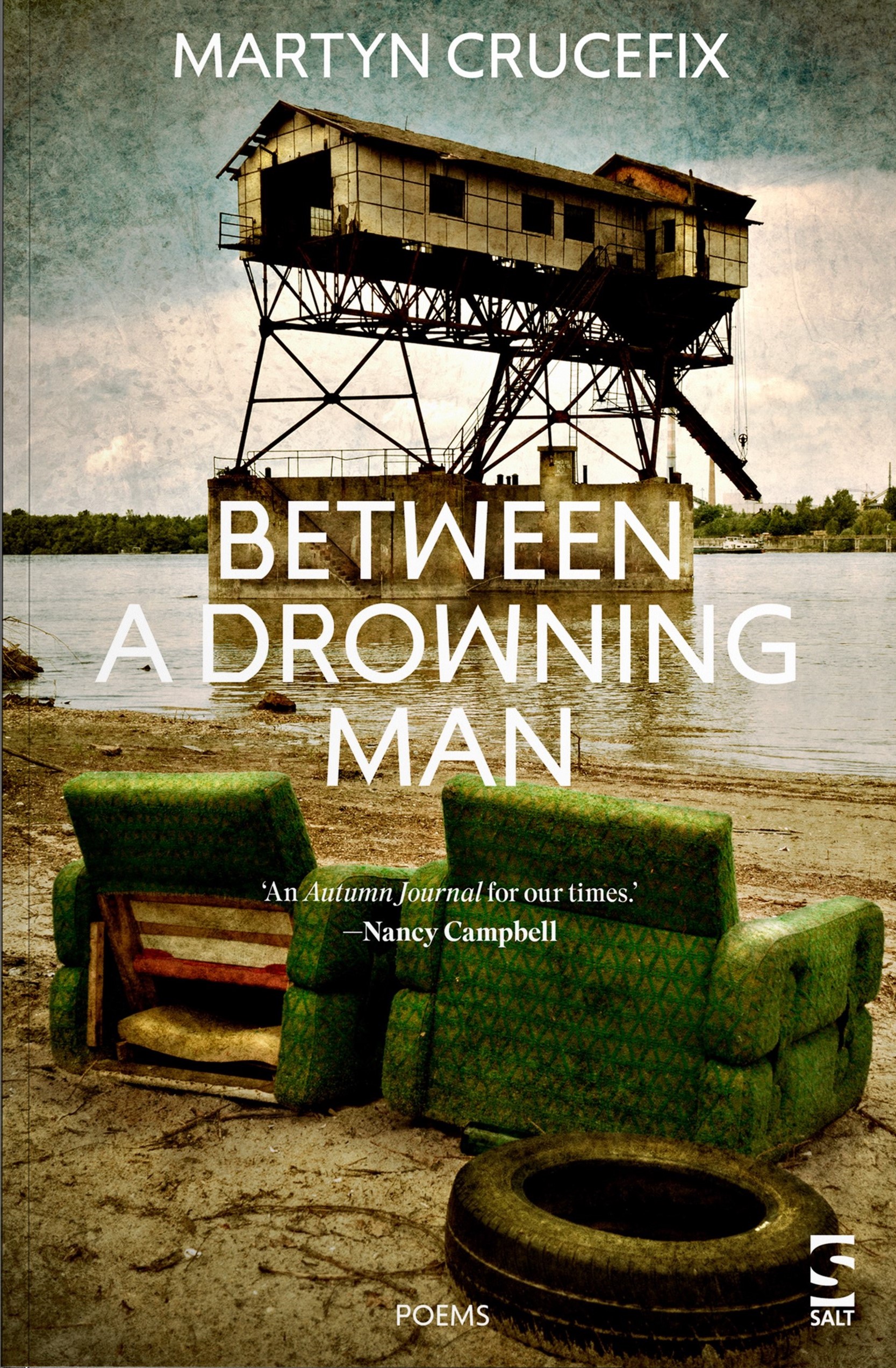
We all know that reviews of poetry books can take a long time to filter through whatever system they do come through. But then they always come as a pleasant surprise (if that’s not making too many assumptions about their likely contents). Any way – almost 12 months after the appearance of my most recent full collection, Between a Drowning Man (Salt, 2023), the ever-lively site, Everybody’s Reviewing, has just posted a detailed and insightful commentary on the book by poet and novelist, Shanta Acharya.

Amongst other things, the review comments: ‘A poet, translator, reviewer and poetry blogger, Martyn Crucefix has won prizes for his poetry and translation. As a translator of Rilke’s Duino ElegiesThe Sonnets to Orpheus, Laozi’s Daodejing, Huchel’s These Numbered Days, among others, Crucefix has been building bridges for those who want to cross the divide between cultures, countries, ways of seeing the world and each other. Words are bridges, language itself a bridge – yet we inhabit an increasingly complex world where loneliness and isolation are on the rise. In ‘fifteen kilometres of traffic’ an acceptance of this isolation is disconcerting: ‘you make a choice you go your own way … / because all the bridges are down.’ His understanding of the central role language plays in our lives, that creation of bridges between humans, is a fundamental aspect of his work’.

Here’s a link to the full review

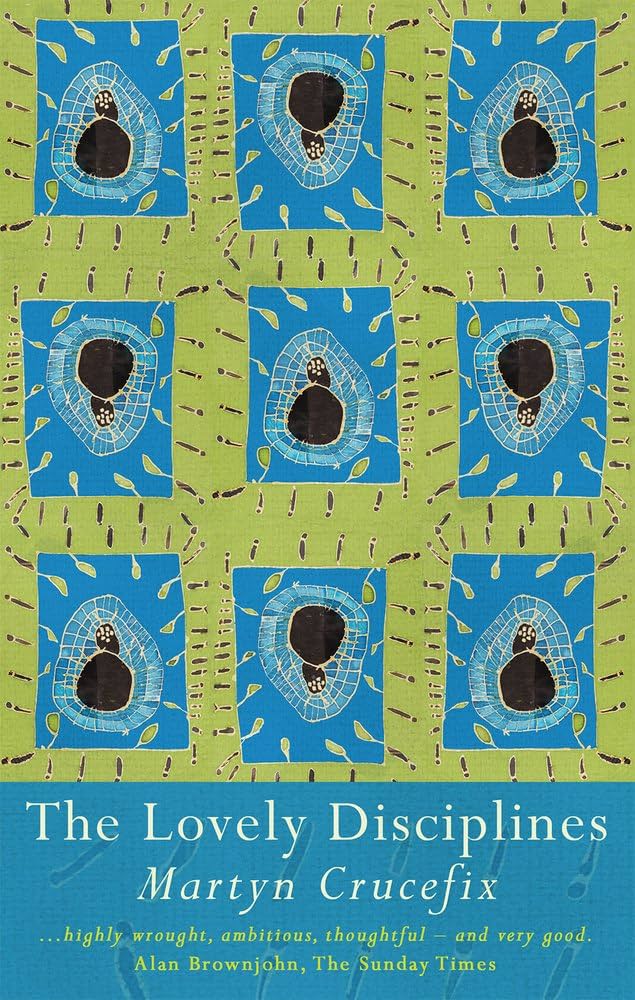
And coincidentally, Seren Books have also just recently posted a rather older poem of mine in their Poem of the Week slot. This is from my 2017 collection with Seren, The Lovely Disciplines. It’s about visiting the opticians for a check-up – though also about the desire (my desire) for clarity and absoluteness (if there is such a word), a desire, of course, never to be fulfilled. Read the full poem here.

Reading Rilke’s poems – 6pm this Saturday in Bristol

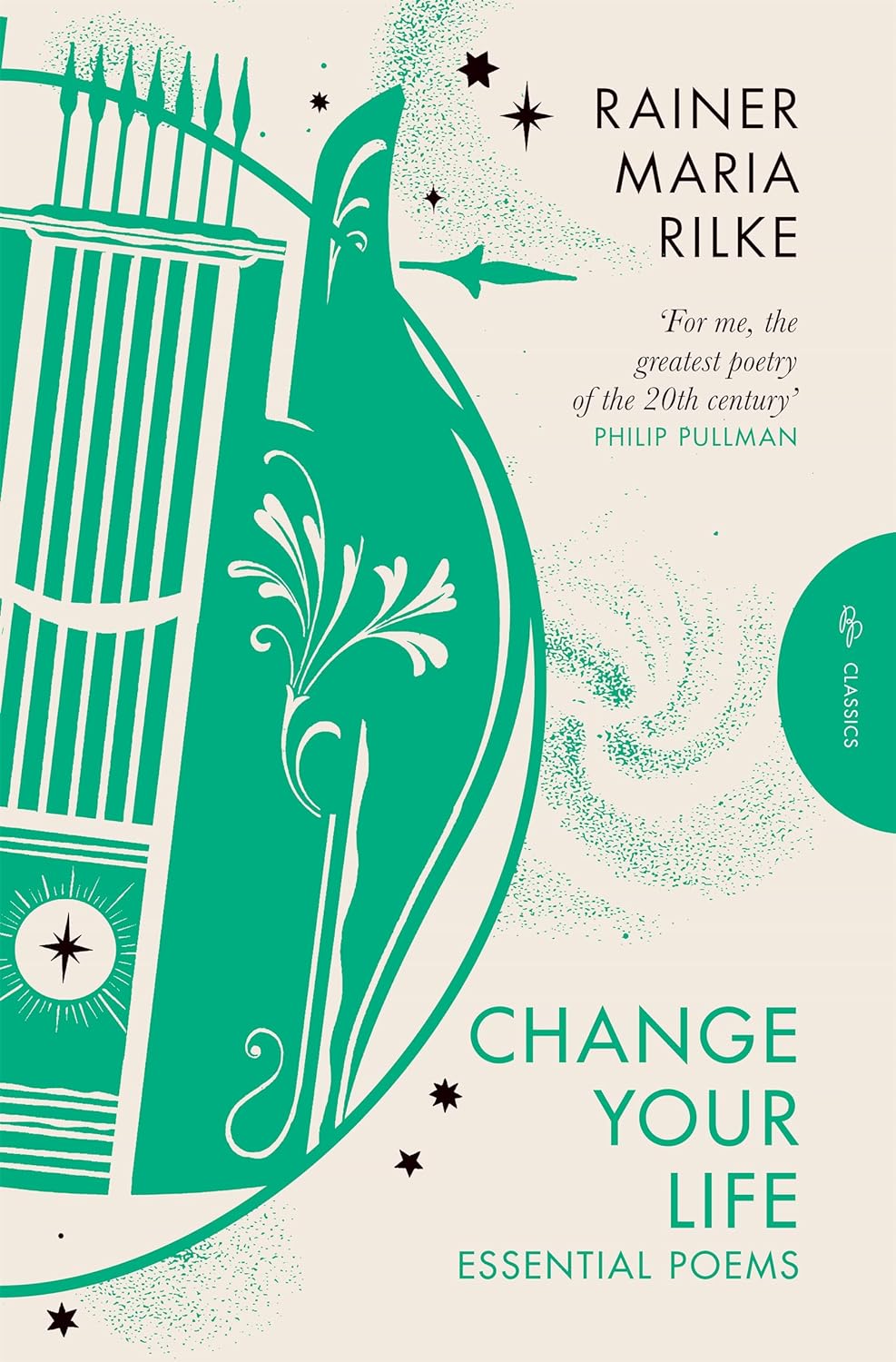
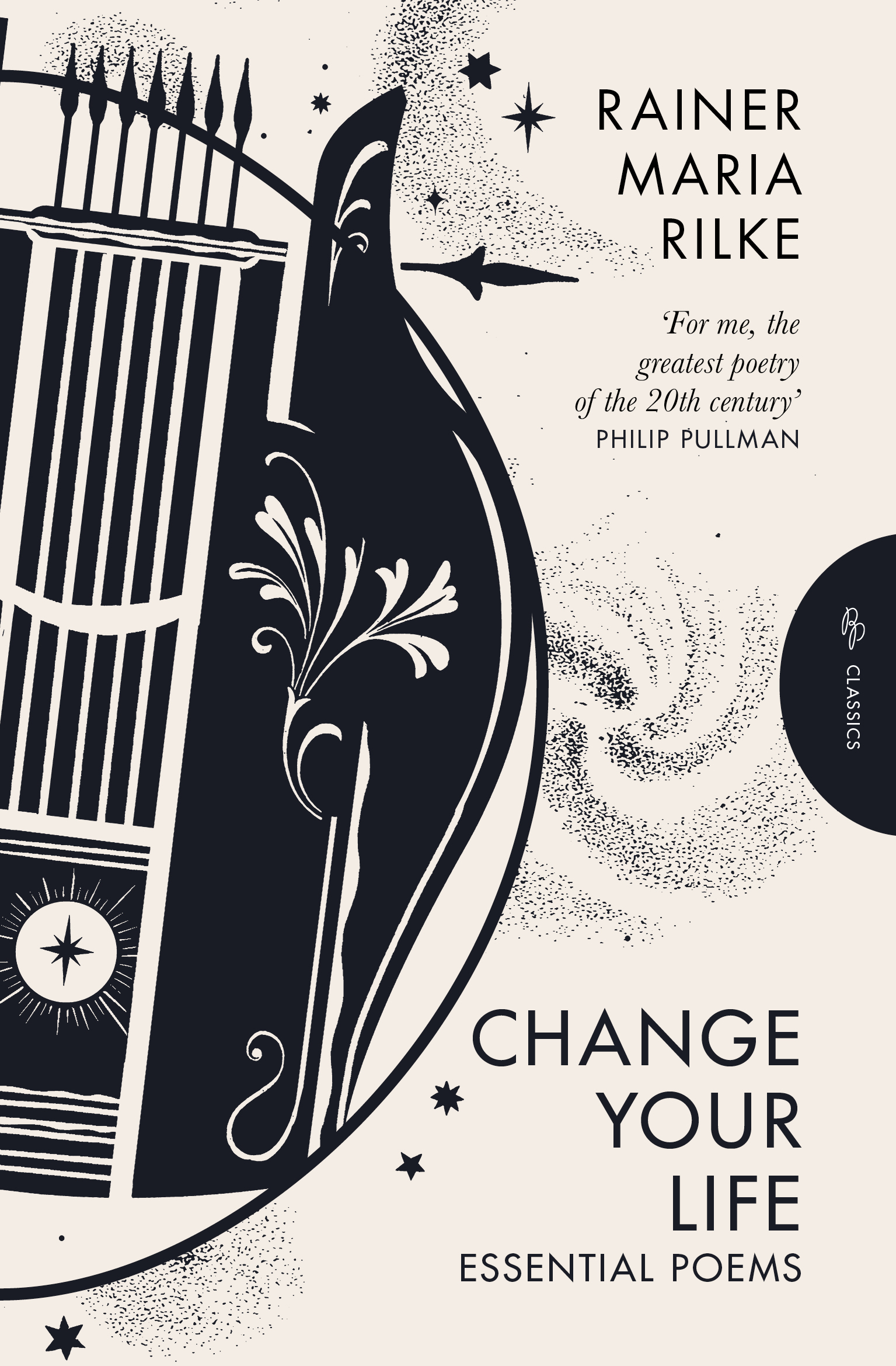
I will be giving a reading from this year’s Pushkin Press publication, Change Your Life: Essential Poems of Rainer Maria Rilke. The reading is being organised, and taking place at Heron Books in Bristol as follows:

Heron Books Unit 5, The Clifton Arcade
Bristol, BS8 4AA United Kingdom + Google Map

Join us for Poetry In Herons with Martyn Crucefix

Join us in the Arcade after hours for our monthly poetry series. 6pm, Saturday 17th August. We will be celebrating the publication of Martyn’s translation of Rainer Maria Rilke’s poetry, Change Your Life

You can buy tickets in advance online or in the shop. For more details and booking click here
Tickets are £4 or free with the purchase of Change Your Life. All tickets include a glass of something sparkling on arrival.

Tickets are fully redeemable against buying the books on the night.
Book orders will be ready for you to pick up and get signed at the event.

And here’s a taster poem – an unusual one from Rilke which perhaps we read these days with an ecopoetic slant – a translation of a poem in German by Rainer Maria Rilke (from New Poems II; The Other Part (1908)

to thrive, content that they lived anywhere,

sharing a sense of kinship, they found signs

of their peers in the ocean’s fluid empire,

which the old sea god, with dripping tritons,

would sometimes stir to tempest and flood;

for there surfaced the creature that showed

itself to be far more than the dumb,

dull-witted breed of fish: blood of their blood,

and distantly inclined to the human.

A school of them, rolling, leaping, appeared,

seeming conscious of the glittering sea:

joyful, trusting, warm-blooded, they wreathed

the sea voyage with their brave assembly

and would sport round the ship’s prow with ease,

as if tracing the curved outlines of a vase,

heedless, blessed, never fearing injury,

now enraptured, breaching, speeding along

and diving deep as if to exchange places

with the waves that calmly bore the trireme on.

And the sailors took these newly discovered

friends into their lives of lonely hazard

and they contrived for these companions—

and believed it true—a world of gratitude,

in which they loved gods and music and gardens

and the year’s silent, deep constellations.

Remembering John Burnside

With yesterday’s announcement of John Burnside’s death, I thought of this review that I wrote in 2006 of his Selected Poems, published by Cape Poetry. His work meant a lot to me around that time and I enjoyed the chance to try to articulate what I found fascinating in it.

John Burnside’s poetry has, for some years now, been offering us a modern egotistical sublime. With Wordsworth, he shares a responsive delight in nature and daunting powers of self-analysis; also similarly, he can slip towards the prolix and portentous and there is something of the same difficulty with projection into another’s experience. But Burnside’s work frequently achieves a moving sublimity without loosening its grip on reality. He is the only contemporary poet who consistently demonstrates the power of a poetic form that is something other than mini fictional narrative, raw confessional, or condensed dramatic monologue. That he is also successful in writing prose makes his achievement all the more impressive.

His work was recognised in the early 1990s despite bucking the trends of secularism, formalism, and plain/street language. His poetry’s brooding intensity lacked laddish brouhaha. The palette was never broad – rural twilights, leaf litter, owls hunting, tracks across snow – but his eye was always on the margins of such things, where the human and the natural met and negotiated. It felt like something spiritual was about to be said or had been articulated and just missed. This was twinned with the powerfully felt absence of fixed personal identity that has remained so deeply engrained in his work. In poems that in many ways were hardly radical, it was this element that made Burnside feel modern. In a self-regarding culture ever more attached to the teats of mobility, individuality, celebrity and fashion, his relentless worrying away at the obscurity of the self, his flirting with its non-existence, struck dissonant but resonating chords.

Burnside’s themes are frequently disturbing. But in a poem like ‘Halloween’ (from The Myth of the Twin, published in 1994) his exquisite ability to conjure up the British countryside proves to be an essential part of the pleasure of reading him. As often, the season is autumn – cold, mostly deserted, snow, rain, “the fernwork of ice and water”. The narrator peels bark from a tree to smell “its ghost” in a characteristic movement from the precisely evoked physical to the almost casually implied spiritual. What the figure in the landscape is trying to do is to “define my place”. Even scraping down in the leaf mould, he finds fungal traces that look “like the first elusive threads / of unmade souls”. Nearby village bells provide “nothing” and the poem typically ends with the figure’s sense of “other versions of myself” on the periphery of vision and these can be taken to imply other futures, untaken pasts, other roles familiarly adopted, even selves beyond the physical – the inconclusiveness is the point.

Burnside has pursued experiments with differing perspectives that were first signalled by the opening and closing poems of The Myth of the Twin. For example, though in the end less successful than its predecessor, Swimming in the Flood (1995)dramatically broadened his poetry’s reach to include the experience of others, often in more extended form and in dramatic monologues. Persecutors and victims inhabit these poems and speak disturbingly of abuse and “the inexplicable / malice of being” (‘Schadenfreude’). This was a turning point in Burnside’s development as what now flooded into the poetry was what had lain buried in the delicacy and tentativeness of the earlier work. In the ‘The Old Gods’ he declares their power is strongest “when anger or fear / is fuzzing the surface, / making us dizzy and whole”. The process of uncovering is shown to be one of healing and this selection includes the sequence called ‘Burning a Woman’ which seems nakedly to speak of the poet’s mother and father. Equally, the ‘Parousia’ sequence (not included in this Selected) ends with what appear to be sceptical reflections on his earlier inquisition beyond the merely physical: “All resurrections are local . . ./ the sign I have waited to see / is happening now / and always”. Here Burnside seems to arrive at a sense of secular miracle (a version of Rilke’s “Hiersein ist herrlich”) less concerned with the reality of religious presence than with the individual’s response to its possibility.

And yet, the dramatic monologues proved something of a cul de sac. With his subsequent work, Burnside has returned to his best subject: himself. Partly what makes the award-winning The Asylum Dance such a magnificent achievement is the development of the fluid poetic form he combines with a second person plural address that achieves the universal without being either hectoring or twee. The influence of William Carlos Williams is obvious, but Burnside extends this beyond a fluent impressionism concerned with the truth of things to encompass a philosophical musing, the lines flickering across the page as if viewed through water. This new selection is too brief to achieve the full sense of his development, but one of the marvels of Burnside’s work is its continuing delivery of extraordinary evocations of the natural world that have become gradually melded with an introspective depth that does not merely offer insight, but sustained meditation. The four long sequences from The Asylum Dance are rightly given space here and constitute a masterpiece in which the poems offer up rich, disturbing, beautiful, precise, profound, and sustained experiences undergone in the act of reading, rather than a lesser poetry’s marshalling of moments of insight and feeling. Burnside’s career already provides ample proof of a fascinating and significant artistic development, and this selection will prove a good starting point for anyone not yet following it.

Poetry in Translation Reading – Crouch End Literary Festival

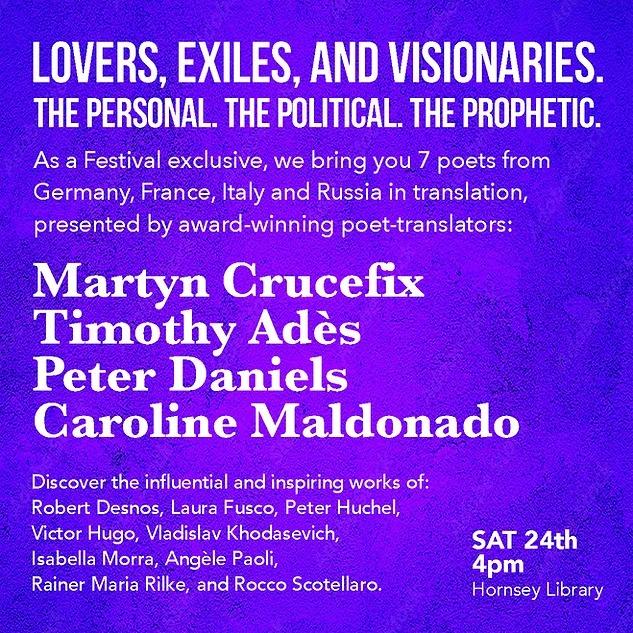
Rather late notice – not wholly down to my own tardiness – but I will be reading work in translation at the inaugural Crouch End Literary Festival this weekend. Do come along if you can. There are plenty of other events scheduled in the Festival, but this one is at 4pm on Saturday 24th February in the Gallery upstairs at the Hornsey Library Haringey Park, London N8 9JA (see map on location and how to get there). The event is free to attend and as you’ll see I am reading alongside poet/translator friends Timothy Ades, Caroline Maldonado and Peter Daniels. The poster, left, is not wholly accurate as I’ll be reading work by Rilke (Pushkin Press) and Peter Huchel (Shearsman Books) and not from my translations of Angele Paoli (that chapbook has been delayed at present). Tim will be reading from his Robert Desnos (Arc) and Victor Hugo; Peter is reading from his Vladislav Khodasevich and Caroline will (I think) be reading from her Smokestack books of work by Scotellaro and Laura Fusco.

Here are more details about the 4 of us:

Timothy Adès is a rhyming translator-poet with awards for, among others, the French poets – Victor Hugo (1802-1885) and Robert Desnos (1900-1945). Both were enormously prolific and engaged passionately with the issues of their times. Timothy is a much-praised translator with further published books from Spanish, French, and (coming soon) the German of Ricarda Huch. He runs a bookstall of translated poetry and is a member of the Royal Society of Literature and a Trustee of Agenda poetry magazine. His translations have won the John Dryden prize and the TLS Premio Valle Inclán prize. Find him on Facebook and YouTube and his website is http://www.timothyades.com

Martyn Crucefix is the author of seven original collections of poetry, most recently Between a Drowning Man (Salt, 2023) and Cargo of Limbs (Hercules Editions, 2019). Awards include an Eric Gregory award, a Hawthornden Fellowship, and the Schlegel-Tieck Prize for translations (from the German) of the poems of Peter Huchel. His translation of Rainer Maria Rilke’s Duino Elegies (Enitharmon, 2006) was shortlisted for the Popescu Prize for Poetry Translation. A major Rilke selected poems, Change Your Life, will be published by Pushkin Press in 2024. Till recently a Royal Literary Fund Fellow at The British Library, he also edits the Acumen Poetry Magazine Young Poets web page. Website at http://www.martyncrucefix.com

Peter Daniels’ most recent original books of poetry are Old Men (forthcoming, Salt 2024) and My Tin Watermelon (Salt, 2019). His acclaimed translations from the Russian of Vladislav Khodasevich appeared in 2023 from Angel Classics and was a Poetry Book Society Recommended Translation. Other publications include Counting Eggs (Mulfran Press, 2012) and the pamphlets Mr. Luczinski Makes a Move (HappenStance, 2011) and The Ballad of Captain Rigby (Personal Pronoun, 2013). Peter has won first prizes in the 2010 TLS Poetry Competition, the 2010 Ver Poets Competition, the 2008 Arvon competition, the 2002 Ledbury competition, and has twice been a winner in the Poetry Business pamphlet competition. Website at https://www.peterdaniels.org.uk

Caroline Maldonado is a poet and translator living in London and Italy. She has worked in community regeneration, in law centres and with migrants and refugees in London. She chaired the Board of Trustees of Modern Poetry in Translation until 2016. Publications of her own work include the pamphlet What they say in Avenale (Indigo Dreams Publishing, 2014) and a full collection Faultlines (Vole Books, 2022). Translations include Isabella (Smokestack Books, 2019). Other translations (all published by Smokestack Books) are poems by Rocco ScotellaroYour call keeps us awake (2013), co-translated with Allen Prowle, and two collections of poems by Laura FuscoLiminal (2020), which received a PEN (UK) Translates award, and Nadir (2022). More at http://www.poetrypf.co.uk/carolinemaldonadobiog.shtml

Ian Brinton reviews ‘Between a Drowning Man’

Here is Ian Brinton‘s recent review of my new Salt collection, Between a Drowning Man. It was first published by Litter Magazine in January 2024.

The invitation at the opening of these two remarkable sequences of poems by Martyn Crucefix emphasises both ‘difference’ and ‘ambiguity’, an ‘othering’ which hones attention rather than dulling it.

Divided into two sections, Works and Days (forty-nine poems) and O, at the Edge of the Gorge (fourteen poems) the two landscapes bring into focus a post-2016 Britain and the countryside of the Marche in central, eastern Italy. The leitmotif which threads its pathway, its recurring echo, through the first section is of ‘all the bridges’ being ‘down’ and the epigraph to section two is a quotation from Canto 16 of Dante’s Paradiso in which cities pass out of existence through warfare or disease and that which may have seemed permanent is continuously in movement. That second section of poems is a sequence of sonnets and in the final one the hawk’s resting place in the ‘shivering of poplars’ sways so that he is neither falling nor at ease

with these thinnest of airs beneath him

these shapes of loose knotted mesh

these whisperings that cradle him on a whim

That ‘othering’ prompts the poet to see the differences that are ‘like crimes woven into the weft’ and, in a way that William Blake would have recognised in his ‘A Poison Tree’, envy can be ‘buried long years in the black heart / of expressed admiration’ and ‘sunshine’ can be ‘really the withering of night’ which is ‘poured into soil where wheat grows’. And so it is—‘in and around and over and above’ because ‘all the bridges are down’. 

In April 2007 Jeremy Prynne wrote some notes for students about poems and translation:

Translation is for sure a noble art, making bridges for readers who want to cross the divide between their own culture and those cultures which are situated in other parts of the world; and yet a material bridge is passive and inert, without any life of its own, whereas a poetic translator must try to make a living construction with its own energy and powers of expression, to convey the active experience of a foreign original text.

As a translator of real distinction (Rilke’s Duino Elegies and The Sonnets to Orpheus) Crucefix has for many years made these living constructions offering readers a gateway into new experiences whether it be through the world of Laozi’s Daodejing (Enitharmon Press, 2016) or through these new poems which offer echoes both of Hesiod’s Work and Days and the poems known as a vacanna which originated in the bhakti religious protest movements in 10-12th century India. His understanding of the central role language plays in our lives, that creation of bridges between humans, was one of the deeply moving and memorable moments in his collection from Seren in 2017, The Lovely Disciplines. There the poem ‘Words and things’ presented an elderly individual who discovered ‘too late this absence of words’ which now ‘builds a prison’ and Crucefix recognised that ‘a man without language is no man’: as the world of objects becomes too difficult to dominate he can only have knowledge of a world which ‘turns in your loosening grip’. The echo of Yeats’s ‘The Second Coming’ is surely no accidental one!

Translations are bridges, language is a bridge, and the distressing recognition of isolation within numbers is the dominant image in ‘fifteen kilometres of traffic’ from the first section of this new book:

fifteen kilometres of traffic wait before us

behind us the infinite tail

we are offered Google Map options

yet those trumpeted ten minute economies

are nothing till they can be proved

you make a choice you go your own way –

this has been better said before of course –

you cannot take the other way

and remain a unitary being on two paths

or perhaps sane – all roads crawl north

because multiple millions of cars crawl north

because all the bridges are down

Those ten minute trumpetings bring the world of Orwell’s 1984 to my mind as loud announcements of positive news seem to possess a tinny emptiness to the understanding of the isolated human who exists in a world of no bridges.

However, in contrast to this wave of uniformity one reads moments of ‘othering’ in the second section of this book as in ‘sharpening gusts along the valley floor’ a scrap of air was birthed

whirling inches above a littered drain

in a back street of some hilltop town

like Urbisaglia or some place that has seen

and has survived change of use

from sacred temple to church to slaughterhouse

and no gully nor hill can stop it

In this moving world ‘great swathes of air’ gather strength to flex ‘all things to a scurrying to keep up / and the truth is some will and some will fail’.

In a poem titled ‘can you imagine’ (for my children) from the first section of Between a Drowning Man the power of language to translate the invisible onto the page is presented with an unerring eye focussed upon reality. In a world in which he no longer shares the companionship of others the poet is carried safely because although ‘you find the bridges between us fallen down’ and although ‘you mourn’ you can still ‘imagine’. That sense of continuity held in the imagination is far from the image of Alan Kurdi, the three-year-old Syrian boy drowned on the beach near Bodrum, Turkey, in 2015 whose death was recorded by Crucefix’s earlier book, Cargo of Limbs, from Hercules Editions in 2019. The boy’s family had fled from the war engulfing Syria in the hope of joining relatives in the safety of Canada and became ‘part of the historic movement of refugees from the Middle East to Europe at that time’:

In the early hours of September 2nd, the family crowded onto a small inflatable boat on a Turkish beach. After only a few minutes, the dinghy capsized. Alan, his older brother, Ghalib, and his mother, Rihanna, were all drowned. They joined more than 3,600 other refugees who died in the eastern Mediterranean that year.

In this new book that ‘whim’ of a resting place for the hawk, those ‘whisperings’ prompt the bird, the poet, ‘to call it yet more steady perhaps’:

this whim—this wish—this risky flight

in the fleeting black wake of the carpenter bees

Goethe’s poetry – some new translations by John Greening

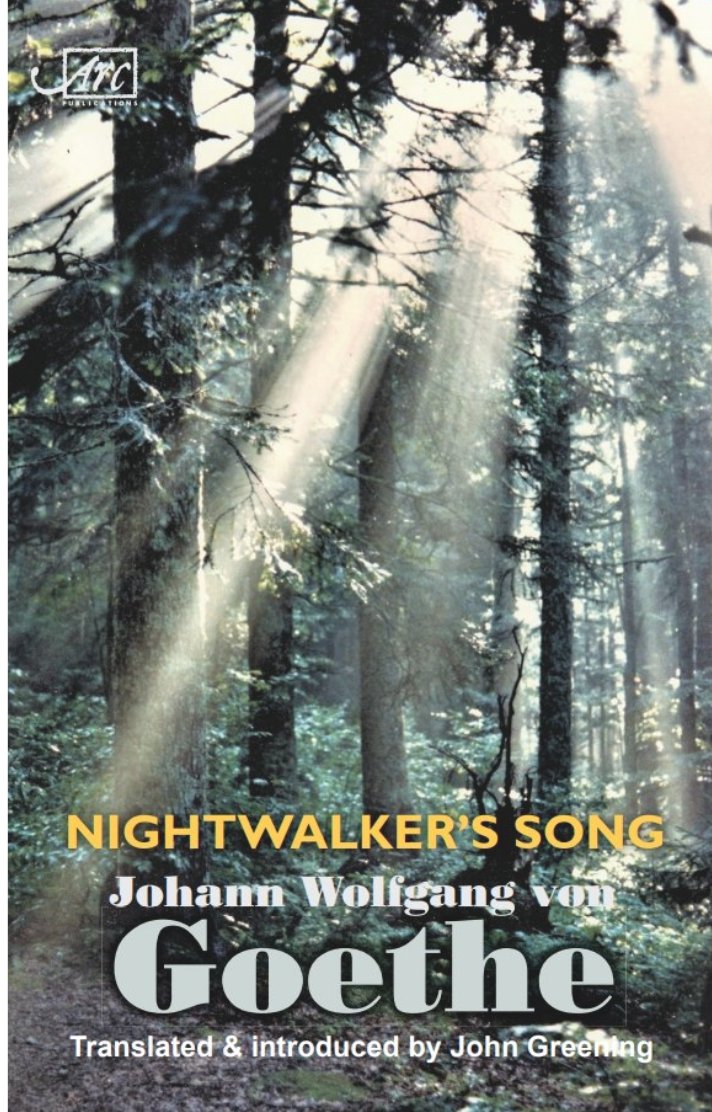
In this blog post, I am discussing John Greening’s new translations of a small selection (9 poems in all) from the works of Johann Wolfgang von Goethe. With the original German texts provided on facing pages, these translations are published as Nightwalker’s Song, by Arc Publications (2022). This review was originally commisioned and published by Acumen poetry magazine early in 2023. By the way, Acumen will be presenting a free to attend on-line celebration of its latest issue on Friday September 1st at 18.30 BST. It will include a brief reading of new work by yours truly, Gill McEvoy, Anthony Lawrence , Sarah Wimbush, Simon Richey, Dinah Livingstone, Michael Wilkinson, Jill Boucher, Jeremy Page, and others.

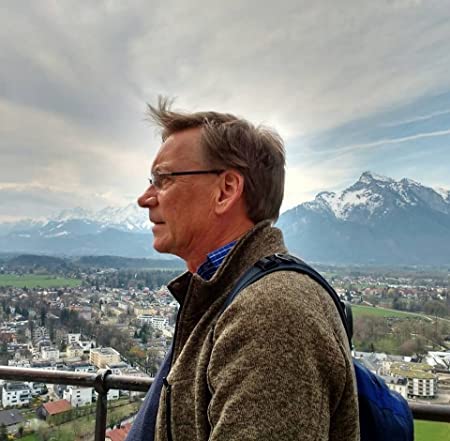
John Greening’s recent, self-confessedly ‘tightly-focused’ little selection from Goethe’s vast output is, in part, a campaigning publication. In his Introduction, Greening notes the difficulties surrounding the great German poet’s presence in English: the sheer volume of work, the range of that work, the man’s polymathic achievements (as poet, playwright, novelist, scientist, statesman, theatre director, critic), the long life untidily straddling all neat, period pigeon-holing. Christopher Reid has called him ‘the most forbidding of the great European poets’, but perhaps the English have come to see him as a mere jack-of-all-trades? And where do we turn to read and enjoy the poetry? Michael Hamburger’s and Christopher Middleton’s translations look more and more dated. David Luke’s Penguin Selected (1964; versified in 2005)is the most reliable source. But tellingly, as Greening says, one does not find young, contemporary poets offering individual translations of Goethe in their latest slim volume in the way we do with poems by Rilke or Hölderlin.

John Greening

So here Greening sets out a selection box of various Goethes to encourage other translators: we find nature poetry, romance, the artist as rebel, meditations on fate, erotic love poems, a rollicking ballad, dramatic monologue and a very fine sonnet. I like Greening’s determination not to lose the singing. Here, he has ‘shadowed’ the original metres and retained rhyme schemes, though he sensibly makes more use of pararhyme than Goethe’s full rhyming. While not approaching Lowellesque ‘imitations’, Greening has also sought a ‘contemporary texture’ by venturing to ‘modernise an image or an idea if it helped the poem adapt to a different age’. For example, in ‘Harz Mountains, Winter Journey’ (‘Harzreise im Winter’) Goethe’s buzzard has become the more familiar image, in southern England at least, of a red kite. The carriage or wagon (‘Wagen’) driven by Fortune becomes a car in a ‘motorcade’ and another vehicle is imagined ‘winking on to / the slip-road’. There’s also an enjoyable touch of Auden in Greening’s updating of ‘crumbling cliffs / and disused airfields’ (Middleton has ‘On impassable tracks / Through the void countryside’).

Walt Disney’s Sorcerer’s Apprentice

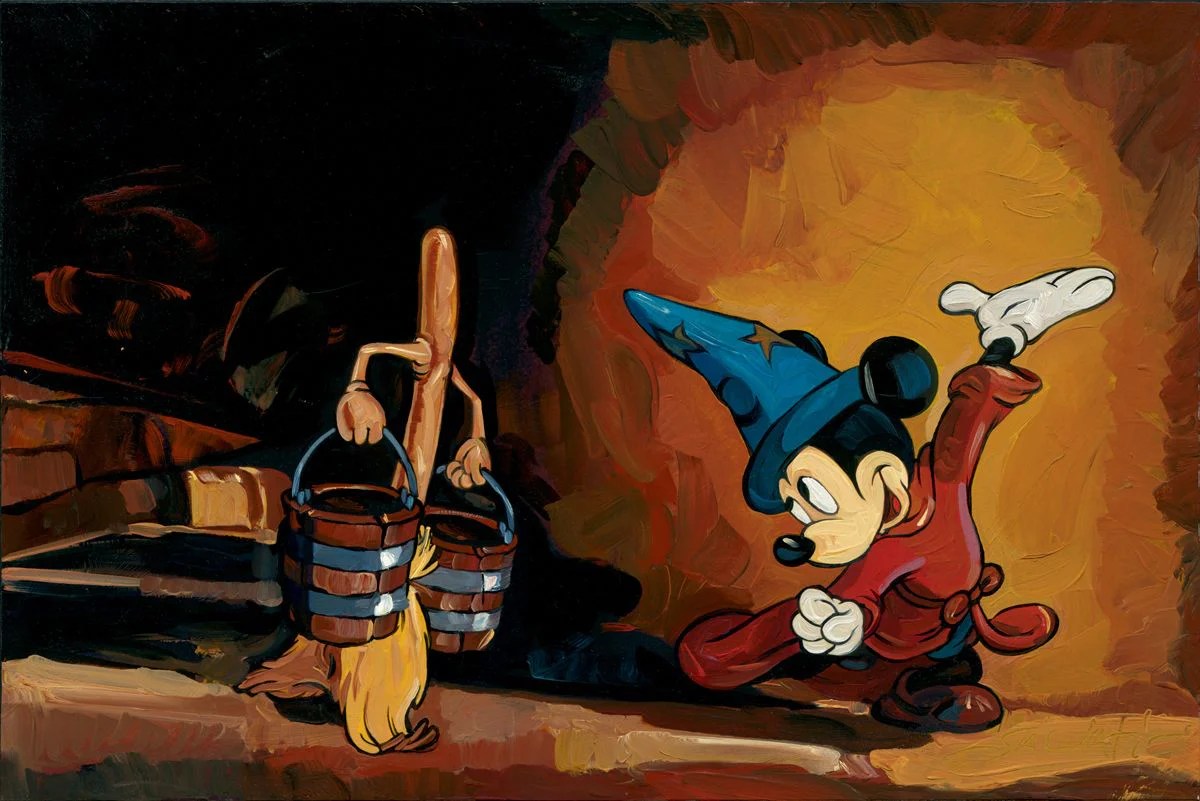
Greening’s skills in versification are well known and he deploys them all – and you can hear him enjoying himself – in ‘The Sorcerer’s Apprentice’: ‘Broomstick – up, it’s show time, haul your / glad rags on, so grey and grimy. / Seems you’ve seen long service, all you’re / fit for now is to obey me’. Though grace notes and fillers slow Goethe’s headlong verse (the opening line in German is simply ‘Und nun komm, du alter Besen!’ – ‘And now come on, you old broom!’), Greening’s rhyming is delightful and the modernising phrases (show time, glad rags) drive the poem along with a colloquial energy which is absolutely right.

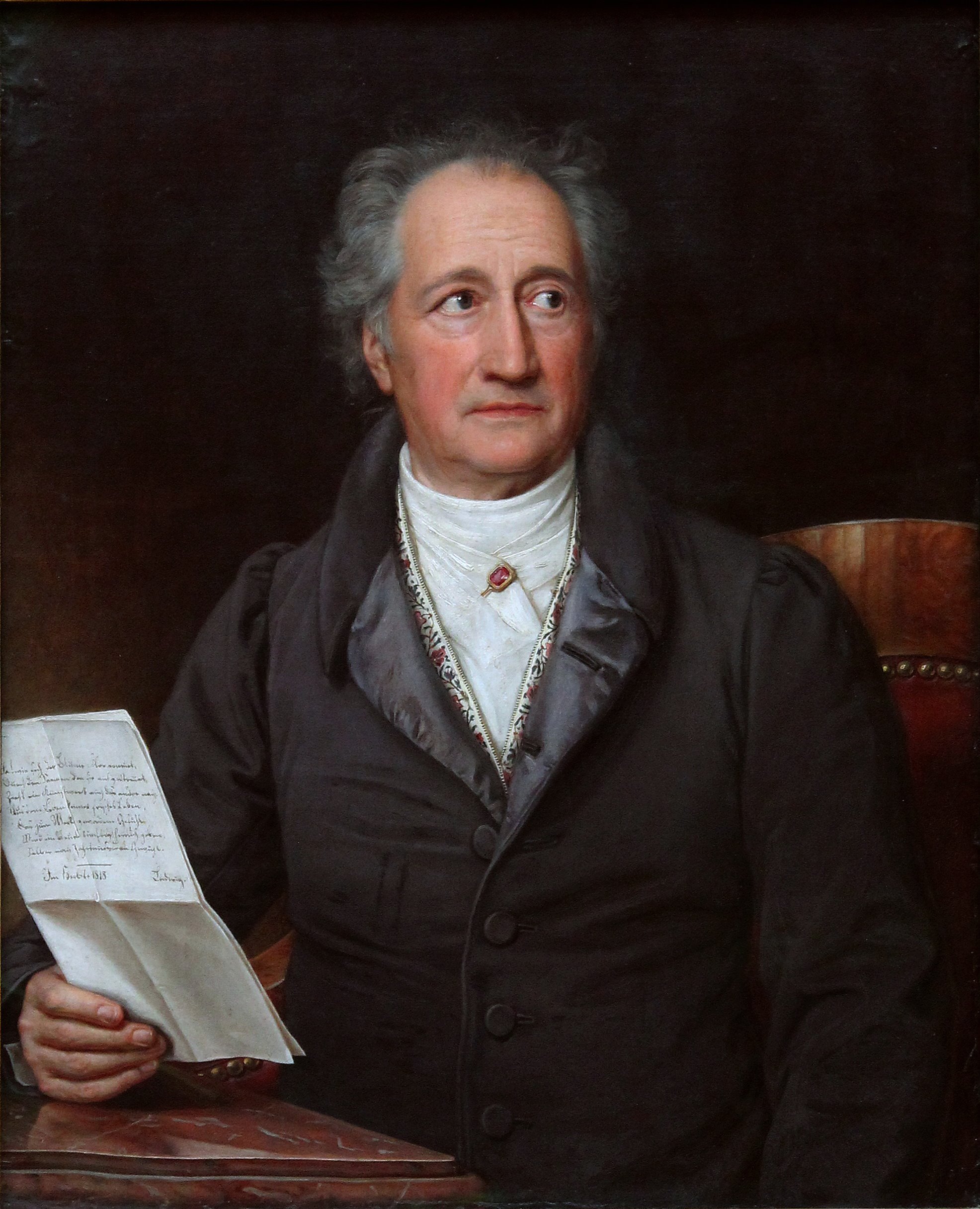
Goethe’s ‘Prometheus’ – published in 1789, the year of revolution in France – is a growling dramatic monologue in which the rebel Titan (who stole fire from the gods to give to humankind) sneers and mocks the authority figure, Zeus. He belittles the top god in the opening lines by comparing him to a boy, thoughtlessly knocking the heads off thistles. Greening catches the mocking tone in the series of rhetorical questions later in the poem: ‘Honour you? For what? / Have you ever offered to lift / this agony?’ Prometheus ends – following one version of his story – by explaining he is creating the human race in his own image, ‘a new range’ translates Greening, neatly updating once more, ‘programmed / to suffer and to weep, or whoop and punch the air – / but who, like me, won’t care / about you’. In comparison, Luke’s version sounds rather fusty and less bolshie: ‘A race that shall suffer and weep / And know joy and delight too, / And heed you no more / Than I do!’

Johann Wolfgang von Goethe

Goethe is a great love poet. ‘Welcome and Farewell’ (‘Willkommen und Abschied‘) has a man approaching on horseback (Greening does not motorise on this occasion) through a moonlit landscape and the lover is spied at last: ‘how / I’d dreamt of (not deserved) all this’. The moment of union passes unspoken between stanzas three and four. As if instantaneously, now ‘the sun had risen’ and the parting must take place: ‘And yet, to have been loved – to love, / ye gods, such utter happiness’. It’s curious that Greening retains the rather archaic ‘ye gods’. One still hears the phrase, of course, but with more irony than I would have imagined here. The fifth of Goethe’s ‘Roman Elegies’ is a fabulous erotic piece. Written during the poet’s travels to Italy in the late 1780s, the narrator is studying classical culture by day and his female lover’s body by night. The latter nourishes the former: ‘I find I appreciate marble all the better for it, / and see with a feeling eye, feel with a seeing hand’. As he goes on, ‘compare and contrast’, I find Greening a little cool here. There is a selection of translations by D M Black (Love as Landscape Painter, from FRAS Publications in 2006) which generates more heat:

Yet how is it not learning, to scan that delectable bosom,

  Or when I slither my hands pleasantly over her hips?

Then I understand marble; then I discover connections,

  See with a feeling eye, feel with a seeing hand.

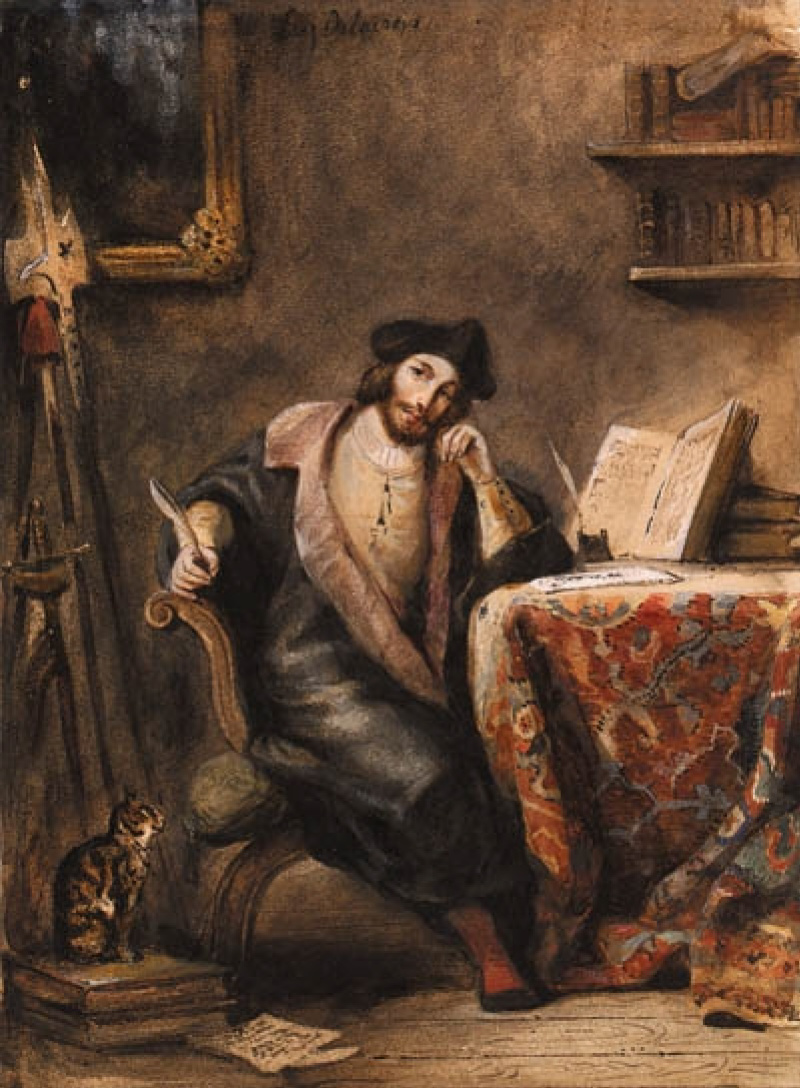
Faustus (by Eugene Delacroix)

Goethe’s Faust is represented here by the scholar’s opening speech to Part One (versioned, as it were, by Christopher Marlowe in the opening soliloquy of his Doctor Faustus). Greening excels in the handling of rhyme and line length, even compared to David Constantine’s 2005 Penguin translation. Perhaps most impressive of all is the sonnet ‘Nature and Art’ (‘Natur und Kunst’). Greening has the motor car in mind again in his updating of Goethe’s exploration of how the artist must labour incessantly to achieve the preparedness, the readiness to respond to Nature, to what is natural. Reading these lines, you feel Greening is translating as a skilled and experienced artist himself, triumphantly bringing a poem written in 1800 bang up to date:

It’s just a case of working long and late.

So once we’ve spent, let’s say, ten thousand hours

on steering, footwork, shifting through the gears,

it may be then some natural move feels right.

x

Creative though you be, you’ll strive in vain

to reach perfection if you’ve no technique,

however wired and woke your gifts may be.

x

You want a masterpiece? You’ll need to strain

those sinews, set your limits, drill and hack.

The rules are all we have to set us free.

For anyone yet to make the leap into Goethe-world, this little book is a terrific way into the great German writer’s work and such a reader will find Greening’s Introduction and his prefatory remarks to each of the chosen poems very helpful indeed. I recommend this collection.

My Three Desert Island Poems

As mentioned in a post earlier in June, I spent a few days around that time trying to choose just 3 poems that I might take with me to a speculative desert island. I was asked to do this by The Friday Poem website and they have now posted the results of my labours.

In the end I chose work by Coleridge, Edward Thomas and Rainer Maria Rilke. Of course, the latter has been on my mind a great deal in the last 12 months or so, as I have been working on a new selection and translation of his work (spanning his career from 1899 to his death in 1926). It so happens that I have just signed off the final draft of this book – all 200 pages of it – and it is scheduled for publication by Pushkin Press in the Spring of 2024.

As for that desert island, do follow the link below to read the full text of my ruminations which also includes links to my own readings of the Thomas and Rilke poems. Do explore the rest of the FRIP website – it’s full of great poems and reviews:

We are always saying goodbye – The Friday Poem

Pushkin Press Rilke book cover ready for Spring 2024

Greedy alpha-creatures: the poetry of Ulrike Almut Sandig

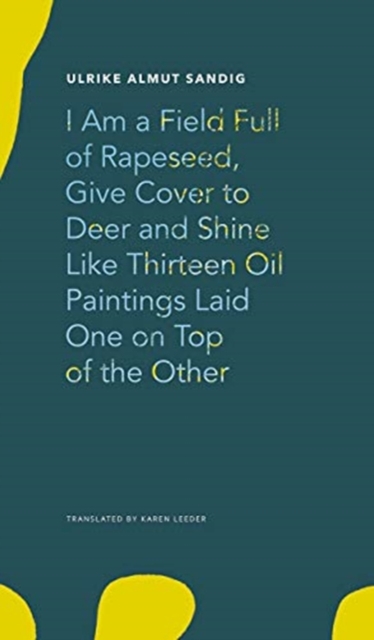
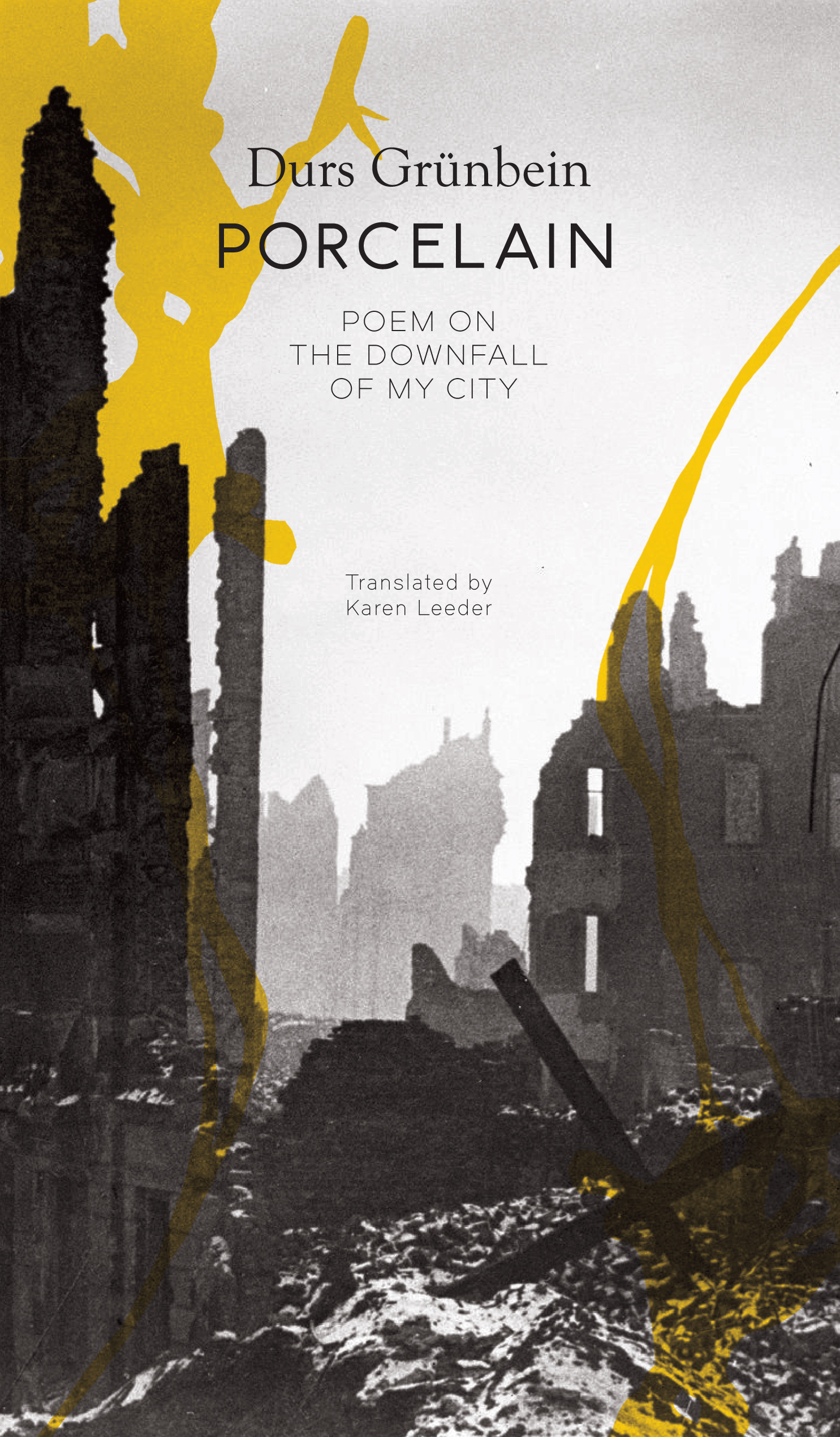
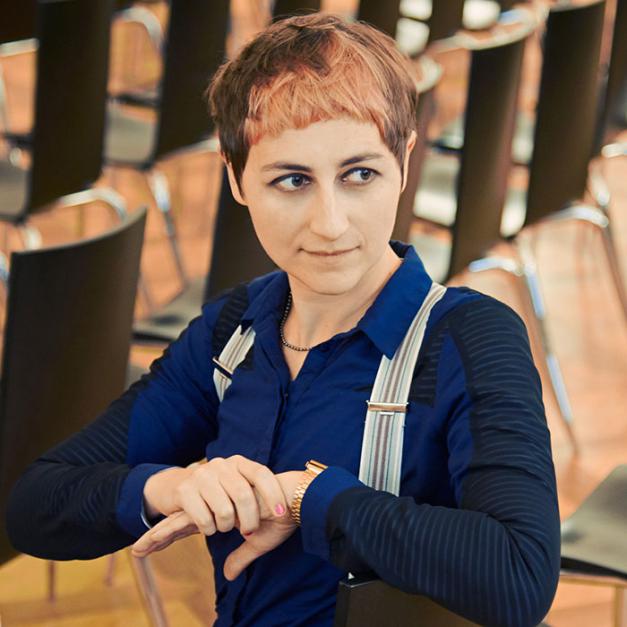
I’m shocked to realise that it is a full year since I posted my review of the stunning long poem, Porcelain, by the contemporary German poet, Durs Grünbein, in Karen Leeder’s equally impressive translation (Seagull Books, 2020). That review was originally commissioned for, and published in, Patricia McCarthy’s penultimate issue of Agenda (those who follow such things will know that Patricia has handed over the reins of the magazine to John Burnside who takes over with the resources of St Andrews behind him). In its original incarnation, the review was paired with my comments on another contemporary German poet’s work (again in Karen Leeder’s translation): this was Ulrike Almut Sandig’s 2016 collection, I Am a Field Full of Rapeseed, Give Cover to Deer and Shine Like Thirteen Oil Paintings Laid One on Top of the Other (Seagull, 2020). I am now posting my Sandig review as well, in part because I will be appearing with both Karen and Ulrike at the Ledbury Poetry Festival in a few days time. We will be talking about Rainer Maria Rilke’s great sequence, Duino Elegies (1923) as part of Peter Florence’s Dead Poets Society series. If you are in or around Ledbury on the morning of Saturday July 7th, do come along. Here’s the review . . .

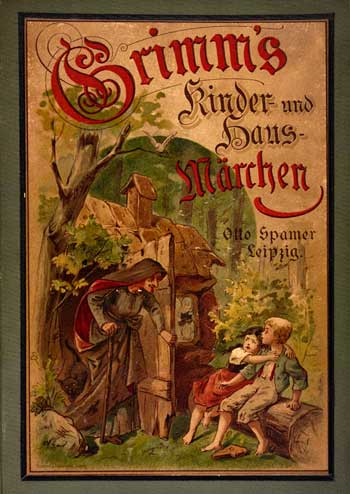
The eponymous figure from Grünbein’s sequence’s 11th poem,‘Hans im Glück’, draws on one of the stories in The Children’s and Household Tales of the Brothers Grimm (1812). In the original, Hans has anything of value taken from him, bit by bit, yet he remains optimistic, refusing to acknowledge reality. Within the context of Porcelain, Grunbein treats this is as an additional image of the myth of the city of Dresden as undeserving victim. Interestingly, the same figure appears in Ulrike Almut Sandig’s collection, but her presentation of Hans is more poignant, less ironic, as even the boy’s language is stripped from him and he tries to write a letter to a loved one: “what are you up to? // + esp: where r u? / ru ru // ru”. In the context of I Am a Field Full of Rapeseed… , the boy might be thought of as a refugee, forcibly having his culture and language stripped from him, though one of the strengths of the poem is that it also works as an updated fairy tale, a little myth of loss and diminished presence with more universal application. Such re-purposing of several of Grimm’s tales is one of the most striking things about this collection. Sandig announces in another poem, “we find ourselves deep in the future of fairy tale” (‘the sweet porridge’) and she, like Angela Carter before her, redeploys the fairy tale’s surreal narratives, bold characterisation, its humour and violence, its symbolism and moral intensity for her own purposes.

The other striking aspect of Sandig’s writing here is her bold linguistic and formal choices. There is an absence of punctuation, capitalisation, of poem titles (bolded phrases mid-poem often serve as titles), of conventional forms, of a clear lyric ‘I’, of plainly pursued narratives. This results in radically shifting ground for the reader which can be both bewildering and exciting. Several poems indicate these choices are firmly rooted in issues of epistemology and ideas concerning personal identity. So, the opening poem, ‘from the wings’, ambitiously sets out a complete life from ‘screaming’ beginning to its ‘silent’ conclusion. The interim is portrayed as all fluidity, ‘a stream that flows into others / while others again flow into it’. As much as there is any discrete self to be identified, ‘I am made wholly of language’, and the individual is a creature ‘that must speak / to understand itself’. The self is also one of many ‘fragile / greedy alpha-creatures’ and understands itself to be, ultimately, ‘a fluid tuning fork I am my own / song’. In the same vein, the book closes with ‘where I am now’, which sets the self metaphorically in some remote Arctic research station, a self that is at the same time a woman swimming in a municipal pool, moving freestyle through the water, ‘parting the water before me’, in an image of self-creation and open-ended exploration that, to some, will recall Eliot’s ‘Little Gidding’: “We shall not cease from exploration”.

This is, as it were, the metaphysical background to Sandig’s vision and it gives rise to poems like ‘I am the shadow for you to hide beneath’ in which the narrative voice celebrates just such fluidity of identity in an address to “friends”/readers that has the quality of Whitman’s “I contain multitudes” (Song of Myself, #51), though with a good deal more anxiety: “every morning I get up and don’t have a clue: / is it me, Almut? Ulrike?” This is also the poem containing the book’s full title, “I am a field full of rapeseed, give cover to deer / and shine like thirteen oil paintings laid one on top / of the other” and the poem goes on, in the name of radical fluidity, the I as landscape, huntress, a text that begins to unravel just as it reaches an end, a soldier, a girl, a woman. Elsewhere, ‘to be wood in a table’, as the title suggests, continues the theme: “not to be old and not to be young, but old / enough to be several things at once”. This includes the Rilkean desire for “simple things like ‘tree’” as well as the freedom of having no name, “no longer to say: ‘I am’”.

Ulrike Almut Sandig

Such poems are both celebratory in tone, but also alertly defensive. The reason is that there are forces abroad, ways of seeing and their associated politics that offer counter narratives. So, the expected calm of ‘lullaby for all those’ is really a call to arms, or at least a call to resist. It is “for all / those who put up a fight, when somebody / says: lights out, no more talking”. In a superb passage, once again Leeder’s translation of the German is brilliant, the forces of “DARKNESS” begin to emerge by implication:

we’re waiting for two

or three of those good, humming dreams

four peace treaties, five apples in deep sleep

we are waiting for six cathedrals and for

those seven fat cows, eight quiet hours

full of sleep, we’re waiting for nine friends

gone missing. we’re counting our fingers.

x

we’re still resisting. we won’t go to sleep.

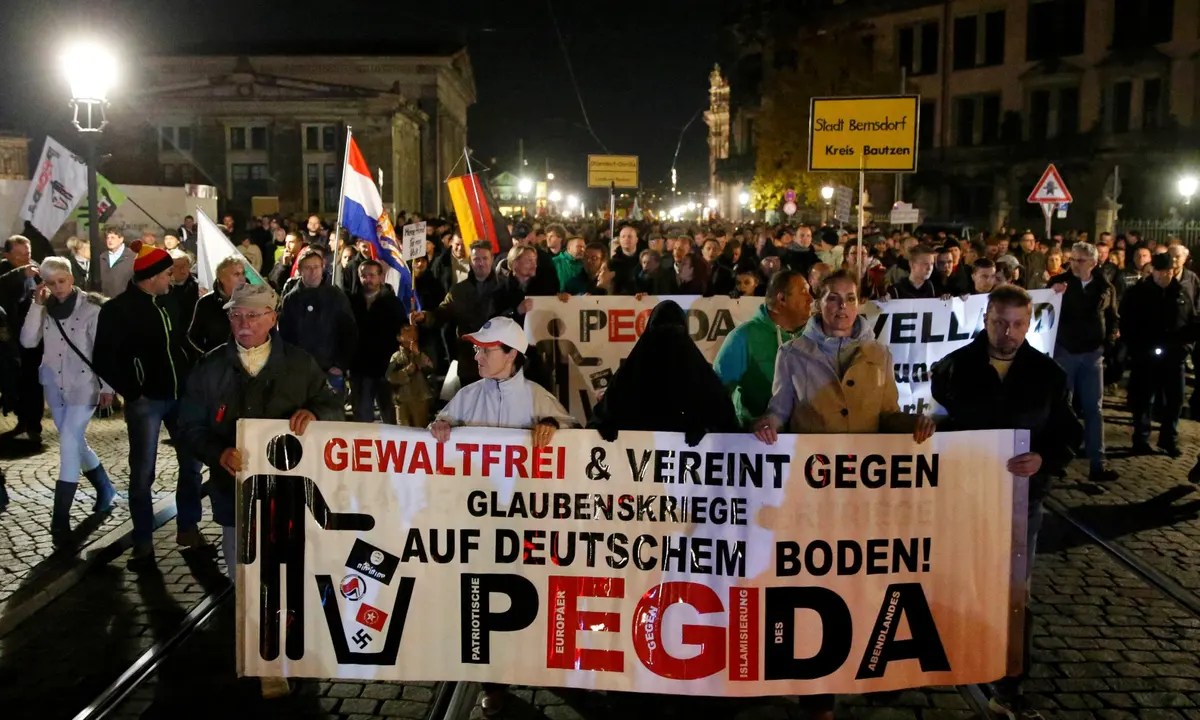
What is being resisted are the forces of repression, of fixity not fluidity, narrowness not breadth, fundamentalist conviction not open-endedness. Sandig places a poem in the centre of the book which draws heavily on statements made by Pegida, Germany’s populist, right wing, anti-immigration party. The text is full of rallying calls expressing a faith in clarity, mastery, resolution and purification: ‘from now on / nothing will stand in our way, no language / we cannot master, we will strike out mistakes / and shake each other’s freshly washed hands”. One of the Grimm’s sourced poems, a sister speaking to her brother, presents a narrative of the boy’s development into a threatening “hunter”. Such a poem looks both ways towards the violence of neo-Nazis, but also towards the violent radicalisation of young jihadists.

Sandig’s poems dealing more obviously with issues of state power, war, migration and displacement (especially hot topics in Germany, a country in the Schengen area of Europe and seen by some as an ideal destination – see the poem ‘tale of the land of milk and honey’) are particularly impressive. The ‘ballad of the abolition of night’ draws on details of systematic torture prosecuted by the USA, “a state lagging somewhat behind / on the historical timeline of our kind”. ‘instructions for flying’ revises statements made in leaflets distributed at the Idomeni refugee camp in 2016. The same camp, close to the borders of Greece, is the focus of another poem which expresses the poet’s “moral dismay”. The disquiet is partly at her own nation’s equivocations about the refugee crisis (what if there’s not a single / jot of good Deutsch to be found in this / Land of mine”) but also personally, at finding rhymes but ultimately doing “sweet FA”.

With Grunbein, Sandig is expressing the moral complexity in the face of man’s inhumanity to man as much as any simplistic moral dismay. This is, in part, the subject of some of the Grimm poems (interestingly, in German, the word ‘grimm’ means ‘anger, ire’). ‘Grimm’ itself opens optimistically, messages being scribbled onto raw eggs, but increasing urgency leads to extra pressure and the eggs break. Still, like Hans in luck, the narrator seems “unfazed in / the crumbling ruins” though the final image is only of eggs smashed, “a well-nigh limitless / supply of fragments and rage most grim”. But Sandig is an optimist, I think. Though couched in conditionals, ‘news from the German language, 2026AD’ works hard to portray a future of more settled diversity (Iraqi dates, Turkish honey, Syrian poetry). The opposing prospect is relegated to a parenthesis – if quite a long one. But hope has the final word: “if it works, we, that’s all of you and me, / will sing a lullaby, rhyme in unison [. . .] but more than that, we will be”.