I was taken by surprise last week when BBC Radio Three contacted me to let me know that a line of poetry from a piece I’d published in Beneath Tremendous Rain back in 1990 has been used as the starting point for a Slow Radio programme, broadcast on the 17th May 2019, but available here for a month or so.
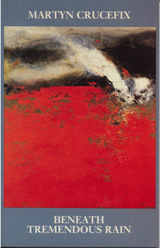
The connection was radio producer, Julian May, who I have worked with on several BBC radio programmes over the years. If you follow the link above, you’ll see Julian was responding to the opening two lines of the sequence of four poems which I will post in full below. His aim was to create a piece – ‘The Water’s Music’ – from recordings of the natural world.
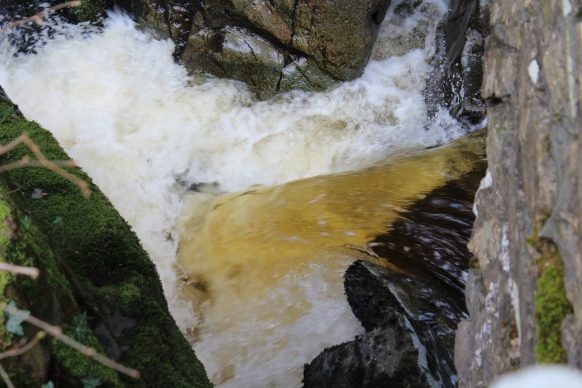
Do listen to the programme – it’s just 30 minutes in length and the first half of it consists of Julian and the sound artist and musician, Tim Shaw, splashing about in a Northumbrian burn to record the astonishing variety of sounds produced by it. This is all a little bit bonkers, of course, but the sense of the great outdoors, the evocation of the water’s flow – beside, across, above and below – is marvellous, and does what Slow Radio often does, opening out the listeners’ sensibility in a playful, vivid and open-ended fashion.
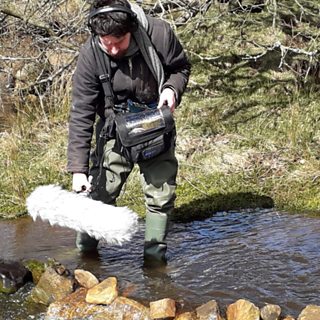
The final, edited piece begins at 15.30 if you wanted to listen to that bit alone. I found it curiously moving that a thought – and a form of words I had in mind so many years back – has now been given aural form. The ‘music’ is also brilliantly in keeping with the poem. As you’ll see below, the epigraph is a quote from Marc Chagall, putting a premium on fluidity as opposed to precision and the idea that the artist/writer’s role is to approach something which is really inexpressible is a core belief that has remained with me over the years. The culmination of this view of art (I can now see) is my version of the great Ancient Chinese classic text the Daodejing which I published with Enitharmon in 2016.
As expressed in the poem, water still remains a god for me – I can never pass a fishmonger’s stall without stopping to gaze at the “wealth of silver”. The interesting graveyard inscription in the second poem (“Your ship, my love, is now mored / hed and starn for a fuldiew”) seems to be there to represent the fixity that all the images of water are in contrast to. Its words still affect me greatly: the lover’s desire for the permanence of what is quintessentially human being gradually eroded by the rain and the years. I will have had Thomas Hardy partly in mind, I’m sure, although the inscription I think is probably one I saw in Ireland many years ago.

The third poem contains memories of the Canary Islands – the island of Gomera, much more of a tourist haunt now than it was back then – and of the English Lakes in the fictional waterfall of Swirl Force, surely a version of the (again much-visited) Aira Force, beside Ullswater Lake (the same lake that recently featured in the concluding poems of my blog-posted but as yet unpublished sequence ‘Works and Days of Division).
I’m now amazed at how ‘Daoist’ the fourth and closing poem seems. It is a shock – largely in the sense that perhaps one keeps on re-writing the same poem for a lifetime. The concluding lines certainly express a great deal about how I’ve viewed poetry in the ensuing years – a grasping towards something which I know will always remain elusive; but achieved only through language – that monument to the human wish for and effort to achieve greater control and precision – can something of the fluidity of what is real be evoked: “I carry something of water / that in my hands must leak away – see / its silver threads ceaselessly falling.”
Here’s the poem in full:
Water Music
Divine fluidity, now that is truly precise – Marc Chagall
1.
I am a potter whose habitation
is beside the water’s music.
Its glittering’s, its clear truckling’s
endless fascination for me
might be the pull of like to like,
the riptides and rivers of my
almost nothing but water body.
Someone has said it’s the lure
of oblivion, pressing me to bow
and snort the sharp stunning solid
of water into my head,
that with a brief flickering
of its long-fixed content
would scour my mind clean forever.
Perhaps. Or something still
unevolved, still amphibian, wanting
to be rid of this self-consciousness
that cripples me – to shiver
a moment with mother-of-pearl,
folding of currents, sands, slime,
the swordfight of refracted rays.
At least I know my fascination
for the fishmonger’s wealth of silver,
that he is a diversion I often make,
though I cannot catch
any message his charges bring.
2.
Water has always been a god.
I fell in love with it as a boy,
would sit close by with the dusk,
determined to hook from it specimens
and secrets, calling to it
with words I’d let no adult hear.
Its glassy voices broke out
though too obscurely for a reply.
On the flaming beach at Thalassa,
where the crumbling glint of waves
marks the sea’s edge, I once
wanted to meet it open-mouthed,
though not driven by any love
of the cold confines of the drowned.
I hoped that I might simply
receive the unbounded horizon.
At the graveyard there is a stone
set by a girl for her dead sailor:
Your ship, my love, is now mored
hed and starn for a fuldiew.
Below, the etched ship is lashed hard
to the quay – all else has grown
too old and faint to be understood.
The rain is rubbing her words away.
3.
Then it’s everywhere with beauty,
at one with the darkness and moonlight
of the old poets for it transports us.
But I’ve seen it bending an iron bar.
The quiet cowl of October’s fog confuses,
comes to question the formulations
we keep – like the traveler who told me:
the hills of Gomera disappear for days
till the rain washes its own window clear.
At Swirl Force, under whitening hammers
of waterfall, everything is broken loose
and then the clouds’ anchors are weighed
and the dance starts up over the water:
every swollen-cheeked changeling face
stares at itself and floats away
with its glimpse on the heart of things.
4.
In my coercive dreams, there I am
pouring water into every available bowl
and setting them down as finished works.
I will have things as I want them,
though it is clear from whatever place
the water comes the bowls suffice –
though set to the river, their contents
fly to its night, are lost completely.
The river takes all that comes.
The river gives all that there is.
For I am a potter whose habitation
is beside the water’s music, who is
driven to his creations just as
the river is to its own. When I clasp
the rounded belly of a brimming bowl
I carry something of water
that in my hands must leak away – see
its silver threads ceaselessly falling.
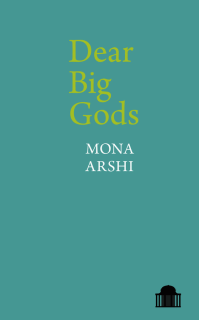 In a recent launch reading for her second collection, Dear Big Gods (Pavilion Poetry/Liverpool University Press, 2019), Mona Arshi suggested
 As the blurb suggests, these poems are indeed “lyrical and exact exploration[s] of the aftershocks of grief”. But ‘Everywhere’ adopts a little more distance and develops the kind of floating and delicate lyricism that Arshi does so well. The absent brother/uncle is still alluded to: “We tell the children, we should not / look for him. He is everywhere”. As that final phrase suggests, the rawness of the grief is being transmuted into a sense of otherness, beyond the quotidian and material. It’s when Arshi takes her brother’s advice and lets go of “definitive knowledge” that her poems promise so much. ‘Little Prayer’ might be spoken by the dead or the living, left abandoned, but either way it argues a stoical resistance: “I am still here // hunkered down”. In a more conventional mode, ‘The Lilies’ develops the objective correlative of the flowers suffering from blight as an image of a spoliation that hurts and reminds, yet is allowed to persist: “I let them live on / beauty-drained / in their altar beds”.
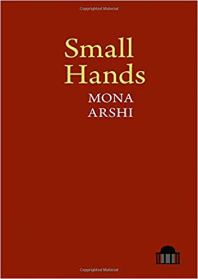 Arshi’s continuing love affair with ghazals also seems to me to be an aspect of this same search for a form that holds both the connected and the stand-alone in a creative tension. ‘Ghazal: Darkness’ is very successful with the second line of each couplet returning to the refrain word, “darkness”, while the connective tissue of the poem allows a roaming through woods, soil, mushrooms and a mother’s praise of her daughters. Poems based on – or at least with the qualities of – dreams also stand out. The doctor in ‘Delivery Room’ asks the mother in the midst of her contractions, “Do you prefer the geometric or lyrical approach?” In ‘The Sisters’ the narrator dreams of “all the sisters I never had” and within 10 lines Arshi has expressed complex yearnings about loneliness and protectiveness in relation to siblings and self.
 So, in ‘My Third Eye’, the narrator is “more perplexed than annoyed” that her own third eye – the mystical and esoteric belief in a speculative, spiritual perception – has not yet “opened”. The poem’s mode and tone is comic for the most part; there is a childish impatience in the voice, asking “Am I not as worthy as the buffalo, the ferryman, / the cook and the Dalit?”. But in the final lines, the holy man she visits is given more gravitas. He touches the narrator’s head “and with that my eyes suddenly watered, widened and / he sent me on my way as I was forever open open open”. The book also closes with the title poem, ‘Dear Big Gods’, which takes the form of a prayer: “all you have to do / is show yourself”, it pleads. The delicate probing of Arshi’s best poems, their stretching of perception and openness to unusual states of emotion are driven by this sort of spiritual quest. Personal tragedy has no doubt fed this creative drive but – as the poet seems to be aware – such grief is only an aspect of her vision and not the whole of it.
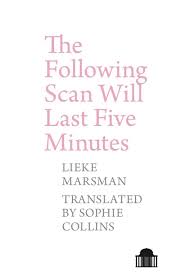 Lieke Marsman’s The Following Scan Will Last Five Minutes (Pavilion Poetry/Liverpool University Press, 2019) is an unlikely little gem of a book about cancer, language, poetry, Dutch politics, philosophy, the environment, the art of translation and friendship – all bound together by a burning desire (in both original author and her translator, Sophie Collins) to advocate the virtues of empathy. The PBS have chosen it as their Summer 2019 Recommended Translation.
 The sort of silence Lorde fears is evoked in the monitory opening poem. Its unusual, impersonal narration is acutely aware of the lure of sinking away into the “morphinesweet unreality of the everyday”, of the allure of self-imposed isolation (“unplugg[ing] your router”) in the face of the diagnosis of disease. What the voice advises is the recognition that freedom consists not in denial, in being free of pain or need, but in being able to recognise our needs and satisfy them: “to be able to get up and go outside”. It’s this continuing self-awareness and the drive to try to achieve it that Marsman hopes for and (happily) comes to embody. But it was never going to be easy and towards the end of the poem sequence, these needs are honed to the bone:
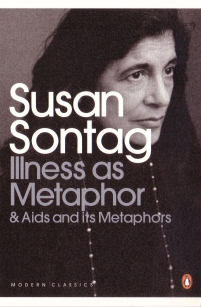 Marsman tells us she read Audre Lorde and Susan Sontag’s Illness as Metaphor after her operation and discharge from hospital. It’s Sontag who draws attention to the role of language in the way patients themselves and other people respond to cancer. Marsman asks herself: “Am I experiencing this cancer as an Actual Hell [. . .] or because that is the common perception of cancer?” The implied failure to achieve truly empathetic perception of the role and nature of the disease is echoed horribly in the empathetic failures and hypocrisies of Dutch politicians (UK readers will find this stuff all too familiar in our own politics). Prime Minister, Mark Rutte, blithely allocates billions of euros to multinationals like Shell and Unilever (on no valid basis) while overseeing cuts in health services. Marsman reads this as a failure to empathise with the ill. Another politician, Klaas Dijkhoff, reduces benefits on the basis that people encountering “bad luck” need to get themselves back on their own two feet. Bad luck here includes illness, disability, being born into poverty or abusive families, being compelled to flee your own country. Marsman’s own encounter with such ‘bad luck’ makes her rage all the more incandescent.
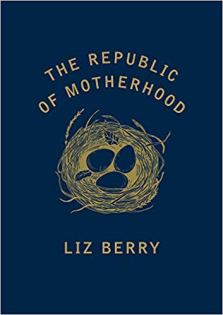
 It’s interesting then – in The Republic of Motherhood
 The mother in the poem also suffers postpartum depression and Berry seems here to allude to experiences of First World war soldiers, wounded, repaired and sent back out to fight again, without fundamental issues being addressed: “when I was well they gave me my pram again / so I could stare at the daffodils in the parks of Motherhood”. She ends up haunting cemeteries, both real and symbolic, and it is here she finds even more tragic victims of motherhood, of birth trauma and of psychosis. The final response of the poem is to pray – though it is a prayer that has scant sense of religion but combines empathy with other women with a great anger expressed in the phrase “the whole wild fucking queendom [of Motherhood]”. The paradoxically inextricable sorrow and beauty of motherhood becomes the subject of the rest of the pamphlet, but this poem ends with the mother echoing a baby’s “nightcry” and erasing her own self, “sunlight pixellating my face”. The poem’s rawness is unresolved. Having crossed the border into motherhood (that decision is never questioned here), the contradictory pulls of Motherhood (capital M) and the stresses of mothering (small m) have a devastating impact. In a recent poem called ‘The Suburbs’ – Berry’s contribution to the National Poetry Competition 40th Anniversary Anthology – she records the effect of mothering even more starkly: “my world miniaturised”.
 But such optimism is not a frequent note. Most of the remaining poems deal with the experience of depression in motherhood. ‘Early’ is almost as happy as it gets with mother and child now like “new sweethearts, / awake through the shining hours, close as spoons in the polishing cloth of dawn” (what a glorious image that is). But even here there are demands from the child that will need “forgiving” by the mother. One of these concerns her role as writer, particularly the difficulty of writing in the maelstrom of mothering: “every line I wanted to write for you / seems already written, read / and forgotten”. And this is why Berry chooses to co-opt lines from Charlotte Perkins Gillman’s terrifying story, The Yellow Wallpaper in ‘The Yellow Curtains’. Both texts can be read as studies of postpartum depression, but the despair has as much to do with the women as writers, confined, and – as in Gillman – the husband voices the demands and expectations of convention, of queendom: “He said [. . .] I must / take care of myself. For his sake.”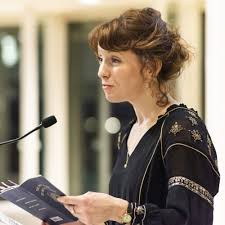
 In the summer of 2018, John Greening spent 2 weeks as artist-in-residence at the Heinrich Boll cottage in Dugort, Achill Island. The resulting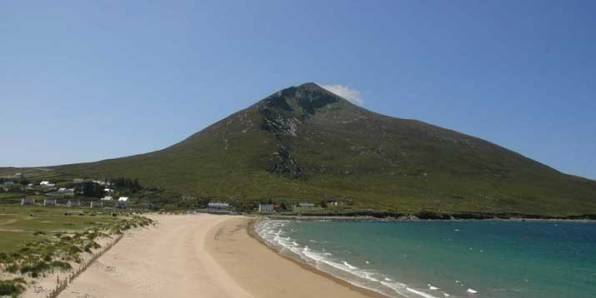
 One day around 1973/4, Ted Hughes bought or was given
 Ted Hughes began by modelling poems of his own closely on the work of the poet that Ramanujan places first in the collection, the 12th century Indian poet-saint, Basavanna. Early on Hughes adheres closely to the originals but gradually he distances himself, starting to create more original poems, often employing personal materials, and (as I have said) some of these little poems eventually found their way into the final section of Gaudete. The refrain and invocation that Basavanna uses in the majority of his poems is the address to Siva as “lord of the meeting rivers”. The influence of Robert Graves’ The White Goddess is well known on Hughes and he decided to experiment with addressing his own conception of the divinity – a female divinity – at once his muse and the fundamental animating force in the world, as “Lady of the Hill”.
 But as in the best poetry, such simplicity of language and tone belies the spiritual intentions of the originals and of Hughes’ experimental vacana poems too. As Ann Skea explains, in his turn, Hughes “becomes the spiritual bridegroom of the Lady of the Hill and struggles to be worthy of that union”. Unlike the original Indian poems, Hughes seems to see his Goddess in every human female and they are seen as testing and challenging the poet to further spiritual growth. In the end, just 18 of these experimental poems were chosen to form the Epilogue to Gaudete as the songs sung by the Reverend Nicholas Lumb on his return from the underworld: a man who had seen things and felt the need to communicate those things: “he saw the notebook again, lying on the table, and he remembered the otter and the strange way it had come up out of the lough because a man had whistled. He opened the notebook and began to decipher the words, he found a pen and clean paper and began to copy out the verses”.


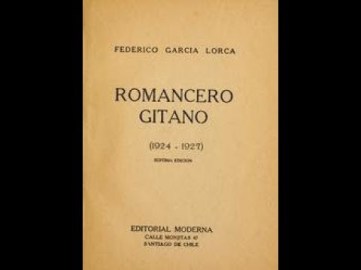
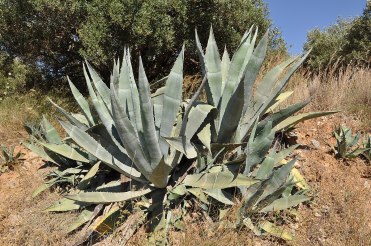 The next section of the poem displays some of Lorca’s startling, surprising images: the “stars of frost”, the “fish of shadows”, the fig-tree’s “sandpaper branches”, the mountain is a “a thieving cat” that “bristles its sour agaves”. These are good examples of Lorca’s technique with metaphor: to place together two things which had always been considered as belonging to two different worlds, and in that fusion and shock to give them both a new reality. But these lines are perhaps really more about raising the narrative tensions in the poem through rhetorical questions such as, “But who will come? And where from?”
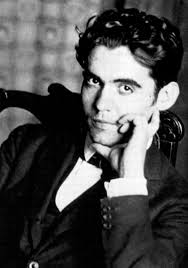 So up they climb. We don’t know why, but the atmosphere here is dripping with ill omen: they are “leaving a trail of blood, / leaving a trail of tears”. Then there is another of Lorca’s images yoking together unlikely items. As they climb to the roof-tiles, there is a trembling or quivering of “tiny tin-plate lanterns” and perhaps it’s this that becomes the sound of a “thousand crystal tambourines / [that] wound the break of day”. Lorca himself chose this image to comment on in his talk. He says if you ask why he wrote it he would tell you: “I saw them, in the hands of angels and trees, but I will not be able to say more; certainly I cannot explain their meaning”. I hear Andre Breton there, or Dali refusing to ‘explain’ the images of the truly surreal work. In each case the interpretative labour is handed over to us.
 Did they know this? It appears not. But who is she? Daughter? Lover? Both? Is this really what the two men find there? For sure, there is some mystery about the chronology because the seeming explanation of the killing is couched as a flashback: “The dark night grew intimate / as a cramped little square. / Drunken Civil Guards / were hammering at the door”. But Lorca often plays fast and loose with verb tenses. Was this earlier? Were they in search of the rebellious youth? But they found his girl-friend? Hanging her on the rooftop? Is the house owner her father? Does he know what has happened? Is this why his house is not his own anymore? Is this why he is no more what he was?
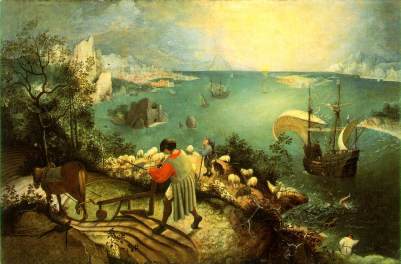 The only certain thing is that the poem does not reply. It ends with a recurrence of that opening yearning – now it’s read as a more obviously grieving voice – though it’s not necessarily to be read as the young man’s voice. It’s the ballad voice, the one I took so long to really grasp in Lorca’s work. It is a voice involved and passionate but with wider geographical, political and historical horizons beyond the individual incident. Like Auden’s ploughman in ‘Musee des Beaux Arts’, glimpsing Icarus’ fall from the sky, yet he must get on with his work, ‘Sleepingwalking Ballad’ returns us in its final lines to the wider world:
 The gateway to Richard Scott’s carefully structured first book is one of the most conventional poems in it. It’s a carefully punctuated, unrhymed sonnet. It is carefully placed (Public Library) and dated (1998). It’s the kind of poem and confinement Scott has fought to escape from and perhaps records the moment when that escape began: “In the library [. . .] there is not one gay poem, / not even Cavafy eyeing his grappa-sozzled lads”. The young Scott (I’ll come back to the biographical/authenticity question in a moment) takes an old copy of the Golden Treasury of Verse and writes COCK in the margin, then further obscene scrawls and doodles including, ironically a “biro-boy [who] rubs his hard-on against the body of a // sonnet”. Yet his literary vandalism leads to a new way of reading as – echoing the ideas of Eve Kosofsky Sedgwick – the narrator suddenly sees the “queer subtext” beneath many of the ‘straight’ poems till he is picking up a highlighter pen and “rimming each delicate / stanza in cerulean, illuminating the readers-to-come . . .”
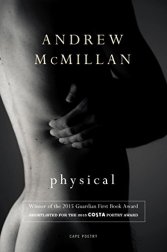


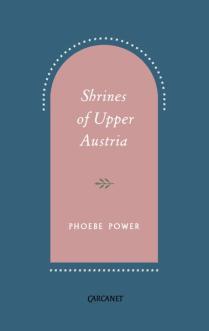
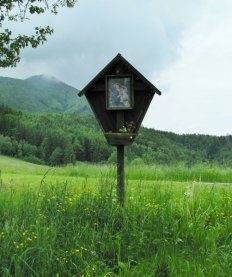
 You will have gathered that one of Power’s things is to mix English and Austrian German. This happens several times in ‘A Tour of Shrines of Upper Austria’ (though in this book we only get 7 parts of the full sequence). An observer stops at various shrine sites, jotting down some thoughts and taking a picture or two. Nothing is developed though Power’s poems do show an interest in religion on several other occasions. ‘The Moving Swan’ opens with a centre-justified prose description of candles flickering in a cathedral and another poem is drawn to the grave of two goats, observing: “two heaps of ivy/straw / one unlit red tealight”. And ‘Epiphany Night’ is a more extended series of notes recording a local celebration with bells, dressing-up, boats, lanterns. This is all observed in loosely irregular lines by the narrator from her “wohnung” (apartment). To wring all engagement or emotional or imaginative response from such a text is, I suppose, quite an achievement but to spend 70-odd pages in such company really is wearisome.


 Martyn Crucefix