via “Sounds how the cutting of time might”: O. at the Edge of the Gorge by Martyn Crucefix
Author: martyn crucefix
‘The Water’s Music’ as poem and Slow Radio
I was taken by surprise last week when BBC Radio Three contacted me to let me know that a line of poetry from a piece I’d published in Beneath Tremendous Rain back in 1990 has been used as the starting point for a Slow Radio programme, broadcast on the 17th May 2019, but available here for a month or so.
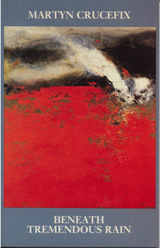
The connection was radio producer, Julian May, who I have worked with on several BBC radio programmes over the years. If you follow the link above, you’ll see Julian was responding to the opening two lines of the sequence of four poems which I will post in full below. His aim was to create a piece – ‘The Water’s Music’ – from recordings of the natural world.
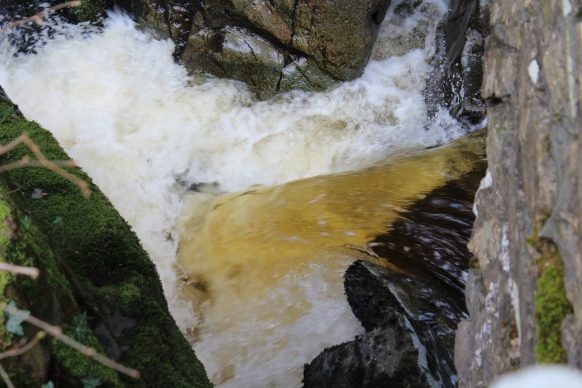
Do listen to the programme – it’s just 30 minutes in length and the first half of it consists of Julian and the sound artist and musician, Tim Shaw, splashing about in a Northumbrian burn to record the astonishing variety of sounds produced by it. This is all a little bit bonkers, of course, but the sense of the great outdoors, the evocation of the water’s flow – beside, across, above and below – is marvellous, and does what Slow Radio often does, opening out the listeners’ sensibility in a playful, vivid and open-ended fashion.
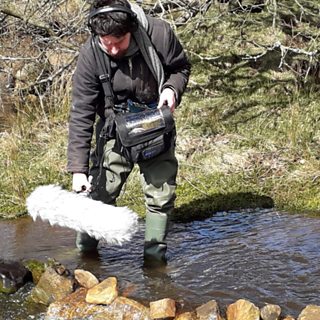
The final, edited piece begins at 15.30 if you wanted to listen to that bit alone. I found it curiously moving that a thought – and a form of words I had in mind so many years back – has now been given aural form. The ‘music’ is also brilliantly in keeping with the poem. As you’ll see below, the epigraph is a quote from Marc Chagall, putting a premium on fluidity as opposed to precision and the idea that the artist/writer’s role is to approach something which is really inexpressible is a core belief that has remained with me over the years. The culmination of this view of art (I can now see) is my version of the great Ancient Chinese classic text the Daodejing which I published with Enitharmon in 2016.
As expressed in the poem, water still remains a god for me – I can never pass a fishmonger’s stall without stopping to gaze at the “wealth of silver”. The interesting graveyard inscription in the second poem (“Your ship, my love, is now mored / hed and starn for a fuldiew”) seems to be there to represent the fixity that all the images of water are in contrast to. Its words still affect me greatly: the lover’s desire for the permanence of what is quintessentially human being gradually eroded by the rain and the years. I will have had Thomas Hardy partly in mind, I’m sure, although the inscription I think is probably one I saw in Ireland many years ago.

The third poem contains memories of the Canary Islands – the island of Gomera, much more of a tourist haunt now than it was back then – and of the English Lakes in the fictional waterfall of Swirl Force, surely a version of the (again much-visited) Aira Force, beside Ullswater Lake (the same lake that recently featured in the concluding poems of my blog-posted but as yet unpublished sequence ‘Works and Days of Division).
I’m now amazed at how ‘Daoist’ the fourth and closing poem seems. It is a shock – largely in the sense that perhaps one keeps on re-writing the same poem for a lifetime. The concluding lines certainly express a great deal about how I’ve viewed poetry in the ensuing years – a grasping towards something which I know will always remain elusive; but achieved only through language – that monument to the human wish for and effort to achieve greater control and precision – can something of the fluidity of what is real be evoked: “I carry something of water / that in my hands must leak away – see / its silver threads ceaselessly falling.”
Here’s the poem in full:
Water Music
Divine fluidity, now that is truly precise – Marc Chagall
1.
I am a potter whose habitation
is beside the water’s music.
Its glittering’s, its clear truckling’s
endless fascination for me
might be the pull of like to like,
the riptides and rivers of my
almost nothing but water body.
Someone has said it’s the lure
of oblivion, pressing me to bow
and snort the sharp stunning solid
of water into my head,
that with a brief flickering
of its long-fixed content
would scour my mind clean forever.
Perhaps. Or something still
unevolved, still amphibian, wanting
to be rid of this self-consciousness
that cripples me – to shiver
a moment with mother-of-pearl,
folding of currents, sands, slime,
the swordfight of refracted rays.
At least I know my fascination
for the fishmonger’s wealth of silver,
that he is a diversion I often make,
though I cannot catch
any message his charges bring.
2.
Water has always been a god.
I fell in love with it as a boy,
would sit close by with the dusk,
determined to hook from it specimens
and secrets, calling to it
with words I’d let no adult hear.
Its glassy voices broke out
though too obscurely for a reply.
On the flaming beach at Thalassa,
where the crumbling glint of waves
marks the sea’s edge, I once
wanted to meet it open-mouthed,
though not driven by any love
of the cold confines of the drowned.
I hoped that I might simply
receive the unbounded horizon.
At the graveyard there is a stone
set by a girl for her dead sailor:
Your ship, my love, is now mored
hed and starn for a fuldiew.
Below, the etched ship is lashed hard
to the quay – all else has grown
too old and faint to be understood.
The rain is rubbing her words away.
3.
Then it’s everywhere with beauty,
at one with the darkness and moonlight
of the old poets for it transports us.
But I’ve seen it bending an iron bar.
The quiet cowl of October’s fog confuses,
comes to question the formulations
we keep – like the traveler who told me:
the hills of Gomera disappear for days
till the rain washes its own window clear.
At Swirl Force, under whitening hammers
of waterfall, everything is broken loose
and then the clouds’ anchors are weighed
and the dance starts up over the water:
every swollen-cheeked changeling face
stares at itself and floats away
with its glimpse on the heart of things.
4.
In my coercive dreams, there I am
pouring water into every available bowl
and setting them down as finished works.
I will have things as I want them,
though it is clear from whatever place
the water comes the bowls suffice –
though set to the river, their contents
fly to its night, are lost completely.
The river takes all that comes.
The river gives all that there is.
For I am a potter whose habitation
is beside the water’s music, who is
driven to his creations just as
the river is to its own. When I clasp
the rounded belly of a brimming bowl
I carry something of water
that in my hands must leak away – see
its silver threads ceaselessly falling.
‘Sis, you gotta let go’: on Mona Arshi’s ‘Dear Big Gods’
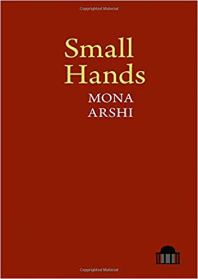
 In a recent launch reading for her second collection, Dear Big Gods (Pavilion Poetry/Liverpool University Press, 2019), Mona Arshi suggested it was a book she wrote only reluctantly. Her first book, Small Hands (2015), had at its centre a number of poems in memory of her brother, Deepak, who died unexpectedly in 2012. On her own admission, these new poems continue to be imbued with this grief and – though poets surely always write the book that needs to be written – there is a sense that the development of the new work has been stalled by such powerful feelings. My 2015 review of Small Hands saw Arshi as “an intriguing writer, potentially a unique voice if she can achieve the right distance between herself and her powerful formative influences”. The influences I had in mind then were literary rather than personal, but I find the lack of distance travelled between the earlier and this more recent work rather disappointing.
In fact, Deepak’s death is the explicit subject on only a few occasions. The poem ‘When your Brother Steps into your Piccadilly, West Bound Train Carriage’ isn’t much longer than its own title but it evokes that familiar sense of (mis-)seeing our dead in a public place. The emotions remain raw, from the accusatory “how-the-fuck-could-you?” to the final “I am sorry, I’m so sorry”. A dream or daydream meeting is also the basis for ‘A Pear from the Afterlife’ in which the brother’s affectionate tone advises, “Sis, you gotta let go / of this idea of definitive knowledge”. ‘Five Year Update’ is by far the most extended of these reflections on the brother’s passing, written in very long raking lines (rotated 45 degrees to stretch vertically on the page). “I hope it’s fine to contact you”, it opens and goes on to recall the moment the news of his death was received (see also ‘Phone Call on a Train Journey’ from Small Hands), remembers their childhood together and the sister’s continuing life: “I’ve gone down one lump not two, I still don’t swim and yes I still can’t / take a photograph”.
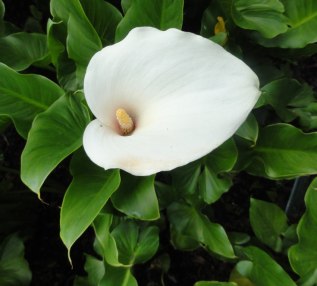 As the blurb suggests, these poems are indeed “lyrical and exact exploration[s] of the aftershocks of grief”. But ‘Everywhere’ adopts a little more distance and develops the kind of floating and delicate lyricism that Arshi does so well. The absent brother/uncle is still alluded to: “We tell the children, we should not / look for him. He is everywhere”. As that final phrase suggests, the rawness of the grief is being transmuted into a sense of otherness, beyond the quotidian and material. It’s when Arshi takes her brother’s advice and lets go of “definitive knowledge” that her poems promise so much. ‘Little Prayer’ might be spoken by the dead or the living, left abandoned, but either way it argues a stoical resistance: “I am still here // hunkered down”. In a more conventional mode, ‘The Lilies’ develops the objective correlative of the flowers suffering from blight as an image of a spoliation that hurts and reminds, yet is allowed to persist: “I let them live on / beauty-drained / in their altar beds”.
Like so many first books, Small Hands experimented with various poetical forms. This book also – a bit wilfully – tries out tanka, poems in two columns, right justification, centre justification, ghazals, inter-cut texts, prose poems, a sestina, an Emily Dickinson parody and responses to Lorca and The Mahabharata. They don’t all work equally well and Arshi perhaps senses this in lines like these:
My little bastard verses
tiny polyglot faces
how light you are
how virtually weightless
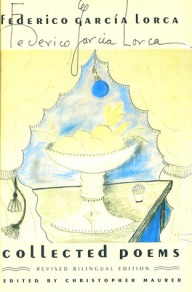
The irony may be that this sort of form and reach actually does show Arshi at her best. The sequence of tiny poems modelled on Lorca’s ‘Mirror Suite’ (1921-1923) is fascinating. Jerome Rothenburg, discussing Lorca’s poems, describes them as possessing “a coolness & (sometimes) quirkiness, a playfulness of mind & music that I found instantly attractive”. These same qualities – as with Lorca, a version of surrealism, a firm but gentle turning aside from “definitive knowledge” – I enjoy in Arshi’s work as she explores states of the heart and realms of knowledge not ordinarily encountered or encompassed. Dear Big Gods contains other such Lorca-esque sequences such as ‘Autumn Epistles’, ‘Grief Holds a Cup of Tea’ and ‘Let the Parts of the Flower Speak’ and these are far more interesting than the poems drawn from The Mahabharata or the experiments in prose.
 Arshi’s continuing love affair with ghazals also seems to me to be an aspect of this same search for a form that holds both the connected and the stand-alone in a creative tension. ‘Ghazal: Darkness’ is very successful with the second line of each couplet returning to the refrain word, “darkness”, while the connective tissue of the poem allows a roaming through woods, soil, mushrooms and a mother’s praise of her daughters. Poems based on – or at least with the qualities of – dreams also stand out. The doctor in ‘Delivery Room’ asks the mother in the midst of her contractions, “Do you prefer the geometric or lyrical approach?” In ‘The Sisters’ the narrator dreams of “all the sisters I never had” and within 10 lines Arshi has expressed complex yearnings about loneliness and protectiveness in relation to siblings and self.
Given the traumatic disruption of her own, it’s no surprise that Arshi’s most frequently visited subject area is family relationships. I’ve referred to several of these poems already and ‘Gloaming’ floats freely through the fears of losing a child, the care of an ageing father, a mother “entering/leaving through a narrow lintel” and the recall of the “thick soup of our childhood”. The soup works well both as literal food stuff and as metaphor for the nourishing, warming milieu of an up-bringing, though the girl who looks up at the end of the poem is already exploring questions of identity. She asks, “where are you from, what country are we in?” Given Arshi’s own background – born to Punjabi Sikh parents in West London – such questions have obvious autobiographical and political relevance, though I sense Arshi herself is also asking questions of a more spiritual nature.
 So, in ‘My Third Eye’, the narrator is “more perplexed than annoyed” that her own third eye – the mystical and esoteric belief in a speculative, spiritual perception – has not yet “opened”. The poem’s mode and tone is comic for the most part; there is a childish impatience in the voice, asking “Am I not as worthy as the buffalo, the ferryman, / the cook and the Dalit?”. But in the final lines, the holy man she visits is given more gravitas. He touches the narrator’s head “and with that my eyes suddenly watered, widened and / he sent me on my way as I was forever open open open”. The book also closes with the title poem, ‘Dear Big Gods’, which takes the form of a prayer: “all you have to do / is show yourself”, it pleads. The delicate probing of Arshi’s best poems, their stretching of perception and openness to unusual states of emotion are driven by this sort of spiritual quest. Personal tragedy has no doubt fed this creative drive but – as the poet seems to be aware – such grief is only an aspect of her vision and not the whole of it.

Poem as MRI Scan: Lieke Marsman’s ‘The Following Scan Will Last Five Minutes’
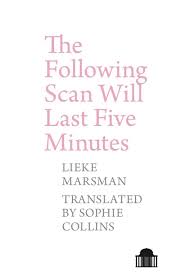 Lieke Marsman’s The Following Scan Will Last Five Minutes (Pavilion Poetry/Liverpool University Press, 2019) is an unlikely little gem of a book about cancer, language, poetry, Dutch politics, philosophy, the environment, the art of translation and friendship – all bound together by a burning desire (in both original author and her translator, Sophie Collins) to advocate the virtues of empathy. The PBS have chosen it as their Summer 2019 Recommended Translation.
It’s Audre Lorde who is the presiding spirit here, the woman with whom Marsman is in most frequent conversation. Lorde’s The Cancer Journals (1985) recorded her response to the disease: a sharpened realisation – an underlining – of life’s transience and, consequently, a more acute sense of “act[ing] out of it”. She also refused to allow her response to the disease to “fossilise into yet another silence, nor to rob me of whatever strength can lie at the core of this experience”. Marsman (and her translator Sophie Collins) takes up this challenging baton to produce a busy, intelligent, funny, chatty and touching sequence of poems, an autobiographical essay and 10 concluding letters from Collins, the whole text responding to Marsman’s own diagnosis of chondrosarcoma at the age of 27.
 The sort of silence Lorde fears is evoked in the monitory opening poem. Its unusual, impersonal narration is acutely aware of the lure of sinking away into the “morphinesweet unreality of the everyday”, of the allure of self-imposed isolation (“unplugg[ing] your router”) in the face of the diagnosis of disease. What the voice advises is the recognition that freedom consists not in denial, in being free of pain or need, but in being able to recognise our needs and satisfy them: “to be able to get up and go outside”. It’s this continuing self-awareness and the drive to try to achieve it that Marsman hopes for and (happily) comes to embody. But it was never going to be easy and towards the end of the poem sequence, these needs are honed to the bone:
There is nothing I need to see
Except, again and again,
A new day with you
Marsman’s poems are usually very free in form, sparsely punctuated and (unlike the opening poem) give the impression of an intimate address by a sensitive, self-aware, curious and well-educated woman. This makes the moments of frank disclosure even more powerful: “I am just so scared of disappearing [. . .] I desperately need to hear / from other sufferers”. The vitality in the poems belies the exhaustion of the ill person who lacks the energy even to sort her recycling, who watches “Eurosport replays / of alpine skiing” all afternoon and for whom tying her own shoelaces becomes “the stuff of poetry!” Such rapid shifts of tone are important in conveying the resilience of the patient – more than that they suggest the true nature of the individual who is (this is Marsman’s point) more than a mere patient.
It’s this restless interest in the world that accumulates slowly to portray the individual and – against all the odds – makes this book such a pleasurable read. The poems are only partly about cancer or rather cancer is only part of what the poems are interested in. We hear fragments of conversations (‘Identity Politics Are a Fad, You Say’), then meditations on irrationality and evolution and luck. ‘Treats’ ends with thoughts about Wittgenstein’s ideas concerning language games (“Whereof one cannot speak, thereof one must be silent”) but ends with Marsman’s characteristic blend of intelligence, self-awareness, humour and pathos:
Whereof one cannot speak,
Thereof one forms silent gestures
Or bursts into tears.

Elsewhere, the individual’s interest is swept up into gender politics, multiculturalism, reality TV shows, upscale housing developments and the political hypocrisy of the Dutch state. In the autobiographical essay that follows the poems, Marsman explains: “I had to write about politics in order not to be totally subsumed by the cancer”. This also meant she was continuing to preoccupy herself with things that interested her before the diagnosis. It also had the effect of taking her out of herself (cancer, she says, “hurls you into yourself”). Such an interest in the multiplicity and variousness of the Other proves a beneficial way out of “a very lonely experience”.
This is the point about empathy made more systematically in the prose section which is pointedly titled ‘How Are You Feeling?’ In the final lines, Marsman puts it plainly: “What I do know is that the suffering of others is not something to be judged, ever, and that the right question to ask someone who is going through something difficult [. . .] is not ‘What’s in this for me?’ but ‘How are you feeling?’” This might seem to have the air of obviousness about it, but the preceding pages have documented depressing numbers of counter examples. The initial prose sections provide a pretty straight account of a young successful woman who sees the only likely danger for her as stress and “burn-out”. It makes her – and many of the medical practitioners she initially sees about a painful shoulder – fail to see there is a serious problem. On re-reading, I began to see this also as a failure of empathy, a failure to listen in to one’s own body. And there are certainly signs that Marsman (and Collins in her later letters) see the medical profession’s slow up-take as partly due to a lack of true empathy: “not only your age but your gender had an impact on the way you were perceived and treated”.
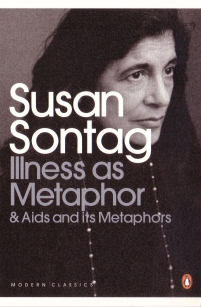 Marsman tells us she read Audre Lorde and Susan Sontag’s Illness as Metaphor after her operation and discharge from hospital. It’s Sontag who draws attention to the role of language in the way patients themselves and other people respond to cancer. Marsman asks herself: “Am I experiencing this cancer as an Actual Hell [. . .] or because that is the common perception of cancer?” The implied failure to achieve truly empathetic perception of the role and nature of the disease is echoed horribly in the empathetic failures and hypocrisies of Dutch politicians (UK readers will find this stuff all too familiar in our own politics). Prime Minister, Mark Rutte, blithely allocates billions of euros to multinationals like Shell and Unilever (on no valid basis) while overseeing cuts in health services. Marsman reads this as a failure to empathise with the ill. Another politician, Klaas Dijkhoff, reduces benefits on the basis that people encountering “bad luck” need to get themselves back on their own two feet. Bad luck here includes illness, disability, being born into poverty or abusive families, being compelled to flee your own country. Marsman’s own encounter with such ‘bad luck’ makes her rage all the more incandescent.
Marsman’s texts are about 35 pages long in this Pavilion Poetry edition. The remainder of the book consists of Sophie Collins’ letters. This might look like padding but the letters not only raise interesting points (particularly about the practice of translation) but are at one with Marsman’s pleas for a social fabric that enables “mutual, consensual and willing exchange[s]” between its citizens and its power structures. The epistolary form has this sort of open, empathetic exchange at its heart. In fact, the phrase I’ve just quoted is from Collins’ discussion of translation. She argues against the idea of ‘fidelity’ in translation because of the implied power relationship in such a word: “‘fidelity’; implies the presence of a primary source of power”. Traditionally, this would be located in the source text or source author; a power to which the (secondary) translator must defer. Collins wants to propose a more equal partnership, one she wants to call ‘intimacy’: “a mutual, consensual and willing exchange between two or more subjects without referencing (an) authority at all”.
Translation as an act of intimacy seems right to me, though it might appear easier to achieve this with a living source author than a dead one. But Collins really means “developing a sincere engagement with the source text, author and culture”, a ‘getting close’, so – quoting Gayatri Chakravorty Spivak – the translator actually “speak[s] from inside”. This is a timely re-statement of a view of translation that, in these days where versioning and textual appropriation is so common, can be lost sight of. Collins goes even further here than the great Michael Hamburger, who was in the habit of saying the translator puts herself at the service of the source text. Collins sees the practical reality, that any translator herself is always going to be “fixed in a particular moment [. . .] will never, ever be a neutral entity” so however much we serve our source, the translator must always be bringing something of herself too: translation is an intimate engagement, a series of negotiations, an on-going drama of the most complex empathies.
Collins points out that this view of translation is one particularly fitting for the kind of work presented in this book. Marsman’s voice has the marvellous accessibility and liveliness of a conversation: “there is a deep intimacy in the way you seek to connect with your audience [. . .] the amount of credit you give your readers”. Her writing is both “accessible and smart”, says Collins, and this is just right. I might also add ‘uplifting’ – not only because Marsman’s personal prognosis looks good but because between them these two authors have produced a remarkable hybrid sort of book, grown from the astonishingly rich soil of empathetic response to others, expressive of a range of human intimacies as well as a variety of angers at the way individuals – and society – too easily succumb to blinkered self-interest and self-immuration.
Nightcries: Liz Berry’s Motherhood Poems
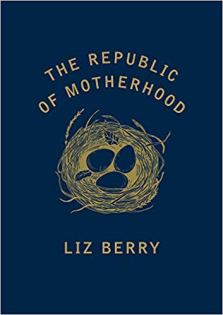
One of my very first reviews here – in August 2014 – was of Liz Berry’s Black Country. I was so impressed with the ways in which she exerted “pressure to counter the hegemonies of language, gender, locality, even of perception”. Most obviously she was doing this through the use of her own Black Country dialect, but I thought a more profound aspect of this was how “so many poems unfold[ed] as processes of self-transformation”; transgressive energies were being released through language, the erotic, myth-making and the surreal. The earlier book concluded with poems anticipating the birth of a child and – at the time – I felt these were less startlingly good, inclined to fall into ways of saying that the rest of the collection so triumphantly avoided.
 It’s interesting then – in The Republic of Motherhood (Chatto, 2018) – to read more of Berry’s poems written since then, since the birth of her two sons and after a period of relative creative silence (more of that later). I nominated six stand-out poems from Black Country that I felt would establish her reputation – and the title poem of this pamphlet must be added to that list. It’s the most political of the fifteen poems and is propelled by the tensions located between motherhood as social norm or expectation and the personal/social grain of that particular experience. The paradox of the opening lines is that entering into the republic of motherhood (shades of Seamus Heaney’s 1987 The Haw Lantern, with its ‘From the Republic of Conscience’), the mother also discovers a monarchy, a “queendom, a wild queendom”. Much of the poem lists the realities of early motherhood – the night feeds, the smelly clothes, the exhaustion, the clinics and queues – a great democracy of women taking up a particular role. But there are signs too of an external compulsion, a set of expectations to be lived up to. The mother is expected to play the queen too as she pushes her pram down “the wide boulevards of Motherhood / where poplars ben[d] their branches to stroke my brow”. The public role of motherhood comes with demands: “As required, I stood beneath the flag of Motherhood / and opened my mouth although I did not know the anthem”. As much as any new parent feels woefully inadequate and ignorant of the needs of their young child, the young mother is faced with additional social expectations about instinct, affection, abilities and fulfilment which are quite impossible to realise. And on this point, there remains a conspiracy of silence: “[I] wrote letters of complaint / to the department of Motherhood but received no response”.
 The mother in the poem also suffers postpartum depression and Berry seems here to allude to experiences of First World war soldiers, wounded, repaired and sent back out to fight again, without fundamental issues being addressed: “when I was well they gave me my pram again / so I could stare at the daffodils in the parks of Motherhood”. She ends up haunting cemeteries, both real and symbolic, and it is here she finds even more tragic victims of motherhood, of birth trauma and of psychosis. The final response of the poem is to pray – though it is a prayer that has scant sense of religion but combines empathy with other women with a great anger expressed in the phrase “the whole wild fucking queendom [of Motherhood]”. The paradoxically inextricable sorrow and beauty of motherhood becomes the subject of the rest of the pamphlet, but this poem ends with the mother echoing a baby’s “nightcry” and erasing her own self, “sunlight pixellating my face”. The poem’s rawness is unresolved. Having crossed the border into motherhood (that decision is never questioned here), the contradictory pulls of Motherhood (capital M) and the stresses of mothering (small m) have a devastating impact. In a recent poem called ‘The Suburbs’ – Berry’s contribution to the National Poetry Competition 40th Anniversary Anthology – she records the effect of mothering even more starkly: “my world miniaturised”. Listen to Liz Berry talk about and read this poem here.
After the tour de force of ‘The Republic of Motherhood’, the pamphlet takes a more chronological track. ‘Connemara’ seems to mark the moment of conception as a moment of self-abandonment (“I threw the skin to the wind, / sweet sack”) which, in the light of the preceding poem, takes on greater ironies of naivety: “Let them come, / I thought, / I am ready.” One of the joys of Berry’s work is her sense of the animal-physicality of the human body (revel in ‘Sow’ from Black Country) and ‘Horse Heart’ figures a ward of expectant mothers as a farmyard stable: “the sodden hay of broken waters, / each of us private and lowing in our stalls”. She captures the high anticipation and potentially brutal arrival of the all-demanding babies as a herd of horses; “the endless running / of the herd, fear of hoof / upon my chest”. These two poems can be read here.

Birth itself, in ‘Transition’, is to be feared (“I wanted to crawl into that lake at Kejimakujik”) and gotten through in part by absenting oneself into the past in ‘The Visitation’. The latter is addressed to Eloise, a figure who appeared in a Black Country poem, ‘Christmas Eve’. Here, a schoolgirl memory of a loving encounter with Eloise takes the narrator away from the pains of contractions, “as my body clenched and unfurled”. ‘Sky Birth’ is the one poem that challenges the brilliance of ‘The Republic of Motherhood’. It takes the image of climbing a mountain to evoke the physical pain and endurance required (Berry welcomes all those traditional associations with spiritual climb and progress), yet the poem never loses its sense of the real situation. The breathlessness of the climb suddenly flips back to the mother howling “over the voice of the midwife, the beeping monitors”. It is the figurative climb as much as the literal pain of giving birth that makes her “retch with the heights” and in the final moments, the mountaineer is “knelt on all fours” as most likely was the mother-to-be. The height is reached in a moving conceit:
when it came it came fast, a shining crown
through the slap of the storm,
for a second we were alone on that highest place
and love, oh love,
I would have gladly left my body
on that lit ledge for birds to pick clean
for my heart was in yours now
and your small body would be the one to carry us.
That final plural personal pronoun reminds me of a comment made by Jonathan Edwards in reviewing this pamphlet. Edwards wonders briefly about the absence of the father figure. Is the ‘us’ here the mother and child? Or is this one of the few references in the pamphlet to both parents?

I hope this is not just a male reviewer’s concern. It may be an artistic or political decision on Berry’s part. Or a personal one. But given the thrust of much of the work – that mothering is an utterly taxing and even deranging experience – I’m troubled by the father figure’s absence, if only in that it risks representing the idea (the toxic flip-side to the expectations laid on the mother) that fathers need have little part to play. The father does appear in the final poem, ‘The Steps’, though the questioning tone and syntax casts doubt over what of the parents’ relationship will survive the experience of the child’s arrival: “Will we still touch each other’s faces / in the darkness”. I also wonder if the father figure is implied in the image of a boy riding his bike up Beacon Hill in ‘Bobowler’. This is a beautiful poem on the image of a moth (‘bobowler’ is the Black Country word for a moth). The moth is a messenger, coming to all “night birds”. The boy on the bike is one such, his heart “thundering / like a strange summer storm” which perhaps echoes those thundering hooves of the approaching young child. Perhaps there is some recognition here that the father’s world too will be turned upside down. And the message the bobowler brings may also relate to the parental relationship: “I am waiting. / The love that lit the darkness between us / has not been lost”.
 But such optimism is not a frequent note. Most of the remaining poems deal with the experience of depression in motherhood. ‘Early’ is almost as happy as it gets with mother and child now like “new sweethearts, / awake through the shining hours, close as spoons in the polishing cloth of dawn” (what a glorious image that is). But even here there are demands from the child that will need “forgiving” by the mother. One of these concerns her role as writer, particularly the difficulty of writing in the maelstrom of mothering: “every line I wanted to write for you / seems already written, read / and forgotten”. And this is why Berry chooses to co-opt lines from Charlotte Perkins Gillman’s terrifying story, The Yellow Wallpaper in ‘The Yellow Curtains’. Both texts can be read as studies of postpartum depression, but the despair has as much to do with the women as writers, confined, and – as in Gillman – the husband voices the demands and expectations of convention, of queendom: “He said [. . .] I must / take care of myself. For his sake.”
‘So Tenderly It Wounds Them’ is a more public account of the trials of young motherhood, of women who “are lonely/ though never alone”, women who find themselves “changed / beyond all knowing”, waking each morning only to feel “punched out by love”. The more recent poem ‘The Suburbs’ also contains the same paradox that motherhood is a state of “tenderness and fury”. ‘Marie’ seems to record a debt to a supportive female friend and it is only through the ministering (that seems the apt word) of “women in darkness, / women with babies” in ‘The Spiritualist Church’ that the young mother’s despair has any hope of being redeemed. Redeemed, not solved, of course: what the women argue is that “love can take this shape” and perhaps it Berry’s sense of art, or her personal experience, or a recognition of human resilience, or a final succumbing to a traditional narrative, that makes her place ‘Lullaby’ as the penultimate poem. It ends sweetly though the final poem sends us back to the start of it all – the dash to the hospital. So Berry book-ends this little gem of a collection with time shifts that argue motherhood’s simultaneous complexity of animal and human love as well as its pain and awful boredom and personal diminishment.
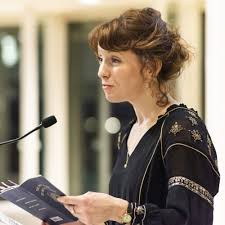
John Greening’s Achill Island Sonnets
 In the summer of 2018, John Greening spent 2 weeks as artist-in-residence at the Heinrich Boll cottage in Dugort, Achill Island. The resulting Achill Island Tagebuch is a sequence of 24 Shakespearean sonnets, in the mode of Boll’s own Irisches Tagebuch – a journal, day book, or diary – and is an elegant, yet often roundly colloquial record of Greening’s communings with self, landscape and literary influences. As he says, there is as much of “what I dreamt as what I did” and there is a finely judged cocktail here of the island’s life of countryside, tourism and local bars, plus the artistic presence of Boll himself, but also Yeats, Heaney, John. F. Deane, Dennis O’Driscoll, Lady Gregory and Dermot O’Byrne (the latter being composer Arnold Bax in his poetic mode).
Greening’s long-established deftness with poetic form is on full display here but it is the (seeming) ease of encompassing that is so impressive. The hedgerows of “trickling fuschia” and the “decayed tooth” of Slievemore are conjoined with be-helmeted cycling jaunts, ill-informed tourists and European research students, while the writer frets about whether the Muses are going to turn up or the disturbing nature of his own dreams – all this alongside more newsworthy items like forest fires on the Greek mainland, Brexit (of course), the discovery of water on Mars and the release of the new Mission Impossible film.
The opening sonnet warns us to keep our wits about us with a possibly ghostly visitation by Boll himself which transmutes – on the edge of sleep perhaps, on the radio maybe – into the voice of Seamus Heaney recalling his school days. The beauty of the landscape seems charged with much symbolism and significance and we seem to be shown the narrator poetically dashing off in search of a “signal”, some objective correlative perhaps, or a more direct communication from a higher sphere. In fact, the “signal” he’s after is just a WIFI one – the Boll cottage has no internet connection – and he bathetically tracks one down finally at the local bar where the password is buyadrink. Perhaps this tension between the expectations of arcane Romantic symbolism and a more down-to-earth enjoyment of minute particulars can be traced back to the two key presences in this pleasurable sequence of poems: Yeats and the German, Nobel-prize-winning Boll himself, who in one poem is felt to cast his “dry, benign inspection” over the poet’s own words.
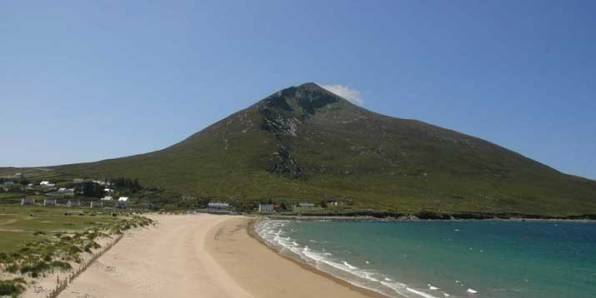
‘Blue Flag’ opens with Yeats fully in evidence: “On Golden Strand sounds Yeatsian enough”. But the landscape is so “penny-perfect” one’s first thought is to take a photo and post it on Facebook’s “show- / and-tell, the hell that’s other people’s holidays”. Yet the narrator sticks with his Yeatsian model and, in alluding to that poet’s 1914 collection Responsibilities, he tries to get himself back on track: “I’m here to write, / and waves break into words”. And words linked to landscape – in ways characteristic of Greening, a poet so attuned to the power of music – are found to turn to the musical notes of a poem draft: “On Golden Strand / I touch a silent fingerboard of sand”.
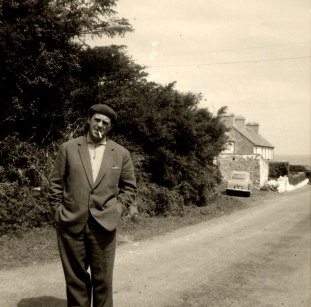
Yeats also provides the title for the tenth sonnet, ‘A Vision’ and, though the view of Slievemore seems appropriate, the poem’s opening lines set about debunking anything too aspirational. The fit and healthy young may be keen to “climb / and conquer” such heights but the narrator/poet suffers with his “medieval knees” and is mercifully free of the desire to try the ascent. I can hear Boll being channelled in these lines:
Let it be there
because it’s there. Pain will be no less real
among bandaging clouds.

Greening’s sonnet forms are presented in 14 line blocks and he often runs through quatrain divisions to achieve a fluidity of thought, reflecting the mind’s energy, moving and connecting one thing to another. He also tends to play fast and loose with the traditional volta. So there are few moments of mannered pausing and this again gives the sense of the pressure of things needing to be recorded in a diaristic fashion. The shift in ‘A Vision’ comes halfway through line 8 as the narrator grudgingly admits to feeling something of the allure of misty mountain uplands, particularly when they are “theatrically lit”:
I can be driven
to dress up, drawn towards their footlit dream
like a painted hero, as if I’d been given
a walk-on through the dense mythologies
in one of Lady Gregory’s short plays.
In contrast, Boll’s dry, attentive, inspector’s gaze seems more evident in a poem like ‘Eine Familie’. Here Greening’s 14 lines combine outer observations, inner thoughts, awkward dialogue and self-deprecating humour as the preoccupied artist-in-residence (he’s just been to the grocery store) meets a family of bike-riding tourists. The opening line treats them to the single poetic figure in the whole poem, while the rest of the quatrain establishes the wry, stilted quality of the encounter:
Like bright, caged birds they’re perching on their bikes
beside the plaque. I manage to sound jolly.
‘A fan of Heinrich Boll?’ The father speaks
with a certain awkwardness. ‘Not really.’
Dialogue is also vividly presented in ‘Dooagh’, though on this occasion the talk is fragmented, full of lacunae, because of the racket of a wake taking place in the bar where the narrator attempts conversation with two people, both called Kevin.
Another line comes through,
from a second Kevin, a Vietnamese
translator. I grasp at it, and try to say
how once . . . Boat people . . . refugees . . . but the seas
of song and sentiment must have their way.
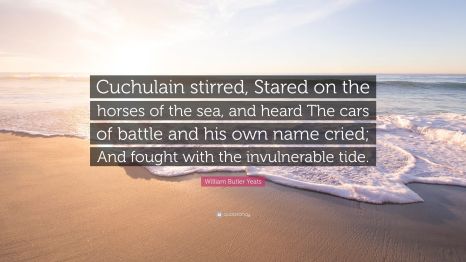
A contrastingly more quiet and creative kind of music is in evidence in ‘Accompaniment’. As in ‘Blue Flag’, this is again the music of the ocean that plays constantly “at [his] left hand” as the narrator sits and writes with his right. The kind of artistic success this facilitates is clear in the best poem in the book, ‘Cuchulain’. The title alludes to one of Yeats’ favourite mythological figures, as in the early poem ‘Cuchulain’s Fight with the Sea’ in which he wrestles against “the invulnerable tide”. After earthing the sonnet in particularity – a brief dip in the ocean at Keel Beach – Greening’s thoughts turn to his father’s love of swimming, this particular family’s memory/mythology preserved on old cine film. The fluidity and ease of the handling of these sonnets pays dividends here. Crossing a belated volta, the poem begins deeper reflections on the father-son relationship: “I never fought with him. Should we have done?” Within a couple of lines, we seem to have a portrait of unspoken tensions, perhaps a taciturn son and a stoical father who was not inclined to “rave as infirmities kept coming on / in wave upon wave.” As old age took its toll, it seems the option of a heroic struggle a la Cuchulain (or as urged in Dylan Thomas’s ‘Do Not Go Gentle Into that Goodnight’) was not taken up. The son is pained by his father’s choice of resignation (if choice it was) and it is the irredeemable nature of time and personal extinction that strikes the deepest note in this superbly intelligent, delightfully readable and lovingly produced limited edition from Red Fox Press.

“The renovation near Sansepolcro” di Martyn Crucefix (trad. Abele Longo), dal primo numero di Menabò, su Imperfetta Ellisse

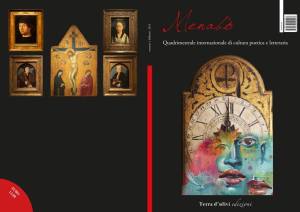
Ringrazio Giacomo Cerrai che, in occasione dell’uscita del primo numero di Menabò, rivista internazionale di cultura poetica e letteraria, edita da Terra d’ulivi edizioni, ha pubblicato su Imperfetta Ellisse la mia traduzione di una poesia, “The renovation near Sansepolcro”, di Martyn Crucefix. Il mio articolo su Menabò include la traduzione di un’altra poesia, “The Lovely Disciplines”, di Crucefix e un’intervista all’autore.
A.L.
 Martyn Crucefix
This Thing Called Bhakti: Vacanas and Ted Hughes
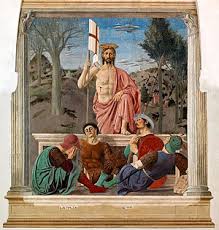
Sometime before 2015, I picked up an old copy of a Penguin Classics book called Speaking of Siva. Originally published in 1973, I liked the cover (a wonderfully rhythmic, eleventh century bronze figure of Siva as god of the dance) and flicking through it I liked the look of the brief, irregularly-lined poems inside. I lack a god but feel an appetite for the spiritual and, since my excitement and delight in translating the Daodejing texts for Enitharmon, I am always looking for something to feed that hunger. I found the poems inspiring (I was not the first to do so) and especially early in 2016 I wrote versions and impromptu original poems ‘in the style of’. These were laid aside for a couple of years, but I have recently returned to them – partly under pressure from the historical moment we find ourselves in, living in this most disunited of kingdoms. I hope to publish some of the results soon. Meantime, I was astounded later to discover the influence of this same little book on Ted Hughes. Here’s that story . . .
 One day around 1973/4, Ted Hughes bought or was given A.K. Ramanujan’s just-published Penguin Classics collection of translations entitled, Speaking of Siva. Ramanujan was presenting to the English-speaking world a collection of free verse lyrics written in India around the 10/12th century. Hughes quickly wrote to his friends, Daniel Weissbort and Lucas Myers, urging them to read the book as well. A notebook survives with Hughes’ many creative responses to these still relatively little-known poems. Jonathan Bate has argued that Hughes found these poems attractive because they “squared the circle of being both depersonalised (tapping into the divine, the mythic, the archetypal patterns) and highly personal: “They are uttered, not through a persona or mask, but directly in the person of the poet himself”” (Bate, p. 338 and quoting Ramanujan).
Hughes later wrote to Ekbert Faas that he had first read Ramanujan’s translations after suffering from a chronically sore throat for about a year. He suspected that he might have cancer and “began to write these vacanas as little prayers”. Some of these poems are the only parts of Gaudete (1977) to be selected for Hughes’s Collected Poems (2003). The language of these poems is lean and starkly beautiful often addressing the theme of transformation in violent and graceful modes, often ambiguously autobiographical:
Once I said lightly
Even if the worst happens
We can’t fall off the earth.
And again I said
No matter what fire cooks us
We shall be still in the pan together.
And words twice as stupid.
Truly hell heard me.
She fell into the earth
And I was devoured.
(Gaudete, pp.181/2)
The term ‘vacana’ means something spoken, speech, or a word uttered, as in our phrase ‘my word is my bond’. And vacana poems consist mostly of simple, direct, honest speech – they have no formal metre or rhyme, and very little punctuation – and they present themselves as spontaneous, authentic, plain engagements with the divinity, in deliberate contrast to more established channels of worship. As Ramanujan’s title suggests, they are written to the god Siva and – at least start out from – the ideal of a mystical relationship or process of becoming one with the god or the divine Creative Source.

So they are a form of worship, the devotee speaking directly and truthfully to the god as one might speak to another person – a husband or wife – using natural, colloquial language to express love and devotion, but significantly they also give vent to anger, puzzlement and despair. The poems are full of repetitions, refrains and paradoxes and, although they are spontaneous and passionate and grounded in common everyday experiences and images, there is a spiritual meaning in their worldly metaphors. One common element of repetition is the naming of the God – for Dasimayya this is “O Ramanatha”, for Mahadeviyakka it is “O lord white as jasmine”. Another frequent trope is a concern about the inadequacy of language; no words or image or metaphor can adequately describe the mystery of the god. Above all, vacana poems are intensely personal forms of religious devotion which not only avoid formal creeds, rituals and dogma but frequently criticize such orthodoxy as misguided, superstitious and hypocritical.
So Basavanna’s poem #494 rejects traditional poetic devices for a plain and direct authenticity: “I’ll sing as I love”. Even so, as Ann Skea points out, “he also argues, pleads, demands, questions and berates. He acknowledges that a price must be paid in order that he may be worthy of this union, but he complains that he does not understand why he is treated so badly or know what, exactly, is required of him”. Ramanujan’s Introduction describes the spiritual development of such devotees as moving from devotion, through discipline and knowledge, to enlightenment and ecstasy and, finally, to complete union with the divinity or creative source. In making this ascent, the Indian poet-saints frequently considered themselves as husbands or wives of the god. Ann Skea again: “They dedicated their lives to their god, and became worldly brides or bridegrooms struggling to achieve the spiritual perfection which would allow them to become wholly one with the god. Constantly, they strove for that spiritual union; and worldly unions are seen in their vacanas as unfaithfulness to their spiritual spouse”.

One of these vacana writers was the female poet-saint, Mahadeviyakka who defied social, cultural and gender conventions. For her, especially, ‘marriage’ to Siva meant that any relationship with a human male was adultery. ‘My lord, white as jasmine, is my husband’, she writes (Mahadeviyakka #283). Elsewhere, ‘I cannot take / any man in my arms but my lord’ (Mahadeviyakka #93). In fact, unfaithfulness was a common metaphor in Indian vacanas for the frail individual’s neglect of the divinity for more worldly things. But there are also warnings of the dangers of the commitments involved in becoming the bride or groom of a divine being. If, like a shaman, you have been called and you have accepted that call, there can be no going back. Basavanna gives due warning to those who might not survive: ‘Don’t you take on / this thing called bhakti [devotion]’ (#212). Such are the difficulties of any bridegroom or bride who is utterly devoted to a wife or husband whom he struggles either to please or fully understand. And this, of course, reflects the difficult quest for spiritual enlightenment in a world which makes demands on us and distracts us at every moment.
 Ted Hughes began by modelling poems of his own closely on the work of the poet that Ramanujan places first in the collection, the 12th century Indian poet-saint, Basavanna. Early on Hughes adheres closely to the originals but gradually he distances himself, starting to create more original poems, often employing personal materials, and (as I have said) some of these little poems eventually found their way into the final section of Gaudete. The refrain and invocation that Basavanna uses in the majority of his poems is the address to Siva as “lord of the meeting rivers”. The influence of Robert Graves’ The White Goddess is well known on Hughes and he decided to experiment with addressing his own conception of the divinity – a female divinity – at once his muse and the fundamental animating force in the world, as “Lady of the Hill”.
The linguistic directness and simplicity of the vacana lyrics was clearly important to Hughes. They possessed the “swift, living voice of the oral style . . . a bare, point-blank, life-size poetry that hardly exists in English” which Hughes always admired though did not always write himself. This description comes from Hughes’ comments on Isaac Bashevis Singer in the New York Review of Books (1965). The vacana poems also possessed the rhythms of folk song, traditional folk tales and riddles. Their influence seems to have returned him to the kind of spontaneous inspiration and style of address that he used in the oldest poem that he always reprinted, ‘Song’. In that poem (written when Hughes was just 19 years old), after each of the 5 or 6 line stanzas, the poet cries out, “O my lady”. Hughes reported to Ekbert Faas that this poem was written in a “close and natural” style, one that he had used early in his career but had since “neglected”. It is also close to the directness of style of the Crow poems of 1970.
 But as in the best poetry, such simplicity of language and tone belies the spiritual intentions of the originals and of Hughes’ experimental vacana poems too. As Ann Skea explains, in his turn, Hughes “becomes the spiritual bridegroom of the Lady of the Hill and struggles to be worthy of that union”. Unlike the original Indian poems, Hughes seems to see his Goddess in every human female and they are seen as testing and challenging the poet to further spiritual growth. In the end, just 18 of these experimental poems were chosen to form the Epilogue to Gaudete as the songs sung by the Reverend Nicholas Lumb on his return from the underworld: a man who had seen things and felt the need to communicate those things: “he saw the notebook again, lying on the table, and he remembered the otter and the strange way it had come up out of the lough because a man had whistled. He opened the notebook and began to decipher the words, he found a pen and clean paper and began to copy out the verses”.
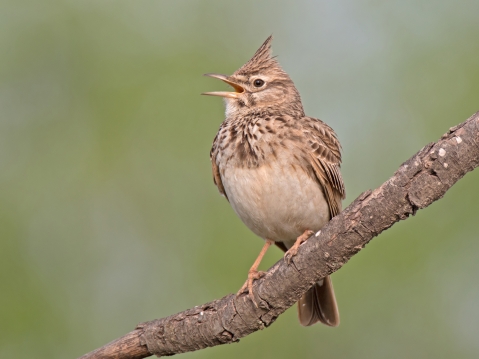
The lark sizzles in my ear
Like a fuse –
A prickling fever
A flush of the swelling earth –
When you touch his grains, who shall stay?
Over the lark’s crested tongue
Under the lark’s crested head
A prophecy
From the core of the blue peace
From the sapphire’s flaw
From the sun’s blinding dust
Perhaps the ‘nakedness’ of the vacana style had some influence on Hughes in the writing of the Moortown poems of 1978, though he was also tempted to return to the more self-protecting use of persona in sequences like Cavebirds (1978) and Adam and the Sacred Nine (1979). Only in the more obscurely published sequences such as Capriccio (1990) and Howls and Whispers (1998), did he again write in this more personal and direct fashion and (as we all now know) he did so once more in the late-published Birthday Letters (1998).
Hesiod Harangues His Lazy Brother
Happy New Year to all my readers. Stats from WordPress tell me that in 2018 there were 32,000 visitors to my website and they took a look at various pages on almost 50,000 occasions. Phew. It seems a lot to me. Many thanks.

But with Christmas now over – my local park has a stack of Christmas trees the size of several London buses waiting to be shredded – with resolutions having been left unmade or already in pieces, I suspect I’m not the only one to be suffering a horrible sense of deja vue as the great Brexit debate and debacle has started up again. You thought it was safe to go back into the water? You thought you’d heard the last of the Irish Back Stop? It seems not. I’m as tempted as many to shriek ‘Oh get on with it!’ but what is ‘on’ and what is ‘it’?

Actually, I have a genuine fear that the depth of national disillusion with the process and with conventional politicians makes this country more vulnerable to even more coarsened debate and extremism of various kinds, all promising to solve problems at a stroke. But really we know that’s pie in the sky. Right? Hesiod, of Ancient Greece, would agree. His Works and Days sounds very familiar. It is about conflict in a family, the problematic (perhaps intractable) nature of the world and the sense of a sequential decline in the fortunes of a society – all of which he counterbalances with advice, particularly about the importance of work – of keeping on keeping on.
To be honest, for many years, I’ve only known Works and Days by name. The title always attracted me with its Antaeus-like focus on groundedness, labour, the need to start from where ever we are now; it’s rejection of flighty idealism that quickly shades into the unconsidered fundamentalism. We need to work – nothing is given on a plate. And work needs to be sustained (through days) to be effective. Boring? Only if untrue and this is as true as anything can be.
I first came across the title of Hesiod’s poem in T. S. Eliot’s ‘The Love Song of J. Alfred Prufrock’:
There will be time, there will be time
To prepare a face to meet the faces that you meet;
There will be time to murder and create,
And time for all the works and days of hands
That lift and drop a question on your plate;
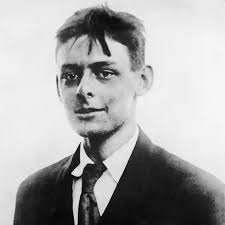
My old student’s guide to Eliot (by B.C. Southam, published by Faber) told me the allusion was to the 8th century BC writer Hesiod – to a poem which “gives an account of the primitive conditions in the country, together with maxims and practical instructions adapted to the peasant’s life”. Last year, Penguin Classics published a new translation of the poem by A. E. Stallings. It’s a lively and very readable version, though her decision to convert Hesiod’s dactylic hexameters into iambic pentameter couplets makes the ancient poem sound too English and 18th century for me. Another older prose translation by H. G. Evelyn-White is freely available here.
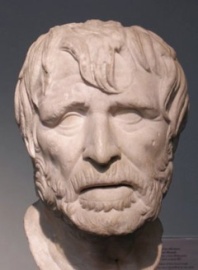 Did you know Hesiod probably pre-dates Homer? Hesiod is aware of the siege of Troy but he makes no reference to Homer’s Iliad. He’s usually placed before Homer in lists of the first poets. The other striking aspect of Works and Days is that (unlike Homer) he is not harking back to already lost eras and heroic actions. Hesiod talks about his own, contemporary workaday world, offering advice to his brother because they seem to be in a dispute with each other. Hesiod’ anti-heroic focus is an antidote to the Gods, the top brass and military heroes of Homer. Most of us live – and prefer to live – in Hesiod’s not Homer’s world.
Hesiod also talks about himself – his long poem has a lyric and personal quality to it. We hear that he grew up in the unremarkable town of Askra, in Boeotia. He disparagingly refers to it as “bad in winter, sultry in summer, and good at no time” (tr. Evelyn-White). In fact, his family were recent economic migrants from Aeolian Kyme in Asia Minor across the Aegean. Hesiod’s father made the journey: “[he] used to sail on shipboard because he lacked sufficient livelihood. And one day he came to this very place crossing over a great stretch of sea; he left Aeolian Cyme and fled, not from riches and substance, but from wretched poverty” (tr. Evelyn-White). As Stallings points out, “Hesiod’s is not a static, stay-at-home sort of world, but one of opening horizons, widespread trade, far-flung Greek outposts with freedom of movement, cultural festivals [. . .] and social mobility.”
 He seems to have been a poet-farmer who makes sure we are aware that he has already won a literary competition at a funeral games on the island of Euboea. His prize-winning piece may well have been his earlier Theogony, a cosmological work describing the origins and genealogy of the gods. But Works and Days presents him as something of a magpie writer rather than a poet with a neatly conceived architectonic design. The poem mashes together myth, allegory and personal asides, as well as more philosophical passages, theology, natural description, proverbial advice and an almanac or calendar based on phenology (the study of periodic plant and animal life cycle events and how these are influenced by seasonal variations in the climate).
The occasion of the poem is also very personal. Hesiod has a brother – Perses – and they seem to be in dispute (perhaps as a result of their intrepid and entrepreneurial father’s death and the inheritance of the estate). Stallings has this: “Already we’ve divvied up our lots, but you / Keep laying hold of more than is your due”. It is this inclination to give advice to his (younger?) brother that controls much of the text. The name ‘Perses’ is unusual and may mean something like ‘waster’ or ‘wastrel’ and the brother seems to be trying to take more than he is due and the motivation for this (according to Hesiod) is a mile-wide streak of laziness. Perses wants his fortune on a plate rather than having to work for it. His big brother intends to give him some “plain truths to steer him[self] by” (tr. Stallings).
By way of correcting his brother’s indolence, Hesiod firstly explains there are two types of strife. One of these is the kind of Brexit bickering (and potentially far worse) that we are all too familiar with: “One brings forth discord, nurtures evil war: / Wicked, there’s nothing mortals love her for” (tr. Stallings). But the other is a more benign sense of competitiveness based on envy: this sense of strife “spurs a man who otherwise would shirk, / Shiftless and lazy, to put his hands to work”. Wow! That’s telling your brother like it is. Is this being listened to? Hesiod makes sure: “Perses, take this to heart, lest Strife, whose quirk / Is mischief-making, draw your mind from work” (tr. Stallings).
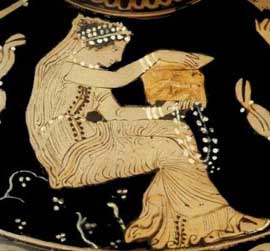 There are further reasons to set to work in the very nature of the cosmos and the human world. Hesiod tells the Pandora story here. Zeus causes the creation of a female figure, Pandora, as a way of avenging Prometheus’ pro-humankind actions (stealing fire from the gods, for example). Her name suggests she is a concoction or committee-created figure from contributions from all the Olympian Gods. She is given a jar which she opens: “ere this the tribes of men lived on earth remote and free from ills and hard toil and heavy sickness [. . .] But the woman took off the great lid of the jar with her hands and scattered all these and her thought caused sorrow and mischief to men” (tr. Evelyn-White). Hesiod’s locating of the root of human sorrow in the actions of a woman echoes the Christian story of the loss of Paradise and it is one of the reasons why Hesiod has been accused of misogyny, though as Stallings suggests, he’s not any more complimentary about the males of the human race.
Plagued by the ills of Pandora’s jar (only Hope is said to get lodged in the rim of the jar), Perses is then given a longer lecture on the decline of the human condition in Hesiod’s portrayal of the five ages of man. Here is the classic description of the Golden Age of man when we imagine we once lived “like gods [. . .] with spirits free from care; / And grim old age never encroached” (tr. Stallings). The ages of Silver, Bronze and (present-day) Iron are described. Between the latter two, Hesiod locates a brief Heroic age (the age of Thebes, Oedipus and the Trojan war). But despite this diversion, Works and Days makes it plain to Perses that the age he lives in is unpleasantly harsh and demands work work work to survive: “For now truly is a race of iron, and men never rest from labour and sorrow by day, and from perishing by night; and the gods shall lay sore trouble upon them. [. . .] The father will not agree with his children, nor the children with their father, nor guest with his host, nor comrade with comrade; nor will brother be dear to brother” (tr. Evelyn-White).
An obscure natural symbolic passage follows (a “fable” Hesiod calls it) in which a hawk has seized a song bird and mocks its struggles and shrieks: “Miserable thing, why do you cry out? One far stronger than you now holds you fast, and you must go wherever I take you, songstress as you are. And if I please I will make my meal of you, or let you go. He is a fool who tries to withstand the stronger” (tr. Evelyn-White). It’s tempting to see the songbird as the poet savaged by philistine powers though, in the Perses context, perhaps the songbird is a lazy good-for-nothing who is being shaken up and challenged by the world of necessity and work. A bit later Hesiod suggests another interpretation: that the natural world is red in tooth and claw, unlike human society which is governed by “law and right” (tr. Stallings) and so Perses ought to be obedient to Zeus’ powers out of gratitude for that. It’s interesting to think this of this as the first passage in Western Literature open to a variety of critical interpretations.
 It’s certainly the lazy, self-serving, arrogant younger brother who forms the focus of the rest of the poem: “So Perses, you be heedful of what’s right . . . So Perses, mull these matters in your mind . . . Fool Perses, what I say’s for your own good” (tr. Stallings). It’s true that his name gradually fades from the text in the final 500 lines but the torrent of imperatives, offering advice and guidance on a range of practical issues, often sounds like haranguing from a concerned, perhaps slightly pissed off, brother. Much of this material is phenological – when to sow crops, when to harvest, when to shear your sheep. In winter, don’t hang around the blacksmith’s forge where other wasters gather to chat and pass the time. It’s safe to put to sea when the new fig leaves are the size of crow’s feet.
 These are the passages that, around 29BC, inspired Virgil to his own farmer’s manual, the Georgics. Hesiod ends his poem in a rather perfunctory manner, roughly saying he who follows this good advice will become “blessed and rich”. But given Pandora’s jar and the Iron Age we live in, even this seems a mite optimistic. And of course, Perses never gets the chance to speak for himself. But I guess the tensions between his brother’s call for social and religious conformity and Perses’ individualistic disobedience to the demands of the gods and the sense of what is best for a society have gone on to form the basis of the continuing Western literary canon. And does any of this help with Brexit? I conclude (largely with Hesiod) the bleeding obvious: it’s complicated – solutions must be negotiated, don’t hope for some golden age because in a fallen, less-than-ideal, complex society it’s better for the future to be decided in the glacier-slow committee rooms of a plurality of voices than in the stark divisions and dramas of the battlefield. Work hard – have patience – don’t buy into fairy tales of a recoverable golden age.
Making Sense of Shelley’s ‘The Mask of Anarchy’ #2
I hope you have read my earlier post on this subject because here comes my commentary on the second half of Shelley’s The Mask of Anarchy. It’s the poem he wrote in response to the so-called Peterloo Massacre on 16 August 1819 and one that Richard Holmes and Paul Foot have called “the greatest poem of political protest ever written in English”. I was sent back to the poem after having watched Mike Leigh’s recent film Peterloo – which I would recommend to those interested in the politics of the early 19th century as much as the politics of today. The political climate at the time (as Leigh’s film so vividly demonstrates) was increasingly repressive in regard to any speech or publication in favour of Reform and because of fears of prosecution the poem only saw the light of day after the Reform Bill had been passed in 1832.

Earth Speaks: on the Nature of Slavery (ll. 147-212)
So, Earth now speaks the imperative injunctions that many people will recognise. She first addresses the men of England as rightful and eventual “heirs of Glory” and nurslings “of one mighty Mother” which must be a reference to herself. Then, in what sounds like a call to battle, she cries:
Rise like Lions after slumber
In unvanquishable number,
Shake your chains to earth like dew
Which in sleep had fallen on you —
Ye are many — they are few.
Though the nobility of lions is proverbial, so is their ferocity and here again it’s hard not to hear a call to arms as well as a shucking off of political chains that have imprisoned the Rousseauistic noble savage.
 Earth continues by diagnosing the state of slavery into which England has fallen. This – and the following passage with its more positive analysis of what Freedom means to working people – makes for powerful, relevant, realistic reading in contrast to Shelley’s hard-to-pin-down mechanisms of political change. Slavery is to have to work and be paid only enough to live for another day’s work. It is to work not for oneself but for “tyrants”. It is to see family suffering and dying, to go hungry while the rich man surfeits his dogs. It is to suffer the “forgery” of paper money, to have no control over one’s own destiny. It is – when driven to the point of protest – a more direct reference to events in Manchester – “to see the Tyrant’s crew / Ride over your wives and you”.
The remaining stanzas of this part of the poem contrast the plight of English working people to that of animals both wild and domesticated: the animals are better off. But lines 192-195 are especially interesting. In the face of such slavery, the narrator says, it is likely that the desire for vengeance will arise:
Then it is to feel revenge
Fiercely thirsting to exchange
Blood for blood – and wrong for wrong –
But such a use of force, when a degree of power has been achieved, resulting in further bloodshed, is here explicitly rejected: “Do not thus when ye are strong”. This theme of not answering violence with violence is developed much more clearly later and it’s difficult to square this with the earlier images in the poem of Hope “ankle-deep in blood”.
Earth Speaks: On the Nature of Freedom
Now earth’s imagined voice sets about answering more positively, indeed in downright terms, her own question: “What art thou Freedom?” It is not an abstraction, “A shadow . . . / A superstition . . . a name”. Rather it is the provision of bread on the table, of clothes, of fire. As Anarchy was really the law of the rich, so Freedom assumes a strong legal system to prevent exploitation of the poor by the rich. Freedom is therefore justice available to the poor as well as the rich, to protect both “high and low”. Freedom is also wisdom – this must be partly the kind of free thinking (l. 125) generated by the Shape conjured by Hope and certainly (as always for Shelley) it means a thoroughly sceptical take on the teachings of the Christian church. Freedom is also peace – Shelley regarded the war on post-Revolutionary France in 1793 as a war against Freedom.
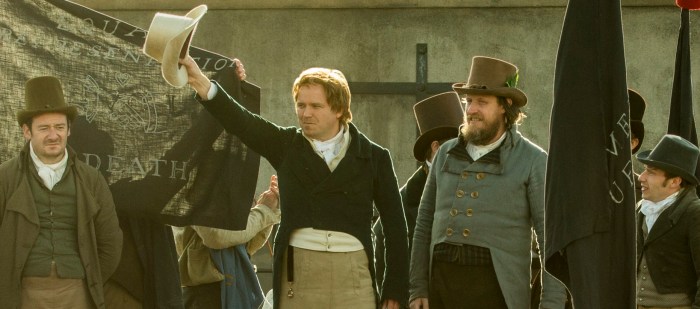
Freedom is also love – the examples given here suggesting a narrower definition than earlier in the poem. But love is accorded a Christ-like comparison in that some of “the rich” abandon their wealth to follow him and the cause of Freedom, indeed they turn their “wealth to arms” to combat the iniquitous influence of “wealth, and war, and fraud”. The paradox of taking up arms against war itself again perhaps highlights confusion in Shelley’s thinking though the kind of rich man he must have in mind here is Orator Henry Hunt (brilliantly played by Rory Kinnear in Leigh’s film) whose commitment to the cause of Reform was genuine (if a little self-regarding).
This passage ends less effectively with something of a shopping-list of abstract qualities which also comprise the nature of Freedom: Science, Poetry, Thought, Spirit, Patience and Gentleness”. Shelley himself may sense the dropped poetical pressure as the earth here sweeps aside the risky cheapness of such words in favour of actions: “let deeds, not words, express / Thine exceeding loveliness”.

Earth Speaks: Making a Call to a Great Assembly
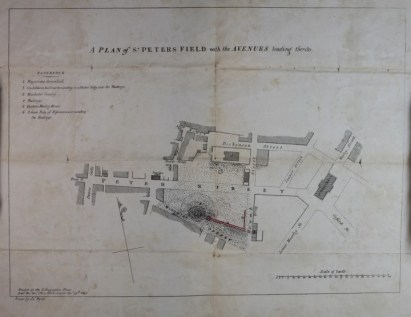
In this section Shelley puts aside any ambiguity as to the nature of the action required to achieve political change. Through earth’s voice he demands more occasions like the St Peter’s Field gathering.
Let a great Assembly be
Of the fearless and the free
On some spot of English ground
Where the plains stretch wide around.
People must assemble from all “corners” of the nation including palaces of the rich where “some few feel such compassion / For those who groan, and toil, and wail / As must make their brethren pale”. The purpose of the assembly will be (as at Peterloo) to declare and demand the freedom of the people. These words will be “measured” and it is they that will serve as weapons (swords and shields). Here, Shelley’s belief in passive resistance is quite explicit in contrast to earlier in the poem. The narrator anticipates the establishment’s potentially violent response to such assemblies. But the repeated phrase “Let the . . .” drives home the point of passive resistance:
Let the tyrants pour around
With a quick and startling sound,
Like the loosening of a sea,
Troops of armed emblazonry.
Let the charged artillery drive
Till the dead air seems alive
With the clash of clanging wheels,
And the tramp of horses’ heels.
Let the fixèd bayonet
Gleam with sharp desire to wet
Its bright point in English blood
Looking keen as one for food.
Let the horsemen’s scimitars
Wheel and flash, like sphereless stars
Thirsting to eclipse their burning
In a sea of death and mourning.

Earth Speaks: on the Need for and Efficacy of Passive Resistance
Safe, if unhappy, in Italy it might have seemed easy for Shelley to have been recommending this course. But he does so, imaging the passively resisting working people of England as “a forest close and mute, / With folded arms and looks which are / Weapons of unvanquished war”. Such a non-militaristic “phalanx” will remain “undismayed”, he argues, and eventually victorious for three reasons. One is that the “old laws of England” will offer them some protection. These laws are personified as wise men, now old but “Children of a wiser day” from an imagined period of Rousseauistic natural justice and freedom. But their protection is by no means strong – indeed it seems pretty flimsy. Shelley still envisages Peterloo style violence from the powers that currently rule England. But this must still to be met with passive defiance:
And if then the tyrants dare
Let them ride among you there,
Slash, and stab, and maim, and hew,–
What they like, that let them do.
With folded arms and steady eyes,
And little fear, and less surprise,
Look upon them as they slay
Till their rage has died away.
The fading of such aggression is probably linked to the second reason for the cause of Liberty’s ultimate victory. This is hardly stronger than the first: it is that the perpetrators of violence against the people will be shamed and ashamed of their actions. The blood they shed will reappear as shameful “hot blushes on their cheek”. Women will cut them dead in the street. And true soldiers will turn from them towards the people, “those who would be free”.
 The third reason Shelley gives – via the voice of the earth – also offers only equivocal, indeed very uncomfortable, hope. Offering little or no consolation to the victims and their relations – though a point proven true through many centuries – such massacres by repressive forces will prove an inspiration to those who come after them: “that slaughter to the Nation / Shall steam up like inspiration”. Using another of his images for revolutionary fervour, this steam will eventually result in a volcanic explosion, “heard afar”. Once more in this poem, these reverberations are translated into words to mark “Oppression’s thundered doom”, stirring the people in their on-going fight for justice and liberty. Shelley concludes with the actual words he imagines being uttered – and we have heard them before:
Rise like Lions after slumber
In unvanquishable number–
Shake your chains to earth like dew
Which in sleep had fallen on you–
Ye are many — they are few.
At which point the poem ends, still with the imagined voice of the earth speaking, repeating herself and the impression is of some circularity in the argument though this is really one of Shelley’s core beliefs: the fight for freedom and justice is never once and for all. The enemy will re-group so the cause of the people requires a continued alertness and watchfulness as well as the offer of resistance (passive for the most part, but perhaps with occasions of violence).

