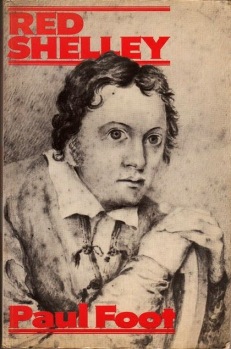
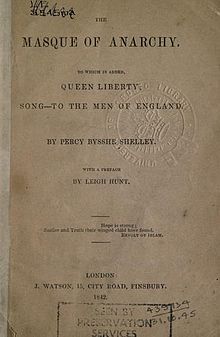
Having recently seen Mike Leigh’s powerful rendering of the events leading up to and including the so-called Peterloo Massacre on 16 August 1819, I re-read the poem Percy Bysshe Shelley wrote as a direct and angry response to those events, a poem Richard Holmes and Paul Foot have called “the greatest poem of political protest ever written in English”. In my twenties, I spent several years writing a PhD thesis on Shelley’s work – more on his ideas about language than a conventional lit. crit. of the poems – so it’s a curious pleasure coming back to this poem after all these years. And perhaps it does not seem in need of much explanation, written as it was so self-consciously to reach as wide an audience as possible to achieve its political impact. Yet its driving ballad-like form hardly gives the reader time to reflect and there are areas of obscurity within it – apparently real uncertainty on Shelley’s part. Of course, the political climate at the time (as Leigh’s film so vividly demonstrates) was increasingly repressive in regard to any speech or publication in favour of Reform. Even the radical Leigh Hunt – to whom Shelley sent the poem from his exile in Italy – refused to risk publication. The poem eventually saw the light of day only after the Reform Bill had been passed in 1832.

A Voice from Exile (ll. 1-4)
The whole poem is notable for the multiple distances Shelley maintains from the actual events of August 1819 (there is no poetic reportage of any kind, though he had read several newspaper accounts), in his own remote position (he had fled England in 1818, never to return) and in the way in which the poem comments on political realities (through the filters of ballad form and caricature and the sophisticated layering of voices). The opening quatrain briskly deals with the geographical distance, though with something of the air of a fairy tale.
As I lay asleep in Italy
There came a voice from over the Sea,
And with great power it forth led me
To walk in the visions of Poesy.
The AAAA rhymes here announce the poem with a series of thumps like an overture to wake his listeners and perhaps also himself from his guilt-ridden sleep, so far distant from the causes of political reform and revolution that he had long supported in England. The “visions” of poetry immediately give license to the strange encounters that follow.
The Triumphal Parade of Anarchy (ll. 5-37)
The kind of gothic caricature that dominates the following stanzas has often been linked to the style of political cartoons by Hogarth and Gillray. But Shelley’s adolescent love of the gothic genre is well known and the resulting mix is all his own. The reader (accompanying the narrator’s “walk”) is thrown into a parade of characters who precede the climactic appearance of the personification of Anarchy himself.
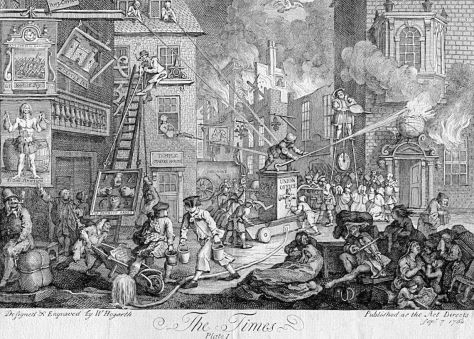
This is the “triumph of Anarchy” (l. 57) in the sense used by the Romans as a victorious parade through city streets. The narrator meets three main figures – Murder, Fraud and Hypocrisy. Reversing the usual method of personification, each abstract figure wears a mask in the guise of a contemporary politician – the Foreign Secretary, Castlereagh, the Lord Chancellor, Eldon and the Home Secretary, Sidmouth. The satirical effect of these masks is driven home by the figures’ actions. Castlereagh feeds human hearts to the dogs that follow him, Eldon sheds tears that turn into mill-stones and children have “their brains knocked out by them” and Sidmouth, clothed equivocally by both Bible and “night”, rides by on a crocodile (more false tears, geddit?).
Shelley glancingly refers to “many more Destructions” traipsing along in this “masquerade”, and they are all “disguised, even to the eyes, / Like Bishops, lawyers, peers, or spies”. The enemies of the people are therefore boldly named and it’s clear that the poem’s title contains a pun on mask/masque, alluding to the paper-thin disguises that the abstractions of corruption and injustice wear as well as the arrogant self-regarding performance of the triumph or parade they are taking part in. The climax of this parade is the approaching, apocalyptic figure of Anarchy himself:
Last came Anarchy: he rode
On a white horse, splashed with blood;
He was pale even to the lips,
Like Death in the Apocalypse.
And he wore a kingly crown;
And in his grasp a sceptre shone;
On his brow this mark I saw–
‘I AM GOD, AND KING, AND LAW!’
Anarchy here means a state of lawlessness in which the rich and powerful are freely able to control all religious, state and legal power. Their laws preserve their own freedom to exploit. We’ll see a bit later that Shelley had a concept of the “old laws of England” (l. 335) that he believed had been overridden but that once had served to protect the lives of ordinary people.
England Under Anarchy’s Rule (ll. 38-85)
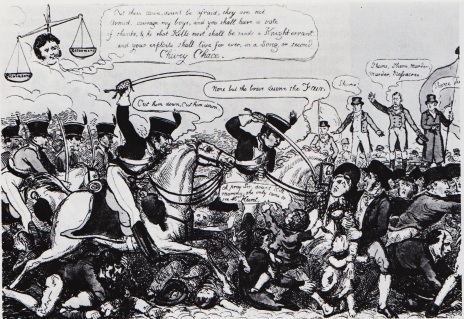
Shelley’s poem broadcasts and accelerates the trope of the parade (“With a pace stately and fast”) to show the appalling results of this rule of the rich and powerful across the whole country. There are echoes here of the charges into the crowd at St Peter’s Field in Manchester:
And a mighty troop around,
With their trampling shook the ground,
Waving each a bloody sword,
For the service of their Lord.
Their Lord here is Anarchy himself whose pageant is now seen to be passing through England, “Drunk as with intoxication / Of the wine of desolation”. It lays waste to everything, tearing up and trampling down, eventually arriving in London. Ordinary citizens feel terror and panic while the supporters of Anarchy flock to him, repeating the slogan and self-announcement written across his brow. Those who flock to his side are lawyers and priests and:
The hired murderers, who did sing
`Thou art God, and Law, and King.
We have waited, weak and lone
For thy coming, Mighty One!
Our purses are empty, our swords are cold,
Give us glory, and blood, and gold.’
Anarchy bows in response to this obeisance with a false and aristocratic grace (“as if his education / Had cost ten millions to the nation”) and recognises the bases of his power are secure in Palaces and quickly to be seized in the Bank (of England) and the Tower (of London), after which he anticipates meeting with a compliant, “pensioned Parliament” to further confirm the rule of Anarchy in the England of 1819.
Hope and the Mysterious Shape (ll. 86-125)
 But as Shelley’s sentence crosses the next stanza break – ie. without any clear pause – the seemingly unstoppable parade of bloodshed, inequality, injustice and hypocrisy is strangely interrupted by a counter personification. A crazed-looking young woman (“a maniac maid”) runs out declaring that her name is Hope, though the narrator says “she looked more like Despair”. The perception here is interesting as even Shelley’s narrator has been so infected by the toxic atmosphere spread by Anarchy that the girl (who is soon to bring about a challenge to Anarchy) looks to be insane and more resembles the absence of hope than otherwise. This is one of Shelley’s core political beliefs and had already appeared in the closing lines of Prometheus Unbound. There, Demogorgon urges optimism in the long term conflict with abusive power: “to hope, till Hope creates / From its own wreck the thing it contemplates”. The movement for Reform will – it seems – have to come close to despair, or its own wreck, before the powers of Anarchy are likely to be defeated.
Hope’s father is Time, whose other children – these are the previous occasions when the cause of liberty and reform had been strong – are covered in the “dust of death”. So Time has brought forth a new opportunity though the actions of the young woman called Hope are surprising. Less Joan-like, more Christ-like she simply lies down before the trampling hooves of the triumph of Anarchy. But moments before she too is about to be trampled into dust:
[ . . . ] between her and her foes
A mist, a light, an image rose,
Small at first, and weak, and frail
Like the vapour of a vale
 This mist – later called a “Shape” – is one of the mysteries of the poem’s politics. Hope provokes its appearance. At first weak, it gathers in strength. Shelley compares it to clouds that gather “Like tower-crowned giants striding fast, / And glare with lightnings as they fly, /And speak in thunder to the sky”. In the next few stanzas it becomes more soldierly, “arrayed in mail”, compared to the scales of a snake (for Shelley the snake was usually an image of just rebellion not of evil), yet it is also winged. It wears a helmet with the image of the planet Venus on it. It moves softly and swiftly – a sensed but almost unseen presence. And rather than any military action or campaign of civil disobedience, this Shape, conjured by Hope, creates thinking:
As flowers beneath May’s footstep waken,
As stars from Night’s loose hair are shaken,
As waves arise when loud winds call,
Thoughts sprung where’er that step did fall.
The Shape has variously been interpreted as liberty, England, the people, revolution, nature, intellectual illumination. But I think the image of Venus suggests that the Shape is Love which, in Shelley’s ‘A Defence of Poetry’, is synonymous with the Imagination, the expression of which is Poetry. Poetry here is a cultural and perceptual shift (artists and writers are merely one aspect of its manifestation). At its heart, is the rejection of reason which perceives and depends on differences and the embrace of a mode of perception that favours similitude, including the similitude between all people and classes.
The Death of Anarchy (ll. 126-146)
How exactly Love, so broadly defined, brings about the dramatic consequences detailed in the next few stanzas is unclear. There seems to be evidence of a battle as Hope is suddenly seen walking calmly, though “ankle-deep in blood”, and Anarchy himself is reduced to “dead earth upon the earth”. In the light of the bloodshed at Peterloo, such actual conflict and resulting casualties are hardly surprising but the use of force by those seeking political reform seems to contradict Shelley’s later pronouncements in this poem. The only alternative is that the blood she wades through is that spilt by the powers associated with Anarchy.
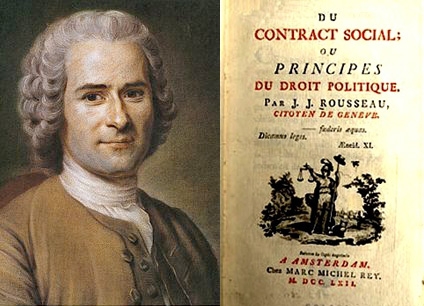 Yet in the calm aftermath of these events, there comes a sense of renovation, a “sense awakening and yet tender / Was heard and felt” and, most importantly, there are further words. This time the speaker is unclear though it is “As if” the earth itself, the mother of English men and women, feeling such bloodshed on her brow, translates this spilt blood into a powerful, irresistible language, “an accent unwithstood”. Shelley repeats “As if” once more, confirming the mystery of this voice, a voice which proceeds now to speak the whole of the remainder of the poem. For Shelley, Poetry in his broad sense is “vitally metaphorical” and the earth’s imagined speeches convey a sense that the cause of liberty is in accordance with the truly understood (surely Rousseauistic) nature of creation.


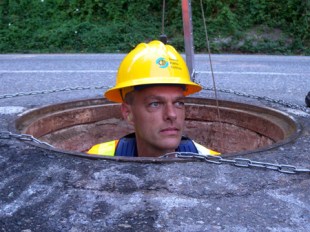 Nevertheless, some uncertain light can be cast on the human condition by ‘The Neglected Art of Description’. A man descending into a man-hole can remind us of “the world // right underneath this one” though Hoagland treats this idea with three doses of ironic distancing. He’s even more confident that the pleasures of perceptual surprise can “help me on my way” (even this, an equivocal sort of progress and destination; no golden goal).
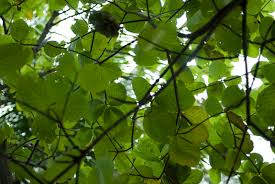
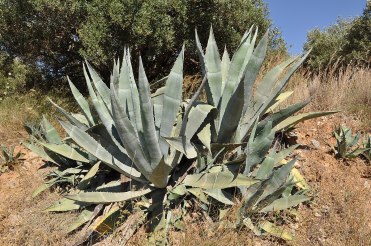 The next section of the poem displays some of Lorca’s startling, surprising images: the “stars of frost”, the “fish of shadows”, the fig-tree’s “sandpaper branches”, the mountain is a “a thieving cat” that “bristles its sour agaves”. These are good examples of Lorca’s technique with metaphor: to place together two things which had always been considered as belonging to two different worlds, and in that fusion and shock to give them both a new reality. But these lines are perhaps really more about raising the narrative tensions in the poem through rhetorical questions such as, “But who will come? And where from?”
 So up they climb. We don’t know why, but the atmosphere here is dripping with ill omen: they are “leaving a trail of blood, / leaving a trail of tears”. Then there is another of Lorca’s images yoking together unlikely items. As they climb to the roof-tiles, there is a trembling or quivering of “tiny tin-plate lanterns” and perhaps it’s this that becomes the sound of a “thousand crystal tambourines / [that] wound the break of day”. Lorca himself chose this image to comment on in his talk. He says if you ask why he wrote it he would tell you: “I saw them, in the hands of angels and trees, but I will not be able to say more; certainly I cannot explain their meaning”. I hear Andre Breton there, or Dali refusing to ‘explain’ the images of the truly surreal work. In each case the interpretative labour is handed over to us.
 Did they know this? It appears not. But who is she? Daughter? Lover? Both? Is this really what the two men find there? For sure, there is some mystery about the chronology because the seeming explanation of the killing is couched as a flashback: “The dark night grew intimate / as a cramped little square. / Drunken Civil Guards / were hammering at the door”. But Lorca often plays fast and loose with verb tenses. Was this earlier? Were they in search of the rebellious youth? But they found his girl-friend? Hanging her on the rooftop? Is the house owner her father? Does he know what has happened? Is this why his house is not his own anymore? Is this why he is no more what he was?
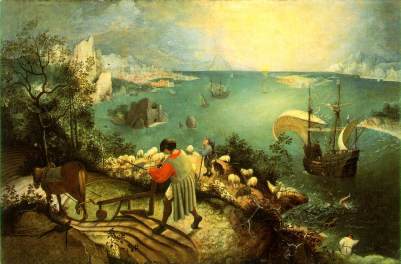 The only certain thing is that the poem does not reply. It ends with a recurrence of that opening yearning – now it’s read as a more obviously grieving voice – though it’s not necessarily to be read as the young man’s voice. It’s the ballad voice, the one I took so long to really grasp in Lorca’s work. It is a voice involved and passionate but with wider geographical, political and historical horizons beyond the individual incident. Like Auden’s ploughman in ‘Musee des Beaux Arts’, glimpsing Icarus’ fall from the sky, yet he must get on with his work, ‘Sleepingwalking Ballad’ returns us in its final lines to the wider world: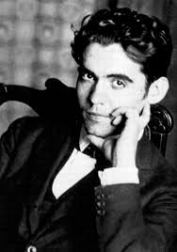
 I really didn’t know it at the time, but the song’s words are, of course, by W.B. Yeats. It is his poem ‘The Song of Wandering Aengus’, from The Wind Among the Reeds (1899).
 I have now translated a number of Lorca’s poems and one of the great difficulties is to carry over such metaphorical leaps into English where they risk sounding very silly indeed. Fair enough, the alligator is, on the face of it, obvious enough: its gaping jaws give a good jolt of comic hyperbole to his image. But it’s still surprising in the context of a be-suited, bespectacled lecture hall in Spain. There is an exoticism there on the verge of surrealism and is characteristic of Lorca’s images. This search for novelty in image is clear when he argues later that a real poet must “shoot his arrows at living metaphors and not at the contrived and false ones which surround him”.
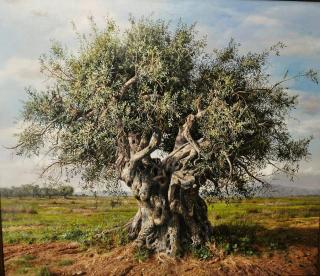
 Just one last detail from this great poem. Juan Antonio de Montilla is killed in the fight and – in one of Lorca’s characteristic jump cut edits (more of that in a minute) suddenly (it seems) the “judge and Civil Guard / come through the olive groves”. Somebody – a participant, one of the old women? – gives them an account of events in the form of exactly one of Lorca’s startling metaphors. This may have been a quarrel over a card game, or a girl, like so many others, but Lorca dizzyingly elevates it into an historical, even epic context: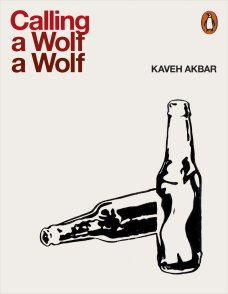
 Akbar doesn’t generally do the more familiar, simply focused poem. There are a few in the book like ‘Learning to Pray’, in scattered unrhymed triplets, in which a young boy (Akbar allows a straight autobiographical reading usually) watches his father pray, “kneeling on a janamaz” or prayer mat. The wish to emulate the admired father is conveyed pin-sharp. A later poem also starts from childhood and (mostly in loose unrhymed couplets) traces the boy’s later maturing in an America “filled with wooden churches / in which I have never been baptized” (‘Personal Inventory: Fearless (Temporis Fila)’). This poem also attracts threads of two of Akbar’s other main themes: his personal addictions and the ubiquitous sense of living in a fallen world.
 One of the main elements of this fallen state (again Akbar allows a simple autobiographical interpretation) is the damage caused by his past addictions, especially to alcohol. This is the main hook Penguin hang the book on (a cover of empty beer bottles, for example). Poems styled ‘Portrait of the Alcoholic …’ recur throughout the book, but the first section is most focused on this. A familiar comment from W.H. Auden is used to firmly yoke spirit to bottle: “All sins tend to be addictive, and the terminal point of addiction is damnation”. Many of the poems then have this sense of inebriation, muddling, confusion which Akbar’s style of writing is very at home with. ‘Portrait of the Alcoholic with Home Invader and Housefly’ presents the drinker waking up, seemingly attacked by a home invader with a knife. Memories of keeping a housefly on a string intervene, perhaps because in the fly’s death the young boy confronted the idea of death: “I opened myself to death, the way a fallen tree // opens itself to the wild”. The poem returns to the threatening situation, then to more abstract thoughts of scale, a TV programme and the speaker passively returns to sleep. This is a great poem of the self as both endangered and paranoid, distanced from danger, the blurring of perception, thought and memory.
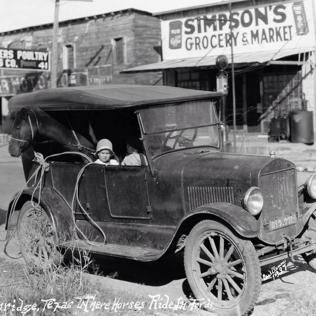 But when it works, these are marvellous poems – and, for my money, this book would make a worthy winner of the 2018 Felix Dennis Prize. ‘Wild Pear Tree’ – as if in one breath – conveys a wintry scene/mental state, recalls halcyon days (of spring) and ends lamenting the forgetting of an “easy prayer” intended for emergencies: “something something I was not / born here I was not born here I was not”. ‘Exciting the Canvas’ is much more risky in its jig-sawing together of disparate elements – a bit of Rumi, the sea, a child’s drawing, a drunken accident, the Model T Ford, crickets, snakes – but somehow manages to hold it all together to make a snap-shot of a troubled, curious, still-open consciousness. And finally, ‘So Often the Body Becomes a Distraction’, dallies with the Rilkean idea of dying young, alludes to recovery from addiction, then grasshoppers, ice-cubes, personal ambitions and the self-image of “rosejuice and wonderdrunk” (which is merely one side of Akbar’s work). This one ends with the not-infrequent trope of a re-birth from burial in the earth. I like these images, suggesting that, for all the fretting about lost paradise, the absence of God, the self-destructiveness of the individual, whatever redemptive re-birth may be possible is only likely to come from our closeness and attentiveness to things about us, an eschewing of the “self-love” Akbar struggles to free himself from in ‘Prayer’: in a lovely phrase –though I’m still figuring it – he concludes, “it is not God but the flower behind God I treasure”.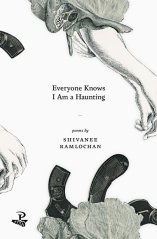
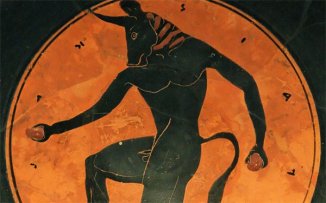 There is a sequence in the middle of the book which offers a clearer view of Ramlochan’s approach. ‘The Red Thread Cycle’, on the face of it, explores the traumatic consequences of rape. How to articulate the event is one theme and there is a magic-real quality which initially seems to add to the horror: “Don’t say Tunapuna Police Station. / Say you found yourself in the cave of the minotaur”. But this shifts quickly instead to reflect how police and authorities fail to take such a literal description seriously, even blaming the woman herself: “Say / he took something he’ll be punished for taking, not something you’re punished for holding / like a red thread between your thighs”. Other poems trace improvised rituals (real and semi-real) to expiate the crime and trace the passage of years. Some moments suggest the lure of suicide with allusions to Virginia Woolf’s death by water, carrying “pockets of white stones”. Seeing the unpunished rapist at large eventually becomes possible: “Nothing drowns you, when you see him again”. The sequence is a lot less chronological than I am making it sound, but what the woman has been doing over the years is, in a striking phrase, “working to train the flinch out of myself”. This has been achieved partly through art. Ramlochan certainly sees such pain as an essential part of the artist’s apprenticeship, that it will “feed your best verse”, and the sequence ends with her reading poems in public as an act of strength and self-affirmation, marking the psychic death of the aggressor: “applause, hands slapping like something hard and holy / is grating out gold halleluiahs / beneath the proscenium of his grave”.

 The gateway to Richard Scott’s carefully structured first book is one of the most conventional poems in it. It’s a carefully punctuated, unrhymed sonnet. It is carefully placed (Public Library) and dated (1998). It’s the kind of poem and confinement Scott has fought to escape from and perhaps records the moment when that escape began: “In the library [. . .] there is not one gay poem, / not even Cavafy eyeing his grappa-sozzled lads”. The young Scott (I’ll come back to the biographical/authenticity question in a moment) takes an old copy of the Golden Treasury of Verse and writes COCK in the margin, then further obscene scrawls and doodles including, ironically a “biro-boy [who] rubs his hard-on against the body of a // sonnet”. Yet his literary vandalism leads to a new way of reading as – echoing the ideas of Eve Kosofsky Sedgwick – the narrator suddenly sees the “queer subtext” beneath many of the ‘straight’ poems till he is picking up a highlighter pen and “rimming each delicate / stanza in cerulean, illuminating the readers-to-come . . .”


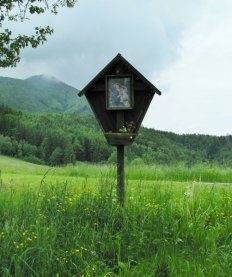
 You will have gathered that one of Power’s things is to mix English and Austrian German. This happens several times in ‘A Tour of Shrines of Upper Austria’ (though in this book we only get 7 parts of the full sequence). An observer stops at various shrine sites, jotting down some thoughts and taking a picture or two. Nothing is developed though Power’s poems do show an interest in religion on several other occasions. ‘The Moving Swan’ opens with a centre-justified prose description of candles flickering in a cathedral and another poem is drawn to the grave of two goats, observing: “two heaps of ivy/straw / one unlit red tealight”. And ‘Epiphany Night’ is a more extended series of notes recording a local celebration with bells, dressing-up, boats, lanterns. This is all observed in loosely irregular lines by the narrator from her “wohnung” (apartment). To wring all engagement or emotional or imaginative response from such a text is, I suppose, quite an achievement but to spend 70-odd pages in such company really is wearisome.


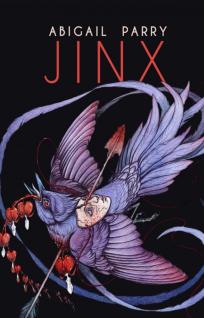
 Mr Knightley is an absent figure in that poem, but Jinx is repeatedly visited by powerful, seductive, dangerous males who – in ways now very familiar since Angela Carter started the ball rolling – are morphed into animal figures. ‘Hare’ is an early example, leaning invasively over the female narrator at a wedding party, “those fine ears folded smooth down his back, / complacent. Smug. Buck-sure”. As in ‘Daddy’, the woman is drawn to the man despite (or because of) his obvious threat but unlike Plath’s powerful final repulse (“Daddy, daddy, you bastard, I’m through”), Parry’s narrator is fatalistic: “Your part is fixed: // a virgin going down, / a widow coming back”. Elsewhere, ‘Goat’ and ‘Magpie as gambler’ work similarly and ‘Ravens’ is a particularly Plathian version: “In fact, every man I thought was you / had a bird at his back / and a black one too”.
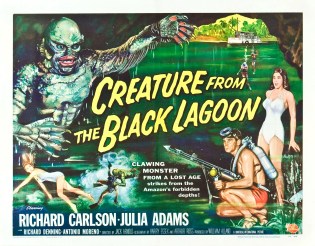 For all the frenetic playfulness of the book, Parry’s mostly female narrators and subjects are beset by threats. ‘The Lemures’ re-Romanises the creatures into psychological pests, aspects of self-doubt perhaps, appearing on the furniture, at the roadside, in a reflection in a lift door: “They will steal from you. Pickpockets, / rifling the snug pouches at the back of your mind”. Parry is evidently a fan of mid-twentieth century film and she explores Creature from the Black Lagoon and The Wolf Man from the perspective of dark powers surfacing. The question being asked is whether such forces represent the overturning of the real self or the manifestation of it in contrast to what a later poem calls “the dreary boxstep of propriety”. Locks and keys recur in the poems – are we confined, or about to set something loose, or to leap to real freedom?