On the Importance of Considering Nothing #1

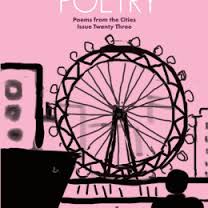
I have not blogged regularly since April 2017  as, having managed to get both my parents settled into a Care Home in Wiltshire, Dad suffered a series of heart attacks and died – fairly quickly and peacefully – on May 24th. Not wholly coincidentally, the Spring 2017 issue of Poetry London published an essay I had written which starts and ends with some thoughts on my experiences with my father and his growing dementia. In the next two blogs, I re-produce this essay unchanged in the hope that it still says something of value about types of ‘confusion’ and in memory of a man who would have had little time for such (in his view morbid and abstruse) reflections. Thanks to Tim Dooley who commissioned the essay for Poetry London and published it under the original title: A Straining Eye Catches no Glimpse.
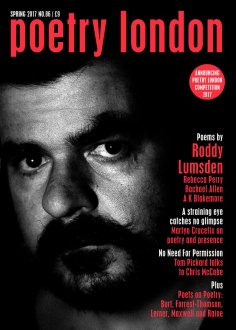
 PL-COVER-Spr17-web

Part 1

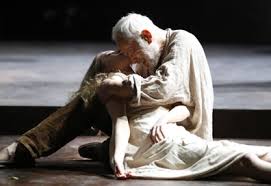
An old king leans over his daughter’s body seeking signs of life, yet he finds “Nothing, nothing, nothing, nothing, nothing”. Given that I teach literature and this is one of Shakespeare’s more famous lines with its repetition and trochaic revision of the iambic pentameter, I’m not proud of mis-remembering this moment in King Lear (the repeated word is, of course, ‘Never’). Yet I know why I mistake it, this year, in these fretful months. Seeing Anthony Sher play the role recently – haranguing a foot-stool, giving toasted cheese to a non-existent mouse – put me in mind of my father, though he’s not quite so far gone. These days he has trouble recognising the house he’s lived in for 60 years; he will refer to his wife as a woman from the village who has come to look after him; he seeks news of his mother (she died in the 1970s). What can this feel like? Years of memories gone; a whirling fantasmagoria that evidently frightens him; a something becoming nothing he makes too little sense of.
download

So it’s not just that the idea of nothing is prominent from the very start of Shakespeare’s play. Cordelia fails to reply flatteringly to Lear’s question about which of his daughters loves him most. The gist of her brutal answer is “Nothing, my lord”. Lear warns her: “Nothing will come of nothing. Speak again”. But she sticks to what she sees as her truth (as against her elder sisters’ oleaginous falsehoods) and pays the consequences. But so does the King. Reduced eventually to a wholly unexpected state of wretched nothingness in the storm scenes and beyond, he learns much from this nothing in pointed contradiction of his earlier warning. It doesn’t stop there; once reunited with Cordelia and faced with the prospect of prison, possible execution, what is remarkable is the King’s acceptance of his fate. Confronting this further reductio, he declares he’ll go and finds a reason to be cheerful: “we will take upon’s the mystery of things”. I’ve always been struck by Shakespeare’s phrasing here. The mystery of things is imaged not as some modernly pedagogic check-list, tabulated and absorbed like a set of principles, rather it’s something to be folded about us – a garment, an investiture, a way of seeing, feeling, not quite of self, not quite other either – and Shakespeare’s point is that Lear’s encounter with nothingness in various guises is what has prepared him for such a re-vision of his place in the world.

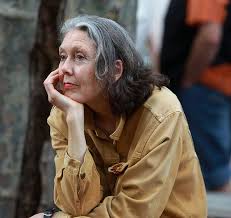
I’m interested in the idea that such a nothing can be worth something. Of course, it’s not exactly nothing, a void, that Cordelia’s father encounters. It is a bewildering set of experiences of which he can make nothing. Lear – I don’t know how far this is like my father – suffers because his previous paradigms are failing: he is shocked into his encounter with the mystery of things or what Anne Carson calls the “dementia of the real”. When my father talks, he yearns for the ordinary reassuring certainties of his old life, as if they would close round him with the feel of a comfortable coat. Carson has explored this reliance we all have on the familiar in her 2013 Poetry Society lecture concerned with ‘Stammering, Stops, Silence: on the Methods and Uses of Untranslation’.[i]  She explores moments when language ceases to perform what we consider its primary function and we are confronted with nothingness in the form of silence. In the fifth book of The Odyssey when Hermes gives Odysseus the herb “MVLU”, Homer intends the name of the plant to be untranslatable since this sort of arcane knowledge belongs only to the gods. In a second example, under interrogation at her trial, Joan of Arc refuses to employ any of the conventional tropes, images or narratives to explain the source of her inspiration. Carson wants to praise Joan’s genius as a “rage against cliché”, the latter defined as our resort to something pre-resolved, pre-shaped, because, in the face of something so unfamiliar that it may seem more like nothing, “it’s easier than trying to make up something new”.
 

images
Anne Carson


Carson associates this rage to ‘out’ the real with Lily Briscoe’s problems as an artist in Woolf’s To the Lighthouse. She struggles to complete her painting, aware that the issue is to “get hold of something that evaded her”.[ii] She dimly senses “Phrases came. Visions came. Beautiful pictures. Beautiful phrases. But what she wished to get hold of was that very jar on the nerves, the thing itself before it had been made anything”. Unlike Homer and Joan of Arc, the knowledge Lily seeks (undistracted by the divine) is not so much prohibited as, in a profound sense, beyond conception (it is a nothing before it has been made something). For Carson, we each dwell behind the “screens” of cliché for most of our lives, so when the artist pulls them aside the impact of the revelation may well have the force of violence. She suggests artistic freedom and practice lie in such a “gesture of rage”, the smashing of the pre-conceived to find the truth beyond it, her goal remaining the articulation of the nothing she insists is actually the “wide-open pointless meaningless directionless dementia of the real”.

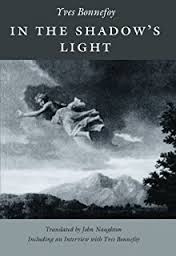
This is the nothing I am interested in: it is no void or vacancy but, paradoxically, a wealth of experience, a “flux of phenomena” about which we cannot think in conventional ways. We cannot name the parts of it, so for convenience, maybe a bit defensively, we prefer to designate it nothing. The artist seeks to articulate such an “experience of what goes beyond words: call it the fleeting perception [. . . ] a state of indifferentiation”. [iii] This is one of the many formulations of the issue by the late Yves Bonnefoy who unrelentingly explored the limits of conceptual thinking in terms similar to Carson’s distrust of cliché: “It is not that I incriminate the concept – which is merely a tool we use to give form to a place where we can dwell. I am merely pointing out a bad tendency [ . . . ] of its discourse to close discussion down, to reduce to the schematic and to produce an ideology existing in negation of our full relation to what is and to whom we are”. He concludes it is a “temptation to stifle dissenting voices” – the kind of voices who see something in nothing. [iv]
images

The always evangelical Bonnefoy terms the mystery encountered in a “state of indifferentiation” as “Presence”. In 1991, Bonnefoy’s temporary residence in the snowy landscapes of Massachusetts gave him a new way of evoking these ideas. In The Beginning and the End of the Snow (1991) he reads a book only to find “Page after page, / Nothing but indecipherable signs, / [. . .] And beneath them the white of an abyss”[v]. Later, the abyss is more explicitly, if paradoxically, identified: “May the great snow be the whole, the nothingness”.[vi] These occasional moments when the screens of cliche and conceptual thought fall are moments of vision as sketched by Auden in his discussion of Shakespeare’s sonnets – they are given, not willed; are persuasively real, yet numinous; they demand a self-extinguishing attentiveness.[vii] The inadequate, provisional, always suspect nature of language to record such moments is clear in these lines from Bonnefoy’s poem ‘The Torches’:


. . . in spite of so much fever in speech,

And so much nostalgia in memory,

May our words no longer seek other words, but neighbour them,

Draw beside them, simply,

And if one has brushed another, if they unite,

This will still be only your light,

Our brevity scattering,

Our writing dissipating, its task finished.[viii]


Rather than the forced disjunctions and the quasi-dementia of Carson’s recommended methods, Bonnefoy is reluctant to abandon the lyric voice, though he still intends to acknowledge the provisional nature of language in relation to Presence. The “fever” and “nostalgia” we suffer is the retrogressive lure of conceptual simplification. Bonnefoy’s imagery suggests a more delicate, tentative relationship between words, a neighbouring, a brushing up against each other (like snowflakes), though even then, if they “unite” or manage to cast “light” on what is, this can only be brief, always subject to dissipation.

(to be continued)
download

Footnotes

[i] Poetry Review, Vol. 103, No. 4 (Winter 2013).

[ii] Virginia Woolf, To the Lighthouse (1927; Penguin Modern Classics, 1992), p. 209.

[iii] Yves Bonnefoy, In the Shadow’s Light, tr. Naughton (Chicago Press, 1991), interview with John Naughton, p. 162.

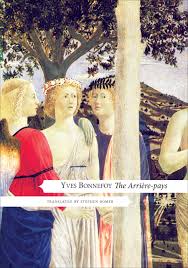
[iv] Yves Bonnefoy, ‘The Place of Grasses’ (2008), in The Arriere-pays, tr. Stephen Romer (Seagull Books, 2012), pp. 176/7.

[v] Yves Bonnefoy, ‘Hopkins Forest’, tr. Naughton in Yves Bonnefoy: New and Selected Poems, eds. Naughton and Rudolf (Carcanet, 1996), p. 181.

[vi] Yves Bonnefoy, ‘The Whole, the Nothingness’, tr. Naughton, Naughton and Rudolf, p. 187.

[vii] W. H. Auden, ‘Introduction to Shakespeare’s Sonnets’ (1964; reprinted in William Shakespeare: The Sonnets and Narrative Poems, ed. William Burto (Everyman, 1992)).

[viii] tr. Naughton, Naughton and Rudolf, p. 177.

Should I Send My Poems to Magazines or Competitions?

Issue 87 (January 2017) of Acumen has just appeared including Shanta Acharya’s interview with Indian poet and short story writer, Keki Deruwalla, plus reviews of books by Alice Oswald, Carol Rumens, Liz Lochhead, Tony Curtis and the first tranche of books from Little Island Press. There are also poems from Tony Curtis, Norbert Hirschhorn, Harry Guest, Duncan Forbes, Deruwalla and many others and translations of Verlaine, Tsiakos and Catullus. As well as this, Acumen editor, Patricia Oxley asked a number of poets (myself included) to comment on the relative importance of publication in magazines and winning (or placing) in poetry competitions. Which of the two is most important or advantageous?
 

keki-daruwalla_1
Keki Deruwalla


In his piece, Christopher North feels poems go to competitions first as the rewards of winning are greater than a mere appearance in a magazine. But for himself, he prefers to read poems in “gangs” or small portfolios (most likely to be found in magazines or chapbooks). North voices a common concern that the isolated poem (in a competition) is not always the best guide to a poet’s true worth. Hilary Davies’ piece suggests much the same thing, strongly praising the role of the magazine and its editor for having an eye not for the spectacular one-off, but for the longer term: “they have a stake in bringing on and nurturing new poets . . . there is a depth to the activities of the editor”, she argues, in stark contrast to the competition judge however thoroughly they do their job.

imgres

Davies also regrets the existence of the ‘competition’ poem that we are all so familiar with – the 40 lines, any subject, the successful mostly with a powerful narrative drive or end-of-poem punch. None of these elements are bad in themselves but Davies argues persuasively that “competitions unintentionally reinforce a formulaic and limited understanding of what constitutes a good poem”. Evidently, she sides with the magazines (see my recent review of Davies most recent collection). In contrast, Martin Malone confesses he’s not so sure where he stands though he acknowledges that competition wins “do provide a fast-track means of ‘getting-on’ in an age besotted with instant success”. The imagery he uses to express this – that we live on Planet Gadget and how we cannot but love our bells and whistles – makes clear his scepticism about the ultimate value of such winning poems. But Malone is clearer than most about the importance that winning competitions can often have on a poet’s career these days.

imgres

Caroline Carver’s piece is rather more celebratory in tone, suggesting the modern world of poetry presents writers with an “increasing choice” of outlets in terms of publication in print, or on-line or via competition entry. But the ease of the mouse click also means that the competitiveness and crowdedness of the market increases. Nevertheless, sounding admirably un-angsty about the topic, she says (assuming one has enough material available) a mix of both magazine submissions and competition entries is the safe way ahead. And for those who suffer repeated set-backs she refers us to the newly-launched website Salon of the Refused.

imgres

Michael Bartholomew-Biggs is both poet and editor of the on-line magazine London Grip. He puts forward what I think is the generally-expressed view here that “a publication record reveals more about a poet’s consistency and range than a prize – or even a few prizes”. Following the logic of this, he squares the circle by suggesting that the type of competition (which seems ever more common) that offers prizes and publication for a “portfolio” of poems seems to be “a distinct and valid route to recognition”. My contribution argued something like Bartholomew-Biggs’ view though rather more cynically suggested that winning prizes, in part through the likely resulting prominence through social media, might well weigh more heavily with a more commercially-driven publishing house. Overall, these six writers seem to feel a track record of publication in magazines is still the best guide to a poet’s quality and worth, though there is equally a clear anxiety expressed that competition-winning is becoming (or has already become) more used as a means of sifting through the submissions of collections for publication.

To read this discussion in full go to the Acumen website and subscribe!

What Love Is: Hilary Davies’ ‘Exile and the Kingdom’

9781910392171

I met poet, translator and critic, Hilary Davies, back in the early 1980s and our paths have kept crossing since. She was one of the first intake of women undergraduates at Wadham College, Oxford, where she read French and German. She won an Eric Gregory award in 1983, has been a Hawthornden Fellow and chair of the Poetry Society (1992–3). With David Constantine, she co-founded and edited the poetry magazine Argo and has three previous collections of poetry (published by Enitharmon): The Shanghai Owner of the Bonsai Shop (1991); In a Valley of This Restless Mind (1997); Imperium (2005). She was head of languages at St Paul’s Girls’ School, London, for 19 years and was married to the poet, Sebastian Barker, who died in 2014.

hilarydavies-180x235

Davies’ new collection, Exile and the Kingdom (Enitharmon, 2016), is framed by two very powerful sequences. It opens with ‘Across Country’, a series of seven poems which add up to an autobiographical ‘growth of the poet’s mind’. The book concludes with ‘Exile and the Kingdom’ itself, a further eight poems which are nothing less than a meditation on the poet’s raw grief and re-discovery, or reassertion, of her religious faith. Both sequences contain weddings.

‘Across Country’ opens with an evocation of a child’s first moments, “what gets forgotten”, in a state of inarticulacy, no ability to exert our own will, with no will even, language-less and effectively silent, being “carried by gods”.  Passive in the hands of mother and father, the journey variously begins in “The reindeer saddle and the motor car, / the sighing desert and the plateau wind”. Davies seems to suggest these first human experiences fall onto a tabula rasa as they “Etch the first surfaces of particularity / And settle in our souls”. The particular development traced here is Davies’ own, of course, and crucially this involves a later period of travel in France. Happily alluding to Wordsworth’s own tracing of his youthful days and Revolutionary enthusiasm in France (“Bliss it was in that dawn to be alive /But to be young was very heaven” – The Prelude, Book 11), Davies praises “the glory of the cornfield and belltower, / Granite, limestone, vineyard and cloister”. As with Wordsworth, France offers an experience of human love, but Davies is also drawn to intellectual pursuits, the thrilling confusion of “many minds passing”, arguments of “polity and governance” and to the “meretricious fruit / Of the ideology tree”. We are being told this in order for such concerns to be ultimately dismissed:


The lords of existence

Are neither economist nor philosopher

The Lord of existence

Shows himself not in systems


The fourth poem in ‘Across Country’ seems to record the young woman’s first realisation that religion was to be the answer to many of the questions she was asking: “I crossed into church after church that summer, / Thinking of erudition, but beside me trod Love”. The capitalisation and conventional personification makes it clear that Davies is deliberate and happy to place herself in a long tradition of poetry dealing with religious experience; there is no radical re-making of poetic form or language. Davies does not use masks. Discursive passages are in unrhymed, fairly irregular paragraphs which are punctuated every so often with more lyrical rhyming passages, song-like.

Poem five of ‘Across Country’ is just such a lyrical piece, portraying a wedding, but not one that lasts:


Hate has eaten my bridegroom’s heart

And remorse is become my fury

Now I must go the road of affliction

Searching for mercy.


That search, Davies argues, is more a matter of “Waiting, not willing”. It is the traditional negative road in the sense of the centrality of “self-surrender”, imaged in the seventh poem as the sensation of being on a boat on a threatening ocean: “No measure but the dark blue breathing of the opening deep, / Where personhood dissolves beyond mere terror”. I don’t share Davies’ faith but I share her belief that, in terms of our daily acts and choices, we are to be judged in the long run: “Only perdurance delivers”. And in terms of the nature of those acts and choices, whatever set-backs are faced, we need to be accompanied by that same figure who walked beside her into the churches in France: “what love is, and does”. Read as the record of the poet’s experiences, it’s likely that this opening sequence concludes with Davies meeting with Sebastian Barker, the beginning of new happiness (“I knew instantly I had to go the hard way with you / To learn how to love better”).

.

p46-sebastian-barker
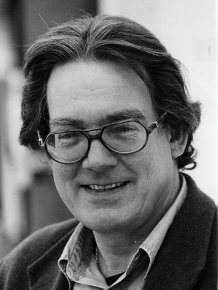
Sebastian Barker


The central sections of this collection are made up of poems more directly engaged with the contemporary world of north London, Stamford Hill, Walthamstow, the valley of the River Lee, Abney Park in Stoke Newington (I blogged one of these poem’s a few weeks ago). There are also poems more explicitly concerned with the relationship with Barker with titles like ‘Night’s Cloak’, ‘Aubade’, ‘Love Song’. I’ve always thought it a premature admission of defeat to declare ‘happiness writes white’ but some of these poems slip too easily into a mode in which this reader feels more like eavesdropping than sharing the experience of years of happy marriage; technically there is a flowering of lyricism and some softening of the vocabulary. On the other hand nobody is going to read these poems and not be thinking of Hardy’s tributes to Emma Gifford – it seems whether the marriage was mutually loving or not, the sense of loss remains overwhelming.

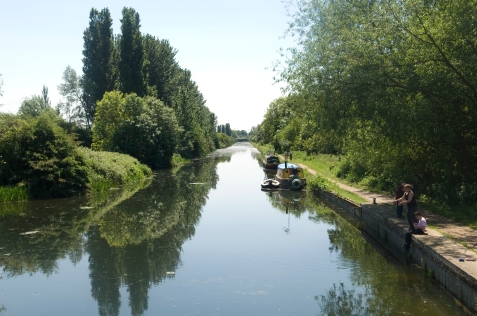
Lee Valley Park.  Photo: Eleanor Bentall 2nd June 2007 Tel: 07768 377413
River Lee and Valley Park

This is where the concluding sequence picks up though there is no need to narrow Davies’ focus wholly to the autobiographical. As I’ve said, these poems are in the tradition of religious verse and there are passages here that stand comparison with the Eliot of the Four Quartets. The opening poem – a little sequence in itself – paints a state of despair, initially social and political, latterly more personal:


Then there’s the heartache

At the core of things: attachment, the blank certainty

Of letting go, the arbitrary wing of accident,

Wrong gene or partner, a lifetime bled into the dusty ground

Of non-fulfilment, the waste [. . . ]”


The temptation is to try to counter this by accepting “ourselves as measure”, to focus simply on career, material gain, simply being busy, keeping warm. That this is never enough in itself is suggested when Davies recalls a favourite uncle who, having apparently a comfortable and successful life kills himself. For the young Davies what this taught was clear: “the impossibility of loving begets despair, / And despair kills”. The third poem of ‘Exile and the Kingdom’ seems to mark the beginning of the end of exile and returns to one of the many French churches mentioned in the earlier sequence.


300px-facade_st-gervais_st-protais
Church of St-Gervais-et-St-Protais, Paris


Out of the bustling Parisian streets, the narrator turns aside and understands, “Even if I have all gifts without love I am nothing”. As in Four Quartets, Davies mixes philosophical discursiveness with personal reminiscence and poem four recalls a Christmas morning in a country church. The priest, apparently ill, still takes the service, his gasping for breath making his faith even more memorable, a Wordsworthian spot of time worthy of recall in darker moments in the struggle to “retain that sudden downrush / Of the numinous that was supposed to change us”.  Poem seven expresses the sense of hard-won joy through another lyrical presentation of a second wedding. On this occasion, no clouds foreshadow failure but as the bride stands at the door, a wind blows her veil up like a candle flame or flower:


The guests are gathered in the church at Salle

The light falls on the floor;

For all eternity the rose

Stands at heaven’s door.


But the sequence and whole book ends in the altogether wilder landscape of St David’s, Wales. The final poem suggests such rose and flame moments are but parts of the coherence of a life where experience must inevitably consist of “Innocence and loss, hope, wisdom, regret and thanksgiving”. Exile and the Kingdom intends to convey this in full. Although propelled most often by loss of a loved one, the burden of the book remains love not grief. It matters little whether we share Davies’ particular form of faith, since what comes strongly from these pages is her concern for the way we treat each other, our overloaded preoccupation with ourselves, how our acts and choices are affected. Poems like these themselves form spots of time for the reader and I’m not going to forget their human concern for what love is and does.

The Bow-Wow Shop’s Aspects of Orpheus

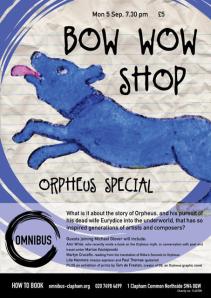
Bow Wow Shop Orpheus Poster_v2

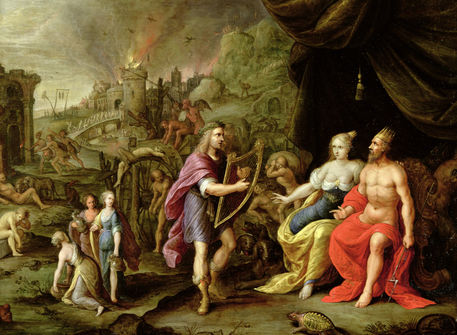
Last week I was pleased to be involved in the first of the on-line journal Bow-Wow Shop’s evening events in Clapham. Its focus was the figure of Orpheus: What is it about the story of Orpheus and his pursuit of his dead wife, Eurydice, into the underworld that has so inspired generations of artists, writers and composers?

Editor of The Bow-Wow Shop, poet and Independent arts and culture journalist, Michael Glover organises and he programmed a terrific mix of material. Ann Wroe’s 2011 book, Orpheus: the song of life (Cape), explores the roots of the Orphic story and traces its many manifestations through Classical to modern times. I was lucky enough to read with her at an event at Lauderdale House a couple of years ago. In Clapham she was in conversation with Marius Kociejowski. I was there on the strength of my 2012 translations of Rilke Sonnets to Orpheus (Enitharmon Press). Providing musical illustrations of the power of the Orpheus story were mezzo-soprano Lita Manners and guitarist Paul Thomas. There was also an exhibition of prints by Tom de Freston, creator of OE, a graphic novel on the Orpheus material.

imgres

Lita and Paul performed extracts for Gluck’s opera Orfeo ed Euridice (1762), songs by Vaughn-Williams and from the 1959 film Black Orpheus. Marius interviewed Ann though she needed little prompting to discuss several aspects of what is a wonderfully original book. Rilke’s inspired writing of the Sonnets to Orpheus (1922) form a thread through the book but she steered clear of that and concentrated more on the first evidence of the myth in the 6th BCE: a painting in black figure on a Greek vase, pictured with a huge lyre that almost seems part of him. Already at that early stage he is called ‘famous’. A 13th century BCE Cretan vase perhaps images him, again with the super-sized lyre (denoting divine powers, his music powerful even over inanimate objects birds, trees). Elsewhere he seems imaged as a bird himself – the power of song and music so strong that he must take on the attributes of a bird-god.

imgres

Perhaps even further back, Ann suggested, the figure is based on fertility myths, perhaps of Indian origin. His wife Eurydice likewise is linked to the figure of Persephone, the whole narrative in its original forms reflecting ideas of the seasons, death and re-birth of the earth, the crops. But there remains something irresolvable about the Orpheus myth – this polyvalent quality is one of the reasons for its productive quality in terms of inspiring artists. We kept recurring to the question: why must Orpheus turn as he is leading Eurydice out of the Underworld? The story contains its own tragedy. Ann suggested one interpretation might be to do with the fact the Eurydice represents the mystery of the natural world, or perhaps of knowledge/speech about the natural world, and that must necessarily remain hidden. Such a thing is the remit of the Gods alone. Orpheus must leave the Underworld empty-handed.

images

I spoke about Rilke in 1921, settling into the Château de Muzot in the Swiss Valais. How he liked to walk in the garden with its orchards and roses in full bloom, a landscape often evoked in the sonnet sequence which eventually arrived. He later declared that in the month of February 1922, he ‘could do nothing but submit, purely and obediently, to the dictation of [an] inner impulse’. In an extraordinary inspirational period, between the 2nd and 5th of that month, most of the 26 sonnets of Part One of Sonnets to Orpheus were written. He then polished off the ten year old sequence of the Duino Elegies. Between the 15th and the 23rd, Rilke went on to complete the 29 poems of Part Two.

Perrcy Bysshe Shelley wrote a longish fragment on the myth in 1820:


His [song]

Is clothed in sweetest sounds and varying words

Of poesy. Unlike all human works,

It never slackens, and through every change

Wisdom and beauty and the power divine

Of mighty poesy together dwell,

Mingling in sweet accord.


Here, as often, Orpheus is an image of the (male) artist/poet as well as being an image of our desire to find or create order or harmony in the world about us.

Rilke’s inspired poems brim with optimism and confidence about the role of poetry. In contrast, but more typical of the growing 20th century gloom, perhaps with intimations of a second world war, 15 years later – Auden’s brief 1937 poem ‘Orpheus’ is mired in uncertainty, asking “What does the song hope for?” Is it to be “bewildered and happy” – a sort of ecstatic but unthinking bliss? Or is it to discover “the knowledge of life”? No answer is given. The poem ends: “What will the wish, what will the dance do?” This is the Auden who doubts the power of poetry – it makes nothing happen – in his Elegy to Yeats.

And more like Auden than Rilke, the 20th century tended to take a more sceptical view of the myth – giving a more powerful voice to the traditionally passive Eurydice – more critical of Orpheus as careless, self-centred, weak. For example, in 1917 – 4 years before Rilke arrived in his chateau, H.D.’s Eurydice was condemning Orpheus:


for your arrogance

and your ruthlessness

I have lost the earth

and the flowers of the earth


Such radical revisions come also from more explicitly feminist poets like the American, Alta:


all the male poets write of orpheus

as if they look back & expect

to find me walking patiently

behind them, they claim I fell into hell

damn them, I say.

I stand in my own pain

& sing my own song

fullsizerender-11-360x348

Carol Ann Duffy’s revision (in her 1999 book The World’s Wife) gives Eurydice both poem title and narrative perspective. Her Orpheus is:


the kind of a man

who follows her round

writing poems, hovers about

while she reads them,

calls her his Muse,

and once sulked for a night and a day

because she remarked on his weakness for abstract nouns.


She saves herself from having to accompany Orpheus back to the upper world by offering to listen to his poem again. Orpheus, seduced and flattered, turns. “I waved once and was gone” she comments.

imgres

In this context Rilke’s take on the myth is (not surprisingly) very traditional and brimming with confidence in the role of the poet and patriarchal sidelining of Eurydice. So Rilke’s interest lies with the world and the underworld, life and death. He is more like Shelley who set his fragmentary poem after the loss of E and it’s coming through that experience that seems to add power to his song. Rilke is interested in the idea of transition. Orpheus tries to recover Eurydice; he moves from life, into death and then back again. This fluidity, the courage and a readiness to renew ourselves, to be risked in the absorption with something other, to be translated from one realm to another, to come and go, to be and not to be is what draws Rilke to the myth.

This is also Don Paterson’s thinking behind his versions of the Sonnets in Orpheus (Faber, 2006). He argues Man is unique in having foreknowledge of his own death, meaning we act as if we are already dead, or historical. This means that we construct life as an authentic and intelligible narrative, a life with meaning, but it is death that drives the plot of our life. This is one of Paterson’s key ideas and he refers to it as our ‘ghost-hood’. So we are like Orpheus: we too have descended to the land of the shades and then returned to the present moment – our condition is therefore existentially transgressive, riven, divided.

It’s the singing of the Orphic artist that addresses and bridges such divisions. This explains Rilke’s interest in the Orpheus myth: its narrative is a metaphor for the longed-for transit or communion between the realms of life and death. He possesses the desired ability to inspire the renovation of human perception that can initiate a more comprehensive, joyful and celebratory experience of life. One of the things most people know of Rilke is his exhortation to praise. Praise is a form of secular prayer for Rilke and it demands a renovation of conventional language through Orpheus’ song – as also noted by Shelley in Prometheus Unbound:


Language is a perpetual Orphic song,

Which rules with Daedal harmony a throng

Of thoughts and forms, which else senseless and shapeless were

imgres

Orpheus’ singing as a way to think about the language of poetry can clearly be seen in Rilke’s celebratory sonnets about the garden at Muzot. Here’s my translation of sonnet I  13:


Pear and plump apple and gooseberry,

banana . . . all of these have something to say

of life and death to the tongue . . . I guess . . .

Read it in the expression on a child’s face


as she tastes them. It comes from far off.

Slowly, does speechlessness fill your mouth?

In place of words, a flood of discovery

from the flesh of fruit, astonished, free.


Try to express what it is we call ‘apple’.

This sweet one with its gathering intensity

rising so quietly – even as you taste it –


becomes transparent, wakeful, ready,

ambiguous, sunny, earthy, native.

O experience, touch, pleasure, prodigal!


Rilke’s vigorous and self-conscious mutations of the sonnet form create a variety of rhyme schemes, line lengths, iambic and dactylic pulses. David Constantine has described this as suitably fitting forms for the figure of Orpheus because he is himself a figure of transition, fluency and mystery.

234203

Forthcoming Bow-Wow Shop events in Clapham will focus on the work of Edward Lear and Gabriel Garcia Lorca.

What Have I Been Reading: January – March 2016

Up-dated March 2016

imgres

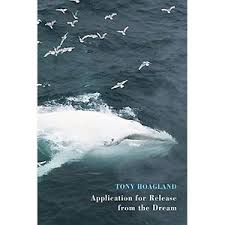
Tony Hoagland’s new collection from Bloodaxe introduces me to a poet I want to read more of (having missed him so far). Laugh-out-loud funny in the same breath as touching while being satirical and vividly descriptive of urban USA. Like Billy Collins, you relish the poem – then wonder how he managed to achieve it so apparently effortlessly.

imgres

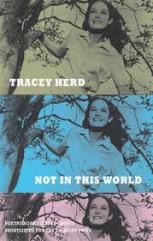
I read with Tracey Herd recently at the StAnza Festival (see this post) and was impressed with the emotional honesty of her writing. This is her first book in almost 15 years and was short-listed for the Forward as well as being a PBS Choice.

images
imgres

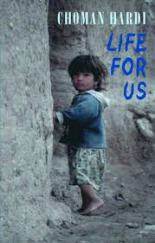
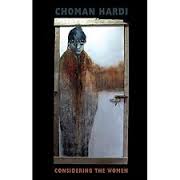
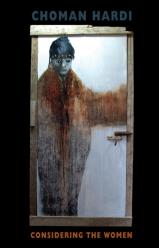
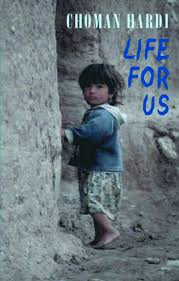
In reviewing Choman Hardi’s recent Considering the Women for Poetry London, I also went back to re-read her first book, Life for Us (both published by Bloodaxe). Her unsparing exploration of the plight and flight of the Iraqi-Kurdish people in the 1980s is poetry of witness of a high order. This is a body of work which is unique and deserves as much notice as we can give it.

Up-dated January/February 2016

imgres

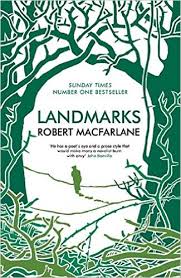
Macfarlane’s take on the significance of the loss of rural vocabulary and the danger that we will narrow our human experience as a result makes for powerful reading. Actually I found the word lists a bit dull (which I’m sure I shouldn’t as a poet) but perhaps most important of all he directs readers to previously little known writers about landscape like Nan Shepherd, J A Baker and Peter Davidson.

imgres

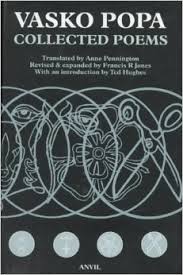
Popa’s unpunctuated, economical, elusive poems, many of them drawing on Serbo-Croat myth and legends, can be hard going. There is little sentiment or surface detail to hold on to. But reading them you hear where Ted Hughes found the idioms of Crow. Poems like little hard pebbles giving lessons  to the more windy and verbose among us (I include myself of course).

imgres

Addonizio can be verbose but what she evokes is a speaking voice, a chatting voice, driven on to revelation after revelation as if across a bar table littered with empties. She is a voice in your ear with all that implies about thrilling intimacy though on occasions I felt ‘give me a break’.

imgres

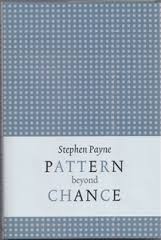
Stephen Payne’s poems emerge partly from his job as a Professor of Human-Centric Systems. He observes what people do and he wants to discuss it. He’s looking for the patterns which present themselves ‘beyond chance’. If that sounds a bit cool there is something of that here but the book overall is delicate, always thoughtful and often very moving.

What Have I Been Reading: October – December 2015

Up-dated December 2015

imgres

Terry Gifford’s Cambridge Companion to Ted Hughes is a fantastic summing up of where Hughes’ reputation now is, including articles by various hands on Hughes and animals, Plath, myth, feminism (it’s complicated) and a clear account of the poet’s fascination with Shakespeare by Jonathan Bate.

imgres

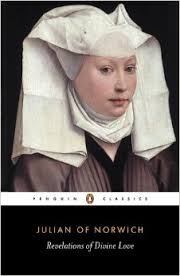
Julian of Norwich: Revelations of Divine Love – a book I’ve intended to read for decades and though I baulk at much of it still  I love her focus on the visions taking place in “an ordinary, household light”, her vivid descriptions and tentative, undogmatic prose. She also boldly talks of Christ as our mother: “Who showed you this? Love. What did he show? Love. Why did he show it to you? For love.”

imgres

Few poets can travel such distances with such ease and brevity as Penelope Shuttle. I saw her read at the recent Second Light Festival in London and picked up her Templar Poetry chapbook, In the Snowy Air. It belies it’s rather Xmas-y title by being rather a hymn to London (with occasional snow showers) including the Shard, the Walbrook, the British Library and even Waitrose in Balham.

imgres

Hands and Wings: Poems for Freedom for Torture has been edited by Dorothy Yamamoto in support of the Freedom from Torture charity and includes work by Gillian Allnutt, Alison Brackenbury, David Constantine, Carrie Etter, Vicki Feaver, Pippa Little and Susan Wicks.


Up-dated November 2015

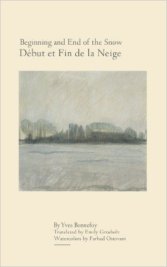
With the cold weather coming, Yves Bonnefoy’s 1991 Beginning and End of Snow(Bucknell University Press, 2012) is an exquisite read in Emily Grosholz’s translation, including an original essay by the poet on ‘Snow in French and English’.

31MuDc9AUxL._SX310_BO1,204,203,200_

I’m convinced Bonnefoy’s response to snow is not a million miles distant from the Daoist idea of the uncarved block and Rudolph G Wagner’s second magnificent volume on Wang Bi’s A Chinese Reading of the Daodejing is full of insights through its literal readings of the 81 chapters. I have been comparing his readings with my own new versions before going to press in the next few weeks.

images

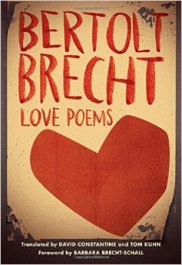
Bertolt Brecht: Love Poems (Norton, 2015) is the first instalment in David Constantine and Tom Kuhn’s project to translate anew Brecht’s complete poems. Ranging from the delicate, literary, erotic and plainly pornographic, here’s yet more evidence (should we need it) of Brecht’s breadth as a poet. The Introduction also reveals that Brecht refused to award any prizes in a poetry competition he was asked to judge – because none of the poems successfully communicated anything of any value to anybody, they were all of no use.

51c3fActf1L._SY344_BO1,204,203,200_

Maggie Butt’s new collection is published by The London Magazine and contains work from the period in which she also published the themed books Ally Pally Prison Camp(Oversteps, 2011) and Sancti-Clandestini – Undercover Saints (Ward-Wood, 2012). Though miscellaneous in nature, it is time that dominates this book – historical time in a variety of European locations and personal time in several moving elegies and acts of remembrance.

imgres

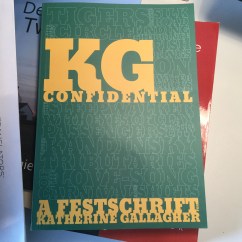
KG Confidential: a festschrift for Katherine Gallagher is a wonderful tribute to one of the great movers and shakers in poetry (in London and in her native Australia and in translation from the French). These tributes of poems or prose include contributions from Liz Berry, Jane Duran, Kate Foley, Mimi Khalvati and Les Murray.

File 22-11-2015, 12 37 53

Up-dated October 2015

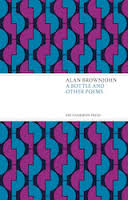
Alan Brownjohn’s new book is full of excellent poems, several of which (a few decades ago) would have been designated ‘secret narratives’. The title poem, ‘A Bottle’, is a strange noir thriller set in some undefined coastal region, an enigma of messages, relationships, landscape and murder. Always surprising; no let up in vigour and inventiveness.

imgres

Kate Foley’s ‘The Don’t Touch Garden’ (Arachne Press) is a treatment of adoption to rival Jackie Kay’s ‘The Adoption Papers’. “Mirror, mirror, on the wall” the old joke says, “I am my mother after all”. But which one? Brilliantly focused and carefully sequenced, these poems provide a thrilling and moving account of the processes by which any of us – adopted or not – become who we are.

imgres

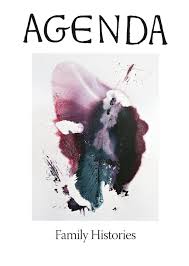
Agenda’s ‘Family Histories’ issue has poems from Tony Curtis, Claire Crowther, Sean Street, Peter McDonald, Sheenagh Pugh, Maitreyabandhu and Danielle Hope, an interview with Robin Robertson and reviews of Abse, Hugo Williams, Sebastian Barker, Bryce, Liardet, McVety and Eilean Ni Chuilleanain.

imgres

The new issue of Stand  has tributes to the late John Silkin from John Matthias and Anne Stevenson. I remember seeing Silkin selling Stand in the late 1970s on the campus at Lancaster University. This issue also has new poems from Muldoon, Mort, Valerie Jack, Sam Gardiner and (even) Martyn Crucefix.

imgres

What Have I Been Reading: December 2014 – March 2015

Up-dated March 2015

Too little poetry-reading time recently has meant I’ve been thinking a lot about two texts we are using for A level coursework at the moment:

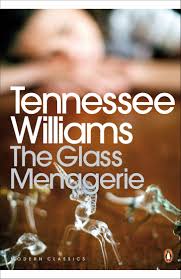
Tennessee Williams’ first great success, the autobiographical The Glass Menagerie, seems to strike chords in most modern teenagers and contains one of my favourite quotes: “I know I seem dreamy”, Tom says to Jim the Gentleman Caller, “but inside – well, I’m boiling!”

images

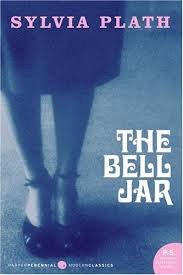
This is being read alongside Sylvia Plath’s only completed novel, The Bell Jar. Plath divides students every time – poetry or prose – my one observation is that with repeated teaching the book thins rather than deepens.

images

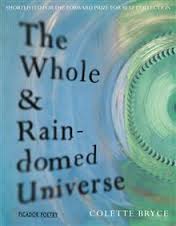
I’ve eventually got to read Colette Bryce’s recent new book, many of the poems about her childhood in Derry: short, focused, honest and managing memorable things within a very narrow linguistic palette.

imgres

Anna Robinson’s new collection also works within a narrowed range of language choices. She produces strange folk-tale-like poems, which keep rubbing their eyes, not sure whether what they are seeing is contemporary London or some mythic rural past. Mysterious poetry.

imgres

I’ve been dipping again into The Book of Love and Loss, eds., Rosie Bailey and June Hall (Belgrave Press, Bath, 2014), in part because I am reading from it at the end of next month at Heffers Bookshop, Cambridge.

imgres

Blake Morrsion’s Shingle Street is his first full collection since 1987 and while there are flashes of the poet I once admired (I thought Dark Glasseswas very good) the book is full of rather dull thoughts – nature, ageing – and language that fails to lift off the page.

imgres

Up-dated February 2015

Jonathan Edwards’ Costa Poetry prize-winning first collection from Seren is as accessible and diverting as the front cover would suggest and any poet inspired to write by the Simpsons is OK with me. Whether the jokes, caricaturing, a rather sit-comy stories survive repeated reading is something I’m still debating.

imgres

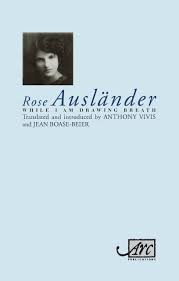
Rose Auslander’s minimalist gems are hewn out of the silences associated with her suffering in the ghetto in Czernowitz (and influenced by her friendship with Paul Celan). I am pleased to be reviewing this refreshed collection from Arc for a future Poetry London alongside Volker Braun’sRubble Flora – see below .

imgres

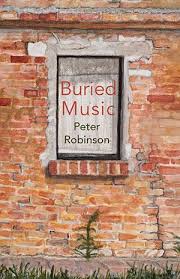
Peter Robinson’s most recent Shearsman collection continues his lyric exploration of the profundities to be found just beneath the surface of the everyday.

imgres

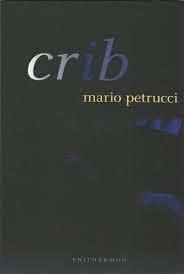
Mario Petrucci’s Crib from Enitharmon extends his experiments under the influence of Black Mountain. Poems sometimes stunning and economical, at others too self-consciously aware of language as an object (blocking the reader’s view). There’s certainly not much else like this around British poetry at the moment.

imgres

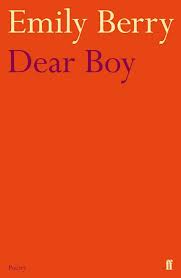
Emily Berry’s poems don’t attend much to Glyn Maxwell’s concerns with the tension between black ink and white space (see:https://martyncrucefix.com/2014/08/13/the-art-of-the-line-break/). The poetry is in the connections or lack of them and therefore leans to the surreal, with some palpable hits and other dead passages.

imgres

Up-dated January 2015

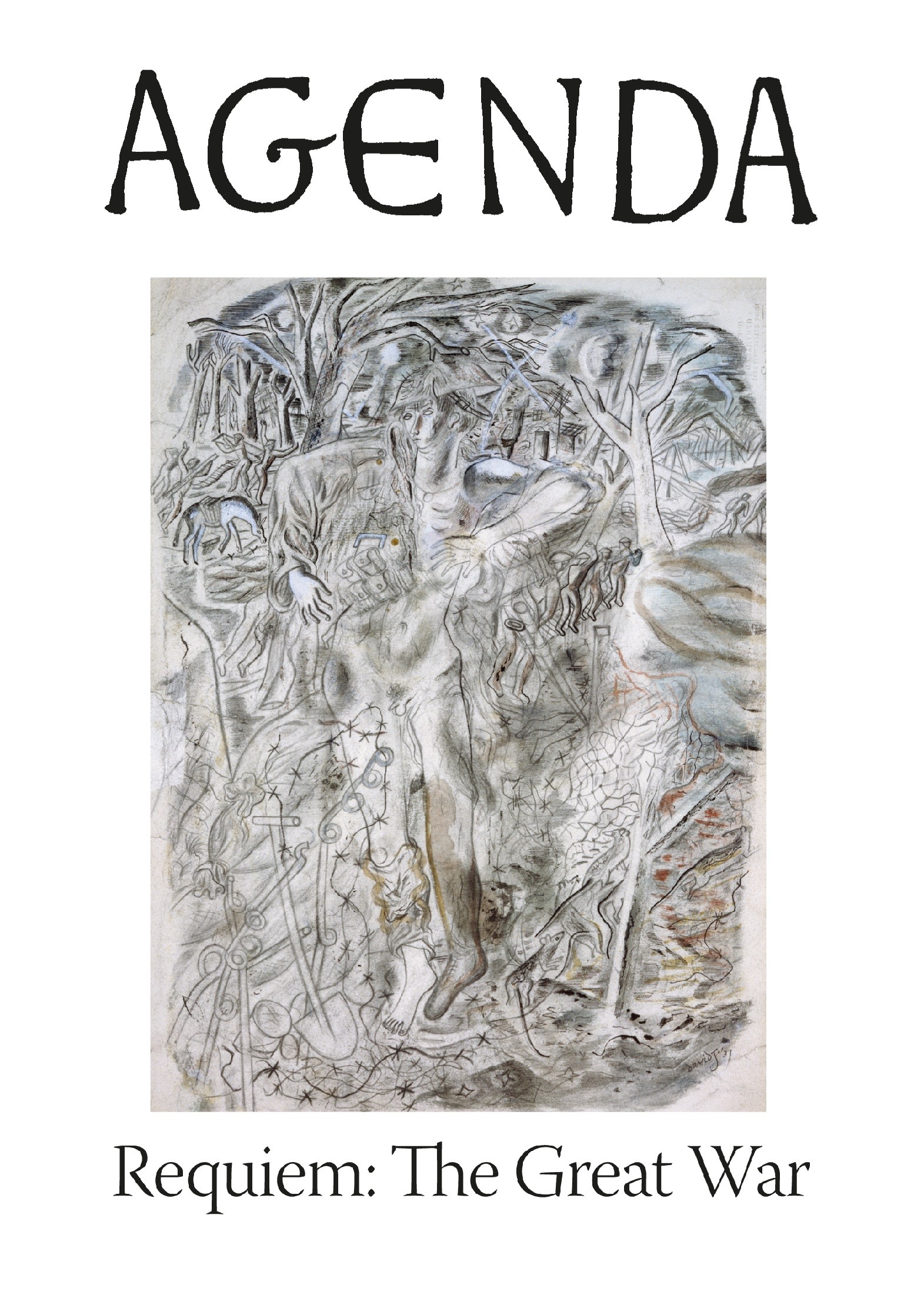
Patricia McCarthy’s chunky Agenda issue on The Great War is full of fascinating original poetry, translations and essays on French, German and Italian war poetry and reconsiderations of Edward Thomas, David Jones and Ivor Gurney among others.

agenda_-_requiem_the_great_war

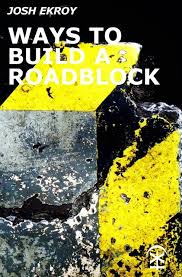
Josh Ekroy has been appearing on prize lists all over the place recently and his debut collection from Nine Arches Press is full of engaged, disturbing poems, capable of dealing with militarism and warfare:

imgres

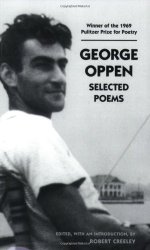
I’ve been reading George Oppen’s work via Louise Gluck’s admiration for him; I’m still working on it . . . .

41vxLKUGC3L._UY250_

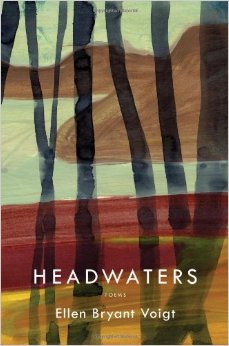
Debra Albery, an American friend who works at Warren Wilson, recommended this book of new poems by Ellen Bryant Voigt, full of the natural scenery of Vermont and fascinatingly eschewing all punctuation (like WS Merwin) to track the little manoeuvring negotiations of mind with world:

51z+jK085gL._SY344_BO1,204,203,200_

Wislawa Szymborska’s chatty, deceptively easy-listening poems in this 2010 translation make poetry writing look easy and able to encompass almost any topic:

71ceuvjjSJL

Up-dated December 2014

Nathan Hamilton’s big baggy collection of new poetry from Bloodaxe:672e5f96e2707467131a6f685241870c

Christine Keneally’s comprehensive review of contemporary ideas on the evolution of language:m000463281_sc7

Martha Kapos’ powerful new collection from Enitharmon:Kapos_Likeness_cover_final.indd

Brilliant selected poems from German poet Volker Braun, translated by Karen Leeder and David Constantine (Seagull Books):Layout 1

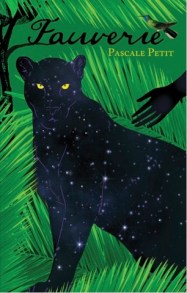
Pascale Petit’s powerful and strangely lit memorial to her father (Seren):

Choman Hardi: Review of ‘Considering the Women’

In the Recent Reading section of my website I observed that Choman Hardi’s “unsparing exploration of the plight and flight of the Iraqi-Kurdish people in the 1980s is poetry of witness of a high order. This is a body of work which is unique and deserves as much notice as we can give it”. I also blogged about her second collection, Considering the Women, where I drew comparisons between her poem ‘Gas Attack’ and Wilfred Owen’s well-known anti-war poem ‘Dulce Et Decorum Est’. My thoughts were in part a spin-off from a review I was asked to do of the book (alongside collections by Tony Hoagland and Jan Wagner). That review has been published in Poetry London. But Hardi’s book has just appeared on the Forward Prize Best Collection Shortlist and the post that now follows is the discussion of the whole book from my original review. The “delicate deliberations” alluded to in the opening line refer to Jan Wagner’s work – in which I discussed his explorations of the self, definitions and re-definitions of it, through our honest encounter with the world.

557d81f5ddd39

The kind of horrific experiences and seismic changes to human lives that Choman Hardi writes about make some of these more delicate deliberations seem inappropriate luxuries. Hardi does not write much about herself yet the locus of her life is critical to the work. Born in Sulaimani, she lived in Iraqi-Kurdistan and Iran before seeking asylum in the UK in 1993.  She has since researched women survivors of Saddam’s chemical warfare against the Kurds in the late 1980s and has recently moved back to Sulaimani. Her first book (in English) Life for Us (Bloodaxe, 2004) was remarkable for its evocations of a childhood shattered by war, persecution and exile. Her new collection also contains timely poems about exile, warfare, ethnic cleansing, but goes on to reflect on the pull back to the homeland.

images

Hardi writes devastatingly about the Iraqi state’s genocidal attacks on the Kurds, drawing directly on her research in the central ‘Anfal’ sequence. ‘Gas Attack’ offers a mother’s account of “a chalky-yellow powder” settling on exposed skin, her own and her son’s. The boy dies, groaning “like a calf”, the mother still blinded, unable to see him or “say goodbye”. Hardi’s language is always sufficient to the task – plain, direct, rising to the occasional metaphor, natural enough to suggest a witnessing voice. In ‘Dibs Camp, the Women’s Prison’, another mother who has already lost husband and daughter, holds her son in her arms as he dies suckling on a green slipper because he has asked for a cucumber and “is beyond // knowing the difference”. ‘The Angry Survivor’ introduces a different perspective as yet another mother rails against the intrusion of journalists, officials, activists who want to probe her story, or as she puts it, “pick my wounds”.

The position of the researcher is a vexed one openly considered in this collection. The ‘Anfal’ sequence is begun by the researcher’s voice, earnest, naïve and well-meaning. It concludes with ‘Researcher’s Blues’ in which she is now haunted permanently by the women’s voices so that “all I can do is / pour with grief which has no beginning and no end”. Such hyperbolic language is carefully measured to the devastating subject but the impact of such traumatic events on a non-participant is perhaps better dealt with elsewhere in the collection in more autobiographical pieces. In ‘My English Years’ the narrator sketches the story of a mixed marriage in decline. One of the points of contention is her research which leaves her feeling “dispossessed”. The husband tires of what he sees as her obsession with “victimhood”, then he also grows “fed up with me” (‘Our Different Worlds’).

imgres

The irony of a poem like ‘Before You Leave’ – flinging out imperatives demanding that language, landscape, neighbours, parents must not be forgotten in exile – is that it is precisely these things that are never really abandoned. ‘Blackout’ records a more ordinary scene, a woman lying on a flat roof on a hot summer night. As the electricity is cut, her husband stumbles around in the dark below in yet another of those “ruptures” that seem to be the condition


[of] life going wrong –

a house disappearing after a bomb,

a loved one not waking up from sleep,

villages being erased from a map


That such occasionally generalized images stand for a universality validated by lived and carefully researched experience means Hardi’s readers may lower their critical defences. It’s brave and right of her to reflect her own life’s travails in these poems as it is always the individual’s experience that is trampled by state power and any re-statement of its importance is a political act.

Workshopping With Will Shakespeare

Last weekend – what with the 400th anniversary of Shakespeare’s death just gone by and seeing an advertisement on Facebook I think it was – I signed up to be a participant in a Shakespeare and writing poetry workshop. Being an English teacher, love of Shakespeare rather comes with the territory but I’m sure I’m not the only teacher who enjoys being a participant in classes. So much of my time is spent initiating, organising, timing carefully and concluding that it’s a wonderful holiday-feeling to be initiated, organised, timed carefully and concluded by somebody else. (In what follows I am able to quote the work of nobody else but myself – for which apologies).

shakespeare-first-folio-title-page-introduction

The workshop was part of a series organised through the South Bank Poetry magazine, co-edited by Peter Ebsworth (its founder) and Katherine Lockton. They were both present for the workshop – upstairs, above the Poetry Society’s Cafe in Betterton Street, Covent Garden – but it was Katherine who ran the session. We gathered about 10.45 for 11am, most of us arriving clutching the mandatory take-out coffee from the cafe or elsewhere on our walks from the Tube. A big table, a plate of biscuits, greetings, sign in (whose name do I know here?). Upstairs at the PS is a strange mix of store room, kitchen, second hand bookshop, classroom. I thought it could do with a tidy-up myself – then tried to curb my flicker of nerves, that need for control. Actually, I’ve not taken part in a public workshop like this for ages. We were probably all feeling the same: what if I write total crap and Katherine asks me to read it out. Maybe a biscuit . . .

images

We started with free writing for 5 minutes or so – “to loosen up”. Katherine wanted us to set off from “My Shakespeare is . . .” What sprang vividly to mind was an occasion teaching not Shakespeare, in fact, but Marlowe’s Doctor Faustus. A student read the “face that launched a thousand ships” speech so very badly that it achieved a weird sort of beauty in her inarticulacy. A bit like those ruins of classical statues (not far from where we were, in the British Museum) that seem to have acquired an added poignancy in not remaining whole. I rather like free writing (it’s how most of my own poems begin, a sudden splurge of material that then gets worked on) and as I wrote I ended up (from that halting reading of Marlowe) to love in a life or its opportunity missed:


Those encounters where you don’t have the words

Just stops pauses some musical sense

Of the word order but no –not the words themselves

And she turns away dips her head

Laughs at something somebody across the room has just said

eb296389fb62a4e2e059249bf0021f0e

Katherine then dished out the text of Sonnet 18: “Shall I compare thee to a summer’s day?” On the Tube in I had been wondering how I’d tackle Shakespeare in such a setting and I thought I’d not go for the more familiar moments. Katherine did and I have to say she was probably right. I’d have ended up explaining too much perhaps (too teacherly) when the point was to respond creatively to the poems. So most of us were familiar enough with this poem in which the narrator does compare his love to a summer’s day and the summer’s day turns out to be liable to be windy, over too soon, too hot, over too soon . . . The lover apparently suffers from none of these things not even death itself – because the poet has preserved her in “this” poem: “So long lives this, and this gives life to thee”. We wondered, among others things, at the manly arrogance of this.

We picked a phrase or even just a word to respond to from the poem and set off for 30 minutes or so. On this first occasion, many of us seemed to get sucked into the vortex of the sonnet form and rhyme especially. But the quality of the group that day was extraordinary. Several produced sonnets which worked well (in 30 minutes!) and all the pieces eventually read out were interesting responses. I chose the phrase “By chance, or nature” and was exploring (again) the chance or fate of meetings with the one’s you love. I was imagining the alternative worlds we jettison or turn our back on with every choice we make:


So that in one of those plural worlds

We might have met before, or later, even not

At all – through pram and playground, into school

To college, old flames, chance turn, random plot.


You can see what I mean about getting locked into a formal mode. It may be that most of us realised this as when Katherine then tried us with Sonnet 130, more of the group struck out – away from formality, probably into something more like our natural mode. This was also probably encouraged by the fact that Katherine was showing us contemporary responses to these poems as we went. Several of these were quite encouraging in that they were pretty poor as poems – there are a number of anthologies where contemporary poets respond to Shakespeare (especially this year) but so many of the poets try too hard to up-date originals into some hip idiom; embarrassing like Dad-dancing). I guess that at least gave us permission to try something more adventurous of our own.

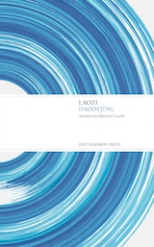
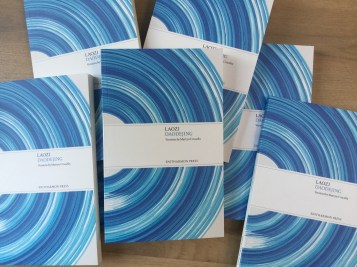
daodejing

I found myself interested in the way the Sonnet 130 tries to define the lover through a kind of via negativa, what she is not. It’s a kind of anti-poetic in that the poet dismisses the ability of comparison (one of the poet’s main tools) to capture her in truth. This was reminding me of repeated occasions in the Daodejing poems I have been working on for 3/4 years (just published now – so fully on my mind last weekend) in which the text also argues the elusiveness of the One. The latter is often given female characteristics so it was an easy step to my scribble:


She lives in the live darkness between

The opening and shutting of my eye-lids


Between ascender and descender

Of this pen this white expanse


This Microsoft space not knowing what to do

With itself not being busy


In the moment when instructions cease

And what opens is that snow-field


Beneath the first or second chair-lift not yet

Inscribed [. . . ]

tumblr_m4v3ij8TgU1r2tbuso1_500

The third piece Katherine gave us were extracts from Romeo and Juliet (the balcony scene, the “what’s in a name” speech” and Juliet’s “O serpent heart”). We discussed these and annotated them to pick out certain patterns and concerns. We then compiled a small list of words of our own and set off with the aim of writing in the voice of a character from Shakespeare. I’ve always had a soft spot for Horatio and especially Hamlet’s gentle, though firm, put-down: “There are more things in heaven and earth, Horatio, / Than are dreamt of in your philosophy”. I had Horatio realising the truth of this, a bit Prufrock-like realising that he was not meant to play the Prince, but be an observer, something of a by-stander at the big events:


O but it’s enviousness I breed

Here listening to you roar

And glitter you go on to the very point

Or way off kilter

And patronise me yet even this you do

With such grace with warmth making me love you.

images

The rhythm of this particular workshop was a lot of time for individual writing. We shared all we wrote (no one objected – and absolutely none of it was “crap”), and Katherine introduced the extracts quite briskly while still allowing plenty of time for people’s reactions to them. The time was now about 4pm. The final piece was stimulated with small bits of cloth from Katherine’s Mum’s sewing box but also with a story she told (no details – it’s her story) which we could incorporate if we wanted to.  My final piece was the strangest I’d produced so far. My cloth was a rich red – a bit sexy – and the encounter was on a staircase, I was coming down to meet someone. Perhaps by this time I was more Juliet than myself, or I’d carved myself into two:


Everything possessed

Of that clarity

And the weight

Of heraldry—


So the long dress

I wear is gules

Its blood-red

Slit to the thigh


Its plunging neck

A sunlight wedge

At the foot

Of the shallow stair


I lift my chin

As if called for [. . . ]


I don’t know if the 4 pieces I produced will come to anything further but I can honestly say they would not have been written otherwise. In running my own workshops, I always say the simple thing they achieve is to take your writing to places you’d not have got to alone. That certainly happened the other day and I’m grateful to South Bank Poetry for the chance to participate: now back to the front of the class.

DR FAUSTUS
DR FAUSTUS  – Elizabeth Taylor Richard Burton

Introduction to Laozi’s ‘Daodejing’ – Part 1

What follows is taken from the Introduction to my new versions of Laozi’s Daodejing. References to the tradition 81 chapters of this ancient text are accompanied here by the titles I have given them in my versions.

File 03-03-2016, 09 02 50

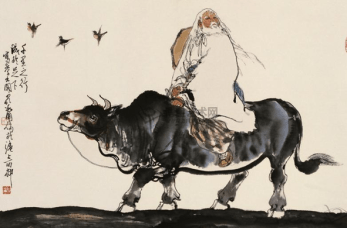
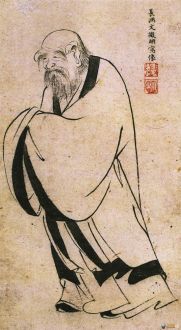
It’s said the keeper of the western gate, whose name was perhaps Yin Xi, realised the old librarian from the royal archives of the state of Zhou did not intend to return. He knew the old man as a quiet, wise character, never someone at the heart of activities, never excluded by others, an observer, seldom observed, always ready to offer advice, not eager to thrust himself forward, often ignored, never wisely. The gatekeeper called, ‘Old Master, Laozi! If you intend not to return, if you mean to renounce the world, then leave a record of your thoughts. Write me a book to remember you by.’ The old man climbed down from his humble oxcart, borrowed pen and ink. A few hours later, he handed Yin Xi a script of some 5000 characters and then continued westwards, never to be seen again.

a-journey-of-thousand-miles

So the poems of the Daodejing are a gift, freely given at a point of change, a gateway to new experience. They are also a turning away from the world (Laozi is said to have despaired of its venality and corruption), yet a transmission intended to aid, an inspired out-pouring of poetry as much as a moral and political handbook. Perhaps above all we should think of them as a response to a personal request. Bertolt Brecht’s 1938 poem, ‘Legend of the origin of the book Tao-Te-Ching on Lao-Tzu’s road into exile’, seeks to praise the “customs man” who “deserves his bit. / It was he who called for it” (tr. John Willett). Modern scholarship, of course, has long since stripped away such eloquent myths. Most likely, the current 5000 characters of the Daodejing were far fewer to begin with, a series of orally transmitted seed verses compiled by many hands, an aide memoire, certainly an aid to teaching from as far back as the 7th century BCE. Passed on orally, then transcribed, with the usual levels of error, displacement, ‘correction’ and happenstance, the text has also been subject to the Chinese tradition of written commentaries and these intercalated texts have themselves become vanishingly absorbed into the original. Such an uncertain state of the text legitimates considerable levels of ‘correction’ for most would-be translators; in this case, I have excised material only from ‘Dangers of prominence’ (Chapter 13) and ‘The great clamour’ (Chapter 23), silently removing a few lines of (what I thought of as) redundant repetition.

41mGYLTsCVL._SX331_BO1,204,203,200_

Yet the poems are still vivid, astonishingly fresh, irresistible. They are also still subject to continuing textual debate and archaeological inquiry. The standard text has long been the one associated with the scholar Wang Bi (226-49CE) which divides the Daodejing into 81 Chapters and those into two sections. On the importance and insights of Wang Bi, see Wagner, Rudolf G., The Craft of a Chinese Commentator: Wang Bi on the Laozi (SUNY Press, 2000). The Dao or Way is made up of the first 37 Chapters; the De or Power occupies Chapters 38 to 81. But an archaeological dig as recently as 1973 at Mawangdui revealed two new versions of the text, dating from around 200BCE. Surprisingly, both Mawangdui texts reverse this order and some recent versions into English have adopted this change. Most notably, see Robert G. Hendricks who produced a re-shaped Lao-tzu Te-Tao Ching: A New Translation Based on the Recently Discovered Ma-wang-tui Texts (Ballantine Books, 1989). Also see D. C. Lau’s second translation of the texts published as Lao-Tzu Tao Te Ching (Everyman Books, 1982). I have not done so. The traditional division between the Way and the Power of the Dao is by no means watertight or proven but I feel it makes more sense to explore the nature of the Way before considering its more specific manifestations. Also, as a sequence of poems, ‘Nursery’ (Chapter 1), summing up as it does so much of what is to follow, surely has to come first.

Though probably the work of many hands over many years, it’s still hard not to hear (with Wang Bi) a distinctive voice, a coherent poetic style – alluringly laconic, clipped, coolly enigmatic; it flaunts its paradoxes, is boldly metaphorical, juxtapositional, repetitive to the point of liturgical, urgent, unashamedly epigrammatic. In short, we seem to hear Laozi writing a kind of poetry which enthusiastically accepts that its profound and heartfelt messages are inevitably compromised by the need to express them in the form of language, hence demanding that it employ a variety of technical manoeuvres, that it stays light on its feet. Of course, language is imperfect but it’s what we must use and I have given titles to each of the Chapters to encourage contemporary readers to approach them in large part as language, I mean as poetry.

laozi-painting

For a text so geographically, culturally and temporally remote, some consideration of key images and ideas is necessary. The Dao is not an individual entity, still less anything divine, it is more a mode of being that is all encompassing, a phenomenal, an existential primacy – perhaps akin to the western idea of original chaos. It can usefully be seen from epistemological, temporal, perceptual, political or environmental perspectives, though none of these exhaust its real nature. It is not subject to time yet contains it. It is never fixed. It is the ever-here, both omnipresent and unchanging. We might be tempted to say the Dao is the substratum of all things, the ground base – but language’s introduction of levels and hierarchical ideas is not helpful to our already feeble grasp of it. Certainly, it is the whole, the one that precedes the many.

So these poems explore how the Dao becomes manifest in the individual objects, the actions and creatures of the world we are familiar with. They suggest the Dao initially gives rise to two things, heaven and earth (‘Nursery’ (Chapter 1)) and the poems subsequently make use of the formulation ‘the ten thousand things’ to suggest the Dao’s proliferation or subdivision into all there is. It is in this way that the Dao is the mother of all things (‘Of all things’ (Chapter 25)); it is like water, a pool from which all things draw life (‘Something greater’ (Chapter 4); it is the uncarved block of wood that has inherent within it all things that have been, are, will be (‘Uncarved wood’ (Chapter 15). Most importantly, the Dao is beyond conception and so beyond any conventional use of language, the limits of which constitute a recurring motif in the Daodejing: ‘Nursery’ (Chapter 1); ‘Awareness (Chapter 56); ‘Store (Chapter 81). Of course, our quotidian lives must pass in this ‘fallen’ state, full of a misplaced confidence in the reality of the ten thousand things, including our own discrete selves, so Laozi emphasises – in recurrent images of reprise or re-visiting – that only if we can return to a more clear awareness of the presence and reality of the Dao, can our behaviour and experience of life be more true, fulfilled, harmonious. Tennyson’s otherwise unremarkable poem, ‘The Ancient Sage’ (1885), describes approaching the “mortal limit of the Self” and passing “into the Nameless [. . .] and thro’ loss of Self / The gain of such large life as match’d with ours / Were sun to spark – unshadowable in words”.

images

 Part 2 of this Introduction to the Daodejing will be posted next week (and is now available by clicking here).