More than 10 years of blogging on poetry and translation – over 75,000 views in 2025 – now captured and preserved at the UK Web Archive: 'one of the top 10 poetry blogs' (Rogue Strands)
Wishing all my blog readers this season’s greetings.
Quite unseasonally perhaps, here is an image of a gazelle – gazella dorcas – the kind of one Rilke is writing about in my translation below, with that ‘listening, alert’ look. The other extraordinary image that Rilke imcludes here is of the hind legs: ‘as if each shapely leg / were a shotgun, loaded with leap after leap’. This is one of the New Poems, written by Rilke under the influence of the sculptor, Auguste Rodin. Rilke learned from Rodin’s insistence on ‘looking’ closely at a subject, as well as his impressive work ethic!
Enchanted one: how could the harmony of two chosen words ever match the rhyme that comes and goes within you? The way branch and lyre start from your brow like a sign
and every part of you is like a lover’s song, the words falling tenderly as the rose lets drop petals on one who does not read on, but, shutting his eyes, lets the book close
to gaze at you: as if each shapely leg were a shotgun, loaded with leap after leap, undischarged, while your head tilts on your neck,
listening, alert: a girl who has ventured deep into a wood, startled by sounds as she bathes, the glint of forest pool on her upturned face.
This is one of five new translations which have just been posted at The Fortnightly Review. Click the link below to see the others – ‘Departure of the Prodigal Son’, ‘Pieta’, ‘God in the Middle Ages’ and ‘Saint Sebastian’.
For a writer who has published over 30 books of poetry and prose in his native Germany, we have had too little of Durs Grünbein in English. Michael Hofmann‘s Ashes for Breakfast (Faber, 2005) introduced some of the earlier work and described Grünbein as possessed of melancholia, amplitude, a love of Brodsky, a love of the Classics, plus wide-ranging interests in medicine, neuroscience, contemporary art and metaphysics. John Ashbery praised Grünbein, identifying his subject as “this life, so useless, so rich” and the challenge to any translator is precisely this breadth and ambition. Happily, Karen Leeder is proving to be a really fine conduit for Grünbein’s work and here she triumphantly tackles his 2005 sequence of poems about the firebombing of his hometown, Dresden, by American and British planes in February 1945.
Porcelain is a sequence of 49 poems, 10 lines each, rhymed and grounded in Classical metre and given an air of Classical elegy by its subtitle, ‘Poem on the Downfall of My City’ (‘Poem vom Untergang meiner Stadt’). But if resolution, consolation or summing-up might be expected, this is, definitively, not what we get. The title, of course, refers to the Meissen pottery which, from the eighteenth century on, brought Dresden its great wealth and fame. But it is also a pun on the poet to whom the sequence is dedicated: Paul Celan. In Celan’s poem ‘Your eyes embraced’ there is an effort to swallow the ashes of genocide but they return to the throat as ‘Ash- / hiccups’, an image repeated in Grünbein’s opening poem: “It comes back like hiccups: elegy”. The sequence does indeed hiccup in the sense of its jerky shifts of tone, its multi-faceted images of Grunbein himself and in its close to choking articulation of the horrors of the Dresden bombing.
Paul Celan
A self-conscious awkwardness or self-questioning is clear from the start: “Why complain, Johnny-come-lately? Dresden was long gone / when your little light first appeared”. Grünbein was born seventeen years after the bombing and accepts he cannot ‘witness’ the event in any simple way. But personal details do surface in the sequence such as in poem 8 where the young boy grows familiar with the still evident urban destruction: “proud and mute . . . the ravaged city”. He senses something of “that glory passed away” but can hardly know “the things [his] mother saw, / scarcely five years old” (poem 10). Later poems remember moments when his mother’s doll was in danger of the flames (“Flames as high as houses sucked the air along the streets”), but was rescued, unscathed, “or that is what they say” (poems 40/41). Leeder explains in her Introduction that Grünbein has been criticised in part for a sentimentality and this is perhaps such a moment. But the indication that this is reportage (family reportage at that) gives permission for sentiment and Grünbein is fully conscious of (and in control of) the massive swings in tone through the whole sequence. Poem 48 is one that might also lay itself open to charges of sentiment, focussing on a pair of lovers (Martha and Heinrich) seemingly caught up in the devastation: “Kids, the pair of you, first kisses in the thick of war, / until you met that night you’d grown up in uniform”. But Grünbein works repeatedly through allusiveness and intertextuality, so this Romeo and Juliet trope is hardened and complicated when we hear that, not only was the German air defence’s grid reference for Dresden code-named ‘Martha-Heinrich 8’, but also that both names recall characters in Goethe’s Faust.
In poem 38, Grünbein seems equally aware that some of his images of Dresden after the bombing might be open to the same criticism of a hyper-emotional tone. “Five long weeks upon the Altmarkt square, the horses / scratched the straw and watched the griddled corpses / burn. Mawkish? Ach, give over, late-born soul”. As this example shows, the sequence does confront the horrors unleashed on the city as in poem 22: “Are those people popping like chestnuts between / the gutted trams?” But looked at more carefully, even this grisly observation is nominally from the perspective of a stone angel on the cathedral roof. It is this continual innovation and manipulation of perspective that is important to the poems’ purpose and how we should read them. One important perspective Grünbein explores is the victim-narrative that predominated in thinking about the event in post-war East Germany and more recently. One aspect of this is the placing of the Dresden bombing in the historical context of German bombing of Warsaw in 1944 and the German’s systematic persecution of the Jews. Dresden’s fate did not rise ex nihilo. This latter myth, Grünbein embodies in the eroticisation of the bombing – the city as defenceless virgin – as in poem 45’s image of the city and the Elbe: “River like a sash of silver draped round her hips / enticing in the moonlight”.
Aerial View of Dresden circa 1930
From such examples, it’s easy to see why Grünbein’s own position on the bombing has been vociferously discussed and questioned. But he warns against using the destruction of the city as any kind of exemplum: “Let Dresden be. You won’t find what you are looking for” (poem 6). The reader understands he is also advising himself here, while, at the same time, acknowledging the human drive to interpret, to search for meaning, even in the most appalling events. The sequence’s treatment of Arthur ‘Bomber’ Harris, the RAF Commander-in-Chief during the bombing of Dresden, is interestingly equivocal. Poem 4 alludes almost invisibly to Harris’ comment on the Dresden bombing, when he suggested that objections to it were based on a sentimental image of the city as full of “German bands and Dresden shepherdesses” when, in reality, it was a Nazi munitions and transportation centre. In fact, Harris was carrying out orders from Winston Churchill: “No sweat, Arthur, you only did what you had to do” (poem 13). And in poem 23, Grünbein also notes that some more recent left-wingers in Germany have chanted ‘Thank you, Harris!’ in their efforts to question and counter more simplistic, victim-narrative commemorations of the event.
Meissen Shepherdess Figure
In such ways, Porcelain revels in its own pluralities while acknowledging and itself attempting to make some sense of an epitome of senseless destruction. The final line of the book plainly states the human need to avoid finality, the fall into fixity, yet accepts the compulsion to explain, to create meaning: “Changing places, times, dimensions as he goes—goes on—creating”. And behind all this stand those exquisite china objects, the ‘white gold’ that made the city rich and famous:
Falconers are there, vintners, nymphs with conch-shell horns,
frog-faced putti, figures riding seahorses and swans.
Groups of shepherdesses, lovely gardeners, beasts of lore . . .
Porcelain—most fragile thing”
The collision of Allied bombs and Dresden’s fragile porcelain lies at the heart of Grünbein’s poems. There was no contest, of course, though some pieces and many fragments remained and were perhaps repaired. Grünbein’s poems enact this process, collecting perspectives, often incongruous, even contradictory, but bringing them into relation with each other, not to make any definitive statement, but to hold up a mirror to us, to the recurrent tension between our need to create and our drive to destroy.
So pleased to have these 5 poems published by The Galway Review. This is another of my translation projects (working with Nancy Feng Liang, without whom none of this would be possible of course). We ‘met’ during last year’s Cambridge Poetry Festival and she was looking for an English language poet to work on Chen Xianfa’s collection ‘Poems in Nines’ (2018). The more I have done so the more I love his work. I hope you enjoy these poems.
Biographies of the three writers involved in this submission
Chen Xianfa is a prize-winning poet and journalist, born in Anhui Province, China. He has published five books of poems: Death in the Spring (1994), Past Life (2005), Engraving the Tombstone (2011), On Raising Cranes (2015; in English tr. 2017) and Poems in Nines (2018; bilingual Chinese/English, tr. Nancy Feng Liang, publ. China) which was awarded the Lu Xun Prize. A Selected Poems appeared in 2019. He has published two collections of essays, Heichiba Notes (2014 and 2021). Other awards include China’s Top Ten Influential Poets (1998-2008), the Hainan Biennial Poetry Prize (2011), Yuan Kejia Poetry Prize (2013), Tian Wen Poetry Prize (2015) and the Chenzi’ang Poetry Prize (2016).
Translators
Martyn Crucefix – recent publications are Cargo of Limbs (Hercules Editions, 2019) and The Lovely Disciplines (Seren, 2017). These Numbered Days, translations of the poems of Peter Huchel (Shearsman, 2019) won…
As I mentioned in my last blog post, much of my time through lockdown and in the last few months has been taken up with translation. One of these projects is as daunting as it is exciting. Pushkin Press have commissioned me to complete a new selection and translation of the work of Rainer Maria Rilke to appear in 2023. Some of you will be aware of my earlier published versions of the Duino Elegies and the Sonnets to Orpheus (both available from Enitharmon Press). The new project will contain selections from those sequences and a good selection of earlier poems, including from the New Poems. As well as trying out a few of my new translations in this post (and the following one), the body of it is an uncut version of my recent review of Charlie Louth’s excellent book on Rilke, Rilke: the Life of the Work (OUP, 2020). A shorter version of this review appeared in the latest Agenda magazine, ‘Altered Distances’ (Vol 54, Nos. 1/2). Many thanks to the editor, Patricia McCarthy for asking me to write it.
Part I
Rilke has long suffered from two types of criticism. Among his enthusiasts, some declare his work close to sacred and therefore hardly open to ‘normal’ practices of critical analysis, at risk of spoiling the ‘bloom’ of mystery they find there. Others, of a more negative inclination, accuse him of an aloof aestheticism, a likely fatal distance from ‘real’ life. One such was Thomas Mann who can be found, Charlie Louth notes, “(rather richly) calling him an ‘arch aesthete’”. Both viewpoints risk downplaying the skilled crafting of Rilke’s work (he thought long and hard about poems as artefacts, things consciously and intricately made) but also risk mistaking the particular power of his poetry. Rilke: the Life of the Work is comprehensive, erudite, always clear and – most importantly – keeps returning us to the poetry to which Louth enthusiastically responds: “When we read Rilke, the poems do not feel aloof, and they do not feel merely aesthetic in their claims. They press upon us and make us examine ourselves, and they help us experience our life in the world with greater clarity and depth”. Most readers will recognise this as an allusion to the ‘Archaic Torso of Apollo’ (from New Poems) which concludes “You must change your life”. Louth again: “It is unusual for Rilke to be so direct, but as I see it a similar spirit animates most if not all of his poems”.
This book aims to bridge the gulf between enthusiastic, non-specialist readers of poetry (Louth translates his foreign language quotations himself) and the German lang/lit academic and student. The balance between engaged readability and academic thoroughness is very well judged. I particularly value Louth’s close readings of ‘the work’, viewed as objectively as possible (Louth declares early on that he has no “overarching thesis”). There are other readily available biographical and critical works, but the strength of Rilke: the Life of the Work is that, with its discussion of the formal choices, wording and syntax of so many poems, it is a comprehensive attempt at ‘Reading Rilke’. The structure of the book’s 600 pages is primarily chronological, from the poet’s earliest publication, Lives and Songs (1894) through to Vergers (1926). Louth only departs from this chronological survey twice. Early on, he looks at several poems that open Rilke’s published books, then, in Chapter 6, he discusses the four poems Rilke wrote as requiems.
Lou Andreas Salome
So Louth’s Rilke is a craftsman and moralist who urges us to live better. The kind of closed system of a purely aesthetic art was the poet’s abhorrence. In a lecture he gave early in his career, Rilke is already sure that “‘art is only a path, not a destination’. In a letter to Lou Andreas-Salomé in 1903 he confirms: ‘I do not want to tear art and life apart; I know that in the end they are one and the same’. As so often, Louth articulates his subject’s attitude with great clarity: “for Rilke, there can be no question of shutting oneself away from life, of retreating into the work, and the desk, if it is to be the place of necessary writing, must be a ‘vitale Mitte’, a site right in the middle of life and exposed to all its risks and promises. To write is not to withdraw but precisely to engage”.
Rilke’s poetry pays particular attention to the processes of change associated with being human. Poems record such moments of change but also act, in the process of being read and openly experienced, as opportunities where change in an individual might take place. For those with faith in literature, Louth articulates the exciting prospect: “to read at all is to pause, is to take your time in times when an anxious haste pervades much of what we do. In some sense it is to live better whether poetry makes anything happen or not”. Writing to Thankmar von Münchhausen in 1915, Rilke asks, “What is our job if not, purely and freely, to provide occasions for change?” Louth finds these ideas in ‘Eingang’ / ‘Entrance’, one of the poems Rilke placed at the start of The Book of Images (1902/06). The furniture of this poem – the self, a house, a tree – is a grouping that recurs throughout Rilke’s work and what interests him is the suggestion that, as we leave the familiarity of our house, “the house of our habits, we enter the imaginary space of another building [. . .] coming from life into the poem, and passing through the poem into life”. Here is my new translation of this poem:
Whoever you are: in the evening, step out
of your living room, from all that’s familiar;
in the distance, the last thing, your house:
no matter who you are.
And although your eyes have grown so weary
you can barely lift them from the worn threshold,
slowly, with them, you still raise a black tree
and set it before the sky: lean and alone.
And you have made a world. And it is immense,
like a word, in silence, it continues to grow.
And as your will grasps its significance,
so your eyes, tenderly, let it go . . .
Portrait of Rainer Maria Rilke, 1928, by Leonid Pasternak
For Rilke’s own life and work, the key meeting was with Lou Andreas-Salomé in May 1897. Lou changed his handwriting and his name (from René to Rainer), but it was the confidence and groundedness in the world that she brought to his life that pushed his art “closer to the details of lived experience”. Rilke himself wrote: “The world lost its cloudiness [. . .] I learnt a simplicity, learnt slowly and laboriously how simple everything is, and I gained the maturity to talk of simple things”. Lou’s influence can be seen in the lecture he gave in Prague in 1898, where he distances himself from Symbolism and aestheticism (the dominant strands of ‘modern poetry’ at the turn of the century) to argue that the artist must not be “shut out of the great channel of life”, but must evoke the constant dialogue between the individual and things, “the strange coincidences between inner and outer out of which experience is made”. As Louth says, this is an early statement of the theme which will occupy his whole life.
Here is a brief poem – actually naming Lou and indicating her influence in persuading Rilke of the sacredness of the ordinary. It went unpublished for years, but was part of Rilke’s sequence called To Celebrate You (Dir zur Feier):
The rain runs its chilly fingers
down our windows, unseeing;
we lean back in deep armchairs
and listen, as if the quiet hours
dripped from a weary mill all evening.
x
And then Lou speaks. Our souls incline
one to another. Even cut flowers
at the window nod their topmost bloom
and we are completely at home,
here in this tranquil, white house.
For Rilke, the successful poem is a space in which the mysteries of things and personal confession are both explored, or revealed, simultaneously. Louth argues that, from the outset, Rilke’s view of this was always positive: “there is no unnerving consciousness of the self ’s arbitrary dependence on chance encounters with the outside world”, but equally, there is “no doubt about the existence of an underlying unity to which the poet has access”. What he feared was ‘the interpreted world’ (‘der gedeuteten Welt’), a world view shorn of all mystery, a perspective that perhaps most of us inhabit, a view in which language has become dominantly instrumental, “narrowing our vision so that life appears cut and dried without any possibility of the unknown and the unknowable”. Louth explains what readers of Rilke value in his work: “poetic language, as he understands it, is precisely a way of talking that avoids directness and allows the mutability of experience and the mystery of the world to be expressed. It releases rather than limits possibility”. Beyond this stands what Rilke might have meant by the term ‘God’. ‘He’ is “an experience of totality, life felt as a whole, in which self and other are not distinct or momentarily lose their distinctness”.
Here is my new translation of an early poem from The Book of Hours (Das Stundenbuch) in which Rilke is developing these ideas:
You, the darkness from which I came,
I love you more than the flame
scoring the world’s edge
with a glimmer
upon some sphere,
beyond which no-one has more knowledge.
x
Yet the darkness binds everything into itself:
all forms, flames, creatures, myself,
it seizes on them,
all powers, everything human . . .
x
And it may be: there is an immense might
stirring nearby –
x
I believe in the night.
It is in part because the enemy of mystery is language (too casually used) that poetry (constructed from language more carefully used) has an advantage over other art forms like painting. There’s an irony here, of course, because Rilke learned so much from other workers in the fine arts. Most know about the debt he owed to Rodin and Cezanne, but Louth argues Rilke’s journey towards the poetics of the New Poems began in the period he resided in the artists’ community in Germany at Worpswede. A lot of his thinking there concerned images of man and landscape. For the majority of the time, humans and nature live “side-by-side with hardly any knowledge of one another” and it is in the ‘as if’ of the work of art that they can be brought closer, into a more conscious relation. But because a poem works through time, such a correspondence is acknowledged as “something one traverses and gains knowledge of but cannot hold onto”.
My earlier postings on ekphrastic poetry – poems inspired by visual art – have proved astonishingly popular and, when Agenda magazine asked me to review two collections with exclusively ekphrastic intentions, I leaped at the chance. I’m posting this now because the reviews have just appeared in the latest Agenda, a journal well-worth subscribing to. As will become clear, in what follows I am more persuaded by Seamus Cashman’s book, The Sistine Gaze (Salmon Poetry, 2015) than David Pollard’s Three Artists (Lapwing Publications, 2017). But both provide much food for thought on the relationship between poetry and the visual arts and evidently there are a lot of us fascinated by this sort of writing.
David Pollard’s book is divided into three sections, one each on Parmigianino, Rembrandt and Caravaggio. Initially, Pollard presents a set of 15 self-declared “meditations” on a single work of art – Parmigianino’s ‘Self Portrait in a Convex Mirror’ (c. 1524). This is a bold move, given that John Ashbery did the same thing in 1974 and Pollard does explore ideas also found in Ashbery’s poem. Both writers are intrigued by a self-portrait painted onto a half-spherical, contoured surface to simulate a mirror such as was once used by barbers. The viewer gazes at an image of a mirror in which is reflected an image of the artist’s youthful and girlish face. It’s this sense of doubling images – an obvious questioning of what is real – that Pollard begins with. “You are a double-dealer” he declares, addressing the artist directly, though the language is quickly thickened and abstracted into a less than easy, philosophical, meditative style. It is the paradoxes that draw the poet: “you allow the doublings / inherent in your task to hide themselves / in open show, display art that / understands itself too well”. Indeed, this seems to be something of a definition of art for Pollard. “Let us be clear”, he says definitively, though the irony lies in the fact that such art asks questions about clarity precisely to destabilise it.
The 15 meditations are in free verse, the line endings often destabilising the sense, and they are lightly punctuated when I could have done with more conventional punctuation given the complex, involuted style. Pollard also likes to double up phrases, his second attempt often shifting ground or seeming propelled more by sound than sense. This is what the blurb calls Pollard’s “dense and febrile language” and it is fully self-conscious. In meditation 15, he observes that the artist’s paint is really “composed of almost nothing like words / that in their vanishings leave somewhat / of their meaning” – a ‘somewhat’ that falls well short of anything definitive. Of course, this again echoes Ashbery and appeals to our (post-)modern sensibility. Pollard images such a sense of loss with “a rustle of leaves among the winds / of autumn blowing in circles / back into seasons of the turning world”. He does not possess Ashbery’s originality of image, as here deploying the cliched autumnal leaves and then echoing Eliot’s “still point of the turning world”. Indeed, many poems are frequently allusive (particularly of Shakespearean phrases, Keats coming a close second) and for me this does not really work, the phrases striking as undigested shorthand for things that ought to be more freshly said.
The Rembrandt poems have a similar tone and style, not surprisingly when most of the focus is again on the mirroring and self-reflection of his self-portraits: “Skin and paint are different stuffs / as he was a different species from himself / reflected”. Perhaps there is less playfulness here than in Parmigianino’s trompe l’oeuil image, more of an obvious darkness in the dusky, obscure backgrounds: “These images were born in thoughts of his departing / and in the horror of identity, of selves, of ruins”. Yet there is more variety of tone to be found in these poems as Pollard develops Rembrandt’s social context, his painting of pictures to please Amsterdam’s wealthy burghers and corporations, images of their self-importance for which they “paid him well”. Yet the artist himself was more interested in other, more liminal figures:
And just beyond the door, always ajar,
there in the street canal side,
in a swift moment are his old hags
and poverty and Christ, the Jews
in fur and black passed down the ages,
too many beggars and those copulating dogs
and then again wives and washerwomen
David Pollard
The final Caravaggio section of this book makes different ekphrastic choices. Pollard allows the ageing artist a direct voice in one poem, then considers 7 individual images in separate poems, then concludes again with something close to a ‘meditation’. Hearing Caravaggio speak (in ‘Porto Ercole’) is a refreshing change to Pollard’s own rather too-consistent, sometimes haranguing voice. The artist is sailing to Rome, hoping to escape a death sentence, fretting about what he has achieved: “I am only spine and marrow of regret / and last prayers flail along my throat / and my weak blood is darker / than those holy tenebrae I drew art from”. Elsewhere we hear of the artist’s earlier life, hawking more conventional images on Rome’s street corners. Those familiar with Caravaggio will know what to expect: the play of light out of thick slabs of shadow and “[p]lain speech not mannered rhetoric”. Such a visual ‘plain speech’ is well described in ‘The Entombment’ with Christ’s “liminal grey flesh / full of the pure weight of the physicality of loss”. Also, in ‘The Rising of Lazarus’, it is suggested that Caravaggio employed grave robbers to “drag a grave” for a real, decaying corpse since “he only painted from grit and real”. The language here has some energy, but I doubt its precision in such choices as “drag” and “grit” – the former tries too hard, the latter not hard enough. Pollard’s liking for abstraction can also be harmful as in these final lines on Caravaggio, which leave me puzzling, though not in any good way:
Thus it can show only how
the insignificance of objects
waits for it, accepts it,
and then drowns in its almost too late a dusk
and ochre of our being
hewn out of nothing more than the liquidity
that holds invisibility at bay against oblivion.
Caravaggio’s ‘The Raising of Lazarus’
In contrast to Pollard, Seamus Cashman lets us partake of the very moment when his single long poem began. Re-visiting the Sistine Chapel, we are told his eyes fall on a painted figure in a white, pseudo-architectural, triangular frame – a woman in a green jacket. He goes on: “Her eyes hold mine, and the word ‘gaze’ slips into my mind. As I stare she seems to invite me to converse”. The resulting ‘conversation’ is the extraordinarily ambitious poem that follows, drawing on Michelangelo’s work on the ceiling of the Chapel (completed in 1512) and the altar wall (completed 1541). This admittedly touristic, but originating moment is poetically recast in Cashman’s Prologue as an epiphanic encounter: “This face centres a still point, draws me up and in. She is waiting. I attend”.
In fact, the woman is hardly given a voice and the substance of the sequence is dominated by the (male) artist’s reflections on his years-long task. He’s most often found “between this scaffold floor and ceiling”, complaining about his “craned neck”, pouring plaster, crushing pigments, enumerating at great length the qualities and shades of the paint he employs (Cashman risking an odd parody of a Dulux colour chart at times – “Variety is my clarity, / purity my colour power”). Later, we hear him complaining the plaster will not dry in the cold winter months. We even hear the artist reflecting on his own features, the famous “long white beard and beak-like nose”. These period and technical details work well, but Cashman’s Michelangelo sometimes also shades interestingly into a more future-aware voice, melding – I think – with the poet’s own voice. So he remarks: “Getting lost is not a condition men like me endure or venture on today. / All GPS and mobile interlinks enmesh our every step”. Later, a list of “everything there is” sweepingly includes “chair, man, woman; laptop or confession box”.
At one point, Michelangelo recalls working on a great marble block that fell and shattered, “bartering monumentalities / that break backs”. And I do worry that the sheer ambition of this project has led to awkward monumentalities in the texture of Cashman’s verse. He surrounds his poems with thickets of rubric. So on page 31, the reader is told that she is about to begin Book 1, called ‘Creation’, this being Part II, called ‘In the Mirror of Creation’s Dust’ and that this book consists of Verses 65-117 and that, firstly, comes Movement 9 (which runs from verses 65-67) and that the opening passage has been given the title ‘Convinced we are awake’. This gives the whole thing a clunky, pseudo-scriptural quality which (on my reading) doesn’t really fit with Cashman’s overall purpose and its enumerative, even obsessive titling and sub-titling certainly and frequently derailed this reader’s imaginative and emotional engagement with the poems. I suspect this decision arose as a response to the sheer fecundity, the multifarious nature, of Michelangelo’s Sistine work. It may also account for Cashman’s frequently rather grandiose register, his occasional drifts into archaism, the ubiquity of rhetorical gestures like lists of three (or even four) and the self-conscious habit of using nouns as verbs (thigh, sex, tray, story).
But as a result, Cashman’s verse has a Whitmanesque quality (the long lines) and can bring to mind Blake’s Prophetic Books; it has dashes of Hopkins’ alliterative energy. At one point the voice wants “to sing. I want to sing the body tune, / the rhythms of blood, the living heart” but I found myself wishing for a little less such effortful transcendence and a more Traherne-like, child-like, simplicity of diction which is still capable of conveying what Michelangelo declares, at a late stage, that “our instinct is infinity”. This might also sit more comfortably with Cashman’s Michelangelo’s intentions which seem to be to give “hope to some pilgrim searching my cabinet for direction and new ritual”. I think we are meant to see Cashman himself as this “pilgrim”, a latter-man, having lost his Catholic beliefs, but visiting the Chapel in search of a new vision.
Seamus Cashman
Certainly, the Michelangelo-voice does not seem to be speaking of his works in a confined 16th century fashion as art in praise of God. More like a modern poet, he says “all we need / are words of admiration drafted with compassion for the flesh and bone we are”. Later, reflecting on the nature of the human self, he describes it as a “mobile installation, unfixed and indeterminate [. . .] emotion in the making”. Many verses in the poem celebrate the sexuality of “Eve ‘n Adam—penetration – vulva open to erection; risen nipples; hanging scrotum; nosing cheeks / all the open flesh and pleasured nerve-ends”. And alongside this, the poem works towards a modern – or perhaps it’s a Blakean – godless vision of human life where “heaven is adoration of knowledge, and god is who we know ourselves to be”.
Curious and bold then, that Cashman ekphrastically takes on the Sistine Chapel and then writes God out of the picture. Nor does he shrink from the shelf-clearing consequences for our conventional spiritual understanding. The idea of the “Soul” is now little more than a “word. It frightens children and old painter sculptors weakened by the weight of brush and mallet. Soul. / Nothing knows its place”. Likewise, The Sistine Gaze concludes its frequent lauding of human sexuality with a recognition of the plain fact of its opposite, death: “this finality, expired into a nothingness we each possess. Dead is dead”. Even the genius-artist himself is finally and ironically “absorbed in the great womb of chaos he created / leaving us to falter, wonder, and pass on / for we know nothing”. These lines are some of the concluding moments of the book and they possess a lighter touch than the majority of it. Cashman here allows the white space around his printed words to work its magic more effectively, creating a rhythm and a chain-link of tensions which add to the reader’s experience. For all its intended monumentality and dizzying ambition (which has led the poet to erect too much scaffolding around his poems), this quiet end-piece is for me the most affecting moment of the whole book: “our end is an endless breath / to fill – to vitalise / and imperceptibly / to let go— / never to know”.
One of my very first reviews here – in August 2014 – was of Liz Berry’s Black Country. I was so impressed with the ways in which she exerted “pressure to counter the hegemonies of language, gender, locality, even of perception”. Most obviously she was doing this through the use of her own Black Country dialect, but I thought a more profound aspect of this was how “so many poems unfold[ed] as processes of self-transformation”; transgressive energies were being released through language, the erotic, myth-making and the surreal. The earlier book concluded with poems anticipating the birth of a child and – at the time – I felt these were less startlingly good, inclined to fall into ways of saying that the rest of the collection so triumphantly avoided.
It’s interesting then – in The Republic of Motherhood (Chatto, 2018) – to read more of Berry’s poems written since then, since the birth of her two sons and after a period of relative creative silence (more of that later). I nominated six stand-out poems from Black Country that I felt would establish her reputation – and the title poem of this pamphlet must be added to that list. It’s the most political of the fifteen poems and is propelled by the tensions located between motherhood as social norm or expectation and the personal/social grain of that particular experience. The paradox of the opening lines is that entering into the republic of motherhood (shades of Seamus Heaney’s 1987 The Haw Lantern, with its ‘From the Republic of Conscience’), the mother also discovers a monarchy, a “queendom, a wild queendom”. Much of the poem lists the realities of early motherhood – the night feeds, the smelly clothes, the exhaustion, the clinics and queues – a great democracy of women taking up a particular role. But there are signs too of an external compulsion, a set of expectations to be lived up to. The mother is expected to play the queen too as she pushes her pram down “the wide boulevards of Motherhood / where poplars ben[d] their branches to stroke my brow”. The public role of motherhood comes with demands: “As required, I stood beneath the flag of Motherhood / and opened my mouth although I did not know the anthem”. As much as any new parent feels woefully inadequate and ignorant of the needs of their young child, the young mother is faced with additional social expectations about instinct, affection, abilities and fulfilment which are quite impossible to realise. And on this point, there remains a conspiracy of silence: “[I] wrote letters of complaint / to the department of Motherhood but received no response”.
The mother in the poem also suffers postpartum depression and Berry seems here to allude to experiences of First World war soldiers, wounded, repaired and sent back out to fight again, without fundamental issues being addressed: “when I was well they gave me my pram again / so I could stare at the daffodils in the parks of Motherhood”. She ends up haunting cemeteries, both real and symbolic, and it is here she finds even more tragic victims of motherhood, of birth trauma and of psychosis. The final response of the poem is to pray – though it is a prayer that has scant sense of religion but combines empathy with other women with a great anger expressed in the phrase “the whole wild fucking queendom [of Motherhood]”. The paradoxically inextricable sorrow and beauty of motherhood becomes the subject of the rest of the pamphlet, but this poem ends with the mother echoing a baby’s “nightcry” and erasing her own self, “sunlight pixellating my face”. The poem’s rawness is unresolved. Having crossed the border into motherhood (that decision is never questioned here), the contradictory pulls of Motherhood (capital M) and the stresses of mothering (small m) have a devastating impact. In a recent poem called ‘The Suburbs’ – Berry’s contribution to the National Poetry Competition 40th Anniversary Anthology – she records the effect of mothering even more starkly: “my world miniaturised”. Listen to Liz Berry talk about and read this poem here.
After the tour de force of ‘The Republic of Motherhood’, the pamphlet takes a more chronological track. ‘Connemara’ seems to mark the moment of conception as a moment of self-abandonment (“I threw the skin to the wind, / sweet sack”) which, in the light of the preceding poem, takes on greater ironies of naivety: “Let them come, / I thought, / I am ready.” One of the joys of Berry’s work is her sense of the animal-physicality of the human body (revel in ‘Sow’ from Black Country) and ‘Horse Heart’ figures a ward of expectant mothers as a farmyard stable: “the sodden hay of broken waters, / each of us private and lowing in our stalls”. She captures the high anticipation and potentially brutal arrival of the all-demanding babies as a herd of horses; “the endless running / of the herd, fear of hoof / upon my chest”. These two poems can be read here.
Birth itself, in ‘Transition’, is to be feared (“I wanted to crawl into that lake at Kejimakujik”) and gotten through in part by absenting oneself into the past in ‘The Visitation’. The latter is addressed to Eloise, a figure who appeared in a Black Country poem, ‘Christmas Eve’. Here, a schoolgirl memory of a loving encounter with Eloise takes the narrator away from the pains of contractions, “as my body clenched and unfurled”. ‘Sky Birth’ is the one poem that challenges the brilliance of ‘The Republic of Motherhood’. It takes the image of climbing a mountain to evoke the physical pain and endurance required (Berry welcomes all those traditional associations with spiritual climb and progress), yet the poem never loses its sense of the real situation. The breathlessness of the climb suddenly flips back to the mother howling “over the voice of the midwife, the beeping monitors”. It is the figurative climb as much as the literal pain of giving birth that makes her “retch with the heights” and in the final moments, the mountaineer is “knelt on all fours” as most likely was the mother-to-be. The height is reached in a moving conceit:
when it came it came fast, a shining crown
through the slap of the storm,
for a second we were alone on that highest place
and love, oh love,
I would have gladly left my body
on that lit ledge for birds to pick clean
for my heart was in yours now
and your small body would be the one to carry us.
That final plural personal pronoun reminds me of a comment made by Jonathan Edwards in reviewing this pamphlet. Edwards wonders briefly about the absence of the father figure. Is the ‘us’ here the mother and child? Or is this one of the few references in the pamphlet to both parents?
I hope this is not just a male reviewer’s concern. It may be an artistic or political decision on Berry’s part. Or a personal one. But given the thrust of much of the work – that mothering is an utterly taxing and even deranging experience – I’m troubled by the father figure’s absence, if only in that it risks representing the idea (the toxic flip-side to the expectations laid on the mother) that fathers need have little part to play. The father does appear in the final poem, ‘The Steps’, though the questioning tone and syntax casts doubt over what of the parents’ relationship will survive the experience of the child’s arrival: “Will we still touch each other’s faces / in the darkness”. I also wonder if the father figure is implied in the image of a boy riding his bike up Beacon Hill in ‘Bobowler’. This is a beautiful poem on the image of a moth (‘bobowler’ is the Black Country word for a moth). The moth is a messenger, coming to all “night birds”. The boy on the bike is one such, his heart “thundering / like a strange summer storm” which perhaps echoes those thundering hooves of the approaching young child. Perhaps there is some recognition here that the father’s world too will be turned upside down. And the message the bobowler brings may also relate to the parental relationship: “I am waiting. / The love that lit the darkness between us / has not been lost”.
But such optimism is not a frequent note. Most of the remaining poems deal with the experience of depression in motherhood. ‘Early’ is almost as happy as it gets with mother and child now like “new sweethearts, / awake through the shining hours, close as spoons in the polishing cloth of dawn” (what a glorious image that is). But even here there are demands from the child that will need “forgiving” by the mother. One of these concerns her role as writer, particularly the difficulty of writing in the maelstrom of mothering: “every line I wanted to write for you / seems already written, read / and forgotten”. And this is why Berry chooses to co-opt lines from Charlotte Perkins Gillman’s terrifying story, The Yellow Wallpaper in ‘The Yellow Curtains’. Both texts can be read as studies of postpartum depression, but the despair has as much to do with the women as writers, confined, and – as in Gillman – the husband voices the demands and expectations of convention, of queendom: “He said [. . .] I must / take care of myself. For his sake.”
‘So Tenderly It Wounds Them’ is a more public account of the trials of young motherhood, of women who “are lonely/ though never alone”, women who find themselves “changed / beyond all knowing”, waking each morning only to feel “punched out by love”. The more recent poem ‘The Suburbs’ also contains the same paradox that motherhood is a state of “tenderness and fury”. ‘Marie’ seems to record a debt to a supportive female friend and it is only through the ministering (that seems the apt word) of “women in darkness, / women with babies” in ‘The Spiritualist Church’ that the young mother’s despair has any hope of being redeemed. Redeemed, not solved, of course: what the women argue is that “love can take this shape” and perhaps it Berry’s sense of art, or her personal experience, or a recognition of human resilience, or a final succumbing to a traditional narrative, that makes her place ‘Lullaby’ as the penultimate poem. It ends sweetly though the final poem sends us back to the start of it all – the dash to the hospital. So Berry book-ends this little gem of a collection with time shifts that argue motherhood’s simultaneous complexity of animal and human love as well as its pain and awful boredom and personal diminishment.
Two weeks ago, I was invited to deliver a brief, personal talk about Lorca’s poetry, particularly from the perspective of translating it. Last week I blogged part of this talk, looking at the poem, ‘Reyerta’, alongside my new translation of it. I confessed then, I have always found Lorca’s poems difficult to work on – though they are superficially both alluring to the translator and seemingly straightforward – though, in what I said last week and in what follows, I hope to show I have made some headway with them over the years. Here, I am discussing Lorca’s well-known poem (also from the Gypsy Ballads collection) called ‘Romancero sonambulo’ or, as it is usually translated into English, ‘Sleepwalking Ballad’. My full translation of the poem appears at the end of the post (an earlier version of it was published in the magazine Dream Catcher).
Later in the lecture about the Gypsy Ballads that I referred to in my earlier post, Lorca talks about other aspects of the style of these poems. He says ballads have always depended on narrative – if the ballad poet veers too far towards the lyrical, without an echo of the anecdotal, the result is not a ballad but a song. Lorca was consciously looking “to fuse the narrative ballad with the lyrical without altering the qualities of either”. And he believed he had achieved this especially in the poem, ‘Sleepwalking Ballad’. As he says of it, the poem provides the sense of an anecdote within a very dramatic atmosphere, but this lyrical ballad is also marinated in the most amazing atmosphere of mystery. A mystery that even he, the author, would not penetrate. It opens:
Green how I love you green.
Green wind. Green branches.
The ship out on the sea
and the horse on the mountain.
Shadows about her waist,
she dreams at the balustrade,
green flesh, hair of green
and eyes of chilly silver.
Green how I love you green.
Beneath the gypsy moon,
all things are watching her
and she’s unaware of them.
.
As narrative this is mysteriously brilliant and brilliantly mysterious. Unlike ‘Reyerta’ the narrative voice is expressive through the technique of repetition – 10 ‘greens’ in the opening 13 lines – suggesting an obsessive love or fascination with the colour green which seems immediately linked to a woman. The balance of the mystery is achieved with the first references suggesting fertility and fecundity, but later ones a rather queasy, uneasy discoloration of flesh and hair. The word ‘green’ almost becomes the woman’s name – “I love you green”. She is the focus of “all things”. As yet, we don’t know why she might not be aware of their gaze. The images of the ship on the sea and the horse on the mountain do little more than extend the horizon of the poem – they suggest this is more ballad than love song. There is a specific context – and, as we’ll see, it’s an important one.
The next section of the poem displays some of Lorca’s startling, surprising images: the “stars of frost”, the “fish of shadows”, the fig-tree’s “sandpaper branches”, the mountain is a “a thieving cat” that “bristles its sour agaves”. These are good examples of Lorca’s technique with metaphor: to place together two things which had always been considered as belonging to two different worlds, and in that fusion and shock to give them both a new reality. But these lines are perhaps really more about raising the narrative tensions in the poem through rhetorical questions such as, “But who will come? And where from?”
Making things no clearer, there follows a section of dialogue, apparently between the house owner and a young man, who is perhaps on the run from the authorities as he is “blood-stained from the Cabran passes”. The young man says what he seeks now is domesticity, to settle down – to exchange horse for home, saddle for mirror, knife for blanket. But the house owner cannot oblige. Not because he does not wish to, but because he cannot. Cryptically, he says “I am no more as I am, / nor is my home my home”. Only later do we (perhaps) understand his utterly compromised position.
It turns out the blood-stained youth is really hurt, from chest to chin. Another of Lorca’s great images: “Three hundred dark roses / spatter your white shirt. / All round your belt / the blood reeks and oozes”. What the two men do agree to do (though the reason for this is not obvious) is to climb to the top of the house – here I imagine a flat roof with balustrades. Here the colour green returns (paint, twilight, treetops?) and a daubing of romantic moonlight. But also – and how ominously we have yet to learn – they begin to hear the sound of water.
So up they climb. We don’t know why, but the atmosphere here is dripping with ill omen: they are “leaving a trail of blood, / leaving a trail of tears”. Then there is another of Lorca’s images yoking together unlikely items. As they climb to the roof-tiles, there is a trembling or quivering of “tiny tin-plate lanterns” and perhaps it’s this that becomes the sound of a “thousand crystal tambourines / [that] wound the break of day”. Lorca himself chose this image to comment on in his talk. He says if you ask why he wrote it he would tell you: “I saw them, in the hands of angels and trees, but I will not be able to say more; certainly I cannot explain their meaning”. I hear Andre Breton there, or Dali refusing to ‘explain’ the images of the truly surreal work. In each case the interpretative labour is handed over to us.
The reason for the climb to the roof-top perhaps only now becomes clearer. One of the men – I take it to be the house owner addressing the youth – asks where his girl is, a girl who used to wait for him on the roof top: “fresh-faced, her black hair, / on the green balustrade!” So the rooftop was one of the lovers’ meeting places. Then there’s another of Lorca’s jump-cuts of overwhelming drama. Up on the roof, as they reach it, over a rain-water tank, hangs a body:
Over the face of the cistern,
the gypsy girl was swaying.
Green flesh, hair of green,
with eyes of chilly silver.
A slip of ice-frosted moon
holds her above the water.
Did they know this? It appears not. But who is she? Daughter? Lover? Both? Is this really what the two men find there? For sure, there is some mystery about the chronology because the seeming explanation of the killing is couched as a flashback: “The dark night grew intimate / as a cramped little square. / Drunken Civil Guards / were hammering at the door”. But Lorca often plays fast and loose with verb tenses. Was this earlier? Were they in search of the rebellious youth? But they found his girl-friend? Hanging her on the rooftop? Is the house owner her father? Does he know what has happened? Is this why his house is not his own anymore? Is this why he is no more what he was? The only certain thing is that the poem does not reply. It ends with a recurrence of that opening yearning – now it’s read as a more obviously grieving voice – though it’s not necessarily to be read as the young man’s voice. It’s the ballad voice, the one I took so long to really grasp in Lorca’s work. It is a voice involved and passionate but with wider geographical, political and historical horizons beyond the individual incident. Like Auden’s ploughman in ‘Musee des Beaux Arts’, glimpsing Icarus’ fall from the sky, yet he must get on with his work, ‘Sleepingwalking Ballad’ returns us in its final lines to the wider world:
Green how I love you green.
Green wind. Green branches.
The ship out on the sea.
And the horse on the mountain.
In passing, the poem refers to the dead girl as a ‘gypsy’. By gypsy, Lorca said he intended to allude to Andalucia itself, because “the gypsy is the loftiest, most profound and aristocratic element of my country, the most deeply representative”. So there’s certainly a political element to the poem, but that’s an aspect I’ve no time to explore here.
The gateway to Richard Scott’s carefully structured first book is one of the most conventional poems in it. It’s a carefully punctuated, unrhymed sonnet. It is carefully placed (Public Library) and dated (1998). It’s the kind of poem and confinement Scott has fought to escape from and perhaps records the moment when that escape began: “In the library [. . .] there is not one gay poem, / not even Cavafy eyeing his grappa-sozzled lads”. The young Scott (I’ll come back to the biographical/authenticity question in a moment) takes an old copy of the Golden Treasury of Verse and writes COCK in the margin, then further obscene scrawls and doodles including, ironically a “biro-boy [who] rubs his hard-on against the body of a // sonnet”. Yet his literary vandalism leads to a new way of reading as – echoing the ideas of Eve Kosofsky Sedgwick – the narrator suddenly sees the “queer subtext” beneath many of the ‘straight’ poems till he is picking up a highlighter pen and “rimming each delicate / stanza in cerulean, illuminating the readers-to-come . . .”
It’s a moment of personal as well as lit/crit revelation, a funny poem and the flood-gates open in accordance with the Whitman epigraph to section 1 of the book: “loose the stop from your throat”. From here on, punctuation and capitalisation become rare breeds in Scott’s exploration of gay love, shame, trauma and history. It’s only 3 years since Andrew McMillan’s Physical graced the Felix Dennis shortlist but Scott’s parallel collection is far darker, more explicit and brutal (but not always at the same time) and with a fierce sense of obscured queer history and its literary canon.
It’s an exhilarating, uneasy, accessible, relentless read. Section 1 goes some way in the bildungsroman direction. ‘le jardin secret’ declares “boys were my saplings / my whiff of green my sprouts” while ‘Fishmonger’ perhaps is set even earlier as a young boy is taken into a man’s “capable arms” in the back of his Transit van. A more aggressive and unpleasant encounter is evoked in ‘Childhood’ in which a seedy children’s entertainer (in a “caterpillar-green silk jumpsuit”) half-bullies a young boy to take him home for sex. But the poem’s perspective also suggests the child is an agent, making the decision himself: “I nodded and gingerly led him home / by the path that winds through the cemetery”. This is difficult territory (“makes for uncomfortable reading” Scott disarmingly mimics in a later poem) but erotic desire is powerfully acknowledged and (with a more caring partner) is later more satisfyingly experienced and expressed in ‘plug’ which, tenderly and very explicitly, records the moment of the loss of virginity (in fact, to a dildo).
Interestingly, the child takes the clown “through the cemetery”. Scott won the 2017 Poetry London Competition with ‘crocodile’ which also elides, blurs, even equates sex and death. The extended simile of the crocodile dragging a young man to his death is really “that man / who held me from behind / when I didn’t know sex”. The violence and destructiveness in this case is very evident but so again is the young man’s desire: “I have these moments when I / know I wanted it asked for it”. It’s in this way such poems can make for uncomfortable reading. Scott does not simplify either the allure or the destructiveness of the erotic.
In two poems, Scott himself raises questions of authenticity. ‘Permissions’ reports, in choppy prose paragraphs, reports observations from a poetry audience, at first in admiration (“how daring how dark”), then more uneasily (“surely not this writer wasn’t”). This fragmentation evokes fleeting comments, half-finished thoughts but also an awkwardness because one of the burning questions seems to be “is the I you”. It’s as if the audience want to know if these are poems of witness, meaning of authentic biographical experience. Poems of witness also in the sense of the often traumatic nature of much of the material. ‘Admission’ is even more clear: “he asks if my poems are authentic [. . .] and by this he means have I been a victim”. In neither poem do we get a direct record of what the poet’s replies might have been and surely it hardly matters. One of the unassailable liberties of the poet is to make things up. But whether fiction or fact the resulting poem has to possess the feel of the truth and Scott’s work has this in spades.
Eve Kosofsky Sedgwick
As I’ve already implied, many of the truths these poems convey are dark and shameful ones. The third section of the book is titled ‘Shame’, again quoting Sedgwick: “Shame, too, makes identity”. Here are untitled poems which make the queer pastoral of ‘le jardin secret’ rather more complex; another boy’s look or look away prompts “the hot-face / trauma the instant rash-jam” of embarrassed blush, made even more painful by a father’s verbal abuse. Elsewhere the father says, “don’t tell anyone you’re my son” and the narrator himself bitterly opposes any easy sloganizing with “the opposite of shame is not pride”. There is some support to be found in reading books by “leo / paul / mark / jean / eve / michel” and source quotes and allusions are noted in Scott’s margins here.
Detail from the Warren Cup (BM)
It’s this very self-conscious sense of these poems appearing within a canon of queer literature and experience that jet-propels ‘Oh My Soho!’, the long concluding sequence to the book. Whitman again presides in the epigraph and in the free-wheeling, long-lined, detail-listing paean to the present, past and future of Soho itself. The narrative voice becomes a self-appointed “homo-historian” and Scott’s love of word play (which elsewhere can feel too self-conscious) here finds a suitable form and tone. The historical element takes in a discussion of the Warren Cup (in the British Museum) but is never far from subjective and exclamatory moments too. The vigorous, secretive, once-unlawful, now legal, still persecuted, lives of “homos” is noisily and slangily celebrated:
We, too, are not immune to this shameful progress; us homos are no longer revolting!
Too busy sending dick pics and I saw Saint Peter Tatchel shirtless [. . . ]
We are a long way from that library in 1998, but “normativity” remains the enemy against which Scott takes up weapons (one of which is his own body). ‘museum’ is a superbly sensual poem, expressive of a man’s desire for the damaged male body of a Classical statue. Here normativity re-appears in the “giggling pointing prodding” of a family also viewing the statue; their ridicule is self-transferred to the gay man who stands observing in silence. The persecutions pursued in the name of normativity are also disturbingly clear in ‘Reportage’, the reports being of the immolation of a gay man somewhere in Europe. And Scott’s own revolutionary and erotic zeal are unforgettably conveyed in the poem opening “even if you fuck me all vanilla”, going on with characteristically explicit descriptions of the ironically, self-consciously, unprovocatively, vanilla-ish act, he still declares at the climactic finish, “napalm revolution fuck- / ing anarchy we are still dangerous faggots”.
Surely we all have one or two Faber anthologies edited by Geoffrey Grigson on our shelves? Love Poems, Popular Verse, Reflective Verse, Nonsense Verse, Poems and Places, Epigrams and Epitaphs . . . As a critic he often wielded a savage power through his magazine New Verse. And as a big beast on the literary scene of the early 1980s, Hermione Lee interviewed him on Channel 4.But since his death in 1985, he’s better known merely as the husband of Jane Grigson, the celebrated cookery writer. His own poetry has been wholly neglected which makes John Greening’s new Selected Poems from Greenwich Exchange a welcome opportunity to re-consider it. I think Grigson’s contrasting themes were established early on. The influence of two great poets (not Eliot, not Yeats) is clear from the start and it may be that the limits of Grigson’s poetic achievement and the absence of much development in his style, are because he never chose one path or fully escaped either.
The influence of Auden is very clear in Grigson’s first collection, Several Observations (1939). ‘Meeting by the Gjulika Meadow’ presents an enigmatic narrative in a “frontier” landscape; a meeting between two men whose conversation is in large part concerned with “the thunder / about Europe”. There are sketched fragments of personal dependencies and guilts but the whole reads as a slice of narrative that has been carefully shorn of its explicatory elements. A poem from 1946 shows Grigson using similar methods but on matters much closer to home; ‘In a Dark Passage’ draws material from the deaths of two of Grigson’s brothers in WW1 and the early death of his first wife, Frances. The situations are still relatively distanced by being told in the third person and the timings of the incidents are compressed to form a litany of heartfelt if rhetorical griefs: “O floes of ice, you float downstream / But do not disappear”.
There is certainly a very dark river running through Grigson’s work. ‘Two A.M.’, from the 1970s, records a wakefulness at night filled – as so often – by nothing but questions: “all emptiness, all gravity, / Ultimacy, nothingness”. He captures vividly the way this kind of mood, at such an hour, insists on expanding exponentially, racing to fill the world’s “Sierras, monadnocks, lakes, prairies, taiga, ice”. On this occasion, there is the possibility of an erotic reply: “At least now, with our bodies close, / Be comforted”. But even that response is absent from ‘Again Discard the Night’ from the 1980 collection, History of Him. Written as a first person narrative this time, the poem pulls no punches in its flinty and unforgiving portrait of old age waking:
… you call, the kettle gathers
And talks, and Are you all right? comes your
Usual cry, and my habit insists, without sound, Reply,
Be bright, wash, shave, dress, and this once,
Again discard the night.
Of course, Grigson’s sense of an ungoverned and likely meaningless universe matched with his frequent backward glances also calls to mind Hardy’s work. One of Grigson’s earliest poems, ‘The Children’, has an 11-line stanza of complex rhyme patterning that Hardy would have been proud of. The children are portrayed as playing in a natural environment and in a state of temporal innocence: “They looked for no clocks, noticed no hours”. But ending each stanza, the triple rhyme words with “hours” are (ambiguously) “sours” and “flowers”. Between the third and fourth stanza, there is the kind leap in time often found in folk songs. We have instantaneously passed many years: “The rooms were pulled down, but they always abide / In the minds of the children born in them”. These are the best lines in the poem with the much cooler closing lines for me falling flat:
They see the clocks and notice the hour
And aware that restriction of love turns sour,
They feel the cold wind and consider the flower.
It is certainly Hardy that Grigson is thinking of in ‘In View of the Fleet’. The Fleet is the lagoon behind Chesil Beach in Dorset and the poem borrows phrases from Hardy, empathetically suggesting that each poet’s vision has the same sequential locus: “Things not as firstly well, a sparkling day, and / tolling of a bell”.
The Fleet and Chesil Beach
John Greening suggests in his very helpful Introduction that Grigson is also capable of an “extraordinary lyricism” and these are moments when he captures this “sparkling” quality of the natural world. In ‘A New Tree’, helped by the holding up of a child to a window, the narrator sees again with a newly cleansed perception, “a sun / being fiercely / let loose again”. Delight in the natural world recurs in a key poem, ‘Note on Grunewald’. In it, Grigson also expresses the scepticism about literary achievements which must have driven much of his own, often acerbic, critical comments on the work of others. In a man who devoted a lifetime to literary endeavours, it’s hard to take wholly seriously the poem’s assertion that he’d rather live to sniff the “scent of the flowers of lime” than to create lasting “poems”. But the scent is praised in contrast to the art of “Grunewald’s spotted green-rotted Christ”. Grigson sides with (“I join”) Cowper in deciding that death holds no attraction and that he too would choose to “leave this world never”. The perceived dichotomy between a vivid inhabiting of the world of the senses and the ‘rotten’ achievement of artists is by no means Grigson’s final comment on these issues, but the poem certainly expresses unresolved tensions.
Grunewald’s ‘spotted green-rotted Christ’
As Greening reminds us, Grigson as a critic was a feared and fearsome creature, liable to “dismissiveness and intolerance of shoddy work”. Perhaps, in his own mind, he never quite settled his assessment of his own poems. A lovely translation from Tu Fu was perhaps chosen because it laments lack of achievement, or at least of recognition: “Writing gives me no name”.* More vigorously, ‘Lecture Note: Elizabethan period’ is an hilarious and outrageous account of a poet’s final work. While the ink was still wet on the page, he dropped dead. The poem fell to the floor only for the maid to drop it in “the jakes”. The final lines laugh cynically, sarcastically, as if this illustrates the fate of most artistic endeavours: “Now irretrievably beshitten, it was, dear sirs, / The one immortal poem he had written”. Yet this is delicate stuff compared to Grigson taking aim with both barrels in ‘Perhaps So’. The premise is that too much is being written:
Too much is told. Banish polymath Steiners
And seventy-seven other British Shiners,
Naturalists, archaeologists, publishers
Of publications in parts,
Norman Mailer
And all long-winded farts . . .
It’s hard to reconcile this voice with that of ‘A New Tree’. Interestingly, Grigson’s address to an ancestor whose name was ‘Nazareth Pitcher’ is critical on the surface, disparaging of Nazareth’s “pride”, suggesting his “lips were too thin”, that he might “be pleased” if he was to witness the parlous state of the world now (1960s). But it’s also difficult to dismiss the feeling that Grigson chose to address Nazareth because he sensed a kinship with this judgemental, sceptical and meanly satirical man.
Castagnola (1923) – Ben Nicholson
But Grigson did admire, if very judiciously. Greening draws attention to an Eliotesque belief in tradition, that the best poems are made by “members of a long narrow community through time”. The word “narrow” here indicates Grigson felt that much of what was truly best was not appreciated by many. In one word perhaps, we see here his motivation to be harsh with what he felt not good enough and his hard work in anthologising what was. There are two tribute poems in Greening’s selection which show Grigson at his complimenting best. ‘A Painter of Our Day’ is about Ben Nicholson and has the feel of a Coleridgean conversation poem about it. Its tone is confiding, admiring, ranging from observations about playing with children, shared days out, discussions of Nicholson’s work, ageing and the nature of art. Nicholson seems to teach an appreciation of “what is” and an avoidance of nostalgia. But at the same time, he recognises the value of the “reiterated wisdom of perceiving”. That both poet and artist set the bar of achievement very high indeed is suggested by Grigson’s admission that, of their chosen role models, “most have been / Long dead”. I find it hard to pin down a more precisely articulated aesthetic, but these lines are revealing of any artist’s relation to his/her elders:
Suddenly when young or in our first ability
We find them, slowly we find the reasons
For our love, finding ourselves, and what we lack
As well or need the most
Finally, ‘To Wystan Auden’ records the moment Grigson learned of Auden’s death in the “English September” of 1973. His admiration for the younger poet is fulsome. With the appearance of his early work, Auden became “living’s healer, loving’s / Magician”. From the other end of the temporal telescope, now we can see what the young Grigson gleaned from Auden’s poetry:
You were our fixture, our rhythm,
Speaker, bestower, of love for us all
And forgiving, not condemning, extending
To all who would read or would hear
Your endowment of words.
For all Auden’s own protesting about poetry making nothing happen, for Grigson, “time, after you, by you / Is different by your defiance”. One might ungratefully gripe that these are rather vague compliments from one poet to another. But Greening quotes Grigson suggesting that Auden’s achievement was in destroying “a too familiar, too settled monotony in manner and subject”. This is undeniable and this selection shows Grigson following Auden’s lead, yet at the same time, through his life, also being drawn back to a different, more traditional poetic style in the model of Hardy. Here, for example, in his last years, he recalls his childhood in Cornwall:
Staring down from that broken, one-arched bridge,
In that vale of water-mint, saint, lead-mine and midge,
I was amazed by that fat black-and-white water bird
Hunting under the current, not at all disturbed.
How could I tell that what I saw then and there
Would live for me still in my eightieth year?
*As a labouring translator myself, I have long remembered Grigson’s brilliant put-down in his Introduction to the Faber Book of Love Poems (1973). Explaining why he has not included any translations at all, he declares that their “unmeasured, thin-rolled short crust” would prove detrimental to the health of the nation’s poetic taste. Times have changed, thank goodness.
The French Alps, a Scottish island, a breezy, autumnal lake in the USA . . . These all came back to mind* as I read Jack Underwood’s just-published essay ‘On Poetry and Uncertain Subjects’ (Poetry Review, Winter 2017). To be clear, I am sympathetic to the general drift of his argument, his interest in language and epistemology and his enthusiasm for poetry as contributing a necessary part of our understanding of the world. But Underwood is too disparaging about language (it’s most of what we’ve got) and this leads to his own imprecision with it (because words don’t yield the whole truth doesn’t mean we should use them carelessly). I wish he’d given better examples of what he is urging poets to pursue (so I’ve included one below) and I’m horrified that he recommends vague, woolly raptures (fog and smudge) to poets rather than genuine provisionality and uncertainty reflected in language that is sceptically self-aware.
Starting from a remembered childhood scene, Underwood argues, as his title suggests, that poetry is an area of discourse which both highlights and thrives on epistemological uncertainty. Such uncertainties arise firstly from “the innate inaccuracy of language as a system that cannot catch or hold onto anything securely”. In a postmodern world, this hardly makes headlines, but the hyperbolic expression is too much, given that language gets me through most of my days reasonably well; it has to be grasping something. A second uncertainty arises from the poet’s raw material – particularly the “gunk of unconscious activity” – all of which is subjective and unstable because any meaning/knowledge is actually a concept only associated with human perception and not something corresponding to a universe existent apart from human perception. Hence, in the end, Underwood argues, “all of meaning and knowledge is apprehended, expressed and configured unstably [. . .] a shoal of jellyfish”.
Except that mostly it is not. Surprisingly for a poet, Underwood doesn’t take the potency of language seriously enough, in particular the way the words we use have the habit of becoming idolatrous (in the sense used by Owen Barfield); they can determine how we see, think and feel. Here’s a pretty, remembered scene of my own: in the French Alps above the Trois Vallees, the woven steel cables of chair lifts hang quite still during the night and the cold air seals them in icy sheaths. Come morning, when the engines whir into action at either end of the lifts, the cables suddenly tense and jump, brought to life, and in doing so they shuck off their icy jackets. The frozen moisture cracks, fragments and detaches from the cables. Down it falls into the snow to print a strange hieroglyphic language in a neat line up the mountainside, looking something like this:
/
—
=
\
|
“
/
>
..
_-
^:
__
\
..-
|
\-
– `
I bet the locals have a word for this modern phenomenon. But from above, it looks like a language in which nothing is cursive (and life tends to the cursive, is always diverging from the linear). This icy steel cable language is – I’d suggest and Underwood would agree – like much of our everyday language use, mostly false. Yet it does possess a certain utilitarian precision, enough to perform its functions within broad criteria. But if our wish is to be more precise, to say something difficult to grasp, a more unusual observation, something more emotionally cursive, then we have to choose our words more carefully, put them together in a different sort of way: we have to unsettle them, bend them, occasionally find new ones, revive old ones in new contexts.
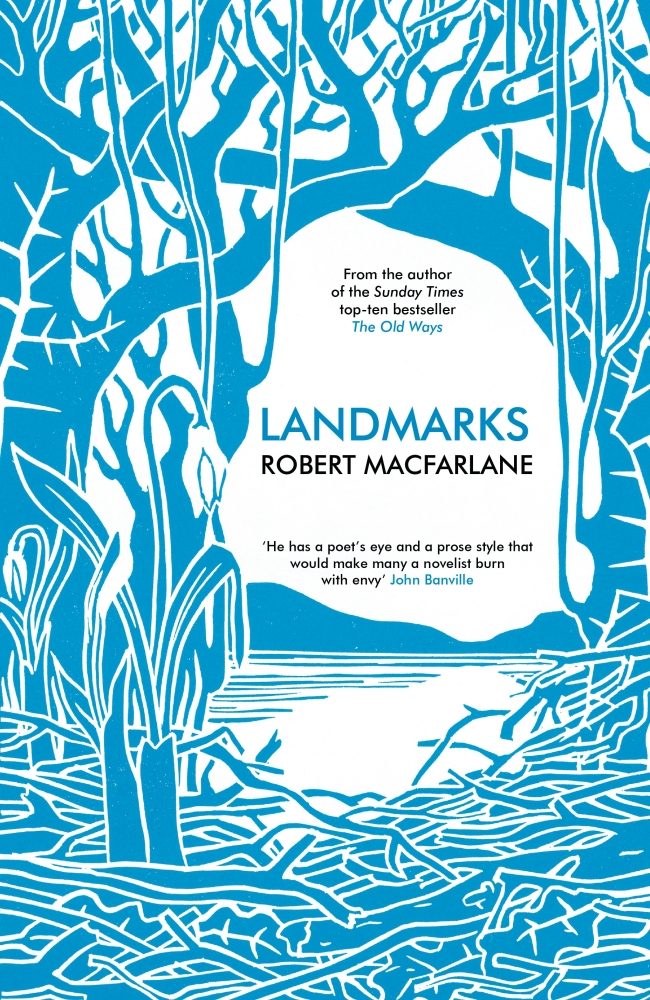
Surprisingly, Underwood’s response to this difficulty is to recommend poets use language which is “foggier” than we might ordinarily use, or language that has been calculatedly blurred or aspires to a kind of “smudging”. This simply doesn’t square with most people’s feelings about poetry which is that it tends to clarify experience rather than ‘smudge’ it. The truth is that we need to respond to language’s limits by working harder with language not neglecting it. Underwood would do well to read Robert Macfarlane’s book, Landmarks (Hamish Hamilton, 2015), which passionately argues against the loss of regional, place-specific language, a loss which means we are progressively perceiving natural landscapes in fewer dimensions, slipping into an ever more abstract, narrow, linear understanding of experience. Macfarlane argues that “Language deficit leads to attention deficit” and perhaps Underwood would agree but Macfarlane grasps that we do not liberate ourselves from the tyranny of language by using it vaguely, but ever more precisely. In Landmarks, he is concerned that the Oxford Junior Dictionary of 2007 deletes heron, ivy, kingfisher, pasture and willow among many other words considered irrelevant in reflecting the “consensus experience of modern-day childhood”. The word blackberry has been replaced by Blackberry.
And this is no narrow Cambridge academic’s concern. Macfarlane also tells the story of the proposed building of a vast wind farm on Brindled Moor on the Isle of Lewis in 2004: 234 wind turbines, each 140 metres high, 5 million cubic metres of rock and 2.5 million cubic metres of peat excavated and displaced. The debate centred around “the perceived nature and worth of the moor”. Proponents discussed it as a “wasteland”, a “wilderness”, a “vast, dead place”. Opponents – including 80% of the island’s inhabitants – argued for the fecund particularity of the moor. Tellingly, part of the defence was lexical in the shape of a Gaelic ‘Peat Glossary’ – hundreds of words describing the subtle features and moods of what is clearly no “dead place” at all. Macfarlane links this “Counter-Desecration Handbook” to poets like Hugh MacDiarmid and Norman MacCaig but it also reminds me of Blake’s insight: “The tree which moves some to tears of joy is in the eyes of others only a green thing that stands in the way”.
Underwood and I would agree that the man who sees only a “green thing” is suffering a lack of poetry – a limitation or failure of perception which is also a failure of linguistic precision. I think of it as an example of that icy steel cable language in the French Alps which falls (or more dangerously is handed down – this is where politics enters the debate) from on high, from some remote, cold place, handed down into our lives and so it begins to determine how we see the world. I share Underwood’s sense of urgency and importance that it is for those who concern ourselves with language and try to scrutinize our relations to the other, to others, to ourselves, to re-double our efforts to make further brief, individual Counter-Desecration Handbooks, to tell what we see as the truths of our lives as accurately as possible. Whatever form they may take, let’s call the resulting texts ‘poems’ and take inspiration finally from a marvellous one by the American poet, David Ferry.
Jack Underwood
Here, Ferry’s poem can also act as an illustration of several of Underwood’s comments about poetry. He suggests poems convey meanings beyond the “sharper constraints” of everyday language. By “sharper” he surely means narrower and more meanly delimited and Ferry’s poem illustrates that a quite different sharpness (a vividness from the cleansing of the doors of perception) is something poetry does well and yields pleasure for the reader. The poem doesn’t contradict Underwood’s suggestion that we know when we are reading poetry because of its formal qualities, its frequent use of metaphor, its preference for connotation as opposed to denotation. Our acquaintance with the poem certainly sets us “wondering” (Underwood’s rather foggy word) about what we are reading and it suggests and explicitly discusses “a resistance to finality in language”. I don’t think Underwood’s own examples help illustrate his point; I think Ferry’s poem does, confirming how poetry can be the “prime medium for the articulation of our knowledge of the unknown” (Underwood).
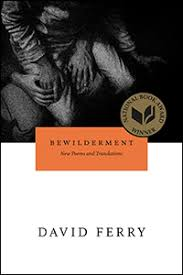
Ferry’s original poetry has long flourished in the shadow of his translation work but his collection, Bewilderment: New Poems and Translations (University of Chicago Press, 2012) won the National Book Award. In the UK, his selected poems are published as On This Side of the River (Waywiser Press, 2012). In fluidly, cursively, yet precise language, ‘Lake Water’ brilliantly conveys Ferry’s attentiveness to the world’s presence without losing a sense of the provisional nature of both self and other, the root inscrutabilities of experience (one of Underwood’s main points). There is a pressure exerted in favour of clarity and truth to both inner and outer worlds.
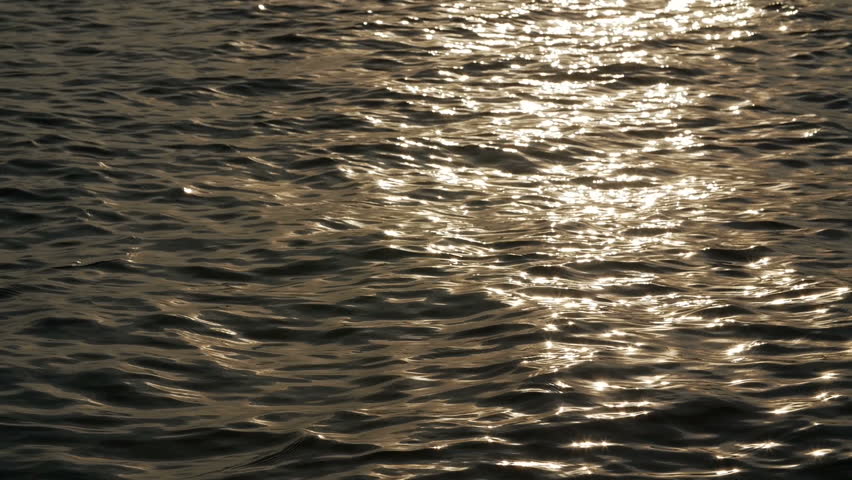
Ferry kicks off with specificity: “a summer afternoon in October”, the narrator gazing at a lake. The opening 20 lines, even as they evoke the light, the shimmer of water, the trees, engage in continual re-interpretations via similes (“As if it were a shimmering of heat”; “as if the air / Had entirely given itself over to summer”) and revisions (“Or rather”; “Or from”) until, in the final lines of this opening passage, paradox seems the only way to encapsulate the experience: “The light / Is moving and not moving upon the water”.
The second section of ‘Lake Water’ reaffirms this process, the perception of the lake “compelling with sweet oblivious / Authority alterations in light and shadow”. Earlier the water had evoked “something infantile [. . .] a baby at the breast” but now – in a progress from innocence to experience – the slapping of the water is “decidedly sexual”. The lake water, at one with the whole process of perceiving it, has become “an origination of life”. The lake surface is “like a page” or “like an idea for a poem not yet written”, or equivocally the “surface of the page is like lake water” before a mark has been made on it. What seeks to be written down is elusive partly as the result of the ambivalent gifts of time: “all my language about the lake [. . . ] erased with the changing of the breeze”.
Ferry saves a poignant twist for the final 6 lines which record a death-bed scene; he watches his wife – distinguished literary scholar, Anne Ferry – who died in 2006. After the moment of her passing, her face is “as untelling” as the lake, “unreadable”, though Ferry clings to and at once denies a last hope: “Her mouth was open as if she had something to say; / But maybe my saying so is a figure of speech”. For all their elegance and plain-speaking, Ferry’s best poems are marvellously unstable, bravely eschewing the linear, poignantly facing up to the limits of the faulty equipment we are given to grasp the world. Elsewhere, Ferry gently devastates with the idea that “death lives in the intention of things / To have a meaning”. Other poets might advocate fogs and smudge, or be reduced to silence, or rip language to shreds, or resort to an icy words, the dead counters of the pre-conceived at this, but Ferry’s provisional songs instruct, console and are to be much admired.

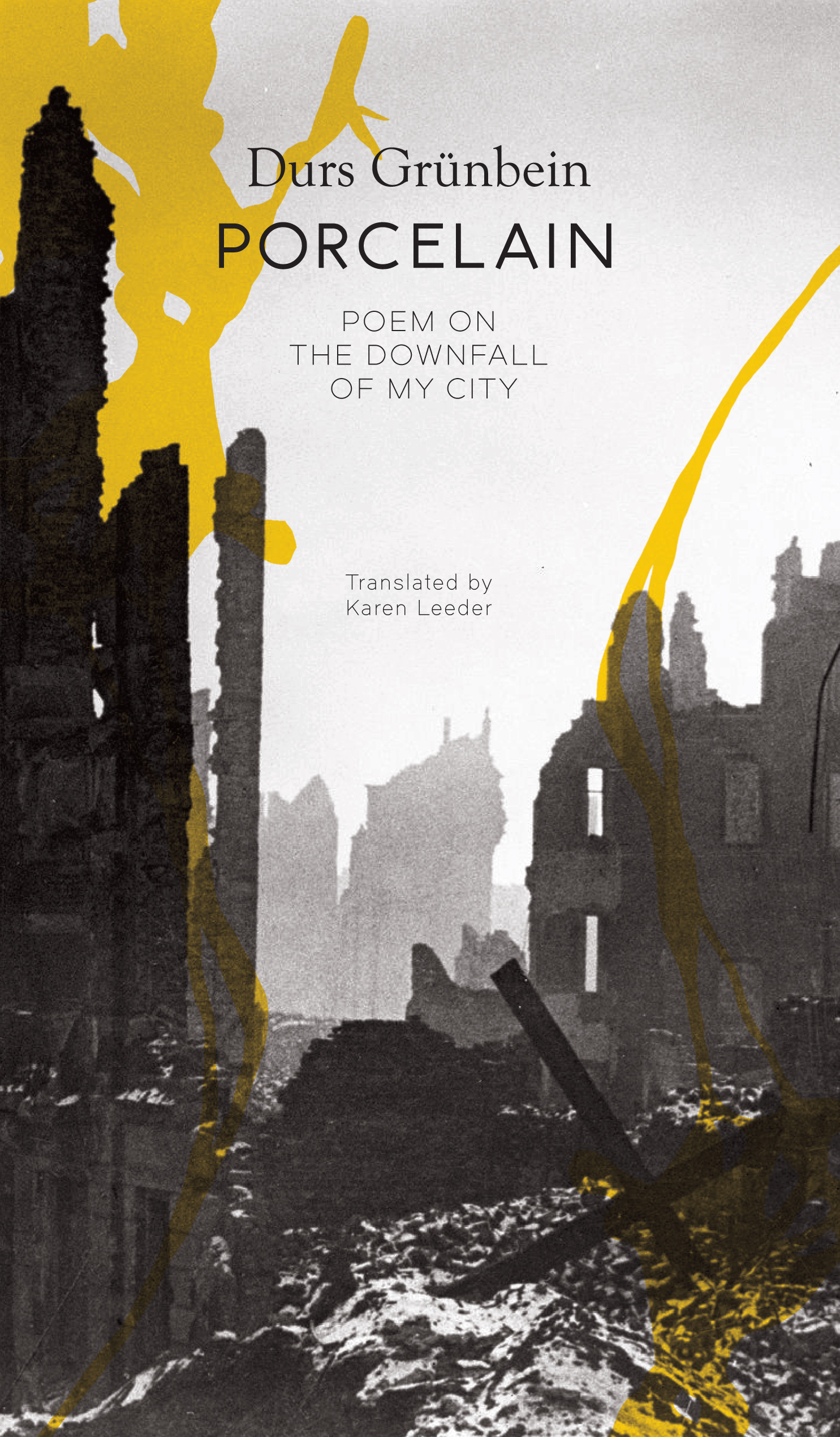


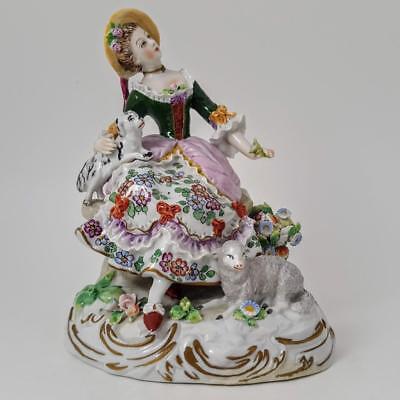


 Chen Xianfa is a prize-winning poet and journalist, born in Anhui Province, China. He has published five books of poems: Death in the Spring (1994), Past Life (2005), Engraving the Tombstone (2011), On Raising Cranes (2015; in English tr. 2017) and Poems in Nines (2018; bilingual Chinese/English, tr. Nancy Feng Liang, publ. China) which was awarded the Lu Xun Prize. A Selected Poems appeared in 2019. He has published two collections of essays, Heichiba Notes (2014 and 2021). Other awards include China’s Top Ten Influential Poets (1998-2008), the Hainan Biennial Poetry Prize (2011), Yuan Kejia Poetry Prize (2013), Tian Wen Poetry Prize (2015) and the Chenzi’ang Poetry Prize (2016).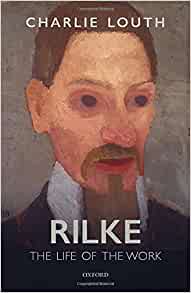
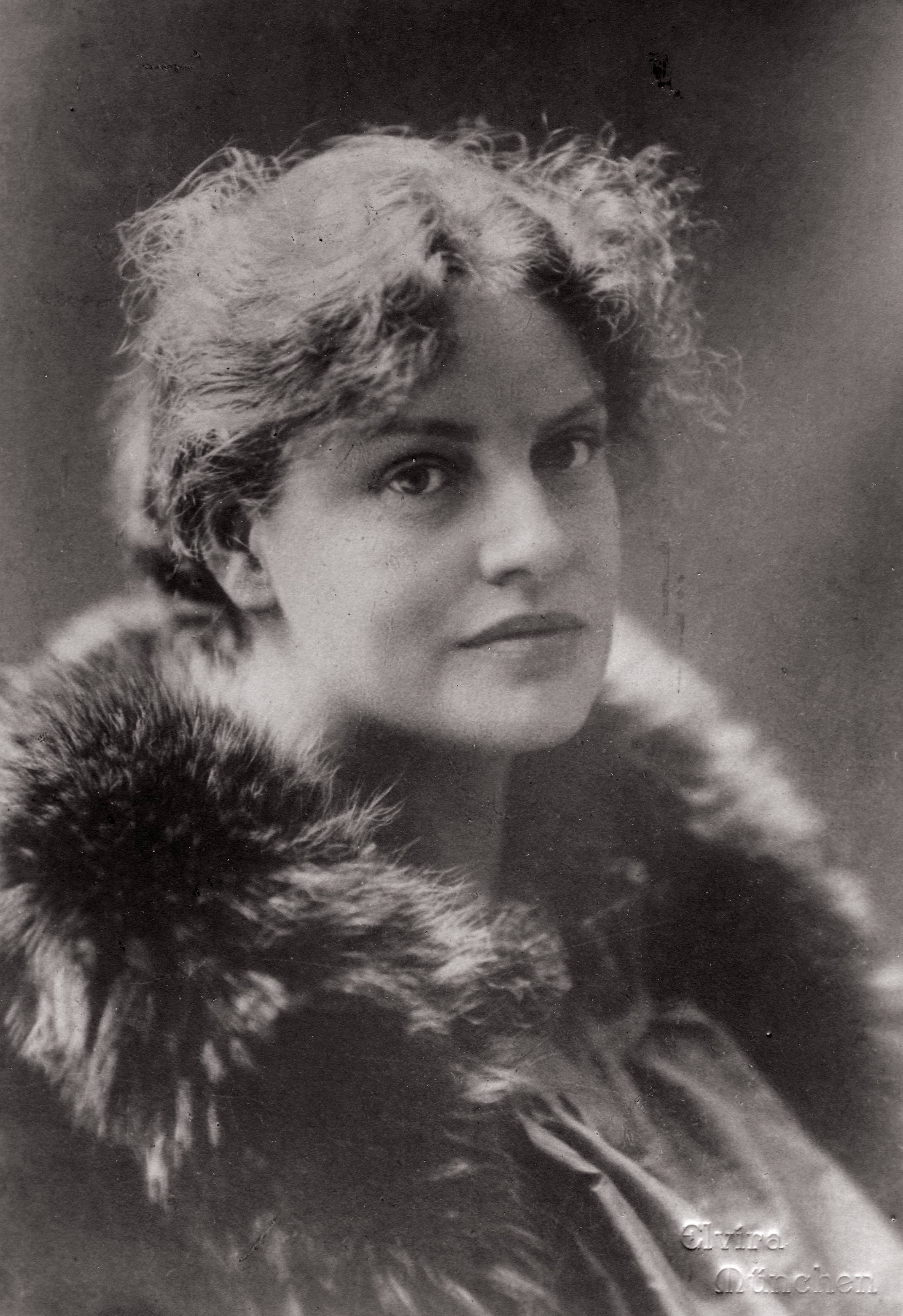
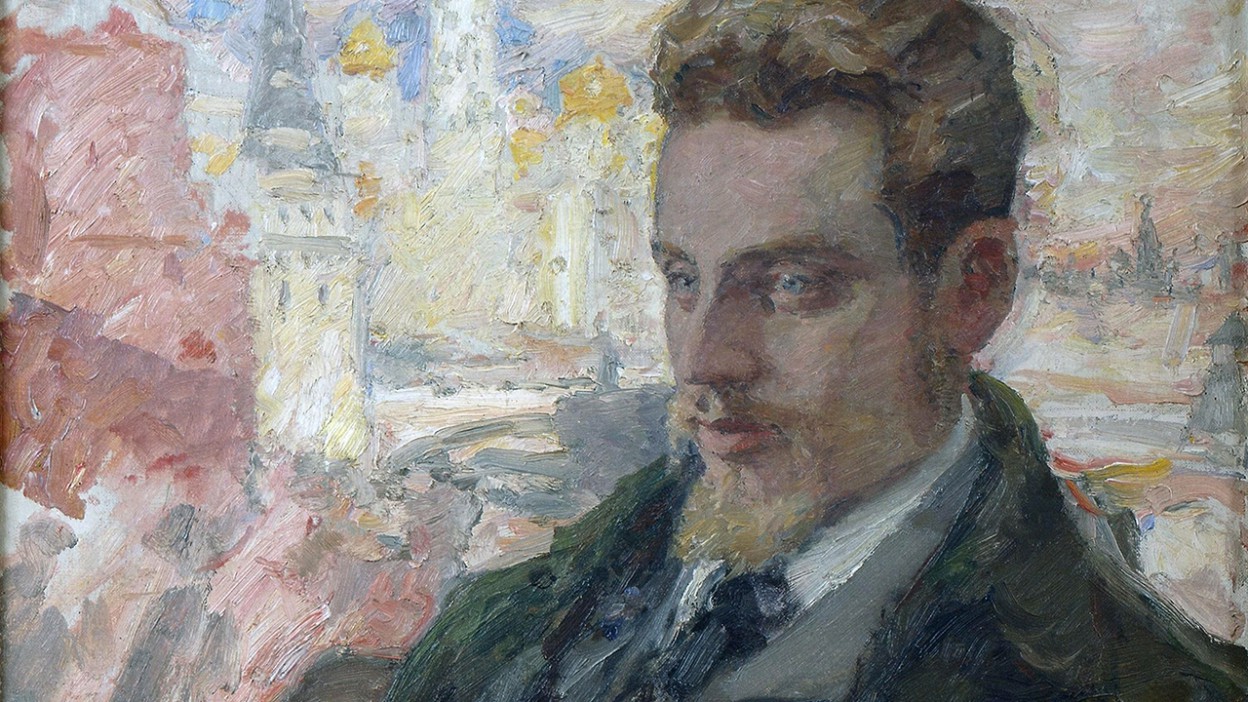

 David Pollard’s book is divided into three sections, one each on Parmigianino, Rembrandt and Caravaggio. Initially, Pollard presents a set of 15 self-declared “meditations” on a single work of art – Parmigianino’s ‘Self Portrait in a Convex Mirror’ (c. 1524). This is a bold move, given that John Ashbery did the same thing in 1974 and Pollard does explore ideas also found in Ashbery’s poem. Both writers are intrigued by a self-portrait painted onto a half-spherical, contoured surface to simulate a mirror such as was once used by barbers. The viewer gazes at an image of a mirror in which is reflected an image of the artist’s youthful and girlish face. It’s this sense of doubling images – an obvious questioning of what is real – that Pollard begins with. “You are a double-dealer” he declares, addressing the artist directly, though the language is quickly thickened and abstracted into a less than easy, philosophical, meditative style. It is the paradoxes that draw the poet: “you allow the doublings / inherent in your task to hide themselves / in open show, display art that / understands itself too well”. Indeed, this seems to be something of a definition of art for Pollard. “Let us be clear”, he says definitively, though the irony lies in the fact that such art asks questions about clarity precisely to destabilise it.
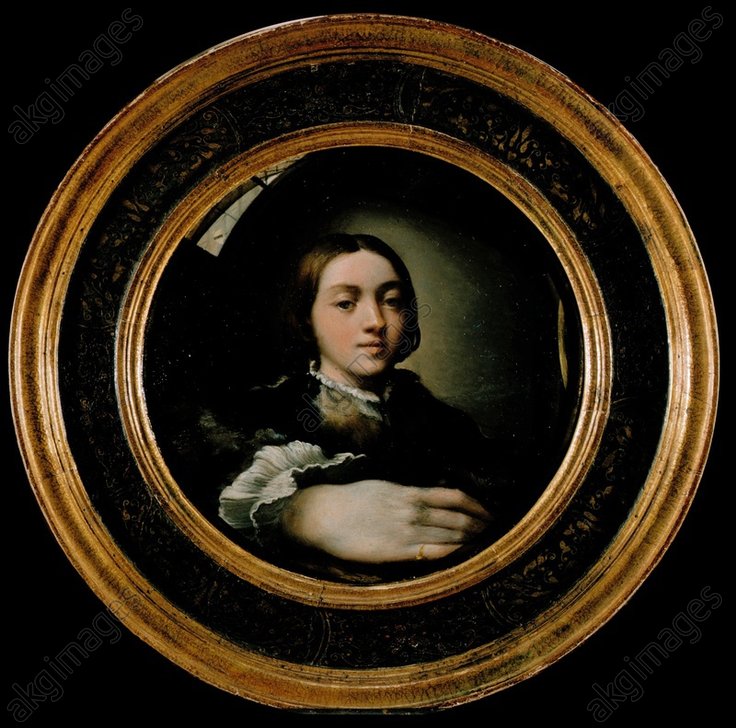 The 15 meditations are in free verse, the line endings often destabilising the sense, and they are lightly punctuated when I could have done with more conventional punctuation given the complex, involuted style. Pollard also likes to double up phrases, his second attempt often shifting ground or seeming propelled more by sound than sense. This is what the blurb calls Pollard’s “dense and febrile language” and it is fully self-conscious. In meditation 15, he observes that the artist’s paint is really “composed of almost nothing like words / that in their vanishings leave somewhat / of their meaning” – a ‘somewhat’ that falls well short of anything definitive. Of course, this again echoes Ashbery and appeals to our (post-)modern sensibility. Pollard images such a sense of loss with “a rustle of leaves among the winds / of autumn blowing in circles / back into seasons of the turning world”. He does not possess Ashbery’s originality of image, as here deploying the cliched autumnal leaves and then echoing Eliot’s “still point of the turning world”. Indeed, many poems are frequently allusive (particularly of Shakespearean phrases, Keats coming a close second) and for me this does not really work, the phrases striking as undigested shorthand for things that ought to be more freshly said.
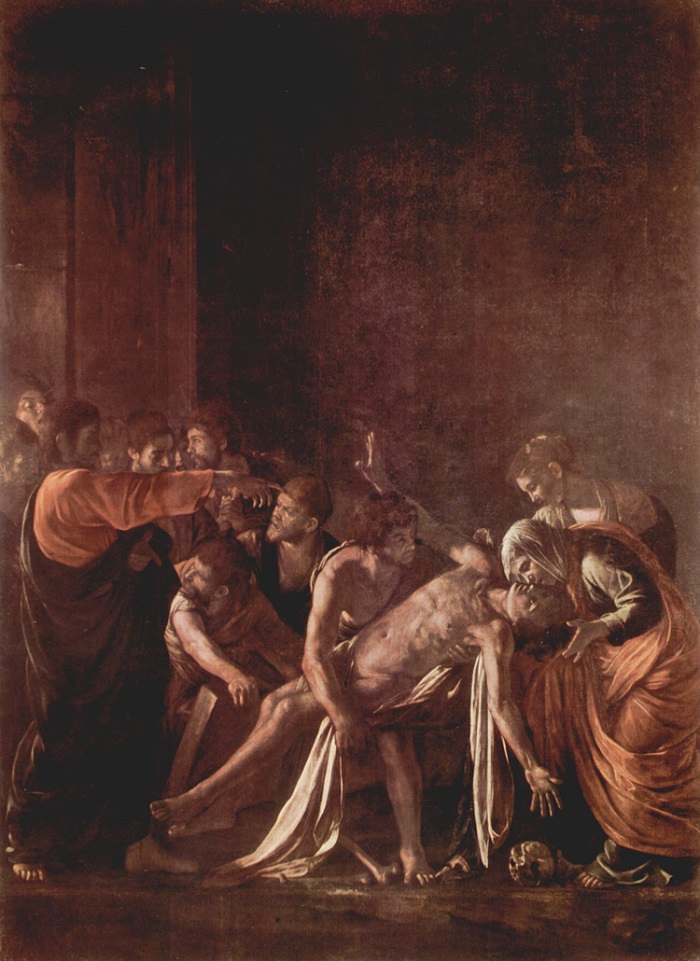
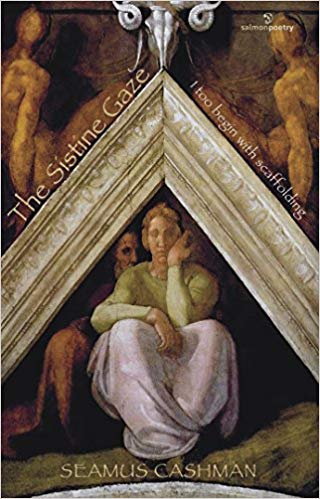 In fact, the woman is hardly given a voice and the substance of the sequence is dominated by the (male) artist’s reflections on his years-long task. He’s most often found “between this scaffold floor and ceiling”, complaining about his “craned neck”, pouring plaster, crushing pigments, enumerating at great length the qualities and shades of the paint he employs (Cashman risking an odd parody of a Dulux colour chart at times – “Variety is my clarity, / purity my colour power”). Later, we hear him complaining the plaster will not dry in the cold winter months. We even hear the artist reflecting on his own features, the famous “long white beard and beak-like nose”. These period and technical details work well, but Cashman’s Michelangelo sometimes also shades interestingly into a more future-aware voice, melding – I think – with the poet’s own voice. So he remarks: “Getting lost is not a condition men like me endure or venture on today. / All GPS and mobile interlinks enmesh our every step”. Later, a list of “everything there is” sweepingly includes “chair, man, woman; laptop or confession box”.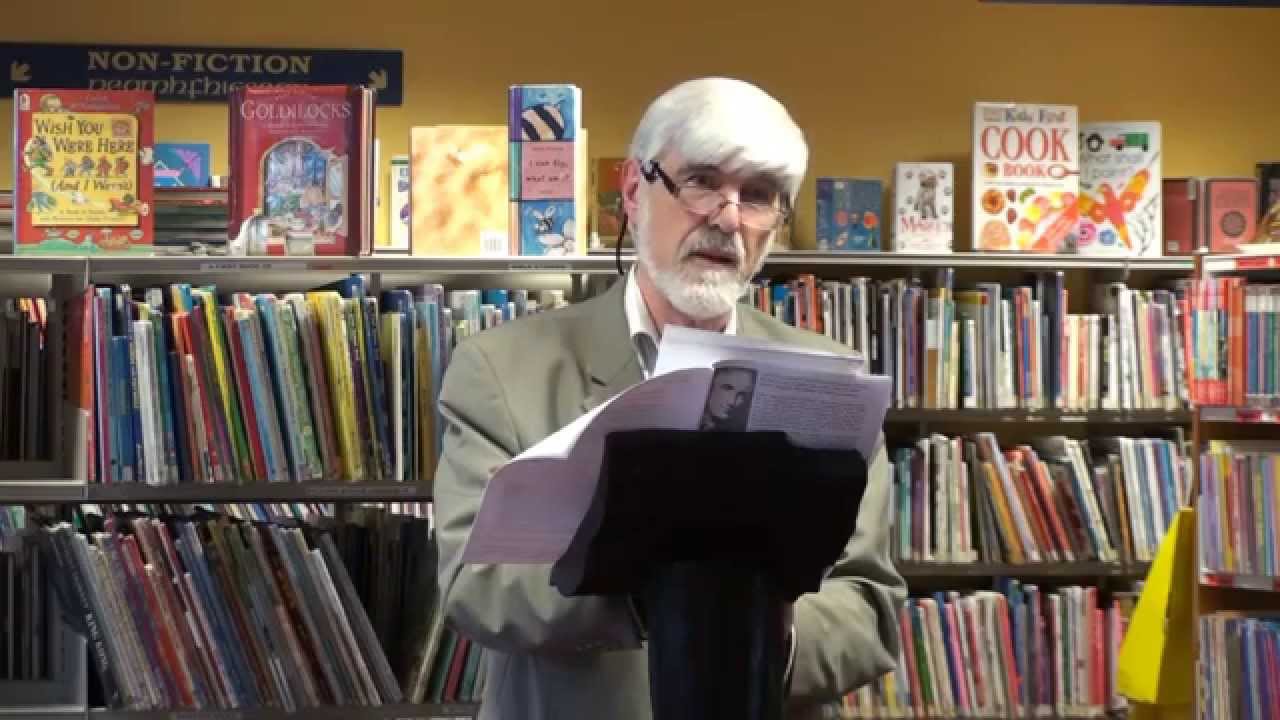
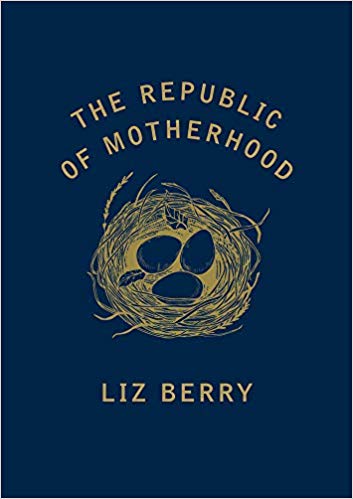
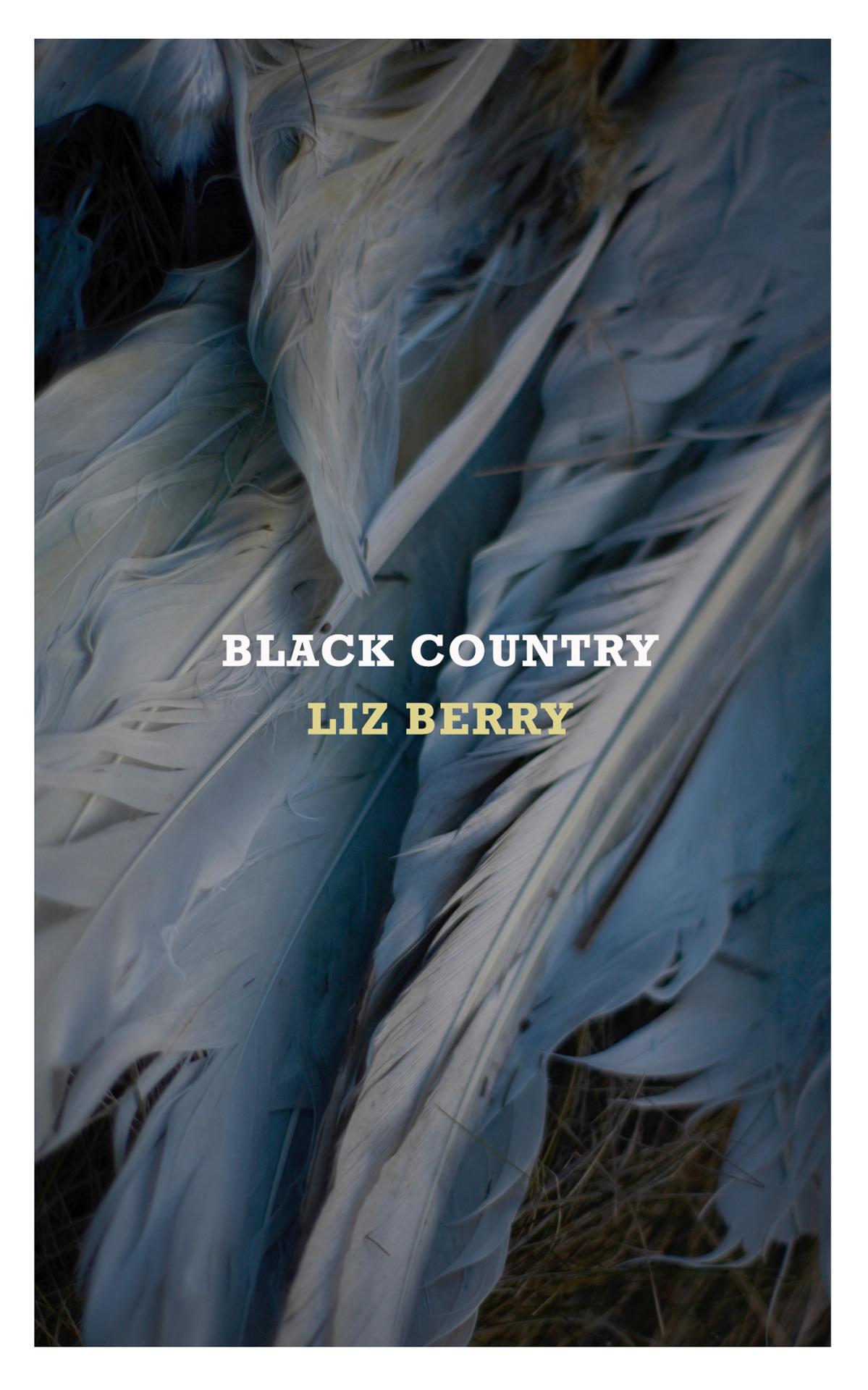 It’s interesting then – in The Republic of Motherhood
 The mother in the poem also suffers postpartum depression and Berry seems here to allude to experiences of First World war soldiers, wounded, repaired and sent back out to fight again, without fundamental issues being addressed: “when I was well they gave me my pram again / so I could stare at the daffodils in the parks of Motherhood”. She ends up haunting cemeteries, both real and symbolic, and it is here she finds even more tragic victims of motherhood, of birth trauma and of psychosis. The final response of the poem is to pray – though it is a prayer that has scant sense of religion but combines empathy with other women with a great anger expressed in the phrase “the whole wild fucking queendom [of Motherhood]”. The paradoxically inextricable sorrow and beauty of motherhood becomes the subject of the rest of the pamphlet, but this poem ends with the mother echoing a baby’s “nightcry” and erasing her own self, “sunlight pixellating my face”. The poem’s rawness is unresolved. Having crossed the border into motherhood (that decision is never questioned here), the contradictory pulls of Motherhood (capital M) and the stresses of mothering (small m) have a devastating impact. In a recent poem called ‘The Suburbs’ – Berry’s contribution to the National Poetry Competition 40th Anniversary Anthology – she records the effect of mothering even more starkly: “my world miniaturised”.

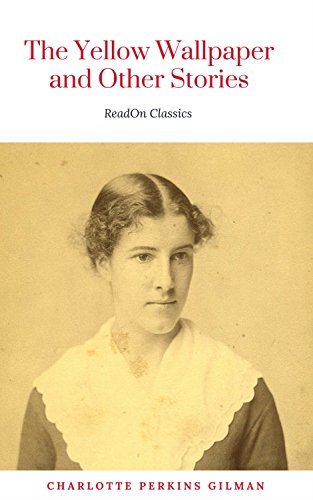 But such optimism is not a frequent note. Most of the remaining poems deal with the experience of depression in motherhood. ‘Early’ is almost as happy as it gets with mother and child now like “new sweethearts, / awake through the shining hours, close as spoons in the polishing cloth of dawn” (what a glorious image that is). But even here there are demands from the child that will need “forgiving” by the mother. One of these concerns her role as writer, particularly the difficulty of writing in the maelstrom of mothering: “every line I wanted to write for you / seems already written, read / and forgotten”. And this is why Berry chooses to co-opt lines from Charlotte Perkins Gillman’s terrifying story, The Yellow Wallpaper in ‘The Yellow Curtains’. Both texts can be read as studies of postpartum depression, but the despair has as much to do with the women as writers, confined, and – as in Gillman – the husband voices the demands and expectations of convention, of queendom: “He said [. . .] I must / take care of myself. For his sake.”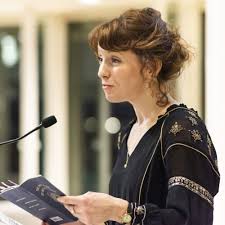
 The next section of the poem displays some of Lorca’s startling, surprising images: the “stars of frost”, the “fish of shadows”, the fig-tree’s “sandpaper branches”, the mountain is a “a thieving cat” that “bristles its sour agaves”. These are good examples of Lorca’s technique with metaphor: to place together two things which had always been considered as belonging to two different worlds, and in that fusion and shock to give them both a new reality. But these lines are perhaps really more about raising the narrative tensions in the poem through rhetorical questions such as, “But who will come? And where from?”
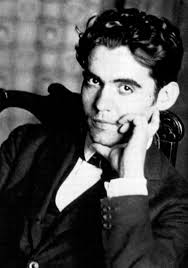 So up they climb. We don’t know why, but the atmosphere here is dripping with ill omen: they are “leaving a trail of blood, / leaving a trail of tears”. Then there is another of Lorca’s images yoking together unlikely items. As they climb to the roof-tiles, there is a trembling or quivering of “tiny tin-plate lanterns” and perhaps it’s this that becomes the sound of a “thousand crystal tambourines / [that] wound the break of day”. Lorca himself chose this image to comment on in his talk. He says if you ask why he wrote it he would tell you: “I saw them, in the hands of angels and trees, but I will not be able to say more; certainly I cannot explain their meaning”. I hear Andre Breton there, or Dali refusing to ‘explain’ the images of the truly surreal work. In each case the interpretative labour is handed over to us.
 Did they know this? It appears not. But who is she? Daughter? Lover? Both? Is this really what the two men find there? For sure, there is some mystery about the chronology because the seeming explanation of the killing is couched as a flashback: “The dark night grew intimate / as a cramped little square. / Drunken Civil Guards / were hammering at the door”. But Lorca often plays fast and loose with verb tenses. Was this earlier? Were they in search of the rebellious youth? But they found his girl-friend? Hanging her on the rooftop? Is the house owner her father? Does he know what has happened? Is this why his house is not his own anymore? Is this why he is no more what he was?
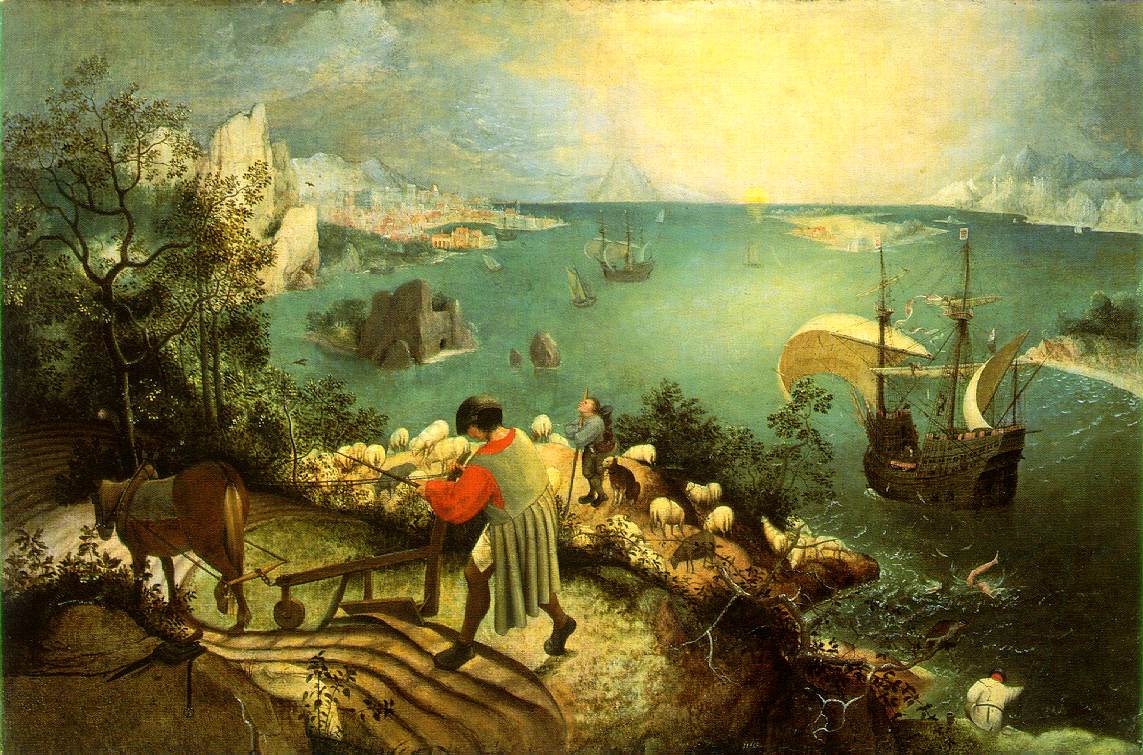 The only certain thing is that the poem does not reply. It ends with a recurrence of that opening yearning – now it’s read as a more obviously grieving voice – though it’s not necessarily to be read as the young man’s voice. It’s the ballad voice, the one I took so long to really grasp in Lorca’s work. It is a voice involved and passionate but with wider geographical, political and historical horizons beyond the individual incident. Like Auden’s ploughman in ‘Musee des Beaux Arts’, glimpsing Icarus’ fall from the sky, yet he must get on with his work, ‘Sleepingwalking Ballad’ returns us in its final lines to the wider world:
 The gateway to Richard Scott’s carefully structured first book is one of the most conventional poems in it. It’s a carefully punctuated, unrhymed sonnet. It is carefully placed (Public Library) and dated (1998). It’s the kind of poem and confinement Scott has fought to escape from and perhaps records the moment when that escape began: “In the library [. . .] there is not one gay poem, / not even Cavafy eyeing his grappa-sozzled lads”. The young Scott (I’ll come back to the biographical/authenticity question in a moment) takes an old copy of the Golden Treasury of Verse and writes COCK in the margin, then further obscene scrawls and doodles including, ironically a “biro-boy [who] rubs his hard-on against the body of a // sonnet”. Yet his literary vandalism leads to a new way of reading as – echoing the ideas of Eve Kosofsky Sedgwick – the narrator suddenly sees the “queer subtext” beneath many of the ‘straight’ poems till he is picking up a highlighter pen and “rimming each delicate / stanza in cerulean, illuminating the readers-to-come . . .”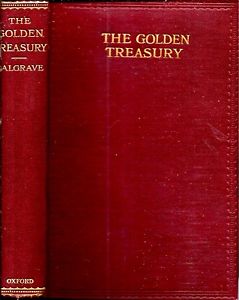
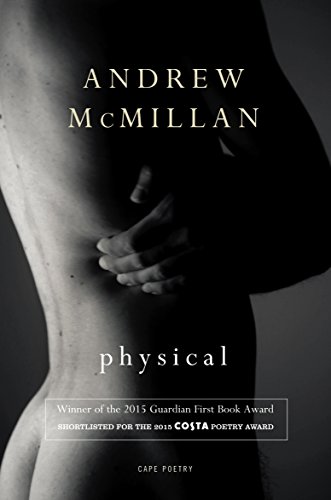
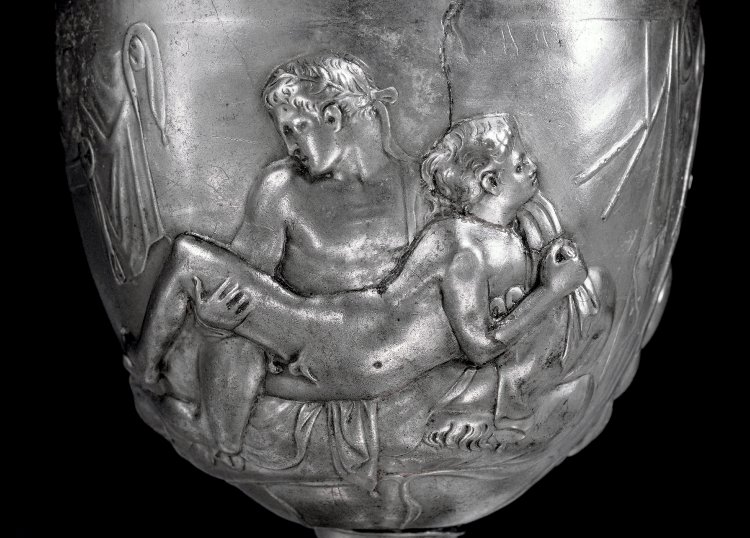

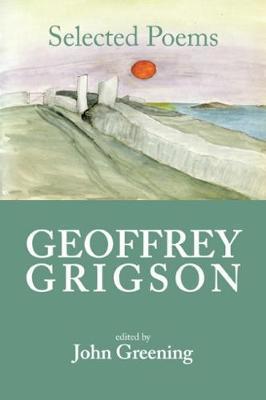

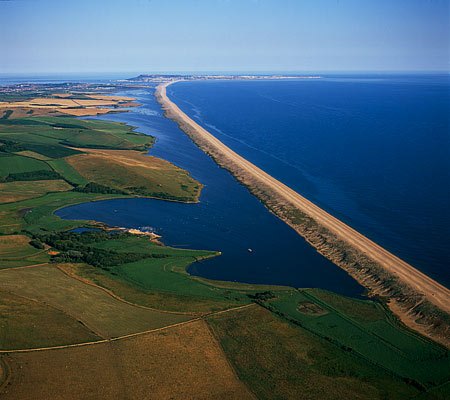
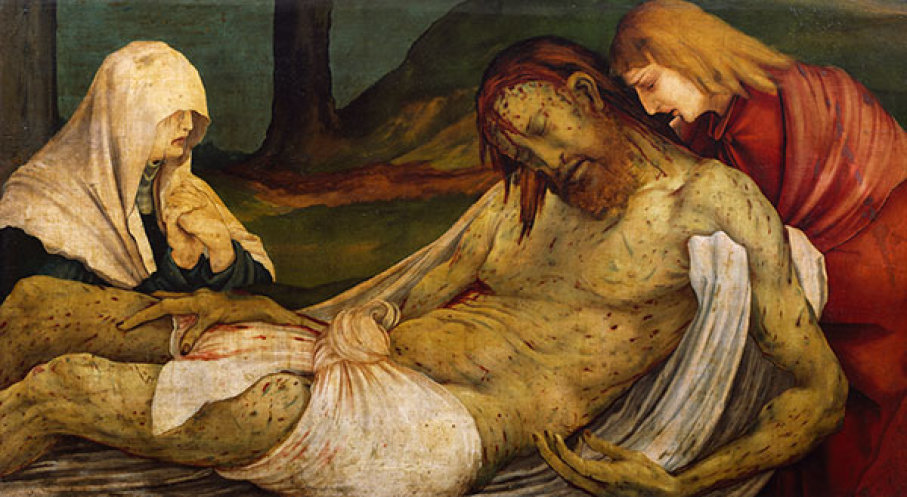
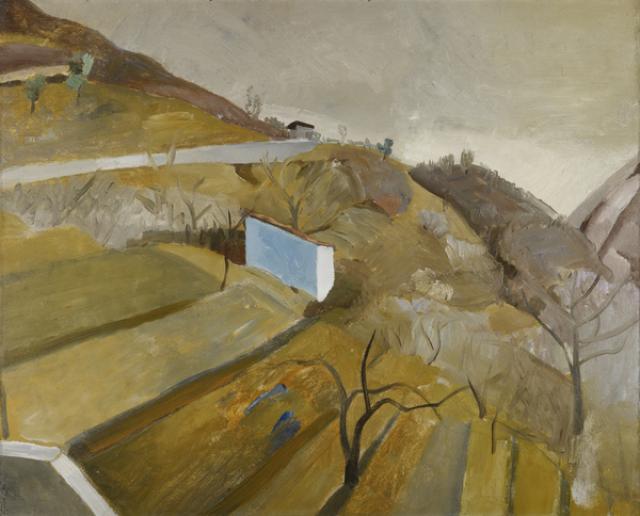
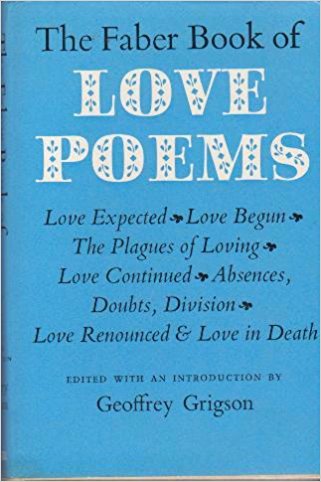
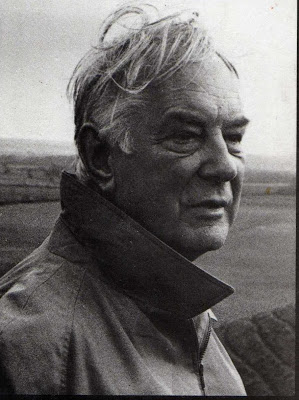 *As a labouring translator myself, I have long remembered Grigson’s brilliant put-down in his Introduction to the Faber Book of Love Poems (1973). Explaining why he has not included any translations at all, he declares that their “unmeasured, thin-rolled short crust” would prove detrimental to the health of the nation’s poetic taste. Times have changed, thank goodness.
![1074-Poetry-Review_Cover-RGB-300-w-shadow-429x600[1]](https://martyncrucefix.com/wp-content/uploads/2018/01/1074-poetry-review_cover-rgb-300-w-shadow-429x6001.jpg)
![jellyfish[1]](https://martyncrucefix.com/wp-content/uploads/2018/01/jellyfish1.jpg)
![alpine-skiing-877410_640[1]](https://martyncrucefix.com/wp-content/uploads/2018/01/alpine-skiing-877410_6401.jpg)