Impressions of the TS Eliot Prize Readings 2025

I’ve always enjoyed Ladybird spotting the ways poets present themselves in a reading situation. Last night’s TS Eliot prize readings at the Festival Hall was a grand opportunity for such a pursuit. Ten readers in a row. Here are a few jotted down impressions, gleaned from the on-line version of the show. Before you crucify me for such poor, ill-informed critical judgements, I do hereby declare I have only thoroughly read two of the contenders, so these are very much impressions of ‘what happened on the night’. I’ll leave mentioning my favourite and my predicted winner (not the same poet) to the end. The award will be announced this evening (Monday 13th January 2025).

The housekeeping…. This year, the shortlist was chosen by judges Mimi Khalvati (Chair), Hannah Sullivan and Anthony Joseph. The TS Eliot Prize (it says on their website) is among the world’s most celebrated awards. Inaugurated in 1993 to celebrate the Poetry Book Society’s 40th birthday and to honour its founding poet, the prize is now awarded by the TS Eliot Foundation. The evening was introduced by Ian McMillan.

In the order the shortlist for this year’s prize was presented last night:

Katrina Porteous Rhizodont (Bloodaxe Books) – KP was described as a northern lighthouse by Ian McMillan – finding the universal in the local – the north east of England – Holy Island – this is poetry full of its concrete ‘subject’ – details and actuality, a powerful wish to communicate (the book is full of explanatory Notes) – here, the coal beginning (to be formed) again – Our Billie – a local girl, forms the backbone of one poem  – some unfortunate ‘down with the kids’ moments, referencing Insta and emojis – KP reads in a bobbing, fidgeting sort of way – does stillness evoke more power? – ‘The children STARE at their phones’ – particular words picked out for heavy emphasis – a bit over insistent on their significance – a robot explores the moon surface now – an interest in new technology – but then, the Antarctic without ice – the book title, rhizodont, is a fish transitioning onto land a very long time ago – the delivery here surely too mimetic – snarly, is that how a fish sounds? But passionately held views without a doubt.

Rachel Mann Eleanor Among the Saints (Carcanet Press) – McMillan suggested that Mann takes up liturgical language and re-invents it (for a modern audience?) – Eleanor the central figure is a trans woman of the 14th century – at one point she’s in conversation with Julian of Norwich and Margery Kemp, so lots of hazelnut references – but thank goodness I didn’t hear ‘all shall be well’ – the delivery a slow emphatic one, I actually wrote ‘from the pulpit’ before I noticed (I think) the dog collar – am I right? – lots of first person voice going on here – often in an ecstatic (religious) mode, a few grand arm gestures – the language often moving towards Hopkins (why not?) – masculinity? –embroidering a priest, sanctus, sanctus, then love – the murdering of a trans girl, drawing a bead on contemporary relevance – in 1394 Eleanor was arrested – the dark shades worn by RM curiously out of keeping with the verse lines.

Carl Phillips Scattered Snows, to the North (Carcanet Press) – from the US –‘quiet’ being the word here – rather sweetly alluded to his sponsors for the evening – Lemsip – welcome to England – the lines being read in the cadence of a breath, a dying fall – suggestive here of an interior communion, very delicate, exploration of an emotional life – McMillan suggested this is where time and intimacy meet – what do they say to each other I wonder? – a taking off of  clothes – then he also takes his clothes off – colours and a bell – a concern (as technique and subject matter) for precision, for what is true? (how unfashionable in the US) – snows in the title poem, Phillips manages to take us to Roman history and love without us getting lost along the way – quietly persuasive and good company – a forest journey – things almost said – a vulnerability to this writer (someone else posted this idea) I’ll borrow it.

Gustav Parker Hibbett High Jump as Icarus Story (Banshee Press) – opening with allusions to Ovid for the Icarus link – reaching for the sunlight (not the best of phrases) – but athletics as a metaphor it seems at first – sliding into athletics for real – practising high jumps with a friend – in a world where they are regarded as ‘interchangeable’ because of ethnicity – the dark body hanging – the poems delivered head down, reading from the page, a whispering voice, not coming from the throat or diaphragm, so intimate as to be rather too in-turned – these are plain narratives, lots of ‘stuff’ – one later poem is longer, more sustained and the insistence on these real details begins to transform the poem into something a bit more visionary – jumping 6’ 8” – Noah, all he wanted was the stars – black boys doing anything – the USA and Mexico – to customise paradigms if they don’t fit.

Karen McCarthy Woolf Top Doll (Dialogue Books) – this turns out to be a verse novel so rather hard to convey a clear impression of it – Hugette a female recluse who lived with lots of dolls – KMW read several dramatic monologues this evening – Maman being spoken by a French doll – a rag doll speaking as if a military general, denying that he is a ‘gollywog’ – big pause on that – these are probably funny in many ways – but with their points to be made – but Woolf is acting them out with neck, eyes and eyebrows – male dolls, deep-voiced, female, light, a dancer doll flighty voiced – Ballerina Barbie is all en pointe and pirouette (arms being waved on stage) – yes, fictional and imaginative recreation, but this begins to feel like a sort of ventriloquism in the delivery – the mask is evident – being acted out – I can’t hear the verse of this verse novel – a Japanese doll to finish off with – cherry blossom, bento, the moon. My review of KMW’s earlier collection An Aviary of Small Birds.

Interval

Helen Farish The Penny Dropping (Bloodaxe Books) – a book-long retrospective on an old ended relationship – trying to say what is perhaps inarticulate – joy and ache – biographical narrative as universal – McMillan suggests the relationship is merely a ‘hook’ rather than the ‘focus’ that it surely is? – the delivery is slow and fluting, very deliberate and clear almost as if Farish is finding the words (for the first time) as she goes – effective I think – again poetry with a lot of subject stuff – lists of local colour, places, events, food and drink – things we loved, a list – though spoken of as ‘a’ relationship this feels really quite narrowly autobiographical – driving the M40 discussing having (not having) children – a bit toe-curling, some allusions to film Pretty Woman with Gere and Roberts – who is it says ‘we were made for each other’ these days – a valentine card? – nice recipe at the end, pasta and red wine – but surely a candle was on the table too?

Peter Gizzi Fierce Elegy (Penguin Poetry) – also from the US – the delivery here a steady pulsing (these are short lines, I think, and Gizzi seems to be breathing and voicing that – a rich, resonant voice (the kind you’re born with) – a terrific flow and a shifting from concrete to abstract – the moon and then ‘kinda real, kinda not’ – the ingenious light – a letting out of inner weather – a rather self-conscious making of fine phrases and with the ‘self’ as the primary subject (not the outer) there are passages of pure lyricism – risks even allusions to the Muse, a lyre, but bedded in American colloquial – neatly done – forests, shapes, landscapes all becoming the inner life, representing it – shapes become the beloved – without reading more I’m none the wiser as to what is elegiac here or fierce – but interesting poems.

Hannah Copley Lapwing (Pavilion Poetry) – McMillan suggesting Copley’s book pushes language to the state of music – do we expect Mallarme? – not at all – the lapwing gives the chance for some birdsong – but lapwing does not speak but is rather spoken about – another bird, a daughter… Peet? – all the folksy names for a lapwing, of course – the bird is found to be missing – a mosaic, otherwise know as – the bird becoming person – a poem about addiction – our creaturely behaviours – the difficulty of caring for someone (some bird) – raggedy, slugs, let him disintegrate, love – Copley also reads in cadences that fall every time, not quite clear whether these are the lines of verse or her grammatical units – the lapwing figure is anthropomorphised or a human being is birdified – a nice balancing act mostly – though some less so – a family tree and (very human) grief – something to feather – ready to give – think I’d have liked more musicality.

Gboyega Odubanjo Adam (Faber & Faber) – Odubanjoof course not present after his tragic, untimely death – this his first and only collection – Adam the name given to the torso of a boy pulled from the Thames some years back – a couple of recordings of the author were played – poems read by Joe Carrick-Varty and Gabriel Akamo – the latter the much better reader – a memorial set of poems to the disappeared, the dispossessed – the dead boy’s imagined journey through Germany to the UK – thank you to the woman, the people, the police – this language is more like music – a montage-like, even Whitmanesque feel to the rolling cadences, a riffing and use of repetition, the material rising towards the mythic – blow trumpet as if apocalyptic – chorus, musical bridge transition, outro – a burned CD, its track-listing – a weird fairy tale about water – frog and scorpion, two sisters, ocean and sun in a dialogue – gosh – yes this is good work.

Raymond Antrobus: Signs, Music (Picador Poetry) – this was introduced as a book about fatherhood and masculinity – wasn’t that the 1990s? – a subject for all time – the pleasures (and anxiety) about bathing with your own child – coded with scripture – the son doesn’t pee, but it would have been OK if he did – this is poetry with a lot of ‘I’ – but surreal little flights and often incantatory, an enjoyable allowance of the musical nature of language – I broke up with, I broke up with – anaphora-driven here – the buying of a second hand noise – but I said nothing is where it ends – the intrigue of what remains silent – poems are being performed but not acted out – though there’s a bit of surf-board business, arms keeping balance, as the poem is read – teaching his son BSL – for music – another swaying, conducting sort of motion – yes – very engaging – ‘poetry is music from the place we were born’ (though that’s a very constricting definition). I reviewed two of RA’s earlier collections – The Perseverance and All the Names Given.

On the night, my favourite was Carl Phillips (despite his sore throat). But Gboyega Odubanjo’s work was also powerful in ways that I cannot articulate and for that reason – but also for reasons external to the poetry – I think he will be posthumously awarded the TS Eliot Prize 2025.

Late Addendum (11pm Monday 13th January) – and the winner was Peter Gizzi Fierce Elegy (Penguin Poetry)

A Run of Readings in October/November

Talk to whomsoever (among the poets you may know) and a common theme is just how hard it can be to get invitations to read. It really is hard going and for those of us – most of us – who have an aversion to the push and flaunt that is required – it can even feel quite painful. But do it we must. So it’s really nice when it produces a few results. This, by way of saying that I have a few appearances – brief in the main – not as headline reader – coming up at the end of this month and the opening of November. A couple of these readings are translation-related, two others are to mark the publication of extracts from some more experimental work (in original poetry) that I have been pursuing in the last couple of years. I’m particularly happy that these more ‘odd’ compositions have found such warm responses and it makes me think I ought to be looking to publish them in full. Though I have another, other book sitting ready to go… publishers??

Some more event details….

On 26th October, 2pm, at The Library, Conway Hall, London, as part of the Small Publishers Fair, Wivenhoe-based Dunlin Press will be launching four new pamphlets of writing: Kathmandu by Andrew Shaw, Bomb by Samuel Reid, From Stone to Clay to Butter by Lily Petch, and A Raven on a Writing Desk by Julie Hogg. These talented people were the winners of the Press’ 2024 competition for experimental writing. Sad to say, I’ll not actually be reading here, but some of my work is included in the accompanying anthology (those who just missed out I like to think!). My contribution is an extract from A Shout Across Dursey Sound, a sequence of poems set on the Beara Peninsula in Ireland. The anthology’s title is Objects (buy it here) and it includes work by Galia Admoni, MW Bewick ,Emma Bolland, Richard Capener, Tessa Foley, Anthony Ogbonnaya Chukwu, Richard Skinner, Isabella Streffen, and others.

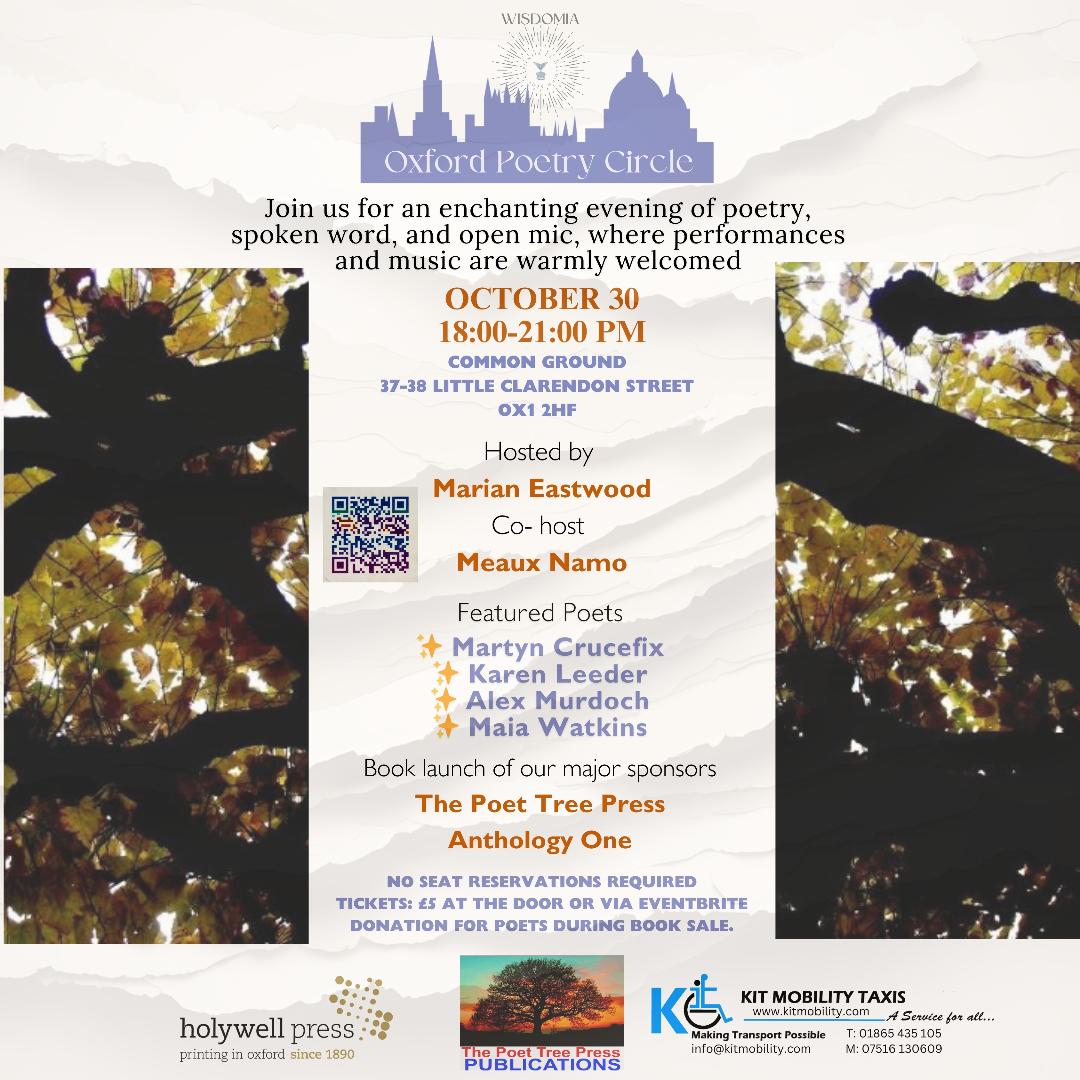
Then, on Wednesday, 30th October, 6pm-9pm, I’m off to Oxford to read for the Oxford Poetry Circle, as announced in a previous post. This is taking place at Common Ground, on Little Clarendon Street, Oxford. There, I’ll be reading work in translation only – from my recent Rilke book published by Pushkin Press (reviewed here on The Friday Poem by Victoria Moul) and from my 2019 Shearsman Books collection of poems by Peter Huchel. I’m particularly pleased to be reading on this occasion with the brilliant and super-industrious translator, academic and friend, Karen Leeder. Other readers are Alex Murdoch and Laia Watkins – and there will be readers from the floor.

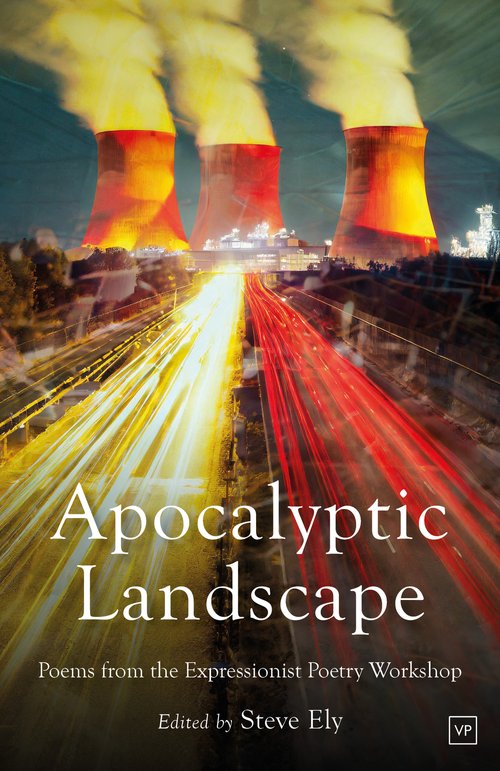
A couple of days later, the evening of Friday 1st November, I will be reading from a second experimental sequence of my own poems at the launch reading for Steve Ely’s anthology called Apocalyptic Landscape (Valley Press). My poems, a sequence called Olga Liking Sunflowers, roam through the pandemic experience, the work of David Jones, my local landscape and the delights (or otherwise) of social media. Contributors were encouraged to generate visionary responses to the crisis of the Anthropocene in the context of landscapes important to them. I will be reading alongside Steve, Jill Abram (who is organising the London launch for the book), as well as Katy Evans-Bush, JP Seabright, Anita Pati, and Caroline Maldonado. Steve Ely is also reading from his book Orasaigh, a collaboration between Steve and photographer Michael Faint, inspired by the landscape around the tidal island of Orasaigh, located on the coast of South Uist at Boisdale. This event will take place upstairs at the Devereux pub, 20 Devereux Ct, London WC2R 3JJ. Doors open 6:30, Poetry starts 7pm FREE event.

Finally, I have also been lucky enough to have a translated longer poem (by the contemporary German poet Jürgen Becker) accepted to appear in Issue 32 of The Long Poem Magazine and I will be reading ‘Travel film: re-runs’ at their launch event in the afternoon of Saturday 16th November 1.30 to 3.45, at the Barbican Library, Barbican Centre, Silk Street, London, EC2 8DS. Other readers will be: Angela Gardner, Charlie Baylis, Sue Burge, Sharon Holm, Claire Cox, Sian Thomas, Peter RobinsonKhaled HakimTimothy AdesJulian Stannard. FREE ENTRY and there will be a short interval for sales and chats. Refreshments are available downstairs from the Barbican Cafe and Bar. I hope to see you at one or another of these events. I’ll leave you with a few lines from my sequence in Steve Ely’s apocalyptic anthology:

Olga likes my post of the tall sunflowers in the square.

Through google translate, her post in Russian reads: adrenaline is my doping.

I draw for the soul.

There are hundreds of images of herself. Some with wild animals.

Surely, they’re not really wild.

In a zoo. Under lock and key.

Others touch the hem of the pornographic.

Others look like cheap advertisements for luxury cars.

The kind of posts, I wonder, that end with an offer of marriage from the viewer.

Another shows her bald headed, holding a snake, just weeks after the remission of her illness.

I want to ask her: what was the exact nature of the disease?

I want to ask her.

What mark will this make in history?

I want to ask her. When will this stop?


Reading in Oxford 30th October

I will be reading from my German translations – Peter Huchel and Rainer Maria Rilke. NB the best german translator currently at work in the UK – Karen Leeder, of Queens’ College, Oxford – will also be reading. Not to be missed!!

Reading Rilke’s poems – 6pm this Saturday in Bristol

I will be giving a reading from this year’s Pushkin Press publication, Change Your Life: Essential Poems of Rainer Maria Rilke. The reading is being organised, and taking place at Heron Books in Bristol as follows:

Heron Books Unit 5, The Clifton Arcade
Bristol, BS8 4AA United Kingdom + Google Map

Join us for Poetry In Herons with Martyn Crucefix

Join us in the Arcade after hours for our monthly poetry series. 6pm, Saturday 17th August. We will be celebrating the publication of Martyn’s translation of Rainer Maria Rilke’s poetry, Change Your Life

You can buy tickets in advance online or in the shop. For more details and booking click here
Tickets are £4 or free with the purchase of Change Your Life. All tickets include a glass of something sparkling on arrival.

Tickets are fully redeemable against buying the books on the night.
Book orders will be ready for you to pick up and get signed at the event.

And here’s a taster poem – an unusual one from Rilke which perhaps we read these days with an ecopoetic slant – a translation of a poem in German by Rainer Maria Rilke (from New Poems II; The Other Part (1908)

to thrive, content that they lived anywhere,

sharing a sense of kinship, they found signs

of their peers in the ocean’s fluid empire,

which the old sea god, with dripping tritons,

would sometimes stir to tempest and flood;

for there surfaced the creature that showed

itself to be far more than the dumb,

dull-witted breed of fish: blood of their blood,

and distantly inclined to the human.

A school of them, rolling, leaping, appeared,

seeming conscious of the glittering sea:

joyful, trusting, warm-blooded, they wreathed

the sea voyage with their brave assembly

and would sport round the ship’s prow with ease,

as if tracing the curved outlines of a vase,

heedless, blessed, never fearing injury,

now enraptured, breaching, speeding along

and diving deep as if to exchange places

with the waves that calmly bore the trireme on.

And the sailors took these newly discovered

friends into their lives of lonely hazard

and they contrived for these companions—

and believed it true—a world of gratitude,

in which they loved gods and music and gardens

and the year’s silent, deep constellations.

Poetry in Translation Reading – Crouch End Literary Festival

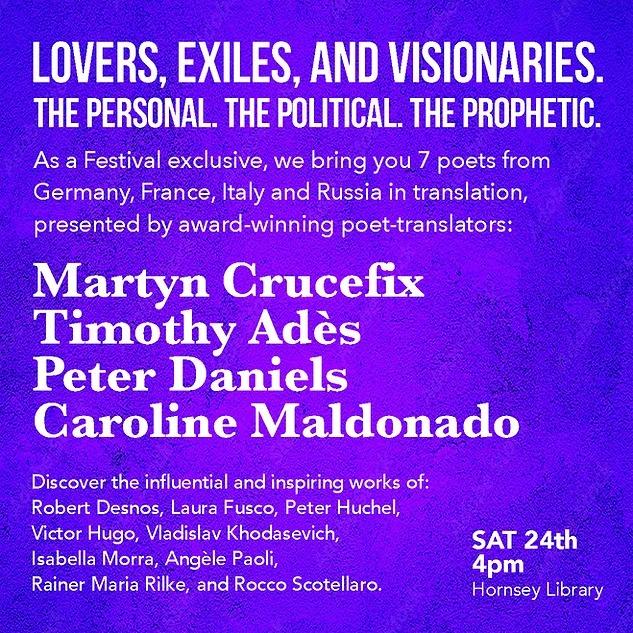
Rather late notice – not wholly down to my own tardiness – but I will be reading work in translation at the inaugural Crouch End Literary Festival this weekend. Do come along if you can. There are plenty of other events scheduled in the Festival, but this one is at 4pm on Saturday 24th February in the Gallery upstairs at the Hornsey Library Haringey Park, London N8 9JA (see map on location and how to get there). The event is free to attend and as you’ll see I am reading alongside poet/translator friends Timothy Ades, Caroline Maldonado and Peter Daniels. The poster, left, is not wholly accurate as I’ll be reading work by Rilke (Pushkin Press) and Peter Huchel (Shearsman Books) and not from my translations of Angele Paoli (that chapbook has been delayed at present). Tim will be reading from his Robert Desnos (Arc) and Victor Hugo; Peter is reading from his Vladislav Khodasevich and Caroline will (I think) be reading from her Smokestack books of work by Scotellaro and Laura Fusco.

Here are more details about the 4 of us:

Timothy Adès is a rhyming translator-poet with awards for, among others, the French poets – Victor Hugo (1802-1885) and Robert Desnos (1900-1945). Both were enormously prolific and engaged passionately with the issues of their times. Timothy is a much-praised translator with further published books from Spanish, French, and (coming soon) the German of Ricarda Huch. He runs a bookstall of translated poetry and is a member of the Royal Society of Literature and a Trustee of Agenda poetry magazine. His translations have won the John Dryden prize and the TLS Premio Valle Inclán prize. Find him on Facebook and YouTube and his website is http://www.timothyades.com

Martyn Crucefix is the author of seven original collections of poetry, most recently Between a Drowning Man (Salt, 2023) and Cargo of Limbs (Hercules Editions, 2019). Awards include an Eric Gregory award, a Hawthornden Fellowship, and the Schlegel-Tieck Prize for translations (from the German) of the poems of Peter Huchel. His translation of Rainer Maria Rilke’s Duino Elegies (Enitharmon, 2006) was shortlisted for the Popescu Prize for Poetry Translation. A major Rilke selected poems, Change Your Life, will be published by Pushkin Press in 2024. Till recently a Royal Literary Fund Fellow at The British Library, he also edits the Acumen Poetry Magazine Young Poets web page. Website at http://www.martyncrucefix.com

Peter Daniels’ most recent original books of poetry are Old Men (forthcoming, Salt 2024) and My Tin Watermelon (Salt, 2019). His acclaimed translations from the Russian of Vladislav Khodasevich appeared in 2023 from Angel Classics and was a Poetry Book Society Recommended Translation. Other publications include Counting Eggs (Mulfran Press, 2012) and the pamphlets Mr. Luczinski Makes a Move (HappenStance, 2011) and The Ballad of Captain Rigby (Personal Pronoun, 2013). Peter has won first prizes in the 2010 TLS Poetry Competition, the 2010 Ver Poets Competition, the 2008 Arvon competition, the 2002 Ledbury competition, and has twice been a winner in the Poetry Business pamphlet competition. Website at https://www.peterdaniels.org.uk

Caroline Maldonado is a poet and translator living in London and Italy. She has worked in community regeneration, in law centres and with migrants and refugees in London. She chaired the Board of Trustees of Modern Poetry in Translation until 2016. Publications of her own work include the pamphlet What they say in Avenale (Indigo Dreams Publishing, 2014) and a full collection Faultlines (Vole Books, 2022). Translations include Isabella (Smokestack Books, 2019). Other translations (all published by Smokestack Books) are poems by Rocco ScotellaroYour call keeps us awake (2013), co-translated with Allen Prowle, and two collections of poems by Laura FuscoLiminal (2020), which received a PEN (UK) Translates award, and Nadir (2022). More at http://www.poetrypf.co.uk/carolinemaldonadobiog.shtml

New podcast discussion on Between a Drowning Man

I’m very pleased to announce that Mark McGuinness’ excellent poetry podcast, A Mouthful of Air, which has recently featured poets such as Mona Arshi, Judy Brown, Rishi Dastidar, Ian Duhig, Mimi Khalvati, Clare Pollard, Tom Sastry, and Denise Saul, has recorded a discussion about my new Salt collection, Between a Drowning Man.

Mark’s method is to focus on one particular poem and between us we chose the poem ‘you are not in search of’, on page 57 of the new book, from the latter end of the ‘Works and Days’ sequence. You can listen to the podcast here. It’s about 40 minutes in length and includes a reading of the poem at the beginning and end. There is also a helpful transcription of our discussion.

Here is the poem text – though without the indents which are hard to reproduce here:

‘you are not in search of’

There has to be / A sort of killing – Tom Rawling

you are not in search of a gilded meadow

though here’s a place you might hope to find it

the locals point you to Silver Bay

to a curving shingled beach where once

I crouched as if breathless as if I’d followed

a trail of scuffs and disappointments

and the wind swept in as it usually does

and the lake water brimmed and I knew the thrill

of its mongrel plenitude as colours

of thousands of pebbles like bright cobblestones

slid uneasily beneath my feet—

imagine it’s here I want you to leave me

these millions of us aspiring to the condition

of ubiquitous dust on the fiery water

one moment—then dust in the water the next

then there’s barely a handful of dust

compounding with the brightness of water

then near-as-dammit gone—

you might say this aloud—by way of ritual—

there goes one who thought much of life

who found joy in return for a little gratitude

before its frugal bowls of iron and bronze

set out—then vanished—then however you  try

to look me up—whatever device you click

or tap or swipe—I’m neither here nor there

though you might imagine one particle

in some stiff hybrid blade of grass

or some vigorous weed arched towards the sun

though here is as good a place as any

you look for me in vain—the bridges down—

Influences on ‘Between a Drowning Man’ #2

Last week, with the imminent arrival of my new book of poems, Between a Drowning ManI decided it would be useful – for those who would like to know – if I re-blogged a piece I wrote and posted early in 2019 about one of the key sources and inspirations of the new book’s main sequence of poems called ‘Works and Days’. The focus then was on my reading of AK Ramanujan’s collection of vacana poems. But later in the process of completing the full sequence, it was further formed (or reformed or deformed) by rather different pressures derived from a second literary antecedent, the reading of which was itself influenced by the febrile and divided atmosphere surrounding political events in the UK between 2016 and 2019. I mean, of course, Brexit.

At the time, I thought of the poetry I was writing as a quite narrowly focused topical intervention, but in the last 4 or 5 years (partly with the greater clarity with which the Brexit heist can be now seen to have been foisted on the country), the poems have come to seem less dependent on their times and more capable of being read as a series of observations – and passionate pleas – for a more generous, open-minded, less extremist, less egotistical UK culture. It was Hesiod’s pre-Homeric poem, Works and Days, that suddenly felt oddly familiar: in it he is not harking back to an already lost era, nor to past heroic (in our case imperial) events. Instead, Hesiod talks about his own, contemporary workaday world, offering advice to his brother because the pair of them seem to be in some sort of a dispute with each other (a squabble over limited resources – that sounded familiar).

So my developing sequence took over from Hesiod the idea of familial disputes, the importance of the persistence of Hope (in the Pandora’s jar story), the idea that we need to understand that we are living in an Age of Iron (not idealised Gold). Poetry can never be summarised by its own conclusions but the poems seemed to me to be arguing the need to work hard – to have patience – not to buy into fairy tales of a recoverable golden age that probably never existed anyway. If all this sounds interesting, do click on the blog title below to read the whole of my original post. After a bit of New Year 2019 preamble, the discussion of Hesiod begins at paragraph 3.

My first public reading of these poems from my new book will be on the evening of Tuesday 24th October at The Betsey Trotwood in Clerkenwell. I’ll be reading alongside 2 other Salt poets:  Elisabeth Sennitt-Clough – ‘My Name is Abilene’ (Shortlisted for the 2023 Forward Prize); and Becky Varley-Winter – ‘Dangerous Enough’ (‘daring, danger and risk in poems that are packed with imagery from the natural world’).

Goethe’s poetry – some new translations by John Greening

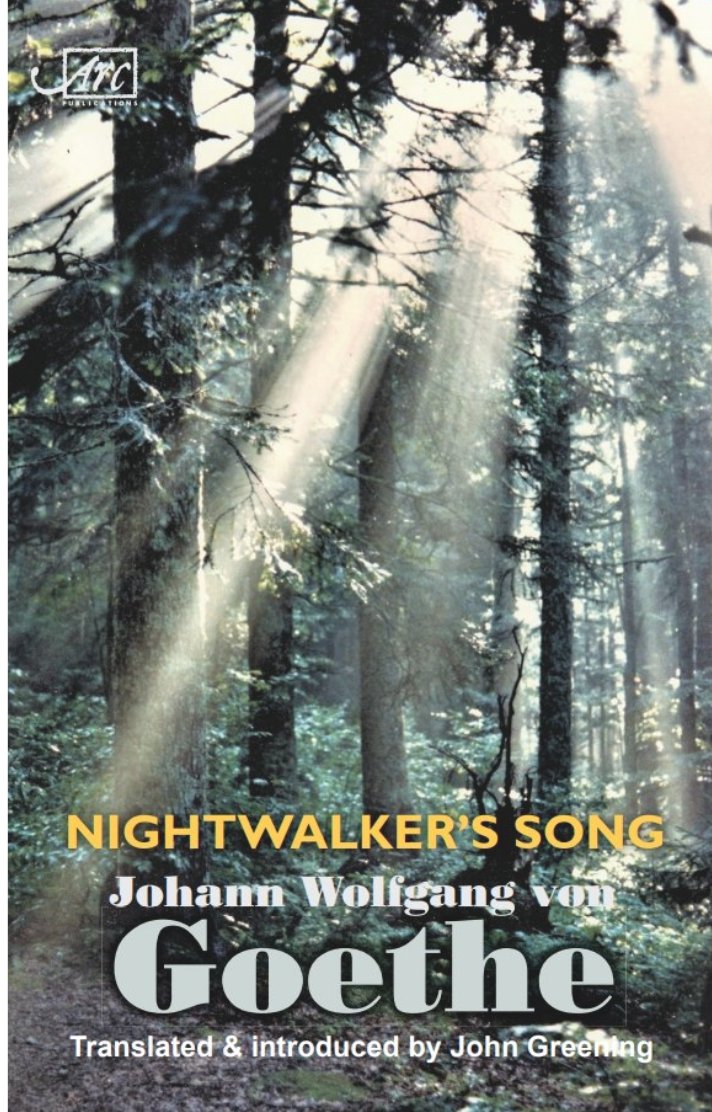
In this blog post, I am discussing John Greening’s new translations of a small selection (9 poems in all) from the works of Johann Wolfgang von Goethe. With the original German texts provided on facing pages, these translations are published as Nightwalker’s Song, by Arc Publications (2022). This review was originally commisioned and published by Acumen poetry magazine early in 2023. By the way, Acumen will be presenting a free to attend on-line celebration of its latest issue on Friday September 1st at 18.30 BST. It will include a brief reading of new work by yours truly, Gill McEvoy, Anthony Lawrence , Sarah Wimbush, Simon Richey, Dinah Livingstone, Michael Wilkinson, Jill Boucher, Jeremy Page, and others.

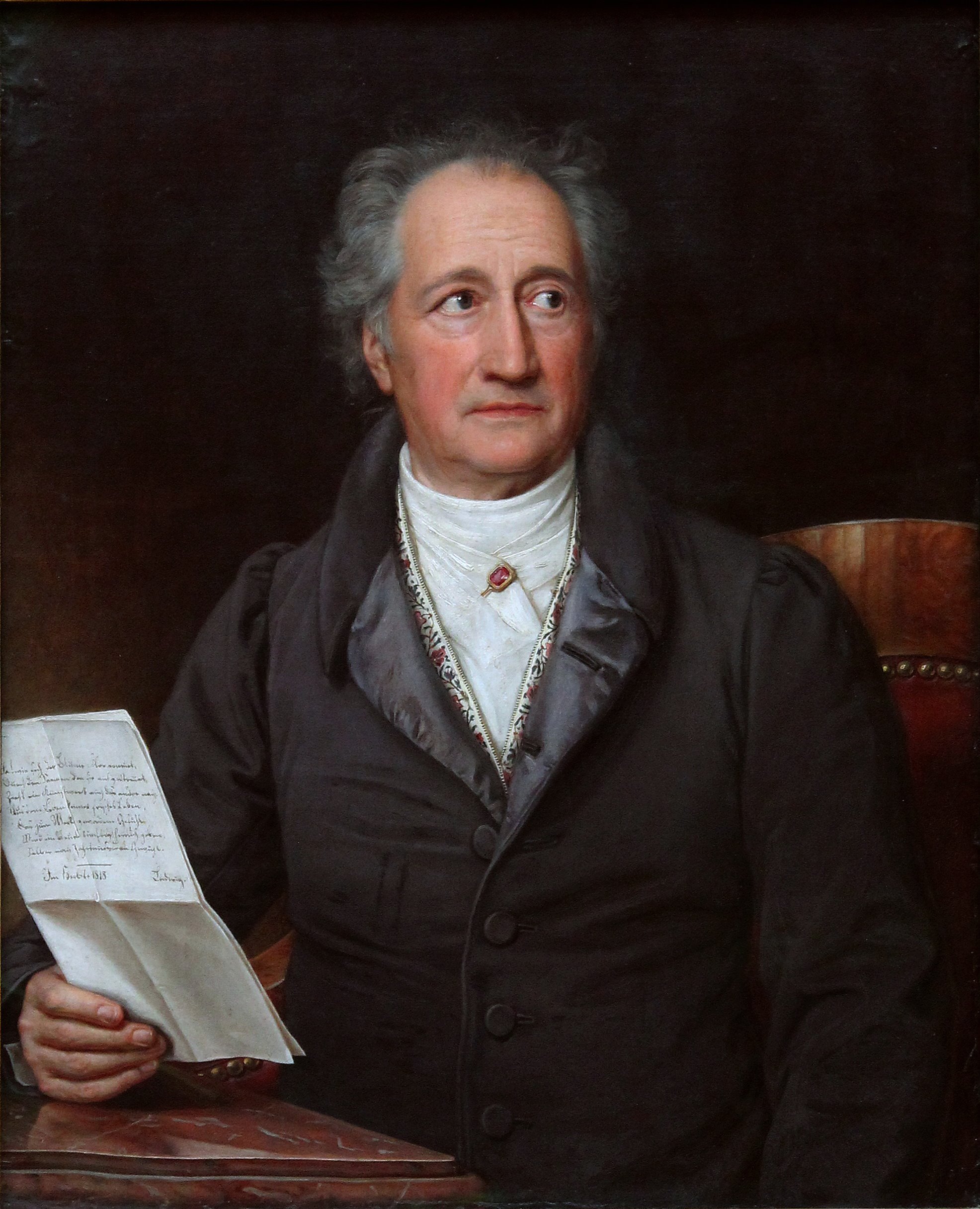
John Greening’s recent, self-confessedly ‘tightly-focused’ little selection from Goethe’s vast output is, in part, a campaigning publication. In his Introduction, Greening notes the difficulties surrounding the great German poet’s presence in English: the sheer volume of work, the range of that work, the man’s polymathic achievements (as poet, playwright, novelist, scientist, statesman, theatre director, critic), the long life untidily straddling all neat, period pigeon-holing. Christopher Reid has called him ‘the most forbidding of the great European poets’, but perhaps the English have come to see him as a mere jack-of-all-trades? And where do we turn to read and enjoy the poetry? Michael Hamburger’s and Christopher Middleton’s translations look more and more dated. David Luke’s Penguin Selected (1964; versified in 2005)is the most reliable source. But tellingly, as Greening says, one does not find young, contemporary poets offering individual translations of Goethe in their latest slim volume in the way we do with poems by Rilke or Hölderlin.

John Greening

So here Greening sets out a selection box of various Goethes to encourage other translators: we find nature poetry, romance, the artist as rebel, meditations on fate, erotic love poems, a rollicking ballad, dramatic monologue and a very fine sonnet. I like Greening’s determination not to lose the singing. Here, he has ‘shadowed’ the original metres and retained rhyme schemes, though he sensibly makes more use of pararhyme than Goethe’s full rhyming. While not approaching Lowellesque ‘imitations’, Greening has also sought a ‘contemporary texture’ by venturing to ‘modernise an image or an idea if it helped the poem adapt to a different age’. For example, in ‘Harz Mountains, Winter Journey’ (‘Harzreise im Winter’) Goethe’s buzzard has become the more familiar image, in southern England at least, of a red kite. The carriage or wagon (‘Wagen’) driven by Fortune becomes a car in a ‘motorcade’ and another vehicle is imagined ‘winking on to / the slip-road’. There’s also an enjoyable touch of Auden in Greening’s updating of ‘crumbling cliffs / and disused airfields’ (Middleton has ‘On impassable tracks / Through the void countryside’).

Walt Disney’s Sorcerer’s Apprentice

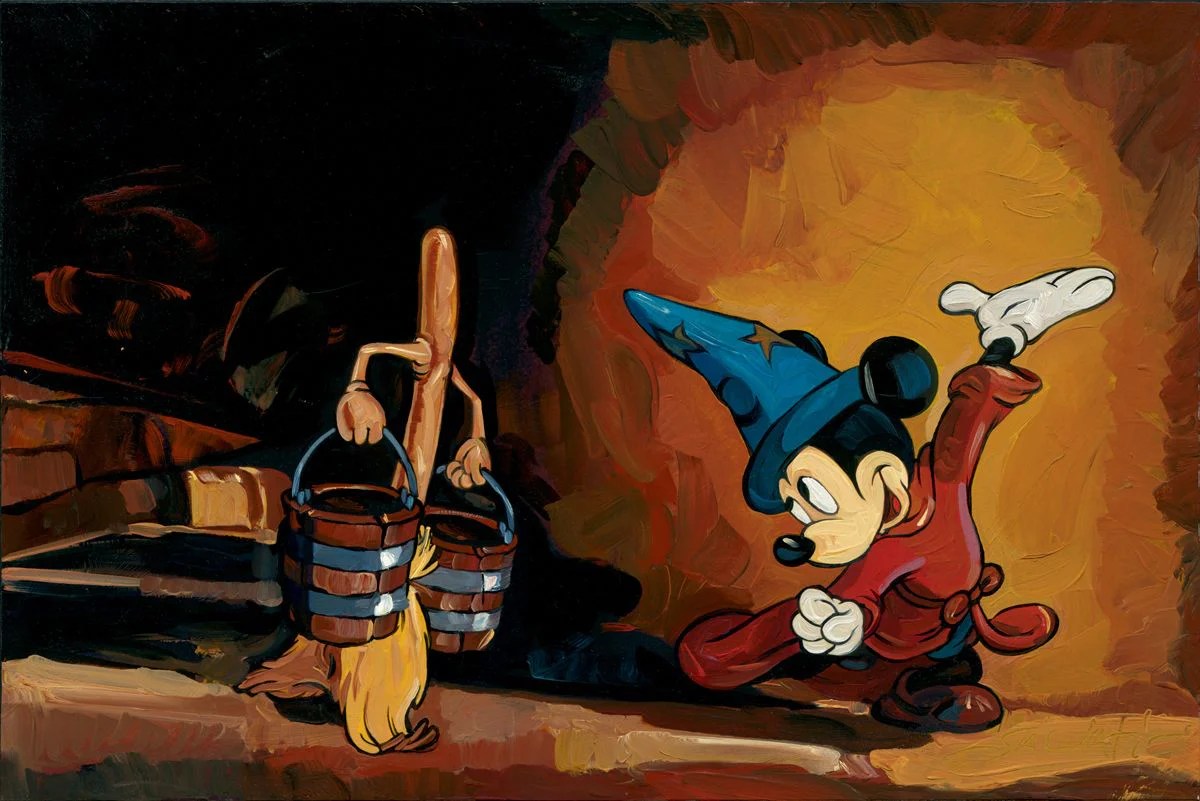
Greening’s skills in versification are well known and he deploys them all – and you can hear him enjoying himself – in ‘The Sorcerer’s Apprentice’: ‘Broomstick – up, it’s show time, haul your / glad rags on, so grey and grimy. / Seems you’ve seen long service, all you’re / fit for now is to obey me’. Though grace notes and fillers slow Goethe’s headlong verse (the opening line in German is simply ‘Und nun komm, du alter Besen!’ – ‘And now come on, you old broom!’), Greening’s rhyming is delightful and the modernising phrases (show time, glad rags) drive the poem along with a colloquial energy which is absolutely right.

Goethe’s ‘Prometheus’ – published in 1789, the year of revolution in France – is a growling dramatic monologue in which the rebel Titan (who stole fire from the gods to give to humankind) sneers and mocks the authority figure, Zeus. He belittles the top god in the opening lines by comparing him to a boy, thoughtlessly knocking the heads off thistles. Greening catches the mocking tone in the series of rhetorical questions later in the poem: ‘Honour you? For what? / Have you ever offered to lift / this agony?’ Prometheus ends – following one version of his story – by explaining he is creating the human race in his own image, ‘a new range’ translates Greening, neatly updating once more, ‘programmed / to suffer and to weep, or whoop and punch the air – / but who, like me, won’t care / about you’. In comparison, Luke’s version sounds rather fusty and less bolshie: ‘A race that shall suffer and weep / And know joy and delight too, / And heed you no more / Than I do!’

Johann Wolfgang von Goethe

Goethe is a great love poet. ‘Welcome and Farewell’ (‘Willkommen und Abschied‘) has a man approaching on horseback (Greening does not motorise on this occasion) through a moonlit landscape and the lover is spied at last: ‘how / I’d dreamt of (not deserved) all this’. The moment of union passes unspoken between stanzas three and four. As if instantaneously, now ‘the sun had risen’ and the parting must take place: ‘And yet, to have been loved – to love, / ye gods, such utter happiness’. It’s curious that Greening retains the rather archaic ‘ye gods’. One still hears the phrase, of course, but with more irony than I would have imagined here. The fifth of Goethe’s ‘Roman Elegies’ is a fabulous erotic piece. Written during the poet’s travels to Italy in the late 1780s, the narrator is studying classical culture by day and his female lover’s body by night. The latter nourishes the former: ‘I find I appreciate marble all the better for it, / and see with a feeling eye, feel with a seeing hand’. As he goes on, ‘compare and contrast’, I find Greening a little cool here. There is a selection of translations by D M Black (Love as Landscape Painter, from FRAS Publications in 2006) which generates more heat:

Yet how is it not learning, to scan that delectable bosom,

  Or when I slither my hands pleasantly over her hips?

Then I understand marble; then I discover connections,

  See with a feeling eye, feel with a seeing hand.

Faustus (by Eugene Delacroix)

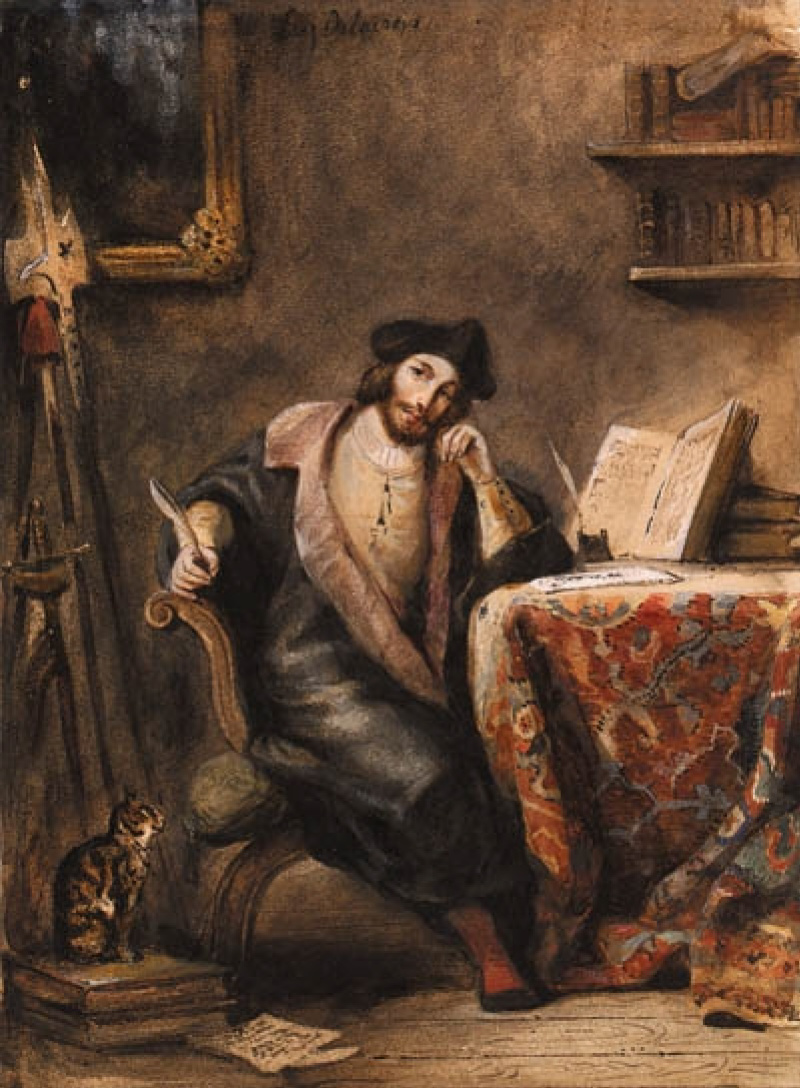
Goethe’s Faust is represented here by the scholar’s opening speech to Part One (versioned, as it were, by Christopher Marlowe in the opening soliloquy of his Doctor Faustus). Greening excels in the handling of rhyme and line length, even compared to David Constantine’s 2005 Penguin translation. Perhaps most impressive of all is the sonnet ‘Nature and Art’ (‘Natur und Kunst’). Greening has the motor car in mind again in his updating of Goethe’s exploration of how the artist must labour incessantly to achieve the preparedness, the readiness to respond to Nature, to what is natural. Reading these lines, you feel Greening is translating as a skilled and experienced artist himself, triumphantly bringing a poem written in 1800 bang up to date:

It’s just a case of working long and late.

So once we’ve spent, let’s say, ten thousand hours

on steering, footwork, shifting through the gears,

it may be then some natural move feels right.

x

Creative though you be, you’ll strive in vain

to reach perfection if you’ve no technique,

however wired and woke your gifts may be.

x

You want a masterpiece? You’ll need to strain

those sinews, set your limits, drill and hack.

The rules are all we have to set us free.

For anyone yet to make the leap into Goethe-world, this little book is a terrific way into the great German writer’s work and such a reader will find Greening’s Introduction and his prefatory remarks to each of the chosen poems very helpful indeed. I recommend this collection.

‘My mother’s care home room as Cleopatra’s monument’ – an unpublished poem @ The Poetry Archive

The Poetry Archive has recently been calling for submissions for what they are calling Poetry Archive Now. They are searching for poems written during 2023 as follows:

We want you to have the opportunity to join the Poetry Archive collections by recording yourself reciting or reading your poem out loud and sending it to us to care for and share worldwide. 20 poets will be chosen to join the Poetry Archive Now! WordView 2023 Collection and hundreds more will be curated, archived and shared in our YouTube collections with the millions of people who visit and love the Archive. Poetry offers a vital reflection of the age we live in. We would love you to join our collections to offer inspiration, comfort and the sheer lift-of-spirits which listening to fantastic poetry being read out loud can bring.

One of the few benefits of scrolling through social media – all too conscious of the gloom that can set in when confronted with (what appears to be) every other person/poet in the world having such marvellous successes – is that one comes across these calls for submission. Happily, the poem I videoed and sent in has become one of the ‘hundreds more’ and recently been posted on YouTube. I thought I’d share it here.

Hard to say where the juxtaposition of the last days of my mother’s life and Cleopatra’s final moments (as presented in Shakepeare’s Antony and Cleopatra) came from. But the scene is one I have often taught and found immensely moving. Charmian is one of the Egyptian queen’s handmaidens (friends more like). Cleopatra applies the asp (poisonous snake) to her breast and within a few minutes Charmian does the same:

  • CharmianO eastern star!
  • CleopatraPeace, peace!
    Dost thou not see my baby at my breast,
    That sucks the nurse asleep?
  • CharmianO, break! O, break!
  • CleopatraAs sweet as balm, as soft as air, as gentle,—
    O Antony!—Nay, I will take thee too.
    [Applying another asp to her arm]
    What should I stay—

[Dies]

  • CharmianIn this vile world? So, fare thee well.
    Now boast thee, death, in thy possession lies
    A lass unparallel’d. Downy windows, close;
    And golden Phoebus never be beheld
    Of eyes again so royal! Your crown’s awry;
    I’ll mend it, and then play.

The text of my poem appears below the video recording.

My mother’s care home room as Cleopatra’s monument

I sit behind door 16

in a room the size

of my son’s student room

though it is the old

who are sheltered here

and from the only chair

I watch the sun’s rays

through the only window

pierce the canopy

of the tall beech trees

that line the park

alongside this building

sunshine through glass

and over the sill

onto a blue plastic jug

its blue plastic cup

of barely touched water

a single birthday card

from her grandchildren

a Christmas cactus

and her bracelet watch

catches a glint

and a glint on the foil

of today’s medication

these few objects

are telling the time

as the sunlight rakes

beyond the trees

an Easter Island profile

gaunt and beaked

propped up in bed

on the plastic-wrapped

single mattress

the rucked-up sheet

of scroll and shadow

as the sun travels

falling into the west

I keep my vigil

with all the helpless-

ness of Charmian

at the cooling feet

of her Queen

the asp flung down

beneath the only chair

there has ever been

My Three Desert Island Poems

As mentioned in a post earlier in June, I spent a few days around that time trying to choose just 3 poems that I might take with me to a speculative desert island. I was asked to do this by The Friday Poem website and they have now posted the results of my labours.

In the end I chose work by Coleridge, Edward Thomas and Rainer Maria Rilke. Of course, the latter has been on my mind a great deal in the last 12 months or so, as I have been working on a new selection and translation of his work (spanning his career from 1899 to his death in 1926). It so happens that I have just signed off the final draft of this book – all 200 pages of it – and it is scheduled for publication by Pushkin Press in the Spring of 2024.

As for that desert island, do follow the link below to read the full text of my ruminations which also includes links to my own readings of the Thomas and Rilke poems. Do explore the rest of the FRIP website – it’s full of great poems and reviews:

We are always saying goodbye – The Friday Poem

Pushkin Press Rilke book cover ready for Spring 2024