Flowers of Lime: Geoffrey Grigson’s ‘Selected Poems’

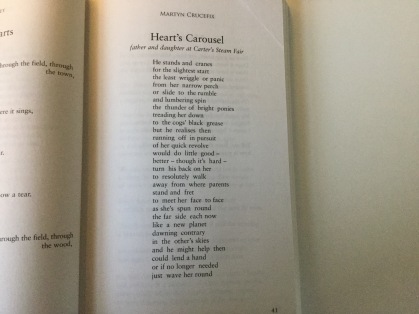
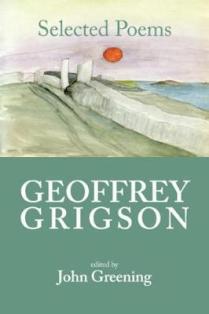
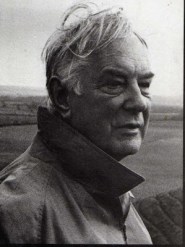
Surely we all have one or two Faber anthologies edited by Geoffrey Grigson on our shelves? Love Poems, Popular Verse, Reflective Verse, Nonsense Verse, Poems and Places, Epigrams and Epitaphs . . . As a critic he often wielded a savage power through his magazine New Verse. And as a big beast on the literary scene of the early 1980s, Hermione Lee interviewed him on Channel 4. But since his death in 1985, he’s better known merely as the husband of Jane Grigson, the celebrated cookery writer. His own poetry has been wholly neglected which makes John Greening’s new Selected Poems from Greenwich Exchange a welcome opportunity to re-consider it. I think Grigson’s contrasting themes were established early on. The influence of two great poets (not Eliot, not Yeats) is clear from the start and it may be that the limits of Grigson’s poetic achievement and the absence of much development in his style, are because he never chose one path or fully escaped either.
 

9781910996133

The influence of Auden is very clear in Grigson’s first collection, Several Observations (1939). ‘Meeting by the Gjulika Meadow’ presents an enigmatic narrative in a “frontier” landscape; a meeting between two men whose conversation is in large part concerned with “the thunder / about Europe”. There are sketched fragments of personal dependencies and guilts but the whole reads as a slice of narrative that has been carefully shorn of its explicatory elements. A poem from 1946 shows Grigson using similar methods but on matters much closer to home; ‘In a Dark Passage’ draws material from the deaths of two of Grigson’s brothers in WW1 and the early death of his first wife, Frances. The situations are still relatively distanced by being told in the third person and the timings of the incidents are compressed to form a litany of heartfelt if rhetorical griefs: “O floes of ice, you float downstream / But do not disappear”.

There is certainly a very dark river running through Grigson’s work. ‘Two A.M.’, from the 1970s, records a wakefulness at night filled – as so often – by nothing but questions: “all emptiness, all gravity, / Ultimacy, nothingness”. He captures vividly the way this kind of mood, at such an hour, insists on expanding exponentially, racing to fill the world’s “Sierras, monadnocks, lakes, prairies, taiga, ice”. On this occasion, there is the possibility of an erotic reply: “At least now, with our bodies close, / Be comforted”. But even that response is absent from ‘Again Discard the Night’ from the 1980 collection, History of Him. Written as a first person narrative this time, the poem pulls no punches in its flinty and unforgiving portrait of old age waking:


… you call, the kettle gathers

And talks, and Are you all right? comes your


Usual cry, and my habit insists, without sound, Reply,

Be bright, wash, shave, dress, and this once,

Again discard the night.

 

maxresdefault

Of course, Grigson’s sense of an ungoverned and likely meaningless universe matched with his frequent backward glances also calls to mind Hardy’s work. One of Grigson’s earliest poems, ‘The Children’, has an 11-line stanza of complex rhyme patterning that Hardy would have been proud of. The children are portrayed as playing in a natural environment and in a state of temporal innocence: “They looked for no clocks, noticed no hours”. But ending each stanza, the triple rhyme words with “hours” are (ambiguously) “sours” and “flowers”. Between the third and fourth stanza, there is the kind leap in time often found in folk songs. We have instantaneously passed many years: “The rooms were pulled down, but they always abide / In the minds of the children born in them”. These are the best lines in the poem with the much cooler closing lines for me falling flat:


They see the clocks and notice the hour

And aware that restriction of love turns sour,

They feel the cold wind and consider the flower.


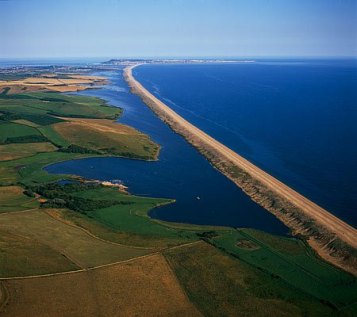
It is certainly Hardy that Grigson is thinking of in ‘In View of the Fleet’. The Fleet is the lagoon behind Chesil Beach in Dorset and the poem borrows phrases from Hardy, empathetically suggesting that each poet’s vision has the same sequential locus: “Things not as firstly well, a sparkling day, and / tolling of a bell”.
 

chesil-beach-aw-17-3
The Fleet and Chesil Beach


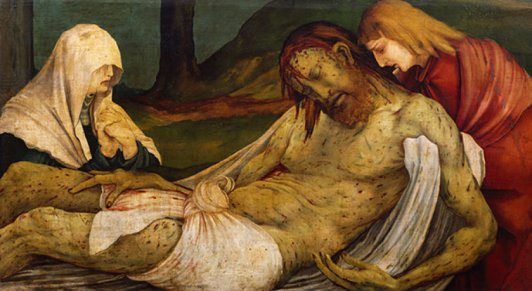
John Greening suggests in his very helpful Introduction that Grigson is also capable of an “extraordinary lyricism” and these are moments when he captures this “sparkling” quality of the natural world. In ‘A New Tree’, helped by the holding up of a child to a window, the narrator sees again with a newly cleansed perception, “a sun / being fiercely / let loose again”. Delight in the natural world recurs in a key poem, ‘Note on Grunewald’. In it, Grigson also expresses the scepticism about literary achievements which must have driven much of his own, often acerbic, critical comments on the work of others. In a man who devoted a lifetime to literary endeavours, it’s hard to take wholly seriously the poem’s assertion that he’d rather live to sniff the “scent of the flowers of lime” than to create lasting “poems”. But the scent is praised in contrast to the art of “Grunewald’s spotted green-rotted Christ”. Grigson sides with (“I join”) Cowper in deciding that death holds no attraction and that he too would choose to “leave this world never”. The perceived dichotomy between a vivid inhabiting of the world of the senses and the ‘rotten’ achievement of artists is by no means Grigson’s final comment on these issues, but the poem certainly expresses unresolved tensions.
 

stufftoblowyourmind-23-2014-08-isenheimdeadchrist-blog
Grunewald’s ‘spotted green-rotted Christ’


As Greening reminds us, Grigson as a critic was a feared and fearsome creature, liable to “dismissiveness and intolerance of shoddy work”. Perhaps, in his own mind, he never quite settled his assessment of his own poems. A lovely translation from Tu Fu was perhaps chosen because it laments lack of achievement, or at least of recognition: “Writing gives me no name”.*   More vigorously, ‘Lecture Note: Elizabethan period’ is an hilarious and outrageous account of a poet’s final work. While the ink was still wet on the page, he dropped dead. The poem fell to the floor only for the maid to drop it in “the jakes”. The final lines laugh cynically, sarcastically, as if this illustrates the fate of most artistic endeavours: “Now irretrievably beshitten, it was, dear sirs, / The one immortal poem he had written”. Yet this is delicate stuff compared to Grigson taking aim with both barrels in ‘Perhaps So’. The premise is that too much is being written:


Too much is told. Banish polymath Steiners

And seventy-seven other British Shiners,

Naturalists, archaeologists, publishers

Of publications in parts,

Norman Mailer

And all long-winded farts . . .


It’s hard to reconcile this voice with that of ‘A New Tree’. Interestingly, Grigson’s address to an ancestor whose name was ‘Nazareth Pitcher’ is critical on the surface, disparaging of Nazareth’s “pride”, suggesting his “lips were too thin”, that he might “be pleased” if he was to witness the parlous state of the world now (1960s). But it’s also difficult to dismiss the feeling that Grigson chose to address Nazareth because he sensed a kinship with this judgemental, sceptical and meanly satirical man.
 

2344
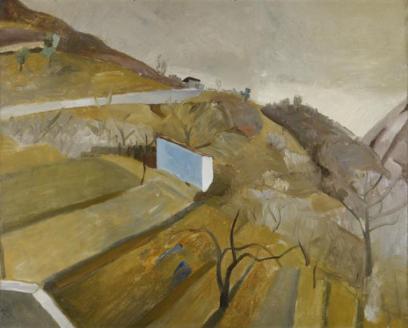
Castagnola (1923) – Ben Nicholson

But Grigson did admire, if very judiciously. Greening draws attention to an Eliotesque belief in tradition, that the best poems are made by “members of a long narrow community through time”. The word “narrow” here indicates Grigson felt that much of what was truly best was not appreciated by many. In one word perhaps, we see here his motivation to be harsh with what he felt not good enough and his hard work in anthologising what was. There are two tribute poems in Greening’s selection which show Grigson at his complimenting best. ‘A Painter of Our Day’ is about Ben Nicholson and has the feel of a Coleridgean conversation poem about it. Its tone is confiding, admiring, ranging from observations about playing with children, shared days out, discussions of Nicholson’s work, ageing and the nature of art. Nicholson seems to teach an appreciation of “what is” and an avoidance of nostalgia. But at the same time, he recognises the value of the “reiterated wisdom of perceiving”. That both poet and artist set the bar of achievement very high indeed is suggested by Grigson’s admission that, of their chosen role models, “most have been / Long dead”. I find it hard to pin down a more precisely articulated aesthetic, but these lines are revealing of any artist’s relation to his/her elders:


Suddenly when young or in our first ability

We find them, slowly we find the reasons

For our love, finding ourselves, and what we lack

As well or need the most


Finally, ‘To Wystan Auden’ records the moment Grigson learned of Auden’s death in the “English September” of 1973. His admiration for the younger poet is fulsome. With the appearance of his early work, Auden became “living’s healer, loving’s / Magician”. From the other end of the temporal telescope, now we can see what the young Grigson gleaned from Auden’s poetry:


You were our fixture, our rhythm,

Speaker, bestower, of love for us all

And forgiving, not condemning, extending

To all who would read or would hear

Your endowment of words.
 

41xZt262WYL._SL500_SX319_BO1,204,203,200_

For all Auden’s own protesting about poetry making nothing happen, for Grigson, “time, after you, by you / Is different by your defiance”. One might ungratefully gripe that these are rather vague compliments from one poet to another. But Greening quotes Grigson suggesting that Auden’s achievement was in destroying “a too familiar, too settled monotony in manner and subject”. This is undeniable and this selection shows Grigson following Auden’s lead, yet at the same time, through his life, also being drawn back to a different, more traditional poetic style in the model of Hardy. Here, for example, in his last years, he recalls his childhood in Cornwall:


Staring down from that broken, one-arched bridge,

In that vale of water-mint, saint, lead-mine and midge,

I was amazed by that fat black-and-white water bird

Hunting under the current, not at all disturbed.


How could I tell that what I saw then and there

Would live for me still in my eightieth year?
 

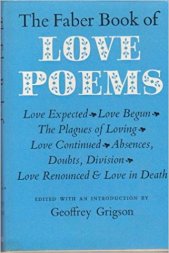
BookrideGrigsonPhoto£££*As a labouring translator myself, I have long remembered Grigson’s brilliant put-down in his Introduction to the Faber Book of Love Poems (1973). Explaining why he has not included any translations at all, he declares that their “unmeasured, thin-rolled short crust” would prove detrimental to the health of the nation’s poetic taste. Times have changed, thank goodness.

Being In and Above: on Friedrich Hölderlin’s ‘Hyperion’

This is my review of Friedrich Hölderlin’s only novel, Hyperion or The Hermit in Greece. The review first appeared in the Temenos Academy Review (No. 20, 2017).  The translation I am discussing is a very recent one by India Russell which was published by Melrose Books in 2016. 


untitled 1

Begun in Tübingen in 1792 in the aftermath of the French Revolution, and published in two volumes in 1797 and 1799, Hölderlin’s only novel is really a philosophical and spiritual biography of its eponymous hero. It does not deliver what a novel reader might expect in terms of characterisation, suspense or specificity of incident (though its retrospective narrative is cleverly designed). It is best read as a doorway to the more metaphysical thought that underpins the later poetry. But Hölderlin’s youthful passion and urgency are evident, for example, in the portrait of his native Germany. Its people and culture are subjected to a withering satirical attack, with the corrupt state of German life acting as the penultimate phase of Hyperion’s long education. He reports, ‘I can think of no people more torn than the Germans. Artisans you see, but no human beings, thinkers, but no human beings, priests, but no human beings […] – is that not like a battlefield, where hands and arms and all limbs lie dismembered amongst one another, whilst the shed life-blood runs away into the sand?’ Such vivid images of division – between warring powers, within bodies of individuals – are central to Hölderlin’s critique of what was wrong with late eighteenth-century Europe.

Hyperion is an epistolary novel, the narrator writing from his native Greece to a friend, Bellarmin, who lives in Germany. Hölderlin’s prose is heightened and mellifluous, dramatically ebbing and flowing; and India Russell’s translation catches this far better than Willard Trask’s 1965 version or David Schwartz’s from 1990. The writing is breathless and aspiring; it is Shelley’s prose not Keats’s. The novel’s picaresque narrative records Hyperion’s travels after his birth on the Greek island of Tenos, where he spends his childhood and school years. He moves to Smyrna, returns home, then travels again to Calaurea, an island close to the eastern coast of the Peloponnese. It is here he meets and falls in love with the young woman, Diotima. Called back to action in the world, he fights the Turkish forces occupying Greece and later fights alongside Russian troops. He is defeated and wounded, then travels to Sicily, thence to Germany, befriending Bellarmin. Only on his return to Tenos does the novel’s account of his life open. So the narrative trajectory means that Hyperion reflects on his own life’s journey in the letters. Importantly, though no significant external events intervene, we perceive a difference between the Hyperion of letter one and the man writing the final words of the novel.


friedrich-hoelderlin-1-sized
Holderlin

The retrospective nature of the narrative only partly accounts for what Hölderlin calls in the Preface Hyperion’s ‘elegiac character’. In his opening letters, the protagonist regards reflection/judgement (‘Urteil’) as a curse, cutting him off from an unthinking sense of oneness with the world. As the novel opens, it is especially in relation to the natural world that Hyperion feels this alienation, though the limits of his current understanding are revealed: ‘I know not what happens to me when I lift my eyes before your beauty […] My whole being becomes quiet and harkens’. He later exclaims, ‘To be one with all, that is the life of the Divine, that is the heaven of man’ and yet ‘a moment’s reflection casts me down […] Nature closes her arms and I stand like a stranger before her’. He identifies his schooling as having made the first break between the sense of oneness experienced by a child and this later sense of estrangement. The loss is blamed on ‘Knowledge’ which inculcates the desire to be ‘absolutely reasonable, [to] have thoroughly learnt to distinguish myself from that which surrounds me’; and in such a state of nurtured division he suffers solitude and rejection from the world about him.


Hölderlin’s preface to the Thalia fragment of Hyperion (published by Schiller in 1794) lays these issues out more philosophically. ‘Man would like to be in everything and above everything’ he argues, quoting Loyola: ‘Not to be confined by the largest, but to be contained in the smallest, is divinity’. He observes how this pronouncement ‘designates the all-desiring, all-subjugating dangerous side of man as well as the […] most beautiful condition he can achieve’. On one side, we desire the freedom to be above our lives, to shape them, yet on the other we long to feel at home in our world, to be in it at the cost of our liberty. With one eye on the Revolution in France, it seems to Hölderlin that pursuit of freedom at the expense of a sense of unity with the world leads to a deracinated fanaticism that harms both ourselves and the world. But on the other hand, to experience existence without liberty and self-determination is to be sunk deeply in a form of passivity verging on idiocy. Hölderlin’s originality lies in his view of human life as being endlessly dynamic, the two impulses – to be both in and above our own lives – are to be held in tension, the self drawn in contrary directions with no anticipation of a resolution.

1349998856

In the novel, Hyperion’s early and brief encounters with Adamas on Tenos present one possible easement of his sense of alienation. Excited by the older man’s devotion to the past, he reads the Classics and visits Mount Athos, Olympia, Mount Cynthus and the grave of Homer. Hölderlin’s earlier poems frequently echo just this nostalgic impulse in his idealisation of the Classical past. David Constantine points out that for Hölderlin, ‘the civilisation of Periclean Athens seemed to him the best the human race had ever achieved and he wanted an equivalent of it for his own day and age and even believed the French Revolution might bring it about’. So this is not, for Hölderlin, any simple nostalgia but rather a call to spiritual and philosophical revolution. A poem like ‘The Archipelago’ portrays the devastation of eighteenth-century Greece (under the rule of the ‘Persian’) but also anticipates its renovation:


Lovingly back to the waiting abandoned river

Come the people of Athens and down from the homeland’s mountains

The shining crowds, meeting like waters, replenish

The emptied plain with joy.


(tr. Constantine)


6777857-M

But in the novel, Adamas’ overly literal idealisation of the past is quickly dismissed by Hyperion. Alone, Adamas travels on into Asia in search of peoples of ‘rare excellence’ who, he hopes, are still living out such ancient virtues. Left dissatisfied, Hyperion is bored and restless on Tenos. He leaves for Smyrna and encounters a very different solution to his problems in the form of Alabanda, a man devoted not to the worship of a past age but to the struggle for social change. For a period Alabanda and Hyperion live ‘like two streams which roll down from the mountains and cast off the burden of earth and stone and rotten wood and the whole inert chaos that had impeded them, to forge the way to one another and break through until where, seizing and seized with equal strength, united in one majestic River, they then begin the journey in to the wide Sea’. Such a sentence is a good illustration of Russell’s skill in this translation – the results are flowing, energetic, with just the right degree of distancing from conventional language usage. For the two men, the present state of society is like a ‘barren, rotten tree’, needing to be felled so that a ‘new world’ can grow in its place. But Alabanda is too much a man of action, a fighter, consumed with the wish to exercise freedom to effect social change and (as the simile above suggests) liable to destructive violence and a moral fanaticism. His mode of operation is to ‘burn the weeds […] blast the dull clods from the Earth!’. He himself admits to being ‘rough and offensive and unsociable’. Hyperion finds he cannot commit himself to this course either and we become conscious of his tendency to vacillate between (again) being within and without, between commitment and alienation and aware too of the fact he perceives this as is a problem needing to be resolved.

untitled 2

It is on the visit to Calaurea that Hyperion meets Diotima, a young woman who is unreflectively at home in the natural world. This character was introduced into later drafts of the novel and is a portrait of Susette Gontard, the married woman whose children Hölderlin was appointed to tutor in 1795, the woman he loved. Though Susette seems to have reciprocated Hölderlin’s affections, the relationship was doomed. He dedicated the second volume of Hyperion to her. The name Diotima appears frequently in Hölderlin’s later poetry and is the name of the seer or priestess who first taught Socrates to regard love as the means of ascent to a contemplation of the Divine. In Hyperion she lives contentedly in the world as opposed to Alabanda’s position above the world, and his wish to change it. Her heart is most at home among flowers, ‘as though it were one of them’, and Hyperion enviously observes her unreflective unity with the natural world: ‘Diotima’s eyes opened wide and quietly, as a bud opens, her dear little face opened before the airs of Heaven, became pure speech and soul and, as though she began a flight into the clouds, her whole form stood stretched gently upwards in easy majesty, her feet hardly touching the Earth’.

Diotima is initially unconscious of the beauty Hyperion sees in her but she becomes more self-aware in the letters documenting their relationship. She also comes to understand the real nature of Hyperion himself, recognising that (as Hölderlin’s philosophical thinking suggests) he cannot remain content with what she has to offer. Though Hyperion may indeed wish for such oblivious contentment, it is ironically Diotima who suggests he must do otherwise: ‘Will you lock yourself in the heaven of your love, and leave the world that needs you? […] You must, like the ray of light, descend like the all-refreshing rain, you must go down into the land of the mortals, you must enlighten like Apollo’. Light, healing and poetry are, of course, among Apollo’s many attributes and it will be as an artist that Hyperion must give (as Diotima puts it) ‘what you have within you’. In ‘As on a holiday…’, one of his later hymns, Hölderlin advises his fellow poets:


us it behoves to stand

Bareheaded beneath God’s thunder-storms,

To grasp the Father’s ray, no less, with our two hands

And, wrapping in song the heavenly gift,

To offer it to the people.


(tr. Hamburger)


michaelhamburger
Michael Hamburger

It takes a long time for Hyperion to accept Diotima’s proposal that his true role must be that of an artist. Only after the process of recording his life for Bellarmin does Hyperion achieve what Hölderlin’s Preface refers to as the ‘resolution of dissonances’ in his character. At one point he notes, ‘I am an artist, but I am not skilled’. He returns to Alabanda for a period, fighting and being wounded in a war with the ‘Persians’, then suffers the loss of Diotima. Her last words to him suggest that he has been ‘put to the test and it is bound to become clear who you are’. Hyperion’s test will include the writing of his self-examining epistles. In effect, Hyperion ends by pursuing an art, like Hölderlin’s mature poetry, that essays some interim representations of the Heraclitean ‘One differentiated in itself’. Russell’s essay, accompanying her translation, interprets this as the lightning strike of a ‘Divine force’, an insight that (loosely) links Hölderlin, Shelley and Empedocles. She tends to replace philosophical incisiveness with a blustering, autobiographical style, but what her exposition lacks in rigour it makes up for in enthusiasm.


heart-veins-arteries-helps-blood-flow-40454786

In a letter of 1801, Hölderlin declares there ‘is only one quarrel in the world: which is more important, the whole or the individual part’. Hyperion finally accepts that the irresolvable tension, the pulse or heartbeat vital to the fully-lived human life is that between unity and freedom, Being and reflection, living in life and above it. With new-found optimism, he compares these ‘dissonances of the world’ to lovers’ quarrels, where ‘Reconciliation is in the midst of strife and all that is parted finds itself again’. He offers a further encouraging metaphor: ‘The arteries divide and return to the heart and one, eternal glowing life is All’. What remains to us is an unending quest or process not liable to completion or final stasis. The impossibility of completion is famously expressed in the novel’s final, almost throw-away phrase (‘Nächstens mehr’). In Russell’s fine translation this is rendered as ‘More shortly’ and the ‘more’ that followed was, of course, the poetry for which Hölderlin is now most famous.


Twenty Pointers to Translating Poetry

Writing_Real-

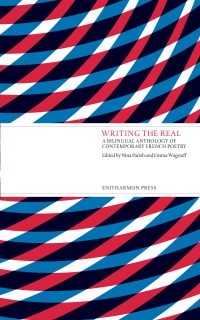
Recently I took part in a panel discussion about the art of translating poetry. It was chaired by Connie Bloomfield from UCL and held at the Enitharmon Gallery in Bloomsbury. I was joined by David Harsent (translating Yannis Ritsos), Emma Wagstaff and Nina Parish (co-editors of Writing the Real: A Bilingual Anthology of Contemporary French Poetry) and Jane Duran (translating Lorca). Part of the evening was spent comparing our differing approaches to translating a poem in Catalan by Josep Lluis Aguilo. Inevitably, we differed on our approaches both to the specific and general issues raised by poetry translation. But it has prompted me to gather up these 20 thoughts on the issues in this blog post.

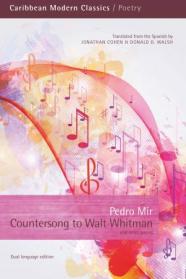
While preparing it, I also happened across further observations on the issue as quoted in the recently published Peepal Tree Press translation of Pedro Mir’s Countersong to Walt Whitman. The late Donald Walsh is quoted as saying “The translator’s first task is to discover exactly what the author has said . . . He must try to re-create in his language the miraculous fusion of thought and expression that produced the original work . . . the translator’s role is humble and secondary . . . he must do his best to circumvent obstacles . . . his duty is to express not himself but his author”.

As what follows will suggest, I find myself largely in agreement with such views – though the compromising, tentative, humble processes that Walsh describes here and the inevitably pyrrhic kind of victories one can expect from them are unlikely to make for dramatic headlines in literary journals or publishers’ blurbs – but I believe this is what the best translators do.

9781845233563_0

Twenty Pointers to Translating Poetry

  1. Ask the big question: can we translate a poem? Because there are so many uncertainties, so many sacrifices, the absolute and perhaps only truly safe reply is to say: ‘No – too much will be lost’. But see #13 below – and now go to #2 (who wants to be safe anyway?)


  1. Ignore such crushing absolutism as expressed in #1. Roll up your sleeves and, like Shakespeare’s Ferdinand believe “some sports are painful, and their labour / Delight in them sets off”. Whatever the apparent obstacles, just do it: start shifting those logs of poetry translation if only because you want the challenge, if only because it’s a fascinating process – but mainly because it’s important (see #20)


  1. Know that to translate is to incur guilt. The moralistic tone in discussions of translation proves the importance of the task and suggests the passionate intimacies involved in this weird relationship between source author, translator and reader

images91M7X9MY

  1. Define translation broadly (1): responding to the emoji on my phone is an act of translation. Plus, it is not merely to transpose to another language, but from one language period to another, one language level to another (formal to vernacular), to paraphrase with clarity, to lay out logical and grammatical links more clearly, to interpret signs, symbols, gestures, facial expressions


  1. Define translation broadly (2): any good poem is a form of translation. Transtromer saw poems as manifestations of invisible poems written beyond languages themselves. Rita Dove says translators often understand best that any poem is merely a silhouette of our attempt to capture elusive original communications – like stepping stones across a river, the better to hear the silence

floral_silhouette_vector_pack_572116

  1. Think of turning the original source into something in the target language with the same information and with the same force as the original


  1. Use these simple methods (naturally used by native speakers to achieve greater clarity in communication – thanks, David Bellos) to begin to convey information and force:
    1. Synonymy – word for word replacement (literal translation)
    2. Expansion – replacement of problematic words with longer versions in the target
    3. Contraction – replacement with nothing, elision, skipping, abbreviations – turning a blind eye
    4. Topic Shifting – rearranging the sequence of the expressions for more clarity
    5. Change of Emphasis – other methods of making parts of the original expression stand out from the rest, in order to assist communication
    6. Clarification – adding expressions (not in the original) – making what was implicit in the original more explicit

 9780865478763

  1. Accept it – poetry is poetry so its translation is mostly a question of force – the shades and emotional colours, the rhetorical temperature, the ramifications of meaning of a word/phrase/form


  1. Discuss this: force is what Robert Frost called the sound of sense – poetry’s confessedly ineffable tones, gestures, interrelations, patterns – and to convey it we need to match such constituents (though not necessarily preserve them like lifeless bones)

download

  1. Measure the force in a source poem via a process of triangulation – determine your direction of travel via multiple reference points connected to the source text – not only the text but also good old-fashioned literary interpretation, wider cultural perspectives, the source author’s wider oeuvre, anything you can lay your hands on


  1. Empathise and keep ego quiet – imagination is the major part of this triangulation process: so work hard to imagine what motivated the poem, re-live the act which gave rise to it and is enmeshed in it (thanks, Yves Bonnefoy). In translation we hope to release it from its source form into a new form that resembles/matches its original intention, intuition, yearning


  1. Measure the success of your empathetic act not by a term-for-term resemblance to the original poem (thanks again, Yves) but by the ontological necessity of your new words/forms/images


  1. Contradict my #1 – so it turns out, translation is possible if, with Bonnefoy, we regard the process of translation as poetry re-begun                                                                       . .
    images.
  2. Be inspired by Charles Tomlinson’s formulation of the task: we look to preserve not the metre, but the movement of each poem – its flight, or track through the mind


  1. Close the source text, says Michael Hofmann, rightly, once your translation is beginning to gain some height in its flight. Close it!

InternationalFlight_B2C_22-min

  1. Don’t confuse translation with versioning – the permission we give ourselves is different. To translate puts us in a position of responsibility to both the source text and a working English poem, equally. Versioning puts us in a position of responsibility only to a final working English poem


  1. Ask yourself how might I like my own poems to be treated – translation or version? Will you feel well served or misrepresented? Pleased or aggrieved? I’m not pre-judging your choices, but they will affect your view of your own translating processes


  1. Discuss this: Peter Robinson argues versions result in failures of tone or meaning, that they impoverish and almost invariably lower the tone, reducing the complexity of the original. But surely, such radical revisions might equally result in a better poem than the original? Still – neither will be a translation

 images0VYVDXZC

  1. Label versions and translations appropriately – we have a responsibility to the paying public who, in my experience, are always very clear about what they want to read


  1. Keep translating – because the desire to translate and read in translation is optimistic, humanistic and hopeful. Contra Babel, it provides evidence of a powerful urge towards community and communication. It shows there is more that unites us than divides us

untitled

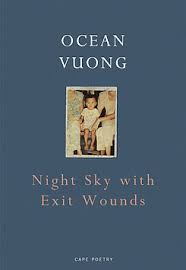
2017 Forward First Collections Reviewed #4 – Ocean Vuong

martyn crucefix's avatarMartyn Crucefix

This is the fourth in the series of reviews I have been posting over the summer months of the 5 collections chosen for the 2017 Forward Prizes Felix Dennis award for best First Collection. The £5000 prize will be decided on 21st September 2017. Click on these links to access all 5 of my reviews of the 2016 shortlisted books (eventual winner Tiphanie Yanique)  and all 5 of my reviews of the 2015 shortlisted books (eventual winner Mona Arshi).

The 2017 shortlist is:

Maria Apichella – Psalmody (Eyewear Publishing) – reviewed here

Richard Georges – Make Us All Islands (Shearsman Books) – reviewed here

Eric Langley – Raking Light (Carcanet) – reviewed here

Nick Makoha – Kingdom of Gravity (Peepal Tree Press) – reviewed here

Ocean Vuong – Night Sky with Exit Wounds (Cape Poetry)

download

In living with Ocean Vuong’s book over the last week or two I have on…

View original post 1,468 more words

Fewer Jellyfish: Jack Underwood on Poetry and Uncertainty

The French Alps, a Scottish island, a breezy, autumnal lake in the USA . . . These all came back to mind* as I read Jack Underwood’s just-published essay ‘On Poetry and Uncertain Subjects’ (Poetry Review, Winter 2017). To be clear, I am sympathetic to the general drift of his argument, his interest in language and epistemology and his enthusiasm for poetry as contributing a necessary part of our understanding of the world. But Underwood is too disparaging about language (it’s most of what we’ve got) and this leads to his own imprecision with it (because words don’t yield the whole truth doesn’t mean we should use them carelessly). I wish he’d given better examples of what he is urging poets to pursue (so I’ve included one below) and I’m horrified that he recommends vague, woolly raptures (fog and smudge) to poets rather than genuine provisionality and uncertainty reflected in language that is sceptically self-aware.


1074-Poetry-Review_Cover-RGB-300-w-shadow-429x600[1]

Starting from a remembered childhood scene, Underwood argues, as his title suggests, that poetry is an area of discourse which both highlights and thrives on epistemological uncertainty. Such uncertainties arise firstly from “the innate inaccuracy of language as a system that cannot catch or hold onto anything securely”. In a postmodern world, this hardly makes headlines, but the hyperbolic expression is too much, given that language gets me through most of my days reasonably well; it has to be grasping something. A second uncertainty arises from the poet’s raw material – particularly the “gunk of unconscious activity” – all of which is subjective and unstable because any meaning/knowledge is actually a concept only associated with human perception and not something corresponding to a universe existent apart from human perception. Hence, in the end, Underwood argues, “all of meaning and knowledge is apprehended, expressed and configured unstably [. . .] a shoal of jellyfish”.

jellyfish[1]

Except that mostly it is not. Surprisingly for a poet, Underwood doesn’t take the potency of language seriously enough, in particular the way the words we use have the habit of becoming idolatrous (in the sense used by Owen Barfield); they can determine how we see, think and feel. Here’s a pretty, remembered scene of my own: in the French Alps above the Trois Vallees, the woven steel cables of chair lifts hang quite still during the night and the cold air seals them in icy sheaths. Come morning, when the engines whir into action at either end of the lifts, the cables suddenly tense and jump, brought to life, and in doing so they shuck off their icy jackets. The frozen moisture cracks, fragments and detaches from the cables. Down it falls into the snow to print a strange hieroglyphic language in a neat line up the mountainside, looking something like this:

/

=

\

|

/

>

..

_-

^:

__

\

..-

|

\-

– `

I bet the locals have a word for this modern phenomenon. But from above, it looks like a language in which nothing is cursive (and life tends to the cursive, is always diverging from the linear). This icy steel cable language is – I’d suggest and Underwood would agree – like much of our everyday language use, mostly false. Yet it does possess a certain utilitarian precision, enough to perform its functions within broad criteria. But if our wish is to be more precise, to say something difficult to grasp, a more unusual observation, something more emotionally cursive, then we have to choose our words more carefully, put them together in a different sort of way: we have to unsettle them, bend them, occasionally find new ones, revive old ones in new contexts.

alpine-skiing-877410_640[1]

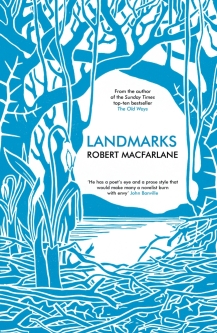
Surprisingly, Underwood’s response to this difficulty is to recommend poets use language which is “foggier” than we might ordinarily use, or language that has been calculatedly blurred or aspires to a kind of “smudging”. This simply doesn’t square with most people’s feelings about poetry which is that it tends to clarify experience rather than ‘smudge’ it. The truth is that we need to respond to language’s limits by working harder with language not neglecting it. Underwood would do well to read Robert Macfarlane’s book, Landmarks (Hamish Hamilton, 2015), which passionately argues against the loss of regional, place-specific language, a loss which means we are progressively perceiving natural landscapes in fewer dimensions, slipping into an ever more abstract, narrow, linear understanding of experience. Macfarlane argues that “Language deficit leads to attention deficit” and perhaps Underwood would agree but Macfarlane grasps that we do not liberate ourselves from the tyranny of language by using it vaguely, but ever more precisely. In Landmarks, he is concerned that the Oxford Junior Dictionary of 2007 deletes heron, ivy, kingfisher, pasture and willow among many other words considered irrelevant in reflecting the “consensus experience of modern-day childhood”. The word blackberry has been replaced by Blackberry.

cover

And this is no narrow Cambridge academic’s concern. Macfarlane also tells the story of the proposed building of a vast wind farm on Brindled Moor on the Isle of Lewis in 2004: 234 wind turbines, each 140 metres high, 5 million cubic metres of rock and 2.5 million cubic metres of peat excavated and displaced. The debate centred around “the perceived nature and worth of the moor”. Proponents discussed it as a “wasteland”, a “wilderness”, a “vast, dead place”. Opponents – including 80% of the island’s inhabitants – argued for the fecund particularity of the moor. Tellingly, part of the defence was lexical in the shape of a Gaelic ‘Peat Glossary’ – hundreds of words describing the subtle features and moods of what is clearly no “dead place” at all. Macfarlane links this “Counter-Desecration Handbook” to poets like Hugh MacDiarmid and Norman MacCaig but it also reminds me of Blake’s insight: “The tree which moves some to tears of joy is in the eyes of others only a green thing that stands in the way”.

Underwood and I would agree that the man who sees only a “green thing” is suffering a lack of poetry – a limitation or failure of perception which is also a failure of linguistic precision. I think of it as an example of that icy steel cable language in the French Alps which falls (or more dangerously is handed down – this is where politics enters the debate) from on high, from some remote, cold place, handed down into our lives and so it begins to determine how we see the world. I share Underwood’s sense of urgency and importance that it is for those who concern ourselves with language and try to scrutinize our relations to the other, to others, to ourselves, to re-double our efforts to make further brief, individual Counter-Desecration Handbooks, to tell what we see as the truths of our lives as accurately as possible. Whatever form they may take, let’s call the resulting texts ‘poems’ and take inspiration finally from a marvellous one by the American poet, David Ferry.


Jack-Underwood-square-460x460
Jack Underwood

Here, Ferry’s poem can also act as an illustration of several of Underwood’s comments about poetry. He suggests poems convey meanings beyond the “sharper constraints” of everyday language. By “sharper” he surely means narrower and more meanly delimited and Ferry’s poem illustrates that a quite different sharpness (a vividness from the cleansing of the doors of perception) is something poetry does well and yields pleasure for the reader. The poem doesn’t contradict Underwood’s suggestion that we know when we are reading poetry because of its formal qualities, its frequent use of metaphor, its preference for connotation as opposed to denotation. Our acquaintance with the poem certainly sets us “wondering” (Underwood’s rather foggy word) about what we are reading and it suggests and explicitly discusses “a resistance to finality in language”. I don’t think Underwood’s own examples help illustrate his point; I think Ferry’s poem does, confirming how poetry can be the “prime medium for the articulation of our knowledge of the unknown” (Underwood).

untitled

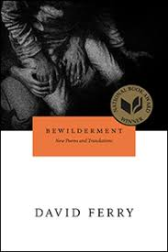
Ferry’s original poetry has long flourished in the shadow of his translation work but his collection, Bewilderment: New Poems and Translations (University of Chicago Press, 2012) won the National Book Award. In the UK, his selected poems are published as On This Side of the River (Waywiser Press, 2012). In fluidly, cursively, yet precise language, ‘Lake Water’ brilliantly conveys Ferry’s attentiveness to the world’s presence without losing a sense of the provisional nature of both self and other, the root inscrutabilities of experience (one of Underwood’s main points). There is a pressure exerted in favour of clarity and truth to both inner and outer worlds.

Ferry kicks off with specificity: “a summer afternoon in October”, the narrator gazing at a lake. The opening 20 lines, even as they evoke the light, the shimmer of water, the trees, engage in continual re-interpretations via similes (“As if it were a shimmering of heat”; “as if the air / Had entirely given itself over to summer”) and revisions (“Or rather”; “Or from”) until, in the final lines of this opening passage, paradox seems the only way to encapsulate the experience: “The light / Is moving and not moving upon the water”.

The second section of ‘Lake Water’ reaffirms this process, the perception of the lake “compelling with sweet oblivious / Authority alterations in light and shadow”. Earlier the water had evoked “something infantile [. . .] a baby at the breast” but now – in a progress from innocence to experience – the slapping of the water is “decidedly sexual”. The lake water, at one with the whole process of perceiving it, has become “an origination of life”. The lake surface is “like a page” or “like an idea for a poem not yet written”, or equivocally the “surface of the page is like lake water” before a mark has been made on it. What seeks to be written down is elusive partly as the result of the ambivalent gifts of time: “all my language about the lake [. . . ] erased with the changing of the breeze”.

1

Ferry saves a poignant twist for the final 6 lines which record a death-bed scene; he watches his wife – distinguished literary scholar, Anne Ferry – who died in 2006. After the moment of her passing, her face is “as untelling” as the lake, “unreadable”, though Ferry clings to and at once denies a last hope: “Her mouth was open as if she had something to say; / But maybe my saying so is a figure of speech”. For all their elegance and plain-speaking, Ferry’s best poems are marvellously unstable, bravely eschewing the linear, poignantly facing up to the limits of the faulty equipment we are given to grasp the world. Elsewhere, Ferry gently devastates with the idea that “death lives in the intention of things / To have a meaning”. Other poets might advocate fogs and smudge, or be reduced to silence, or rip language to shreds, or resort to an icy words, the dead counters of the pre-conceived at this, but Ferry’s provisional songs instruct, console and are to be much admired.

Listen to David Ferry reading ‘Lake Water’ here.

Lake Water

It is a summer afternoon in October.

I am sitting on a wooden bench, looking out

At the lake through a tall screen of evergreens,

Or rather, looking out across the plane of the lake,

Seeing the light shaking upon the water

As if it were a shimmering of heat.

Yesterday, when I sat here, it was the same,

The same displaced out-of-season effect.

Seen twice it seemed a truth was being told.

Some of the trees I can see across the lake

Have begun to change, but it is as if the air

Had entirely given itself over to summer,

With the intention of denying its own proper nature.

There is a breeze perfectly steady and persistent

Blowing in toward shore from the other side

Or from the world beyond the other side.

The mild sound of the little tapping waves

The breeze has caused—there’s something infantile

About it, a baby at the breast. The light

Is moving and not moving upon the water.


The breeze picks up slightly but still steadily,

The increase in the breeze becomes the mild

Dominant event, compelling with sweet oblivious

Authority alterations in light and shadow,

Alterations in the light of the sun on the water,

Which becomes at once denser and more quietly

Excited, like a concentration of emotions

That had been dispersed and scattered and now were not.

Then there’s the mitigation of the shadow of a cloud,

And the light subsides a little, into itself.

Although this is a lake it is as if

A tide were running mildly into shore.

The sound of the water so softly battering

Against the shore is decidedly sexual,

In its liquidity, its regularity,

Its persistence, its infantile obliviousness.

It is as if it had come back to being

A beginning, an origination of life.


The plane of the water is like a page on which

Phrases and even sentences are written,

But because of the breeze, and the turning of the year,

And the sense that this lake water, as it is being

Experienced on a particular day, comes from

Some source somewhere, beneath, within, itself,

Or from somewhere else, nearby, a spring, a brook,

Its pure origination somewhere else,

It is like an idea for a poem not yet written

And maybe never to be completed, because

The surface of the page is like lake water,

That takes back what is written on its surface,

And all my language about the lake and its

Emotions or its sweet obliviousness,

Or even its being like an origination,

Is all erased with the changing of the breeze

Or because of the heedless passing of a cloud.

When, moments after she died, I looked into

Her face, it was as untelling as something natural,

A lake, say, the surface of it unreadable,

Its sources of meaning unfindable anymore.

Her mouth was open as if she had something to say;

But maybe my saying so is a figure of speech.


*Several of the ideas and illustrations that I’ve used here first appeared in my Guest Blog Post for Anthony Wilson’s blog in January 2016.


W H Auden’s Thoughts on Robert Frost

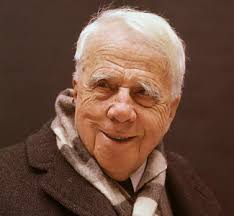
In what follows I am mostly summarising Auden’s own discussion of Frost, written in the late 1940s. But I am adding thoughts of my own as well (in the light of teaching Frost) and it would be prudent to make sure you have read Auden’s essay alongside this post.

220px-TheDyersHand

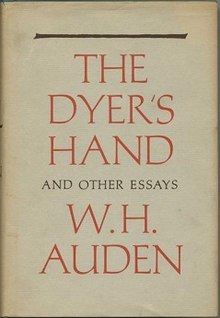
Auden’s essay, ‘Robert Frost’, can be found in The Dyer’s Hand (Faber, 1963) and it starts with a distinction between what a poem says and what the poet says. Keats’ ‘Ode on a Grecian Urn’ ends with the statement that “Beauty is truth, truth beauty”. This is clearly the urn speaking and voicing a predilection for the kind of art “from which the evils and problems of this life”, argues Auden, have been “deliberately excluded” (p. 337). The Urn is such a piece of art, defining its own beauty in the act of excluding the “heart high-sorrowful and cloy’d” (alluded to in its own third stanza). Yet Keats’ main narrative voice does not subscribe to such a view and the possibilities of these ironic distances between poet, narrative speaker and dramatic characters (even if only an old urn) are things we should take into any reading of Robert Frost.

But Frost is not an Urn Poet, seeking beauty at all costs; Auden links such a desire with the figure of Shakespeare’s Ariel.  The Ariel poet wants a poem to be “a verbal earthly paradise, a timeless world of pure play” which gives the reader delight in so far as it contrasts with our true existence in history, with our “insoluble problems and inescapable suffering” (p. 338). Taking an unprepossessing extract from George Peele, Auden characterises the Ariel poem as tending towards anonymous generalities, a verbal contraption such that, if we try to explain what pleasure it gives us, “one finds oneself talking about language, the handling of the rhythm, the pattern of vowels and consonants, the placing of caesuras etc”. Ariel has no passions – his earthly paradise is beautiful but not very earthly in truth, and nothing of consequence can happen there. An anthology edited by Ariel runs the risk of delivering mere narrowness and a monotony (or even absence) of feeling. Auden refers us to Virgil’s Eclogues, and poets like Campion, Herrick and Mallarme (I’d add other assorted Surrealists, Dylan Thomas, John Ashbery). In being turned away from historical reality, there is inevitably a narcissistic quality to Ariel poems (p. 340). Damning with faint praise, Auden notes Ariel’s worst fault is a minor one, a self-regarding triviality.

download

In contrast, Frost is a Prospero Poet. To explain, Auden quotes Dr Johnson: “The only end of writing is to enable the readers better to enjoy life or better to endure it”. The Prospero poem should provide us with “some kind of revelation about our life”; it will act so as to “free us from self-enchantment and deception” (p. 338). In order to do this, the Prospero poet must introduce into the poem “the problematic, the painful, the disorderly, the ugly”, in other words Keats’ “heart high-sorrowful and cloy’d”. Frost’s poems are recognisably of this type and they seem to derive from “an experience which preceded any words and without which the poem could not have come into being”. Rather than Ariel’s narrow focus on the beauty of the constituent verbal elements, these are now regarded as “subordinate in importance to the truth of what [the poem] says” (p. 340). Auden nominates Wordsworth as the English poet who, more than any other, has the least element of Ariel, a preponderance of Prospero. Wordsworth’s earthiness, directness of address and simplicity of language can reach peculiar, bathetic  extremes, as in ‘The Thorn:


This thorn you on your left espy;

And to the left, three yards beyond,

You see a little muddy pond

Of water, never dry,

I’ve measured it from side to side:

‘Tis three feet long, and two feet wide.


Yet, of ‘Mending Wall, Frost has said that he “dropped to an everyday level of diction that even Wordsworth kept above”. In Frost’s poem there are only two words with more than two syllables. This is evidence of Frost’s Prospero-like quality as Auden defines it. But the risk of such simplicity and directness – lodging any validity it possesses in the poem’s relation to truth – is that, in failing, the poet offends not merely against triviality but against truth itself. The poem may be false and a reader might conclude, “This poem should not have been written” (p. 341).

carlwarkwall

Auden is, of course, dealing with extremes here and he admits most poetry presents a blend or tension of Ariel and Prospero qualities. But, considering a poet’s output, it is possible (and useful) to say that he or she is dominated by one or the other. So Auden describes Frost’s Prospero-like language: “The music is always that of the speaking voice, quiet and sensible . . . he rarely employs metaphors . .  yet he manages to make this simple kind of speech express a wide variety of emotion and experience” (p. 342). This achievement is because Frost’s diction is that “of a mature mind, fully awake, and in control of itself; it is not the speech of dream or of uncontrollable passion”.  The reader will often be aware of strong, even violent, emotions lying behind what is actually said, but the saying “is reticent, the poetry has, as it were, an auditory chastity”. So Frost’s poems are quiet on the surface which readers find inviting or, if more superficially read, boring. But the drama is real enough and, once entered into, not uncommonly, in Lionel Trilling’s famous observation, potentially “terrifying”.

download

Auden goes on to make observations about some of Frost’s themes. ‘Two Look at Two’ is a “miraculous exception” in Frost’s general presentation of man’s relationship with Nature since the couple observing the buck and the doe seem to be rewarded with a sympathetic response. It is “As if the earth in one unlooked-for favour / Had made them certain earth returned their love”. In fact, this conclusion may seem less exceptional if we pay attention to the “As if” and – just as in Keats’ Urn – find a difference between the poet’s intention and the Ariel-like urge towards an ideal or paradisal ending to the poem (the couple’s love is returned only in their own rosy-tinted perception). More typically, Frost’s Nature is better represented by the “great buck” of ‘The Most of It’ which emerges from a lake, alien and indifferent to the human desire for “counter-love”.

This sense of cosmic indifference to the human draws from Frost his often expressed admiration of stoic courage, the ability to keep on keeping on. This, Auden points out, is the significance of Frost’s frequently deserted dwellings. In Europe, such an image might suggest “injustice and greed and the nemesis that overtakes human pride”. But in Frost, such ruins are rather “an image of human heroism, of a defence in the narrow pass against hopeless odds” (p. 345). Auden’s point is that Frost’s poetry looks forwards rather than backwards, nostalgia is not a common note; more usual, and more distinctively American, is “the ever-recurrent opportunity of the present moment to make a discovery or a new start” (p. 349). This is why Frost lauds work and labour so much. His highest virtue is the self-respect that comes from taking pride in something achieved.

4cc4cedfc1d4f688bf22242c4ff15fd3

Baptiste – the French-Canadian axe-maker in ‘The Axe-Helve – is such a man and also a Prospero-like artist:


He showed me that the lines of a good helve

Were native to the grain before the knife

Expressed them, and its curves were no false curves

Put on it from without. And there its strength lay [. . .]


An Ariel axe-helve would look beautiful – but be wholly useless for the task. Frost said: “Art should follow the lines in nature [. . .] False art puts curves on things that haven’t any curves”. Unreliably narrated by a stiffly condescending New England Yankee farmer, the poem in fact favours Baptiste’s pragmatic art (which is Frost’s too). The same effect is heard in ‘Mending Wall’ in which the arrogant, mischievous narrative voice makes no headway against his less educated neighbour’s refrain: “Good fences make good neighbours”.

The narrator of ‘The Wood Pile’ is similarly undermined by his own poem. There is an Ariel-like restlessness about him. His curiosity has an aimless, insatiable quality as if the mixed nature of what lies before him is not enough. Having decided to return home, he changes his mind: “No, I will go farther – and we shall see”. What he eventually finds is an image reflective of his own failing: a wood pile, carefully and laboriously constructed and then abandoned in a restless search for novelty. Seemingly un-selfaware, he criticises the man who “lived in turning to fresh tasks” and could “so forget his handiwork”.

5727567383_f719380140_o

It’s in ‘Birches’ that Frost most clearly engages with the contrasting desires of Ariel and Prospero. Climbing the tree “Toward heaven” is Ariel’s desire to “get away from earth a while”. This is contrasted to the earlier passage in the poem in which “Truth” breaks into the narrative, describing the irreversible damaged an ice storm can do to a birch tree: “they never right themselves”. It is Frost’s choice to take a third way, to be “a swinger of birches”, achieving a balance or sequence of both heavenward and earthward motion. If this sounds like an equal balance, it is misleading since –  as Auden argued – the scale is unmistakably tipped in Frost’s case towards Prospero. I don’t sense any irony in the declaration of ‘Birches’: “Earth’s the right place for love: / I don’t know where it’s likely to go better”.

Strike a Pose: Jacqueline Saphra’s ‘A Bargain with the Light’

They come from conversations overheard or taken part in, sights, sounds and the other senses, recall, reading, when alone or in company. Poems drop into the growing matrix of all we’ve felt and known. For those who write, it goes on all day long. But only a few land propitiously and work their way into what lies beneath to root and grow. The best of them find earth particularly suited to the nature of the seed and Jacqueline Saphra’s introduction to the highly ekphrastic A Bargain with the Light (Hercules Press, 2017) records just such a moment.

DKKnm3zX0AAbJg_[1]

This exquisitely produced little book also contains a discussion of the model and photographer, Lee Miller, by the academic, Patricia Allmer. Miller emerges from this as a multitude; as object, agent, speaker, spoken of, product and producer – in Allmer’s words a “key female icon of the twentieth century”. And so, in 2016, visiting the Imperial War Museum’s exhibition, ‘Lee Miller: A Woman’s War’, Saphra was stopped “in her tracks” by a nude photograph of Miller, taken by her father. Saphra explains: “How could I not be drawn to this extraordinary, wounded woman [. . .] with her huge capacity for creativity, her beauty, her restlessness?” It can take only a moment for both the drawer and the drawn to discover in each other a mutual compatibility.

The poems that arose from Saphra’s fascination with Lee Miller take the form of an heroic crown of sonnets. The form incorporates repeats and revisitings as well as replicating, in its constituent short forms, the brief instantaneous moment of the taken photograph. By coincidence, I’ve used a less strict form of the crown of sonnets recently and, in search of a propulsive, forward movement within the sequence opted not to repeat lines verbatim and also to cut the fifteenth sonnet which repeats many lines once more. But Saphra adheres to the form pretty tightly and in doing so reflects the remarkable recurrences in Miller’s life. Though she finds some evidence of maturation and progress, her chosen form argues against this. The penultimate sonnet declares: “you’re still the same girl who trembled / in the snow wearing only silence”.

This reference is to one of the earliest images of Miller, taken by her father – as a stark naked 7 year old, standing in 2 feet of snow in her home town, Poughkeepsie. It’s an appalling image, but Saphra’s verse derives from it two elements that will recur: the (definitely creepy) power of the father and the fact that Miller is hiding in full (full frontal) sight. ‘Darkroom Lessons’ addresses another naked image of Miller, again taken by her father. But now she is a 20 year old woman. She turns her head aside as if she’s just been struck. For Saphra:


You turn and strike a pose.

Once more, you look beyond. This time your face

in profile signals absence. Your skin glows [. . .]


Miller’s nakedness demands she hide herself and the gaze from which she hides . . .


It’s him

again: the father, tucked behind the lens

sharing his expertise. This is how it starts:

with naked lines and curves; it ends

with lessons in the darkroom. This is art.


The euphemistic “lessons in the darkroom” allude to the fact that Miller was sexually abused in childhood – though by a neighbour, rather than her father.


Lee-Miller[1]
Lee Miller – Self Portrait

By the 1930s Miller had reached Paris, her naked body now proving an inspiration to artists like Man Ray. But Saphra’s poems indicate that while still an object, Miller is becoming more of an agent too: “This is your chance / to know his secrets, so you play his game”. In her compliance, Miller learned much from Man Ray. ‘The Art of Control’ responds to a watershed moment, a self-portrait image from around 1930: “You steal his eye and take both sides: / In front, behind: the seer and the seen”. The poem concludes (quietly, plainly as ever) marking Miller’s bid for an independence and freedom (as woman and artist) that perhaps seemed unlikely:


No deal to cut, no tacit threat, no flesh:

Sweetly, you make your bargain with the light,

The only safe transaction. You took this.

Here is your face. Simple. Nothing amiss.

Collaborators[1]


The sonnet crown demands that this concluding line is repeated as the first line of the subsequent poem. The risk that we might read the line too simplistically and optimistically is reduced when we hear much the same words re-applied to Miller’s 1944 photograph of a French woman accused of collaboration with the Nazis – her head shaved: “Here is your face, simple, nothing amiss”. As in this instance, as the sequence unfolds, more of the sonnets are in the voice of Miller herself. This technical shift marks the artist’s growing self confidence and one of Saphra’s suggestions is evidently that, having suffered much in her youth, she is able to confront head-on the suffering of others. And hence take a great photograph.

486434472_f02117992d_o[1]

So Miller’s image, ‘The Burgermeister’s daughter’ is of a Nazi woman who has poisoned herself. To take the image, Miller must have got very close. So too with the frightening ‘Beaten SS prison guard’, his goggling eyes and smashed, bloodstained face filling the frame. Miller took it on a visit to the Buchenwald Camp. Saphra makes Miller speak of it:


I learned how to escape. How well I hid,

how close I dared to stand. I fix my focus

inches from his face, his eyes clear, the blood

congealing on his skin. If there’s disgust,

I channel it, and if there’s fear, I know

how to burn it, use it for fuel.


The sonnet sequence does not unfold strictly chronologically. In the midst of Miller’s war years, there’s a poem in response to an image of a 6 year old Miller with her mother; then there’s another of the whole Miller family in 1911. The strategy here maybe be (reflecting the repetition of the crown form) to suggest how much of the little (abused) girl remained within the confident, female war photographer. But it does give rise to some arid repetition. In one poem Miller tells us “I’ll learn to play both naked and concealed” and in the other we are again reminded, “You learned how to escape. How well you hid”.


Saphra-interview[1]
Jacqueline Saphra

But how far Miller must have come is suggested by one of the strangest of the images here, the 1943 ‘US Army nurse drying sterilised rubber gloves’. The white uniformed, virginal nurse stands comically surrounded by grasping rubber gloves arrayed on sort of hat-stands to dry. Her figure is grotesquely dwarfed by the grasping and groping that goes on around her. Miller speaks in Saphra’s poem, reflecting on her own inner turmoil:


Where are the doctors? When will they begin

to make it better? I watch and wait

as if they’ll find a cure for this malaise,

as if the storm inside can be erased.


Though elsewhere, Miller’s voice rings out much more defiantly (“I’ll crash in, braced / to win, dig for mercy, shoot for grace”) it’s the still-troubled “girl who trembled / in the snow” we are left with in sonnet 14. If Miller truly is Allmer’s “female icon” then she is – in Saphra’s treatment of her – one achieving only a pyrrhic victory in the twentieth century gender battles: “You square your shoulders, soldier on”. Yet the poems are all the more moving because of this. The poet’s profound identification with Miller, her deployment of ekphrastic techniques and her clever use of the crown form make for a very satisfying read. It goes without saying that Hercules Press’ production and design is stunning. This is a little book to treasure or – as it’s getting close to Christmas – to give.

lee_miller_biography_beautiful_young_thing_audacious_muse_photographer_3l[1]


Guillemot Press book launch (November 2017)

DM-HkzHWkAAx8CG[1]

Last Saturday I packed my bags for a brief stopover in Devon. The train from Paddington retraced my steps (no – that’s not right; what do you say?) – re-rolled its wheels along the same route I’d travelled a couple of weeks ago to the Torbay Poetry Festival. But instead of changing at Newton Abbot, I stayed on board and we swerved inland and skirted the southern edge of Dartmoor to Plymouth, then further west to Bodmin. I was met at Bodmin Parkway by Luke Thompson who runs the Guillemot Press. Guillemot is barely a couple of years old but is already building a great reputation for the outstanding quality of its books. Luke and his partner Sarah are the driving forces behind the press and it is based in Cornwall with strong links to Falmouth University. We drove across an already dark Bodmin moor to the village of Altarnun where Luke was launching three new Guillemot titles at the Terre Verte Gallery, run by Richard Sharland.

Besides my own O. at the Edge of the Gorge, the books being launched were Nic Stringer’s first, A Day That You Happen to Know, and Andrew McNeillie’s new collection, Making Ends Meet. Both my own and Nic’s book are examples of Guillemot’s interest in combining poetry and illustration (if that’s the right word for images which respond to and add to the text rather than being merely illustrative). The two artists were at the event as well and it was wonderful to meet up and chat with Phyllida Bluemel who created the images to accompany my crown of sonnets. Her delicate, analytical yet natural images – produced only from a reading of the poems, no input from me – seem to me extraordinarily apt and, having learned of her background in philosophy as much as fine art, I’m not surprised. She and I have discussed the shaping of the whole book on the Guillemot blog.

Nic read first. Her poem, ‘Laocoon in the Vatican’, describes an image of human agony as a father defends himself and his sons from attack by serpents:


Chest curving towards his gods,

he speaks of what lies beneath devotion, where wrestler

is the same as family. But in the end he is a man

petrified [. . .]

laocoon[1]

‘Icebergs in Ilulissat’ is more of an Arctic landscape poem: “In Disko Bay the growlers and the bergy bits / crack their knuckles”. ‘Sisters’ is a fascinating 10 part sequence of poems dedicated to three Medieval Christian female mystics, ending with this exquisite lyric:


Like the Earth

I have given up

everything but God


will find a hole

to fall towards

turning without a body


to sleep

separating self

from silence

8226eece-e840-4378-9fb4-cd24af13aef4[1]

Nic’s work is various and intriguing – her Guillemot image-maker is Lucy Kerr, whose enigmatic, colourful images are almost visual riddles – and I’m looking forward to reading the whole book more slowly.

Before I read my sequence straight through without additional comments, I explained its form: a crown of 14 sonnets – the final line of each poem repeated as the opening line of the next; the opening and closing lines of the whole sequence also meant to be the same. I wanted the connectivity this creates – though the connections in this case are approximate – deliberately so, as I wanted to suggest a forward movement or progression of understanding. Much of the detail of the poem is of landscape – the Marche region of Italy – bees, buzzards, hunting dogs, trees, thistles, Classical ruins put to more modern use, hilltop villages, church towers, rocky hillsides, deep gorges. The O. of the title is an Orpheus figure, the singer, or poet. There is no narrative to the sequence, but it does allude to Orpheus’ journey to the underworld in search of Eurydice and his loss of her when he looks back. That sense of loss also explains allusions to Dante’s Paradiso, Book 16, where he refers to the ancient towns of Luni and Urbesaglia, for him, vivid images of transience.

DLRftRFW4AAtwJQ[1]

After the interval, Andrew McNeillie read from his collection. Andrew is both a poet and an editor at OUP, Archipelago magazine and he runs Clutag PressMaking Ends Meet is a full collection of almost 100 pages, including a new version of the Anglo-Saxon poem, The Battle of Maldon. At the other end of the scale, Andrew threw us an opening, squiby couplet titled ‘A Poet: 21st century: “A redundant lighthouse-keeper / striking a match in a storm”. One such match illuminating the darkness is his sonnet ‘I see Orion’, moving from a vivid evocation of star-gazing on a cold night in March to reflections on natural beauty and the passage of time. That same sense of summation, or the counting of blessings, was evident in the title poem too, which evokes an earlier time of easy creativity:


The early worm

already turning in a bird’s gut

like the one thought in my head

of lines to set and bait to put

a poem on my plate by evening.


making-ends-meet-cover[1]

And you could feel the whole audience warm to Andrew’s ‘Lunch with Seamus’, recording a meeting between the poet and Clutag editor, both “uncertain how lunch might pass”. But it passes well, the poem portraying a warmth and closeness, a shared love of poetry, the intimacy drawing from Heaney something of a confession:


‘I got the Nobel Prize too soon,’ he said.

‘It nearly did for me, you know, the fame.

It stops the clock and steals your time’


The poem is full of delicate allusions to Heaney’s work, the final lines affirming a real meeting of minds as well as echoing Heaney’s own parting from the ghost of James Joyce at the end of ‘Station Island’:


We parted and I watched him disappear

As if I’d dreamt the whole affair

But knowing I hadn’t. I’d seen the man.


This three-book launch was a marvellously affirmative evening about the power of poetry too. Our heads full of images, and words, natural landscape, the material, the spiritual, distant Italian sunshine and rocky Irish coastlines, I drove with friends through the November rainy darkness back to the town of Tavistock, perched on the edge of Dartmoor itself. And there was still time enough to eat and raise a glass of wine.

182712359-a2163bed-2fd9-4910-9e04-673d2bb611ef[1]


Freshness of Words – George Herbert and Anna Akhmatova

The_Death_of_Stalin[1]

Last week, having seen Armando Ianucci’s film The Death of Stalin with its atmosphere of murder, fear, mutual suspicion and double-talk, I was sent back to Elaine Feinstein’s biography of Anna Akhmatova, Anna of All the Russias (2005). From there I moved on to Akhmatova’s work, where I found the opening lines of a poem she wrote in June 1915. Here are two versions – the first from Judith Hemschemeyer; the second (more version-y) from D.M. Thomas:


For us to lose freshness of words and simplicity of feeling,

Isn’t it the same as for a painter to lose—sight [. . .]


Freshness of words, simplicity of emotions,

If we lost these, would it not be as though

Blindness had stricken Fra Angelico [. . .]

anna_big[1]

Pinball that I am, this sent me off to notes I made a while ago on John Drury’s book about George Herbert, Music at Midnight (2013). Drury suggests that Herbert’s evident love of language is more apparent than real because of his ceaseless drive towards a linguistic simplicity (just the kind of simplicity of expression that Akhmatova sought and is praised for). Herbert wanted words to correspond to the truths of experience – an idea that has got very obscured in our post-modern age, but one that most poets still doggedly adhere to. So, in the opening stanza of ‘Jordan II’, Herbert confesses:


When first my lines of heav’nly joys made mention,

Such was their lustre, they did so excel,

That I sought out quaint words, and trim invention,

My thoughts began to burnish, sprout, and swell,

Curling with metaphors a plain intention,

Decking the sense, as if it were to sell.


The superficial glitter of such mistaken language is obvious and clinched by Herbert’s concluding mercantile image. The 3rd stanza of the poem identifies the problem: “So did I weave my self into the sense”. Language becomes a mode of self-display (a “long pretence”) rather than an effort to express the truth of the self’s relationship with experience (in Herbert’s case this is always the experience of God, but I don’t think that invalidates any lessons for writers then or now).

AdvancementOfLearning_sprea_1024x1024[1]

Herbert was drawing on Francis Bacon’s ideas in The Advancement of Learning (1620), where he argues that theological debate (ie. discourse, language) has achieved little other than obfuscation. Herbert follows this in ‘Divinity’ where “curious questions and divisions” have done nothing but “jagged” (ie. slashed and shredded) the metaphorical, seamless coat of Christ. Herbert’s poems are, in deliberate contrast, a sustained search for lucidity and truth (though both he and Bacon were happy to conceed that when it comes to God, man is only likely to approach a “broken” sort of knowledge).

In fact, Bacon distinguishes two types of knowledge. Most everyday knowledge consists of our knowing about – a transitive knowledge with a direct object. This – as Herbert’s market metaphor suggests – is always liable to slide towards an accumulative or acquisitive relation with the world (a delusory relation encouraged and denied us in 2017 by the ubiquity of Google and such apparently easy and limitless sources of knowledge). In Bacon’s memorable phrase, such continued acquisition of transitive knowledge leads to “ventosity and swelling”.

george-herbert[1]

Both he and Herbert knew what is needed as a corrective. Bacon: “This corrective spice, the mixture whereof maketh Knowledge so sovereign, is Charity”. The latter word is from the King James Version of The Bible – in the original Greek, the word is agape. As Drury beautifully says, Herbert always preferred to use the “warmer monosyllable” ‘love’. In this case (and in contrast to eros), love is a form of knowing without a direct object and without the temptation to either acquisitiveness or to the weaving in or promotion of self. This yields an attitude of restraint and delicacy, an attitude that Drury finds in Herbert’s poems: “he had the capacity to treat the recalcitrant matter of human life with a firm yet light touch. There is control and letting-be, the devising of frames for experience which lets it speak for itself while making it something manageable and, whether morally or poetically, elegant”.

Drury argues that, as preacher too, Herbert was consistent in eschewing the dominating style of many others for a more “two-way” approach. He rejected the conventional view of preaching in which power lies with the preacher and preferred a kind of communion with his parishioners which approached something more like prayer. In preaching, the clergyman is active, even hyperactive, the hearers, cowed, instructed (possibly bored). In prayer, what happens is more “communal, a traffic between minister and people, all together waiting on God”.

George_Herbert_and_his_times_1906_14758260256-1[1]

By implication, I’m sure there are two types of poetry here as well. One is flamboyant, rhetorical, draws attention to itself, hence draws attention to the poet who is very active, even hyperactive, keen to show learning and skills, making a splash on the page – the reader’s response is mostly to stand back and admire (or become bored). The other type of poem draws the reader into something resembling the community of prayer, both writer and reader in a state of alert passivity, a form of attendance. So, Herbert’s poem ‘Prayer I’ lists images of prayer itself from a multitude of perspectives, full of vigorous relish and un-churchy energy. The whole sonnet is one sentence, rushing across line breaks and quatrains:


A kind of tune, which all things hear and fear;

Softness, and peace, and joy, and love, and bliss,

Exalted manna, gladness of the best,

Heaven in ordinary, man well drest,

The milky way, the bird of Paradise [. . .]


The 4th line quoted here (balanced around the caesura) captures the role of prayer (and I would argue poetry) as go-between, conduit, glue between the height of heaven and the fallen state of man – the former leaning sympathetically down, ready to dine upon the ordinary, the latter aspiring to something above it. The four final phrases of the concluding couplet are remarkable for their speed, for their testing of the elasticity of the reader’s imagination (the ‘land of spices’ perhaps the least successful of the images), and for the extraordinary understatement of the two last words.


Church-bells beyond the stars heard, the soul’s blood,

The land of spices; something understood.


What the poem has done is prepare the ground for a phrase which might have struck the reader as an inadequate vagueness, but in fact reads as a fullness, a plenitude which encompasses all that has gone before and gestures towards more, the entire creation. ‘Understood’ has also been broken free of its moorings to suggest far more than an intellectual grasp – perhaps a literal under-standing or underpinning of our place in creation – and to imply the intransitive reach of agape in action.

Akhmatova_by_Altman.jpeg[1]

Joseph Brodsky (who met Anna Akhmatova in the early 1960s) believed that poetry accelerates our minds; here, the reader does not need to share Herbert’s religious views to experience the graceful acceleration and opening of our mind by the poem. The poem as prayer is, as Simone Weil thought, a state of “absolutely unmixed attention”, a rich mindfulness. Akhmatova’s early work has just this sort of attentiveness, though its subject (rather, its object) is eros and what she records are the contradictions and extra-conventional struggles of an individual woman. After 1917, with poems starting to be included in White Flock, still not losing their “freshness” and “simplicity”, it is agape that begins to displace eros as she faces not just her own suffering but the horrifying dismantling of Russia itself:


So many times . . . Soldiers, play on,

And I will look for my house,

I’ll recognise it by its sloping roof,

Its everlasting ivy.


But someone has carried it off,

Taken it to another town,

Or torn from my memory forever

The road that leads there . . .


The sound of the bagpipes dies down,

Snow flies, like cherry blossoms . . .

And it’s obvious nobody knows

That the white house is gone.

(‘The White House’ – tr. Hemschemeyer)

Visiting Torbay Poetry Festival 2017

p045rwch[1]

The 11am train out of Paddington is so packed that I expect to see Jeremy Corbyn sitting on the floor between carriages – disgruntled at the discomfort of his position, if more gruntled at the clear evidence of the underfunding of public transport. I usually choose the Quiet Carriage to varying degrees of success and on this occasion, from Reading to Swindon, I have the pleasure of eavesdropping on a phone conversation in a language I do not know. A contemporary version of Frost’s the sound of sense – though I’m not sure I make much sense of the sounds themselves, half of it murmuring like love-talk, the other staccato as a list of shopping. Maybe that’s just what it is!

Anyway, I have work to do – correcting replies I’m giving to an email interview to be published by South Bank Poetry in the next couple of weeks. I’ve already prepared the reading I’m giving on the Saturday night, so I don’t bother thinking about that. Getting off the train 3½ hours later, I meet up with Maggie Butt who is still recovering from running the recent Poem-a-Thon in support of the Enfield Refugee Fund. Possibly, I think, she’s reeling less from the sheer effort involved as from the whole event’s astonishing success, raising something like £14000 in one day. We walk along the breezy promenade at Torquay to the Livermead Cliff Hotel which is the focus of the Torbay Poetry Festival. It turns out they are not expecting me until the following day but with some juggling of rooms I’m soon ensconced and ready for some poetry.

train[1]

I had arrived in time to hear Myra Schneider and Alasdair Paterson reading. But Myra was unwell and absent, so her poems and little emailed introductions were beautifully read by Mimi Khalvati and Danielle Hope. I know Myra’s work well and it is often very location specific, so it was a strange feeling having north London brought so vividly before me when, just outside the expansive windows, the English Channel was rolling in towards the beach. Alasdair (amongst many other things) runs the Uncut Poetry series in Exeter, so he is both in-comer and relative local to the south west. With the kind of Scottish burr that in itself draws attention to the sound of any poem it is applied to, he read in a quiet, level voice. Especially memorable was a poem with a surrealist and Chinese slant, presenting a kind of bureaucratic Confucianism, managing to convey both a satirical edge and a rather joyful sense of freedom.

Early evening on the Friday, Kathy Miles read her poems layered with myth, history and personal experience. And Matthew Barnard, who is published by Eyewear, read several poems about visits – or maybe residence – on the Isle of Skye. One of the great recommendations of this little poetry festival (run by Patricia Oxley, who also edits Acumen, and her committee) is indeed its small scale. It means guests and readers are always in touching and chatting distance of each other. Someone who is a regular attendee described it to me as more like a house party and it certainly has that sense of a bunch of people meeting up in an endless, delightful carousel of combinations and re-combinations. Maybe all I mean is that it is very friendly!


DuncanForbes-200x245[1]
Duncan Forbes

The first half of Friday evening’s reading was given by the urbane, witty and clever Duncan Forbes. One of his poems expressed the concern, shared by so many of us who work with language, about the number of words that seem to be dropping out of common usage. So many of these are associated with the natural world, the weather, earth and landscape. Duncan was smart and engaging on the subject but interestingly a number of his more recent poems seem to tone down the wit and word-play in order to focus on landscape – in one instance a gloriously evoked Portuguese setting. Mimi Khalvati’s work is well known and tends to provoke praise such as ‘lush’ and ‘graceful’ which is true enough though she also has a quiet almost metaphysical wit of her own. She read a poem from the just published Hippocrates Society anthology of the heart:


Old tramping grounds are bruises to the heart.

Go visit them at dusk when belisha beacons,

reflected in dark windows, flash and dart

like fireflies [. . .]

IMG_0287

We were expecting Storm Brian on the Saturday and being just metres from the water’s edge it was awaited with some trepidation. But living up to its rather un-tempestlike name, Brian blew only in brief gusts, ruffling Torbay into rather poetic white horses rather than anything more dangerous. It seemed appropriate that the main event of the morning was a celebration of Cornish poet Charles Causley. This was coordinated by John Miles and included members of The Causely Trust and the poet’s biographer, Laurence Green. We heard about Causley’s childhood, the early death of his father, his war experiences in the navy, then his years teaching at the same school he attended. A curious life of great rootedness and sense of locale, combined with his sense of the ocean always at his doorstep and the possibility of travel. Perhaps the highlight of the session was an unaccompanied singing of Causley’s ‘Timothy Winters’ by Roy Cameron. I’ve known some of the poems for ages, but the event made me want to go back and reread them. I always remember something Causley wrote, echoing Frost’s ideas about ulteriority, that poems are always about something else and that’s why they are so hard to write.


blogcharlescausley2[1]
Charles Causely

If Patrica Oxley sets the organisational tone for the Festival, it is her husband William who sets the sociability quotient. This is also reflected in his most recent publication, On and Off Parnassus (Rockingham Press), a collection of anecdotes, or Oxley-dotes, which has been described as giving readers “a finely judged mixture of anecdote and nuanced memoir”. William’s encounter with a much larger-than-expected tiger cub proved entertaining. Alongside him Maggie Butt read from her recent collection, Degrees of Twilight, taking us from a trip to Cuba to her very moving response to Dylan Thomas:


Why not go gentle into that good night

like drifting into sleep from sun-soaked day,

remembering the brightness of the light?


Penelope Shuttle had judged the Festival poetry competition this year and she announced the winners at an event later on Saturday afternoon. The winner was Cheryl Pearson with the poem, ‘The Fishwife’. My reading was before the dinner and the wine began to flow. I read almost wholly from my new book. I veered off plan by including a poem included in the new Hippocrates anthology. It seemed appropriate to place it after another poem about my daughter a few years ago – the first was about visiting a church and extinguishing somebody else’s candle and the heart poem about watching her, for the first time, riding a fairground carousel alone: anxious moments that yielded up thoughts for this father at least about the paradoxes of closeness and distance as children become more and more themselves:

IMG_0286

Regretfully I could not hang around long on the Sunday morning as I had to get back into London for a reading with Tim Ades and Caroline Maldonado (dear reader, my life is not usually so literarily busy, far from it). Sadly then, I had to miss Penny Shuttle’s main reading as well as work from Alwyn Marriage, Shanta Acharya and Isabel Bermudez. On the return train, I read and loved Penny’s most recent book, Will You Walk a Little Faster? (Bloodaxe Books). And – in the light of the TS Eliot shortlist which had been released over the weekend – I was left wondering why she was not on it. Her work is always so sharp, surprising, endlessly experimenting, touching, visionary, down to earth, above all immensely human. These are not things I could say about all the shortlisted books. Ah, literary prizes, the delight of the few chosen publishers everywhere. And while I’m busy complaining, why is Nick Makoha’s powerful book not on the list? But enough bitching – the Torbay Poetry Festival is remarkable for a number of things, but especially its inclusive and friendly tone. Stay with that.

wp2f72b580_06[1]