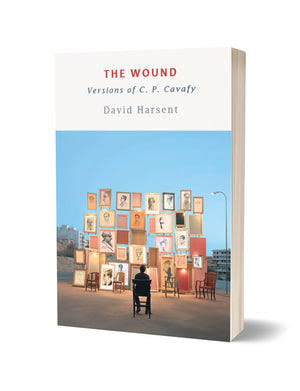
Review of David Harsent’s ‘The Wound: Versions of C.P. Cavafy’ (2025)

This review of David Harsent’s ‘The Wound’ – a chapbook which gives us the first sighting of Harsent’s versions of C.P. Cavafy – published in 2025 by Dare-Gale Press, was originally published in Acumen magazine. It was commissioned by reviews’ editor, Andrew Geary, for which many thanks. It has been fascinating to explore these versions and to begin the process of comparing them with other translations that are widely available.

Seamus Heaney once observed that the poems of Constantine Cavafy ‘survive translation better than most’. He thought this was because of the sheer interest of his subject matter(s) and the largely relaxed colloquialism of his voice (see Heaney’s Foreword to C.P. Cavafy: The Canon (tr. Stratis Haviaras; Hermes Publishing, 2004). In fact, over the years since his death in 1933, I’m not sure either of these aspects have necessarily proved quite so ‘easy’ to bring into effective English because of our changing sexual mores over the decades and the inevitable shifts in what a reader may register as colloquial language. In The Wound: Versions of C.P. Cavafy, David Harsent presents a small selection of his solutions to such issues.
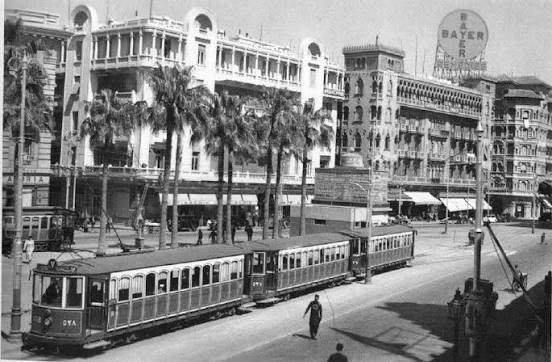
Alexandria in Cavafy’s time

Cavafy was born in Alexandria in 1863. His family spent some of the 1870s in England, but the poet had returned by 1885 and rarely left the city after that. He’s perhaps best known for the poem ‘Ithaca’ (not included in Harsent’s selection here) in which the journey to the mythical island is presented as one of exploration, enrichment and experience. Such an attitude to ‘venturing’ is one of the things Heaney must have been thinking of with his comment about the relatability of Cavafy’s subject matter, our common wish for excitement, for the thrill of the voyage. The sort of content Heaney has in mind also includes ‘homoerotic amours in exotic settings, the dooms of tyrants, the . . . destinies of sophists and drifters and soothsayers’ and all conveyed in a calm, clear-sighted language, seldom figurative, never ‘over-elevated’.

David Harsent is especially good at capturing Cavafy’s voice and the colloquialism of the language, though these are certainly versions in the sense that there is some modernising of references, changes made to titles, some transposing and editing of the originals, and significant changes to the flow of Cavafy’s phrasing. There is also a curtailing of Cavafy’s range; as Harsent’s opening note advises: ‘I have chosen, most often, poems of love and loss’. Harsent chooses urban, contemporary scenes, almost wholly focused on homoerotic experiences (current or remembered). Of course, in Cavafy’s Alexandria such relationships would have had to remain hidden, illicit, even a matter of shame. In ‘What’s Hidden’, the final poem here, the liberalising shift in attitudes towards gay love in the future is predicted: ‘One day, / when times and laws and minds have changed, / someone who thinks and feels and loves like me / will live as I do now, but without fear.’ It is this fear, Harsent suggests, that is the ‘weight of sorrow’ carried in so many of these poems. Earlier translators, like Edmund Keeley and Philip Sharrard (1975) and Haviaras (2004), tend to translate Cavafy’s allusions to the ‘illicit’ quality of such encounters, but today this strikes a false note given that we no longer consider them in this light. Interestingly, Harsent has silently removed most of these judgemental allusions from the poems.
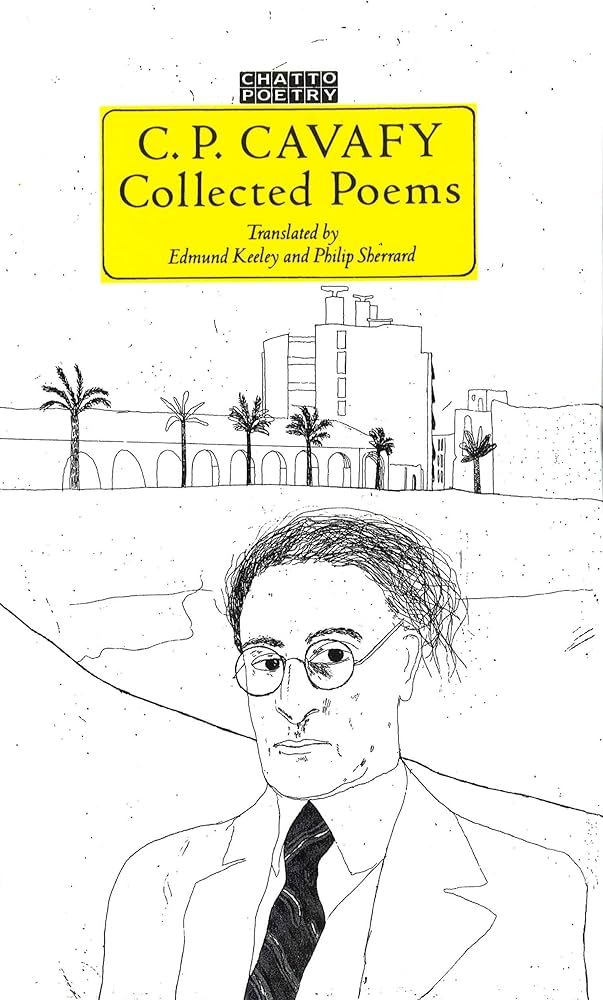
You can tell Harsent is a fine poet in these versions. For example, ‘At the Tobacconist’s Window’ is vivid and thrillingly erotic in comparison to the Keeley/Sherrard version, though it may be that Harsent is unwontedly dialling up Cavafy’s deliberately plain statements. Here, there is an immediate entry into the scene (‘A small crowd at the brightly-lit window’) and the reference to the two men is accentuated by repetition (‘these two, these among many’). The men’s eyes meet ‘by chance’ in most other translations, but Harsent writes their ‘eyes, as if meant to, snag softly’. In fact, this works really well, raising the excitement and tension of the possible encounter and the gentle feminine rhyme in ‘softly’ is repeated 6 times in a 10-line poem, building an undulating sense of erotic possibility. The word ‘snag’ falls more harshly and this rough/tender sense is echoed in the closing line when the two men ‘fall on each other, but gently’. By the end of the poem, Harsent’s two men have driven off together and parked up somewhere more private. In Cavafy’s original, of course, they take a closed, or covered, carriage.

Another example of the changes Harsent makes can be seen in the beautiful poem, ‘The Mirror in the Hallway’, in which a delivery boy brings a package to a big house, stands in the hallway and looks into a mirror. Cavafy’s original starts slowly – supplying context, I suppose – with the size of the house, the mirror and its age (eighty years old). Only then does the delivery boy appear. Harsent begins with the ‘beautiful’ boy who, in the original is described as an ‘amateur athlete’ (surely to increase his physical allure). Harsent goes for, ‘on Sundays / he played park football’, which is wonderfully modern, but perhaps doesn’t make him quite so attractive! Left alone, the boy looks at himself in the mirror. Not in the original, Harsent repeats the phrase ‘looked at himself’ in adjacent lines, again dialling up the intensity, but is this what Cavafy would have wanted? This poem ends in the original text with a (perhaps clunky) personification of the mirror which, despite its eighty years of existence, is now ‘bursting with pleasure’ (tr. Haviaras) at having had such a ‘beauty’ before it. Harsent streamlines the moment, though he punctuates into three sentences, interrupting the original’s single flow of one. He does retain the personification, but has the mirror bask, after the event, in its own erotic pleasure:
The mirror looked back. In eighty years

it had seen a thousand faces and shrugged them off.

It held that matchless beauty

long minutes after the boy had gone.

It is fascinating to look closely at Harsent’s decisions in his versioning of these poems. If the criterion of judgement is that a poem should come vividly off the page, then he is succeeding here, though as I have indicated, these are not faithful to the originals in the way that some might require of a translation. But such fidelity might well have been subject to a dose of Cavafy-esque scorn. John Kittmer’s comment on this beautifully produced chapbook, enthusiastically praises the modern poet’s engagement with the Greek originals as ‘examples of exchange, cross-over, transposition, modulation, sensitive homage and daring challenge’. I’d second that emotion and look forward to seeing more of these Cavafy-Harsent poems.

Autumn Reading Dates 2025

A little flock of reading dates – replacing the swifts that have left our skies recently – have gathered themselves into something that almost resembles a brief Autumn Reading Tour. Admittedly, not going too far beyond the Greater London area – but to Maidstone and (briefly) Winchester – but of course I’m very happy to be granted these opportunities to read my work. Live links to these events are provided in the details below. And, as you’ll see from the details below, the chance to read with some really talented, inventive and entertaining poets along the way. In particular, I’ll be launching my new chapbook of poems – Walking Away – published by Paul O’Prey’s excellent Dare-Gale Press. If you are in any of the vicinities mentioned – I’d be delighted to see you there – Martyn

Wednesday 10th September – 8pm @ Highgate Literary & Scientific Institution, 11 South Grove, London N6 6BS – reading w/ Tim Ades and Maggie Brookes-Butt. HLSI Fundraising Event: Tickets £10 https://hlsi.org.uk/whats-on/poetry-please/

Sunday 28th September – 7.30pm @ Torriano Poetry, 99 Torriano Avenue, Kentish Town, London NW5 2RX w/ poet/translators Will Stone & Stephen Watts. Floor Readers welcome: £6 + concs https://torriano.org/whats-on/poetry/torriano-poetry-28-09-2025

Tuesday 7th October – 6.30pm @ Maidstone Literary Festival, Maidstone Museum, Saint Faith’s Street, Maidstone w/ Maggie Brookes-Butt & Nancy Charley. Open mic readers welcome: £8 https://www.maidstonelitfest.org/what-s-on-2025/poetry-open-mic-evening-hosted-by-maggie-brookes%2C-nancy-charley-%26-martyn-crucefix

Sunday 12th October – 2pm @ Winchester Poetry Festival, The Arc, Jewry Street, Winchester SO23 8SB – poetry prize anthology ceremony where I’ll be reading my long-listed poem – the prize winners to be announced on the day! https://www.eventbrite.co.uk/e/winchester-poetry-prize-ceremony-2025-tickets-1431638672809

Saturday 25th October – 1pm @ The Small Publishers Fair, Conway Hall, 25 Red Lion St, London WC1R 4RL reading w/ David Harsent. Free Event. This is a Dare-Gale Press reading, launching my chapbook which they are publishing: Walking Away. Free Event: https://smallpublishersfair.co.uk/

And on the SAME DAY I’ll be second launching the chapbook Walking Away…

Saturday 25th October – 7pm @ The Ship Poetry Reading Series, organised by Chris Beckett, 134 New Cavendish St. London W1W 6YB – reading w/ Barbara Cumbers, Jack Cooper, Anthony Joseph, + Fawzia Muradali Kane: £5 https://www.chrisbeckettpoems.com/news.html

Thursday 6th November – 7.30pm ON-LINE ONLY @ Fire River Poets, Taunton, Somerset. Open mic slots are available. Register for this event at: https://fireriverpoets.org.uk/2024/12/november-6th-2025-martyn-crucefix/

Twenty Pointers to Translating Poetry

Writing_Real-

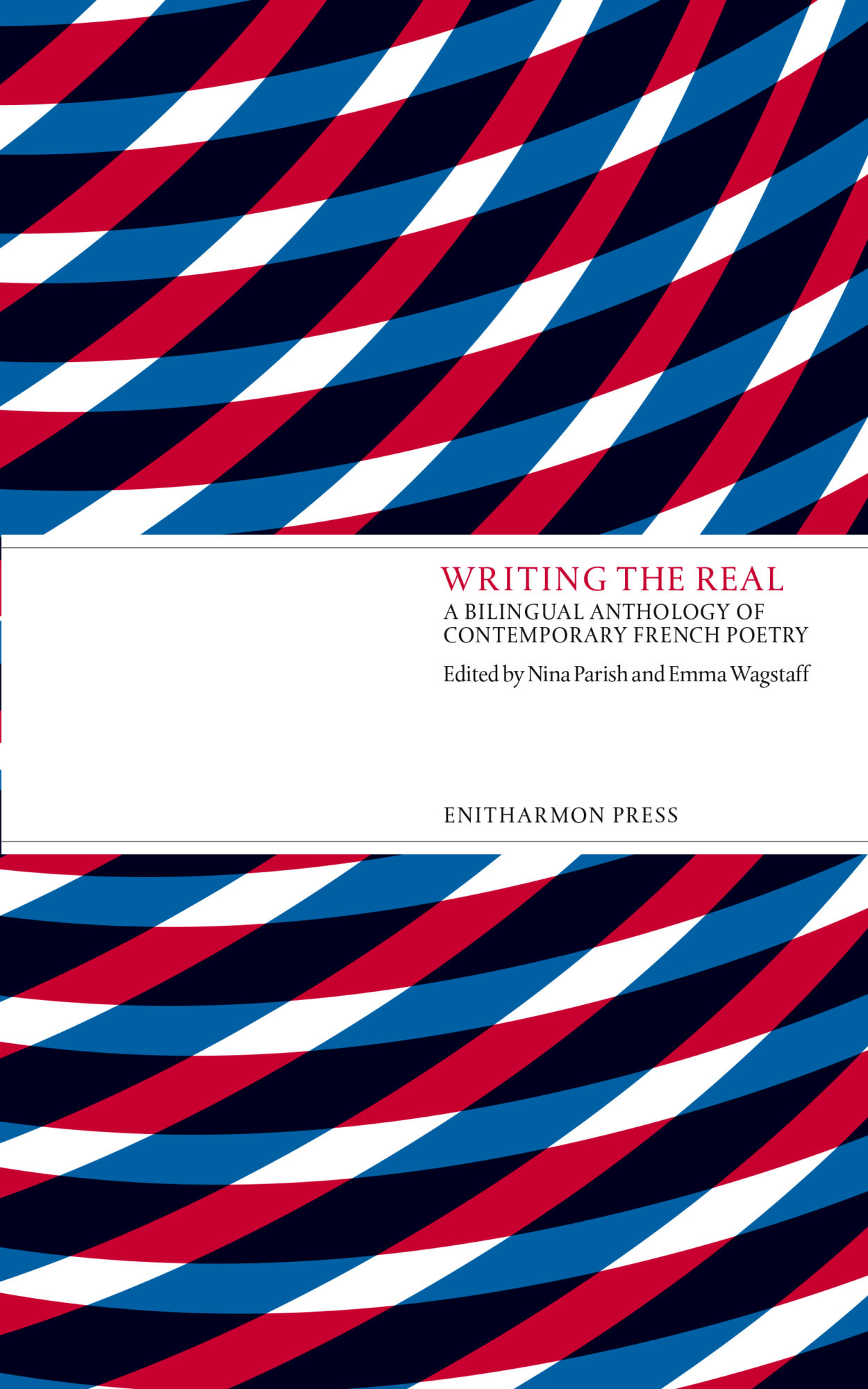
Recently I took part in a panel discussion about the art of translating poetry. It was chaired by Connie Bloomfield from UCL and held at the Enitharmon Gallery in Bloomsbury. I was joined by David Harsent (translating Yannis Ritsos), Emma Wagstaff and Nina Parish (co-editors of Writing the Real: A Bilingual Anthology of Contemporary French Poetry) and Jane Duran (translating Lorca). Part of the evening was spent comparing our differing approaches to translating a poem in Catalan by Josep Lluis Aguilo. Inevitably, we differed on our approaches both to the specific and general issues raised by poetry translation. But it has prompted me to gather up these 20 thoughts on the issues in this blog post.

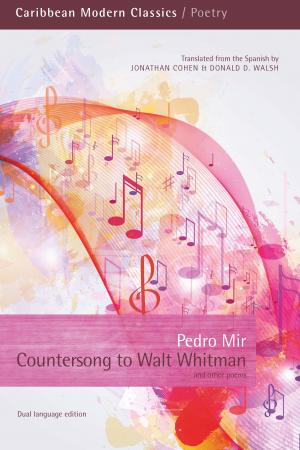
While preparing it, I also happened across further observations on the issue as quoted in the recently published Peepal Tree Press translation of Pedro Mir’s Countersong to Walt Whitman. The late Donald Walsh is quoted as saying “The translator’s first task is to discover exactly what the author has said . . . He must try to re-create in his language the miraculous fusion of thought and expression that produced the original work . . . the translator’s role is humble and secondary . . . he must do his best to circumvent obstacles . . . his duty is to express not himself but his author”.

As what follows will suggest, I find myself largely in agreement with such views – though the compromising, tentative, humble processes that Walsh describes here and the inevitably pyrrhic kind of victories one can expect from them are unlikely to make for dramatic headlines in literary journals or publishers’ blurbs – but I believe this is what the best translators do.

9781845233563_0

Twenty Pointers to Translating Poetry

  1. Ask the big question: can we translate a poem? Because there are so many uncertainties, so many sacrifices, the absolute and perhaps only truly safe reply is to say: ‘No – too much will be lost’. But see #13 below – and now go to #2 (who wants to be safe anyway?)


  1. Ignore such crushing absolutism as expressed in #1. Roll up your sleeves and, like Shakespeare’s Ferdinand believe “some sports are painful, and their labour / Delight in them sets off”. Whatever the apparent obstacles, just do it: start shifting those logs of poetry translation if only because you want the challenge, if only because it’s a fascinating process – but mainly because it’s important (see #20)


  1. Know that to translate is to incur guilt. The moralistic tone in discussions of translation proves the importance of the task and suggests the passionate intimacies involved in this weird relationship between source author, translator and reader

images91M7X9MY

  1. Define translation broadly (1): responding to the emoji on my phone is an act of translation. Plus, it is not merely to transpose to another language, but from one language period to another, one language level to another (formal to vernacular), to paraphrase with clarity, to lay out logical and grammatical links more clearly, to interpret signs, symbols, gestures, facial expressions


  1. Define translation broadly (2): any good poem is a form of translation. Transtromer saw poems as manifestations of invisible poems written beyond languages themselves. Rita Dove says translators often understand best that any poem is merely a silhouette of our attempt to capture elusive original communications – like stepping stones across a river, the better to hear the silence

floral_silhouette_vector_pack_572116

  1. Think of turning the original source into something in the target language with the same information and with the same force as the original


  1. Use these simple methods (naturally used by native speakers to achieve greater clarity in communication – thanks, David Bellos) to begin to convey information and force:
    1. Synonymy – word for word replacement (literal translation)
    2. Expansion – replacement of problematic words with longer versions in the target
    3. Contraction – replacement with nothing, elision, skipping, abbreviations – turning a blind eye
    4. Topic Shifting – rearranging the sequence of the expressions for more clarity
    5. Change of Emphasis – other methods of making parts of the original expression stand out from the rest, in order to assist communication
    6. Clarification – adding expressions (not in the original) – making what was implicit in the original more explicit

 9780865478763

  1. Accept it – poetry is poetry so its translation is mostly a question of force – the shades and emotional colours, the rhetorical temperature, the ramifications of meaning of a word/phrase/form


  1. Discuss this: force is what Robert Frost called the sound of sense – poetry’s confessedly ineffable tones, gestures, interrelations, patterns – and to convey it we need to match such constituents (though not necessarily preserve them like lifeless bones)

download

  1. Measure the force in a source poem via a process of triangulation – determine your direction of travel via multiple reference points connected to the source text – not only the text but also good old-fashioned literary interpretation, wider cultural perspectives, the source author’s wider oeuvre, anything you can lay your hands on


  1. Empathise and keep ego quiet – imagination is the major part of this triangulation process: so work hard to imagine what motivated the poem, re-live the act which gave rise to it and is enmeshed in it (thanks, Yves Bonnefoy). In translation we hope to release it from its source form into a new form that resembles/matches its original intention, intuition, yearning


  1. Measure the success of your empathetic act not by a term-for-term resemblance to the original poem (thanks again, Yves) but by the ontological necessity of your new words/forms/images


  1. Contradict my #1 – so it turns out, translation is possible if, with Bonnefoy, we regard the process of translation as poetry re-begun                                                                       . .
    images.
  2. Be inspired by Charles Tomlinson’s formulation of the task: we look to preserve not the metre, but the movement of each poem – its flight, or track through the mind


  1. Close the source text, says Michael Hofmann, rightly, once your translation is beginning to gain some height in its flight. Close it!

InternationalFlight_B2C_22-min

  1. Don’t confuse translation with versioning – the permission we give ourselves is different. To translate puts us in a position of responsibility to both the source text and a working English poem, equally. Versioning puts us in a position of responsibility only to a final working English poem


  1. Ask yourself how might I like my own poems to be treated – translation or version? Will you feel well served or misrepresented? Pleased or aggrieved? I’m not pre-judging your choices, but they will affect your view of your own translating processes


  1. Discuss this: Peter Robinson argues versions result in failures of tone or meaning, that they impoverish and almost invariably lower the tone, reducing the complexity of the original. But surely, such radical revisions might equally result in a better poem than the original? Still – neither will be a translation

 images0VYVDXZC

  1. Label versions and translations appropriately – we have a responsibility to the paying public who, in my experience, are always very clear about what they want to read


  1. Keep translating – because the desire to translate and read in translation is optimistic, humanistic and hopeful. Contra Babel, it provides evidence of a powerful urge towards community and communication. It shows there is more that unites us than divides us

untitled