Greedy alpha-creatures: the poetry of Ulrike Almut Sandig

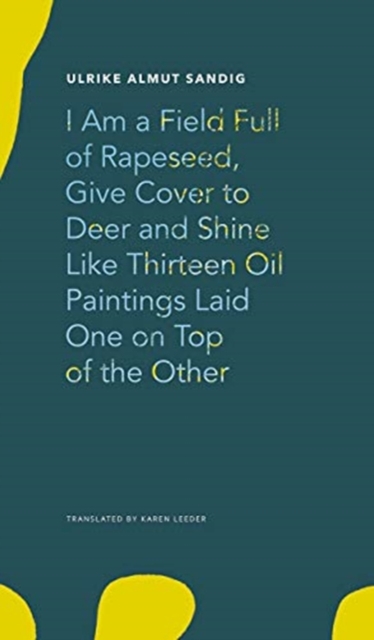
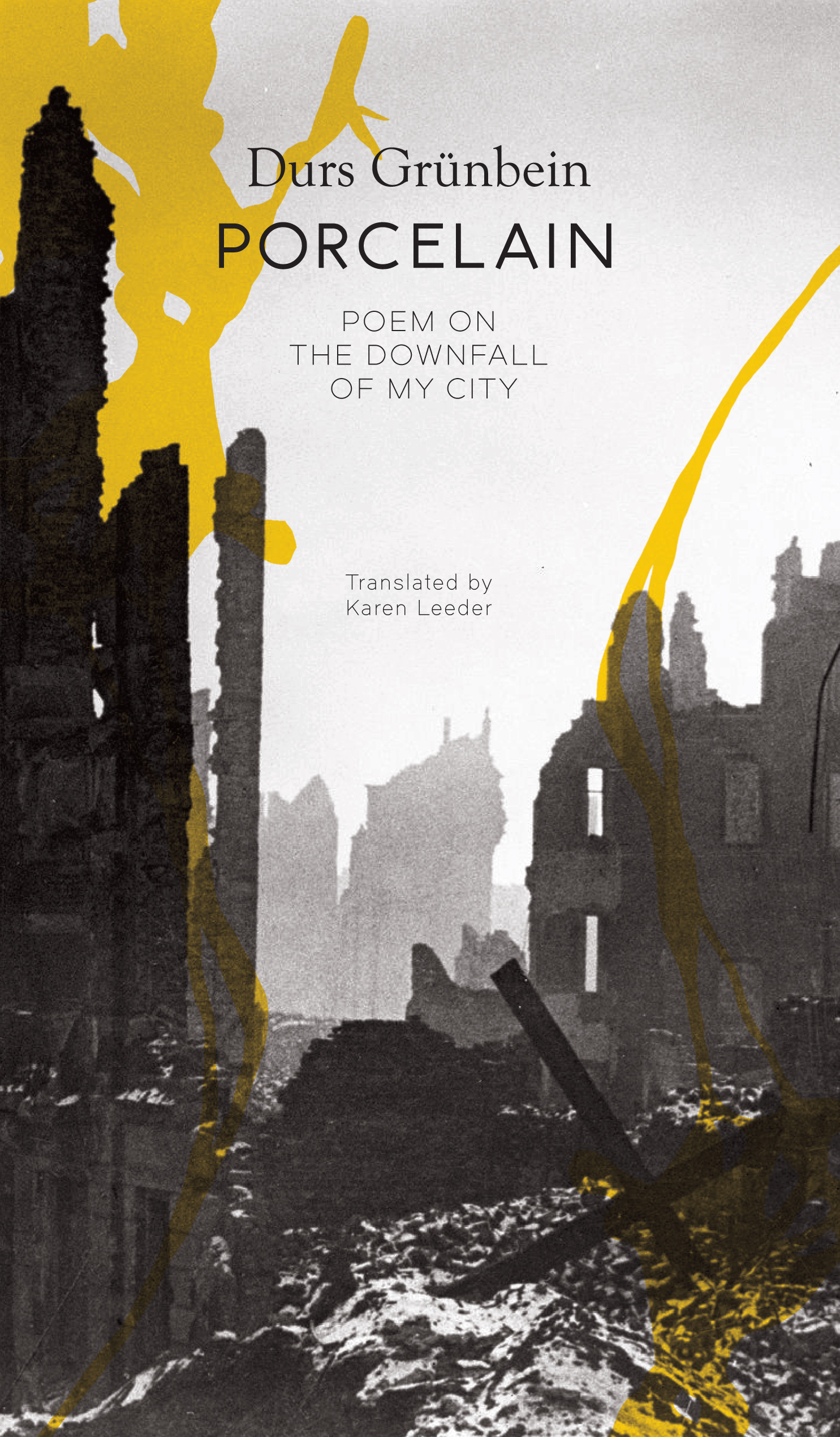
I’m shocked to realise that it is a full year since I posted my review of the stunning long poem, Porcelain, by the contemporary German poet, Durs Grünbein, in Karen Leeder’s equally impressive translation (Seagull Books, 2020). That review was originally commissioned for, and published in, Patricia McCarthy’s penultimate issue of Agenda (those who follow such things will know that Patricia has handed over the reins of the magazine to John Burnside who takes over with the resources of St Andrews behind him). In its original incarnation, the review was paired with my comments on another contemporary German poet’s work (again in Karen Leeder’s translation): this was Ulrike Almut Sandig’s 2016 collection, I Am a Field Full of Rapeseed, Give Cover to Deer and Shine Like Thirteen Oil Paintings Laid One on Top of the Other (Seagull, 2020). I am now posting my Sandig review as well, in part because I will be appearing with both Karen and Ulrike at the Ledbury Poetry Festival in a few days time. We will be talking about Rainer Maria Rilke’s great sequence, Duino Elegies (1923) as part of Peter Florence’s Dead Poets Society series. If you are in or around Ledbury on the morning of Saturday July 7th, do come along. Here’s the review . . .

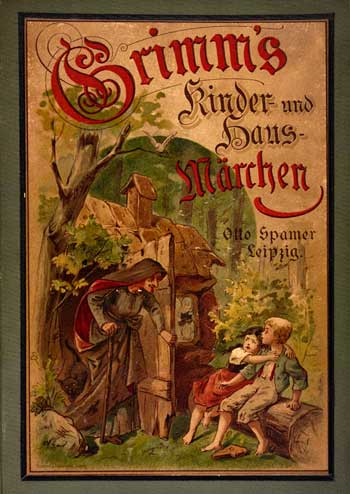
The eponymous figure from Grünbein’s sequence’s 11th poem,‘Hans im Glück’, draws on one of the stories in The Children’s and Household Tales of the Brothers Grimm (1812). In the original, Hans has anything of value taken from him, bit by bit, yet he remains optimistic, refusing to acknowledge reality. Within the context of Porcelain, Grunbein treats this is as an additional image of the myth of the city of Dresden as undeserving victim. Interestingly, the same figure appears in Ulrike Almut Sandig’s collection, but her presentation of Hans is more poignant, less ironic, as even the boy’s language is stripped from him and he tries to write a letter to a loved one: “what are you up to? // + esp: where r u? / ru ru // ru”. In the context of I Am a Field Full of Rapeseed… , the boy might be thought of as a refugee, forcibly having his culture and language stripped from him, though one of the strengths of the poem is that it also works as an updated fairy tale, a little myth of loss and diminished presence with more universal application. Such re-purposing of several of Grimm’s tales is one of the most striking things about this collection. Sandig announces in another poem, “we find ourselves deep in the future of fairy tale” (‘the sweet porridge’) and she, like Angela Carter before her, redeploys the fairy tale’s surreal narratives, bold characterisation, its humour and violence, its symbolism and moral intensity for her own purposes.

The other striking aspect of Sandig’s writing here is her bold linguistic and formal choices. There is an absence of punctuation, capitalisation, of poem titles (bolded phrases mid-poem often serve as titles), of conventional forms, of a clear lyric ‘I’, of plainly pursued narratives. This results in radically shifting ground for the reader which can be both bewildering and exciting. Several poems indicate these choices are firmly rooted in issues of epistemology and ideas concerning personal identity. So, the opening poem, ‘from the wings’, ambitiously sets out a complete life from ‘screaming’ beginning to its ‘silent’ conclusion. The interim is portrayed as all fluidity, ‘a stream that flows into others / while others again flow into it’. As much as there is any discrete self to be identified, ‘I am made wholly of language’, and the individual is a creature ‘that must speak / to understand itself’. The self is also one of many ‘fragile / greedy alpha-creatures’ and understands itself to be, ultimately, ‘a fluid tuning fork I am my own / song’. In the same vein, the book closes with ‘where I am now’, which sets the self metaphorically in some remote Arctic research station, a self that is at the same time a woman swimming in a municipal pool, moving freestyle through the water, ‘parting the water before me’, in an image of self-creation and open-ended exploration that, to some, will recall Eliot’s ‘Little Gidding’: “We shall not cease from exploration”.

This is, as it were, the metaphysical background to Sandig’s vision and it gives rise to poems like ‘I am the shadow for you to hide beneath’ in which the narrative voice celebrates just such fluidity of identity in an address to “friends”/readers that has the quality of Whitman’s “I contain multitudes” (Song of Myself, #51), though with a good deal more anxiety: “every morning I get up and don’t have a clue: / is it me, Almut? Ulrike?” This is also the poem containing the book’s full title, “I am a field full of rapeseed, give cover to deer / and shine like thirteen oil paintings laid one on top / of the other” and the poem goes on, in the name of radical fluidity, the I as landscape, huntress, a text that begins to unravel just as it reaches an end, a soldier, a girl, a woman. Elsewhere, ‘to be wood in a table’, as the title suggests, continues the theme: “not to be old and not to be young, but old / enough to be several things at once”. This includes the Rilkean desire for “simple things like ‘tree’” as well as the freedom of having no name, “no longer to say: ‘I am’”.

Ulrike Almut Sandig

Such poems are both celebratory in tone, but also alertly defensive. The reason is that there are forces abroad, ways of seeing and their associated politics that offer counter narratives. So, the expected calm of ‘lullaby for all those’ is really a call to arms, or at least a call to resist. It is “for all / those who put up a fight, when somebody / says: lights out, no more talking”. In a superb passage, once again Leeder’s translation of the German is brilliant, the forces of “DARKNESS” begin to emerge by implication:

we’re waiting for two

or three of those good, humming dreams

four peace treaties, five apples in deep sleep

we are waiting for six cathedrals and for

those seven fat cows, eight quiet hours

full of sleep, we’re waiting for nine friends

gone missing. we’re counting our fingers.

x

we’re still resisting. we won’t go to sleep.

What is being resisted are the forces of repression, of fixity not fluidity, narrowness not breadth, fundamentalist conviction not open-endedness. Sandig places a poem in the centre of the book which draws heavily on statements made by Pegida, Germany’s populist, right wing, anti-immigration party. The text is full of rallying calls expressing a faith in clarity, mastery, resolution and purification: ‘from now on / nothing will stand in our way, no language / we cannot master, we will strike out mistakes / and shake each other’s freshly washed hands”. One of the Grimm’s sourced poems, a sister speaking to her brother, presents a narrative of the boy’s development into a threatening “hunter”. Such a poem looks both ways towards the violence of neo-Nazis, but also towards the violent radicalisation of young jihadists.

Sandig’s poems dealing more obviously with issues of state power, war, migration and displacement (especially hot topics in Germany, a country in the Schengen area of Europe and seen by some as an ideal destination – see the poem ‘tale of the land of milk and honey’) are particularly impressive. The ‘ballad of the abolition of night’ draws on details of systematic torture prosecuted by the USA, “a state lagging somewhat behind / on the historical timeline of our kind”. ‘instructions for flying’ revises statements made in leaflets distributed at the Idomeni refugee camp in 2016. The same camp, close to the borders of Greece, is the focus of another poem which expresses the poet’s “moral dismay”. The disquiet is partly at her own nation’s equivocations about the refugee crisis (what if there’s not a single / jot of good Deutsch to be found in this / Land of mine”) but also personally, at finding rhymes but ultimately doing “sweet FA”.

With Grunbein, Sandig is expressing the moral complexity in the face of man’s inhumanity to man as much as any simplistic moral dismay. This is, in part, the subject of some of the Grimm poems (interestingly, in German, the word ‘grimm’ means ‘anger, ire’). ‘Grimm’ itself opens optimistically, messages being scribbled onto raw eggs, but increasing urgency leads to extra pressure and the eggs break. Still, like Hans in luck, the narrator seems “unfazed in / the crumbling ruins” though the final image is only of eggs smashed, “a well-nigh limitless / supply of fragments and rage most grim”. But Sandig is an optimist, I think. Though couched in conditionals, ‘news from the German language, 2026AD’ works hard to portray a future of more settled diversity (Iraqi dates, Turkish honey, Syrian poetry). The opposing prospect is relegated to a parenthesis – if quite a long one. But hope has the final word: “if it works, we, that’s all of you and me, / will sing a lullaby, rhyme in unison [. . .] but more than that, we will be”.

Edward Thomas, Tellisford, and a poem of my own

I have recently been writing a piece for the excellent site, The Friday Poem, or the FRIP as it styles itself, edited by Hilary Menos. I’d had a poem accepted by the FRIP earlier this year and Hilary had asked if I’d like to contribute something in prose, perhaps choosing 3 ‘desert island’ poems. An impossible challenge, of course – only three!!?? – but an interesting exercise to be sure. I’ll say no more about what I submitted to the FRIP before it appears there in the near future, only to say that one of the poems I chose was by Edward Thomas.

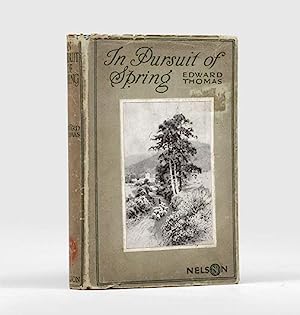
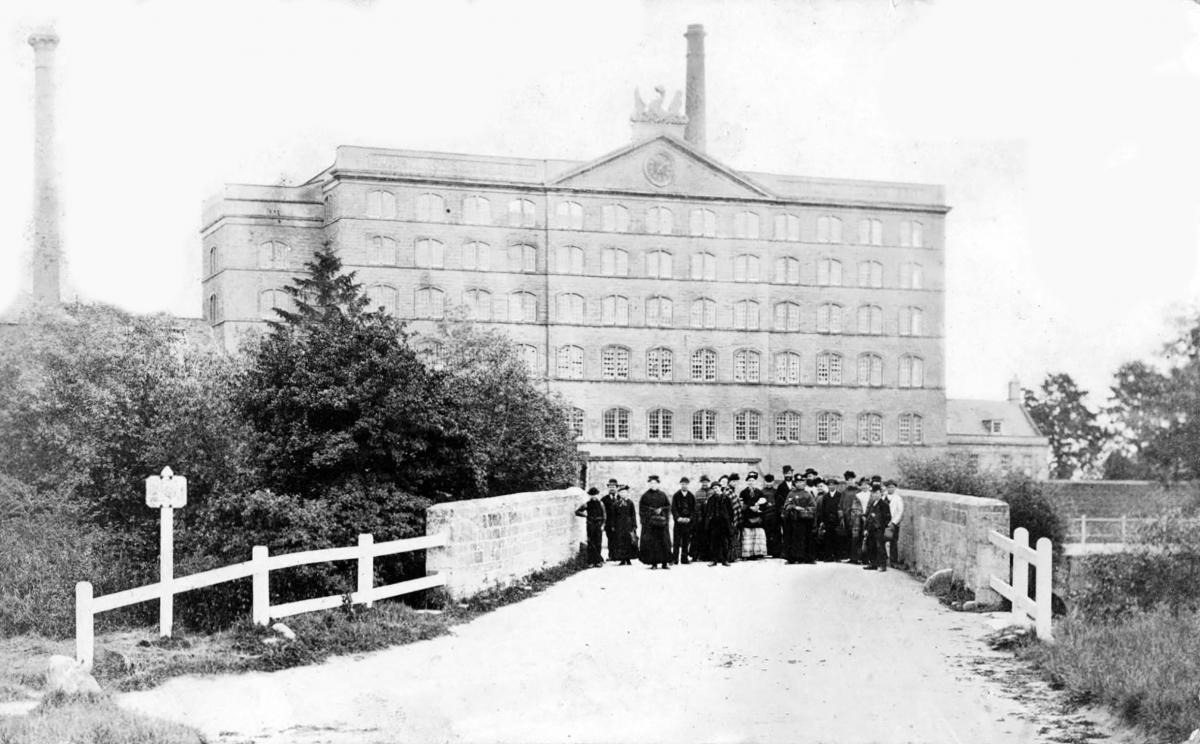
In introducing ET’s poem, I found myself talking about his prose travelogue, In Pursuit of Spring (1914). This book – apart from being wonderfully evocative of a lost, pre-WWI England, as he cycles from London, through the South Country, to end up in the Quantock Hills – has always been special for me because he makes a stopover just outside my hometown of Trowbridge, in Wiltshire. The following day he cycles out of Trowbridge, through Hilperton (the village where I grew up), out to Semington, towards Melksham, then along the meadows at Challimead, to Holt, before passing the Nestle factory at Staverton. The latter, with its River Avon (the Bristol Avon) flowing nearby, was where I used to go fishing with our next-door neighbours. The factory is also where several generations of my own family worked, including my maternal grandparents and my mother. Thomas’s descriptions of the roads and countryside are vivid:

. . . the Phoenix ‘Swiss’ Milk Factory where I crossed the Avon at Staverton . . . is an enormous stone cube, with multitudinous windows all alike, and at the back of it two tall chimneys. The Avon winding at its foot is a beautiful, willowy river. On the opposite side of the road and bridge the river bank rises up steeply, clothed evenly in elms, and crowned by Staverton’s little church which the trees half conceal.

The ‘Milk Factory’ at Staverton and the bridge over the Avon

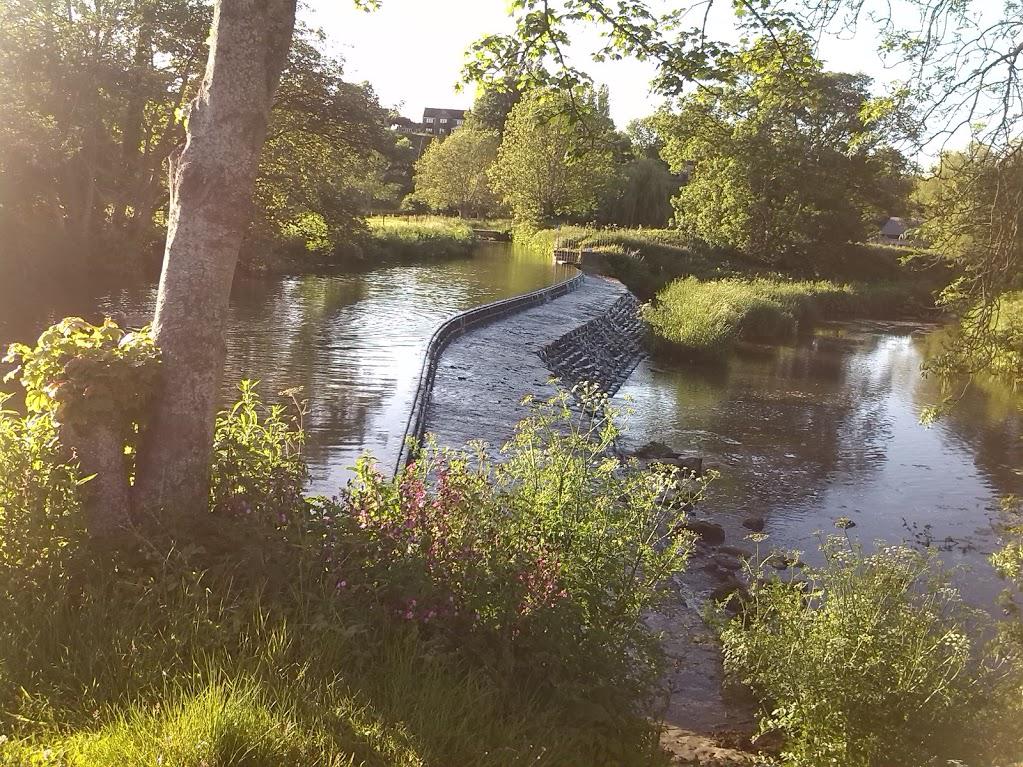
That church is where my grandparents were married. The following day, Thomas sets off again but stops this time at Tellisford. This is a small village to the west of Trowbridge, where a bridge crosses the River Frome. I’d occasionally come fishing here too, and later for the occasional romantic tryst, though more often the trip was for a picnic on the idyllic riverside meadows, listening to the water flowing over the ancient weir. Thomas’s mysterious companion, simply called the ‘Other Man’, describes the scene in 1914:

. . .  a beautiful meadow slopes between the river and the woods above. This grass, which becomes level for a few yards nearest the bank, was the best possible place, said the Other Man, for running in the sun after bathing at the weir – we could see its white wall of foam half a mile higher up the river, which was concealed by alders beyond.

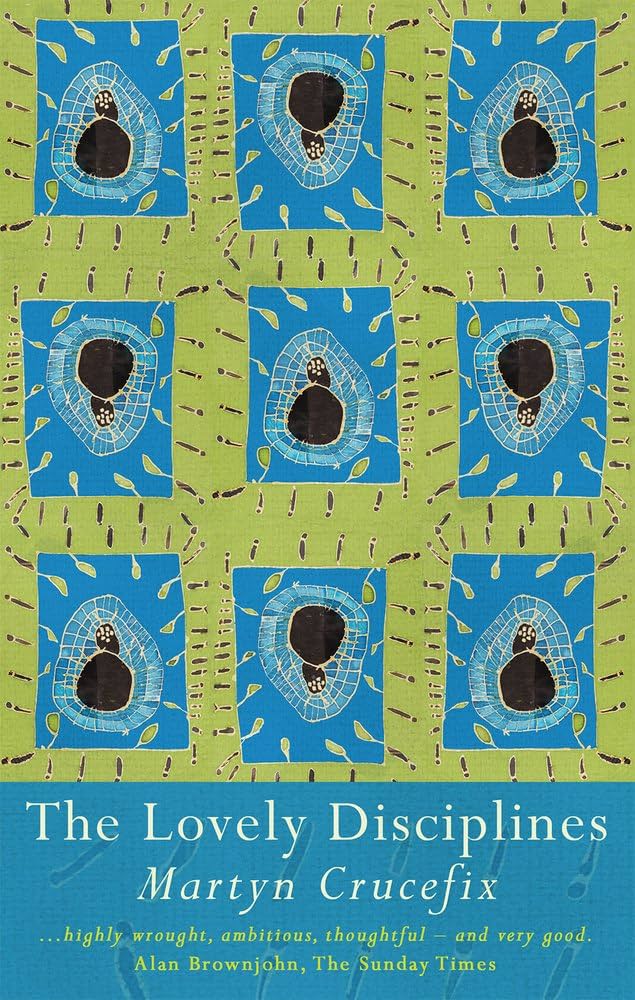
Almost nothing had changed when, years later, my whole family came here for a picnic, perhaps to celebrate my parents wedding anniversary . . .  I remember speaking to a man who lived nearby. He was rebuilding the weir which had fallen into disrepair. Years later again, I wrote a poem about the occasion (later published in my book The Lovely Disciplines (Seren Books, 2017). Called ‘Rebuilding Tellisford weir’, I gave the poem an epigraph from In Pursuit of Spring: ‘turn aside to see Tellisford’. The poem’s opening lines focus on the man’s self-given task, one of both conservation and innovation:

He refuses shade in midday heat

the old man walking

in his honey-brimmed hat

along the drained weir-shelf

x

that looks today like stacked loaves

its pallid smooth ranks

of Victorian stones

mapping precisely the Domesday line

x

where he patrols to and fro

proudly surveying the place he owns

this stretch of England

his plan to restore the workings

x

of the old watermill

to feed the Grid—and it is for this

he has ordered tons of sludge

to be dredged above the drop

x

and dozens of loosened stones

to be replaced to give

the mill-race its full head

and today he walks the slippery length

x

of the dammed weir-shelf

View of Tellisford Weir

For some reason, in my writing of the poem, I wanted to distance my own family’s part in the scene, perhaps because the incident I was recalling was a long while ago. The man hails the picnickers (rather than the other way round, which is I think what happened):

he cries what marvellous weather

x

then falls to conversation with a couple

who are celebrating sixty years

in their self-built house

with their three good boys

x

raised and schooled to distant homes

though today they recline

on trashy garden chairs

on this riverbank as if to watch

x

the old man in an antique yellow hat

who walks noting progress

on the weir

Riverside littering

My own family appear more as careless tourists than anything else. It is the man’s project which gets more attention. And – as the thought develops – it is his own state of mind that seems to interest the poem.

and how could they know

he’s something on his mind

x

for the next hundred years

how could they know more and more

these days he struggles to endure

the roaring of the fish-shoot

x

with its silted water

and these stilted conversations

with such ordinary people

their Diet Coke and egg mayonnaise

x

their crisps for the grandchildren

their Sunday newspapers

let blow and tumble across the meadow

reminding him of himself

x

how his mind often strays

up the ditch-line to the old drovers’ road

where for fifty years

their cars have pinked and purred

x

especially at night as they mount

slowly the gravel verge—

O so many love-cars for so many years

drawn to his father’s land

x

each in pursuit of what the river gives

of moonlight and chance

of the ticking of an engine

as it cools of blonde hair spilling

x

across dark seats in disarray

he knows the windows rolled to the dusk

the sickly smell of water

the murmur within

I rather like the way the poem, by this stage, seems to be moving in and out of various consciousnesses; here the narrative seems to be visiting the minds of the lovers who come to this quiet place for privacy, though the man’s noting of the fact has something of the voyeur about it too. He goes on to imagine – or perhaps he is remembering his own romantic experiences – the ‘talk / when it’s over’:

though he knows well

it is never really over—

and it’s because of this

he will not turn them away

x

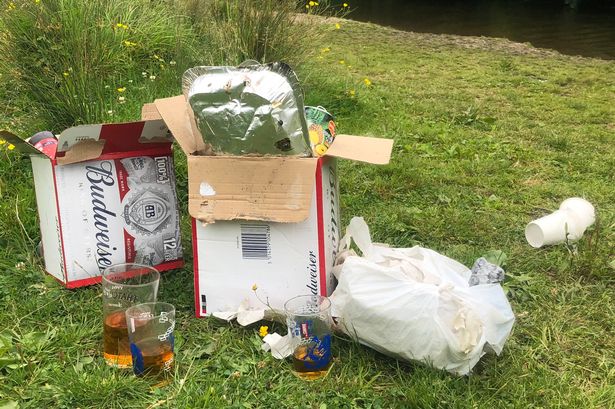
although they holler and soil and litter

still he’d grant them every wish

for this his feet edge now across

the weir-shelf this afternoon

x

for this he takes his uneasy stand

hands thrust in his pockets

their cars pulling in to the dark hiss

of white gravel everywhere loosening

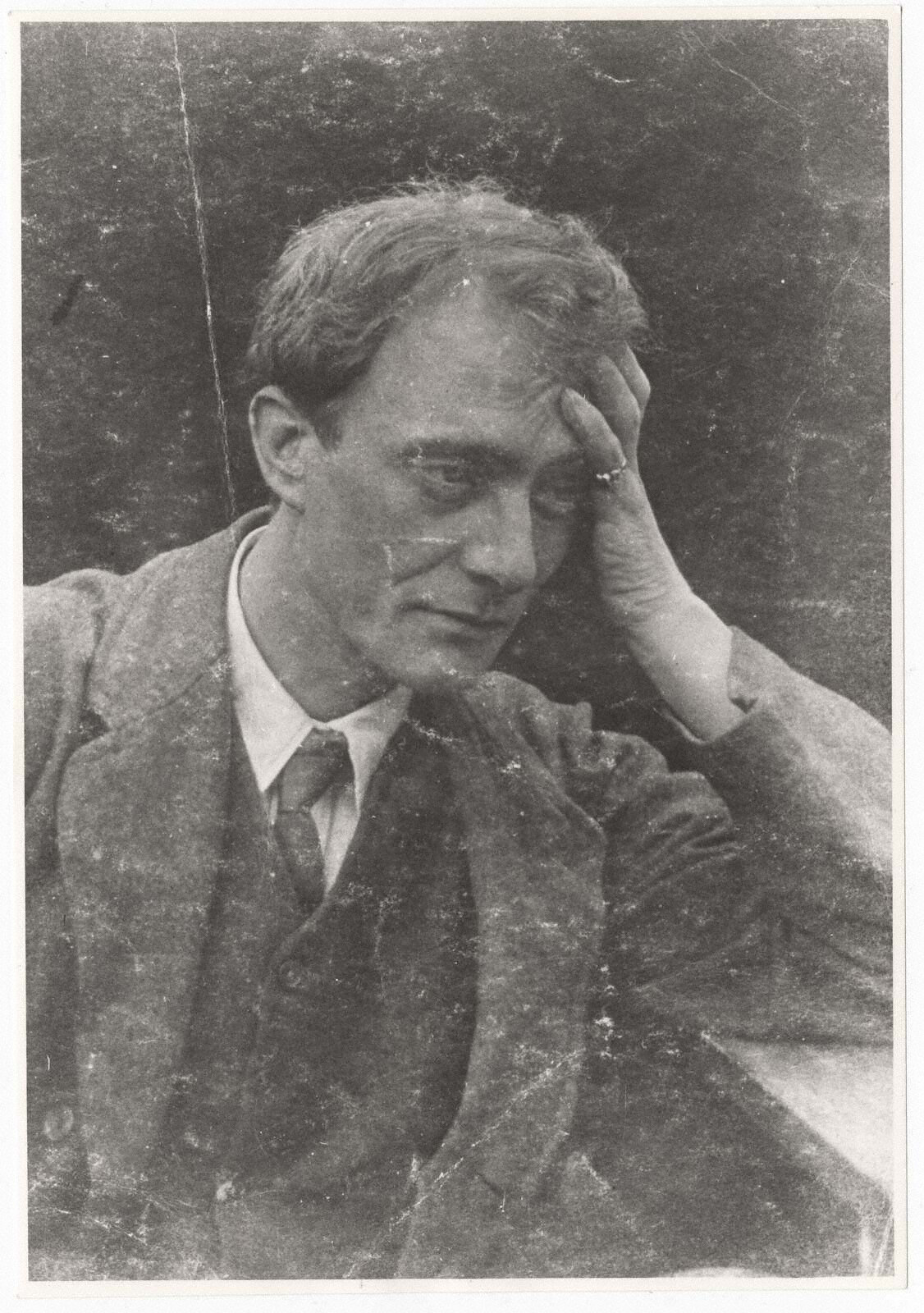
ET looking particularly dejected . . .

The final image – syntactically, the last given reason as to why he allows the lovers, as well as the ill-behaved picnickers, to use the riverside that (in the poem at least) he owns – is intended as an image of transience, of impermanence. It’s this knowledge that really drives him in his conservation project, the rebuilding of the weir, the installation of generators to connect to the Grid. His obsession (which is of course really the author’s, my own) is with the passage of time which brings in change and destruction and against which he builds (as the author builds the poem) something to stand against it, a kind of memorialisation which is also an innovation: ‘the talk / when it’s over though he knows well / it is never really over’. Throughout, I wanted to evoke something of Edward Thomas’s own work, partly through my formal choices. In ‘Gone, gone again’, for example, he views an old house:

Outmoded, dignified,

Dark and untenanted,

With grass growing instead

X

Of the footsteps of life,

The friendliness, the strife;

In its beds have lain

Youth, love, age and pain:

X

I am something like that;

Only I am not dead,

Still breathing and interested’

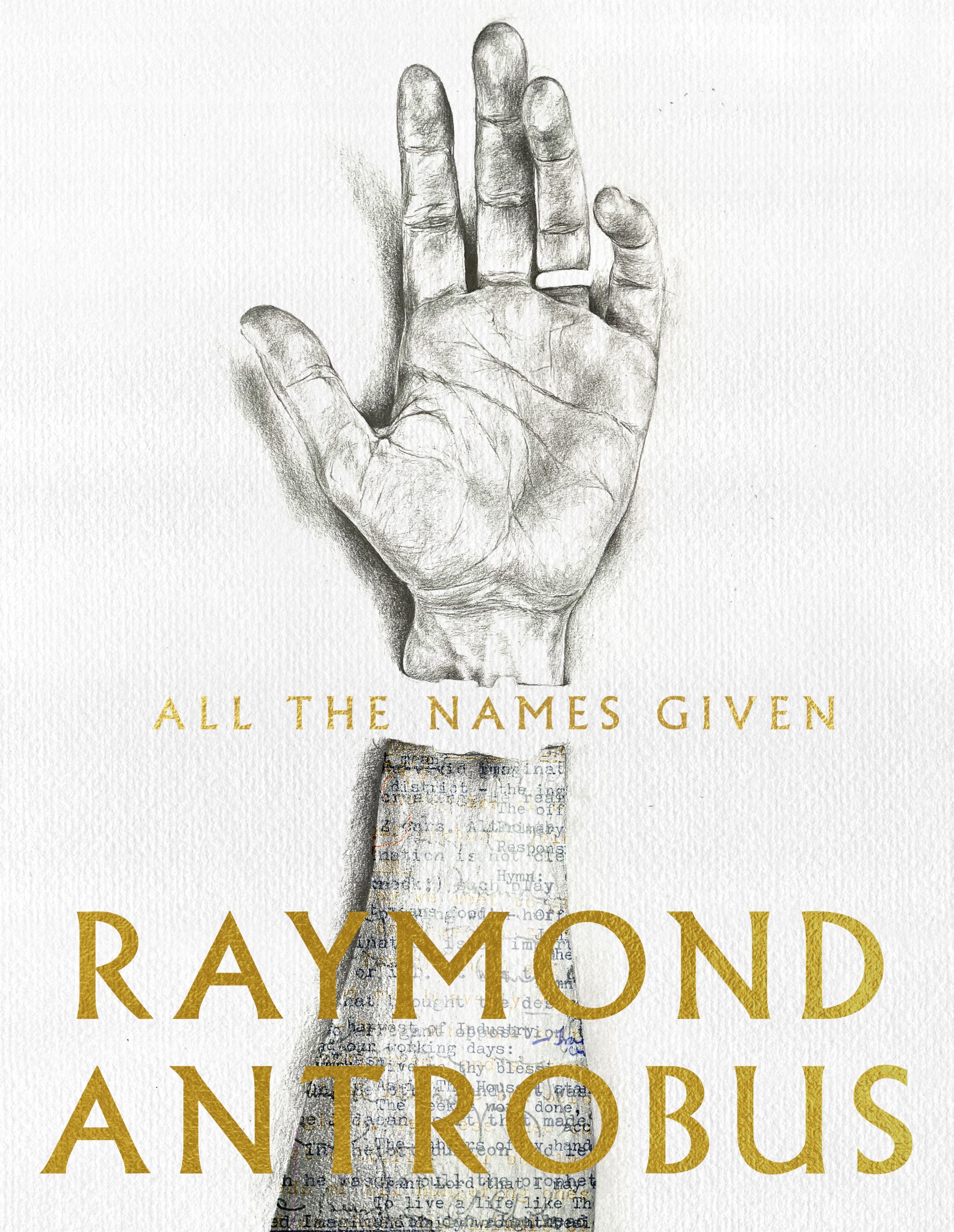
‘The Man Overstanding’ – on Raymond Antrobus’ ‘All The Names Given’

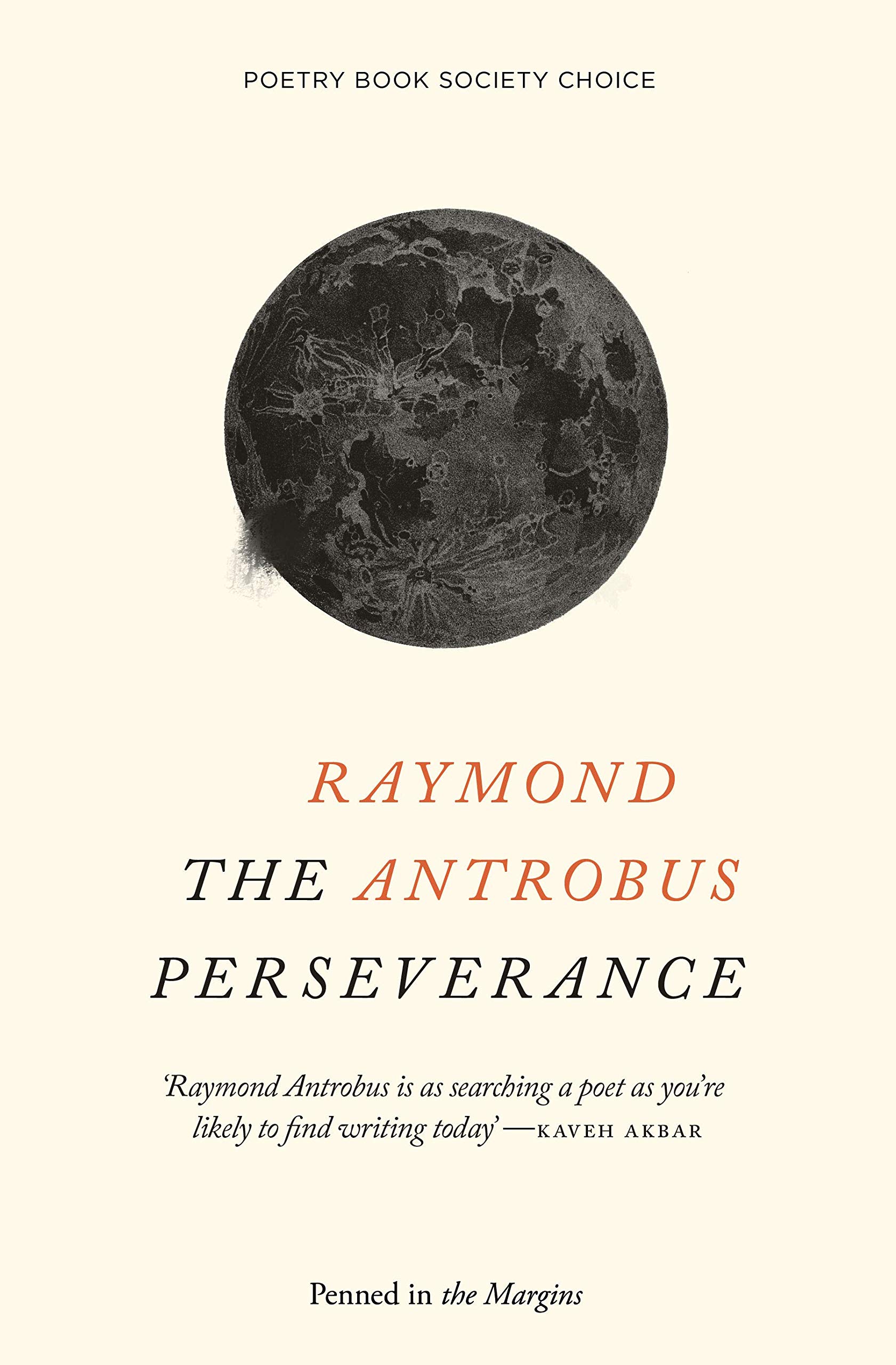
Genuinely acclaimed first books can be hard to follow up. Raymond Antrobus’ The Perseverance (Penned in the Margins, 2018) was a Poetry Book Society Choice and won the Ted Hughes Award and the Rathbone’s Folio Prize in 2019. I reviewed the book that year as one of the five collections shortlisted for the Forward Felix Dennis First Collection Prize. In many ways it was a conventional book of poems – its voice was colloquial, it successfully employed a range of (now) traditional forms (dramatic monologues, prose poem, sestina, ghazal, pantoum), its syntax and punctuation were nothing out of the ordinary. Its subject matter was to a large extent dominated by a son’s difficult relationship with his father, by questions of racial identity and (this is what made it especially distinctive) the experience of a young Deaf man. Besides the latter, what really marked the book out (I argued) was ‘that impossible-to-teach, impossible-to-fake, not especially ultra-modern quality of compassion’. Listen to Raymond Antrobus talking about his first collection here.

Now several years on and literary acclaim, a new publisher (this book is published by Picador Poetry – Penned in the Margins has since sadly ceased operations), a recent marriage and a broadening of perspective (particularly towards the USA) all place Antrobus in a very different environment. He has set aside a lot of the experimentation with recognised forms (which is not to say the new poems do not experiment with poetic form) and the book opens very positively:

Give thanks to the wheels touching tarmac at JFK,

give thanks to the latches, handles, what we squeeze

x

into cabins, the wobbling wings, the arrivals,

departures, the long line at the gates, the nerves held,

x

give thanks to the hand returning the passport [. . .]

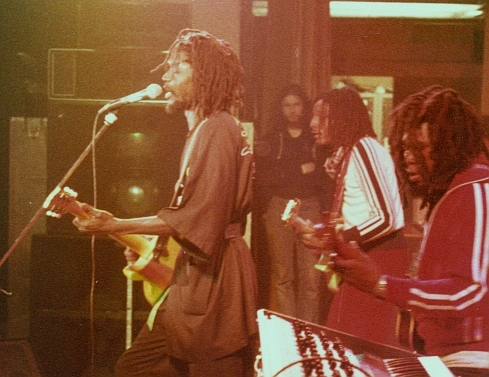
In a similar tone, ‘The Acceptance’ concludes with the word ‘Welcome’ being signed. But the 30 lines preceding this hark back to that ‘complicated man’ (a phrase from ‘Dementia’, from The Perseverance), the poet’s father. Though dead for several years now, he continues to haunt his son’s dreams and a number of these new poems. In ‘Every Black Man’, the ‘dark dreadlocked Jamaican father’ meets his prospective, English mother-in-law for the first time. He’s already drunk, there is shouting, he lashes out, she racially insults him: they never meet in the same room again. The father’s ‘heartless sense of humour’ is turned into a slow blues: ‘I think that’s how he handled pain, drink his only tutor’ (‘Heartless Humour Blues’). And the man’s ‘complication’ is reaffirmed in the poem, ‘Arose’, in which, talking to his embarrassed son, the father boasts of the great sex had with the boy’s mother, but then is touchingly remembered, calling out her name: ‘Rose? And he said it like something in him / grew towards the light.’

But All The Names Given also pays more fulsome tribute to Antrobus’ mother. In ‘Her Taste’, despite her conventional, English, religious background, she drops out, joins a circus (literally, I think!), has various relationships, and eventually gets pregnant by Seymour, the ‘complicated man’ from Jamaica, who left her to raise the children. Thirty years on, she’s defiant, independent, ‘holding her head higher at seventy’. We see her leafing through a scrapbook of her past, ‘rolling a spliff on somebody’s balcony’ or again, ‘in church reading Bertrand Russell’s ‘Why I’m Not a Christian’.’ Despite such moments, the maternal portrait does not quite possess the vivid distinctiveness of the paternal one. But, with the benefit of the passing years, Antrobus can now write, ‘On Being A Son’, in which he unreservedly praises Rose in her neediness, her self-sufficiency, her helplessness with IT, her helpfulness in so much else. He concludes, channelling her voice: ‘mother / dyes her hair, / don’t say greying / say sea salt / and cream’.

This greater focus on the mother is partly a redressing of the previous book’s gender imbalance, but it is also at one with Antrobus’ interest in family and heritage as offering clues to his own identity. It turns out the Antrobus name – from his mother’s English side – is anciently English (or far distantly Norse) and associated with Antrobus in Cheshire. ‘Antrobus or Land of Angels’ records a visit (by mother and son) to the place, to face the suspicious looks in The Antrobus Arms, the guard dogs at the Hall:

A farmer appears, asks if we’re descended

from Edmund Antrobus.

x

Sir Edmund Antrobus, (3rd baronet)

slaver, beloved father,

over-seer, owner of plantations

x

in Jamaica, British Guiana and St Kitts.

Peter Tosh with Robbie Shakespeare, 1978

The son’s quick denial of the line of descent is a complex moment. Despite carrying the same name, his mother is not truly a descendant. But given His Lordship’s slave-owning history, who is to say whether there is any genetic relation, ironically, through his Jamaican-born father, Seymour. The thought surfaces in ‘Horror Scene as Black English Royal (Captioned)’. Antrobus’ note tells us this poem was sparked by tabloid/CNN speculations in 2019 about the likely ‘blackness’ of the Sussexes’ royal baby. The poem’s narrator looks down at his own hands and sees ‘your great-great-great Grandfather’s owner’s hands’.

Tyrone Givans

So All The Names Given quickly reveals itself to be a book deeply troubled by the kinds of questions raised in the poem ‘Plantation Paint’: ‘Why am I like this? // What am I like? / Who does / it matter to?’ In this second book, Antrobus is still working towards an ‘overstanding’. The idea was alluded to in The Perseverance via a Peter Tosh lyric: ‘love is the man overstanding’. It is a form of understanding that emerges after all untruths have been overcome. The truths, untruths and complications of identity preoccupy the majority of these new poems. Only occasionally does Antrobus set aside such profound (perhaps irresolvable) anxieties. The African/Vietnamese waitress in ‘A Short Speech Written on Receipts’ is a figure who seems to outweigh the poet’s wrangling over his own selfhood, leading him to wonder: ‘Maybe kindness is how / you take down the stalls’. The gates of compassion also open frankly and to great effect in ‘At Every Edge’ and ‘A Paper Shrine’, two brief poems remembering very different students in creative writing classes. Likewise, ‘For Tyrone Givans’, commemorates a young Deaf man (a friend and contemporary of Antrobus) who committed suicide in Pentonville Prison in 2018. Here too, the vector of attention is outwards, towards Tyrone’s mistreatment by the authorities, his suffering and despair, rather than inwards towards the poet’s own ‘complications’:

Tyrone, the last time I saw you alive

I’d dropped my pen

on the staircase

x

didn’t hear it fall but you saw and ran

down to get it, handed it to me

before disappearing, said,

x

you might need this.

This review was originally commisioned and published by The High Window

Pia Tafdrup: recent poems from Bloodaxe Books

The Taste of Steel / The Smell of Snow, containing poems by Pia Tafdrup originally published in 2014 and 2016 and translated by David McDuff, was published by Bloodaxe Books last year. The Tafdrup/McDuff/Bloodaxe collaboration goes back more than 10 years now. The Danish poet’s work inclines to themed series of collections – The Salamander Quartet appeared between 2002 and 2012. The current volume presents in English the first two collections of another planned quartet of books, this time focusing on the human senses. In fact, the ‘taste’ book here feels much less conscious of its own thematic focus than the ‘smell’ one, not necessarily to the latter’s advantage. There is often something willed, rather laboured, about some of the work included here, which is most disappointing given Tafdrup’s earlier books. But her curiosity about the world remains engaging, her poems are observant of others, often self-deprecating, her concerns are admirable (environmental, the world’s violence), plus there are several fine pieces on desire and female sexuality.

Her world view though, is essentially tragic: loss and the passage of time predominate. ‘Chink’ ends in a resigned tone: “Slowly life takes / the life from us”. The Taste of Steel is particularly imbued with a sense of personal, romantic loss: “The moment I begin to love, / the separation starts, / at least the fear of separation” (‘Separation’). The awkward evidence of a partner’s infidelity – a broken sugar bowl, a coffee stain on a book – are “disasters” in what the narrator thought of as “my home” (‘Stages on life’s way’). In such circumstances, even the poet’s pen assumes the qualities of an “axe” (‘Unposted letter’) and unsuspecting visits to museums yield up pessimistic clues and conclusions:

In the absence of words

poisoned arrows sing through the air,

but behind the arrows’ decoration

the idea is the same: peace

is pauses between wars.

                                                ‘Not even in museums is there peace’

Impression of Cassini Space Probe

In both collections, Tafdrup gathers poems into brief, titled sections of about half a dozen poems each and the ‘War’ section extrapolates the sense of personal conflict and loss to more global/political concerns. ‘The darkness machine’ opens plainly, if irrefutably, with the sentiment that a child “should be playing, not / struck in the back by a bullet”. The point is made more powerfully (because less directly) in ‘Spring’s grave’ with its repeated pleas to “send small coffins”. ‘View from space’ adopts the even more remote perspective of the Cassini space probe’s view of the planet, but also ends with plainspoken directness: “that’s where we ceaselessly produce / more weapons, practise battle tactics, / turn our everyday lives into a night of hell”. The concluding genitive phrase makes me wonder about the quality of the translation; I have neither Danish, nor the original in front of me, but does Tafdrup really use such a cliché?

You might say the Cassini viewpoint is taken up more metaphysically elsewhere in Tafdrup’s frequent sense of the world’s ultimate mystery (“the fleeting, / the unbounded, the ever / changing” (‘Undercurrent’)), forever slipping beyond the grasp of human language, an idea imaged in ‘Loneliness’ as a God who “is born at every moment, it is said, // is the life of the endless deep, / and does not cease His revolt”. Only occasionally are we conscious of such a presence – unfamiliar moments, as in the poem ‘Power cut’, where it is an electrical outage that prompts a reshaping of perception to the point of “only now / discover[ing] the world, as though we are suddenly / noticing heart and lungs”. And – returning to the theme of these collections – Tafdrup’s use of (lengthy) listing in ‘Taste’ is perhaps intended to evoke the often unremarked, radical multiplicity of the world-as-it-is through the window of one of the human senses.

This is also a method adopted in The Smell of Snow, the lists of olfactory images are even more determinedly developed in poems like ‘Smell-trace of a morning’ and ‘Benchmarks from a long day’. In this second book, most poems contain some allusion to the ‘smell’ theme. The idea is put to powerful erotic effect in ‘Your fragrance wakes me’ in which the lover, coming from a bath, is tracked and anticipated; “Not yet the taste of your kiss, / not yet caresses”. Other ‘smell’ poems yield good results:  to comic effect in Tafdrup’s close observation of the noses of other passengers on an airplane; an interesting exploration of gender in a poem on men’s proclivity to relieve themselves in public places; on environmental concerns in the evocation of the smells of cleaning products; racist undercurrents when a peculiar smell is detected during a stranger’s visit (a dead mouse is later found to be the cause).

But over the course of 189 pages, the imaginative pressure driving Tafdrup’s poems can flag. The human senses theme yields poems that feel like exercises in completing a brief. A poem on the 2015 terrorist attacks in Copenhagen works well enough, except one is left waiting for the ‘smell’ to feature (eventually we get the “smell / of bloodstained February”). When poems don’t need to be written they tend towards the banal. That these are poems in translation may be part of the problem. However many times I read these 6 lines, I am still puzzled:

I pour water

in abundant quantities

in the grey misty light,

sweep like the wind through a willow

the shadow from your face,

turn a stream magnetically.

                                                            ‘Fresh snow’

Tafdrup’s language as rendered by McDuff is for the most part clear and unexceptional (this is one of the losses compared to earlier work which leaped and surprised its reader more frequently). Lines like the above give off the aura of a passage not fully resolved in English. The book’s concluding poem also seems problematic. Its (Englished) title might leave it open to the kind of schoolboyish humour that Tafdrup would not have sought: ‘The stream of smells from below’. Its opening three stanzas lack any sense of forward movement, seeming to repeat three times the same idea that individuals on the planet are similar but different to others. Then:

Each person is referred to their own sensations,

as I am now

with the sun in my face, June,

and the chill in my back

stop [ . . . ]

This reader has little stumblings over the verb ‘referred’, with the month/interlocutor, ‘June’, and the odd juxtaposition of ‘back / stop’. McDuff’s previous work with Tafdrup has been superb, but once doubts creep into the reader’s head about the ‘bringing over’ of poems into another language it is hard to contain them. This is not Tafdrup’s best work, nor is it McDuff’s; I, for one, will be going back to the earlier Bloodaxe books by this fine poet.

NB. This review was originally commisioned and published by The High Window.

Here’s clip of David McDuff reading 3 poems from the collection: https://www.youtube.com/watch?v=3nTS-l92qI0

Interviewed on ‘Poetry Worth Hearing’

Just before the Christmas break, I was pleased to be asked by Kathleen McPhilemy to contribute to the January 2023 edition of her on-going series of podcasts, Poetry Worth Hearing.

Kathleen’s own introductory remarks about what the podcast includes are as follows:

Jessica Mookherjee reading from two recent collections, Tigress and Notes from a Shipwreck (both published by Nine Arches Press), and Martyn Crucefix talking about the poetry he thinks worth reading. We also have new poems from Beth Davyson, Stephen Paul Wren, Pat Winslow, Suzannah Houston and Chris Beckett. To learn more about the poets and the publications mentioned as well as to see the texts of new poems, go to https://www.poetryworthhearing.biz.

You can find the podcast here. Scroll down a little to Episode 11. My discussion starts at around 28 mins in – but do listen to all the contributors.

Helen Kidd

I was especially pleased to hear Pat Winslow’s poem ‘As for the owl’ which carries a dedication to the late, much-missed Helen Kidd. By a strange coincidence, Helen was one of the members of the Old Fire Station Poetry Workshop (led by Tom Rawling by in the 1980s) ) about which I talk in my piece.

I also talk about growing up in rural Wiltshire in a house with few books. My years spent pursuing science – beginning to study medicine at Guys Hospital in London – then my drastic shift to studying Philosophy and English at Lancaster University, where I worked with the Scottish poet, David Craig, on one of the first Creative Writing courses in the UK. At Worcester College, Oxford, in the 1980s I was writing a DPhil thesis on the poet Shelley while also attending poetry workshops with WN Herbert, Peter Forbes, Pauline Stainer, Keith Jebb, Anne Born (and Tom and Helen).

Kathleen also asked me to say something about the poets I go back to and I talk a little (and read from) Walt Whitman, Robert Frost and WS Merwin. Trying to pick contemporary poets to highlight is an impossible task but, on this occasion at least, I speak about Marvin Thompson, Nancy Campbell and John McCullough.

Tom Rawling

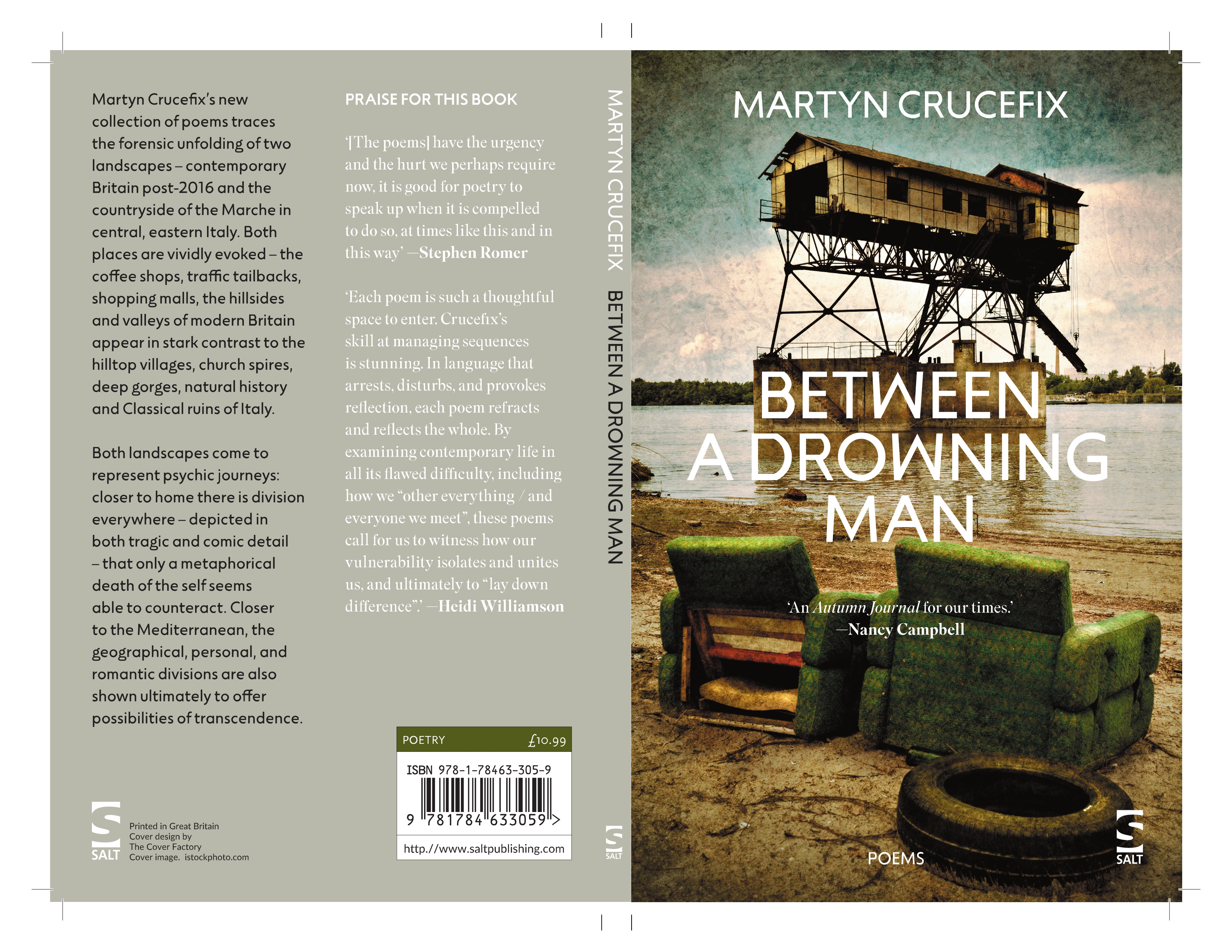
Between a Drowning Man (Salt, 2023)

Available from Salt Publishing (Autumn 2023).

‘An ‘Autumn Journal’ for our times.’ —Nancy Campbell

‘Each poem is such a thoughtful space to enter. Crucefix’s skill at managing sequences is stunning. In language that arrests, disturbs, and provokes reflection, each poem refracts and reflects the whole. By examining contemporary life in all its flawed difficulty, including ‘how we other everything/ and everyone we meet’, these poems call for us to witness how our vulnerability isolates and unites us, and ultimately to ‘lay down difference’. —Heidi Williamson

‘[The poems] have the urgency and the hurt we perhaps require now, it is good for poetry to speak up when it is compelled to do so, at times like this and in this way’ —Stephen Romer

Listen to Martyn discussing the background and the writing of the poems in this new collection in these two podcasts:

Planet Poetry – about the whole collection

A Mouthful of Air – focusing on the single poem, ‘you are not in search of’ (page 57)

SOME REVIEWS OF THIS BOOK

By Mat Riches – on The High Window

By Stuart Henson – on London Grip

By Shanta Acharya – on Everybody’s Reviewing

BLURB OF THIS BOOK: Martyn Crucefix’s new collection of poems traces the forensic unfolding of two landscapes – contemporary Britain post-2016 and the countryside of the Marche in central, eastern Italy. Both places are vividly evoked – the coffee shops, traffic tailbacks, shopping malls, tourist-dotted hillsides and valleys of modern Britain appear in stark contrast to the hilltop villages, church spires, deep gorges, natural history and Classical ruins of Italy. Both landscapes come to represent psychic journeys: closer to home there is division everywhere – depicted in both tragic and comic detail – that only a metaphorical death of the self seems likely to counteract. Closer to the Mediterranean, the geographical and personal, or romantic, divisions are also shown ultimately to offer possibilities of transcendence.

The poems of the longer sequence, ‘Works and Days’, are startlingly free-wheeling, allusive – brilliantly deploying source materials and inspiration from Hesiod’s original and the 10/12th century Indian vacana poems – all bound together by the repeated refrain of bridges breaking down. The Italian poems, as a crown of sonnets, are more formally controlled, but the repeating of first and last lines of the individual poems likewise serves to suggest the presence of an overarching unity.

In the end, both sequences travel towards death which – while not denying the reality of human mortality, the passage of time – is intended to represent a challenge to the powerful dividing walls between Thee and Me, the liberation of empathetic feeling, even the Daoist erasure of the assumed gulf between self and not-self: ‘these millions of us aspiring to the condition / of ubiquitous dust on the fiery water’.

The Writer and Technology – a Royal Literary Fund brief talk

As a Royal Literary Fund Fellow, I was asked in May 2020 to write and record three brief talks. One of these was a ‘Letter to My Younger Self’ and another piece was entitled ‘How I Write’. These two recordings are still in the RLF pipeline, but the third of these has now been made available as an audio file on the RLF’s VOX site. The given topic of this published piece is ‘The Writer and Technology’ – a subject about which I have some experience in relation to the former and not a huge competence in relation to the latter. Nevertheless, I’m not one to duck a challenge.

So – you can hear me reading the piece here.

Alternatively – or both at the same time if you’d like – you can read it below.

Writing and Technology

It frightens me: she gives with one hand and takes away with the other. I become too monogamous. I don’t look up. I google recipes using oregano or the name of the drummer in Coltrane’s 1960s quartet. I love her library of reference all within clicking distance. I email friends, family, writers, publishers (I remember stamps and letterboxes with no fondness). Zoom, Microsoft Teams, FaceTime make it a breeze to stay in touch, offer advice, give poetry readings to people around the globe. I’m never lost; I use Google maps. I post and follow on Twitter, Instagram, FaceBook. All this she gives me.

And most days I crave her distractions, her sensational sweep of sights and sounds, her informational vistas at the swipe or dab of a fingertip. I substitute longer, slower satisfactions with a preference for her novelties. Though I’ve read about how our cultural (and fiscal) economies promote such transitory stabs at contentment in the absence of other satisfactions, still – I can seldom resist. I do glimpse vicious cycles – her short-lived pleasures liable to collapse, disappointing anticipation – yet I play her perfect subject, eyes flicking without rest from screen to screen. I do not look up. Her multitudinousness spawns my passive respect for numbers, speed, spectacle, calculation, all of which barely disguises the non-event. I attend with others – but spend as much time watching a screen as the performance. I still tell my friends: I was there, it was huge, so many people . . .

She makes me fear something’s missing. Addicted to her click bait, I love her machines in their elegant black and silver. They seem to promise to breach the ancient laws of time and space. Yet having acquired the newest devices with which I calculate, communicate, translate, find millions of pages of information, actually, I can’t remember what it was I hoped to do with them.

Sometimes I remember. What she interrupts – with her shows of pleasure, power, riches, praise – is the creative impulse to look up, observe (look out!). Once this ceases – prophetically, the poet Shelley said this back in 1821 – new imagery stops being generated, language withers and dies. Only in my relations with the world (not with her) am I truly warmed. Then I’m the matrix through which the world steps – as the world becomes the matrix through which I step – to rediscover myself not ‘me’ (an atom in an empty universe), but ‘mine’ (living in relation to others, other things).

When I leave her, often there’s the startling beauty or strangeness of scenes that draw me away from my ‘self’. Perhaps for a moment, I’m lost for words. It’s not enough to take a picture, post it up, surround it with talk, comments, likes, shares. Poetry expresses such sensations as record, reminder, model and vicarious experience for its readers. Using form, figurative and musical language, I write to re-present such ineffable, inexpressible moments. The French poet and philosopher, Yves Bonnefoy, says: poetry is not about something but it restores the self to the lucid intensity of the truth of relational experiences.

Ash-Hiccups: on ‘Porcelain’ (2005) by Durs Grünbein

This review of Durs Grünbein’s stunning long poem, Porcelain, tr. Karen Leeder (Seagull Books, 2020) first appeared in a recent issue of Agenda. Leeder’s clever, formal, utterly sympathetic translation has since rightly been awarded the 2021 Schlegel-Tieck Translation Prize by the Society of Authors.

For a writer who has published over 30 books of poetry and prose in his native Germany, we have had too little of Durs Grünbein in English. Michael Hofmann‘s Ashes for Breakfast (Faber, 2005) introduced some of the earlier work and described Grünbein as possessed of melancholia, amplitude, a love of Brodsky, a love of the Classics, plus wide-ranging interests in medicine, neuroscience, contemporary art and metaphysics. John Ashbery praised Grünbein, identifying his subject as “this life, so useless, so rich” and the challenge to any translator is precisely this breadth and ambition. Happily, Karen Leeder is proving to be a really fine conduit for Grünbein’s work and here she triumphantly tackles his 2005 sequence of poems about the firebombing of his hometown, Dresden, by American and British planes in February 1945.

Porcelain is a sequence of 49 poems, 10 lines each, rhymed and grounded in Classical metre and given an air of Classical elegy by its subtitle, ‘Poem on the Downfall of My City’ (‘Poem vom Untergang meiner Stadt’). But if resolution, consolation or summing-up might be expected, this is, definitively, not what we get. The title, of course, refers to the Meissen pottery which, from the eighteenth century on, brought Dresden its great wealth and fame. But it is also a pun on the poet to whom the sequence is dedicated: Paul Celan. In Celan’s poem ‘Your eyes embraced’ there is an effort to swallow the ashes of genocide but they return to the throat as ‘Ash- / hiccups’, an image repeated in Grünbein’s opening poem: “It comes back like hiccups: elegy”. The sequence does indeed hiccup in the sense of its jerky shifts of tone, its multi-faceted images of Grunbein himself and in its close to choking articulation of the horrors of the Dresden bombing.

Paul Celan

A self-conscious awkwardness or self-questioning is clear from the start: “Why complain, Johnny-come-lately? Dresden was long gone / when your little light first appeared”. Grünbein was born seventeen years after the bombing and accepts he cannot ‘witness’ the event in any simple way. But personal details do surface in the sequence such as in poem 8 where the young boy grows familiar with the still evident urban destruction: “proud and mute . . . the ravaged city”. He senses something of “that glory passed away” but can hardly know “the things [his] mother saw, / scarcely five years old” (poem 10). Later poems remember moments when his mother’s doll was in danger of the flames (“Flames as high as houses sucked the air along the streets”), but was rescued, unscathed, “or that is what they say” (poems 40/41). Leeder explains in her Introduction that Grünbein has been criticised in part for a sentimentality and this is perhaps such a moment. But the indication that this is reportage (family reportage at that) gives permission for sentiment and Grünbein is fully conscious of (and in control of) the massive swings in tone through the whole sequence. Poem 48 is one that might also lay itself open to charges of sentiment, focussing on a pair of lovers (Martha and Heinrich) seemingly caught up in the devastation: “Kids, the pair of you, first kisses in the thick of war, / until you met that night you’d grown up in uniform”. But Grünbein works repeatedly through allusiveness and intertextuality, so this Romeo and Juliet trope is hardened and complicated when we hear that, not only was the German air defence’s grid reference for Dresden code-named ‘Martha-Heinrich 8’, but also that both names recall characters in Goethe’s Faust.

In poem 38, Grünbein seems equally aware that some of his images of Dresden after the bombing might be open to the same criticism of a hyper-emotional tone. “Five long weeks upon the Altmarkt square, the horses / scratched the straw and watched the griddled corpses / burn. Mawkish? Ach, give over, late-born soul”. As this example shows, the sequence does confront the horrors unleashed on the city as in poem 22: “Are those people popping like chestnuts between / the gutted trams?” But looked at more carefully, even this grisly observation is nominally from the perspective of a stone angel on the cathedral roof. It is this continual innovation and manipulation of perspective that is important to the poems’ purpose and how we should read them. One important perspective Grünbein explores is the victim-narrative that predominated in thinking about the event in post-war East Germany and more recently. One aspect of this is the placing of the Dresden bombing in the historical context of German bombing of Warsaw in 1944 and the German’s systematic persecution of the Jews. Dresden’s fate did not rise ex nihilo. This latter myth, Grünbein embodies in the eroticisation of the bombing – the city as defenceless virgin – as in poem 45’s image of the city and the Elbe: “River like a sash of silver draped round her hips / enticing in the moonlight”.

Aerial View of Dresden circa 1930

From such examples, it’s easy to see why Grünbein’s own position on the bombing has been vociferously discussed and questioned. But he warns against using the destruction of the city as any kind of exemplum: “Let Dresden be. You won’t find what you are looking for” (poem 6). The reader understands he is also advising himself here, while, at the same time, acknowledging the human drive to interpret, to search for meaning, even in the most appalling events. The sequence’s treatment of Arthur ‘Bomber’ Harris, the RAF Commander-in-Chief during the bombing of Dresden, is interestingly equivocal. Poem 4 alludes almost invisibly to Harris’ comment on the Dresden bombing, when he suggested that objections to it were based on a sentimental image of the city as full of “German bands and Dresden shepherdesses” when, in reality, it was a Nazi munitions and transportation centre. In fact, Harris was carrying out orders from Winston Churchill: “No sweat, Arthur, you only did what you had to do” (poem 13). And in poem 23, Grünbein also notes that some more recent left-wingers in Germany have chanted ‘Thank you, Harris!’ in their efforts to question and counter more simplistic, victim-narrative commemorations of the event.

Meissen Shepherdess Figure

In such ways, Porcelain revels in its own pluralities while acknowledging and itself attempting to make some sense of an epitome of senseless destruction. The final line of the book plainly states the human need to avoid finality, the fall into fixity, yet accepts the compulsion to explain, to create meaning: “Changing places, times, dimensions as he goes—goes on—creating”. And behind all this stand those exquisite china objects, the ‘white gold’ that made the city rich and famous:

Falconers are there, vintners, nymphs with conch-shell horns,

frog-faced putti, figures riding seahorses and swans.

Groups of shepherdesses, lovely gardeners, beasts of lore . . .

Porcelain—most fragile thing”

The collision of Allied bombs and Dresden’s fragile porcelain lies at the heart of Grünbein’s poems. There was no contest, of course, though some pieces and many fragments remained and were perhaps repaired. Grünbein’s poems enact this process, collecting perspectives, often incongruous, even contradictory, but bringing them into relation with each other, not to make any definitive statement, but to hold up a mirror to us, to the recurrent tension between our need to create and our drive to destroy.

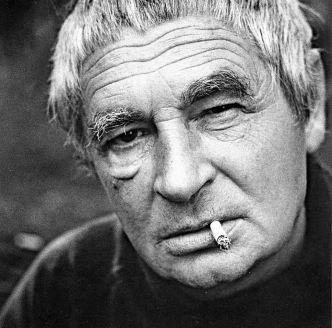
Durs Grünbein

I Saw Three Swans: Baudelaire, Rilke, Oswald

A friend of mine recently asked what I thought of Alice Oswald’s poem, ‘Swan’ – in fact, what did I think it meant. It appears in her 2016 collection Falling Awake (Cape Poetry). I’m not sure I can give a direct answer to her direct question, but it linked up with two other swan poems I have read recently. Baudelaire’s poem appears in The Flowers of Evil and I have been re-reading a couple of translations of that collection because of the French poet’s influence on Rilke. Rilke’s swan poem (included in New Poems) is one of the poems I have been translating for the projected 2023 Pushkin Press book mentioned in my previous two posts. So – by way of an oblique answer to my friend’s question and because these poems and (two of) the poets relate to my current project and out of sheer curiosity – I thought I’d read these three poems alongside each other here.

Baudelaire’s ‘Swan’ is the longest of the three, divided into two parts. Written in late 1859 and dedicated to Victor Hugo, Baudelaire described the poem as an attempt to “record rapidly all that a casual occurrence, an image, can offer by way of suggestions, and how the sight of a suffering animal can urge the mind towards all those beings that we love”. His definition of those we love is remarkable broad, as we’ll see. The poem is also remarkable for the range of its components: evocations of the modern city (Paris), the creature itself, anthropomorphism, personal memory, literary references and an imaginative and empathetic ‘lift off’ towards the end. I’m looking at Anthony Mortimer’s translation published by Alma Classics in 2016. Here is an older, clunky, but openly available translation.

The reader might be taken aback by the opening exclamation: this swan poem opens with ‘Andromache, I think of you!’ In Book 3 of The Aeneid, Andromache, wife of the killed Trojan hero, Hector, is living in exile (‘we, our homeland burned, were carried over / strange seas’ – tr. Mandelbaum) and now weeps for her husband beside a little stream, a paltry reminder (Baudelaire: ‘a poor sad mirror’) of the mighty river, Simoeis, near Troy. She is an image of an abused and displaced exile, a refugee and it is the narrator’s strolling through the Place du Carrousel in Paris that prompts this literary recall. It’s because he himself feels out of place. Between 1853-1870, the Paris Baudelaire had known was in the process of being re-designed and re-built by Georges-Eugene Haussmann. Cityscapes change ‘more swiftly than a mortal heart’ says the narrator and he prefers to recall the old, ramshackle state of the area, where there was once also ‘a menagerie’. One morning, in that previous era, he caught sight of an escaped swan that ‘[d]ragged his white feathers on the dirty road’.

Rapid cutting from literary allusion to gritty realism to anthropomorphism is part of Baudelaire’s boldly making it new. The swan is ‘doomed’ in a literal sense, yet also ‘mythical’, at least for the narrator, who makes the beast speak: ‘Water, when will you rain?’ The intertextual resonances are further extended: the narrator sees the bird ‘sometimes like the man in Ovid’. This is the moment of man’s first creation: ‘given a towering head and commanded to stand / erect, with his face uplifted to gaze on the stars’ (Metamorphoses, tr. David Raeburn). But Baudelaire’s allusion is ironic, confirming the swan’s standing for itself and humankind in 19th century Paris: the swan stretches ‘his writhing neck and hungry head / Towards the cruel sky’s ironic blue’.

Part II of ‘The Swan’ reverts to the changing vista of Paris. As the new is erected, the old buildings ‘turn allegorical’, working as allusions to objects and experiences that no longer exist. The diffuseness and proliferating resonance of the swan image itself suggests that ‘symbolic’ might be a better word than allegorical. Now strolling near the Louvre, thinking still of the swan memory, the narrator reflects on ‘how / All exiles are ridiculous and sublime’. The earlier Andromache reference now makes sense and it resurfaces. It is the ‘incessant longing’ of all exiles that fascinates Baudelaire and from the (passionately felt) literary figure, he turns to a real black woman, ‘thin and consumptive, / Trudging through mud’ (in Paris, I take it) who yearns for her African homeland, obscured by a northern European ‘wall of fog’. The narrator ‘seeks’ exile we are told or, in his alienation from the modern world, he is compelled to seek it in a (mental) forest in which a ‘distant memory winds its full-breathed horn’. Imprecise as the significance of this image is, it evokes a full-throated, rather nostalgic longing for something long past; somewhat ridiculous and yet sublime in its depth of feeling. But the poem’s final lines expand to encompass thoughts of ‘castaway sailors’ and ‘captives, the defeated . . . and of many, many more’. The memory of the swan has focused (and continues to do so) the narrator’s thoughts on the ubiquity of such states of alienation, of actual and psychological exile.

Charles Baudelaire

By comparison, the 12 lines of Rilke’s ‘The Swan’ are astonishingly compact. But, on its smaller scale, Rilke’s poem also opens as obliquely as Baudelaire’s. There are two lines before the creature appears and when it does so it seems to be in a figurative role: as an image of human life, which is itself characterised as a ‘struggling with a task not yet complete’. The contingencies and difficulties of a life lived are compared to the awkward movements of a swan’s movements out of water, weighed down, ponderous, ‘constrained’, as if its legs could not move freely. Baudelaire kept the two sides of his comparison (the swan and the experience of exile) clearly demarcated. Rilke balances the two sides of his comparison more evenly and potentially more confusingly. Is this a poem about a swan that conjures thoughts about life and death, or is it about life and death which now remind the narrator of the movements (in and out of water) of a swan?

Certainly, the initial topic seems to be life (its difficulties) and then in the second stanza, death itself: ‘that sense of our slackening grip / on the earth where we stand every day’. What is bold about this poem is how the final seven lines take off from this introduction of death into a second series of images related to the swan entering the water. But it is a series that does not return from the swan to the probable theme of human life/death. Instead, the poem records, in exquisite detail, the process of the swan entering the water and settling and then swimming away. It has the clarity of an Imagist poem (and I am hoping for that in my translation of it):

so, tentatively, he lowers himself down

x

and onto the waters that welcome him

gently, already, contentedly letting slip,

retreating beneath him, a moving tide,

while he, infinitely still and assured

and ever more majestic, more mature,

is content the more placidly to glide.

The growingly anthropomorphic quality of Rilke’s description (like Baudelaire’s before) implies the swan’s representative role in reflecting human life and in this instance, human death. Or at least, the idealised image of death that Rilke wants to convey: not something to be feared, but a gradual transition, a becoming, a maturing, an integral part of a life’s ‘struggling’. The poem’s playing with our perception of the swan/life divide is part of Rilke’s intention: life, as much as death, is not something Other, detached from the world of things, but something co-existing alongside it, within it. The creature’s placid transition from land to water, life into death, represents a true death for Rilke. This is not something available to all. In an earlier poem from the Book of Hours – in a poem which shows the influence of Baudelaire – Rilke portrays the poor of Paris, ‘wan-faced and petal-white’, frightened of being admitted to the hospitals of the city, knowing death awaits them. But this is a ‘petty death’, the demise of the body with no spiritual dimension; it is not ‘their real death’ which remains ‘hanging green, not yet sweet / like a fruit within that will never ripen’. So Rilke’s swan, as it glides placidly from life into death, is an image of such an ideal transition.  

It’s possible Oswald’s poem, ‘Swan’, has Rilke’s in mind as its preoccupation is also with life and death. Compared to the Parisian perambulatory of Baudelaire’s regular ABAB quatrains and the meditative, imagistic, quasi-sonnet form of Rilke, Oswald’s poem wanders freely across the page echoing the disintegration of her already dead and rotting swan. The poem is composed of two elements: narrative description and the imagined voice or thoughts of the dead swan as it rises away (soul-like) from its own corpse. The only real puzzle here is the final speech of the swan.

The opening harks back to the sound world and imagery of Ted Hughes. The harsh assonance of the curt opening phrase (‘A rotted swan’) is an example, as is the following long line with its splashing sibilance and use of a technological image applied to the natural world: the swan is ‘hurrying away from the plane-crash of her wings’. Also like Hughes, Oswald likes to use the space of the page; the phrase ‘one here’, repeated for each of the wings, is placed as if the material of the words indicated the location of the wings set awry. The plane image is picked up again with the metaphor of the swan leaving the ‘cockpit’ of her own flying machine. The dualism of mind/self/spirit/soul versus body is adopted in what seems to be a simple manner.

Alice Oswald

Baudelaire’s swan in exile cried for rain in its natural watery homeland. Oswald’s is puzzled by its sudden divorce and alienation from its own body. In its first speech, it does not recognise its wings: ‘those two white clips that connected my strength / to its floatings’. The tone is similar in the second speech: ‘strange / strange’. The swan seems aware here of its own sense of ‘yearning’, experienced in its life, that the body’s ‘fastenings’ (wings? tendons? muscles?) were never able to ‘contain’. As with all these swan poems, the bird is being co-opted to represent humanity; here, our sense of being more than merely physical. The swan sees her own black feet, now ‘poised’ but unused. The corpse is an intricate, marvellous machine, but without whatever is now departing, it appears ‘a waste of detail’. Before the third and final speech, the body and all its ‘tools’ are now abandoned, with all its ‘rusty juices trickling back to the river’.

I think that last phrase is important. This is one of Oswald’s best poems but I’m uneasy with the conventionality of the spirit/body trope. Perhaps what is leaving the body is returning to the environment (an after-life of that sort)? In the final passage, the swan wants to address its own corpse before it ‘thaws’ or rots away. This suggests a desire for some ritual. The perspective of the poem now zooms in on the head, then the eye, which is visible and into its ‘cone of twilight’, the fading gleam within it, and into the cone, almost as if looking into a snow globe. The swan sees a scene there: a bride setting out to her wedding. Is this an image of the renewal of life after death? The ‘trickling back to the river’? But this return journey seems difficult: ‘it is so cold’. I’m not clear if I should be taking this in a narrow way: this individual creature will be extinguished. Or more broadly, the natural cycle of life-death-decomposition-new-life has been compromised (by human actions?). Oswald’s final image is of tolling bells, ringing in the putative wedding venue, bells like ‘iron angels’, insistently, ‘ringing and ringing’. Oswald’s swan is marvellously physical in its demise but its projected commentary on itself feels at times naively anthropomorphic (the death I’m left thinking of is a human death), at others puzzlingly obtuse.

Charlie Louth’s Rilke + new Rilke Translations (Part II)

This is the second and final part of an uncut version of my recent review of Charlie Louth’s excellent book on Rilke, Rilke: the Life of the Work (OUP, 2020). A shorter version of this review appeared in the latest Agenda magazine, ‘Altered Distances’ (Vol 54, Nos. 1/2). Many thanks to the editor, Patricia McCarthy for asking me to write it. As I mentioned last week, much of my time through lockdown has been taken up with translation. One of these projects is a commission by Pushkin Press to complete a new selection and translation of the work of Rainer Maria Rilke, scheduled to appear in 2023. Some of you will be aware of my earlier published versions of the Duino Elegies and the Sonnets to Orpheus (both available from Enitharmon Press). This new project will contain selections from those sequences and a significant number of earlier poems – from the Book of Hours, the Book of Images and the New Poems. I am including a few of my new translations in these two posts (or at least these are reasonably progressed drafts – just as with original work, translations need to sit a drawer for a while before they can be more fairly judged)

Part II

Louth argues Rilke’s journey towards the poetics of the New Poems began in the period he resided in the artists’ community in Germany at Worpswede. A lot of his thinking there concerned images of man and landscape. For the majority of the time, humans and nature live “side-by-side with hardly any knowledge of one another” and it is in the ‘as if’ of the work of art that they can be brought closer, into a more conscious relation. These are the thoughts that preoccupied Rilke when he moved, in 1902, to Paris, in part to observe Rodin at work. Louth is right that the poet’s move towards a poetry that cultivated the “earthly”, the world of “things”, was already well under way. He then looked to Rodin’s methods for “dependability, concentration and craft” and in a poem like ‘The Panther’ the fruits of more compactness of diction, a more supple articulation of syntax, a lexis of more precise, everyday words and an increased emphasis on the visual are clearly seen.

Here is my translation of ‘The Panther’:

The Panther

in the Jardin des Plantes, Paris

With this pacing the bars’ back and forth, his gaze

grows so weary there is nothing it can hold.

To him, there appears to be a thousand bars

and beyond the thousand bars, no world.

x

The lithe, smooth steps of his powerful gait

(in the narrowest of circles he spins round)

is like a dance of power around a point

at which an immense will stands, stunned.

x

In moments only does the pupil’s curtain

sway noiselessly open – an image enters

and drives through the mute tension of each limb

into the heart, where it disappears.

Under Rodin’s influence, Rilke became a more self-conscious labourer in language. These are the poems that are held up as examples of ‘Kunst-Ding’ (art-thing). In August 1903, Rilke wrote to Lou: “The thing is definite, the art-thing must be even more definite; taken out of the realm of chance, removed from every unclarity, relieved of time and given to space’.

Gerard Manley Hopkins

Louth often draws comparisons between Rilke’s work and poets from the English language poetry sphere. Here he compares Hopkins’ ideas of ‘inscape’ and ‘instress’ as “akin” to Rilke’s ideas of object/form and its impact on the observing individual. Certainly, with Hopkins, Rilke valorises the moment of perception, the process of looking. This, from a letter to Clara Rilke in 1907, is worth quoting at length: “Looking is such a wonderful thing, and we know so little about it; with it, we are turned completely outwards, but precisely, when we are most so turned, things seem to go on inside us that have been longingly waiting not to be observed, and while, intact and curiously anonymous, they take place inside us, without us, their meaning grows in the object outside [. . .] without ourselves getting anywhere near it, grasping it only very faintly, from a distance, under the sign of a thing that was foreign to us and the next moment is estranged once more”. These are little contacts with God, transient though they may be. The way we are to put our conscious self into our gaze and let it stream out of us, so enabling us to ‘receive’ the object without, recalls the idea of kenosis. Louth’s account of it is cool and clear: “the whole process can be thought of as two parabolas intersecting at their tips, the mind going out as the gaze summons the object into its focus”. He goes on to say that the details of the process may seem mystical, or indeed oddly physical, but the point is that the precise perception and discovery of things is also self-discovery, suggesting that the New Poems are not objective (as is often blithely observed) and not subjective either, but complicatedly both at once.

T E Hulme

Another of Louth’s interesting contextualisations is the link he makes between Rilke’s practice and the Imagists in general and, in particular, T.E. Hulme’s essay from around 1911, ‘Romanticism and Classicism’. There, Hulme also associates poetry with “an extraordinary interest in a thing”, described with an accuracy that avoids “falling into the conventional curves of ingrained technique [. . .] from gliding through an abstract process”. For Hulme, the artist is one who simply can’t bear the idea of [. . .] ‘approximately’”; hence one who always struggles to get “the exact curve of the thing”. Rilke’s New Poems are on the same trail, though he complicated and extended it with what he learned about ‘surface’ from Rodin. Gazing at the sculptor’s work, Rilke began to understand that surface “consisted of infinitely many encounters of the light with the thing [. . .] There is no point on the surface of a statue that is dead, no point isolated from the others, not participating in the total effect and life of the whole”. In a Rodin sculpture – and this is what he wished for his poetry – Rilke saw that “[n]o part of the body was insignificant or slight: it lived”. Yet such an interconnected, encompassing vision is inevitably transient. Louth brilliantly concludes that the New Poems are “things which record moments that are over, at the very least strongly imply their loss”, hence revising the accepted reading of this work: “the collection is haunted by things rather than full of them”.

Here’s an example of close observation not a thing but an individual:

Going Blind

There she sat with the others, taking tea.

And beside the others, I felt, at first,

that she held out her cup differently.

At one point she smiled. It almost hurt.

x

And when at last they rose from their chairs

slowly, still talking, as it happened

(laughing and chatting), moving on elsewhere,

I noticed her again. She lagged behind,

x

reticent, more like a woman compelled

to sing in front of a crowd of people.

In her shining eyes, the light seemed to fall

as if from outside, reflected in a pool.

x

She followed on, slowly, biding her time,

as if something more had to be overcome,

and yet, as if following that translation,

she would never again walk, rather fly.

X

Louth’s chapters 7 and 8 are both titled ‘The Interim’, tracing Rilke’s life and work from 1914 to 1922. After the drafts of the first and second Duino Elegies in 1912, the following 10 years are often seen as a period of failure and difficulty, of writer’s block. Louth argues otherwise. Though Rilke felt it was a period of drought (and discussed it as such often in his letters), poems were being written (over 150 in 1913/4) and the poet seems to be deliberately marking a break in his writing career in order to spur himself on to greater experimentation. The interim is filled with reading and much translation work too. Also, the orientation toward the visual arts which was such an important aspect of the New Poems grows less strong and is replaced (in a poem like ‘Wendung’ in 1914) with ‘heart-work’ (‘Herz-Werk’). Louth explains, this “implies a stronger recognition that the qualities of things depend on being noticed, received and remembered and that these are processes which have to do with time”.

It was also his reading of Hölderlin that spurred Rilke forwards, both the poems and the novel Hyperion (1797/99). The New Poems are haunted by transience (as is the great ‘Requiem’ to Paula Modersohn-Becker (1909)), but Rilke comes to see poetry’s temporal nature not as something to be lamented and combated, but as its strength, what “allows it to enter into and elucidate the movement of life”. Years later, the unfolding of the Duino Elegies is just this: an initial lamentation at the transience of life, turning slowly towards celebration of that fact. Rilke learned from Hölderlin’s abrupt style, his winding, fractured or abbreviated syntax. The poem ‘To Hölderlin’ (1914) praises him and sets out a programme for Rilke himself. This is Louth’s translation:

To linger, even on what we know best,

is not for us; out of the fulfilled

pictures the spirit pitches to ones now to be filled; lakes

are only in eternity. Here falling is

the best we can do. Out of a feeling we’ve learnt,

falling onwards into one we divine, further.

Louth argues, “What Rilke apprehends in Hölderlin and works into the form of his poem to him, is movement itself, the poem as a passage ‘felt in departures’. It is ‘Herz-Werk’ in that it traces the flexion of time”.

Rilke’s last house, Muzot

The long-nurtured fruits of these lessons in poetic diction, syntax and a vision of life are what burst from Rilke years later at Muzot. Much has been written about the inspired “hurricane of the heart and mind” that resulted in the completion of both the Duino Elegies and the Sonnets to Orpheus in February 1922. Some may find Louth’s 100 pages on the Elegies – a systematic ‘going through’ each poem in detail – to be at risk of losing the uplift and often dizzying experience that readers can have with this text which Rilke called a “great white sail”. But Louth’s forensic approach is not a dismantling of the poems, rather “a way of inhabiting them”. The poems are not elegies in any formal or traditional sense but about the kind of loss that had always been Rilke’s subject: the necessary loss of our necessary preconceptions about the world so that we can (if only passingly) experience its ultimate nature as a wholeness of being. The angels who make brief appearances stand for all that we are not (but might briefly glimpse). The lack of self-consciousness Rilke perceives in animals – their capacity to see the Open (“das Offene”) without reflection – proves an alternative way of critiquing the way we live. The acrobats in the fifth poem (the last to be completed) serve to suggest that life itself is “a questionable kind of performance, a contrivance, endlessly failing and having to be begun again”. Once this is felt in the blood and we distance ourselves from a world view in which “theories, the conception of things, have come to dominate over the things themselves”, then (as the seventh Elegy proclaims) “Just being here is glorious” (‘Hiersein ist herrlich’).

The only chance of preserving such glory is (following Hölderlin) to ensure no particular interpretation of experience becomes “the fixed and solely valid one”. The language of poetry becomes a way of “hooking ourselves to things, tangling ourselves in them” while retaining a sense of inevitable provisionality. So poetry reflects the nature of a life “improvised into a makeshift whole which acknowledges the complexity of life while also showing how it can still be experienced as a rich, meaningful practice”. Louth’s methodical tracking through the poems is an effective approach because the work itself is “extensive, various, not linear in progression, and often hard to construe, to read it is also to live in it, and the kind of reading required—to be willing to take things on trust, to allow rhythms to inform arguments, to carry unresolved moments, to connect disparate images into promising patterns—is akin to the ways we have of getting through life itself”.

Likewise, the Orphic song of the Sonnets also “comes and goes” and the self-contained, episodic, yet intricately interconnected form Rilke chooses (over 55 sonnets) yields what is Rilke’s greatest work. Louth takes a thematic approach, looking at Poetry and Technology, Sense and the Senses as well as Vera Oukama Knoop (the putative addressee of the Sonnets) and the marvellously inventive use Rilke makes of the sonnet form. This works less well because these poems are far more light-footed, less “hard to construe” than the Elegies. They require less explication and dance away from the forensic. But Louth knows as much: “The language of the [Sonnets] has two particularly striking aspects. One is its allusiveness and elusiveness, a curious looseness and lightness of reference, as if the words have become detached from their normal task of signifying and approach pure form [. . .] The other is the way the language grows out of itself, unfolding genetically and responding to its own promptings, as if it were listening to itself”.

Interesting though it is to see Louth complete his grand project with a discussion of the many French poems that Rilke turned to after 1922, there is once more a sense of trying to pin down the ineffable. Many poems were responses to the Vallais countryside, a place where the restless poet at last felt more rooted. But the lightness and playfulness of the poetry makes it hard to evaluate. Brief poems often aspire to the condition of haiku, or in Louth’s words, “almost avoid being writing at all”. Philippe Jaccottet in 1970, found in them a delicacy, preciosity, even a kind of soppiness. Many poems do have the Sonnets’ light-footedness and grace, yet often without their intensity and reach. Louth’s final judgement is suitably delicate: “There is a definite sense of Rilke taking his foot off the pedal in his last phase, productive though it was, but not as mere relaxation: as a deliberate exploring of unburdened existence”. So there is a dwelling in simple things, through simple language which can hardly be begrudged a man approaching his death from leukaemia in December 1926. His last published poem listens to and ventures out with the hunters in the Vallais, envying them their energy and vitality, as the dying poet (still fascinated by paradox) describes them as “pressing up close to what’s living”. This last phrase is a fine formulation for precisely what Rilke tries and succeeds in doing in so many of his poems.