Sounds Like What?: a Review of Helen Mort’s ‘The Singing Glacier’

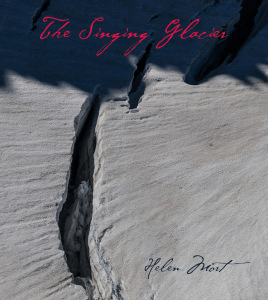
The new book from the innovative and enterprising Hercules Editions – launched at the LRB Bookshop in London’s Bloomsbury last week – contains poetry by Helen Mort, images by Emma Stibbon, a conversation with composer William Carslake and an essay from Manchester Met academic David Cooper. What holds these diverse components together (within 40 pages) is a trip Mort, Carslake and film-maker Richard Jones made to south-eastern Greenland in 2016. You can see the original Kickstarter post here.

1

So The Singing Glacier project is truly inter-disciplinary and the Hercules book is making available Mort’s poetic contributions to it. Mort’s conversation with Carslake serves to introduce the origins of the project in 2012 when the composer looked down from a plane to see Greenland’s regressing glaciers “like a hand with fingers”. More evocatively, and much closer, he talks of standing beside crevasses and moulins and listening to the sounds emanating from them, “like hearing a Welsh male voice choir singing from this great big hole in the ice!” The Hercules book has photos of Carslake’s notebook, clusters of notes and a few words jotted on the spot. Mort disarmingly says how she envied this seeming directness of acoustic transcription as her role was to come up with words and inevitably much of what she initially wrote down “was just cliché”. She wonders whether cliché is a reasonable response to the vast and alien landscapes they were moving through, sights before which “linguistic originality can almost seem a little arbitrary”. This is not her final conclusion, but her comment does raise one of the fascinating issues in this beautiful little book – what a poet does with the tensions between speech and silence, more abstractly between sound and its absence.

Stibbon_Emma-lr-DRB2015

In a review of Mort’s first book, Division Street, I thought her “love of landscape [was] profound and, like Wordsworth, her hills and skies remain a locus for, as well as an image of, the process of self-exploration”. On that basis she would be a good poet to send to Greenland but – she confesses – she was sometimes reduced to wanting simply to cry and – this hesitantly expressed – it felt “like being in the presence of a god”. These are unmistakable encounters with the sublime and the urge to anthropomorphise such a vast alien landscape is quick to arise, so any efforts at self-exploration might seem worse than arbitrary, positively disrespectful. But how then to engage? ‘In Defence of Cliché’ takes off from Mort’s honestly expressed concerns about inadequate linguistic responses to this landscape:


I write: ice in the fjord as pale as thought

then hear the calving face crash through my language

with a sound (like what?) like cannon fire


moulin-glacier-11[2]

Similarly, the moon fails to be adequately captured by images of “petal, snowball, sleeping moth”. She quotes Hopkins on the way observations of nature can correct our “preoccupation” with the world – again walking the fringes of the divine here – becoming a way in which we learn humility. Mort ends the poem cleverly. Our best word for this sort of experience is “awe” but the word baldly used would not possess enough freshness or fire (thank you Gerard Manley) to carry the weight of feeling. So Mort goes for a down-to-earth metaphor followed by a phrase that manages both to say and not-say it simultaneously:


… we stand like nothing, shaken

from the pockets of our lives, our mouths

stuck on the silent word for awe.
178223-004-FB8F1B4F

The poem, ‘Arctic Fox, August’, is more reminiscent of Mort’s favourite poet, Norman MacCaig. The creature is acutely observed in its colours and hesitant movements around the campsite but the poem ends with a series of rather coercive, descriptive metaphors: “a hunger-striker . . . a gathering memory . . . the habit you thought / you’d kicked”. For me these images circle and knot ever more tightly onto the observing human consciousness, almost doing violence to the creature so well observed at the start. The poem ‘Polynya’ – the word signifies an area of open water surrounded by sea ice – reverses this tendency to humanise the natural by naturalising the human:


Surely the heart

must have polynya

places where it’s never

hardened into ice.


The image of the partially melted heart turns easily into a love poem. Another method Mort adopts to try to respond to the Greenland landscape is through found language. So ‘And Noah’ arose from a conversation with an inhabitant of Kulusuk (though I think Mort said at the LRB launch that much of the detail came from the little museum in that town). The result manages to suggest something of the way of life in this landscape, a work place – the found nature of the phrases enabling the poet to avoid too strong a sense that neither she nor her work are an “imposition”.

2026338

David Cooper’s essay on acoustic geographies and poetry of place takes a more academic look at the multi-media project, suggesting that it –  like a lot of recent geographical creative writing – sets out to challenge the easy domination of the visual sense by accentuating the acoustic or aural. This is partly because sound “reminds us of our own embodied situatedness and inextricable embeddedness within the world”. The eye puts us at the controlling centre; the ear is more often passively assailed from all sides. The eye easily steps back and away; the ear is within the sensed world (I’ve discussed similar ideas of within/without or within/above in relation to Holderlin’s novel Hyperion in another blog post). Mort’s best work in this little book is done when she listens in to these sounds and silences. ‘The Glacier Speaks’ does succumb to the kind of anthropomorphism Mort says she was wary of. But it works well since the voice of the glacier is such a challenging, even taunting, one: “Go on then / says the glacier – / how are you going to score my silences?” The glacier reminds the poet of its silence through noting the kind of sounds which book-end it or by comparing its absence of sound with more familiar moments of silence such as that between lovers, between a mother and a daughter. Here the comparisons work not through similitude but dissimilitude – my silence, the glacier says, is nothing like these. I thought an odd note was struck at the end of this poem when the humans are described as impressed by such silence (“more like a vigil”) yet the glacier suggests they are each “trying / to get back to me”. This is intended, I presume, to evoke human puniness, a Lawrentian “pettiness”, but it also smacks a little of the glacier’s over-anthropomorphised self-regard.

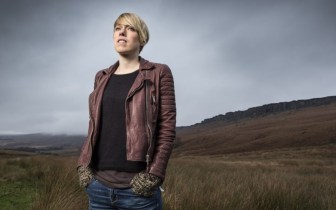
helenmort_2787463k

But the poem ‘Glacier Song’ is magnificent. Not the right word I’m sure, but it approaches the Greenland landscape – the Knud Rasmussen glacier in particular – with a right sense of decorum. Silent is what the glacier is again – a “library of absences” – and this is conveyed partly by suggesting that the nearby fjord is more talkative, more full of songs. But Mort then cunningly withdraws this idea: even the chatty fjord is really silent – how much more silent then is the glacier! Later, the Arctic light – remember Cooper’s discussion of the predominance of sight – interrogates the glacier like an airport security check, quizzing and questioning because light always knows better, light always wants the last word. But “The glacier carries on / rehearsing privately”. The final section of this longer poem alights on the distant figure of a woman (the poet?) who, herself, wants to be singing. Here, we feature as the little, forked animal, stuffed full of language bursting to get out, trying to communicate something about glacier climbing, about ptarmigans, the Northern Lights, even about the glacier itself. But the ice remains mum to the last:


The glacier has not slept

for centuries.


The glacier is restless, lithe,

insomniac


articulate


and doesn’t need

a word for itself.


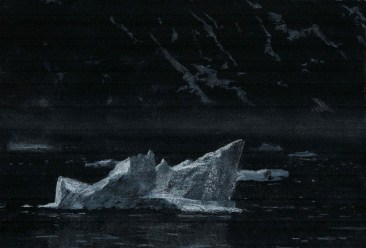
Knud Rasmussen Glacier Greenland


The Cool Clean Shirt of Herself – review of Bryony Littlefair’s ‘Giraffe’ (Seren Books, 2017)

It was a great pleasure recently to read for Poetry in Palmer’s Green with several other poets who have various sorts of north London connections: Kaye Lee, Briony Littlefair, Jeremy Page and Marvin Thompson. Kaye is planning her much-anticipated first collection; Jeremy edits The Frogmore Papers and his most recent book is Closing Time from Pindrop Press; Marvin has recently appeared to great acclaim in the Poetry School/Nine Arches book Primers II. Bryony’s first book publication is the 25 page chapbook, Giraffe, recently published by Seren Books, the contents of which formed the winning submission to the Mslexia Poetry Pamphlet Competition 2017. I’ve not seen it noticed enough in the reviews, so I thought I might try to say something about its considerable strengths. Littlefair also blogs here.

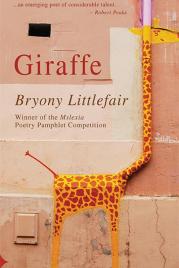
Giraffergbforweb

Giraffe, despite its weird title – which becomes clear only at the end of the collection – opens in familiar territory with a speedy, no-nonsense contemporary feel, using the title as part of the opening line: “‘Tara Miller’ // doesn’t have Facebook”. Her neglect of social media is one of Tara’s admired, unconventional aspects as the narrator recounts her (not so long past) school-days encounters with this girl. The narrator’s mother clearly feels Tara is not quite ‘our sort’ and in free verse lines of short, breathless colloquial phrases, the narrator paints a picture of the girl as a bit of a bully, as well as a little bit Byronic, being unpredictable and darkly “interesting”. Without really being aware of what her feelings are, the narrator is drawn to Tara, her “wavy, almost black” hair, her defiance in the face of boys, “her warm, / Wrigley’s Juicy Fruit breath on my neck”. This is a great double-portrait poem and sets up one of Littlefair’s recurrent themes, the tension between venture and routine.

wrigley-s-juicy-fruit-chewing-gumAnother young female narrator deliberately stays at home while her parents (conventionally) go to church on Sundays. She’s a teenage rebel without a cause as “The truth is I’m not sure what I did / those mornings”. The poem is built from a list (one of Littlefair’s favourite forms) of what she did and did not do. Littlefair is almost always good with her figurative language and here the girl is variously an undone shoelace, an open rucksack, a blunt knife. The urge to non-conformity outruns her imagination as to how she might spend her growing independence and there is an interesting tension at the last as her parents return, “whole” having “sung their hallelujahs” while the young girl is till restlessly revising her choice of nail polish, as yet unable to find what she’s after.
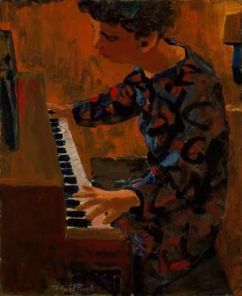

The third poem in this very impressive opening to Giraffe is ‘Hallway’. Despite declaring at the outset “I can’t imagine how it must have been”, the young female narrator on this occasion does manage to achieve an insight into something ‘other’ than herself. What she can’t imagine at first is the impact of herself as a new-born on her young mother: “The constant interruptions, / the mess, the uncontrollable outpour of love / like a reflex, a weeping wound”. There follows a curious moment and a great simile. Imagining the years fast-forwarding, the world is compared to “scenery in a video game, pulling itself together / in front of me as I moved through it”. There’s an odd shift here, like a crashed synchromesh, in the switch from the mother’s point of view to the daughter’s but it does prepare for the second half of the poem which indeed is from the daughter’s perspective. The centrifugal, self-absorption of the child is broken at last on returning home from school early and finding her mother at the piano, “small / in her cardigan, eyes closed, somewhere else”. I’m not sure Littlefair’s image – comparing the child at this moment to a “just-plucked violin string” –is original enough for the circumstance, but the poem survives and the child’s expanded imaginative life is signalled as she stands “washed up in the hallway, wondering at her [mother’s] life”.

e9d122f838f5dc245d546ecf355750f0

Another poem similarly explores a girl’s view of her Grandmother, wondering, in yet another list form, whether the older woman has had any sort of a life beyond the routines of socks and carrots and not gazing into mirrors. The solipsism of the young is a good subject and one Littlefair does well, but she’s as much interested in the other side of the coin: trying to imagine the lives of others. ‘Dear Anne Monroe, Healthcare Assistant’ does this, though the imaginative grain is a bit coarse perhaps. The Assistant’s life – beyond the present moment – is imagined as a mix of poor pay, weary commuting, casual racism and cheese and lettuce sandwiches. This is contrasted to her attention to her patients where she is steady, fierce, calls people sweetheart and is “magnificent”. The sentiment or feeling is right (not something anyone might disagree with) but the poem is sailing very close to caricature.

ClutteredDesk_OfficeI think I find this with some other poems too, though it’s partly because Littlefair is admirably intent on presenting the working world, the world of labour, as routine in contrast to the allure of a more adventurous life. ‘Assignment brief’ presents itself as an old familiar’s introduction to a new girl’s routine office job; the lists and proffered options are funny but they slowly run out of steam. Likewise, the promisingly titled ‘Usually, I’m a different person at this party’ flags latterly. I’m imagining this as narrated by an older version of the girl who half fell in love with Tara Miller. Here, she shadow-boxes the risks  of conventionality by over-insisting on her own sweeping and glamorous life, in the process claiming all sorts of ‘interesting’ aspects of herself: “I only ever have large and sweeping illnesses. / My lymph nodes swell glamorously. I never snuffle”. But the contrasts here are again rather roughly hewn and, in the end, close to cartoonish.
A far more original poem is ‘Maybe this is why women get to live longer’ in which a man-splaining man dominates a watched conversation, the woman “holding her face in different positions / to signify reaction: empathy, humour, gentle and agreeable surprise”. This is acutely observed and the point is well made in the serious-surreal twist of the rhetorical question, “Is there a place / the time goes that women have been / listening to men?” Even better is the imaginative act of the details of the woman now left alone, returned to the “cool clean shirt / of herself”. A really effective line break there, followed by the naturalistic details of her leaving the bathroom door open “as she wees”, then the more disturbing one of her pinching “the skin on her forearm – lightly, / and then harder”. I guess she’s pinching herself awake after the soporific conversational style of the man, but more disturbingly she may be harming herself as a symptom of deeper psychological troubles.

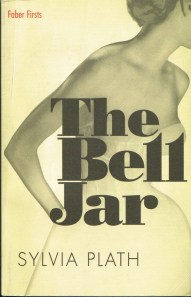
Sylvia Plat_The Bell Jar cover 003.jpegThe latter view is more than a possibility given that Littlefair’s poems also boldly explore the self’s relation with itself. The encounter between self and future self is plainly and humorously told in ‘Visitations from future self’ and it finds the present self in trouble, pleading “I can’t go on / like this, my life a tap that won’t / switch on”. Here, the present self’s cliched and optimistic hopes for a “rain-before-the-rainbow thing” are denigrated and stared down by the future self. ‘Sertraline’ echoes Plath’s The Bell Jar in its evocation of a summer spent on an anti-depressive drug. And ‘Giraffe’ itself is a prose poem (there are 3 prose pieces in the whole book) in which a voice is offering reassurances to someone hoping to “feel better”. In a final list, images of a return to ‘health’ are offered. Particularly good is the idea that suffering will remain a fact but “your sadness will be graspable, roadworthy, have handlebars”. And lastly, “When you feel better, you will not always be happy, but when happiness does come, it will be long-legged, sun-dappled: a giraffe.”
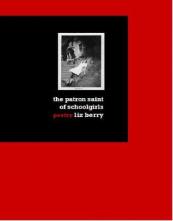
15998895The designation ‘a young poet to watch’ is over-used but on this occasion it needs to be said loudly. Giraffe contains a number of fresh, intriguing and fully-achieved poems. It’s well worth seeking out. I well remember reading and being very impressed by Liz Berry’s 2010 Tall Lighthouse debut chapbook, the patron saint of schoolgirls, and this selection from Bryony Littlefair’s early work runs it close. My review of Liz Berry’s subsequent, prize-winning full collection, Black Country, can be read here.


Guillemot Press book launch (November 2017)

DM-HkzHWkAAx8CG[1]

Last Saturday I packed my bags for a brief stopover in Devon. The train from Paddington retraced my steps (no – that’s not right; what do you say?) – re-rolled its wheels along the same route I’d travelled a couple of weeks ago to the Torbay Poetry Festival. But instead of changing at Newton Abbot, I stayed on board and we swerved inland and skirted the southern edge of Dartmoor to Plymouth, then further west to Bodmin. I was met at Bodmin Parkway by Luke Thompson who runs the Guillemot Press. Guillemot is barely a couple of years old but is already building a great reputation for the outstanding quality of its books. Luke and his partner Sarah are the driving forces behind the press and it is based in Cornwall with strong links to Falmouth University. We drove across an already dark Bodmin moor to the village of Altarnun where Luke was launching three new Guillemot titles at the Terre Verte Gallery, run by Richard Sharland.

Besides my own O. at the Edge of the Gorge, the books being launched were Nic Stringer’s first, A Day That You Happen to Know, and Andrew McNeillie’s new collection, Making Ends Meet. Both my own and Nic’s book are examples of Guillemot’s interest in combining poetry and illustration (if that’s the right word for images which respond to and add to the text rather than being merely illustrative). The two artists were at the event as well and it was wonderful to meet up and chat with Phyllida Bluemel who created the images to accompany my crown of sonnets. Her delicate, analytical yet natural images – produced only from a reading of the poems, no input from me – seem to me extraordinarily apt and, having learned of her background in philosophy as much as fine art, I’m not surprised. She and I have discussed the shaping of the whole book on the Guillemot blog.

Nic read first. Her poem, ‘Laocoon in the Vatican’, describes an image of human agony as a father defends himself and his sons from attack by serpents:


Chest curving towards his gods,

he speaks of what lies beneath devotion, where wrestler

is the same as family. But in the end he is a man

petrified [. . .]

laocoon[1]

‘Icebergs in Ilulissat’ is more of an Arctic landscape poem: “In Disko Bay the growlers and the bergy bits / crack their knuckles”. ‘Sisters’ is a fascinating 10 part sequence of poems dedicated to three Medieval Christian female mystics, ending with this exquisite lyric:


Like the Earth

I have given up

everything but God


will find a hole

to fall towards

turning without a body


to sleep

separating self

from silence

8226eece-e840-4378-9fb4-cd24af13aef4[1]

Nic’s work is various and intriguing – her Guillemot image-maker is Lucy Kerr, whose enigmatic, colourful images are almost visual riddles – and I’m looking forward to reading the whole book more slowly.

Before I read my sequence straight through without additional comments, I explained its form: a crown of 14 sonnets – the final line of each poem repeated as the opening line of the next; the opening and closing lines of the whole sequence also meant to be the same. I wanted the connectivity this creates – though the connections in this case are approximate – deliberately so, as I wanted to suggest a forward movement or progression of understanding. Much of the detail of the poem is of landscape – the Marche region of Italy – bees, buzzards, hunting dogs, trees, thistles, Classical ruins put to more modern use, hilltop villages, church towers, rocky hillsides, deep gorges. The O. of the title is an Orpheus figure, the singer, or poet. There is no narrative to the sequence, but it does allude to Orpheus’ journey to the underworld in search of Eurydice and his loss of her when he looks back. That sense of loss also explains allusions to Dante’s Paradiso, Book 16, where he refers to the ancient towns of Luni and Urbesaglia, for him, vivid images of transience.

DLRftRFW4AAtwJQ[1]

After the interval, Andrew McNeillie read from his collection. Andrew is both a poet and an editor at OUP, Archipelago magazine and he runs Clutag PressMaking Ends Meet is a full collection of almost 100 pages, including a new version of the Anglo-Saxon poem, The Battle of Maldon. At the other end of the scale, Andrew threw us an opening, squiby couplet titled ‘A Poet: 21st century: “A redundant lighthouse-keeper / striking a match in a storm”. One such match illuminating the darkness is his sonnet ‘I see Orion’, moving from a vivid evocation of star-gazing on a cold night in March to reflections on natural beauty and the passage of time. That same sense of summation, or the counting of blessings, was evident in the title poem too, which evokes an earlier time of easy creativity:


The early worm

already turning in a bird’s gut

like the one thought in my head

of lines to set and bait to put

a poem on my plate by evening.


making-ends-meet-cover[1]

And you could feel the whole audience warm to Andrew’s ‘Lunch with Seamus’, recording a meeting between the poet and Clutag editor, both “uncertain how lunch might pass”. But it passes well, the poem portraying a warmth and closeness, a shared love of poetry, the intimacy drawing from Heaney something of a confession:


‘I got the Nobel Prize too soon,’ he said.

‘It nearly did for me, you know, the fame.

It stops the clock and steals your time’


The poem is full of delicate allusions to Heaney’s work, the final lines affirming a real meeting of minds as well as echoing Heaney’s own parting from the ghost of James Joyce at the end of ‘Station Island’:


We parted and I watched him disappear

As if I’d dreamt the whole affair

But knowing I hadn’t. I’d seen the man.


This three-book launch was a marvellously affirmative evening about the power of poetry too. Our heads full of images, and words, natural landscape, the material, the spiritual, distant Italian sunshine and rocky Irish coastlines, I drove with friends through the November rainy darkness back to the town of Tavistock, perched on the edge of Dartmoor itself. And there was still time enough to eat and raise a glass of wine.

182712359-a2163bed-2fd9-4910-9e04-673d2bb611ef[1]


Visiting Torbay Poetry Festival 2017

p045rwch[1]

The 11am train out of Paddington is so packed that I expect to see Jeremy Corbyn sitting on the floor between carriages – disgruntled at the discomfort of his position, if more gruntled at the clear evidence of the underfunding of public transport. I usually choose the Quiet Carriage to varying degrees of success and on this occasion, from Reading to Swindon, I have the pleasure of eavesdropping on a phone conversation in a language I do not know. A contemporary version of Frost’s the sound of sense – though I’m not sure I make much sense of the sounds themselves, half of it murmuring like love-talk, the other staccato as a list of shopping. Maybe that’s just what it is!

Anyway, I have work to do – correcting replies I’m giving to an email interview to be published by South Bank Poetry in the next couple of weeks. I’ve already prepared the reading I’m giving on the Saturday night, so I don’t bother thinking about that. Getting off the train 3½ hours later, I meet up with Maggie Butt who is still recovering from running the recent Poem-a-Thon in support of the Enfield Refugee Fund. Possibly, I think, she’s reeling less from the sheer effort involved as from the whole event’s astonishing success, raising something like £14000 in one day. We walk along the breezy promenade at Torquay to the Livermead Cliff Hotel which is the focus of the Torbay Poetry Festival. It turns out they are not expecting me until the following day but with some juggling of rooms I’m soon ensconced and ready for some poetry.

train[1]

I had arrived in time to hear Myra Schneider and Alasdair Paterson reading. But Myra was unwell and absent, so her poems and little emailed introductions were beautifully read by Mimi Khalvati and Danielle Hope. I know Myra’s work well and it is often very location specific, so it was a strange feeling having north London brought so vividly before me when, just outside the expansive windows, the English Channel was rolling in towards the beach. Alasdair (amongst many other things) runs the Uncut Poetry series in Exeter, so he is both in-comer and relative local to the south west. With the kind of Scottish burr that in itself draws attention to the sound of any poem it is applied to, he read in a quiet, level voice. Especially memorable was a poem with a surrealist and Chinese slant, presenting a kind of bureaucratic Confucianism, managing to convey both a satirical edge and a rather joyful sense of freedom.

Early evening on the Friday, Kathy Miles read her poems layered with myth, history and personal experience. And Matthew Barnard, who is published by Eyewear, read several poems about visits – or maybe residence – on the Isle of Skye. One of the great recommendations of this little poetry festival (run by Patricia Oxley, who also edits Acumen, and her committee) is indeed its small scale. It means guests and readers are always in touching and chatting distance of each other. Someone who is a regular attendee described it to me as more like a house party and it certainly has that sense of a bunch of people meeting up in an endless, delightful carousel of combinations and re-combinations. Maybe all I mean is that it is very friendly!


DuncanForbes-200x245[1]
Duncan Forbes

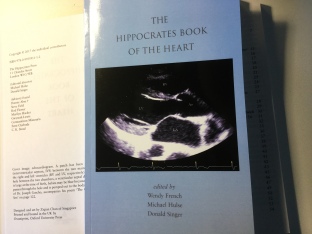
The first half of Friday evening’s reading was given by the urbane, witty and clever Duncan Forbes. One of his poems expressed the concern, shared by so many of us who work with language, about the number of words that seem to be dropping out of common usage. So many of these are associated with the natural world, the weather, earth and landscape. Duncan was smart and engaging on the subject but interestingly a number of his more recent poems seem to tone down the wit and word-play in order to focus on landscape – in one instance a gloriously evoked Portuguese setting. Mimi Khalvati’s work is well known and tends to provoke praise such as ‘lush’ and ‘graceful’ which is true enough though she also has a quiet almost metaphysical wit of her own. She read a poem from the just published Hippocrates Society anthology of the heart:


Old tramping grounds are bruises to the heart.

Go visit them at dusk when belisha beacons,

reflected in dark windows, flash and dart

like fireflies [. . .]

IMG_0287

We were expecting Storm Brian on the Saturday and being just metres from the water’s edge it was awaited with some trepidation. But living up to its rather un-tempestlike name, Brian blew only in brief gusts, ruffling Torbay into rather poetic white horses rather than anything more dangerous. It seemed appropriate that the main event of the morning was a celebration of Cornish poet Charles Causley. This was coordinated by John Miles and included members of The Causely Trust and the poet’s biographer, Laurence Green. We heard about Causley’s childhood, the early death of his father, his war experiences in the navy, then his years teaching at the same school he attended. A curious life of great rootedness and sense of locale, combined with his sense of the ocean always at his doorstep and the possibility of travel. Perhaps the highlight of the session was an unaccompanied singing of Causley’s ‘Timothy Winters’ by Roy Cameron. I’ve known some of the poems for ages, but the event made me want to go back and reread them. I always remember something Causley wrote, echoing Frost’s ideas about ulteriority, that poems are always about something else and that’s why they are so hard to write.


blogcharlescausley2[1]
Charles Causely

If Patrica Oxley sets the organisational tone for the Festival, it is her husband William who sets the sociability quotient. This is also reflected in his most recent publication, On and Off Parnassus (Rockingham Press), a collection of anecdotes, or Oxley-dotes, which has been described as giving readers “a finely judged mixture of anecdote and nuanced memoir”. William’s encounter with a much larger-than-expected tiger cub proved entertaining. Alongside him Maggie Butt read from her recent collection, Degrees of Twilight, taking us from a trip to Cuba to her very moving response to Dylan Thomas:


Why not go gentle into that good night

like drifting into sleep from sun-soaked day,

remembering the brightness of the light?


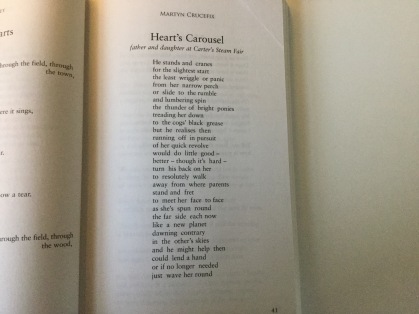
Penelope Shuttle had judged the Festival poetry competition this year and she announced the winners at an event later on Saturday afternoon. The winner was Cheryl Pearson with the poem, ‘The Fishwife’. My reading was before the dinner and the wine began to flow. I read almost wholly from my new book. I veered off plan by including a poem included in the new Hippocrates anthology. It seemed appropriate to place it after another poem about my daughter a few years ago – the first was about visiting a church and extinguishing somebody else’s candle and the heart poem about watching her, for the first time, riding a fairground carousel alone: anxious moments that yielded up thoughts for this father at least about the paradoxes of closeness and distance as children become more and more themselves:

IMG_0286

Regretfully I could not hang around long on the Sunday morning as I had to get back into London for a reading with Tim Ades and Caroline Maldonado (dear reader, my life is not usually so literarily busy, far from it). Sadly then, I had to miss Penny Shuttle’s main reading as well as work from Alwyn Marriage, Shanta Acharya and Isabel Bermudez. On the return train, I read and loved Penny’s most recent book, Will You Walk a Little Faster? (Bloodaxe Books). And – in the light of the TS Eliot shortlist which had been released over the weekend – I was left wondering why she was not on it. Her work is always so sharp, surprising, endlessly experimenting, touching, visionary, down to earth, above all immensely human. These are not things I could say about all the shortlisted books. Ah, literary prizes, the delight of the few chosen publishers everywhere. And while I’m busy complaining, why is Nick Makoha’s powerful book not on the list? But enough bitching – the Torbay Poetry Festival is remarkable for a number of things, but especially its inclusive and friendly tone. Stay with that.

wp2f72b580_06[1]


How to Answer the Poetic Influence Question #1

A Boat..._quicksand cover

With my new collection just out from Seren Books, I’m happy to have a number of promotional events and readings coming up over the next couple of months. I love the business of giving a reading, but there’s often a moment that arises that makes me uneasy as to how to how to respond. It’s the question of influence; the hand going up to ask: what other poets do you consider to have been an influence on your own poems?

It’s my problem I’m sure, but I’ve always had two ludicrously extreme responses spring to mind on hearing the question. Firstly, to list pretty much every single poet I’ve read in the last 40 years because the truth is every single one has added a grain, a pebble (for better or worse) to the path I walk to write a poem. Alternatively, since I can’t think of one, or even two, clear contenders for powerful influence when I sit down at a blank page or screen, it must be that I have emerged ex nihilo, a peculiar original. The first would be a lengthy reply of little use or interest; the second would seem positively dripping with arrogance (and equally of little use or interest).

Actually, I can think of a third answer: it’s not for the poet to identify influences; it’s a job for a reader. But I wanted to use the next two posts to kick the idea of influence around, to sort out my own ideas and to answer it in two ways. Early in a writing career, the revelation of, or encounter with, a new voice, style, or even subject area can lead to great lurching changes of direction in a poet’s own work. The lurch or swerve becomes progressively less marked the older a poet gets. Put that down to a more confident self belief perhaps, or to a growing inertia, or a more sophisticated process of absorption of such novelty, or sheer bloody mindedness . . .

images

For me, I started in the business convinced that I was composing song lyrics because poetry as such was not a familiar thing – except in occasional English classes at school and I dropped that subject at the age of 16. As I’ve said elsewhere, science was what I did through most of my teens. With too much time on my hands and too little joy to be found elsewhere, in the mid 1970s I began to turn to other sorts of books. From Foyle’s in London, I stole a copy of Everyman’s Selected Poems of Wordsworth. They seemed a bit dull and plodding but reminded me of rural Wiltshire where I grew up. For a few months I copied Wordsworth. Perhaps a year later, after a good dose of Sartre, I was finding my way back to the academic study of literature. It was the poetry (and drama) of T S Eliot that I fell in love with (not Dylan Thomas – the other poet on the curriculum). I still have those early Eliotesque poems somewhere, mostly Prufrock period style, though also a horrifyingly pretentious sequence of poems like a clumsy, anaphora-laden Waste Land.

00014096-390x540

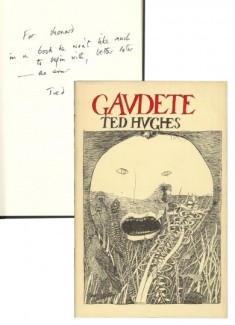
Re-starting my Higher Education took me to Lancaster University, studying Literature and Philosophy (and a few sessions of Creative Writing with poet, David Craig) and Hughes and Larkin were served up and readily ingested. At first, I swerved to the latter’s urban details and personal gloom; later it was the Hughes of Gaudete (recently published, 1977) that I copied, writing a long, quasi-mythic, magic-real, psychodrama about sex and power that I eventually self-published in Oxford. As a post-graduate among the dreaming spires, it was Percy Byshe Shelley who I was working on for several years and, though not a model for poems as such, his ideas about the role of the Imagination and poetry as an “Orphic language” have been important to me ever since.

md7773056273

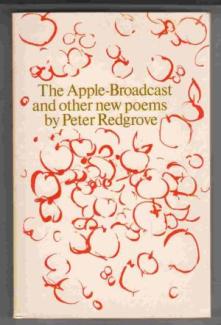
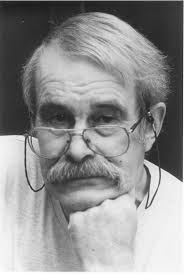
Among contemporary poets, I’d discovered Heaney (not the rural Ireland stuff so much as his wrestling with private and public responsibilities – Station Island, for example), Peter Redgrove’s fluid take on mind’s encounter with the natural world (The Apple Broadcast) and Ken Smith’s urban-political Americana (oh how I wanted to have written Fox Running). I wrote individual poems modelled on all these writers while absorbing much more deeply the work of the Romantic period – only now did I really find Keats, his poems and letters, Wordsworth still, Coleridge’s Conversation poems especially. What might have been expected – Hardy, Auden, Yeats, Frost, Stevens, Lowell, Bishop, Plath, Dickinson – were all missing or they missed me.


download
Ken Smith


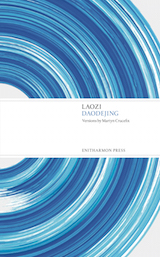
A decade of writing, reading, plus some reviewing too. A couple of my own books published and I’d stumbled my way to Rilke’s New Poems, Elegies and Sonnets, the second and third of which I began to translate and (whether visible on the surface or not) were a great influence on me – the Duino Elegies  for their thoughtful drive from existential mourning to praise, the Sonnets to Orpheus for that same thought (more of the praise) and their use of form. From Whitman I found my way to W S Merwin’s marvellous fluidity (something I was comparing to Paul Eluard’s work too) and from Rilke it seemed a logical (not the right word at all) step towards the 81 texts of the Daodejing which again I felt I had to try to English because it both rhymed with what I already knew and I knew it would develop further what I needed to know.

daodejing

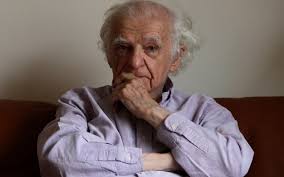
A few years back, an article in PN Review sent me to the work of Yves Bonnefoy. A heart-rate raising sense of another writer who had fought the two-faced dragon of language and seen enough to conclude that at the bottom of its filthy lair gleamed the concept and the concept promises a “strange immortality” but only if we can “forget brutal reality”. One reason (I’m now quoting an earlier blog post on a 1953 essay by Bonnefoy) we do this is that there are “general truths in conceptual thinking and a particular kind of power derived from it. It ‘allows thinking’ of a certain kind; it is linked with ‘the vast power of words’. But any gain is predicated on a significant loss, the abandonment of the actually existing ‘world of things’. Conceptual thinking is ‘systematized’, generalizing, categorizing; it’s in this that its ‘flight’ from the real is found. The only sort of thing that can be held up to counter the concept are specific particularities of human experience: Bonnefoy asks ‘Is there a concept for footsteps in the night, for a cry, for a stone rolling in the brushwood? For the feeling evoked by an empty house? No [. . . ]’”


images
Yves Bonnefoy


Reading Bonnefoy did not send me lurching to right or left but rather nudged, re-calibrated, re-assured me that my own direction of travel was not a wholly isolated one. I don’t write like Bonnefoy – there can be a dull abstraction to his poems which seems to me to contradict his ideas about real presence expressed as specific particularities – but I know what thought underlies my own work has close parallels to his (as far as I understand him). That’s influence, I’d say.

In my next blog, I’ll look at the question of influence from a different angle – what ghosts of other writers can be seen in more recent work?

2017 Forward First Collections Reviewed #5 – Eric Langley

My work here is almost done . . .  This is the fifth and last in the series of reviews I have been posting over the summer months of the 5 collections chosen for the 2017 Forward Prizes Felix Dennis award for best First Collection. The £5000 prize will be decided on 21st September 2017. Click on these links to access all 5 of my reviews of the 2016 shortlisted books (eventual winner Tiphanie Yanique)  and all 5 of my reviews of the 2015 shortlisted books (eventual winner Mona Arshi).

The 2017 shortlist is:

Maria Apichella – Psalmody (Eyewear Publishing) – reviewed here

Richard Georges – Make Us All Islands (Shearsman Books) – reviewed here

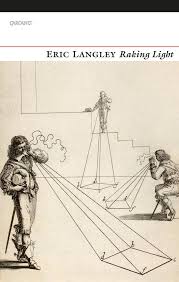
Eric Langley – Raking Light (Carcanet) –  reviewed below

Nick Makoha – Kingdom of Gravity (Peepal Tree Press) – reviewed here

Ocean Vuong – Night Sky with Exit Wounds (Cape Poetry) – reviewed here

download

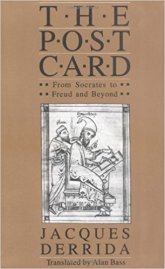
Do poets owe their readers explanatory notes? The pro-accessibility reply is ‘On principle, no!’ The googlers reply is ‘Not necessary – let your fingers do the walking’. Others might concede, ‘On occasions, maybe, for clarity’s sake or to take the piss out of critics and academe (see T.S. Eliot). But reading Eric Langley’s debut collection – if it’s proving hard to hang on to his erudite coat-tails – perhaps you cry ‘Yes, yes, for goodness sake!’ In fact, such pleas have already been answered by a curious, anonymous website that has sprung up to explicate many of these poems. Talk about poetry moving from the writer’s desk to the academic lecture hall without passing through an ordinary reader’s hands! It’s because Langley scrupulously offers us no help at all in positioning ourselves to read about the Chinese tradition of walnut gambling, Ancient Greek painter Zeuxis, Picasso’s father, Stephen Grosson’s 1579 book Schoole of Abuse, Jeremy Bentham’s panopticon, Derrida on postcards, Argus, Eurydice, Zeno, Edgar Allen Poe and (twice) the art historical term pentimenti. And that’s mostly from the opening 50 pages of this 128 page book (I think it’s about 40 pages too long).

41y6M-ulhlL._SX304_BO1,204,203,200_

On the other hand, Langley often writes with a vigour and robust rhythmical quality to perform (all these poems are very performative) a sort of Elizabethan riffing to scatter-shot effect. He has a slightly annoying, almost reflex habit of sampling bits of Shakespeare mid-poem (especially from Hamlet) but Ted Hughes wrote of Shakespeare’s language that it was “an inspired signalling and hinting of verbal heads and tails both above and below precision, [a] weirdly expressive underswell of musical neargibberish” (‘The Great Theme: Notes on Shakespeare’ (1971)) and at his very best Langley catches some of this. Literally born into the Cambridge school (Langley’s father, R. F. Langley, with his son, would often holiday with J. H. Prynne), Langley junior invigorates that difficult style with a 1590s fizz and gristle (his day job at UCL is studying the bard and more obscure Elizabethan texts) in poems whose image field is most often ekphrastic, whose emotional stance is often surprisingly sentimental and whose dominant atmosphere is one of loss.

The loss is key. Fundamentally this is about language (Cambridge School again) as the poor relation to ultimate reality. Our every living moment is a catalogue of loss; certainly our every communication is a clumsy moon-shot at a too-fast moving target, a shot also plagued by the drag of our words’ etymologies. But this is also (like the Forward short-listed books by Nick Makoha and Ocean Vuong) a book about lost fathers (Langley talks about this and other things and reads a poem in this interview). In addition, Langley’s sense of loss is elsewhere associated with the recall of a romantic attachment, what he refers to at one point, transmuting Anthony Burgess, as “memory’s ultraviolence”. This stirring of long-buried materials is what the book’s title alludes to. Raking light is used in art historical investigations to reveal the artist’s false starts and abandoned intentions – a sort of alternative historical version of the final painting. In fact, it’s that often over-done, old poetical favourite, the palimpsest, in art historical terms.

So ‘In raking light’ the narrative voice explains “in the beam’s fetch / the urgent silt sits up”. Perhaps my ‘explain’ is not the right word here – there is a sort of querulous (lover’s?) complaint going on in the tone as if the voice resents this uncovering of the past.


Once, there was life here –

residual and errant –

hushed since, shucked under

the thick skin, the tough slough.

eusq2

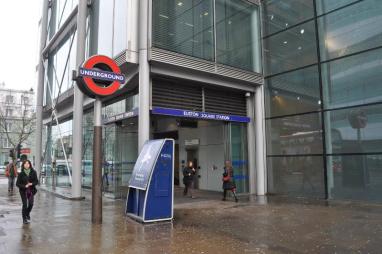
The vowel music in these few lines illustrates one of the pleasures of Langley’s work, but the “thick skin” is a gift to those who might accuse him of tending to bury hurt and loss under an avalanche of erudition rather than bringing it to the light. Indeed, it’s debatable whether this poem (in 8 sections), as it continues to offer multiples of synonymous formulations of this buried/hidden trope, manages to express a humanly complex emotional state or simply obscure it in a playful, bravura performance. The poem to read alongside this one is ‘Eurydice in Euston Square’ which – once it has got past its tacked-on allusions to Orpheus’ lost wife and Proserpina – proceeds much more nakedly and accessibly:


Come back up stairs

if you read me


up in the subway

missing the tube travel,


missing the coach trips,

all the seaside rides,


the telephones, the postcards,

telegrams on spun wire;


come back up stairs,

and I’m hanging on


subjunctives, hanging on

superlatives, hanging on


the sound of someone

long gone to static

(apologies for some loss of formatting here – blame WordPress)

slide003

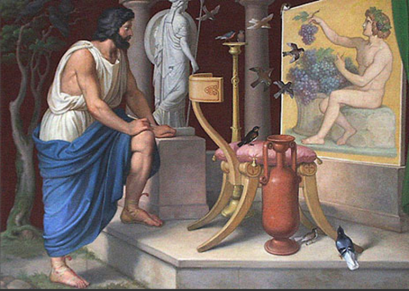
The more linguistic and epistemological losses that preoccupy Langley are clear in the opening line of the opening poem, ‘Glanced’: ‘You lovely looker on and by and by and.” The interruptive full stop is (ahem) the point (Langley’s love of puns can be infectious). The idea is then played out (again in a riffing, repetitive style) via another old favourite, Zeno’s arrow, though this time the target is Zeuxis’ painting of grapes which (in legend) was so realistic that birds swooped down to peck them. Art imagined to be closing on the real – of course, it proves a delusion. The arrow does strike the canvas but penetrates what is really nothing, then slams into a “wall”. The final section of the poem, in fact, does suggest some possible success (see Hughes’ comment on Shakespeare’s ultimate expressive achievement through signals and hints). The concluding lines display Langley’s vigorous use of anaphora, rhyme, punning and Shakespearean allusion:


So glancing blown by,

so palpably hit away, so


keep so lovely looking still

keep lovely looking till


until each hungry bird

has flown and had his fill.

MMP123510

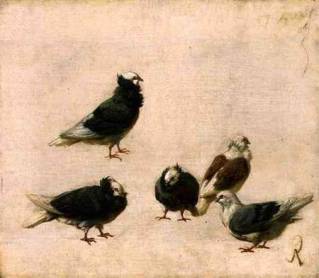
The sequence, ‘Albada: Pigeons on pink’, starts (once we’ve done the googling to find out) with Picasso’s painter father, Don Jose Ruiz y Blasco. He liked to paint pigeons and for a few sections he sounds pleased with the results. But then young Pablo asks for a pencil and his father is astonished at the boy’s skill, or the degree to which his art seems to approach reality: “all these real these / really real pigeons”. Via another allusion to Hamlet, Langley then morphs the poem into an address to his own father (who wrote a poem called ‘Jack’s Pigeon’) though the two sons – Pablo and Eric – are blurred together, avoiding filial arrogance in a burst of filial piety: “it’s all still yours, still yours to say, Jose”. An albada is a Spanish love poem – this one has been re-geared into a piece about the son’s love of a father.

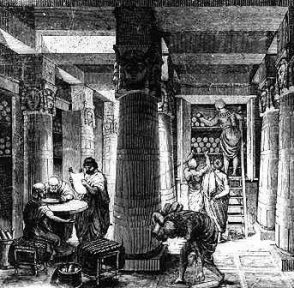
The two poems called ‘Pentimenti’ return to the ideas linked with raking light. The Italian word means ‘regrets’ and in art history it refers to changes an artist makes and covers over in the process of creation. The first of the poems is shorter and mixes images of painting with those of telephoning and it’s the latter that suggests this is really driven by a broken relationship in the modern world: “lost out here – dialling, dialling”. Such loss of contact and communication trips all Langley’s switches. A similar instinctive, welling up, or inundation, of potent material can be seen in the over-long, repetitive sequence in the middle of the book. This springs from a detail recounted by Galen of Pergamon that Ptolomaeus, King of Egypt, in assembling his great library, would take books from any ship that sailed into port, have them copied, then give back the copies, retaining the originals for his own book shelves. So language, knowledge, forgery, copies, signs, semiotics, morse code, the Dewey system of classification, plus Hamlet on the pirate ship and the final Alexandrian conflagration – Langley throws it all into the mix  and gives it a good stir.

124251-004-BDCAF293

For me, the second ‘Pentimenti’ is a much greater success, presenting itself as a literal palimpsest of the earlier poem – the thoughts, drafts and revisions that might have led to it. The performance here is not the dazzling, often impossible to follow footwork of other poems in the book, but rather one of hesitations, lines of thought taken up, then dropped, crossings out and (literal) fadings out. For me this expresses the difficulties of expression more effectively than many other poems, especially in the revisions we witness which involve a switch of verb tense from present to past. Most of these observations seem (again) to be focused on a romantic relationship so that what is the case (first draft) is being transformed into what was before our very eyes. I think (actually, I’m not sure) the sequence drifts latterly towards the relationship with the father again but even the obscurities here play an affecting role and the collection’s final lines remind me of the tragic, closing moments of Brian Friel’s play, Translations, in which the Gaelic language, culture and memory seems to be fraying and withering to nothing even as we watch and the lights dim.

Langley’s book will infuriate many and please the few. There is an impressive peculiarity here, a performative jouissance concerning language and learning which the Forward short-listing committee must be responding to. But I do wish he’d had a tougher editorial voice to cut the length of the book which – especially in the mid-sections – indulgently outstays its welcome.

eric-langley-

How to Grow your Own Iambics Part 2

This is the second posting on a metrical exercise on iambics. I have been teaching 3 sessions for the Poetry School in the last few weeks, contributing to the ongoing course called The Construction of the Poem which takes students through the various constituent elements that go to make up a poem. It is advertised as on ‘the history and application of formal techniques’ and my brief is to cover metrical issues. Though the course is directed more at learning about such techniques than the application of them (this is partly just a matter of time restrictions), one exercise we have played around with is growing our own iambics – this began with an iambic monometer and grew into an iambic tetrameter as detailed in my previous posting.

images

Starting from the tetrameter again, the poem will now grow some more . . . This is where I got to last time:


Because I hope to speak to her

I walk again along the way,

the path beside the old canal,

where children play and mothers come,

where thistles bloom in purple knots

that grey and drift across the path,

here strewn with wrappers torn from sweets,

with needles dropped another day,

where users lean and drift, ascend

above the clouds and steeple cock.


From this pretty regular iambic tetrameter, grow on further lines while at the same time lengthened these lines to iambic pentameter (5 iambic feet per line). New material indicated in italics:


Because I hope to speak to her, I walk

again along this way, the path beside

the old canal where children play and mothers

come, where thistles bloom in purple knots

that grey and drift across the path. It’s strewn

with wrappers torn from sweets, with needles dropped

another day, where users lean and drift,

ascend above the clouds and steeple cock.

Its glint I glimpse where water stands, its gold

a coin, a drowned, two-headed coin she tossed.

A bird is panicked from the reeds, its wings

slapping the surface like a window smashed.


I’ve slightly re-jigged line 2 here and feel the need to punctuate more heavily with the lengthening lines. The di-syllabic “mothers” again presents an issue at line 3 – I’ve made the same choice here as before, not breaking the word, allowing 11 syllables in line 3, shortening line 4 to 9 syllables. “Slapping” – given the sudden violence of the bird’s flight – I have allowed to stand as a reversed, trochaic foot opening line 12. I’m now thinking of the narrator as a mother (though as easily a father) who has come to a place remembered as visited with a daughter, now more grown up. The coin toss image seems to allude to some life-chance or choice and the inclusion in the poem – in the narrator’s observations – of the discarded needles probably tells its own story.


Beyond the pentameter lies the less common reaches of the hexameter or alexandrine – six iambic feet per line:


Because I hope to speak to her, I walk again

along the path, this way beside the old canal

where children play and mothers come, thistles

bloom into purple knots that grey and drift across

the path strewn here with wrappers torn from sweets, needles

dropped on another day, where users lean and drift,

ascend above the clouds and steeple cock. Its glint

I glimpse where water stands, its gold a coin, a drowned

two-headed coin she tossed. A bird is panicked from

the reeds, its wings beat the water like a window

smashed. If I stand inside the door and gaze across

the pews towards the brightly coloured glass of saints

and martyrs, mother, child in arms, its chubby limbs

each filled with sun, her robe is blue, her arms are full.


The lengthened line now begins to drag a little and is feeling rather clumsy here (it would need more work if I wanted to go with this) but as a reader I think of the slow, rather mournful walk of what now seems to be the possibly bereaved narrator. In line 3 the two syllables of “thistles” again ought to be broken across the line break – this time I cut the preceding word (“where”) to give more of a jolt to this threatening word so line 3 ends with a trochaic foot – “come” and “thist-” forming a spondee. Line 4 opens with a trochee too. The word “needles” presents the same problem at the end of line 5 – this I’ve re-jigged as above (though it does not read well to my ear at the moment). But I guess I’m happier to disrupt the predominant iambic by this stage – partly because it’s clearer to me now that this poem has a dark edge to it – but also because the longer lines give (maybe they need?) the chance of more variation. Line 10 has also been altered a little, “slapping” is replaced by the stronger monosyllable “beat”. The unexpected leap into the church interior seemed a good idea – a change of scene – and an intuitive link to the smashed rippling of the canal water, reminding the narrator of stained-glass. The image of Madonna and child is maybe too obvious but actually feels right for both writer (me) and the narrator (definitely now a mother of a child lost somehow). It’s also more acceptable as the church steeple had already been alluded to in the poem.


I’m now going to take this as far as the iambic heptameter line or fourteener:


Because I hope to speak to her, I walk again along

the way, this path beside the old canal, where children play

and mothers come and thistles bloom in purple knots that grey

and drift across the path. It’s strewn with wrappers torn from sweets,

with needles dropped another day, where users lean and drift,

ascend above the clouds and steeple cock. I glimpse its glint

where water stands, its gold a coin, a drowned two-headed coin

she tossed. A bird is panicked from the reeds, its wing-beats break

the water like a window smashed. I stand inside the door

and gaze across the pews towards the brightly coloured glass

of saints and martyrs, mother, child in arms, its chubby limbs

each filled with sun. Her robe is blue, her arms are full of blood,

the red of ribbons, red of nails, the red of every month.

It’s her I think I need to find. Beyond the traffic noise,

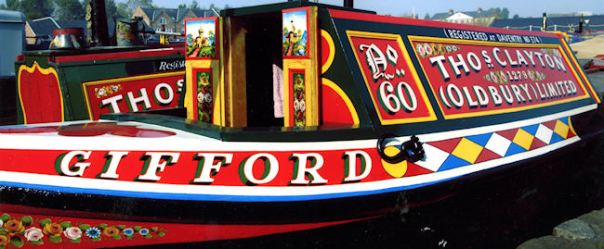
I cross the bridge. A narrow boat is gliding down below,

its brightly painted tubs, its name a girl’s, I watch it pass

into the dark, a stink of smoke, a swirl, a wink of light.

 gifford1

That the Madonna’s arms are full of blood surprised me but probably I am echoing those earlier thoughts of veins and needles. The repetitions of “red” felt quite bold, I think following the maturing of the narrator’s daughter. I grew up near the Kennet and Avon canal and still walk there often watching the narrow boats pass. Many of them are carefully decorated by their owners and this was coming to mind at the end though I still think this is a very urban part of the canal network. Obviously the passing boat, with its girl’s name, reminds the mother of her daughter (I guess we still don’t know exactly what happened to her) and though there is something positive in the painted colours of the boat (echoing the coloured windows in church I now realize), its passing into the tunnel is ominous and the fragmenting of the lines (these long lines are good for this) suggest a dissolving or passing away.

I don’t know how this reads yet as a poem and it’s certainly to raw and new to think which of these forms suit it best (if any). But it’s not a poem or a place I might have entered into without the use of this very methodical exercise. It’s worth a try, I think, and whatever the results, it’ll set you thinking about line lengths generally and patterned rhythm or metre more specifically – essential tools of the poet at any stage.

Lots of Poetry, Too Little Cake

breakingsmall

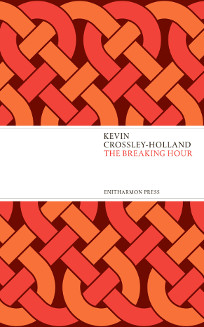
Last Saturday I attended one of the half-yearly poetry events in Palmers Green, north London. These are always very good evenings, these days full of music as well as poetry as the Helios Consort of recorders play before and after the interval. Kevin Crossley-Holland was reading (a superb poet, as well as all his other literary achievements) as was Sarah Westcott (recently published by Pavilion – having just won the Manchester Cathedral Poetry Competition) and Katherine Gallagher, launching her new Arc collection – about which someone called Crucefix has blurbed:

This new collection is bejewelled throughout with haiku-like moments of vivid observation. Her delighted responses – in particular to the natural world – serve to peel away the film of familiarity through which we usually gaze. Yet Gallagher combines such excited observation with a quality of restraint, a respect for what she encounters in a process of self-creation – “from myself into myself” as her epigraph from Rose Auslander puts it. Sequences about her Australian mother and the loss of her brother are imbued with this same gift: life is celebrated in poems that never forget our mortality: “This is time we have underlined, / remembering what we’ve done, where we’re going” (‘Quotidian’).

On the following morning I was taking part in the Bloomsbury Festival, talking about the art of translation with Chris Campbell, Literary Manager, Royal Court Theatre and Gregory Thompson, Creative Entrepreneur in Residence at UCL. Chaired by Geraldine Brodie, Lecturer in Translation Theory and Theatre Translation at UCL, the talk – in the very comfortable, wood-panelled surroundings of the Churchill Room, Goodenough College, London House, Mecklenburgh Square, London – was really wide-ranging from Gregory’s experiences of directing Shakespeare in the Indian sub-continent and the kind of cultural translation that takes place on such occasions to Chris’s translations of drama texts to and from the French and French-Canadian. One issue there is the translation of comic references such as cricket allusions or types of motor cars (I think he suggested a Vauxhall Cavalier equivalent in a French cultural context would be a Renault 21). I thought there was quite a bit of common ground when I was explaining how I fell into translation through the need to stand up and declaim/read/perform translations which I felt did not really convince in English. This is how I began the idea that I might try to translate Rilke’s 9th Duino Elegy many, many years ago – I could not find a version that read well aloud. I still regard that as a key test.

c45407b1ab4103bca137a0808bc8c042

This idea that poetry ought to be read aloud is common enough in most writing workshops but I do wonder how many people really adhere to it. This came up again with my third engagement of the busy weekend – teaching my first session for the Poetry School on ‘music and metre’ on Monday evening. As I explained to the class, formal verse is not especially my thing but it is also an area I have had to teach on various occasions. I kicked off by reading James Fenton’s powerful poem ‘Tiananmen’ – see below – and Auden’s observations about the benefits of form:

images

The poet who writes ‘free’ verse is like Robinson Crusoe on his desert island: he must do all his cooking, laundry and darning for himself. In a few exceptional cases, this manly independence produces something original and impressive, but more often the result is squalor – dirty sheets on the unmade bed and empty bottles on the unswept floor.

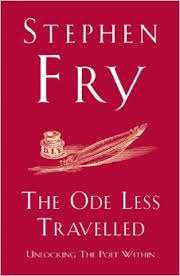
I love the swipe at “manly independence” there. Not very surprisingly, this observation is quoted by Stephen Fry in his The Ode Less Travelled (Hutchinson, 2005) which also suggests modern poetry, because of its abandonment of formal constraints is now “laughably easy” to write. Elsewhere Fry describes most contemporary poetry as suffering from anaemia; it’s a lifeless trickle, rhetorically listless . . . Fry doesn’t mind setting himself up like this – and tucked away in the book you’ll also find his appreciation of Whitman, Anne Carson, Denise Riley and many others.

imgres

I told the class, having spoken to a fair number of poets recently about form, that they’d be surprised (or maybe not) how few published poets would confidently declare their own grasp of metrical matters. On the night, we didn’t get along as fast as I’d anticipated – there was good discussion, especially of the areas of inevitably uncertainty in scanning a poem etc – it’s like jazz?? – so I’m looking forward to picking up the themes again next Monday evening with Tony Harrison, Wordsworth, Stevens, Elizabeth Jennings . . .

Now I’m feeling a bit poetry-ed out. Coffee and cake are required . . . after this:


Tiananmen – James Fenton

Tianamen
Is broad and clean
And you can’t tell
Where the dead have been
And you can’t tell
What happened then
And you can’t speak
Of Tianamen.

You must not speak.
You must not think.
You must not dip
Your brush in ink.
You must not say
What happened then,
What happened there
In Tiananmen.

The cruel men
Are old and deaf
Ready to kill
But short of breath
And they will die
Like other men
And they’ll lie in state
In Tianamen.

They lie in state.
They lie in style.
Another lie’s
Thrown on the pile,
Thrown on the pile
By the cruel men
To cleanse the blood
From Tianamen.

Truth is a secret.
Keep it dark.
Keep it dark.
In our heart of hearts.
Keep it dark
Till you know when
Truth may return
To Tiananmen.

Tiananmen
Is broad and clean
And you can’t tell
Where the dead have been
And you can’t tell
When they’ll come again.
They’ll come again
To Tiananmen.

imgres
James Fenton


The Politics of the ‘Daodejing’

IMG_0217.JPG

I travelled north to Bradford earlier this week to read from my versions of the Daodejing. For the first time a reader of Mandarin was present to read from something approaching the original texts. Bradford artist Yan Wang read beautifully as well as providing the evening with a couple of large banner-scrolls of chapters from the text. The whole evening had been organised by an old friend, Bruce Barnes, a poet and tireless organiser and more recently translator of long-neglected work by Kosuke Shirasu, a Japanese proletarian writer from the 1920/30s. I read Bruce’s ‘interpretations’ of Shirasu’s work (done with the help of Jun Shirasu and published as Out of his struggles (Utistugu Press, Bradford) on the train back to London and it reminded me that I had wanted for a while to organise my thoughts about the political elements in the Daodejing poems. (Poem titles in brackets are those I have given to the individual ‘chapters’ of the text).

img_0215

It’s generally accepted that one of the purposes of the collection of texts called the Daodejing is to instruct about good government. Chapter 46 (Annexation) argues that when government adheres to the Way – the teachings of the Daoist ideas – then its great parades of horses “are put out to grass to fertilise the ground”. It’s when government neglects the Way that its “war horses sire and foal / even on sacred ground”. Such neglect leads to personal and political “unsteadiness” which Chapter 26 (‘Breath-taking Scenes’) identifies as the “loss of all authority”. This is authority in its truest sense because in other poems we read of aggressive, power-grabbing behaviour which is also a way of neglecting Daoist ideas. Chapter 29 (‘What is Fixed’) describes those who grab at “earthly power” who are as liable to smash it as gain any advantage.

One of the key chapters, 67 (‘Three Treasures’) goes so far as to suggest that “only one reluctant to grasp power / is properly capable of government”. One clear attitude in these poems is that busy, hyperactive government – one that “grows brisk full of initiatives” – is an error:


those who hope

to rule by dishing out

press releases

a multiplicity of choices

are the con-men

of the nation

Chapter 65 (‘Blizzard’)

imgres

This distrust of big government is compounded when those with power try to ingratiate themselves with those they rule. With very little modernisation, the Daodejing is suspicious of those politicians who “style themselves ‘man of the people’ / sometimes ‘housewife’ / they like to say ‘we are all in this together’” (Chapter 39). What lies behind such cynical declarations is a real hunger for power as an exercise of ego (not true government). Laozi is very clear that such egoistic motives lead only in one direction for a nation: war.


–those who govern my teacher says

must oppose conquest by force of arms


such methods swiftly rebound

thorn and bramble where troops assemble

Chapter 30 (‘Scorched Earth’)

nuclear_artillery_test_grable_event_-_part_of_operation_upshot-knothole

Leaders (and the Daodejing never really doubts that human society needs leaders of a sort) need to adhere to the Way and encourage their people to do the same. Chapter 37 (‘Dispassion’) puts it succinctly:


—the way enacts nothing yet through it all things are achieved

if the powerful

possessed themselves of it

the ten thousand would be transformed


once transformed if they begin

to demand action

they ought to be constrained

with the uncarved wood quality of namelessness


the unconditional quality of the nameless

evokes dispassion—

hence it is to be still


so the nation pursues its way in peace


This idea of ‘constraint’ begins to sound authoritarian again but elsewhere it appears our political leaders are being advised not to over-encourage our expectations. Chapter 19 (‘Fewer Wishes’) advises that a people’s restlessness ought to be dealt with by offering them “simplicity / to behold give them the uncarved block // give them selflessness give fewer wishes”. In our world of unconfined desire and acquisitiveness (the point of being alive?) this sounds suspect perhaps but is perfectly in line with those who choose to opt out of modern life towards simplicity, fewer possessions etc. The uncarved block is a recurring image representing the fullest presence of life and experience before we begin to hack away at it with our self-centred preconceptions. The three virtues of the Daodejing are to be compassionate, to be frugal and to lack ambition.

daodejing

The point is that Daoist thinking is optimistic about human nature. There is a Rousseauistic quality to its belief in the goodness of mankind as a noble savage who has for too long been corrupted by interference, too many codes of behaviour imposed from above. This is where the poems’ anti-Confucian elements are most obvious. Chapter 18 (Codes of kindness’) argues it’s only when the Way “falls into disuse / codes of kindness thoughts / of morality evolve”. Laozi argues we are better off without such rules of codified behaviour. This is not quite anarchism but certainly a powerfully libertarian thread runs through the work. In one of the most striking images in the whole sequence, Chapter 60 (‘Recipe’) compares true government to the cooking of a “delicate fish”. It requires the gentlest of touches:


no agitation

or any demon

or the fretting

of your own spirit


no shuffle or harm

or sudden injury

but aid and attend

gain advantage


the power to feed

the common purpose

maxresdefault

It’s this delicacy, gentleness, almost passivity of government that leads Laozi to associate this approach with the stereotypically ‘female’. Early on, in Chapter 6 (‘Valley’) we are told the spirit of the Way is “[a] valley without end / it is female it is called mysteriousness”. This translates politically into government playing a largely passive role (as does the good teacher) to show, facilitate, enthuse, give space, watch and approve. Government must be honest, give the tools, give opportunities, do its job well. Its role is to synthesise and connect (not disconnect or sever), shed light (but without dazzling, even inadvertently), use a delicate touch, be tangential. Its actions call forth responses to the fact it acts, plans, demands. Better back off, do not intervene, don’t use imperatives, perhaps use no words at all. It is better to play the female part, be passive, give space, encourage desired behaviours, neglect all else.


Tributaries

chapter 61


—strong nations must play the low ground

to which all contributing waters flow

the point to which all things converge

so their invitations issue from stillness

through quiescence they gather power

let’s call that female and the male cannot

resist he brings his watery tributes

and she gains adherents he procures favour

as she looks to embrace and empower

he finds himself part of a greater thing

in this way becomes part of creation

so both thrive both discovering bliss—

real power is female it rises from beneath

Study of a Kneeling Boy Bending a Bow, for Dorchester House c.1860 by Alfred Stevens 1817-1875

Like the cooked fish, another memorable image is the bending of a bow. As it is bent the top (of society) descends earthwards while what is “nearest the earth is raised up”. This is the ideal process of government in the Daodejing. Only in Chapter 80 (‘The Commonwealth’) does Laozi give something of a portrait of the contentedly ruled society. It is small, hard-working, has basic needs met; it has the capability of greater luxury (and also weapons) but none of these are made use of. This little society is aware of others around it (perhaps run on different lines) but its people are so content they feel no desire to travel.

Idealistic without doubt. But does this even sound attractive? It’s unlikely to – given our absorption into our consumerist society, our expectations that government ought to provide and lead. But we don’t need to look far to see systems breaking down and at the least what the Daodejing offers is an alternative vision of the exercise of power in society. It’s a vision that is over 2000 years old which means it’s either well past its sell-by-date or that it contains some wisdom that we ought not to ignore.

Autosave-File vom d-lab2/3 der AgfaPhoto GmbH
Martyn and Yan Wang reading from the ‘Daodejing’ for Beehive Poets, Bradford

Tony Harrison’s ‘Them and [uz]’

Last week I posted on Tony Harrison’s ‘A Cold Coming’. The following discussion of another extraordinary Tony Harrison poem originally appeared in book form in Tony Harrison: Loiner (Clarendon Press, 1997), edited by Sandie Byrne.

imgres

‘Them and [uz]’ – listen to Harrison read this poem here.

for Professors Richard Hoggart & Leon Cortez

I

αίαι, ay, ay! … stutterer Demosthenes

gob full of pebbles outshouting seas –


4 words only of mi ‘art aches and … ‘Mine’s broken,

you barbarian, T.W.!’ He was nicely spoken.

‘Can’t have our glorious heritage done to death!’


I played the Drunken Porter in Macbeth.


‘Poetry’s the speech of kings. You’re one of those

Shakespeare gives the comic bits to: prose!

All poetry (even Cockney Keats?) you see

‘s been dubbed by [Λs] into RP,

Received Pronunciation, please believe [Λs]

your speech is in the hands of the Receivers.’


‘We say [Λs] not [uz], T.W.!’ That shut my trap.

I doffed my flat a’s (as in ‘flat cap’)

my mouth all stuffed with glottals, great

lumps to hawk up and spit out… E-nun-ci-ate!


II

So right, ye buggers, then! We’ll occupy

your lousy leasehold Poetry.


I chewed up Littererchewer and spat the bones

into the lap of dozing Daniel Jones,

dropped the initials I’d been harried as

and used my name and own voice: [uz] [uz] [uz],

ended sentences with by, with, from,

and spoke the language that I spoke at home.

RIP, RP, RIP T.W.

I’m Tony Harrison no longer you!


You can tell the Receivers where to go

(and not aspirate it) once you know

Wordsworth’s matter/water are full rhymes,

[uz] can be loving as well as funny.


My first mention in the Times

automatically made Tony Anthony!

Read about the drafting of this poem – in the Tony Harrison Archive at Leeds University.

url

Though it was Keats’ ‘Ode to a Nightingale’ Harrison ‘mispronounced’ at school, it is actually Wordsworth who is more important to him because both share a belief in poetry as the voice of a man speaking to men. This conception of poetry as speech is a powerful constituent in Harrison’s work and perhaps one not clearly understood. John Lucas, for example, has attacked what he sees as loose metrics in the poem ‘V’ but, to reverse Harrison’s comment that all his writing (theatrical or otherwise) is poetry, all his poetry needs to be read as essentially dramatic and deserves to be tested in the spoken voice as much as in the study. Harrison’s interest in the curious idea that the true poet is born without a mouth implies the difficult battling for a voice or voices which can be found everywhere in his work and it is in this clamour that I find its dramatic quality. In a public poem like ‘A Cold Coming’, Harrison makes use of the contrasting and conflicting voices by playing them off against a regular form. This is almost always the case, but in what follows I prefer to concentrate less on metrical effects than on the way voices interweave.

The very title of the pair of sonnets, ‘Them & [uz]’, seems to promise conflict, at best dialogue, and it opens with what could be taken as the howl of inarticulacy. In fact each pair of these opening syllables gestures towards crucial worlds in Harrison’s universe. The ‘αίαιof classical dramatic lament is echoed by the “ay, ay!” of the musical hall comedian cheekily working up an audience. Immediately, the reader is plunged into the unresolved drama of two differing voices, instantly implying the two cultures of the sonnets’ title. The line and a half which follows, sketching Demosthenes practicing eloquence on the beach, is intriguing in that its locus as speech is hard to pin down. It is perhaps intended at this stage (apart from introducing the poems’ central issue) to hover in an Olympian fashion above the ruck of dialogue that follows, implying the heroic stance which will be taken up in the second sonnet.

poster-demostheness-spricht-meeresfluten-310780

Line 3 opens again into a dramatic situation with the voice of the narrator (the adult Harrison), repeating his own interrupted recital of Keats in the classroom, while the master’s scornful comments appear fresh, unreported, as if still raw and present, in speech marks. The narratorial comment on this – “He was nicely spoken” – confirms this poem’s tendency to switch voices for its effects, this time its brief sarcasm barely obscuring the unironic comment likely to be made by an aspiring Loiner, or by an ambitious parent. The example of nice speaking given (again in direct quotes in the following line) is the master’s claim to possession, to authority in matters of language and culture and the separated-off reply of the narrator – “I played the Drunken Porter in Macbeth – with its full rhyme and sudden regular iambic pentameter, implies both a causal link between the two lines, painting Harrison as dispossessed specifically by the master’s attitudes, as well as conveying the tone of resignation in the young schoolboy.

images

Much of the tension and success of the poem has already arisen from the dramatic interchange of voices and the master’s voice asserts itself again in line 7 ironically claiming a kind of monolithic, aristocratic purity to poetry which this poem has already attempted to subvert:


Poetry’s the speech of kings. You’re one of those

Shakespeare gives the comic bits to: prose!”


The following lines contain a curious wavering in the clear interplay of dramatic voices, only part of which is resolved as the poem proceeds. Evidently, the intrusive, even hectoring, parenthesis (at line 9) is the narrator’s questioning of what appears to be the master’s voice’s continuing argument that “All poetry” belongs to Received Pronunciation. Yet the aggression of this attack, with its harsh alliteration and sarcastic question mark, is out of key with the other narratorial comments in part I, though the tone is re-established in part II. In addition, I have some difficulty in accepting the master’s words as appropriate to the situation which – with no break – continues the speech made to the young Harrison. For example, the word “dubbed”, with its implication of the deliberate laying of a second voice over an ‘original’, already hands victory in the argument to Harrison’s claim for the authenticity of ‘dialect’ and, as such, would not be used by the believer in “the speech of kings”. Equally, the apparent plea, “please believe [ s] / your speech is in the hands of the Receivers”, does not accord with the voice that summarily dismissed the pupil as a “barbarian” 7 lines earlier. In this case, Harrison’s desire for the dramatic has foundered momentarily on that old dramatist’s rock, the necessity for exposition which compromises the integrity of the speaking voice.

imgres

The true note of the master returns – interestingly, following one of Harrison’s movable stanza breaks, as if confirming a shift in voice though the speech actually continues across the break – with “We say [Λs] not [uz], T.W.!” The tone of the responding voice, after the suggestion of a more spirited response in the Keats comment, has returned to the resignation of the brow-beaten pupil. This is reinforced by the more distant comparison of the boy to the ancient Greek of the opening lines, heroically “outshouting seas”, while the young Harrison’s mouth is “all stuffed with glottals, great / lumps to hawk up and spit out”. This first sonnet draws to a close with this tone of frustrated defeat for the boy, yet the drama has one final twist, as the voice of the master, sneering, precise and italicised, has the last word – “E-nun-ci-ate!“. There can be little doubt that the boy must have felt as his father is reported to have done in another sonnet from The School of Eloquence, “like some dull oaf”.

The second part of ‘Them & [uz]’ contrasts dramatically with the first, though the seeds of it lie in the image of heroic Demosthenes and the accusatory tone of the reference to Keats which seemed a little out of place in part I. This second sonnet’s opening expletive aggression strikes a new tone of voice altogether. “So right, yer buggers, then! We’ll occupy / your lousy leasehold Poetry”. The poem’s premise is that it will redress the defeat suffered in part I in an assertive, unopposed manner. Not the master, nor any spokesman for RP is allowed a direct voice, yet the interchange of speech and implied situation can still be found to ensure a dramatic quality to the verse.

The passionate and confrontational situation of the opening challenge is clear enough, yet it’s striking how it has taken the autobiographical incident in part I and multiplied it (“yer buggers . . . We’ll occupy”) to present the wider political and cultural context as a future battlefield. Even so, there is no let up in the clamour of voices raised in the poem. Immediately, the narratorial voice shifts to a more reflective, past tense (at line 3) as the rebel reports actions already taken – and with some success, judging from the tone of pride and defiance: “[I] used my name and own voice: [uz] [uz] [uz]”. Even within this one line, the final three stressed syllables are spat out in a vivid reenactment of Harrison’s defiant spoken self-assertion. It is this slippery elision of voice and situation which creates the undoubted excitement of these and many of Harrison’s poems as they try to draw the rapidity and short-hand nature of real speech, its miniature dramas and dramatisations into lyric poetry. A further shift can be found in lines 9 and 10, in that the voice now turns to address a different subject. The addressee is not immediately obvious as the staccato initials in the line are blurted out in what looks like a return to the situation and voice with which this sonnet opened. Only at the end of line 10 does it become clear that the addressee is the poet’s younger self, or the self created as the “dull oaf” by the kind of cultural repression practised by the schoolmaster. The reader is further drawn into the drama of the situation by this momentary uncertainty: RIP RP, RIP T.W. / “I’m Tony Harrison no longer you!”.

images

The remaining 6 lines are, as a speech act, more difficult to locate. There is an initial ambiguity in that they may continue to address “T.W.”, though the stanza break suggests a change and, anyway, this makes little sense as T.W. is now dead (“RIP T.W.”). In fact, these lines use the second person pronoun in the impersonal sense of ‘one’, addressing non-RP speakers in general, and it is the generalised nature of these lines which disarms the effectiveness of the passage. This is particularly important in line 14, “[uz] can be loving as well as funny”, the tone of which, commentators like John Haffenden have questioned. The difficulty here is that if Harrison is addressing those who might use [uz] anyway, though there may well be many amongst them for whom the fact that “Wordsworth’s matter / water are full rhymes” is useful ammunition and reassurance, the same cannot be said of the “loving as well as funny” line which might variously be construed as patronising, sentimental or just plain unnecessary. Nevertheless, the poem regains a more sure touch in the final lines in its use of the reported ‘voice’ of The Times in renaming the poet “Anthony“. The effect here is both humorous (this, after all the poet’s passionate efforts!) and yet ominous in that the bastions of cultural and linguistic power are recognised as stubborn, conservative forces, still intent on re-defining the poet according to their own agenda, imposing their own hegemonic voice where there might be many.