More than 10 years of blogging on poetry and translation – over 75,000 views in 2025 – now captured and preserved at the UK Web Archive: 'one of the top 10 poetry blogs' (Rogue Strands)
Martyn Crucefix is our headline reader. His recent publications include Cargo of Limbs (Hercules Editions, 2019), These Numbered Days, translations of the poems of Peter Huchel (Shearsman, 2019), which won the Schlegel-Tieck Translation prize 2020, and The Lovely Disciplines (Seren, 2017). O. at the Edge of the Gorge was also published by Guillemot Press in 2017. Martyn has translated the Duino Elegies – shortlisted for the 2007 Popescu Prize for European Poetry Translation – and Sonnets to Orpheus by Rainer Maria Rilke and the Daodejing – a new version in English (Enitharmon, 2016). He is currently a Royal Literary Fund Fellow at The British Library and blogs regularly on poetry, translation and teaching at http://www.martyncrucefix.com
Main Reader – Martyn will read both original poems and from his Schlegel-Tieck Translation prizewinning book of Peter Huchel’s work.
During lockdown there has been a proliferation of on-line poetry readings and launches and most of those I have attended have been very successful. I had to teach my (well educated) daughter the meaning of ‘necessity being the mother of invention’ the other day and the poetry world is not the only one learning new ways to do old things. My publisher, Seren Books, has been particularly active in this area, recently staging the launch of Katrina Naomi’s new collection, Wild Persistenceand running a mini festival, their Stay-At -Home series. It was during this series of events that I heard Ben Wilkinson read from his 2018 collection, Way More Than Luck. As part of his own reading, Wilkinson also read Louise MacNeice’s ‘Wolves’: “Come then all of you, come closer, form a circle, /Join hands…”
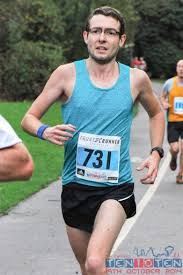
I’m not proud to admit that Way More Than Luck passed me by when it was first published. As you are probably aware, Wilkinson reviews poetry regularly for The Guardian, and he’s very familiar on social media as a poet and critic, a distance runner and a passionate Liverpool football fan. But the book’s cover (Dalglish, I think), its title and some of the publicity persuaded me that the football bit was going to be predominant. It’s certainly an almost unique aspect of the collection, but it turns out the debilitating darkness of psychological depression is an even more significant one. Wilkinson signals this concern via the book’s two epigraphs. One is about the nature of depression by Matt Haig and a second by John Hanc links challenging physical activities with mental strength, with “state of mind”. And the opening poem immediately suggests the un-put-downable burden of depression for those who struggle with it, while ‘Days’ obsessively lists multiple occasions blighted by it. Both poems use repetition as a device to evoke the persistent nature of depressive episodes, while ‘Pal’ uses that plus personification to convey its haunting, abusive nature:
Next time you’re trying to stand your ground –
argue your case, sprint the home straight,
stare yourself down in the mirror at eight –
he’ll be there alright. His smile is a frown.
His frown is a scowl. His scowl is the fear
you hoped was long gone. Still here. Still here.
Louis MacNeice
Wilkinson’s admiration for MacNeice can be heard in the vigorous syntax here, the use of form and rhyme and his liking for repetition perhaps reflects something of the 1930s poet’s “controlled flamboyance of diction”. Even more successfully, ‘Hound’ treats depression as a beast (an idea famously and perhaps erroneously linked with Winston Churchill):
Know it’s no dog but a phantom,
fur so dark it gives back nothing,
see your hand pass through
its come-and-go presence,
air of self-satisfied deception,
just as the future bursts in on
the present, its big I am, and that
sulking hound goes to ground again.
Troubling dreams feature in two powerful poems. ‘The Nightmare’ is all the more frightening in remaining aware of the real-life episode the dream is based on. A long drive, “to Newby, Lawkland, Cleatop”, is transmuted as the car shudders, the windscreen warps, roadside trees shrivel and the narrator’s companion is suddenly “nowhere to be found”. ‘Stag’ rehearses something similar – the real animal, “on the bypass that night – / antlers like a winter oak”, is, in the dreamed version, pursued vainly across a landscape, seemingly in hope that some secret communication might be recovered from “those cavernous eyes”.
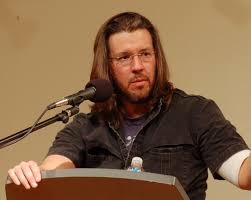
David Foster Wallace
Perhaps the best poem in the book, ‘To David Foster Wallace’, is addressed to the American writer who himself struggled with depression and alcoholism. Wilkinson’s poem takes up a wholly convincing, chatty, MacNeicean tone to discuss – frankly – the experience of despair, “the unpindownable feeling / of hopelessness, hard frustration”. The poem itself declares it takes “courage” to appear weak and it certainly takes courage to write as nakedly as this. Of course, all lyric poetry is to some degree “dramatic”, but there seems a strong autobiographical element to this poem (and others). The poem ends with the narrator explaining that there are occasions, while out running (“my breath dogged on the fellside”), when he experiences something of “peace”, something of psychological relief. Wilkinson’s book title turns out to be not an allusion to a Fernando Torres wonder goal, but what the struggling narrator is left hoping for from David Foster Wallace, even from beyond the grave: “Wish me way more than luck”.
For me, it’s these psychological truths that Wilkinson is so good at conveying. There are other poems later in the book (and perhaps ‘Stag’ is an elusive example) which begin to sketch episodes of a foundering romantic relationship and ‘Building a Brighter, More Secure Future’ is a very effective excursion into witty political satire (a skilfully handled sestina based on the Conservative Party election manifesto, 2015). And there are the football poems. They comprise the central sequence of 14 poems, introduced with a heart-felt Prologue that says what follows is for the ordinary football fans, written out of “a love beyond the smear campaigns, / the media’s hooligans”. A large part of what Wilkinson has in mind here is the shocking response in parts of the media to the Hillsborough tragedy in 1989, when 96 men, women and children died (David Cain’s Forward prize shortlisted book, Truth Street, from Smokestack Books, movingly dealt with this event and the media and policing responses and I reviewed it last summer). Wilkinson obliquely refers to the occasion in ‘Kenny Dalglish’ and several poems have worthwhile things to say about racism in the game (‘John Barnes’) and how the game can offer an escape route for working class boys (‘Billy Liddell’ and ‘Steven Gerrard’).
But the poems also show how difficult it is to escape the miasma of cliché that seems to engulf football itself. Anfield is filled with a “fabled buzz”, then “the place erupt[s]”. Barnes unleashes a “a sweeping, goal-bound ball”, and a particular game offers one “last-ditch twist”. I’m reminded of Louis MacNeice’s observation (now sadly compromised in various ways, but the spirit of it remains valid, I think) that he wanted a poet not to be “too esoteric. I would have a poet able-bodied [sic], fond of talking, a reader of the newspapers, capable of pity and laughter, informed in economics, appreciative of women [sic], involved in personal relationships, actively interested in politics, susceptible to physical impressions’. There are many more of these poets around these days and to bring (even) football into the purview of poetry can hardly be a bad thing. Yet it is not an easy one and there may be some risks in deciding to headline the attempt. Ian Duhig’s blurb note to Way More Than Luck has gingerly to negotiate this issue: “The beautiful game inspires some beautiful poems in Ben Wilkinson’s terrific debut collection … but there’s far more than football to focus on here”. Yes, indeed.
Marvin Thompson’s debut collection from Peepal Tree Press is a PBS Recommendation and deservedly so. All too often we are informed of the arrival of a startling voice, usually a vital one, striking a new note in English poetry. Well, this is the real deal: a superbly skilled practitioner of the art whose work is driven by two seemingly opposing forces. Thompson writes with a disarming sense of autobiographical honesty, often about domestic life, as a father and a son. Yet he can also create fictional characters with detailed and convincing voices and backgrounds. What holds these divergent styles together is his demonstrated conviction that the past (as an individual or as a member of an ethnic or cultural group) interpenetrates the present.
‘Cwmcarn’ is a poem in an apparently simple autobiographical mode, the narrator out camping in Wales with his two children. He has been reading them to sleep with pages from Maggie Aderin-Pocock’s biography but feeling a bit guilty about not finding a book about “a Mixed Race // scientist / for my // Mixed Race / children”. The thought leads him to reflect on his own childhood’s confusions about racial identity, being born in north London to Jamaican parents, but knowing he was ultimately “by ancestry, / African”. He recalls the hurt of being “branded” English, not Jamaican, and then worries about the consequences of his children identifying “as White / in a Britain // that will call them / Black”. As you can see, Thompson’s chosen form is reminiscent of what Heaney (around the time of North) called his ‘artesian’ form of skinny-thin poems and the same effect of drilling down into the past is achieved here.
Several of the same components are redeployed in the sequence ‘The One in Which…’ (with a nod to Friends). The narrator is driving his kids to the cinema, playing “Joe Harriott’s abstract jazz” in the car. The children not surprisingly consider the music angry, sad and crazy. The father is not unhappy with this: “my Mixed Race children are listening / to something I want them to love”. He himself wonders if it’s “upbringing // or brainwashing” but the music “sings // Africa’s diaspora and raises skin to radiance”. (Listen to Thompson read this poem here) This last phrase is a wonderful play on aspects of light and darkness and the consciousness of the power of the past is extended with the father’s memories of the 1985 disturbances on Broadwater Farm in Tottenham. What Thompson does so convincingly and without strain is to present the individual’s stream of consciousness as it streaks in and out of the past and present. The third section of this sequence opens with a simile that should come to be seen to rival the ground-breaking significance of Eliot’s Prufrockian evening spread out against the sky “Like a patient etherised upon a table”. Welsh storm clouds are the subject here and the comparisons that flood the poem are drawn from the past of Jamaican, American, Haitian and African roots:
as she sleeps beyond the sugarcane and soldier’s guns with her sons
and daughters in Jamaica’s hills – fists like Jack Johnson’s,
an 18th Century Haitian’s or an ANC activist’s.
It will be objected that there are one (or two) too many similitudes here but surely that is the point: the vividness, dynamism and vitality of these images drawn from the past make up an irresistible force to the father in the poem.
Blaen Bran Community Woodland
The astonishingly titled ‘Whilst Searching for Anansi with my Mixed Race Children in the Blaen Bran Community Woodland’ makes Thompson’s point over again: the (playful) search for an African folkloric trickster figure (in the shape of a spider) in the Welsh woodlands is not being flaunted here, it is taken to be perfectly normal. In fact, the family don’t discover Anansi at all but an apparently dead fox. But the father’s head is full of his previous night’s dream of Mark Duggan’s shooting by police in 2011 which is also mixed with memories of 1985 again, when “rage had spread / like an Arab Spring”. The delicacy of the descriptions of the fox, combined with the children’s concern for it (it is still alive), become correlatives for the father’s preoccupations with the past. These latter thoughts again streak backwards – in appropriately dream-like fashion – to finding Duggan lying now in the Gold Coast, in ancestral times, “chains ready on docked ships from London”. There is no wrench when the father suddenly resurfaces in the present, worrying, “Will Britain / learn to love my children’s melanin?” The compassion shown towards the injured fox by the family, taking it to a vet, reflects some hopefulness perhaps.
Road Trip does indeed indicate the possibilities of compassionate responses to racial and social divides, the importance of an empathetic imagination which yet does not iron out the kinds of historical differences that Thompson is clearly exploring. ‘Rochelle’ is a 6-poem sequence demonstrating this point as well as showcasing the more fiction-making aspects of Thompson’s talent. The narrative is from Rochelle’s point of view, a young black girl driving to London from Wales to support her sister who has had a miscarriage. On the way, she picks up a young black hitchhiker, Kite, and his back story is also developed in the poems. The form here – and used elsewhere in the book – is a form of loose terza rima, half rhymed mostly, with not much variation in the rhyme sounds. The effect is a kind of circling, interweaving with some sense of a slow progression – which is marvellously apt for the exploration of the past’s breaking into the present and this sequence’s sense of a tentative break-out of the established cycle. Rochelle’s mercy dash is actually undertaken pretty equivocally because she and her sister have much rivalry and bad blood from the past. This sense of distance and alienation is also reflected in the hiker who seems a silent, morose figure. But somewhere near the Hangar Lane gyratory, Rochelle pulls over because there is a horse in the road. The animal – like the fox earlier – provokes a tender response from Kite which opens up the relationship between the two people. Kite’s background has been as difficult as Rochelle’s and now he is returning home to care for his mother who has dementia. A friendship is struck up and the conversation with Kite’s mother persuades Rochelle to phone her sister with a good deal more sisterly compassion in her heart.
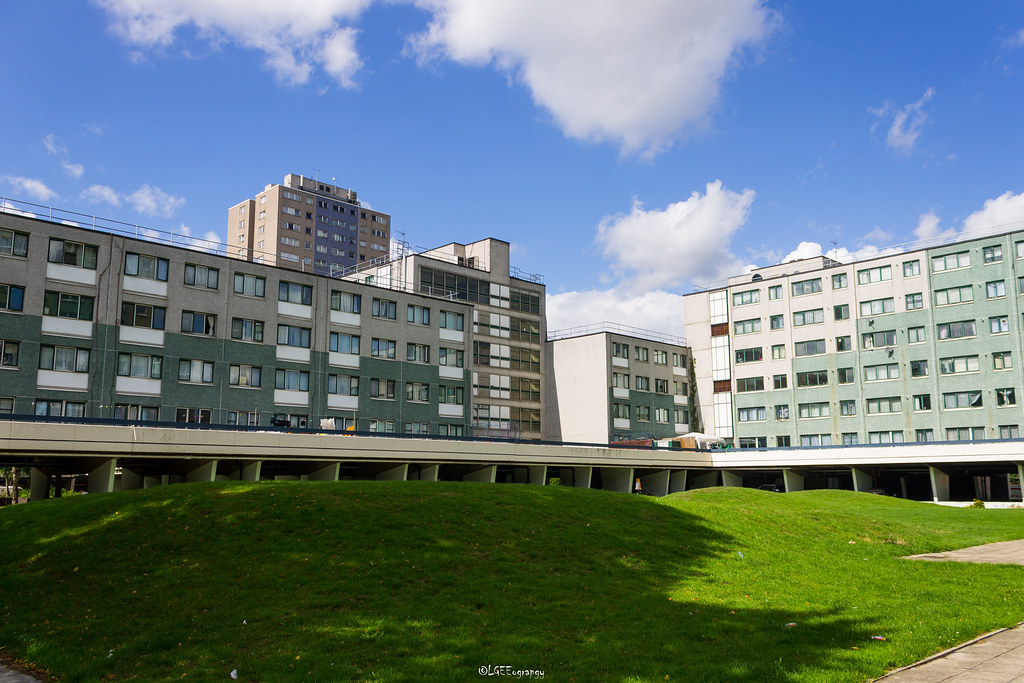
Broadwater Farm, north London
Thompson is good at sketching in such characters and developing relationships, investing moments and scenes with a mysterious intensity, but the tone is not usually so optimistic. ‘The Weight of the Night’ is a pair of prose pieces in which the past – of sexual guilt, male presumption and final reckoning – proves to be an immoveable obstacle to a marriage. And though there is something comic in the germ of the idea in ‘The Many Reincarnations of Gerald Oswald Archibald Thompson’ (a father’s ghost returns to his son, telling of his many previous lives), the reincarnations are all in the form of British military figures from Peterloo, the Boer War, Aden, the Bengal Famine of 1943 and the Falklands campaign. The theme is imperialism and social injustice and the father’s chuckling about his actions creates an uncrossable divide between him and his son. I don’t know that I fully understand Thompson’s intentions in this sequence which again uses the ‘artesian’ form, and the surreal quality of some of the fictionalising here makes things harder to interpret. But the past – and perhaps the older generations’ complicity in the many injustices adumbrated – falls as a dead weight onto the present, even in the son’s recalling his father’s recent death from cancer.
I’m impressed at the editorial control shown in this collection. I suspect there are many false starts or even other successes lying in Thompson’s files. There is a generosity of creative energy here which one suspects could display itself at much greater length (a novel perhaps?). The concluding sequence of 3 monologues, ‘The Baboon Chronicles’, is a case in point. Thompson creates a dystopian world (not far from our own – or at least Pontnewynydd) in which Black and White live uneasily beside each other but the streets are also occupied by baboons. These creatures are treated with disgust and abuse by the humans. The White characters also seem to abuse the Black people on a reflex with insults like “’boon”. In monologues by Stephen, Sally and Suzi, Thompson does make points about racism, the othering of those perceived as different, injustice and (latterly) police violence but what is more impressive is the empathetic imagination on show in the creation of these characters’ voices. Thompson possesses in abundance Keats’ negative capability and, as much as he shows how the past, racial and cultural upbringing and memories of injustice lays so heavily on individual identity, Road Trip also shows the possibility of imagining into the Other (of listening as all the great jazzers do) which, rather than a retreat behind the Pale, must be the way towards a more just and equitable world.
Last week I attended the launch of Tamar Yoseloff’s new collection, published by Seren Books. Tammy and I have known each other for a long while, are both published by Seren and, in her role at Hercules Editions, she has just published my own recent chapbook, Cargo of Limbs. So – in the small world of British poetry – I’m hardly an unconnected critic, but I have the benefit of having followed her work over the years, reviewing her most recent New and Selected, A Formula for Night (2015) here.
In an earlier blog post, I spoke – in rather tabloid-y terms – of the tension in Yoseloff’s poems between the “sassy and the sepulchral”. In 2007’s Fetch (Salt), there were “racy, blunt narratives” which in their exploration of female freedom, restraint and taboo made for vivid, exciting reading. The other side of her gift inclines to an “apocalyptic darkness”, a preoccupation with time, loss, the inability to hold the moment. In A Formula for Night, the poem ‘Ruin’ invented a form in which a text was gradually shot to pieces as phrases, even letters, were gradually edited out, displaying the very process of ruination. Interestingly, The Black Place develops this technique in 3 ‘redaction’ poems in which most of a text has been blacked out (cut out – see Yoko Ono later), leaving only a few telling words. A note indicates the source text in all three cases was the booklet Understanding Kidney Cancer and the author’s recent experience of illness is an important element in this new collection.
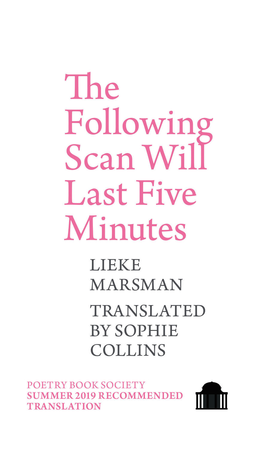
But unlike, for example, Lieke Marsman’s recent The Following Scan Will Last Five Minutes (Pavilion Poetry, 2019 – discussed here), Yoseloff’s book is not dominated by the experience of illness (and one feels this is a deliberated choice). The book opens with ‘The C Word’ which considers the phonetic parts of the word ‘cancer’, as well as its appearance: “looks like carer but isn’t”. But – within its 12 lines – Yoseloff also considers the other C word, “detonated in hate / murmured in love”. The poem is really about how an individual can contain such divergent elements, “sites of birth / and death”. So unanticipated personal experience is here being filtered through the matrix of this writer’s naturally ambivalent gift.
Illness re-emerges explicitly later in the collection, but for much of it there is a business as usual quality and I, for one, am inclined to admire this:
I refuse the confessional splurge,
the Facebook post, the hospital selfie.
I’m just another body, a statistic,
nothing special. Everyone dies –
get over yourself.
So Yoseloff gives us a marvellous send-up of Edward Thomas’ ‘Adlestrop’ in ‘Sheeple’, a central place on the darker side of Yoseloff-country: “The heartland. Lower Slaughter”. There is urbanite humour in ‘Holiday Cottage’ with its “stygian kitchen”, bad weather, boredom and kitsch:
We stare at the knock-off Hay Wain
hung crooked over the hearth
and dream of England: the shire bells,
the box set, the M&S biscuit tin
‘The Wayfarer’ is one of many ekphrastic poems here – this one based on a Bosch painting – but the “sunless land” is patently an England on which “God looked down / and spat”. These are poems written in the last 3 years or so and, inevitably, Brexit impinges, most obviously in ‘Islanders’ (“We put seas between ourselves, / we won’t be rescued”) but the cityscape equally offers little in the way of hope. There is a caricaturing quality to the life lived there: everything “pixilates, disneyfies” (‘Emoji’) and gender relationships seem warped by inequitable power, by self-destructive urges and illness: “I’d super-shrink my dimensions, / wasting is a form of perfection” (‘Walk All Over Me’).
Perhaps ‘Girl’ shows us the figure of a survivor in such a hostile environment, her energy reflecting those female figures in Fetch – “a slip, a trick, a single polka dot” – but the darkness seems thicker now, the lack of lyricism, the impossibility of a happy ending more resolved:
She’s good for nothing because nothing’s
good: sirens drown out violins
and crows swoop to carnage in the street.
As the blurb says, the book boldly eschews the sentimental sop, the capitalist hype, for truths that are hard, not to say brutal. ‘Little Black Dress’ takes both the archetypal ‘girl’ and the author herself from teen years to widowhood in a dizzyingly rapid sonnet-length poem:
drunk and disorderly, dropping off bar stools one
by one, until the time arrives for widow’s weeds
and weeping veils, Ray-Bans darkening the sun.
And it is – unsurprisingly – mortality (the sepulchral) that eventually comes to the fore. A notable absence is the author’s mother, who has often been a powerful presence in previous books. Here she re-appears briefly in ‘Jade’. The stone is reputed to be efficacious in curing ailments of the kidneys and a jade necklace inherited from Yoseloff’s mother leads her to wonder about the inheritance of disease too: “a slow / release in her body, passed down, // down”. Both parents put in a fleeting appearance in the powerful sequence ‘Darklight’, the third part of which opens with the narrator standing in a pool of streetlight, “holding the dark / at bay”. She supposes, rather hopelessly, that “this must be what it’s like to have a god”. Not an option available to her; the dark holds monsters both within and without and not just for the child:
Back then
my parents would sing me to sleep;
now they’re ash and bone. Our lives are brief
like the banks of candles in cathedrals,
each a flame for someone loved;
It’s these thoughts that further the careful structuring of this collection and return it to the experience of a life-threatening illness. ‘Nephritic Sonnet’ is an interrupted or cut off – 13 line – sonnet that takes us to the hospital ward, the I.V. tubes and – as she once said of the city – the poet finds “no poetry in the hospital gown”. Except, of course, that’s exactly what we get. The determination or need to write about even the bleakest of experiences is the defiant light being held up. Yoseloff does not rage; her style is quieter and involves a steady, undeceived gaze and also – in the sequence ‘Cuts’ – the powerful sense that (as quoted above) “I’m just another body, a statistic, / nothing special. Everyone dies”.
It’s this sense of being “nothing special” that enables ‘Cuts’ dispassionately to record very personal experiences of hospital procedures alongside the contemporaneous facts of the Grenfell Tower fire and (another ekphrastic element) a 1960s performance piece by Yoko Ono called ‘Cut Piece’. These elements are ‘leaned’ against each other in a series of 13 dismembered sonnets, each broken up into sections of 6/3/4/1 lines. The fragmentary, diaristic style works well though there are risks in equating personal illness with the catastrophic accident and vital political questions surrounding Grenfell. Ono’s performance piece offers a further example of victimhood, one more chosen and controllable perhaps. What’s impressive is how Yoseloff avoids the magnetic pull of the ego, displaying – if anything – a salutary empathy for others in the midst of her own fears.
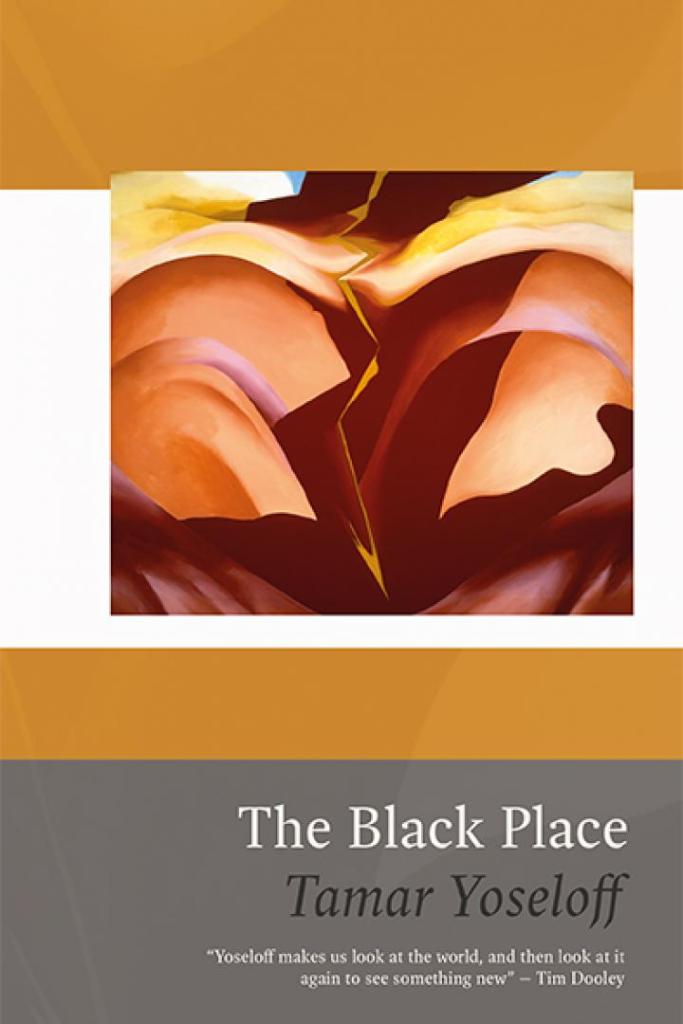
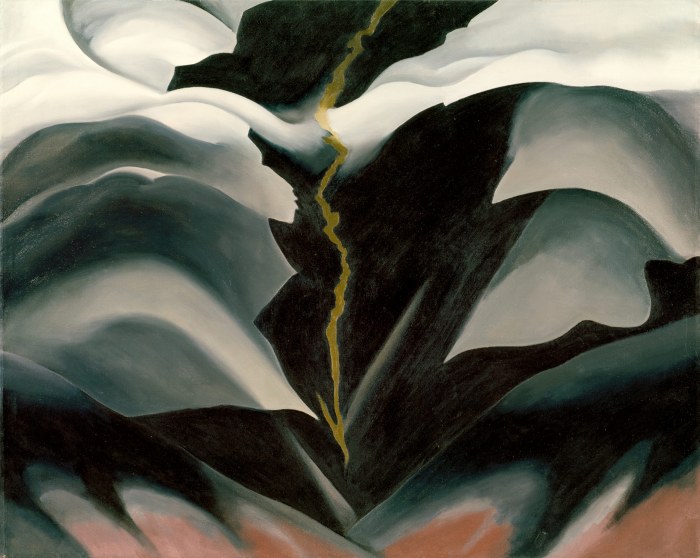
The book is titled after a Georgia O’Keefe picture, reproduced on the cover. O’Keefe’s steady gaze into the darkness created by the jagged relief of the Navajo country is something to which Yoseloff aspires, though it “chills me / just to think it into being”. It is the ultimate reality – a nothing, le néant – though like the ultimate presence of other writers (Yves Bonnefoy’s le presence, for example), can at best only be gestured towards:
We’ll never find it; as soon as we arrive,
the distance shifts to somewhere else,
we remain in foreground, everything moving
around us, even when we’re still.
Along such a difficult path, Yoseloff insists, O’Keefe’s art found “the bellow in a skull, / the swagger in a flower”. And, even in the most frightening brush with her own mortality, the poet will follow and does so in a way that is consistent with her own nature and work over many years.
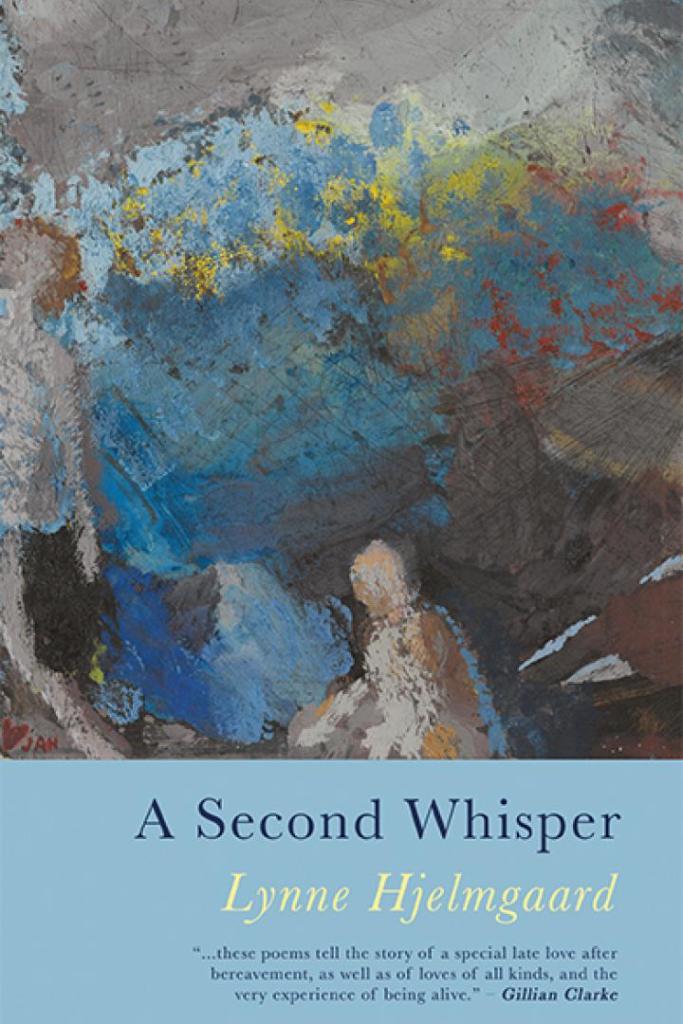
Last night I was at the Poetry Café in Covent Garden for the launch of two new collections from Seren Books. Lynne Hjelmgaard was reading from A Second Whisper and Mary J. Oliver was launching her debut collection, Jim Neat: the Case of a Young Man Down on His Luck. Oliver’s book is a curious, thought-provoking mix of family research and prose/poetic fictions. But I’ve known Hjelmgaard for a few years now as a workshop colleague and as a friend of Dannie Abse and I wanted to gather some thoughts here on her new poems.
In
her playfully titled poem, ‘Ode to a Danish Lamp’, Lynne Hjelmgaard constructs
a paean to a piece of electrical equipment which ends rhetorically, “Why do you
move me so?” Some clues to the answer are scattered through the poem; they lie
in comparisons. The lamp is an example of “Nordic metallic cool”, beside which
the speaker – “a mere human” – feels humbled. She and the rest of the room, we
are told, arrange themselves about the lamp which hence serves as a focal point
and even a source of “answers”. It’s as if the lamp is wired up to a clearer,
less divided, perhaps purer world:
[.
. . ] the charged interior, a territory,
where
no country nationality race
or
religion has any significance.
In contrast, the human figure is more embedded in a world of time, place and quotidian specificity while the lamp emerges with its “fine, oh so thin aluminium rim” as a denizen of a less troubled realm. The speaker is moved because excluded from such a realm and the majority of the poems in A Second Whisper focus precisely on our more compromised, familiar world, particularly the ‘merely human’ experiences of time, memory and loss.
Without
being a particularly philosophical poet, Hjelmgaard writes as someone who is an
“expert at loss”. Another less typical poem describes – in great detail –
Brooklyn Bridge and the area around it (the poet was born in New York City).
She remembers sailing out under the bridge:
Manhattan
is a chain with many links,
some
are broken, lost and never repair,
but
others can be retrieved even at a distance.
For
what can shine so brightly at sea
but a city, once loved, left behind?
Hjelmgaard’s
focus on links lost or remembered is probably hard-wired into her constitution
(these thematic roots usually are) but it has also been provoked by
biographical influences. Her 2011 book, The Ring (Shearsman Books) was
dedicated to the memory of her Danish husband, Stig – who died in 2006 – and
followed an American woman’s travels around Europe, mourning and negotiating that
loss. Dannie Abse, among others, praised those poems: “Widowhood allows them to
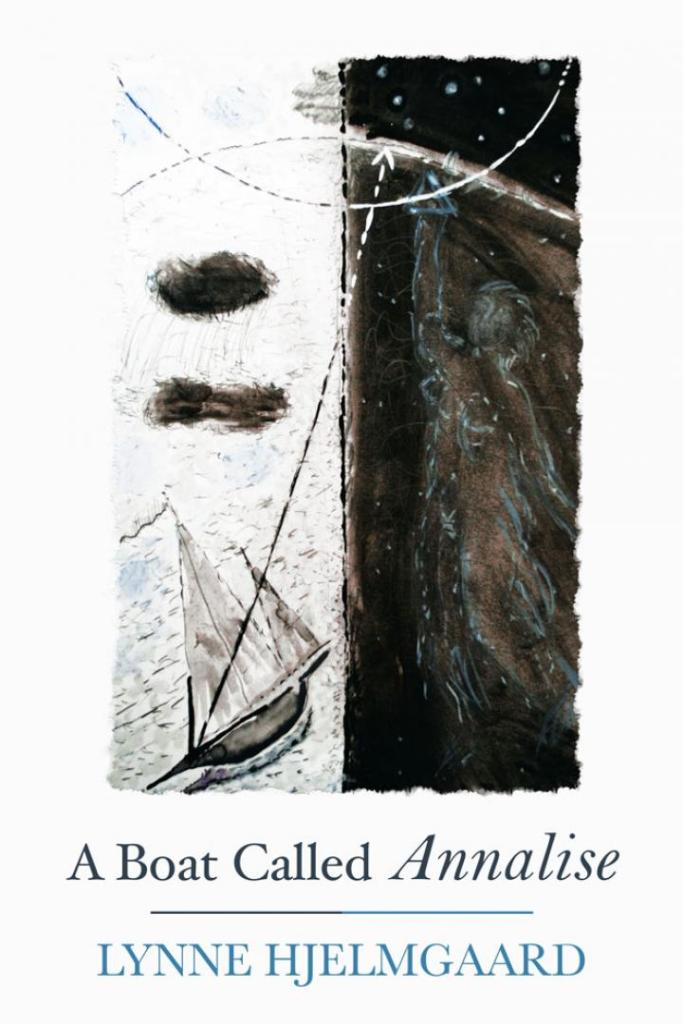
acquire a poignant universality”. Five years later, A Boat Called ‘Annalise’
(Seren Books), was full of more poems of remembrance, evoking the sea
journey the newly married couple made out of New York to Europe, via the
Caribbean.
There
are further poems written to and about her husband in this new book. In ‘As We Silently
Agree’, the husband appears to the widow, “in some kind of afterlife”, and is
seen busying with a boat’s anchor chain, searching the ship’s log and weather
charts. This is perhaps a dream poem:
Our
fingers clasp in recognition
as
we silently agree:
what
does it matter now
if
you don’t keep the course?
And ‘Scorpion Hill’ may be another example of dreamwork, the wife this time revisiting a once-shared house in the Caribbean. Its final image is of many moths clustering round “a single light bulb / left on during the night”. These are fine poems of time and sustaining memory – that bulb still burning – in which the past and those lost within it are shown to revisit the survivor.
Hjelmgaard’s treatment of this traditional theme is neither religious nor consolatory in any facile way. The pain of great loss is heartfelt and yet she manages to persuade the reader – it’s less intellectual than that, maybe she draws her readers in to the actual experience – that what lies in the past still retains is power to evoke pleasure and even that the future’s gifts are to be welcomed, even anticipated. In ‘To a Chestnut Tree’, addressing the tree in its autumnal state, the narrator is sure, “There will always be another one. / And another. // Loss can be moved through like a room”. What a magnificent line that last one is. There is a wisdom in it, however modestly it may be presented.
Time
takes – but time also provides. Another poem of trees has a fir leaning
eventually into a “beloved palm” – though it may take a century or two of slow
growth. A lonely tamarisk on a cliff top also has the capacity to “wait until
it can drink / from the bay eighty feet below”. Hjelmgaard finds her themes in
the smallest incidents. Unpacking a suitcase after a journey, she finds she has
brought two extra items home with her. One is a fossil of a snail which seems
to represent a determined persistence through time (60 million years perhaps,
in this case). The other – a flighty stowaway – is a spider which she finds
“already busy / making yourself at home”. The spider evokes an improvisatory
optimism, an adaptability, even an adventurousness, which I see as some of the
most distinctive elements in the themes of Hjelmgaard’s work.
It’s
these qualities to which Gillian Clarke is responding in her comment on A
Second Whisper, where she finds in the book “the story of a special late
love after bereavement”. In recent years, the British poet who has written most
powerfully and movingly about bereavement and the encroachment of the past into
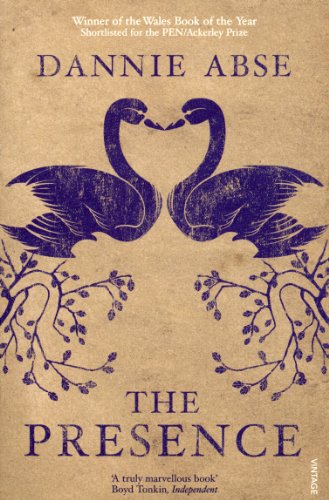
the present is Dannie Abse. This is from his poem ‘The Presence’ about the loss
of his wife, Joan:
It’s
when I’m most myself, most alone
with
all the clamour of my senses dumb,
then,
in the confusion of Time’s deletion
by
Eternity, I welcome you and you return
improbably close, though of course you cannot come.
The opening 14 poems of A Second Whisper explore the loving relationship that sprung up between Hjelmgaard and Dannie Abse after the deaths of Stig and Joan. Her opening prose piece takes us directly into everyday details. The two bereaved poets meet: “And for a time it was the four of us. Though one day, without ceremony, we noted their absence”. Thus set free, the ones still living proceed, though along no clear path, “wherever poetry and Eros chose to take [them]”
Even
at their first meeting – on a train journey back from the Torbay Poetry
Festival – the presence and absence of time was notable. Minutes were not to be
wasted in the presence of the older poet, says the younger narrator. But
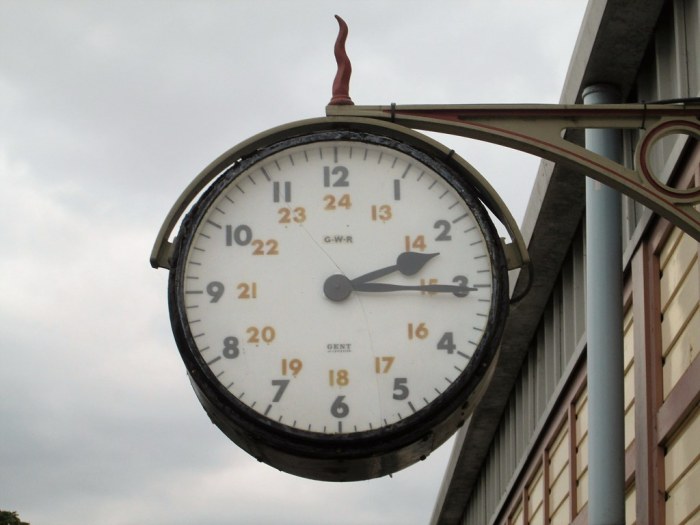
mysteriously – this is in late October – the waitress at the station café is
seen taking away the clock to change the hour. A photograph of the two poets at
a reading shows the younger woman “less sure of herself”, while Abse is more
comfortable with the attention. But at 85 years old, Abse begins appearing in
these poems as more and more in decline. “Aged and dying you grew more tender”,
as ‘A Second Whisper’ puts it. In this poem – as in several others – Hjelmgaard
is visiting Abse at home.
I
knew just how to open your front door quietly.
Its
lock a whisper, a second whisper to shut.
This image – absolutely precise in its remembrance, yet also powerfully suggestive – is like the earlier line about walking through loss as through a room. The first whisper has a respectfulness, concerned with quietude, with the sensitivity of the artist, the closeness of death. The second whisper is full of ambivalence: protective perhaps from the noisy, nosey world, wanting to secure the intimacy, wanting to defend the loved one from the inevitable, yet a foreshadowing of that very inevitability.
‘A Thief Is in the House’ has death portrayed as an invader, breathing heavily, thumping up the stairs to the dying figure whose “eyes [are] prepared // for nothingness”. But these poems are not overwhelmed by grief. As if taking a leaf out of Abse’s own poems of mourning and remembrance, Hjelmgaard’s predominant tone is one of recall and revisiting – even of re-visitation. Walking alone on Hampstead Heath, she hears the lost lover chanting a Lorca poem; because one day they sheltered under an awning on Golders Green Road, every time it rains now, “the rain /stops everything / to think of you”. And in an exquisite lyric, ‘Speak to me Again at Dusk’, Hjelmgaard yearns to resume her conversations with the dead poet, yet her tone – which might have been one of pleading and despair – in fact retains a clear appreciation of the lasting value of what has been and a pleasured openness to the present (hear those noisy roosters in a moment!). Such deep-grained attitudes seem to have been a mutual common ground between these two writers and perhaps was one of the constitutive elements in their late-flowering love:
Apologies for the relative silence from my blog. I have been busy preparing and working to propel into the world two new books of poetry. The first out has been These Numbered Days, my new translations of the GDR poet, Peter Huchel, published by Shearsman Books.
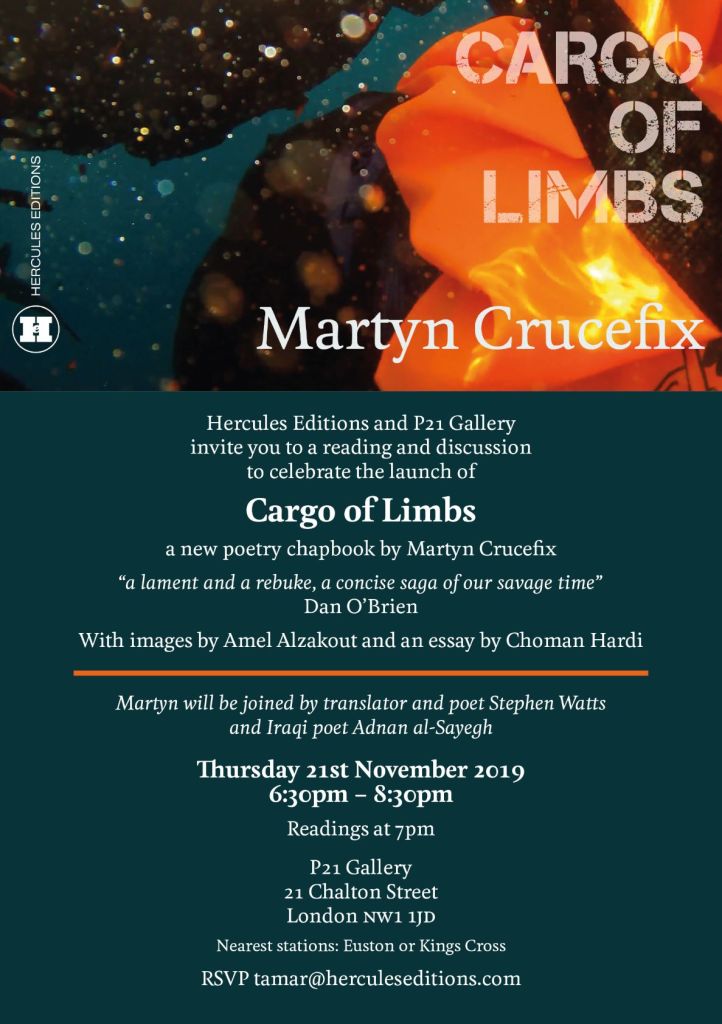
The second book will be published by Hercules Editions, It’s called Cargo of Limbs – more details of it can be found here. I’ll also post the launch event details below – it’s an open and free event and I would be delighted to see you there.
Raymond Antrobus – The Perseverance (Penned in the Margins) – reviewed here.
Jay Bernard – Surge (Chatto & Windus)
David Cain – Truth Street (Smokestack Books) – reviewed here.
Isabel Galleymore – Significant Other (Carcanet) – reviewed here.
Stephen Sexton – If All the World and Love Were Young (Penguin Books)
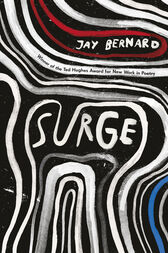
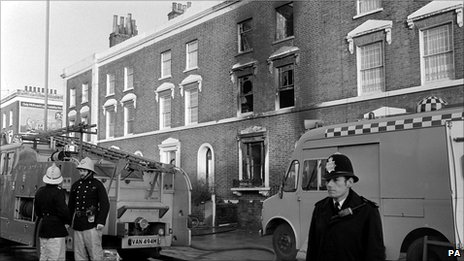
Jay Bernard’s Surge is a slim volume carrying with it a great deal of political as well as publishing history. Its early stirrings seem to have been Bernard’s residency at the George Padmore Institute in north London where they explored documents relating to the New Cross Fire in January 1981. Often dubbed the ‘New Cross Massacre’, thirteen young people died in a fire at a birthday party. The fire may have been racially motivated arson and certainly the authorities’ response to the incident was unconvincing, possibly obstructive. There is a direct line from this incident, through the imposition of SUS laws and ‘stop and search’ in South London and the SWAMP 81 police crackdown and the subsequent, so-called Brixton Riots of April 1981. The Scarman Report in November of that year laid the blame for the riots squarely on the police action. In our contemporary landscape, and especially after the Grenfell Tower fire and the still-unresolved shameful treatment of the Windrush Generation, it’s easy to see why Bernard wanted to write about New Cross.
But Surge itself has since gone through various forms. There were 10 original poems written quickly in 2016. There was a performance piece (at London’s Roundhouse) in the summer of 2017 (it was this version that won the Ted Hughes Award for New Work in poetry in 2017). But it has taken 3 years for this Chatto book to be finalised. In an interview just last year, Bernard observed that they were still unclear what the “final structure” of the material would be. I’m possessed of no insider knowledge on this, but it looks as if this “final” version took some considerable effort – reading it makes me conscious of the strait-jacket that a conventional slim volume of poetry imposes – and I’m not sure the finalised 50-odd pages of the collection really act as the best foil for what are, without doubt, a series of stunningly powerful poems. The blurb and publicity present the book (as publishers so often do) as wholly focused on the New Cross and Grenfell fires but this isn’t really true and something is lost in including the more miscellaneous pieces, particularly towards the end of the book.
Bernard writes of events in the past by deploying a multiplicity of voices which are given the power to haunt backwards and forwards through historical time. Unusually, their own voice is heard in ‘Ark’. They are here searching through an archive of documents of “flaking Letraset and amber glue” that also (punningly) acts as an ‘ark’ to bring the dead back to the present. What preoccupies the narrator is how and where to “file / the damp smoke and young bones” of the New Cross victims. The conclusion seems to be they cannot be securely and finally located anywhere while the country still experiences “the burning house, the child made ash, the brick in the back / of the neck, the shit in the letter box and piss up the side of it”.
Bernard’s poetic voice is at its best when making full use of the licence of free forms, broken grammar, infrequent punctuation, the colloquial voice and often incantatory patois. So a voice in ‘Harbour’ wanders across the page, hesitantly, uncertainly, till images of heat, choking and breaking glass make it clear this is someone caught in the New Cross Fire. Another voice in ‘Clearing’ watches, in the aftermath of the blaze, as an officer collect body parts (including the voice’s own body): “from the bag I watch his face turn away”. The cryptically titled ‘+’ and ‘–’ shift to broken, dialogic prose as a father is asked to identify his dead son through the clothes he was wearing. Then the son’s voice cries out for and watches his father come to the morgue to identify his body. This skilful voice throwing is a vivid way of portraying a variety of individuals and their grief. ‘Kitchen’ offers a calmer voice re-visiting her mother’s house, the details and familiarity evoking simple things that have been lost in the death of the child:
I have held this house
in my arms and let it sob
on the bathroom floor, heard it in
the background of a call,
heard it speak a kind of love –
A vigorously rhythmic patois voice is used in ‘Songbook’, recycling the horrific narrative again as a young boy and girl dance happily until:
Me seh di heat ah di night ah come up thru di floor
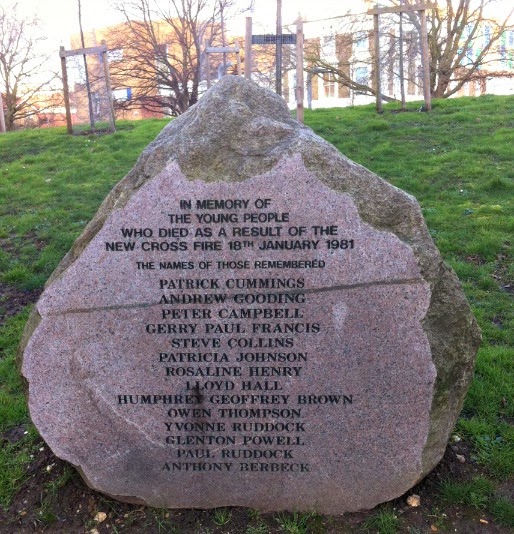
I’m guessing most of the poems I have referred to so far come from the early work of 2016. Other really strong pieces focus on events after the Fire itself. ‘Duppy’ is a sustained description – information slowly drip-fed – of a funeral or memorial meeting and it again becomes clear that the narrative voice is one of the dead: “No-one will tell me what happened to my body”. The title of the poem is a Jamaican word of African origin meaning spirit or ghost. ‘Stone’ is perhaps a rare recurrence of the author’s more autobiographical voice and in its scattered form and absence of punctuation reveals a tactful and beautiful lyrical gift as the narrator visits Fordham Park to sit beside the New Cross Fire’s memorial stone. ‘Songbook II’ is another chanted, hypnotic tribute to one of the mothers of the dead and is probably one of the poems Ali Smith is thinking of when she associates Bernard’s work with that of W.H. Auden.
But when the device of haunting and haunted voices is abandoned, Bernard’s work drifts quickly towards the literal and succumbs to the pressure to record events and places (the downside of the archival instinct). A tribute to Naomi Hersi, a black trans-woman found murdered in 2018, sadly doesn’t get much beyond plain location, a kind of reportage and admission that it is difficult to articulate feelings (‘Pem-People’). There are interesting pieces which read as autobiography – a childhood holiday in Jamaica, joining a Pride march, a sexual encounter in Camberwell, but on their own behalf Bernard seems curiously to have lost their eagle eye for the selection of telling details and tone and tension flatten out:
The bus heaves past Loughborough, to Camberwell,
to the green, buzzing with students drunk on Friday,
drunk on art and trendy and young: wine bottle young,
rollie-young, tight, flat-chested young. I follow you down,
I follow you up to the stairs of your flat [. . .]
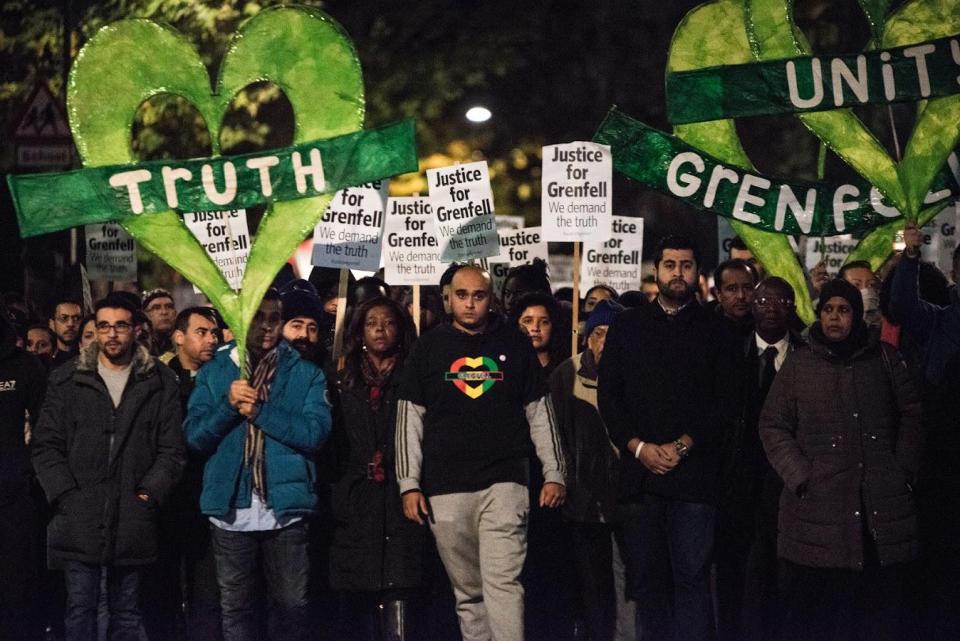
The mirroring architectonic of the collection emerges with the poems written about the Grenfell Tower fire. So we have ‘Ark II’, two pools of prose broken by slashes which seem to be fed by too many tributary streams: the silent marches in Ladbroke grove, the Michael Smithyman murder and abandoned investigation, Smithyman’s transition to Michelle, and the burning of the Grenfell Tower effigy, the video of which emerged in 2018.
In an earlier blog post I was thinking about “the (in)adequacy of a certain English poetic voice to confront the scale of ecological issues, or as a vehicle for expressing certain cultural differences, or as a way of exploring the kind of tragic and grievous event represented by the Grenfell fire and its aftermath”. I think Bernard offers answers to this sort of question in their New Cross Fire poems but the challenge of Grenfell (is it the lack of historical distance?) does not yield the same sort of success. The final poem in the book, ‘Flowers’ is a case in point. Each quatrain carries a rhetorical question, creating a formal rather than urgent or passionate impression, and the valid question is will “anybody speak of” the kinds of issues raised elsewhere in the book. Yet the canonic imagery invokes the speech of flowers, the transition from summer into winter (done much more effectively in ‘Stone’). In the context of a live reading, in the context of the horror, the grief, the injustices, the historical perspectives raised so very successfully elsewhere in Surge, I’m sure this sort of poem has an impact. But in the cold light of day, Bernard’s voice here sounds confined by expectations they ought to be ignoring and ends by giving a rather awkward performance – especially when it’s compared to the fluid, passionate, skilful, clever, eloquence of something like ‘Songbook’.
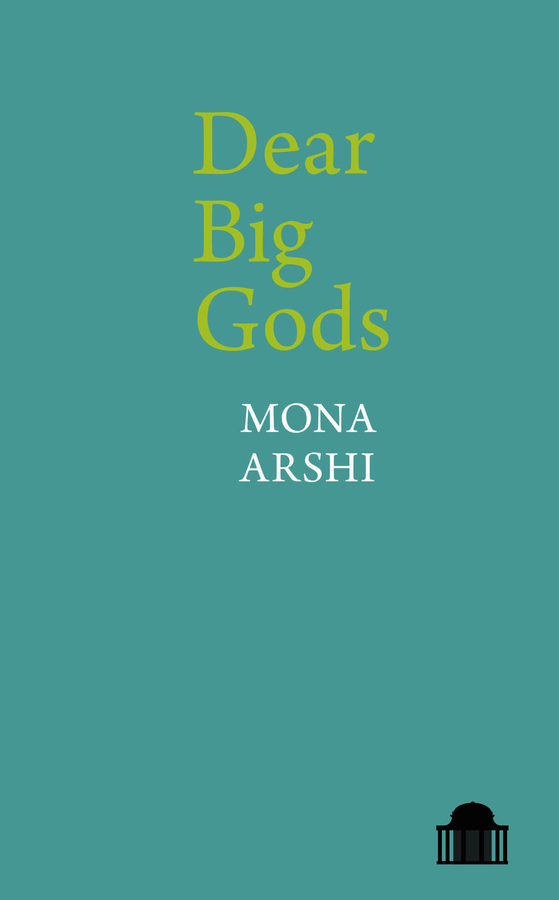
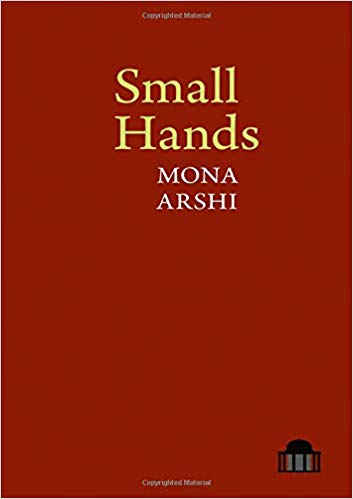
In a recent launch reading for her second collection, Dear Big Gods (Pavilion Poetry/Liverpool University Press, 2019), Mona Arshi suggested it was a book she wrote only reluctantly. Her first book, Small Hands (2015), had at its centre a number of poems in memory of her brother, Deepak, who died unexpectedly in 2012. On her own admission, these new poems continue to be imbued with this grief and – though poets surely always write the book that needs to be written – there is a sense that the development of the new work has been stalled by such powerful feelings. My 2015 review of Small Hands saw Arshi as “an intriguing writer, potentially a unique voice if she can achieve the right distance between herself and her powerful formative influences”. The influences I had in mind then were literary rather than personal, but I find the lack of distance travelled between the earlier and this more recent work rather disappointing.
In fact, Deepak’s death is the explicit subject on only a few occasions. The poem ‘When your Brother Steps into your Piccadilly, West Bound Train Carriage’ isn’t much longer than its own title but it evokes that familiar sense of (mis-)seeing our dead in a public place. The emotions remain raw, from the accusatory “how-the-fuck-could-you?” to the final “I am sorry, I’m so sorry”. A dream or daydream meeting is also the basis for ‘A Pear from the Afterlife’ in which the brother’s affectionate tone advises, “Sis, you gotta let go / of this idea of definitive knowledge”. ‘Five Year Update’ is by far the most extended of these reflections on the brother’s passing, written in very long raking lines (rotated 45 degrees to stretch vertically on the page). “I hope it’s fine to contact you”, it opens and goes on to recall the moment the news of his death was received (see also ‘Phone Call on a Train Journey’ from Small Hands), remembers their childhood together and the sister’s continuing life: “I’ve gone down one lump not two, I still don’t swim and yes I still can’t / take a photograph”.
As the blurb suggests, these poems are indeed “lyrical and exact exploration[s] of the aftershocks of grief”. But ‘Everywhere’ adopts a little more distance and develops the kind of floating and delicate lyricism that Arshi does so well. The absent brother/uncle is still alluded to: “We tell the children, we should not / look for him. He is everywhere”. As that final phrase suggests, the rawness of the grief is being transmuted into a sense of otherness, beyond the quotidian and material. It’s when Arshi takes her brother’s advice and lets go of “definitive knowledge” that her poems promise so much. ‘Little Prayer’ might be spoken by the dead or the living, left abandoned, but either way it argues a stoical resistance: “I am still here // hunkered down”. In a more conventional mode, ‘The Lilies’ develops the objective correlative of the flowers suffering from blight as an image of a spoliation that hurts and reminds, yet is allowed to persist: “I let them live on / beauty-drained / in their altar beds”.
Like so many first books, Small Hands experimented with various poetical forms. This book also – a bit wilfully – tries out tanka, poems in two columns, right justification, centre justification, ghazals, inter-cut texts, prose poems, a sestina, an Emily Dickinson parody and responses to Lorca and The Mahabharata. They don’t all work equally well and Arshi perhaps senses this in lines like these:
My little bastard verses
tiny polyglot faces
how light you are
how virtually weightless
The irony may be that this sort of form and reach actually does show Arshi at her best. The sequence of tiny poems modelled on Lorca’s ‘Mirror Suite’ (1921-1923) is fascinating. Jerome Rothenburg, discussing Lorca’s poems, describes them as possessing “a coolness & (sometimes) quirkiness, a playfulness of mind & music that I found instantly attractive”. These same qualities – as with Lorca, a version of surrealism, a firm but gentle turning aside from “definitive knowledge” – I enjoy in Arshi’s work as she explores states of the heart and realms of knowledge not ordinarily encountered or encompassed. Dear Big Gods contains other such Lorca-esque sequences such as ‘Autumn Epistles’, ‘Grief Holds a Cup of Tea’ and ‘Let the Parts of the Flower Speak’ and these are far more interesting than the poems drawn from The Mahabharata or the experiments in prose.
Arshi’s continuing love affair with ghazals also seems to me to be an aspect of this same search for a form that holds both the connected and the stand-alone in a creative tension. ‘Ghazal: Darkness’ is very successful with the second line of each couplet returning to the refrain word, “darkness”, while the connective tissue of the poem allows a roaming through woods, soil, mushrooms and a mother’s praise of her daughters. Poems based on – or at least with the qualities of – dreams also stand out. The doctor in ‘Delivery Room’ asks the mother in the midst of her contractions, “Do you prefer the geometric or lyrical approach?” In ‘The Sisters’ the narrator dreams of “all the sisters I never had” and within 10 lines Arshi has expressed complex yearnings about loneliness and protectiveness in relation to siblings and self.
Given the traumatic disruption of her own, it’s no surprise that Arshi’s most frequently visited subject area is family relationships. I’ve referred to several of these poems already and ‘Gloaming’ floats freely through the fears of losing a child, the care of an ageing father, a mother “entering/leaving through a narrow lintel” and the recall of the “thick soup of our childhood”. The soup works well both as literal food stuff and as metaphor for the nourishing, warming milieu of an up-bringing, though the girl who looks up at the end of the poem is already exploring questions of identity. She asks, “where are you from, what country are we in?” Given Arshi’s own background – born to Punjabi Sikh parents in West London – such questions have obvious autobiographical and political relevance, though I sense Arshi herself is also asking questions of a more spiritual nature.
So, in ‘My Third Eye’, the narrator is “more perplexed than annoyed” that her own third eye – the mystical and esoteric belief in a speculative, spiritual perception – has not yet “opened”. The poem’s mode and tone is comic for the most part; there is a childish impatience in the voice, asking “Am I not as worthy as the buffalo, the ferryman, / the cook and the Dalit?”. But in the final lines, the holy man she visits is given more gravitas. He touches the narrator’s head “and with that my eyes suddenly watered, widened and / he sent me on my way as I was forever open open open”. The book also closes with the title poem, ‘Dear Big Gods’, which takes the form of a prayer: “all you have to do / is show yourself”, it pleads. The delicate probing of Arshi’s best poems, their stretching of perception and openness to unusual states of emotion are driven by this sort of spiritual quest. Personal tragedy has no doubt fed this creative drive but – as the poet seems to be aware – such grief is only an aspect of her vision and not the whole of it.
One of my very first reviews here – in August 2014 – was of Liz Berry’s Black Country. I was so impressed with the ways in which she exerted “pressure to counter the hegemonies of language, gender, locality, even of perception”. Most obviously she was doing this through the use of her own Black Country dialect, but I thought a more profound aspect of this was how “so many poems unfold[ed] as processes of self-transformation”; transgressive energies were being released through language, the erotic, myth-making and the surreal. The earlier book concluded with poems anticipating the birth of a child and – at the time – I felt these were less startlingly good, inclined to fall into ways of saying that the rest of the collection so triumphantly avoided.
It’s interesting then – in The Republic of Motherhood (Chatto, 2018) – to read more of Berry’s poems written since then, since the birth of her two sons and after a period of relative creative silence (more of that later). I nominated six stand-out poems from Black Country that I felt would establish her reputation – and the title poem of this pamphlet must be added to that list. It’s the most political of the fifteen poems and is propelled by the tensions located between motherhood as social norm or expectation and the personal/social grain of that particular experience. The paradox of the opening lines is that entering into the republic of motherhood (shades of Seamus Heaney’s 1987 The Haw Lantern, with its ‘From the Republic of Conscience’), the mother also discovers a monarchy, a “queendom, a wild queendom”. Much of the poem lists the realities of early motherhood – the night feeds, the smelly clothes, the exhaustion, the clinics and queues – a great democracy of women taking up a particular role. But there are signs too of an external compulsion, a set of expectations to be lived up to. The mother is expected to play the queen too as she pushes her pram down “the wide boulevards of Motherhood / where poplars ben[d] their branches to stroke my brow”. The public role of motherhood comes with demands: “As required, I stood beneath the flag of Motherhood / and opened my mouth although I did not know the anthem”. As much as any new parent feels woefully inadequate and ignorant of the needs of their young child, the young mother is faced with additional social expectations about instinct, affection, abilities and fulfilment which are quite impossible to realise. And on this point, there remains a conspiracy of silence: “[I] wrote letters of complaint / to the department of Motherhood but received no response”.
The mother in the poem also suffers postpartum depression and Berry seems here to allude to experiences of First World war soldiers, wounded, repaired and sent back out to fight again, without fundamental issues being addressed: “when I was well they gave me my pram again / so I could stare at the daffodils in the parks of Motherhood”. She ends up haunting cemeteries, both real and symbolic, and it is here she finds even more tragic victims of motherhood, of birth trauma and of psychosis. The final response of the poem is to pray – though it is a prayer that has scant sense of religion but combines empathy with other women with a great anger expressed in the phrase “the whole wild fucking queendom [of Motherhood]”. The paradoxically inextricable sorrow and beauty of motherhood becomes the subject of the rest of the pamphlet, but this poem ends with the mother echoing a baby’s “nightcry” and erasing her own self, “sunlight pixellating my face”. The poem’s rawness is unresolved. Having crossed the border into motherhood (that decision is never questioned here), the contradictory pulls of Motherhood (capital M) and the stresses of mothering (small m) have a devastating impact. In a recent poem called ‘The Suburbs’ – Berry’s contribution to the National Poetry Competition 40th Anniversary Anthology – she records the effect of mothering even more starkly: “my world miniaturised”. Listen to Liz Berry talk about and read this poem here.
After the tour de force of ‘The Republic of Motherhood’, the pamphlet takes a more chronological track. ‘Connemara’ seems to mark the moment of conception as a moment of self-abandonment (“I threw the skin to the wind, / sweet sack”) which, in the light of the preceding poem, takes on greater ironies of naivety: “Let them come, / I thought, / I am ready.” One of the joys of Berry’s work is her sense of the animal-physicality of the human body (revel in ‘Sow’ from Black Country) and ‘Horse Heart’ figures a ward of expectant mothers as a farmyard stable: “the sodden hay of broken waters, / each of us private and lowing in our stalls”. She captures the high anticipation and potentially brutal arrival of the all-demanding babies as a herd of horses; “the endless running / of the herd, fear of hoof / upon my chest”. These two poems can be read here.
Birth itself, in ‘Transition’, is to be feared (“I wanted to crawl into that lake at Kejimakujik”) and gotten through in part by absenting oneself into the past in ‘The Visitation’. The latter is addressed to Eloise, a figure who appeared in a Black Country poem, ‘Christmas Eve’. Here, a schoolgirl memory of a loving encounter with Eloise takes the narrator away from the pains of contractions, “as my body clenched and unfurled”. ‘Sky Birth’ is the one poem that challenges the brilliance of ‘The Republic of Motherhood’. It takes the image of climbing a mountain to evoke the physical pain and endurance required (Berry welcomes all those traditional associations with spiritual climb and progress), yet the poem never loses its sense of the real situation. The breathlessness of the climb suddenly flips back to the mother howling “over the voice of the midwife, the beeping monitors”. It is the figurative climb as much as the literal pain of giving birth that makes her “retch with the heights” and in the final moments, the mountaineer is “knelt on all fours” as most likely was the mother-to-be. The height is reached in a moving conceit:
when it came it came fast, a shining crown
through the slap of the storm,
for a second we were alone on that highest place
and love, oh love,
I would have gladly left my body
on that lit ledge for birds to pick clean
for my heart was in yours now
and your small body would be the one to carry us.
That final plural personal pronoun reminds me of a comment made by Jonathan Edwards in reviewing this pamphlet. Edwards wonders briefly about the absence of the father figure. Is the ‘us’ here the mother and child? Or is this one of the few references in the pamphlet to both parents?
I hope this is not just a male reviewer’s concern. It may be an artistic or political decision on Berry’s part. Or a personal one. But given the thrust of much of the work – that mothering is an utterly taxing and even deranging experience – I’m troubled by the father figure’s absence, if only in that it risks representing the idea (the toxic flip-side to the expectations laid on the mother) that fathers need have little part to play. The father does appear in the final poem, ‘The Steps’, though the questioning tone and syntax casts doubt over what of the parents’ relationship will survive the experience of the child’s arrival: “Will we still touch each other’s faces / in the darkness”. I also wonder if the father figure is implied in the image of a boy riding his bike up Beacon Hill in ‘Bobowler’. This is a beautiful poem on the image of a moth (‘bobowler’ is the Black Country word for a moth). The moth is a messenger, coming to all “night birds”. The boy on the bike is one such, his heart “thundering / like a strange summer storm” which perhaps echoes those thundering hooves of the approaching young child. Perhaps there is some recognition here that the father’s world too will be turned upside down. And the message the bobowler brings may also relate to the parental relationship: “I am waiting. / The love that lit the darkness between us / has not been lost”.
But such optimism is not a frequent note. Most of the remaining poems deal with the experience of depression in motherhood. ‘Early’ is almost as happy as it gets with mother and child now like “new sweethearts, / awake through the shining hours, close as spoons in the polishing cloth of dawn” (what a glorious image that is). But even here there are demands from the child that will need “forgiving” by the mother. One of these concerns her role as writer, particularly the difficulty of writing in the maelstrom of mothering: “every line I wanted to write for you / seems already written, read / and forgotten”. And this is why Berry chooses to co-opt lines from Charlotte Perkins Gillman’s terrifying story, The Yellow Wallpaper in ‘The Yellow Curtains’. Both texts can be read as studies of postpartum depression, but the despair has as much to do with the women as writers, confined, and – as in Gillman – the husband voices the demands and expectations of convention, of queendom: “He said [. . .] I must / take care of myself. For his sake.”
‘So Tenderly It Wounds Them’ is a more public account of the trials of young motherhood, of women who “are lonely/ though never alone”, women who find themselves “changed / beyond all knowing”, waking each morning only to feel “punched out by love”. The more recent poem ‘The Suburbs’ also contains the same paradox that motherhood is a state of “tenderness and fury”. ‘Marie’ seems to record a debt to a supportive female friend and it is only through the ministering (that seems the apt word) of “women in darkness, / women with babies” in ‘The Spiritualist Church’ that the young mother’s despair has any hope of being redeemed. Redeemed, not solved, of course: what the women argue is that “love can take this shape” and perhaps it Berry’s sense of art, or her personal experience, or a recognition of human resilience, or a final succumbing to a traditional narrative, that makes her place ‘Lullaby’ as the penultimate poem. It ends sweetly though the final poem sends us back to the start of it all – the dash to the hospital. So Berry book-ends this little gem of a collection with time shifts that argue motherhood’s simultaneous complexity of animal and human love as well as its pain and awful boredom and personal diminishment.
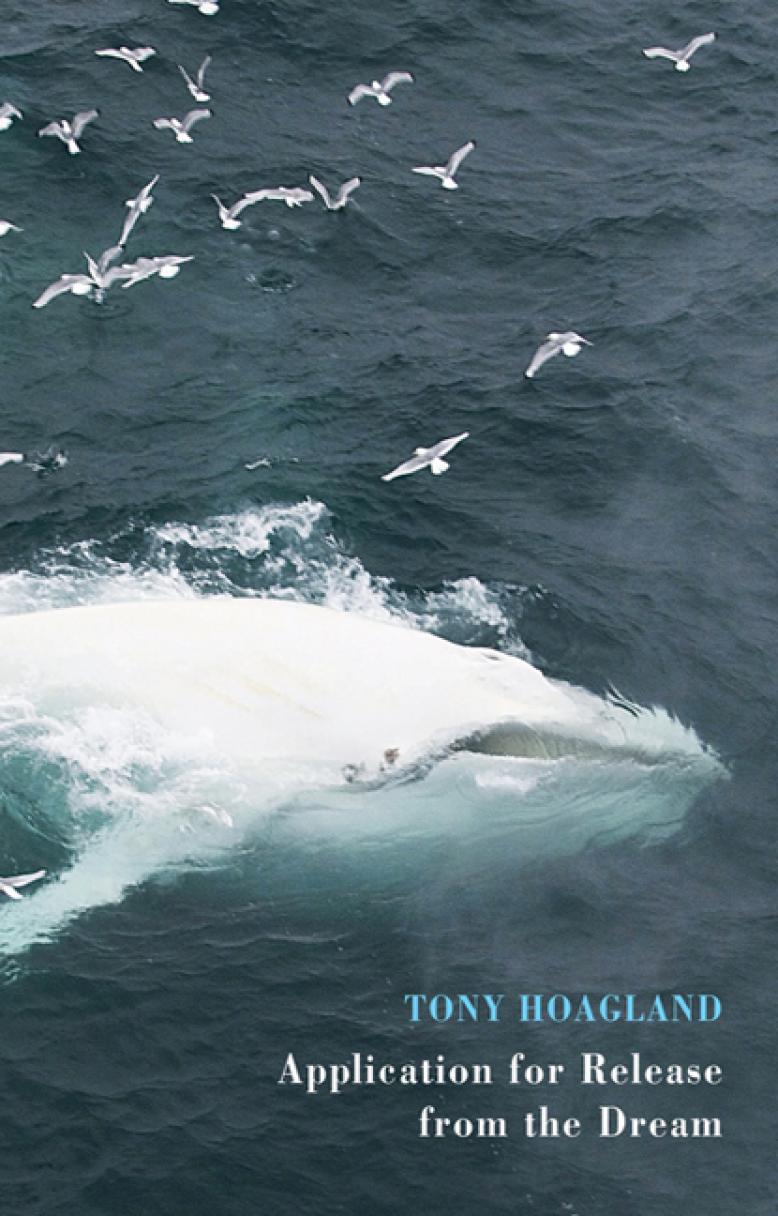
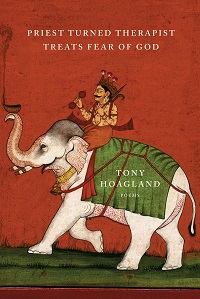
The sad news of American poet Tony Hoagland’s death yesterday (23.10.2018), prompts me to post this brief review of one of his more recent books, Application for Release from the Dream (Bloodaxe Books, 2015). My review was originally written to appear in Poetry London a couple of years ago. Hoagland’s work punctures personal, poetical and political pretensions and I would highly recommend it to anybody who has yet to discover its great pleasures and profundities. His most recent collection – likely to be his last – will appear in the UK next year and be called Priest Turned Therapist Treats Fear of God (Bloodaxe Books, 2019).
The metaphorical dream Tony Hoagland’s book titles is applying for release from is the alchemical one: the search for gold from lead. Though Hoagland’s world is definitely leaden, quotidian, often spoiled, there are compensatory moments when the disappointed prospective alchemist recalls “the lute hidden in his closet”. And though Hoagland is always keen to ask big questions (this collection opens with “What is a human being? What does it mean?” (‘The Edge of the Frame’)), his poems travel through thickets of irony because language interferes and shit happens and our harking after absurd, abstract, definitive answers is wholly mistaken.
Many of these poems are laugh-out-loud funny and there are occasions when Hoagland reminds me of the Ted Hughes of Crow with its gallows humour spliced with admiration for a sometimes thuggish survival against the odds: “Underneath the smile is bitterness, and underneath the bitterness is grief, / and underneath the grief the desire to survive” (‘Airport’).
But, Antaeus-like, Hoagland always keeps his feet firmly on the ground. His language is accordingly direct, chatty, engaging, man to man (not afraid to be masculine), eschewing the hyper-economy of certain poetries. His verse forms are very free. He’s good company (and will remind you of Billy Collins); he’s drawn to the common man (and will remind you of Philip Levine). In ‘The Hero’s Journey’ the sight of a marble floor in a hotel lobby impresses on him that “someone had waxed and polished it all”. This, he characteristically tells us, “tempered my enthusiasm for The Collected Letters of Henry James, Volume II”.
The fact is, Hoagland’s heroes are cleaners, bakers, prisoners and the nurse “wiping off the soft heroic buttocks of Odysseus”. His ‘Little Champion’ is a butterfly that lives on the urine of a particular animal, its lifetime spent in slavish pursuit of it. Likewise, “Human beings are tough” declares a poem set in a hospital, “with their obesity, their chemo and their scars” (‘December, with Antlers’).
Nevertheless, some uncertain light can be cast on the human condition by ‘The Neglected Art of Description’. A man descending into a man-hole can remind us of “the world // right underneath this one” though Hoagland treats this idea with three doses of ironic distancing. He’s even more confident that the pleasures of perceptual surprise can “help me on my way” (even this, an equivocal sort of progress and destination; no golden goal).
This book’s title poem is as definitive and epigrammatic as it gets: “If you aren’t learning, you have not been paying attention. / If you have nothing to say, it is because your heart is closed”. But the disturbing truth, according to ‘Crazy Motherfucker Weather’, is that our precious selves are no more than “a burning coal // one carries around in one’s mouth for sixty years, / for delivery / to whom, exactly; to where?” Another poem suggests there is a place balanced “between irony and hope” where we might live (‘Western’).
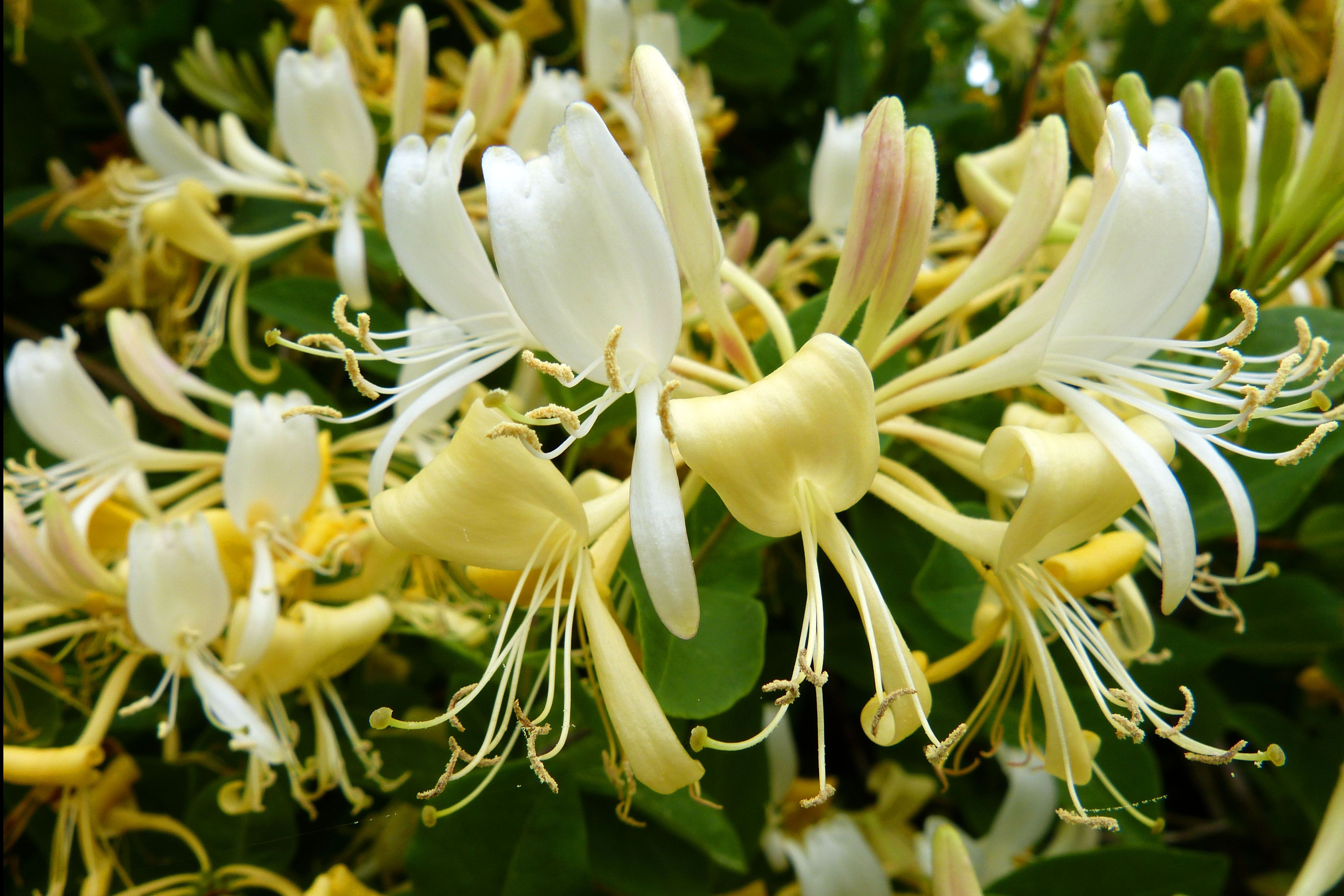
The humour of Hoagland’s poems punctures both personal and political pretension, targets the poet himself as much as others, makes for very enjoyable poems and ensures those few moments of pleasure or beauty that do emerge are all the more convincing. In ‘Because It Is Houston’, for example, there is no one “better qualified around”, so the narrator derives surprise and pleasure from the “little ivory trumpets” knocked from a honeysuckle bush by a brief shower of rain.
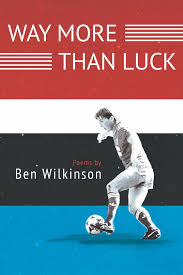 I’m not proud to admit that Way More Than Luck passed me by when it was first published. As you are probably aware, Wilkinson reviews poetry regularly for The Guardian, and he’s very familiar on social media as a poet and critic, a distance runner and a passionate Liverpool football fan. But the book’s cover (Dalglish, I think), its title and some of the publicity persuaded me that the football bit was going to be predominant. It’s certainly an almost unique aspect of the collection, but it turns out the debilitating darkness of psychological depression is an even more significant one. Wilkinson signals this concern via the book’s two epigraphs. One is about the nature of depression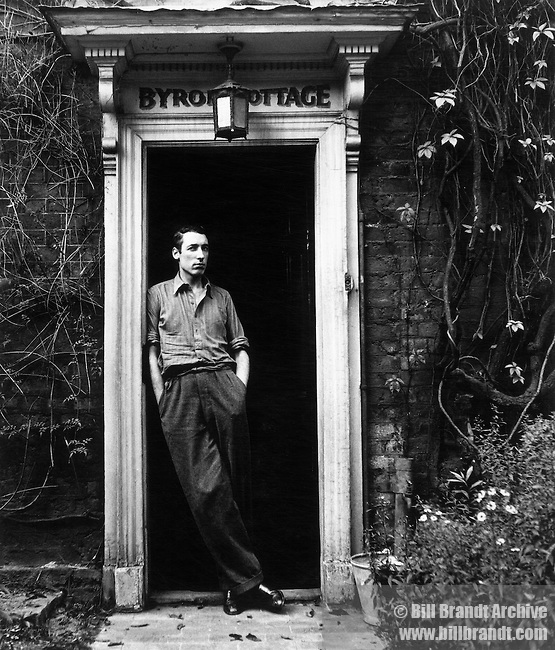
 For me, it’s these psychological truths that Wilkinson is so good at conveying. There are other poems later in the book (and perhaps ‘Stag’ is an elusive example) which begin to sketch episodes of a foundering romantic relationship and ‘Building a Brighter, More Secure Future’ is a very effective excursion into witty political satire (a skilfully handled sestina based on the Conservative Party election manifesto, 2015). And there are the football poems. They comprise the central sequence of 14 poems, introduced with a heart-felt Prologue that says what follows is for the ordinary football fans, written out of “a love beyond the smear campaigns, / the media’s hooligans”. A large part of what Wilkinson has in mind here is the shocking response in parts of the media to the Hillsborough tragedy in 1989, when 96 men, women and children died (David Cain’s Forward prize shortlisted book, Truth Street, from Smokestack Books, movingly dealt with this event and the media and policing responses and
  But the poems also show how difficult it is to escape the miasma of cliché that seems to engulf football itself. Anfield is filled with a “fabled buzz”, then “the place erupt[s]”. Barnes unleashes a “a sweeping, goal-bound ball”, and a particular game offers one “last-ditch twist”. I’m reminded of Louis MacNeice’s observation (now sadly compromised in various ways, but the spirit of it remains valid, I think) that he wanted a poet not to be “too esoteric. I would have a poet able-bodied [sic], fond of talking, a reader of the newspapers, capable of pity and laughter, informed in economics, appreciative of women [sic], involved in personal relationships, actively interested in politics, susceptible to physical impressions’. There are many more of these poets around these days and to bring (even) football into the purview of poetry can hardly be a bad thing. Yet it is not an easy one and there may be some risks in deciding to headline the attempt. Ian Duhig’s blurb note to Way More Than Luck has gingerly to negotiate this issue: “The beautiful game inspires some beautiful poems in Ben Wilkinson’s terrific debut collection … but there’s far more than football to focus on here”. Yes, indeed.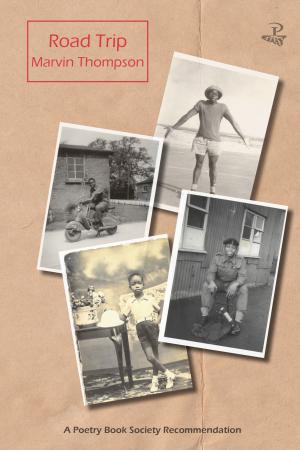






 But Surge itself has since gone through various forms. There were 10 original poems written quickly in 2016. There was a performance piece (at London’s Roundhouse) in the summer of 2017 (it was this version that won the Ted Hughes Award for New Work in poetry in 2017). But it has taken 3 years for this Chatto book to be finalised. In an interview just last year, Bernard observed that they were still unclear what the “final structure” of the material would be. I’m possessed of no insider knowledge on this, but it looks as if this “final” version took some considerable effort – reading it makes me conscious of the strait-jacket that a conventional slim volume of poetry imposes – and I’m not sure the finalised 50-odd pages of the collection really act as the best foil for what are, without doubt, a series of stunningly powerful poems. The blurb and publicity present the book (as publishers so often do) as wholly focused on the New Cross and Grenfell fires but this isn’t really true and something is lost in including the more miscellaneous pieces, particularly towards the end of the book.
 Bernard’s poetic voice is at its best when making full use of the licence of free forms, broken grammar, infrequent punctuation, the colloquial voice and often incantatory patois. So a voice in ‘Harbour’ wanders across the page, hesitantly, uncertainly, till images of heat, choking and breaking glass make it clear this is someone caught in the New Cross Fire. Another voice in ‘Clearing’ watches, in the aftermath of the blaze, as an officer collect body parts (including the voice’s own body): “from the bag I watch his face turn away”. The cryptically titled ‘+’ and ‘–’ shift to broken, dialogic prose as a father is asked to identify his dead son through the clothes he was wearing. Then the son’s voice cries out for and watches his father come to the morgue to identify his body. This skilful voice throwing is a vivid way of portraying a variety of individuals and their grief. ‘Kitchen’ offers a calmer voice re-visiting her mother’s house, the details and familiarity evoking simple things that have been lost in the death of the child:
 I’m guessing most of the poems I have referred to so far come from the early work of 2016. Other really strong pieces focus on events after the Fire itself. ‘Duppy’ is a sustained description – information slowly drip-fed – of a funeral or memorial meeting and it again becomes clear that the narrative voice is one of the dead: “No-one will tell me what happened to my body”. The title of the poem is a Jamaican word of African origin meaning spirit or ghost. ‘Stone’ is perhaps a rare recurrence of the author’s more autobiographical voice and in its scattered form and absence of punctuation reveals a tactful and beautiful lyrical gift as the narrator visits Fordham Park to sit beside the New Cross Fire’s memorial stone. ‘Songbook II’ is another chanted, hypnotic tribute to one of the mothers of the dead and is probably one of the poems Ali Smith is thinking of when she associates Bernard’s work with that of W.H. Auden.
 But when the device of haunting and haunted voices is abandoned, Bernard’s work drifts quickly towards the literal and succumbs to the pressure to record events and places (the downside of the archival instinct). A tribute to Naomi Hersi, a black trans-woman found murdered in 2018, sadly doesn’t get much beyond plain location, a kind of reportage and admission that it is difficult to articulate feelings (‘Pem-People’). There are interesting pieces which read as autobiography – a childhood holiday in Jamaica, joining a Pride march, a sexual encounter in Camberwell, but on their own behalf Bernard seems curiously to have lost their eagle eye for the selection of telling details and tone and tension flatten out:
 The mirroring architectonic of the collection emerges with the poems written about the Grenfell Tower fire. So we have ‘Ark II’, two pools of prose broken by slashes which seem to be fed by too many tributary streams: the silent marches in Ladbroke grove, the Michael Smithyman murder and abandoned investigation, Smithyman’s transition to Michelle, and the burning of the Grenfell Tower effigy, the video of which emerged in 2018.
 In a recent launch reading for her second collection, Dear Big Gods (Pavilion Poetry/Liverpool University Press, 2019), Mona Arshi suggested
 As the blurb suggests, these poems are indeed “lyrical and exact exploration[s] of the aftershocks of grief”. But ‘Everywhere’ adopts a little more distance and develops the kind of floating and delicate lyricism that Arshi does so well. The absent brother/uncle is still alluded to: “We tell the children, we should not / look for him. He is everywhere”. As that final phrase suggests, the rawness of the grief is being transmuted into a sense of otherness, beyond the quotidian and material. It’s when Arshi takes her brother’s advice and lets go of “definitive knowledge” that her poems promise so much. ‘Little Prayer’ might be spoken by the dead or the living, left abandoned, but either way it argues a stoical resistance: “I am still here // hunkered down”. In a more conventional mode, ‘The Lilies’ develops the objective correlative of the flowers suffering from blight as an image of a spoliation that hurts and reminds, yet is allowed to persist: “I let them live on / beauty-drained / in their altar beds”.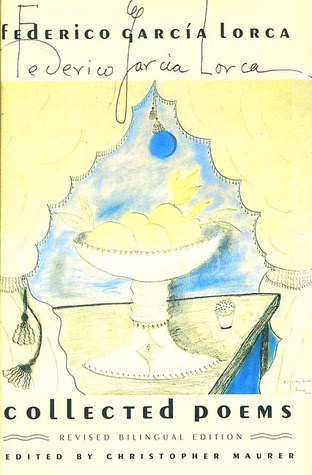
 Arshi’s continuing love affair with ghazals also seems to me to be an aspect of this same search for a form that holds both the connected and the stand-alone in a creative tension. ‘Ghazal: Darkness’ is very successful with the second line of each couplet returning to the refrain word, “darkness”, while the connective tissue of the poem allows a roaming through woods, soil, mushrooms and a mother’s praise of her daughters. Poems based on – or at least with the qualities of – dreams also stand out. The doctor in ‘Delivery Room’ asks the mother in the midst of her contractions, “Do you prefer the geometric or lyrical approach?” In ‘The Sisters’ the narrator dreams of “all the sisters I never had” and within 10 lines Arshi has expressed complex yearnings about loneliness and protectiveness in relation to siblings and self.
 So, in ‘My Third Eye’, the narrator is “more perplexed than annoyed” that her own third eye – the mystical and esoteric belief in a speculative, spiritual perception – has not yet “opened”. The poem’s mode and tone is comic for the most part; there is a childish impatience in the voice, asking “Am I not as worthy as the buffalo, the ferryman, / the cook and the Dalit?”. But in the final lines, the holy man she visits is given more gravitas. He touches the narrator’s head “and with that my eyes suddenly watered, widened and / he sent me on my way as I was forever open open open”. The book also closes with the title poem, ‘Dear Big Gods’, which takes the form of a prayer: “all you have to do / is show yourself”, it pleads. The delicate probing of Arshi’s best poems, their stretching of perception and openness to unusual states of emotion are driven by this sort of spiritual quest. Personal tragedy has no doubt fed this creative drive but – as the poet seems to be aware – such grief is only an aspect of her vision and not the whole of it.
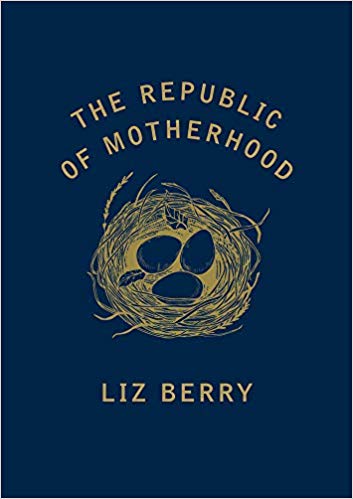
 It’s interesting then – in The Republic of Motherhood
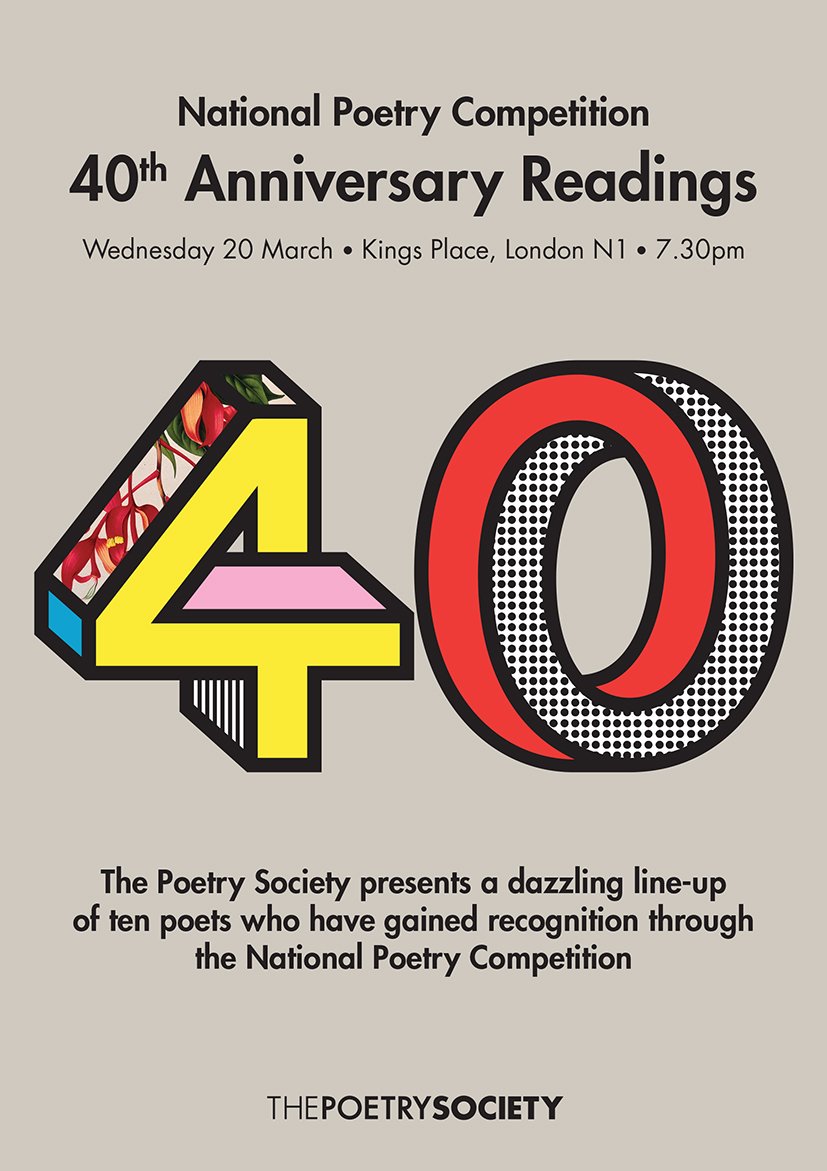 The mother in the poem also suffers postpartum depression and Berry seems here to allude to experiences of First World war soldiers, wounded, repaired and sent back out to fight again, without fundamental issues being addressed: “when I was well they gave me my pram again / so I could stare at the daffodils in the parks of Motherhood”. She ends up haunting cemeteries, both real and symbolic, and it is here she finds even more tragic victims of motherhood, of birth trauma and of psychosis. The final response of the poem is to pray – though it is a prayer that has scant sense of religion but combines empathy with other women with a great anger expressed in the phrase “the whole wild fucking queendom [of Motherhood]”. The paradoxically inextricable sorrow and beauty of motherhood becomes the subject of the rest of the pamphlet, but this poem ends with the mother echoing a baby’s “nightcry” and erasing her own self, “sunlight pixellating my face”. The poem’s rawness is unresolved. Having crossed the border into motherhood (that decision is never questioned here), the contradictory pulls of Motherhood (capital M) and the stresses of mothering (small m) have a devastating impact. In a recent poem called ‘The Suburbs’ – Berry’s contribution to the National Poetry Competition 40th Anniversary Anthology – she records the effect of mothering even more starkly: “my world miniaturised”.

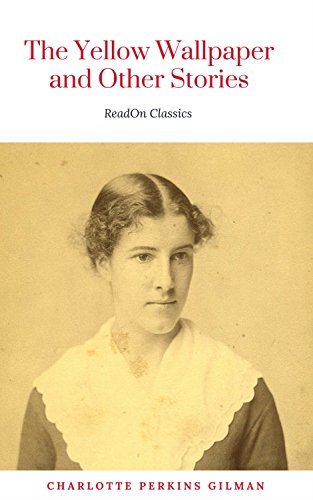 But such optimism is not a frequent note. Most of the remaining poems deal with the experience of depression in motherhood. ‘Early’ is almost as happy as it gets with mother and child now like “new sweethearts, / awake through the shining hours, close as spoons in the polishing cloth of dawn” (what a glorious image that is). But even here there are demands from the child that will need “forgiving” by the mother. One of these concerns her role as writer, particularly the difficulty of writing in the maelstrom of mothering: “every line I wanted to write for you / seems already written, read / and forgotten”. And this is why Berry chooses to co-opt lines from Charlotte Perkins Gillman’s terrifying story, The Yellow Wallpaper in ‘The Yellow Curtains’. Both texts can be read as studies of postpartum depression, but the despair has as much to do with the women as writers, confined, and – as in Gillman – the husband voices the demands and expectations of convention, of queendom: “He said [. . .] I must / take care of myself. For his sake.”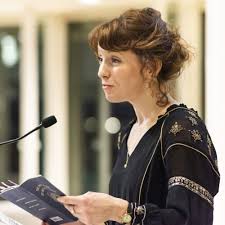

 Nevertheless, some uncertain light can be cast on the human condition by ‘The Neglected Art of Description’. A man descending into a man-hole can remind us of “the world // right underneath this one” though Hoagland treats this idea with three doses of ironic distancing. He’s even more confident that the pleasures of perceptual surprise can “help me on my way” (even this, an equivocal sort of progress and destination; no golden goal).