The Bow-Wow Shop’s Aspects of Orpheus

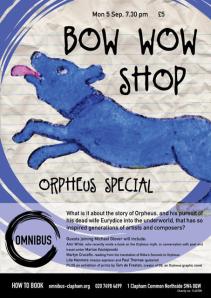
Bow Wow Shop Orpheus Poster_v2

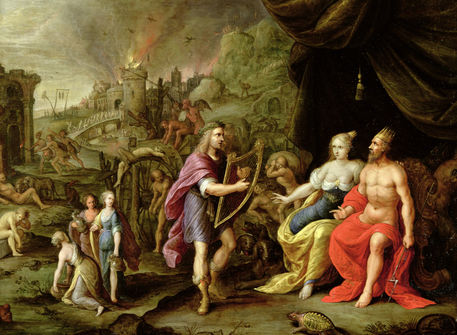
Last week I was pleased to be involved in the first of the on-line journal Bow-Wow Shop’s evening events in Clapham. Its focus was the figure of Orpheus: What is it about the story of Orpheus and his pursuit of his dead wife, Eurydice, into the underworld that has so inspired generations of artists, writers and composers?

Editor of The Bow-Wow Shop, poet and Independent arts and culture journalist, Michael Glover organises and he programmed a terrific mix of material. Ann Wroe’s 2011 book, Orpheus: the song of life (Cape), explores the roots of the Orphic story and traces its many manifestations through Classical to modern times. I was lucky enough to read with her at an event at Lauderdale House a couple of years ago. In Clapham she was in conversation with Marius Kociejowski. I was there on the strength of my 2012 translations of Rilke Sonnets to Orpheus (Enitharmon Press). Providing musical illustrations of the power of the Orpheus story were mezzo-soprano Lita Manners and guitarist Paul Thomas. There was also an exhibition of prints by Tom de Freston, creator of OE, a graphic novel on the Orpheus material.

imgres

Lita and Paul performed extracts for Gluck’s opera Orfeo ed Euridice (1762), songs by Vaughn-Williams and from the 1959 film Black Orpheus. Marius interviewed Ann though she needed little prompting to discuss several aspects of what is a wonderfully original book. Rilke’s inspired writing of the Sonnets to Orpheus (1922) form a thread through the book but she steered clear of that and concentrated more on the first evidence of the myth in the 6th BCE: a painting in black figure on a Greek vase, pictured with a huge lyre that almost seems part of him. Already at that early stage he is called ‘famous’. A 13th century BCE Cretan vase perhaps images him, again with the super-sized lyre (denoting divine powers, his music powerful even over inanimate objects birds, trees). Elsewhere he seems imaged as a bird himself – the power of song and music so strong that he must take on the attributes of a bird-god.

imgres

Perhaps even further back, Ann suggested, the figure is based on fertility myths, perhaps of Indian origin. His wife Eurydice likewise is linked to the figure of Persephone, the whole narrative in its original forms reflecting ideas of the seasons, death and re-birth of the earth, the crops. But there remains something irresolvable about the Orpheus myth – this polyvalent quality is one of the reasons for its productive quality in terms of inspiring artists. We kept recurring to the question: why must Orpheus turn as he is leading Eurydice out of the Underworld? The story contains its own tragedy. Ann suggested one interpretation might be to do with the fact the Eurydice represents the mystery of the natural world, or perhaps of knowledge/speech about the natural world, and that must necessarily remain hidden. Such a thing is the remit of the Gods alone. Orpheus must leave the Underworld empty-handed.

images

I spoke about Rilke in 1921, settling into the Château de Muzot in the Swiss Valais. How he liked to walk in the garden with its orchards and roses in full bloom, a landscape often evoked in the sonnet sequence which eventually arrived. He later declared that in the month of February 1922, he ‘could do nothing but submit, purely and obediently, to the dictation of [an] inner impulse’. In an extraordinary inspirational period, between the 2nd and 5th of that month, most of the 26 sonnets of Part One of Sonnets to Orpheus were written. He then polished off the ten year old sequence of the Duino Elegies. Between the 15th and the 23rd, Rilke went on to complete the 29 poems of Part Two.

Perrcy Bysshe Shelley wrote a longish fragment on the myth in 1820:


His [song]

Is clothed in sweetest sounds and varying words

Of poesy. Unlike all human works,

It never slackens, and through every change

Wisdom and beauty and the power divine

Of mighty poesy together dwell,

Mingling in sweet accord.


Here, as often, Orpheus is an image of the (male) artist/poet as well as being an image of our desire to find or create order or harmony in the world about us.

Rilke’s inspired poems brim with optimism and confidence about the role of poetry. In contrast, but more typical of the growing 20th century gloom, perhaps with intimations of a second world war, 15 years later – Auden’s brief 1937 poem ‘Orpheus’ is mired in uncertainty, asking “What does the song hope for?” Is it to be “bewildered and happy” – a sort of ecstatic but unthinking bliss? Or is it to discover “the knowledge of life”? No answer is given. The poem ends: “What will the wish, what will the dance do?” This is the Auden who doubts the power of poetry – it makes nothing happen – in his Elegy to Yeats.

And more like Auden than Rilke, the 20th century tended to take a more sceptical view of the myth – giving a more powerful voice to the traditionally passive Eurydice – more critical of Orpheus as careless, self-centred, weak. For example, in 1917 – 4 years before Rilke arrived in his chateau, H.D.’s Eurydice was condemning Orpheus:


for your arrogance

and your ruthlessness

I have lost the earth

and the flowers of the earth


Such radical revisions come also from more explicitly feminist poets like the American, Alta:


all the male poets write of orpheus

as if they look back & expect

to find me walking patiently

behind them, they claim I fell into hell

damn them, I say.

I stand in my own pain

& sing my own song

fullsizerender-11-360x348

Carol Ann Duffy’s revision (in her 1999 book The World’s Wife) gives Eurydice both poem title and narrative perspective. Her Orpheus is:


the kind of a man

who follows her round

writing poems, hovers about

while she reads them,

calls her his Muse,

and once sulked for a night and a day

because she remarked on his weakness for abstract nouns.


She saves herself from having to accompany Orpheus back to the upper world by offering to listen to his poem again. Orpheus, seduced and flattered, turns. “I waved once and was gone” she comments.

imgres

In this context Rilke’s take on the myth is (not surprisingly) very traditional and brimming with confidence in the role of the poet and patriarchal sidelining of Eurydice. So Rilke’s interest lies with the world and the underworld, life and death. He is more like Shelley who set his fragmentary poem after the loss of E and it’s coming through that experience that seems to add power to his song. Rilke is interested in the idea of transition. Orpheus tries to recover Eurydice; he moves from life, into death and then back again. This fluidity, the courage and a readiness to renew ourselves, to be risked in the absorption with something other, to be translated from one realm to another, to come and go, to be and not to be is what draws Rilke to the myth.

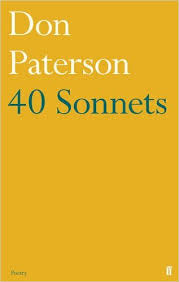
This is also Don Paterson’s thinking behind his versions of the Sonnets in Orpheus (Faber, 2006). He argues Man is unique in having foreknowledge of his own death, meaning we act as if we are already dead, or historical. This means that we construct life as an authentic and intelligible narrative, a life with meaning, but it is death that drives the plot of our life. This is one of Paterson’s key ideas and he refers to it as our ‘ghost-hood’. So we are like Orpheus: we too have descended to the land of the shades and then returned to the present moment – our condition is therefore existentially transgressive, riven, divided.

It’s the singing of the Orphic artist that addresses and bridges such divisions. This explains Rilke’s interest in the Orpheus myth: its narrative is a metaphor for the longed-for transit or communion between the realms of life and death. He possesses the desired ability to inspire the renovation of human perception that can initiate a more comprehensive, joyful and celebratory experience of life. One of the things most people know of Rilke is his exhortation to praise. Praise is a form of secular prayer for Rilke and it demands a renovation of conventional language through Orpheus’ song – as also noted by Shelley in Prometheus Unbound:


Language is a perpetual Orphic song,

Which rules with Daedal harmony a throng

Of thoughts and forms, which else senseless and shapeless were

imgres

Orpheus’ singing as a way to think about the language of poetry can clearly be seen in Rilke’s celebratory sonnets about the garden at Muzot. Here’s my translation of sonnet I  13:


Pear and plump apple and gooseberry,

banana . . . all of these have something to say

of life and death to the tongue . . . I guess . . .

Read it in the expression on a child’s face


as she tastes them. It comes from far off.

Slowly, does speechlessness fill your mouth?

In place of words, a flood of discovery

from the flesh of fruit, astonished, free.


Try to express what it is we call ‘apple’.

This sweet one with its gathering intensity

rising so quietly – even as you taste it –


becomes transparent, wakeful, ready,

ambiguous, sunny, earthy, native.

O experience, touch, pleasure, prodigal!


Rilke’s vigorous and self-conscious mutations of the sonnet form create a variety of rhyme schemes, line lengths, iambic and dactylic pulses. David Constantine has described this as suitably fitting forms for the figure of Orpheus because he is himself a figure of transition, fluency and mystery.

234203

Forthcoming Bow-Wow Shop events in Clapham will focus on the work of Edward Lear and Gabriel Garcia Lorca.

2016 Forward First Collections Reviewed #5: Harry Giles

This is the fifth and final installment in the series of reviews I have been posting of the collections chosen for the 2016 Forward Prizes Felix Dennis award for best First Collection. The £5000 prize will be decided on 20th September. Click here for all 5 of my reviews of the 2015 shortlisted books (eventual winner Mona Arshi).

The 2016 shortlist is:

Nancy Campbell – Disko Bay (Enitharmon Press) – click here for my review of this book

Ron Carey – Distance (Revival Press) – click here for my review of this book

Harry Giles – Tonguit (Freight Books)

Ruby Robinson – Every Little Sound (Liverpool University Press) – click here for my review of this book

Tiphanie Yanique – Wife (Peepal Tree Press) – click here for my review of this book

imgres

Thanks to Freight Books for providing a copy of Harry Giles’ book for review purposes.

I’d only come across Harry Giles’ work as a Guardian featured poem in June in response to his Forward short-listing. The chosen poem was ‘Piercings’ and suggested Giles was working the same area that Andrew McMillan did so successfully last year. What might be an autobiographical masculine narrative voice recognises a passer-by as an old encounter: “four years since / he hauled me into a lift with / Want to make out?” But the man had then been sporting various body piercings which have since been removed in order to become “employable, less obvious” whereas the narrator has continued making “more holes”, continued to accumulate the badges of a rebelliousness the other has given up on. The final question, “So what do you do now?” is therefore made poignantly redundant, each, surely, reading the tell-tale signs of the other’s body.

But ‘Piercings’ is by far the most conventional poem in Tonguit and Giles is no McMillan, nor does he want to be. On the facing page is a poem made from extracts from One Direction’s Harry Styles’ fanfiction. The title, ‘Slash poem in which Harry Giles meets Harry Styles’, gives a feel for its playfulness though the poem itself does not seem to amount to much. Perhaps it amounts to more if read in the context of Giles’ other manipulations of texts and discourses which have a more obviously seditious intent. The last poem in the collection offers ‘Further Drafts’ of a phrase often used by Alistair Gray: “work as if you live in the early days of a better nation”. Giles works various rhyming turns on the first and last words of this phrase eventually to arrive at “lurk as if you live in the early days of a better sedition”. It’s ‘Harry Styles’, manufactured pop idol and X Factor/Simon Cowell cash cow, that is the real target of Giles’ poem (though it lurks with some seditious intent, it’s still not among his best).

images

Giles is interested in the processing of texts, sampling from George R R Martin’s A Game of Thrones, or creating cut-up texts from information associated with Abu Dhabi’s artificial island and cultural centre, ‘Saadiyat’.  The satirical effects are delivered through simple repetition and disjunction, questioning the original source’s coherence and integrity, where ecological sustainability becomes “a core value integrated into the design approach / in terms of throughout the the the concept design” [sic]. ‘You Don’t Ever Have to Lose’ does something similar with advertising text from IT services company Atos. ‘Your Strengths’ is a more powerful text in its own right, this time using source material from the Department of Work and Pensions Capability Assessment, the UK Citizenship Test and other psychometric tests to make a thunderous barrage of questions ranging from the invasive, absurd, profound, squirm-inducing and piddling to the politically loaded. Giles also works textual legerdemain in ‘Sermon’, based on a speech by David Cameron in which the word “terrorism” is replaced by the word “love”:


We must make it impossible

for lovers to succeed. We need to argue

that love is wrong. To belong here

is to believe in these things.

imgres

This processing of texts, often randomly, often derived from the internet or Google searches, sometimes with editorial influence in the final result is presented as politically subversive. As the Tonguit blurb suggests, it derives from the belief that we are all warped and changed by the language/s that surround us and inhabit us. The hope of the lyric poet working towards his/her own truth is devalued, considered delusional, impossibly bound up in Blake’s socio-psycho-political “mind-forged manacles”. We liberate ourselves by breaking these, unpicking or smashing the dominating discourses around us. And if our deliberate intention is already suspect then we must achieve it randomly, perhaps via a machine. It’s a form of surrealism which profoundly questions our use of language and owes a lot to the Oulipian experiments of Raymond Queneau. Giles’ collection title, Tonguit, productively seems to hover between an urgent imperative to individual vocalisation – tongue it! – and more passive implications about the way other people’s language/s oppress the individual – we have been tongued!

images

The more imperative mood is obvious in ‘Curriculum’ which takes aim at normative education and gives it both barrels:


Mix me a metaphor of noble gases,

economic engines and avant-garde

taxonomies, with Kingdom Phylum Order

gone to bloody Dada. Get down and dirty


with transects, quadrants.


There is a Wildean element to this sort of systematic over-turning though there is no doubt about Giles’ seriousness beneath the often funny, ludic quality of these poems and there is none of Wilde’s self-regarding quality. Harry Giles himself – as a recognisable, recurring, coherent, autobiographical figure – is curiously absent from most of these poems though I don’t doubt the sincerity of a poem like ‘Waffle House Crush’:


I’ll have you smothered n covered

diced n peppered n

capped n lathered n

lustred n smoothed n

spread


Giles’ various linguistic masks don’t hide so much as free him into more liberated forms of expression. I’ve deliberately not yet mentioned his most obvious, deliberately chosen mode of expression: what he calls his own “mongrel and magpie” form of Scots. Dave Coates has pointed out that, as in Kathleen Jamie’s The Bonniest Companie, Giles provides no glosses in the book on his particular Scots, “an implicit assertion of the language’s place within the broader spectrum of Englishes”. Giles’ Scots sets itself deliberately against discourses like those of the DWP and Atos as a declaration of variousness. Nor is he averse to something like a declaration of war:


Let’s be arsonists. Let’s birn the year.

[. . .]

Let’s mak like airtists

n birn the leebrars [libraries] acause we shoudna, n birn

Pairlament acause we shoud.


What follows is an apocalyptic conflagration of all things, down to the “thocht o fire”.

But the sheer vigour of Giles’ intent means his Scots is a lot harder to follow than Jamie’s. In fact, he does provide his readers with a full gloss/translation on his website. I needed this to be honest to deal with a lot of the Scots text, though the ‘translations’ then read as somewhat awkward, watered down versions of a quite different language (rather than a form of English). But it is worth the effort to really appreciate the tour de force of national- and self-assertion that is ‘Brave’. Like some Highland Whitman, making himself and his nation through singing (I’m losing some of the lay-out here):


A sing o google Scotland

o laptop Scotland,

o a Scotland sae dowf on [dulled by] bit-torrentit HBO

drama series n DLC packs fer

paistapocalyptic RPGs

imgres

But also the Scotland “whit chacks the date o Bannockburn on Wikipaedia” and fears “o wan day findin oot / juist hou parochial aw hits cultural references mey be”. ‘The Hairdest Man in Govanhill’ takes all the clichés that phrase might suggest and instead describes a man who “has thay lang white scairs on / baith sides o his mooth fae smiling that damn wide” (my italics). This is of a piece with the Cameron subversion as we hear that the man is “that bluidy haird he’s a hairt tattoed wi Dulux on his bicep n aw hit says is A LUV YE”. There’s a risk of this getting as caricatured as the cliché it intends to subvert but Giles’ Scots is put to terrific seditious intent in ‘Tae a Cooncillor’ – a kind of one-sided flyting in which the local councillor who wants to close down a swimming pool is mocked mercilessly:


Wee glaikit, skybald, fashious bastart,

whit unco warld maks ye wir maister?

Whit glamour has ye risin fest as

projectile boak?

Hit’s time tae gie yer feechie fouster [nasty fester]

an honest soak.


This is committed, bolshie, rebel-script done with great skill and immense energy but Harry Giles is too interested in too much to settle merely for this. I was interested in his Scots (or rather specifically Orcadian) versions of a few chapters of the Laozi’s Daodejing. He astutely titles these ‘Aald rede fir biggin a kintra’ [Old advice for building a country] again recalling Alistair Gray’s dictum. The opacity of the language makes Giles’ versions a hard read but (if I may) here’s his boldly economical version of chapter 53 (some indentations lost here again) followed by my own recently published version:


53

a bit wittins

whan waakan the wey

are a rod tae dree


the wey is snod

an fock cheust fancy the ramse


govrenment divided

sheens growen-up

kists empie

but heidyins’ claes are braa

thay’ve barrie blads

are stecht wi maet

gey rowthie


caa this the darg o reivers

an no the wey


Crooked avenue

chapter 53


—perhaps you have begun well

one step after another along the way


yet you walk in fear of side-tracks

the great way running level and plain


still who can resist those side-tracks

soon as good governance is in place


we’re liable to neglect our business

too soon the tall barns lie empty


sooner wear fashionable clothes heels

daggers for glances glut on food and booze


have more than we can sensibly use—

dawn breaks on some crooked avenue


what was it happened to the way


Tonguit is a bubbling cauldron of a book, willing to take risks that don’t always come off, but guided by a belief in the need to challenge the assumptions and languages of the status quo. Harry Giles is a fascinating figure (go to his website here ) and his characterisation of his Scots as “magpie” is as much applicable to his multifaceted work in theatre, software, twitterbots and visual arts, all forms of “art about protest and protest about art”. Whether contemporary poetry, as in books like this one, will prove sufficiently interesting and flexible for his creativity remains to be seen.

imgres


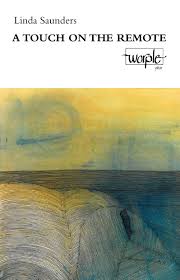
Here There Now Then – A Touch on the Remote

There are occasions when events from the past seem to become so fully present in the moment as we live it that it’s as if a gulf has been bridged between them. It’s a sort of redemption – though the events themselves may need no redeeming. What is salved is the permanent vanishing of the earlier through the intensity of attention accorded it by the later, perhaps especially so if our attention is manifested in language, a poem. There is an aspect here of Seamus Heaney’s idea of the redress of poetry which I ought to figure out more clearly.

images

But I was left with thoughts such as these last week, having read for Dawn Gorman’s Words and Ears series of poetry readings in Bradford-on-Avon, Wiltshire. We’d set it up many months ago and I had been looking forward to it especially as this is close to my home town, Trowbridge, and my mother’s childhood and adolescence were spent in Bradford. I was also delighted to be reading with Linda Saunders who has just published a new collection with Worple Press, A Touch on the Remote. I’d had a few meetings with Linda many years ago (in the 1980s) when she would go up to Oxford to visit my old friend and mentor, Tom Rawling. There were several workshops at his house, I think, in that peculiarly intense summer sunshine of the past, full of hope and literary expectation. Like much of Rawling’s work, the opening sequence of Saunder’s new collection is composed of poems concerned with acutely observed landscape – in several cases observed with an almost visionary sense of history . . .

imgres
Linda Saunders

My mother was christened Bernice, first child of Graham and Elsie Hale in 1922. Her sister, Gwen, quickly followed. There was no immediate prospect of their leaving the White Hill house which was a one-up, one-down with attic. The two girls had to share the middle room with ‘Gran’ (as they called Elsie’s mother, Rhoda). They walked up White Hill to school at Christ Church. They skipped down to the sweet shop, to the ‘bake house’, to the centre of town. On Sundays they climbed Coppice Hill to the Methodist church and Sunday School.  In good weather, the two girls hooked their arms over the iron railings outside the house with Elsie in the doorway warning them not to stray far. They jumped up and down the high kerb stones, played whips and tops on the steep, quiet street. On wet days, they stared through the front window, across the roofs of the town below to the spire of Holy Trinity. Bernice was badly ill with scarlet fever when she was eight years old and for a long while afterwards was so weakened that she had to be helped everywhere in an old pushchair.

imgres

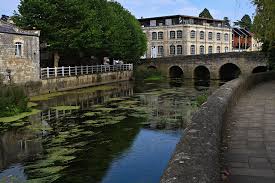
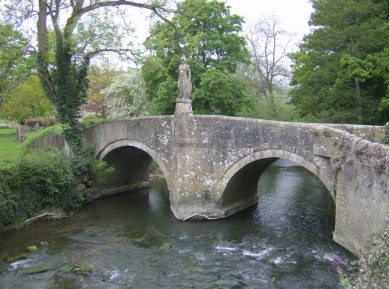
Saunders’ own strong sense of history can be seen in ‘Washing the Horses’ where the narrator watches people who “sleek soap-lather” on their horses’ wet hides. A bit later, the horses dry off on the bankside, “bays, pintos, strawberry roans, a shetland / with a foal no taller than an Eohippus. // This has been happening forever”. In ‘The Bridge at Iford’, a couple kneel as if in a ritual act, “like pilgrims” to watch the water flow under the bridge, themselves being watched by statues of “Greco-Roman deities”. Then the arrival of a newly-betrothed couple for photographs at the picturesque scene leads to thoughts of the future too – “Live happily. I think to them in passing, / ever after – the wish as ultrasonic as / the pipistrelle’s twitter”.

Britannia_at_Iford_Bridge_-_geograph.org.uk_-_438784
The Bridge at Iford Manor

The narrator’s image of the pipistrelle bat’s piercing signal could serve as one of the key images in Saunders’ work. Elsewhere she jokes about the onset of deafness: “Something I say, something she said / flies past us into the wood” (‘Hidden Valley’). It’s these forms of strained/successful communications across time and across distance (with a son living in the USA) that also provide material for a later sequence of poems: “I see him stepping over the door sill / across a crack of time” (‘Into the Blue’).

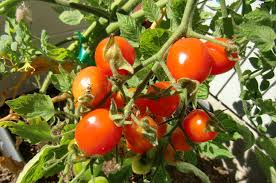
We would squeeze into the Standard 10 to visit my grandparents on Winsley Road, Bradford. It was a dark, terraced house which had an immense front garden with a pleasingly straight path from the front gate to the door in the centre of the facade. This path was lined with planted borders, the earth heaping up from the lower level of the path and there were roses and vegetables elsewhere and I am sure an allotment somewhere. At the back of the house was a tiny yard containing the outdoor toilet, a fascinatingly musty dark cramped garden shed, a sweltering little green house which seemed always full of tomato plants. There was also a raised piece of grass – you could not call it a lawn – where we tried to play football or cricket but the risk of the low walls was really too great. Instead, we often played on that long front path; Corgi cars pushed to and fro as we breathed in the acrid-sweet smell of lush cushions of blooming white alyssum.

images

Saunders’ background is in History of Art as well as literature. You can see this in ‘Reserve’ where she describes the processes of a painter preparing the ground for an object on the canvas, in this case an apple. The poet is interested in the absence, the vast potentiality before the object appears: “There are moments I sense // the inter-touch of me with everything – / this unselving reach”. During the Words and Ears evening, I read a number of poems from my Daodejing versions which also suggest that such an “unselving” might prove a happier and more fulfilling line to take in life. With our own “unselving”, the more aware we become of our surroundings, our context in both space and time.

It is Saturday tea – laid out on the living room table. There is a second front room hardly ever used which, if you open the door and peer in, feels chilled, dark, a little musty and formal and a baffling waste of space. We sit round the table and eat sandwiches, perhaps crumpets, malt loaf, Victoria sponge or the pink and yellow check of Battenberg cake which I loathe because of the marzipan covering. Nan or Mum often slice the rounded ribbed milk loaf that I have never seen anywhere else, turning it on its end and slicing horizontally, perilously.

imgres

In ‘Love Portrait’, Saunders describes a window on another canvas as yet “unpainted”. She wonders “could this be the light that slips / past time”. Because the artist has yet to define it, perhaps this is also the light that communicates between times.

We wore short trousers, of course, and I still can feel the way the thick dark tablecloth with its tasselled edges brushed my thighs making me want to scratch them. Elsie’s husband, Graham, was a quiet mild man, always limping because of a shrapnel wound in the leg from the battle of the Somme. He sang in a local choir, had worked all his life at Nestle in Staverton, gardened keenly and seemed a loving husband and father though to us he was a rather remote, taciturn grandfather. Just once he exploded at us for something I have now forgotten – perhaps just making too much noise or not clearing the table of toys or drawing books quickly enough when he wanted to swing the heavy cloth across it in readiness for the meal. Given his generally gentle demeanour, his blazing, brutal anger astonished and appalled us.

walk-15

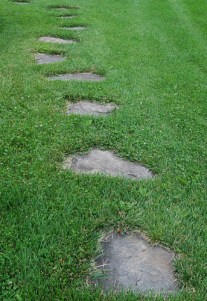
The final poem of Saunders collection is ‘Stepping Stones’. Another artist, a sculptor this time, makes “foot-shapes of stone”: “The child found them one at a time, / spotting the next from where she stood on the last / up to her thighs in seedheads and buttercups. / Where will they go? she asked the sculptor”. They lead onwards inevitably into the next moment, then the next – but to live wholly in the present, only in a language composed of present participles, is a form of dementia, a quite different and destructive form of “unselving”. Our making sense of things requires our awareness and exploration of the temporal.

Poetry at Palmers Green: live review (April 2016)

When reviewing my first year of blogging on poetry and related matters (see blogI said I wanted to review more live events. That has not happened really but this week I wanted to rectify that to some degree.

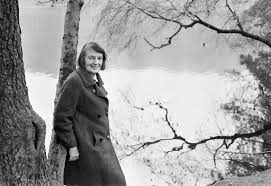
Last Saturday I drove a few miles north to Palmers Green, best known to the poetry world of course, as the home ground of Stevie Smith who moved there when she was three years old. She was educated at Palmers Green High School and North London Collegiate School for Girls and lived in the area until her death in 1971. I first became aware of the current poetry activity in the area a few years ago when I went to readings at the bookshop in the High Street run by Joanna Cameron.

images
Stevie Smith in the park in Palmers Green

But in 2006 the Palmers Green Bookshop was forced to close, the lease was sold on and I think it was an opticians that opened in its place. Since then a number of local poets and enthusiasts have been keeping poetry alive with 6 monthly poetry readings at Stevie’s church, St John’s, N13 4AL. The readings take place in the Parish Centre adjoining the church and are always friendly and well-programmed evenings. I’d recommend them if you’re in the area (Contacts: Katherine Gallagher  or Myra Schneider and on Facebook).

images

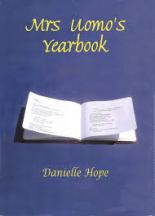
The evening was introduced with clarity and authority by Lynda How and readings took place as the April evening sun set outside. The Parish Centre looks at first a little soulless but with its shades-of-yellow decor, surprisingly tasteful lighting and pitched wedding-cake-white roof it is actually a venue which has a good acoustic and a disarming and warm atmosphere. The first reader was Danielle Hope, whose new book is Mrs Uomo’s Yearbook (Rockingham Press, 2015) from which she read the entertaining and instantly recognisable out-of-season seaside resort description  ’Llandudno Winter’. Recognisable to most of the audience it seemed and as I spent a couple of years in digs in Morecambe I knew the “please-remove-wet-shoes-at-door / heating-on-from-seven-to-eight / no-radiator-in-bar / low-watt-lamps” guesthouse. Her translations from the Italian are also impressive (Montale’s ‘Eastbourne’) and the Mrs Uomo poems manage to combine humour and acute observation with a more serious satirical edge. Mrs Uomo teaches her cat economics at one point but more poignantly is left awaiting an operation having “improved against [the NHS] recently refreshed thresholds”. Hope works as a doctor in London and knows what she is talking about here and her poems are always a pleasure to listen to delivered in a colloquial, un-stylised fashion.

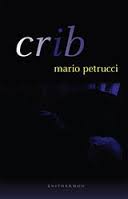
In contrast, Mario Petrucci read slowly and deliberately from crib (Enitharmon Press, 2014) which is a selection from the 111 poems he wrote during the first year of his son’s life (Mario was kind enough to allude to my own efforts in this topic area (see A Madder Ghost)). Petrucci’s work (especially in recent years) is much concerned with language as an object/medium in itself (hence his delivery). He spoke about his interest in the “deckle edge” of language where it begins to fade and dissolve and on the page he accentuates the thingi-ness of words with mostly very short lines, unpredictable line breaks, sometimes dividing words across line breaks.

imgres

The cover image of crib is of a child sleeping in almost pitch darkness – a metaphor Petrucci suggested for the way language itself struggles to communicate, picking from the mass of experience a highlight here or there. This from ‘i fish’:


in dark

with dark

as spool &


mark him

sparely

move


as if

i sought

magnified


on glass slide

that form


imgres

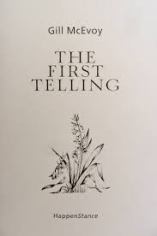
Gill McEvoy’s most recent pamphlet The First Telling (HappenStance, 2014) won the Michael Marks award in 2014. McEvoy’s delivery is rather more actor-ish, her voice taking on the inflections and tones of the character felt to be speaking the poems themselves. I’m never wholly convinced this is the way I (personally) want to hear poems read (I’m even more uneasy about poets who have learned texts in order to ‘act them out’). But McEvoy’s work – especially in The First Telling, which deals with rape and its aftermath – is easily powerful enough to overcome any misgivings I might have had. Her poems are often brief and delicate and disturbing:


I touch the cigarette


to my arm.

Here.

And here.


I can’t talk about it.


I could touch this fuse

to my chair.

I could watch it catch.

I could watch it flame

to roaring fury.


Counterpointing such troubling pieces, McEvoy scatters even briefer poems on birds which comment obliquely on the human narrative. Petrucci had earlier commented on the importance of the silence after a poem has been read aloud and in the intervals between many of these poems – at least while the evening light held out beyond the windows – I could hear the occasional twitter and cheep of birds in the churchyard grounds. A rather lovely accompaniment.

After the interval there were 8 floor readers. The quality of the work was high (not always the case where venues welcome floor readers) but I was struck by the number of people reading from electronic devices – phones and iPads. Of the main readers several read from their books (traditional) others from folders where the poems seemed to be printed and ordered for the occasion (the well-prepared; the short sighted). I can see the latter becoming more likely in relation to my own eye-sight but I have to say I prefer to see poets read from their books (assuming the work is published) and I can’t help think that the sight of the book cover waving around up there does something for after-reading sales too.

imgres

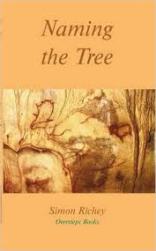
Simon Richey read from his first book, Naming the Tree from Oversteps Books. I’m ashamed to say I know little of his work (though he later confessed to me that he has hardly ever attended a poetry workshop, so perhaps he has just not been very visible on the ‘circuit’). I thought his work was very interesting indeed, sharing something of Petrucci’s concerns with language but also developing threads of thought and emotional responses alongside.


Somewhere
the meaning of a word,


before it becomes a word,
waits in the silence. It is as if


it has come as far as it can go
without being uttered. In a moment


it will change from one thing
into another, or its meaning


will tremble into a word,
into something barely familiar,


finding itself spoken,
finding itself understood.


Several of the pieces were prose poems – one a series of sections, called ‘The Darkness’, about the night-wanderings of cats as well as about the night-wanderings of their owner’s mind.

imgres

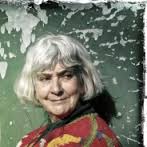
The final reader was Mo Gallacio whose marvellously rich reading voice (she is a trained actress) leant itself to both Scots and English verse, triumphantly avoiding that actor-voice that seems either to value the rotund vowels and the crisply planted consonants over and above the emotional tides of a piece of writing, or to emote all over the poetic text so heavily that the language and form of the poem is swamped and made unhearable. ‘Purple Iris’ is an especially moving poem about the incurable illness of a neighbour. Gallacio’s own struggles with cancer form the basis for a number of poems; in one she asks the nurse how she will feel after surgery – the nurse’s reply: like you’ve been stabbed! Gallacio’s evident love of and attentiveness to flowers and plants echoed McEvoy’s acutely observed birds and the evening ended with a celebratory bunch of brightly trumpeting daffodils (no more than £1 from Tescos) suggesting – with a nod to the Edward Thomas of ‘March’ perhaps – that Spring is most definitely HERE.

imgres

Two Great Days at StAnza Poetry

Writing is always a rough translation from wordlessness into words – Charles Simic

I arrived at about 8pm on the Friday evening. Leuchars station is not close to St Andrews itself and (it made me feel at home) there were roadworks disrupting the usual route so instead of 5 miles it was a 10 mile trip. Actually, it was dark and I had no idea where I was so I’m just quoting the chatty taxi driver here – who also lamented the decline in business in recent years. Lack of local money generally he said and the changing habits of students who go out less, pre-drink more and choose to stumble home rather than call his cab. We waited a few minutes for Pascale Petit’s train to arrive. She’d been travelling for 12 hours (from Cornwall) which made my 5 hour train ride feel like nothing much. Unpacking, I reflected north is a very long way north.

imgres

I was staying at the Greyfriars Hotel but walked up to the Byre Theatre on Abbey Street, the main Festival venue. The headline reading for the evening was Lemn Sissay (who I’d just missed) followed by Don Paterson. I arrived at the interval and the talk at the bar was of a local heckler interrupting Sissay. I never got to hear how he dealt with it but it seemed to say something about the tone of this festival that there was as much talk about inclusion as there was annoyance at the interruption. The auditorium was sold out (typical of this StAnza while I was there – you needed to book your event fast). I had no ticket but Jim Carruth took me to the studio theatre to a live relay of what remained of the event. Paterson read mostly from 40 Sonnets including ‘Here’, ‘Wave’, ‘A Powercut’, ‘Little Aster’ and the curiously moving death-of-a-dog poem ‘Mercies’. He also read aphorisms from an iPad and I remember ‘Poetry is not a vocation but a diagnosis’. And (one for his students, he said) ‘If a poem is read slowly enough we begin to hear things – which – are – not – there’.

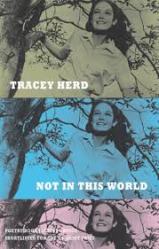
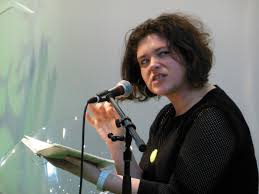
I was woken by seagulls in the grey dawn and through a gap in the Greyfriars curtains I could make out a CCTV camera on its right-angled gantry across the road, white and intent and about the size of a large gull. Perhaps I was dreaming. I was reading next morning with Tracey Herd in St John’s Undercroft, a long brick-arched room, with a great acoustic and atmospherically lit. Andrew Jackson generously introduced us and I read most of my A Hatfield Mass sequence which I think of as celebratory poetry about nature, perception, growing up/older, the body. Tracey’s book Not In This World was a PBS Choice and shortlisted for the TS Eliot Prize this year and is her first collection for 14 years. She did not read those poems about film stars or racehorses for which she’s justly renowned but powerful, recent poems of loss: “Somewhere, someone much loved is leaving”.

images

I was also reading in the afternoon at a ‘Past and Present’ event – where poets talk on writers from the past. This was the first occasion (in the Council Chamber of St Andrews’ Town Hall – where marriages are performed we were told) at which I could read some of my new, just-off-the-press versions of the Daodejing. Pascale Petit was also appearing and she talked about her enthusiasm for Tomas Transtromer, in particular the way in which his poems often use an aerial perspective; from his first published poem: “Waking up is a parachute jump from dreams”. I’m sure she said she’d consulted a Swedish friend who said his surname meant something like crane-over-water – ornithological crane obviously.

imgres

Later in the afternoon, at the Parliament Hall, Fiona Benson and Andrew McMillan read. Benson was nervous in front of the large crowd (and who can blame her) but she was soon absorbed in the poetry itself and her demeanour was not at odds with the work. Sections of ‘Love-Letter to Vincent’ (Van Gogh) were read with great intensity. Other poems of pregnancy, miscarriage, birth and motherhood were more moving and (as Dave Coates has suggested) her book’s up-beat title, Bright Travellers, misleads. The contrast with McMillan was not to either poet’s detriment. I reviewed physical on this blog back in July 2015 and his (in various senses) naked poems, even when sad, manage to stir great pleasure in the audience. In person, he adds to this a wise-cracking, witty style of introduction and between-poem chat. Given his marvellous success this year I wasn’t sure why he wanted to discuss some of the negative criticisms he’s had but even that does not prevent me wanting to use that old Hollywood term ‘star’ in listening to McMillan perform.

images
Nora Gomringer

It was another sell-out in the Byre Theatre on Saturday evening with an event indicative of the Director, Eleanor Livingstone’s innovative approach to programming (and part of the German poetry emphasis to this year). Nora Gomringer performed work (with percussionist Philipp Scholz) which reminded me at moments of Laurie Anderson, at others of the much-missed Bob Cobbing (who I saw read/sing in London in the 1980s), at all times evoking a jazz-like improvised feel. Quite brilliant. Jo Shapcott had the tricky job of following this and chose to read a number of ‘The Roses’ poems from Tender Taxes, her responses to Rilke’s poems in French. These are a bit delicate and brief to come over very strongly in a live reading and other new poems on pain (but without mentioning the word) I found not easy to appreciate. But the brilliant prose poem ‘Scorpion’, the touching ‘Somewhat Unravelled’ and the finisher, ‘Piss Flower’ ended the evening in style.

imgres

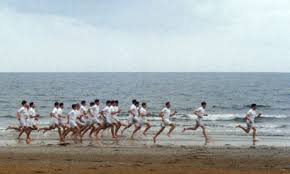
I had a train to catch next day but managed to get to stride along the Chariots of Fire beach early in the morning plus take a peek at St Andrews Old Course before the Poetry Breakfast discussion on translation. Diplomatically and informally chaired by Annie Rutherford, the theme emerged that we ought to think more loosely, more liberally about the idea of translation.  Aurelia Maurin suggested we should think of it more  as we do cover versions of songs. Claudia Daventry opened the field up by quoting Charles Simic’s idea that all poems are translations from silence. Nora Gomringer remembered a professor urging her to find ‘the game’ of any poem she intended to translate not merely to work line by line. She’d been asked to translate Yoko Ono’s poems into German but felt unable to and the importance of the rightness of a translator to a source text was demonstrated when, on another occasion, she’d translated from Russian (I think) and had actually been spat at by a disapproving reader. I was struck – as before – by what powerful emotions the idea of translation stirs up, involved as it is with ideas of truth, honesty and fidelity. I especially liked Daniela Seel’s take on the process, stressing the almost chance meeting of suitable translator with appropriate source text and the way in which the linguistic and emotional ‘body’ of the translator (his/her resources) need to be matched to the varied demands of the source text.

But I had to catch my train and, though exhausted, I spent some of the six hours back re-reading Montale’s loving lament and memorial to his wife, Drusilla Tanzi, here translated by G. Singh:

With my arm in yours I have descended at least a million stairs,

And now that you aren’t here, a void opens at each step.

Even so our long journey has been brief.

Mine continues still [. . . ]

url
Montale and Drusilla

Douglas Dunn’s ‘Terry Street’ and Thoughts of 1969

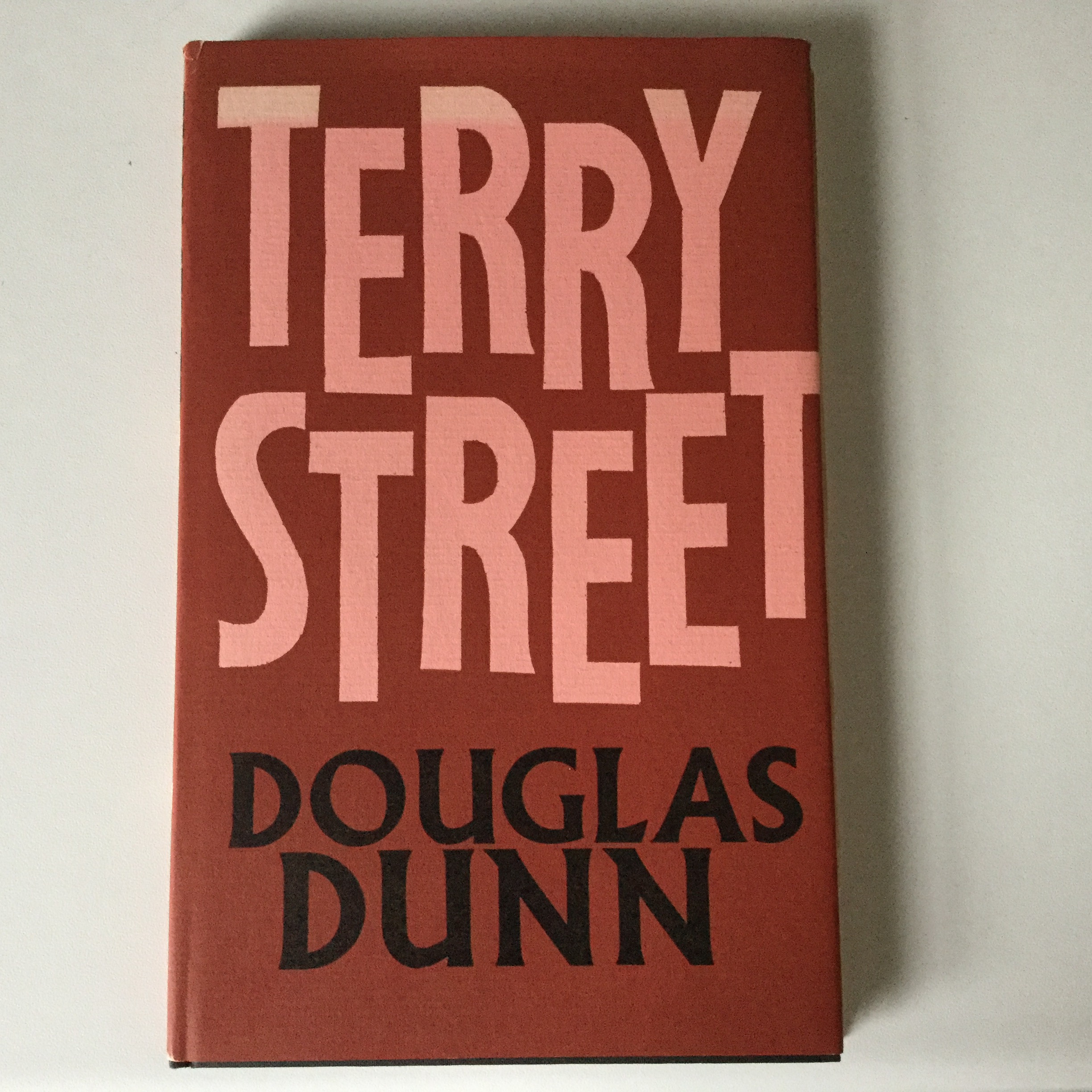
Recently, in my local Oxfam shop, I found a remarkably well-preserved hardback first edition of Douglas Dunn’s debut collection, Terry Street (Faber, 1969). Since living in a very similar street in Lancaster exactly 10 years after Dunn’s book was published (Aberdeen Road, up on the northwest-facing terraced streets above the town, looking out across Morecambe Bay to the – occasionally snow-capped – peaks of Cumbria), I’ve always had a soft spot for the book. But I hadn’t read it in years, I now realise.

images
Aberdeen Road, Lancaster, in a recent photo

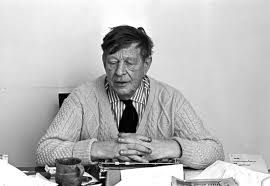
The particular copy I bought (for £2.50) still had the Poetry Book Society’s Bulletin in it as Terry Street was the PBS Choice for Autumn 1969. It printed a review by Julian Jebb of the PBS’s second Poetry International staged at the QEH, South Bank, in July 1969. Jebb praises the organisers for attending to the faults of the first such event (noted as an over-crowded audience and over-running readings by poets). WH Auden is there in the “blackest of spectacles”, reciting recent work from memory including ‘On the Circuit’ (1963) in which he satirises the lecture/reading round he has been treading in the USA: “so large / So friendly, and so rich”. He read precisely: “15 minutes and hardly a fluff”, reports Jebb.

images

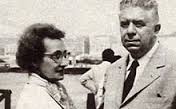
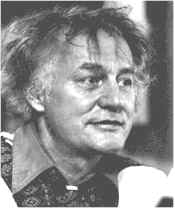
He was followed by “a ponchoed American poet, Robert Bly”. Jebb’s tone here will have been addressed to the original readership of his review (it appeared in The Financial Times) but it’s still an interesting period piece. Bly seems to have flailed his arms while reading “in tragic-comic, uncoordinated circles, strongly reminiscent of Peter Cook’s imitation of Macmillan in Beyond the Fringe”. Later he over-ran shockingly with 20 minutes of his “sloppy, deranged images about Vietnam”. This was delivered, Jebb tells us, to a growing slow hand-clap.

bly
A young-ish Robert Bly

Later in the evening, Edward Brathwaite, Derek Walcott, Ogden Nash, Miroslav Holub, Vasko Popa and Janos Pilinszky also read. Few details are given on these contributions unfortunately, but the experience of the latter three poets of the Second World War and Eastern Europe in the first half of the 20th century prompts Jebb to observe: “We have felt safer than these three men and we are grateful to them for their eloquence in telling us so”. Here is evidence that poetry was making very little happen when it came to the heavy lifting required to shift the entrenched sense of superiority and national egocentricity of the period.

So the review both evokes an earlier age of extraordinary poetry and also shows how far we have come. With Ted Hughes’ and Daniel Wiessbort’s founding of Modern Poetry in Translation in 1965. British poetry was just at this moment becoming exposed to worldwide influences (even if some were hardly listening). In this light, Douglas Dunn’s PBS Choice reads like the dying edge of the 1950s, of The Movement. The Terry Street poems themselves may be memorable evocations of working class life in Hull but what I notice now more than anything is Dunn’s obsessive use of the plural subject: young women, girls, the children, mothers, old men, the chatty women, men of Terry Street, old women, revellers, neighbours, street tarts, trawlermen, young women, the people who live here, men on bikes. These are versions of Larkin’s typological  “cut-price crowd” (‘Here’), the women in ‘Faith Healing’ and the fathers and mothers and newly married couples of ‘The Whitsun Weddings’. The difference is that Larkin would as often turn his acerbic gaze on himself. In Terry Street, Dunn makes the choice to keep himself out of the picture (behind glass) and there are hardly any delineated individuals in the book (though we all remember the man who wheels an optimistic lawnmower down Terry Street).

File 22-10-2015, 15 18 59

Dunn viewed ‘these people’ through a window – “our window” says a self-lacerating, retrospective poem of mourning addressed to his late wife, Lesley (‘Envoi’ in 1981). While the belief that these people were a fit subject for poetry is admirable, many of the poems now read as patronising, still mired in the English class system (despite Dunn’s Scottishness). To that extent I disagree with Terry Eagleton who, in 1970, praised Dunn for being able to “transcend the two major pitfalls of poetry concerned with working people – bourgeois voyeurism or sympathetic mythification”. Dunn seems to me to fall foul of both of these.

imgres

In the 1969 PBS Bulletin, the young Dunn himself wrote “Terry Street became for me a place of sad sanity . . . an alternative to the gaudy shams everywhere”. It was this sense of the real that Dunn needed (for himself) as a mature student in Hull, pursuing an English degree, and perhaps was a substitute for what he was already declaring: “Scotland is what I most want to write about and what I am least able to”. Later, Morrison and Motion’s 1982 Penguin anthology of contemporary British poets, pigeon-holed Dunn with Tony Harrison in being “sharply conscious of background and upbringing, which sets them at an angle to the cultural establishment”. But Dunn’s chosen strategy in the longer run was to acquire the ‘language’ of the poetic establishment in formal terms and try to speak up for those men and women of Terry Street (or their Scottish equivalent) rather than merely observe them from afar. ‘The Come-On’ appeared in Barbarians (1979):

Our level is the popular, the media,

  The sensational columns,

Unless we enter through a narrow gate

  In a wall they have built

To join them in the ‘disinterested tradition’

  Of tea, of couplets dipped

In sherry, and the decanted, portentous remark.

  Therefore, we will deafen them

With the dull staccato of our typewriters.

  But do not misbehave –

Threats and thrashings won’t work: we’re outnumbered.

Whatever piece it was Bly read that night in July 1969, the voice of the establishment regarded it as threats and thrashings and was too easily able to dismiss it.

How far have we come? Is it still the case that alternative poetic voices look to disguise themselves – whether with formal display like Dunn’s or with an obscuring erudition – to pass through the narrow gate into poetic acceptability? Or is it now that we anxiously seek out and fetishise what is different so poets and their publishers feel the need to define and confine work with USPs like race, gender, sexual orientation, locality, even disease – whole books focused on life events that begin to sound like the prose genre known as ‘misery memoirs’? Do poets actually articulate this to themselves: in my Creative Writing graduation ceremony, how do I ensure I stand out?

Poems, Swerve and Alan Brownjohn’s Sky Blue Trousers

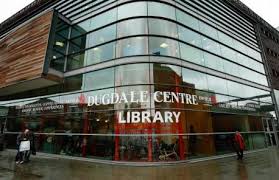
Life should be full of swerve is what I have been thinking recently. It’s how I prefer my days to unfold and certainly one of the main reasons why I value poetry. In dipping and swooping from this to that, swerve serves to exercise our capacities in terms of tension, torque, balance and force. I’m talking emotionally and psychological here, of course, though last Saturday evening did find me doing swerving obeisance to the sat nav woman as I drove up to the Dugdale Centre in Enfield, north London.

imgres

It had also been a pretty swervy week in the more serious sense too. My brother and I have been emailing trying to organise a Lasting Power of Attorney in regard to our nonagenarian parents, alongside my daughter’s final events in the Sixth Form, filled with promise and talented and beautiful friends. A liking for swerve also accounts for why I have always loved that moment in The Winter’s Tale when the Old Shepherd talks of meeting both things dying and things new-born.

As it’s also the end of my teaching year, the week had also been spent revising what I think of these days (thanks for nothing Sam Riviere) as my ‘81 Laozis’: my new versions of the 81 chapters of Laozi’s Daodejing which Enitharmon will be publishing next Spring. There’s a good deal of swerve in the poems’ urging towards openness, flexibility, sense of balance:

[to be] circumspect as a man

who crosses a stream in winter

watchful and alert to danger on all sides

respectful as on a first visit

yielding like ice when the thaw sets in

blank as a piece of uncarved wood

receptive as a valley cut through hills

I think of what the Daodejing proposes as the exact opposite of the (too much blood-stained) rigidities of fundamentalism. As I said, this is why I love poetry’s ability to swerve quickly, often without transition, from one thing to another, one emotion or image to another. And so, I was off to Enfield where Alan Murray runs the meetings of Enfield poets at the unprepossessing Dugdale Centre which – as its name might suggest – contains a Lidl store, an Argos store, a multistory car park and a theatre and arts complex. The readings on Saturday took place in a municipal box within a municipal box but even that didn’t spoil the event (poetry does make something happen when it’s read and shared like this).

imgres

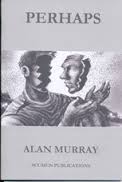
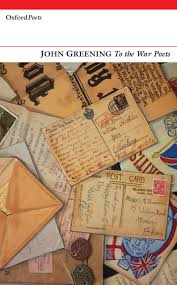
Alan (whose thoughtful book Perhaps was published by Acumen in 2013) introduced floor readers then handed over to Patricia Oxley as the three main poets were Acumen magazine related. John Greening first, whose quiet, measured delivery belies the time he has spent teaching literature to classes of schoolchildren. Dressed in chinos and pale shirt (yes, I’m doing the fashion notes too this time), I grudgingly admit (being a teacher myself) that he looked like a teacher, suggesting nothing of the real powerhouse of writing, editing, anthologising, reviewing and social-medi-ing that Greening is beneath that mild Clark Kent exterior. Born and raised in Hounslow he read ‘Heath Row’ from To the War Poets.

images

Topical, given the recent scandalous report suggesting a third runway to plague the poor citizens of west London, the poem reverses time’s arrow, unearthing what lies beneath tarmac and terminals, back to the original heath and bog, to sarsen stones and druidic rites, back further to a time when “the earth shudders, floods, howls, ignites”. His most recent book is threaded with addresses to the First World War poets and each short poem cunningly, often wittily, says something about the work of each. ‘To Edward Thomas’ notes: “You died at an observation post. / You looked and looked, and saw the detail / we do not”. Greening has also just published a major anthology, Accompanied Voices, with one of the world’s great music-publishing companies, Boydell Press. He read his own ‘Field’ from it, about poor John Field (inventor of the Nocturne) and the artistic irony that it was Chopin who superceded him, or as the poem puts it with all the brutality of the historical process, he “walked all over him”.

imgres

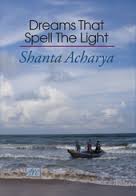
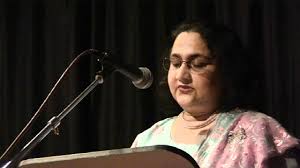
Shanta Acharya’s poems often record the phenomena of the natural world in part for themselves but also, as (her DPhil subject) Emerson suggests, because they can be read as the language of the “Universal Being”. Set in the artistic beauty of a Catholic church, the opening lines of ‘Italian Prayer’ ask: “How does one accustomed to the cold candour of stones / bend one’s knee in reverence”. Acharya’s work is, as Mimi Khalvati has said, “unafraid to take on the abstract, metaphysical, spiritual”. Dressed in an exquisite ivory-cream shalwar-kameez she also read the poem ‘Somewhere, Something’ from Dreams That Spell The Light (Arc Publications, 2010) that argues we do not travel “to explore another country / but to return home fresh, bearing gifts”. In fact, these gifts are for the self because all true experiences – thus discounting those of the ‘mere’ tourist – inevitably change us. The poem concludes, “Let’s fly free, not nailed to a mast; / see the universe with new eyes / not blinded by shadows that light casts”.

images

She also spoke of the Sanskrit phrase ‘neti neti’ (the title of an earlier collection) meaning ‘not this, not that’ as a definition of God or spiritual experience. This provoked a later discussion on the link between this idea and Laozi’s Daoist ideas, then The Cloud of Unknowing, followed by the writings of Julian of Norwich. Good swerves all. Lidl and Argos were well closed by this time of night.

imgres

My maternal grandmother would look sceptically up to a cloudy sky on occasions and make a meteorological call on the basis of whether or not there was enough blue sky to make a man’s pair of trousers. Well, those very trousers were being worn by Alan Brownjohn last Saturday evening, teamed with an unthreatening-cloud-coloured pale shirt. Brownjohn’s delivery is also very quiet, words seeming to emerge more from the side of his mouth, confirming that his tongue is often firmly in his cheek, doing deconstruction and the humour of post-modern irony before it was called such. Yet he manages to load poems with a weight of emotion too; he burns away sentiment, but still moves his readers.

Alan Brownjohn more formally attired

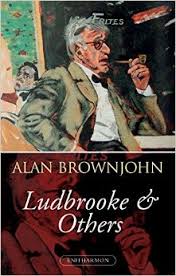
I was pleased he read several of the Ludbrooke & Others poems, 13 line sonnets for our austere age and an anti-hero-loser who nevertheless somehow gets our sympathy. Ludbrooke boasts of his “transformative” love-making in ‘His Classic Modesty’ (he persuades us it “is like the Acropolis”). In ‘His Jealousy’ he wants to persuade us (and himself, of course) that he has “deconstructed” and “junked” that emotion, only to feel the full force of it around line 12 to 13. We recognise a commonality at the same time as being allowed the space to imagine ourselves better than Ludbrooke. See the setting, re-setting, re-positioning of the powerful swerve going on there? That feeling you get after vigourous physical exercise of being stronger, more balanced, more capable? Poetry makes that happen to your heart – the figurative one.

imgres

Templar Poetry Launch: Weir and Onitskansky

On Tuesday evening last week I went to the Keats House Library in Hampstead for a reading which was both part of the on-going Keats House Festival and one of Templar Poetry’s regular slots there. Jeri Onitskansky (who I know a little via a workshop group) was launching her Iota Shot pamphlet, Call them Juneberries, alongside Tom Weir who, having had an Iota Shot last year, is already launching a full collection with Templar, All that Falling.

images
Cover image from ‘All that Falling’

Run by Alex McMillen, Templar http://www.templarpoetry.co.uk/about.html is an immensely busy and enterprising press, holding frequent competitions for full collections and Shots (small pamphlets) as well as the Iota magazine. The books all look very good and there was a good crowd at the reading. I was happy to find myself sitting between friends, Mimi Khalvati on one side and Lynne Hjelmgaard on the other. Later, I had a chat with Linda Black about both her writing (fascinating prose poems published by Shearsman) and her work in the visual arts.

All good and fine then? Well – I went away a bit disappointed actually and it was for the good reason that I wanted to hear more from the poets and their publisher, more than the bare poems themselves which I can (I am) reading at my leisure with the printed book. Perhaps there were time restrictions at Keats House but both poets read briefly (with no interval, we were out within the hour) and Weir in particular did not spend enough time introducing his poems. This art of introducing your own work is – I realised all over again – one of the key issues at a live reading (the other reason to go of course is to network and get noticed – quite different to meeting friends – but that’s just miserable). Alex MacMillan spoke economically to start with, just a basic biographical note to each poet. I thought more might be said since both these poets had ‘won’ competitions to get published. I bet there were people in the room who were keen to hear what he liked about these writers, what kind of work Templar published, even where he saw Templar in the twinkling firmament of poetry publishing.

imgres
Jeri Onitskansky

But . . . on with the show. Onitskansky started with several poems drawing on childhood memories of life in the US. ‘Minnows’ is a vivid recall of Summer Camp days though, for this graceless “fifth grader”, catching minnows from a creek was preferable to other more vigorous activities. Plus it provided imagery years later for a poem about wanting to be “filled with grace”. Rather more graceless (though still epiphanic) is ‘Friendship’ where two girls climb up a big rock and then pee down it, “watering a little pee forest” at the foot of it. Onitskansky is very good at innocence, though often a rather tilted, skewed version of it. ‘Girl with Dandelions’ has a child blowing a dandelion clock though she hasn’t yet “learned / they’re the same buttery stars that last / cheered the meadow”. Time passes in many of her poems and there are quite a few creatures too. Adulthood is a place of greater confidence mostly, though also there (in a thoroughly rat-bothered poem) “the long tail / of your mind scurries across the page”. These are interesting poems and Onitskansky is a name to watch.

If Onitskansky’s stage presence is quiet but assured, Tom Weir’s is gauche, jittery, rather apologetic, seeming younger than he really is. Acumen magazine published an interview with Christopher North a while back in which he listed annoying comments, cardinal sins committed by poets at readings. Here are 8 of them:

1) Have I got time to squeeze in a short one?
2) Now let’s see if I can find it…
3) Now if I can just get this thing to work…
4) This is one I wrote on the way here…
5) We were each asked to write a villanelle…
6) I know it’s here somewhere…yes. Oh no, erm, let me see…
7) How long have I got?
8) It’s a load of rubbish, but I’ll read it anyway…

imgres
Christopher North

Unfortunately, brief though the reading was, Weir managed most of these (OK – not 4 or 5). But his opening poem ‘Day Trippin’’ was charming, recounting dealings with a recalcitrant child: “with an ice-cream which you wore // like a glove as it melted over your hand”. That’s a great image but there were fewer of these than I’d expected. Maybe I just missed them. Weir’s delivery did not help his cause being gravelly and short of breath and losing the ends of phrases too often. I had bought the book so I could follow the poems but those listening will have missed phrases for sure. And some of these poems needed a bit more context (‘The Send Off’, for example). I don’t think I’m alone in liking to hear how poems arose, the poet’s thoughts about person, voice, form. A few moments of introduction also allow the auditors’ minds to pause, change gear ready for the next poem.

imgres
Tom Weir

Weir likes to be blunt, direct and there’s an Armitage-y feel to many of the poems, though without the catchy phrase-making and word play. A poem about a dog (apparently intent on suicide by drowning) was a curious choice, especially alongside the more powerful ‘Monsoon’ where men are caught “up to their waists in water, the children held high / above their heads like an offering to a god nobody believes in”. Weir has travelled plenty, particularly in South East Asia, and several of these poems are very interesting (a shame he do not read them on the night). Overall, the book seems a bit hit-and-miss especially as it includes two-line poems on both ‘Muscle Memory’ and seeing a woman dancing through a lit window. There are just 5 lines on ‘Closing Time’ and a 6-liner on a ghost. It’s hard not to see these as fillers and I worry the collection has been rushed out quickly and would have benefitted from editing the weaker pieces.

But it was all over quickly. And, returning to North’s complaints about poet’s reading aloud, I was certainly happy, on this occasion, not to have to suffer anything resembling sins 9 and 10:
9) So all you need to know is that a squawk-bogger is a Tasmanian newt and that ‘ramping in the dolditts’ is an expression used by Romany folk of Upper Silesia referring to their annual bean throwing festival and that Durnstadt-Terminium is a village in Bavaria where they make clay pipes – well, you’ll see what I mean when…
10) (Already 15 minutes over allotted time) …and here‘s one I simply have to read. It came about after my son’s first session in rehab – he’s out now and all seems OK Hooray! Hooray! And it’s an important poem for me because it was like a coming to terms emotionally with..blah, blah, blah.

Thanks Christopher.

A bundle of 50 sticks for William and Juliet

Last Saturday I travelled down to Chepstow to read at an event organized by William Ayot who, with his wife Juliet, runs the On the Border series of readings. They tend to bill a Welsh poet with A. N. Other; I was the latter and Richard Gwyn the former. Richard runs the Creative Writing MA at Cardiff University and is a brilliant poet and translator from the Spanish (especially South American poetry). He read some heart-stoppingly powerful new work from three Mexican poets recently published in Poetry Wales and some of his own prose poems from Sad Giraffe Café (Arc Publications). I read from my translations of Rilke’s Sonnets to Orpheus and also extracts from The Time We Turned.

Richard Gwyn

On the train down I was again reading Lee Harwood’s work (see my last blog post) and came across ‘Days and Night: Accidental Sightings – a bundle of 50 sticks for Joseph Cornell and others’. I’ve put together my own loose bundle of sticks as a modest thank you to William and Juliet for their hospitality in their extraordinary house, their passion for poetry in its widest sense, and that marvellous coronation chicken!

scout-sticks1

A bundle of 50 sticks for William and Juliet

At the track side willow belts always unkempt trunks leaning some broken

*

luminous blue sky in early May

*

On a diversionary loop the train slows as if to allow the doe standing knee deep in meadow grass to watch us as we pass we watch her

*

She wears muddy walking boots and has brought out a flask of something hot

*

clipping tickets he is careful to be polite though from those upgrading to First Class he has had money already

*

‘why do you do this’ the effect is never quite the same twice

*

In a faded green t-shirt a man walking with arms folded across his chest as if he had breasts he hoped to steady

*

mud-brown canal waters held eight of nine feet high behind a lock gate

*

An upturned wheelbarrow on a long houseboat its purple paint job a statement of optimistic intent

*

Words carve out sense as tractor tyres embrown the field’s new growth each year their lines down the hillside conclude at an iron gate

*

I feel with each mile nearer home I mean nearing the place I grew up in

*

Hills like the scarp edge of Salisbury Plain wait O this is not a likeness this is ‘the actual place’

*

a diversion to a chalk white horse full of memories

*

the Tory heartlands a tractor slowly turning over the ground

*

I ring home and wake my sleeping parents

*

‘Let’s make flying fun again’

*

a basket of split logs waits for the fire

*

On a wooden writing desk three animal skulls

*

‘quietude not inquietude’

*

Nine owl feathers in a china mug a sort of chalice

*

A glazed bowl with an assortment of matte pebbles from the beach

*

His son spoke out but the police were in bed with the FARC who saw to it he and his friends were tortured and killed can you believe it

*

I like to work I prefer to work with those who want to want to stop

*

a tall poplar tree like an exclamation mark he wrote as if to say this is it

*

One skull another skull then another skull beside another skull

*

rose gardens and orchards

*

If they haven’t killed enough by their early 20s they’re losers whose life expectancy is anyway no more than 24

*

Down to the underworld but returns if somewhat empty-handed he does return

*

mausoleums for themselves a cult of death

*

Bluebells in the hedgerows on either side of the road

*

left hand short by two digits his wife’s wrist broken by a fall

*

shut-eyed Blake above the flat-screen TV seems to offer the room a challenge

*

the watercourse way

*

Everything is a fiction the novel in your shoulder bag is the bank statement you use as a bookmark inside it that too

*

The narrative of the oh-eight crash there are other ways for it to be recounted that’s not a joke

*

Oppositional to a large degree I guess we are not pebbles from the same beach but it’s more than just rubbing along

*

A chimney balloon

*

On-line so many ‘friends’ devastated by the surprise results

*

It’s staying in places like this makes me feel a Londoner

*

He waves his paddle to let the train go then flips it up inside the back of his orange hi-viz jacket and pushing the handle into his back pocket it’s safely stowed

*

A speck of thistledown drifting up the aisle

*

attentiveness

*

banked blue rectangles squat in meadows to scoop the sunlight

*

Dirt is matter out of place but this is not dirt it is marvelously out of place

*

Red kite above the monkey puzzle

*

on an elevated hillside ahead yellow rape now level with me receding away behind

*

In tunnels my ears close as if valved

*

either that or everything is a metaphor I see myself turning socks inside out little involved packages

*

What will Rose and Richard be doing this morning

*

Wishing Iolo courage for his father’s passing

images

Visiting Cheltenham Poetry Festival 2015

Piles and piles of books: literally covering the walls of the room. Shelves labelled children’s books, philosophy, modern novels, poetry, drama, politics – my eye catches a tottering stack of those old Ladybird books I used to love to read as a kid: evocative pictures of Stone Age man bringing down a mammoth, of happy passengers on modes of public transport, of prisoners from the American Civil War. Well OK – the back room of an Oxfam book store may not seem the most pre-possessing place to listen to poetry, but there are worse, such as scrubbed-sterile galleries, cramped cellar-spaces, overly reverent thee-ay-ters, noisy pub rooms. This place – it’s in Cheltenham town centre, at the Poetry Festival – has the live feel of untidy contingency, of work in progress, a vibrant culture that is literate, ideas and books readily swopped to and fro. That feels right. Piles and piles of books in transit from one hand to another.

At Cheltenham pic
Olivia Byard and MC at Cheltenham Poetry Festival

I was there on Saturday afternoon reading with Olivia Byard, both presenting work from the great Worple Press. Following our own performances there was the launch of The Other Side of Sleep, an anthology devoted to longer narrative poems. Published by Arachne Press, it’s intended as a welcome antidote to all those competitions that stipulate the standardised ‘no more than 40 lines’. Cherry Potts, the editor, introduced several voices. Jeremy Dixon read an entertaining piece about serving customers in Boots which was funny and (appropriately) repetitive – “Would you like a bag with that? Please enter your PIN”. Apart from writing his own work Jeremy produces intriguing, limited edition books at Hazard Press. Kate Foley was disappointingly unable to read her long poem (a double disappointment to me as she had also been unable to attend the recent Torriano Poetry Competition award evening I hosted in London (read my blog about the evening here).

Other side

Angela France read a fascinating poem about a story teller’s life that she cast in the form of a crown of sonnets, or corona. Wikipedia: a sequence of 14 sonnets concerned with a single theme, each linked to the preceding and succeeding sonnets by repeating the final line of the preceding sonnet as its first line. The first line of the first sonnet is repeated as the final line of the final sonnet, thereby bringing the sequence to a close. She read beautifully and with great pacing and conviction. Math Jones (a self-declared pagan) read from ‘Grithspell’, full of declarative lines and much spitting in which gods (rather belligerently to my ear) declared an end to war. In contrast, Bernie Howley (a relative new-comer to poetry) read ‘I Have No Feet’, a poem about leaping off a cliff into an Italian pool, while just behind her stood a banner with Emily Dickinson’s declaration about feeling the top of your head coming off.

imgres

After a coffee break mid-afternoon, an event called ‘The Minotaur is Not a Monster’ featured Myra Schneider (from whose recent Enitharmon book, The Door to Colour, the event title was taken) reading alongside Anna Saunders, poet, Executive Director and Founder of the Cheltenham Poetry Festival. Myra’s work (an earlier book reviewed here) is firmly based in the real world yet capable of addressing the yearnings and concerns of the spirit, as revealed in her reading of ‘Oranges’. In Crete, on one of those coach trips round the island, groups ushered in and out of suitable sites of interest – on this occasion a café and orange grove. As a leaving gift: “a giant orange with bumps, dents, niggles / and an off-beat attempt at rotundity, / a fruit unabashed by its rusticity”. Schneider’s work shares that same unabashed quality as the poem’s narrator later stuffs her mouth with huge orange segments, juice spurting all over the sheets. But this is no sensual liberation (or not that only). The taste is as much evocative of hard work, ritual, friendship, “those rare moments / when silence suspends the ordinary / and the unattainable seems within reach”.

Saunders

One of Saunders’ poems, ‘Silks’, is rather more steamy in its sensuality and shape-shifting. A female eye; the male as snail, belly down, as “if the earth were using him / for an accordion”. A little stroking makes him “rise”, morph into butterfly, pupa, silk-worm, perhaps back to snail, its trail leaving behind his “pearlescent signature scribbled / from wall to door”. Saunder’s poems are fast-moving, flash-edited, pronouns and main verbs often jettisoned as scurf. She was a bit awkwardly introduced as a poet who had greatly improved – rightly Bernard O’Donaghue has admired her original and fresh technique – and no-one listening on Saturday would gainsay that.

Byard

Earlier in the afternoon, Olivia Byard had read from her new and selected poems from Worple Press, The Wilding Eye: here. The title poem boldly trashes thousands of “years of husbandry” (the latter being the right word on several counts) in deciding to allow a manicured lawn to go wild. Within a couple of weeks it bears a “crown” of daisies, a “spurt of purple bloom”. One of the barriers being dismantled here is language as the very word “lawn” is forgotten, enthusiasm ramping up to addiction with each “new fix – of the rough / tough leggy fallow”. This is a ‘zoom’ poem, rapidly propelled without a backward glance towards a new world, ending breathlessly, jaggedly, venturing personal and ecological liberties, “gulping breaths, of sweet riot / and tangle”. Exciting stuff – and appropriate too as Saturday also saw the launch of Dear World, the Festival anthology with a preface by Andrew Motion. It’s sponsored by the Campaign for the Preservation of Rural England (Motion is their current President) and he argues, nodding to Wordsworth and Clare, that “big pictures are made of small details”, the ecological health of our world is reliant on the kind of observational attentiveness reflected in the writing of a poem: “use this book to inspire [. . .] to redouble our efforts to say why the countryside matters, and why it needs defending”.

Earlier, I had the pleasure of reading from my own Worple sequence, A Hatfield Mass, subtitled ‘voice and shape in an English landscape’: here.

Back to London later, exhausted . . .

Hatfield_Mass cover 300