Two new poems by yours truly – one featuring class, eroticism, and valeting a car and the other of 4 quatrains of mourning modelled on a little-know poem by Bertolt Brecht – have just been published/posted on The High Window website here. Do click the link and read the poems there – the site (edited by poet David Cooke) publishes a number of poems by different authors, so to see mine scroll down (alphabetically). There is of course lots of other interesting work on show by these excellent poets: Anindya Banerjee • Robyn Bolam • Pat Boran • Malcom Carson • Maggie Castle • Martyn Crucefix • Peter Daniels • Mair De-Gare Pitt • Frank Dullaghan • Alexis Rhone Fancher • Marilyn Francis • Greg Freeman • Jeff Gallagher • Mark Granier • Gill Learner • Emma Lee • Alison Mace • Patricia McCarthy • Beth McDonough • Fokkina McDonnell • Maggie McKay • Ted Mico • Sean O’Brien • Tanya Parker • Sheenagh Pugh • Tracey Rhys • Padraig Rooney • Ernesto P. Santiago • Andrew Seear and Victor Adereth • Richard Skinner • Angela Topping • Mark Totterdell • Miriam Valencia • Scotia Vincent • Rodney Wood • Marc Woodward . In my experience, people are always eager to hear about the origins of poems (perhaps because their beginnings are often both mundane and utterly mysterious) so I thought it might be a chance to say something about these two in particular.
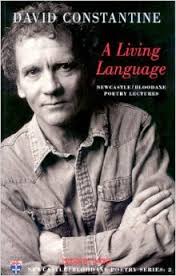
The Brecht-related poem arose after I’d attended a discussion on the German poet/dramatist by David Constantine. One of the poems he presented to those attending (with his translation) was ‘Buying Oranges’. This is one of the poems Brecht wrote for his lover, Margarete Steffin, in the 1930s. Constantine’s translation (from The Collected Poems of Bertolt Brecht (Norton, 2019) goes like this (hear it read by Daisy Lafarge here):
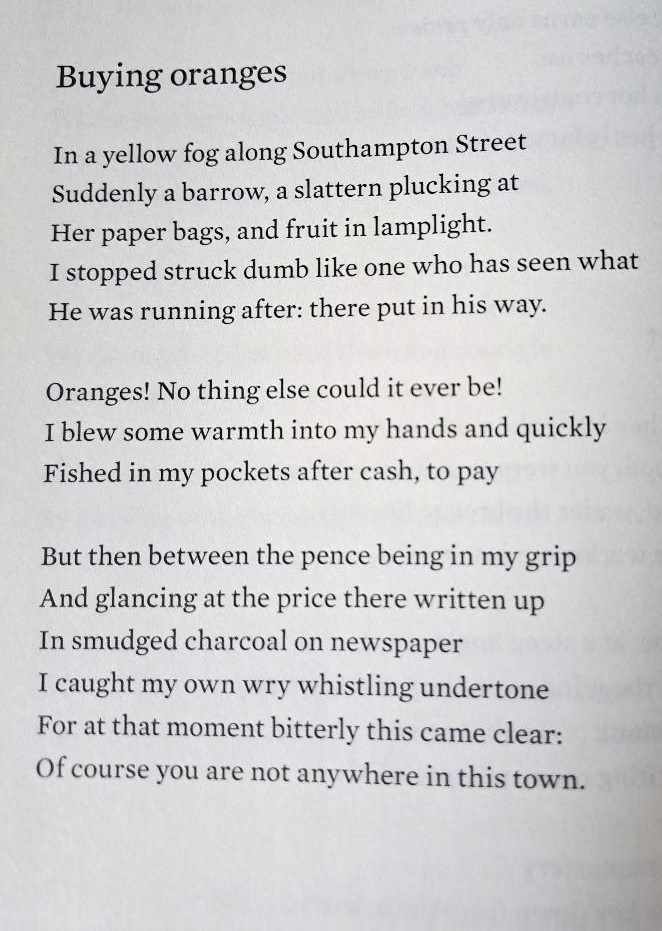
It was the circumstances surrounding my first acquaintance with this poem that led me to write a very loose version of it. I’d booked the event with David Constantine months before, but it happened that my mother sadly (but not unexpectedly) died in her Wiltshire care home the night before. I debated what I should do but decided in the end to attend the talk (I figured there was nothing urgently to be done; Dad had died a year or two before). The world looked different of course. In fact the day was bright and sunny. The event was near Holborn (not far from Southampton Street itself). As you’ll see, I turned oranges into chrysanthemums (my mother’s favourite flowers) and I find now that I lengthened BB’s irregular sonnet to 16 lines. Here’s my version:
ON SOUTHAMPTON STREET
after Bertolt Brecht
A mizzling cold fog on Southampton Street
then suddenly a market stall
with its spectral blooms
under a bare bulb preternaturally lit
a sullen frizz-haired girl cutting stems
and I’m dumbstruck as one who’s found
the thing he looked for
here—at arm’s length—chrysanthemums—
nothing but them! I blow on stiff fingers
plunge them into a pocket for coins
but between fumbling silver
and glancing back up to check the price
scrawled on a yellow card it feels as if I
interrupt myself—a dull under-voice
lifted in bleak remembrance—
since last night you’re not here or any place
The second poem appearing on The High Window this week had a much more mundane beginning. Several years ago (how long can some poems take to arrive in their proper form?) I was staring from a window (in a classroom – perhaps I was invigilating a test) and down in the car park below I saw a car valet parking up his van next to a much fancier car. I seem to have watched him pretty carefully if the poem is to be believed (which I’d usually say not to). Gradually, the poem acquired its erotic undertones (the lovers back to back in bed, the intimacy of the hand-washing, the moisture, the smells, the final turning away) which surprised me as I thought the poem was mostly a comment on work, labour (I love poems about processes) and ultimately about class differences (for money, one man cleans another man’s car). The epigraph is, of course, from Donne’s great love poem ‘To His Mistress Going To Bed’ but here is intended to reflect the working man’s thoroughness!
MOBILE CAR VALET
‘Before, behind, between, above, below’
Like a pair of lovers back-to-back bored in bed
his white van closes rear bumper to bumper
he opens the doors wide and starts to squeegee
the mucky hubs of the big black German
from a sudsy bucket he works the dusty body
with a chamois leather inscribing S-shapes
like the briefest foaming of bold graffiti over
and round wing mirrors and shining roof rails
then balanced on a tyre sweeps half the roof
now the other side and inside across the length
of the dash a pale duster the armrests especially
working the driver’s side then a jet-spray
jumps into hissing life spilling gassy whites
over the wings and the tyres his best weapon
set back in the van then out with the ancient Henry
its scarlet chess piece and snaking black hose
used to scour the seats deep into the footwells
and the chamois is back again to buff stray drops
on windows with windolene it smells good to him
now the doors slammed the remote locking chirps
as he carries the fob back into the marble foyer
like a hatchling his van waits out the length
of one smoke nothing to say to the big German
where it glitters alongside already turning away








































 Martyn Crucefix