Tony Harrison’s ‘Them and [uz]’

Last week I posted on Tony Harrison’s ‘A Cold Coming’. The following discussion of another extraordinary Tony Harrison poem originally appeared in book form in Tony Harrison: Loiner (Clarendon Press, 1997), edited by Sandie Byrne.

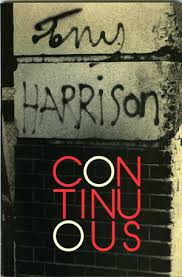
imgres

‘Them and [uz]’ – listen to Harrison read this poem here.

for Professors Richard Hoggart & Leon Cortez

I

αίαι, ay, ay! … stutterer Demosthenes

gob full of pebbles outshouting seas –


4 words only of mi ‘art aches and … ‘Mine’s broken,

you barbarian, T.W.!’ He was nicely spoken.

‘Can’t have our glorious heritage done to death!’


I played the Drunken Porter in Macbeth.


‘Poetry’s the speech of kings. You’re one of those

Shakespeare gives the comic bits to: prose!

All poetry (even Cockney Keats?) you see

‘s been dubbed by [Λs] into RP,

Received Pronunciation, please believe [Λs]

your speech is in the hands of the Receivers.’


‘We say [Λs] not [uz], T.W.!’ That shut my trap.

I doffed my flat a’s (as in ‘flat cap’)

my mouth all stuffed with glottals, great

lumps to hawk up and spit out… E-nun-ci-ate!


II

So right, ye buggers, then! We’ll occupy

your lousy leasehold Poetry.


I chewed up Littererchewer and spat the bones

into the lap of dozing Daniel Jones,

dropped the initials I’d been harried as

and used my name and own voice: [uz] [uz] [uz],

ended sentences with by, with, from,

and spoke the language that I spoke at home.

RIP, RP, RIP T.W.

I’m Tony Harrison no longer you!


You can tell the Receivers where to go

(and not aspirate it) once you know

Wordsworth’s matter/water are full rhymes,

[uz] can be loving as well as funny.


My first mention in the Times

automatically made Tony Anthony!

Read about the drafting of this poem – in the Tony Harrison Archive at Leeds University.

url

Though it was Keats’ ‘Ode to a Nightingale’ Harrison ‘mispronounced’ at school, it is actually Wordsworth who is more important to him because both share a belief in poetry as the voice of a man speaking to men. This conception of poetry as speech is a powerful constituent in Harrison’s work and perhaps one not clearly understood. John Lucas, for example, has attacked what he sees as loose metrics in the poem ‘V’ but, to reverse Harrison’s comment that all his writing (theatrical or otherwise) is poetry, all his poetry needs to be read as essentially dramatic and deserves to be tested in the spoken voice as much as in the study. Harrison’s interest in the curious idea that the true poet is born without a mouth implies the difficult battling for a voice or voices which can be found everywhere in his work and it is in this clamour that I find its dramatic quality. In a public poem like ‘A Cold Coming’, Harrison makes use of the contrasting and conflicting voices by playing them off against a regular form. This is almost always the case, but in what follows I prefer to concentrate less on metrical effects than on the way voices interweave.

The very title of the pair of sonnets, ‘Them & [uz]’, seems to promise conflict, at best dialogue, and it opens with what could be taken as the howl of inarticulacy. In fact each pair of these opening syllables gestures towards crucial worlds in Harrison’s universe. The ‘αίαιof classical dramatic lament is echoed by the “ay, ay!” of the musical hall comedian cheekily working up an audience. Immediately, the reader is plunged into the unresolved drama of two differing voices, instantly implying the two cultures of the sonnets’ title. The line and a half which follows, sketching Demosthenes practicing eloquence on the beach, is intriguing in that its locus as speech is hard to pin down. It is perhaps intended at this stage (apart from introducing the poems’ central issue) to hover in an Olympian fashion above the ruck of dialogue that follows, implying the heroic stance which will be taken up in the second sonnet.

poster-demostheness-spricht-meeresfluten-310780

Line 3 opens again into a dramatic situation with the voice of the narrator (the adult Harrison), repeating his own interrupted recital of Keats in the classroom, while the master’s scornful comments appear fresh, unreported, as if still raw and present, in speech marks. The narratorial comment on this – “He was nicely spoken” – confirms this poem’s tendency to switch voices for its effects, this time its brief sarcasm barely obscuring the unironic comment likely to be made by an aspiring Loiner, or by an ambitious parent. The example of nice speaking given (again in direct quotes in the following line) is the master’s claim to possession, to authority in matters of language and culture and the separated-off reply of the narrator – “I played the Drunken Porter in Macbeth – with its full rhyme and sudden regular iambic pentameter, implies both a causal link between the two lines, painting Harrison as dispossessed specifically by the master’s attitudes, as well as conveying the tone of resignation in the young schoolboy.

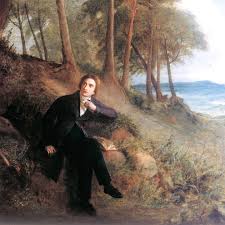
images

Much of the tension and success of the poem has already arisen from the dramatic interchange of voices and the master’s voice asserts itself again in line 7 ironically claiming a kind of monolithic, aristocratic purity to poetry which this poem has already attempted to subvert:


Poetry’s the speech of kings. You’re one of those

Shakespeare gives the comic bits to: prose!”


The following lines contain a curious wavering in the clear interplay of dramatic voices, only part of which is resolved as the poem proceeds. Evidently, the intrusive, even hectoring, parenthesis (at line 9) is the narrator’s questioning of what appears to be the master’s voice’s continuing argument that “All poetry” belongs to Received Pronunciation. Yet the aggression of this attack, with its harsh alliteration and sarcastic question mark, is out of key with the other narratorial comments in part I, though the tone is re-established in part II. In addition, I have some difficulty in accepting the master’s words as appropriate to the situation which – with no break – continues the speech made to the young Harrison. For example, the word “dubbed”, with its implication of the deliberate laying of a second voice over an ‘original’, already hands victory in the argument to Harrison’s claim for the authenticity of ‘dialect’ and, as such, would not be used by the believer in “the speech of kings”. Equally, the apparent plea, “please believe [ s] / your speech is in the hands of the Receivers”, does not accord with the voice that summarily dismissed the pupil as a “barbarian” 7 lines earlier. In this case, Harrison’s desire for the dramatic has foundered momentarily on that old dramatist’s rock, the necessity for exposition which compromises the integrity of the speaking voice.

imgres

The true note of the master returns – interestingly, following one of Harrison’s movable stanza breaks, as if confirming a shift in voice though the speech actually continues across the break – with “We say [Λs] not [uz], T.W.!” The tone of the responding voice, after the suggestion of a more spirited response in the Keats comment, has returned to the resignation of the brow-beaten pupil. This is reinforced by the more distant comparison of the boy to the ancient Greek of the opening lines, heroically “outshouting seas”, while the young Harrison’s mouth is “all stuffed with glottals, great / lumps to hawk up and spit out”. This first sonnet draws to a close with this tone of frustrated defeat for the boy, yet the drama has one final twist, as the voice of the master, sneering, precise and italicised, has the last word – “E-nun-ci-ate!“. There can be little doubt that the boy must have felt as his father is reported to have done in another sonnet from The School of Eloquence, “like some dull oaf”.

The second part of ‘Them & [uz]’ contrasts dramatically with the first, though the seeds of it lie in the image of heroic Demosthenes and the accusatory tone of the reference to Keats which seemed a little out of place in part I. This second sonnet’s opening expletive aggression strikes a new tone of voice altogether. “So right, yer buggers, then! We’ll occupy / your lousy leasehold Poetry”. The poem’s premise is that it will redress the defeat suffered in part I in an assertive, unopposed manner. Not the master, nor any spokesman for RP is allowed a direct voice, yet the interchange of speech and implied situation can still be found to ensure a dramatic quality to the verse.

The passionate and confrontational situation of the opening challenge is clear enough, yet it’s striking how it has taken the autobiographical incident in part I and multiplied it (“yer buggers . . . We’ll occupy”) to present the wider political and cultural context as a future battlefield. Even so, there is no let up in the clamour of voices raised in the poem. Immediately, the narratorial voice shifts to a more reflective, past tense (at line 3) as the rebel reports actions already taken – and with some success, judging from the tone of pride and defiance: “[I] used my name and own voice: [uz] [uz] [uz]”. Even within this one line, the final three stressed syllables are spat out in a vivid reenactment of Harrison’s defiant spoken self-assertion. It is this slippery elision of voice and situation which creates the undoubted excitement of these and many of Harrison’s poems as they try to draw the rapidity and short-hand nature of real speech, its miniature dramas and dramatisations into lyric poetry. A further shift can be found in lines 9 and 10, in that the voice now turns to address a different subject. The addressee is not immediately obvious as the staccato initials in the line are blurted out in what looks like a return to the situation and voice with which this sonnet opened. Only at the end of line 10 does it become clear that the addressee is the poet’s younger self, or the self created as the “dull oaf” by the kind of cultural repression practised by the schoolmaster. The reader is further drawn into the drama of the situation by this momentary uncertainty: RIP RP, RIP T.W. / “I’m Tony Harrison no longer you!”.

images

The remaining 6 lines are, as a speech act, more difficult to locate. There is an initial ambiguity in that they may continue to address “T.W.”, though the stanza break suggests a change and, anyway, this makes little sense as T.W. is now dead (“RIP T.W.”). In fact, these lines use the second person pronoun in the impersonal sense of ‘one’, addressing non-RP speakers in general, and it is the generalised nature of these lines which disarms the effectiveness of the passage. This is particularly important in line 14, “[uz] can be loving as well as funny”, the tone of which, commentators like John Haffenden have questioned. The difficulty here is that if Harrison is addressing those who might use [uz] anyway, though there may well be many amongst them for whom the fact that “Wordsworth’s matter / water are full rhymes” is useful ammunition and reassurance, the same cannot be said of the “loving as well as funny” line which might variously be construed as patronising, sentimental or just plain unnecessary. Nevertheless, the poem regains a more sure touch in the final lines in its use of the reported ‘voice’ of The Times in renaming the poet “Anthony“. The effect here is both humorous (this, after all the poet’s passionate efforts!) and yet ominous in that the bastions of cultural and linguistic power are recognised as stubborn, conservative forces, still intent on re-defining the poet according to their own agenda, imposing their own hegemonic voice where there might be many.

Tony Harrison’s ‘A Cold Coming’

I have been thinking about the role of metre in poetry in preparation for 3 evening sessions I have been asked to teach for the Poetry School in London. The sessions are part of a wide-ranging course on some of the basics of poetry (other parts of it will be taught by Tim Dooley, Judy Brown, Claire Crowther and Matthew Caley). Also, last Saturday I attended the Free Verse Poetry Book Fair in Red Lion Square, London. There – apart from spending too much money on poetry books and chatting with people who had come from all over the country – I listened to a discussion about the role of poetry in relation to politics. Fiona Moore chaired a discussion involving Choman Hardi, Bill Herbert, Sophie Mayer and R A Villanueva. Ideas put forward included the delicate issue of ‘using’ the experience of others in political poetry as well as the need to work polyvalently or collaboratively to combat the influence of unquestioned language and form. Herbert quoted W S Graham’s line: “What is the language using us for?” At the confluence of these two biographical moments I found myself thinking of Tony Harrison’s solutions to the poetry/politics issue – in part through his use of formal metre. The following discussion of Harrison’s Iraq War poem, ‘A Cold Coming’, originally appeared in book form in Tony Harrison: Loiner (Clarendon Press, 1997), edited by Sandie Byrne.

imgres

Harrison has declared his commitment to metrical verse because “it’s associated with the heart beat, with the sexual instinct, with all those physical rhythms which go on despite the moments when you feel suicidal”. In conversation with Richard Hoggart, he explains that without the rhythmical formality of poetry he would be less able to confront, without losing hope, his favoured themes of death, time and social injustice. “That rhythmical thing is like a life-support system. It means I feel I can go closer to the fire, deeper into the darkness . . . I know I have this rhythm to carry me to the other side”.

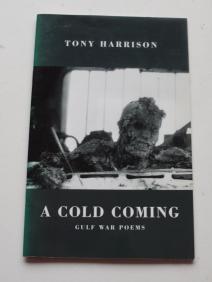
There are few of Harrison’s poems that go closer to the fire than the second of his Gulf War poems, ‘A Cold Coming’. Its initial stimulus, reproduced on the cover of the original Bloodaxe pamphlet, was a photograph by Kenneth Jarecke in The Observer. The picture graphically showed the charred head of an Iraqi soldier leaning through the windscreen of his burned-out truck which had been hit by Allied Forces in the infamous ‘turkey-shoot’ as Saddam’s forces retreated from Kuwait City. In the poem, Harrison makes the Iraqi himself speak both with a brutal self-recognition (“a skull half roast, half bone”) as well as a scornful envy of three American soldiers who were reported to have banked their sperm for posterity before the war began (hence, with a scatological nod to Eliot, the title of the poem). There are undoubtedly echoes in the Iraqi’s speech of the hooligan alter ego in the poemV’, yet Harrison worries little over any narrow authenticity of voice in this case, and he does triumphantly pull off the balancing act between the reader’s emotional engagement with this fierce personal voice and a more universalising portrayal of  a victim of modern warfare. Furthermore, it is Harrison’s establishment and then variation of the poem’s metrical “life-support system” that enables him to achieve this balance, to complete a poem which weighs in against Adorno’s view that lyric poetry has become an impossibility in the shadow of this century’s brutality.

imgres

The poem’s form – rhymed iambic tetrameter couplets – seems in itself chosen with restraint in mind, as if the photographic evidence of the horror lying in front of him led Harrison to opt for a particularly firm rhythmical base “to carry [him] to the other side”. Indeed, the opening five stanzas are remarkable in their regularity with only a brief reversed foot in the fourth line foreshadowing the more erratic energies soon to be released by the Iraqi soldier’s speech:


I saw the charred Iraqi lean

towards me from bomb-blasted screen,


his windscreen wiper like a pen

ready to write down thoughts for men.


The instant the Iraqi’s voice breaks in, the metre is under threat. Each of his first four stanzas opens with trochaic imperatives or questions and at one point he asks if the “gadget” Harrison has (apparently a tape-recorder but a transparent image of poetry itself) has the power to record “words from such scorched vocal chords”. Apart from the drumming of stresses in lines such as this, Harrison deploys sibilance, the alliteration of g’s and d’s, followed by an horrific mumbling of m’s to suggest the charred figure’s effortful speech in the first moments of the encounter. Regularity is re-established the moment the tape-recorder’s mike is held “closer to the crumbling bone” and there is a strong sense of release from the dead man’s initial aggressive button-holing as his voice (and the verse) now speeds away:


I read the news of three wise men

who left their sperm in nitrogen,


three foes of ours, three wise Marines,

with sample flasks and magazines . . .

10051408090


In the stanzas that follow the dead man’s angry, envious sarcasm is controlled within the bounds of the form and it is rather Harrison’s rhymes which provide much of the kick: God/wad, Kuwait/procreate, fate/ejaculate, high tech’s/sex. It is only when the man demands that Harrison/the reader imagines him in a sexual embrace with his wife back home in Baghdad that the metrical propulsion again begins to fail. It is in moments such as this that the difficult emotional work in the poem is to be done. This is our identification with these ghastly remains, with the enemy, and it is as if the difficulty of it brings the verse juddering and gasping to an incomplete line with “the image of me beside my wife / closely clasped creating life . . .”

The difficulty of this moment is further attested to by the way the whole poem turns its back upon it. Harrison inserts a parenthetical section, preoccupied not with the empathic effort the dead Iraqi has asked for but with chilly, ironic deliberations on “the sperm in one ejaculation”. Yet all is not well, since this section stumbles and hesitates metrically as if Harrison himself (or rather the persona he has adopted in the poem) is half-conscious of retreating into safe, calculative and ratiocinative processes. Eventually, a conclusion yields itself up, but it is once again the metrical change of gear into smooth regularity (my italics below) that suggests this is a false, defensive even cynical avoidance of the difficult issues raised by the charred body in the photograph:


Whichever way Death seems outflanked

by one tube of cold bloblings banked.


Poor bloblings, maybe you’ve been blessed

with, of all fates possible, the best


according to Sophocles i.e.

‘the best of fates is not to be’


a philosophy that’s maybe bleak

for any but an ancient Greek . . .

imgres

That this is the way to read this passage is confirmed by the renewed aggression of the Iraqi soldier who hears these thoughts and stops the recorder with a thundering of alliterative stresses: “I never thought life futile, fool! // Though all Hell began to drop / I never wanted life to stop”. What follows is the Iraqi soldier’s longest and most impassioned speech, by turns a plea for attention and a sarcastic commentary on the collusion of the media whose behaviour will not “help peace in future ages”. Particular mention is given to the “true to bold-type-setting Sun” and, as can be seen from such a phrase, Harrison once more allows particular moments of anger and high emotion to burst through the fluid metrical surface like jagged rocks. There is also a sudden increase in feminine rhyme endings in this section which serves to give a barely-caged impression, as if the voice is trembling on the verge of bursting its metrical limits and racing across the page. This impression is further reinforced in the series of imperatives – again in the form of snapping trochees at the opening of several stanzas – that form the climax to this section of the poem:


Lie that you saw me and I smiled

to see the soldier hug his child.


Lie and pretend that I excuse

my bombing by B52s.


The final ten stanzas culminate in a fine example of the way in which Harrison manipulates metrical form to good effect. In a kind of atheistic religious insight, the “cold spunk” so carefully preserved becomes a promise, or perhaps an eternal teasing reminder, of the moment when “the World renounces War”. However, emphasis falls far more heavily on the seemingly insatiable hunger of the present for destruction because of the way Harrison rhythmically clogs the penultimate stanza, bringing it almost to a complete halt. The frozen semen is “a bottled Bethlehem of this come- /curdling Cruise/Scud-cursed millennium”. Yet, as we have seen, Harrison understands the need to come through “to the other side” of such horrors and the final stanza does shakily re-establish the form (though the final line opens with two weak stresses and does not close). However, any naive understanding of the poet’s comments about coming through the fire can be firmly dismissed. This is not the place for any sentimental or rational synthetic solution. Simply, we are returned to the charred face whose painful, personal testament this poem has managed to encompass and movingly dramatise but without losing its form, thus ensuring a simultaneous sense of the universality of its art and message:


I went. I pressed REWIND and PLAY

and I heard the charred man say:


The Bow-Wow Shop’s Aspects of Orpheus

Bow Wow Shop Orpheus Poster_v2

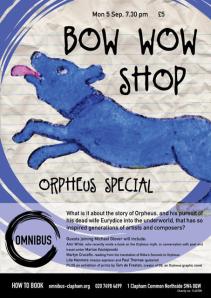
Last week I was pleased to be involved in the first of the on-line journal Bow-Wow Shop’s evening events in Clapham. Its focus was the figure of Orpheus: What is it about the story of Orpheus and his pursuit of his dead wife, Eurydice, into the underworld that has so inspired generations of artists, writers and composers?

Editor of The Bow-Wow Shop, poet and Independent arts and culture journalist, Michael Glover organises and he programmed a terrific mix of material. Ann Wroe’s 2011 book, Orpheus: the song of life (Cape), explores the roots of the Orphic story and traces its many manifestations through Classical to modern times. I was lucky enough to read with her at an event at Lauderdale House a couple of years ago. In Clapham she was in conversation with Marius Kociejowski. I was there on the strength of my 2012 translations of Rilke Sonnets to Orpheus (Enitharmon Press). Providing musical illustrations of the power of the Orpheus story were mezzo-soprano Lita Manners and guitarist Paul Thomas. There was also an exhibition of prints by Tom de Freston, creator of OE, a graphic novel on the Orpheus material.

imgres

Lita and Paul performed extracts for Gluck’s opera Orfeo ed Euridice (1762), songs by Vaughn-Williams and from the 1959 film Black Orpheus. Marius interviewed Ann though she needed little prompting to discuss several aspects of what is a wonderfully original book. Rilke’s inspired writing of the Sonnets to Orpheus (1922) form a thread through the book but she steered clear of that and concentrated more on the first evidence of the myth in the 6th BCE: a painting in black figure on a Greek vase, pictured with a huge lyre that almost seems part of him. Already at that early stage he is called ‘famous’. A 13th century BCE Cretan vase perhaps images him, again with the super-sized lyre (denoting divine powers, his music powerful even over inanimate objects birds, trees). Elsewhere he seems imaged as a bird himself – the power of song and music so strong that he must take on the attributes of a bird-god.

imgres

Perhaps even further back, Ann suggested, the figure is based on fertility myths, perhaps of Indian origin. His wife Eurydice likewise is linked to the figure of Persephone, the whole narrative in its original forms reflecting ideas of the seasons, death and re-birth of the earth, the crops. But there remains something irresolvable about the Orpheus myth – this polyvalent quality is one of the reasons for its productive quality in terms of inspiring artists. We kept recurring to the question: why must Orpheus turn as he is leading Eurydice out of the Underworld? The story contains its own tragedy. Ann suggested one interpretation might be to do with the fact the Eurydice represents the mystery of the natural world, or perhaps of knowledge/speech about the natural world, and that must necessarily remain hidden. Such a thing is the remit of the Gods alone. Orpheus must leave the Underworld empty-handed.

images

I spoke about Rilke in 1921, settling into the Château de Muzot in the Swiss Valais. How he liked to walk in the garden with its orchards and roses in full bloom, a landscape often evoked in the sonnet sequence which eventually arrived. He later declared that in the month of February 1922, he ‘could do nothing but submit, purely and obediently, to the dictation of [an] inner impulse’. In an extraordinary inspirational period, between the 2nd and 5th of that month, most of the 26 sonnets of Part One of Sonnets to Orpheus were written. He then polished off the ten year old sequence of the Duino Elegies. Between the 15th and the 23rd, Rilke went on to complete the 29 poems of Part Two.

Perrcy Bysshe Shelley wrote a longish fragment on the myth in 1820:


His [song]

Is clothed in sweetest sounds and varying words

Of poesy. Unlike all human works,

It never slackens, and through every change

Wisdom and beauty and the power divine

Of mighty poesy together dwell,

Mingling in sweet accord.


Here, as often, Orpheus is an image of the (male) artist/poet as well as being an image of our desire to find or create order or harmony in the world about us.

Rilke’s inspired poems brim with optimism and confidence about the role of poetry. In contrast, but more typical of the growing 20th century gloom, perhaps with intimations of a second world war, 15 years later – Auden’s brief 1937 poem ‘Orpheus’ is mired in uncertainty, asking “What does the song hope for?” Is it to be “bewildered and happy” – a sort of ecstatic but unthinking bliss? Or is it to discover “the knowledge of life”? No answer is given. The poem ends: “What will the wish, what will the dance do?” This is the Auden who doubts the power of poetry – it makes nothing happen – in his Elegy to Yeats.

And more like Auden than Rilke, the 20th century tended to take a more sceptical view of the myth – giving a more powerful voice to the traditionally passive Eurydice – more critical of Orpheus as careless, self-centred, weak. For example, in 1917 – 4 years before Rilke arrived in his chateau, H.D.’s Eurydice was condemning Orpheus:


for your arrogance

and your ruthlessness

I have lost the earth

and the flowers of the earth


Such radical revisions come also from more explicitly feminist poets like the American, Alta:


all the male poets write of orpheus

as if they look back & expect

to find me walking patiently

behind them, they claim I fell into hell

damn them, I say.

I stand in my own pain

& sing my own song

fullsizerender-11-360x348

Carol Ann Duffy’s revision (in her 1999 book The World’s Wife) gives Eurydice both poem title and narrative perspective. Her Orpheus is:


the kind of a man

who follows her round

writing poems, hovers about

while she reads them,

calls her his Muse,

and once sulked for a night and a day

because she remarked on his weakness for abstract nouns.


She saves herself from having to accompany Orpheus back to the upper world by offering to listen to his poem again. Orpheus, seduced and flattered, turns. “I waved once and was gone” she comments.

imgres

In this context Rilke’s take on the myth is (not surprisingly) very traditional and brimming with confidence in the role of the poet and patriarchal sidelining of Eurydice. So Rilke’s interest lies with the world and the underworld, life and death. He is more like Shelley who set his fragmentary poem after the loss of E and it’s coming through that experience that seems to add power to his song. Rilke is interested in the idea of transition. Orpheus tries to recover Eurydice; he moves from life, into death and then back again. This fluidity, the courage and a readiness to renew ourselves, to be risked in the absorption with something other, to be translated from one realm to another, to come and go, to be and not to be is what draws Rilke to the myth.

This is also Don Paterson’s thinking behind his versions of the Sonnets in Orpheus (Faber, 2006). He argues Man is unique in having foreknowledge of his own death, meaning we act as if we are already dead, or historical. This means that we construct life as an authentic and intelligible narrative, a life with meaning, but it is death that drives the plot of our life. This is one of Paterson’s key ideas and he refers to it as our ‘ghost-hood’. So we are like Orpheus: we too have descended to the land of the shades and then returned to the present moment – our condition is therefore existentially transgressive, riven, divided.

It’s the singing of the Orphic artist that addresses and bridges such divisions. This explains Rilke’s interest in the Orpheus myth: its narrative is a metaphor for the longed-for transit or communion between the realms of life and death. He possesses the desired ability to inspire the renovation of human perception that can initiate a more comprehensive, joyful and celebratory experience of life. One of the things most people know of Rilke is his exhortation to praise. Praise is a form of secular prayer for Rilke and it demands a renovation of conventional language through Orpheus’ song – as also noted by Shelley in Prometheus Unbound:


Language is a perpetual Orphic song,

Which rules with Daedal harmony a throng

Of thoughts and forms, which else senseless and shapeless were

imgres

Orpheus’ singing as a way to think about the language of poetry can clearly be seen in Rilke’s celebratory sonnets about the garden at Muzot. Here’s my translation of sonnet I  13:


Pear and plump apple and gooseberry,

banana . . . all of these have something to say

of life and death to the tongue . . . I guess . . .

Read it in the expression on a child’s face


as she tastes them. It comes from far off.

Slowly, does speechlessness fill your mouth?

In place of words, a flood of discovery

from the flesh of fruit, astonished, free.


Try to express what it is we call ‘apple’.

This sweet one with its gathering intensity

rising so quietly – even as you taste it –


becomes transparent, wakeful, ready,

ambiguous, sunny, earthy, native.

O experience, touch, pleasure, prodigal!


Rilke’s vigorous and self-conscious mutations of the sonnet form create a variety of rhyme schemes, line lengths, iambic and dactylic pulses. David Constantine has described this as suitably fitting forms for the figure of Orpheus because he is himself a figure of transition, fluency and mystery.

234203

Forthcoming Bow-Wow Shop events in Clapham will focus on the work of Edward Lear and Gabriel Garcia Lorca.

2016 Forward First Collections Reviewed #5: Harry Giles

This is the fifth and final installment in the series of reviews I have been posting of the collections chosen for the 2016 Forward Prizes Felix Dennis award for best First Collection. The £5000 prize will be decided on 20th September. Click here for all 5 of my reviews of the 2015 shortlisted books (eventual winner Mona Arshi).

The 2016 shortlist is:

Nancy Campbell – Disko Bay (Enitharmon Press) – click here for my review of this book

Ron Carey – Distance (Revival Press) – click here for my review of this book

Harry Giles – Tonguit (Freight Books)

Ruby Robinson – Every Little Sound (Liverpool University Press) – click here for my review of this book

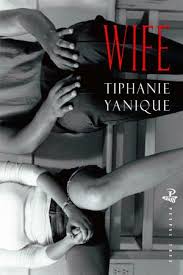
Tiphanie Yanique – Wife (Peepal Tree Press) – click here for my review of this book

imgres

Thanks to Freight Books for providing a copy of Harry Giles’ book for review purposes.

I’d only come across Harry Giles’ work as a Guardian featured poem in June in response to his Forward short-listing. The chosen poem was ‘Piercings’ and suggested Giles was working the same area that Andrew McMillan did so successfully last year. What might be an autobiographical masculine narrative voice recognises a passer-by as an old encounter: “four years since / he hauled me into a lift with / Want to make out?” But the man had then been sporting various body piercings which have since been removed in order to become “employable, less obvious” whereas the narrator has continued making “more holes”, continued to accumulate the badges of a rebelliousness the other has given up on. The final question, “So what do you do now?” is therefore made poignantly redundant, each, surely, reading the tell-tale signs of the other’s body.

But ‘Piercings’ is by far the most conventional poem in Tonguit and Giles is no McMillan, nor does he want to be. On the facing page is a poem made from extracts from One Direction’s Harry Styles’ fanfiction. The title, ‘Slash poem in which Harry Giles meets Harry Styles’, gives a feel for its playfulness though the poem itself does not seem to amount to much. Perhaps it amounts to more if read in the context of Giles’ other manipulations of texts and discourses which have a more obviously seditious intent. The last poem in the collection offers ‘Further Drafts’ of a phrase often used by Alistair Gray: “work as if you live in the early days of a better nation”. Giles works various rhyming turns on the first and last words of this phrase eventually to arrive at “lurk as if you live in the early days of a better sedition”. It’s ‘Harry Styles’, manufactured pop idol and X Factor/Simon Cowell cash cow, that is the real target of Giles’ poem (though it lurks with some seditious intent, it’s still not among his best).

images

Giles is interested in the processing of texts, sampling from George R R Martin’s A Game of Thrones, or creating cut-up texts from information associated with Abu Dhabi’s artificial island and cultural centre, ‘Saadiyat’.  The satirical effects are delivered through simple repetition and disjunction, questioning the original source’s coherence and integrity, where ecological sustainability becomes “a core value integrated into the design approach / in terms of throughout the the the concept design” [sic]. ‘You Don’t Ever Have to Lose’ does something similar with advertising text from IT services company Atos. ‘Your Strengths’ is a more powerful text in its own right, this time using source material from the Department of Work and Pensions Capability Assessment, the UK Citizenship Test and other psychometric tests to make a thunderous barrage of questions ranging from the invasive, absurd, profound, squirm-inducing and piddling to the politically loaded. Giles also works textual legerdemain in ‘Sermon’, based on a speech by David Cameron in which the word “terrorism” is replaced by the word “love”:


We must make it impossible

for lovers to succeed. We need to argue

that love is wrong. To belong here

is to believe in these things.

imgres

This processing of texts, often randomly, often derived from the internet or Google searches, sometimes with editorial influence in the final result is presented as politically subversive. As the Tonguit blurb suggests, it derives from the belief that we are all warped and changed by the language/s that surround us and inhabit us. The hope of the lyric poet working towards his/her own truth is devalued, considered delusional, impossibly bound up in Blake’s socio-psycho-political “mind-forged manacles”. We liberate ourselves by breaking these, unpicking or smashing the dominating discourses around us. And if our deliberate intention is already suspect then we must achieve it randomly, perhaps via a machine. It’s a form of surrealism which profoundly questions our use of language and owes a lot to the Oulipian experiments of Raymond Queneau. Giles’ collection title, Tonguit, productively seems to hover between an urgent imperative to individual vocalisation – tongue it! – and more passive implications about the way other people’s language/s oppress the individual – we have been tongued!

images

The more imperative mood is obvious in ‘Curriculum’ which takes aim at normative education and gives it both barrels:


Mix me a metaphor of noble gases,

economic engines and avant-garde

taxonomies, with Kingdom Phylum Order

gone to bloody Dada. Get down and dirty


with transects, quadrants.


There is a Wildean element to this sort of systematic over-turning though there is no doubt about Giles’ seriousness beneath the often funny, ludic quality of these poems and there is none of Wilde’s self-regarding quality. Harry Giles himself – as a recognisable, recurring, coherent, autobiographical figure – is curiously absent from most of these poems though I don’t doubt the sincerity of a poem like ‘Waffle House Crush’:


I’ll have you smothered n covered

diced n peppered n

capped n lathered n

lustred n smoothed n

spread


Giles’ various linguistic masks don’t hide so much as free him into more liberated forms of expression. I’ve deliberately not yet mentioned his most obvious, deliberately chosen mode of expression: what he calls his own “mongrel and magpie” form of Scots. Dave Coates has pointed out that, as in Kathleen Jamie’s The Bonniest Companie, Giles provides no glosses in the book on his particular Scots, “an implicit assertion of the language’s place within the broader spectrum of Englishes”. Giles’ Scots sets itself deliberately against discourses like those of the DWP and Atos as a declaration of variousness. Nor is he averse to something like a declaration of war:


Let’s be arsonists. Let’s birn the year.

[. . .]

Let’s mak like airtists

n birn the leebrars [libraries] acause we shoudna, n birn

Pairlament acause we shoud.


What follows is an apocalyptic conflagration of all things, down to the “thocht o fire”.

But the sheer vigour of Giles’ intent means his Scots is a lot harder to follow than Jamie’s. In fact, he does provide his readers with a full gloss/translation on his website. I needed this to be honest to deal with a lot of the Scots text, though the ‘translations’ then read as somewhat awkward, watered down versions of a quite different language (rather than a form of English). But it is worth the effort to really appreciate the tour de force of national- and self-assertion that is ‘Brave’. Like some Highland Whitman, making himself and his nation through singing (I’m losing some of the lay-out here):


A sing o google Scotland

o laptop Scotland,

o a Scotland sae dowf on [dulled by] bit-torrentit HBO

drama series n DLC packs fer

paistapocalyptic RPGs

imgres

But also the Scotland “whit chacks the date o Bannockburn on Wikipaedia” and fears “o wan day findin oot / juist hou parochial aw hits cultural references mey be”. ‘The Hairdest Man in Govanhill’ takes all the clichés that phrase might suggest and instead describes a man who “has thay lang white scairs on / baith sides o his mooth fae smiling that damn wide” (my italics). This is of a piece with the Cameron subversion as we hear that the man is “that bluidy haird he’s a hairt tattoed wi Dulux on his bicep n aw hit says is A LUV YE”. There’s a risk of this getting as caricatured as the cliché it intends to subvert but Giles’ Scots is put to terrific seditious intent in ‘Tae a Cooncillor’ – a kind of one-sided flyting in which the local councillor who wants to close down a swimming pool is mocked mercilessly:


Wee glaikit, skybald, fashious bastart,

whit unco warld maks ye wir maister?

Whit glamour has ye risin fest as

projectile boak?

Hit’s time tae gie yer feechie fouster [nasty fester]

an honest soak.


This is committed, bolshie, rebel-script done with great skill and immense energy but Harry Giles is too interested in too much to settle merely for this. I was interested in his Scots (or rather specifically Orcadian) versions of a few chapters of the Laozi’s Daodejing. He astutely titles these ‘Aald rede fir biggin a kintra’ [Old advice for building a country] again recalling Alistair Gray’s dictum. The opacity of the language makes Giles’ versions a hard read but (if I may) here’s his boldly economical version of chapter 53 (some indentations lost here again) followed by my own recently published version:


53

a bit wittins

whan waakan the wey

are a rod tae dree


the wey is snod

an fock cheust fancy the ramse


govrenment divided

sheens growen-up

kists empie

but heidyins’ claes are braa

thay’ve barrie blads

are stecht wi maet

gey rowthie


caa this the darg o reivers

an no the wey


Crooked avenue

chapter 53


—perhaps you have begun well

one step after another along the way


yet you walk in fear of side-tracks

the great way running level and plain


still who can resist those side-tracks

soon as good governance is in place


we’re liable to neglect our business

too soon the tall barns lie empty


sooner wear fashionable clothes heels

daggers for glances glut on food and booze


have more than we can sensibly use—

dawn breaks on some crooked avenue


what was it happened to the way


Tonguit is a bubbling cauldron of a book, willing to take risks that don’t always come off, but guided by a belief in the need to challenge the assumptions and languages of the status quo. Harry Giles is a fascinating figure (go to his website here ) and his characterisation of his Scots as “magpie” is as much applicable to his multifaceted work in theatre, software, twitterbots and visual arts, all forms of “art about protest and protest about art”. Whether contemporary poetry, as in books like this one, will prove sufficiently interesting and flexible for his creativity remains to be seen.

imgres


2016 Forward First Collections Reviewed #4: Tiphanie Yanique

This is the fourth in the series of reviews I am posting of the 5 collections chosen for the 2016 Forward Prizes Felix Dennis award for best First Collection. The £5000 prize will be decided on 20th September. Click here for all 5 of my reviews of the 2015 shortlisted books (eventual winner Mona Arshi).

The 2016 shortlist is:

Nancy CampbellDisko Bay (Enitharmon Press) – click here for my review of this book

Ron CareyDistance (Revival Press) – click here for my review of this book

Harry GilesTonguit (Freight Books)

Ruby RobinsonEvery Little Sound (Liverpool University Press) – click here for my review of this book

Tiphanie YaniqueWife (Peepal Tree Press)

imgres

Thanks to Peepal Tree Press for providing a copy of Tiphanie Yanique’s book for review purposes.

Early in Tiphanie Yanique’s book there is a moment (which happily turns out to be misleading) when, in a series of prose passages, she gives the impression that precise, once-and-for-all definition is what she seeks. Imitating something of the tone and style of a dictionary, she explores the meaning of ‘wife’, ‘wifey’, ‘get wife’ and ‘to wife’. Yet even here, Yannique’s point is that the simple word ‘wife’ has a plurality of meanings from married woman, to woman plain and simple, to types of relationships between men and women, to “a direct translation of ‘sex’”, to a verb suggestive of securing a heterosexual relationship, preferably with a rope “made of gold [with] a diamond at the knot”. Early on, Wife flashes up its warning signs not to trust any simple reading of language, much of which has its roots in historical, patriarchal attitudes, nor to go looking for a single coherent lyric voice in this collection.images

Proving to be a clever ironising of the book’s epigraph from Coventry Patmore’s The Angel in the House (“She casts her best, she flings herself”), the book turns out to be a babel of different voices, casting perspectives across the territory of heterosexual relationships from dating to divorce, via sex, marriage, marriage counselling, children (a bit), broken families and glimpses of modern forms of marital happiness. There is something rather systematic about the way Yanique ensures the ground is thoroughly covered, the variety of angles, which reminds me of those analytical Cubist paintings that so invite close-up observation that it’s easy to neglect the wider view. From the Acknowledgements page, some of these poems appear to be 10 years old, so the collection is the fruit of much writing and accumulation of materials: the overall impression is of Yanique’s impressive range of experience and imaginative projection, her reluctance to side once-and-for-all, as suggested by those poems which wrestle with such dichotomies as intimacy versus individuation (‘Feminist Methodology: a found poem’) and instinct versus contrivance (‘The Falling Out’).

ss1_usvi

But Yanique – who was born in the Virgin Islands and now teaches on an MFA programme in New York City – is coming firmly and deliberately from a post-colonial and feminist place as can be seen in the book’s opening poem, ‘Dangerous Things’. The narrative voice slides from what seems a neutral tone (“This is the island”) to a more confident self-awareness in the course of 21 short lines (“And so I am the island”). The woman is at first a “small and vulnerable” geographical feature to be inhabited/colonised by the “you” addressed in the poem: “the space / that you take up / is a space where she cannot exist”. The colonising power, who is also the husband, is given due warning. In being an island, “dangerous things” live within the woman, as well as “beautiful things” which are said to be “most dangerous”. History is alluded to twice in the course of the poem (what makes the writing so good is that its huge freight of ideology does not unbalance it). Colonial as well as gender history is implied here and though “we will never be / beyond our histories”, the warning stands: the self-awareness of the island is awakened and whatever power or person positions itself in relation to her, her own selfhood and identity needs to be duly considered.

In a later, whirling, chant of a poem, another more assertive female voice declares “I am both body and nation” (‘Last Yanique Nation’). In contrast, ‘I try’ is a delicate lyric sequence in which a haunted-sounding female narrator believes she sees a bride’s veil in a tree like the bodies swaying like ‘Strange Fruit’ in Abel Meeropol’s 1936 poem/lyric. Such marital victimhood is more obviously self-willed in ‘To Fall or Fly’ where the woman declares “I don’t want to survive. I want to die of my Diego”. This contrasts ‘A note to the couple’s therapist’ where the woman self-diagnoses her problem with the relationship: “It’s just this body” she declares. Yanique is very good at the urgencies of the body in relationships and here she develops a water metaphor. The woman does not want to be left to rust; she’s too young to “flake away”. But when touched, she feels she is no more than “a pail of water” beneath the man’s advances. She has ambitions beyond her current relationship: “if I am water then I plan to be the ocean. / I’ll leave salt behind”.

imgres

More often the addressee, there are very few male voices in Wife. One speaks with great reasonableness only to dismiss any notion of marriage as a partnership because “we are one body, mind and all”. It’s not long before such high-sounding notions crash into the assertion that “husband means the one who cares”. Such self-regard is not only spoken from the mountain-top but, he declares, “we are the mountain”. ‘African Animal’ is a more interesting poem which analyses aspects of masculinity through a voice taken from a TV nature documentary. We are told the son is eventually driven out by the community, being dangerous, likely to “turn bull” and attack the young. Yanique balances the voice delicately between observations about natural history and more human details. The poem arrives, chillingly and seemingly logically, at a place where violence against all-comers seems the only result:


In battle there is recognition among the bulls.

Is this his son, now grown and come to challenge him?

Is this his brother?


But perhaps surprisingly it is the traditional institution of marriage that Wife really wants to explore. “There is always blood at a wedding” starts one poem expressing a familiar, feminist scepticism about the institution. Not only blood, but bones too, the world filled by “phantoms of all us amputees”. A zuihitsu is a genre of Japanese literature consisting of loosely connected personal, ideas and Yanique writes a ‘Zuihitsu for the day I cheat on my husband, to my fiance’. As this title suggests, the fluid, random quality of the (prose) form allows her to begin to question the traditional categories of the marriage arrangement. There is much switching of verb tenses, into future and past, which undermines the rigid categories of terms such as fiancé, husband, lover, adultery, monogamy and marriage.
imgres

Something similar happens in ‘The Story of our Elopement’ which adopts the free-wheeling style of a fairy tale with kings, kingdoms and princesses but remains grounded in the reality of a Brooklyn marriage bureau. The couple wait “among couples coming together for reasons / not always concerning love”. This is a point made throughout Wife: the sheer variety of human relationships which can be found in the baggy tent of marriage. This particular couple consider themselves different to “the others at the bureau” and it is a sense of freedom gained within marriage that marks them out:


We were fleeing

to make our own kingdom.

Now any myth

could be true if we communicated it:

I said, I am a princess

I said, you are charming

I said, I will witness

you.


The penultimate poem is a ‘Traditional Virgin Islands Wedding Verse’, a form focused on the idea of ‘belonging’ to father, town, land, church, tribe. Yet it’s a story of “self-creation”, the climax of which is marriage in which the partners “belong / to each other”. As in the elopement poem, Yanique’s proviso is, of course, that the marriage is “by your own choice” though her collection has been raising questions all along about the nature of choice. Even this traditional verse emphasises the power of each individual’s history. It would be too cynical to suggest that only the well educated, reasonably wealthy can experience such freedom of choice, but the emphasis on “self-creation” does reinforce an uneasiness I have about the book’s willed and systematic qualities. I am struck by how few of the poems involve children. Two poems suggest the loneliness and grief that result from broken families, another records the abandonment of unwanted babies. ‘Things that baby put into his mouth’ suggests, in its movement from the realistic to the hyperbolic, that the child devours almost everything, a sensation familiar enough to all parents who are perhaps not always prepared for the need to lay “self-creation” aside in the face of such demanding, dependent vulnerability.

imgres

2016 Forward First Collections Reviewed #3: Ruby Robinson

This is the third in the series of reviews I will post over the next two months of the 5 collections chosen for the 2016 Forward Prizes Felix Dennis award for best First Collection. The £5000 prize will be decided on 20th September. Click here for all 5 of my reviews of the 2015 shortlisted books (eventual winner Mona Arshi).

The 2016 shortlist is:

Nancy CampbellDisko Bay (Enitharmon Press) – click here for my review of this book
Ron CareyDistance (Revival Press) – click here for my review of this book
Harry GilesTonguit (Freight Books)
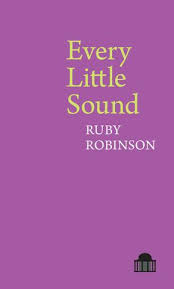
Ruby RobinsonEvery Little Sound (Liverpool University Press)
Tiphanie YaniqueWife (Peepal Tree Press)

imgres

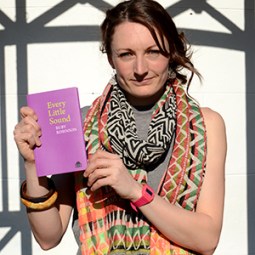
Thanks to Pavilion Poetry/Liverpool University Press for providing a copy of Ruby Robinson’s book for review purposes.

It wasn’t until his second book that Don Paterson was inviting his reader into the “little church” of the poem. Ruby Robinson’s first book’s opening poem ushers us in through “the trap / door of a modern barn conversion” and though full of apparent comforts (paintings, chairs for guests, soup, bread, socks, duvet) it’s really a decidedly unnerving place. The walls are explicitly said not to have eyes, but the narrative voice surely knows too much about us: our loneliness, right down to our “deepest thread, like a baked-in hair”. And even if the walls do not watch, they are full of the “shadows of stags [. . .] cast like stalking giants”. There’s a lot in Robinson’s book which reminds me of another debut collection from way back in 1983 where the lovers describe themselves as “fascinated by our own anaesthesia, / our inability to function”, the TV buzzes half-watched in a corner, emotions grow ever more dysfunctional, “shorter and faster now”, and there is talk of separation in halting, heavily punctuated non sequiturs.

imgres

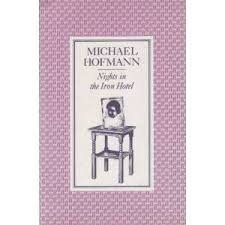
That was Michael Hofmann’s Nights in the Iron Hotel (1983) and Robinson’s book shares an interest in disconnected scientific facts to express the troubling gulf between thought and feeling. One of Hofmann’s characters moves “the fifty-seven muscles it takes to smile” and Robinson’s ‘Time’ sets out from the knowledge that with a stethoscope a rodent’s heart murmur can be divided into “constituent beats”, spurring the lovers to analyse themselves as closely, as if that might reveal something important about their emotional lives. Stethoscope and heart-beats recur in ‘Love’ where again the biological processes of nerve impulse and ventricles are searched for something resembling meaning. ‘Breathe Deep’ does the same with the stomata on the undersides of leaves and this close observation (of a certain type) lies behind the collection’s title. The process of ‘internal gain’ occurs when we are under threat and is an increase in our perception (of sound especially) so that we hear Every Little Sound. As with Hofmann, Robinson’s attention to detail – a sort of hyper-perception – is really a symptom of a soul in trouble. Reading these poems is often like watching a fragment of material caught on a barbed fence, trembling and thrilling hopelessly in the wind.

The world of Every Little Sound is a thoroughly deracinated one – most everything has been torn up by the roots. Amongst snow, bluebottles, the word ‘thanks’, the remains of a kebab, ‘Hope’ notes “one IKEA bag like a dead bird whose wings won’t die”. All these items, hardly more than listed, seem to be thrown “overboard” into uprooted, meaningless chaos yet the human mind still despatches its uncertain “search party”. The emotional impact of many poems in the book lies in this: the continuing desire to make some sense in the face of chaos. In the midst of a discussion of romantic feelings, a narrator reflects, “I am // in touch with my feelings” but the line-break subverts the truth of the statement and the poem ends in disconnects of feeling, a brusqueness of tone, the brutal chopping of punctuation: “I could tell he felt like crying / and I didn’t mind. We finished our beer, shook hands, went home”.

imgres

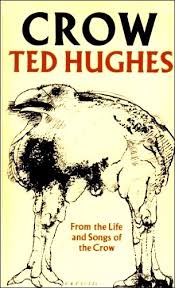
Another poem’s narrator talks of her “nerve endings in exile (‘Love II’) and in ‘This Night’ (which might be a distant parody of Lorenzo and Jessica’s “In such a night” speeches from Act 5 of The Merchant of Venice) the narrator confesses she is “more in love tonight, with ideas / and arbitrary things, / than I am with you”. Even in the throes of sexual ecstasy, there remain “two glazed eyes, observing it” (‘Orgasm’). ‘Winter’ uses both right and left justified lines to create an unnaturally evenly-spaced robot-toned prose passage about keeping a tortoise in the fridge through winter. This is where the real originality of these poems is to be found alongside several pieces which evoke the inevitable consequence of such deracinated perception – the fragmentation of the sense of self. Robinson has named Ted Hughes as one of her influences and, in one of the best poems here, ‘Unlocatable’, we hear him in the representation of psychic fragmentation through the physical. The narrator records her dismemberment at her own hands; at one point “a crow on a hard shoulder / delicately inspect[s] the entrails”. Her head is sawn off until the self lies in fragments, “half-witted, unpicked, flaked / out, half a leg, a spewing mouth, brittle hair, / scooped-out heart”.

Close_up_of_Hand_Cut_Jigsaw_Puzzle

There are moments in the book when this sort of Hughesian shrillness and hyperbole-ramped-past-10 is reached for too easily. But ‘Unlocatable’ also  hints at the real life grounding for the edge-of-panic, urgent, deadly serious nature of Robinson’s shattered vision. In the poem’s penultimate stanza we are told:


My mother, somewhere,

like a drowned fish on the very end of some

fucker’s very long line

smashing herself against the floor

to an unnatural beat


To her great credit Robinson does not use past dislocations in her childhood and family relationships to pursue poetic confessionalism or misery memoir. This potentially gossipy backdrop is aptly sketched only in a fragmentary manner across several poems (the reader left to piece things together as must the family).

RubyRobinsonPavilion-1h

‘Truth’ seems to be an ars poetica of sorts and it is the finding of the mother’s voice “behind the sofa”, the gathering up of this “small voice” and handing it round (as poems?) that spurs the writer on. In particular, the mother’s experiences seem to find echoes in other people, in the media, in the family. A reference to the “death of a violinist” seems obscure but is surely to Frances Andrade whose history of sexual abuse by a music teacher led to her suicide. As I’ve said, the exact events of the mother’s life are left unclear but there is no doubt that men have played a destructive role. One of the more explicit poems, ‘My Mother’, records tragically self-destructive attitudes in her belief that men “cannot be blamed” and that a woman must “know her place, should wait”. Robinson is more clear elsewhere that comments made by her mother have yielded material for poems (including the book title). The images of men are seldom appealing or sympathetic: both ‘Undress’ and ‘Ire’ suggest manipulative and coercive figures, more often than not treating women as sex objects: “He peeled the duvet away // slowly, dragging heat from the flesh / just as you’d freeze-dry meat or fresh fruit”. Robinson mostly treats these issues on a personal level though in ‘Flashback’ the wider context of sexual abuse and domestic violence comes into view with allusions to Radio 1 DJs, another woman’s suicide, courtroom scenes and the earlier image of the fisherman reappears: “He keeps her on a line like a fish / against a rip current”.

All these elements feed into the major poem in this book, ‘Apology’. This seems more explicit about the relationship between mother and daughter and is a howl of survivor guilt, regret, anger, apologising to her mother that things in their lives have turned out as they have. The book’s jacket blurb talks about the poems’ expressions of connectedness and a capacity to love but it has to be said there is precious little of these themes and most of what there is comes in ‘Apology’. Written in spilling, rolling 3/4 line sections (like Ginsberg’s Howl perhaps) the narrator obsessively apologises (mostly for things beyond her control, of course): “I’m sorry you’ve had to withstand such torrents of knowledgeless advice and legal toxification”. More than anywhere else in this painful book, this poem manages to ask, “Is it too ambitious to hope?” The answer given is not reassuring or confident: “We learn to accept the clouds for what they are and wait, patiently”. For the end of a major poem this is undramatic and anticlimactic but Robinson’s aim throughout is more concerned with telling the truths as she and her family have experienced them than with crafting something more consolatory. The final poem is addressed ‘To My Family’ and enacts an interesting withdrawal from such painfully personal material. Robinson retains/regains an artistic distance that augurs well for future collections which will have to draw inspiration from other materials. There is a quiet, deserved, hard-won confidence here: “I’m just words. And you have not the tenacity / to smother me, so I’ll wait here, written, biding my time”.

images


i.m. Yves Bonnefoy: love the bouquet for its hour

images

The death of Yves Bonnefoy (on 1st July 2016) was marked last week by The Guardian and The New York Times and many others. Anybody who has followed this blog for a while will know that I have found considerable inspiration in Bonnefoy’s poetry and writing about poetry. John Naughton in The Guardian obit sums up the nub of Bonnefoy’s thought: “we tend to replace the reality of things and other people with an image or concept, which deprives us of a more direct and immediate experience he called the experience of “presence”, in which one has a fleeting apprehension of the essential oneness of all being”. That latter phrase will explain how I have stumbled my way in recent years from translating Rilke to versioning the texts of the Daodejing.

imgres

The NYT obit suggests Bonnefoy’s poetry has often been found “highly abstract and often obscure” and to counter this misleading impression I thought I’d post four sonnets from his 2011 collection L’heure presente (The Present Hour) in Beverley Bie Brahic’s pellucid translations. Bonnefoy is thinking of his own father here (who died when the poet was young) but the valedictory tone seemed right for the occasion. Bonnefoy translated a great deal of Shakespeare and (in part – he’s also arguing with Mallarme) the fourth of Bonnefoy’s sonnets is in dialogue with the ideas of Sonnet 63 (“His beauty shall in these black lines be seen, / And they shall live, and he in them still green”). It’s a mark of Bonnefoy’s achievement that even in such an emotional, personal context, he can still articulate ideas about language (“words cut”) and the way in which “the real flower becomes metaphor” by bleeding the temporal and in doing so yields up a great deal of what it means to be real. Instead, we must “love the bouquet for its hour. / Only at this price is beauty an offering”.


A Photograph

This photograph—what a paltry thing!

Crude colour disfigures

The mouth, the eyes. Back then

They used colour to mock life.


But I knew the man whose face

Is caught in this mesh. I see him

Climbing down to the boat. Obol

Already in his hand, as if for death.


Let the wind rise in the image, driving rain

Drench it, deface it! Show us

Under the colour the stairs streaming water!


Who was he? What were his hopes? I hear

Only his footsteps descending in the night,

Clumsily, no one to give him a hand.


Another Photograph

Who is he, astonished, wondering

Whether he should recognise himself in this picture?

Summer, it seems, and a garden

Where five or six people gather.


And when was it, and where, and after what?

What did these people mean to one another?

Did they even care? Indifferent

As their death already required of them.


But this person, who looks at—this other,

Intimidated all the same! Strange flower

This debris of a photograph!


Being crops up here and there. A weed
Struggling between house fronts and the sidewalk.

And some passers-by, already shadows.


A Memory

He seemed very old, almost a child;

He walked slowly, hand clutching

A remnant of muddied fabric.

Eyes closed, though. Oh—isn’t believing


You remember the worst kind of lure,

The hand that takes ours to lead us on?

Still, it struck me he was smiling

When, soon, night enveloped him.


It struck me? No, I must be wrong.

Memory is a broken voice,

We hardly hear it, even from up close.

 

Yet we listen, and for so long

That sometimes life goes by. And death

Already says no to any metaphor.


I Give You These Lines . . .

I give you these lines, not that your name

Might ever flourish, in this poor soil,

But because trying to remember—

This is cut flowers, which makes some sense.


Some, lost in their dream, say ‘a flower’,

But it’s not knowing how words cut

If they think they denote it in what they name,

Transmuting flower into its idea.


Snipped, the real flower becomes a metaphor,

This sap that trickles out is time

Relinquishing what remains of its dream.


Who wants now and then to have visits

Must love the bouquet for its hour.

Only at this price is beauty an offering.

06bonnefoy-obit-master768

2016 Forward First Collections Reviewed #2: Nancy Campbell

This is the second in the series of reviews I will post over the next two months of the 5 collections chosen for the 2016 Forward Prizes Felix Dennis award for best First Collection. The £5000 prize will be decided on 20th September. Click here for all 5 of my reviews of the 2015 shortlisted books (eventual winner Mona Arshi).

The 2016 shortlist is:

Nancy CampbellDisko Bay (Enitharmon Press)
Ron CareyDistance (Revival Press) – click here for my review of this book
Harry GilesTonguit (Freight Books)
Ruby RobinsonEvery Little Sound (Liverpool University Press)
Tiphanie YaniqueWife (Peepal Tree Press)

disko_bay[1]

Thanks to Enitharmon Press for providing a copy of Nancy Campbell’s book for review purposes.

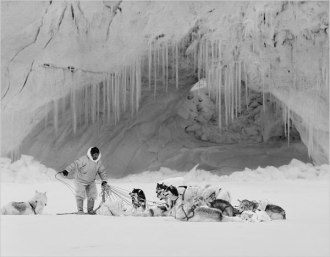
The concluding poem of Nancy Campbell’s collection Disko Bay is, I think, a good place to begin. In ‘Giving Up on Capitalism’, an unnamed boy makes kayaks and sells them for one, then two kroner (these poems are mostly set in Greenland). He hands his earnings to his mother who buys basics like coffee, sugar, needles, cotton and, more ominously, whisky. If this is the nirvana of capitalist enterprise it hardly gets beyond subsistence level and then only to poisonous effect. On the third occasion he instead decides to construct a kayak for himself: taking the few remaining skins, he “pegged them down deftly / and paddled away”. The point of rejection is simply made, but the simplicity has a mythic, typological impact. The poem’s form is simple, repetitive, like a piece of folklore, an oral transmission perhaps, and – characteristic of the whole collection – the vocabulary is plain to such a degree that the reader is impressed by a paucity or poverty or essentialism (depending on how successful you think it is). Certainly this is a book unlike any other you’ll read this year, drawing on myths and landscapes of the far north (the opening section of the book has poem titles in Greenlandic first, then English). Its impact is often impersonal but Campbell’s knowledge derives from her several residencies in the region and she deploys it in a skilful and poetically knowing fashion.

greenland5

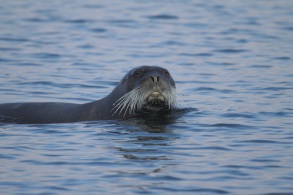
Above all, these poems convey the harshness of scraping a human existence in the Arctic Circle, perhaps most obviously in the section called ‘Ruin Island’. An epigraph quotes the Eskimo, Osarqaq: “Our tales are narratives of human experience, and therefore do not always tell of beautiful things”. Several poems follow the exploits of Qujaavaarssuk, a heroic figure and general strong man, who is reduced to singing a dirge at the troubled fishing grounds and is advised by “a man who is not his father” (a break in traditional forms of transmission here?) that the one thing to be relied upon is that “hunger will come of its own accord”. ‘Hospitality’ in such circumstances may consist of feeding guests “the kidneys of a black seal / as the ice harden[s]”. Qujaavaarssuk’s immediate difficulty is the presence of too much ice (a deliberately ironic comment on the shrinking ice caps of our day): he sees the shadows of seals moving beneath it and sets out “to the ice edge to follow them” but what Campbell is interested in (these are contemporary poems, not slavish myth-reproductions) is the failure of the hunter. In ‘Danger of Snow Blindness’, Qujaavaarssuk returns for the first time “his sled empty, his kamiks [boots] clean”. ‘The Last Seal’ opens:

There was nothing left to feed the dogs.

Qujaavaarssuk shot them, one by one

and fed them to each other.

seal-5

To the contemporary reader, what lies largely unspoken beneath these chilly, often curt, unsentimental chips off a mythic block is, of course, our own awareness the adverse effects of climate change. ‘Ruin Island’ becomes apocalyptic in tone so that the words spoken by a hunter that conclude the sequence, words spoken by Jorsias Ammonsen in a real interview conducted in 2006, are presented as the reply of a hunter “who can no longer hear the question”. In this way, Campbell tragically ironises Ammonsen’s proud, nostalgic, heroic, perhaps hopeless comments:

When we were young

no place seemed too far away for hunting.


We travelled a long way,

too far to come back the same day.

We slept in stone caves

and were cold in winter.


Nothing is too harsh

when you are accustomed to it.

Nancy Campbell 2012

Campbell tries to remain true to the plain directness and dignity of such a voice in most of these poems. The figure of the poet seldom intrudes. When it does she is trying to learn the “soft uvulars” of a new language which seem like “dark flocks of sound I’ll never net, or say”. Difficulties of expression in one language are compounded by problems of communicating across distance to her own homeland: “Since I can’t post a letter this far north, / I’m sending you an Arctic snowstorm”. ‘The Night Hunter’ is typical in its use of a simple lexis – snow, door, harbour, boat, blood, sled, knife – and a repeating form of verse as if the polar climate has sheared away more baroque elaborations of language and form. At first this feels cramping, but as Campbell persists and insists this really is what she intends, the simplicity seems more likely to put us in touch with the elements, the elemental, the bottom line of harsh Arctic existence.

With figures like the hunter Qujaavaarssuk so prominent you might anticipate a macho sort of world but the harsh conditions seem to teach an underlying humility (even to men) and Campbell has a number of female narrators who are clearly no push over. In ‘The Seal People’ a seal hunter’s wife watches the vindictive spirits of killed seals approach by boat and though threatened by them her voice does not falter through three steady quatrains, the verse’s repetitions here expressive of her firm courage. ‘The Hunter’s Wife Becomes the Sun’ is a major poem (its form is a sestina with its obsessive recurrences). Here, a hunter’s wife gives him a tinny Christian memento for protection. The hunter is more concerned with the reality of death and an apocalyptic sense of the world’s end (Campbell’s chosen rhyme words are tin, angel, window, box, candle, darkness). But his wife insists on the need for “light”, transforming herself into a “vast white wake / of stars” which might be considered angels, though the man himself finds it hard to shrug off his pessimism: “At the world’s last window, I light another candle”. The shamanic implications of their exchange are more explicitly played out in three translations of crude Greenlandic Qavak songs, originally collected in the 1950s. They are spoken by a “terrible mother” a “female shaman” and an omniscient “wicked woman”, the latter advising the only way to tackle an enemy is to bite off and employ her clitoris as an arrowhead. Neither the blunt obscenity or implied moral judgement can hide the suggestion that this remote culture clearly understands the importance of the female in ultimate survival.

iceberg-in-disco-bay-greenland_6a7e

One of the impressive things about Disko Bay is that it is eco-poetry without shed loads of landscape description. Those vindictive seal spirits carry a powerful ecological message in their “round, black eyes” – less for the Greenland hunter and his wife (whose place and role within a traditional, sustainable Arctic ecosystem is be unlikely to unbalance things) but to us with our petrol engines, plastics and carbon complacencies. Another success of the book is its use of myths redolent of Nordic and North American materials without distracting echoes of Ted Hughes’ trickster figure Crow. In ‘Fragment’ a severed raven’s wing in the snow is enough to imply the global problem: “Never to breed, never to scavenge / on scarlet seal hearts by the ice edge”. It is brave of Campbell to delay the more eco-explicit poems to later sections of the book. Part three sets off from the premonition that “the future is full of riddles” and ‘Conversations’ conveys both the mystery and the certainty of climate change: “I don’t think it is one thing / I think it is a combination of things / a combination of everything”. The riddle-subjects appropriately include a tsunami and an iceberg but not the dirty complexities of the ever-hungry, seldom-satisfying capitalism rejected by the boy who constructs a kayak not to be sold but for his own setting out in this fine, unusual book’s concluding poem.

Read more on Nancy Campbell – in discussion with Forward Arts Foundation.


2016 Forward First Collections Reviewed #1 – Ron Carey

This is the first in a series of reviews I will post over the next two months of the 5 collections chosen for the 2016 Forward Prizes Felix Dennis award for best First Collection. The £5000 prize will be decided on 20th September. Click here for all 5 of my reviews of the 2015 shortlisted books (eventual winner Mona Arshi).

The 2016 shortlist is:

Nancy CampbellDisko Bay (Enitharmon Press)
Ron CareyDistance (Revival Press)
Harry GilesTonguit (Freight Books)
Ruby RobinsonEvery Little Sound (Liverpool University Press)
Tiphanie YaniqueWife (Peepal Tree Press)

imgres

Thanks to Revival Press for providing a copy of Ron Carey’s book for review purposes.

On the cover of Distance a male figure has already travelled well down a track through flat, open countryside. He’s heading determinedly away from us, hands thrust in his coat pockets. I think this is Ron Carey and though the image pretty literally evokes one aspect of the book’s title, it contradicts the stated direction of the poems within which hope to “bring us a little closer”. An epigraph from Elizabeth Burns suggests a more philosophical “sense / of time and place dissolving” so that (in an image that would have pleased Antonio Machado) “we are all / drops of water in this enormous breaking wave”. Ron Carey’s first collection sticks more firmly to the former, more commonplace, more personal of these formulations but is at its most interesting when it ventures an almost magic realist evocation of the latter.

The dissolution of strict linear time provides occasions for many of the most appealing poems here. They are acts of recall of a twentieth century childhood in Ireland (in this Carey invites comparisons with Heaney and, before him, Kavanagh). The boy who is the focus of these recollections is both highly observant and very imaginative. His conviction that there is a leopard in the coal-shed as he is tucked up in bed is grounded in vivid details of it tiptoeing “through the tin-pot Dulux jungle, on / Quick, painted feet”. ‘Breakfast’ is also troubled by imaginary big cats (lions this time) who chase his father from the house, their “claws pinging the spokes of [his] bicycle”. The idea of a ‘water-table’, as discussed by Driller Flanagan and the boy’s father, unleashes images of a real “table of Marian blue; its top shimmering” but when the geological reference is clarified for him, the boy swears never to ask “questions that have / The possibility of such dull answers”. We see the birth of a certain type of poet here, though Carey’s long wait for a first book reassures us that such unbridled (if vivid) fantasy will not be the whole story. So watching Aunt Babbie wring the necks of chickens, while blithely questioning him about his day at school, gives rise to more troubling childhood experiences as the birds’ “squawking souls” pursue him home and (the writing of the poem confirms) continue to haunt him forever.

imgres

Everyday remembrance seldom loses sight of the gulf between then and now, but Carey’s poems occasionally record more profound moments of the collapse of the temporal. ‘Moving’ records the day a family move to a newly built housing estate. All their belongings piled in a horse-drawn cart (old world), as they approach the house the boy’s mother runs ahead with a “100-watt Solus” light bulb in her hand (new world). The electricity that runs metaphorically through the boy’s hands as he is given the horse’s reins and literally through the bulb filament so that the “black eyes of the front-room suddenly blazed” form an instantaneous circuit in which the whole family experiences renewal, the mother now “a young girl” calling from an open window ahead. It is the intensity of the emotions which supercharges such changes in perception. ‘Kilkee’ sees the six-year-old boy partaking of the grief of another Aunt’s broken heart, lying like lovers themselves on sand dunes: “He put his finger into the ring of the sun / And pulled it down the sky till it entered the water”. This drawing down of blinds is a fantasy of sorts but far more profoundly linked to the truth of the moment than the boy’s water-table imaginings. It’s in ‘Upstairs’ that Carey brings this technique to its apogee where the boy (now grown but of an uncertain age) agrees to wear his father’s old coat and lie beside his ageing mother. It’s her desire to re-live earlier days and intimacies that dominates, but the poem cleverly reveals the boy’s own uncertainty of identity: “We pretend to sleep, Danny and me”. He feels he can’t get up, though she’s now asleep, “Because she will not let go of his hand” (my italics).

1899C_British_Bicycle_man

The figure of the father is a powerful one and recurs throughout the book. We see him relishing “pig’s toes with a pint”; elsewhere he comes home from work: “Your cold, great hands shocking / Our new skins; your goat’s kiss rough as love”. Even more memorably, in ‘My Father Built England’, he works as an immigrant labourer, a “solid Paddy full of gristle”, learning how to harden his hands with urine, then with the onset of World War Two, returning to Ireland to work for Hogan and Son. He is one of many characters who populate this enjoyable book – Miss O’Mahoney, a pub quiz-master, an irregular Postman, several Aunts, Grandmother and Grandfather – most of them firmly enough grounded in close observation to avoid caricature. And it’s the quietness with which Carey achieves his aims which is notable. New technologies are alluded to in the context of the past. ‘Churchfields’ makes familiar use of a photographic image but in ‘Background’ an image of a Grandfather is set as background on a computer screen, allowing Carey to “click a short-cut icon on his broad shoulders” in another striking image of the collapse of time differences. Elsewhere, the sweep of a dry stone wall is compared to the curve of a “Large Particle Collider” (unlikely, but successful). And a visit to Patrick Kavanagh’s grave yields an encounter with his ghost, in fact on film, “rasping and jumping on a screen”.

Inisheer_Gardens_2002_dry-stone_walls

Unfortunately, there is a rather soft middle to this book in the sections titled ‘The Beloved’ and ‘New Oceans’. The first seems a rather brief, miscellaneous collection of poems only vaguely linked to the theme of love and includes an up-dating of the Icarus myth and an incongruously Yeatsian lyric, ‘Diarmuid and Grainne’. ‘New Oceans’ appears to be an ill-judged venture into exotic climes and idioms (I think Central America). But there are more interesting poems in the final section of the book, ‘The World Will Break Your Heart’. Here Carey is less intent on conventional narrative and (in contrast to the youthful recall of earlier poems) focuses on the moment as it passes and on last things. ‘Lineage’ is a confident celebration of the Irish landscape – confident enough to admit ignorance of names as well as to leave the poem more open-ended, with no evident pay-off. ‘Catching My Death’ is short-lined, elegant, unpushy. Sounding more like Michael Longley here, the boy has grown up, encountered much:


I find life now – much the same

As the robin does – wriggling

In my mouth


Mortality is now envisaged as a return to the earth, though some sort of reawakening into the future is imagined:


Until

The earth warms

And the soil opens

To the resurrection of the worms

images

Philip Gross, Carey’s supervisor on the South Glamorgan Creative Writing MA course, has written of the tenderness and detail of his work and this is true. He has a long list of competition wins and placings behind him and individual poems are touching and colourful and well-done. Distance covers a great deal of ground between childhood and old age and Carey is above all honest. But as a first book there are trails here which come to nothing and others which promise poems of a more adventurous kind. I hope that’s where the man in the coat is really heading.

An interview with Ron Carey about his work can be read here. 

Reading Archive: April – June 2016

Up-dated June 2016

This is turning out to be the place where I often admit my lacks and ignorance. Elizabeth Bishop – apart from 3 or 4 of the obvious poems – has always been something of a blank spot with me. I have been re-reading her Complete Poems and understanding maybe my problem lies in getting to like her earlier work before A Cold Spring (1955). What I do begin to appreciate more clearly is her modesty, accuracy of observation and own-furrow-ploughing determination as a poet.

imgres

Anne Stevenson’s Five Looks at Elizabeth Bishop has been helpful with thoughts such as “Bishop’s instinct was to look hard enough at nature to lose herself in it – and thus, as in the Biblical paradox, find herself”.

imgres

As has Seamus Heaney’s ‘Counting to a Hundred: on Elizabeth Bishop’ (from The Redress of Poetry). He argues, at her best, she reveals how “obsessive attention to detail can come through into visionary understanding  [. . .] intense focus can amplify rather than narrow our sense of scope” (something I have written about in recent thoughts on McGilchrist’s ideas about right/left brain work).

images

I’ve also been reading two collections by friends . . .

imgres

Lynne Hjelmgaard’s A Boat Called Annalise (Seren) is a sequence of love poems to a husband and a sailing boat and vies with Bishop in some of its evocations of tropical harbours: “We fell asleep with the roosters, / the waves, rumblings in the bay”. For a land-lubber like me, there are powerful portraits of life at sea such as ‘That Feeling of Boat’: “We confide and trust in twenty tons, / talk to it, nurture it”. ‘White Clover’ is a delicately symbolic poem dedicated to the late, much-missed Dannie Abse.

imgres

Danielle Hope’s Mrs Uomo’s Yearbook (Rockingham), which I mentioned in an earlier blog, again shows how effective the Mrs Uomo character is (a near relation of Zbigniew Herbert’s Mr Cogito) as a vehicle for social commentary which is quirky, engagingly funny and incisive, particularly about the NHS for which Hope works as a doctor.

Up-dated May 2016

imgres

Last month it was heavy-Hughes (as you’ll see from my April up-date below) so half following that lead and half influenced by the 400th anniversary celebrations across the media, I have been swimming my way through Hughes’ A Choice of Shakespeare’s Verse. First published in 1971 and up-dated in 1991, Hughes is right in suggesting it’s been hard to “place” the bard amongst the “poets in English”. It’s not just because he wrote mostly drama (if mostly in verse) but also that critics retreat before his work feebly flapping and gesturing towards a special case. So Hughes’ “looting [of] portable chunks” from the plays serves largely to confirm two things: his plays consist often of the most astounding poetry and that – yes – special case status is hard to withhold.  But Hughes is onto something suggesting that Shakespare’s Catholicism in a world of Puritan jihad (Hughes’ word) has much to do with it. An astonishing read – whatever the rights and wrongs of the case.

imgres

Gill McEvoy’s HappenStance chapbook, The First Telling, is terrific. Told with exquisite poise, it recounts the after-shocks of a rape, the adjustments, the progressive self-forgiveness, the therapy sessions. You need to know the sequence is punctuated by poems about birds – this is not a plain sort of confessionalism, but rather work of great artistry, to be recommended for its use of the blank spaces on the page as much as for its exploration of traumatic experiences.

imgres

McEvoy’s book was noticed (winning the 2014 Michael Marks award); Simon Richey published Naming the Tree (Oversteps Books) in the same year and I’d not heard of it till I heard him read at Poetry in Palmers Green. Richey writes about abstract matters – language, time, consciousness – and material events with a wonderful precision and approaching a philosophical elegance. Something of the impersonality of TS Eliot is matched with personal attentiveness to detail – highly recommended.

Up-dated April 2016

imgres

It’s been a heavy-weight Ted Hughes month since I’ve been reading Jonathan Bates’ biography over several weeks and then supplementing it with the poems themselves. The Bate is far more comprehensive than Elaine Feinstein’s earlier biography and if nothing else shows how much material Hughes left behind (100,000 pages of unpublished drafts) so the academic exploration of it will clearly take many years. On the poetry itself Bate gets a bit irritating in relating  just everything back to Plath –  even the late work apparently shows unmistakable evidence of his continuing obsession with her!

imgres

Crow remains extraordinary though it makes more sense to see it as Bate suggests as the unfinished epic that Hughes had hoped to complete. There was to be a phase of restoration but Hughes never managed that – perhaps because this was too close to the two suicides of Plath and Assia Weevil.

imgres

I’d missed Remains of Elmet when it was originally published. With Bate’s help and Hughes’ own Note from 1993, it’s clear now that this is a very coherent and powerful portrait of the region of his childhood.

imgres

I loved Gaudete when it first appeared in 1977 as I was in the first flush of my Hughes period! Most commentators (including Hughes it seems) now consider the ‘filmic’ loosely-constructed narrative poems as not quite the real thing. It’s the strange, tough little songs of Nicholas Lumb that conclude the book that pay more dividends.