More than 10 years of blogging on poetry and translation – over 39,000 views in 2024 – now captured and preserved at the UK Web Archive: 'one of the top 10 poetry blogs' (Rogue Strands)
This is how reviews are supposed to work. I recently read James Harpur’s comments on Bonjour Mr Inshaw, published by Two Rivers Press (poems by Peter Robinson, paintings by David Inshaw) in the Spring 2020 issue of Agenda, ‘Pound Reconsidered’. I went out and bought the book.
I’ve long thought of writing poems about David Inshaw’s paintings, drawn to what Harpur calls his ability to “invest landscapes with spiritual light and energy, balancing realism with a sense of the mythic, of penetrating a noumenal sphere”. The other personal draw to his work has been that Inshaw’s home (and home ground as an artist) is that part of Wiltshire to the west of where I grew up. Inshaw’s home is in Devizes and many of his paintings are of the landscape just a bit further west, of Silbury Hill, Avebury, the barrows and downs of that area. The drive from the M4 turn-off at Hungerford, on the Bath Road, through Marlborough and the A361 to Devizes has long figured in my personal list of favourite drives (not wholly because it was for years the route to my childhood home in Hilperton, Wiltshire). And now Peter Robinson has beaten me to it with this beautiful book of full colour images and 19 poems, though his approach is not simply ekphrastic (merely descriptive of the images) but often launches out from the pictures into concerns shared by the two artists.
Image and Text from ‘Bonjour Mr Inshaw’
Robinson and Inshaw in fact met at Cambridge in the 1970s. That moment is uncertainly recalled in the poem ‘In the Seventies’ (a title borrowed from Thomas Hardy’s poem in Moments of Vision – a sub-theme of this whole book is how both poet and artist respond to Hardy’s work). Various chance meetings over 50 years then occurred including a visit to Devizes in January 2019 during which the project of this book was agreed upon.
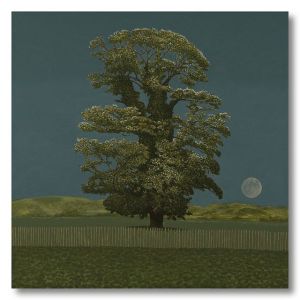
Inshaw’s ‘Tree and Moon’
The word ‘haunted’ seems to have been designed to be applied to Inshaw’s landscapes. There is a hyper-real quality to the painting which makes the viewer re-see our own surroundings but also takes us through the surface. Harpur’s Agenda review suggested a “Platonic vision” but I’d object to losing the surface of the real so readily. Inshaw was a member of the Brotherhood of Ruralists (here is an old BBC documentary on them – a brilliant example of ‘slow’ TV before it had been thought of) and his landscapes are usually peopled and the trees and downs and ancient memorials are therefore always ‘seen’. Inshaw’s work is about time and memory (Hardy again) and the way moments of vision or perception can feel heightened. The poem ‘Haunting Landscapes’ alludes to Inshaw’s ‘Our days were a joy and our paths through flowers’ (another quote from Hardy, his poem ‘After a Journey’). A woman in black stands in a graveyard but has turned as if being called to from beyond the frame (by a memory, a ghost).
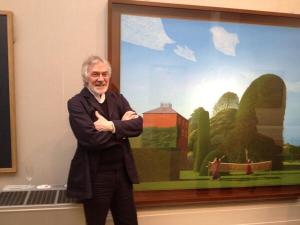
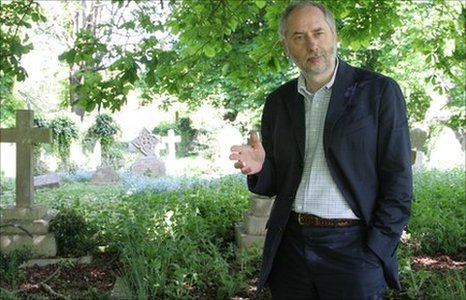
Inshaw in front of ‘The Badminton Game’
As in so many memories, there is a heightened particularity to Inshaw’s paintings. There is a Rilkean focus on what ‘The Kennet’ calls “being here”. Look at Inshaw’s ‘Tree and Moon’, for example, and Robinson’s accompanying poem, ‘At Slader’s Yard’, associates the two artists (and their art forms) in the quality of their ‘noticing’: “I’m a counter of clouds / come over the hills like this one / ‘salmoning’ in a ‘deepening blue’”. Hardy’s poem ‘Afterwards’ describes himself as a “man who . . . noticed things”. Robinson’s concluding poem, ‘After a Visit’, suggests how Inshaw’s precision of observation (“the starkness of those winter branches’ / black against a glowing skyline”) manages to inculcate a sense of something other than mere perception of colour and shape: “it brings back the sense of some design, / and a meaning to this scene”. The root and pattern of design is unclear. The value of such a comprehending vision is heightened by the precise historical context in which many of these poems were written. The divisions and confusions of Brexit and the world of Covid infection and lockdowns keeps breaking through the surface of this book. The parliamentary “palaver”, hypocritically urging us to “come together as a nation” and a certain politician, “pre-disgraced”, indicate that neither poet nor painter look upon the landscape of southern England with their heads in the clouds, nor with any narrowly nostalgic gaze.
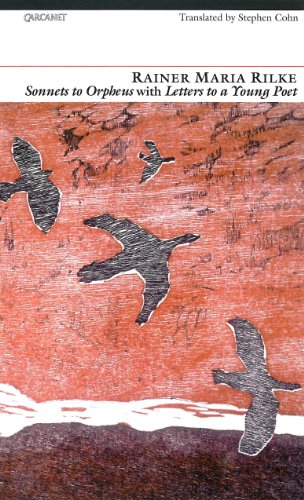
Last week I was invited to take part in an on-line discussion about Rilke’s Letters to a Young Poet, written to a young would-be poet in the early 1900s.This event was organised by the Kings Place group, Chamberstudio, and the panel included two other poets, Martha Kapos and Denise Riley, musicians Mark Padmore, Amarins Weirdsma and Sini Simonen and composer Sally Beamish. We had such a fascinating discussion on Rilke’s advice to young artists (though perhaps we hardly scratched the surface) that I wanted to re-visit it and re-organise my own thoughts about the letters; hence this blog post. Though warm in tone and supportive, the letters are a way of Rilke talking to himself, developing coherent ideas that can be traced through the New Poems (1907/8), Requiem to a Friend (1909), even to the Duino Elegies and Sonnets to Orpheusof 1922. I am quoting throughout from Stephen Cohn’s translation of the letters, included in his translation of Sonnets to Orpheus (Carcanet, 2000).
Rilke’s advice to Franz Kappus was evidently received with gratitude as the correspondence between them continued (if sporadically) from early 1903 to December 1908. We don’t have Kappus’ side of things, but from Rilke’s comments it’s clear the younger, aspiring poet’s letters were remarkably open, even confessional in substance, as suggested by the published letters’ recurring observations about sexual relations. But as for practical advice to a young poet, Rilke offers little, opening with, “I am really not able to discuss the nature of your poems” to “You ask if your poems are good poems . . . You doubtless send your poems out to magazines and you are distressed each time the editors reject your efforts . . . my advice is that you should give all that up”. Probably not what Kappus hoped to hear, though he will have quickly understood that Rilke has more profound points to make. But it means these letters ought to be read less as advice to aspiring writers and more as advice on the best ways to ripen (Rilke’s metaphor) the inner self, a consequence of which might be the conviction that creative work was a necessity for the individual. Peter Porter once suggested a better title for the sequence would have been, ‘Letters to a Young Idealist’ (Introduction to Cohn’s Carcanet translation).
Peter Porter
The advice given is carefully positive – what to seek – and fulsomely negative – what ought to be avoided. Friendly and remarkably sympathetic as his tone is through the series of letters, what Rilke asks, in truth, is extraordinarily demanding for mere ordinary mortals. Rilke urges a priest-like devotion to his High Romantic, Godless programme. In brief, what is to be sought is a clear, honest and open relationship with one’s own inner life and that demands a corresponding avoidance of everything that might distance us from it, especially the pernicious influence of social and cultural conventions, what has been thought, said, written or done before. Rilke makes no bones about how difficult the former is and how frightening the latter is going to feel.
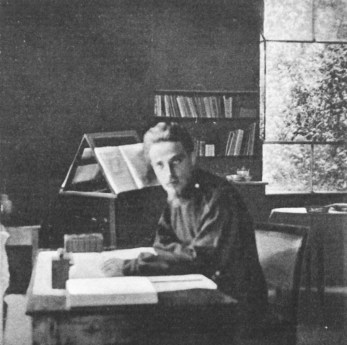
Rilke at his writing desk
The only way, Letter 1 insists, is to “goinside yourself”. And in Letter 3, we need to “allow each thing its own evolution, each impression and each grain of feeling buried in the self, in the darkness, unsayable, unknowable, and with infinite humility and patience to await the birth of a new illumination”. For reasons discussed later, there has to be a degree of passivity about this process: we must “await with deep humility and patience the moment of birth”. In his reply, Kappus must have enumerated the pain and suffering he was experiencing as a young man because Letter 8 spins this positively: “did not these sorrows go right through you – and not merely past you? Has there not been a great deal in you that has changed? Were you not somewhere . . . transformed while you were so sorrowful?” These often rough inner weathers of our emotional lives are precisely what is required. Only then, “something unfamiliar enters into us, something unknown; our senses, inhibited, and shy, fall silent; everything within us shrinks back, there is silence, and at its centre this new thing, strange to us all, stands mutely there”. In one of several memorable images, Rilke explains, through such emotional experience (the pains as much as, or even more than, the pleasures) “we have been changed as a house changes when a guest enters it”.
Those familiar with Keats’ ideas (expressed in his 1819 Letters) about the world as a ‘vale of soul-making’ will find something very familiar here. But Rilke’s take on the process of ‘spirit creation’ lays far heavier emphasis on the need for solitude to achieve it. Letter 5 tells Kappus, “win yourself back from the insistence of the talk and the chatter of the multitude (and how it chatters!)”. The chattering world is a distraction from what ought to be the subject of our study (our inner selves): “What is required is this: solitariness, great inner solitariness. The going-into oneself and the hours on end spent without encountering anyone else: it is this we must be able to achieve” (Letter 6). Such solitude enables greater concentration but also more true (uninfluenced) perception of our inner life. Yet to turn away from so much that is familiar will be frightening. In Letter 8, Rilke compares this to someone “plucked from the safety of his own small room and, unprepared and almost instantaneously, set down upon the heights of some great mountain-range”. What must then be experienced is “a never-to-be-equalled sense of insecurity, of having fallen into the power of something nameless [and this] would virtually destroy him”.
The negative influences of those (us, the timid majority) who have pulled back from such a state of perception is explained. Rilke’s basic tenet is that we are all “solitary”. But the uncertainty of a ‘true’ perception of this is too much for most people: “mankind has been pusillanimous in this respect [and] has done endless harm to life itself: all phenomena we call ‘apparitions’, all the so-called ‘spirit-world’, death, all these things so closely akin to us have been fended off . . . and so thoroughly purged from our lives that the senses by which we might have grasped them have atrophied. To say nothing at all of God”. What Rilke describes here are a number of the conventional ideas – pure figments about the truth of spirituality, death and a deity – that people have populated their world with in seeking greater security. Kappus is told, “a perilous uncertainty is so very much more human” and the truly human, let alone the ambitious poet, must accept the principle that “we arrange our lives in accordance with the precept that teaches us always to hold to what is difficult – then everything that still appears most alien will become all that is best-trusted, most dependable”. Rilke’s chosen metaphor here is the folkloric/mythic image of the terrifying dragon that turns into a rewarding princess at the last moment.
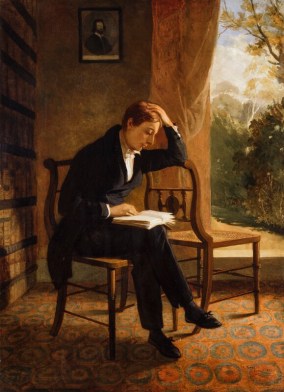
John Keats in Hampstead
Herein lies also the wisdom of passivity. As Keats argued in parallel, with his idea of negative capability (the knack of remaining “in uncertainties, mysteries, doubts, without any irritable reaching after fact and reason”), so Rilke’s fourth Letter advises Kappus not to seek out answers now but to “love the very questions, just as if they were locked-up rooms or books in an utterly unknown language”. The key is to “live them” by which Rilke (like Keats) means to examine and attend to them as fully as possible. He goes so far as to advise a child-like incomprehension (which is at least based on an openness to the questions asked) over a cowardly defensiveness or contempt (which falls back on a distancing from those questions). This is why, in Letter 2, he sharply advises Kappus to avoid irony. There are, says Rilke, “great and serious subjects before which irony stands helpless and diminished” because irony is, by definition, a standing outside of a question or topic. For the same reason, Rilke distrusts engagement with literary or aesthetic criticism (precisely what Kappus has asked of him in relation to his own poems). Letter 3 argues such critical discussions are “received opinions, opinions grown petrified and meaningless, insensitive . . . clever word games”, hence far distant from life itself. The same Letter suggests the artist needs to retain an innocence, even a lack of awareness of his/her creative powers, lest self-consciousness diminish freedom and “purity”. Indeed language itself – the common method of exchange between people – is suspect in representing, in its unexamined use, conventional thought and feeling: “it is so often on the name of a transgression that a life is shipwrecked, and not on the individual, nameless act-in-itself”.
Even these letters, Rilke says in Letter 9, need to be treated with caution and patience: “receive them quietly and with not too many thanks, and let us, please, wait and see what may come of them”. This is a warning not enough heeded by subsequent generations of readers, but Rilke’s real humility is re-emphasised at the end of the preceding Letter. Perhaps feeling he has been delivering advice from ‘on high’, Rilke warns Kappus, “do not believe that he who seeks to console you dwells effortlessly among the quiet and simple words which sometimes content you. His own life holds much trouble and sorrow, and it falls far short of them”. Surely Rilke is not merely alluding here to the life of the creative artist. Prompted, as I have said, by Kappus’ own openness about what we might call ‘romantic’ aspects of his own life, Rilke devotes a lot of space to interpersonal relationships in these letters. His point in Letter 7 is that this area of human life too is poisoned (“well-furnished” – this topic brings out Rilke’s satirical side) with conventional thinking and language: “here are life belts of the most varied invention, boats and buoyancy packs . . . safety aids of all conceivable kinds”. Such ‘safety’ features are more fictions designed to forestall a true encounter with the kinds of questions that human relationships inevitably throw up. Letter 3 particularly criticises male sexual attitudes (lustful, drunken, restless, arrogant, prejudiced) and Letter 7 anticipates a “new and individual flowering” of female sexuality which will lead to relationships not defined as male/female but as “one person and another person”.
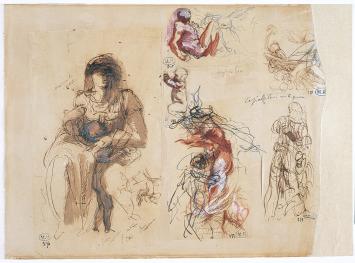
Some of Rodin’s sketches
Such a renovation of individuals, from the inside out, is the urgent call of this series of letters. As to advice to Kappus the wannabe writer, Rilke offers very little, but what he does suggest is wholly in keeping with his other ideas. Letter 1 urges close observation as the only viable method. As I have made clear, this is especially close observation of our inner lives. But one’s whole life needs to be built around this principle, so “you must approach the world of Nature… try to tell of what you see and experience”. Rilke says don’t try to write love poems or on other common subjects of poetry. This is because they will be infected with those conventions of thought and expression I have discussed above. Rather, “favour the subjects which your own day-to-day experience can offer you”. The poet’s approach to such everyday subjects needs to be “quiet, humble, [with] passionate sincerity” to avoid clichés of thought and feeling, hand-me-down solutions or worn out, petrified language. These are the methods Rilke learned from watching Rodin sketching in Paris. Pre-empting likely objections that such an approach would produce work of little importance, Rilke goes on: “If your daily life seems mean to you – do not find fault with it; rather chide yourself that you are not poet enough to evoke its riches” (Letter 1).
The everyday is rich and complex enough for Rilke without any irritable searching after more conventionally dramatic, sensational, controversial subjects to address. The images that Letter 3 associates with this humble creative process is of gestation (“to carry, come to term, give birth”) and the slow growth of trees (“letting the sap flow at its own pace”). In Letter 6 he compares it to bees gathering honey (“drawing what is sweetest from all that there is”). Whether focusing within or without, the artist must begin from what is “unremarkable” and we become better acquainted “with things” and if this is too frightening a prospect – with no off-the-shelf solutions to human fears and insecurities, no God above all – Rilke has few comforts to offer the young poet. As regards God (or, as letter 6 refers to him, the “one who never was”), Rilke allows the idea of God only as the ideal or terminus towards which we travel, a state of full comprehension – through knowing humble things: “Does he not have to be the last, if everything is to be comprehended in him? And what meaning would there be in us, if the one we crave had already been there?”. God, for Rilke, does not pre-date us as an origin. He is the goal towards which we travel, aspire, build, create – ‘he’ is no more nor less than our fullest comprehension of life and death, hence our fullest sense of being in the world.
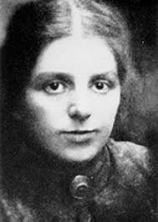
Paula Modersohn-Becker
That the young Franz Kappus, after all this, decided to pursue a military career rather than a creative one is perhaps hardly surprising. It may be that the former presented the least frightening option! Rilke asks such a lot. His poem Requiem to a Friend of 1909 (the year after his correspondence with Kappus came to an end), dwells on the “old enmity / between life lived and great work to be done” (tr. Crucefix). The tragic lament of that particular poem arises from his conviction that the subject of its in memoriam, the painter Paula Modersohn-Becker, had proved herself strong enough to carry forward the huge burden of being an artist and that, therefore, her untimely death (just after the birth of her first child) was an irreparable loss to a world that needs all the true artists it can nurture.
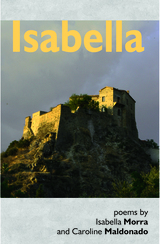
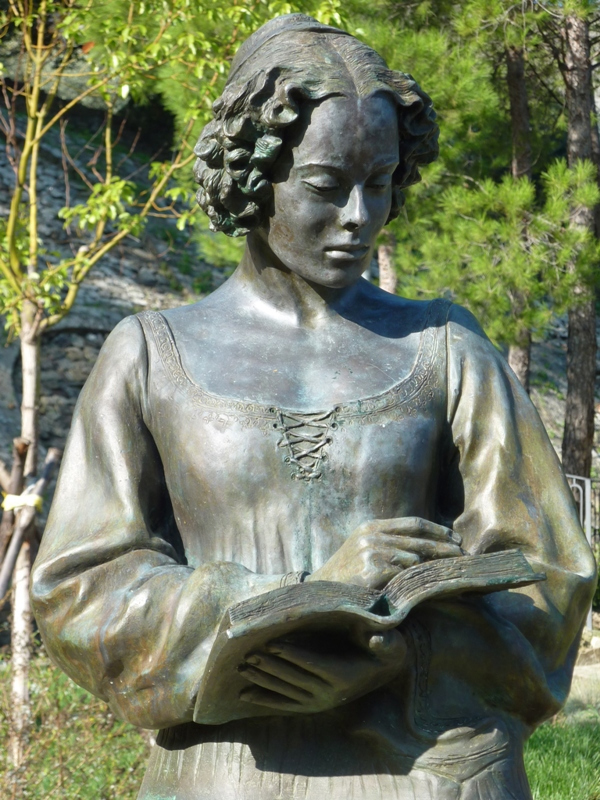
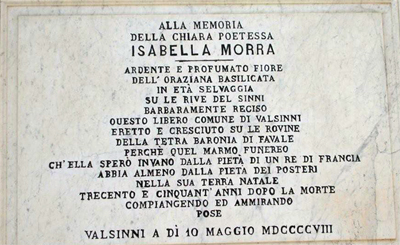
While travelling in the Basilicata region of Southern Italy – in effect, the arch of the ‘foot’ of that country – researching her earlier translations of the little known twentieth century male poet, Rocco Scotellaro (1923-1953), Caroline Maldonado heard of the much earlier, even less known poetry of Isabella Morra. Born around 1520, Morra was one of eight children. Her father, Giovan Michele fled into exile in France when Isabella was about eight years old. A cultured woman – knowledgeable in science, music, literature and the classics – her life prospects were utterly curtailed by her father’s absence and she was left in the care of her brothers.
Her resulting frustrations may be imagined – and astonishingly they are also vividly portrayed in her poems – but her violent death, aged 26, is not clearly understood. There were rumours of an affair between Isabella and a Spanish count and poet, Don Diego Sandoval de Castro, though he was also the husband of a friend of Isabella’s and almost certainly admired by her as much as a writer as a man. But her brothers believed the rumours and seem to have killed her – an honour killing to protect the family name. Maldonado’s book, Isabella, published by Smokestack Books, contains – in parallel text – all of Isabella’s known work, just ten sonnets and three canzoni. The book also includes Maldonado’s own introduction to Morra and 17 original poems by her, inspired by Morra’s work and her “strange, pitiful tale”.
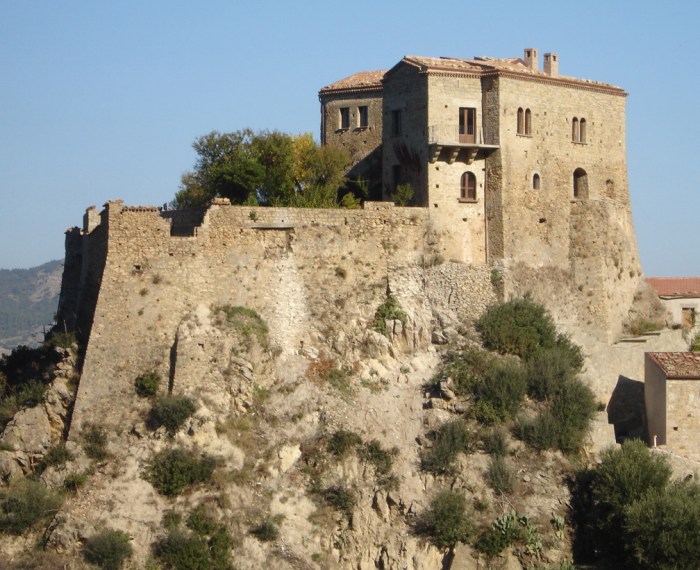
Castello di Isabella Morra
Given the period in which she wrote, it is the raw, personal nature of many of Morra’s poems, their direct style of address, that is so surprising. Maldonado’s decision to make the work as “accessible as possible to a contemporary reader” accentuates this as does her choice not to re-create closely the rhyming of the originals. Morra creates a strong sense of an actual place. It is a place of imprisonment, one she loathes, the village of Favale: “this vile, odious hamlet”. She looks favourably on neither the place nor its people:
Here once again, O hell-like wasted valley,
O Alpine river, shattered heaps of stone,
spirits stripped bare of all goodness or pity,
you will hear the voice of my endless pain.
An unsympathetic ear might sense something brattishly self-regarding here and, given her youth and sheltered upbringing, that would not be surprising. But it is partly this sense of a little girl lost that is so moving. There are several sonnets concerned with her father’s absence. Sonnet III addresses him directly:
I, your daughter Isabella, often look out
hoping for a wooden ship to appear,
Father, that will bring me back news of you.
The first line’s poignant allusion to their relationship reminds the reader that he has been absent from her life for many years. As she gazes out hopefully, she and the dismal locale seem to merge, “so abandoned, so alone!” In sonnet VIII, ominously anticipating the end of her life, she imagines her father’s too-late return: “Tell him how, by my death, I appease / my bitter fortune and the misery of my fate”. It is the capricious – even vengeful – Goddess ‘Fortuna’ that Morra often rails against. In Sonnet I, she is assaulted by “cruel Fortune”. Sonnet VI is a tirade against her mistreatment, initially from a literary standpoint (Morra had hoped to make a name for herself “with the sweet Muses”):
You have promoted every minor talent,
Fortuna, rewarded every sordid heart,
you now compel my own, long past all tears,
to face still more hardship, feel more desolate.
Fortune is also berated for bringing down King Francis I (defeated in battle in 1544), the French monarch who she hoped might protect her father and even bring about a reconciliation between them. Fortuna’s femininity leads Isabella into the awkward position of maligning all women in saying that Fortuna is an “enemy to every noble heart”.
Given such a small body of work and uncertainties about its editing and arrangement, it’s hard to be certain of any sense of development. But over the ten sonnets Maldonado gives us, Morra’s complaints about her lot do seem to modulate into something more resigned and accepting. This is more the tone of Sonnet IX, in which “unholy Death or cruel Fortune” are again the enemies of her “rising hopes” but there are signs of greater resilience: “worn down as I am it will do me no harm”. The final Sonnet also takes up a more distanced perspective:
You know, in those days, how bitterly I wrote,
with what anger and pain I denounced Fortune.
No woman under the moon ever complained
with greater passion than me about her fate.
What has given Morra greater strength is her religious faith: “Neither time nor death, nor some violent, / rapacious hand will snatch away the eternal, / beautiful treasure before the King of Heaven.
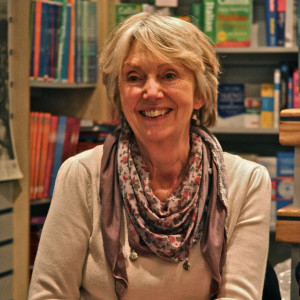
Caroline Maldonado
A similar progression shows itself in the three canzoni too. A modern reader is likely to find her early passionate rebelliousness most engaging, the lines in which she says she will use her “rough, unpolished tongue” to rail against her dismal fate. It’s Fortuna again who is identified as the culprit, plaguing her “ever since the days of milk and the cradle”. One of her complaints is that she has never had the opportunity to hear her own beauty praised and the loneliness and frustration of this young woman is perhaps transformed into the passionate address of the second canzoni. It takes its place in that tradition of religious poems which express a spiritual fervour through language that can be hard to distinguish from the words of a more fleshly lover. Morra appeals to Christ: “I will love only you”. She will use her skill in words to “sculpt [his] heavenly body” and she proceeds to describe his forehead, eyes, hair, neck, lips, hands and feet. The canzoni’s traditional five-line envoi on this occasion is a sort of breathless admission of the impossibility of her task, though even here, the passionate feelings are unmistakable:
Canzone, how crazy you are,
to think that you could enter the sea
of God’s beauty with such burning desire!
The third canzoni – as did the final Sonnet – takes up a longer perspective in which the landscape of her actual imprisonment has become a more symbolic location: “To be in these dark / and lonely woods in days gone by / used to burden my heavy body”. It’s impossible not to think of Dante’s much earlier journey through the “dark wood” of despair. Morra also suggests she has emerged from its dangers, walking now “along solitary roads / far from human intrigue”. We sense a new humility; whether metaphorically or not, she presents herself as “dressing my frail body in rough clothes”. How distant in time we’ll never know, but Morra has evidently travelled a long way from those earlier complaints at her unjust treatment. Especially in the third canzoni, her delight in the natural world rings genuinely true and through that natural world she sees God – or rather “God’s great Mother”, Mary, the female figure who has now ousted the hated Fortuna.
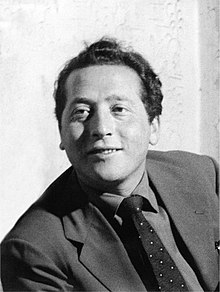
Rocco Scotellaro
Morra’s own few works end on such a note of resolve and hard-won redemption. That she faced a brutal and unjust murder at the hand of her own family is brought out more clearly by Maldonado’s own poems. She is partly interested in the contrast between the more contemporary (and male) poet, Scotellaro and the fate of Morra. As she has surely done in producing this fascinating little book, Maldonado intends to give Morra a voice in many of these new poems and, in ‘Scirocco’, we hear this imprisoned young woman poignantly repeating, “Who will ever hear me?” Both translator and publisher are to be congratulated in this recovering of an almost lost female voice from Renaissance Italy.
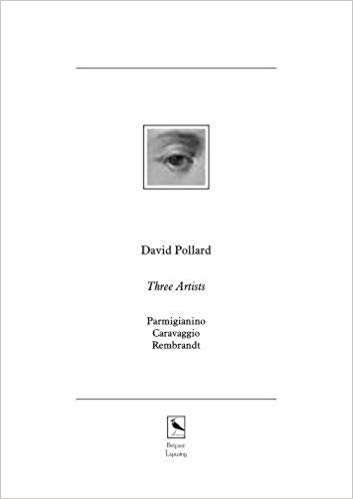
My earlier postings on ekphrastic poetry – poems inspired by visual art – have proved astonishingly popular and, when Agenda magazine asked me to review two collections with exclusively ekphrastic intentions, I leaped at the chance. I’m posting this now because the reviews have just appeared in the latest Agenda, a journal well-worth subscribing to. As will become clear, in what follows I am more persuaded by Seamus Cashman’s book, The Sistine Gaze (Salmon Poetry, 2015) than David Pollard’s Three Artists (Lapwing Publications, 2017). But both provide much food for thought on the relationship between poetry and the visual arts and evidently there are a lot of us fascinated by this sort of writing.
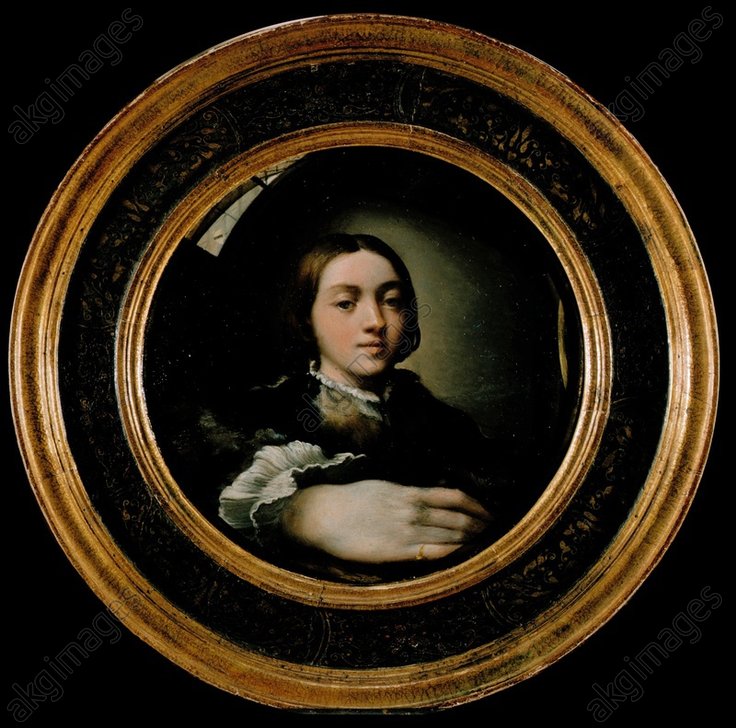
David Pollard’s book is divided into three sections, one each on Parmigianino, Rembrandt and Caravaggio. Initially, Pollard presents a set of 15 self-declared “meditations” on a single work of art – Parmigianino’s ‘Self Portrait in a Convex Mirror’ (c. 1524). This is a bold move, given that John Ashbery did the same thing in 1974 and Pollard does explore ideas also found in Ashbery’s poem. Both writers are intrigued by a self-portrait painted onto a half-spherical, contoured surface to simulate a mirror such as was once used by barbers. The viewer gazes at an image of a mirror in which is reflected an image of the artist’s youthful and girlish face. It’s this sense of doubling images – an obvious questioning of what is real – that Pollard begins with. “You are a double-dealer” he declares, addressing the artist directly, though the language is quickly thickened and abstracted into a less than easy, philosophical, meditative style. It is the paradoxes that draw the poet: “you allow the doublings / inherent in your task to hide themselves / in open show, display art that / understands itself too well”. Indeed, this seems to be something of a definition of art for Pollard. “Let us be clear”, he says definitively, though the irony lies in the fact that such art asks questions about clarity precisely to destabilise it.
The 15 meditations are in free verse, the line endings often destabilising the sense, and they are lightly punctuated when I could have done with more conventional punctuation given the complex, involuted style. Pollard also likes to double up phrases, his second attempt often shifting ground or seeming propelled more by sound than sense. This is what the blurb calls Pollard’s “dense and febrile language” and it is fully self-conscious. In meditation 15, he observes that the artist’s paint is really “composed of almost nothing like words / that in their vanishings leave somewhat / of their meaning” – a ‘somewhat’ that falls well short of anything definitive. Of course, this again echoes Ashbery and appeals to our (post-)modern sensibility. Pollard images such a sense of loss with “a rustle of leaves among the winds / of autumn blowing in circles / back into seasons of the turning world”. He does not possess Ashbery’s originality of image, as here deploying the cliched autumnal leaves and then echoing Eliot’s “still point of the turning world”. Indeed, many poems are frequently allusive (particularly of Shakespearean phrases, Keats coming a close second) and for me this does not really work, the phrases striking as undigested shorthand for things that ought to be more freshly said.
The Rembrandt poems have a similar tone and style, not surprisingly when most of the focus is again on the mirroring and self-reflection of his self-portraits: “Skin and paint are different stuffs / as he was a different species from himself / reflected”. Perhaps there is less playfulness here than in Parmigianino’s trompe l’oeuil image, more of an obvious darkness in the dusky, obscure backgrounds: “These images were born in thoughts of his departing / and in the horror of identity, of selves, of ruins”. Yet there is more variety of tone to be found in these poems as Pollard develops Rembrandt’s social context, his painting of pictures to please Amsterdam’s wealthy burghers and corporations, images of their self-importance for which they “paid him well”. Yet the artist himself was more interested in other, more liminal figures:
And just beyond the door, always ajar,
there in the street canal side,
in a swift moment are his old hags
and poverty and Christ, the Jews
in fur and black passed down the ages,
too many beggars and those copulating dogs
and then again wives and washerwomen
David Pollard
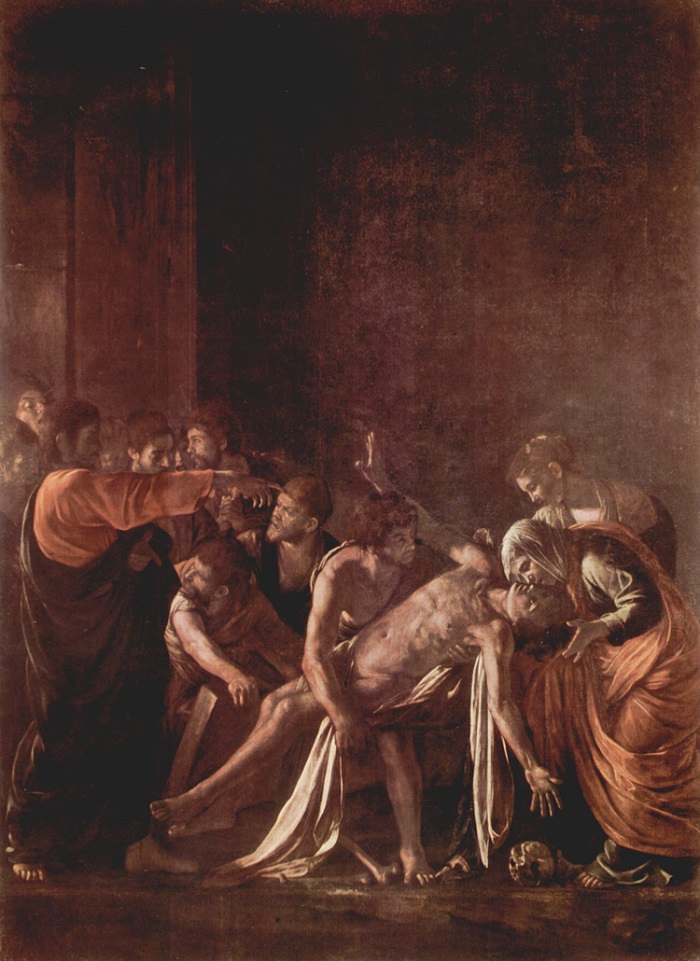
The final Caravaggio section of this book makes different ekphrastic choices. Pollard allows the ageing artist a direct voice in one poem, then considers 7 individual images in separate poems, then concludes again with something close to a ‘meditation’. Hearing Caravaggio speak (in ‘Porto Ercole’) is a refreshing change to Pollard’s own rather too-consistent, sometimes haranguing voice. The artist is sailing to Rome, hoping to escape a death sentence, fretting about what he has achieved: “I am only spine and marrow of regret / and last prayers flail along my throat / and my weak blood is darker / than those holy tenebrae I drew art from”. Elsewhere we hear of the artist’s earlier life, hawking more conventional images on Rome’s street corners. Those familiar with Caravaggio will know what to expect: the play of light out of thick slabs of shadow and “[p]lain speech not mannered rhetoric”. Such a visual ‘plain speech’ is well described in ‘The Entombment’ with Christ’s “liminal grey flesh / full of the pure weight of the physicality of loss”. Also, in ‘The Rising of Lazarus’, it is suggested that Caravaggio employed grave robbers to “drag a grave” for a real, decaying corpse since “he only painted from grit and real”. The language here has some energy, but I doubt its precision in such choices as “drag” and “grit” – the former tries too hard, the latter not hard enough. Pollard’s liking for abstraction can also be harmful as in these final lines on Caravaggio, which leave me puzzling, though not in any good way:
Thus it can show only how
the insignificance of objects
waits for it, accepts it,
and then drowns in its almost too late a dusk
and ochre of our being
hewn out of nothing more than the liquidity
that holds invisibility at bay against oblivion.
Caravaggio’s ‘The Raising of Lazarus’
In contrast to Pollard, Seamus Cashman lets us partake of the very moment when his single long poem began. Re-visiting the Sistine Chapel, we are told his eyes fall on a painted figure in a white, pseudo-architectural, triangular frame – a woman in a green jacket. He goes on: “Her eyes hold mine, and the word ‘gaze’ slips into my mind. As I stare she seems to invite me to converse”. The resulting ‘conversation’ is the extraordinarily ambitious poem that follows, drawing on Michelangelo’s work on the ceiling of the Chapel (completed in 1512) and the altar wall (completed 1541). This admittedly touristic, but originating moment is poetically recast in Cashman’s Prologue as an epiphanic encounter: “This face centres a still point, draws me up and in. She is waiting. I attend”.
In fact, the woman is hardly given a voice and the substance of the sequence is dominated by the (male) artist’s reflections on his years-long task. He’s most often found “between this scaffold floor and ceiling”, complaining about his “craned neck”, pouring plaster, crushing pigments, enumerating at great length the qualities and shades of the paint he employs (Cashman risking an odd parody of a Dulux colour chart at times – “Variety is my clarity, / purity my colour power”). Later, we hear him complaining the plaster will not dry in the cold winter months. We even hear the artist reflecting on his own features, the famous “long white beard and beak-like nose”. These period and technical details work well, but Cashman’s Michelangelo sometimes also shades interestingly into a more future-aware voice, melding – I think – with the poet’s own voice. So he remarks: “Getting lost is not a condition men like me endure or venture on today. / All GPS and mobile interlinks enmesh our every step”. Later, a list of “everything there is” sweepingly includes “chair, man, woman; laptop or confession box”.
At one point, Michelangelo recalls working on a great marble block that fell and shattered, “bartering monumentalities / that break backs”. And I do worry that the sheer ambition of this project has led to awkward monumentalities in the texture of Cashman’s verse. He surrounds his poems with thickets of rubric. So on page 31, the reader is told that she is about to begin Book 1, called ‘Creation’, this being Part II, called ‘In the Mirror of Creation’s Dust’ and that this book consists of Verses 65-117 and that, firstly, comes Movement 9 (which runs from verses 65-67) and that the opening passage has been given the title ‘Convinced we are awake’. This gives the whole thing a clunky, pseudo-scriptural quality which (on my reading) doesn’t really fit with Cashman’s overall purpose and its enumerative, even obsessive titling and sub-titling certainly and frequently derailed this reader’s imaginative and emotional engagement with the poems. I suspect this decision arose as a response to the sheer fecundity, the multifarious nature, of Michelangelo’s Sistine work. It may also account for Cashman’s frequently rather grandiose register, his occasional drifts into archaism, the ubiquity of rhetorical gestures like lists of three (or even four) and the self-conscious habit of using nouns as verbs (thigh, sex, tray, story).
But as a result, Cashman’s verse has a Whitmanesque quality (the long lines) and can bring to mind Blake’s Prophetic Books; it has dashes of Hopkins’ alliterative energy. At one point the voice wants “to sing. I want to sing the body tune, / the rhythms of blood, the living heart” but I found myself wishing for a little less such effortful transcendence and a more Traherne-like, child-like, simplicity of diction which is still capable of conveying what Michelangelo declares, at a late stage, that “our instinct is infinity”. This might also sit more comfortably with Cashman’s Michelangelo’s intentions which seem to be to give “hope to some pilgrim searching my cabinet for direction and new ritual”. I think we are meant to see Cashman himself as this “pilgrim”, a latter-man, having lost his Catholic beliefs, but visiting the Chapel in search of a new vision.
Seamus Cashman
Certainly, the Michelangelo-voice does not seem to be speaking of his works in a confined 16th century fashion as art in praise of God. More like a modern poet, he says “all we need / are words of admiration drafted with compassion for the flesh and bone we are”. Later, reflecting on the nature of the human self, he describes it as a “mobile installation, unfixed and indeterminate [. . .] emotion in the making”. Many verses in the poem celebrate the sexuality of “Eve ‘n Adam—penetration – vulva open to erection; risen nipples; hanging scrotum; nosing cheeks / all the open flesh and pleasured nerve-ends”. And alongside this, the poem works towards a modern – or perhaps it’s a Blakean – godless vision of human life where “heaven is adoration of knowledge, and god is who we know ourselves to be”.
Curious and bold then, that Cashman ekphrastically takes on the Sistine Chapel and then writes God out of the picture. Nor does he shrink from the shelf-clearing consequences for our conventional spiritual understanding. The idea of the “Soul” is now little more than a “word. It frightens children and old painter sculptors weakened by the weight of brush and mallet. Soul. / Nothing knows its place”. Likewise, The Sistine Gaze concludes its frequent lauding of human sexuality with a recognition of the plain fact of its opposite, death: “this finality, expired into a nothingness we each possess. Dead is dead”. Even the genius-artist himself is finally and ironically “absorbed in the great womb of chaos he created / leaving us to falter, wonder, and pass on / for we know nothing”. These lines are some of the concluding moments of the book and they possess a lighter touch than the majority of it. Cashman here allows the white space around his printed words to work its magic more effectively, creating a rhythm and a chain-link of tensions which add to the reader’s experience. For all its intended monumentality and dizzying ambition (which has led the poet to erect too much scaffolding around his poems), this quiet end-piece is for me the most affecting moment of the whole book: “our end is an endless breath / to fill – to vitalise / and imperceptibly / to let go— / never to know”.
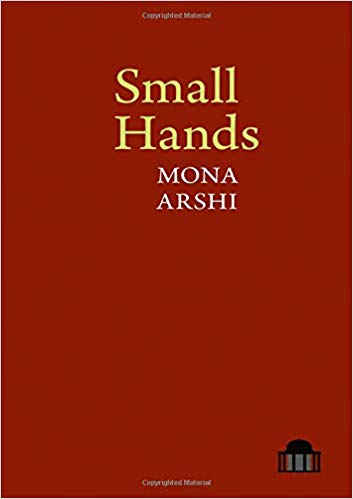
In a recent launch reading for her second collection, Dear Big Gods (Pavilion Poetry/Liverpool University Press, 2019), Mona Arshi suggested it was a book she wrote only reluctantly. Her first book, Small Hands (2015), had at its centre a number of poems in memory of her brother, Deepak, who died unexpectedly in 2012. On her own admission, these new poems continue to be imbued with this grief and – though poets surely always write the book that needs to be written – there is a sense that the development of the new work has been stalled by such powerful feelings. My 2015 review of Small Hands saw Arshi as “an intriguing writer, potentially a unique voice if she can achieve the right distance between herself and her powerful formative influences”. The influences I had in mind then were literary rather than personal, but I find the lack of distance travelled between the earlier and this more recent work rather disappointing.
In fact, Deepak’s death is the explicit subject on only a few occasions. The poem ‘When your Brother Steps into your Piccadilly, West Bound Train Carriage’ isn’t much longer than its own title but it evokes that familiar sense of (mis-)seeing our dead in a public place. The emotions remain raw, from the accusatory “how-the-fuck-could-you?” to the final “I am sorry, I’m so sorry”. A dream or daydream meeting is also the basis for ‘A Pear from the Afterlife’ in which the brother’s affectionate tone advises, “Sis, you gotta let go / of this idea of definitive knowledge”. ‘Five Year Update’ is by far the most extended of these reflections on the brother’s passing, written in very long raking lines (rotated 45 degrees to stretch vertically on the page). “I hope it’s fine to contact you”, it opens and goes on to recall the moment the news of his death was received (see also ‘Phone Call on a Train Journey’ from Small Hands), remembers their childhood together and the sister’s continuing life: “I’ve gone down one lump not two, I still don’t swim and yes I still can’t / take a photograph”.
As the blurb suggests, these poems are indeed “lyrical and exact exploration[s] of the aftershocks of grief”. But ‘Everywhere’ adopts a little more distance and develops the kind of floating and delicate lyricism that Arshi does so well. The absent brother/uncle is still alluded to: “We tell the children, we should not / look for him. He is everywhere”. As that final phrase suggests, the rawness of the grief is being transmuted into a sense of otherness, beyond the quotidian and material. It’s when Arshi takes her brother’s advice and lets go of “definitive knowledge” that her poems promise so much. ‘Little Prayer’ might be spoken by the dead or the living, left abandoned, but either way it argues a stoical resistance: “I am still here // hunkered down”. In a more conventional mode, ‘The Lilies’ develops the objective correlative of the flowers suffering from blight as an image of a spoliation that hurts and reminds, yet is allowed to persist: “I let them live on / beauty-drained / in their altar beds”.
Like so many first books, Small Hands experimented with various poetical forms. This book also – a bit wilfully – tries out tanka, poems in two columns, right justification, centre justification, ghazals, inter-cut texts, prose poems, a sestina, an Emily Dickinson parody and responses to Lorca and The Mahabharata. They don’t all work equally well and Arshi perhaps senses this in lines like these:
My little bastard verses
tiny polyglot faces
how light you are
how virtually weightless
The irony may be that this sort of form and reach actually does show Arshi at her best. The sequence of tiny poems modelled on Lorca’s ‘Mirror Suite’ (1921-1923) is fascinating. Jerome Rothenburg, discussing Lorca’s poems, describes them as possessing “a coolness & (sometimes) quirkiness, a playfulness of mind & music that I found instantly attractive”. These same qualities – as with Lorca, a version of surrealism, a firm but gentle turning aside from “definitive knowledge” – I enjoy in Arshi’s work as she explores states of the heart and realms of knowledge not ordinarily encountered or encompassed. Dear Big Gods contains other such Lorca-esque sequences such as ‘Autumn Epistles’, ‘Grief Holds a Cup of Tea’ and ‘Let the Parts of the Flower Speak’ and these are far more interesting than the poems drawn from The Mahabharata or the experiments in prose.
Arshi’s continuing love affair with ghazals also seems to me to be an aspect of this same search for a form that holds both the connected and the stand-alone in a creative tension. ‘Ghazal: Darkness’ is very successful with the second line of each couplet returning to the refrain word, “darkness”, while the connective tissue of the poem allows a roaming through woods, soil, mushrooms and a mother’s praise of her daughters. Poems based on – or at least with the qualities of – dreams also stand out. The doctor in ‘Delivery Room’ asks the mother in the midst of her contractions, “Do you prefer the geometric or lyrical approach?” In ‘The Sisters’ the narrator dreams of “all the sisters I never had” and within 10 lines Arshi has expressed complex yearnings about loneliness and protectiveness in relation to siblings and self.
Given the traumatic disruption of her own, it’s no surprise that Arshi’s most frequently visited subject area is family relationships. I’ve referred to several of these poems already and ‘Gloaming’ floats freely through the fears of losing a child, the care of an ageing father, a mother “entering/leaving through a narrow lintel” and the recall of the “thick soup of our childhood”. The soup works well both as literal food stuff and as metaphor for the nourishing, warming milieu of an up-bringing, though the girl who looks up at the end of the poem is already exploring questions of identity. She asks, “where are you from, what country are we in?” Given Arshi’s own background – born to Punjabi Sikh parents in West London – such questions have obvious autobiographical and political relevance, though I sense Arshi herself is also asking questions of a more spiritual nature.
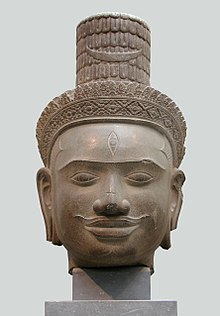
So, in ‘My Third Eye’, the narrator is “more perplexed than annoyed” that her own third eye – the mystical and esoteric belief in a speculative, spiritual perception – has not yet “opened”. The poem’s mode and tone is comic for the most part; there is a childish impatience in the voice, asking “Am I not as worthy as the buffalo, the ferryman, / the cook and the Dalit?”. But in the final lines, the holy man she visits is given more gravitas. He touches the narrator’s head “and with that my eyes suddenly watered, widened and / he sent me on my way as I was forever open open open”. The book also closes with the title poem, ‘Dear Big Gods’, which takes the form of a prayer: “all you have to do / is show yourself”, it pleads. The delicate probing of Arshi’s best poems, their stretching of perception and openness to unusual states of emotion are driven by this sort of spiritual quest. Personal tragedy has no doubt fed this creative drive but – as the poet seems to be aware – such grief is only an aspect of her vision and not the whole of it.
Sometime before 2015, I picked up an old copy of a Penguin Classics book called Speaking of Siva. Originally published in 1973, I liked the cover (a wonderfully rhythmic, eleventh century bronze figure of Siva as god of the dance) and flicking through it I liked the look of the brief, irregularly-lined poems inside. I lack a god but feel an appetite for the spiritual and, since my excitement and delight in translating the Daodejing texts for Enitharmon, I am always looking for something to feed that hunger. I found the poems inspiring (I was not the first to do so) and especially early in 2016 I wrote versions and impromptu original poems ‘in the style of’. These were laid aside for a couple of years, but I have recently returned to them – partly under pressure from the historical moment we find ourselves in, living in this most disunited of kingdoms. I hope to publish some of the results soon. Meantime, I was astounded later to discover the influence of this same little book on Ted Hughes. Here’s that story . . .
One day around 1973/4, Ted Hughes bought or was given A.K. Ramanujan’s just-published Penguin Classics collection of translations entitled, Speaking of Siva. Ramanujan was presenting to the English-speaking world a collection of free verse lyrics written in India around the 10/12th century. Hughes quickly wrote to his friends, Daniel Weissbort and Lucas Myers, urging them to read the book as well. A notebook survives with Hughes’ many creative responses to these still relatively little-known poems. Jonathan Bate has argued that Hughes found these poems attractive because they “squared the circle of being both depersonalised (tapping into the divine, the mythic, the archetypal patterns) and highly personal: “They are uttered, not through a persona or mask, but directly in the person of the poet himself”” (Bate, p. 338 and quoting Ramanujan).
Hughes later wrote to Ekbert Faas that he had first read Ramanujan’s translations after suffering from a chronically sore throat for about a year. He suspected that he might have cancer and “began to write these vacanas as little prayers”. Some of these poems are the only parts of Gaudete (1977) to be selected for Hughes’s Collected Poems (2003). The language of these poems is lean and starkly beautiful often addressing the theme of transformation in violent and graceful modes, often ambiguously autobiographical:
Once I said lightly
Even if the worst happens
We can’t fall off the earth.
And again I said
No matter what fire cooks us
We shall be still in the pan together.
And words twice as stupid.
Truly hell heard me.
She fell into the earth
And I was devoured.
(Gaudete, pp.181/2)
The term ‘vacana’ means something spoken, speech, or a word uttered, as in our phrase ‘my word is my bond’. And vacana poems consist mostly of simple, direct, honest speech – they have no formal metre or rhyme, and very little punctuation – and they present themselves as spontaneous, authentic, plain engagements with the divinity, in deliberate contrast to more established channels of worship. As Ramanujan’s title suggests, they are written to the god Siva and – at least start out from – the ideal of a mystical relationship or process of becoming one with the god or the divine Creative Source.
A. K. Ramanujan
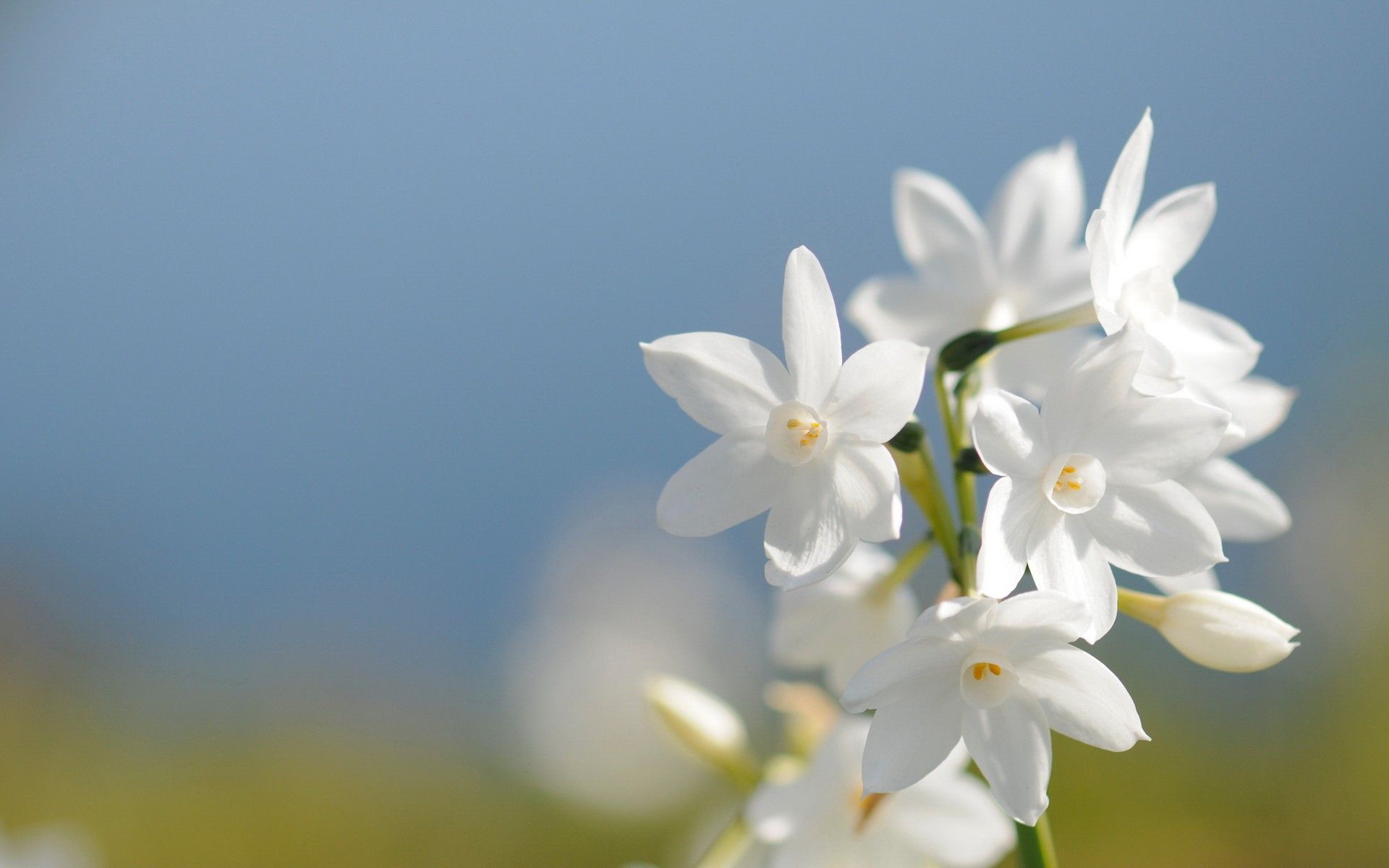
So they are a form of worship, the devotee speaking directly and truthfully to the god as one might speak to another person – a husband or wife – using natural, colloquial language to express love and devotion, but significantly they also give vent to anger, puzzlement and despair. The poems are full of repetitions, refrains and paradoxes and, although they are spontaneous and passionate and grounded in common everyday experiences and images, there is a spiritual meaning in their worldly metaphors. One common element of repetition is the naming of the God – for Dasimayya this is “O Ramanatha”, for Mahadeviyakka it is “O lord white as jasmine”. Another frequent trope is a concern about the inadequacy of language; no words or image or metaphor can adequately describe the mystery of the god. Above all, vacana poems are intensely personal forms of religious devotion which not only avoid formal creeds, rituals and dogma but frequently criticize such orthodoxy as misguided, superstitious and hypocritical.
So Basavanna’s poem #494 rejects traditional poetic devices for a plain and direct authenticity: “I’ll sing as I love”. Even so, as Ann Skea points out, “he also argues, pleads, demands, questions and berates. He acknowledges that a price must be paid in order that he may be worthy of this union, but he complains that he does not understand why he is treated so badly or know what, exactly, is required of him”. Ramanujan’s Introduction describes the spiritual development of such devotees as moving from devotion, through discipline and knowledge, to enlightenment and ecstasy and, finally, to complete union with the divinity or creative source. In making this ascent, the Indian poet-saints frequently considered themselves as husbands or wives of the god. Ann Skea again: “They dedicated their lives to their god, and became worldly brides or bridegrooms struggling to achieve the spiritual perfection which would allow them to become wholly one with the god. Constantly, they strove for that spiritual union; and worldly unions are seen in their vacanas as unfaithfulness to their spiritual spouse”.
‘My lord, white as jasmine’
One of these vacana writers was the female poet-saint, Mahadeviyakka who defied social, cultural and gender conventions. For her, especially, ‘marriage’ to Siva meant that any relationship with a human male was adultery. ‘My lord, white as jasmine, is my husband’, she writes (Mahadeviyakka #283). Elsewhere, ‘I cannot take / any man in my arms but my lord’ (Mahadeviyakka #93). In fact, unfaithfulness was a common metaphor in Indian vacanas for the frail individual’s neglect of the divinity for more worldly things. But there are also warnings of the dangers of the commitments involved in becoming the bride or groom of a divine being. If, like a shaman, you have been called and you have accepted that call, there can be no going back. Basavanna gives due warning to those who might not survive: ‘Don’t you take on / this thing called bhakti [devotion]’ (#212). Such are the difficulties of any bridegroom or bride who is utterly devoted to a wife or husband whom he struggles either to please or fully understand. And this, of course, reflects the difficult quest for spiritual enlightenment in a world which makes demands on us and distracts us at every moment.
Ted Hughes began by modelling poems of his own closely on the work of the poet that Ramanujan places first in the collection, the 12th century Indian poet-saint, Basavanna. Early on Hughes adheres closely to the originals but gradually he distances himself, starting to create more original poems, often employing personal materials, and (as I have said) some of these little poems eventually found their way into the final section of Gaudete. The refrain and invocation that Basavanna uses in the majority of his poems is the address to Siva as “lord of the meeting rivers”. The influence of Robert Graves’ The White Goddess is well known on Hughes and he decided to experiment with addressing his own conception of the divinity – a female divinity – at once his muse and the fundamental animating force in the world, as “Lady of the Hill”.
The linguistic directness and simplicity of the vacana lyrics was clearly important to Hughes. They possessed the “swift, living voice of the oral style . . . a bare, point-blank, life-size poetry that hardly exists in English” which Hughes always admired though did not always write himself. This description comes from Hughes’ comments on Isaac Bashevis Singer in the New York Review of Books (1965). The vacana poems also possessed the rhythms of folk song, traditional folk tales and riddles. Their influence seems to have returned him to the kind of spontaneous inspiration and style of address that he used in the oldest poem that he always reprinted, ‘Song’. In that poem (written when Hughes was just 19 years old), after each of the 5 or 6 line stanzas, the poet cries out, “O my lady”. Hughes reported to Ekbert Faas that this poem was written in a “close and natural” style, one that he had used early in his career but had since “neglected”. It is also close to the directness of style of the Crow poems of 1970.
But as in the best poetry, such simplicity of language and tone belies the spiritual intentions of the originals and of Hughes’ experimental vacana poems too. As Ann Skea explains, in his turn, Hughes “becomes the spiritual bridegroom of the Lady of the Hill and struggles to be worthy of that union”. Unlike the original Indian poems, Hughes seems to see his Goddess in every human female and they are seen as testing and challenging the poet to further spiritual growth. In the end, just 18 of these experimental poems were chosen to form the Epilogue to Gaudete as the songs sung by the Reverend Nicholas Lumb on his return from the underworld: a man who had seen things and felt the need to communicate those things: “he saw the notebook again, lying on the table, and he remembered the otter and the strange way it had come up out of the lough because a man had whistled. He opened the notebook and began to decipher the words, he found a pen and clean paper and began to copy out the verses”.
The lark sizzles in my ear
Like a fuse –
A prickling fever
A flush of the swelling earth –
When you touch his grains, who shall stay?
Over the lark’s crested tongue
Under the lark’s crested head
A prophecy
From the core of the blue peace
From the sapphire’s flaw
From the sun’s blinding dust
Perhaps the ‘nakedness’ of the vacana style had some influence on Hughes in the writing of the Moortown poems of 1978, though he was also tempted to return to the more self-protecting use of persona in sequences like Cavebirds (1978) and Adam and the Sacred Nine (1979). Only in the more obscurely published sequences such as Capriccio (1990) and Howls and Whispers (1998), did he again write in this more personal and direct fashion and (as we all now know) he did so once more in the late-published Birthday Letters (1998).
More than most, Kaveh Akbar’s poems read like jointed assemblages of seemingly disparate materials – accumulations, aggregations, medleys, jumbles. Over 91 pages, some work better than others, but on first reading there is such energy, honesty and commitment on show that it’s easy to be swept away. After a while, you begin to think that most of the poems seem cut from a very similar cloth. Amazingly, despite the inventiveness in imagery, the experimentation in form, the mix of cultures (Akbar is Iranian born, now living in the US), a paradoxical same-iness begins to set in and each time I read the book I find myself flagging about half way through.
Akbar doesn’t generally do the more familiar, simply focused poem. There are a few in the book like ‘Learning to Pray’, in scattered unrhymed triplets, in which a young boy (Akbar allows a straight autobiographical reading usually) watches his father pray, “kneeling on a janamaz” or prayer mat. The wish to emulate the admired father is conveyed pin-sharp. A later poem also starts from childhood and (mostly in loose unrhymed couplets) traces the boy’s later maturing in an America “filled with wooden churches / in which I have never been baptized” (‘Personal Inventory: Fearless (Temporis Fila)’). This poem also attracts threads of two of Akbar’s other main themes: his personal addictions and the ubiquitous sense of living in a fallen world.
Rainer Maria Rilke
The sense of a fall is very powerful and Akbar is often to be found addressing, berating or pleading with a God figure. To this extent there is a religious element to many of Akbar’s poems, but it feels more like Rilke’s address and concern for the angels in the Duino Elegies, for example, where their actual existence is to be doubted though their impact on the way we regard and live out our own lives is profound. Akbar’s opening poem declares God sometimes visits us, “disguised as rust” (‘Soot’). God’s imagined proximity then breeds new perspectives on our own existence, including images of the Heaven from which we must have fallen: “Upon landing, the ground / embraced me sadly, with the gentleness / of someone delivering tragic news to a child”. ‘Recovery’ is also resigned to seeing life as it is really lived as “graceless” and the poem ‘God’ – before it really gets motoring with its examples of economic decline, personal illness, futile work and sense of fear – cries out: “I am ready for you to come back [. . .] / you are needed again”. Once more the mythic paradise is alluded to towards the end of the poem – simply as something that seemed promised yet is signally lacking in this world, so that “I will settle for anything that brings you now”.
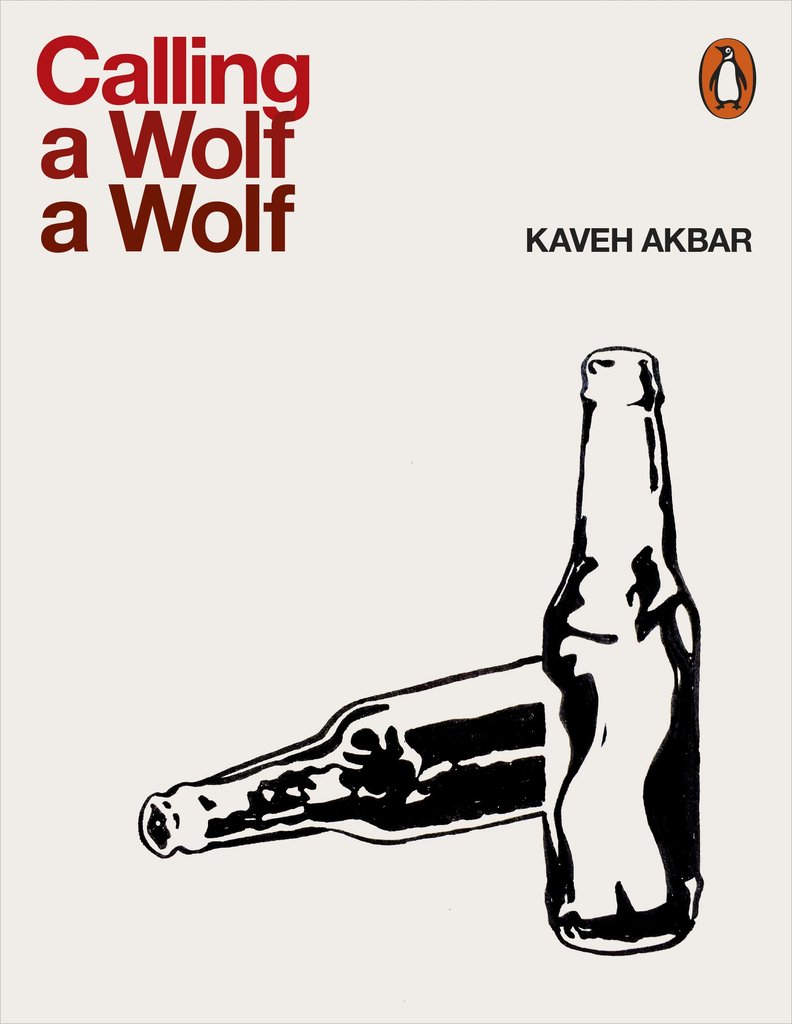
One of the main elements of this fallen state (again Akbar allows a simple autobiographical interpretation) is the damage caused by his past addictions, especially to alcohol. This is the main hook Penguin hang the book on (a cover of empty beer bottles, for example). Poems styled ‘Portrait of the Alcoholic …’ recur throughout the book, but the first section is most focused on this. A familiar comment from W.H. Auden is used to firmly yoke spirit to bottle: “All sins tend to be addictive, and the terminal point of addiction is damnation”. Many of the poems then have this sense of inebriation, muddling, confusion which Akbar’s style of writing is very at home with. ‘Portrait of the Alcoholic with Home Invader and Housefly’ presents the drinker waking up, seemingly attacked by a home invader with a knife. Memories of keeping a housefly on a string intervene, perhaps because in the fly’s death the young boy confronted the idea of death: “I opened myself to death, the way a fallen tree // opens itself to the wild”. The poem returns to the threatening situation, then to more abstract thoughts of scale, a TV programme and the speaker passively returns to sleep. This is a great poem of the self as both endangered and paranoid, distanced from danger, the blurring of perception, thought and memory.
The title poem of the book seems to follow the alcoholic as an in-patient, this time in broken up prose. Thoughts meander again till they find a foothold in the self-recognition that “I answered every cry for help with a pour”. He sees this as a coldness, a turning away and tries to name it and therefore control it better: “if I called a wolf a wolf I might dull its fangs”. But rather than effective combat the wolf has become evermore part of the alcoholic, like two coins on a train track crushed together. ‘Stop Me if You’ve Heard This One Before’ likewise takes the reader into the addict’s mind, the thrill-searching (“I don’t / have drunks, sirs, I have adventures”), the sense of life as boredom without the booze (“we live / on an enormous flatness”). These poems are certainly – as a blurb quote suggests – additions to the “canon of addiction literature”.
Though Akbar’s choices of form in the book are legion and each one works well enough (which is impressive in itself), form and content don’t always seem inevitably linked. What so many of the poems do have is a forward propulsion which is quite breath-taking, assisted by the frequent absence of punctuation. There is a frenetic restlessness, often matched by leaps of imagery close to the surreal (interestingly one of the poets acknowledged by Akbar is Tomaz Salamun). But I worry there is something close to programmatic about all this. Poems often draw together threads of philosophical musing (several from Rumi), then mix in (tangential) aphoristic-sounding or plain informational statements, then throw in what will be read as direct autobiographical elements. These various constituents are sequenced alongside each other and Akbar’s formal and linguistic energy (like the “old battery” delivering jolts in ‘An Apology’) whirls them round before the reader. In the best poems, there is a strong centrifugal force holding the parts together; in others they are simply spun apart and the reader ends wondering about coherence and consequence.
But when it works, these are marvellous poems – and, for my money, this book would make a worthy winner of the 2018 Felix Dennis Prize. ‘Wild Pear Tree’ – as if in one breath – conveys a wintry scene/mental state, recalls halcyon days (of spring) and ends lamenting the forgetting of an “easy prayer” intended for emergencies: “something something I was not / born here I was not born here I was not”. ‘Exciting the Canvas’ is much more risky in its jig-sawing together of disparate elements – a bit of Rumi, the sea, a child’s drawing, a drunken accident, the Model T Ford, crickets, snakes – but somehow manages to hold it all together to make a snap-shot of a troubled, curious, still-open consciousness. And finally, ‘So Often the Body Becomes a Distraction’, dallies with the Rilkean idea of dying young, alludes to recovery from addiction, then grasshoppers, ice-cubes, personal ambitions and the self-image of “rosejuice and wonderdrunk” (which is merely one side of Akbar’s work). This one ends with the not-infrequent trope of a re-birth from burial in the earth. I like these images, suggesting that, for all the fretting about lost paradise, the absence of God, the self-destructiveness of the individual, whatever redemptive re-birth may be possible is only likely to come from our closeness and attentiveness to things about us, an eschewing of the “self-love” Akbar struggles to free himself from in ‘Prayer’: in a lovely phrase –though I’m still figuring it – he concludes, “it is not God but the flower behind God I treasure”.
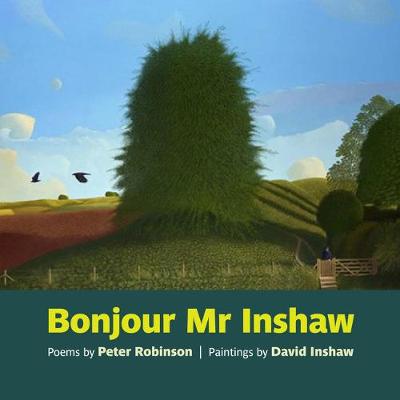 I’ve long thought of writing poems about David Inshaw’s paintings, drawn to what Harpur calls his ability to “invest landscapes with spiritual light and energy, balancing realism with a sense of the mythic, of penetrating a noumenal sphere”. The other personal draw to his work has been that Inshaw’s home (and home ground as an artist) is that part of Wiltshire to the west of where I grew up. Inshaw’s home is in Devizes and many of his paintings are of the landscape just a bit further west, of Silbury Hill, Avebury, the barrows and downs of that area. The drive from the M4 turn-off at Hungerford, on the Bath Road, through Marlborough and the A361 to Devizes has long figured in my personal list of favourite drives (not wholly because it was for years the route to my childhood home in Hilperton, Wiltshire). And now Peter Robinson has beaten me to it with this beautiful book of full colour images and 19 poems, though his approach is not simply ekphrastic (merely descriptive of the images) but often launches out from the pictures into concerns shared by the two artists.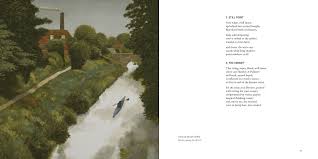

 David Pollard’s book is divided into three sections, one each on Parmigianino, Rembrandt and Caravaggio. Initially, Pollard presents a set of 15 self-declared “meditations” on a single work of art – Parmigianino’s ‘Self Portrait in a Convex Mirror’ (c. 1524). This is a bold move, given that John Ashbery did the same thing in 1974 and Pollard does explore ideas also found in Ashbery’s poem. Both writers are intrigued by a self-portrait painted onto a half-spherical, contoured surface to simulate a mirror such as was once used by barbers. The viewer gazes at an image of a mirror in which is reflected an image of the artist’s youthful and girlish face. It’s this sense of doubling images – an obvious questioning of what is real – that Pollard begins with. “You are a double-dealer” he declares, addressing the artist directly, though the language is quickly thickened and abstracted into a less than easy, philosophical, meditative style. It is the paradoxes that draw the poet: “you allow the doublings / inherent in your task to hide themselves / in open show, display art that / understands itself too well”. Indeed, this seems to be something of a definition of art for Pollard. “Let us be clear”, he says definitively, though the irony lies in the fact that such art asks questions about clarity precisely to destabilise it.
 The 15 meditations are in free verse, the line endings often destabilising the sense, and they are lightly punctuated when I could have done with more conventional punctuation given the complex, involuted style. Pollard also likes to double up phrases, his second attempt often shifting ground or seeming propelled more by sound than sense. This is what the blurb calls Pollard’s “dense and febrile language” and it is fully self-conscious. In meditation 15, he observes that the artist’s paint is really “composed of almost nothing like words / that in their vanishings leave somewhat / of their meaning” – a ‘somewhat’ that falls well short of anything definitive. Of course, this again echoes Ashbery and appeals to our (post-)modern sensibility. Pollard images such a sense of loss with “a rustle of leaves among the winds / of autumn blowing in circles / back into seasons of the turning world”. He does not possess Ashbery’s originality of image, as here deploying the cliched autumnal leaves and then echoing Eliot’s “still point of the turning world”. Indeed, many poems are frequently allusive (particularly of Shakespearean phrases, Keats coming a close second) and for me this does not really work, the phrases striking as undigested shorthand for things that ought to be more freshly said.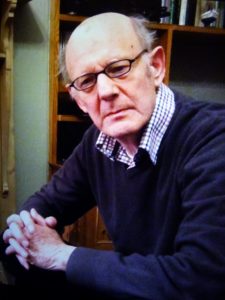
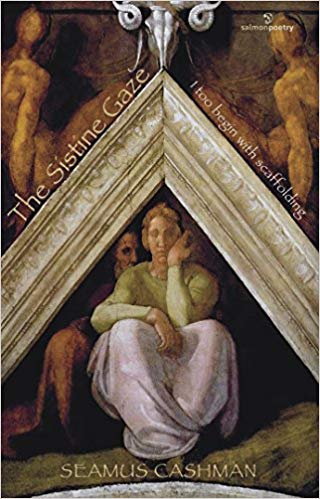 In fact, the woman is hardly given a voice and the substance of the sequence is dominated by the (male) artist’s reflections on his years-long task. He’s most often found “between this scaffold floor and ceiling”, complaining about his “craned neck”, pouring plaster, crushing pigments, enumerating at great length the qualities and shades of the paint he employs (Cashman risking an odd parody of a Dulux colour chart at times – “Variety is my clarity, / purity my colour power”). Later, we hear him complaining the plaster will not dry in the cold winter months. We even hear the artist reflecting on his own features, the famous “long white beard and beak-like nose”. These period and technical details work well, but Cashman’s Michelangelo sometimes also shades interestingly into a more future-aware voice, melding – I think – with the poet’s own voice. So he remarks: “Getting lost is not a condition men like me endure or venture on today. / All GPS and mobile interlinks enmesh our every step”. Later, a list of “everything there is” sweepingly includes “chair, man, woman; laptop or confession box”.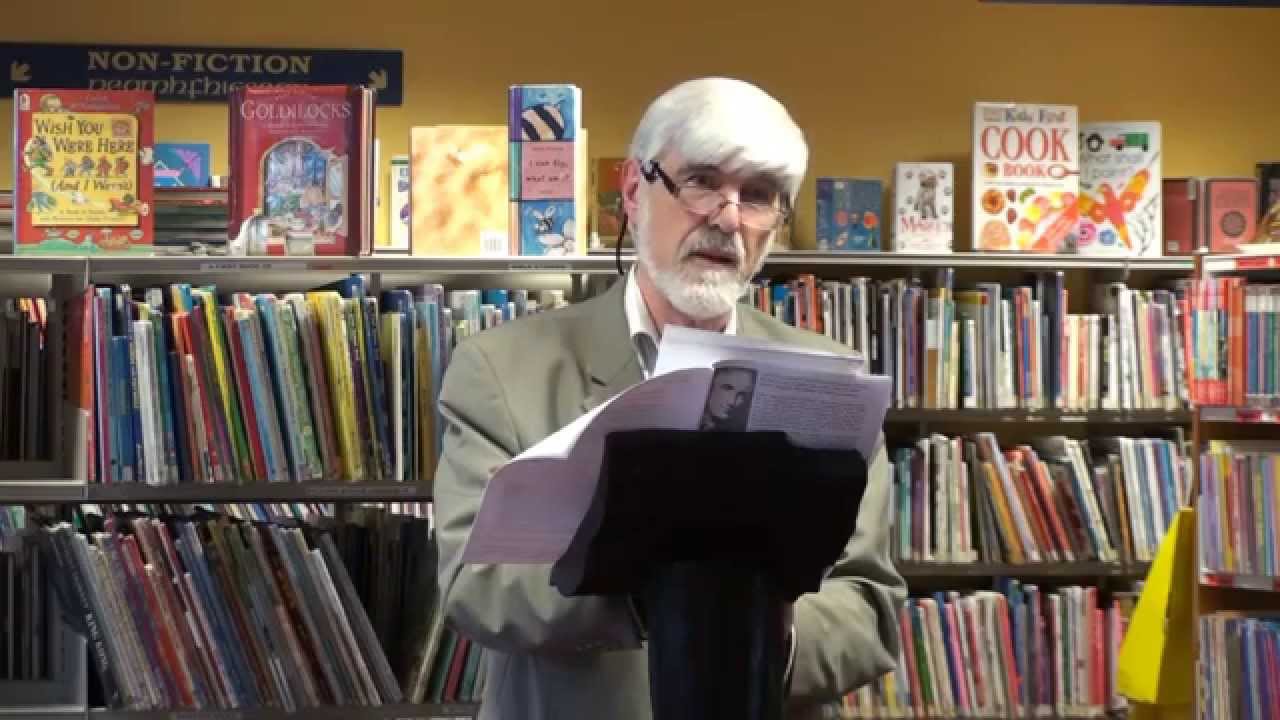
 In a recent launch reading for her second collection, Dear Big Gods (Pavilion Poetry/Liverpool University Press, 2019), Mona Arshi suggested
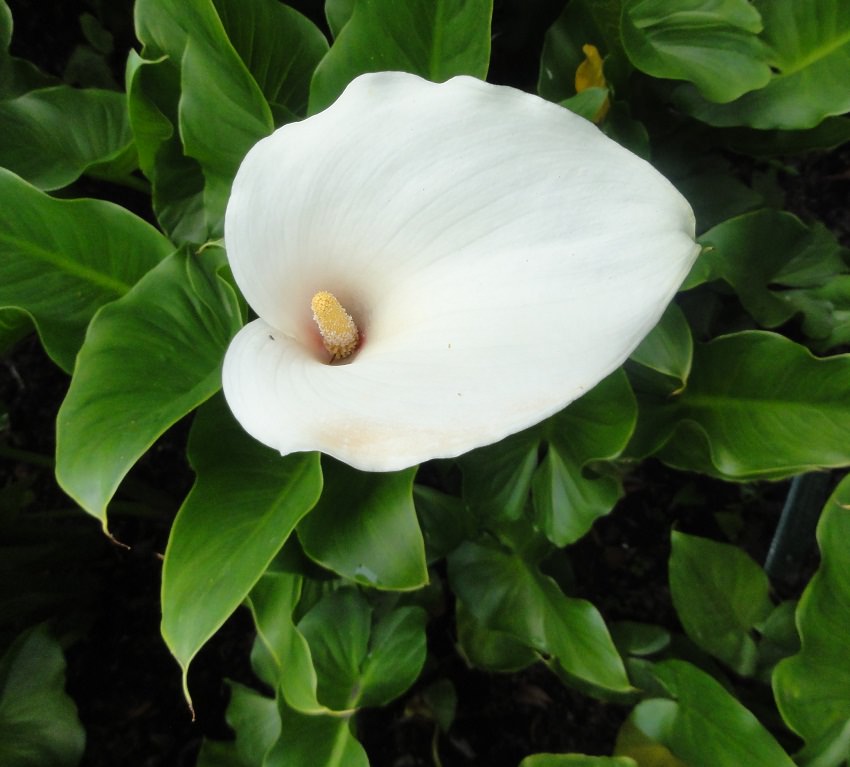 As the blurb suggests, these poems are indeed “lyrical and exact exploration[s] of the aftershocks of grief”. But ‘Everywhere’ adopts a little more distance and develops the kind of floating and delicate lyricism that Arshi does so well. The absent brother/uncle is still alluded to: “We tell the children, we should not / look for him. He is everywhere”. As that final phrase suggests, the rawness of the grief is being transmuted into a sense of otherness, beyond the quotidian and material. It’s when Arshi takes her brother’s advice and lets go of “definitive knowledge” that her poems promise so much. ‘Little Prayer’ might be spoken by the dead or the living, left abandoned, but either way it argues a stoical resistance: “I am still here // hunkered down”. In a more conventional mode, ‘The Lilies’ develops the objective correlative of the flowers suffering from blight as an image of a spoliation that hurts and reminds, yet is allowed to persist: “I let them live on / beauty-drained / in their altar beds”.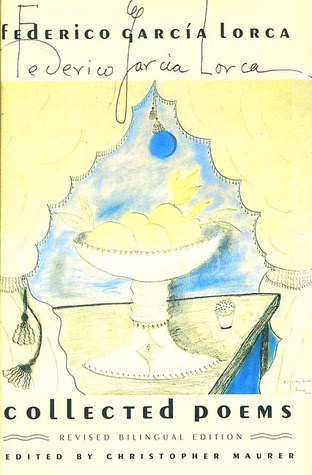
 Arshi’s continuing love affair with ghazals also seems to me to be an aspect of this same search for a form that holds both the connected and the stand-alone in a creative tension. ‘Ghazal: Darkness’ is very successful with the second line of each couplet returning to the refrain word, “darkness”, while the connective tissue of the poem allows a roaming through woods, soil, mushrooms and a mother’s praise of her daughters. Poems based on – or at least with the qualities of – dreams also stand out. The doctor in ‘Delivery Room’ asks the mother in the midst of her contractions, “Do you prefer the geometric or lyrical approach?” In ‘The Sisters’ the narrator dreams of “all the sisters I never had” and within 10 lines Arshi has expressed complex yearnings about loneliness and protectiveness in relation to siblings and self.
 So, in ‘My Third Eye’, the narrator is “more perplexed than annoyed” that her own third eye – the mystical and esoteric belief in a speculative, spiritual perception – has not yet “opened”. The poem’s mode and tone is comic for the most part; there is a childish impatience in the voice, asking “Am I not as worthy as the buffalo, the ferryman, / the cook and the Dalit?”. But in the final lines, the holy man she visits is given more gravitas. He touches the narrator’s head “and with that my eyes suddenly watered, widened and / he sent me on my way as I was forever open open open”. The book also closes with the title poem, ‘Dear Big Gods’, which takes the form of a prayer: “all you have to do / is show yourself”, it pleads. The delicate probing of Arshi’s best poems, their stretching of perception and openness to unusual states of emotion are driven by this sort of spiritual quest. Personal tragedy has no doubt fed this creative drive but – as the poet seems to be aware – such grief is only an aspect of her vision and not the whole of it.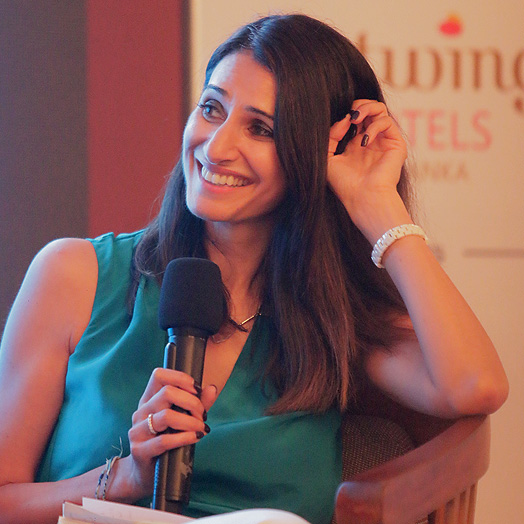
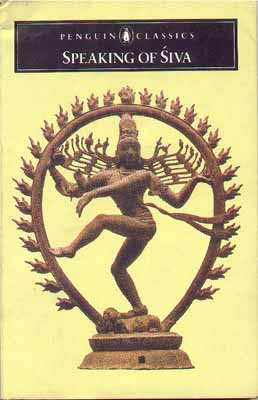 One day around 1973/4, Ted Hughes bought or was given
 Ted Hughes began by modelling poems of his own closely on the work of the poet that Ramanujan places first in the collection, the 12th century Indian poet-saint, Basavanna. Early on Hughes adheres closely to the originals but gradually he distances himself, starting to create more original poems, often employing personal materials, and (as I have said) some of these little poems eventually found their way into the final section of Gaudete. The refrain and invocation that Basavanna uses in the majority of his poems is the address to Siva as “lord of the meeting rivers”. The influence of Robert Graves’ The White Goddess is well known on Hughes and he decided to experiment with addressing his own conception of the divinity – a female divinity – at once his muse and the fundamental animating force in the world, as “Lady of the Hill”.
 But as in the best poetry, such simplicity of language and tone belies the spiritual intentions of the originals and of Hughes’ experimental vacana poems too. As Ann Skea explains, in his turn, Hughes “becomes the spiritual bridegroom of the Lady of the Hill and struggles to be worthy of that union”. Unlike the original Indian poems, Hughes seems to see his Goddess in every human female and they are seen as testing and challenging the poet to further spiritual growth. In the end, just 18 of these experimental poems were chosen to form the Epilogue to Gaudete as the songs sung by the Reverend Nicholas Lumb on his return from the underworld: a man who had seen things and felt the need to communicate those things: “he saw the notebook again, lying on the table, and he remembered the otter and the strange way it had come up out of the lough because a man had whistled. He opened the notebook and began to decipher the words, he found a pen and clean paper and began to copy out the verses”.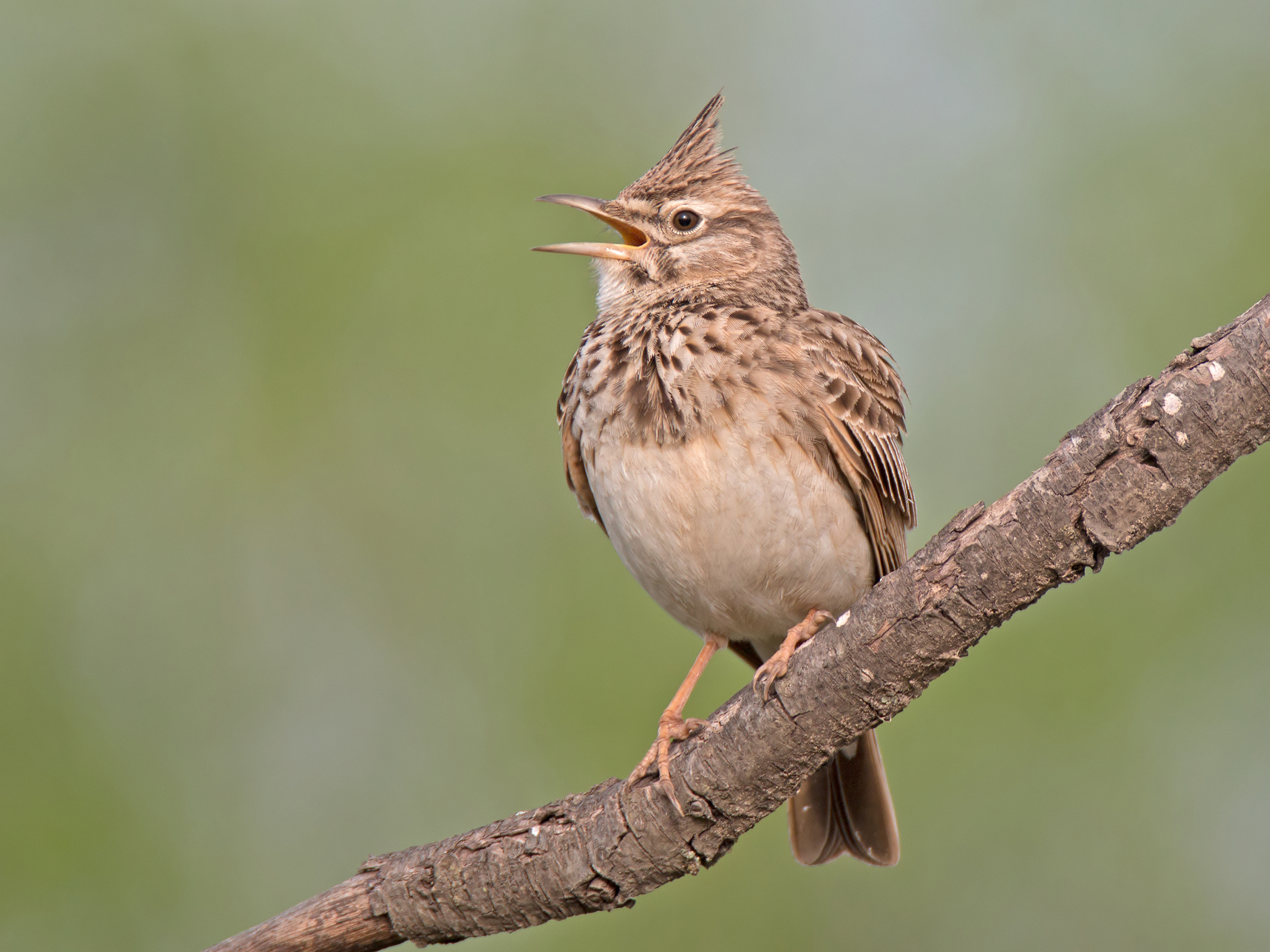
 Akbar doesn’t generally do the more familiar, simply focused poem. There are a few in the book like ‘Learning to Pray’, in scattered unrhymed triplets, in which a young boy (Akbar allows a straight autobiographical reading usually) watches his father pray, “kneeling on a janamaz” or prayer mat. The wish to emulate the admired father is conveyed pin-sharp. A later poem also starts from childhood and (mostly in loose unrhymed couplets) traces the boy’s later maturing in an America “filled with wooden churches / in which I have never been baptized” (‘Personal Inventory: Fearless (Temporis Fila)’). This poem also attracts threads of two of Akbar’s other main themes: his personal addictions and the ubiquitous sense of living in a fallen world.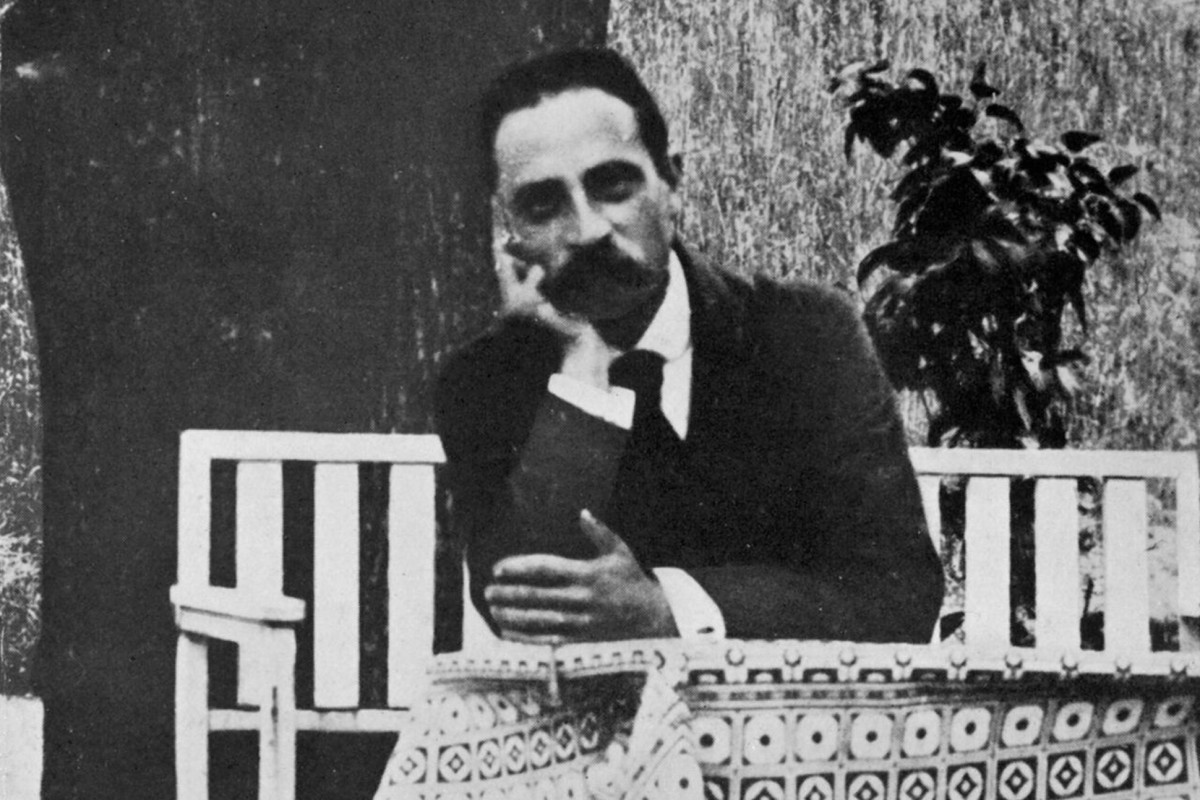
 One of the main elements of this fallen state (again Akbar allows a simple autobiographical interpretation) is the damage caused by his past addictions, especially to alcohol. This is the main hook Penguin hang the book on (a cover of empty beer bottles, for example). Poems styled ‘Portrait of the Alcoholic …’ recur throughout the book, but the first section is most focused on this. A familiar comment from W.H. Auden is used to firmly yoke spirit to bottle: “All sins tend to be addictive, and the terminal point of addiction is damnation”. Many of the poems then have this sense of inebriation, muddling, confusion which Akbar’s style of writing is very at home with. ‘Portrait of the Alcoholic with Home Invader and Housefly’ presents the drinker waking up, seemingly attacked by a home invader with a knife. Memories of keeping a housefly on a string intervene, perhaps because in the fly’s death the young boy confronted the idea of death: “I opened myself to death, the way a fallen tree // opens itself to the wild”. The poem returns to the threatening situation, then to more abstract thoughts of scale, a TV programme and the speaker passively returns to sleep. This is a great poem of the self as both endangered and paranoid, distanced from danger, the blurring of perception, thought and memory.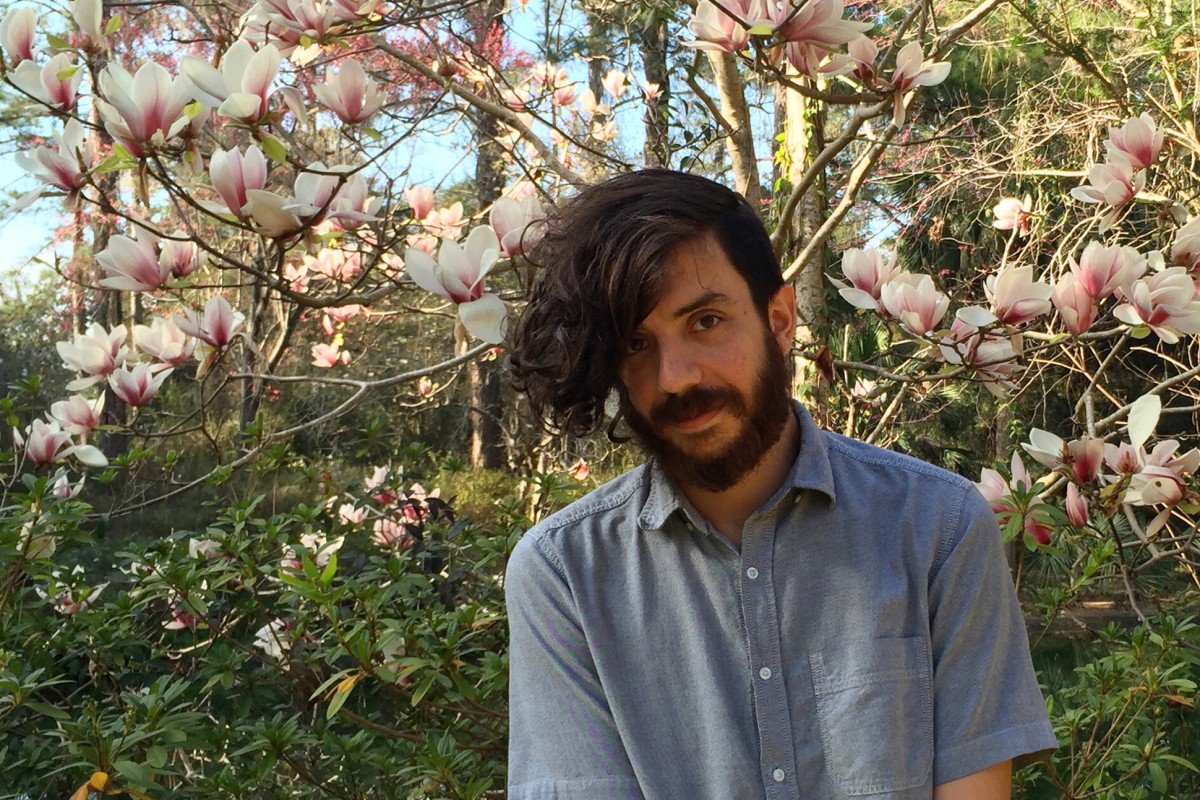
 But when it works, these are marvellous poems – and, for my money, this book would make a worthy winner of the 2018 Felix Dennis Prize. ‘Wild Pear Tree’ – as if in one breath – conveys a wintry scene/mental state, recalls halcyon days (of spring) and ends lamenting the forgetting of an “easy prayer” intended for emergencies: “something something I was not / born here I was not born here I was not”. ‘Exciting the Canvas’ is much more risky in its jig-sawing together of disparate elements – a bit of Rumi, the sea, a child’s drawing, a drunken accident, the Model T Ford, crickets, snakes – but somehow manages to hold it all together to make a snap-shot of a troubled, curious, still-open consciousness. And finally, ‘So Often the Body Becomes a Distraction’, dallies with the Rilkean idea of dying young, alludes to recovery from addiction, then grasshoppers, ice-cubes, personal ambitions and the self-image of “rosejuice and wonderdrunk” (which is merely one side of Akbar’s work). This one ends with the not-infrequent trope of a re-birth from burial in the earth. I like these images, suggesting that, for all the fretting about lost paradise, the absence of God, the self-destructiveness of the individual, whatever redemptive re-birth may be possible is only likely to come from our closeness and attentiveness to things about us, an eschewing of the “self-love” Akbar struggles to free himself from in ‘Prayer’: in a lovely phrase –though I’m still figuring it – he concludes, “it is not God but the flower behind God I treasure”.
 Martyn Crucefix