Review of ‘The Pity’: new war poems commissioned by the Poetry Society

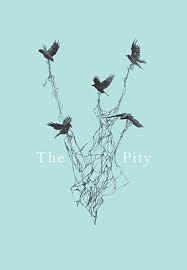
On National Poetry Day (October 2014) four contemporary poets performed new work about the legacy of the First World War. Two months later the Poetry Society published The Pity as a limited edition anthology. Given free to Society members (it has just now come through my letterbox with the new issue of Poetry Review) it is also available to purchase online.
 imgres

So The Pity contains substantial poems commissioned by the Poetry Society, in which Steve Ely, Zaffar Kunial, Denise Riley and Warsan Shire (chosen to represent “different poetics and perspectives”) respond to the centenary and legacy of the First World War. The Pity was published in collaboration with Cockayne – Grants for the Arts and The London Community Foundation to mark the centenary of the First World War. John Glenday’s poem, ‘The Big Push’ is also included, providing a short coda to the volume. His poem takes inspiration from Sir Herbert James Gunn’s 1916 painting, ‘The Eve of the Battle of the Somme’, held in The Fleming Collection of Scottish Art.

In this blog, I will discuss only the contributions of Ely and Glenday; on another occasion, those of Kunial, Riley and Shire.

Steve Ely’s ‘How dear is life’ is a sequence in 7 parts mixing literary, historical and personal materials to very powerful effect. He presents nothing less than a vision of war and its causes, the careful placing of the comma in the title of the first section – ‘Business, as usual’ – indicating where he wants to lay the blame:

This time it’s oil, not markets.

This time it’s oil, not borders.

This time it’s oil, not ideas.

This time it’s money and power –

like last time and every time before.

Ely has said the whole sequence is much influenced by Henry Williamson’s fictionalized autobiography, A Chronicle of Ancient Sunlight, which presents the First World War as a sacrifice of the innocents on the altar of capital. The sequence is intended to portray a liberation from a “world-destroying growth-and-profit system”, not merely a release from the horrors of war. Though writing with commitment (see Morning Star: http://www.morningstaronline.co.uk/a-1063-Steve-Ely-commissioned-by-the-Poetry-Society-for-centenary-of-World-War-I#.VL0uW0esWss) there are two aspects of the sequence that prevent it ossifying into predictable attitudes: one a matter of materials, the other of technique.

SteveEly-SquareWeb

Ely draws on material linked with his maternal great-grand-father, Thomas Sellars, killed on the Somme in February 1917, contrasting the glorious send-off by friends and family with his eventual fate (and the shifting attitudes of those left at home):

They stuffed his lungs with poppies and crushed him

under a cenotaph. Where they weep.

Likewise, he uses material from a more extensive time period, linked with his own background in the mining communities of Yorkshire. The pressures of economic activity which determine that (on one occasion) it will take too long to recover the body of a killed miner mean that the bereaved family is fobbed off with a “screwed down coffin            packed with the stone that / killed him” (one of 262 deaths in the pits in the twentieth century). Ely deploys this alongside the 216 deaths of Frickley and Kirkby, “ragged up through two world wars”. There are moments reminiscent of Wilfred Owen’s poems here. Owen’s ‘Disabled’ is inevitably evoked when Ely treats the plight of individuals injured in wars, sickeningly evoked in ‘The Story of my Heart’:

on spoon-fed rusk-mush

matted in my beard                 pus from a crusted wound

[. . . ]

I was more than a mouth        more than shit

once                 I was

whole

But it is the first, fifth and seventh parts of the sequence where Ely’s technical choices are fully displayed. Under the creative pressure of his unifying political vision, he draws together fragments (often separated by blank spaces on the same line) into new relations with each other, melding biblical, historical, mythical and more contemporary elements together to make his point:

and what did they see

river running red         with Empire

river running green      with Deutschmarks

sterling                        Frenchfrancs        roubles        dollars

the promissory land                 of bilk and money

Using the same techniques, ‘The Vision of the White Crow’ springs from information that Hitler (while recovering from a gas attack at Pasewalk Military Hospital in 1918) experienced episodes of ‘hysterical blindness’ in which he claimed to have seen his eventual rise to power. Ely voices Hitler’s convictions that the “Reichsblood” was being drained by “socialists democrats profiteers bankers” but then propels his vision forward into the later twentieth century, “unwritten pages of world book turning”. We are whirled through Washington, Moscow, Sarajavo, Maastricht, past John Lennon, and (maybe?) Andy Warhol, towards the X-Factor and twerking with Angela Merkel. This is heady poetry of conviction and the persuasiveness of phrase-making (phrase-making that leaves syntax and causality behind) is intoxicating but perhaps is the intoxication that Auden warned himself against in the late 1930s. But Ely is clearly on the side of Shelley, echoing ‘The Masque of Anarchy’ in the final section, urging the disenfranchised – who, the poem has made it clear are always the victims of the powerful and wealthy in both war and peace – urging them to “Rise . . .Rise  . .  Rise”.

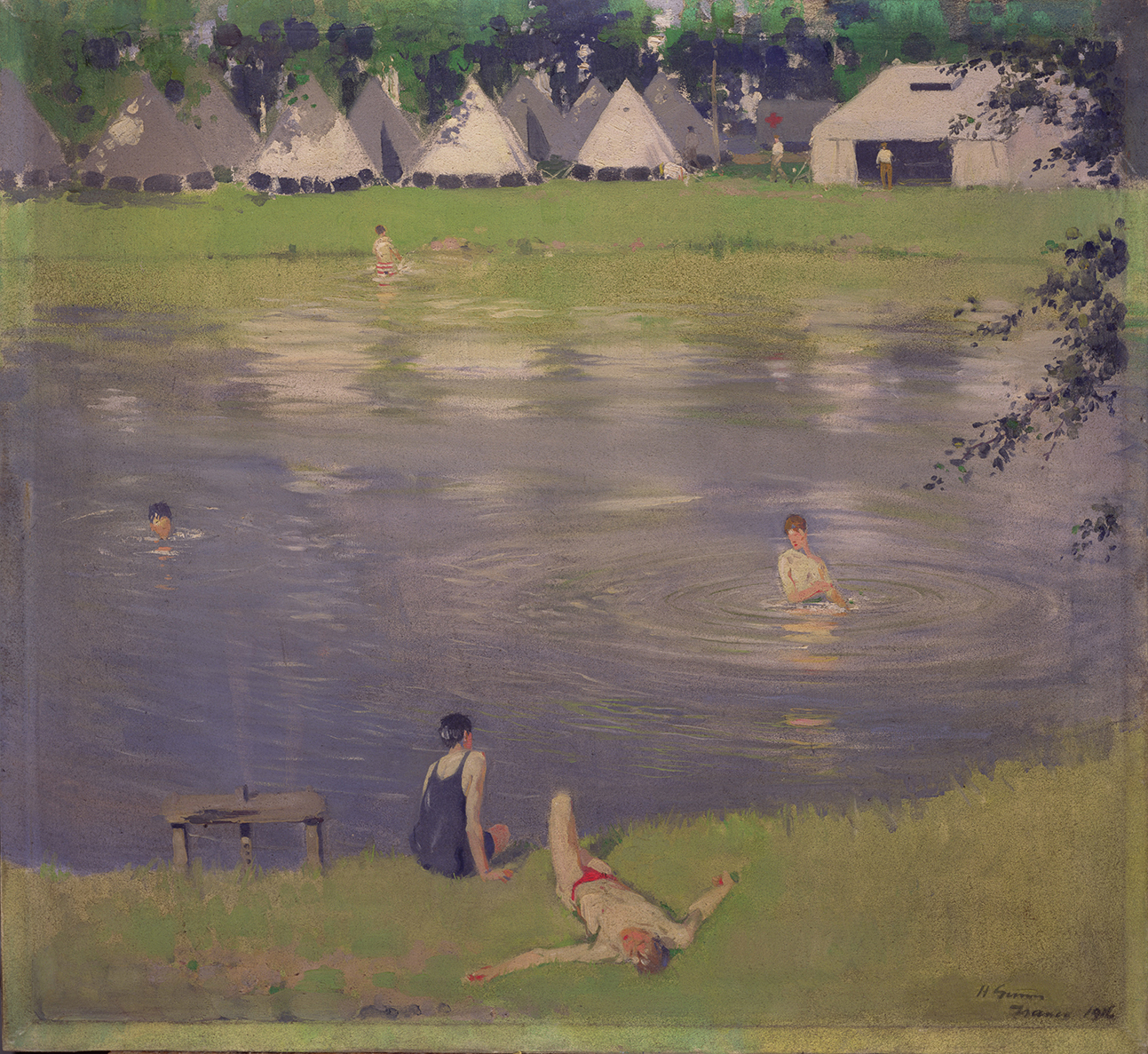
John Glenday’s single poem is as different as could be. It is an ekphrastic piece, the pictorial inspiration being Herbert James Gunn’s 1916 painting, ‘The Eve of the Battle of the Somme’.
GUNN-Sir-James-The-Eve-of-the-Battle-of-the-Somme

Much of the poem’s impact is already evident in the image: the naked, vulnerable, beautiful figures of pale youth, relaxed, hedonistic, while across the swirl of the River Somme itself, the ominous daubs and pointed shapes of the army camp are almost – but not quite – out of sight. ‘The Big Push’, in its 7 regularly lined quatrains, rhyming ABAB, is calculated to be a more conventional poem than any part of Ely’s. It’s a dramatic monologue, perhaps spoken by one of Gunn’s swimmers and it tries on many familiar tropes we might now associate with WWI and its poetry: the singing in the face of imminent extinction, the waggish black humour of the Tommies, the football playing, the stoical resilience of the trench soldier. We even have a reference to Shelley’s ‘To a Skylark’, “like an unbodied joy”.

imgres

It’s this image, drawn from the narrator’s past, that opens the way to the final two stanzas which are a sequence of associations after taking over German-dug trenches from occupying French troops, the “tiny, brilliant flowers” blooming in that place, the speculation that, if the dead might someday return, “they’ll come back green”. The poignancy of these images returns us to the Gunn painting. The young men are at one with Nature, having passed through the horrors of the Somme are gifted a return to that pastoral scene where:

. . . all the things they suffered will mean no more to them

than the setting in of the ordinary dark, or a change of weather.

I take the irony here to be at the expense of the narrative voice, whose steady, rather plangent tone and period-shaped imagination is not yet able to encompass the horrors that a modern reader all too readily associates with the battle to commence the very next day. I’m reminded of Owen again. In ‘A Terre’ (completed July 1918), his wounded officer blackly recalls Shelley (again!): “I shall be one with nature, herb, and stone”. But Owen’s narrator re-shapes the Romantic idea of the one life by envying the lives of rats, cheese mites and microbes: he already understands the horrors that Glenday’s naïve narrator has yet to learn.
Teaching Dannie Abse’s ‘Two For Joy’ (2010)

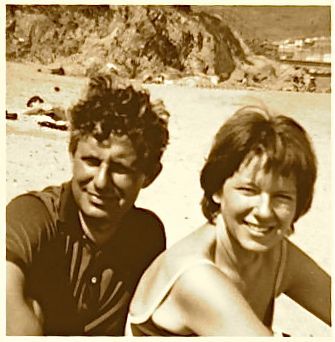
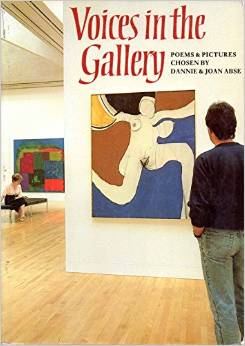
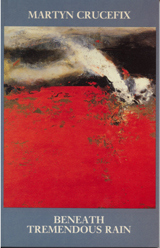
I first became aware of Dannie Abse’s work in 1986 when he and his wife, Joan, were editing Voices in the Gallery,  a sumptuous anthology of poems about paintings for the Tate Gallery. To my astonished delight, they accepted ‘At The National Gallery’, an early poem of mine about Gerrit van Honthorst’s ‘Christ Before the High Priest’ which later appeared in Beneath Tremendous Rain (1990). Our paths continued to cross around the London poetry scene, especially at (usually fraught) Poetry Society Council meetings in the 1990s. A couple of years ago he visited the College where I work and happily discussed his poems with students. His death in September 2014 was such a sad loss.

With the New Year we are again teaching Dannie Abse’s collection Two for Joy (http://www.amazon.co.uk/exec/obidos/ASIN/0091931177/karelsoftw-21). But with the changes to A Levels being hurried in from September 2015, this will be the last time we work on this book (for AS Level Coursework) though it has proved a joy to teach. This is perhaps a surprise given its subject matter.

The book is a compilation of work from several years focused on Abse’s relationship with Joan, his wife (herself a writer, editor and acclaimed art historian). It was published a couple of years after The Presence (http://www.amazon.co.uk/exec/obidos/ASIN/0099531860/karelsoftw-21), a memoir completed in response to Joan’s tragic death in a car accident in 2005. ‘Two for Joy’, of course, alludes to the old country saying, cited on seeing magpies: one for sorrow, two for joy. The poems in the collection evoke both sides of this cryptic saw, from the early joys of young love to the sorrowing widower more than 50 years later.

imgres

In terms of teaching and coursework the book’s focus is so intense, powerful and yet varied that the material always goes down very well with students and enables them to write confidently about ‘the collection’ (one of the Assessment Objectives). We might start with the simplicity of ‘Condensation on a Windowpane’ where the aging narrator inscribes his and his lover’s names on the wet windowpane because he wants to write “something simple as pure water”. Yet even water, further considered, is complicated, “like steam, like ice, like clouds”. This plainness of address and nakedness of emotion is immediately engaging but Abse is really flagging up the collection’s main themes of love and time as, eventually, the words fade, dribbling down the glass: “They weep as they vanish”.

Or what better way (I mean appalling way) to gain students’ attention than this opening quatrain of ‘Lachrymae’:

I crawled from the noise of the upturned car

And the silence in the dark began to grow.

I called out her name again and again

To where neither words nor love could go.

This little sequence of poems like tear drops is set after Joan’s death and delicately re-visits a few scenes from married life, only to end with the narrator walking in solitude beside the Hampstead ponds, “where a lone swan sings / without a sound”.

An earlier poem ‘A Night Out’ records a visit the couple made to the Academy cinema in Oxford Street in the 1950s. As a Welsh Jew in London, courting and marrying a gentile, there are plenty of moments in these poems where the unconventional couple have to confront the narrow-mindedness and bigotry of the 1950s and early 1960s: anti-Semitism in ‘A Marriage’; general moral strictures in ‘Two for Joy’. On the occasion of the cinema visit, Abse’s cultural background is significant as they watch a fictionalised account of the Holocaust: “images of Auschwitz, almost authentic, the human obscenity in close-up” so much that “we forgot the barbed wire / was but a prop [. . . ] those striped victims merely actors”. Afterwards, the couple are stunned by what they have seen, sitting in a “bored espresso bar”. Gathering themselves at last, they return home to a German au pair girl, their own children safely asleep upstairs:

Reassured, together we climbed the stairs,

undressed together, and naked together,

in the dark, in the marital bed, made love.

images

Abse’s technical skill with plain language is on full show in such lines and the class might have debates about how far individual love is shown to counter, compensate, or merely distract from world horrors. In a 1980 essay called ‘Rhyme’ (collected in Dannie Abse: a Sourcebook, ed. Cary Archard: http://www.amazon.co.uk/exec/obidos/ASIN/1854115073/karelsoftw-21) Abse has commented on this poem and presenting students with his observations has often proved to be a moment when sceptics about the deliberateness of a writer’s choices can be converted. He compares ‘A Night Out’ with ‘In Llandough Hospital’ arguing that the charge of emotion from the film was so powerful that he “did not want to make any pretty artifice out of it. I did not want to be lyrical about such a theme. I wanted to be as truthful as possible, to avoid all kinds of artificiality, to say what I felt and to say it plainly. I wanted the verisimilitude of prose”.

The period of the Cold War is briefly evoked at the end of ‘A Scene from Married Life’ in contrast to the “few and brief” cold wars of the couple’s marital rows. Set in Abse’s beloved Ogmore-by-the-Sea in South Glamorgan, after a petty squabble, the narrator metamorphoses into a monster of self-pity and suicidal thoughts. The poem cleverly balances the two perspectives of the over-dramatising, younger self with a more ironic, mature judgment. It’s only at the end with the appearance of Joan on the cliff top (surely an echo Thomas Hardy’s ‘The Voice, with Emma in her ‘sky blue gown’) that the faux-suicide relents:

On the high cliff my wife dressed in blue and all

The best of the world true and desirable.

With surrendering waves I crawled back to the shore.

6110017_ee8699d49a_m

Such humour, often in self-mockery is never far from Abse’s work. The darker side of grief is evoked in the image of blood-stained petals falling in ‘Magnolia’ (“bridal branches slowly violated”) but most powerfully in ‘The Revisit’ which again works the rich seam of two periods of life knotted together. A beautiful lake scene enjoyed together is re-vised by the lonely widower into an apocalyptic vision, with the sun-set now evocative of “Angel wars. Such April bloodshed!” Though there are more consolatory poems in the book, where time the healer is seen to begin its work, ‘The Revisit’ shocks in its blunt confrontation with grief and on this occasion Abse’s use of poetical devices, the abundant skill of the artist, only serves to emphasise the helplessness of the man:

The gradual distance between two stars is night.

Ago, love, we made love till dark was bright.

Now without you dark is darker still and infinite

It would be a shame indeed if, in the mean-spirited, ever-narrowing criteria of the new A Level specifications, a collection such as this one could not continue to find a place. Dannie Abse’s website is at: http://www.dannieabse.com/.

imgresjpeg

Old Stokes’ Garden Nursery 1970 – 2014

An interruption to blog-casting over the last couple of weeks as I’ve been away from the desk, here and there, partly in Wiltshire visiting my 90-year old parents.

I’ve long understood that one of my triggers as a writer is the simple disparity between ‘then’ and ‘now’. I have grown convinced that an individual’s mental health is partly dependent on the free flow of thoughts and feelings between personal present and past, the integration of personality, a sense of coherence, or organic change, over time. There has been a good deal of research recently on the idea of nostalgia as a healing force (hence some of these dips into autobiographical mode) and I’d like to talk more about that sometime. But for today, while staying in Wiltshire, I came face to face with a pretty powerful example of this disparity between past and present. Here it is:

20150102_125938

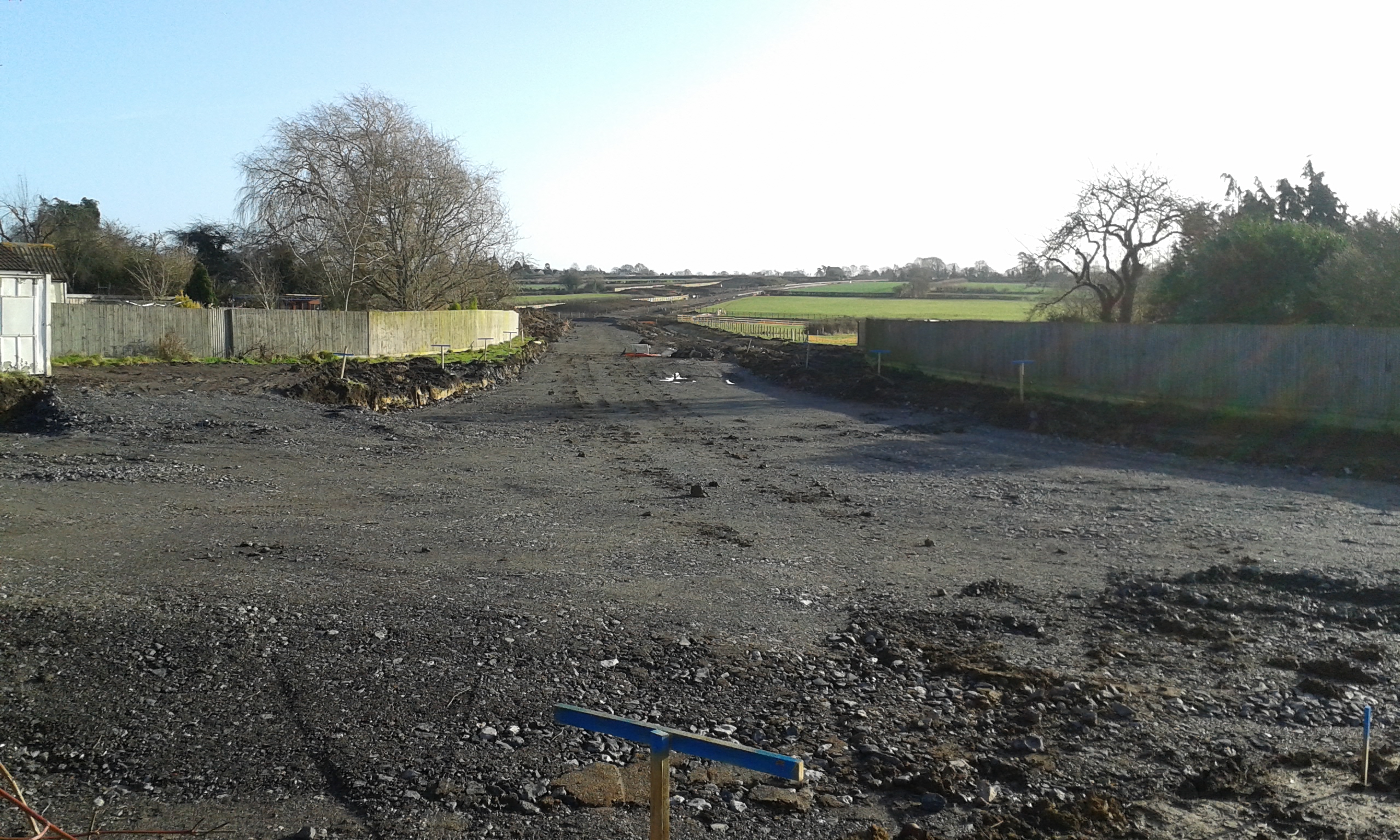
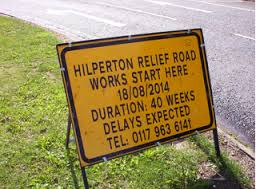
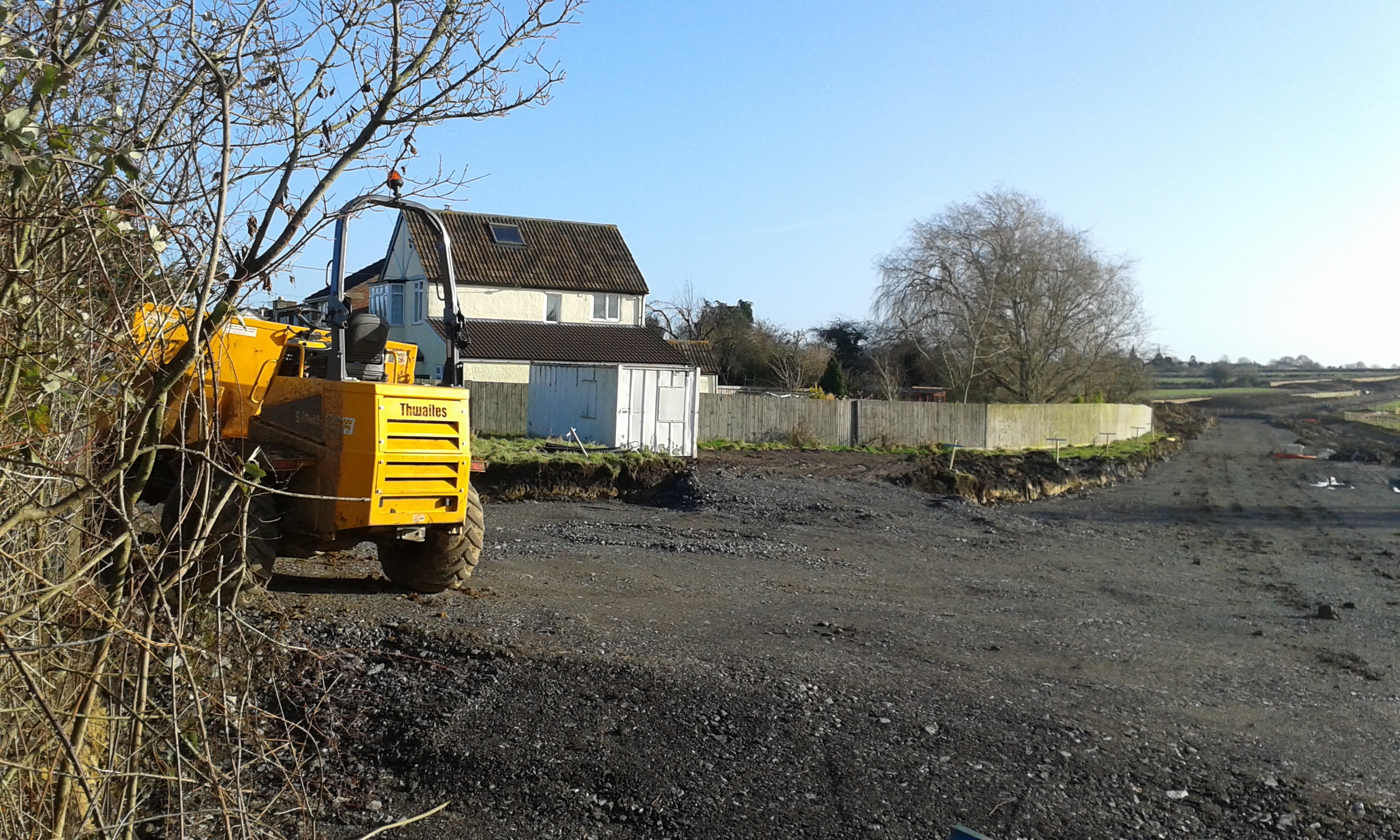
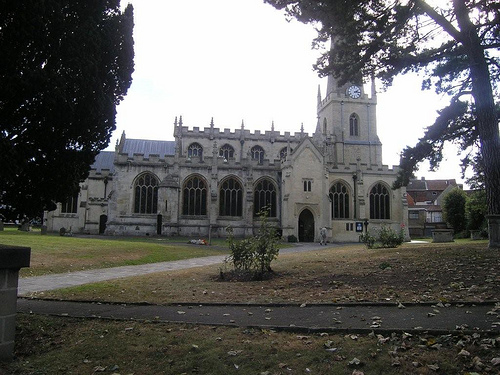
OK – it’s not much to look at, but this is the final route of the Hilperton Relief Road, designed to take traffic away from the village where I grew up in Wiltshire. My father has been praying for this to happen for years, convinced the thundering, articulated transports that pass the house originate solely from ‘the Continent’. It’s true they do have to manoeuvre through the village itself, but the route cuts across green fields just a stone’s throw from the little village church of St Michael and All Angels, fields where I’d mooch about as a kid with friends from the self-build estate of Marshmead.

images

So a personal wound to my memory – but also an ecological blow to the rural area. Within a few years – though the local authority currently denies this – the meadows surrounding this new road will be filled in with houses and the ghastly sprawl of Trowbridge town will engulf another village. More lucrative land for developers is the prime motivation for building the road after all these years. More personally, on the bulldozed soil in the first photograph once stood a few ramshackle buildings, little more than large garden sheds and fogged, filthy-windowed greenhouses. This was the site of Stokes’ Garden Nursery where I worked a few hours a week at the start of the 1970s.

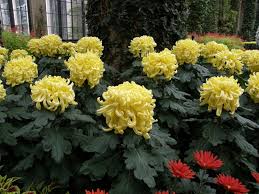
Stokes’ Nursery is on the left at the far end of Horse Road as you head into town. I cycle along there one Sunday and find Old Stokes out in the open, moving up and down the sunlit rows of chrysanthemums, lifting the still-tight flower heads to examine them, pinching off a browned leaf here and there. It appeals to me – the money and the work.

The following Sunday, on my first morning, he musters a smile of sorts in greeting. He is bent with age, rather hump-backed and moves with a limp. His head is small and round, a few wisps of grey hair, and he purses his lips so that in speaking there is a faint lisp. But he doesn’t often speak and I like that.

I begin reliably turning up and taking his cash, at first just Sundays then Saturday mornings as well. I find myself beginning to identify with him in little ways. His wife is invisible. Their detached house is set off to one side of the grounds where he has several glass houses and outdoor growing areas. The house always appears deserted, with the curtains closed for the most part. Nothing moves or changes. No-one sees her. Old Stokes never talks about her. I never ask. She suffers from agoraphobia, or so my Mum tells me.

20150102_125952

One morning, he leads me through the rickety door of the main glasshouse into its humid, stuffy other world, reeking of compost, plant rot, fertilizer, cell division. “Pricking out”, he murmurs and I wonder if I have heard him right. At an earthy metal bench, backed with a window so filthy nothing can be seen but a fuzz of sunlight, we stand side by side and he shows me what to do. The seedlings are new-grown in their first trays and each has to be gently teased out of the loose soil and away from its clinging companions. Then each spindly seedling, green leafed, pale-stemmed, white-rooted, is tucked into a new hole (drilled by the ‘dibber’) in a newly prepared tray. Pricking out is boring and brainless. It’s not something I am unhappy doing, bearing in mind I am getting paid a few shillings – after February 1971, thirty or forty pence – to do so.

But I prefer watering; lugging the python-like, yellow hoses up and down the glass house aisles, pulling the trigger on the hose attachment and spraying water everywhere, dampening the already humid atmosphere. Soon I am promoted to patrolling the rows of vigorous chrysanthemums, lifting the heavy weights of the flower heads, picking out ear-wigs where I find them, dispatching them with a curt rolling of my thumb and finger. Crouching down between the rows, I disappear completely from the view of anybody passing along Horse Road. Crouched there, I am in a manageable jungle, happy to be alone, often bringing my family’s old blue transistor radio with me, listening to Noel Edmonds (from October 1971), his Sunday morning slot from 10-12. His kind of drippy folk-rock is (I’m afraid) what I like to listen to and David Gate’s songs like ‘Diary’ and ‘Baby I’m-a want you’. McCartney’s first solo album is being played. Cat Stevens has released ‘Tea for the Tillerman’ the year before and ‘Teazer and the Firecat’ in the autumn.

imgres

Twenty years later, in my first book from Enitharmon Press, Beneath Tremendous Rain, I published a triptych of poems about Old Stokes, his wife and the boy working for them. Here are the two best ones:

The Nurseryman

See how my wife hasn’t bothered to open

the curtains. It’s three o’clock. She must be bad.

She thinks I don’t know what it costs her

to steal a glance at me outside, to brave

these fifty feet of open space, her weak legs

trembling with terror, sick in her belly,

knotting ever closer round her poor heart . . .

I’ll cut some chrysanthemums to please her.

My flowers always please her.

Years ago she’d tell me how it felt.

She’d say a bulb will sometimes come up blind

no matter how carefully you’ve set it down.

It’s the way of plants. There’s no cure at all.

But it’s not only her. Still poor as Adam,

there’s just one thing I have that’s in demand

and it’s not right that a man who’s spent life

tending soil into flower should gain nothing

but a touch for dressing death in glad rags

with some careful blooms on a wire frame . . .

I’ve found a natural talent for wreathes.

My one extravagance:  that I can charge

higher prices than most and though Christmas

is a boon (when my great medals hang on

many bolted doors), yet it’s the year-round trade

in bereavement that keeps this place afloat.

I’d plans once. A shop, new green-houses, a son.

Now I’m forced to take on a series of young lads

who help me out. They’re all more or less sullen.

This one’s so quiet, although he chats to girls

across the hedge, as they all have done –

all playing the working-man, hands dirtied,

with the jangle of my money in their pockets.

This one trails his radio around all day long

as if he can’t stand the sound of himself.

Doesn’t work hard. See where he goes now,

slipping down beside the sheds. No radio today.

Well, he’s happy enough on one-fifty an hour . . .

I must cut some chrysanthemums to please her.

The Wife

I sit beside my beautiful maidenhair fern.

It likes my darkness, is dank, spreads slowly.

I count my books, silent on their long shelves.

I’m dying of pure old age, not experience.

I was not always so understanding – accusations

and resentment shouted him into the garden.

We have not given each other all we’d hoped.

I name children, true pleasure, company . . .

I’ve felt such horror at what lies beyond

the window, where even clothes on the line,

blown by an uncontrollable wind, cardigans

undone and swept open, slacks kicked wide

are too much to bear. He has devoted himself

too much to the fertility of row upon row

of plants and had less and less for me.

But we’re past the allotment of blame.

For years, he’d bring chrysanthemums

to me and watch like a child while I shook

earwigs in the sink, flushed them out of sight.

An absurd ritual I long for, absurdly,

since it ended these past four or five years

before the hedge was removed to make beds

of carnation. And we’ve no boys now –

as if a supply-line had suddenly gone dry.

Don’t parents have children nowadays?

They all blur into one – that particular one

who left quickly. Why do I think of him?

He’s forgotten me. Does he have a wife?

And a child? I remember descending the stairs,

past the grave-quiet telephone, with a jug

of water in my hand. I thought I heard

one of the cats, opened a sliver of curtain.

I would do this all over again . . .

See the boy slumped against the shed

legs crooked and splayed, one hand flickering

on his belly as if dealing a deck of cards –

but with such unrestrained violence.

He saw me. Gave the look of one who has been

interrupted – annoyance, much more than

the guilt I’d expect. I dropped the curtain,

then wanted to open it again – and it’s that

which fills me now when I think of ‘life’

and then I see myself – the dry, pressed flower

I found once in a borrowed library book,

squeezed out now, frightened of the light.

Ecology and Poetry: Review of Michael McKimm’s ‘Fossil Sunshine’

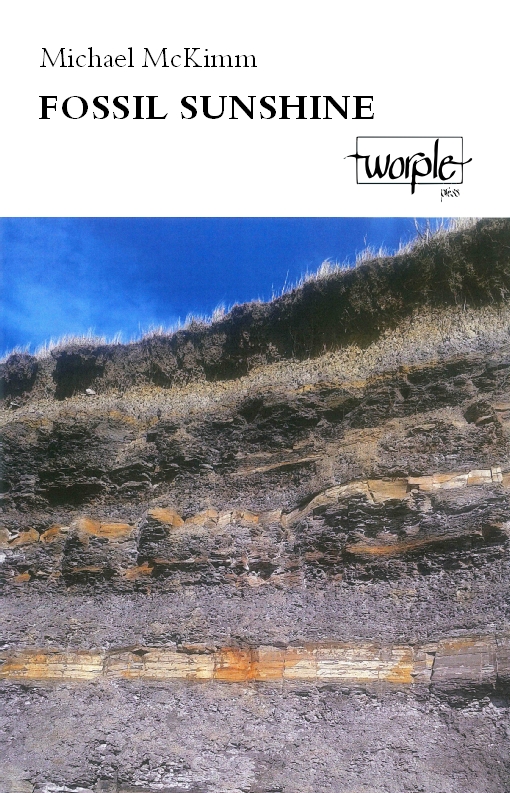
I met Michael McKimm earlier this year – at the Free Verse Poetry Book Fair in September 2014. His chapbook, Fossil Sunshine (Worple Press, 2013) interested me because much has been said in the last few years about how poetry has embraced science. This is one plank of the argument that also declares poetry has embraced popular culture, or the world and language of IT, the law, or maybe banking. Yes, poetry is keen to annex what it can. And I would happily sign up to the general principle that poetry’s health can feasibly be measured by the range of experience it can encompass. In times of feebleness poems are stuntedly concerned with poetic subjects, poetic diction; in periods of strength, there is a great sense of traction and encompassment, that anything will give itself to the poet.

Perhaps we are on the cusp of one of these latter moments; reading Nathan Hamilton’s 2013 Bloodaxe anthology (note the wide embrace of the title) Dear World & Everyone In It you might get that feeling. And guess what: Michael McKimm appears on page 90 and Fossil Sunshine really is differently-angled to most of the collections you’ll have read recently. These poems are the result of a year-long collaboration with earth scientists, in a project funded by Arts Council England. Drawing on fieldwork with geologists, the poems explore the relationships between geology, the oil industry and climate change, and (Worple’s blurb says) they ask what the evidence held in the geological record can teach us. The blurb goes on: “From ice ages to landslides, oil spills to geo-engineering, Fossil Sunshine captures the language of geology, as well as the energy and drive of exploration and discovery”.

Fossil_Sunshine96

Given its subject, the book inevitably has an admonitory tone. But one of the problems with poetry’s annexing more and still more was noted by Keats and his response was to loathe anything poetic that has a palpable, didactic design upon us. Indeed, the poetic and didactic are mutually exclusive for him. Poetry is a realm (perhaps unique) where life’s genuine truth and beauty (simply that it is full of shades and ambiguity) can be expressed and relished without any irritable reaching after clarity and fact. What I like so much about McKimm’s poems is that they would also have pleased Keats on this count. They are vigorous, ambiguous and even visionary. In them we see mankind’s power as much as our malign influence, the frailty of nature as much as its resilience. They want us to think about these issues, but will not do the thinking for us.

‘Tertiary Basalts’ describes its igneous subject as “Crow black, slick as onions, or walk-on-nails / tough”. It’s in part a child’s eye view (“A thick burnt red / running through like a layer of jam”) and the narrator admits that rock like this would give his earlier self “more pictures than the clouds”. But McKimm does not ironise the child’s vision but combines it with an adult understanding of the rock’s creation to make a more rounded celebration of the natural world. ‘Holderness Boulder Clay’ does something similar as it vigorously describes the sea’s biting away at the friable coastal reaches till “a fencepost hang[s] from a whip / of wire, and plastic drainage pipes / [are] like pillarbox guns”. Whatever warnings are here they are buried in the figurative language – the whip, the gun. The poem is a tour de force of minute particulars; I’ve never felt so close to the ebb and flow, the nibbling of erosion, the swirl of “gobstoppers of granite, sandstone, / Norwegian porphyry, carnelian”. Elsewhere (in prose this time), someone called Stuart takes a little hammer to a chunk of Yorkshire chalk and skilfully unearths a fossil sea sponge: “Laosciadia Planus. I weighed it in my hand.” And like a time machine, suddenly Bridlington with its Pitch and Putt course vanishes to be replaced by a vision of the past: “Sea conifers, angiosperms. The whole place electric with reptiles”.

media

Only someone much concerned with the environment could bring the natural world – both present and past – so vividly into poetry. Someone like that could not fail to express concern at our interventions in the world. A scattered sequence of poems, each called ‘Abstract from a Conference’, expresses this concern. The first explains that coal, oil, gas are anciently stored sunshine that we have since “sought with our intelligence / and drive”. Our brilliance has long been to our benefit but . . . “Is it possible, a soft // landing for civilisation? We were smart. / How smart do we now want to be?” The ‘Abstract’ in the title to these poems perhaps permits more didacticism than elsewhere: abstract as summary, abstract as form of language. Yet even here there is an awed sense of ourselves: “Survivalists, stewards of the biosphere, / from nothing we grew”. Where did we go wrong? We “thought of ourselves”. Perhaps little else. And for a while, “where was the harm in that? – / as the mighty river’s arteries flowed past.” ‘Pipeline’ is another sustained performance, a description of the route of a North American oil pipeline. Detail is put to use to suggest both the varieties of landscape it passes through as well as the ingenuity of its builders: “without even a pit stop it’s pierced Manitoba, / steady trajectory, knows where it’s going”.

So McKimm’s images are often carefully laid down, alive, at the borders of ambiguity. Yet the descriptive drive of the book pulls no punches when it comes to the mess we have made of things. Here are “the basics: deforestation, fallow lands, / tilling, terracing, irrigation systems, subsurface // water extraction, mining, transportation systems, / waterway re-plumbing, reservoir interception, // groynes, jetties, seawalls, breakwaters, harbours, / warfare”. Even a small scale ‘Oil Field’, apparently landscaped into a natural environment, is regarded, or rather listened to, with suspicion: “the beam pump’s / gentle purr, like an antique Singer threaded / through with jet, working with a rhythm / you would never think so peaceful or so clean”. At the living room table, my mother would propel an old Singer like this, an image perhaps of technology taken so far, only to be wrenched further still (the thread through this machine not homely cotton, but the more sinister thread of an oil jet).

imgres

Andrew McCulloch’s review in the TLS concluded: “Read these poems!” Penelope Shuttle has written: “The language employed by this poet is powerfully tactile.  These are strong and in every sense grounded poems”. ‘Grounded’ is a worthy pun, of course, as much about McKimm’s language and tone as about his rocky, muddy, sandy subject matter. I’d recommend these poems, for their grit and grain as much as their environmental concerns, for their humble belief in human ingenuity as much as their clear-eyed warning about where it seems to be taking us.

Autonomous Sensory Meridian Response – and Poetry

Something on early morning Radio Four this week sent me hurrying to the files of autobiographical notes I’ve been writing sporadically over the last few years. It was a discussion of an experience I have never heard spoken of, but felt often enough. It has a name these days: Autonomous Sensory Meridian Response: http://www.bbc.co.uk/news/magazine-30412358. I’ll put down my memories as I recall them but also with some of the surrounding context too as that may be relevant to the phenomenon itself:

trowbridge_picF0010

In the 1960s, in my second year at Parochial Junior School (I’m about 9 years old), we crocodile out the front door and occasionally turn right along Church Street towards St James’ Parish Church, Trowbridge (George Crabbe’s last posting). We cross the road for religious services like Easter, Harvest Festival and Christmas. We wheel and snake into the churchyard and follow the tilting, worn flagstone path, passing Thomas Helliker’s casket tomb to the church porch.

3975485172_bc361c22dc

But more usually we turn left along Church Street, passing Shanley’s the barbers and a low butcher’s window where our regimented pairings are disturbed by squeals and extraneous movement, by our fascination with red and pink slabs and cuts of meat, with creamy fat like curds laid out on plastic white trays. Most fascinating and least attractive are the lolling ox tongues, cut at the root, purple, stilled, obscene.

Then we turn left into Duke Street and left again through an almost hidden door that, even then, I would associate with those obscured entrances and exits in children’s stories. Through this door, we traipse down a passage into what we call Emmanuel, a kind of annex with a couple of extra classrooms. I don’t remember any separate play area. It’s in these classrooms that I remember adjusting to new spectacles from Carter and Harding after I had been diagnosed with short sight. I was straining to read the teacher’s scrawl on the blackboard.

Here too I remember the first incidents (though surely these could not have been the first) of a very peculiar sensation. It’s a prickling that runs up my back and shoulders, a sort of shiver moving upwards across my neck into my scalp when a teacher (not my usual one) writes on the blackboard. It’s a ripple of pleasure out of unfamiliarity (or the familiar defamiliarised), a kind of low level erotic shiver I still occasionally feel now when the college cleaner comes into my room – moving books, touching the table and chairs, my familiar items touched by another’s hand. I’ve never heard this described before . . .

Later, back in the main school building, moving to other rooms downstairs aware of girls talking, manoeuvring to walk alongside me, giggles, but I have no recognition of what this means, certainly no idea that it might be exploited. In fact, I don’t recall much sense of my own position in this little closed society at all. It is as if I moved through a mist of my own creating, barely self-aware. But I imagine myself proceeding quietly, studiously mostly, probably a pleasure to teach, though reports are already lamenting how deeply I live in myself. Already teachers are reaching for the old metaphor of the shell, the frustrating creature living within.

Wikipedia describes ASMR as a neologism for a perceptual phenomenon characterized as a distinct, pleasurable tingling sensation in the head, scalp, back, or peripheral regions of the body in response to visual, auditory, tactile, olfactory, or cognitive stimuli. The nature and classification of the ASMR phenomenon is controversial, with strong anecdotal evidence to support the phenomenon but little or no scientific explanation or verified data. http://en.wikipedia.org/wiki/Autonomous_sensory_meridian_response

It has become a recent internet phenomenon. Online discussion groups such as the Society of Sensationalists formed in 2008 on Yahoo! and The Unnamed Feeling blog created in 2010 by Andrew MacMuiris aim to provide a community for learning more about the sensation by sharing ideas and personal experiences. Some earlier names for ASMR in these discussion groups included attention induced head orgasmattention induced euphoria, and attention induced observant euphoria.

Quotation-Emily-Dickinson-poetry-Meetville-Quotes-87875

Inevitably my own thoughts about it revolve around poetry and its effects: the familiar defamiliarised, the frisson of the uncanny, Emily Dickinson talking about poems taking the top of your head off. ASMR seems linked to a particular quality of attention-giving which yields a rippling of pleasure, close to the erotic, but not the same as that. It is powerful yet undramatic; it is most common in quiet moments of observation. It is also in a neutral sense ‘bestial’, an animal shiver, like hackles rising, but not out of anger. It’s surely something reaching far back into our ancient past, linking body and mind, yielding pleasure, rooted in a mode of being predating language and conceptualisation. That interests me. Poetry is language deployed to circumvent the limits of language; these days I take that as a given. Yves Bonnefoy says: “poetry was not made to mean but to restore words to their full intensity, their integral capacity to designate fundamental things in our relationships with ourselves and others, here and now, amid those chances that one should never, as Mallarmé did, dream of abolishing” (2012 PN Review interview with Chris Miller: http://www.pnreview.co.uk/cgi-bin/scribe?item_id=8484). Even if just considered as metaphor, perhaps ASMR is what poetry taps into, invokes, rehearses, re-discovers.

Dan O’Brien’s ‘War Reporter’ and new poems

I sometimes think poets are of two kinds: those drawn to dramatic subjects which explicitly dramatise the writer’s concerns and those drawn to more everyday topics which come to reflect the writer’s concerns in the course of the poem. I think of Hardy and Edward Thomas in the latter camp, alongside Heaney’s reference to Katherine Mansfield in North (1975): “I will tell / How the laundry basket squeaked”. In the former camp, for sure, stands the American writer, Dan O’Brien, who is everywhere at the moment.

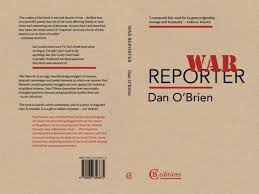
O’Brien sees himself as “a playwright who moonlights as a poet” and he has just won the Troubadour International Poetry prize and been shortlisted for the Evening Standard theatre awards (for his play The Body of an American). He also has poems included in the recent Magma issue discussed in my last blog (https://martyncrucefix.com/2014/12/01/the-launch-of-magma-60-at-lrb-bookshop/). O’Brien’s first book of poems, War Reporter, was published by Charles Boyle’s excellent CB Editions just a year ago and I reviewed it for Poetry London. The book went on to be shortlisted for the Forward First Collection Prize and to win the Fenton Aldeburgh First Collection prize (http://www.thepoetrytrust.org/news/fenton-aldeburgh-first-collection-prize-2013-winner-announced/)

imgres

In discussion at Aldeburgh, O’Brien said War Reporter had been described as “docu-poetry” and that “sounds fair.” The war reporter in the book’s title is Canadian journalist, Paul Watson, and for seven years O’Brien has been in communication with him, “obsessively” recording and working on email conversations, as well as Watson’s recordings from conflict zones around the world. The two poems in Magma are part of new work in progress. ‘The War Reporter Paul Watson Has the Time’ is a good example of the complex webs of guilt and complicity that O’Brien poems weave at their best. The narrator has helped an “interpreter” escape from Kandahar and vengeance is taken against the interpreter’s extended family through an IED: “A bump in the road and / the usual denouement”. The poems never flinch from explicitness about physical harm (“his father, leg like broken / bricks in a bag”) or psychological damage (“a pistol for protection, against all / sense and provocation, only to suck it in his mouth and – blackout”). ‘The War Reporter Paul Watson Knows’ returns in part to the moral quandaries surrounding Watson’s 1994 Pulitzer prize-winning photograph of Staff Sgt. William Cleveland’s body being dragged from the wreck of a Black Hawk and through the streets of Mogadishu. It also alludes to Watson’s more recent eyewitness accounts from the conflict in Syria: “The West engaged / in self-soothing debates while mercenaries / penetrate the borders, tilting the board / in Assad’s favour”.

The Troubadour winning poem likewise derives from the Syrian conflict. Co-judging with Seren’s Amy Wack, Neil Astley said O’Brien submitted three poems, any one of which could have won first prize: “All three were so compelling that I found myself measuring all the other poems I read against them . . . I had no hesitation in putting forward one of them for first prize.” The eventual winner was ‘The War Reporter Paul Watson and the Barrel Bombs’: “basically pieces-of-shit / IEDs of TNT, nitrogen / -rich fertilizer, diesel, anything / likely to kindle after exploding”. This is a more brutal, less multi-dimensional poem than some of O’Brien’s but it possesses an undeniable power to shock: “A foot in a sock / sticks out of the mountain. They tickle her / to see if they should dig”.

O’Brien has just published a second collection of more personal poems with CB Editions: http://www.cbeditions.com/obrien2.html

And here is my review of War Reporter from last year:

Dan O’Brien’s book is big, brave, important and challenging even in its imperfections. It is an act of ventriloquism, hitching a desperate and often horrifying ride on the work and experiences of Canadian war reporter, Paul Watson. Watson took the 1994 Pulitzer prize-winning photograph of Staff Sgt. William Cleveland’s body being dragged from the wreck of a Black Hawk through the streets of Mogadishu. Without doubt, his work tapped something important for America; as well as Watson’s original book, Where War Lives, and these poems, there is also a play and an opera in preparation.

imgres

The poems abound in speaking voices, dominated by Watson himself, but including the “Poet”. Each piece comes at the reader as a slab of blank, largely decasyllabic verse. Voices bleed into one another, partly under the pressure of war zone experiences but also because of an explicit similitude between author and reporter: “You’re like the writer / I’ve always wished I were [. . . ] your constant / returning to an underworld we can’t / look at” (‘The War Reporter Paul Watson Describes the Ghost’). Both men admit to the allure of war and death. Watson’s voice, telling of his Mogadishu photo, confesses “When / you take a picture the camera covers / your face, you shut the rest of the world out” (‘The War Reporter Paul Watson Hears the Voice’). The quieter, more reflective stretches of the sequence explore this idea and allude to Camus’ claim to have solved the mystery of where war lives; the answer is in each of us, in our loneliness and humiliation. Watson’s book pursues this and O’Brien does the same here, taking the idea to justify excursions into both men’s personal and family backgrounds. I’m not sure how effective this is (OK, both are drawn to war’s horror, but neither are warriors) and these episodes do sap the quite astonishing power of the more direct reportage.

The book has Watson recalling scenes from Somalia, Rwanda, the Balkans, Iraq, Afghanistan and Pakistan and it is art’s ability to contemplate such horrors that makes the book an important one. Tony Harrison (who always refers to himself as the man who reads the metre) insists that his formal artistry is vital to bring the poet through the fire he is intent on penetrating. O’Brien chooses to speak of man’s brutality by telling it slant, through another’s voice. Watson witnesses the stoning of a married rapist, but the initial possessive modifier ensures we cannot push the scene into the distance: “our audience cheers an elderly man / lifting a perfect cinder block above / his head, then smashing it down where a gash / jack knifes the rapist’s neck” (‘The War Reporter Paul Watson Attends a Stoning’). War lives in all of us and the collection is a hard read partly because of our reluctance to face this. The rigid consistency of form perhaps also adds some monotony, but I’d agree with Jay Parini, that O’Brien’s success is in finding words “sufficient” for our time, a form of speech adequate to the evil that persists.

The Launch of ‘Magma’ 60 at LRB bookshop

Last Friday night I read briefly (partly from my Worple Press book: https://martyncrucefix.com/publications/a-hatfield-mass/) at the LRB bookshop, 14 Bury Place, London WC1A 2JL (in fact just doors along from Enitharmon Press’ new offices). It was the launch of Magma magazine’s new issue (http://magmapoetry.com/). Magma really has become one of the must-read magazines in UK poetry and the event was one of two national launches (the other is on Thursday 11 December at 7pm at the Lit & Phil, 23 Westgate Rd, Newcastle upon Tyne, NE1 1SE, with guest reader Sean O’Brien). The LRB is a spectacularly good bookshop but you feel acutely the vanishing of bookshops elsewhere – to be surrounded by shelves of ‘proper’ books is a real pleasure, distressingly beginning to take on the quality of a sepia-tinted memory. Yet, as one of the readers commented, this is a dangerous place to visit if you’re not prepared to part with hard cash: so many temptations. It’s also a good place for a reading: chairs from front to back on the ground floor, seating well over 50, and on Friday it was packed.

images

Magma 60 is edited by Rob A. Mackenzie and Tony Williams (one of the good and distinctive things about the magazine is its rolling editorship) and 19 poets were asked to read a couple of poems each, with Kei Miller putting in a longer shift at the end as guest poet. Among others, Peter Daniels’ poems evoked a quiet, desperate sense of things not holding, of wider societal failing (‘you might discover you’re painting the house / while the other side’s on fire’). Jacqueline Saphra remembered being seventeen and then dealing with her own seventeen-year olds, boys and girls, the latter crying from their rooms, ‘Come in, I won’t let you in, Come in’. Michael Henry recalled Finals exams and wanting to write about Brecht, which he does in his poem ‘Agent provocateur’: ‘The Brechtian grape is a dry white grape / and it tastes like the white corpuscles in blood’. Martha Sprackland and Jasmine Simms found common ground and a source of poetry in drifting off in science classes at school (I remember it well).

imgres

John Greening read about visiting the archaeological dig at Sutton Hoo and an intriguing poem about ‘The Battle of Maldon’ which knowingly fails to offer ‘an explanation // of what happens in the end [. . .] about how     whatever it is     was broken’. DA Prince also evoked an earlier age with ‘The bell-makers’ reminding me of sequences from Tarkovsky’s film Andrei Rublev (1966): ‘the brilliant blistering light, / that cataract of blazing air, the stream / of liquid pain’. Karen Leeder presented new translations of German poet, Volker Braun. Braun was writing in part through the upheavals of 1989, exploring the triumph of capitalism: ‘EVERYTHING AND NOTHING / Was it ever really yours? Fuck you, fantasist. / The encore: all that you could never need!’ (http://www.amazon.co.uk/Rubble-Flora-Selected-Seagull-German/dp/0857422189/ref=sr_1_1?s=books&ie=UTF8&qid=1417365225&sr=1-1&keywords=volker+braun).

At the end of the first half, Gwen Adshead, a forensic psychiatrist and psychotherapist who works in secure hospitals, talked about her work and love of Philip Larkin’s poetry and read ‘Talking in Bed’ (one of my own Larkin favourites; see below). Kei Miller’s live delivery illuminates and energises his own words on the page. I’ve written more about his prize-winning The Cartographer Tries to Map a Way to Zion (Carcanet) on this blog (https://martyncrucefix.com/2014/10/22/kei-millers-cartographer-and-friels-translations/). He read several of the Place Name pieces, the poem where the Cartographer asks for directions and gets indirections instead (‘all true’ Kei said), the ‘Hymn to the Birds’ and the 28,000 rubber ducks poem which moves (almost imperceptibly) from children’s bath toys to captives lost overboard on trans-Atlantic passages years ago. Miller finished with his short poem ‘Distance’ which seemed to be something of an answer to Larkin’s poem chosen by Gwen Adshead; here are the two of them. . .

Talking in bed

Talking in bed ought to be easiest,

Lying together there goes back so far,

An emblem of two people being honest.

Yet more and more time passes silently.

Outside, the wind’s incomplete unrest

Builds and disperses clouds in the sky,

And dark towns heap up on the horizon.

None of this cares for us. Nothing shows why

At this unique distance from isolation

It becomes still more difficult to find

Words at once true and kind,

Or not untrue and not unkind.

Distance

Distance is always reduced at night

The drive from Kingston to Montego Bay is not so far

Nor the distance between ourselves and the stars

And at night there is almost nothing between

The things we say, and the things we mean.

Writing poems to the tune of Sibelius (circa 1990)

This has been a very busy week and blogging time has been hard to find. At work we are gathering and discussing plans for the 3000-word A2 essays on T S Eliot, West and Fitzgerald – don’t let anyone give you any nonsense about how easy A levels are! But the other evening was spent at Holy Trinity in Sloane Square (not a usual haunt of mine) at my daughter’s school concert. The final piece they played was Sibelius’ Karelia Suite and it set me thinking about a poetic project I embarked on in the 1980s.

It’s with awed admiration as well as a good deal hilarity that I remember setting out to write a sequence of poems – one each month – based on the 7 symphonies of Sibelius. In my wholly untutored way, what I found in the music was a fluidity of movement – one section seamlessly linked to the next – that I wanted to echo in verse. I failed badly, I think, and perhaps only more recently have I found ways to achieve something like it. I also wanted a diaristic quality to the poems, recording and responding to events as they occurred in my own life through the period set. Perhaps not so sadly, I’m not sure I could now lay my hands on the full typescript. Only one of the ‘symphonies’ survived to be published in my first collection Beneath Tremendous Rain (1990): see https://martyncrucefix.wordpress.com/wp-admin/post.php?post=68&action=edit

btr-cover

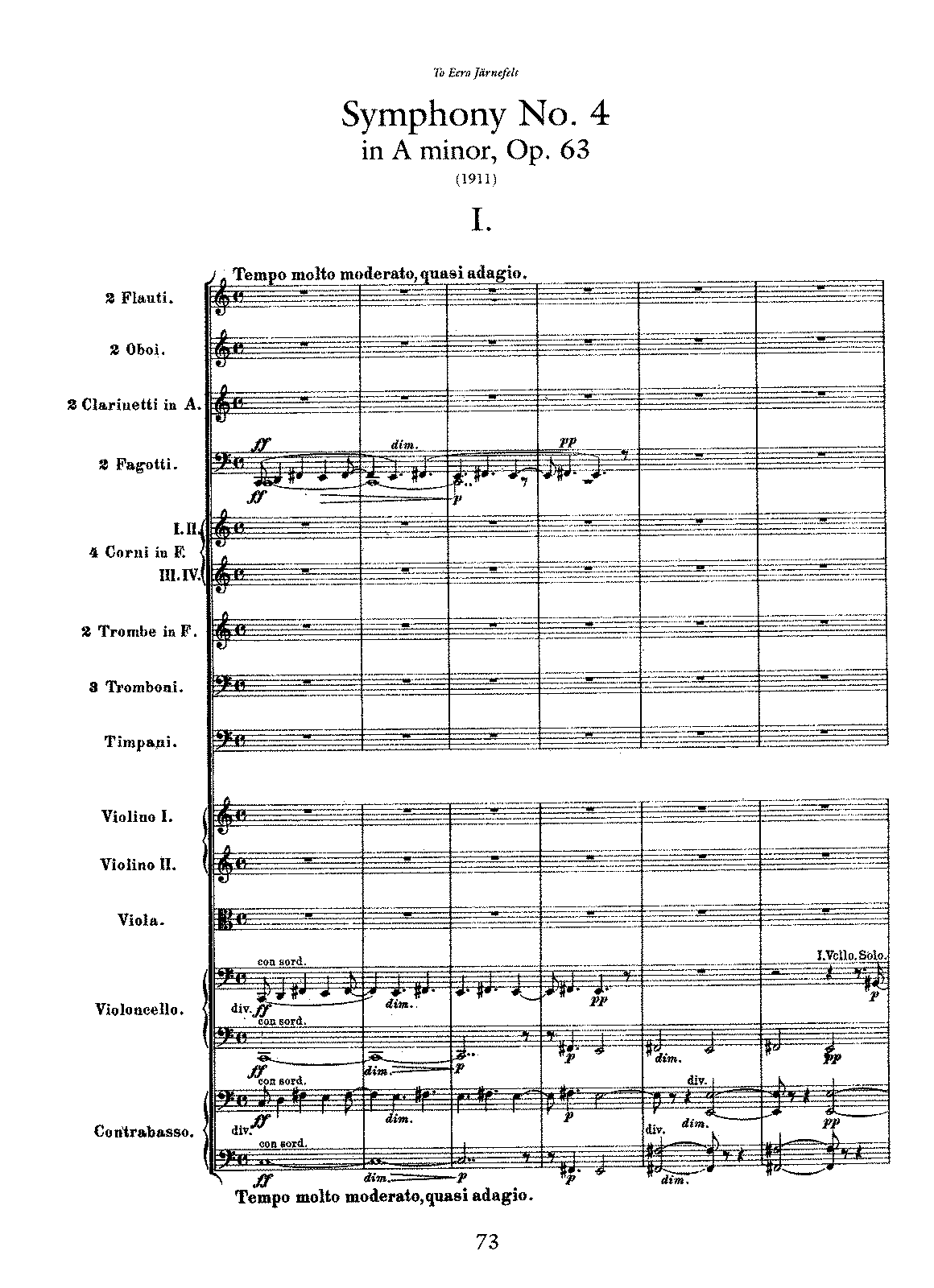
It was the extraordinary Fourth Symphony (1911):  http://en.wikipedia.org/wiki/Symphony_No._4_(Sibelius)

Listen to it here: 

And here’s Wikipedia on it: Many commentators have heard in the symphony evidence of struggle or despair. Harold Truscott writes, “This work … is full of a foreboding which is probably the unconscious result of … the sensing of an atmosphere which was to explode in 1914 into a world war.” Sibelius also had recently endured terrors in his personal life: in 1908, in Berlin, he had a cancerous tumour removed from his throat. Timothy Day writes that “the operation was successful, but he lived for many years in constant fear of the tumour recurring, and from 1908 to 1913 the shadow of death lay over his life.” Other critics have heard bleakness in the work: one early Finnish critic, Elmer Diktonius, dubbed the work the Barkbröd symphony, referring to the famine in the previous century during which starving Scandinavians had had to eat bark bread to survive.

2b400e06440de71fa24ce91517d87a561ffb25a6

The seven months were (I think) through the winter; so the fourth was probably linked with December and my partner had had a scare with a breast lump. The music’s dark, stark, exploratory qualities all found correlatives in what was going on around me. References to Betjeman and Larkin in section 1, allude to that BBC Monitor programme (https://www.youtube.com/watch?v=BTdDS05x6d0) which I had been using to teach Larkin’s The Whitsun Weddings around the same time. My partner’s grandparents had also recently died. In section 3, the reference to Ainola is to Sibelius’s beloved retreat beside Lake Tuusula in Finland, named after his wife: http://en.wikipedia.org/wiki/Ainola

So – in lieu of anything more fresh, here’s the 4 part poem – with all its faults – long, thin and astringent . . .

Barkbrod

1.

It is the rawness

of my own throat

that forebodes.

So little else has

been altered, yet

everything’s realigned

as if from without.

My peasant-thoughts

mix bitter bark

with dull flour

to eke life out.

They recognise

the violent-sudden

clarification

of their strength,

its cropped boundary.

Breath shortens.

Sweet Betjeman,

black-eyed Larkin:

these two dead men

alive on a screen

to discuss poetry,

the intimacies

of panic and pain.

And a malignancy

in the songbird’s

weak throat severs

the transference

from hand to hand.

The grandparents

of my young bride

pass along these

pallid, frost-blue

roses on bone-china.

Whether shelved or

to hand, they chill me:

their stark reaction

to our modish

wisdom, our shallow

unquestionable

optimism . . .

Take up the bitterness

of this bread,

brush every crumb

towards the sink

and douse your plate.

Baptise and scour

each blue-ice rose.

2.

The first peculiarities of this year’s

snowlight break up the bedroom glass.

There’s a crackle of news in the kitchen.

All is well. Yet the difficulty is this:

to convey information which is true,

while avoiding fear which is unnecessary,

yet maintain hope which is essential.

In a mess of sensual pleasure and death

it rose obediently to hand as I soaped

my breasts, in my left, quite low down.

Unmistakable. How long have I nursed

this featureless clod over my heart?

Water gems and drains from my feet.

The radio chuckles at my trembling.

3.

What remains to be done

but retire into some

Ainola of the mind,

glimpsed down a track

of snow, pine, a refuge

still as a blown flute.

I wake at night thirsty

and from the window,

across tangled gardens,

a yellow light burns,

sketching the grid

of dull-bricked walls.

But I sink to sleep

still unresolved

whether this midnight’s

oil is some illness,

vocation, compassion,

or the absentmindedness

we fearfully deny.

Your thinned hair now

combed neatly back

behind fleshy ears.

And how is the throat?

Nervy artist’s hands

flutter about the chin.

Those pale eyes of yours

gaze hard at my room,

at this ceiling’s rose

across my shoulders.

I guess you’re slow to be

moved, yet once begun

a relentless nature

like time or weather.

It’s a gaze to outlast

any physique: this slip

of a thing, your strength.

4.

This clod in my breast

wears a tight

black neckerchief.


It must be evil

that I think of it

as a child . . .


Dark nights running

I dream of him

rapping gently


against the door

 – our bedroom door –

till I answer.

So she speaks

as we journey south

out of London,

through the suburbs’

assembled brambled

tussocky plots,

bright washing

collecting the sun

as it drops

long shadows

to meet us both

on the allotments.

Vitality sickens me

with fierce envy

and the why? why?

Across the carriage

a brash student

absently rearranges

his big thighs.

Two powerful hands

murder the fruit

he cleanly eats.

I let him in

over the threshold.

These backs of houses

so ordinary

that reassurance

ought to flow

from them. Yet

we both move here

as an illustration,

a shadow,

quite regardless:

of how a charming boy

will come to the door

from without,

how you bend to him

just as he’s hulking

through transformation

into a killer

in our bedroom

who bolts you upright,

over and over,

screaming unrestrained

beside me.

Helen Mort’s ‘Division Street’ wins Aldeburgh First Collection Prize

The winner of the Fenton Aldeburgh First Collection Prize 2014 – one of the most long-established poetry awards in the UK – was announced at the opening of the 26th Aldeburgh Poetry Festival on Friday 7th November. The judges were Imtiaz Dharker, Robert Seatter (Chair) and Anthony Wilson. Here, Anthony Wilson assembles the competitors on his own blog: http://anthonywilsonpoetry.com/2014/11/08/the-fenton-aldeburgh-first-collection-prize-2014/

The prize went to Helen Mort, Division Street (Chatto, 2013): http://www.thepoetrytrust.org/news/fenton-aldeburgh-first-collection-prize-2014-ndash-winner-announced/

And here’s the review I did of the book a few months back for Poetry London:

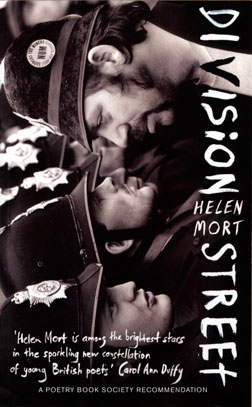
Mort’s first collection has been much anticipated (no-one else has been five-times winner of the Foyle Young Poets Award!) and Chatto have snapped her up but given her a rather ugly cover with its chalk-board script and rotated image of police confronting striking miners in 1984. Michael Symmons Roberts identifies the bedrock of the book as “the north of England” and the semiology of Division Street means the reader anticipates something more politically engaged than the poems deliver: this is not Heaney’s North, a bit more North of Boston. The north is often setting if not subject, but it is a place almost too recognisable where a girl learns “the name / for artificial hills, the bridge / where a man was felled by bricks / in the strike” (‘Twenty-Two Words for Snow’). She might learn to dance, but sniggers at the teacher’s pretentious “parr-durr-shat” (‘Miss Heath’). A man grows old “in the same bungalow for thirty years / and dreams of digging his way out” (‘Fur’). A stage comedian gets a more lively balladic treatment which suggests a more resilient culture amongst the “empty works” and “braziers / that vanished thirty years ago” but the juke box still dates from 1971(‘Stainless Steven’).

division_street_cover

The risk is regional cliché here and I’m not sure this is really Mort’s true subject. The miners’ strike is dealt with via a re-enactment of the battle of Orgreave by conceptual artist, Jeremy Deller, in 2001. Mort’s desire to write about it is important but the sequence of poems is more an exploration of good old class guilt as the narrator leaves the “Calow WMC” to study in Cambridge, a place where she “cannot learn the tune”. The resonating image is of a different “picket line/ . . . crossed” into a “gilded College gate, / a better supermarket” (‘Scab’). This is why Mort’s epigraph is from Stevenson’s doppelganger novel about the “profound duplicity” of life, but both writers are less concerned with political divisions than personal. Much of Division Street is given over to explorations of the self’s development. The finely-tuned sequence, ‘North of Everywhere’, treats location as psychological landscape where the heart can be let “go on ahead of me”, where “silences become the better part of us”. Such questing is transmuted to a mother gazing at a group of deer, “on pound-coin-coloured hooves”. They are something she denies seeing, though the daughter also finds them, “closer / than before [. . .] their eyes, like hers” (‘Deer’). There is a recurring sense that “doors to other worlds exist” (‘Lowedges’). However much a narrator likens herself to her dogs, she is different:

one night I’ll set off past the meadow, down

behind the beck, beyond the blunt profile of Silver Howe

and nobody will call me back.

‘The Dogs’

Mort’s love of landscape is profound and, like Wordsworth, her hills and skies remain a locus, as well as image of, the process of self-exploration. She boldly plays on her own name in ‘The French for Death’, fantasising of a “girl / who takes the worst route home, pauses // at the mouths of alleyways, or kisses / strangers”. But this transgressive trouble-maker is not so prominent elsewhere where a more compromised, tentative identity emerges. ‘The Girl Next Door’ becomes a haunting double who seems to co-opt the narrator’s weakening identity. ‘The Year of the Ostrich’ wittily suggests a new astrological sign for those of us with “unlikely grace, / who hide our heads, or bear the weight / of wings that will not lift us”. Mort is always good at animals and while jogging she sees a fox, supple, slinking, sly, always about to vanish: “And what she sees she cannot tell, / but what she knows of distances, / and doesn’t say, I know as well” (‘Fox Miles’).

We find and define ourselves against others and Mort does this through romantic love, mostly its loss. “I turned to ask you something and you’d gone” (‘Fagan’s’) is a recurring sentiment. The title poem itself refers to the place where “You brought me [. . .] to break it off”, though in this case it is the other whose “head-down walk” we see, passing pubs in whose windows can be seen “nothing but your own reflection”. Pessimistically, ‘End’ suggests that “Death is // the shape / beneath romance” but the hauntings a writer sustains through such poems as these, though they do not revive the love, at least reinvigorate the lover and persuade that such deaths may only be “le petit mort”.

mort_helen

Myra Schneider’s ‘Circling the Core’ (2008)

Myra Schneider is an old friend from the North London circuit, a tireless worker for poetry and a poet of significance who has also proselytised for the therapeutic impact of creativity in relation to both physical and mental illness. She has a new book out and I saw her read from it recently. I have yet to commit my thoughts on her new work to the keyboard and screen but I thought – by way of an appetiser – this might be an opportune moment to post the review I wrote of her previous collection Circling the Core (Enitharmon Press, 2008)

Also, here is a recent interview with Myra conducted by Maitreyabandhu at Poetry East:

https://www.youtube.com/watch?v=5WfI7Bx_7Uo

The interview begins with Maitreyabandhu asking why she selected ‘The Windhover’ by Gerard Manley Hopkins and ‘Morning Song’ by Sylvia Plath, as two poems which had influenced her. He then asks about her life and the different areas of her poetry and writing.

Reading Myra Schneider’s Circling the Core, there are many things that remind me of Edward Thomas’ review of Frost’s North of Boston (1914). Thomas praises his American friend’s poems because they lack “the exaggeration of rhetoric”. He applauds his language as “free from the poetical words and forms” that harmed so much poetry in the early twentieth century. Frost avoids both “old fashioned pomp and sweetness” as well as its opposite – “discord and fuss”. The revolution that Thomas and Frost were pursuing is the recurring one of poetry’s return to common speech and this has long been one of the chief pleasures of Schneider’s work too. Since the mid-1980s, she also has pursued a voice that refuses to flaunt gratuitous formal innovation, nor does she play fast and loose with syntax, lexicon or typography. It might appear that Schneider prioritises a truth to things more than words and her conclusion is an admirable and observant humility before the world, its creatures, domestic objects, weather and places – though her attentiveness to detail is not the whole story.

images

Schneider herself also refers directly to Thomas’ example in taking the epigraph to this collection from his poem ‘The Glory’. Thomas hopes to find this glory in the “beauty of the morning”, the natural world, the acutely observed details of the “pale dust pitted with small dark drops”. Yet what draws him remains elusive and he concludes that he may have to remain “content with discontent” since he “cannot bite the day to the core”. Schneider’s poems echo many of these concerns but – despite the tentativeness of this collection’s title – she tends to be more optimistic about the search for the “core”. The book opens with a marvellous response to a Barbara Hepworth sculpture which, after tracing the curves and lines of the material reality, worms its way to a centre, a still point, “jewel, kernel, womb, unshielded self, / a promise of continuance. / We lay hands on profound silence.”

In Schneider’s work the kernel usually is that “unshielded self”, the authenticity of lived experience rather than the accumulations that can obscure and denature it. In ‘The Mnajdra Temples’, the narrator is interested in and even impressed by information associated with these Maltese Neolithic ruins, but it is “what the humans who worshipped here thought” that is the real goal: “how the human brain began making / complex plans, conceiving deities, temples”. Elsewhere, a viaduct cannot be encompassed by its dictionary definitions; it is always more than its “bare facts” (‘Images’). Similarly, personal identity is more than the sum of its material parts: a bowl created by the poet’s mother-in-law “goes deep but not deep enough to hold everything / she lost” (‘Larder’) and on a return visit to childhood landscapes in search of self, it is ironically “when I leave / the present peels away” (‘Going Back’). A poem like ‘Goulash’ is so good just because it manages to capture this core of subjectivity, the thinking mind in process as it moves from the details of cookery, to love, to landscape, to a contemplation of “darkness” which lies ambivalently at the heart of things, triumphantly ending with a celebration of friendship which is not overwhelmed by placing it beside the longer historical perspectives of the jewellery of the Sutton Hoo burial ship.

Schneider’s interest in psychological truth leads inevitably to the use of dream materials as the starting point for a number of these poems. ‘Naming It’ opens dramatically with collapsing buildings but, even after the dust settles, the “panic is all in the rubble”. The possibility of escape from such chaos is intuited when the narrator discovers a blue pool and realises it is “crucial to capture the exact word for its colour”. As well as suggesting the essential nature of her work as a whole, this also confirms that Schneider’s vision encompasses a good deal of darkness. Though there are occasions when grief, pain, injustice are countered by little more than wishful thinking, as in ‘Journey’ with its repeated “What I want . . .”, a poem like ‘Nothing’ confronts it head on in the “vacant cradle /  of delicate bones that was once a bird’s head”, an object that seems to be demanding to know how to “face nothing”. Something of a reply to this is given at the end of the sequence ‘Larder’, with its finely judged observation, defining life itself as “a series of small makings / to stack up in larders against death”.

It is less of a leap than one might imagine from this to Schneider’s re-working of the myth of Orpheus, an ambitious poem that stands up impressively alongside Carol Ann Duffy’s ‘Eurydice’. In ‘Eurydice’s Version’, Orpheus is a stunningly beautiful but selfish, spoilt man-child, beside whom his wife is initially no more than an “adjunct”. His music is presented as a compulsion she would like to resist. Her association with the shepherd, Aristaeus, is reinterpreted as a relationship in which her “actual” self is recognised in contrast to Orpheus’ chauvinistic, insistent projection of “bedmaker, breadmaker, whore / babymaker, milk-breast, childminder, nurse, / comforter, slave, mystic maiden, high goddess, // muse”. But Aristaeus’ interest in her true “core” frightens Eurydice away, allowing the snake bite that kills her to be regarded as “punishment” for turning her back on such a moment of possible honesty. Orpheus’s turning is likewise re-interpreted as a relief for Eurydice, who prefers the darkness of the underworld where, she says, “I’ve learnt to listen, to think, / for myself and when I speak I am heard” – in other words, where she lives with the virtue of truth to her inner self which this collection explores.

At one point, Eurydice wishes Nature might resist Orpheus’ melodic pushiness too and Schneider is admirably unapologetic about the importance of the natural world in the process of salving some of the harm she encounters. Those who have read her poetry in the past will recognise features of locality such as Pymmes Brook, the Piccadilly line viaduct to Arnos Grove, Arnos Park itself in north London and Schneider’s south-facing garden overlooking it. She has worked this landscape into almost mythic significance, its details able to reflect and evoke the inner experiences with which she is really concerned as in ‘Seeing the Kingfisher’, the ‘Drought’ sequence and ‘Skywards’. A little more exotically, ‘The Oyster Shell’ explores again this poet’s characteristic movement inward, a movement for which “prayer” offers no help but which, pursued with the kind of vigorous honesty that fills this book, can reach an almost Blakean intensity:

I retreat to the cradle of this shell,

creep in, unclothe my self, tread

on milkwhite and mother-of-pearl,

follow faint pools of sandgold

to the sullen indigo sea lying below

the hinge as its core. Here, I let go.

Myra’s new collection is called The Door to Colour:

http://www.enitharmon.co.uk/pages/store/products/ec_view.asp?PID=645

Schneider_Colour_PRF1 (2)