I am half way through the process of judging this year’s Segora Poetry Competition. I’ve been lucky enough to judge several such competitions in recent years and in 2015 I published a version of what follows on my blog as a compilation of my thoughts on the judging process. I’m tweaking and re-blogging it here in response to my experience of judging this new competition in 2020. As I have always found, the initial sifting of so many poems can be a slog, but the latter stages are unfailingly fascinating as the best poems – those that set little hooks in you from first reading – gradually rise to the top, their internal coherence emerging, alongside their skills with language, tone and form. So what follows is inevitably a personal take on the business – becoming more so, perhaps, as the process unfolds – but I hope it may cast some light on it for those (of us) tempted to spend hard-earned cash on entering the numerous competitions now running. Follow this link to see more upcoming competitions.
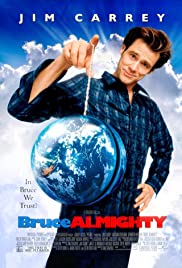 Some films stick in the mind for reasons beyond the cinematic, don’t they? In the 2003 comedy Bruce Almighty, Jim Carey plays the character of God and, along with more obviously useful powers, he has to respond to the prayers of the world. But people are always praying! He rapidly approaches a kind of madness as voices swim around him, clamouring for attention. He takes to reading the prayers in the form of e-mails. He tries to answer them individually but is receiving them faster than he can possibly respond. He decides to set his e-mail account to automatically answer “yes” to all, assuming that this will make everybody happy. Of course, it does not.
Now – a poetry competition judge comparing himself to a character playing God lays him/herself open to some obvious criticism – but I have indeed found the initial phases of judging poetry competitions rather like Jim Carey’s experience. There are so many and such a variety of voices clamouring to be heard and every one of them is heart-felt, recording significant moments in people’s lives. There is a similar sense of responsibility too – the raw nature of much of the writing submitted is impossible to deny. There are moments when I’d like to set my response mechanism to say ‘yes’ to everybody, but the judge’s task has to be how to distinguish submissions as poetry.
What does that mean? The numbers involved are always a bit daunting. Many hundreds of poems have been submitted. Perhaps only 10% of these will demand a further reading after the brutal first sifting. Poems face an early, red stoplight from most judges because the basic poetic elements are not competently done. Here are some of the obvious failings:
- Competitions are full of pieces where a particular verse form or rhyme pattern tyrannises the sentiment and/or sense. The writer’s submission to this tyranny becomes clear quickly through the contortions imposed on the language to achieve a rhyme.
- The writer’s choice of language can be devastating to the life of the poem. It just isn’t right to opt for forms of language or abbreviations that died out early in the nineteenth century. Thankfully, this problem seems to be fading as more and more people actually read contemporary poetry books.
- Choice of diction can also derail an entry if it is doggedly abstract. Sure, there remains much debate about whether it is the narrow English tradition that insists on things rather than ideas – but poems about Fear, Ignorance, Poverty, Eternity and Love which refuse to dip a toe into anything resembling a real life situation are going to find progress hard.
- A fourth error is using language without being fully conscious of its likely resonance with a reader. A poem using the verb ‘gaslight’ without knowing its current slang meaning or another called ‘Mother’s Pride’ which seems unaware of the loaf of bread, well, they are going to have unanticipated clutter to climb over in any reader’s mind. Louis MacNeice wanted the poet not to be an ivory tower type, but rather “able-bodied, fond of talking, a reader of the newspapers, capable of pity and laughter, informed in economics . . . actively interested in politics”. All a bit Boys Own perhaps, but if this means the poet stays bang up to date with the way words live then he’s right.
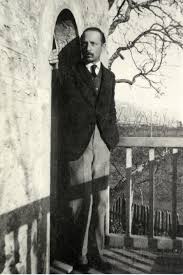
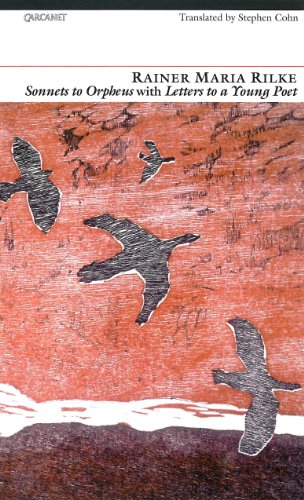
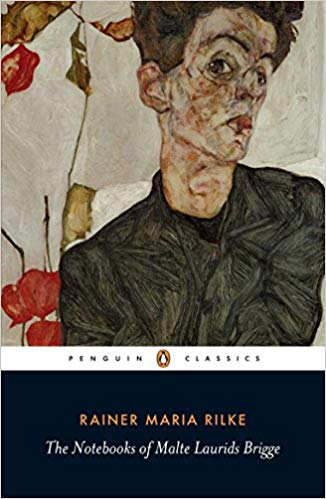
If you are still thinking of submitting to a competition, it’s worth recalling Wordsworth’s formulation – familiar though it will feel to most – that poetry is built from “emotion recollected in tranquillity”. Poems forged in the heat of the moment (and not revised or reviewed) are seldom without their flaws. And this is the kind of distinction Rainer Maria Rilke makes when he denies poetry is composed of feelings. Its constituents (he says) are rather “experiences” which he clarifies as “memories” though even with these, we “must be able to forget them when they are many and one must have the immense patience to wait until they come again . . . Only when they have turned to blood within us, to glance and gesture, nameless and no longer distinguished from ourselves – only then can it happen that in a most rare hour the first word of a poem arises in their midst and goes forth from them”. On the other hand, such recollection can sometimes create an intellectualised distance that may do harm to a good poem. Who said writing a poem was easy?

Stephen Spender argued that a poet should try to acquire skill and virtuosity through the study and interpretation of other poetic works in the way Mozart and Beethoven did in playing the music of their predecessors. Spender suggests translating poetry is the best possible exercise in interpretation. But the really important lessons (Spender says) are those of the eye, the ear, the athletic/poetic muscles. A poet can go a long way without a developed heart, but, he says, can get nowhere at all without these skills. The poet must ask continually of his lines: ‘Do they make the reader see, or hear, or feel, this experience which I am trying to re-create?’
Reaching the final stages, the judge will be focusing more on positives and hence more precisely on the sense, the story, the thought and feeling of a poem. Personally, I like poems that focus on small things and, in effect, make arguments for the ways in which they communicate the bigger issues that concern us all. I’m with Thomas Hardy in believing that “he used to notice such things” is one of the greatest of compliments. Edward Thomas’ poem about Spring, ‘But these things also’, likewise echoes this focus on what most people tend to overlook:
The shell of a little snail bleached
In the grass; chip of flint, and mite
Of chalk; and the small birds’ dung
In splashes of purest white . . .
 Perhaps one explanation of why the question ‘what is poetry?’ is so difficult to answer is because it is, to a large extent, an art of the negative, of avoidance. The Daodejing says what is rigid and inflexible is a companion of death; what is flexible is a companion of life. I’d guess there would be general agreement that poetry is an art on the side of life. So poetry must eschew the inflexible; we must avoid the posture. And that’s very hard. In judging a competition, one comes across the Wordsworth-posture, the Ginsberg-posture, alongside those of Hughes, Plath, Duffy, Oswald . . . But we also posture like mad in ‘real life’. We may take up the pose of grief, melancholy, love, liberalism, environmentalism . . . For me, the mark of the absence of posturing is an instability, an openness, an awareness of time (which posture tries to deny) and this is something I look for in a good poem. If a poem strikes an attitude my attention diminishes (even if the attitude is one that wants to show a rejection of attitudinising through the hall of mirrors of ironic distancing). When the poem unearths a pulsing, shifting, live relationship between the self and the other, then I am captivated, recognising something that is both commonly human and uniquely personal.

But having said all this, I’d assure potential competition entrants that anything resembling a rule is there to be broken. Philip Pullman has said, “We don’t need a list of rights and wrongs, tables of dos and don’ts: we need books, time, and silence. Thou shalt not is soon forgotten, but Once upon a time lasts forever.” So any poem in any form can work its magic. It will haunt its reader for days; it will make me change the way I think and feel; make me see the world differently. Ultimately, a poem contributes to who the reader is becoming. That is an exciting prospect for the writer. It is an even more exciting one for the judge who settles down to read.
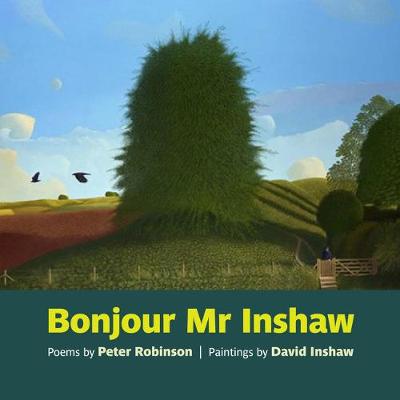
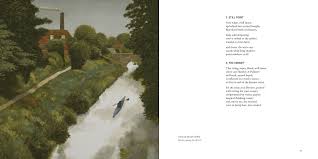




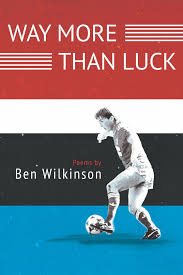 I’m not proud to admit that Way More Than Luck passed me by when it was first published. As you are probably aware, Wilkinson reviews poetry regularly for The Guardian, and he’s very familiar on social media as a poet and critic, a distance runner and a passionate Liverpool football fan. But the book’s cover (Dalglish, I think), its title and some of the publicity persuaded me that the football bit was going to be predominant. It’s certainly an almost unique aspect of the collection, but it turns out the debilitating darkness of psychological depression is an even more significant one. Wilkinson signals this concern via the book’s two epigraphs. One is about the nature of depression
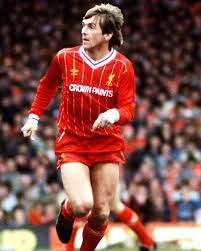 For me, it’s these psychological truths that Wilkinson is so good at conveying. There are other poems later in the book (and perhaps ‘Stag’ is an elusive example) which begin to sketch episodes of a foundering romantic relationship and ‘Building a Brighter, More Secure Future’ is a very effective excursion into witty political satire (a skilfully handled sestina based on the Conservative Party election manifesto, 2015). And there are the football poems. They comprise the central sequence of 14 poems, introduced with a heart-felt Prologue that says what follows is for the ordinary football fans, written out of “a love beyond the smear campaigns, / the media’s hooligans”. A large part of what Wilkinson has in mind here is the shocking response in parts of the media to the Hillsborough tragedy in 1989, when 96 men, women and children died (David Cain’s Forward prize shortlisted book, Truth Street, from Smokestack Books, movingly dealt with this event and the media and policing responses and
  But the poems also show how difficult it is to escape the miasma of cliché that seems to engulf football itself. Anfield is filled with a “fabled buzz”, then “the place erupt[s]”. Barnes unleashes a “a sweeping, goal-bound ball”, and a particular game offers one “last-ditch twist”. I’m reminded of Louis MacNeice’s observation (now sadly compromised in various ways, but the spirit of it remains valid, I think) that he wanted a poet not to be “too esoteric. I would have a poet able-bodied [sic], fond of talking, a reader of the newspapers, capable of pity and laughter, informed in economics, appreciative of women [sic], involved in personal relationships, actively interested in politics, susceptible to physical impressions’. There are many more of these poets around these days and to bring (even) football into the purview of poetry can hardly be a bad thing. Yet it is not an easy one and there may be some risks in deciding to headline the attempt. Ian Duhig’s blurb note to Way More Than Luck has gingerly to negotiate this issue: “The beautiful game inspires some beautiful poems in Ben Wilkinson’s terrific debut collection … but there’s far more than football to focus on here”. Yes, indeed.
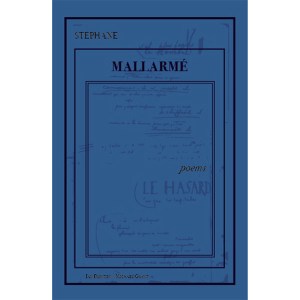 I am very grateful to Ian Brinton’s and Michael Grant’s recent translation of a selected Mallarmé (Muscaliet, 2019) for sending me back to a poet who has always proved problematic for me. My natural inclination draws me more to Louis MacNeice’s sense of the “drunkenness of things being various” (‘Snow’) – his emphasis on poetry’s engagement with “things” – and his desire to communicate pretty directly with his fellow wo/man, than with what Elizabeth McCombie bluntly calls “the exceptional difficulty” of Mallarmé’s work. I appreciate that such a dichotomy seems to shove the French poet into an ivory tower (albeit of glittering and sensuous language) while casting the Irish one as too narrowly engagé, but I’m also aware that Sartre praised Mallarmé as a “committed” writer and that, despite some evident remoteness from the ‘tribe’, the French poet’s political views were both radical and democratic.
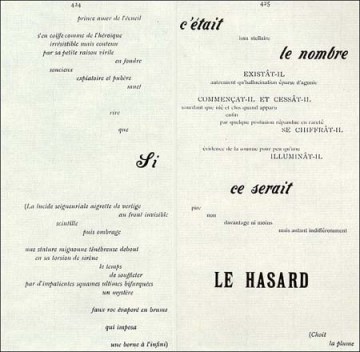
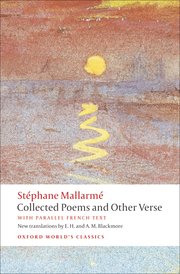 So, if we must give up on such ‘understanding’, what was Mallarmé – writing in the 1880-90s – doing? Something recognisably very modern, it turns out. Contra Wordsworth (and MacNeice, I guess), Mallarmé and his Symbolist peers, held ordinary language in suspicious contempt as too ‘journalistic’, too wedded to a world of facts. Poetry was to be more a communication, or evocation, of emotion, of a detachment from the (merely) everyday and a recovery of the mystery of existence which rote and routine has served to bury. Such a role demanded linguistic innovation as suggested in ‘The Tomb of Edgar Poe’ in which the American writer is praised for giving “purer meaning to the words of the tribe” (tr. Brinton/Grant). Writing about Edouard Manet’s work, Mallarmé saw the need to “loose the restraint of education” which – in linguistic terms – would mean freeing language from its contingent relations to the facticity of things (and the tedium and ennui that results from our long confinement to them) and hence moving language nearer to what he called the “Idea” and the paradoxical term Nothingness (as Brinton/Grant translate “le Neant”).
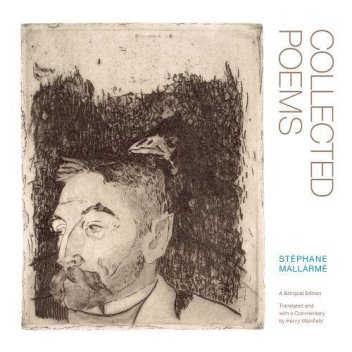 For these reasons, Mallarmé “cede[s] the initiative to words” (‘Crise de Vers’), to language’s material aspects as much as to its referential functions. Carrying over the material aspects of his French verse into English is then, to say the least, difficult. I’m inclined to agree with Weinfield (Introduction to Stephane Mallarmé Collected Poems (Uni. Of California Press, 1994) that it is “essential to work in rhyme and metre, regardless of the semantic accommodations and technical problems this entail[s]. If we take rhyme from Mallarmé, we take away the poetry”. But is that even possible? The accommodations and problems that arise are huge! Mallarmé placed the sonnet, ‘Salut’, at the start of his Poésies as a toast, salutation and mission statement. Weinfield gives the sestet as follows: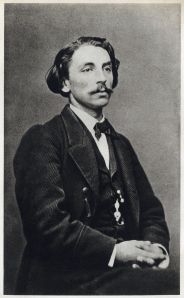



 I
I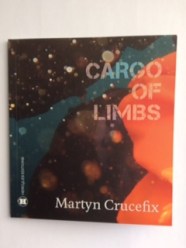 In lieu of a new blog post, here is a link to the Hercules Editions webpage on which I have formulated a few thoughts about the current lockdown, photography and the (forgotten?) refugee crisis in the Mediterranean. It is a piece in part related to the Hercules publication of my longer poem,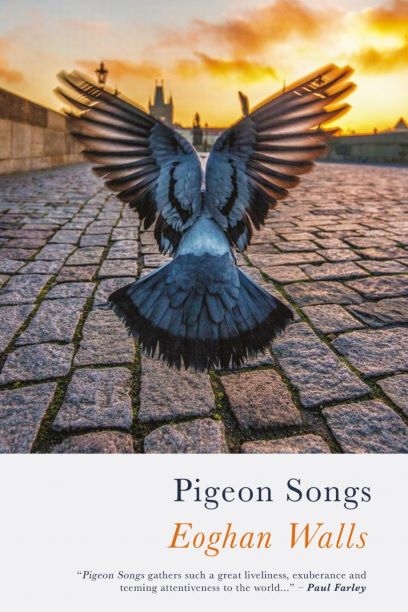
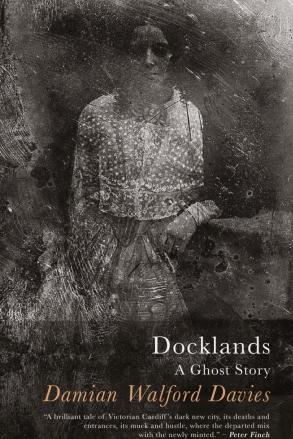 This is Walford Davies’ fourth book from Seren and it is an ambitious project, combining narrative and lyric form (every poem is 16 lines long, in unrhymed couplets, most in four beat lines). It’s also a dramatic monologue, in effect, as the speaker is a thoroughly unpleasant, arrogant, but haunted architect engaged in several large urban projects in Cardiff between the years 1890 and 1982. Talk about the male gaze, this man epitomizes it. He and his wife have recently buried a child lost in stillbirth (“they wrapped it in a pall // not bigger than my handkerchief”) and while she mourns the loss, he gets on with his work and frequents bars and prostitutes in Cardiff’s docklands. The sympathetic reader is probably going to try to read this man’s cruel and dismissive treatment of his wife (and his exploitative relationships with other women) as his own rather twisted way of dealing with grief. But it’s hard to maintain that view, as Walford Davies is often shockingly good at catching his loathsome attitudes, especially towards women: “This quarter grows on me. / In shabby rooms in Stuart Street // my new friend swears // she’ll tackle anything for oranges”.
 Walford Davies, in an end note, talks of the ambiguity of the female figures – wife, prostitutes, dead girl – who do tend to float without clear identity, disembodied, through the text. It adds something to the ghost-like quality of the book, but the loss is any more powerful evocation of them. Also, the choice of brief lyrics to develop what could well have been a novel, gives the reader some powerful moments but few prolonged engagements with any of the characters. And the nature of the central male figure is problematic because of his downright unpleasantness (though, I suppose, Browning managed it in ‘My Last Duchess’) and in 2020 there will be plenty of readers who find such a portrayal an absolute bar to reading. I don’t think Walford Davies ironises and critiques his male figure enough, or clearly enough.
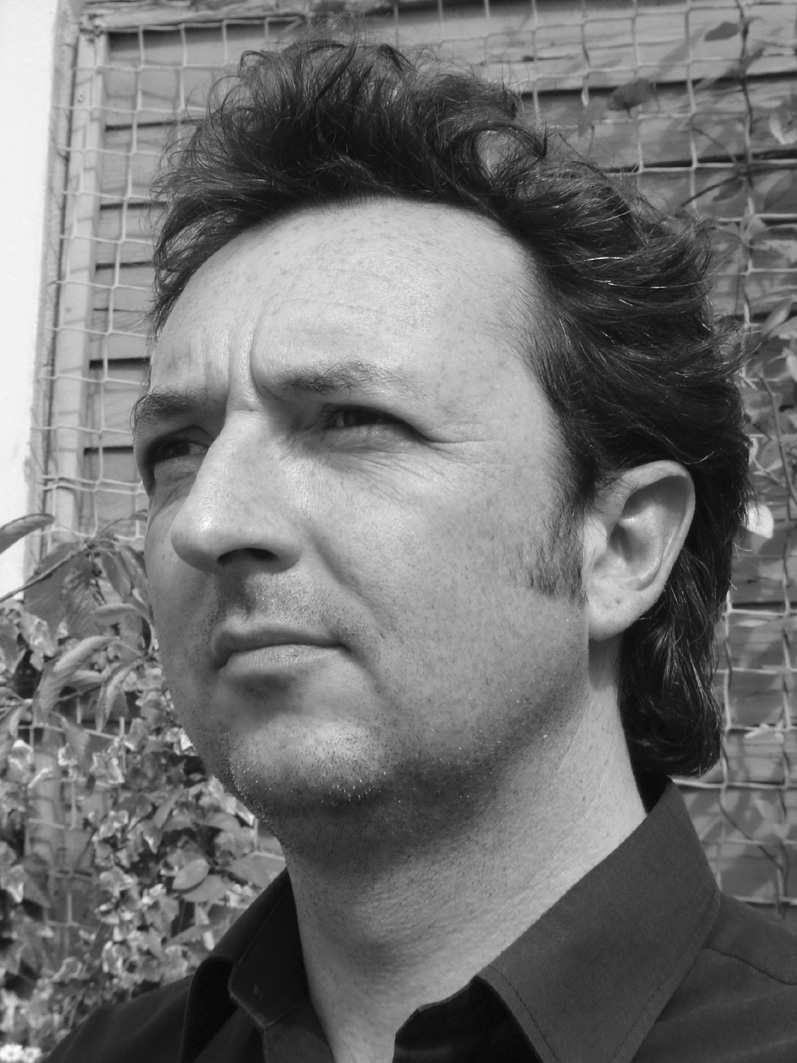
 Martyn Crucefix