More than 10 years of blogging on poetry and translation – over 39,000 views in 2024 – now captured and preserved at the UK Web Archive: 'one of the top 10 poetry blogs' (Rogue Strands)
I’ve always enjoyed using this blog as my own experimental play area, a sand pit in which I can think through ideas about poetry, teaching and translation. In the last couple of years, a lot of this thinking aloud has been done through reviews of new poetry collections. And I have always wanted to give myself (and the book) enough space (usually over 1000 words). But several recent conversations with other writers about the very few poetry books that get critical notice these days has persuaded me there is also a place here for shorter reviews – quick drawing in the sense of a rapid sketch of a book, a shooting from the hip. Here’s my first try at this sort of thing.
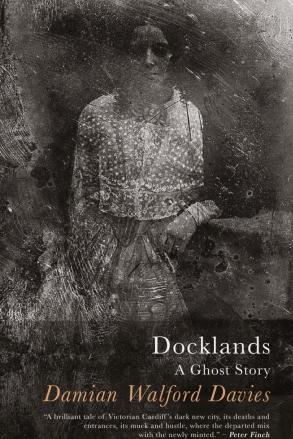
Damian Walford Davies, Docklands: A Ghost Story (Seren Books, 2019).
This is Walford Davies’ fourth book from Seren and it is an ambitious project, combining narrative and lyric form (every poem is 16 lines long, in unrhymed couplets, most in four beat lines). It’s also a dramatic monologue, in effect, as the speaker is a thoroughly unpleasant, arrogant, but haunted architect engaged in several large urban projects in Cardiff between the years 1890 and 1982. Talk about the male gaze, this man epitomizes it. He and his wife have recently buried a child lost in stillbirth (“they wrapped it in a pall // not bigger than my handkerchief”) and while she mourns the loss, he gets on with his work and frequents bars and prostitutes in Cardiff’s docklands. The sympathetic reader is probably going to try to read this man’s cruel and dismissive treatment of his wife (and his exploitative relationships with other women) as his own rather twisted way of dealing with grief. But it’s hard to maintain that view, as Walford Davies is often shockingly good at catching his loathsome attitudes, especially towards women: “This quarter grows on me. / In shabby rooms in Stuart Street // my new friend swears // she’ll tackle anything for oranges”.
The ghost story element arises when the architect starts to see a young girl on the streets of Cardiff. She is initially a haunting – but probably real – presence (perhaps somehow also related to the lost child?) but it eventually emerges that she is “Dead Em Foley”, an abused girl, murdered by her father a few years before. This narrative device yields up brief thrills for the reader, inexplicable sightings, eventually moments of dialogue between the two (it’s not clear if he tries to take the relationship any further). But through the five sections of the book, the architect’s wife seems to surface from her grief, returning to polite society (“Ah, Eleanor! So good to see you // out”) and there are signs of a warming of the marital relationship too. These indications seem to parallel the disappearance of Em Foley’s ghost too, though the architect memorialises her in a statue for a municipal fountain. The man sounds pleased that the local people “came out / to recognise a dead girl risen” when the statue is unveiled though it’s not clear if Walford Davies intends this as a more profound recognition of those marginalised by bourgeois Cardiff or whether it is a more personal and erotic tribute to the girl by the architect.
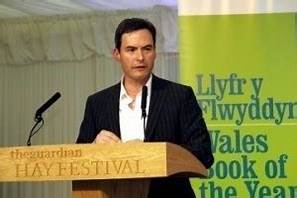
Walford Davies, in an end note, talks of the ambiguity of the female figures – wife, prostitutes, dead girl – who do tend to float without clear identity, disembodied, through the text. It adds something to the ghost-like quality of the book, but the loss is any more powerful evocation of them. Also, the choice of brief lyrics to develop what could well have been a novel, gives the reader some powerful moments but few prolonged engagements with any of the characters. And the nature of the central male figure is problematic because of his downright unpleasantness (though, I suppose, Browning managed it in ‘My Last Duchess’) and in 2020 there will be plenty of readers who find such a portrayal an absolute bar to reading. I don’t think Walford Davies ironises and critiques his male figure enough, or clearly enough.
Rilke in Paris, Rainer Maria Rilke & Maurice Betz, tr. Will Stone (French original 1941; Pushkin Press, 2019).
The argument of Maurice Betz’s memoir on Rilke’s various residencies in Paris between 1902 and 1914 is that the young poet’s experience of the French capital is what turned him into a great poet. Betz worked closely with Rilke on French translations of his work (particularly his novel The Notebooks of Malte Laurids Brigge (1910)). Will Stone’s excellent translation of Betz’s 1941 book, Rilke a Paris, elegantly encompasses its wide range of tones from biographical precision, to gossipy excitement and critical analysis. The book particularly focuses on Rilke’s struggle over a period of eight years to complete the novel which is autobiographical in so many ways, as Betz puts it “in effect a transcription of his own private journal or of certain letters”.
Rilke first arrived in Paris from Worpswede in northern Germany, a community of artists where he had met and married Clara Westhoff. But never one to truly reconcile himself either to community or intimacy, he had already left his wife to travel to Paris. Yet the anonymity, bustling energy and inequalities of the French capital appalled him. In letters to his wife and many others, it became clear that, as Stone’s Introduction argues, Paris had “unceremoniously torn Rilke out of his safe, somewhat fey nineteenth-century draped musings”. In ways reminiscent of Keats’ observations about feeling himself extinguished on entering a room full of people, Rilke would later recall how the city’s “grandeur, its near infinity” would annihilate his own sense of himself. Living at No.11, Rue Touillier, these initial impressions form the opening pages of The Notebooks.
But there were also more positive Parisian experiences, particularly in his meetings with Rodin who he was soon addressing as his “most revered master”. Famously, Rodin advised the young poet, “You must work. You must have patience. Look neither right nor left. Lead your whole life in this cycle and look for nothing beyond this life”. In terms of his patience and willingness to play such a long game, not only with his novel but also with the slow completion of Duino Elegies (1922), Rilke clearly took on this advice. Interestingly, Betz characterises Rilke’s methods of working on the novel, creating letters, notes, journal pages over a number of years, as “like sketches, studies of hands or torsos which the sculptor uses to prefigure a group work”.
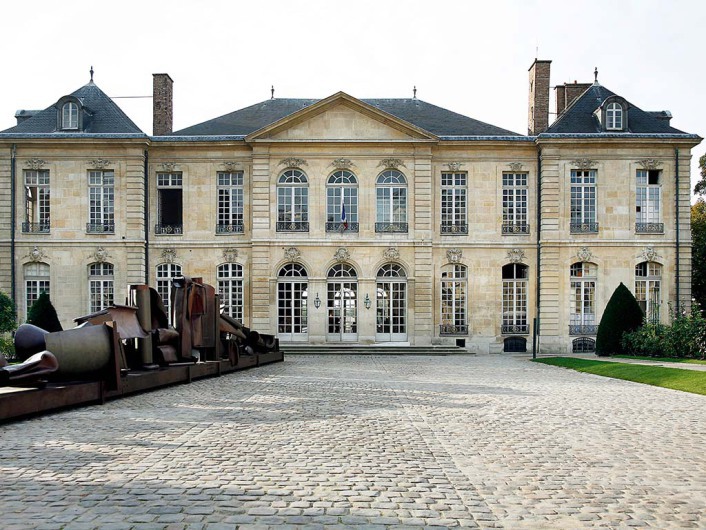
Rilke was even employed briefly by Rodin as “a sort of private secretary”. Betz suggests Rilke simply offered to help out for a couple of hours a day with the famous sculptor’s correspondence. But this quickly expanded to fill the whole day and Rilke was soon confessing to Karl von der Heydt that “I must get back to a time for myself where I can be alone with my experience”. A break was inevitable though in later visits to Paris the two artists patched up any quarrel. In terms of his location during this period, Rilke had moved on to the Hotel Biron at 77 Rue de Varenne on the recommendation of Clara. Rilke in turn suggested it as a suitable studio base for Rodin who also settled there and over a number of years gradually took over more and more of the rooms. It is this building that, in 1919, was converted to the now much-visited Musee Rodin.
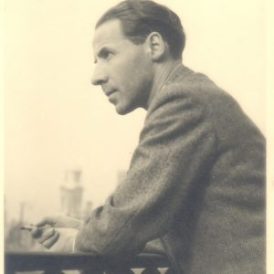
Maurice Betz
Betz suggests that the traumatic impact of Paris was the making of Rilke as an artist. Between 1899 and 1903, Rilke had been working on The Book of Hours, representing a “religious and mystical phase”. In contrast, Paris presented the poet with an often brutal but also more “human landscape”. He also discovered this was reflected in the French capital’s painters and poets. Baudelaire in particular was important. In personal letters (as well as in his finished novel) Rilke identifies the poem ‘Une Charogne’ (‘A Carcass’) as critical in “the whole development of ‘objective’ language, such as we now think to see in the works of Cezanne”. Baudelaire’s portrayal of a rotting body seems to have taught Rilke that “the creator has no more right to turn away from any existence [. . .] if he refuses life in a certain object, he loses in one blow a state of grace”.
But it took Rilke a while to arrive at this sort of inclusivity of vision. One of his earliest impressions of the city was that there were invalids, broken human bodies everywhere. “You see them appear at the windows of the Hotel-Dieu in their strange attire, the pale and mournful uniform of the invalid. You suddenly sense that in this vast city there are legions of the sick, armies of the dying, whole populations of the dead”. As Betz points out, this is one of the important observations made by the hero of The Notebooks. It is the “multiform face of death” that Brigge (and Rilke) confronts in Paris. And the irony is not lost on either of them because Paris, of course, at this time was renowned for its social and cultural vitality. Here, Rilke is being forced to make critical distinctions which he then worked on for the rest of his life: “Vital impulse, is that life then? No. Life is calm, immense, elemental. The craving to live is haste, pursuit. There is an impatience to possess life in its entirety, straight away. Paris is bloated with this desire and that’s why it is so close to death”. Years later, near the end of the fifth of the Duino Elegies, Rilke expresses something very similar (tr. Crucefix):
Squares, oh, the squares of that infinite showplace –
Paris – where Madame Lamort, the milliner,
twists and winds the unquiet ways of the world,
those endless ribbons from which she makes
these loops and ruches, rosettes and flowers and artificial fruits
all dyed with no eye for truth,
but to daub the cheap winter hats of fate.
Hotel Biron Musée Rodin
But unlike Brigge, Rilke escapes Paris. Reflecting later, he feared that people might read his novel as seeming “to suggest that life was impossible”. Betz – who had many discussions with Rilke during the process of translating the novel – reports that the poet, accepted that the book contained “bitter reproaches [yet] it is not to life which they are addressed, on the contrary, it is the continual recognition of the following: through lack of strength, through distraction and hereditary blunders we lose practically all the innumerable riches which were destined for us on earth”. Though the Duino Elegies opens with the despairing existential cry (“Who, if I cried out, would hear me among the ranks / of the angels?”), by the seventh poem of the sequence Rilke expresses his affirmative view: “Just being here is glorious!”. In Rilke in Paris, Betz records some of Rilke’s conversations: “Instead of perpetually hesitating between action and renunciation, we fundamentally only ‘have to be there, to exist, that’s all”.
Will Stone
Betz’s admiration for Rilke is palpable throughout this fascinating little book. In its concluding pages, he sums up: “In seeking to express in his own way the world we thought we knew, Rilke helps us to hear more clearly what already belongs to us and permits us access to the most sinuous and iridescent forms, to profound emotive states and to that strange melody of the interior life”. This is marvellously put (and translated). Will Stone also includes a translation of a little know early sequence of prose poems by Rilke, ‘Notes on the Melody of Things’. In it, the poet reflects – through thoughts on theatrical experience and on fine art – on the relationship between background and figures in the foreground. Something of the personal angst and despair of The Notebooks can be heard in section XXXVII where we are told that “All discord and error comes when people seek to find their element in themselves, instead of seeking it behind them, in the light, in landscape at the beginning and in death”. The vastness and reality of what lies behind the solitary figure – and the negotiated relationships between the two – suggests to me that Yves Bonnefoy may well have been thinking of these pieces when he was writing L’Arriere-Pays (1972). Betz is right to conclude Rilke in Paris by praising Rilke as a poet who matured through “solitude and lucid contemplation of the loftiest problems of life”, but also one who never failed in patience or effort to express “in poetic terms the fruit of that inner quest”.
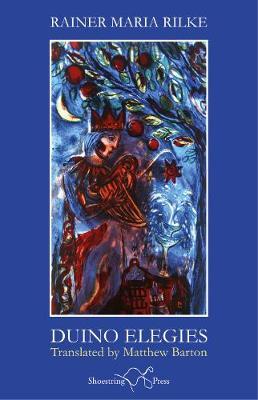
Duino Elegies, Rainer Maria Rilke, tr. Matthew Barton (Shoestring Press, 2019).
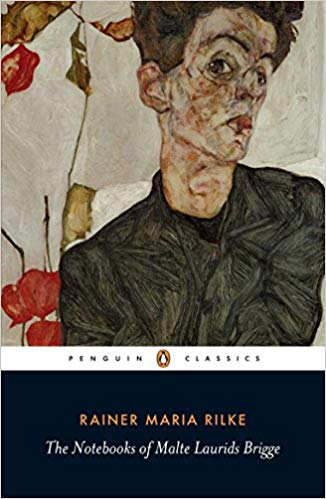
Matthew Barton himself raises the question as to whether anything could “possibly justify yet another English version” of Rilke’s Duino Elegies (1922). As someone who has contributed his own translation of the work (published by Enitharmon Press in 2006), I know the feeling of throwing a pebble into a landslide. But – as Barton also argues – it is at least our own pebble and Rilke’s work both allows and demands further translation and discussion; it is without doubt complex, profound and obscure enough. Perhaps the question for the would-be translator is more about the time and energy spent on such a widely available text when other works by other poets languish untranslated. But for Barton – as I guess it was for me – it is a personal issue and we are assuredly thankful to those who consider the results worthy of publication because there remains a hunger for Rilke’s work.
So Barton has now produced a lively, English version which reads well (one of his aims). Apart from a brief Introduction and a few end notes on translation issues, the poems stand on their own here – there is no parallel German text, for instance. To see the German facing Barton’s text would be interesting for most readers, even without much facility in the source language, because he does make changes to the form of the poems. It’s true Rilke’s original plays pretty fast and loose with formal metre but the changes he rings are significant and Barton has a tendency to flatten out these differences by making firm (modern-looking) stanza breaks where Rilke often continues the flow of his argument. Rilke’s form is significantly much freer in the fifth Elegy, for example. This issue of the flow of the poems – and indeed through the whole sequence of 10 poems – is one of the difficulties in translating the work. It seems to me there is a clear progression across the poems and within each individual piece. To call this an ‘argument’ may seem too logical and abstract, of course, but any translator needs to try to follow it. To declare ‘it’s poetry’ and not try to see why one image or passage follows another is giving up too easily.
To be fair, Barton often does unfold the sequential argument. He’s well aware of the issue as he talks in the Introduction of coming across “knots” in the grain of the work which do not easily yield up there meaning. His solution was “not to translate them literally and hope for the best, but to live with them until I found a way through them that seemed, at least, to resonate with their larger context”. To translation purists this may sound a bit ‘version-y’ and Barton does indeed declare this book a series of “versions”, thanking Don Paterson for his thoughts on translation v versioning in his Orpheus (Faber, 2006). But, to my mind, Barton’s approach here is rather like Paterson’s in his version of Rilke’s Sonnets to Orpheus, in that the results mostly read as translation, but with the English granting itself the occasional liberty to paraphrase, extend or even substitute for the original. For me, a version would depart much further from the original than Barton does; so I’d call these translations because Barton is approaching the original with great respect – there is the sense of a service to the original being provided here and the point is that such a service must (without the need for too much arguing about it) include the re-ordering of syntax, an Englishing of rhythms, an aiming at contemporary accessibility without denaturing the flavour of Rilke’s original distinctiveness.
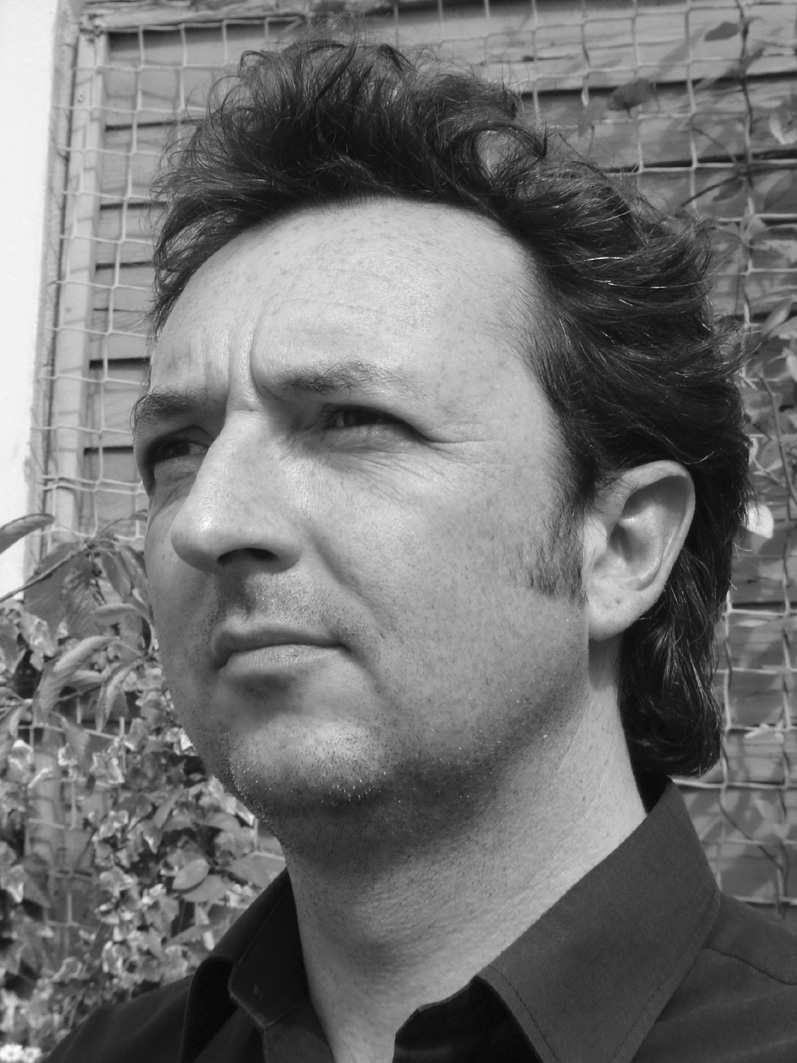
Matthew Barton
And as I’ve said, Barton’s English poems are good. Rilke is really communing with himself through the course of these poems, so he does tends to use the impersonal ‘you’. Barton often converts this to ‘I’ which skews the impact of many lines to the lyric. This fits contemporary taste perhaps – it deflates the rhetorical feel of these poems – but can be risky. In the opening lines of the sequence, Rilke acknowledges that crying out to angels for help in our existential darkness is largely futile (they’d not listen) but also dangerous because if an angel did approach us we’d be fried by the intensity of their existence. The opening paragraph ends abruptly with, “Ein jeder Engel ist schrecklich”. Stephen Mitchell rendered this as “Every angel is terrifying”. Barton has “I dread every angel”. This seems wrong, making a psychological point from an individual perspective when Rilke’s line is more about the different natures of humans and angels (if the latter existed, which they don’t).
The argument at the start of the fourth Elegy also gets a bit garbled here. The whole of this section argues that human self-consciousness divorces us from a primal sense of oneness with life which the natural world (in Rilke’s view) retains (named in the eighth Elegy as “das Offene”, the Open (tr. Mitchell)). Barton seems to read this as suggesting that we are not “in accord with ourselves”. So he loses the distinction between ourselves and lions (at the end of this opening stanza). Barton has the lions walking in “sheer potency while their glory lasts” (my italics). But Rilke’s contrast is with human consciousness of transience against the animal’s absence of that consciousness. Mitchell’s clearer version runs: “And somewhere lions still roam and never know, / in their majestic power, of any weakness” (my italics).
These are small points in some ways but – as I’ve said – I think Rilke is pursuing a close-grained argument in these poems (albeit via poetic utterance rather than rational discourse). Barton is also liable on occasions to shift into an overly contemporary register (Rilke tends not to 1920s speech patterns but rather a Classically influence idiolect of his own). He replaces Rilke’s “wehe” which really is ‘alas’ with phrases like “god help me” or “heaven help us” which again propel the tone towards the personal (a rather English, bourgeois personal). In the ninth Elegy, Rilke is disparaging about the thin gruel of conventional human happiness in the face of death: “dieser voreilige Vorteil eines nahen Verlusts”. Mitchell translates this as “that too-hasty profit snatched from impending loss”. Barton tries a bit too hard with, “[this] is merely / easy credit with a looming payback date”. The same happens in the tenth Elegy, where Rilke is describing contemporary society’s shallow distractions from the fact of death. He describes; “die Kirche begrenzt, ihre fertig gekaufte: / reinlich und zu und enttäuscht wie ein Postamt am Sonntag”. Mitchell again: “bounded by the church with its ready-made consolations: / clean and disenchanted and shut as a post-office on Sunday”. Barton changes, up-dates, Americanises and so loses some of the irony: “the flatpack church, all safe and clean and shut / and dreary as an empty parking lot”.
But Barton’s rendering of Rilke’s satirical portrait of the “City of Hurt” (“der Leid-Stadt”) is enjoyably lively. Another infamously tricky moment is presented in this final poem by its personification of a tribe of people who have a far closer relationship with death and grief than Rilke sees is the case in modern Western culture. The German word “Klage” is used here and needs to work as the name of a young woman, the name of her tribe and her ancestors and her country. The word has to reflect the harshness of the grief felt, while at the same time suggesting a dignity in the powerful emotion. For Rilke, the role of this personification and her whole tribe is a consistently heroic one. But Barton chooses not to translate the word consistently, using “Elegia” for the young woman’s name, then variously “grief”, “woe”, “heartache” and “Lament” elsewhere. These are all individually sufficient to the word, but – as on other occasions in these otherwise admirable translations – there is a risk that in leaning on the freedoms of a ‘version’, the critical linguistic consistencies which are essential aspects of the argument in Rilke’s original, can get a bit lost in translation.
I was recently asked if I had any suitable seasonal poems. I’d forgotten this one recalling my mother-in-law. The occasion – as far as I remember – was when she was singing for her local choral society on Christmas Eve and this was the interval. We were probably drinking mulled wine or something. She was full of the singing and also a dream she’d had. And – see the end of the poem – she seemed to want to rtell everybofu about it. The poem is old – appearing in my first ever book in 1990 – so I can’t vouch for any of the other details. But it has a seasonal feel
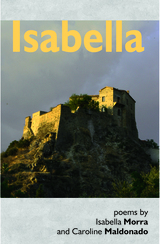
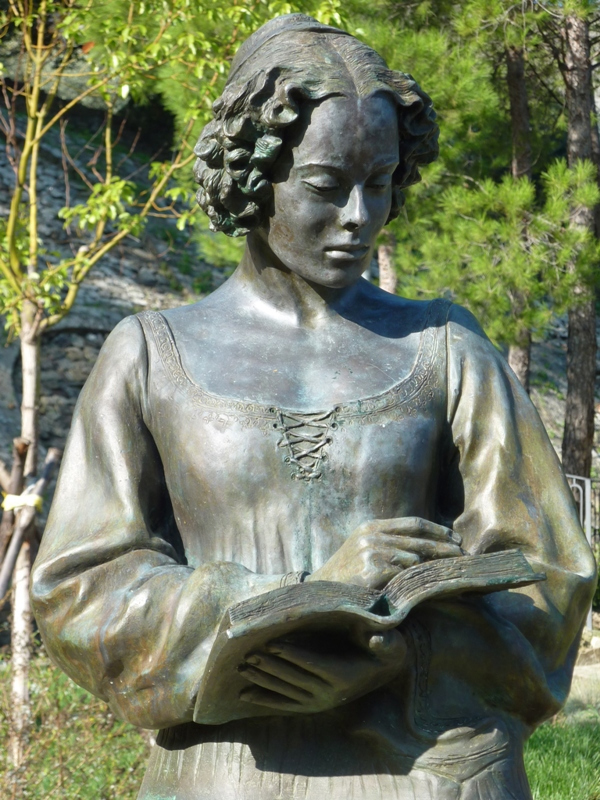
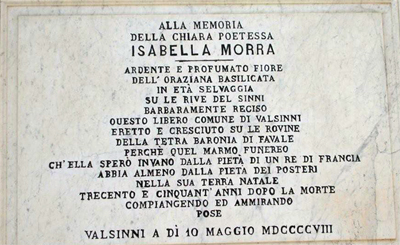
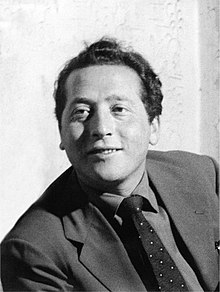
While travelling in the Basilicata region of Southern Italy – in effect, the arch of the ‘foot’ of that country – researching her earlier translations of the little known twentieth century male poet, Rocco Scotellaro (1923-1953), Caroline Maldonado heard of the much earlier, even less known poetry of Isabella Morra. Born around 1520, Morra was one of eight children. Her father, Giovan Michele fled into exile in France when Isabella was about eight years old. A cultured woman – knowledgeable in science, music, literature and the classics – her life prospects were utterly curtailed by her father’s absence and she was left in the care of her brothers.
Her resulting frustrations may be imagined – and astonishingly they are also vividly portrayed in her poems – but her violent death, aged 26, is not clearly understood. There were rumours of an affair between Isabella and a Spanish count and poet, Don Diego Sandoval de Castro, though he was also the husband of a friend of Isabella’s and almost certainly admired by her as much as a writer as a man. But her brothers believed the rumours and seem to have killed her – an honour killing to protect the family name. Maldonado’s book, Isabella, published by Smokestack Books, contains – in parallel text – all of Isabella’s known work, just ten sonnets and three canzoni. The book also includes Maldonado’s own introduction to Morra and 17 original poems by her, inspired by Morra’s work and her “strange, pitiful tale”.
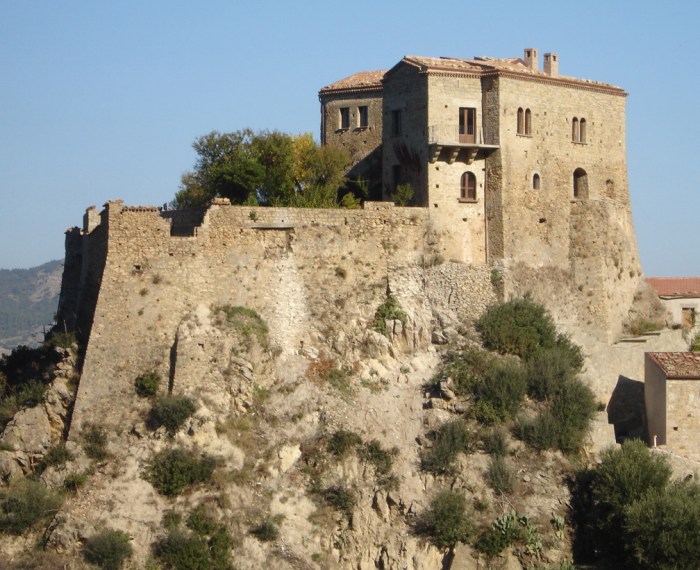
Castello di Isabella Morra
Given the period in which she wrote, it is the raw, personal nature of many of Morra’s poems, their direct style of address, that is so surprising. Maldonado’s decision to make the work as “accessible as possible to a contemporary reader” accentuates this as does her choice not to re-create closely the rhyming of the originals. Morra creates a strong sense of an actual place. It is a place of imprisonment, one she loathes, the village of Favale: “this vile, odious hamlet”. She looks favourably on neither the place nor its people:
Here once again, O hell-like wasted valley,
O Alpine river, shattered heaps of stone,
spirits stripped bare of all goodness or pity,
you will hear the voice of my endless pain.
An unsympathetic ear might sense something brattishly self-regarding here and, given her youth and sheltered upbringing, that would not be surprising. But it is partly this sense of a little girl lost that is so moving. There are several sonnets concerned with her father’s absence. Sonnet III addresses him directly:
I, your daughter Isabella, often look out
hoping for a wooden ship to appear,
Father, that will bring me back news of you.
The first line’s poignant allusion to their relationship reminds the reader that he has been absent from her life for many years. As she gazes out hopefully, she and the dismal locale seem to merge, “so abandoned, so alone!” In sonnet VIII, ominously anticipating the end of her life, she imagines her father’s too-late return: “Tell him how, by my death, I appease / my bitter fortune and the misery of my fate”. It is the capricious – even vengeful – Goddess ‘Fortuna’ that Morra often rails against. In Sonnet I, she is assaulted by “cruel Fortune”. Sonnet VI is a tirade against her mistreatment, initially from a literary standpoint (Morra had hoped to make a name for herself “with the sweet Muses”):
You have promoted every minor talent,
Fortuna, rewarded every sordid heart,
you now compel my own, long past all tears,
to face still more hardship, feel more desolate.
Fortune is also berated for bringing down King Francis I (defeated in battle in 1544), the French monarch who she hoped might protect her father and even bring about a reconciliation between them. Fortuna’s femininity leads Isabella into the awkward position of maligning all women in saying that Fortuna is an “enemy to every noble heart”.
Given such a small body of work and uncertainties about its editing and arrangement, it’s hard to be certain of any sense of development. But over the ten sonnets Maldonado gives us, Morra’s complaints about her lot do seem to modulate into something more resigned and accepting. This is more the tone of Sonnet IX, in which “unholy Death or cruel Fortune” are again the enemies of her “rising hopes” but there are signs of greater resilience: “worn down as I am it will do me no harm”. The final Sonnet also takes up a more distanced perspective:
You know, in those days, how bitterly I wrote,
with what anger and pain I denounced Fortune.
No woman under the moon ever complained
with greater passion than me about her fate.
What has given Morra greater strength is her religious faith: “Neither time nor death, nor some violent, / rapacious hand will snatch away the eternal, / beautiful treasure before the King of Heaven.
Caroline Maldonado
A similar progression shows itself in the three canzoni too. A modern reader is likely to find her early passionate rebelliousness most engaging, the lines in which she says she will use her “rough, unpolished tongue” to rail against her dismal fate. It’s Fortuna again who is identified as the culprit, plaguing her “ever since the days of milk and the cradle”. One of her complaints is that she has never had the opportunity to hear her own beauty praised and the loneliness and frustration of this young woman is perhaps transformed into the passionate address of the second canzoni. It takes its place in that tradition of religious poems which express a spiritual fervour through language that can be hard to distinguish from the words of a more fleshly lover. Morra appeals to Christ: “I will love only you”. She will use her skill in words to “sculpt [his] heavenly body” and she proceeds to describe his forehead, eyes, hair, neck, lips, hands and feet. The canzoni’s traditional five-line envoi on this occasion is a sort of breathless admission of the impossibility of her task, though even here, the passionate feelings are unmistakable:
Canzone, how crazy you are,
to think that you could enter the sea
of God’s beauty with such burning desire!
The third canzoni – as did the final Sonnet – takes up a longer perspective in which the landscape of her actual imprisonment has become a more symbolic location: “To be in these dark / and lonely woods in days gone by / used to burden my heavy body”. It’s impossible not to think of Dante’s much earlier journey through the “dark wood” of despair. Morra also suggests she has emerged from its dangers, walking now “along solitary roads / far from human intrigue”. We sense a new humility; whether metaphorically or not, she presents herself as “dressing my frail body in rough clothes”. How distant in time we’ll never know, but Morra has evidently travelled a long way from those earlier complaints at her unjust treatment. Especially in the third canzoni, her delight in the natural world rings genuinely true and through that natural world she sees God – or rather “God’s great Mother”, Mary, the female figure who has now ousted the hated Fortuna.
Rocco Scotellaro
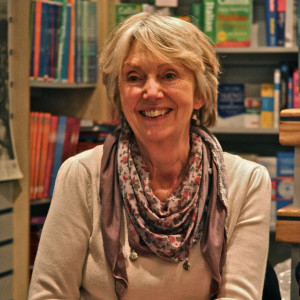
Morra’s own few works end on such a note of resolve and hard-won redemption. That she faced a brutal and unjust murder at the hand of her own family is brought out more clearly by Maldonado’s own poems. She is partly interested in the contrast between the more contemporary (and male) poet, Scotellaro and the fate of Morra. As she has surely done in producing this fascinating little book, Maldonado intends to give Morra a voice in many of these new poems and, in ‘Scirocco’, we hear this imprisoned young woman poignantly repeating, “Who will ever hear me?” Both translator and publisher are to be congratulated in this recovering of an almost lost female voice from Renaissance Italy.
Last week I attended the launch of Tamar Yoseloff’s new collection, published by Seren Books. Tammy and I have known each other for a long while, are both published by Seren and, in her role at Hercules Editions, she has just published my own recent chapbook, Cargo of Limbs. So – in the small world of British poetry – I’m hardly an unconnected critic, but I have the benefit of having followed her work over the years, reviewing her most recent New and Selected, A Formula for Night (2015) here.
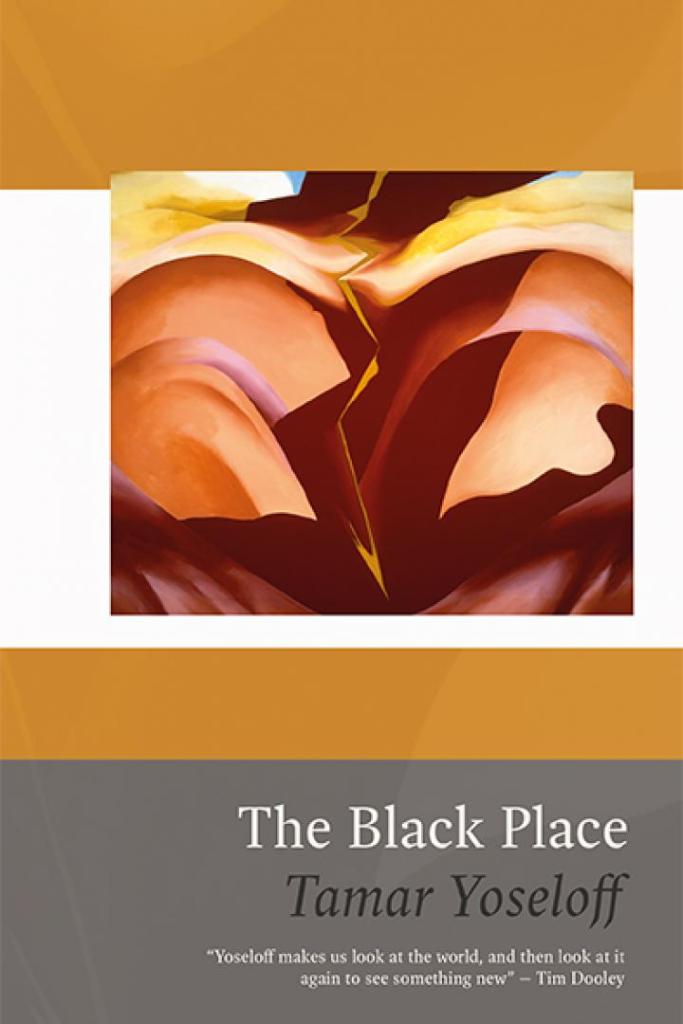
In an earlier blog post, I spoke – in rather tabloid-y terms – of the tension in Yoseloff’s poems between the “sassy and the sepulchral”. In 2007’s Fetch (Salt), there were “racy, blunt narratives” which in their exploration of female freedom, restraint and taboo made for vivid, exciting reading. The other side of her gift inclines to an “apocalyptic darkness”, a preoccupation with time, loss, the inability to hold the moment. In A Formula for Night, the poem ‘Ruin’ invented a form in which a text was gradually shot to pieces as phrases, even letters, were gradually edited out, displaying the very process of ruination. Interestingly, The Black Place develops this technique in 3 ‘redaction’ poems in which most of a text has been blacked out (cut out – see Yoko Ono later), leaving only a few telling words. A note indicates the source text in all three cases was the booklet Understanding Kidney Cancer and the author’s recent experience of illness is an important element in this new collection.
But unlike, for example, Lieke Marsman’s recent The Following Scan Will Last Five Minutes (Pavilion Poetry, 2019 – discussed here), Yoseloff’s book is not dominated by the experience of illness (and one feels this is a deliberated choice). The book opens with ‘The C Word’ which considers the phonetic parts of the word ‘cancer’, as well as its appearance: “looks like carer but isn’t”. But – within its 12 lines – Yoseloff also considers the other C word, “detonated in hate / murmured in love”. The poem is really about how an individual can contain such divergent elements, “sites of birth / and death”. So unanticipated personal experience is here being filtered through the matrix of this writer’s naturally ambivalent gift.
Illness re-emerges explicitly later in the collection, but for much of it there is a business as usual quality and I, for one, am inclined to admire this:
I refuse the confessional splurge,
the Facebook post, the hospital selfie.
I’m just another body, a statistic,
nothing special. Everyone dies –
get over yourself.
So Yoseloff gives us a marvellous send-up of Edward Thomas’ ‘Adlestrop’ in ‘Sheeple’, a central place on the darker side of Yoseloff-country: “The heartland. Lower Slaughter”. There is urbanite humour in ‘Holiday Cottage’ with its “stygian kitchen”, bad weather, boredom and kitsch:
We stare at the knock-off Hay Wain
hung crooked over the hearth
and dream of England: the shire bells,
the box set, the M&S biscuit tin
‘The Wayfarer’ is one of many ekphrastic poems here – this one based on a Bosch painting – but the “sunless land” is patently an England on which “God looked down / and spat”. These are poems written in the last 3 years or so and, inevitably, Brexit impinges, most obviously in ‘Islanders’ (“We put seas between ourselves, / we won’t be rescued”) but the cityscape equally offers little in the way of hope. There is a caricaturing quality to the life lived there: everything “pixilates, disneyfies” (‘Emoji’) and gender relationships seem warped by inequitable power, by self-destructive urges and illness: “I’d super-shrink my dimensions, / wasting is a form of perfection” (‘Walk All Over Me’).
Perhaps ‘Girl’ shows us the figure of a survivor in such a hostile environment, her energy reflecting those female figures in Fetch – “a slip, a trick, a single polka dot” – but the darkness seems thicker now, the lack of lyricism, the impossibility of a happy ending more resolved:
She’s good for nothing because nothing’s
good: sirens drown out violins
and crows swoop to carnage in the street.
As the blurb says, the book boldly eschews the sentimental sop, the capitalist hype, for truths that are hard, not to say brutal. ‘Little Black Dress’ takes both the archetypal ‘girl’ and the author herself from teen years to widowhood in a dizzyingly rapid sonnet-length poem:
drunk and disorderly, dropping off bar stools one
by one, until the time arrives for widow’s weeds
and weeping veils, Ray-Bans darkening the sun.
And it is – unsurprisingly – mortality (the sepulchral) that eventually comes to the fore. A notable absence is the author’s mother, who has often been a powerful presence in previous books. Here she re-appears briefly in ‘Jade’. The stone is reputed to be efficacious in curing ailments of the kidneys and a jade necklace inherited from Yoseloff’s mother leads her to wonder about the inheritance of disease too: “a slow / release in her body, passed down, // down”. Both parents put in a fleeting appearance in the powerful sequence ‘Darklight’, the third part of which opens with the narrator standing in a pool of streetlight, “holding the dark / at bay”. She supposes, rather hopelessly, that “this must be what it’s like to have a god”. Not an option available to her; the dark holds monsters both within and without and not just for the child:
Back then
my parents would sing me to sleep;
now they’re ash and bone. Our lives are brief
like the banks of candles in cathedrals,
each a flame for someone loved;
It’s these thoughts that further the careful structuring of this collection and return it to the experience of a life-threatening illness. ‘Nephritic Sonnet’ is an interrupted or cut off – 13 line – sonnet that takes us to the hospital ward, the I.V. tubes and – as she once said of the city – the poet finds “no poetry in the hospital gown”. Except, of course, that’s exactly what we get. The determination or need to write about even the bleakest of experiences is the defiant light being held up. Yoseloff does not rage; her style is quieter and involves a steady, undeceived gaze and also – in the sequence ‘Cuts’ – the powerful sense that (as quoted above) “I’m just another body, a statistic, / nothing special. Everyone dies”.
It’s this sense of being “nothing special” that enables ‘Cuts’ dispassionately to record very personal experiences of hospital procedures alongside the contemporaneous facts of the Grenfell Tower fire and (another ekphrastic element) a 1960s performance piece by Yoko Ono called ‘Cut Piece’. These elements are ‘leaned’ against each other in a series of 13 dismembered sonnets, each broken up into sections of 6/3/4/1 lines. The fragmentary, diaristic style works well though there are risks in equating personal illness with the catastrophic accident and vital political questions surrounding Grenfell. Ono’s performance piece offers a further example of victimhood, one more chosen and controllable perhaps. What’s impressive is how Yoseloff avoids the magnetic pull of the ego, displaying – if anything – a salutary empathy for others in the midst of her own fears.
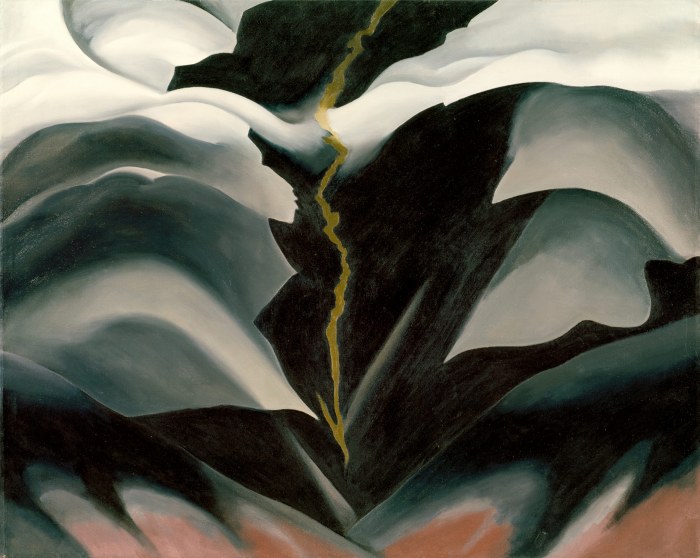
The book is titled after a Georgia O’Keefe picture, reproduced on the cover. O’Keefe’s steady gaze into the darkness created by the jagged relief of the Navajo country is something to which Yoseloff aspires, though it “chills me / just to think it into being”. It is the ultimate reality – a nothing, le néant – though like the ultimate presence of other writers (Yves Bonnefoy’s le presence, for example), can at best only be gestured towards:
We’ll never find it; as soon as we arrive,
the distance shifts to somewhere else,
we remain in foreground, everything moving
around us, even when we’re still.
Along such a difficult path, Yoseloff insists, O’Keefe’s art found “the bellow in a skull, / the swagger in a flower”. And, even in the most frightening brush with her own mortality, the poet will follow and does so in a way that is consistent with her own nature and work over many years.
A few weeks back, I was asked to contribute to an afternoon event in Palmers Green Library, north London, with the title – from Robert Frost’s poem – ‘The Road Not Taken’. It was introduced by Maggie Butt, with readings of their own poetry around the theme by Mark Holihan and Denise Saul. I was also asked to deliver a few thoughts on the work of Robert Frost. What follows is an edited transcript of what I said then and I think of it as a basic introduction for the general reader to Frost’s work and some of the ideas which I see recurring in it. As previous posts have mentioned, I’ve been teaching Frost for a few years recently – thanks to all those students who made me go back and read the poems again!
Despite the apparent simplicity of many of his poems, the real identity of Robert Frost (1874-1963) is hard to pin down. Though raised in late 19th century America, his first book was published in England. Though on the brink of the Modern, a year before the First World War, these poems used plain language and traditional forms. He loved Europe, befriending Edward Thomas – stirring him from prose into poetry – yet Frost sailed back to the US, to farming, north of Boston. By all accounts he was never a very successful farmer, though he often presented himself as talking downright farmer-like common sense. Some find his work consolatory; but he was famously called a ‘terrifying’ poet, a bleak Modernist.
If all this sounds slippery, then Frost took it into his poetics too. He said that, while writing a poem, he was conscious of saying two things at once. But he always wanted to say the first thing so well that any reader who liked that part of the poem might feel able to rest there. Yet, he implies, for those interested in going further, beyond the particular, overt or explicit meaning – say, two farmers re-building a wall between their properties, a man stopping to watch snow fall in a wood, a mower and a butterfly – there is always an ulterior meaning (at least one) that might also be opened up.
At all levels, such defining walls, barriers and boundaries – physical, mental, spiritual – proliferate in Frost’s work. But his view of them is complex. These walls are often porous. But sometimes they can seem impenetrable. I can’t vouch for the accuracy of his biological knowledge, but here is something else Frost repeatedly jotted down in his Notebooks: “All life is cellular. No living particle of matter however small has yet been found without a skin – without a wall.”
On one side, these secure boundaries seem necessary for a successful life – like the wall round all cellular organisms. He would say: “I want to be a person. And I want you to be a person”. But the dangers are obvious. The cellular wall of identity becomes more than a means of self-definition and grows to become an exclusion zone, a solitary place, a state of solipsism. Many of Frost’s figures and narrators are found to be struggling with this state. Yet Frost’s comments about identity, wanting to be a person, wanting you to be a person, in fact continue: “then we can be as interpersonal as you please. We can pull each other’s noses – do all sorts of things”.
So the presence of these cellular walls do not necessarily hold us back. They are as often porous or permeable. Yet they seem also to offer a firm foundation from which we may reach out, we can humanly interact. We can pull each other’s noses. And there is indeed much pulling of noses in Frost’s poems. In particular, he liked to pull the nose of the person he chose to narrate many of his poems. There is very often an irony at work against the speaker. His poems are often more dramatic than lyric.
We might ask why is Frost so concerned about being a person, about the relative security of identity? Because, in other moods, he knows the dangers posed by the absence of any functioning cellular membrane: the leaking out of personality into the surrounding world, of identity dissipating to become nothing, the risk – as it were – of personal extinction.
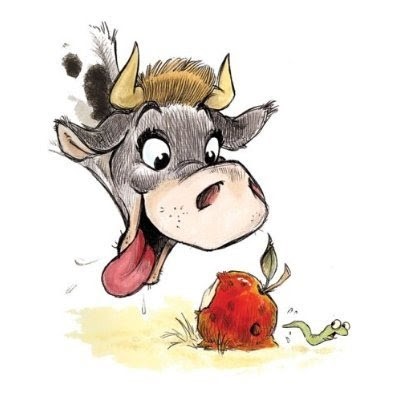
There is a little poem called ‘The Cow in Apple Time’ which (on the face of it) is about a cow who is driven by an unspecified desire to disregard the walls about her pasture. The wall is no more than an open gate to her. She charges through and greedily eats fallen apples, growing intoxicated, her face splattered with apple juice. But in this kind of gluttonous state she grows sick, in pain:
She bellows on a knoll against the sky.
Her udder shrivels and the milk goes dry.
It’s a perfectly satisfying poem about a rural incident – perhaps Farmer Frost, had once witnessed it himself. But there is Frost’s ulteriority too. The cow is consistently described using terms which anthropomorphise her. The wall breaker is perhaps on one level really human, a rebel, a sinner – written in 1914, some have even suggested the cow is an invasive force. However we see her, she is punished for her disregard of, her undervaluing of, those walls and boundaries which perhaps ought to serve to define her life.
Remember this is the same Robert Frost who disparaged the writing of free verse, by many of his more obviously Modernist contemporaries, as trying to play tennis with the net down. The same Robert Frost who disparaged the, then fashionable, interest in Surrealism with its wild leaps over convention, its dislocation of the senses, the shock value of the illogical. For Frost such practices could lead only “to undirected associations and kicking ourselves from one chance suggestion to another in all directions as of a hot afternoon in the life of a grasshopper”.
The cow with the aching stomach is paralleled by a dying peach tree in ‘There Are Roughly Zones’. The narrator has moved “far north” and has transplanted a peach tree and now the northern winter is threatening it. He sits indoors and frets about it, trying to blame the weather rather than himself. But self-criticism arises all the same and it is human “ambition” that gets the blame, that “limitless trait in the hearts of men”. More precisely:
[. . .] though there is no fixed line between right and wrong,
There are roughly zones whose laws must be obeyed.
I love the messy pragmatism implied by “roughly zones”. One of his recurring concerns, Frost said, was with “the impossibility of drawing sharp lines and making exact distinctions” – no red lines, lines in the sand, defined boundaries, but zones of negotiation, places calling for compromise, no fundamental clarity, rather a feeling-out, a region requiring a dialogue.
As in a poem like ‘The Tuft of Flowers’. A man comes to a mown field to turn the cut grass, the hay, to help its drying. He looks about for the man who had earlier mowed the grass:
But he had gone his way, the grass all mown,
And I must be, as he had been, – alone,
‘As all must be,’ I said within my heart
The hermetically cellular, or as we would now say, atomised nature of society seems to be assumed by the narrator. It looks like there is going to be no breaking of boundaries here. But a “[be]wildered” butterfly passes him, looking for flowers that grew there yesterday, now cut down. The butterfly leads him to a “leaping tongue of bloom” left deliberately, out of “sheer morning gladness” by the mower. The narrator hears the message from this “tongue of bloom” which speaks of each man as a “spirit kindred” to the other. It’s as if they now enter into a dialogue, revising the earlier solipsistic observation. Now:
‘Men work together,’ I told him from the heart,
‘Whether they work together or apart.’
There is a rosy-edged hint of sentimentality here perhaps. But the fanciful dialogue between the two men (who actually never meet) represents a successful negotiation into that rough zone between individuals, the cellular membrane is actually permeable, and the result here is consolatory.
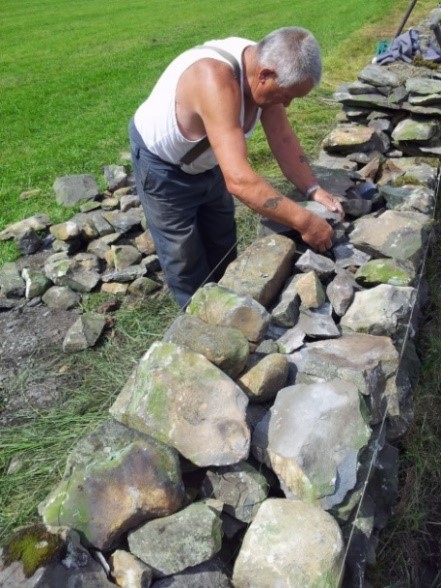
In ‘Mending Wall’, two farmers meet to patrol on either side of a dry-stone wall marking the boundary between their farms. Parts of it are always falling down. They build it back up. But the paradox is that the action of building up what separates them, brings them together each year to perform the task. The wall does not prevent or act as a brake on their relationship – rather it facilitates it – it perhaps is their relationship, what links them. From their respective sides – from their respective identities or persons – they are free to become ‘interpersonal’. But the mischievous, sceptical, modern-minded narrator expresses doubts about the importance of walls, particularly when “He is all pine and I am apple orchard”. His neighbour is a more traditional, unquestioning man, who likes to repeat his father’s advice: “Good fences make good neighbours”. The narrator mocks him (though in silence, in his head) as “an old-stone savage”, lost in actual and intellectual “darkness”. But it is significant that the wall-believer has the last word. For me, it is the moderniser is the one being ironised. If he was a versifier, he’d be trying to write poems with the net down.
Why Frost’s concern with the importance of walls? Because – in still other moods – he has looked into the abyss of experience without them. One example is given in the 16 terrifying lines of ‘Desert Places’. The narrator here seems to have taken the more modern, sceptical wall-mender’s view to heart. It seems there are no bounds here – all have vanished under “Snow falling and night falling fast oh fast”. That note of fear there adds to the nightmare feeling and when the outward-looking eye turns to look within – to find himself – he finds nothing: “I am too absent-spirited to count”. That phrase is an echo of ‘absent-minded’. There is a vacancy within and without – no mind, spirit, self, identity. There is only the concluding, devastating rhymes of “empty spaces . . . where no human race is . . . my own desert places”.
And if ‘Desert Places’ evokes the desolation of a world viewed in the absence of a relatively secure cell-walled self, then ‘The Most of It’ shows us the horrifying effects of being walled in. In this poem, the narrator “thought he kept the universe alone”. There seems nothing else but him, only a “mocking echo of his own [voice]”. Yet he does remotely feel a desire for dialogue – perhaps just in being human – and does express a desire not for “copy speech. / But counter-love, original response”. But when the universe does eventually break into his consciousness, it arrives not in the form of dialogue or a negotiated relationship but as an utterly alien thing.
It emerges only as a strange, vague “embodiment” that “crashed” and “splashed” towards him and is recognised only by means of a simile. Perhaps it is an elk.
As a great buck it powerfully appeared,
Pushing the crumpled water up ahead,
And landed pouring like a waterfall,
And stumbled through the rocks with horny tread,
And forced the underbrush—and that was all.
There, Frost captures the egoist’s struggle to comprehend what is other than him; followed by the arrogance of his dismissal of it. And perhaps this is a particularly masculine thing. Yet there is no need to attribute these feelings to Frost himself. The speaker is best read as a dramatic representation of one extreme of Frost’s concern for borders and boundaries that are vital for our own selfhood yet must be porous enough to allow for knowledge and experience.
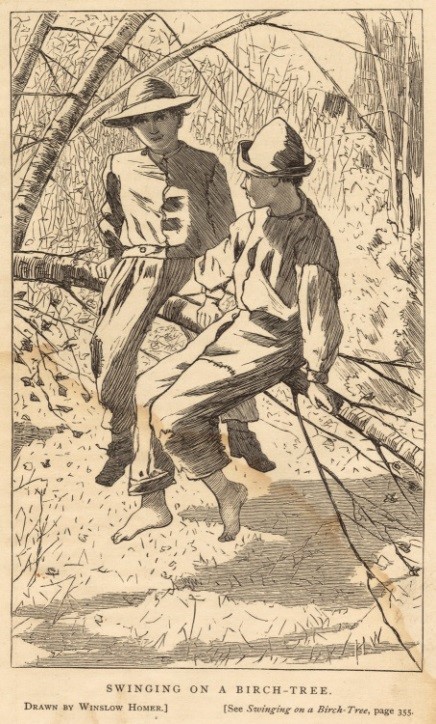
So in ‘Birches’ the narrator remembers – as a boy – climbing slender birch trees, to the top, only to leap out and bend them down with his weight. This swinging of birches can be seen – ulteriorly – as representing Frost’s belief in those negotiated rough zones of a life. We climb up, out of our element, but not too far:
It’s when I’m weary of considerations, And life is too much like a pathless wood Where your face burns and tickles with the cobwebs Broken across it, and one eye is weeping From a twig’s having lashed across it open. I’d like to get away from earth awhile And then come back to it and begin over. May no fate wilfully misunderstand me And half grant what I wish and snatch me away Not to return. Earth’s the right place for love: I don’t know where it’s likely to go better.
And if we find this frustratingly ambivalent – Frost sitting carefully on the fence – then he often rubs our noses in it. ‘Stopping by Woods on a Snowy Evening’ famously concludes with two lines which are identical. For me, the repetition introduces greater ambiguity into the moment. Does the narrator stop, perhaps to die, entranced by the snowfall? Or does he shake himself up, turn back to his life in the village, his roles and responsibilities?
Whose woods these are I think I know. His house is in the village, though; He will not see me stopping here To watch his woods fill up with snow.
My little horse must think it queer To stop without a farmhouse near Between the woods and frozen lake The darkest evening of the year.
He gives his harness bells a shake To ask if there is some mistake. The only other sound’s the sweep Of easy wind and downy flake.
The woods are lovely, dark, and deep, But I have promises to keep, And miles to go before I sleep, And miles to go before I sleep.
Frost throws the question back to the reader. What Frost knows is that we do not keep the universe alone. We are parts of a whole – but the borderlands are uncertain – sometimes we cross them and lose touch with ourselves, at other times we too easily accept them and fall into egotistical isolation. There maybe be a happy medium – but Frost’s dynamic poems suggest the truth is we can never find and hold to that; we are always involved in the complicated fraught business of negotiation, of swinging birches, of chasing butterflies, of building walls that will promptly fall down again.
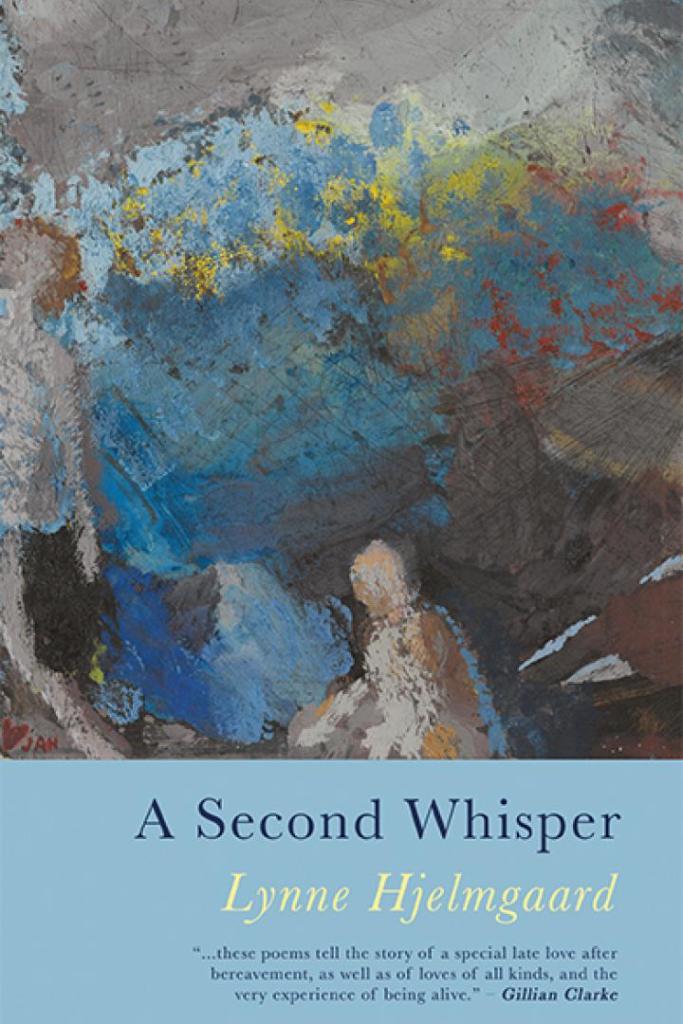
Last night I was at the Poetry Café in Covent Garden for the launch of two new collections from Seren Books. Lynne Hjelmgaard was reading from A Second Whisper and Mary J. Oliver was launching her debut collection, Jim Neat: the Case of a Young Man Down on His Luck. Oliver’s book is a curious, thought-provoking mix of family research and prose/poetic fictions. But I’ve known Hjelmgaard for a few years now as a workshop colleague and as a friend of Dannie Abse and I wanted to gather some thoughts here on her new poems.
In
her playfully titled poem, ‘Ode to a Danish Lamp’, Lynne Hjelmgaard constructs
a paean to a piece of electrical equipment which ends rhetorically, “Why do you
move me so?” Some clues to the answer are scattered through the poem; they lie
in comparisons. The lamp is an example of “Nordic metallic cool”, beside which
the speaker – “a mere human” – feels humbled. She and the rest of the room, we
are told, arrange themselves about the lamp which hence serves as a focal point
and even a source of “answers”. It’s as if the lamp is wired up to a clearer,
less divided, perhaps purer world:
[.
. . ] the charged interior, a territory,
where
no country nationality race
or
religion has any significance.
In contrast, the human figure is more embedded in a world of time, place and quotidian specificity while the lamp emerges with its “fine, oh so thin aluminium rim” as a denizen of a less troubled realm. The speaker is moved because excluded from such a realm and the majority of the poems in A Second Whisper focus precisely on our more compromised, familiar world, particularly the ‘merely human’ experiences of time, memory and loss.
Without
being a particularly philosophical poet, Hjelmgaard writes as someone who is an
“expert at loss”. Another less typical poem describes – in great detail –
Brooklyn Bridge and the area around it (the poet was born in New York City).
She remembers sailing out under the bridge:
Manhattan
is a chain with many links,
some
are broken, lost and never repair,
but
others can be retrieved even at a distance.
For
what can shine so brightly at sea
but a city, once loved, left behind?
Hjelmgaard’s
focus on links lost or remembered is probably hard-wired into her constitution
(these thematic roots usually are) but it has also been provoked by
biographical influences. Her 2011 book, The Ring (Shearsman Books) was
dedicated to the memory of her Danish husband, Stig – who died in 2006 – and
followed an American woman’s travels around Europe, mourning and negotiating that
loss. Dannie Abse, among others, praised those poems: “Widowhood allows them to
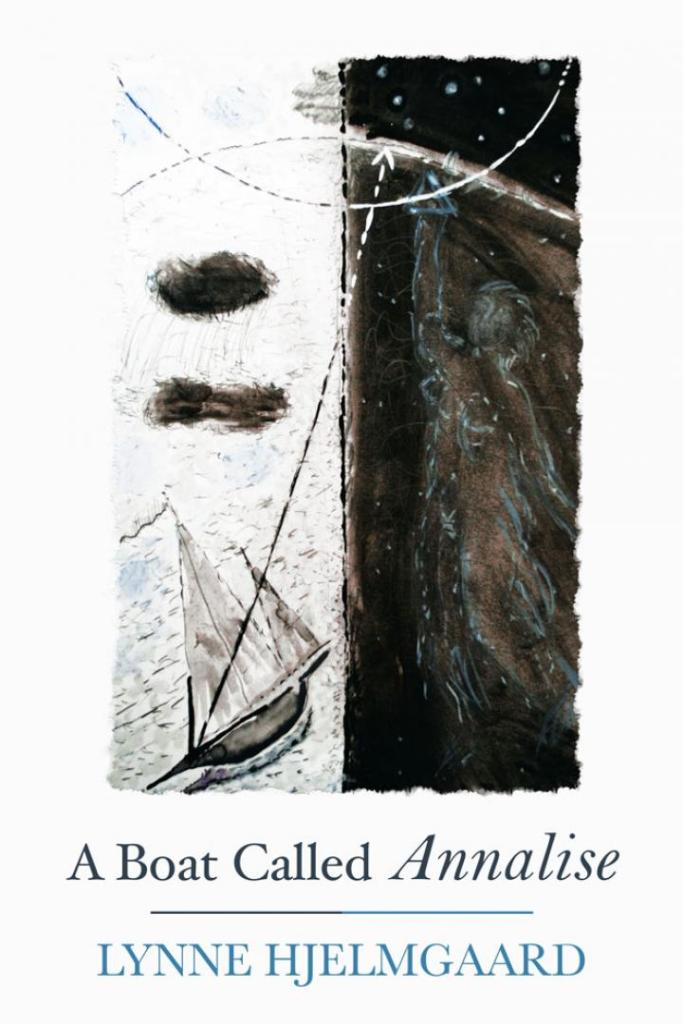
acquire a poignant universality”. Five years later, A Boat Called ‘Annalise’
(Seren Books), was full of more poems of remembrance, evoking the sea
journey the newly married couple made out of New York to Europe, via the
Caribbean.
There
are further poems written to and about her husband in this new book. In ‘As We Silently
Agree’, the husband appears to the widow, “in some kind of afterlife”, and is
seen busying with a boat’s anchor chain, searching the ship’s log and weather
charts. This is perhaps a dream poem:
Our
fingers clasp in recognition
as
we silently agree:
what
does it matter now
if
you don’t keep the course?
And ‘Scorpion Hill’ may be another example of dreamwork, the wife this time revisiting a once-shared house in the Caribbean. Its final image is of many moths clustering round “a single light bulb / left on during the night”. These are fine poems of time and sustaining memory – that bulb still burning – in which the past and those lost within it are shown to revisit the survivor.
Hjelmgaard’s treatment of this traditional theme is neither religious nor consolatory in any facile way. The pain of great loss is heartfelt and yet she manages to persuade the reader – it’s less intellectual than that, maybe she draws her readers in to the actual experience – that what lies in the past still retains is power to evoke pleasure and even that the future’s gifts are to be welcomed, even anticipated. In ‘To a Chestnut Tree’, addressing the tree in its autumnal state, the narrator is sure, “There will always be another one. / And another. // Loss can be moved through like a room”. What a magnificent line that last one is. There is a wisdom in it, however modestly it may be presented.
Time
takes – but time also provides. Another poem of trees has a fir leaning
eventually into a “beloved palm” – though it may take a century or two of slow
growth. A lonely tamarisk on a cliff top also has the capacity to “wait until
it can drink / from the bay eighty feet below”. Hjelmgaard finds her themes in
the smallest incidents. Unpacking a suitcase after a journey, she finds she has
brought two extra items home with her. One is a fossil of a snail which seems
to represent a determined persistence through time (60 million years perhaps,
in this case). The other – a flighty stowaway – is a spider which she finds
“already busy / making yourself at home”. The spider evokes an improvisatory
optimism, an adaptability, even an adventurousness, which I see as some of the
most distinctive elements in the themes of Hjelmgaard’s work.
It’s
these qualities to which Gillian Clarke is responding in her comment on A
Second Whisper, where she finds in the book “the story of a special late
love after bereavement”. In recent years, the British poet who has written most
powerfully and movingly about bereavement and the encroachment of the past into
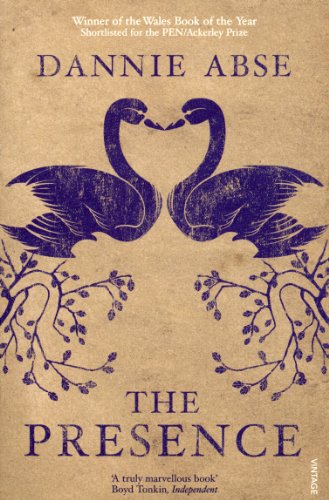
the present is Dannie Abse. This is from his poem ‘The Presence’ about the loss
of his wife, Joan:
It’s
when I’m most myself, most alone
with
all the clamour of my senses dumb,
then,
in the confusion of Time’s deletion
by
Eternity, I welcome you and you return
improbably close, though of course you cannot come.
The opening 14 poems of A Second Whisper explore the loving relationship that sprung up between Hjelmgaard and Dannie Abse after the deaths of Stig and Joan. Her opening prose piece takes us directly into everyday details. The two bereaved poets meet: “And for a time it was the four of us. Though one day, without ceremony, we noted their absence”. Thus set free, the ones still living proceed, though along no clear path, “wherever poetry and Eros chose to take [them]”
Even
at their first meeting – on a train journey back from the Torbay Poetry
Festival – the presence and absence of time was notable. Minutes were not to be
wasted in the presence of the older poet, says the younger narrator. But
mysteriously – this is in late October – the waitress at the station café is
seen taking away the clock to change the hour. A photograph of the two poets at
a reading shows the younger woman “less sure of herself”, while Abse is more
comfortable with the attention. But at 85 years old, Abse begins appearing in
these poems as more and more in decline. “Aged and dying you grew more tender”,
as ‘A Second Whisper’ puts it. In this poem – as in several others – Hjelmgaard
is visiting Abse at home.
I
knew just how to open your front door quietly.
Its
lock a whisper, a second whisper to shut.
This image – absolutely precise in its remembrance, yet also powerfully suggestive – is like the earlier line about walking through loss as through a room. The first whisper has a respectfulness, concerned with quietude, with the sensitivity of the artist, the closeness of death. The second whisper is full of ambivalence: protective perhaps from the noisy, nosey world, wanting to secure the intimacy, wanting to defend the loved one from the inevitable, yet a foreshadowing of that very inevitability.
‘A Thief Is in the House’ has death portrayed as an invader, breathing heavily, thumping up the stairs to the dying figure whose “eyes [are] prepared // for nothingness”. But these poems are not overwhelmed by grief. As if taking a leaf out of Abse’s own poems of mourning and remembrance, Hjelmgaard’s predominant tone is one of recall and revisiting – even of re-visitation. Walking alone on Hampstead Heath, she hears the lost lover chanting a Lorca poem; because one day they sheltered under an awning on Golders Green Road, every time it rains now, “the rain /stops everything / to think of you”. And in an exquisite lyric, ‘Speak to me Again at Dusk’, Hjelmgaard yearns to resume her conversations with the dead poet, yet her tone – which might have been one of pleading and despair – in fact retains a clear appreciation of the lasting value of what has been and a pleasured openness to the present (hear those noisy roosters in a moment!). Such deep-grained attitudes seem to have been a mutual common ground between these two writers and perhaps was one of the constitutive elements in their late-flowering love:
Apologies for the relative silence from my blog. I have been busy preparing and working to propel into the world two new books of poetry. The first out has been These Numbered Days, my new translations of the GDR poet, Peter Huchel, published by Shearsman Books.
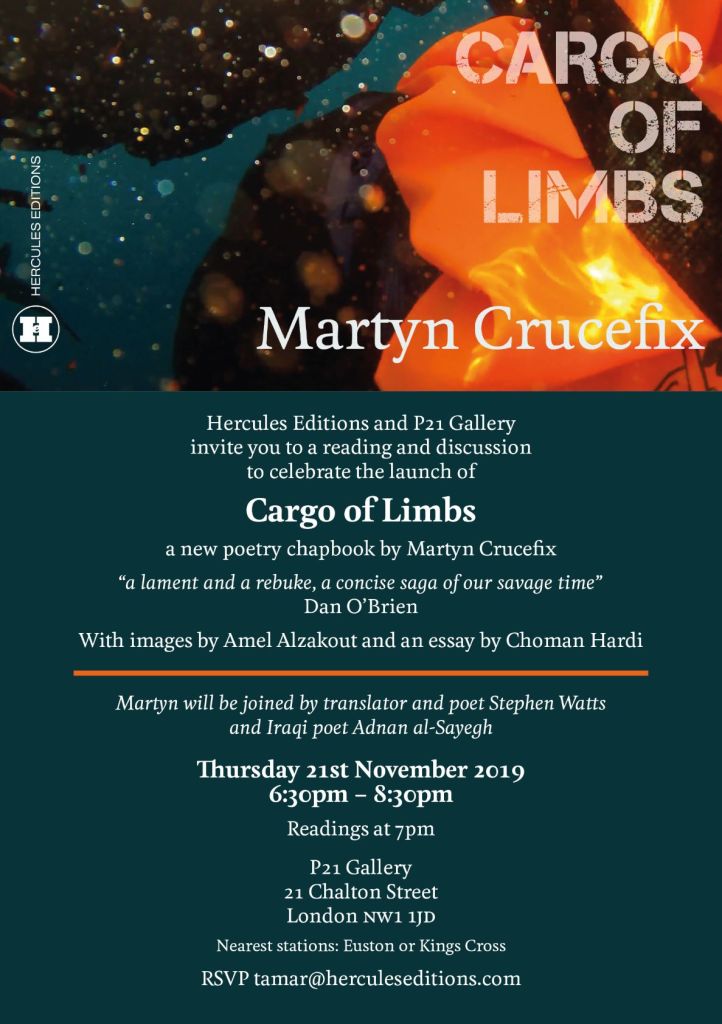
The second book will be published by Hercules Editions, It’s called Cargo of Limbs – more details of it can be found here. I’ll also post the launch event details below – it’s an open and free event and I would be delighted to see you there.
David Cain – Truth Street (Smokestack Books) – reviewed here.
Isabel Galleymore – Significant Other (Carcanet) – reviewed here.
Stephen Sexton – If All the World and Love Were Young (Penguin Books)
This year’s Forward First Collection shortlist is astonishingly good but, for its cleverness, its ambition and coherence, its technical mastery and above all for its vulnerability in dealing with the eternal themes of childhood, love and loss, death, time and memory, I hope Stephen Sexton’s book wins the award in October. It’s a curious read in some ways – superficially fast and easy, its technical brilliance well hidden, its narrative quite buried though not really hard to trace, its emotional heft at times blunt and utterly naked, at others complex and many-layered.
Halfway through the book, in ‘Forest of Illusion 2’, Sexton recalls fishing for rainbow trout with some success. The bait is taken and “with a flick / of the wrist [he] hoisted the fish from one world and into the next”. It’s this kind of transition that is the subject of the whole book though the direction of travel is clearer in the recurrent images of young Icarus. The boy who thought he could fly near the sun (filtered through Breughel and then through Auden) is aptly evoked in this poetic bildungsroman of a boy struggling with the traumatic transition from innocence to experience.
But Sexton’s particular withering is not one of romantic love but the loss of a mother to cancer and by the end of the book, the wriggle room implied by Ralegh’s opening word, ‘If’, is significantly altered to the much more brutal ‘when’. This is no hypothetical idyll but an actual, remembered one and the loss of it is unavoidable. The post-conclusion, coda-poem, ‘Yoshi’s House’, turns upon the reader with a compassionate yet clear warning: “some day dear friend [you will find] my sad head upon on your shoulders” (sic).
Sexton has written a genuine, contemporary long poem (not a long assemblage of lyrics). His lines are 16 syllables in length throughout, yielding a prosy, chatty, fluid sort of voice which avoids the risk of drag by keeping the reader on our toes by a relative absence of punctuation and a penchant for eliding two thoughts or images together in one single line. This generates occasional moments of misreading, but it is also the technical reflection of Sexton’s focus on the translation of innocence into the darkening of experience. The heard voice is quick, erudite and briskly allusive; despite being mostly in the present tense, it is not wholly the naïve voice of the child. The other aspect of the whole poem this fluid transitioning relates to is the exploration of the child’s obsession with the fantasy world of his computer games and the way he must slide from one world (on a screen) to the one we call ‘real’.
The computer games are specifically the Nintendo games of the 1990s which give the sections their odd names – Yoshi’s Island, Donut Plains, Vanilla Dome, Valley of Bowser – and account for individual poems’ titles, some of which I have already referred to. The games may be out of date but Sexton’s evident knowledge of them (love of them) means part of the originality of this book is they are fully integrated into the composition of the poems and raise questions about how absorbing such fantasy worlds can be and how the facts of reality are to be negotiated and reconciled successfully (perhaps, particularly by boys who seem so drawn to the former and so easily in denial about the latter).
Sexton’s own story is given in a Note and the poem called ‘Yoshi’s Island 1’. In the summer of 1998, his mother took a photograph of him, back to the camera, squatting before a TV, the family garden just glimpsed out of a window to the left. Here already, the screen world and the outside world through the window are juxtaposed. The boy is keener on the former:
Here spotted mountain and cirrus here sloping plateaux drawn down
carnivorous plants and no sun gold by the cherish underground
fly agaric throbs everywhere with fire plants and dinosaurs.
The vivid, colourful, playful and safe fantasy worlds of Nintendo – its caricatures, its rules – is one of escape:
On Kappa Mountain past the great lake circumscribed with goldenrod
the abandoned palace is full of treasure glowing underground
in granaries and arsenals and economy of losses
and gains the beloved is gone but there is always the story.
The man looking back at his younger self passes judgement: “one of the worlds I live in is as shallow as a pane of glass”. But this shallowness is immediately challenged when the child is told of his mother’s illness, of “cells which split and glitch”. The following poem has thoughts of his (real) father interrupting (if only for one line) in his screen time:
. . . for the first time in some time I thought of our father at home
the Sirocco in from the south turtle doves in the huge wheat fields
‘#1 Iggy’s Castle’ suggests the same thing: in the midst of oceans of lava, fantastical islands and cartoonish incinerations, the boy hears his mother moving about the house, a woman in real pain, “whose feet whose toes / whose hands whose fingers whose ankles whose head she says are on fire”.
Within 20 pages or so, a poem appears which resides wholly in the ‘real’ world of a family visit to the Ulster Hospital and a visit to McDonald’s since his mother “has lost her sense of taste”. The narrative suggests there follows a period of respite. The doctors – in the boy’s mind they come and go as wizard-like Merlins “in blue scrubs” – remove the cancer. Though back at home his mother remains weak and unsteady so the boy concocts a “mess in a tray” for the school bake sale. In awkward self-defence, he acknowledges, “No one is going to like this [. . .] but I have done my best”. His observation obviously has a far wider application in the circumstances, and one of Sexton’s great achievements in the poem – in amongst the allusiveness and technical skill – is to be as open and vulnerable as this. In ‘#5 Roy’s Castle’ he recalls his mother working “her old-fashioned Singer”. Roy Orbison is on the radio. She is making curtains for the room “she’ll in future return to” when she has become ill. The way time collapses in on itself in such a Wordsworthian ‘spot of time’, the way in which “Time present and time past / Are both perhaps present in time future”, is expressed with devastating simplicity: “the sewing machine ticks so fast these small years go by in minutes”.
But the cancer has returned. ‘Choco-Ghost House’ is unique in that we hear Sexton’s mother’s voice, nervously complaining of a “pain in my side like a bird in a holly tree”. Her son, still half inhabiting his fantasy world of wizards and exotic settings, is perhaps now starting to use that experience to get a handle on what is really happening. The doctor – now a “Hippocrates” figure – is described as going about “the magic task / of grinding down a rhino’s horn to infuse with ground down rubies”. Even these sorts of quasi-defensive imaginings are eventually dropped and the bald reportage of a last hospital bedside conversation between mother and child is almost too painful to read. The long syllabic lines here have room for the hesitations and repetitions of such emotionally-charged moments without any ironic distancing:
It’s me I’m here is what I say but I am not since she is not.
Then she says I want to go home once more for one once more one night
and I say you can’t go home now she says I know not now after.
The sequence ends with the longest poem in the book – still barely the length of a page – which recounts the mother’s return home in her coffin. Even here the young boy blurs the arrival of the “wood panelled box” with the arrival of the “sharp-cornered TV” before which he has so often squatted to play his Nintendo games. Penguin’s blurb talks of the poem ultimately suggesting “the necessity of the unreal” but actually we see the child fighting his way free of it. Halfway through this final poem, the revelation comes in a fluid, unpunctuated instant: “I felt my head turn into stone no it wasn’t the old TV”. It’s in this poem that Sexton alludes to the title of his book. Hedged around with the necessary qualifications imposed by the passage of years, by the unreliability of human memory, the cloaking device of powerful emotion, he recalls a childhood safe and secure in the light of his mother’s presence, the flashlight of her camera behind him, before him the vibrant, simple colours of Nintendo:
[. . .] her voice moves around the edge of the world and now I think I
remember what I mean to say which is only to say that once
when all the world and love was young I saw it beautiful glowing
once in the corner of the room once I was sitting in its light.
 This is Walford Davies’ fourth book from Seren and it is an ambitious project, combining narrative and lyric form (every poem is 16 lines long, in unrhymed couplets, most in four beat lines). It’s also a dramatic monologue, in effect, as the speaker is a thoroughly unpleasant, arrogant, but haunted architect engaged in several large urban projects in Cardiff between the years 1890 and 1982. Talk about the male gaze, this man epitomizes it. He and his wife have recently buried a child lost in stillbirth (“they wrapped it in a pall // not bigger than my handkerchief”) and while she mourns the loss, he gets on with his work and frequents bars and prostitutes in Cardiff’s docklands. The sympathetic reader is probably going to try to read this man’s cruel and dismissive treatment of his wife (and his exploitative relationships with other women) as his own rather twisted way of dealing with grief. But it’s hard to maintain that view, as Walford Davies is often shockingly good at catching his loathsome attitudes, especially towards women: “This quarter grows on me. / In shabby rooms in Stuart Street // my new friend swears // she’ll tackle anything for oranges”.
 Walford Davies, in an end note, talks of the ambiguity of the female figures – wife, prostitutes, dead girl – who do tend to float without clear identity, disembodied, through the text. It adds something to the ghost-like quality of the book, but the loss is any more powerful evocation of them. Also, the choice of brief lyrics to develop what could well have been a novel, gives the reader some powerful moments but few prolonged engagements with any of the characters. And the nature of the central male figure is problematic because of his downright unpleasantness (though, I suppose, Browning managed it in ‘My Last Duchess’) and in 2020 there will be plenty of readers who find such a portrayal an absolute bar to reading. I don’t think Walford Davies ironises and critiques his male figure enough, or clearly enough.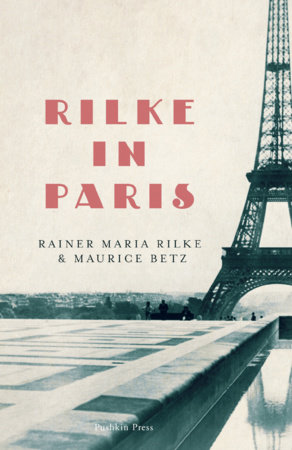
 Matthew Barton himself raises the question as to whether anything could “possibly justify yet another English version” of Rilke’s Duino Elegies (1922). As someone who has contributed his own translation of the work (
 So Barton has now produced a lively, English version which reads well (one of his aims). Apart from a brief Introduction and a few end notes on translation issues, the poems stand on their own here – there is no parallel German text, for instance. To see the German facing Barton’s text would be interesting for most readers, even without much facility in the source language, because he does make changes to the form of the poems. It’s true Rilke’s original plays pretty fast and loose with formal metre but the changes he rings are significant and Barton has a tendency to flatten out these differences by making firm (modern-looking) stanza breaks where Rilke often continues the flow of his argument. Rilke’s form is significantly much freer in the fifth Elegy, for example. This issue of the flow of the poems – and indeed through the whole sequence of 10 poems – is one of the difficulties in translating the work. It seems to me there is a clear progression across the poems and within each individual piece. To call this an ‘argument’ may seem too logical and abstract, of course, but any translator needs to try to follow it. To declare ‘it’s poetry’ and not try to see why one image or passage follows another is giving up too easily.
 These are small points in some ways but – as I’ve said – I think Rilke is pursuing a close-grained argument in these poems (albeit via poetic utterance rather than rational discourse). Barton is also liable on occasions to shift into an overly contemporary register (Rilke tends not to 1920s speech patterns but rather a Classically influence idiolect of his own). He replaces Rilke’s “wehe” which really is ‘alas’ with phrases like “god help me” or “heaven help us” which again propel the tone towards the personal (a rather English, bourgeois personal). In the ninth Elegy, Rilke is disparaging about the thin gruel of conventional human happiness in the face of death: “dieser voreilige Vorteil eines nahen Verlusts”. Mitchell translates this as “that too-hasty profit snatched from impending loss”. Barton tries a bit too hard with, “[this] is merely / easy credit with a looming payback date”. The same happens in the tenth Elegy, where Rilke is describing contemporary society’s shallow distractions from the fact of death. He describes; “die Kirche begrenzt, ihre fertig gekaufte: / reinlich und zu und enttäuscht wie ein Postamt am Sonntag”. Mitchell again: “bounded by the church with its ready-made consolations: / clean and disenchanted and shut as a post-office on Sunday”. Barton changes, up-dates, Americanises and so loses some of the irony: “the flatpack church, all safe and clean and shut / and dreary as an empty parking lot”.


















 Martyn Crucefix