As in the previous five years, I am posting – over the summer – my reviews of the 5 collections chosen for the Forward Prizes Felix Dennis award for best First Collection. This year’s £5000 prize will be decided on Sunday 25th October 2020. Click here to see my reviews of all the 2019 shortlisted books (eventual winner Stephen Sexton); here for my reviews of the 2018 shortlisted books (eventual winner Phoebe Power), here for my reviews of the 2017 shortlisted books (eventual winner Ocean Vuong), here for my reviews of the 2016 shortlisted books (eventual winner Tiphanie Yanique), here for my reviews of the 2015 shortlisted books (eventual winner Mona Arshi).
The full 2020 shortlist is:
Ella Frears – Shine, Darling (Offord Road Books) – reviewed here.
Will Harris – RENDANG (Granta Books) – reviewed here.
Rachel Long – My Darling from the Lions (Picador)
Nina Mingya Powles – Magnolia 木蘭 (Nine Arches Press) – reviewed here.
Martha Sprackland – Citadel (Pavilion Poetry)
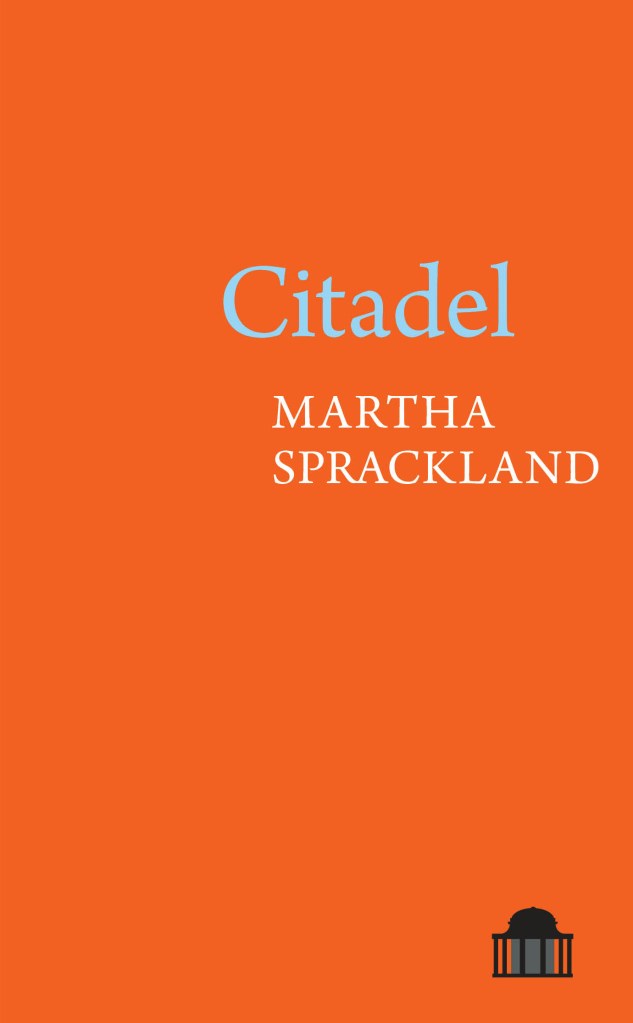
After her Gregory Award in 2014 and two chapbook publications since, Martha Sprackland has long been pondering those decisions about constructing a first full collection. (She talks briefly about that process here). Ought it to be a Rattle Bag of the best poems to date, or a more coherently shaped and organised ‘concept album’? Citadel is evidently being presented to readers as the latter – but with equivocal results. The first reference of the book’s blurb is to Juana of Castile, commonly referred to as Juana la Loca (Joanna the Mad), a 16th century Queen of Spain. She was daughter of Ferdinand and Isabella, instigators of the Spanish Inquisition, but was conspired against, declared mad, imprisoned and tortured by her father, husband and her son, leaving almost no written record of her own. Sprackland – having studied Spanish and spent time in Madrid – presents herself as becoming fixated on this earlier woman, engaged in conversations with her to such a degree that (according to the blurb again) the poems in Citadel are written by a “composite ‘I’ – part Reformation-era monarch, part twenty-first century poet”.

While happy to accept the desire of the poet to maintain a distance between the lyric/dramatic ‘I’ and her autobiographical self, I find the idea, the ‘as if’, of this composite authorship hard to take. There is even something disproportionate about the claim of identity between the two women, given the extremity of Juana’s life-long suffering. I’m reminded of Caroline Maldonado’s 2019 book, Isabella (Smokestack Books) in which she translates and writes poems to Isabella Morra, an Italian aristocrat of the 16th century who also suffered appalling hardship (and likely murder) at the hands of her male relations. But Maldonado’s interest in the historical figure is never claimed as an identity. (I reviewed this book here).
The awkwardness of the leap of faith in this alignment between Sprackland and Juana gives rise to several of the opening poems which seem to want to ‘explain’ empirically the (perfectly legitimately) imagined connection. ‘Beautiful Game’ is a family-holiday-in-Spain poem, in which the Martha figure (the collection does use its author’s name on several occasions) is hit on the head with a pool ball. The next but one poem takes this up. ‘A Blow to the Head’ takes the injury as a moment of profound psychological importance. The narrator is “cracked open” and in the same moment retreats into a psychological “citadel”. The protection this offers her becomes “habit-forming, I was fortified”. The latter pun is good and the poem suggests that it is in this state of defensive retreat, perhaps of ‘imprisonment’, that she passes through a portal, making first contact with “her”, Juana. One of the tortures that Juana faced, for her religious unorthodoxy, was la cuerda, being strung up with cord/rope, weights attached to her feet. In this poem, Martha loosens “the cord from her wrists”.

It’s the poem placed between these two that perhaps provides a further clue to the undoubtedly powerful link felt by Sprackland to Juana, the link between the personal and the historical. Much is left unsaid in ‘A Room in London’; the reluctance to reveal is part of the fortified ‘citadel’. In a vaguely defined medical environment there are several young women, one of them being given misoprostol (a drug used to induce abortion). Such a moment of profound emotional, physical and psychological experience must be the origins of the identification between two individuals so remote in time and Sprackland catches the paralleled shift of innocence to pained maturity in the brilliant final line: “Our little beds, bars of autumnal light falling through the curtains”.
The fact is that this identification of the two women does then give rise to several excellent (I’d describe them as uncanny) poems – though their existence does not need anything more by way of justification than a belief in language and the poetic imagination. In ‘They Admit Each Other to the Inquisitor’, the two women are bound together by the first-person plural pronouns: “We were eighteen and pregnant and mad”. The force and flow of the poem takes the reader quickly beyond questions of likelihood:
When we undid the cord that tied our wrists
it bound us; something in that blow
knocked through the city walls
and through it we are talking, still.
We can’t explain this.
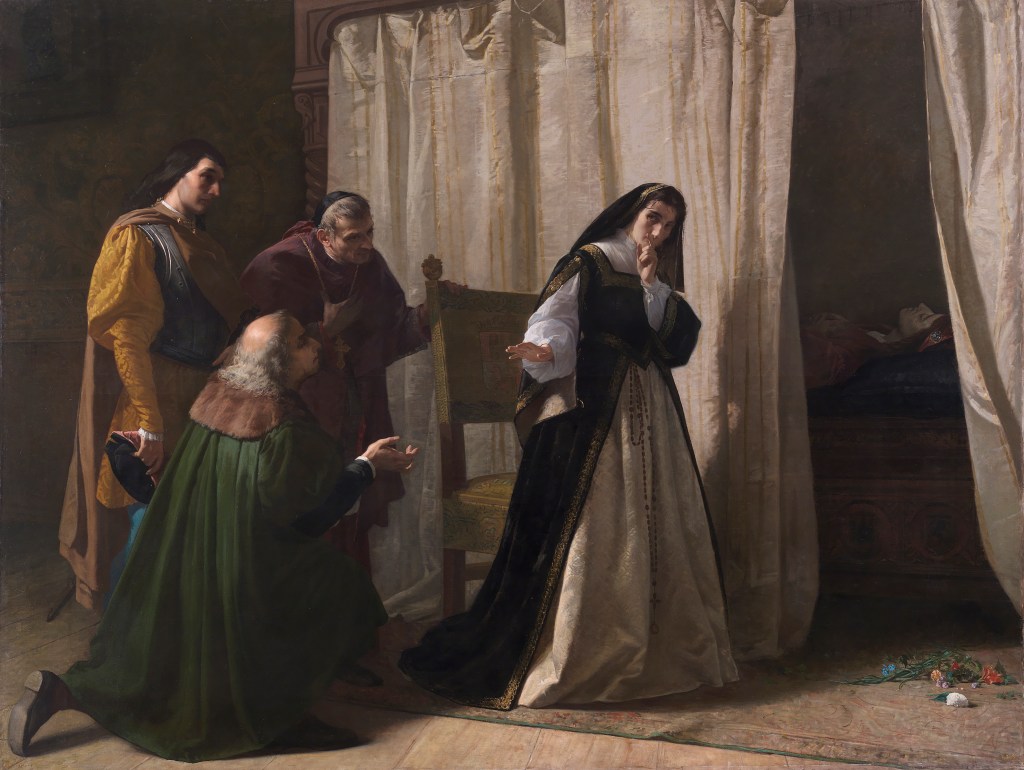
The same device is used in ‘Juana and Martha in Therapy’; this time it’s the third person plural. They are as one and yet at the same time they are communicating down a cup-and-string telephone, made from a cord and two tins of cocido (chick-pea and meat stew). There is great humour here besides the serious experiment in imaginative identification: “Time is complicated, especially at these distances”. But also, Time can be collapsed into magically anachronistic moments of intimacy: “They are in the bland room / above the Pret in Bishopsgate, trying to understand. / The walls of the mind are deep and moated”. The final poem in Citadel is ‘Transcript’ which is a verbatim record of a conversation between the two women:
- i’ll sing you something, and you’ll sleep, tomorrow I will go falconing –
- and I will go to work and try to hold the yolk of myself together, try not to spill –
I wish there were more poems in the book in which this sort of unashamed, ludicrous, heartfelt and imaginatively suggestive communication was portrayed. There are a few other occasions where poems approach it, but the leap of faith required seems even too much for the poet and the results feel more willed than wholly convinced. Juana alone (though in the third person) appears to good effect in ‘Falconry’, an excellent poem that hovers, alongside the hunting bird, over the landscape of the Alhambra. The bird’s searching out of its prey represents the young Queen’s curiosity, her challenge to authority (that will soon get her into so much trouble), and its tearing up of a lark seems to foreshadow Juana’s own suffering.

Otherwise, Citadel contains plenty of poems more directly connected to what we might tactfully designate the author’s biography, poems which might have constituted a Rattle-Bag-style first collection. The five sections of ‘Melr’ read very autobiographically, a childhood in a village north of Liverpool: “I grew up coastal with the land to my back”. It’s portrayed as a place of shifting sands and, as teenage years advance, that sense of novelty-seeking (like Juana and deploying similar bird imagery) grows: “villagers heard / the clatter of the entire migratory flock / lifting off under cover of darkness”. Youthful experimentation, unpredictability and the allure of travel are all expressed in the excellent ‘Pimientos de Padron’. One imagines language students in Madrid, “lovesick, shamed or fleeing / or brisant and in shock”, then heading to the airport for “the first flight anywhere but home”.

There is a motif in the book of those brought up on sand finding it hard to settle. ‘Anti-metre’ suggest this even reaches the menstrual cycle which shifts, “mutable as a dune” and one recalls the clinical environment of ‘A Room in London’ when ‘Hunterian Triptych’ concludes with the narrator and her boyfriend running out in alarm at the sight of preserved foetuses in a museum, “ranged by month and weight”. I sense the Catholicism of Spain in general (and Juana’s wrestling with it, in particular) haunting Citadel. So a visit to an orthognathic surgeon is portrayed in terms of the confessional and a poem like ‘Charca’ is underscored by a baptismal or redemptive sense. A charka is a pool, here a natural bathing pool in a valley. The narrator and her friends go there and, beyond the hedonism and holiday pleasures, she finds something more profound shifting, beginning to lift and heal into freedom:
Something frozen
and distant starts to thaw in me
and to carve these deeper channels
into which we jump, again and again,
looked over by nothing but the mountains,
the overhanging leaves,
the lifted winter lived through and unbound.
This might suggest ‘Martha’ already outgrowing the need to speak to Juana. Another poem like ‘Still Life Moving’ – for me one of the best in the book – suggests the poet’s concern for Time as a theme, that “complicated” thing, here matched with Art (a still life, perhaps in the Prado) and, as time the destroyer creeps into the frame, rotting the lilies and spilling the apples, she utters a cry for some form of redemptive salvation, whether from God or Juana or elsewhere:
Are there hands, just out of the frame,
that might dart forward in time to catch them?
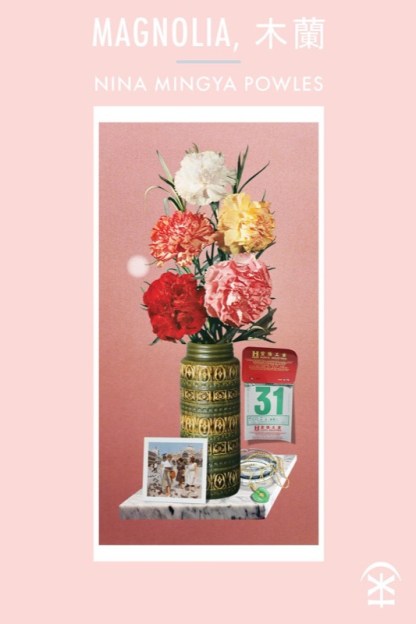 Nina Mingya Powles’ collection, Magnolia 木蘭, is an uneven book of great energy, of striking originality, but also of a great deal of borrowing. This is what good debut collections used to be like! I’m reminded of Glyn Maxwell’s disarming observation in On Poetry (Oberon Books, 2012) that he “had absolutely nothing to say till [he] was about thirty-four”. The originality of Magnolia 木蘭 is largely derived from Powles’ background and brief biographical journey. She is of mixed Malaysian-Chinese heritage, born and raised in New Zealand, spending a couple of years as a student in Shanghai and now living in the UK. Her subjects are language/s, exile and displacement, cultural loss/assimilation and identity. Shanghai is the setting for most of the poems here and behind them all loiter the shadows and models of
 I don’t think the intriguing glimpses of an individual young woman in this first poem are much developed in later ones. The Mulan figure makes a couple of other appearances in the book and is reprised in the concluding poem, ‘Magnolia, jade orchid, she-wolf’. This consists of even shorter prose observations. In Chinese, ‘mulan’ means magnolia so the fragments here cover the plant family Magnoliaceae, the film again, the Chinese characters for mulan, Shanghai moments, school days back in New Zealand and Adeline Yen Mah’s Chinese Cinderella. It’s hard not to think you are reading much the same poem, using similar techniques, though this one ends more strongly: “My mouth a river in full bloom”.
 Unlike Carson’s use of fragmentary texts, Powles is less convincing and often gives the impression of casting around for links. This is intended to reflect a sense of rootlessness (cultural, racial, personal) but there is a willed quality to the composition. One of the things Powles does have to say (thinking again of Maxwell’s observation) is the doubting of what is dream and what is real. The prose piece, ‘Miyazaki bloom’, opens with this idea and the narrator’s sense of belonging “nowhere” is repeated. This is undoubtedly heartfelt – though students living in strange cities have often felt the same way. Powles also casts around for role models (beyond Mulan) and writes about the New Zealand poet, Robin Hyde and the great Chinese author Eileen Chang, both of whom resided in Shanghai for a time. ‘Falling City’ is a rather exhausting 32 section prose exploration of Chang’s residence, mixing academic observations, personal reminiscence and moments of fantasy to end (bathetically) with inspiration for Powles: “I sit down at one of the café tables and begin to write. It is the first day of spring”.
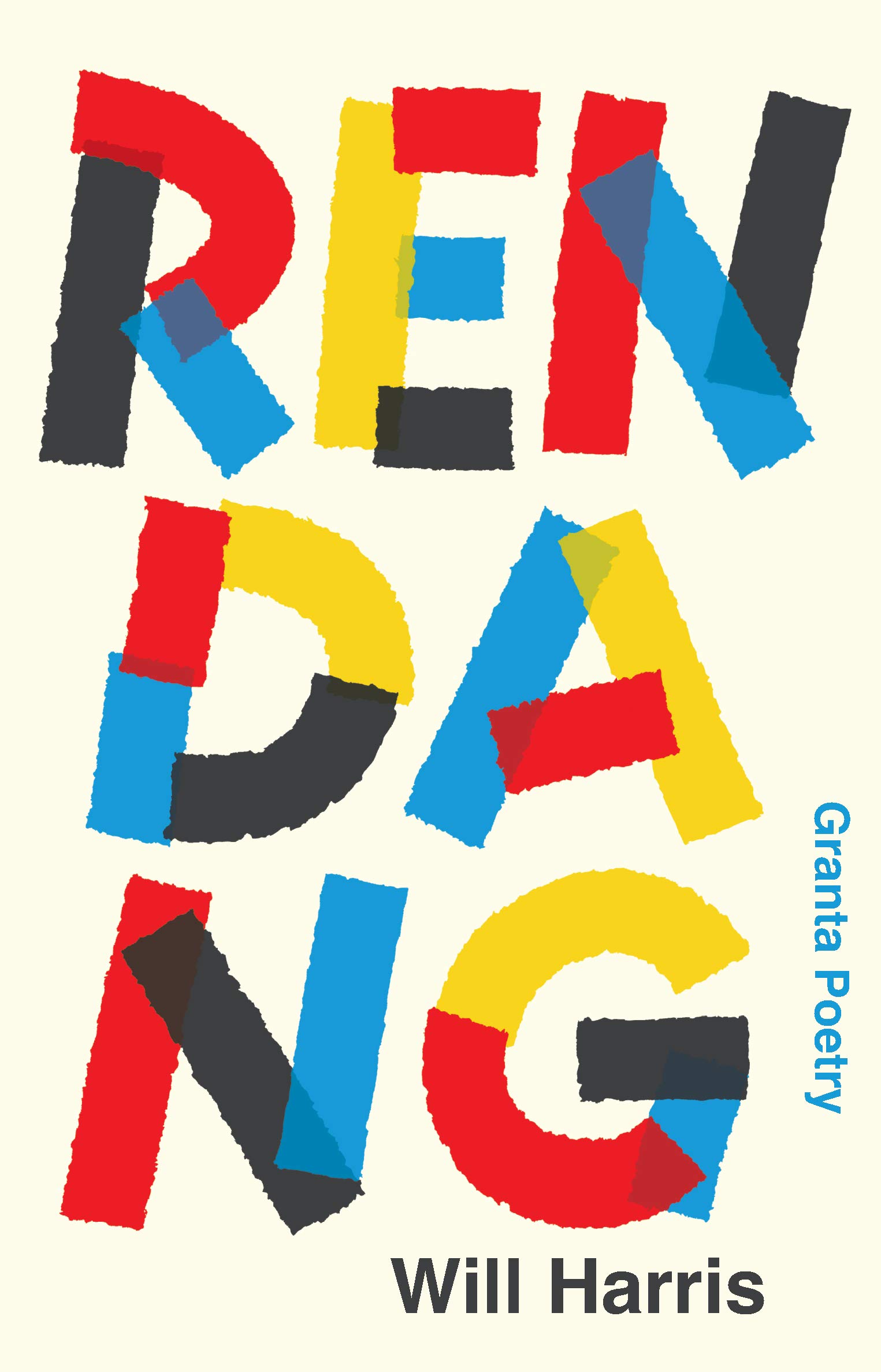 At the heart of Will Harris’ first collection is the near pun between ‘rendang’ and ‘rending’. The first term is a spicy meat dish, originating from West Sumatra, the country of Harris’ paternal grandmother, a dish traditionally served at ceremonial occasions to honour guests. In one of many self-reflexive moments, Harris imagines talking to the pages of his own book, saying “RENDANG”, but their response is, “No, no”. The dish perhaps represents a cultural and familial connectiveness that has long since been severed, subject to a process of rending, and the best poems here take this deracinated state as a given. They are voiced by a young, Anglo-Indonesian man, living in London and though there is a strong undertow of loss and distance, through techniques such as counterpoint, cataloguing and compilation, the impact of the book, if not exactly of sweetness, is of human contact and discourse, of warmth, of “something new” being made.
 This last phrase comes from ‘State-Building’, one of the more interesting, earlier poems in Rendang (a book which feels curiously hesitant and experimental in its first 42 pages, then bursts into full voice from its third section onwards). This poem characteristically draws very diverse topics together, starting from Derek Walcott’s observations on love (his image is of a broken vase which is all the stronger for having been reassembled). This thought leads to seeing a black figure vase in the British Museum which takes the poem (in a Keatsian moment, imagining what’s not represented there) to thoughts of “freeborn” men debating philosophy and propolis, or bee glue, metaphorically something that has to come “before – is crucial for – the building of a state”. The bees lead the narrator’s fluent thoughts to a humming bin bag, then a passing stranger who reminds the narrator of his grandmother and the familial connection takes him to his own father, at work repairing a vase, a process (like the poem we have just read) of assemblage using literal and metaphorical “putty, spit, glue” to bring forth, not sweetness, but in a slightly cloying rhyme, that “something new”.

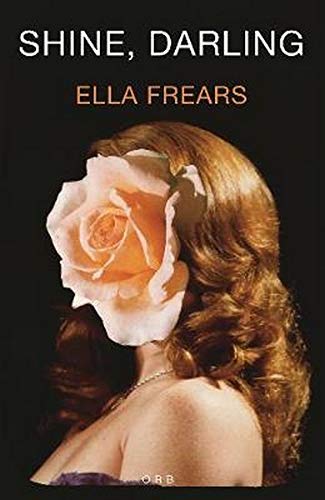 Ella Frears’ Shine, Darling is brimming with youthful exuberance and despair, yet not a jot lacking in thoughtful sophistication. Her subjects are boredom, sex, a woman’s body and the harassment that rushes to fill the void left by uncertain selfhood. A key poem is ‘The (Little) Death of the Author’, about a 13-year-old girl texting/sexting boys in her class, though the title is, of course, one Roland Barthes would have enjoyed. The narrator – looking back to her teen self – remembers pretending to be texting in the bath. The “triumph” is to make the boys think of herself naked (when she’s really eating dinner or doing homework). Hence “Text / and context are different things”. Her texts are careful constructions, evocative, alluring, full of tempting ellipses. On both sides, there is a filmic fictionalising going on (in the absence of any real sexual experience). The poem (which is a cleverly achieved irregularly lined sestina) ends with the authorial voice breaking cover: the poem itself is “a text I continue to send: Reader, I’m in the bath . . . / Nothing more to say than that. And if you like / you can join me”. The flirtation is a bit overdone (but other poems show Frears is wholly conscious of that) and the poem indicates one of this book’s chief concerns is with the difference between the truth of what happens and the truth of a poem.
 The obvious risk of such sexual adventuring is the subject of ‘Hayle Services (grease impregnated)’. The parenthetical allusion here is to Elizabeth Bishop’s ‘Filling Station’ where everything is “oil-soaked, oil-permeated [. . .] grease / impregnated”, a poem which concludes, against the odds of its grimy context, that “Somebody loves us all”. In contrast, Frears’ crappy, retail-dominated English motorway service station is (ironically) the stage for a pregnancy scare, a desperate search for a test kit in Boots and an anxious, “[p]issy” fumbling in the M&S toilet cubicle, then waiting for the “pink voila”. The headlong, impossible-to-focus, sordid anxiety here is brilliantly captured in the short, run-on lines. Frears also catches the young woman’s multiplicity of streams of consciousness, the scattershot: the potential father is present but soon forgotten, his reassurances dismissed, the pushy sales staff avoided in anger and embarrassment, the difficulty of urinating, the cringingly inappropriate joke-against-self in “et tu uterus”, the conventional moral judgement (“soiled / ruined spoiled”) and the final phone call to “Mamma, can you come pick me up?”

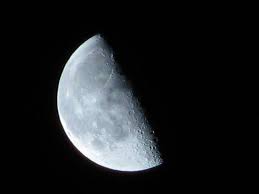 And yet, poems in Shine, Darling do regularly turn to the moon for possible explanations of actions (‘Phases of the Moon / Things I Have Done’), for a witness if not for protection (‘Walking Home One Night’) and for directions (‘I Knew Which Direction’). The latter poem is a beautiful lyric opener to the book but is rather misleading. The repetition of the word “moonlight” seems to give an almost visionary access: “no longer a word but a colour and then a feeling / and then the thing itself”. It is curious that a poet asserts the transparency of language in this way (Frears is not much concerned with the nature, limits and impositions of language, unlike Nina Mingya Powles’ shortlisted Magnolia 木蘭), but also the idea of such an untrammelled access to “the thing itself” is countered by every poem that follows. Frears’ world view may not be too much troubled by words but the very idea of a unitary truth to be beheld with clarity is profoundly doubted.
 Some films stick in the mind for reasons beyond the cinematic, don’t they? In the 2003 comedy Bruce Almighty, Jim Carey plays the character of God and, along with more obviously useful powers, he has to respond to the prayers of the world. But people are always praying! He rapidly approaches a kind of madness as voices swim around him, clamouring for attention. He takes to reading the prayers in the form of e-mails. He tries to answer them individually but is receiving them faster than he can possibly respond. He decides to set his e-mail account to automatically answer “yes” to all, assuming that this will make everybody happy. Of course, it does not.

 Perhaps one explanation of why the question ‘what is poetry?’ is so difficult to answer is because it is, to a large extent, an art of the negative, of avoidance.
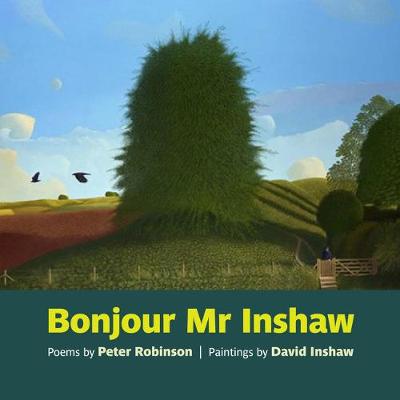


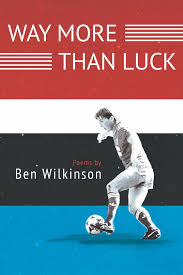 I’m not proud to admit that Way More Than Luck passed me by when it was first published. As you are probably aware, Wilkinson reviews poetry regularly for The Guardian, and he’s very familiar on social media as a poet and critic, a distance runner and a passionate Liverpool football fan. But the book’s cover (Dalglish, I think), its title and some of the publicity persuaded me that the football bit was going to be predominant. It’s certainly an almost unique aspect of the collection, but it turns out the debilitating darkness of psychological depression is an even more significant one. Wilkinson signals this concern via the book’s two epigraphs. One is about the nature of depression
 For me, it’s these psychological truths that Wilkinson is so good at conveying. There are other poems later in the book (and perhaps ‘Stag’ is an elusive example) which begin to sketch episodes of a foundering romantic relationship and ‘Building a Brighter, More Secure Future’ is a very effective excursion into witty political satire (a skilfully handled sestina based on the Conservative Party election manifesto, 2015). And there are the football poems. They comprise the central sequence of 14 poems, introduced with a heart-felt Prologue that says what follows is for the ordinary football fans, written out of “a love beyond the smear campaigns, / the media’s hooligans”. A large part of what Wilkinson has in mind here is the shocking response in parts of the media to the Hillsborough tragedy in 1989, when 96 men, women and children died (David Cain’s Forward prize shortlisted book, Truth Street, from Smokestack Books, movingly dealt with this event and the media and policing responses and
  But the poems also show how difficult it is to escape the miasma of cliché that seems to engulf football itself. Anfield is filled with a “fabled buzz”, then “the place erupt[s]”. Barnes unleashes a “a sweeping, goal-bound ball”, and a particular game offers one “last-ditch twist”. I’m reminded of Louis MacNeice’s observation (now sadly compromised in various ways, but the spirit of it remains valid, I think) that he wanted a poet not to be “too esoteric. I would have a poet able-bodied [sic], fond of talking, a reader of the newspapers, capable of pity and laughter, informed in economics, appreciative of women [sic], involved in personal relationships, actively interested in politics, susceptible to physical impressions’. There are many more of these poets around these days and to bring (even) football into the purview of poetry can hardly be a bad thing. Yet it is not an easy one and there may be some risks in deciding to headline the attempt. Ian Duhig’s blurb note to Way More Than Luck has gingerly to negotiate this issue: “The beautiful game inspires some beautiful poems in Ben Wilkinson’s terrific debut collection … but there’s far more than football to focus on here”. Yes, indeed.
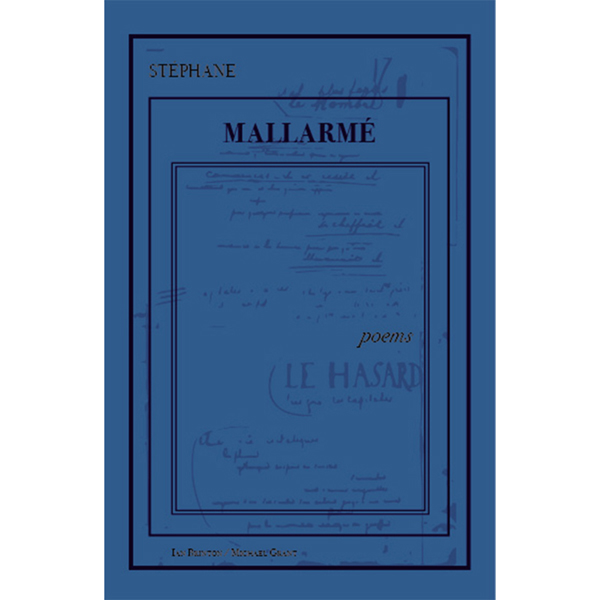 I am very grateful to Ian Brinton’s and Michael Grant’s recent translation of a selected Mallarmé (Muscaliet, 2019) for sending me back to a poet who has always proved problematic for me. My natural inclination draws me more to Louis MacNeice’s sense of the “drunkenness of things being various” (‘Snow’) – his emphasis on poetry’s engagement with “things” – and his desire to communicate pretty directly with his fellow wo/man, than with what Elizabeth McCombie bluntly calls “the exceptional difficulty” of Mallarmé’s work. I appreciate that such a dichotomy seems to shove the French poet into an ivory tower (albeit of glittering and sensuous language) while casting the Irish one as too narrowly engagé, but I’m also aware that Sartre praised Mallarmé as a “committed” writer and that, despite some evident remoteness from the ‘tribe’, the French poet’s political views were both radical and democratic.
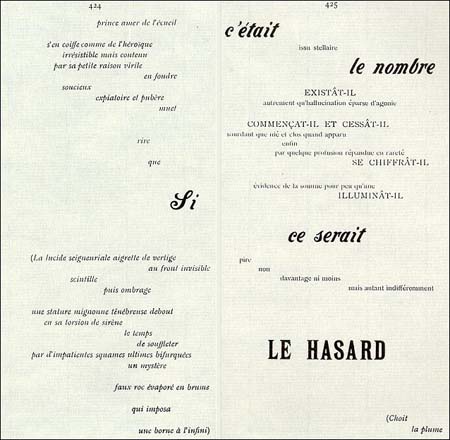
 So, if we must give up on such ‘understanding’, what was Mallarmé – writing in the 1880-90s – doing? Something recognisably very modern, it turns out. Contra Wordsworth (and MacNeice, I guess), Mallarmé and his Symbolist peers, held ordinary language in suspicious contempt as too ‘journalistic’, too wedded to a world of facts. Poetry was to be more a communication, or evocation, of emotion, of a detachment from the (merely) everyday and a recovery of the mystery of existence which rote and routine has served to bury. Such a role demanded linguistic innovation as suggested in ‘The Tomb of Edgar Poe’ in which the American writer is praised for giving “purer meaning to the words of the tribe” (tr. Brinton/Grant). Writing about Edouard Manet’s work, Mallarmé saw the need to “loose the restraint of education” which – in linguistic terms – would mean freeing language from its contingent relations to the facticity of things (and the tedium and ennui that results from our long confinement to them) and hence moving language nearer to what he called the “Idea” and the paradoxical term Nothingness (as Brinton/Grant translate “le Neant”).
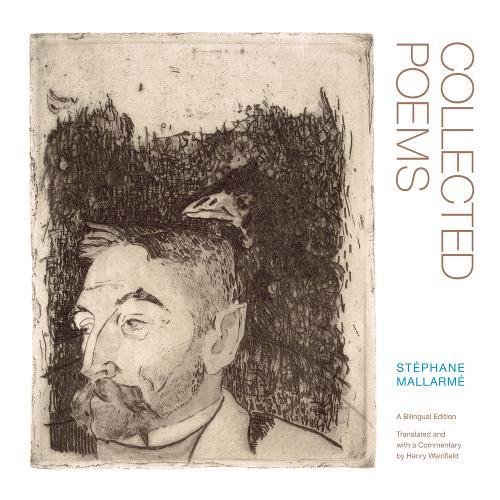 For these reasons, Mallarmé “cede[s] the initiative to words” (‘Crise de Vers’), to language’s material aspects as much as to its referential functions. Carrying over the material aspects of his French verse into English is then, to say the least, difficult. I’m inclined to agree with Weinfield (Introduction to Stephane Mallarmé Collected Poems (Uni. Of California Press, 1994) that it is “essential to work in rhyme and metre, regardless of the semantic accommodations and technical problems this entail[s]. If we take rhyme from Mallarmé, we take away the poetry”. But is that even possible? The accommodations and problems that arise are huge! Mallarmé placed the sonnet, ‘Salut’, at the start of his Poésies as a toast, salutation and mission statement. Weinfield gives the sestet as follows: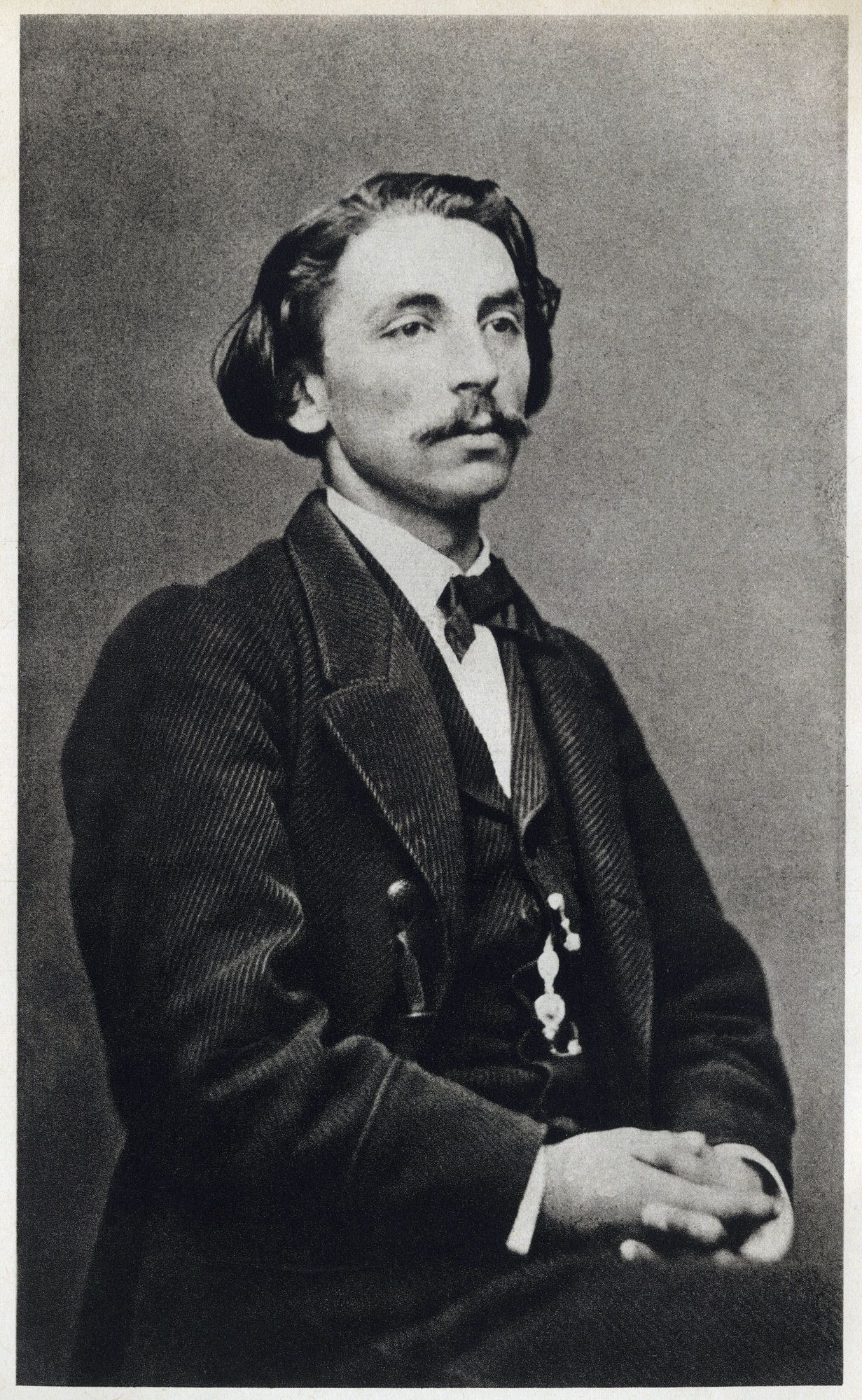

 Displaying his characteristic flair, craft and intelligence, Crucefix’s poems often begin with the visible, the tangible, the ordinary, yet through each act of attentiveness and the delicate fluidity of the language they re-discover the extraordinary in the everyday.
 Martyn Crucefix