2017 Forward First Collections Reviewed #2 – Maria Apichella

This is the second in the series of reviews I will post over the next two months of the 5 collections chosen for the 2017 Forward Prizes Felix Dennis award for best First Collection. The £5000 prize will be decided on 21st September 2017. Click on these links to access all 5 of my reviews of the 2016 shortlisted books (eventual winner Tiphanie Yanique)  and all 5 of my reviews of the 2015 shortlisted books (eventual winner Mona Arshi).

The 2017 shortlist is:

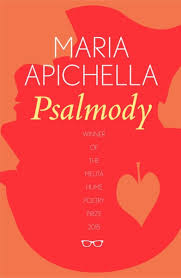
Maria Apichella – Psalmody (Eyewear Publishing)

Richard Georges – Make Us All Islands (Shearsman Books) – reviewed here

Eric Langley – Raking Light (Carcanet)

Nick Makoha – Kingdom of Gravity (Peepal Tree Press)

Ocean Vuong – Night Sky with Exit Wounds (Cape Poetry)
download

Many thanks to Eyewear Publishing for providing a copy of Maria Apichella’s book for review purposes.

A psalmody is a collection of psalms – sacred hymns or songs – or the act of singing such songs. In Reflections on the Psalms (1964), C. S. Lewis argued the psalms of the Old Testament are poems: “not doctrinal treatises, nor even sermons [but] lyrics, with all the licenses and all the formalities, the hyperboles, the emotional rather than logical connections, which are proper to lyric poetry”. Maria Apichella’s Psalmody adheres to this to some degree but also comes with a massive dose of narrative and characterization which too often conjures up bad romantic novels. This uneasy cocktail is integral to the whole project. Apichella has said she wanted to “write my own Psalms; that is, poems as authentic prayer [. . .] speech acts which called out to God, the self and the world [. . . ] without being kitsch, or ironic”. She also intended to tell “a contemporary story about the love between an atheist and a Christian”.

download

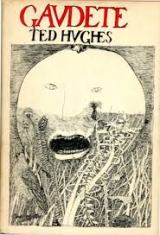
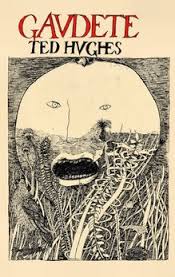
She chooses to do this in a very readable, even racy, form of free verse in the voice of the young Christian woman (like Apichella, she seems to be a post-graduate student, studying the Psalms, at Aberystwyth University). The love interest is David, a Welsh squaddie, home on leave from a vague posting “in flatlands, sand, thudding heat”. The 93 poems make a great play of being rooted in the everyday, most notably through an almost obsessive itemizing of food and cooking, a delight in everyday slang and bathetic details – Lidls, Barclays, the Bus Stop, Aberystwyth in general – while also addressing Apichella’s chosen religious questions. When it works the effect is brave and begins to heal the rift between the material and spiritual that deforms our modern world; when it doesn’t work it’s like watching your Dad dancing. Psalmody sacrifices a lot to appear relevant. Surprisingly, this collection reminded me of Ted Hughes’ Gaudete – also a mix of speedy narrative and spiritual intent. These days most critics don’t rate Hughes’ narrative but they do praise the brief, prayer-like poems (based on Kannadan vacanas) that conclude the book. Apichella’s more psalm-like pieces are scattered throughout the narrative, but are worth searching out (for example, poems 26, 28, 44, 45, 55, 57, 72, 74).
download

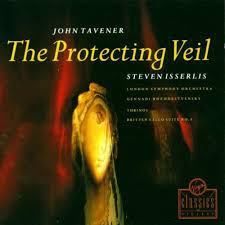
So – girl meets boy. Besides gender, the two are set up as complete contrasts. She is a “pale believer”, he’s a “Godless” folk singer; he’s a “narrow-minded atheist”, she’s a “holy-roller”; he likes jazz, she likes the psalms; she likes The Protecting Veil, he still likes jazz (Miles Davis especially). She’s angsty, tense, rather reclusive; he’s calm, kind and talks domineeringly. And couples are like this – and I can see these stereotypes have a larger, symbolic purpose – but the female narrative voice slips so easily into a Mills and Boon mode. David’s face is like “corn-stubble”; he is “chisel / copper / grizzle”; he’s a “pebble of strength” (this when he introduces her to his middle-class mother); he likes his coffee strong, though he’s “soothing / as tea, strong as a leather arm / chair”. The term ‘mansplaining’ might have been invented for David and our heroine often feels “he’s right (about so many things. / More clear and kind than I)”. To give Apichella her due, there are limits to this, especially later on. David is called a “wife” because, though he does fix a dripping tap, he also “roasts chicken / for a saffron paella”. The narrator does begin to challenge David as the relationship develops, but the first half of the book can feel like wading through some very thick, treacle-y, gender stereotyping at times.
download

The challenge initially is that David’s bluff, masculine, physical, atheistic presence troubles and changes the female narrator. To begin with, she is clear that her faith defines her. Driving to a party, psalms run through her head, “whispering like a cassette”. Her interest in David is expressed through asking “Does he know the Lord?” As much as he is defined and confined by his military role, she also believes the same about her religious belief: “Love’s the law I obey”. In Poem 10 she describes herself as “a Monastery carved into a granite hill” (she also compares herself to Aberystwyth’s Constitution Hill, another rocky outcrop) and the psalms surface once more: they “bubble / with words free from context, emptied of time and place, / as I wish to be”.

 

223120003_ConstitutionHill_16x9
Constitution Hill


The self-regarding quality of such comments and their absolutism prepare the reader for change. David arrives in cycling shorts, hairy legs, noisily spilling things, liking raw mushrooms, not following recipes, quoting Dylan Thomas’ “The force that through the green fuse drives the flower”. The two are surprisingly drawn to each other. David besieges her in an unlikely conversation:


Stony one. You are

no monastery.

They are full of men,

mutts, beggars.

If you are,

you must let me in.

I am all these and more”


She explicitly grapples with what is happening as a battle between Eros and Agape, the former initially termed “ridiculous”, the latter is “the anchor / I cannot lose”. Perilously echoing a thousand romantic novels again, she slowly accepts Eros and the body as “good” and ultimately “Holy”, though Eyewear’s blurb’s promise of “vivid eroticism” is hardly accurate; more typical is the comment, “Why will you kiss me but not finish the job?”

A second gap in the text is exactly what sort of religious faith the young woman adheres to. Poems 45 – 47, record her taking David to church, insisting “If David won’t hear me worship / he’ll never know the core of me”. David surprisingly seems embarrassed by the expressiveness of her worship and the occasion distances the lovers from each other. Her personal faith is discussed using the catch-all term “numinous”, glossed as a sense of interconnectedness, of “webbed dimensions”, a filling of “all that can be filled”, a “merging” and perhaps the slow unlocking of the monastery to a stronger erotic sense is consistent with this. But the woman also retains her belief that David himself is in need of religion. For me there’s little in the text to suggest this, other than her insisting that he is “blind”, that he “may be lost”, but more importantly perhaps – and a third gap in the text – is the absence of any discussion of the nature of evil, in contrast to the numinous good, and David’s military connections would surely offer fertile ground for such a debate.

comment_TKZuFWvaDZ8yUgmXPGBqrBcIEcz1PsVz

David returns to his military duties later in the book. What he does is again left vague, if not downright evasive:


[His] job’s all jargon, bullet-

holed paper work.

[. . .] plans to occupy, re-make cities,

countries, traditions, bedrooms.


His own description is “cartographer” or “paper-pusher”. The book ducks the real challenge here. As a woman of faith, the narrator’s issues would surely be more with David’s complicity in war, death and destruction than with whether she takes him to bed, to church or gets him to like the music of John Tavener. Unfortunately, David’s singing and his warrior status have more to do with linking him symbolically with David, the singer of the Psalms, and they create complications for the reader that Apichella does not engage with.

It’s a surprise when the relationship resumes. David returns (vaguely, “Wounded”). I take Poem 88, making a virtue of his bluntness, to be recording his voice:


So,

it turns out

I want you,

after all

the fannying about.


He now seems to accept his need for spiritual guidance: “Your words are direct as a good map”. She accepts him back in the most cryptic line in the book: “David’s an atheist after God’s own heart”. I like the paradox; but I can’t make much sense of it. Apichella’s recurrent and usually grounding food imagery also reaches a strange apogee here. She is imaged as a fallen apple; David a carrot. The powerful, pleading imperatives of the Biblical Psalms are re-deployed here to ask for a greater power to turn them both, to merge them both, into an apple and carrot salad. I kid you not.

Grated-Carrot-and-Apple-Salad-Edited-4

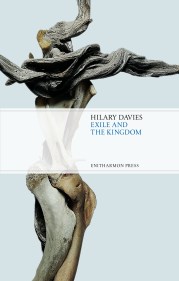
I  have tried hard with this collection. Its intention to interrogate “love and faith in the contemporary world” interests me. The idea of re-writing the Psalms for a modern context is exciting. But the artistic choice of the romantic narrative proves inappropriate and exerts too much of its own stereotyping gravity. Nor do I feel Apichella is wholly in control of the tone, irony and symbolism she uses or takes David’s military role seriously enough. Her ambition is to be applauded but a recent collection like Hilary Davies’ Exile and the Kingdom more successfully tackles many of these issues. (I reviewed Davies’ book in January 2017 and have also posted an interview with her).
 

9781910392171

Apichella’s narrator concludes by admitting her talents are not in music but her ambition is still to “roar / a song” and her greatest strength is her ability to “respond”. Psalmody is not yet the roar but if really responsive – if Apichella can more convincingly come down off the “granite hill” – I will be eager to read her next collection.
Two-Headed Calf: Review of Jacob Polley’s ‘Jackself’

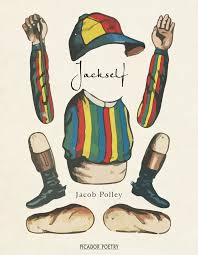
Of those people I spoke to, many poetry readers were surprised and delighted that Jacob Polley’s Jackself recently won the 2016 T.S. Eliot Prize against competition from the likes of Capildeo, Duhig, Oswald and Riley among others. Caught between a desire that prizes go only to the very best work and a wish that poetry’s few rewards be more equitably distributed, I was also delighted as this is a book which is bold and inventive, against the grain and successfully ambitious. (Apologies for some loss of formatting of any quotes that follow).

imgres

The book’s novelistic aspects have been noted in reviews – they are easier to discuss than its poetic achievements. Jackself is a boy growing up in the rural north of England, befriended by Jeremy Wren who, within a few years, commits suicide, leaving Jackself to deal with the grief. As ‘novel’ material, both the opening and close of the book refuse to provide what a reader might be looking for but as poetry it delivers what Heaney characterised as the “superfluity of language’s own resources. It’s a kind of overdoing it. Enough is not enough when it comes to poetry” (Giving Their Word, 2002). Polley’s language is charged, improvisatory and colloquial. It is fluid and rhythmic (more modern, less ballad-like than some reviews have suggested). It has a crusted, superfluous quality to it that reminds me of Shakespeare, or what Hughes has described of Shakespeare’s excess, and Jackself is not thinned out by constant ironising, rather it’s thickened by a weight of language, history and imaginative hard work. It’s very impressive – but needs a few reads before it gives itself up.

It’s best to begin with Jackself’s birth poem, ‘Every Creeping Thing’, the second in the collection (I’ll return to the first, ‘The House that Jack Built’ later). The natural world is important to the boy and this book and his arrival “at the door / of the door of the door” is also a journey “by water mite / by the snail on its slick of light”. There’s a Hughesian feel to some of the poems (Crow’s ‘Examination at the Womb-door’ here?) but Jackself enters a childhood freshly and vividly caught in its exploration by mouth and “curatorial spit”, cat-watching, one-piece suits and sleep that ends by “mak[ing] / the world over again” (‘Jack Sprat’). All seems good and safe though by the sixth birthday party with its “six / goody candles” there is a noting of absence: “no wishing it wouldn’t be / or wasn’t or would better be / no wondering how so hard it hurts” (‘The Goodies’). This seems proleptic of darker questions to come and is also a good example of Polley’s vigorously colloquial style, full of dynamic sound patterning.
images

It’s never easy to determine Jackself’s age in the book (occasionally I felt he was older than his responses suggested). I think Rimbaud suggests the detachment of self-consciousness kicks in around 7 years old so it’s perhaps at that age that Jackself is “afraid like snow he’ll wane or drift / before he can hold /  the road out front” (‘Jackself’s Quality’). He also explores “the lovely lofts / of Lamanby” – his house – showing a reflective, curiosity which is notably not catered for at school. ‘Lessons’ is great poem about the failures of education (I write as a teacher) with Jackself taken away to a corner, impelled to worship, to eat shit school dinners, to be humiliated before his parents. The thumbnail sketch of the Headmaster, Mr Workbench is worthy of Dickens as he “solemnly inclines / his one-thought- / at-a-time head”. Polley captures Jackself’s alternative headspace beautifully:


his mind a corner

of beehives

his fingers a box of matches

his nose the afternoon rain

[. . . ]

his tongue an earwig

before it hatches

imgres

Where Jackself is at home is in the natural world. ‘Applejack’ has strong echoes of Hughes’ ‘Wodwo’ with its instinctual, open-minded, pre-language, exploratory movement:


by hedgehog path

and badger path, Jackself

happens with the clouds

into sunlight

images

The book lights up differently with the appearance of Jeremy Wren, a more wise-cracking, cynical, entrepreneurial and ultimately more troubled young man than Jackself. The pair strike up a double act – they both respond powerfully to the natural world and their dialogues are both funny and poignant. In ‘Les Symbolistes’, getting drunk on “white cider and Malibu”, Jackself let’s slip for the first time an interest in poetry: “A POEM! Wren roars / you’re creepy as a two-headed calf”. This is also one of the early moments when we see Wren’s troubled side – his father beats him. The jigsaw pieces of the boy’s troubles are carefully placed by Polley. He and Jackself meet in a goose shed, as if both on the run from something; ‘It’ asks “tell us what’s wrong, Jeremy Wren”; in ‘Snow Dad’ Wren insists they make a replacement father snow-man but also recalls when he climbed into a chest freezer. He hangs himself in ‘Pact’. He “hangs thinking fuck I’ve left / no note until he’s fucking dead”. Maitreyabandhu has written of not dissimilar events in his sequence ‘Stephen’ in The Crumb Road (Bloodaxe, 2013).

images

Jackself now becomes a study in teenage grief. ‘The Hole’ has Jackself contemplating Wren’s grave (this is one of the poems where the language seems less comfortably matched with the likely age of the boy). One way he tries to deal with the loss is by writing. ‘Jack O’Lantern’ is a deconstructed – or as they say of websites, still in construction – ballad with Jackself trying, then rejecting, lines in a fashion that is both humorous and touching (“no           again . . .  no          again”).

Polley’s achievement is to find a form and voice which can encompass all this . . . stuff. Long and short lines are scattered across the pages, poems often start in media res, often lack an explicit subject, dialogue is unmarked and the reader must sort things out. But this all adds urgency to the telling and a fluidity to the narrative perspectives. Polley’s Jackself often reminded me of David Jones’ protagonist, Private John Ball, from In Parenthesis (1937). The two share a mythic quality, representative but individualised. In ‘The Misery’ Jackself becomes/sees himself as a heroic dragon-slayer and the dragon he wishes to kill is his grief at the death of Wren. The disturbed psychological perspective implied by this is a result of his depression over the suicide of his friend – but the poem manages a marvellous mock-heroic tone:


from his weapon chest,

the sheath knife, Eglantine                      from his wardrobe,

his denim jacket, torch, tool belt, tin camping cup,

rucksack, horned hat and Gore-Tex breastplate

imgres

What he kills in the end is just a rabbit but the ritualistic/symbolic nature of his action has an effect. It takes a while, during which he continues his (often hilarious) dialogues with the dead Wren and finds solace in the natural world but ‘Tithe’ indicates through its page lay-out, its vast white spaces, that Wren vanishes eventually, Jackself moves on.

Hard to end such a book and I confess I didn’t find the ballad-like ‘Jack O’Bedlam’ very satisfying, but perhaps I’m falling foul of the novel reader’s desire for narrative closure (though I thought we’d all grown out of that). This is in contrast to the opening poem of the book, ‘The House that Jack Built’, which I found powerful in its own right as a historical survey of the region in which Jackself’s brief story takes place. Polley writes of the trees being felled and used, re-growing through history, interactions with burgeoning human society, the Industrial Revolution, canal building, eventually to the construction of Lamanby itself. Critics will want to debate its relevance to the sequence of personal biography that follows it and concludes with no explicit ‘picking up’ of the opening poem’s themes. It is a problem; but the depth of history this opening poem implies, its focus on the natural world, its foregrounding of (for want of a better word) folk culture surely gains Polley permission for the way in which he tells Jackself’s tale, for it as a poem. Like Jones’ use of mythic, folkloric and Shakespearean materials in In Parenthesis, Polley raises the small-scale biographical to a type without losing anything of the minute particulars which enable its readers to read Jack as themselves.

2016 Forward First Collections Reviewed #3: Ruby Robinson

This is the third in the series of reviews I will post over the next two months of the 5 collections chosen for the 2016 Forward Prizes Felix Dennis award for best First Collection. The £5000 prize will be decided on 20th September. Click here for all 5 of my reviews of the 2015 shortlisted books (eventual winner Mona Arshi).

The 2016 shortlist is:

Nancy CampbellDisko Bay (Enitharmon Press) – click here for my review of this book
Ron CareyDistance (Revival Press) – click here for my review of this book
Harry GilesTonguit (Freight Books)
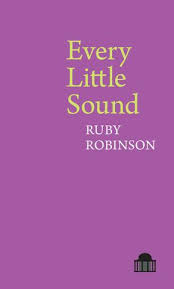
Ruby RobinsonEvery Little Sound (Liverpool University Press)
Tiphanie YaniqueWife (Peepal Tree Press)

imgres

Thanks to Pavilion Poetry/Liverpool University Press for providing a copy of Ruby Robinson’s book for review purposes.

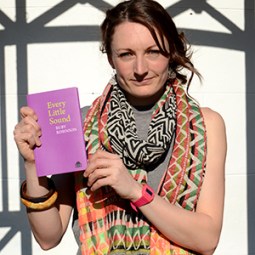
It wasn’t until his second book that Don Paterson was inviting his reader into the “little church” of the poem. Ruby Robinson’s first book’s opening poem ushers us in through “the trap / door of a modern barn conversion” and though full of apparent comforts (paintings, chairs for guests, soup, bread, socks, duvet) it’s really a decidedly unnerving place. The walls are explicitly said not to have eyes, but the narrative voice surely knows too much about us: our loneliness, right down to our “deepest thread, like a baked-in hair”. And even if the walls do not watch, they are full of the “shadows of stags [. . .] cast like stalking giants”. There’s a lot in Robinson’s book which reminds me of another debut collection from way back in 1983 where the lovers describe themselves as “fascinated by our own anaesthesia, / our inability to function”, the TV buzzes half-watched in a corner, emotions grow ever more dysfunctional, “shorter and faster now”, and there is talk of separation in halting, heavily punctuated non sequiturs.

imgres

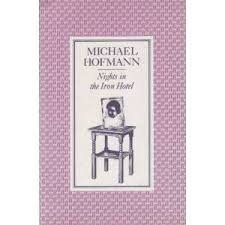
That was Michael Hofmann’s Nights in the Iron Hotel (1983) and Robinson’s book shares an interest in disconnected scientific facts to express the troubling gulf between thought and feeling. One of Hofmann’s characters moves “the fifty-seven muscles it takes to smile” and Robinson’s ‘Time’ sets out from the knowledge that with a stethoscope a rodent’s heart murmur can be divided into “constituent beats”, spurring the lovers to analyse themselves as closely, as if that might reveal something important about their emotional lives. Stethoscope and heart-beats recur in ‘Love’ where again the biological processes of nerve impulse and ventricles are searched for something resembling meaning. ‘Breathe Deep’ does the same with the stomata on the undersides of leaves and this close observation (of a certain type) lies behind the collection’s title. The process of ‘internal gain’ occurs when we are under threat and is an increase in our perception (of sound especially) so that we hear Every Little Sound. As with Hofmann, Robinson’s attention to detail – a sort of hyper-perception – is really a symptom of a soul in trouble. Reading these poems is often like watching a fragment of material caught on a barbed fence, trembling and thrilling hopelessly in the wind.

The world of Every Little Sound is a thoroughly deracinated one – most everything has been torn up by the roots. Amongst snow, bluebottles, the word ‘thanks’, the remains of a kebab, ‘Hope’ notes “one IKEA bag like a dead bird whose wings won’t die”. All these items, hardly more than listed, seem to be thrown “overboard” into uprooted, meaningless chaos yet the human mind still despatches its uncertain “search party”. The emotional impact of many poems in the book lies in this: the continuing desire to make some sense in the face of chaos. In the midst of a discussion of romantic feelings, a narrator reflects, “I am // in touch with my feelings” but the line-break subverts the truth of the statement and the poem ends in disconnects of feeling, a brusqueness of tone, the brutal chopping of punctuation: “I could tell he felt like crying / and I didn’t mind. We finished our beer, shook hands, went home”.

imgres

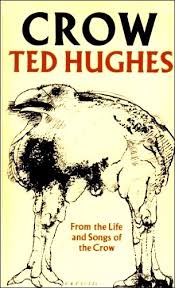
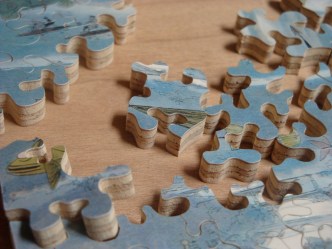
Another poem’s narrator talks of her “nerve endings in exile (‘Love II’) and in ‘This Night’ (which might be a distant parody of Lorenzo and Jessica’s “In such a night” speeches from Act 5 of The Merchant of Venice) the narrator confesses she is “more in love tonight, with ideas / and arbitrary things, / than I am with you”. Even in the throes of sexual ecstasy, there remain “two glazed eyes, observing it” (‘Orgasm’). ‘Winter’ uses both right and left justified lines to create an unnaturally evenly-spaced robot-toned prose passage about keeping a tortoise in the fridge through winter. This is where the real originality of these poems is to be found alongside several pieces which evoke the inevitable consequence of such deracinated perception – the fragmentation of the sense of self. Robinson has named Ted Hughes as one of her influences and, in one of the best poems here, ‘Unlocatable’, we hear him in the representation of psychic fragmentation through the physical. The narrator records her dismemberment at her own hands; at one point “a crow on a hard shoulder / delicately inspect[s] the entrails”. Her head is sawn off until the self lies in fragments, “half-witted, unpicked, flaked / out, half a leg, a spewing mouth, brittle hair, / scooped-out heart”.

Close_up_of_Hand_Cut_Jigsaw_Puzzle

There are moments in the book when this sort of Hughesian shrillness and hyperbole-ramped-past-10 is reached for too easily. But ‘Unlocatable’ also  hints at the real life grounding for the edge-of-panic, urgent, deadly serious nature of Robinson’s shattered vision. In the poem’s penultimate stanza we are told:


My mother, somewhere,

like a drowned fish on the very end of some

fucker’s very long line

smashing herself against the floor

to an unnatural beat


To her great credit Robinson does not use past dislocations in her childhood and family relationships to pursue poetic confessionalism or misery memoir. This potentially gossipy backdrop is aptly sketched only in a fragmentary manner across several poems (the reader left to piece things together as must the family).

RubyRobinsonPavilion-1h

‘Truth’ seems to be an ars poetica of sorts and it is the finding of the mother’s voice “behind the sofa”, the gathering up of this “small voice” and handing it round (as poems?) that spurs the writer on. In particular, the mother’s experiences seem to find echoes in other people, in the media, in the family. A reference to the “death of a violinist” seems obscure but is surely to Frances Andrade whose history of sexual abuse by a music teacher led to her suicide. As I’ve said, the exact events of the mother’s life are left unclear but there is no doubt that men have played a destructive role. One of the more explicit poems, ‘My Mother’, records tragically self-destructive attitudes in her belief that men “cannot be blamed” and that a woman must “know her place, should wait”. Robinson is more clear elsewhere that comments made by her mother have yielded material for poems (including the book title). The images of men are seldom appealing or sympathetic: both ‘Undress’ and ‘Ire’ suggest manipulative and coercive figures, more often than not treating women as sex objects: “He peeled the duvet away // slowly, dragging heat from the flesh / just as you’d freeze-dry meat or fresh fruit”. Robinson mostly treats these issues on a personal level though in ‘Flashback’ the wider context of sexual abuse and domestic violence comes into view with allusions to Radio 1 DJs, another woman’s suicide, courtroom scenes and the earlier image of the fisherman reappears: “He keeps her on a line like a fish / against a rip current”.

All these elements feed into the major poem in this book, ‘Apology’. This seems more explicit about the relationship between mother and daughter and is a howl of survivor guilt, regret, anger, apologising to her mother that things in their lives have turned out as they have. The book’s jacket blurb talks about the poems’ expressions of connectedness and a capacity to love but it has to be said there is precious little of these themes and most of what there is comes in ‘Apology’. Written in spilling, rolling 3/4 line sections (like Ginsberg’s Howl perhaps) the narrator obsessively apologises (mostly for things beyond her control, of course): “I’m sorry you’ve had to withstand such torrents of knowledgeless advice and legal toxification”. More than anywhere else in this painful book, this poem manages to ask, “Is it too ambitious to hope?” The answer given is not reassuring or confident: “We learn to accept the clouds for what they are and wait, patiently”. For the end of a major poem this is undramatic and anticlimactic but Robinson’s aim throughout is more concerned with telling the truths as she and her family have experienced them than with crafting something more consolatory. The final poem is addressed ‘To My Family’ and enacts an interesting withdrawal from such painfully personal material. Robinson retains/regains an artistic distance that augurs well for future collections which will have to draw inspiration from other materials. There is a quiet, deserved, hard-won confidence here: “I’m just words. And you have not the tenacity / to smother me, so I’ll wait here, written, biding my time”.

images


2016 Forward First Collections Reviewed #2: Nancy Campbell

This is the second in the series of reviews I will post over the next two months of the 5 collections chosen for the 2016 Forward Prizes Felix Dennis award for best First Collection. The £5000 prize will be decided on 20th September. Click here for all 5 of my reviews of the 2015 shortlisted books (eventual winner Mona Arshi).

The 2016 shortlist is:

Nancy CampbellDisko Bay (Enitharmon Press)
Ron CareyDistance (Revival Press) – click here for my review of this book
Harry GilesTonguit (Freight Books)
Ruby RobinsonEvery Little Sound (Liverpool University Press)
Tiphanie YaniqueWife (Peepal Tree Press)

disko_bay[1]

Thanks to Enitharmon Press for providing a copy of Nancy Campbell’s book for review purposes.

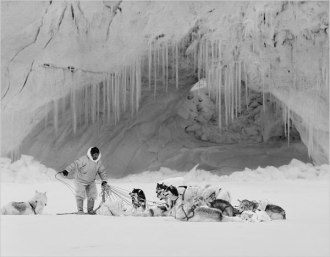
The concluding poem of Nancy Campbell’s collection Disko Bay is, I think, a good place to begin. In ‘Giving Up on Capitalism’, an unnamed boy makes kayaks and sells them for one, then two kroner (these poems are mostly set in Greenland). He hands his earnings to his mother who buys basics like coffee, sugar, needles, cotton and, more ominously, whisky. If this is the nirvana of capitalist enterprise it hardly gets beyond subsistence level and then only to poisonous effect. On the third occasion he instead decides to construct a kayak for himself: taking the few remaining skins, he “pegged them down deftly / and paddled away”. The point of rejection is simply made, but the simplicity has a mythic, typological impact. The poem’s form is simple, repetitive, like a piece of folklore, an oral transmission perhaps, and – characteristic of the whole collection – the vocabulary is plain to such a degree that the reader is impressed by a paucity or poverty or essentialism (depending on how successful you think it is). Certainly this is a book unlike any other you’ll read this year, drawing on myths and landscapes of the far north (the opening section of the book has poem titles in Greenlandic first, then English). Its impact is often impersonal but Campbell’s knowledge derives from her several residencies in the region and she deploys it in a skilful and poetically knowing fashion.

greenland5

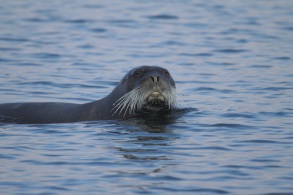
Above all, these poems convey the harshness of scraping a human existence in the Arctic Circle, perhaps most obviously in the section called ‘Ruin Island’. An epigraph quotes the Eskimo, Osarqaq: “Our tales are narratives of human experience, and therefore do not always tell of beautiful things”. Several poems follow the exploits of Qujaavaarssuk, a heroic figure and general strong man, who is reduced to singing a dirge at the troubled fishing grounds and is advised by “a man who is not his father” (a break in traditional forms of transmission here?) that the one thing to be relied upon is that “hunger will come of its own accord”. ‘Hospitality’ in such circumstances may consist of feeding guests “the kidneys of a black seal / as the ice harden[s]”. Qujaavaarssuk’s immediate difficulty is the presence of too much ice (a deliberately ironic comment on the shrinking ice caps of our day): he sees the shadows of seals moving beneath it and sets out “to the ice edge to follow them” but what Campbell is interested in (these are contemporary poems, not slavish myth-reproductions) is the failure of the hunter. In ‘Danger of Snow Blindness’, Qujaavaarssuk returns for the first time “his sled empty, his kamiks [boots] clean”. ‘The Last Seal’ opens:

There was nothing left to feed the dogs.

Qujaavaarssuk shot them, one by one

and fed them to each other.

seal-5

To the contemporary reader, what lies largely unspoken beneath these chilly, often curt, unsentimental chips off a mythic block is, of course, our own awareness the adverse effects of climate change. ‘Ruin Island’ becomes apocalyptic in tone so that the words spoken by a hunter that conclude the sequence, words spoken by Jorsias Ammonsen in a real interview conducted in 2006, are presented as the reply of a hunter “who can no longer hear the question”. In this way, Campbell tragically ironises Ammonsen’s proud, nostalgic, heroic, perhaps hopeless comments:

When we were young

no place seemed too far away for hunting.


We travelled a long way,

too far to come back the same day.

We slept in stone caves

and were cold in winter.


Nothing is too harsh

when you are accustomed to it.

Nancy Campbell 2012

Campbell tries to remain true to the plain directness and dignity of such a voice in most of these poems. The figure of the poet seldom intrudes. When it does she is trying to learn the “soft uvulars” of a new language which seem like “dark flocks of sound I’ll never net, or say”. Difficulties of expression in one language are compounded by problems of communicating across distance to her own homeland: “Since I can’t post a letter this far north, / I’m sending you an Arctic snowstorm”. ‘The Night Hunter’ is typical in its use of a simple lexis – snow, door, harbour, boat, blood, sled, knife – and a repeating form of verse as if the polar climate has sheared away more baroque elaborations of language and form. At first this feels cramping, but as Campbell persists and insists this really is what she intends, the simplicity seems more likely to put us in touch with the elements, the elemental, the bottom line of harsh Arctic existence.

With figures like the hunter Qujaavaarssuk so prominent you might anticipate a macho sort of world but the harsh conditions seem to teach an underlying humility (even to men) and Campbell has a number of female narrators who are clearly no push over. In ‘The Seal People’ a seal hunter’s wife watches the vindictive spirits of killed seals approach by boat and though threatened by them her voice does not falter through three steady quatrains, the verse’s repetitions here expressive of her firm courage. ‘The Hunter’s Wife Becomes the Sun’ is a major poem (its form is a sestina with its obsessive recurrences). Here, a hunter’s wife gives him a tinny Christian memento for protection. The hunter is more concerned with the reality of death and an apocalyptic sense of the world’s end (Campbell’s chosen rhyme words are tin, angel, window, box, candle, darkness). But his wife insists on the need for “light”, transforming herself into a “vast white wake / of stars” which might be considered angels, though the man himself finds it hard to shrug off his pessimism: “At the world’s last window, I light another candle”. The shamanic implications of their exchange are more explicitly played out in three translations of crude Greenlandic Qavak songs, originally collected in the 1950s. They are spoken by a “terrible mother” a “female shaman” and an omniscient “wicked woman”, the latter advising the only way to tackle an enemy is to bite off and employ her clitoris as an arrowhead. Neither the blunt obscenity or implied moral judgement can hide the suggestion that this remote culture clearly understands the importance of the female in ultimate survival.

iceberg-in-disco-bay-greenland_6a7e

One of the impressive things about Disko Bay is that it is eco-poetry without shed loads of landscape description. Those vindictive seal spirits carry a powerful ecological message in their “round, black eyes” – less for the Greenland hunter and his wife (whose place and role within a traditional, sustainable Arctic ecosystem is be unlikely to unbalance things) but to us with our petrol engines, plastics and carbon complacencies. Another success of the book is its use of myths redolent of Nordic and North American materials without distracting echoes of Ted Hughes’ trickster figure Crow. In ‘Fragment’ a severed raven’s wing in the snow is enough to imply the global problem: “Never to breed, never to scavenge / on scarlet seal hearts by the ice edge”. It is brave of Campbell to delay the more eco-explicit poems to later sections of the book. Part three sets off from the premonition that “the future is full of riddles” and ‘Conversations’ conveys both the mystery and the certainty of climate change: “I don’t think it is one thing / I think it is a combination of things / a combination of everything”. The riddle-subjects appropriately include a tsunami and an iceberg but not the dirty complexities of the ever-hungry, seldom-satisfying capitalism rejected by the boy who constructs a kayak not to be sold but for his own setting out in this fine, unusual book’s concluding poem.

Read more on Nancy Campbell – in discussion with Forward Arts Foundation.


Reading Archive: April – June 2016

Up-dated June 2016

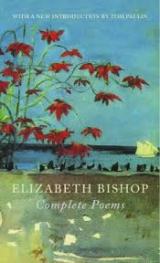
This is turning out to be the place where I often admit my lacks and ignorance. Elizabeth Bishop – apart from 3 or 4 of the obvious poems – has always been something of a blank spot with me. I have been re-reading her Complete Poems and understanding maybe my problem lies in getting to like her earlier work before A Cold Spring (1955). What I do begin to appreciate more clearly is her modesty, accuracy of observation and own-furrow-ploughing determination as a poet.

imgres

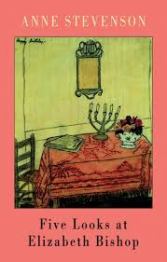
Anne Stevenson’s Five Looks at Elizabeth Bishop has been helpful with thoughts such as “Bishop’s instinct was to look hard enough at nature to lose herself in it – and thus, as in the Biblical paradox, find herself”.

imgres

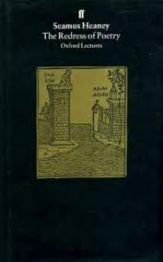
As has Seamus Heaney’s ‘Counting to a Hundred: on Elizabeth Bishop’ (from The Redress of Poetry). He argues, at her best, she reveals how “obsessive attention to detail can come through into visionary understanding  [. . .] intense focus can amplify rather than narrow our sense of scope” (something I have written about in recent thoughts on McGilchrist’s ideas about right/left brain work).

images

I’ve also been reading two collections by friends . . .

imgres

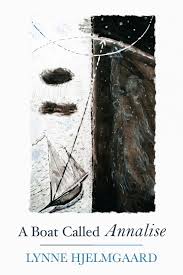
Lynne Hjelmgaard’s A Boat Called Annalise (Seren) is a sequence of love poems to a husband and a sailing boat and vies with Bishop in some of its evocations of tropical harbours: “We fell asleep with the roosters, / the waves, rumblings in the bay”. For a land-lubber like me, there are powerful portraits of life at sea such as ‘That Feeling of Boat’: “We confide and trust in twenty tons, / talk to it, nurture it”. ‘White Clover’ is a delicately symbolic poem dedicated to the late, much-missed Dannie Abse.

imgres

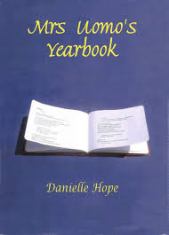
Danielle Hope’s Mrs Uomo’s Yearbook (Rockingham), which I mentioned in an earlier blog, again shows how effective the Mrs Uomo character is (a near relation of Zbigniew Herbert’s Mr Cogito) as a vehicle for social commentary which is quirky, engagingly funny and incisive, particularly about the NHS for which Hope works as a doctor.

Up-dated May 2016

imgres

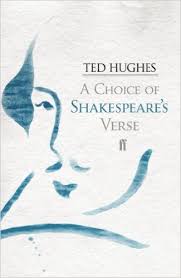
Last month it was heavy-Hughes (as you’ll see from my April up-date below) so half following that lead and half influenced by the 400th anniversary celebrations across the media, I have been swimming my way through Hughes’ A Choice of Shakespeare’s Verse. First published in 1971 and up-dated in 1991, Hughes is right in suggesting it’s been hard to “place” the bard amongst the “poets in English”. It’s not just because he wrote mostly drama (if mostly in verse) but also that critics retreat before his work feebly flapping and gesturing towards a special case. So Hughes’ “looting [of] portable chunks” from the plays serves largely to confirm two things: his plays consist often of the most astounding poetry and that – yes – special case status is hard to withhold.  But Hughes is onto something suggesting that Shakespare’s Catholicism in a world of Puritan jihad (Hughes’ word) has much to do with it. An astonishing read – whatever the rights and wrongs of the case.

imgres

Gill McEvoy’s HappenStance chapbook, The First Telling, is terrific. Told with exquisite poise, it recounts the after-shocks of a rape, the adjustments, the progressive self-forgiveness, the therapy sessions. You need to know the sequence is punctuated by poems about birds – this is not a plain sort of confessionalism, but rather work of great artistry, to be recommended for its use of the blank spaces on the page as much as for its exploration of traumatic experiences.

imgres

McEvoy’s book was noticed (winning the 2014 Michael Marks award); Simon Richey published Naming the Tree (Oversteps Books) in the same year and I’d not heard of it till I heard him read at Poetry in Palmers Green. Richey writes about abstract matters – language, time, consciousness – and material events with a wonderful precision and approaching a philosophical elegance. Something of the impersonality of TS Eliot is matched with personal attentiveness to detail – highly recommended.

Up-dated April 2016

imgres

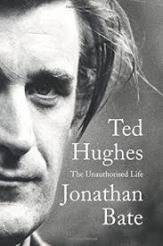
It’s been a heavy-weight Ted Hughes month since I’ve been reading Jonathan Bates’ biography over several weeks and then supplementing it with the poems themselves. The Bate is far more comprehensive than Elaine Feinstein’s earlier biography and if nothing else shows how much material Hughes left behind (100,000 pages of unpublished drafts) so the academic exploration of it will clearly take many years. On the poetry itself Bate gets a bit irritating in relating  just everything back to Plath –  even the late work apparently shows unmistakable evidence of his continuing obsession with her!

imgres

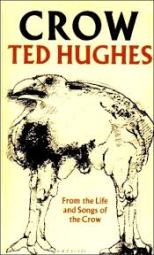
Crow remains extraordinary though it makes more sense to see it as Bate suggests as the unfinished epic that Hughes had hoped to complete. There was to be a phase of restoration but Hughes never managed that – perhaps because this was too close to the two suicides of Plath and Assia Weevil.

imgres

I’d missed Remains of Elmet when it was originally published. With Bate’s help and Hughes’ own Note from 1993, it’s clear now that this is a very coherent and powerful portrait of the region of his childhood.

imgres

I loved Gaudete when it first appeared in 1977 as I was in the first flush of my Hughes period! Most commentators (including Hughes it seems) now consider the ‘filmic’ loosely-constructed narrative poems as not quite the real thing. It’s the strange, tough little songs of Nicholas Lumb that conclude the book that pay more dividends.

What Have I Been Reading: January – March 2016

Up-dated March 2016

imgres

Tony Hoagland’s new collection from Bloodaxe introduces me to a poet I want to read more of (having missed him so far). Laugh-out-loud funny in the same breath as touching while being satirical and vividly descriptive of urban USA. Like Billy Collins, you relish the poem – then wonder how he managed to achieve it so apparently effortlessly.

imgres

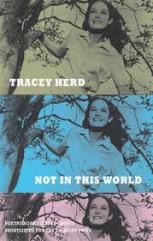
I read with Tracey Herd recently at the StAnza Festival (see this post) and was impressed with the emotional honesty of her writing. This is her first book in almost 15 years and was short-listed for the Forward as well as being a PBS Choice.

images
imgres

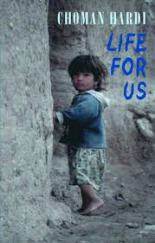
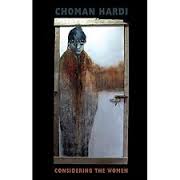
In reviewing Choman Hardi’s recent Considering the Women for Poetry London, I also went back to re-read her first book, Life for Us (both published by Bloodaxe). Her unsparing exploration of the plight and flight of the Iraqi-Kurdish people in the 1980s is poetry of witness of a high order. This is a body of work which is unique and deserves as much notice as we can give it.

Up-dated January/February 2016

imgres

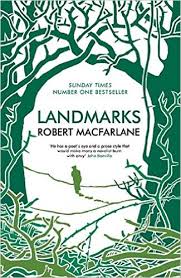
Macfarlane’s take on the significance of the loss of rural vocabulary and the danger that we will narrow our human experience as a result makes for powerful reading. Actually I found the word lists a bit dull (which I’m sure I shouldn’t as a poet) but perhaps most important of all he directs readers to previously little known writers about landscape like Nan Shepherd, J A Baker and Peter Davidson.

imgres

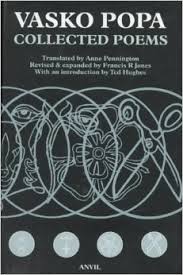
Popa’s unpunctuated, economical, elusive poems, many of them drawing on Serbo-Croat myth and legends, can be hard going. There is little sentiment or surface detail to hold on to. But reading them you hear where Ted Hughes found the idioms of Crow. Poems like little hard pebbles giving lessons  to the more windy and verbose among us (I include myself of course).

imgres

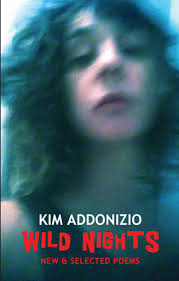
Addonizio can be verbose but what she evokes is a speaking voice, a chatting voice, driven on to revelation after revelation as if across a bar table littered with empties. She is a voice in your ear with all that implies about thrilling intimacy though on occasions I felt ‘give me a break’.

imgres

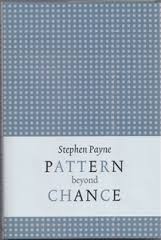
Stephen Payne’s poems emerge partly from his job as a Professor of Human-Centric Systems. He observes what people do and he wants to discuss it. He’s looking for the patterns which present themselves ‘beyond chance’. If that sounds a bit cool there is something of that here but the book overall is delicate, always thoughtful and often very moving.

What Have I Been Reading: October – December 2015

Up-dated December 2015

imgres

Terry Gifford’s Cambridge Companion to Ted Hughes is a fantastic summing up of where Hughes’ reputation now is, including articles by various hands on Hughes and animals, Plath, myth, feminism (it’s complicated) and a clear account of the poet’s fascination with Shakespeare by Jonathan Bate.

imgres

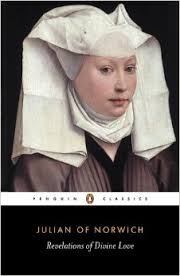
Julian of Norwich: Revelations of Divine Love – a book I’ve intended to read for decades and though I baulk at much of it still  I love her focus on the visions taking place in “an ordinary, household light”, her vivid descriptions and tentative, undogmatic prose. She also boldly talks of Christ as our mother: “Who showed you this? Love. What did he show? Love. Why did he show it to you? For love.”

imgres

Few poets can travel such distances with such ease and brevity as Penelope Shuttle. I saw her read at the recent Second Light Festival in London and picked up her Templar Poetry chapbook, In the Snowy Air. It belies it’s rather Xmas-y title by being rather a hymn to London (with occasional snow showers) including the Shard, the Walbrook, the British Library and even Waitrose in Balham.

imgres

Hands and Wings: Poems for Freedom for Torture has been edited by Dorothy Yamamoto in support of the Freedom from Torture charity and includes work by Gillian Allnutt, Alison Brackenbury, David Constantine, Carrie Etter, Vicki Feaver, Pippa Little and Susan Wicks.


Up-dated November 2015

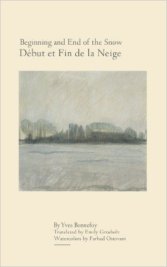
With the cold weather coming, Yves Bonnefoy’s 1991 Beginning and End of Snow(Bucknell University Press, 2012) is an exquisite read in Emily Grosholz’s translation, including an original essay by the poet on ‘Snow in French and English’.

31MuDc9AUxL._SX310_BO1,204,203,200_

I’m convinced Bonnefoy’s response to snow is not a million miles distant from the Daoist idea of the uncarved block and Rudolph G Wagner’s second magnificent volume on Wang Bi’s A Chinese Reading of the Daodejing is full of insights through its literal readings of the 81 chapters. I have been comparing his readings with my own new versions before going to press in the next few weeks.

images

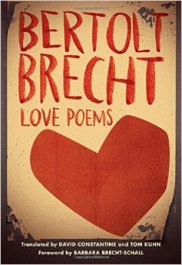
Bertolt Brecht: Love Poems (Norton, 2015) is the first instalment in David Constantine and Tom Kuhn’s project to translate anew Brecht’s complete poems. Ranging from the delicate, literary, erotic and plainly pornographic, here’s yet more evidence (should we need it) of Brecht’s breadth as a poet. The Introduction also reveals that Brecht refused to award any prizes in a poetry competition he was asked to judge – because none of the poems successfully communicated anything of any value to anybody, they were all of no use.

51c3fActf1L._SY344_BO1,204,203,200_

Maggie Butt’s new collection is published by The London Magazine and contains work from the period in which she also published the themed books Ally Pally Prison Camp(Oversteps, 2011) and Sancti-Clandestini – Undercover Saints (Ward-Wood, 2012). Though miscellaneous in nature, it is time that dominates this book – historical time in a variety of European locations and personal time in several moving elegies and acts of remembrance.

imgres

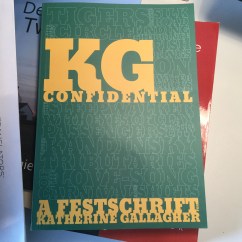
KG Confidential: a festschrift for Katherine Gallagher is a wonderful tribute to one of the great movers and shakers in poetry (in London and in her native Australia and in translation from the French). These tributes of poems or prose include contributions from Liz Berry, Jane Duran, Kate Foley, Mimi Khalvati and Les Murray.

File 22-11-2015, 12 37 53

Up-dated October 2015

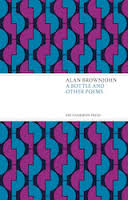
Alan Brownjohn’s new book is full of excellent poems, several of which (a few decades ago) would have been designated ‘secret narratives’. The title poem, ‘A Bottle’, is a strange noir thriller set in some undefined coastal region, an enigma of messages, relationships, landscape and murder. Always surprising; no let up in vigour and inventiveness.

imgres

Kate Foley’s ‘The Don’t Touch Garden’ (Arachne Press) is a treatment of adoption to rival Jackie Kay’s ‘The Adoption Papers’. “Mirror, mirror, on the wall” the old joke says, “I am my mother after all”. But which one? Brilliantly focused and carefully sequenced, these poems provide a thrilling and moving account of the processes by which any of us – adopted or not – become who we are.

imgres

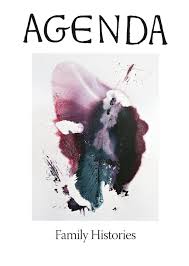
Agenda’s ‘Family Histories’ issue has poems from Tony Curtis, Claire Crowther, Sean Street, Peter McDonald, Sheenagh Pugh, Maitreyabandhu and Danielle Hope, an interview with Robin Robertson and reviews of Abse, Hugo Williams, Sebastian Barker, Bryce, Liardet, McVety and Eilean Ni Chuilleanain.

imgres

The new issue of Stand  has tributes to the late John Silkin from John Matthias and Anne Stevenson. I remember seeing Silkin selling Stand in the late 1970s on the campus at Lancaster University. This issue also has new poems from Muldoon, Mort, Valerie Jack, Sam Gardiner and (even) Martyn Crucefix.

imgres

What Have I Been Reading: April – June 2015

Up-dated June 2015

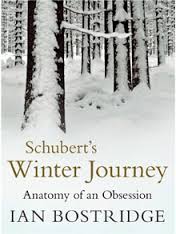
I’ve taken a while getting through the almost 500 pages of Ian Bostridge’s fascinating musical, artistic, poetical, historical, political discussion of Schubert’s Winter Journey.Taking Wilhelm Muller’s poem sequence Die Winterreise, Schubert re-organised it (otherwise changing little) to produce his own Winterreise and, discussing this process and his own performances of the piece over many years, Bostridge touches on Kant, Goethe, Darwin, Friedrich, Alfred Hitchcock, and Aristotle’sMeteorology among others. The Muller text would make an interesting translation project.

imgres

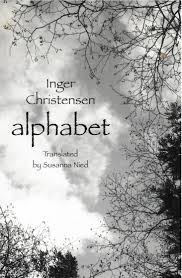
An earlier post about the abecedary form lead several people to ask me whether I’d read Inger Christensen’s 1981 sequence alphabet. Well I have now and it is just stunning. Based on the Fibonacci sequence and moving from A to N in alphabetical sequence too, Christensen writes fluid, Whitmanesque passages, laying aside ‘either/or’ for ‘and’, page after page of which reminds me of Rilke at his most passionate. This is a brilliant translation too by Susanna Nied. Christensen is a writer I need to explore more.

imgres

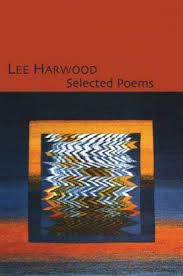
A few weeks ago I blogged on Lee Harwood’s work which I was also discovering for the first time. Since then I have read Selected Poems published by Shearsman; and I have the Collected Poems waiting for the summer holidays too.

imgres

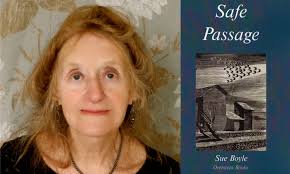
Sue Boyle is a poet I have followed since working with her as a tutor for the Poetry School. She has now published, Safe Passage, a first collection with Oversteps Books and I recommend it (though I confess to also being one of the blurbists on the back cover, where I quote one of her most interesting lines: “in seizing the unexpected lies the art”).

imgres

Updated May 2015

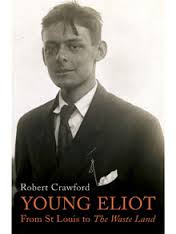
I’m still working through Robert Crawford’s magnificent biography of young Eliot up to The Waste Land. An almost day by day account of his youth, school and college days, Paris, Laforgue, Pound and Vivien Haigh-Wood. Particularly good on Eliot’s philosophical reading and development which I’m loving.

imgres

Mimi Khalvati’s The Weather Wheel consists wholly of 16-line poems – stretched sonnets or irregular ghazals – which seem able to encompass almost any mood, topic or subject matter. Particularly impressive is her desire to draw from the most ordinary of events lines which often soar to the complexly emotional and the (frankly) spiritual.

imgres

I’m also back re-reading Hughes because it looks like we’ll be teaching this from September onwards – surprisingly not something I have done (except one or two isolated poems). I first read many of these poems at Lancaster University in the late 1970s and nowadays many of these early poems read like objects of nature themselves: fixed as in granite, awe-inspiring, part of the mental landscape I have lived in for years.

images

As my most recent blog recounts, I have been also re-reading Transtromer’s work.

2Q==

imgres

Up-dated April 2015

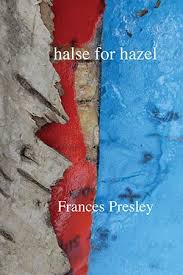
I’ve been reading two impressive contributions to the growing field of eco-poetics. Frances Presley’s halse for hazel is a visually pleasing book from Shearsman (illustrations by Irma Irsara) and the poems encompass geographical, linguistic, political and environmental issues without strain.

imgres

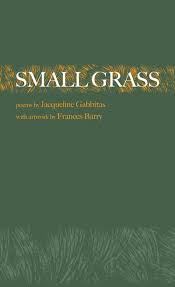
Jacqueline Gabbitas’ Small Grass gives grass a voice and runs with the idea with charm, cleverness and power: “From where I lie, I see man walking, / his legs sheathed in green, // I strop my edges. Soon, they’ll cut through / fabric, the tissue beneath”.

imgres

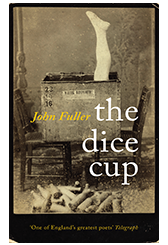
I’ve not always been an enthusiastic reader of John Fuller’s work but the recent The Dice Cup is a book of prose poem sequences full of his characteristic erudition, wit and observation.

thumbnailgenerator

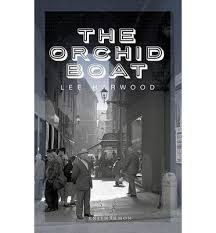
Lee Harwood is a poet who I’ve known of for years without really having read him much. I’d had him down as an English Ashbery/O’Hara and maybe I thought I ought to just go straight to the source. But Enitharmon’s The Orchid Boat is wonderful; full of fluid, sensuous, intelligent poems that twist and turn and take the reader by surprise. Not as flip as O’Hara, not as self-regarding as Ashbery.

imgres 

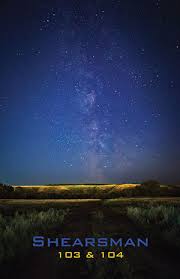
I confess to having a contribution in it but, apart from that, Tony Fraser’s new issue of Shearsman (103/4) is full of delightful things from the likes of Zoe Skoulding , James Byrne, Rupert Loydell and Kate Miller, plus translations of Virgil, Ponge and Jansma.

imgres

They Will Have Their Rights: Ted Hughes’ ‘Her Husband’

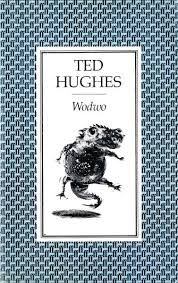
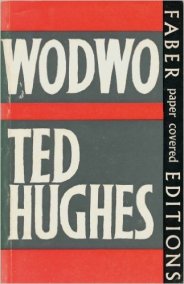
My AS level students are in the last throes of revising for exams coming in May. One question will be on a selection of Ted Hughes poems and what follows is an essay in the style required of them by the exam board (a single poem analysis of the Practical Criticism kind). ‘Her Husband’ first appeared in 1961 and then in Hughes’ 1967 collection Wodwo which mostly contained poems written before Sylvia’s Plath’s suicide in 1963 but also a few others (such as ‘The Howling of Wolves’) written after it. Hughes’ next major publication was Crow in 1970. Leonard Scigaj has noted how many of the Wodwo poems contain “recurring feuds and destructiveness” and ‘Her Husband’ is a domesticated, Lawrentian version of this.

images

Her Husband

Comes home dull with coal-dust deliberately
To grime the sink and foul towels and let her
Learn with scrubbing brush and scrubbing board
The stubborn character of money.

And let her learn through what kind of dust
He has earned his thirst and the right to quench it
And what sweat he has exchanged for his money
And the blood-weight of money. He’ll humble her

With new light on her obligations.
The fried, woody, chips, kept warm two hours in the oven,
Are only part of her answer.
Hearing the rest, he slams them to the fire back

And is away round the house-end singing
‘Come back to Sorrento’ in a voice
Of resounding corrugated iron.
Her back has bunched into a hump as an insult.

For they will have their rights.
Their jurors are to be assembled
From the little crumbs of soot. Their brief
Goes straight up to heaven and nothing more is heard of it.


Introduction

Ted Hughes is more renowned for his portraits of animals and natural landscape than people. Especially early on, he is more interested in, as he expressed it, capturing animal and natural life in language as he does so brilliantly in poems like ‘The Jaguar’, ‘Wind’ and ‘Thrushes’. However, it’s not true to say Hughes does not write about human life and some would argue that a poem like ‘Hawk Roosting’ though on the face of it about a creature is really about human behaviour. In ‘Her Husband’ Hughes is clearly focussed on the human in a marriage which is full of bitterness and resentment.

images

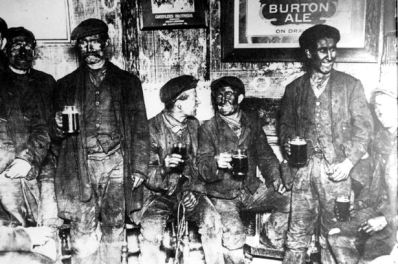
‘Her Husband’ is written in the third person, giving a distanced but vivid portrait of a marriage through the events of one evening. The title of the poem forms part of the opening sentence so the poem’s opening line, starting with “Comes home”, already gives the impression of the husband as an almost impersonal force, unnamed perhaps because already all too familiar to his wife. The thumping alliteration of the opening line (dull – dust – deliberately), reinforces the man’s brute entry into the house. As a working miner he spreads “coal-dust” about the house but Hughes emphasises his inconsiderate nature with the adverb “deliberately” and the forceful, unpleasant verbs associated with his arrival: “grime” and “foul”. This opening quatrain flows quickly, being unpunctuated from start to finish, evoking an arrival which is sudden, sweeping, unstoppable. The ugly internal rhyme of “foul towels” also contributes to the impression of his disruptive arrival and Hughes conveys the husband’s resentful attitude with the idea that he intends to teach his wife about the “stubborn character of money”. This personification of money as a person difficult to deal with, to persuade, cleverly conveys the husband’s own difficulties with the exhausting character of his day’s work. But he intends to impress this resentment on his wife who he wants to work (repetitively) with “scrubbing brush and scrubbing board”. This is not a relationship in which we see any love, compromise or mutual respect, though we have yet to be shown much of the wife’s perspective.

coal

In fact the second quatrain continues in much the same vein with a repetition of the phrase “let her learn”. All this repetition conveys the husband’s determined intentions. Lines 4-8 also introduce a vocabulary of a more moralistic kind. The narrative voice echoes what must be the husband’s thoughts about the way he has “earned” the “right” to go drinking in the pub before he returns home. He regards the earning of his wage as a physical and personal “exchange” of his physical “sweat” for cash and the hyphenated phrase describing money as possessing “blood-weight” particularly conveys the sense of his personal sacrifice as a working man, how he feels the day’s work metaphorically costs him “blood” (as a miner this might be sometimes literal too). I think Hughes goes some way here to encouraging sympathy from the reader for the husband’s situation but the quick return to his aggressive, even vicious, attitude to his wife in the heavily alliterated and emphatic phrase “He’ll humble her” (line 8) definitely lessens any sympathy I may be feeling.

474360547

The simple metaphor of casting “new light” on his wife’s role is used in line 9. There is a sort of tired familiarity throughout this poem (on both husband and wife’s sides) and I suspect this sort of encounter is not the first of its kind so the idea of him casting/teaching “new” light probably really reflects his sense that however much he tries to do this she does not “learn” to behave as he expects by more obediently taking note of what he sees as her “obligations”. I doubt whether he himself would have used many of the moral terms that the third person narrative voice employs in these lines, so the distancing voice Hughes has chosen to use enables these more abstract points to be made. It’s only at line 10 that we get a sense of the wife’s “answer” to her husband’s demands. As has been implied already, her reply to his demands is not at all submissive. We are told “part of her answer” is the disgusting-sounding meal with its “fried, woody chips” though it’s partly unpleasant because it has had to be kept warm in the oven “for two hours” (the fact that he’s so late home increases our sympathy for his wife). But her fight back is sustained it seems; the other “part” of her answer to his demanding and bullying attitudes must be spoken to him or probably shouted. Interestingly, Hughes gives us none of this directly as it is only implied in the brief phrase “Hearing the rest” in line 12.

The husband’s corresponding response to his wife’s uncooperative (surely complaining) reply is immediate and violent. The husband’s vigorous determination causes Hughes to run-on sentences at the end of both stanza 2 and 3. Here, the violent verb “slams” shows how he disposes of her cooked meal in the fire and sweeps out of the house and “away round the house-end” all in one flowing, swift, uninterrupted sentence. The husband’s singing voice is described as “resounding corrugated iron” in a typical Hughesian metaphor (linking the organic with the metallic or industrial). Also the song he chooses to sing is full of irony and deliberately insulting as it is a romantic song of lost love. Line 16 gives us a brief last glimpse of the wife’s response, her body language suggesting her own stubborn resentment, “bunched into a hump”. Hughes adds a simile to make her antagonism even more clear: “as an insult”.

1890_A_miners_dream_of_home

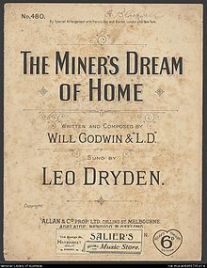
The final quatrain now departs from the specific actions of the married couple and returns to the more moralistic and even legalistic language that I noted earlier in the poem. Here the narrator’s distance from the domestic argument is clear again. This poem was first published in Wodwo (Faber, 1967) and, as a relatively early Hughes poem, it is unusual in its focus on individual people though this distancing effect suggests he may be observing their behaviour in the same way as he does a jaguar in a cage or the power of the wind. Line 17 is the shortest sentence in the whole poem and declares, in firm monosyllables, that both sides in this conflict “will have their rights”. This makes it clear there is no room or desire for compromise. The final three lines introduce the language of the law court (a divorce court perhaps?) though the jury are “to be assembled / From the little crumbs of soot”. This soot reminds us of the coal-dust he brings into the house in line 1, but also of the burnt dinner thrown into the fire-back in line 12. These tiny black specks suggest to me that such a jury will never come to any clear conclusion in this dispute. They suggest the hopelessness of the couple’s situation. This rather depressing ending to the portrait of a marriage is confirmed in the final line and a half as we are told that the legal “brief” (a technical term for one side’s case in a law court) follows the smoke and soot up the chimney. This suggests that the arguments on both sides metaphorically go up in smoke. Hughes concludes in the plainest language: “nothing more is heard of it”. The way in which the events of the dismal evening vanish up the chimney suggest the likelihood that something similar may happen again tomorrow and the day after.

Conclusion

So Hughes’ portrait of a marriage is very bleak indeed. The narrative voice describes events at a distance and though there are occasions when the reader does feel sympathy for the people involved, the language of the poem itself is not at all emotional. The poem’s voice sees events from both husband and wife’s perspectives though it’s interesting that we are never given any actual dialogue in this domestic row. Hughes’ irregularly-lined and unrhymed quatrains suit the poem’s plain description in a mostly colloquial tone: this is not a poem or situation where any lyricism or poetically-charged language would really be appropriate.

5113sBWRWFL._SX321_BO1,204,203,200_


A Living Hanging Hemisphere: Ted Hughes’ ‘Meeting’:

One of my most visited blog posts in recent months has been the discussion/analysis  of Ted Hughes’ poem ‘November’, The Month of the Drowned Dog: click here. The poem had been in my mind as we are studying it (along with a range of other poems by Hughes) in the Cambridge International Exam Board’s A level course for Literature in English. I suspect I am getting hits from students around the world also following the same course and – without wanting to become a major source of plagiarism – I thought this week I might discuss another poem from the same selection.

static1.squarespace

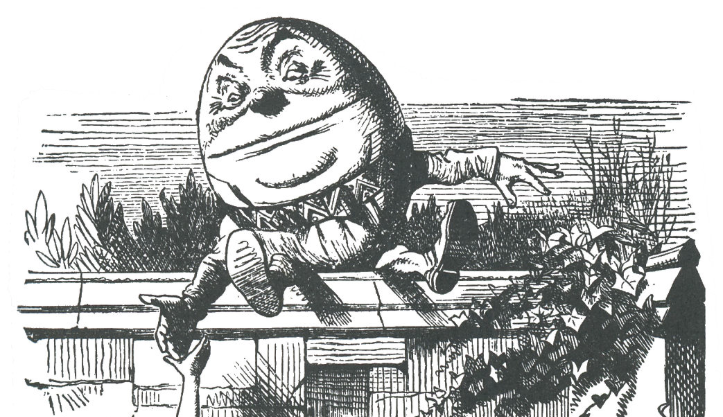
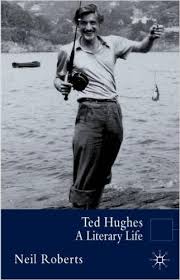
‘Meeting’ was first published in The Hawk in the Rain (Faber, 1957) and is one of several poems in that collection to present what has been called “the central theme or event in Hughes’ poetry: the usurpation or invasion of the world that the rational intellect has constructed by a power that is represented as greater and ultimately more real” (Neil Roberts, Ted Hughes: A Literary Life (Palgrave, 2006). The poem ‘Egg-Head’ is a much less concise treatment of the same issue. The common meaning of ‘egg-head’ – an intellectual, probably arrogant, person (usually a man?) – operates in Hughes’ poem which intends to berate such characters for what they exclude from their life experiences. But the egg image also implies a fragility which suits the poet’s purpose of critiquing the limits of such attitudes. Egg-heads, like Humpty-Dumpty, are always in danger of being cracked open. So the ‘Egg-Head’ character peers at life (this latter word gathers to itself extraordinary power and significance in Hughes’ as in D H Lawrence’s work) “through his fingers”. He deploys methods of “defence”, is “walled in” and “shuts out” and he “resists”. All this is achieved, Hughes roars in an angry, flurried combination of chewy consonants and Latinate vocabulary (that is perhaps not as controlled as it might be):


By feats of torpor, by circumventing sleights

Of stupefaction, juggleries of benumbing,

By lucid sophistries of sight


This is the vitriolic tone of the attack on the rational mind’s defences. It is countered by not wholly convincing phrases intended to be representative of life such as a “leaf’s otherness, / The whale-monstered sea-bottom, eagled peaks / And stars that hang over hurtling endlessness” quickly supplemented by “the flash / Of the sun, the bolt of the earth”, then “the looming mouth of the earth” and finally “the whelm of the sun”. What does emerge from such phrases is the link of life with the natural world, with great power, with incalculable scale.

horse-in-the-rain-750395940

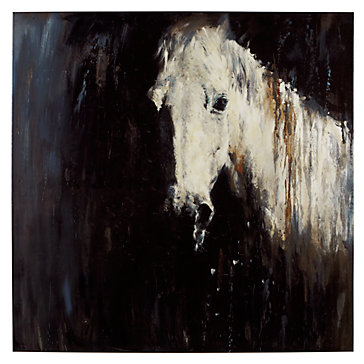
All these ideas are better conveyed in ‘Meeting’ and a prose/short story version of Roberts’ “central theme or event” can be seen in ‘The Rain Horse’ (from Wodwo (1967); also found in the CIE Prose Anthology called Stories of Ourselves (p.271)). The young man at the start of this story has already come “too far” from the orderly “tarmac lanes” he had intended to walk. He had come hoping vaguely for “something, some pleasure, some meaningful sensation, he didn’t quite know what”. His encounter with the uncanny, threatening, apparently evil-intentioned horse of the title instead gives him a “fright and shame”. At the end he strips himself naked, sits staring at the ground “as if some important part had been cut out of his brain”. Roberts again interprets this sequence of events such that the horse is representative of un-delimited life, a “shamanic spirit” challenging the young man’s rational control and perception. So it’s less that something has been cut out of his brain (though he may feel the loss of self-constructed barriers as a loss) more that whole fields of experience, emotional and spiritual possibilities have been opened to him. This misinterpretation of the impact of life (in Hughes’ sense) is something also seen in ‘Meeting’.

imgres

‘Meeting’ opens with another of Hughes’ straw-men, a self-regarding male whose “smile”, in the first phrase, suggests he is well-pleased with what he views in the “mirror”. But as with ‘Egg-Head’, it is the exclusion of all else, all otherness, that concerns Hughes. Even as he smiles, the man “shrink[s]” the rest of the world to a “trinket”, the tinkling consonants (t-k-t) here neatly suggesting the insignificant bauble all else becomes in his view. The word is then countered by the grand sweep of the poem’s key phrase intended to evoke the too-often unregarded universe beyond the rationalist’s view: “the whole / Sun-swung zodiac of light”. Here the wide open vowels (o-u-u-o-a-i) suggest breadth and scale, the sibilance suggests a dynamism, the zodiac evokes images of both night sky and astrological/mythic  elements, the light suggests the elusiveness of life on this scale. For all this to be reduced to a “trinket” feels both absurd and tragic (for Keith Sagar this is both “hubristic and solipsistic”, reducing the universe to the point where man can erroneously “feel himself to be a god in it”). To drive the reductive point home even more clearly the trinket shape is said to appear “On the rise of his eye” which I take to be the curvature of the man’s pupil, but describing it as a “rise” also reminds us of the man’s own arrogantly elevated self-image.

zodiac-header

After the colon/caesura of line 3, Hughes uses the metaphor of a dramatic “role” for the man’s behavior to stress both its importance and falsehood. The role Hughes gives the man (or the role the man imagines himself to be playing) is that of Dr Faustus, the arrogant over-reacher, so consumed with his own importance that (in Christopher Marlowe’s play) he barters his soul for earthly power and pleasure though clearly warned of the consequences. He simply doesn’t seem to think the ordinary rules apply to him. The image of flinging “a cape” suggests an Elizabethan stage scene and that word “life” reappears here in all its significance since this is what the actor/man feels he can “outloom”. That Faustus himself outloomed ordinary life and religious sanctions for 24 years is relevant here; as is the fact that he was dragged screaming to Hell at the close of the play. Hughes imagery contains within it the condemnation he intends in the poem.

images

These opening four and a half lines set up the character of the young man. After the full stop in line 5 the “event” begins (and consists of one sweeping, irresistible sentence). Like the man in ‘The Rain Horse’, this man also wanders into the wilder realms of nature, to “an empty mountain slope”. To apply the adjective “empty” to this place is just one of the man’s errors, imagining a terra nullius where there is multifarious life and significance. What he actually encounters here is a “black goat”. It’s around here perhaps that a reader becomes more conscious of the poetic form Hughes is using. It’s terza rimaa form of triplets rhyming aba bcb cdc and so on. On the whole, Hughes manages this really well (line breaks at lines 5 and 8 perhaps turn more for form than sense and the rhyme word demanded in line 16 is awkward). The difficulty and complexity of this form might be a gesture to the rational man whose mind enforces order and organization, or contrastingly, the looping, self-involvement of the scheme might suggest Hughes’ own perception of the lived world’s interconnectedness.

The goat’s appearance has conventional features suggestive of threat and this means we are seeing it from the man’s perspective. Colours of “black” and “yellow-eyed” are ugly, as is the hyphenated phrase “square-pupilled”. Its onomatopoeic, assonontal and threatening movements (“clattered and ran”) are a challenge as is the position it takes up, “forefeet firm on a rock”, the sizzling fricatives and the ‘clatter’ of the monosyllabic “rock” further reinforce this. Of course, the goat’s placement “above” the man is significant of Hughes’ true valorization of this encounter. This is contrasted with line 11, as the “black devil head” is the man’s assessment of the creature, a designation that what lies beyond his usual comprehension must be categorized as evil.

images

One reason why this poem is more successful than ‘Egg-Head’ is that Hughes, in the final 7 lines, takes us seamlessly into the man’s transformative experience as a result of the encounter. Images of startling differences in scale occur. In contrast to the earlier belittling of the universe as a “trinket”, the man’s experience is now likened to being gathered up in “gigantic fingers” and placed on a “bare / Palm” for examination. The man’s littleness is the point and the “eye” of the universe (via a simile in line 15) is likened to “a living hanging hemisphere”. This eye is like the whole visible sky above him; a powerful contrast to the way in which the whole “zodiac” was itself reduced to a flickering shape on the man’s own “eye”. The reversal from arrogance to a newly-realised humility is brilliantly conveyed.

But perhaps there are doubts about the man’s epiphany. He is studied (or feels he is being studied) by the vastness of the real universe. His littleness and vulnerability, as in the phrase “his blood’s gleam”, is being examined by the “ray” of the world’s eyebeam. The differences in scale between “gleam” and “ray” are accentuated in line 17’s cosmic simile, describing the ray’s gaze as “Slow and cold and ferocious as a star”, the polysyndeton slowing the phrase down to again evoke a sense of great scale and distance. The goat’s exit is rapid (and again onomatopoeic) and the final ray/away rhyme of the terza rima brings the event to a definite sense of closure. So the man does not have a moment like the young man in ‘The Rain Horse’ where actual changes in his mind are suggested but it’s hard to believe he will return to his mirror smiling in quite such a self-satisfied way. I’d like to think him more open to experiences of “world” such as Louis MacNeice describes (from a less primitivist, more political perspective) in his poem ‘Snow’:

The room was suddenly rich and the great bay-window was
Spawning snow and pink roses against it
Soundlessly collateral and incompatible:
World is suddener than we fancy it.

World is crazier and more of it than we think,
Incorrigibly plural. I peel and portion
A tangerine and spit the pips and feel
The drunkenness of things being various.

And the fire flames with a bubbling sound for world
Is more spiteful and gay than one supposes–
On the tongue on the eyes on the ears in the palms of your hands–
There is more than glass between the snow and the huge roses.

(read Olivia Cole’s discussion of ‘Snow’ from Magma Magazine. 

p01g51yw
Louis MacNeice