As in the previous four years, I am posting – over the summer – my reviews of the 5 collections chosen for the Forward Prizes Felix Dennis award for best First Collection. This year’s £5000 prize will be decided on Sunday 20th October 2019. Click on this link to access all 5 of my reviews of the 2018 shortlisted books (eventual winner Phoebe Power), here for my reviews of the 2017 shortlisted books (eventual winner Ocean Vuong), here for my reviews of the 2016 shortlisted books (eventual winner Tiphanie Yanique), here for my reviews of the 2015 shortlisted books (eventual winner Mona Arshi).
The full 2019 shortlist is:
Raymond Antrobus – The Perseverance (Penned in the Margins)
Jay Bernard – Surge (Chatto & Windus)
David Cain – Truth Street (Smokestack Books)
Isabel Galleymore – Significant Other (Carcanet)
Stephen Sexton – If All the World and Love Were Young (Penguin Books)
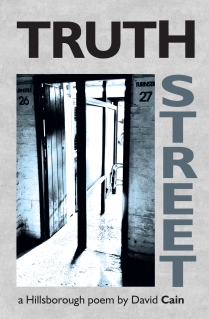
David Cain’s first book confronts its readers with questions about how we might witness traumatic events, about truth (and its distortion by the authorities and the media), about the language and forms of poetry. On 15 April 1989, during the opening minutes of the FA Cup semi-final between Nottingham Forest and Liverpool, 96 men, women and children died in what remains the most serious tragedy in UK sporting history: the Hillsborough Stadium disaster. Thousands more suffered physical injury and long-term psychological harm. For almost thirty years the survivors and the families of the dead had to campaign against the police, government and media who blamed the supporters for the tragedy. Eventually, in 2016 a second inquest ruled that the supporters were unlawfully killed due to failures of the police and ambulance services.
David Cain’s Hillsborough poem is dedicated to the 96 people who died and is wholly composed from testimonies heard at the inquest. Cain has said: “My ambition throughout has been for the work to listen to the resonances held in the collective memory of that fateful day, hear the poetry found in the hearts of the people who lived through this terrible experience, and try to weave these testimonies into a singular voice. Focusing on everyday life and language, grammar uncorrected, every line of the poem is drawn from over two hundred and sixty days of formal evidence.”
 Cain also cites the work of Charles Reznikioff and Svetlana Alexievich as models. The former, an Objectivist poet, developed work from court records and explored the experiences of immigrants, black people and the urban and rural poor in the United States in the late nineteenth and early twentieth centuries (Testimony, 1965). He went on to use a similar technique in Holocaust (1975), based on court testimony about Nazi death camps during World War II. Similarly, Svetlana Alexievich’s books trace the emotional history of the Soviet and post-Soviet experience through carefully constructed collages of interviews. Her work owes much to the ideas of Belarusian writer, Ales Adamovich, who felt that the best way to describe the horrors of the 20th century was not by creating fiction but through recording the testimonies of witnesses.
The colloquial plainness of the language (for the most part) of the Hillsborough testimonial material is clear from the start as the scene is set:
There was men, women, children.
There was lots of families there.
They were very happy.
Lots of people eating chips, milling around.
Many of the pieces have this same staccato rhythm, often end-stopped and Cain always lays out the lines with double spacing between. This works well. It gives the sometimes bland and cliched language a bit of the white space of poetry, giving the reader extra time and I think what we do with that time is add in our knowledge of the testimonial nature of what we are reading. These are not ‘composed’ words in the usual sense (about which we might quibble) but witness statements. Here are other lines before the tragedy unfolds:
I sat there reading my programme, mooching about.
Watching the world go by.
It was all happy.
It was a nice sunny day.
It’s an established cliché of (Romantic) poetic theory that people tend to reach for/create figurative language under pressure of emotional experience and that such moments make for powerful writing. In Cain’s edited versions this is borne out on some occasions. As the swelling crowd gathers outside the stadium, people are already being crushed against walls:
I ended up face blank stuck against the brick wall
A bit like rubbing yourself against a piece of solid sandpaper.
horrible sharp
nothing nice or rounded or polished
In another piece, the crowds now funnelling into the ground through the opened exit gates are described as “like sand into an egg timer”. Moments later, another witness struggled to describe fans now pouring onto the already crowded terrace:
The scene reminded me of pictures on television in the nature programmes.
Molten lava
Molten lava flowing down a hillside from an active volcano.
like a wave.
In this latter case, what is moving is less the image itself but the evident struggle to find a fitting comparison. The testimonies here tend to reach for cliché rather than startling figurative language but it is in the nature of the witnessing act that these are still deeply moving accounts in our awareness of their truth. (How often have we been told as writers that our self-conscious wish for novelty or reaching after effect is damaging to our work).
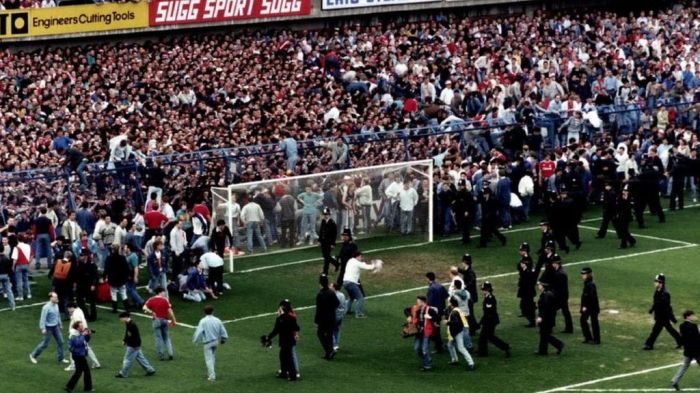
As the men, women and children are suddenly crushed into the barriers by the press of fans behind, any thoughts we might be having about modes of expression evaporate. Unnamed voices bear witness to events. A son tries to protect his father being crushed against the railings, cradling him against the pressure. But a surge means his arms buckle, he’s twisted to one side, no longer able to shield his father: “That is the last time I had my father alive”. Another voice ends up in the small gym beneath the stadium which is being used as a make-shift sanctuary for the dead and injured. Also there is a young St John’s Ambulance volunteer, “A young lass, 14 or 15, longish blonde hair”. The poor girl, while in shock herself, is trying to help those around her and the narrative voice is equally full of compassion for the girl: “I just put my arm round her and said, // ‘You’re a kid. // You should not be seeing this.’”
As much as the horror of broken bones, suffocation and trampled bodies, it’s these powerful acts of compassion – the wish to protect, to help, to shelter others and, when people are found to be already dead, to show them some respect –which are built through the sequence. They are contrasted with witness accounts of the slow, insensitive, sometimes appalling responses of the authorities. Though there are a few reports of “Police and fans alike” trying to help, these are outweighed by incompetence, lack of training and worse. The fans being crushed in the caged areas ought to have been released, the gates onto the pitch opened, but:
We hadn’t any instructions.
We turned and we tried to find out who’s got a key.
We were saying to the sergeant,
‘Who’s got a key?
Who’s got a key?’
For critical minutes, police regarded the event as a pitch invasion. Fans kicking down pitch-side billboards to use as improvised stretchers were threatened with arrest for vandalism. Later, as families were being asked to identify the dead, they were pulled back from any physical contact with the bodies: “’Sorry, he’s the property of the coroner now. // You can’t touch him’”.

While we probably feel for almost all those thrown into an utterly unprecedented situation – the poorly trained individual’s recourse to rigid protocols – Truth Street squarely blames the media and the higher ranks of police. The role of The Sun newspaper’s subsequent reporting is well known. One witness is haunted by the thought that his actions on the day – taking out a dead man’s wallet to lay it on him so that he can be identified – might have been misconstrued, or photographed, as him “looting the dead”. Later, the press pack burst into a room where relatives “are trying to find out what’s happening to [their] loved ones”. They want their scoop.
Equally shocking are the testimonies which show the police inquiry trying to establish a narrative of drunkenness and disorder amongst the fans. Even as a dead relative is identifying a body, “The very first question asked was what had I had to drink today”. Another statement-taking pursues the same line: “did I have owt to drink? // did I see any fighting? // did I see anybody drunk?” And as we now know, this line of inquiry, this cover-up, was sanctioned from the top. The section ‘Norman Bettison’ is an account given to the inquiry in which the then Chief Inspector admitted to being asked “to pull together the South Yorkshire Police evidence for the inquiry // and we’re going to try and concoct a story that all of the Liverpool fans were drunk”. This internal review group tried to control media coverage, producing a 30 minute film narrated by Bettison himself that was shown to MP’s, which reiterated the claims of drunk, violent and ticketless fans breaking down the turnstiles, causing the disaster.
 In fact – as Cain’s sequence shows – what was being covered up was the original decision of Chief Superintendent David Duckenfield to open the exit gates at 2.47pm. One of his officers spoke to the inquiry: “I was quite shocked // It was totally unprecedented. // It was something you just didn’t do”. This was what caused the inflow of fans – “like sand into an egg timer”. Only at the second inquiry, did Duckenfield revise his earlier false statements: “I didn’t say, // ‘I have authorised the opening of the gates’”.
Cain’s book ends with a roll call of the dead, giving their names and ages. He titles it, ‘Hold your head up high’ and is a good a way of concluding as any. But, immensely moving though the sequence is, I’m left with the desire for more. Such is the nature of this form of testimonial or witness account – there can be no natural ending point to such traumatic events. This is also why the opening of Truth Street feels very awkward – a scene is being set in the way (fiction) writer’s do. Reznikoff’s Testimony eventually grew to 500 pages over two volumes. Cain’s powerful work has been cut to the standard size of a volume of poetry. But its power is undeniable; in reviving, memorialising and bearing witness to individual Hillsborough voices, this book is a unique contribution to contemporary British poetry.
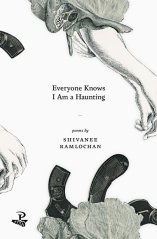
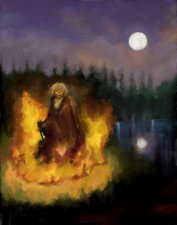
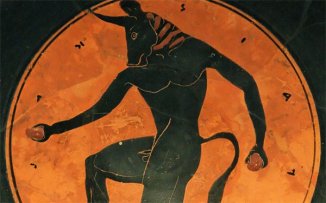 There is a sequence in the middle of the book which offers a clearer view of Ramlochan’s approach. ‘The Red Thread Cycle’, on the face of it, explores the traumatic consequences of rape. How to articulate the event is one theme and there is a magic-real quality which initially seems to add to the horror: “Don’t say Tunapuna Police Station. / Say you found yourself in the cave of the minotaur”. But this shifts quickly instead to reflect how police and authorities fail to take such a literal description seriously, even blaming the woman herself: “Say / he took something he’ll be punished for taking, not something you’re punished for holding / like a red thread between your thighs”. Other poems trace improvised rituals (real and semi-real) to expiate the crime and trace the passage of years. Some moments suggest the lure of suicide with allusions to Virginia Woolf’s death by water, carrying “pockets of white stones”. Seeing the unpunished rapist at large eventually becomes possible: “Nothing drowns you, when you see him again”. The sequence is a lot less chronological than I am making it sound, but what the woman has been doing over the years is, in a striking phrase, “working to train the flinch out of myself”. This has been achieved partly through art. Ramlochan certainly sees such pain as an essential part of the artist’s apprenticeship, that it will “feed your best verse”, and the sequence ends with her reading poems in public as an act of strength and self-affirmation, marking the psychic death of the aggressor: “applause, hands slapping like something hard and holy / is grating out gold halleluiahs / beneath the proscenium of his grave”.

 The gateway to Richard Scott’s carefully structured first book is one of the most conventional poems in it. It’s a carefully punctuated, unrhymed sonnet. It is carefully placed (Public Library) and dated (1998). It’s the kind of poem and confinement Scott has fought to escape from and perhaps records the moment when that escape began: “In the library [. . .] there is not one gay poem, / not even Cavafy eyeing his grappa-sozzled lads”. The young Scott (I’ll come back to the biographical/authenticity question in a moment) takes an old copy of the Golden Treasury of Verse and writes COCK in the margin, then further obscene scrawls and doodles including, ironically a “biro-boy [who] rubs his hard-on against the body of a // sonnet”. Yet his literary vandalism leads to a new way of reading as – echoing the ideas of Eve Kosofsky Sedgwick – the narrator suddenly sees the “queer subtext” beneath many of the ‘straight’ poems till he is picking up a highlighter pen and “rimming each delicate / stanza in cerulean, illuminating the readers-to-come . . .”


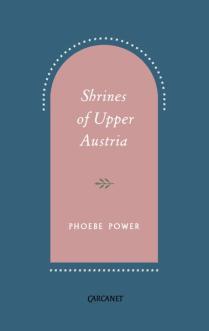
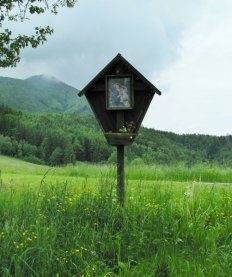
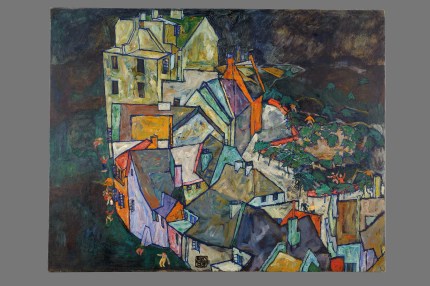
 You will have gathered that one of Power’s things is to mix English and Austrian German. This happens several times in ‘A Tour of Shrines of Upper Austria’ (though in this book we only get 7 parts of the full sequence). An observer stops at various shrine sites, jotting down some thoughts and taking a picture or two. Nothing is developed though Power’s poems do show an interest in religion on several other occasions. ‘The Moving Swan’ opens with a centre-justified prose description of candles flickering in a cathedral and another poem is drawn to the grave of two goats, observing: “two heaps of ivy/straw / one unlit red tealight”. And ‘Epiphany Night’ is a more extended series of notes recording a local celebration with bells, dressing-up, boats, lanterns. This is all observed in loosely irregular lines by the narrator from her “wohnung” (apartment). To wring all engagement or emotional or imaginative response from such a text is, I suppose, quite an achievement but to spend 70-odd pages in such company really is wearisome.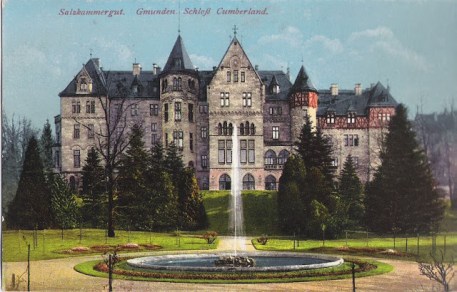


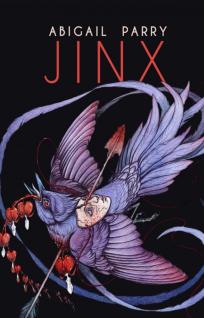
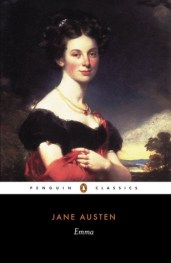
 Mr Knightley is an absent figure in that poem, but Jinx is repeatedly visited by powerful, seductive, dangerous males who – in ways now very familiar since Angela Carter started the ball rolling – are morphed into animal figures. ‘Hare’ is an early example, leaning invasively over the female narrator at a wedding party, “those fine ears folded smooth down his back, / complacent. Smug. Buck-sure”. As in ‘Daddy’, the woman is drawn to the man despite (or because of) his obvious threat but unlike Plath’s powerful final repulse (“Daddy, daddy, you bastard, I’m through”), Parry’s narrator is fatalistic: “Your part is fixed: // a virgin going down, / a widow coming back”. Elsewhere, ‘Goat’ and ‘Magpie as gambler’ work similarly and ‘Ravens’ is a particularly Plathian version: “In fact, every man I thought was you / had a bird at his back / and a black one too”.
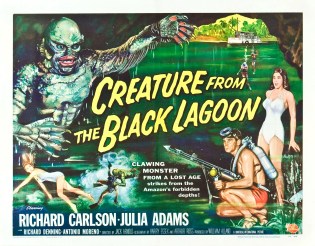 For all the frenetic playfulness of the book, Parry’s mostly female narrators and subjects are beset by threats. ‘The Lemures’ re-Romanises the creatures into psychological pests, aspects of self-doubt perhaps, appearing on the furniture, at the roadside, in a reflection in a lift door: “They will steal from you. Pickpockets, / rifling the snug pouches at the back of your mind”. Parry is evidently a fan of mid-twentieth century film and she explores Creature from the Black Lagoon and The Wolf Man from the perspective of dark powers surfacing. The question being asked is whether such forces represent the overturning of the real self or the manifestation of it in contrast to what a later poem calls “the dreary boxstep of propriety”. Locks and keys recur in the poems – are we confined, or about to set something loose, or to leap to real freedom?



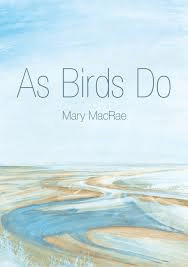 It may be that this ability to be sustained by scraps and glimpses, the sense that the self is most fully resolved in a lack of egotism, in its encounter with ordinary things, can diminish some of the sting of mortality. In a poem like ‘White’, MacRae manages to celebrate again the ordinariness of familiar things while at the same time sustaining a contentedness (or at least an absence of fear) at the prospect of the self’s vanishing: “You can disappear in a house where / you feel at home; the rooms are spaces / for day-dreams, maps of an interior / turned inside out”. Rather than Macbeth, it is Hamlet’s resolve to “let be” that comes to mind as this calm, accessible, colourful and wonderfully dignified poem concludes:
 For MacRae’s interest in and skill with poetic form, we need look no further than the extraordinary glose on a quatrain from Alice Oswald (the earlier collection contained another on lines from Mary Oliver). For most poets, this form is little more than an exhibitionist high-wire act, but MacRae’s poems are moving and complete. Her use of poetic form here, particularly in some of these last poems, reminds me of Tony Harrison’s conviction that its containment “is like a life-support system. It means I feel I can go closer to the fire, deeper into the darkness . . . I know I have this rhythm to carry me to the other side” (Tony Harrison: Critical Anthology, ed. Astley, Bloodaxe Books, 1991, p.43). Appropriately, in ‘Jar’, she contemplates with admiration an object that has “gone through fire, / risen from ashes and bone-shards / to float, nameless, into our air”. Here, the narrator movingly lays aside the wary scepticism of the Thomas epigraph and rests her cheek on the jar’s warmth to “feel its gravity-pull / as if it proved the afterlife of things”.











 Martyn Crucefix