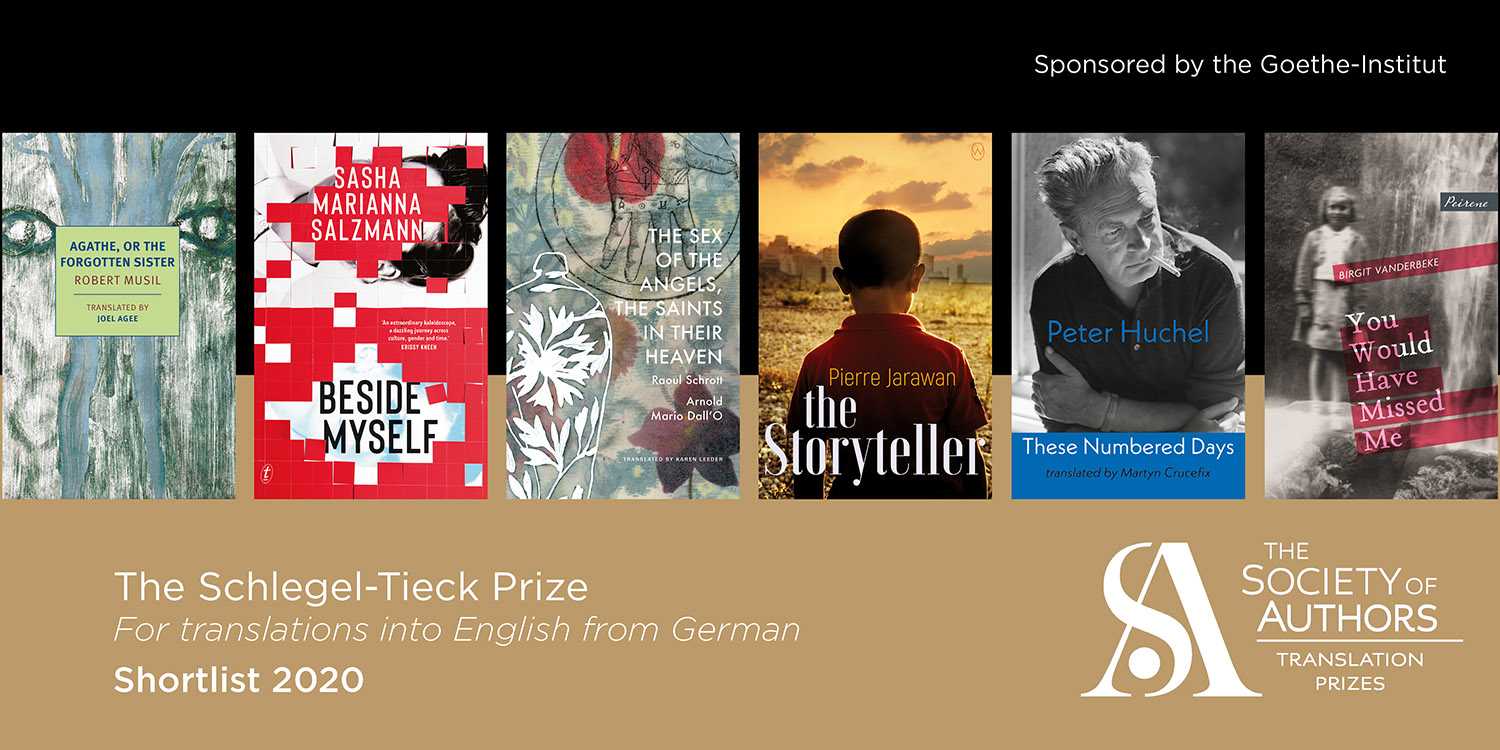
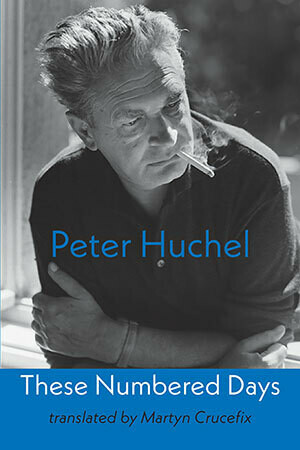
To mark the shortlisting – for the Society of Authors’ Schlegel-Tieck Translation Prize 2020 – of my Peter Huchel translations, published by Shearsman Books, I’m posting here a piece I wrote about Huchel’s poetry which first appeared in Acumen 98 (September 2020). Peter Huchel’s work has its place in the tradition of the greats of twentieth-century German poetry – Rilke, Trakl, Brecht, Benn and Celan – but he is also, as Karen Leeder has argued, a “one off”.[i] Iain Galbraith also lists Huchel among a “handful of essential post-war poets” in German, but his poetry is far less well known than it deserves to be. His presence in English at all is thanks to Michael Hamburger’s 1983 translations published by Anvil[ii]. I came across isolated examples of his work a few years ago and was immediately drawn to his startling observations of the natural world which function often as “metaphors [to] take us deep into the social and historical landscape” of his era (Galbraith again). I believe he is a poet with important things to say to us in our own conflicted times and my translation of Huchel’s best collection, These Numbered Days (1972), was published last year by Shearsman Books. Here, I put Huchel’s work into the context of the great events in Europe in the twentieth century.
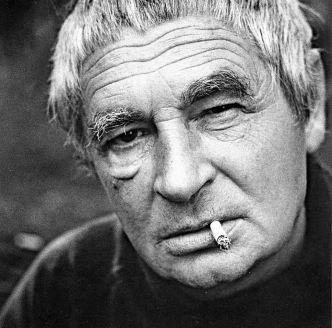
 Huchel’s description of Pe-Lo-Thien, the poet, social critic and sometime exile from the Tang Dynasty, is intended also as a portrait of the poet himself – a dissident figure, an “outlaw, / who lives beyond the wall / with his cranes and cats” (‘Pe-Lo-Thien’). It’s no surprise that the spare, impersonal, often lapidary quality of the poems in These Numbered Days was remarked on by Karl Alfred Wolken as offering the reader something of a Chinese book in German.[iii] The poet himself, carefully scrutinising the natural world – the perception of which constitutes the substance of so many of his poems – tries to descry “Signs, / written by the hand / of a Mandarin” (‘No Answer’). If such allusions suggest a minimalist and tight-lipped quality to Huchel’s poems, this is precisely what might be expected from an artist forced to play, as he did for so many years, the role of inner émigré.
For readers of British and Irish poetry, the term ‘inner émigré’ will be familiar from Seamus Heaney’s use of it in his 1975 poem ‘Exposure’. Discussing the idea, Heaney acknowledged the term’s specific meaning in the 1920/30s in Soviet Russia as referring to a dissident who had not actually gone into exile but remained at home, disaffected from and under the surveillance of the authorities. Heaney saw himself in this light in relation to Northern Ireland. He also associated the idea with the position of George Seferis, concluding that “poetry secures some final place in your being, some little redoubt in your consciousness that will not be taken over by history or the world or disaster”.[iv] This same sense of confinement, wrestling with conscience and the frequent resort to codification which results from such a compromised position is the best way into Huchel’s work as a writer whose life and historical circumstances astonishingly led him to play the role of inner émigré twice over.
He was born Hellmut Huchel in 1903 in Alt-Lichterfelde, now part of Berlin. Due to his mother’s chronic illness, the boy was taken from the city to be raised on his grandfather’s farm at Alt-Langewisch, in the Brandenburg countryside near Potsdam. As an adult, Huchel was fond of quoting St. Augustine on the importance of memory as a “great field or a spacious palace, a storehouse for countless images of all kinds”.[v] Huchel argued that it is “the experiences of childhood, roughly between the ages of five and ten, that exercise a decisive influence in later years”.[vi] But if this period seems to have had something of the idyll about it for the 11 year old boy, it was dramatically shattered by the death of his beloved grandfather and the outbreak of war in Europe in 1914.
 After his country’s defeat, the 17 year old Huchel took part in the conservative Kapp-Putsch against the Weimar Republic in 1920 which was fuelled by a resentment of the German government’s agreeing to the punishing conditions of the Treaty of Versailles. Huchel was wounded in the fighting associated with this failed coup but it was during his recovery in hospital that his sympathies for socialism and Marxism fully developed. His very early poems can be linked to the sort of art fostered by the League of Proletarian Revolutionary Writers. He has said: “What did I care about in those days? I wanted to make visible in the poem a deliberately ignored, suppressed class, the class of the people, the maidservants and coachmen”.[vii]
By 1932 he was working as an editorial assistant for Die Literarische Welt. His first collection of poems was accepted for publication under the title Der Knabenteich (‘The Boy’s Pond’). But with the rise of Hitler, Die Literarische Welt had to cease publication and it is at this moment that Huchel developed the strategy of the ‘inner émigré’. He published very little, eventually deciding to withhold Der Knabenteich. He was deeply troubled that the Nazis liked his work, reading into it as they did a version of the blood and soil nationalism they hoped to foster. So, by 1936 he was refusing permission for any publication and he did not publish any new poems during the rest of Hitler’s rule. Rather, he withdrew to the Brandenburg countryside. His response to tyranny was silence and non-cooperation, though he was eventually drafted in 1941 and ended the war in a Russian prisoner of war camp.
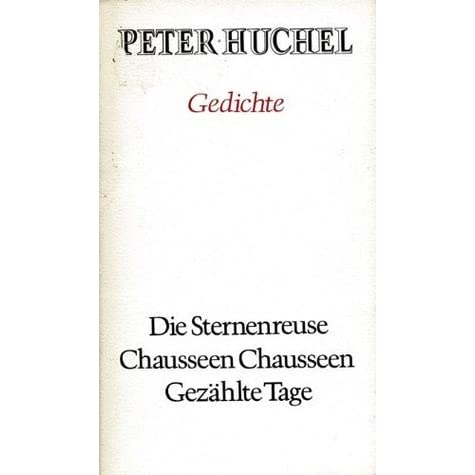 With the fall of the Third Reich, Huchel enthusiastically shared the democratic and socialist optimism of many of his compatriots for the reconstruction of East Germany. His short-lived faith in land reform in the immediate Soviet-Occupied post-war years is consistent with his earlier social concerns. He now began working for East German radio and in 1948 at last published his first collection, Gedichte (‘Poems’). In 1949 he became editor of the influential literary magazine Sinn und Form (‘Sense and Form’). Though Huchel’s poems were applauded both for their craft and socialist undercurrents, they did not satisfy those who were soon demanding much more explicit support for the German Democratic experiment. Huchel’s dark rural landscapes offered equivocal support at best for the governing regime and his instinctively conservative harking back to childhood and the natural world (rather than a modern revolutionary transformation of human society) were judged to fall short of the expected unquestioning celebration of the GDR’s project.
With the poet’s increasing sense of disaffection from the direction of GDR society, Huchel was once more forced to adopt the role of ‘inner émigré’. The tone of his work becomes increasingly sombre and melancholy, his poetic diction grows more clipped and cryptic, his palette narrowing. In his work at the journal Sinn und Form, he was determined to maintain editorial freedom and the publication flaunted an international outlook with contributions from Aragon, Bloch, Brecht (two special issues), Camus, Eluard, Langston Hughes, Thomas Mann, Neruda, Sartre, Yevtushenko and Zweig. Increasingly, he came into conflict with the authorities and was put under immense pressure to conform. He resisted for 13 years – in large part because of the determined support of Brecht. Brecht’s death in 1956 left Huchel exposed and he was asked to resign his editorship. He refused and so compelled the East German government publicly to force his resignation.
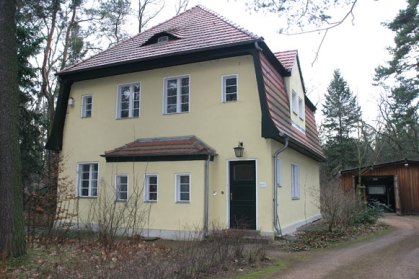
A year after the building of the Berlin Wall in 1961, Huchel was banished at the age of 59 to effective house arrest in Wilhelmshorst. It was at this moment that his second collection of poems, Chausseen, Chausseen (‘Roads, Roads’), appeared. He published it – in bold defiance of the GDR authorities – in the West. It was much praised in the author’s absence. Henry Beissel describes the leanness and density of these new free verse poems: “images are more insistent on turning concreteness into a code; sadness emanates from a sense of the inevitability of loss and from a world bent on self-destruction”.[viii] Huchel’s images from nature are left to speak for themselves; his is often an impersonal poetry of a particularly haunted and pessimistic kind. Yet there is stoical survival too; the poems remain marvellous acts of observation.
The poem ‘Hubertusweg’ vividly portrays this period of his life, from 1962 to 1971, living in isolation, under Stasi surveillance. Gezählte Tage (‘These Numbered Days’) appeared in 1972, the title suggesting the counted days of Huchel’s time under house arrest, his poems recording them, marking them, but also a residual sense of them actually counting towards something, his legacy as a poet, his hoped-for release. Huchel repeatedly applied for an exit visa for himself, his wife and son and in this he was supported by PEN in an internationally orchestrated campaign.
Eventually, in 1971, the Ulbricht government granted his release and he lived first in Rome, then in a borrowed house near Freiburg in West Germany. But like many GDR artists who moved to the West, Huchel was equivocal – to put it mildly – about what he found here. Because the GDR had failed to bring about a truly democratic and socialist society did not mean that he had given up his ideals and the West’s materialism, egotism and faithless profiteering were repellent to him. There is a spiritual emptiness everywhere as in ‘Subiaco’, set in Italy, where Pilate’s bowl stands emptied of water so the taint of guilt cannot be washed away. Huchel’s gloom is partly determined by his own nature, partly by his background, by political persecution and by his divorce from his Brandenburg homeland. The poet bears witness to the inadequate present.
 In Huchel’s few remaining years he was lauded in the West but perhaps this was just another form of exile, though one in which he was able to speak and publish. Even so, his final collection, Die Neunte Stunde (‘The Ninth Hour’) which appeared in 1979, is a book almost exclusively of elegy and lament. The ninth hour is the hour of despair, the hour in which Christ died on the Cross, crying out, “My God, my God, why have you forsaken me?” Huchel himself died in 1981, aged 78. Contemporary readers can hear something of his more personal voice – so finely attuned to the natural world, but gifted only a tragically powerless place in history, yet driven to labour and bear witness against the odds – in the words of the unnamed peasant who narrates ‘Middleham Castle’, one of Huchel’s more explicit and terrifying portraits of tyranny:
Familiar with the ways of great forests –
the year streaked with the jays’ colours,
painful brightness of frosted boughs,
the winter hair of deer stuck to bark,
fawns huddled together at evening,
warming themselves in the cloud of their breathing –
up the gorse-clad hill with rope and horses
I haul tree trunks to Middleham Castle.
Martyn Crucefix
London July 2020
[i] Karen Leeder, Introduction to These Numbered Days, Peter Huchel, tr. Martyn Crucefix (Shearsman, 2019).
[ii] The Garden of Theophrastus and other poems, tr. Michael Hamburger (Anvil Press, 2004).
[iii] Karl Alfred Wolken, in a review of Gezählte Tage (Rias Berlin, 1972), see http://www.planetlyrik.de/peter-huchel-gezahlte-tage/2011/10/
[iv] George Morgan, ‘Interview with Seamus Heaney’, Cycnos, Volume 15 No. 2, July, 2008: http://revel.unice.fr/cycnos/index.html?id=1594.
[v] Saint Augustine, Confessions, Book X, viii (Penguin, tr. R.S. Pine-Coffin).
[vi] Huchel’s acceptance speech for the 1974 Literature Prize of the Free Masons, quoted by Henry Beissel, A Thistle in His Mouth: Poems by Peter Huchel (1987), p. 10.
[vii] Quoted and translated by John Flores, Poetry in East Germany (1971), from Eduard Zak, Der Dichter Peter Huchel (1951), p. 124.
[viii] Beissel, p. 16.



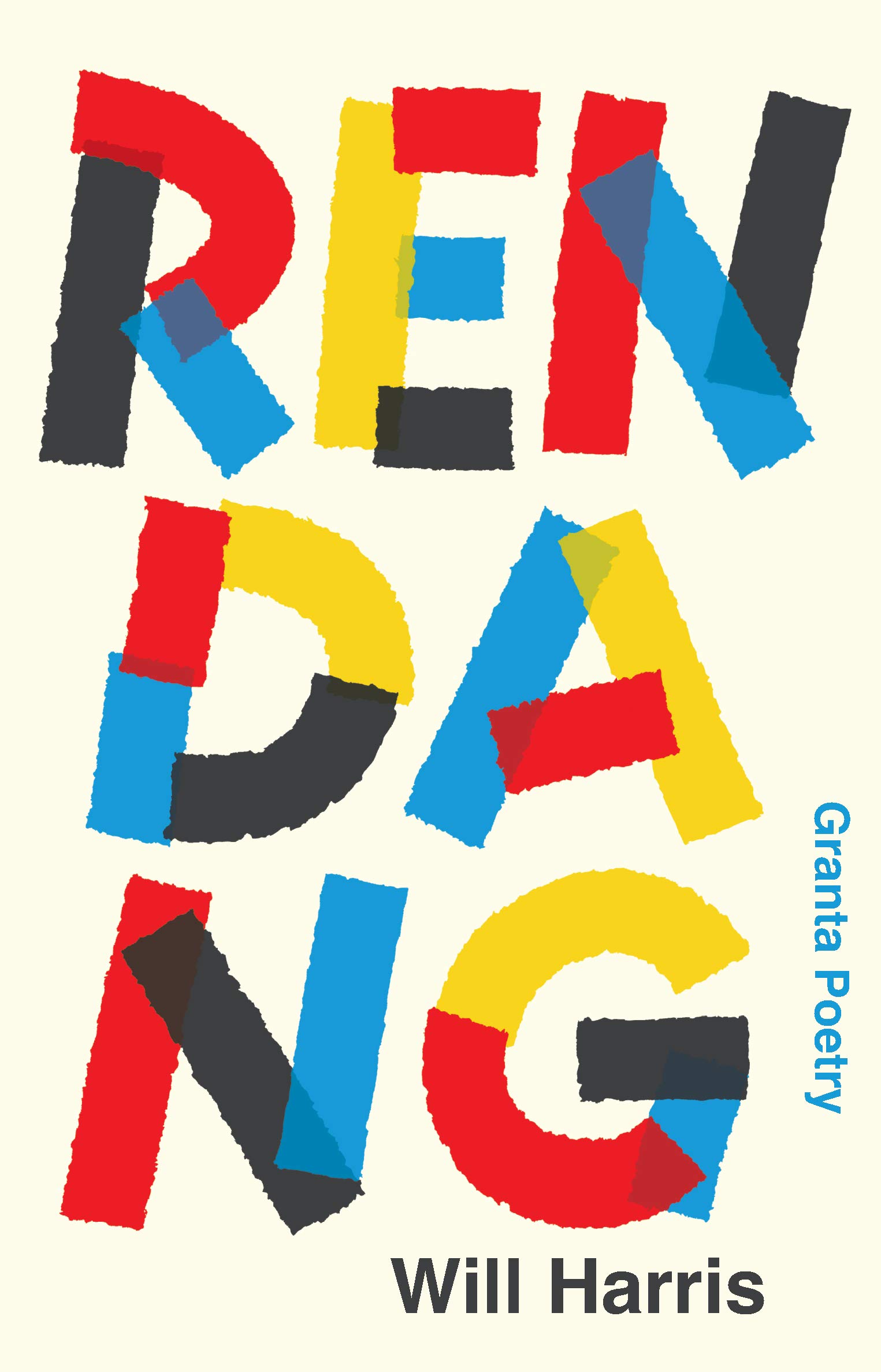 At the heart of Will Harris’ first collection is the near pun between ‘rendang’ and ‘rending’. The first term is a spicy meat dish, originating from West Sumatra, the country of Harris’ paternal grandmother, a dish traditionally served at ceremonial occasions to honour guests. In one of many self-reflexive moments, Harris imagines talking to the pages of his own book, saying “RENDANG”, but their response is, “No, no”. The dish perhaps represents a cultural and familial connectiveness that has long since been severed, subject to a process of rending, and the best poems here take this deracinated state as a given. They are voiced by a young, Anglo-Indonesian man, living in London and though there is a strong undertow of loss and distance, through techniques such as counterpoint, cataloguing and compilation, the impact of the book, if not exactly of sweetness, is of human contact and discourse, of warmth, of “something new” being made.
 This last phrase comes from ‘State-Building’, one of the more interesting, earlier poems in Rendang (a book which feels curiously hesitant and experimental in its first 42 pages, then bursts into full voice from its third section onwards). This poem characteristically draws very diverse topics together, starting from Derek Walcott’s observations on love (his image is of a broken vase which is all the stronger for having been reassembled). This thought leads to seeing a black figure vase in the British Museum which takes the poem (in a Keatsian moment, imagining what’s not represented there) to thoughts of “freeborn” men debating philosophy and propolis, or bee glue, metaphorically something that has to come “before – is crucial for – the building of a state”. The bees lead the narrator’s fluent thoughts to a humming bin bag, then a passing stranger who reminds the narrator of his grandmother and the familial connection takes him to his own father, at work repairing a vase, a process (like the poem we have just read) of assemblage using literal and metaphorical “putty, spit, glue” to bring forth, not sweetness, but in a slightly cloying rhyme, that “something new”.

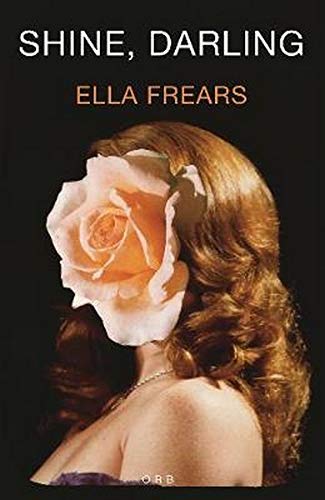 Ella Frears’ Shine, Darling is brimming with youthful exuberance and despair, yet not a jot lacking in thoughtful sophistication. Her subjects are boredom, sex, a woman’s body and the harassment that rushes to fill the void left by uncertain selfhood. A key poem is ‘The (Little) Death of the Author’, about a 13-year-old girl texting/sexting boys in her class, though the title is, of course, one Roland Barthes would have enjoyed. The narrator – looking back to her teen self – remembers pretending to be texting in the bath. The “triumph” is to make the boys think of herself naked (when she’s really eating dinner or doing homework). Hence “Text / and context are different things”. Her texts are careful constructions, evocative, alluring, full of tempting ellipses. On both sides, there is a filmic fictionalising going on (in the absence of any real sexual experience). The poem (which is a cleverly achieved irregularly lined sestina) ends with the authorial voice breaking cover: the poem itself is “a text I continue to send: Reader, I’m in the bath . . . / Nothing more to say than that. And if you like / you can join me”. The flirtation is a bit overdone (but other poems show Frears is wholly conscious of that) and the poem indicates one of this book’s chief concerns is with the difference between the truth of what happens and the truth of a poem.
 The obvious risk of such sexual adventuring is the subject of ‘Hayle Services (grease impregnated)’. The parenthetical allusion here is to Elizabeth Bishop’s ‘Filling Station’ where everything is “oil-soaked, oil-permeated [. . .] grease / impregnated”, a poem which concludes, against the odds of its grimy context, that “Somebody loves us all”. In contrast, Frears’ crappy, retail-dominated English motorway service station is (ironically) the stage for a pregnancy scare, a desperate search for a test kit in Boots and an anxious, “[p]issy” fumbling in the M&S toilet cubicle, then waiting for the “pink voila”. The headlong, impossible-to-focus, sordid anxiety here is brilliantly captured in the short, run-on lines. Frears also catches the young woman’s multiplicity of streams of consciousness, the scattershot: the potential father is present but soon forgotten, his reassurances dismissed, the pushy sales staff avoided in anger and embarrassment, the difficulty of urinating, the cringingly inappropriate joke-against-self in “et tu uterus”, the conventional moral judgement (“soiled / ruined spoiled”) and the final phone call to “Mamma, can you come pick me up?”

 And yet, poems in Shine, Darling do regularly turn to the moon for possible explanations of actions (‘Phases of the Moon / Things I Have Done’), for a witness if not for protection (‘Walking Home One Night’) and for directions (‘I Knew Which Direction’). The latter poem is a beautiful lyric opener to the book but is rather misleading. The repetition of the word “moonlight” seems to give an almost visionary access: “no longer a word but a colour and then a feeling / and then the thing itself”. It is curious that a poet asserts the transparency of language in this way (Frears is not much concerned with the nature, limits and impositions of language, unlike Nina Mingya Powles’ shortlisted Magnolia 木蘭), but also the idea of such an untrammelled access to “the thing itself” is countered by every poem that follows. Frears’ world view may not be too much troubled by words but the very idea of a unitary truth to be beheld with clarity is profoundly doubted.
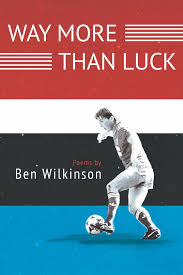 I’m not proud to admit that Way More Than Luck passed me by when it was first published. As you are probably aware, Wilkinson reviews poetry regularly for The Guardian, and he’s very familiar on social media as a poet and critic, a distance runner and a passionate Liverpool football fan. But the book’s cover (Dalglish, I think), its title and some of the publicity persuaded me that the football bit was going to be predominant. It’s certainly an almost unique aspect of the collection, but it turns out the debilitating darkness of psychological depression is an even more significant one. Wilkinson signals this concern via the book’s two epigraphs. One is about the nature of depression
 For me, it’s these psychological truths that Wilkinson is so good at conveying. There are other poems later in the book (and perhaps ‘Stag’ is an elusive example) which begin to sketch episodes of a foundering romantic relationship and ‘Building a Brighter, More Secure Future’ is a very effective excursion into witty political satire (a skilfully handled sestina based on the Conservative Party election manifesto, 2015). And there are the football poems. They comprise the central sequence of 14 poems, introduced with a heart-felt Prologue that says what follows is for the ordinary football fans, written out of “a love beyond the smear campaigns, / the media’s hooligans”. A large part of what Wilkinson has in mind here is the shocking response in parts of the media to the Hillsborough tragedy in 1989, when 96 men, women and children died (David Cain’s Forward prize shortlisted book, Truth Street, from Smokestack Books, movingly dealt with this event and the media and policing responses and
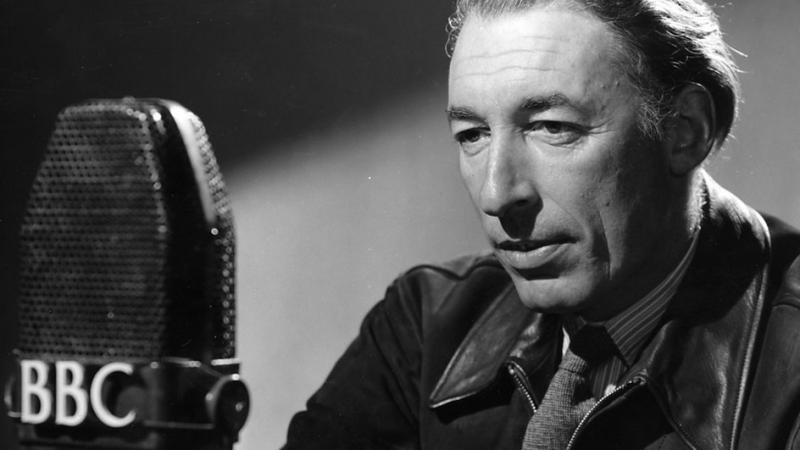
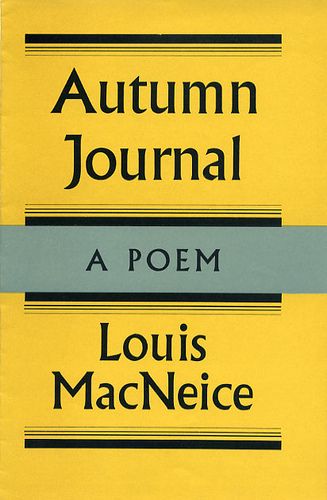
  But the poems also show how difficult it is to escape the miasma of cliché that seems to engulf football itself. Anfield is filled with a “fabled buzz”, then “the place erupt[s]”. Barnes unleashes a “a sweeping, goal-bound ball”, and a particular game offers one “last-ditch twist”. I’m reminded of Louis MacNeice’s observation (now sadly compromised in various ways, but the spirit of it remains valid, I think) that he wanted a poet not to be “too esoteric. I would have a poet able-bodied [sic], fond of talking, a reader of the newspapers, capable of pity and laughter, informed in economics, appreciative of women [sic], involved in personal relationships, actively interested in politics, susceptible to physical impressions’. There are many more of these poets around these days and to bring (even) football into the purview of poetry can hardly be a bad thing. Yet it is not an easy one and there may be some risks in deciding to headline the attempt. Ian Duhig’s blurb note to Way More Than Luck has gingerly to negotiate this issue: “The beautiful game inspires some beautiful poems in Ben Wilkinson’s terrific debut collection … but there’s far more than football to focus on here”. Yes, indeed.
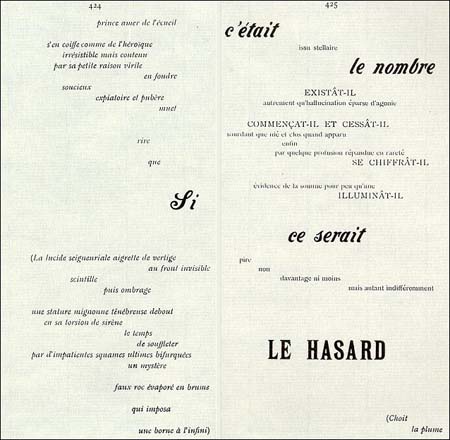
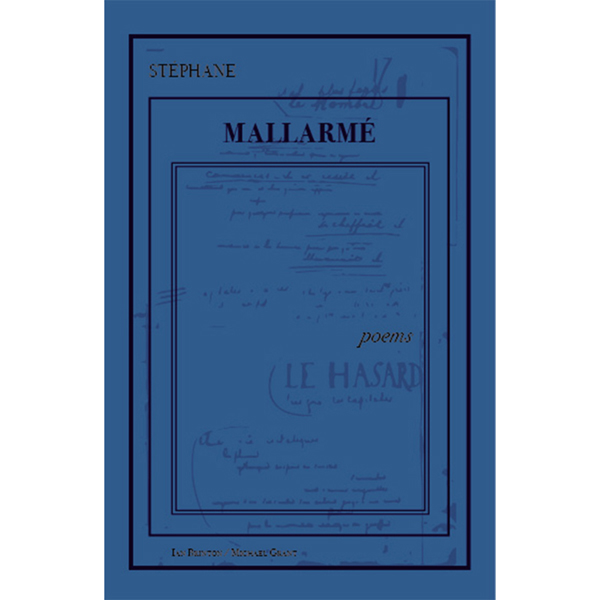 I am very grateful to Ian Brinton’s and Michael Grant’s recent translation of a selected Mallarmé (Muscaliet, 2019) for sending me back to a poet who has always proved problematic for me. My natural inclination draws me more to Louis MacNeice’s sense of the “drunkenness of things being various” (‘Snow’) – his emphasis on poetry’s engagement with “things” – and his desire to communicate pretty directly with his fellow wo/man, than with what Elizabeth McCombie bluntly calls “the exceptional difficulty” of Mallarmé’s work. I appreciate that such a dichotomy seems to shove the French poet into an ivory tower (albeit of glittering and sensuous language) while casting the Irish one as too narrowly engagé, but I’m also aware that Sartre praised Mallarmé as a “committed” writer and that, despite some evident remoteness from the ‘tribe’, the French poet’s political views were both radical and democratic.
 So, if we must give up on such ‘understanding’, what was Mallarmé – writing in the 1880-90s – doing? Something recognisably very modern, it turns out. Contra Wordsworth (and MacNeice, I guess), Mallarmé and his Symbolist peers, held ordinary language in suspicious contempt as too ‘journalistic’, too wedded to a world of facts. Poetry was to be more a communication, or evocation, of emotion, of a detachment from the (merely) everyday and a recovery of the mystery of existence which rote and routine has served to bury. Such a role demanded linguistic innovation as suggested in ‘The Tomb of Edgar Poe’ in which the American writer is praised for giving “purer meaning to the words of the tribe” (tr. Brinton/Grant). Writing about Edouard Manet’s work, Mallarmé saw the need to “loose the restraint of education” which – in linguistic terms – would mean freeing language from its contingent relations to the facticity of things (and the tedium and ennui that results from our long confinement to them) and hence moving language nearer to what he called the “Idea” and the paradoxical term Nothingness (as Brinton/Grant translate “le Neant”).
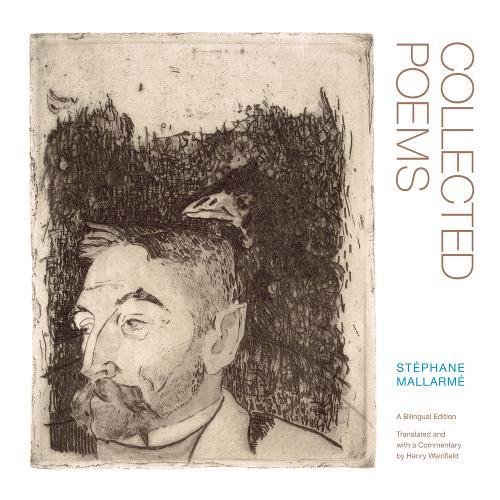 For these reasons, Mallarmé “cede[s] the initiative to words” (‘Crise de Vers’), to language’s material aspects as much as to its referential functions. Carrying over the material aspects of his French verse into English is then, to say the least, difficult. I’m inclined to agree with Weinfield (Introduction to Stephane Mallarmé Collected Poems (Uni. Of California Press, 1994) that it is “essential to work in rhyme and metre, regardless of the semantic accommodations and technical problems this entail[s]. If we take rhyme from Mallarmé, we take away the poetry”. But is that even possible? The accommodations and problems that arise are huge! Mallarmé placed the sonnet, ‘Salut’, at the start of his Poésies as a toast, salutation and mission statement. Weinfield gives the sestet as follows: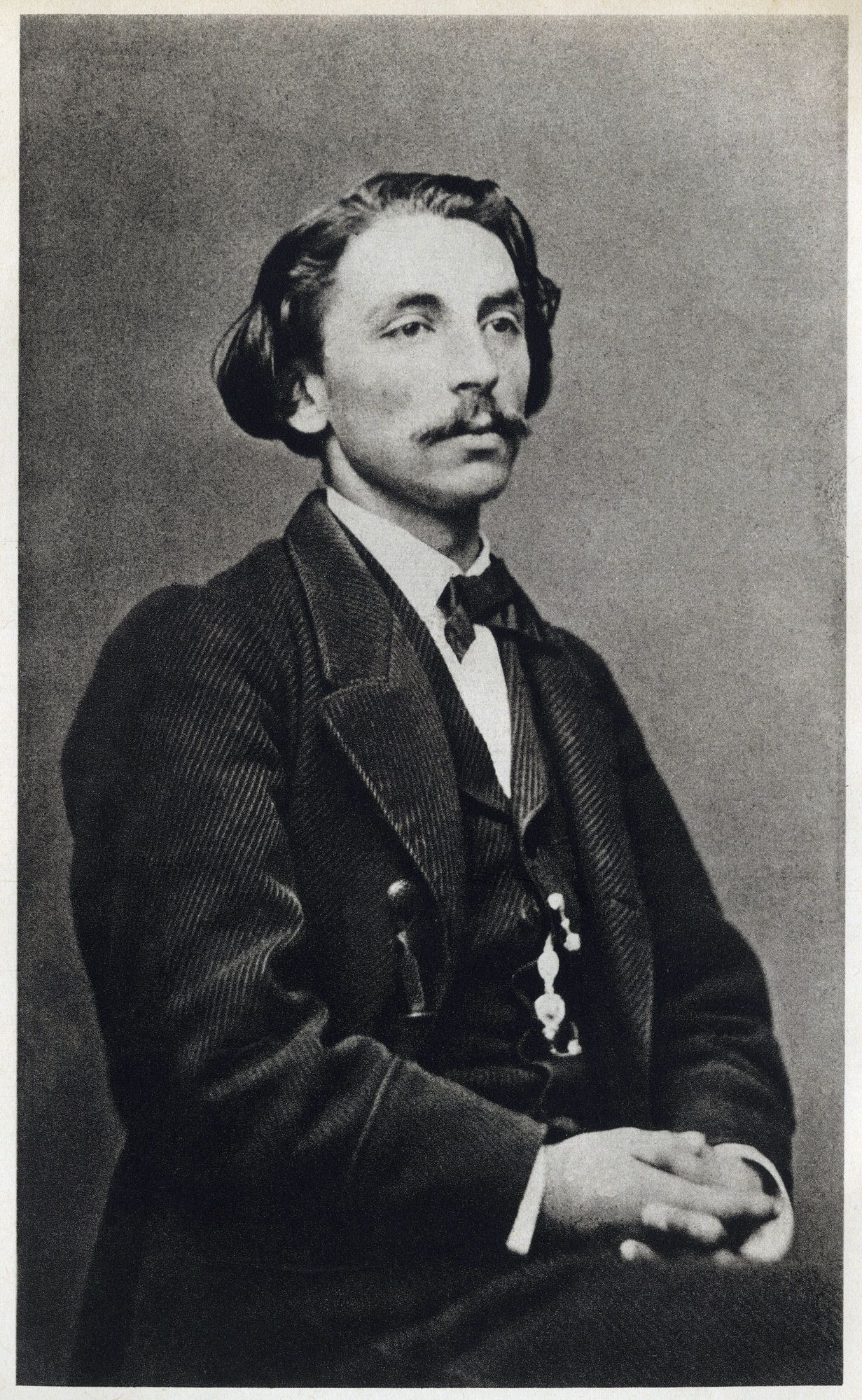

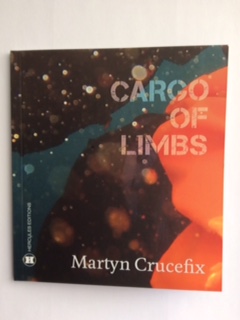 In lieu of a new blog post, here is a link to the Hercules Editions webpage on which I have formulated a few thoughts about the current lockdown, photography and the (forgotten?) refugee crisis in the Mediterranean. It is a piece in part related to the Hercules publication of my longer poem,
