More than 10 years of blogging on poetry and translation – over 75,000 views in 2025 – now captured and preserved at the UK Web Archive: 'one of the top 10 poetry blogs' (Rogue Strands)
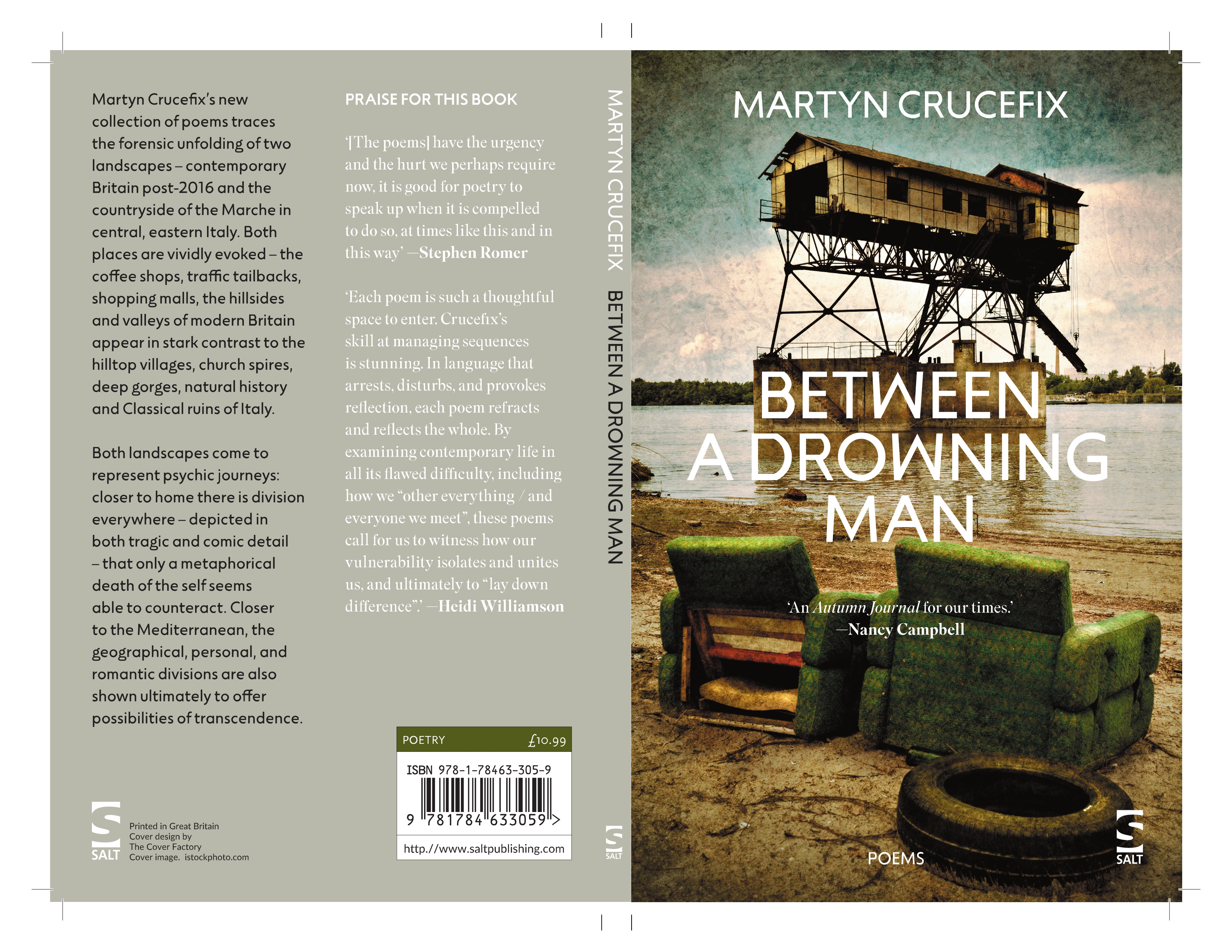
‘An ‘Autumn Journal’ for our times.’ —Nancy Campbell
‘Each poem is such a thoughtful space to enter. Crucefix’s skill at managing sequences is stunning. In language that arrests, disturbs, and provokes reflection, each poem refracts and reflects the whole. By examining contemporary life in all its flawed difficulty, including ‘how we other everything/ and everyone we meet’, these poems call for us to witness how our vulnerability isolates and unites us, and ultimately to ‘lay down difference’. —Heidi Williamson
‘[The poems] have the urgency and the hurt we perhaps require now, it is good for poetry to speak up when it is compelled to do so, at times like this and in this way’ —Stephen Romer
Listen to Martyn discussing the background and the writing of the poems in this new collection in these two podcasts:
BLURB OF THIS BOOK: Martyn Crucefix’s new collection of poems traces the forensic unfolding of two landscapes – contemporary Britain post-2016 and the countryside of the Marche in central, eastern Italy. Both places are vividly evoked – the coffee shops, traffic tailbacks, shopping malls, tourist-dotted hillsides and valleys of modern Britain appear in stark contrast to the hilltop villages, church spires, deep gorges, natural history and Classical ruins of Italy. Both landscapes come to represent psychic journeys: closer to home there is division everywhere – depicted in both tragic and comic detail – that only a metaphorical death of the self seems likely to counteract. Closer to the Mediterranean, the geographical and personal, or romantic, divisions are also shown ultimately to offer possibilities of transcendence.
The poems of the longer sequence, ‘Works and Days’, are startlingly free-wheeling, allusive – brilliantly deploying source materials and inspiration from Hesiod’s original and the 10/12th century Indian vacana poems – all bound together by the repeated refrain of bridges breaking down. The Italian poems, as a crown of sonnets, are more formally controlled, but the repeating of first and last lines of the individual poems likewise serves to suggest the presence of an overarching unity.
In the end, both sequences travel towards death which – while not denying the reality of human mortality, the passage of time – is intended to represent a challenge to the powerful dividing walls between Thee and Me, the liberation of empathetic feeling, even the Daoist erasure of the assumed gulf between self and not-self: ‘these millions of us aspiring to the condition / of ubiquitous dust on the fiery water’.
One of the joys of social media (and there are plenty of aspects of them that are less than joyful) is that occasionally a notification pops up from an unexpected source and when you check it out there is something really worthwhile to be found. This happened the other day – via Instagram. Someone called Matt McGettrick had tagged me. I don’t know Matt, but he is a student on the BA course in TV and Radio Production at the University of Salford.
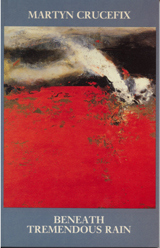
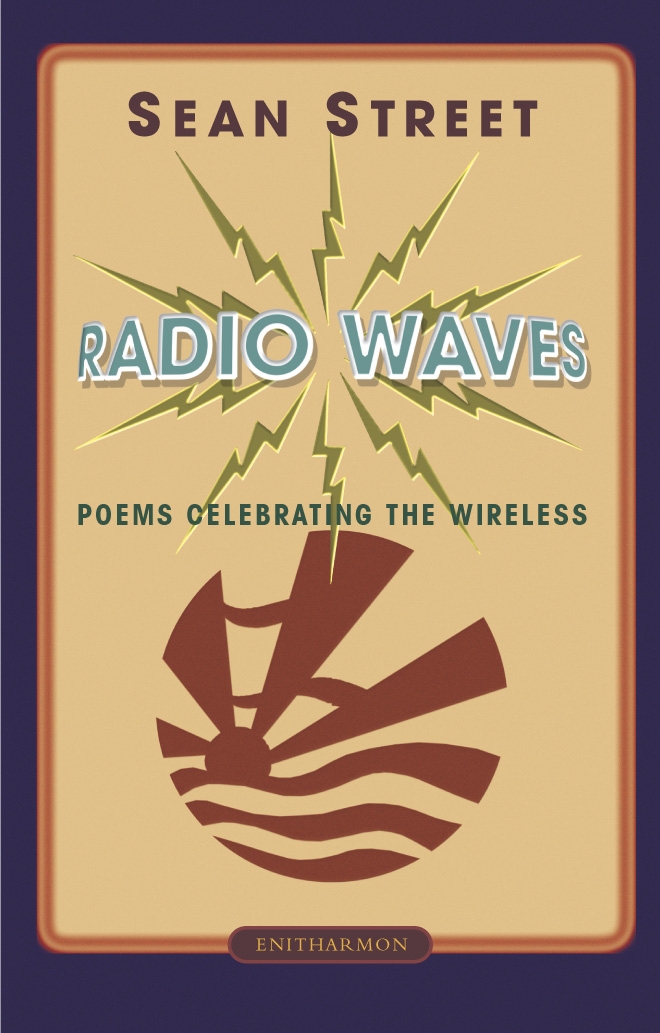
Matt’s instapost said he had recently created a soundscape based on a poem I published in 1990, in my first book from Enitharmon Press, called Beneath Tremendous Rain. It’s unlikely that the poem was found in that book itself, but I remember it was selected more than 10 years later by Sean Street to appear in an anthology called Radio Waves: poems celebrating the wireless (Entharmon, 2004). There, I was happily rubbing shoulders with the likes of Auden, Brecht, MacNeice, Heaney and Carol Ann Duffy. Sean – whose is a poet, broadcaster and recently retired Professor of Radio at Bournemouth University – had divided the anthology up into sections variously titled, Music Radio, Talk Radio, Weather, Listeners and Signals. My piece was in the section called ‘In the Car’.
Here’s that original poem. It’s voiced by a persona – I had no children at this point and had not moved out of the ‘dark’ streets of Manchester to the countryside.
Air-Waves
As I slowed up and shifted downgear,
a dance song thumping from the car radio
was stretched out and smashed to pieces.
x
But we barely noticed that first time –
all eager to see the house, where it stood
beneath the surfing crackle of the pylons.
x
The girls loved the sight of so much sky.
They slipped into new schools with ease
though Sue and I made it home more slowly.
x
And by then, there was Stephen, almost four,
suddenly ill, his rush of growing gone awry,
and the doctor’s face, closed up and dark
x
as the Manchester streets we had left behind.
He could tell me nothing. Inexplicable,
the pattern of disease. A year – maybe two.
x
Driving back across the hills, roadside wires
loop down, are yanked back to the blunted head
of each telegraph pole – and further off,
x
the pylons, hitching up skeins of darkness,
striding up country to a house where this car
and their sheaf of hot wires will converge,
x
where a young man’s voice on the radio
will melt down in a surge of boiling static
as I slow up, shift gear, and stop.
I remember a great deal of concern – this will have been in the late 1980s – about the possible harmful effects of living too close to the electrical fields generated by pylons. There was a particular study in 1979 that did conclude there might be a link between electromagnetic fields and childhood cancer (and this is the kind of scenario I am thinking of in the poem). However, other studies in the 2000s did not find an association or found an association only in homes with very high levels of magnetic forces, which is rare, according to the National Cancer Institute.
There was a personal connection, I remember, as my in-laws lived in a house which nestled in beneath a line of high voltage cables and pylons. But perhaps concerns about cancer-inducing lines of pylons have now gone the way of those early concerns about the dangers of mobile phones. Or has it even been consigned to the slightly cranky end of health concerns along with those people who sabotage 5G masts in the name of suspected links to the on-going pandemic? Even so, though it has dated a little, I’d like to think of the poem as one of my earliest expressions of environmental concern: if the electromagnetic fields do turn out to be perfectly safe, they are here acting as a metaphor for the kind of degradation of the lived-in environment caused by human action for which there is an indisputable and growing body of evidence.
Anyway – all this is simply by way of introducing Matt McGettrick’s excellent piece of work. The reader is Matthew Green. As the author of the original piece, it seems to me that both reading and soundscape engineering do a really fine job of responding sensitively to the text’s meaning, its structure and its rhythms. Have a listen – Matt suggests headphones are a good way to hear his work. It’s just over 5 minutes long.
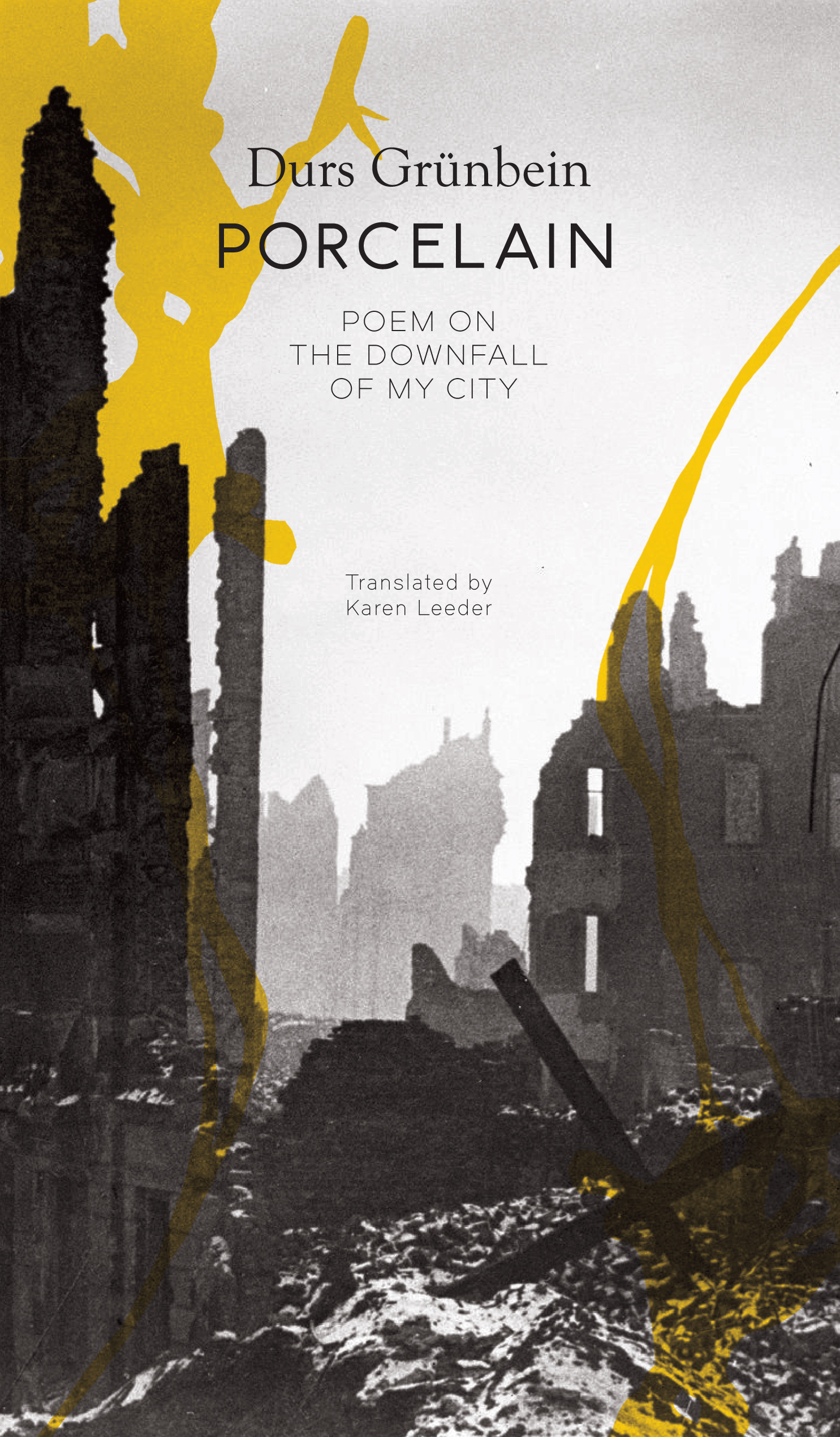
For a writer who has published over 30 books of poetry and prose in his native Germany, we have had too little of Durs Grünbein in English. Michael Hofmann‘s Ashes for Breakfast (Faber, 2005) introduced some of the earlier work and described Grünbein as possessed of melancholia, amplitude, a love of Brodsky, a love of the Classics, plus wide-ranging interests in medicine, neuroscience, contemporary art and metaphysics. John Ashbery praised Grünbein, identifying his subject as “this life, so useless, so rich” and the challenge to any translator is precisely this breadth and ambition. Happily, Karen Leeder is proving to be a really fine conduit for Grünbein’s work and here she triumphantly tackles his 2005 sequence of poems about the firebombing of his hometown, Dresden, by American and British planes in February 1945.
Porcelain is a sequence of 49 poems, 10 lines each, rhymed and grounded in Classical metre and given an air of Classical elegy by its subtitle, ‘Poem on the Downfall of My City’ (‘Poem vom Untergang meiner Stadt’). But if resolution, consolation or summing-up might be expected, this is, definitively, not what we get. The title, of course, refers to the Meissen pottery which, from the eighteenth century on, brought Dresden its great wealth and fame. But it is also a pun on the poet to whom the sequence is dedicated: Paul Celan. In Celan’s poem ‘Your eyes embraced’ there is an effort to swallow the ashes of genocide but they return to the throat as ‘Ash- / hiccups’, an image repeated in Grünbein’s opening poem: “It comes back like hiccups: elegy”. The sequence does indeed hiccup in the sense of its jerky shifts of tone, its multi-faceted images of Grunbein himself and in its close to choking articulation of the horrors of the Dresden bombing.
Paul Celan
A self-conscious awkwardness or self-questioning is clear from the start: “Why complain, Johnny-come-lately? Dresden was long gone / when your little light first appeared”. Grünbein was born seventeen years after the bombing and accepts he cannot ‘witness’ the event in any simple way. But personal details do surface in the sequence such as in poem 8 where the young boy grows familiar with the still evident urban destruction: “proud and mute . . . the ravaged city”. He senses something of “that glory passed away” but can hardly know “the things [his] mother saw, / scarcely five years old” (poem 10). Later poems remember moments when his mother’s doll was in danger of the flames (“Flames as high as houses sucked the air along the streets”), but was rescued, unscathed, “or that is what they say” (poems 40/41). Leeder explains in her Introduction that Grünbein has been criticised in part for a sentimentality and this is perhaps such a moment. But the indication that this is reportage (family reportage at that) gives permission for sentiment and Grünbein is fully conscious of (and in control of) the massive swings in tone through the whole sequence. Poem 48 is one that might also lay itself open to charges of sentiment, focussing on a pair of lovers (Martha and Heinrich) seemingly caught up in the devastation: “Kids, the pair of you, first kisses in the thick of war, / until you met that night you’d grown up in uniform”. But Grünbein works repeatedly through allusiveness and intertextuality, so this Romeo and Juliet trope is hardened and complicated when we hear that, not only was the German air defence’s grid reference for Dresden code-named ‘Martha-Heinrich 8’, but also that both names recall characters in Goethe’s Faust.
In poem 38, Grünbein seems equally aware that some of his images of Dresden after the bombing might be open to the same criticism of a hyper-emotional tone. “Five long weeks upon the Altmarkt square, the horses / scratched the straw and watched the griddled corpses / burn. Mawkish? Ach, give over, late-born soul”. As this example shows, the sequence does confront the horrors unleashed on the city as in poem 22: “Are those people popping like chestnuts between / the gutted trams?” But looked at more carefully, even this grisly observation is nominally from the perspective of a stone angel on the cathedral roof. It is this continual innovation and manipulation of perspective that is important to the poems’ purpose and how we should read them. One important perspective Grünbein explores is the victim-narrative that predominated in thinking about the event in post-war East Germany and more recently. One aspect of this is the placing of the Dresden bombing in the historical context of German bombing of Warsaw in 1944 and the German’s systematic persecution of the Jews. Dresden’s fate did not rise ex nihilo. This latter myth, Grünbein embodies in the eroticisation of the bombing – the city as defenceless virgin – as in poem 45’s image of the city and the Elbe: “River like a sash of silver draped round her hips / enticing in the moonlight”.
Aerial View of Dresden circa 1930
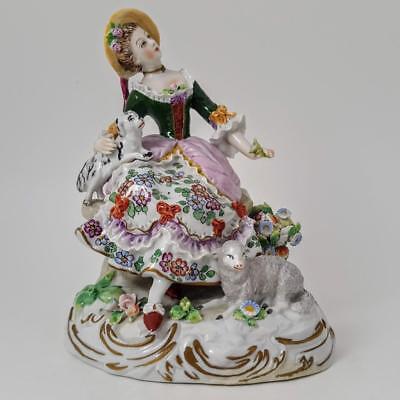
From such examples, it’s easy to see why Grünbein’s own position on the bombing has been vociferously discussed and questioned. But he warns against using the destruction of the city as any kind of exemplum: “Let Dresden be. You won’t find what you are looking for” (poem 6). The reader understands he is also advising himself here, while, at the same time, acknowledging the human drive to interpret, to search for meaning, even in the most appalling events. The sequence’s treatment of Arthur ‘Bomber’ Harris, the RAF Commander-in-Chief during the bombing of Dresden, is interestingly equivocal. Poem 4 alludes almost invisibly to Harris’ comment on the Dresden bombing, when he suggested that objections to it were based on a sentimental image of the city as full of “German bands and Dresden shepherdesses” when, in reality, it was a Nazi munitions and transportation centre. In fact, Harris was carrying out orders from Winston Churchill: “No sweat, Arthur, you only did what you had to do” (poem 13). And in poem 23, Grünbein also notes that some more recent left-wingers in Germany have chanted ‘Thank you, Harris!’ in their efforts to question and counter more simplistic, victim-narrative commemorations of the event.
Meissen Shepherdess Figure
In such ways, Porcelain revels in its own pluralities while acknowledging and itself attempting to make some sense of an epitome of senseless destruction. The final line of the book plainly states the human need to avoid finality, the fall into fixity, yet accepts the compulsion to explain, to create meaning: “Changing places, times, dimensions as he goes—goes on—creating”. And behind all this stand those exquisite china objects, the ‘white gold’ that made the city rich and famous:
Falconers are there, vintners, nymphs with conch-shell horns,
frog-faced putti, figures riding seahorses and swans.
Groups of shepherdesses, lovely gardeners, beasts of lore . . .
Porcelain—most fragile thing”
The collision of Allied bombs and Dresden’s fragile porcelain lies at the heart of Grünbein’s poems. There was no contest, of course, though some pieces and many fragments remained and were perhaps repaired. Grünbein’s poems enact this process, collecting perspectives, often incongruous, even contradictory, but bringing them into relation with each other, not to make any definitive statement, but to hold up a mirror to us, to the recurrent tension between our need to create and our drive to destroy.
So pleased to have these 5 poems published by The Galway Review. This is another of my translation projects (working with Nancy Feng Liang, without whom none of this would be possible of course). We ‘met’ during last year’s Cambridge Poetry Festival and she was looking for an English language poet to work on Chen Xianfa’s collection ‘Poems in Nines’ (2018). The more I have done so the more I love his work. I hope you enjoy these poems.
Biographies of the three writers involved in this submission
Chen Xianfa is a prize-winning poet and journalist, born in Anhui Province, China. He has published five books of poems: Death in the Spring (1994), Past Life (2005), Engraving the Tombstone (2011), On Raising Cranes (2015; in English tr. 2017) and Poems in Nines (2018; bilingual Chinese/English, tr. Nancy Feng Liang, publ. China) which was awarded the Lu Xun Prize. A Selected Poems appeared in 2019. He has published two collections of essays, Heichiba Notes (2014 and 2021). Other awards include China’s Top Ten Influential Poets (1998-2008), the Hainan Biennial Poetry Prize (2011), Yuan Kejia Poetry Prize (2013), Tian Wen Poetry Prize (2015) and the Chenzi’ang Poetry Prize (2016).
Translators
Martyn Crucefix – recent publications are Cargo of Limbs (Hercules Editions, 2019) and The Lovely Disciplines (Seren, 2017). These Numbered Days, translations of the poems of Peter Huchel (Shearsman, 2019) won…
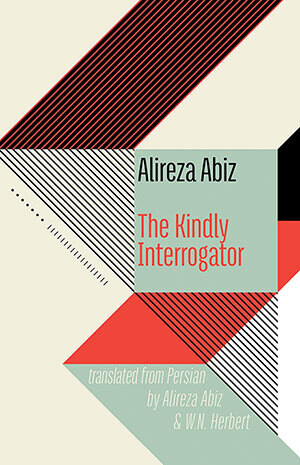
‘I always write that which is not’ says one of Alireza Abiz’s poems, because ‘[t]hat which is is too terrifying / to wear the garment of the word’. To understand what Abiz means here – how can / why should a poet avoid writing of what is real? – we have to understand his historical and political contexts.
Abiz belongs to the 1990s generation of Iranian writers. The unattributed Introduction to The Kindly Interrogator (Shearsman Books, 2021) provides help for those of us who don’t know much about the development of modern Iranian poetry. It was Nima Yushij who, at the opening of the twentieth century, felt the then-current forms of Persian poetry had become too abstract, subjective and metaphysical. He advocated a more modern, objective approach, a more natural diction and the use of forms closer to what we would regard as blank verse. By the 1960s such freshness and freedom had yielded some of the best modern Persian poets, writing diversely, mostly in free verse. But both before and after the 1979 Revolution (which replaced a millennia old monarchical system with the Islamic Republic), poets continued to engage in political struggles and were often prosecuted by the authorities for their writings. Following 1979, and during the 8 years of war with Iraq, the artistic atmosphere continued to be both difficult and repressive.
The political reforms of the 1990s – Abiz’s period – saw a new optimism and revival in the arts, yet still prosecution and censorship remained a fact of life. Many artists left Iran and – especially after the 2009 uprising – there was a considerable migration into exile. Though currently resident in the UK (he lives in London and has a Creative Writing doctorate from Newcastle University) Abiz does not consider himself an exile as such, though inevitably his perspective has an ex patria quality, looking both dispassionately at Iran’s nature and continuing development, as well as harking back to an affective homeland.
Alireza Abiz
In these translations by the author and WN Herbert, Abiz’s free verse poems are not always reluctant to address realities, but they do tend to deploy (what the Introduction calls) a kind of ‘dialled-down or even buttoned up surrealism’. ‘The Tired Soldier’ is brief and universal. His weariness is symptomatic of a lengthy war, as well as his disillusionment with it. Jackals wail, bugles “cough” like roosters – the real and figurative creatures here close to anthropomorphic portraits of societal/political elements, close to the derangement of the surreal which is also signaled in the soldier’s action which (besides the obvious disrespect for his military service) involves an overturning, a literal inversion (feet to head, head to feet) of the norm:
The tired soldier
hangs his boots around his neck
and pisses in his helmet.
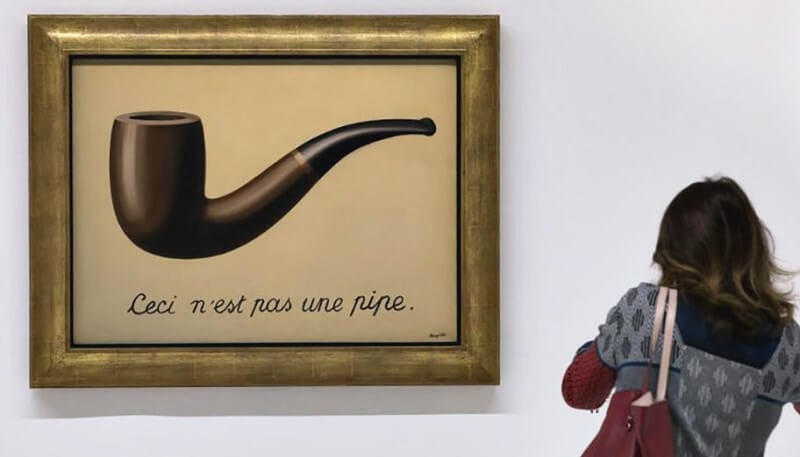
The surreal is inevitably emergent when we cease to trust our senses, or our interpretation of what we think we witness (think of Rene Magritte’s Ceci n’est pas une pipe). A black cat watches the narrator from the veranda. Given a political context in which persecution (even elimination) has become common currency, the narrator seems to fear for his own life:
It’s been a long time since I was a sparrow,
since I was a dove,
even since I was a backyard hen.
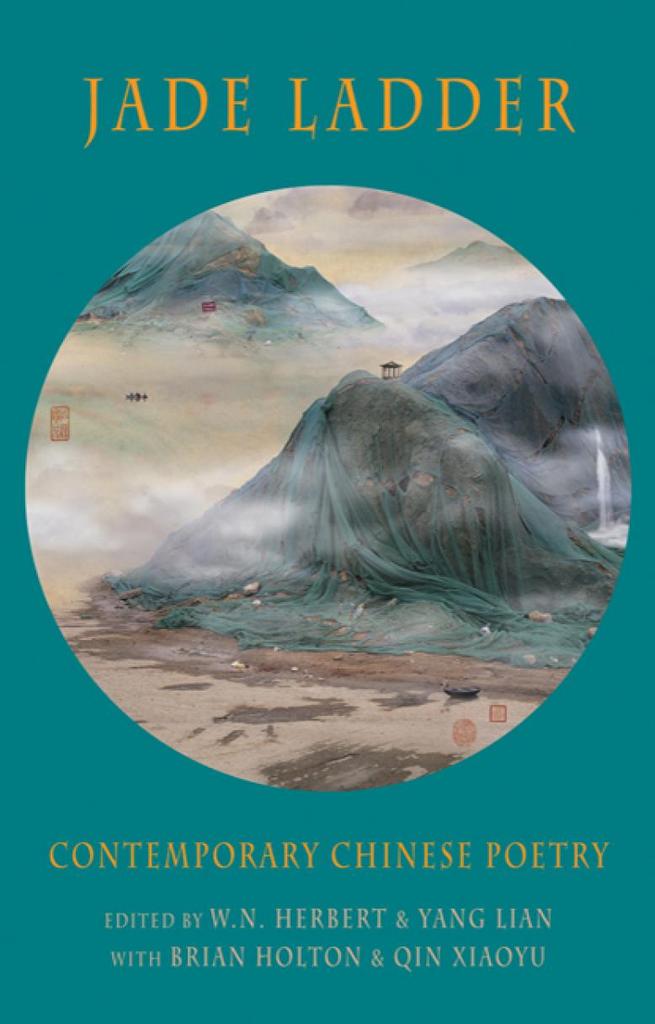
The sense of danger and paranoia here is obvious, but perhaps vague enough, quirkily surreal enough, to elude the censors. The Introduction suggests parallels with the Menglong Shi or so-called ‘Misty Poetry’ generation of writers in China in the 1980s. Then, the ‘Misty’ handle was initially a disparaging one given by officially sanctioned reviewers, suggesting these writers were creating ‘obscure, vague, incomprehensible work’ (for a good account of these issues see Yang Lian’s introductory essay to Jade Ladder: Contemporary Chinese Poetry (Bloodaxe, 2012) edited by WN Herbert and Yang Lian). But their obscurity was only really in comparison to official Chinese poetry of the period full of banal (but never obscure) sloganizing about the virtues of Socialism and the evils of Capitalism. Yang argues the mistiness of the new 1980s Chinese poets was really a return to ‘Sun, Moon, Earth, River, Life, Death, Dream’ – to the territory of Classical Chinese poetry (Li Bai and Du Fu), though often encoded within it were observations about contemporary political life. So also with Abiz’s poetry in which images of ‘doves, rabbits, ghouls, lemons, feasting, wine’ develop and imply their own slant or misty significances.
Inevitably, death and the threat of it is a preoccupation of many of these poems. The mundane incident of a fly buzzing in a kitchen leads to a meditation on conflict, guilt and futility. Looking through a window into ‘The Anatomy Hall’, the narrator sees a surgeon? a mortician? a torturer? leaning over a body on a table. He senses the man’s fear; he glimpses the flash of a knife. Then:
He bends over my head and smiles,
looking at me like a butcher looks at a carcass.
X
On the table in the middle of the hall,
relaxed, I sleep.
The relaxation of the victim comes as an additional surprise, but it gestures towards the sense of complicity that is another of Abiz’s concerns. A lengthy quotation in the Introduction, which I take to be in Abiz’s own words, argues: ‘the corrupting influence of dogmas is so insidious that no-one remains entirely innocent, or, if carried along by the paranoias of ideological purity, should be considered completely guilty’.
W N Herbert
So in ‘The Informer’ the narrator (in a Kafkaesque sort of world) has been invited to attend a ceremony to select the ‘finest informer’. There appears to be a confident pride in the way he dresses up for the occasion. In the hall, the candidates (those you expect to be on the ‘inside’) are in fact excluded. It turns out, in a detail suggestive of the elusive nature of truth and the levels on levels of surveillance in such a repressive society, that all the seats are to be taken ‘by the officers responsible for informing on the ceremony’. There is a calculated bewilderment to all this as is also revealed in the oxymoronic title of the eponymous poem, ‘The Kindly Interrogator’. Nothing so simple as a caricatured ‘bad cop’ here:
He’s interested in philosophy and free verse.
He admires Churchill and drinks green tea.
He is delicate and bespectacled.
He employs no violence, demands no confession, simply urging the narrator to ‘write the truth’. The narrator’s reply to this epitomises the uncertainties a whole society may come to labour under. He cries, ‘on my life!’. Is this the ‘I will obey’ of capitulation or the ‘kill me first’ of continued resistance? Is this the repressed and persecuted ‘life’ of what is, of what is the case, or an expression of the inalienable freedom of the inner ‘life’? Abiz is very good at exploring such complex moral quandaries and boldly warns those of us, proud and self-satisfied in our liberal democracies, not to imagine ourselves ‘immune from [the] temptation towards unequivocality’. Fenced round with doubt, with a recognition of the need for continual watchfulness, with a suspicion of the surface of things, perhaps these poems never really take off into the kind of liberated insightfulness or expression of freedom gained that the Introduction suggests a reader might find here. Abiz – the ‘melancholic scribbler of these lines’ – is the voice of a haunted and anxious conscience, a thorn in the side of repressive authorities, as much as a monitory voice for those of us easily tempted to take our eye off the ball of moral and political life nearer home.
Martyn Crucefix is our headline reader. His recent publications include Cargo of Limbs (Hercules Editions, 2019), These Numbered Days, translations of the poems of Peter Huchel (Shearsman, 2019), which won the Schlegel-Tieck Translation prize 2020, and The Lovely Disciplines (Seren, 2017). O. at the Edge of the Gorge was also published by Guillemot Press in 2017. Martyn has translated the Duino Elegies – shortlisted for the 2007 Popescu Prize for European Poetry Translation – and Sonnets to Orpheus by Rainer Maria Rilke and the Daodejing – a new version in English (Enitharmon, 2016). He is currently a Royal Literary Fund Fellow at The British Library and blogs regularly on poetry, translation and teaching at http://www.martyncrucefix.com
Main Reader – Martyn will read both original poems and from his Schlegel-Tieck Translation prizewinning book of Peter Huchel’s work.
Marvellously thoughtful and well-informed review of my (fairly) recent translations of the poems of Peter Huchel. Also recent winner of the Society of Authors’ Schlegel-Tieck Prize for Translation 2020.
Many thanks to Rebecca DeWald and to Reading in Translation.
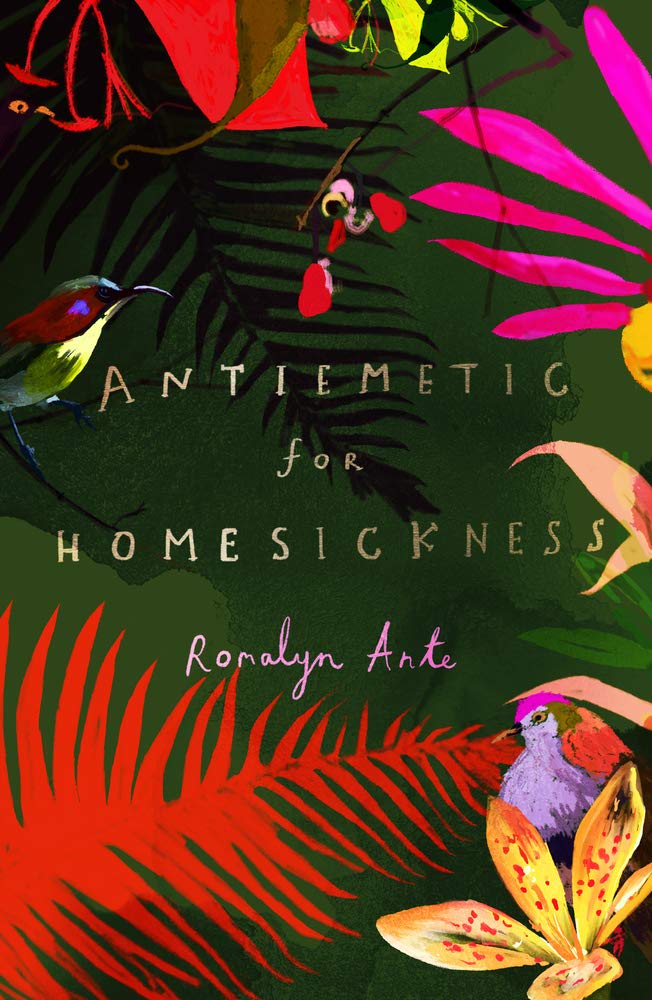
Romalyn Ante was born in Lipa Batangas, in the Philippines, in 1989. For much of her childhood her parents were absent as migrant workers and the family moved to the UK in the mid-2000s where her mother was a nurse in the NHS. Ante herself now also works as a registered nurse and psychotherapist. As a result, this debut collection has multiple perspectives running through it: the child grappling with the parents’ absence, the mother’s exile, the daughter’s later emigration and a broader, political sense of the plight of migrant workers. The economic driving force behind such movements of people is recorded in ‘Mateo’, responding to the Gospel of Matthew’s observation about birds neither sowing nor reaping with this downright response: “But birds have no bills”. So, in poem after poem, the need for money, for a roof, livestock, fruit trees, medical treatment, even for grave plots back home is made evident.
Antiemetic for Homesickness also consequently has two prime locations: the UK appears as snow-bound streets, red buses, the day to day labour of nursing grateful (and often less than grateful) patients, casual racism. But it is the home country that predominates in vivid images of its landscape, people, culture, folk tales, food and frequent fragments of its Tagalog language (there is a glossary of sorts, but I found many phrases not included). So the promise implied by the title poem – a cure for homesickness – is willed, even a delusion, but a necessary one adopted for self-preservation. It’s a great poem. Opening with “A day will come when you won’t miss / the country na nagluwal sa ‘yo” (lit. who gave birth to you), it also closes in the same mood: “You will learn to heal the wounds / of [patients’] lives and the wounds of yours”. But the central stanzas are densely populated by memories of home, the airport goodbyes, the tapes recorded by left-behind children, the recalled intimacies of the left-behind husband, the gatherings and food of the distant place. The antiemetic is proving less than effective.
This is the material for all Ante’s poems here. ‘The Making of a Smuggler’ opens with “Wherever we travel, we carry / the whole country with us” – lines that recall Moniza Alvi’s, ‘The country at my shoulder’ from 1993. Despite Ante’s personal experiences, these poems often speak in this plural pronoun (a sense of solidarity in experiences shared plus a pained awareness of the plight of unnumbered, unknown migrant workers). The ‘smuggling’ image also suggests an illicit action, a coming under suspicion in the destination country. What is being smuggled across borders under the insensitive noses of its guardians are memories, places: “He can’t cup his ear // with my palm and hear the surfs / of Siargao beach”. If these are thoughts on arrival then ‘Notes inside a Balikbayan Box’ evoke the on-going sense of loss, distance, almost bereavement accumulating through years of working abroad. Such boxes – Ante’s notes explain – are used by Overseas Filipino Workers (OFW) and filled with small gifts to be eventually sent back home, a kind of ‘repatriate box’.
Accordingly, the poem takes the form of a note – “Dear son” – partly accompanying objects such as shoes, video tapes, E45 cream, incontinence pads, perfume but, just as important, offering life-advice and apologies:
I owe you for every Simbang Gabi and PTA meeting
I could not attend. I promise I’ll be there for Christmas.
I know I’ve been saying this for a decade now.
Romalyn Ante
Scattered throughout the collection are short extracts intended to reflect cassette tape recordings – sent in the reverse direction to the Balikbayan Box – by a child to her distant mother. The risks of attempting such a child’s perspective are many and Ante keeps these little more than fragmentary utterances, not authentically child-like. These were some of the less successful moments in the collection, many others of which also arose from such formal experiments. Ante tries out the forms of a drug protocol, a questionnaire, a concrete poem, centred, right or left justified verse, prose passages, assemblages of fragments, typographical variants. Such moments presumably constitute the “dazzling formal dexterity” alluded to in the jacket blurb, but you’d not read Ante for this but for the poems’ “emotional resonance”, also referred to in the blurb.
Siargao Beach
The plurality of her subjects also gives rise to poems in several voices. ‘Tagay!’ portrays the migrant workers’ embattled situation and their making the best of it through the communal drinking of Lambanog (distilled palm liquor) – the title is something akin to ‘Cheers!’ Each speaker toasts the others present, going on to imagine their personal homecoming: welcoming smiles at Arrivals, the bringing home of Cadbury’s chocolate, the heat of Manila, home-cooked food at last, story-telling, marital sex. Many of the speakers cannot keep their work out of the moment: “Tomorrow we’ll be changing bed covers, / soaking dentures, creaming cracked heels”… but for the moment, “Tagay!” Something similar is attempted in ‘Group Portrait at the Stopover’, in which migrant workers are briefly thrown together at an airport, in 5 short sections swapping gifts and stories of their labours and abuse, preferring not to think “of the next generation that will meet at this gate, / the same old stories that will hum out of younger mouths”.
‘Group Portrait..’ is one of Ante’s poems that explicitly addresses the long-standing global reality of migrant labour and ‘Invisible Women’ does the same. These are the women, world over, who are seldom given credit or even attention, yet are “goddesses of caring and tending”. Ante’s mother is one of them, a woman who “walks to work when the sky is black / and comes out from work when the sky is black” (the studied repetitions here more effective than many other formal innovations). The deification of such women is part of Ante’s point. The costs of such migration are repeatedly made clear in this book, but the admiration for those who leave home to earn money for the benefit of those left at home is also clear. These invisible women (and as often men) are heroic in their determination, their sacrifices and their hard work.
A poem that returns the reader to the individual is ‘Ode to a Pot Noodle’. Owing something to Neruda’s Odas elementales (1954), the narrator is taking a short break from “fast-paced” hospital duties – a Pot Noodle is all there is time for. In the daze of night and fatigue, images arise (of course) of her distant home, her grandfather, of Philippine food and conversations that, in the time it takes to boil a kettle, vanish as quickly. She addresses those distant people: “this should have been an ode to you. / Forgive me, forgive me”. But the Ode has already been written in the course of Antiemetic for Homesickness. The collection is a testament to the presence of the absent, the persistence of memory, the heroism and suffering of those who we hold at arms’ length, invisible but without whom our modern society – our NHS – would fail to function. In the time of Covid – and after it too – Romalyn Ante’s book is reminding us of debts and inequalities too long unacknowledged.
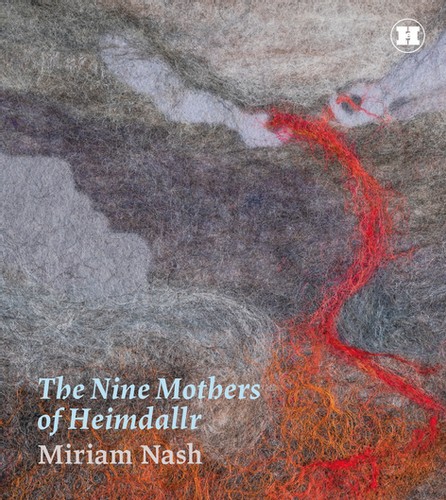
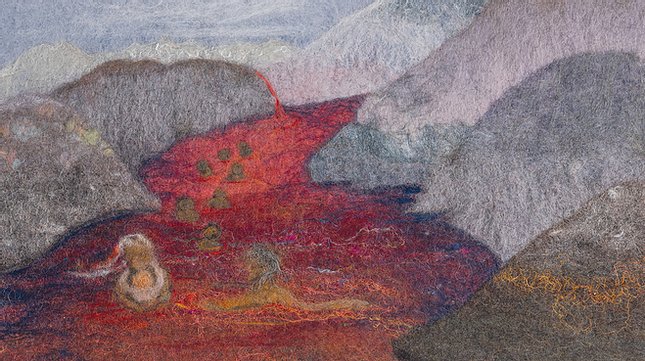
Miriam Nash’s new, 180 line poem is fascinating in the transformation of its sources in Norse myth, its quiet yet firm challenging of racial and gender hierarchies and in its exquisite presentation by Hercules Editions, accompanied as it is by an essay from Jóhanna Katrín Friðriksdóttir and textiles imagery created by Christina Edlund-Plater (in fact, Nash’s mother).
Friðriksdóttir gives those of us not up to speed with the Norse sagas some explanation. It seems the gods were actually not primary but descended from the race of giants. Yet since gaining supremacy, the gods have excluded and denigrated the giants. Generated from a hegemonic point of view (the top people in medieval Icelandic society), these Norse myths (as do most) tend to “justify and naturalise the status quo”, as Friðriksdóttir puts it, and what is being naturalised is a particular view of history, ancestry and masculinity. The anxiety of the Norse myths is a familiar one, tied up with patriarchy and the male control of women. There is a scene of ‘original sin’ in these stories in which the gods, Odin and his brothers, kill Ymir, the first and oldest giant. Out of Ymir’s dismembered body parts, the gods create the earth. This is a Fall from a primordial unitary state; Friðriksdóttir again: “at this juncture, one group becomes two” and conflict becomes the condition of life on earth.
So much for the birth of conflict and violence. The sagas are also notable for the relative absence of the feminine. An exception can be found in obscure references to the god Heimdallr who was born from nine giant mothers (possibly sisters) and it is through ‘writing on’ from these few suggestions that Miriam Nash’s poem develops a richly female addition to the Norse sagas. She challenges the old tales’ defensiveness about race (giant and gods) and gender and offers the modern reader a narrative of nurture, warmth and closeness in contrast to violence and conflict. The battle lines as they are drawn up are pretty obvious and will surprise no-one but Nash’s use of balladic form, of spoken voices and her re-scripting of details from the traditional stories conveys something vital and moving, a new myth for the age of Black Lives Matter and the #MeToo movement with its original purpose of empowering women through empathy.
Nash’s poem opens at the heart of an unorthodox family with one of Heimdallr’s mothers speaking tenderly. The whole family have gathered round a campfire, a hearth, in various states of sleep and wakefulness, cooking, sword-sharpening, comforting and acting as a seer. She tells Heimdallr the story of his remote origins in the primordial time when division was not known: “a tale of giants, a tale of gods / in early time, in frost-fire time”. A time of community and peace: “we lived snore-close, heart-close”. Also a time before language (or at least, language as we now have it) and Nash makes Ymir – the representative figure of this lost age – a “mother-father”, represented by the possessive determiner “their”. As in the traditional stories, Ymir creates/finds Buri in a glacier and Odin is Buri’s grandson. It is Odin who first declares division:
Odin said he was a God
Odin said the Gods were old
older than Ymir or giants
older than the ice-fire world.
Miriam Nash
This is an example of Nash’s form – loose quatrains of usually 4-beat lines, often part-rhymed at lines 2 and 4. And Odin’s declaration – his myth creation, his propaganda, his re-writing of history, his self-aggrandisement – is at the heart of the world’s troubles. Heimdallr asks who made the gods and the answer is that “They made themselves / with stories”. The poem goes on to recount Odin’s slaying of Ymir and the word “blood” recurs over and over again in the following quatrains.
But it is a blood ocean across which the nine mothers of Heimdallr have protectively carried their child. The child instinctively sees the roots of division and does not want to be “a half”, does not want to be merely “a god”. The comforting mother’s voice offers a startling solution (if we live in the fallen world); “Ymir was mother-father, child / Both might be your path”. The possibility is raised of a mode of living in which opposites may be once again reconciled, male/female, god/giant, fire/ice and the passage towards such a life is evidently through the tenderness and supportiveness of the mothers who advise Heimdallr to: “dream of ice-lands and of flame / sleep, snore-close, heart-close to me”.
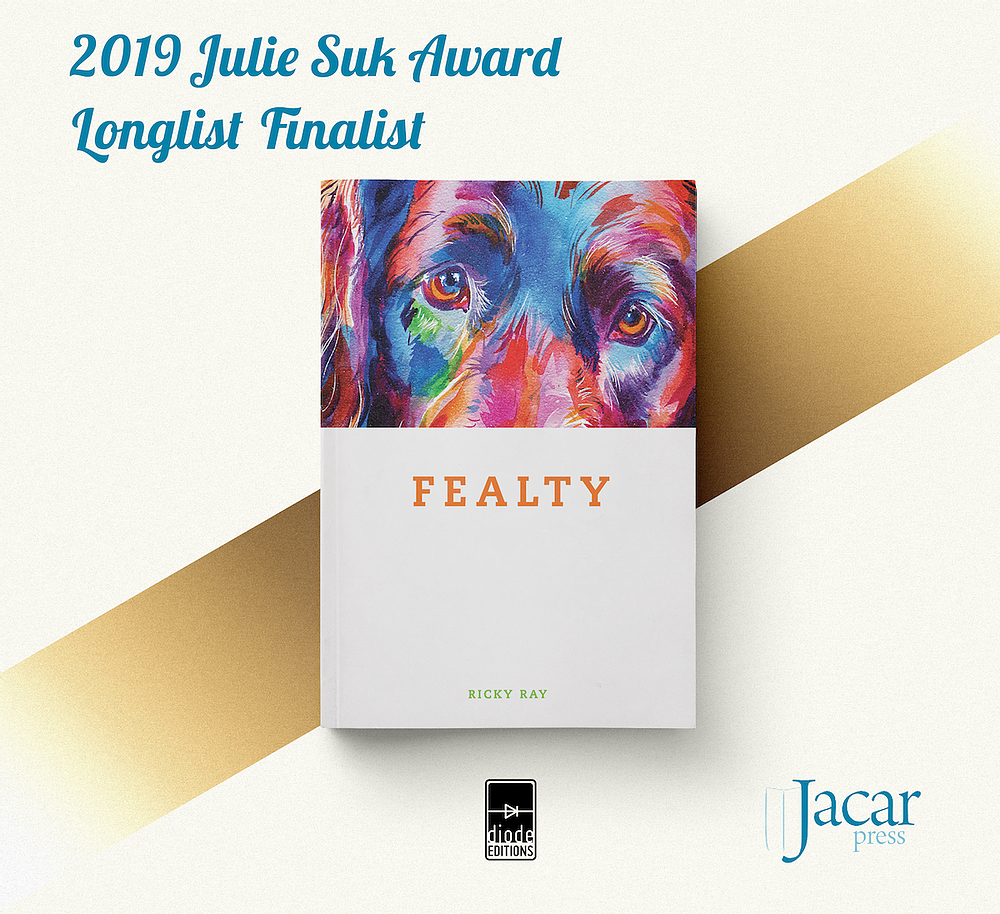
This is the second of Ricky Ray’s chapbooks to be published in the UK this year (2020) – the other is appearing with Broken Sleep Books under the title, Quiet, Grit, Glory. A full collection, Fealty, also appeared in the UK through Eyewear Publishing in 2018 and it is now republished in the US by Diode Editions. The biographical note from Fly on the Wall Press refers to Ray as “a disabled poet, critic, essayist and founding editor of Rascal: a Journal of Ecology, Literature and Art” – all this suggesting that Ray has several highly ‘categorizable’ aspects to his work, but from the evidence in The Sound of the Earth Singing to Herself, he manages, to the benefit of us all, to elude being pigeon-holed in any neat way. See Ricky Ray reading poetry on the completion of his MFA degree – featuring poems about “dogs, disability, waywardness, childhood, childlessness, ecological consciousness, despair, and the search for hope”.
If poems can withstand the pressure of readers drawing biographical conclusions, Ray’s upbringing was difficult. ‘Sometimes Vision Withers on the Vine’ portrays a chaotic, poverty-stricken household with erratic running water and power supply because “crack was more alluring than the bills”. The boy’s drug-using father’s drug-using friend burns candles on the palm of his hand, apparently feeling no pain. The vision seen in the light seems to be nothing more than a death’s head, a version of the future in which “nothing happens”. Another poem remembers the putting down of a pet dog: “the news // had blown out all moisture and made of my body / Oklahoma”. This is an amazing image of a sudden expansiveness of the self, or its wiping out, in a state of grief at the loss of a creature the boy regarded as closer to a brother. The father had the dog destroyed, as we say, out of kindness, and the boy/poet comments: “a kindness I never wanted, still don’t”, thereby broaching the subject of his own ‘viability’.
Ray’s physical disabilities give him relentless pain, the prospect of comfort realistically being merely “pain / that relents / from a knife-twist / to a dog gnawing / an old / bone” (‘What’s Left’). ‘Toward What’ records a good day in which he falls only once and “take[s] three / minutes to ascend six stairs”. Yet there are some days, “my body is so beautiful / I can’t believe I get to live here” (‘(Dis)ability’). It’s somewhere along this existential line, between the confines of a body in pain and the expansive, close to out of body experience, signalled by that Oklahoma image, that Ray’s poems really come into their own. He can celebrate an incarnated, ‘being in the world’, with both a sense of its pleasures and a sense of what it costs to remain here.
Such a celebration is ‘So Long as There is Light, There is Song’. The narrator and his dog, Addie, are in a field, the dog’s pleasurable ease in the world engendering similar feelings in the poet. There’s a Whitmanesque quality to the loafing in the grass, the blessing of ants, of the grass itself, the dawning sense of a life larger than any of the individuals present:
You could call it continuity.
You could call it the field itself. I like to call it what calls.
And I like to live in her song.
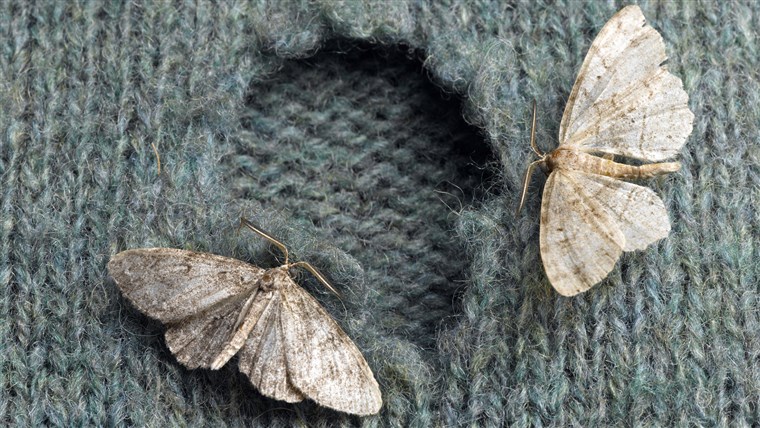
For want of a better label, what is sensed is the Earth, “singing her duet with the sun”, the natural world for sure, but Ray’s language implies a close to sentient being, sensed in the co-habiting of the multitude of separate living things. In considering the ravaging of ‘My Favourite Sweater’ by moths, Ray shows how the human heart might respond to such a sense of “continuity”, in the generosity of his wishing “the moths no ill”:
[I] say to myself it’s all down to pattern, a shifting
pattern, a thread of wool raveling into a thread of moth,
the moth’s wings the stitchwork of the hand that knits us all,
the hand itself a stitch along a seam my mind unravels
It’s Whitman’s long lines and levelling up of all phenomena that comes to mind as the poem goes on to “thank until I run out of things to thank”. Even in the midst of natural danger – in this case a hurricane – the poet/narrator seems to revel in the ominous signals of the storm’s approach, promising to protect his dog. Like the Oklahoma image earlier, this poem (‘On Hurricanes’) ends in mid-flight, the storm raging, the individual consciousness being smashed and scattered, “like fusion, like retribution—/ bang bang bang”. Yet the final image of peril in the face of nature is also an image of becoming one with it, of realising a kind of incarnation: “the roar of it so loud / I can hear the lion’s mouth around my head”.
Ricky Ray
If ‘On Hurricanes’ reaches apocalyptic levels, the final poem in this chapbook is calmer, more meditative. ‘A Walk in the Woods’ opens with nature and Ray’s ever-present dog, Addie, being company enough for an individual who, for a variety of alienating reasons, has never felt humanity was “a species I was given to understand”. He identifies more with trees, “which may be a function of how poorly my legs work”. The presence of trees consoles, inspires, as Ray again approaches the trailing hem of the divine: “I see a mind at work. Whose, though?” The questioning is not pursued by the rational mind; rather the experiential pleasure – a drifting in an “amniotic ocean” – is allowed to be all. Instead, of an individual walking through a wood, the poem offers us a sensation not of “one walking” but rather of “one being walked”, a moment we might think of as disembodied from the physical world but is as much incarnated within it and is perhaps the most heightened state of environmental consciousness.


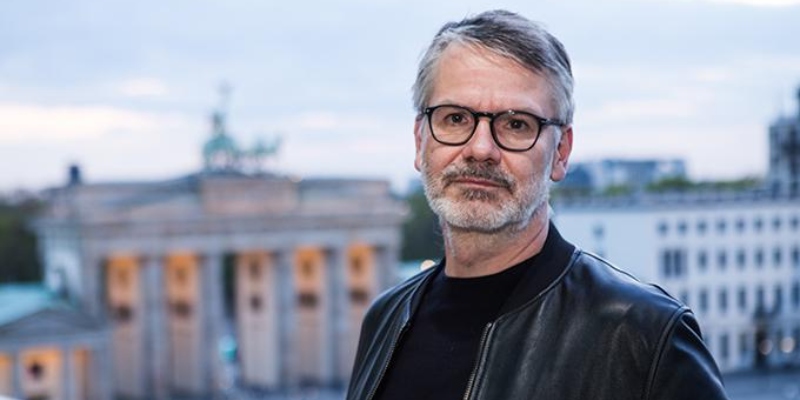

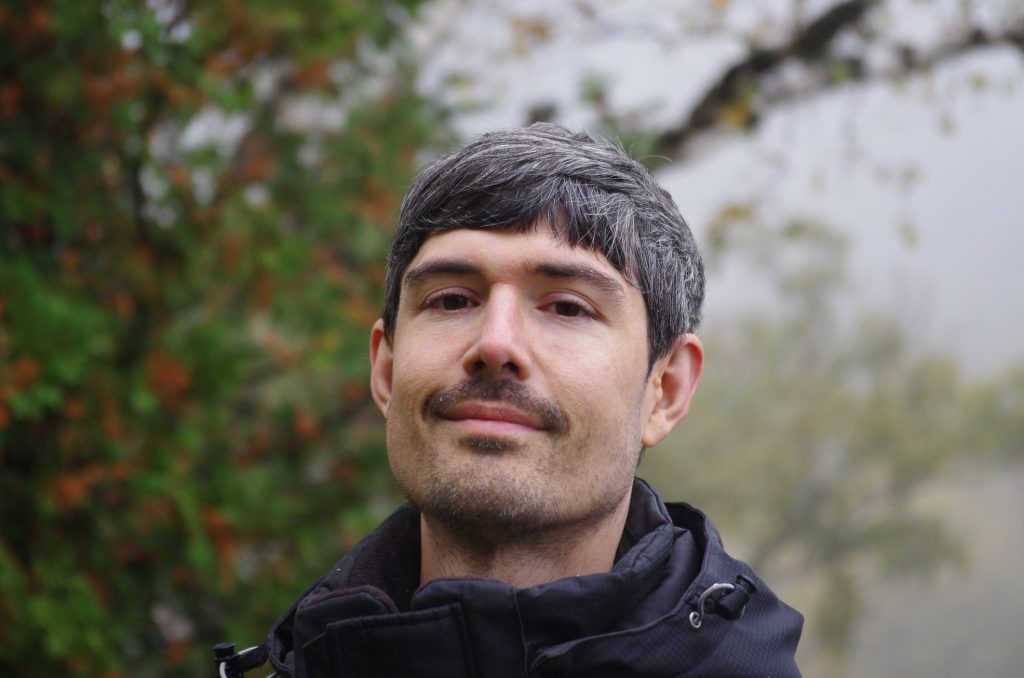
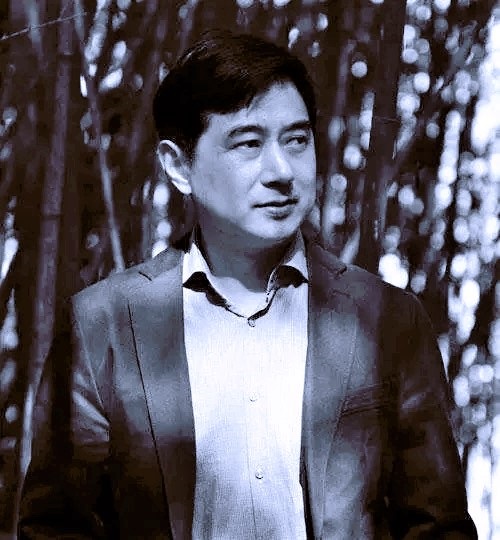 Chen Xianfa is a prize-winning poet and journalist, born in Anhui Province, China. He has published five books of poems: Death in the Spring (1994), Past Life (2005), Engraving the Tombstone (2011), On Raising Cranes (2015; in English tr. 2017) and Poems in Nines (2018; bilingual Chinese/English, tr. Nancy Feng Liang, publ. China) which was awarded the Lu Xun Prize. A Selected Poems appeared in 2019. He has published two collections of essays, Heichiba Notes (2014 and 2021). Other awards include China’s Top Ten Influential Poets (1998-2008), the Hainan Biennial Poetry Prize (2011), Yuan Kejia Poetry Prize (2013), Tian Wen Poetry Prize (2015) and the Chenzi’ang Poetry Prize (2016).