This is the fourth in the series of reviews I am posting over the summer of the 5 collections chosen for the 2018 Forward Prizes Felix Dennis award for best First Collection. The £5000 prize will be decided on 18th September 2018. Click on this link to access all 5 of my reviews of the 2017 shortlisted books (eventual winner Ocean Vuong), here for my reviews of the 2016 shortlisted books (eventual winner Tiphanie Yanique), here for my reviews of the 2015 shortlisted books (eventual winner Mona Arshi).
The full 2018 shortlist is:
Kaveh Akbar – Calling a Wolf a Wolf (Penguin UK)
Abigail Parry – Jinx (Bloodaxe Books) – click here for my review of this book.
Phoebe Power – Shrines of Upper Austria (Carcanet) – click here for my review of this book.
Shivanee Ramlochan – Everyone Knows I Am a Haunting (Peepal Tree Press)
Richard Scott – Soho (Faber & Faber) – click here for my review of this book.
.
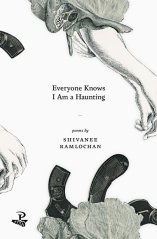
Shivanee Ramlochan’s book is full of rebellions and unexpectedly, simultaneously manages to evoke the unholy trinity of Jean Rhys, Garcia Lorca and Garcia Marquez. But it’s not an easy read with its long lines of free verse transiting rapidly from person to person, place to place, from the demotic to the magical, from material to spiritual and the poems are also liberally peppered with Caribbean and Hindu references and allusions (many of which the likes of myself are going to have to look up). Ramlochan also invents many different characters, not giving all of them distinctively differing modes of speech but, in many ways, the (literally) presiding spirits here are the duenne and the soucouyant.
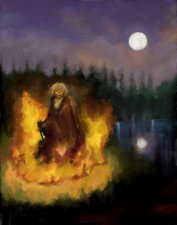
The former, in traditional terms, are spirits of children who died before they were baptized, who are fated to roam the forests of Trinidad, practicing their repertoire of dangerous pranks. They are sexless, their feet are turned backwards; they have no faces (though they have small round mouths) and they wear mushroom-shaped straw hats. The soucouyant is a shape-shifting Caribbean folklore character who appears as a reclusive old woman by day, but by night she adopts her true form as a fireball, flying across the sky in search of victims. These are outcasts, liminal figures with strange, threatening powers. Interestingly, Jean Rhys’ Antoinette, in Wide Sargasso Sea, is compared to a soucouyant and Ramlochan has spoken of Rhys’ character, “carrying her arsonist’s candle through the empty, cold halls of her oppressor’s mansion, ready to raze it to the ground”, as an important inspiration.

As with Rhys, the oppressor/Rochester figure represents the status quo, the loaded dice of orthodoxy and patriarchal power, and so – in modern parlance – what Ramlochan is pursuing is the “subversion of the hetero-normative value system”. Accordingly, ‘The Abortionist’s Daughter Declares Her Love’ draws on a grandmother’s experiences as an illegal abortionist, often faced with the disapproval of society (the church especially): “They have called me many things between these aisles”. The facts of gender inequality are made clear because when “men aspire to terrible jobs, we offer them hushed respect”, whereas women doing the same are felt to deserve nothing more than an “acreage of sorrow”. The word “acreage” is picked up on. Its limited nature is explored, ironically, suggesting that even in their degrees of sorrow, the experiences of such marginal women are strictly limited: “Give her enough land to hang herself”.
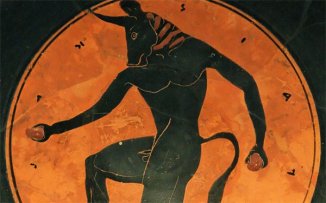 There is a sequence in the middle of the book which offers a clearer view of Ramlochan’s approach. ‘The Red Thread Cycle’, on the face of it, explores the traumatic consequences of rape. How to articulate the event is one theme and there is a magic-real quality which initially seems to add to the horror: “Don’t say Tunapuna Police Station. / Say you found yourself in the cave of the minotaur”. But this shifts quickly instead to reflect how police and authorities fail to take such a literal description seriously, even blaming the woman herself: “Say / he took something he’ll be punished for taking, not something you’re punished for holding / like a red thread between your thighs”. Other poems trace improvised rituals (real and semi-real) to expiate the crime and trace the passage of years. Some moments suggest the lure of suicide with allusions to Virginia Woolf’s death by water, carrying “pockets of white stones”. Seeing the unpunished rapist at large eventually becomes possible: “Nothing drowns you, when you see him again”. The sequence is a lot less chronological than I am making it sound, but what the woman has been doing over the years is, in a striking phrase, “working to train the flinch out of myself”. This has been achieved partly through art. Ramlochan certainly sees such pain as an essential part of the artist’s apprenticeship, that it will “feed your best verse”, and the sequence ends with her reading poems in public as an act of strength and self-affirmation, marking the psychic death of the aggressor: “applause, hands slapping like something hard and holy / is grating out gold halleluiahs / beneath the proscenium of his grave”.
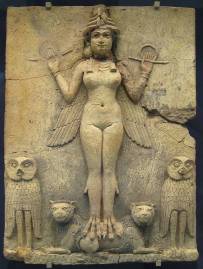
But such possibly-biographical writing is not really typical of this book. Ramlochan transgresses beyond the confines of the Caribbean status quo by writing about her spirit figures who more easily and boldly express resistance. ‘Duenne Lorca’ seems to be an address to an unbaptised Caribbean Lorca-esque child. Like the Spanish poet, Ramlochan loves colour and a boldness of image almost to excess. The mother recalls how she “damped my dress with your purplish blood and rinsed you in the river, / stained my mouth / with the placenta of your leavings”. She rinses religion from his clothes each week and wishes him well in the forest he must haunt as an outcast but one who achieves freedoms unavailable within really existing society. It’s no surprise that Ramlochan is drawn to write about Lilith too, the Christian religion’s air-brushed female rebel. Even the Virgin Mary gets a poem, her character and role re-written as a jungle-haunting rebel, surviving weeks of deprivation. Eventually, she celebrates the “statues of the men who spoonfed us English [being] ground to glassine”. In this alternative history, the hoped-for liberation brought about by rebellion is successful: “We ate the words for marriage, for sacrament, for lawfully wed”.
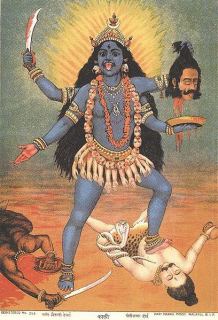
The collection opens with ‘A Nursery of Gods for my Half-White Child’ which – apart from sounding like a poem title from heaven to the likes of ACE – challenges the teaching of religion (Ganesh, Kali, Krishna, Saraswati) to children and tries to offer the freedom to invent and self-invent in its place. I think the book would have opened better with ‘All the Dead, All the Living’ which is a much more enjoyable, energetic, colloquial celebration of such freedoms of choice. Set at Jouvay or Carnival, the poem invites all and sundry to “play yourself / or somebody else”. More idealistic wish-fulfilment than serious life-coaching, this is a message of liberation – to play grandmother, mother, all the dead, the living, even a soucouyant – is infectious. In a blurb, Vahni Capildeo notes Ramlochan’s poetry’s resistance to having an “identity” forced upon it and she’s right that the poems wilfully refuse any easy, specific biographical reading. Towards the end of the book, poems are in the voices of gay men. ‘Crossdressing at Divali Nagar’ is a more quiet and tender poem than most in the book, as two boys dress and paint henna patterns on each other.
The final poem has the character Vivek naming his various male lovers after religious festivals (because his father had told him not to make love to “faggots”). Ramlochan’s challenge to orthodoxy is obviously working on several fronts here. Though narrated in the second person, the voice is really Vivek’s and it’s an impressive piece of sensual, tender and funny, ventriloquism. But the book’s last lines are full of the book’s more characteristic serious intent. A “glock” is a pistol and Vivek here seems to make a firm, final choice of his festival-named lover and in doing so manages to challenge patriarchy, religion, family, gender and what we might consider ‘nature’ all in one go:
The day you marry Hanukkah is a glock pointed to your father’s face.
You tell him
I am the queen
the comeuppance
the hard heretic that nature intended.

 The gateway to Richard Scott’s carefully structured first book is one of the most conventional poems in it. It’s a carefully punctuated, unrhymed sonnet. It is carefully placed (Public Library) and dated (1998). It’s the kind of poem and confinement Scott has fought to escape from and perhaps records the moment when that escape began: “In the library [. . .] there is not one gay poem, / not even Cavafy eyeing his grappa-sozzled lads”. The young Scott (I’ll come back to the biographical/authenticity question in a moment) takes an old copy of the Golden Treasury of Verse and writes COCK in the margin, then further obscene scrawls and doodles including, ironically a “biro-boy [who] rubs his hard-on against the body of a // sonnet”. Yet his literary vandalism leads to a new way of reading as – echoing the ideas of Eve Kosofsky Sedgwick – the narrator suddenly sees the “queer subtext” beneath many of the ‘straight’ poems till he is picking up a highlighter pen and “rimming each delicate / stanza in cerulean, illuminating the readers-to-come . . .”


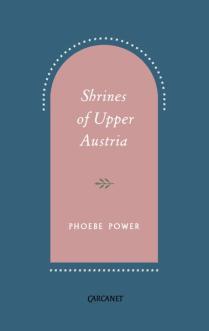
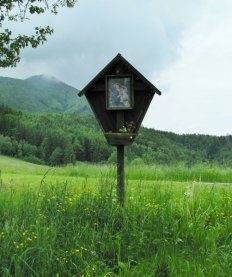
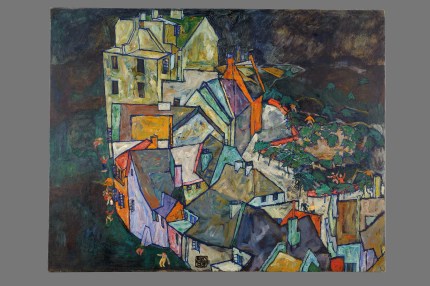
 You will have gathered that one of Power’s things is to mix English and Austrian German. This happens several times in ‘A Tour of Shrines of Upper Austria’ (though in this book we only get 7 parts of the full sequence). An observer stops at various shrine sites, jotting down some thoughts and taking a picture or two. Nothing is developed though Power’s poems do show an interest in religion on several other occasions. ‘The Moving Swan’ opens with a centre-justified prose description of candles flickering in a cathedral and another poem is drawn to the grave of two goats, observing: “two heaps of ivy/straw / one unlit red tealight”. And ‘Epiphany Night’ is a more extended series of notes recording a local celebration with bells, dressing-up, boats, lanterns. This is all observed in loosely irregular lines by the narrator from her “wohnung” (apartment). To wring all engagement or emotional or imaginative response from such a text is, I suppose, quite an achievement but to spend 70-odd pages in such company really is wearisome.


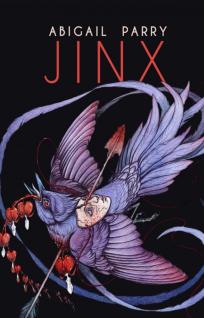

 Mr Knightley is an absent figure in that poem, but Jinx is repeatedly visited by powerful, seductive, dangerous males who – in ways now very familiar since Angela Carter started the ball rolling – are morphed into animal figures. ‘Hare’ is an early example, leaning invasively over the female narrator at a wedding party, “those fine ears folded smooth down his back, / complacent. Smug. Buck-sure”. As in ‘Daddy’, the woman is drawn to the man despite (or because of) his obvious threat but unlike Plath’s powerful final repulse (“Daddy, daddy, you bastard, I’m through”), Parry’s narrator is fatalistic: “Your part is fixed: // a virgin going down, / a widow coming back”. Elsewhere, ‘Goat’ and ‘Magpie as gambler’ work similarly and ‘Ravens’ is a particularly Plathian version: “In fact, every man I thought was you / had a bird at his back / and a black one too”.
 For all the frenetic playfulness of the book, Parry’s mostly female narrators and subjects are beset by threats. ‘The Lemures’ re-Romanises the creatures into psychological pests, aspects of self-doubt perhaps, appearing on the furniture, at the roadside, in a reflection in a lift door: “They will steal from you. Pickpockets, / rifling the snug pouches at the back of your mind”. Parry is evidently a fan of mid-twentieth century film and she explores Creature from the Black Lagoon and The Wolf Man from the perspective of dark powers surfacing. The question being asked is whether such forces represent the overturning of the real self or the manifestation of it in contrast to what a later poem calls “the dreary boxstep of propriety”. Locks and keys recur in the poems – are we confined, or about to set something loose, or to leap to real freedom?

 Then I have been reading poems for Grenfell Tower (The Onslaught Press) and picking away at some link between the (in)adequacy of a certain English poetic voice to confront the scale of ecological issues, or as a vehicle for expressing certain cultural differences, or as a way of exploring the kind of tragic and grievous event represented by the Grenfell fire and its aftermath. This struck me particularly as, in the Grenfell anthology, there are well-know poets alongside others less well-known, plus some who felt impelled to write as a direct result of the catastrophe. I felt many of the more well-known names struggled to find a sufficient voice for this appalling event, often sounding too careful, overly subtle, perhaps too concerned with Mort’s “linguistic originality”. Does such a devastating, large scale, well publicised event require a different kind of voice from poets?
 The difficulties of addressing such a subject are expressed by Joan Michelson’s contribution which announces and extinguishes itself in the same moment: “This is the letter to the Tower / that I cannot write”. One of the best poems which does display evident ‘literary’ qualities is Steven Waling’s ‘Fred Engels in the Gallery Café’. It cleverly splices several voices or narratives together, one of these being quotes from Engels’ 1844 The Condition of the Working Class in England. Other fragments used allude to gentrification and the wealth gap in the Borough of Kensington and Chelsea. Other poems, like Pat Winslow’s ‘Souad’s Moon’, focus on the presence of refugees in the Tower, or the role of the profit-motive in the disaster (‘High-Rise’ by Al McClimens), or the presence of an establishment cover-up after the event (Tom McColl’s ‘The Bunker’).
 But more often than not, these poets opt for more tangential routes to expression. Other disasters – such as Nero watching Rome burn, the 1666 Fire of London, the bomb falling on Hiroshima and the Aberfan disaster – prove ways in for Abigail Elizabeth Rowland, Neil Reeder, Margaret Beston and Mike Jenkins. The naivety and innocence of a child’s eye is another common device. Andrew Dixon’s ‘Storytime’ takes this approach, the child’s language and vision allowing simple but nevertheless powerful statements: “Mama don’t be afraid. Do you / want us to pray? I know what / to say. We’re both in a rocket / and we’re going away.” Finola Scott does the same with a Glasgow accent, a child staring from her own tower block home: “she peers doon at hir building, wunners / Whit’s cladding?’ A young life cut off before its full development by the fire is also the theme of two poems that refer to the death of Khadija Saye. She was a photographer who died in the blaze, whose work had been exhibited in Britain’s Diaspora Pavilion at the 2017 Venice Biennale. Michael Rosen’s contribution again uses childlike simplicity and obsessive repetition – as much representing a struggle to comprehend as the gnawing of realised grief:


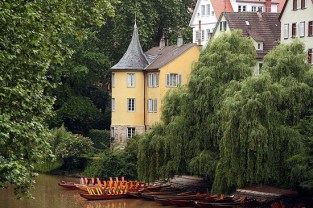
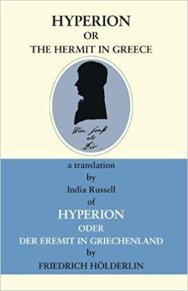 Waiblinger was a real Holderlin fan. The older poet’s novel, Hyperion, had appeared in 1822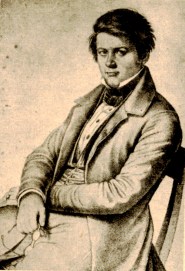


![moulin-glacier-11[2]](https://martyncrucefix.com/wp-content/uploads/2018/05/moulin-glacier-112.jpg?w=352&h=264)



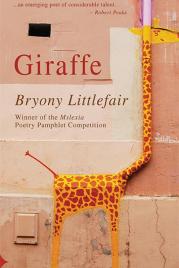
 Another young female narrator deliberately stays at home while her parents (conventionally) go to church on Sundays. She’s a teenage rebel without a cause as “The truth is I’m not sure what I did / those mornings”. The poem is built from a list (one of Littlefair’s favourite forms) of what she did and did not do. Littlefair is almost always good with her figurative language and here the girl is variously an undone shoelace, an open rucksack, a blunt knife. The urge to non-conformity outruns her imagination as to how she might spend her growing independence and there is an interesting tension at the last as her parents return, “whole” having “sung their hallelujahs” while the young girl is till restlessly revising her choice of nail polish, as yet unable to find what she’s after.
 I think I find this with some other poems too, though it’s partly because Littlefair is admirably intent on presenting the working world, the world of labour, as routine in contrast to the allure of a more adventurous life. ‘Assignment brief’ presents itself as an old familiar’s introduction to a new girl’s routine office job; the lists and proffered options are funny but they slowly run out of steam. Likewise, the promisingly titled ‘Usually, I’m a different person at this party’ flags latterly. I’m imagining this as narrated by an older version of the girl who half fell in love with Tara Miller. Here, she shadow-boxes the risks of conventionality by over-insisting on her own sweeping and glamorous life, in the process claiming all sorts of ‘interesting’ aspects of herself: “I only ever have large and sweeping illnesses. / My lymph nodes swell glamorously. I never snuffle”. But the contrasts here are again rather roughly hewn and, in the end, close to cartoonish.
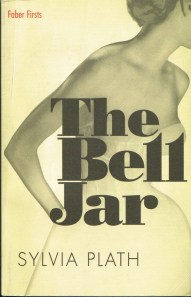 The latter view is more than a possibility given that Littlefair’s poems also boldly explore the self’s relation with itself. The encounter between self and future self is plainly and humorously told in ‘Visitations from future self’ and it finds the present self in trouble, pleading “I can’t go on / like this, my life a tap that won’t / switch on”. Here, the present self’s cliched and optimistic hopes for a “rain-before-the-rainbow thing” are denigrated and stared down by the future self. ‘Sertraline’ echoes Plath’s The Bell Jar in its evocation of a summer spent on an anti-depressive drug. And ‘Giraffe’ itself is a prose poem (there are 3 prose pieces in the whole book) in which a voice is offering reassurances to someone hoping to “feel better”. In a final list, images of a return to ‘health’ are offered. Particularly good is the idea that suffering will remain a fact but “your sadness will be graspable, roadworthy, have handlebars”. And lastly, “When you feel better, you will not always be happy, but when happiness does come, it will be long-legged, sun-dappled: a giraffe.”
 The designation ‘a young poet to watch’ is over-used but on this occasion it needs to be said loudly. Giraffe contains a number of fresh, intriguing and fully-achieved poems. It’s well worth seeking out. I well remember reading and being very impressed by Liz Berry’s 2010 Tall Lighthouse debut chapbook, the patron saint of schoolgirls, and this selection from Bryony Littlefair’s early work runs it close. My review of Liz Berry’s subsequent, prize-winning full collection,

![flowermoonPNG[1]](https://martyncrucefix.com/wp-content/uploads/2017/10/flowermoonpng1.png?w=437&h=291)
 Frost wants to make big claims for metaphorical thinking: “I have wanted in late years to go further and further in making metaphor the whole of thinking”. He allows the exception of “mathematical thinking” but wants all other knowledge, including “scientific thinking” to be brought within the bounds of metaphor. He suggests the Greeks’ foundational thought about the world, the “All”, was fundamentally metaphorical in nature, especially Pythagoras’ concept of the nature of things as comparable to number: “Number of what? Number of feet, pounds and seconds”. This is the basis for a scientific, empirical (measurable) view of the world and hence “has held and held” in the shape of our still-predominating scientific view of it.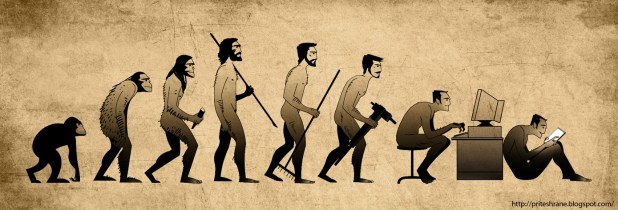
 That we have a tendency to forget this provisional nature of knowledge and understanding seems to be Frost’s next point. We take up arms (as it were) by taking up certain metaphorical ideas and making totems of them. He berates Freudianism’s focus on “mental health” as an example of how “the devil can quote Scripture, which simply means that the good words you have lying around the devil can use for his purposes as well as anybody else”. That this is dangerous (makes us not safe) is illustrated by the passage of dialogue Frost now gives between himself and somebody else. The other argues that the universe is like a machine but Frost (adopting a sort of Socratic interrogation technique) draws out the limits of the metaphor, concluding he “wanted to go just that far with that metaphor and no further. And so do we all. All metaphor breaks down somewhere. That is the beauty of it. It is touch and go with the metaphor, and until you have lived with it long enough you don’t know when it is going. You don’t know how much you can get out of it and when it will cease to yield. It is a very living thing. It is as life itself”.


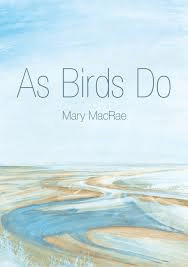 It may be that this ability to be sustained by scraps and glimpses, the sense that the self is most fully resolved in a lack of egotism, in its encounter with ordinary things, can diminish some of the sting of mortality. In a poem like ‘White’, MacRae manages to celebrate again the ordinariness of familiar things while at the same time sustaining a contentedness (or at least an absence of fear) at the prospect of the self’s vanishing: “You can disappear in a house where / you feel at home; the rooms are spaces / for day-dreams, maps of an interior / turned inside out”. Rather than Macbeth, it is Hamlet’s resolve to “let be” that comes to mind as this calm, accessible, colourful and wonderfully dignified poem concludes:
 For MacRae’s interest in and skill with poetic form, we need look no further than the extraordinary glose on a quatrain from Alice Oswald (the earlier collection contained another on lines from Mary Oliver). For most poets, this form is little more than an exhibitionist high-wire act, but MacRae’s poems are moving and complete. Her use of poetic form here, particularly in some of these last poems, reminds me of Tony Harrison’s conviction that its containment “is like a life-support system. It means I feel I can go closer to the fire, deeper into the darkness . . . I know I have this rhythm to carry me to the other side” (Tony Harrison: Critical Anthology, ed. Astley, Bloodaxe Books, 1991, p.43). Appropriately, in ‘Jar’, she contemplates with admiration an object that has “gone through fire, / risen from ashes and bone-shards / to float, nameless, into our air”. Here, the narrator movingly lays aside the wary scepticism of the Thomas epigraph and rests her cheek on the jar’s warmth to “feel its gravity-pull / as if it proved the afterlife of things”.
