More than 10 years of blogging on poetry and translation – over 39,000 views in 2024 – now captured and preserved at the UK Web Archive: 'one of the top 10 poetry blogs' (Rogue Strands)
With the arrival of my new book of poems, Between a Drowning Man, imminent, I thought it would be useful to re-blog a piece I wrote and posted early in 2019 about one of the key sources and inspirations of the new book’s main sequence of poems called ‘Works and Days’. It was my fortuitous reading of AK Ramanujan’s collection of vacana poems, early in 2016 (all explained below), that set me off experimenting with a similar clipped, plain, rapid, fluid style with its (refrain like) repetitions. I was staying in Keswick at the time and I vividly remember scribbling down brief pieces at all times of the day and night. Outside, and interfering with the various walking expeditions we had planned, the great storm of the winter of 2015/6 (googling it now, it was Storm Desmond) had taken out many of the ancient bridges in the Cumbrian countryside. Inevitably, this fact found its way into the poems and provided the refrain I used in many of them.
It has been a long haul between that period and the poems’ eventual appearance in this new collection and the whole sequence was further formed (or reformed or deformed) by pressures of a second literary antecedent (I’ll blog about that next week) and by the divisive political events in the UK between 2016 and 2019. Click on the blog title below to read the whole of the original post. My first public reading from the new book will be on the evening of Tuesday 24th October at The Betsey Trotwood in Clerkenwell. I’ll be reading alongside 2 other Salt poets: Elisabeth Sennitt-Clough – ‘My Name is Abilene’ (Shortlisted for the 2023 Forward Prize); and Becky Varley-Winter – ‘Dangerous Enough’ (‘daring, danger and risk in poems that are packed with imagery from the natural world’).
As mentioned in a post earlier in June, I spent a few days around that time trying to choose just 3 poems that I might take with me to a speculative desert island. I was asked to do this by The Friday Poem website and they have now posted the results of my labours.
In the end I chose work by Coleridge, Edward Thomas and Rainer Maria Rilke. Of course, the latter has been on my mind a great deal in the last 12 months or so, as I have been working on a new selection and translation of his work (spanning his career from 1899 to his death in 1926). It so happens that I have just signed off the final draft of this book – all 200 pages of it – and it is scheduled for publication by Pushkin Press in the Spring of 2024.
As for that desert island, do follow the link below to read the full text of my ruminations which also includes links to my own readings of the Thomas and Rilke poems. Do explore the rest of the FRIP website – it’s full of great poems and reviews:
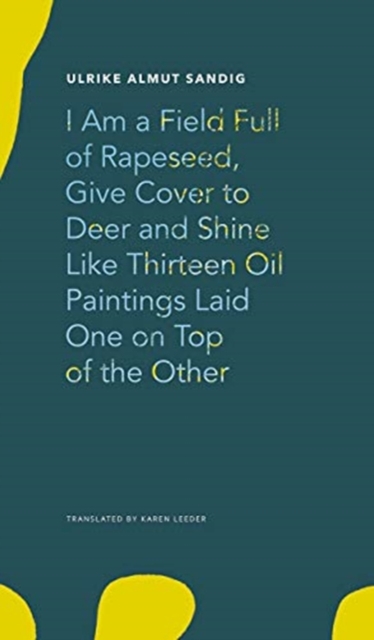
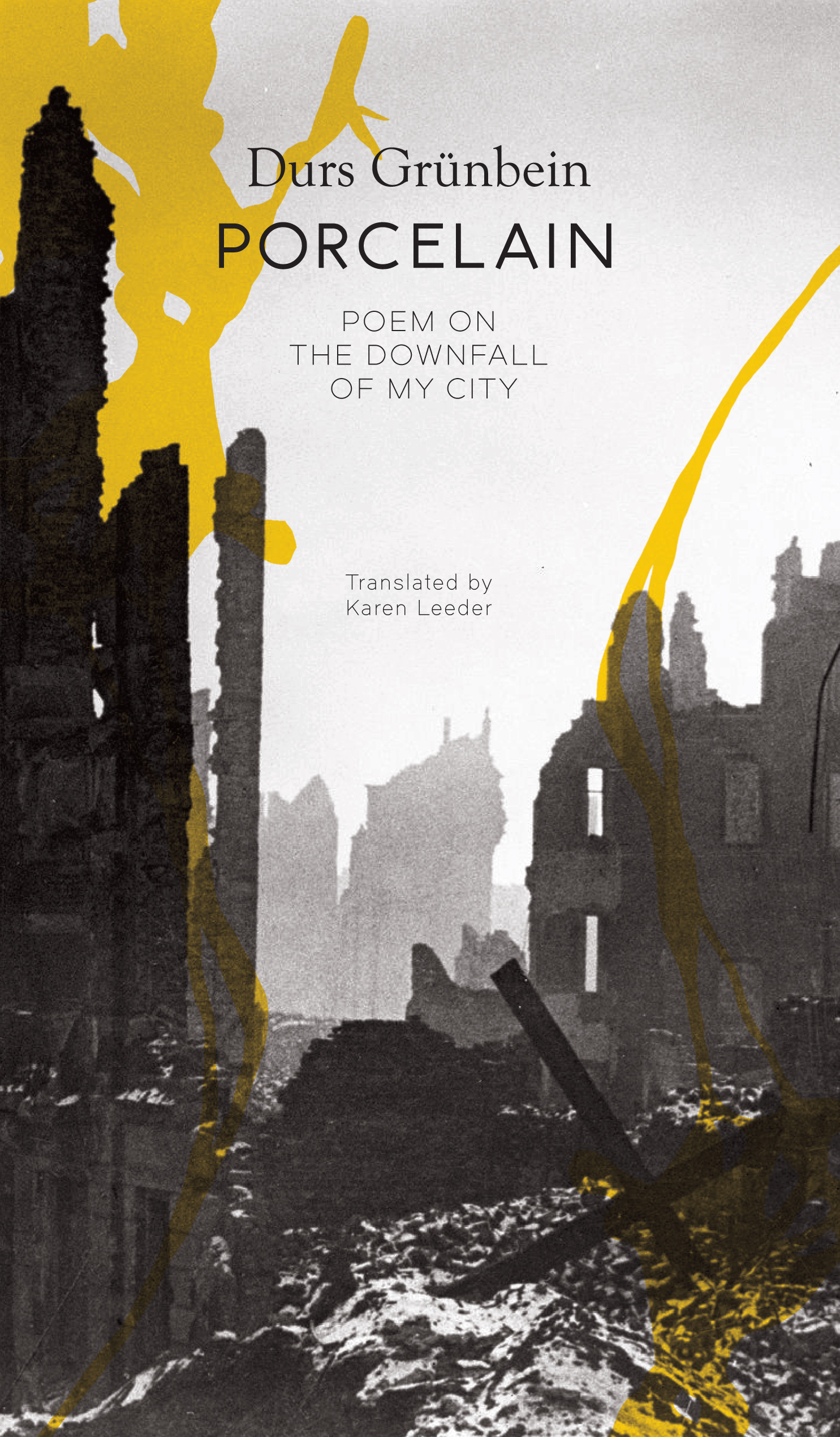
I’m shocked to realise that it is a full year since I posted my review of the stunning long poem, Porcelain,by the contemporary German poet, Durs Grünbein, in Karen Leeder’s equally impressive translation (Seagull Books, 2020). That review was originally commissioned for, and published in, Patricia McCarthy’s penultimate issue of Agenda (those who follow such things will know that Patricia has handed over the reins of the magazine to John Burnside who takes over with the resources of St Andrews behind him). In its original incarnation, the review was paired with my comments on another contemporary German poet’s work (again in Karen Leeder’s translation): this was Ulrike Almut Sandig’s 2016 collection, I Am a Field Full of Rapeseed, Give Cover to Deer and Shine Like Thirteen Oil Paintings Laid One on Top of the Other (Seagull, 2020). I am now posting my Sandig review as well, in part because I will be appearing with both Karen and Ulrike at the Ledbury Poetry Festival in a few days time. We will be talking about Rainer Maria Rilke’s great sequence, Duino Elegies (1923) as part of Peter Florence’s Dead Poets Society series. If you are in or around Ledbury on the morning of Saturday July 7th, do come along. Here’s the review . . .
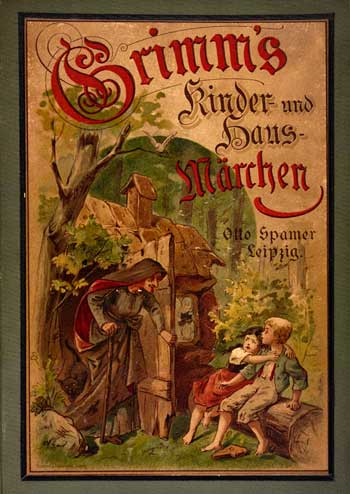
The eponymous figure from Grünbein’s sequence’s 11th poem,‘Hans im Glück’, draws on one of the stories in The Children’s and Household Tales of the Brothers Grimm (1812). In the original, Hans has anything of value taken from him, bit by bit, yet he remains optimistic, refusing to acknowledge reality. Within the context of Porcelain, Grunbein treats this is as an additional image of the myth of the city of Dresden as undeserving victim. Interestingly, the same figure appears in Ulrike Almut Sandig’s collection, but her presentation of Hans is more poignant, less ironic, as even the boy’s language is stripped from him and he tries to write a letter to a loved one: “what are you up to? // + esp: where r u? / ru ru // ru”. In the context of I Am a Field Full of Rapeseed… , the boy might be thought of as a refugee, forcibly having his culture and language stripped from him, though one of the strengths of the poem is that it also works as an updated fairy tale, a little myth of loss and diminished presence with more universal application. Such re-purposing of several of Grimm’s tales is one of the most striking things about this collection. Sandig announces in another poem, “we find ourselves deep in the future of fairy tale” (‘the sweet porridge’) and she, like Angela Carter before her, redeploys the fairy tale’s surreal narratives, bold characterisation, its humour and violence, its symbolism and moral intensity for her own purposes.
The other striking aspect of Sandig’s writing here is her bold linguistic and formal choices. There is an absence of punctuation, capitalisation, of poem titles (bolded phrases mid-poem often serve as titles), of conventional forms, of a clear lyric ‘I’, of plainly pursued narratives. This results in radically shifting ground for the reader which can be both bewildering and exciting. Several poems indicate these choices are firmly rooted in issues of epistemology and ideas concerning personal identity. So, the opening poem, ‘from the wings’, ambitiously sets out a complete life from ‘screaming’ beginning to its ‘silent’ conclusion. The interim is portrayed as all fluidity, ‘a stream that flows into others / while others again flow into it’. As much as there is any discrete self to be identified, ‘I am made wholly of language’, and the individual is a creature ‘that must speak / to understand itself’. The self is also one of many ‘fragile / greedy alpha-creatures’ and understands itself to be, ultimately, ‘a fluid tuning fork I am my own / song’. In the same vein, the book closes with ‘where I am now’, which sets the self metaphorically in some remote Arctic research station, a self that is at the same time a woman swimming in a municipal pool, moving freestyle through the water, ‘parting the water before me’, in an image of self-creation and open-ended exploration that, to some, will recall Eliot’s ‘Little Gidding’: “We shall not cease from exploration”.
This is, as it were, the metaphysical background to Sandig’s vision and it gives rise to poems like ‘I am the shadow for you to hide beneath’ in which the narrative voice celebrates just such fluidity of identity in an address to “friends”/readers that has the quality of Whitman’s “I contain multitudes” (Song of Myself, #51), though with a good deal more anxiety: “every morning I get up and don’t have a clue: / is it me, Almut? Ulrike?” This is also the poem containing the book’s full title, “I am a field full of rapeseed, give cover to deer / and shine like thirteen oil paintings laid one on top / of the other” and the poem goes on, in the name of radical fluidity, the I as landscape, huntress, a text that begins to unravel just as it reaches an end, a soldier, a girl, a woman. Elsewhere, ‘to be wood in a table’, as the title suggests, continues the theme: “not to be old and not to be young, but old / enough to be several things at once”. This includes the Rilkean desire for “simple things like ‘tree’” as well as the freedom of having no name, “no longer to say: ‘I am’”.
Ulrike Almut Sandig
Such poems are both celebratory in tone, but also alertly defensive. The reason is that there are forces abroad, ways of seeing and their associated politics that offer counter narratives. So, the expected calm of ‘lullaby for all those’ is really a call to arms, or at least a call to resist. It is “for all / those who put up a fight, when somebody / says: lights out, no more talking”. In a superb passage, once again Leeder’s translation of the German is brilliant, the forces of “DARKNESS” begin to emerge by implication:
we’re waiting for two
or three of those good, humming dreams
four peace treaties, five apples in deep sleep
we are waiting for six cathedrals and for
those seven fat cows, eight quiet hours
full of sleep, we’re waiting for nine friends
gone missing. we’re counting our fingers.
x
we’re still resisting. we won’t go to sleep.
What is being resisted are the forces of repression, of fixity not fluidity, narrowness not breadth, fundamentalist conviction not open-endedness. Sandig places a poem in the centre of the book which draws heavily on statements made by Pegida, Germany’s populist, right wing, anti-immigration party. The text is full of rallying calls expressing a faith in clarity, mastery, resolution and purification: ‘from now on / nothing will stand in our way, no language / we cannot master, we will strike out mistakes / and shake each other’s freshly washed hands”. One of the Grimm’s sourced poems, a sister speaking to her brother, presents a narrative of the boy’s development into a threatening “hunter”. Such a poem looks both ways towards the violence of neo-Nazis, but also towards the violent radicalisation of young jihadists.
Sandig’s poems dealing more obviously with issues of state power, war, migration and displacement (especially hot topics in Germany, a country in the Schengen area of Europe and seen by some as an ideal destination – see the poem ‘tale of the land of milk and honey’) are particularly impressive. The ‘ballad of the abolition of night’ draws on details of systematic torture prosecuted by the USA, “a state lagging somewhat behind / on the historical timeline of our kind”. ‘instructions for flying’ revises statements made in leaflets distributed at the Idomeni refugee camp in 2016. The same camp, close to the borders of Greece, is the focus of another poem which expresses the poet’s “moral dismay”. The disquiet is partly at her own nation’s equivocations about the refugee crisis (what if there’s not a single / jot of good Deutsch to be found in this / Land of mine”) but also personally, at finding rhymes but ultimately doing “sweet FA”.
With Grunbein, Sandig is expressing the moral complexity in the face of man’s inhumanity to man as much as any simplistic moral dismay. This is, in part, the subject of some of the Grimm poems (interestingly, in German, the word ‘grimm’ means ‘anger, ire’). ‘Grimm’ itself opens optimistically, messages being scribbled onto raw eggs, but increasing urgency leads to extra pressure and the eggs break. Still, like Hans in luck, the narrator seems “unfazed in / the crumbling ruins” though the final image is only of eggs smashed, “a well-nigh limitless / supply of fragments and rage most grim”. But Sandig is an optimist, I think. Though couched in conditionals, ‘news from the German language, 2026AD’ works hard to portray a future of more settled diversity (Iraqi dates, Turkish honey, Syrian poetry). The opposing prospect is relegated to a parenthesis – if quite a long one. But hope has the final word: “if it works, we, that’s all of you and me, / will sing a lullaby, rhyme in unison [. . .] but more than that, we will be”.
As a Royal Literary Fund Fellow based at The British Library in London (though working on-line for the most part), I was asked way back in May 2020 (feels like a different world) to write and record three brief talks. One of these was on ‘Writing and Technology’ which I posted (as text and audio file) on this blog a few months ago. Another commision was to be titled ‘How I Write’ – not an easy subject on which to be clear and succinct but with a little help from WH Auden and Louise Gluck I hope I managed to say something that might be of help to all kinds of writers – poets, novelists and (the target audience of the RLF project) those writing at the varied levels of academe.You can read my blog (and hear me read the essay) here. The third and final essay was an intriguing invitation to write a ‘Letter to My Younger Self’. The recording of that piece has now been released and is available as an audio file on the RLF’s VOX site. You can read the Letter below – or listen to me read it by clicking here – or both at the same time if you’d like.Afterwards I have also posted a poem relevant to that particular biographical moment. An earlier version of this poem first appeared, a long while back, in The London Magazine.
Letter to my Younger Self
Dear Martyn,
You will have just got off the train from London Bridge. It’s 1976. The end of a day studying Medicine which you begin to hate. And now back to Eltham Park, to digs you’ve loathed since you arrived (the well-meaning landlady is no substitute for your mother). Probably you walked past that little music shop somewhere near the station, spending minutes gazing at the red sunburst acoustic guitar in the window. If it doesn’t sound too weird, I can tell you – you’ll buy it and strum on it for 10 years or more. I can also confirm your fear: you fail your first-year exams. The Medical School allows you to leave . . . But listen, that sense of failure and lostness, it will pass.
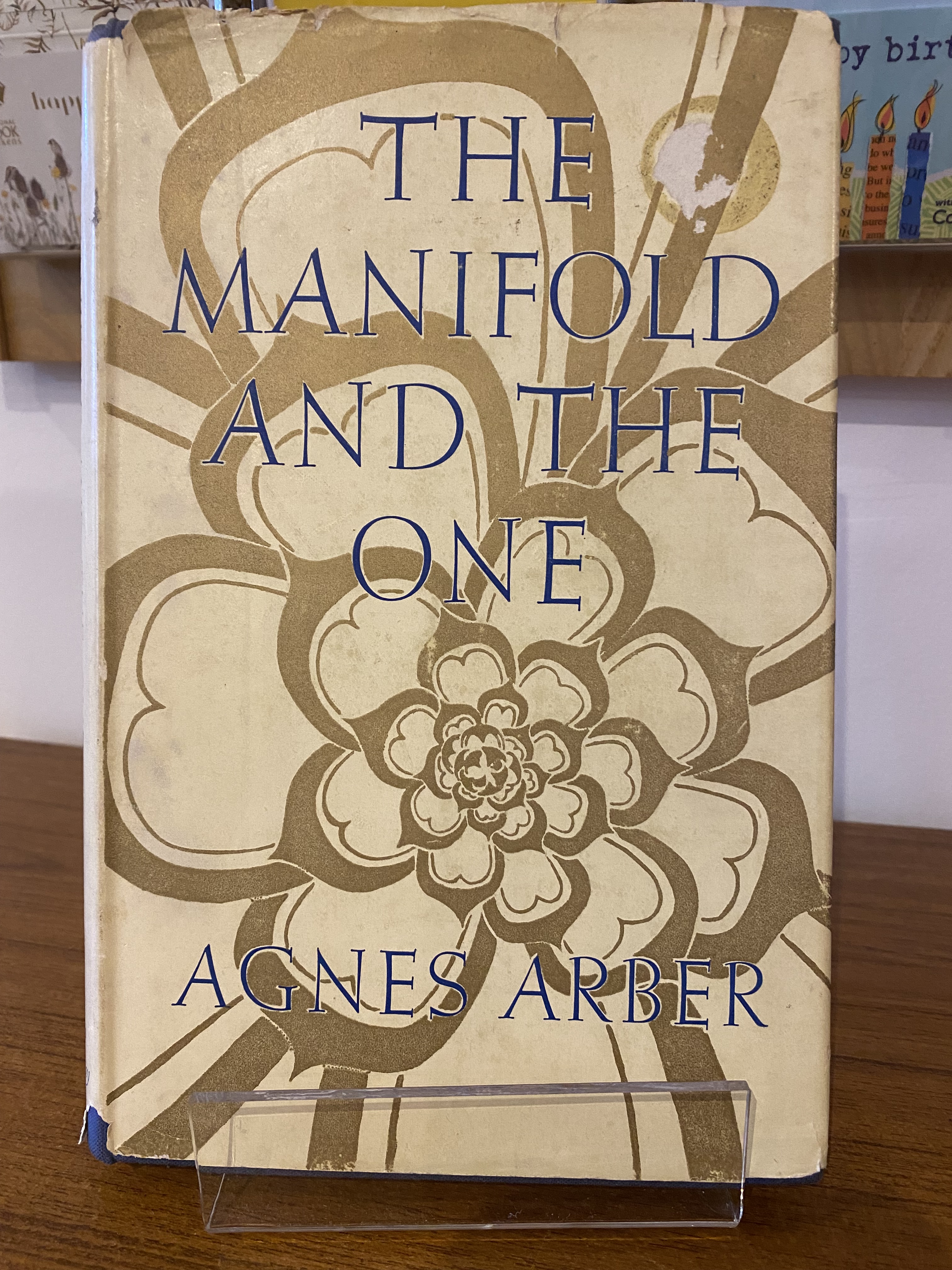
Keep on with the music, though your playing is not up to much and your singing . . . well, the less said. But writing songs will eventually lead somewhere. And the illicit books! You are supposed to be reading the monumental Gray’s Anatomy, textbooks on Pharmacology, Biochemistry, all emptying like sand out of your head. You’ve yet to go into that charity shop and pick up a book called The Manifold and the One by Agnes Arber. You’ll be attracted by the philosophical-sounding title; in your growing unhappiness at Medical School you have a sense of becoming deep. The questions you ask don’t have easy answers. You have a notion this is called philosophy. Amidst the dissections, test tubes and bunsens, you’ll find consolation in Arber’s idea that life is an imperfect struggle of “the awry and the fragmentary”.
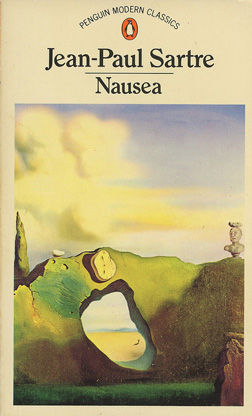
And those mawkish song lyrics you are writing? They will become more dense, exchanging singer-songwriting clichés for clichés you clumsily pick up from reading Wordsworth (you love the countryside), Sartre’s Nausea (you know you’re depressed) and Allan Watts’ The Wisdom of Insecurity (you are unsure of who you are). Up ahead, you take a year out to study English A level at an FE College. Your newly chosen philosophy degree gradually morphs into a literature one and with a good dose of Sartrean self-creativity (life being malleable, existence rather than essence) you edit the university’s poetry magazine, write stories, write plays, even act a little (fallen amongst theatricals!).
At some point, the English Romantic writers get a grip on you, taking you to Oxford where you really do conceive of yourself as a poet, get something published, hang out with others who want the same. Then guess what – for a teenager who’d so little to say for himself in class – teaching becomes a way of continuing to study and write while making a living. It suits. It takes us out of ourselves.
Along the way, you write some poems you are proud of. You will suffer the writer’s curse, of course: the recurrent fear of not being able to turn the trick again. But I’m sending you this to say, through all the years ahead, it is words that will infinitely enrich your life. So pick up the pad you doodle on in lectures. Write a line. Write another line. I see you hunched over a dim-lit desk, but no question – yes – you are heading in my direction.
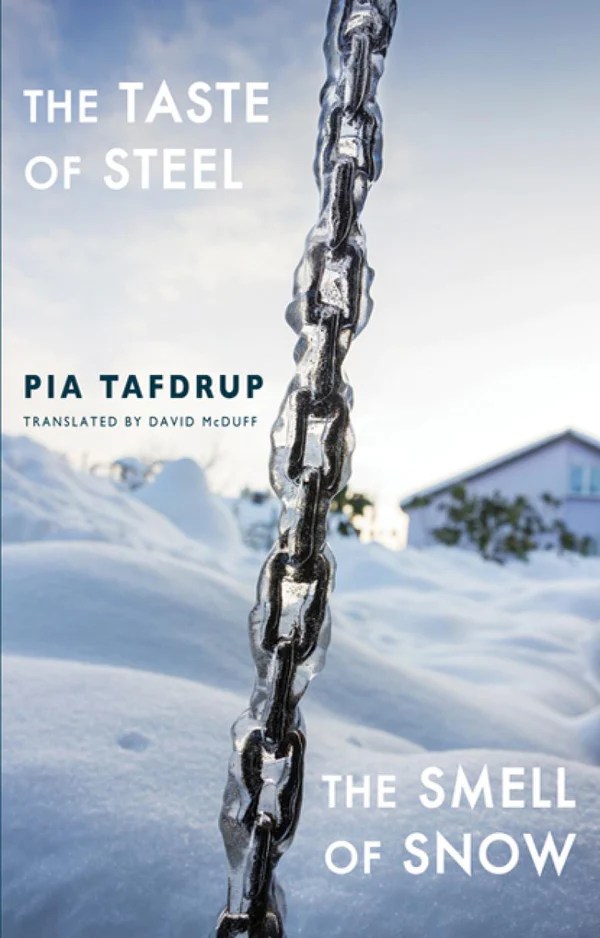
The Taste of Steel / The Smell of Snow, containing poems by Pia Tafdrup originally published in 2014 and 2016 and translated by David McDuff, was published by Bloodaxe Books last year. The Tafdrup/McDuff/Bloodaxe collaboration goes back more than 10 years now. The Danish poet’s work inclines to themed series of collections – The Salamander Quartet appeared between 2002 and 2012. The current volume presents in English the first two collections of another planned quartet of books, this time focusing on the human senses. In fact, the ‘taste’ book here feels much less conscious of its own thematic focus than the ‘smell’ one, not necessarily to the latter’s advantage. There is often something willed, rather laboured, about some of the work included here, which is most disappointing given Tafdrup’s earlier books. But her curiosity about the world remains engaging, her poems are observant of others, often self-deprecating, her concerns are admirable (environmental, the world’s violence), plus there are several fine pieces on desire and female sexuality.
Her world view though, is essentially tragic: loss and the passage of time predominate. ‘Chink’ ends in a resigned tone: “Slowly life takes / the life from us”. The Taste of Steel is particularly imbued with a sense of personal, romantic loss: “The moment I begin to love, / the separation starts, / at least the fear of separation” (‘Separation’). The awkward evidence of a partner’s infidelity – a broken sugar bowl, a coffee stain on a book – are “disasters” in what the narrator thought of as “my home” (‘Stages on life’s way’). In such circumstances, even the poet’s pen assumes the qualities of an “axe” (‘Unposted letter’) and unsuspecting visits to museums yield up pessimistic clues and conclusions:
In the absence of words
poisoned arrows sing through the air,
but behind the arrows’ decoration
the idea is the same: peace
is pauses between wars.
‘Not even in museums is there peace’
Impression of Cassini Space Probe
In both collections, Tafdrup gathers poems into brief, titled sections of about half a dozen poems each and the ‘War’ section extrapolates the sense of personal conflict and loss to more global/political concerns. ‘The darkness machine’ opens plainly, if irrefutably, with the sentiment that a child “should be playing, not / struck in the back by a bullet”. The point is made more powerfully (because less directly) in ‘Spring’s grave’ with its repeated pleas to “send small coffins”. ‘View from space’ adopts the even more remote perspective of the Cassini space probe’s view of the planet, but also ends with plainspoken directness: “that’s where we ceaselessly produce / more weapons, practise battle tactics, / turn our everyday lives into a night of hell”. The concluding genitive phrase makes me wonder about the quality of the translation; I have neither Danish, nor the original in front of me, but does Tafdrup really use such a cliché?
You might say the Cassini viewpoint is taken up more metaphysically elsewhere in Tafdrup’s frequent sense of the world’s ultimate mystery (“the fleeting, / the unbounded, the ever / changing” (‘Undercurrent’)), forever slipping beyond the grasp of human language, an idea imaged in ‘Loneliness’ as a God who “is born at every moment, it is said, // is the life of the endless deep, / and does not cease His revolt”. Only occasionally are we conscious of such a presence – unfamiliar moments, as in the poem ‘Power cut’, where it is an electrical outage that prompts a reshaping of perception to the point of “only now / discover[ing] the world, as though we are suddenly / noticing heart and lungs”. And – returning to the theme of these collections – Tafdrup’s use of (lengthy) listing in ‘Taste’ is perhaps intended to evoke the often unremarked, radical multiplicity of the world-as-it-is through the window of one of the human senses.
Pia Tafdrup
This is also a method adopted in The Smell of Snow, the lists of olfactory images are even more determinedly developed in poems like ‘Smell-trace of a morning’ and ‘Benchmarks from a long day’. In this second book, most poems contain some allusion to the ‘smell’ theme. The idea is put to powerful erotic effect in ‘Your fragrance wakes me’ in which the lover, coming from a bath, is tracked and anticipated; “Not yet the taste of your kiss, / not yet caresses”. Other ‘smell’ poems yield good results: to comic effect in Tafdrup’s close observation of the noses of other passengers on an airplane; an interesting exploration of gender in a poem on men’s proclivity to relieve themselves in public places; on environmental concerns in the evocation of the smells of cleaning products; racist undercurrents when a peculiar smell is detected during a stranger’s visit (a dead mouse is later found to be the cause).
But over the course of 189 pages, the imaginative pressure driving Tafdrup’s poems can flag. The human senses theme yields poems that feel like exercises in completing a brief. A poem on the 2015 terrorist attacks in Copenhagen works well enough, except one is left waiting for the ‘smell’ to feature (eventually we get the “smell / of bloodstained February”). When poems don’t need to be written they tend towards the banal. That these are poems in translation may be part of the problem. However many times I read these 6 lines, I am still puzzled:
I pour water
in abundant quantities
in the grey misty light,
sweep like the wind through a willow
the shadow from your face,
turn a stream magnetically.
‘Fresh snow’
David McDuff
Tafdrup’s language as rendered by McDuff is for the most part clear and unexceptional (this is one of the losses compared to earlier work which leaped and surprised its reader more frequently). Lines like the above give off the aura of a passage not fully resolved in English. The book’s concluding poem also seems problematic. Its (Englished) title might leave it open to the kind of schoolboyish humour that Tafdrup would not have sought: ‘The stream of smells from below’. Its opening three stanzas lack any sense of forward movement, seeming to repeat three times the same idea that individuals on the planet are similar but different to others. Then:
Each person is referred to their own sensations,
as I am now
with the sun in my face, June,
and the chill in my back
stop [ . . . ]
This reader has little stumblings over the verb ‘referred’, with the month/interlocutor, ‘June’, and the odd juxtaposition of ‘back / stop’. McDuff’s previous work with Tafdrup has been superb, but once doubts creep into the reader’s head about the ‘bringing over’ of poems into another language it is hard to contain them. This is not Tafdrup’s best work, nor is it McDuff’s; I, for one, will be going back to the earlier Bloodaxe books by this fine poet.
NB. This review was originally commisioned and published by The High Window.
Wishing all my blog readers this season’s greetings.
Quite unseasonally perhaps, here is an image of a gazelle – gazella dorcas – the kind of one Rilke is writing about in my translation below, with that ‘listening, alert’ look. The other extraordinary image that Rilke imcludes here is of the hind legs: ‘as if each shapely leg / were a shotgun, loaded with leap after leap’. This is one of the New Poems, written by Rilke under the influence of the sculptor, Auguste Rodin. Rilke learned from Rodin’s insistence on ‘looking’ closely at a subject, as well as his impressive work ethic!
Enchanted one: how could the harmony of two chosen words ever match the rhyme that comes and goes within you? The way branch and lyre start from your brow like a sign
and every part of you is like a lover’s song, the words falling tenderly as the rose lets drop petals on one who does not read on, but, shutting his eyes, lets the book close
to gaze at you: as if each shapely leg were a shotgun, loaded with leap after leap, undischarged, while your head tilts on your neck,
listening, alert: a girl who has ventured deep into a wood, startled by sounds as she bathes, the glint of forest pool on her upturned face.
This is one of five new translations which have just been posted at The Fortnightly Review. Click the link below to see the others – ‘Departure of the Prodigal Son’, ‘Pieta’, ‘God in the Middle Ages’ and ‘Saint Sebastian’.
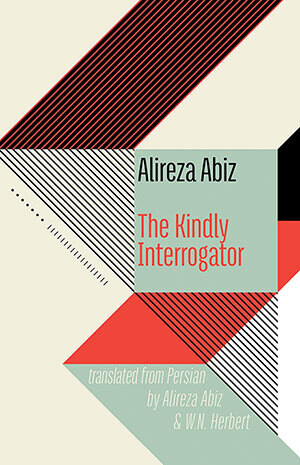
‘I always write that which is not’ says one of Alireza Abiz’s poems, because ‘[t]hat which is is too terrifying / to wear the garment of the word’. To understand what Abiz means here – how can / why should a poet avoid writing of what is real? – we have to understand his historical and political contexts.
Abiz belongs to the 1990s generation of Iranian writers. The unattributed Introduction to The Kindly Interrogator (Shearsman Books, 2021) provides help for those of us who don’t know much about the development of modern Iranian poetry. It was Nima Yushij who, at the opening of the twentieth century, felt the then-current forms of Persian poetry had become too abstract, subjective and metaphysical. He advocated a more modern, objective approach, a more natural diction and the use of forms closer to what we would regard as blank verse. By the 1960s such freshness and freedom had yielded some of the best modern Persian poets, writing diversely, mostly in free verse. But both before and after the 1979 Revolution (which replaced a millennia old monarchical system with the Islamic Republic), poets continued to engage in political struggles and were often prosecuted by the authorities for their writings. Following 1979, and during the 8 years of war with Iraq, the artistic atmosphere continued to be both difficult and repressive.
The political reforms of the 1990s – Abiz’s period – saw a new optimism and revival in the arts, yet still prosecution and censorship remained a fact of life. Many artists left Iran and – especially after the 2009 uprising – there was a considerable migration into exile. Though currently resident in the UK (he lives in London and has a Creative Writing doctorate from Newcastle University) Abiz does not consider himself an exile as such, though inevitably his perspective has an ex patria quality, looking both dispassionately at Iran’s nature and continuing development, as well as harking back to an affective homeland.
Alireza Abiz
In these translations by the author and WN Herbert, Abiz’s free verse poems are not always reluctant to address realities, but they do tend to deploy (what the Introduction calls) a kind of ‘dialled-down or even buttoned up surrealism’. ‘The Tired Soldier’ is brief and universal. His weariness is symptomatic of a lengthy war, as well as his disillusionment with it. Jackals wail, bugles “cough” like roosters – the real and figurative creatures here close to anthropomorphic portraits of societal/political elements, close to the derangement of the surreal which is also signaled in the soldier’s action which (besides the obvious disrespect for his military service) involves an overturning, a literal inversion (feet to head, head to feet) of the norm:
The tired soldier
hangs his boots around his neck
and pisses in his helmet.
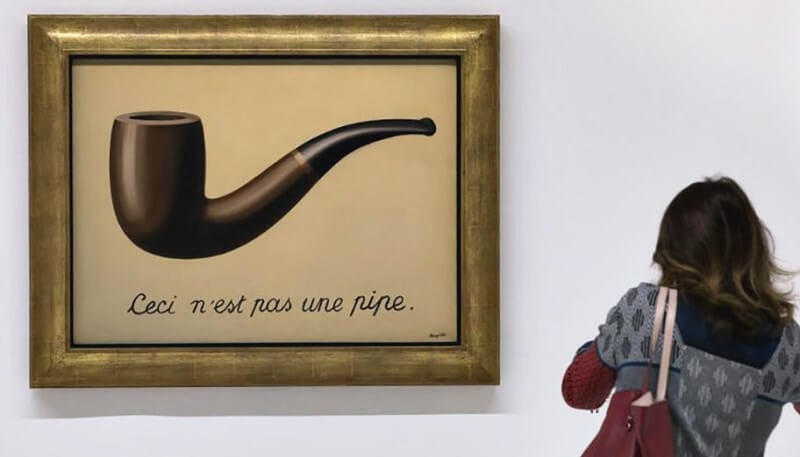
The surreal is inevitably emergent when we cease to trust our senses, or our interpretation of what we think we witness (think of Rene Magritte’s Ceci n’est pas une pipe). A black cat watches the narrator from the veranda. Given a political context in which persecution (even elimination) has become common currency, the narrator seems to fear for his own life:
It’s been a long time since I was a sparrow,
since I was a dove,
even since I was a backyard hen.
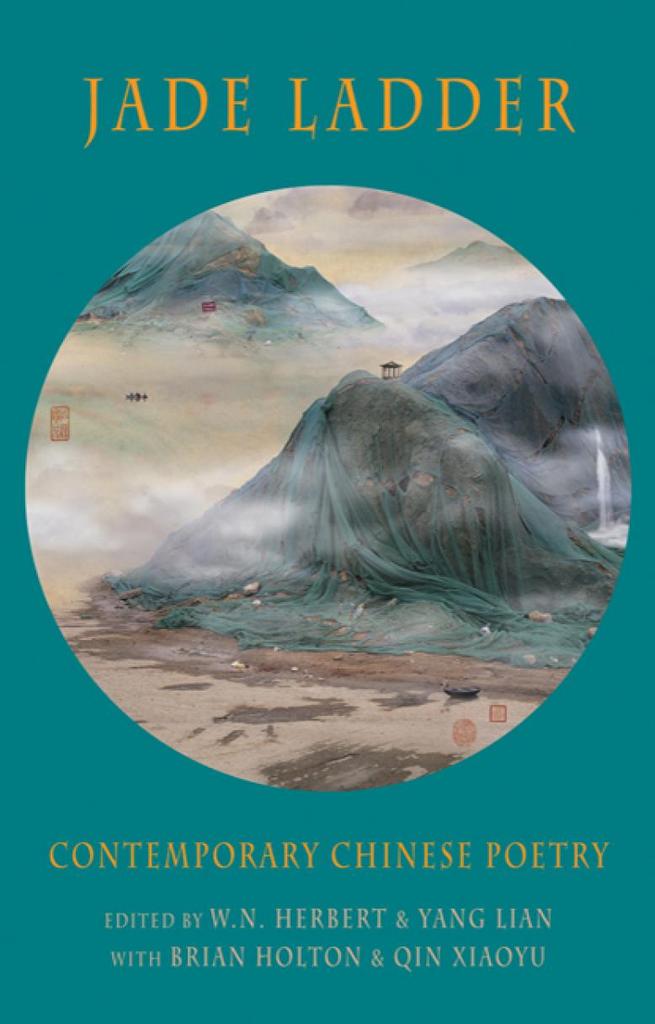
The sense of danger and paranoia here is obvious, but perhaps vague enough, quirkily surreal enough, to elude the censors. The Introduction suggests parallels with the Menglong Shi or so-called ‘Misty Poetry’ generation of writers in China in the 1980s. Then, the ‘Misty’ handle was initially a disparaging one given by officially sanctioned reviewers, suggesting these writers were creating ‘obscure, vague, incomprehensible work’ (for a good account of these issues see Yang Lian’s introductory essay to Jade Ladder: Contemporary Chinese Poetry (Bloodaxe, 2012) edited by WN Herbert and Yang Lian). But their obscurity was only really in comparison to official Chinese poetry of the period full of banal (but never obscure) sloganizing about the virtues of Socialism and the evils of Capitalism. Yang argues the mistiness of the new 1980s Chinese poets was really a return to ‘Sun, Moon, Earth, River, Life, Death, Dream’ – to the territory of Classical Chinese poetry (Li Bai and Du Fu), though often encoded within it were observations about contemporary political life. So also with Abiz’s poetry in which images of ‘doves, rabbits, ghouls, lemons, feasting, wine’ develop and imply their own slant or misty significances.
Inevitably, death and the threat of it is a preoccupation of many of these poems. The mundane incident of a fly buzzing in a kitchen leads to a meditation on conflict, guilt and futility. Looking through a window into ‘The Anatomy Hall’, the narrator sees a surgeon? a mortician? a torturer? leaning over a body on a table. He senses the man’s fear; he glimpses the flash of a knife. Then:
He bends over my head and smiles,
looking at me like a butcher looks at a carcass.
X
On the table in the middle of the hall,
relaxed, I sleep.
The relaxation of the victim comes as an additional surprise, but it gestures towards the sense of complicity that is another of Abiz’s concerns. A lengthy quotation in the Introduction, which I take to be in Abiz’s own words, argues: ‘the corrupting influence of dogmas is so insidious that no-one remains entirely innocent, or, if carried along by the paranoias of ideological purity, should be considered completely guilty’.
W N Herbert
So in ‘The Informer’ the narrator (in a Kafkaesque sort of world) has been invited to attend a ceremony to select the ‘finest informer’. There appears to be a confident pride in the way he dresses up for the occasion. In the hall, the candidates (those you expect to be on the ‘inside’) are in fact excluded. It turns out, in a detail suggestive of the elusive nature of truth and the levels on levels of surveillance in such a repressive society, that all the seats are to be taken ‘by the officers responsible for informing on the ceremony’. There is a calculated bewilderment to all this as is also revealed in the oxymoronic title of the eponymous poem, ‘The Kindly Interrogator’. Nothing so simple as a caricatured ‘bad cop’ here:
He’s interested in philosophy and free verse.
He admires Churchill and drinks green tea.
He is delicate and bespectacled.
He employs no violence, demands no confession, simply urging the narrator to ‘write the truth’. The narrator’s reply to this epitomises the uncertainties a whole society may come to labour under. He cries, ‘on my life!’. Is this the ‘I will obey’ of capitulation or the ‘kill me first’ of continued resistance? Is this the repressed and persecuted ‘life’ of what is, of what is the case, or an expression of the inalienable freedom of the inner ‘life’? Abiz is very good at exploring such complex moral quandaries and boldly warns those of us, proud and self-satisfied in our liberal democracies, not to imagine ourselves ‘immune from [the] temptation towards unequivocality’. Fenced round with doubt, with a recognition of the need for continual watchfulness, with a suspicion of the surface of things, perhaps these poems never really take off into the kind of liberated insightfulness or expression of freedom gained that the Introduction suggests a reader might find here. Abiz – the ‘melancholic scribbler of these lines’ – is the voice of a haunted and anxious conscience, a thorn in the side of repressive authorities, as much as a monitory voice for those of us easily tempted to take our eye off the ball of moral and political life nearer home.
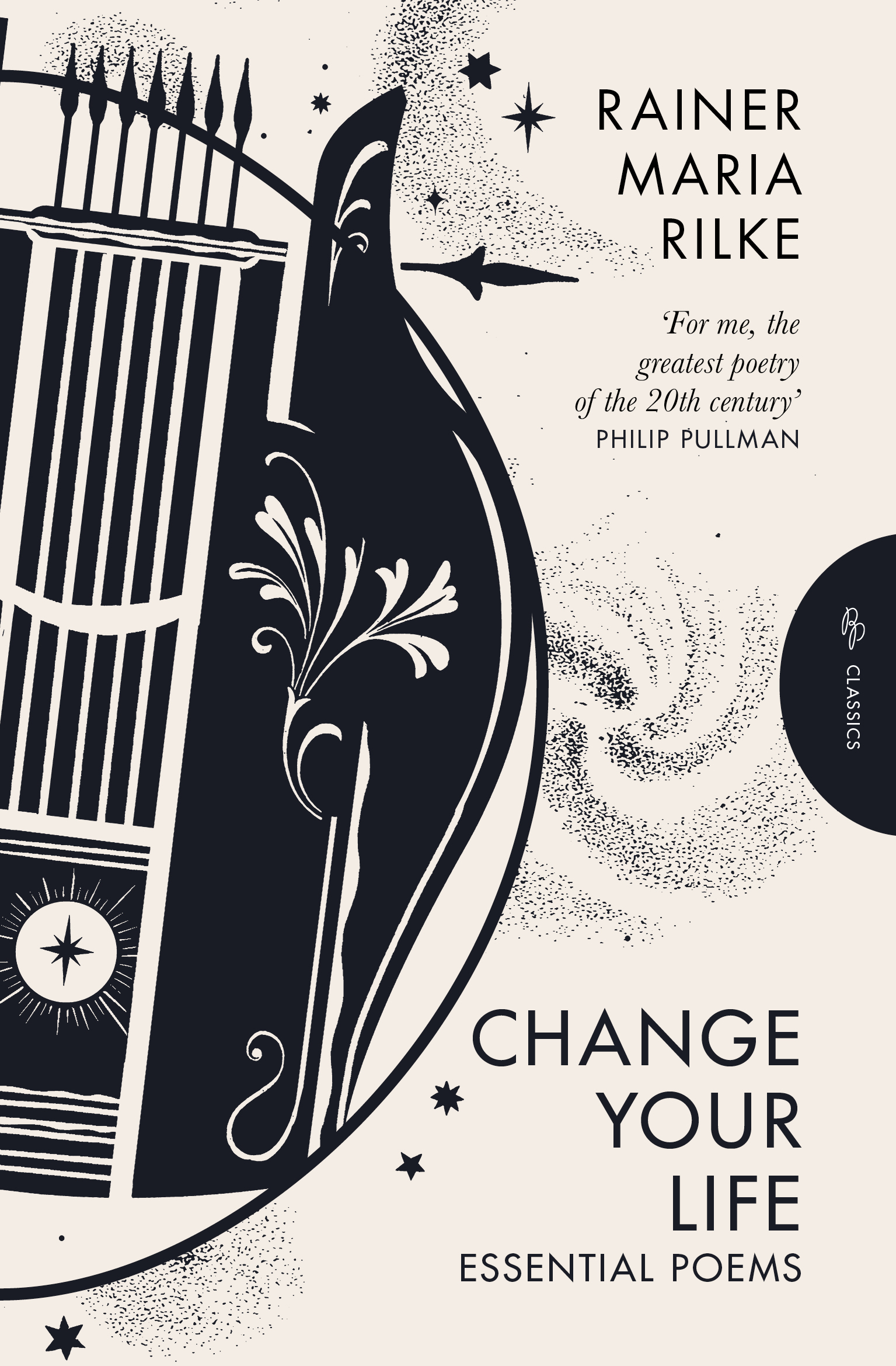
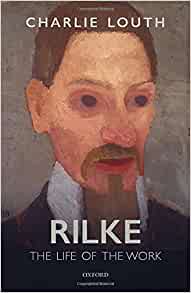
As I mentioned in my last blog post, much of my time through lockdown and in the last few months has been taken up with translation. One of these projects is as daunting as it is exciting. Pushkin Press have commissioned me to complete a new selection and translation of the work of Rainer Maria Rilke to appear in 2023. Some of you will be aware of my earlier published versions of the Duino Elegies and the Sonnets to Orpheus (both available from Enitharmon Press). The new project will contain selections from those sequences and a good selection of earlier poems, including from the New Poems. As well as trying out a few of my new translations in this post (and the following one), the body of it is an uncut version of my recent review of Charlie Louth’s excellent book on Rilke, Rilke: the Life of the Work (OUP, 2020). A shorter version of this review appeared in the latest Agenda magazine, ‘Altered Distances’ (Vol 54, Nos. 1/2). Many thanks to the editor, Patricia McCarthy for asking me to write it.
Part I
Rilke has long suffered from two types of criticism. Among his enthusiasts, some declare his work close to sacred and therefore hardly open to ‘normal’ practices of critical analysis, at risk of spoiling the ‘bloom’ of mystery they find there. Others, of a more negative inclination, accuse him of an aloof aestheticism, a likely fatal distance from ‘real’ life. One such was Thomas Mann who can be found, Charlie Louth notes, “(rather richly) calling him an ‘arch aesthete’”. Both viewpoints risk downplaying the skilled crafting of Rilke’s work (he thought long and hard about poems as artefacts, things consciously and intricately made) but also risk mistaking the particular power of his poetry. Rilke: the Life of the Work is comprehensive, erudite, always clear and – most importantly – keeps returning us to the poetry to which Louth enthusiastically responds: “When we read Rilke, the poems do not feel aloof, and they do not feel merely aesthetic in their claims. They press upon us and make us examine ourselves, and they help us experience our life in the world with greater clarity and depth”. Most readers will recognise this as an allusion to the ‘Archaic Torso of Apollo’ (from New Poems) which concludes “You must change your life”. Louth again: “It is unusual for Rilke to be so direct, but as I see it a similar spirit animates most if not all of his poems”.
This book aims to bridge the gulf between enthusiastic, non-specialist readers of poetry (Louth translates his foreign language quotations himself) and the German lang/lit academic and student. The balance between engaged readability and academic thoroughness is very well judged. I particularly value Louth’s close readings of ‘the work’, viewed as objectively as possible (Louth declares early on that he has no “overarching thesis”). There are other readily available biographical and critical works, but the strength of Rilke: the Life of the Work is that, with its discussion of the formal choices, wording and syntax of so many poems, it is a comprehensive attempt at ‘Reading Rilke’. The structure of the book’s 600 pages is primarily chronological, from the poet’s earliest publication, Lives and Songs (1894) through to Vergers (1926). Louth only departs from this chronological survey twice. Early on, he looks at several poems that open Rilke’s published books, then, in Chapter 6, he discusses the four poems Rilke wrote as requiems.
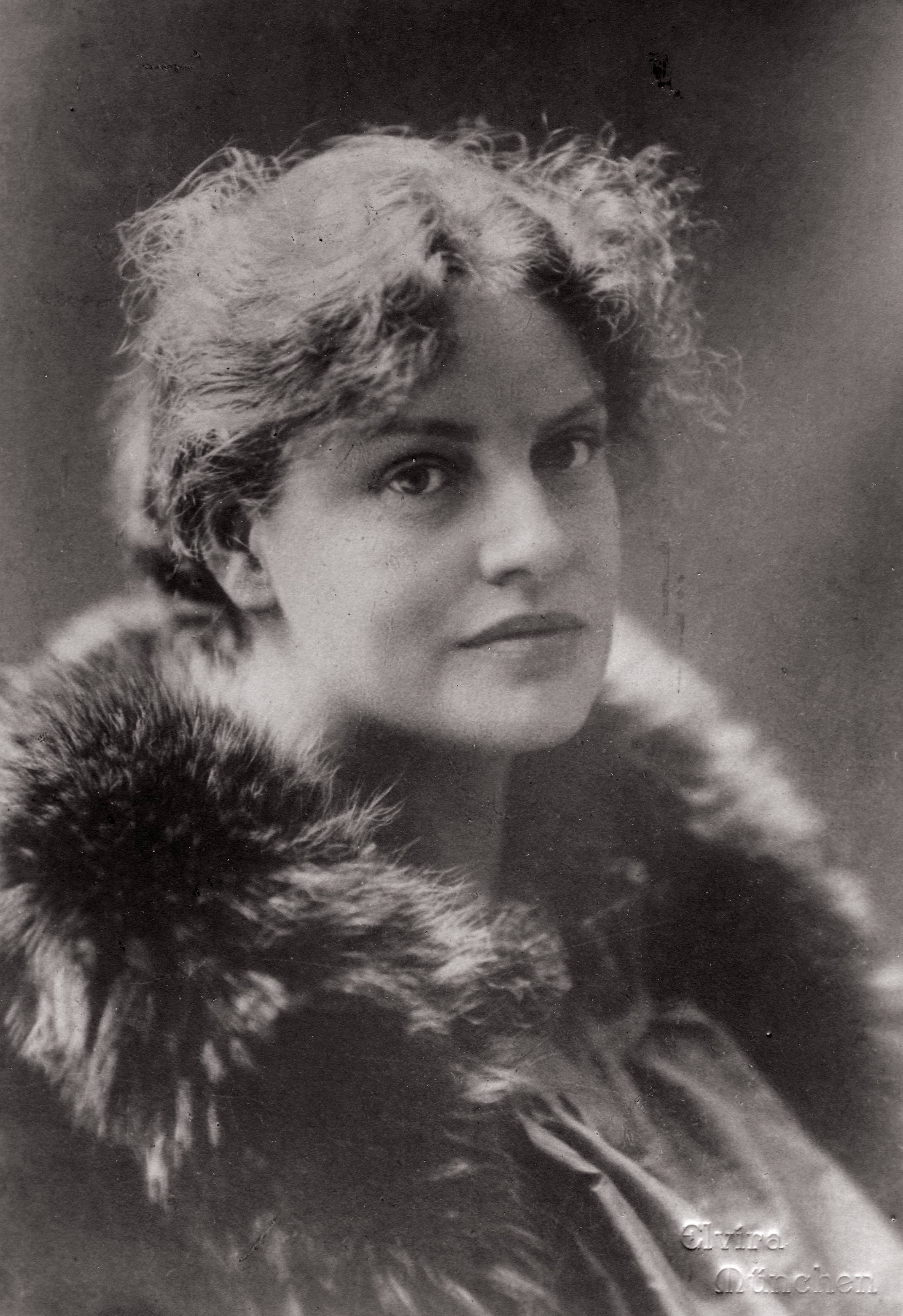
Lou Andreas Salome
So Louth’s Rilke is a craftsman and moralist who urges us to live better. The kind of closed system of a purely aesthetic art was the poet’s abhorrence. In a lecture he gave early in his career, Rilke is already sure that “‘art is only a path, not a destination’. In a letter to Lou Andreas-Salomé in 1903 he confirms: ‘I do not want to tear art and life apart; I know that in the end they are one and the same’. As so often, Louth articulates his subject’s attitude with great clarity: “for Rilke, there can be no question of shutting oneself away from life, of retreating into the work, and the desk, if it is to be the place of necessary writing, must be a ‘vitale Mitte’, a site right in the middle of life and exposed to all its risks and promises. To write is not to withdraw but precisely to engage”.
Rilke’s poetry pays particular attention to the processes of change associated with being human. Poems record such moments of change but also act, in the process of being read and openly experienced, as opportunities where change in an individual might take place. For those with faith in literature, Louth articulates the exciting prospect: “to read at all is to pause, is to take your time in times when an anxious haste pervades much of what we do. In some sense it is to live better whether poetry makes anything happen or not”. Writing to Thankmar von Münchhausen in 1915, Rilke asks, “What is our job if not, purely and freely, to provide occasions for change?” Louth finds these ideas in ‘Eingang’ / ‘Entrance’, one of the poems Rilke placed at the start of The Book of Images (1902/06). The furniture of this poem – the self, a house, a tree – is a grouping that recurs throughout Rilke’s work and what interests him is the suggestion that, as we leave the familiarity of our house, “the house of our habits, we enter the imaginary space of another building [. . .] coming from life into the poem, and passing through the poem into life”. Here is my new translation of this poem:
Whoever you are: in the evening, step out
of your living room, from all that’s familiar;
in the distance, the last thing, your house:
no matter who you are.
And although your eyes have grown so weary
you can barely lift them from the worn threshold,
slowly, with them, you still raise a black tree
and set it before the sky: lean and alone.
And you have made a world. And it is immense,
like a word, in silence, it continues to grow.
And as your will grasps its significance,
so your eyes, tenderly, let it go . . .
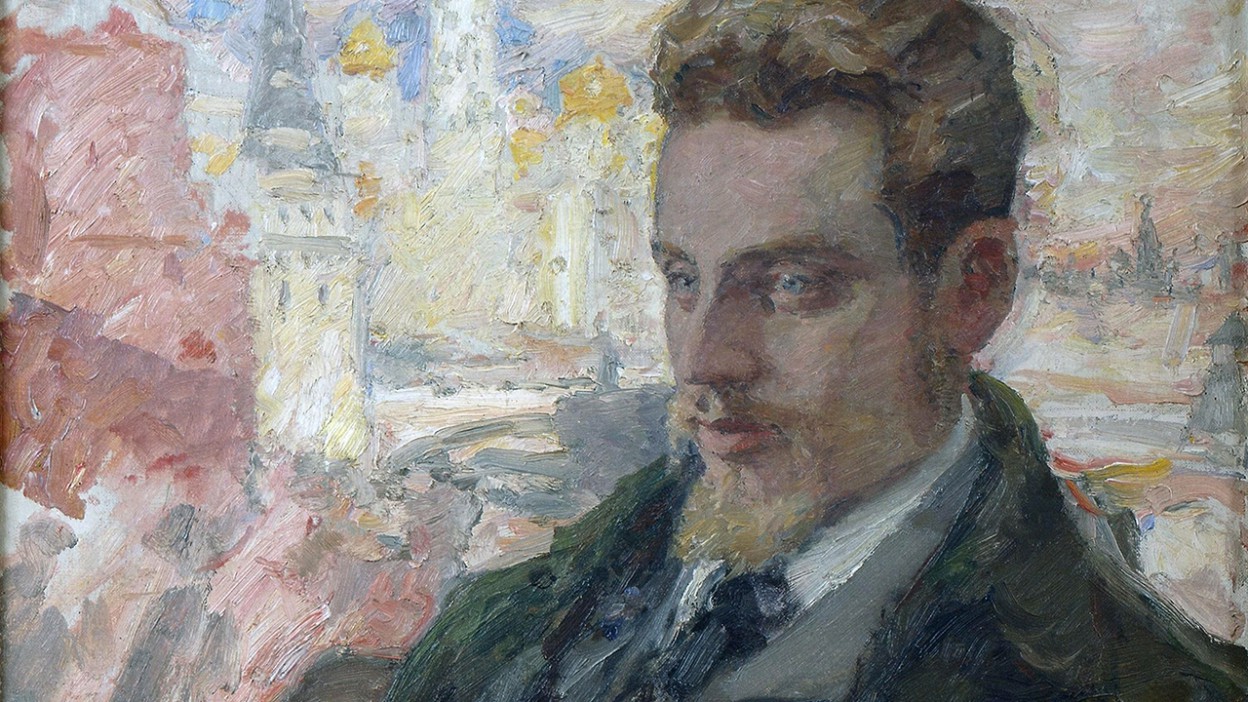
Portrait of Rainer Maria Rilke, 1928, by Leonid Pasternak
For Rilke’s own life and work, the key meeting was with Lou Andreas-Salomé in May 1897. Lou changed his handwriting and his name (from René to Rainer), but it was the confidence and groundedness in the world that she brought to his life that pushed his art “closer to the details of lived experience”. Rilke himself wrote: “The world lost its cloudiness [. . .] I learnt a simplicity, learnt slowly and laboriously how simple everything is, and I gained the maturity to talk of simple things”. Lou’s influence can be seen in the lecture he gave in Prague in 1898, where he distances himself from Symbolism and aestheticism (the dominant strands of ‘modern poetry’ at the turn of the century) to argue that the artist must not be “shut out of the great channel of life”, but must evoke the constant dialogue between the individual and things, “the strange coincidences between inner and outer out of which experience is made”. As Louth says, this is an early statement of the theme which will occupy his whole life.
Here is a brief poem – actually naming Lou and indicating her influence in persuading Rilke of the sacredness of the ordinary. It went unpublished for years, but was part of Rilke’s sequence called To Celebrate You (Dir zur Feier):
The rain runs its chilly fingers
down our windows, unseeing;
we lean back in deep armchairs
and listen, as if the quiet hours
dripped from a weary mill all evening.
x
And then Lou speaks. Our souls incline
one to another. Even cut flowers
at the window nod their topmost bloom
and we are completely at home,
here in this tranquil, white house.
For Rilke, the successful poem is a space in which the mysteries of things and personal confession are both explored, or revealed, simultaneously. Louth argues that, from the outset, Rilke’s view of this was always positive: “there is no unnerving consciousness of the self ’s arbitrary dependence on chance encounters with the outside world”, but equally, there is “no doubt about the existence of an underlying unity to which the poet has access”. What he feared was ‘the interpreted world’ (‘der gedeuteten Welt’), a world view shorn of all mystery, a perspective that perhaps most of us inhabit, a view in which language has become dominantly instrumental, “narrowing our vision so that life appears cut and dried without any possibility of the unknown and the unknowable”. Louth explains what readers of Rilke value in his work: “poetic language, as he understands it, is precisely a way of talking that avoids directness and allows the mutability of experience and the mystery of the world to be expressed. It releases rather than limits possibility”. Beyond this stands what Rilke might have meant by the term ‘God’. ‘He’ is “an experience of totality, life felt as a whole, in which self and other are not distinct or momentarily lose their distinctness”.
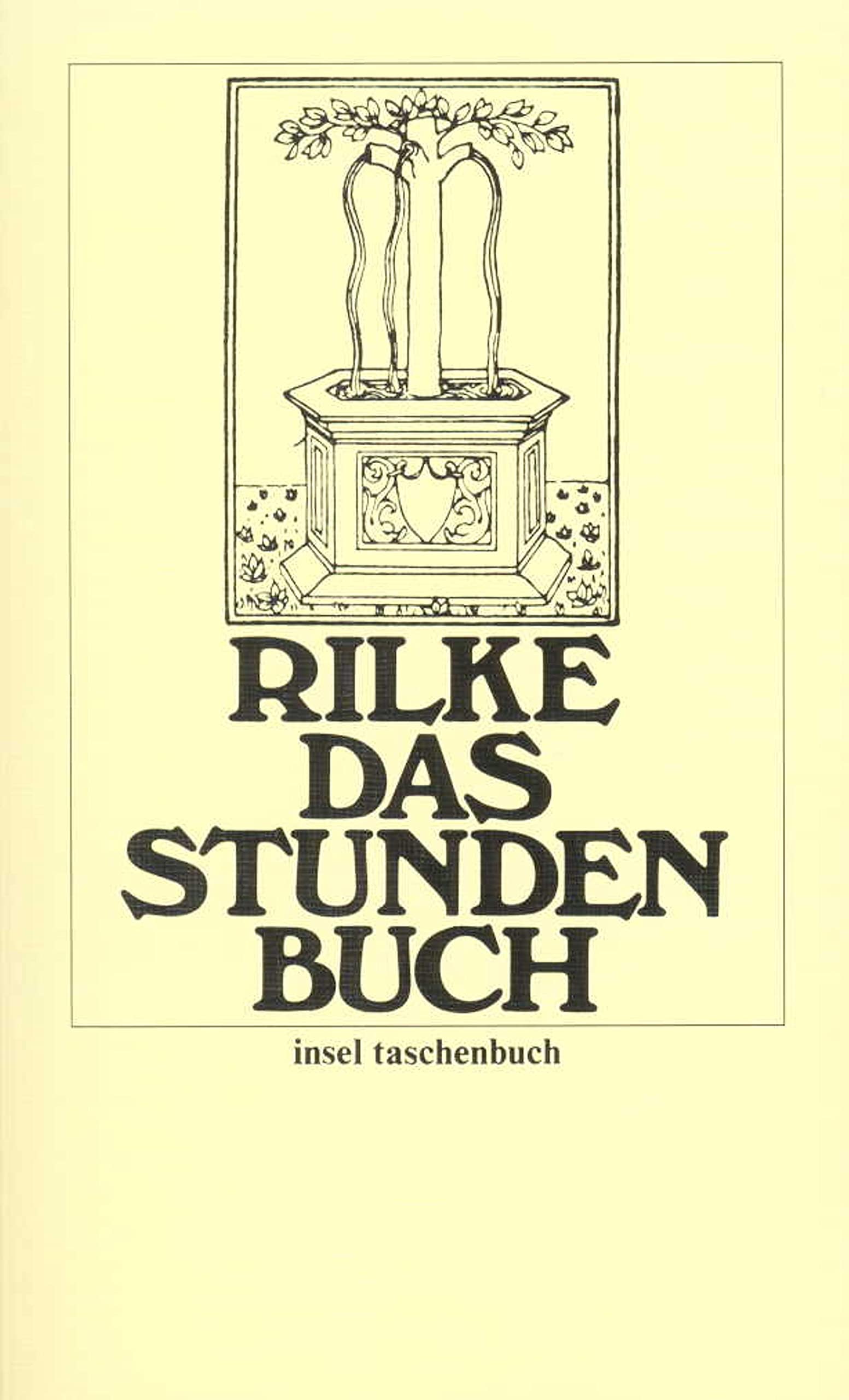
Here is my new translation of an early poem from The Book of Hours (Das Stundenbuch) in which Rilke is developing these ideas:
You, the darkness from which I came,
I love you more than the flame
scoring the world’s edge
with a glimmer
upon some sphere,
beyond which no-one has more knowledge.
x
Yet the darkness binds everything into itself:
all forms, flames, creatures, myself,
it seizes on them,
all powers, everything human . . .
x
And it may be: there is an immense might
stirring nearby –
x
I believe in the night.
It is in part because the enemy of mystery is language (too casually used) that poetry (constructed from language more carefully used) has an advantage over other art forms like painting. There’s an irony here, of course, because Rilke learned so much from other workers in the fine arts. Most know about the debt he owed to Rodin and Cezanne, but Louth argues Rilke’s journey towards the poetics of the New Poems began in the period he resided in the artists’ community in Germany at Worpswede. A lot of his thinking there concerned images of man and landscape. For the majority of the time, humans and nature live “side-by-side with hardly any knowledge of one another” and it is in the ‘as if’ of the work of art that they can be brought closer, into a more conscious relation. But because a poem works through time, such a correspondence is acknowledged as “something one traverses and gains knowledge of but cannot hold onto”.
It has been a long time since I last posted anything substantial on my blog. In the great scheme of things pandemic, this will not have been remarked upon; though for anybody out there who has noticed, I send my apologies. A particular disappointment is that I have not been able to review this year’s shortlisted Forward First Collections (and the announcement of the winner is almost upon us). For what it’s worth, I think Caleb Femi will win with his Penguin collection, Poor. I still hope to review some of the shortlist, in the near future.
Though I have managed a couple of book reviews (on Pia Tafdrup’s new Bloodaxe collection, on Charlie Louth’s excellent book about Rilke) to be published elsewhere, alongside this blogging drought there has been a more significant one (for me at least): I have hardly managed to write any poetry of my own for well over nine months now. Even the few things I managed to draft (especially at the height of the Covid second wave (last January)), I have signally failed to return to and they may all now fall by the wayside. In moments, it is as if I have forgotten HOW to write a poem; a questioning of the importance of this solitary business; a simple lack of external stimulation perhaps. The one thing I have been able to do during this awful period is more translation. I have (happily) been commissioned to complete exciting projects for two publishers (publication dates off into 2023 in both cases) and I hope to say more about these in later blogs. Yes, my intention is to get back to blogging more regularly.
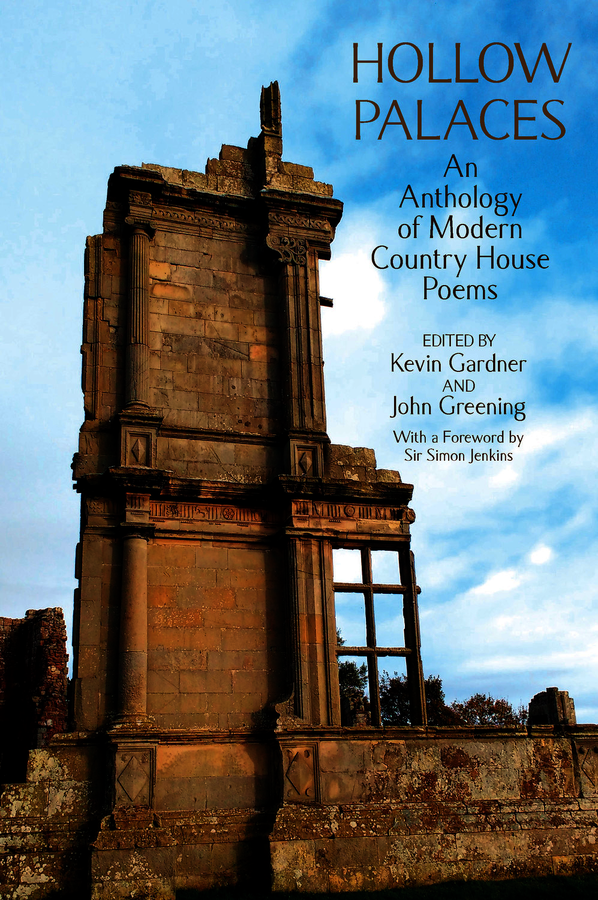
It has also been a long time since I gave anything resembling a public reading. But last Sunday afternoon I travelled with poet, Hilary Davies, out of London to Kimbolton School, north of Bedford for an actual in person book launch! The book was the sumptuous new anthology, Hollow Palaces, published by Liverpool University press and edited by John Greening and Kevin Gardner from Baylor University in the USA. The book is the first complete anthology of modern country house poems, including over 160 poets from Yeats and Betjeman to Heaney, Boland, Armitage and Evaristo.
Kimbolton Castle
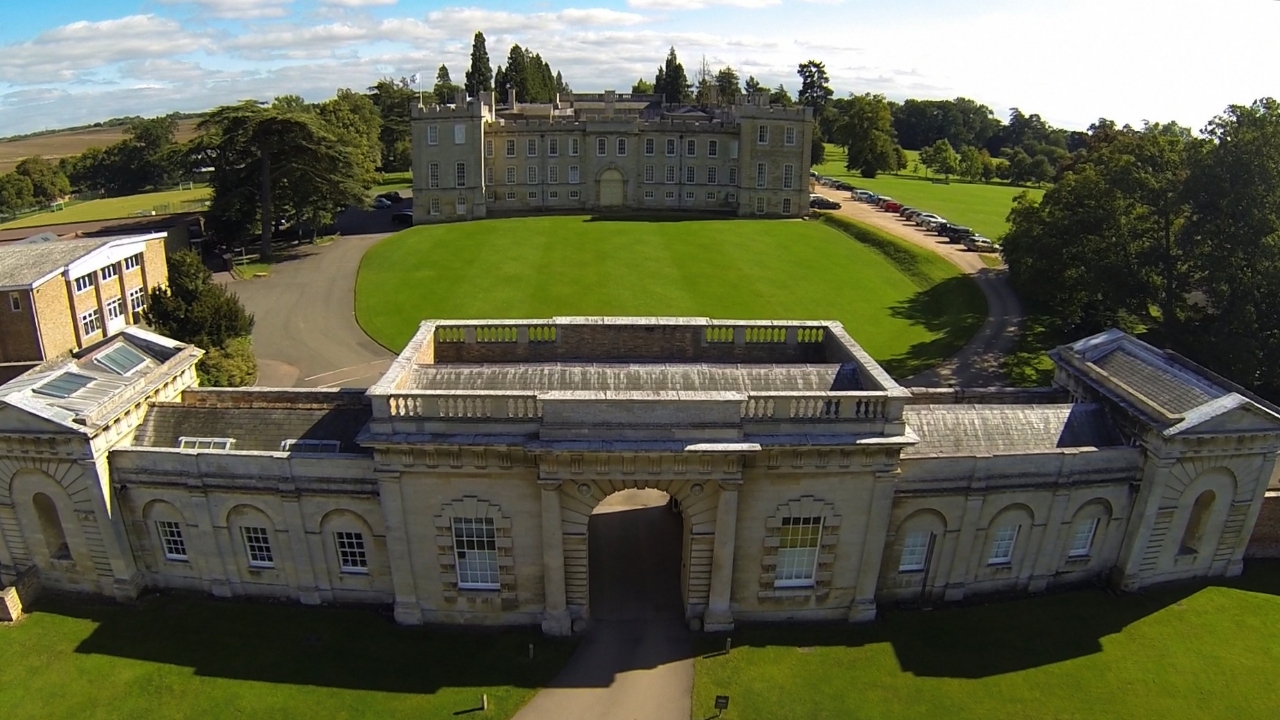
The venue was fittingly grand. Kimbolton Castle is a country house in the little town of Kimbolton, Huntingdonshire and it was the final home of King Henry VIII’s first wife, Catherine of Aragon. Originally a medieval castle, it was later converted into a stately palace and was the family seat of the Dukes of Manchester from 1615 until 1950. It now houses Kimbolton School and this is where John Greening taught for a number of years (alongside Stuart Henson, another poet represented in the anthology).
With the declining sun streaming in through the opened French windows, looking out across the school playing fields, after an introduction from Kevin Gardner, we each read a couple of poems from the anthology. So – amongst others – John Greening read ‘A Huntingdonshire Nocturne’ about the very room we were assembled in, a subtle take on English history and education, Ulster and Drogheda. Hilary Davies’s poem rooted in Old Gwernyfed Manor in Wales, was a fantasy of lust, sacrifice, murder and hauntings. Stuart Henson’s compressed novelistic piece mysteriously described the murder or suicide of a Fourteenth Earl. Anne Berkeley remembered childhood isolation and bullying at a dilapidated Revesby Abbey. Rory Waterman re-visited the ruins of an old, tied lodge-house his grandmother once lived in. Lisa Kelly’s chewy foregrounded language (‘O drear, o dreary dreary dirge for this deer’) shaped itself into a sonnet. Rebecca Watts looked slant and briefly at Ickworth House, a glimpse of bees in lavender. Robert Selby was at Chevening, considering the clash of perspectives between the tourist’s casual gaze and the realities of tombs, time and history.
I chose to read Louis MacNeice’s brilliant, late poem ‘Soap Suds’. Written in 1961, he is remembering the grand house called Seapark which overlooks Belfast Lough. Jon Stallworthy has called the poem a ‘Proustian daydream’, the simple act of washing one’s hands acting as the trigger for remembrance of time past. What appeals to me about the poems is its subtle handling of several times periods: the ageing man washing his hands, looking back to idyllic occasional visits to the house, as well as later, less happy times there (the house belonged to Thomas Macgregor Greer, only brother of MacNeice’s step-mother), the imagery beginning to verge on the nightmarish. (For another blog on MacNeice’s work click here.)
Chateau at Villandry
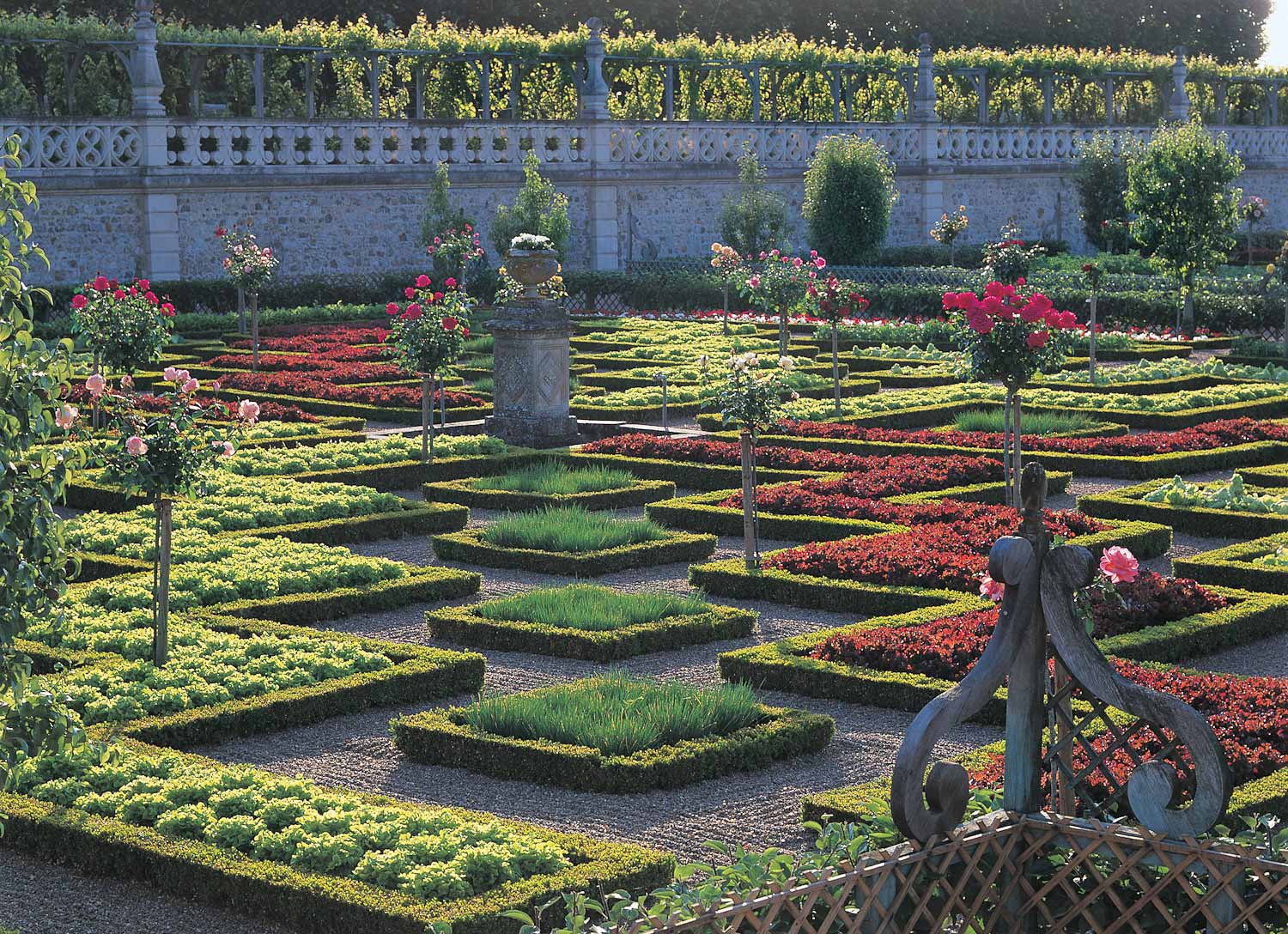
My own poem in the book, as yet unpublished elsewhere, is called ‘Our Weird Regiment’. The poems remembers a compilation of country house visits over the years. One was a visit to the French chateau at Villandry where the formal gardens, I remember, were not conventionally planted with flowers but with vegetables and herbs. I’m posting the text to MacNeice’s as well as my own poem, alongside the phone video (made by Jane Greening) of the 5/6 minute reading I gave at Kimbolton.
Soap Suds by Louis MacNeice
This brand of soap has the same smell as once in the big House he visited when he was eight: the walls of the bathroom open To reveal a lawn where a great yellow ball rolls back through a hoop To rest at the head of a mallet held in the hands of a child.
And these were the joys of that house: a tower with a telescope; Two great faded globes, one of the earth, one of the stars; A stuffed black dog in the hall; a walled garden with bees; A rabbit warren; a rockery; a vine under glass; the sea.
To which he has now returned. The day of course is fine And a grown-up voice, cries Play! The mallet slowly swings, Then crack, a great gong booms from the dog-dark hall and the ball Skims forward through the hoop and then through the next and then
Through hoops where no hoops were and each dissolves in turn And the grass has grown head-high and an angry voice cries Play! But the ball is lost and the mallet slipped long since from the hands Under the running tap that are not the hands of a child.
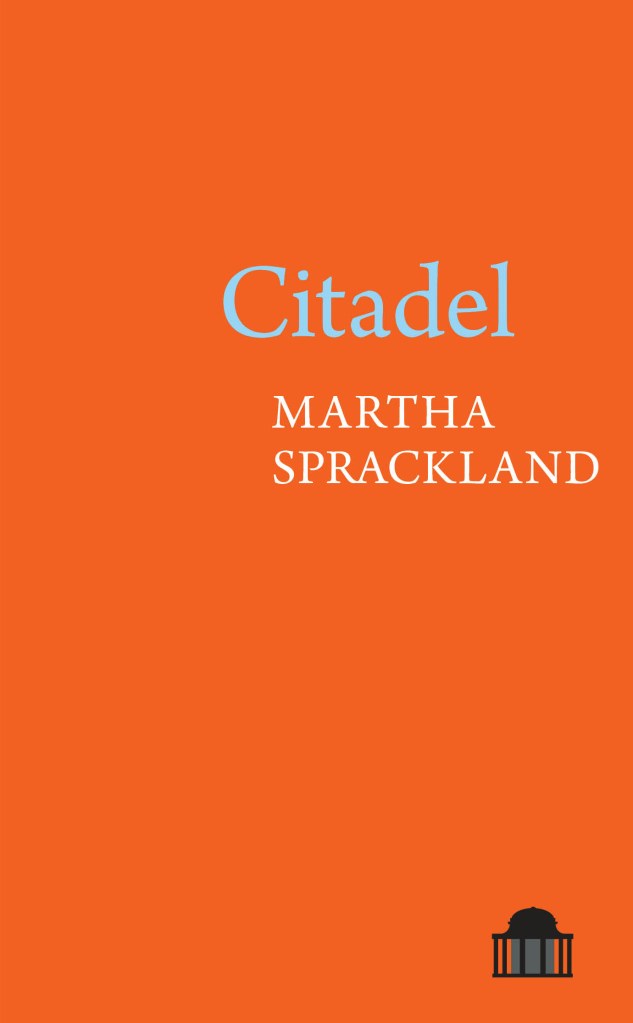
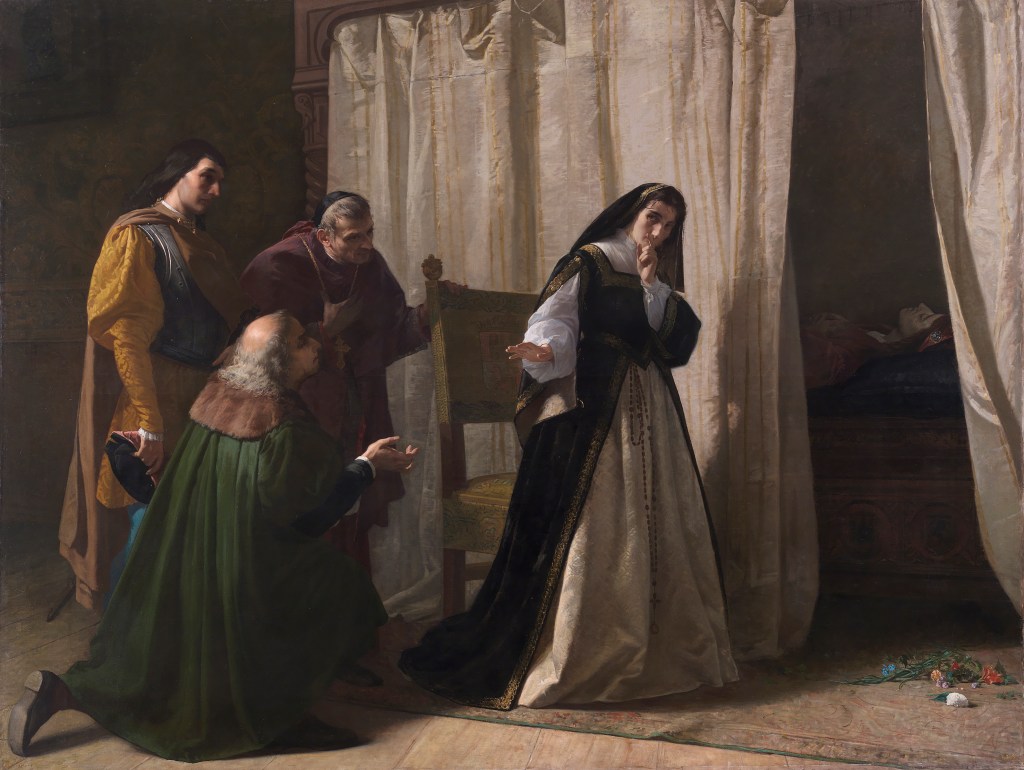
After her Gregory Award in 2014 and two chapbook publications since, Martha Sprackland has long been pondering those decisions about constructing a first full collection. (She talks briefly about that process here). Ought it to be a Rattle Bag of the best poems to date, or a more coherently shaped and organised ‘concept album’? Citadel is evidently being presented to readers as the latter – but with equivocal results. The first reference of the book’s blurb is to Juana of Castile, commonly referred to as Juana la Loca (Joanna the Mad), a 16th century Queen of Spain. She was daughter of Ferdinand and Isabella, instigators of the Spanish Inquisition, but was conspired against, declared mad, imprisoned and tortured by her father, husband and her son, leaving almost no written record of her own. Sprackland – having studied Spanish and spent time in Madrid – presents herself as becoming fixated on this earlier woman, engaged in conversations with her to such a degree that (according to the blurb again) the poems in Citadel are written by a “composite ‘I’ – part Reformation-era monarch, part twenty-first century poet”.
While happy to accept the desire of the poet to maintain a distance between the lyric/dramatic ‘I’ and her autobiographical self, I find the idea, the ‘as if’, of this composite authorship hard to take. There is even something disproportionate about the claim of identity between the two women, given the extremity of Juana’s life-long suffering. I’m reminded of Caroline Maldonado’s 2019 book, Isabella (Smokestack Books) in which she translates and writes poems to Isabella Morra, an Italian aristocrat of the 16th century who also suffered appalling hardship (and likely murder) at the hands of her male relations. But Maldonado’s interest in the historical figure is never claimed as an identity. (I reviewed this book here).
The awkwardness of the leap of faith in this alignment between Sprackland and Juana gives rise to several of the opening poems which seem to want to ‘explain’ empirically the (perfectly legitimately) imagined connection. ‘Beautiful Game’ is a family-holiday-in-Spain poem, in which the Martha figure (the collection does use its author’s name on several occasions) is hit on the head with a pool ball. The next but one poem takes this up. ‘A Blow to the Head’ takes the injury as a moment of profound psychological importance. The narrator is “cracked open” and in the same moment retreats into a psychological “citadel”. The protection this offers her becomes “habit-forming, I was fortified”. The latter pun is good and the poem suggests that it is in this state of defensive retreat, perhaps of ‘imprisonment’, that she passes through a portal, making first contact with “her”, Juana. One of the tortures that Juana faced, for her religious unorthodoxy, was la cuerda, being strung up with cord/rope, weights attached to her feet. In this poem, Martha loosens “the cord from her wrists”.
It’s the poem placed between these two that perhaps provides a further clue to the undoubtedly powerful link felt by Sprackland to Juana, the link between the personal and the historical. Much is left unsaid in ‘A Room in London’; the reluctance to reveal is part of the fortified ‘citadel’. In a vaguely defined medical environment there are several young women, one of them being given misoprostol (a drug used to induce abortion). Such a moment of profound emotional, physical and psychological experience must be the origins of the identification between two individuals so remote in time and Sprackland catches the paralleled shift of innocence to pained maturity in the brilliant final line: “Our little beds, bars of autumnal light falling through the curtains”.
The fact is that this identification of the two women does then give rise to several excellent (I’d describe them as uncanny) poems – though their existence does not need anything more by way of justification than a belief in language and the poetic imagination. In ‘They Admit Each Other to the Inquisitor’, the two women are bound together by the first-person plural pronouns: “We were eighteen and pregnant and mad”. The force and flow of the poem takes the reader quickly beyond questions of likelihood:
When we undid the cord that tied our wrists
it bound us; something in that blow
knocked through the city walls
and through it we are talking, still.
We can’t explain this.
‘La Demencia de Dona Juana’ by Lorenzo Valles (Prado)
The same device is used in ‘Juana and Martha in Therapy’; this time it’s the third person plural. They are as one and yet at the same time they are communicating down a cup-and-string telephone, made from a cord and two tins of cocido (chick-pea and meat stew). There is great humour here besides the serious experiment in imaginative identification: “Time is complicated, especially at these distances”. But also, Time can be collapsed into magically anachronistic moments of intimacy: “They are in the bland room / above the Pret in Bishopsgate, trying to understand. / The walls of the mind are deep and moated”. The final poem in Citadel is ‘Transcript’ which is a verbatim record of a conversation between the two women:
i’ll sing you something, and you’ll sleep, tomorrow I will go falconing –
and I will go to work and try to hold the yolk of myself together, try not to spill –
I wish there were more poems in the book in which this sort of unashamed, ludicrous, heartfelt and imaginatively suggestive communication was portrayed. There are a few other occasions where poems approach it, but the leap of faith required seems even too much for the poet and the results feel more willed than wholly convinced. Juana alone (though in the third person) appears to good effect in ‘Falconry’, an excellent poem that hovers, alongside the hunting bird, over the landscape of the Alhambra. The bird’s searching out of its prey represents the young Queen’s curiosity, her challenge to authority (that will soon get her into so much trouble), and its tearing up of a lark seems to foreshadow Juana’s own suffering.
Otherwise, Citadel contains plenty of poems more directly connected to what we might tactfully designate the author’s biography, poems which might have constituted a Rattle-Bag-style first collection. The five sections of ‘Melr’ read very autobiographically, a childhood in a village north of Liverpool: “I grew up coastal with the land to my back”. It’s portrayed as a place of shifting sands and, as teenage years advance, that sense of novelty-seeking (like Juana and deploying similar bird imagery) grows: “villagers heard / the clatter of the entire migratory flock / lifting off under cover of darkness”. Youthful experimentation, unpredictability and the allure of travel are all expressed in the excellent ‘Pimientos de Padron’. One imagines language students in Madrid, “lovesick, shamed or fleeing / or brisant and in shock”, then heading to the airport for “the first flight anywhere but home”.
There is a motif in the book of those brought up on sand finding it hard to settle. ‘Anti-metre’ suggest this even reaches the menstrual cycle which shifts, “mutable as a dune” and one recalls the clinical environment of ‘A Room in London’ when ‘Hunterian Triptych’ concludes with the narrator and her boyfriend running out in alarm at the sight of preserved foetuses in a museum, “ranged by month and weight”. I sense the Catholicism of Spain in general (and Juana’s wrestling with it, in particular) haunting Citadel. So a visit to an orthognathic surgeon is portrayed in terms of the confessional and a poem like ‘Charca’ is underscored by a baptismal or redemptive sense. A charka is a pool, here a natural bathing pool in a valley. The narrator and her friends go there and, beyond the hedonism and holiday pleasures, she finds something more profound shifting, beginning to lift and heal into freedom:
Something frozen
and distant starts to thaw in me
and to carve these deeper channels
into which we jump, again and again,
looked over by nothing but the mountains,
the overhanging leaves,
the lifted winter lived through and unbound.
This might suggest ‘Martha’ already outgrowing the need to speak to Juana. Another poem like ‘Still Life Moving’ – for me one of the best in the book – suggests the poet’s concern for Time as a theme, that “complicated” thing, here matched with Art (a still life, perhaps in the Prado) and, as time the destroyer creeps into the frame, rotting the lilies and spilling the apples, she utters a cry for some form of redemptive salvation, whether from God or Juana or elsewhere:










 Martyn Crucefix