The Coherence of Rilke’s ‘Letters to a Young Poet’

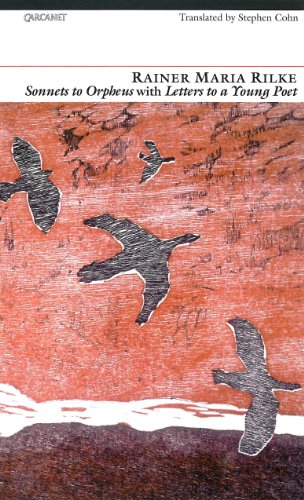
Last week I was invited to take part in an on-line discussion about Rilke’s Letters to a Young Poet, written to a young would-be poet in the early 1900s. This event was organised by the Kings Place group, Chamberstudio, and the panel included two other poets, Martha Kapos and Denise Riley, musicians Mark Padmore, Amarins Weirdsma and Sini Simonen and composer Sally Beamish. We had such a fascinating discussion on Rilke’s advice to young artists (though perhaps we hardly scratched the surface) that I wanted to re-visit it and re-organise my own thoughts about the letters; hence this blog post. Though warm in tone and supportive, the letters are a way of Rilke talking to himself, developing coherent ideas that can be traced through the New Poems (1907/8), Requiem to a Friend (1909), even to the Duino Elegies and Sonnets to Orpheus of 1922. I am quoting throughout from Stephen Cohn’s translation of the letters, included in his translation of Sonnets to Orpheus (Carcanet, 2000).

Rilke’s advice to Franz Kappus was evidently received with gratitude as the correspondence between them continued (if sporadically) from early 1903 to December 1908. We don’t have Kappus’ side of things, but from Rilke’s comments it’s clear the younger, aspiring poet’s letters were remarkably open, even confessional in substance, as suggested by the published letters’ recurring observations about sexual relations. But as for practical advice to a young poet, Rilke offers little, opening with, “I am really not able to discuss the nature of your poems” to “You ask if your poems are good poems . . . You doubtless send your poems out to magazines and you are distressed each time the editors reject your efforts . . . my advice is that you should give all that up”. Probably not what Kappus hoped to hear, though he will have quickly understood that Rilke has more profound points to make. But it means these letters ought to be read less as advice to aspiring writers and more as advice on the best ways to ripen (Rilke’s metaphor) the inner self, a consequence of which might be the conviction that creative work was a necessity for the individual. Peter Porter once suggested a better title for the sequence would have been, ‘Letters to a Young Idealist’ (Introduction to Cohn’s Carcanet translation).

download
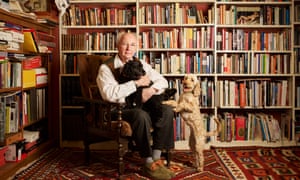
Peter Porter

The advice given is carefully positive – what to seek – and fulsomely negative – what ought to be avoided. Friendly and remarkably sympathetic as his tone is through the series of letters, what Rilke asks, in truth, is extraordinarily demanding for mere ordinary mortals. Rilke urges a priest-like devotion to his High Romantic, Godless programme. In brief, what is to be sought is a clear, honest and open relationship with one’s own inner life and that demands a corresponding avoidance of everything that might distance us from it, especially the pernicious influence of social and cultural conventions, what has been thought, said, written or done before. Rilke makes no bones about how difficult the former is and how frightening the latter is going to feel.

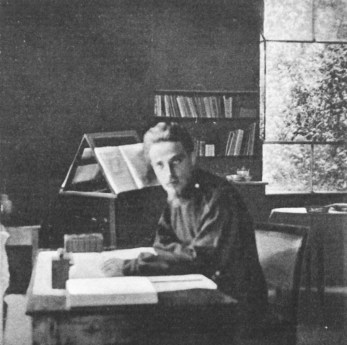
Rilke at his writing desk

The only way, Letter 1 insists, is to “go inside yourself”. And in Letter 3, we need to “allow each thing its own evolution, each impression and each grain of feeling buried in the self, in the darkness, unsayable, unknowable, and with infinite humility and patience to await the birth of a new illumination”. For reasons discussed later, there has to be a degree of passivity about this process: we must “await with deep humility and patience the moment of birth”. In his reply, Kappus must have enumerated the pain and suffering he was experiencing as a young man because Letter 8 spins this positively: “did not these sorrows go right through you – and not merely past you? Has there not been a great deal in you that has changed? Were you not somewhere . . . transformed while you were so sorrowful?” These often rough inner weathers of our emotional lives are precisely what is required. Only then, “something unfamiliar enters into us, something unknown; our senses, inhibited, and shy, fall silent; everything within us shrinks back, there is silence, and at its centre this new thing, strange to us all, stands mutely there”. In one of several memorable images, Rilke explains, through such emotional experience (the pains as much as, or even more than, the pleasures) “we have been changed as a house changes when a guest enters it”.

Those familiar with Keats’ ideas (expressed in his 1819 Letters) about the world as a ‘vale of soul-making’ will find something very familiar here. But Rilke’s take on the process of ‘spirit creation’ lays far heavier emphasis on the need for solitude to achieve it. Letter 5 tells Kappus, “win yourself back from the insistence of the talk and the chatter of the multitude (and how it chatters!)”. The chattering world is a distraction from what ought to be the subject of our study (our inner selves): “What is required is this: solitariness, great inner solitariness. The going-into oneself and the hours on end spent without encountering anyone else: it is this we must be able to achieve” (Letter 6). Such solitude enables greater concentration but also more true (uninfluenced) perception of our inner life. Yet to turn away from so much that is familiar will be frightening. In Letter 8, Rilke compares this to someone “plucked from the safety of his own small room and, unprepared and almost instantaneously, set down upon the heights of some great mountain-range”. What must then be experienced is “a never-to-be-equalled sense of insecurity, of having fallen into the power of something nameless [and this] would virtually destroy him”.

The negative influences of those (us, the timid majority) who have pulled back from such a state of perception is explained. Rilke’s basic tenet is that we are all “solitary”. But the uncertainty of a ‘true’ perception of this is too much for most people: “mankind has been pusillanimous in this respect [and] has done endless harm to life itself: all phenomena we call ‘apparitions’, all the so-called ‘spirit-world’, death, all these things so closely akin to us have been fended off . . . and so thoroughly purged from our lives that the senses by which we might have grasped them have atrophied. To say nothing at all of God”. What Rilke describes here are a number of the conventional ideas – pure figments about the truth of spirituality, death and a deity – that people have populated their world with in seeking greater security. Kappus is told, “a perilous uncertainty is so very much more human” and the truly human, let alone the ambitious poet, must accept the principle that “we arrange our lives in accordance with the precept that teaches us always to hold to what is difficult – then everything that still appears most alien will become all that is best-trusted, most dependable”. Rilke’s chosen metaphor here is the folkloric/mythic image of the terrifying dragon that turns into a rewarding princess at the last moment.

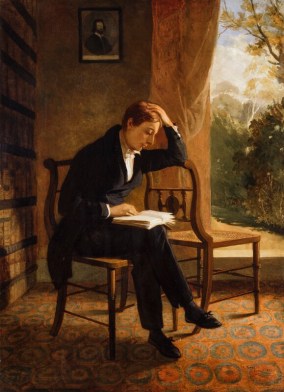
John Keats in Hampstead

Herein lies also the wisdom of passivity. As Keats argued in parallel, with his idea of negative capability (the knack of remaining “in uncertainties, mysteries, doubts, without any irritable reaching after fact and reason”), so Rilke’s fourth Letter advises Kappus not to seek out answers now but to “love the very questions, just as if they were locked-up rooms or books in an utterly unknown language”. The key is to “live them” by which Rilke (like Keats) means to examine and attend to them as fully as possible. He goes so far as to advise a child-like incomprehension (which is at least based on an openness to the questions asked) over a cowardly defensiveness or contempt (which falls back on a distancing from those questions). This is why, in Letter 2, he sharply advises Kappus to avoid irony. There are, says Rilke, “great and serious subjects before which irony stands helpless and diminished” because irony is, by definition, a standing outside of a question or topic. For the same reason, Rilke distrusts engagement with literary or aesthetic criticism (precisely what Kappus has asked of him in relation to his own poems). Letter 3 argues such critical discussions are “received opinions, opinions grown petrified and meaningless, insensitive . . . clever word games”, hence far distant from life itself. The same Letter suggests the artist needs to retain an innocence, even a lack of awareness of his/her creative powers, lest self-consciousness diminish freedom and “purity”. Indeed language itself – the common method of exchange between people – is suspect in representing, in its unexamined use, conventional thought and feeling: “it is so often on the name of a transgression that a life is shipwrecked, and not on the individual, nameless act-in-itself”.

Even these letters, Rilke says in Letter 9, need to be treated with caution and patience: “receive them quietly and with not too many thanks, and let us, please, wait and see what may come of them”. This is a warning not enough heeded by subsequent generations of readers, but Rilke’s real humility is re-emphasised at the end of the preceding Letter. Perhaps feeling he has been delivering advice from ‘on high’, Rilke warns Kappus, “do not believe that he who seeks to console you dwells effortlessly among the quiet and simple words which sometimes content you. His own life holds much trouble and sorrow, and it falls far short of them”. Surely Rilke is not merely alluding here to the life of the creative artist. Prompted, as I have said, by Kappus’ own openness about what we might call ‘romantic’ aspects of his own life, Rilke devotes a lot of space to interpersonal relationships in these letters. His point in Letter 7 is that this area of human life too is poisoned (“well-furnished” – this topic brings out Rilke’s satirical side) with conventional thinking and language: “here are life belts of the most varied invention, boats and buoyancy packs . . . safety aids of all conceivable kinds”. Such ‘safety’ features are more fictions designed to forestall a true encounter with the kinds of questions that human relationships inevitably throw up. Letter 3 particularly criticises male sexual attitudes (lustful, drunken, restless, arrogant, prejudiced) and Letter 7 anticipates a “new and individual flowering” of female sexuality which will lead to relationships not defined as male/female but as “one person and another person”.

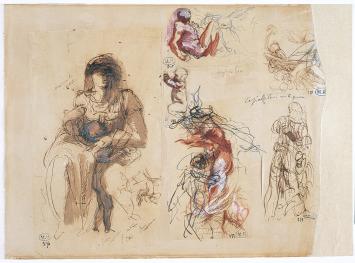
Some of Rodin’s sketches

Such a renovation of individuals, from the inside out, is the urgent call of this series of letters. As to advice to Kappus the wannabe writer, Rilke offers very little, but what he does suggest is wholly in keeping with his other ideas. Letter 1 urges close observation as the only viable method. As I have made clear, this is especially close observation of our inner lives. But one’s whole life needs to be built around this principle, so “you must approach the world of Nature… try to tell of what you see and experience”. Rilke says don’t try to write love poems or on other common subjects of poetry. This is because they will be infected with those conventions of thought and expression I have discussed above. Rather, “favour the subjects which your own day-to-day experience can offer you”. The poet’s approach to such everyday subjects needs to be “quiet, humble, [with] passionate sincerity” to avoid clichés of thought and feeling, hand-me-down solutions or worn out, petrified language. These are the methods Rilke learned from watching Rodin sketching in Paris. Pre-empting likely objections that such an approach would produce work of little importance, Rilke goes on: “If your daily life seems mean to you – do not find fault with it; rather chide yourself that you are not poet enough to evoke its riches” (Letter 1).

The everyday is rich and complex enough for Rilke without any irritable searching after more conventionally dramatic, sensational, controversial subjects to address. The images that Letter 3 associates with this humble creative process is of gestation (“to carry, come to term, give birth”) and the slow growth of trees (“letting the sap flow at its own pace”). In Letter 6 he compares it to bees gathering honey (“drawing what is sweetest from all that there is”). Whether focusing within or without, the artist must begin from what is “unremarkable” and we become better acquainted “with things” and if this is too frightening a prospect – with no off-the-shelf solutions to human fears and insecurities, no God above all – Rilke has few comforts to offer the young poet. As regards God (or, as letter 6 refers to him, the “one who never was”), Rilke allows the idea of God only as the ideal or terminus towards which we travel, a state of full comprehension – through knowing humble things: “Does he not have to be the last, if everything is to be comprehended in him? And what meaning would there be in us, if the one we crave had already been there?”. God, for Rilke, does not pre-date us as an origin. He is the goal towards which we travel, aspire, build, create – ‘he’ is no more nor less than our fullest comprehension of life and death, hence our fullest sense of being in the world.

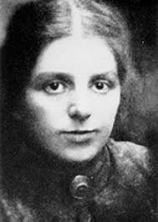
Paula Modersohn-Becker

That the young Franz Kappus, after all this, decided to pursue a military career rather than a creative one is perhaps hardly surprising. It may be that the former presented the least frightening option! Rilke asks such a lot. His poem Requiem to a Friend of 1909 (the year after his correspondence with Kappus came to an end), dwells on the “old enmity / between life lived and great work to be done” (tr. Crucefix). The tragic lament of that particular poem arises from his conviction that the subject of its in memoriam, the painter Paula Modersohn-Becker, had proved herself strong enough to carry forward the huge burden of being an artist and that, therefore, her untimely death (just after the birth of her first child) was an irreparable loss to a world that needs all the true artists it can nurture.

Looking Beyond Paralysis

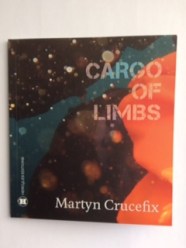
Featured Image -- 14962In lieu of a new blog post, here is a link to the Hercules Editions webpage on which I have formulated a few thoughts about the current lockdown, photography and the (forgotten?) refugee crisis in the Mediterranean. It is a piece in part related to the Hercules publication of my longer poem, Cargo of Limbs.
To read ‘Looking Beyond Paralysis’ go to : https://www.herculeseditions.com/post/looking-beyond-paralysis-by-martyn-crucefix


Everything Moving: Tamar Yoseloff’s ‘The Black Place’

Last week I attended the launch of Tamar Yoseloff’s new collection, published by Seren Books. Tammy and I have known each other for a long while, are both published by Seren and, in her role at Hercules Editions, she has just published my own recent chapbook, Cargo of Limbs. So – in the small world of British poetry – I’m hardly an unconnected critic, but I have the benefit of having followed her work over the years, reviewing her most recent New and Selected, A Formula for Night (2015) here.

In an earlier blog post, I spoke – in rather tabloid-y terms – of the tension in Yoseloff’s poems between the “sassy and the sepulchral”. In 2007’s Fetch (Salt), there were “racy, blunt narratives” which in their exploration of female freedom, restraint and taboo made for vivid, exciting reading. The other side of her gift inclines to an “apocalyptic darkness”, a preoccupation with time, loss, the inability to hold the moment. In A Formula for Night, the poem ‘Ruin’ invented a form in which a text was gradually shot to pieces as phrases, even letters, were gradually edited out, displaying the very process of ruination. Interestingly, The Black Place develops this technique in 3 ‘redaction’ poems in which most of a text has been blacked out (cut out – see Yoko Ono later), leaving only a few telling words. A note indicates the source text in all three cases was the booklet Understanding Kidney Cancer and the author’s recent experience of illness is an important element in this new collection.

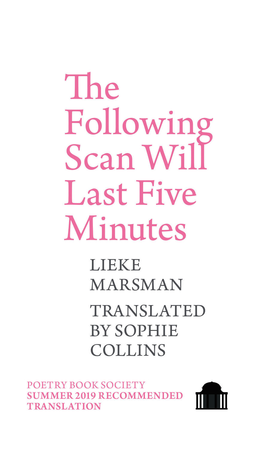
But unlike, for example, Lieke Marsman’s recent The Following Scan Will Last Five Minutes (Pavilion Poetry, 2019 – discussed here), Yoseloff’s book is not dominated by the experience of illness (and one feels this is a deliberated choice). The book opens with ‘The C Word’ which considers the phonetic parts of the word ‘cancer’, as well as its appearance: “looks like carer but isn’t”. But – within its 12 lines – Yoseloff also considers the other C word, “detonated in hate / murmured in love”. The poem is really about how an individual can contain such divergent elements, “sites of birth / and death”. So unanticipated personal experience is here being filtered through the matrix of this writer’s naturally ambivalent gift.

Illness re-emerges explicitly later in the collection, but for much of it there is a business as usual quality and I, for one, am inclined to admire this:

I refuse the confessional splurge,

the Facebook post, the hospital selfie.

I’m just another body, a statistic,

nothing special. Everyone dies –

get over yourself.

So Yoseloff gives us a marvellous send-up of Edward Thomas’ ‘Adlestrop’ in ‘Sheeple’, a central place on the darker side of Yoseloff-country: “The heartland. Lower Slaughter”. There is urbanite humour in ‘Holiday Cottage’ with its “stygian kitchen”, bad weather, boredom and kitsch:

We stare at the knock-off Hay Wain

hung crooked over the hearth

and dream of England: the shire bells,

the box set, the M&S biscuit tin

‘The Wayfarer’ is one of many ekphrastic poems here – this one based on a Bosch painting – but the “sunless land” is patently an England on which “God looked down / and spat”. These are poems written in the last 3 years or so and, inevitably, Brexit impinges, most obviously in ‘Islanders’ (“We put seas between ourselves, / we won’t be rescued”) but the cityscape equally offers little in the way of hope. There is a caricaturing quality to the life lived there: everything “pixilates, disneyfies” (‘Emoji’) and gender relationships seem warped by inequitable power, by self-destructive urges and illness: “I’d super-shrink my dimensions, / wasting is a form of perfection” (‘Walk All Over Me’).

Perhaps ‘Girl’ shows us the figure of a survivor in such a hostile environment, her energy reflecting those female figures in Fetch – “a slip, a trick, a single polka dot” – but the darkness seems thicker now, the lack of lyricism, the impossibility of a happy ending more resolved:

She’s good for nothing because nothing’s

good: sirens drown out violins

and crows swoop to carnage in the street.

As the blurb says, the book boldly eschews the sentimental sop, the capitalist hype, for truths that are hard, not to say brutal. ‘Little Black Dress’ takes both the archetypal ‘girl’ and the author herself from teen years to widowhood in a dizzyingly rapid sonnet-length poem:

drunk and disorderly, dropping off bar stools one

by one, until the time arrives for widow’s weeds

and weeping veils, Ray-Bans darkening the sun.

And it is – unsurprisingly – mortality (the sepulchral) that eventually comes to the fore. A notable absence is the author’s mother, who has often been a powerful presence in previous books. Here she re-appears briefly in ‘Jade’. The stone is reputed to be efficacious in curing ailments of the kidneys and a jade necklace inherited from Yoseloff’s mother leads her to wonder about the inheritance of disease too: “a slow / release in her body, passed down, // down”. Both parents put in a fleeting appearance in the powerful sequence ‘Darklight’, the third part of which opens with the narrator standing in a pool of streetlight, “holding the dark / at bay”. She supposes, rather hopelessly, that “this must be what it’s like to have a god”. Not an option available to her; the dark holds monsters both within and without and not just for the child:

                                                Back then

my parents would sing me to sleep;

now they’re ash and bone. Our lives are brief

like the banks of candles in cathedrals,

each a flame for someone loved;

It’s these thoughts that further the careful structuring of this collection and return it to the experience of a life-threatening illness. ‘Nephritic Sonnet’ is an interrupted or cut off – 13 line – sonnet that takes us to the hospital ward, the I.V. tubes and – as she once said of the city – the poet finds “no poetry in the hospital gown”. Except, of course, that’s exactly what we get. The determination or need to write about even the bleakest of experiences is the defiant light being held up. Yoseloff does not rage; her style is quieter and involves a steady, undeceived gaze and also – in the sequence ‘Cuts’ – the powerful sense that (as quoted above) “I’m just another body, a statistic, / nothing special. Everyone dies”.

It’s this sense of being “nothing special” that enables ‘Cuts’ dispassionately to record very personal experiences of hospital procedures alongside the contemporaneous facts of the Grenfell Tower fire and (another ekphrastic element) a 1960s performance piece by Yoko Ono called ‘Cut Piece’. These elements are ‘leaned’ against each other in a series of 13 dismembered sonnets, each broken up into sections of 6/3/4/1 lines. The fragmentary, diaristic style works well though there are risks in equating personal illness with the catastrophic accident and vital political questions surrounding Grenfell. Ono’s performance piece offers a further example of victimhood, one more chosen and controllable perhaps. What’s impressive is how Yoseloff avoids the magnetic pull of the ego, displaying – if anything – a salutary empathy for others in the midst of her own fears.

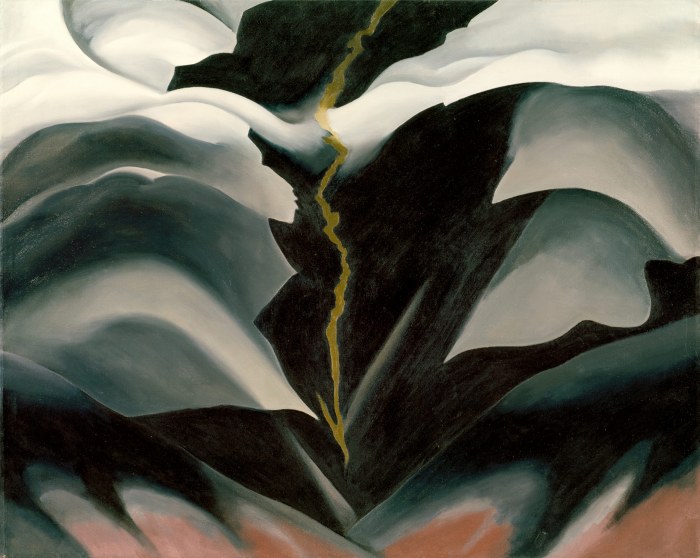
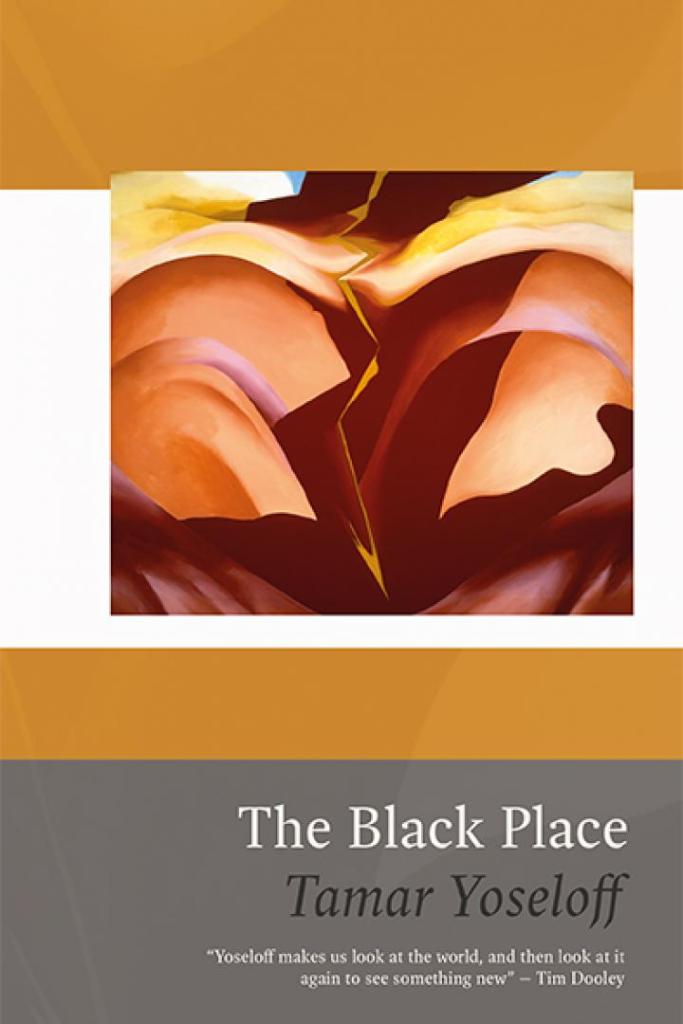
The book is titled after a Georgia O’Keefe picture, reproduced on the cover. O’Keefe’s steady gaze into the darkness created by the jagged relief of the Navajo country is something to which Yoseloff aspires, though it “chills me / just to think it into being”. It is the ultimate reality – a nothing, le néant – though like the ultimate presence of other writers (Yves Bonnefoy’s le presence, for example), can at best only be gestured towards:

We’ll never find it; as soon as we arrive,

the distance shifts to somewhere else,

we remain in foreground, everything moving

around us, even when we’re still.

Along such a difficult path, Yoseloff insists, O’Keefe’s art found “the bellow in a skull, / the swagger in a flower”. And, even in the most frightening brush with her own mortality, the poet will follow and does so in a way that is consistent with her own nature and work over many years.

A Robert Frost Primer or ‘All Life is Cellular’

A few weeks back, I was asked to contribute to an afternoon event in Palmers Green Library, north London, with the title – from Robert Frost’s poem – ‘The Road Not Taken’. It was introduced by Maggie Butt, with readings of their own poetry around the theme by Mark Holihan and Denise Saul. I was also asked to deliver a few thoughts on the work of Robert Frost. What follows is an edited transcript of what I said then and I think of it as a basic introduction for the general reader to Frost’s work and some of the ideas which I see recurring in it. As previous posts have mentioned, I’ve been teaching Frost for a few years recently – thanks to all those students who made me go back and read the poems again!

Despite the apparent simplicity of many of his poems, the real identity of Robert Frost (1874-1963) is hard to pin down. Though raised in late 19th century America, his first book was published in England. Though on the brink of the Modern, a year before the First World War, these poems used plain language and traditional forms. He loved Europe, befriending Edward Thomas – stirring him from prose into poetry – yet Frost sailed back to the US, to farming, north of Boston. By all accounts he was never a very successful farmer, though he often presented himself as talking downright farmer-like common sense. Some find his work consolatory; but he was famously called a ‘terrifying’ poet, a bleak Modernist.

If all this sounds slippery, then Frost took it into his poetics too. He said that, while writing a poem, he was conscious of saying two things at once. But he always wanted to say the first thing so well that any reader who liked that part of the poem might feel able to rest there. Yet, he implies, for those interested in going further, beyond the particular, overt or explicit meaning – say, two farmers re-building a wall between their properties, a man stopping to watch snow fall in a wood, a mower and a butterfly – there is always an ulterior meaning (at least one) that might also be opened up.

At all levels, such defining walls, barriers and boundaries – physical, mental, spiritual – proliferate in Frost’s work. But his view of them is complex. These walls are often porous. But sometimes they can seem impenetrable. I can’t vouch for the accuracy of his biological knowledge, but here is something else Frost repeatedly jotted down in his Notebooks: “All life is cellular. No living particle of matter however small has yet been found without a skin – without a wall.”

On one side, these secure boundaries seem necessary for a successful life – like the wall round all cellular organisms. He would say: “I want to be a person. And I want you to be a person”. But the dangers are obvious. The cellular wall of identity becomes more than a means of self-definition and grows to become an exclusion zone, a solitary place, a state of solipsism. Many of Frost’s figures and narrators are found to be struggling with this state. Yet Frost’s comments about identity, wanting to be a person, wanting you to be a person, in fact continue: “then we can be as interpersonal as you please. We can pull each other’s noses – do all sorts of things”.

So the presence of these cellular walls do not necessarily hold us back. They are as often porous or permeable. Yet they seem also to offer a firm foundation from which we may reach out, we can humanly interact. We can pull each other’s noses. And there is indeed much pulling of noses in Frost’s poems. In particular, he liked to pull the nose of the person he chose to narrate many of his poems. There is very often an irony at work against the speaker. His poems are often more dramatic than lyric.

We might ask why is Frost so concerned about being a person, about the relative security of identity? Because, in other moods, he knows the dangers posed by the absence of any functioning cellular membrane: the leaking out of personality into the surrounding world, of identity dissipating to become nothing, the risk – as it were – of personal extinction.

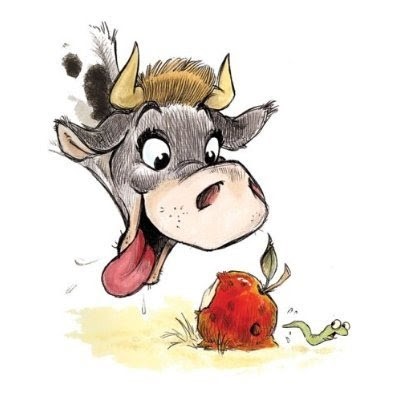
There is a little poem called ‘The Cow in Apple Time’ which (on the face of it) is about a cow who is driven by an unspecified desire to disregard the walls about her pasture. The wall is no more than an open gate to her. She charges through and greedily eats fallen apples, growing intoxicated, her face splattered with apple juice. But in this kind of gluttonous state she grows sick, in pain:

She bellows on a knoll against the sky.

Her udder shrivels and the milk goes dry.

It’s a perfectly satisfying poem about a rural incident – perhaps Farmer Frost, had once witnessed it himself. But there is Frost’s ulteriority too. The cow is consistently described using terms which anthropomorphise her. The wall breaker is perhaps on one level really human, a rebel, a sinner – written in 1914, some have even suggested the cow is an invasive force. However we see her, she is punished for her disregard of, her undervaluing of, those walls and boundaries which perhaps ought to serve to define her life.

Remember this is the same Robert Frost who disparaged the writing of free verse, by many of his more obviously Modernist contemporaries, as trying to play tennis with the net down. The same Robert Frost who disparaged the, then fashionable, interest in Surrealism with its wild leaps over convention, its dislocation of the senses, the shock value of the illogical. For Frost such practices could lead only “to undirected associations and kicking ourselves from one chance suggestion to another in all directions as of a hot afternoon in the life of a grasshopper”.

The cow with the aching stomach is paralleled by a dying peach tree in ‘There Are Roughly Zones’. The narrator has moved “far north” and has transplanted a peach tree and now the northern winter is threatening it. He sits indoors and frets about it, trying to blame the weather rather than himself. But self-criticism arises all the same and it is human “ambition” that gets the blame, that “limitless trait in the hearts of men”. More precisely:

[. . .] though there is no fixed line between right and wrong,

There are roughly zones whose laws must be obeyed.

I love the messy pragmatism implied by “roughly zones”. One of his recurring concerns, Frost said, was with “the impossibility of drawing sharp lines and making exact distinctions” – no red lines, lines in the sand, defined boundaries, but zones of negotiation, places calling for compromise, no fundamental clarity, rather a feeling-out, a region requiring a dialogue.

As in a poem like ‘The Tuft of Flowers’. A man comes to a mown field to turn the cut grass, the hay, to help its drying. He looks about for the man who had earlier mowed the grass:

But he had gone his way, the grass all mown,

And I must be, as he had been, – alone,

‘As all must be,’ I said within my heart

The hermetically cellular, or as we would now say, atomised nature of society seems to be assumed by the narrator. It looks like there is going to be no breaking of boundaries here. But a “[be]wildered” butterfly passes him, looking for flowers that grew there yesterday, now cut down. The butterfly leads him to a “leaping tongue of bloom” left deliberately, out of “sheer morning gladness” by the mower. The narrator hears the message from this “tongue of bloom” which speaks of each man as a “spirit kindred” to the other. It’s as if they now enter into a dialogue, revising the earlier solipsistic observation. Now:

‘Men work together,’ I told him from the heart,

‘Whether they work together or apart.’

There is a rosy-edged hint of sentimentality here perhaps. But the fanciful dialogue between the two men (who actually never meet) represents a successful negotiation into that rough zone between individuals, the cellular membrane is actually permeable, and the result here is consolatory.

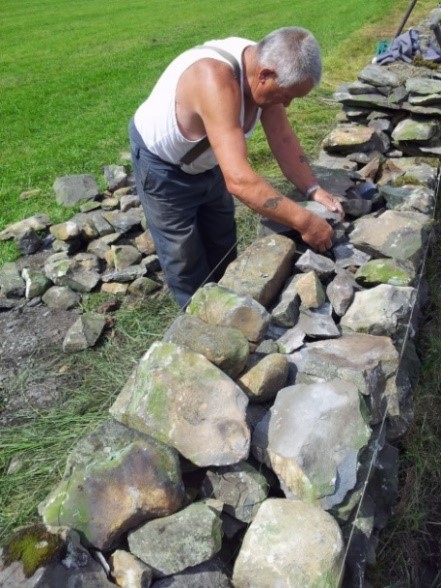
In ‘Mending Wall’, two farmers meet to patrol on either side of a dry-stone wall marking the boundary between their farms. Parts of it are always falling down. They build it back up. But the paradox is that the action of building up what separates them, brings them together each year to perform the task. The wall does not prevent or act as a brake on their relationship – rather it facilitates it – it perhaps is their relationship, what links them. From their respective sides – from their respective identities or persons – they are free to become ‘interpersonal’. But the mischievous, sceptical, modern-minded narrator expresses doubts about the importance of walls, particularly when “He is all pine and I am apple orchard”. His neighbour is a more traditional, unquestioning man, who likes to repeat his father’s advice: “Good fences make good neighbours”. The narrator mocks him (though in silence, in his head) as “an old-stone savage”, lost in actual and intellectual “darkness”. But it is significant that the wall-believer has the last word. For me, it is the moderniser is the one being ironised. If he was a versifier, he’d be trying to write poems with the net down.

Why Frost’s concern with the importance of walls? Because – in still other moods – he has looked into the abyss of experience without them. One example is given in the 16 terrifying lines of ‘Desert Places’. The narrator here seems to have taken the more modern, sceptical wall-mender’s view to heart. It seems there are no bounds here – all have vanished under “Snow falling and night falling fast oh fast”. That note of fear there adds to the nightmare feeling and when the outward-looking eye turns to look within – to find himself – he finds nothing: “I am too absent-spirited to count”. That phrase is an echo of ‘absent-minded’. There is a vacancy within and without – no mind, spirit, self, identity. There is only the concluding, devastating rhymes of “empty spaces . . . where no human race is . . . my own desert places”.  

And if ‘Desert Places’ evokes the desolation of a world viewed in the absence of a relatively secure cell-walled self, then ‘The Most of It’ shows us the horrifying effects of being walled in. In this poem, the narrator “thought he kept the universe alone”. There seems nothing else but him, only a “mocking echo of his own [voice]”. Yet he does remotely feel a desire for dialogue – perhaps just in being human – and does express a desire not for “copy speech. / But counter-love, original response”. But when the universe does eventually break into his consciousness, it arrives not in the form of dialogue or a negotiated relationship but as an utterly alien thing.

It emerges only as a strange, vague “embodiment” that “crashed” and “splashed” towards him and is recognised only by means of a simile. Perhaps it is an elk.

As a great buck it powerfully appeared,

Pushing the crumpled water up ahead,

And landed pouring like a waterfall,

And stumbled through the rocks with horny tread,

And forced the underbrush—and that was all.

There, Frost captures the egoist’s struggle to comprehend what is other than him; followed by the arrogance of his dismissal of it. And perhaps this is a particularly masculine thing. Yet there is no need to attribute these feelings to Frost himself. The speaker is best read as a dramatic representation of one extreme of Frost’s concern for borders and boundaries that are vital for our own selfhood yet must be porous enough to allow for knowledge and experience.

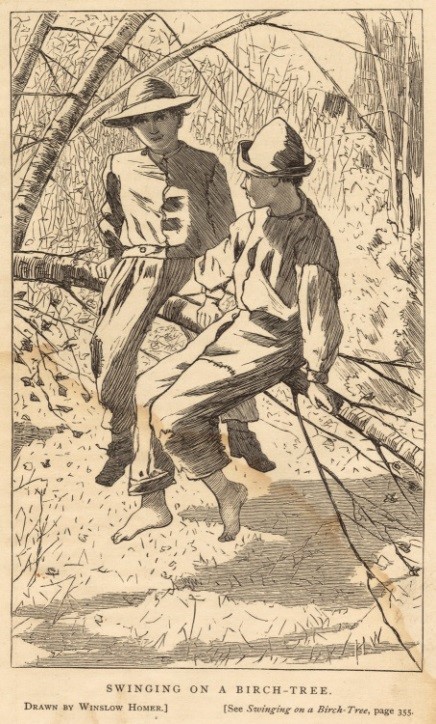
So in ‘Birches’ the narrator remembers – as a boy – climbing slender birch trees, to the top, only to leap out and bend them down with his weight. This swinging of birches can be seen – ulteriorly – as representing Frost’s belief in those negotiated rough zones of a life. We climb up, out of our element, but not too far:

It’s when I’m weary of considerations,
And life is too much like a pathless wood
Where your face burns and tickles with the cobwebs                                   
Broken across it, and one eye is weeping
From a twig’s having lashed across it open.
I’d like to get away from earth awhile
And then come back to it and begin over.
May no fate wilfully misunderstand me                                                              
And half grant what I wish and snatch me away
Not to return. Earth’s the right place for love:
I don’t know where it’s likely to go better.

And if we find this frustratingly ambivalent – Frost sitting carefully on the fence – then he often rubs our noses in it. ‘Stopping by Woods on a Snowy Evening’ famously concludes with two lines which are identical. For me, the repetition introduces greater ambiguity into the moment. Does the narrator stop, perhaps to die, entranced by the snowfall? Or does he shake himself up, turn back to his life in the village, his roles and responsibilities?

Whose woods these are I think I know.
His house is in the village, though; 
He will not see me stopping here
To watch his woods fill up with snow.

My little horse must think it queer                                           
To stop without a farmhouse near
Between the woods and frozen lake
The darkest evening of the year.

He gives his harness bells a shake
To ask if there is some mistake.                                                
The only other sound’s the sweep
Of easy wind and downy flake.

The woods are lovely, dark, and deep,
But I have promises to keep,
And miles to go before I sleep,                                                    
And miles to go before I sleep. 

Frost throws the question back to the reader. What Frost knows is that we do not keep the universe alone. We are parts of a whole – but the borderlands are uncertain – sometimes we cross them and lose touch with ourselves, at other times we too easily accept them and fall into egotistical isolation. There maybe be a happy medium – but Frost’s dynamic poems suggest the truth is we can never find and hold to that; we are always involved in the complicated fraught business of negotiation, of swinging birches, of chasing butterflies, of building walls that will promptly fall down again.

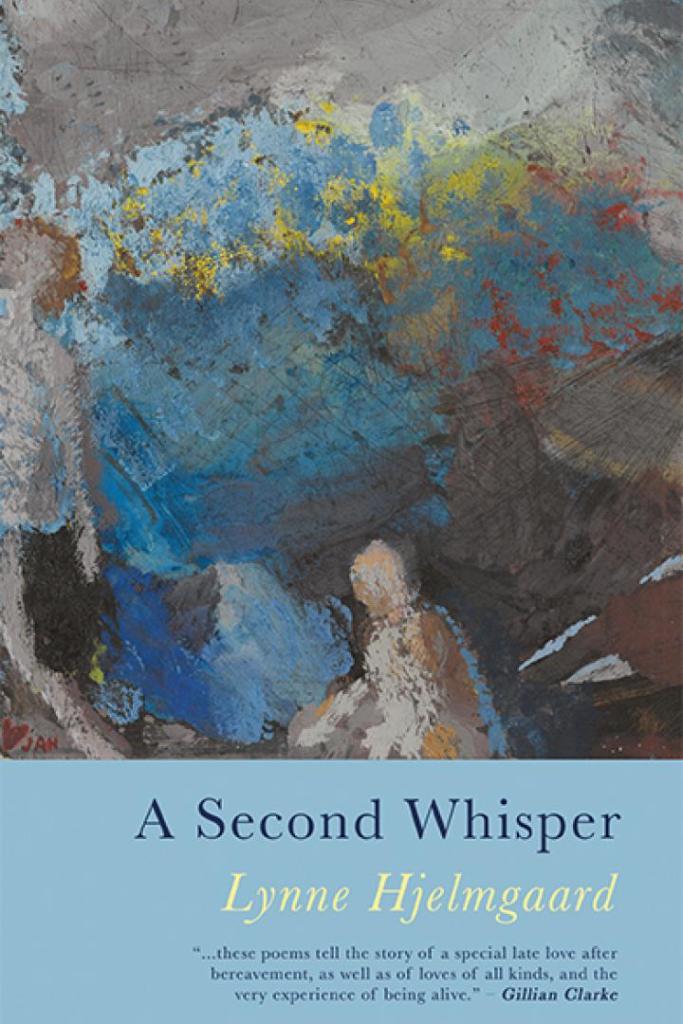
A Thief in the House: London Launch of Hjelmgaard’s ‘A Second Whisper’

Last night I was at the Poetry Café in Covent Garden for the launch of two new collections from Seren Books. Lynne Hjelmgaard was reading from A Second Whisper and Mary J. Oliver was launching her debut collection, Jim Neat: the Case of a Young Man Down on His Luck. Oliver’s book is a curious, thought-provoking mix of family research and prose/poetic fictions. But I’ve known Hjelmgaard for a few years now as a workshop colleague and as a friend of Dannie Abse and I wanted to gather some thoughts here on her new poems.

In her playfully titled poem, ‘Ode to a Danish Lamp’, Lynne Hjelmgaard constructs a paean to a piece of electrical equipment which ends rhetorically, “Why do you move me so?” Some clues to the answer are scattered through the poem; they lie in comparisons. The lamp is an example of “Nordic metallic cool”, beside which the speaker – “a mere human” – feels humbled. She and the rest of the room, we are told, arrange themselves about the lamp which hence serves as a focal point and even a source of “answers”. It’s as if the lamp is wired up to a clearer, less divided, perhaps purer world:

[. . . ] the charged interior, a territory,

where no country nationality race

or religion has any significance.

In contrast, the human figure is more embedded in a world of time, place and quotidian specificity while the lamp emerges with its “fine, oh so thin aluminium rim” as a denizen of a less troubled realm. The speaker is moved because excluded from such a realm and the majority of the poems in A Second Whisper focus precisely on our more compromised, familiar world, particularly the ‘merely human’ experiences of time, memory and loss.

Without being a particularly philosophical poet, Hjelmgaard writes as someone who is an “expert at loss”. Another less typical poem describes – in great detail – Brooklyn Bridge and the area around it (the poet was born in New York City). She remembers sailing out under the bridge:

Manhattan is a chain with many links,

some are broken, lost and never repair,

but others can be retrieved even at a distance.

For what can shine so brightly at sea

but a city, once loved, left behind?

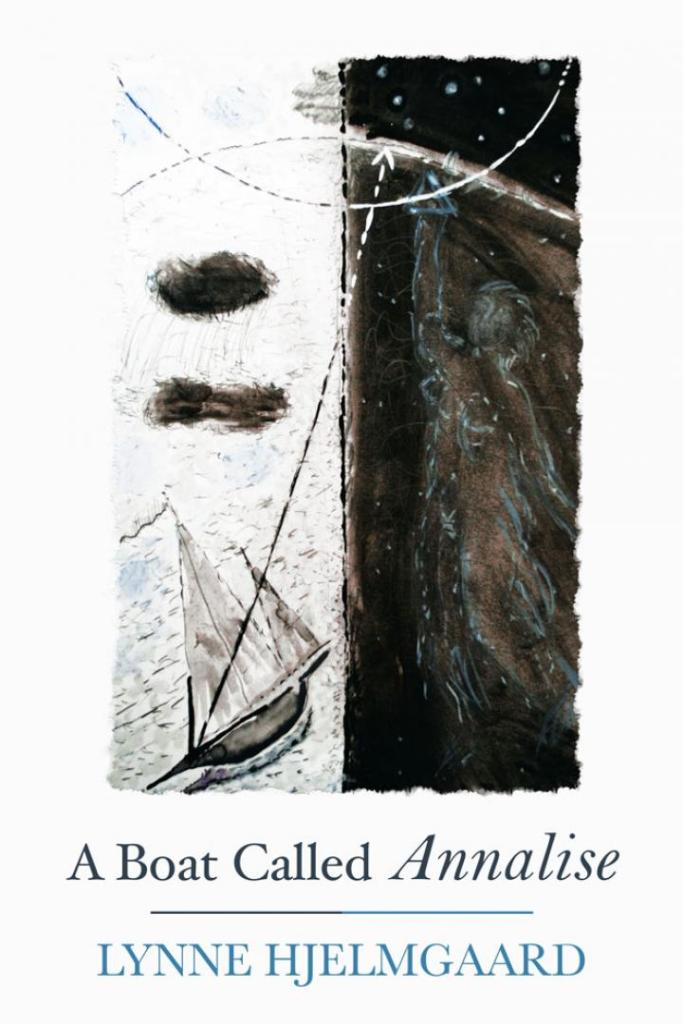
Hjelmgaard’s focus on links lost or remembered is probably hard-wired into her constitution (these thematic roots usually are) but it has also been provoked by biographical influences. Her 2011 book, The Ring (Shearsman Books) was dedicated to the memory of her Danish husband, Stig – who died in 2006 – and followed an American woman’s travels around Europe, mourning and negotiating that loss. Dannie Abse, among others, praised those poems: “Widowhood allows them to acquire a poignant universality”. Five years later, A Boat Called ‘Annalise’ (Seren Books), was full of more poems of remembrance, evoking the sea journey the newly married couple made out of New York to Europe, via the Caribbean.

There are further poems written to and about her husband in this new book. In ‘As We Silently Agree’, the husband appears to the widow, “in some kind of afterlife”, and is seen busying with a boat’s anchor chain, searching the ship’s log and weather charts. This is perhaps a dream poem:

Our fingers clasp in recognition

as we silently agree:

what does it matter now

if you don’t keep the course?

And ‘Scorpion Hill’ may be another example of dreamwork, the wife this time revisiting a once-shared house in the Caribbean. Its final image is of many moths clustering round “a single light bulb / left on during the night”. These are fine poems of time and sustaining memory – that bulb still burning – in which the past and those lost within it are shown to revisit the survivor.

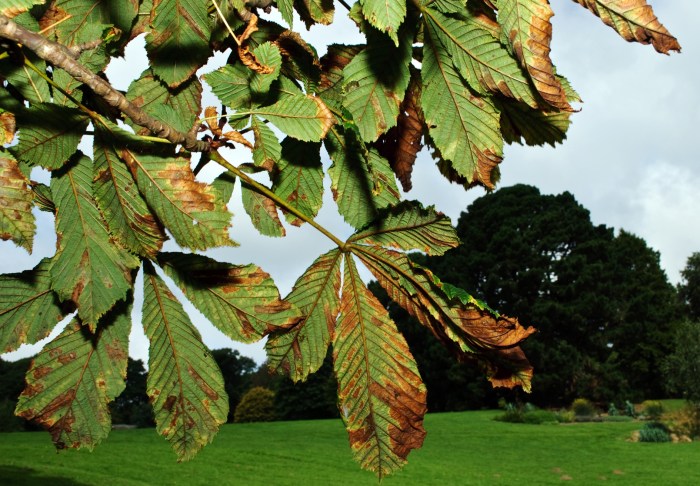
Hjelmgaard’s treatment of this traditional theme is neither religious nor consolatory in any facile way. The pain of great loss is heartfelt and yet she manages to persuade the reader – it’s less intellectual than that, maybe she draws her readers in to the actual experience – that what lies in the past still retains is power to evoke pleasure and even that the future’s gifts are to be welcomed, even anticipated. In ‘To a Chestnut Tree’, addressing the tree in its autumnal state, the narrator is sure, “There will always be another one. / And another. // Loss can be moved through like a room”. What a magnificent line that last one is. There is a wisdom in it, however modestly it may be presented.

Time takes – but time also provides. Another poem of trees has a fir leaning eventually into a “beloved palm” – though it may take a century or two of slow growth. A lonely tamarisk on a cliff top also has the capacity to “wait until it can drink / from the bay eighty feet below”. Hjelmgaard finds her themes in the smallest incidents. Unpacking a suitcase after a journey, she finds she has brought two extra items home with her. One is a fossil of a snail which seems to represent a determined persistence through time (60 million years perhaps, in this case). The other – a flighty stowaway – is a spider which she finds “already busy / making yourself at home”. The spider evokes an improvisatory optimism, an adaptability, even an adventurousness, which I see as some of the most distinctive elements in the themes of Hjelmgaard’s work.

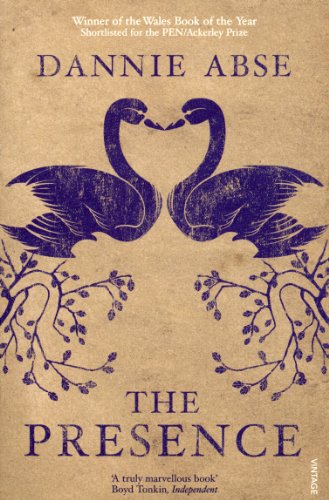
It’s these qualities to which Gillian Clarke is responding in her comment on A Second Whisper, where she finds in the book “the story of a special late love after bereavement”. In recent years, the British poet who has written most powerfully and movingly about bereavement and the encroachment of the past into the present is Dannie Abse. This is from his poem ‘The Presence’ about the loss of his wife, Joan:

It’s when I’m most myself, most alone

with all the clamour of my senses dumb,

then, in the confusion of Time’s deletion

by Eternity, I welcome you and you return

improbably close, though of course you cannot come.

The opening 14 poems of A Second Whisper explore the loving relationship that sprung up between Hjelmgaard and Dannie Abse after the deaths of Stig and Joan. Her opening prose piece takes us directly into everyday details. The two bereaved poets meet: “And for a time it was the four of us. Though one day, without ceremony, we noted their absence”. Thus set free, the ones still living proceed, though along no clear path, “wherever poetry and Eros chose to take [them]”

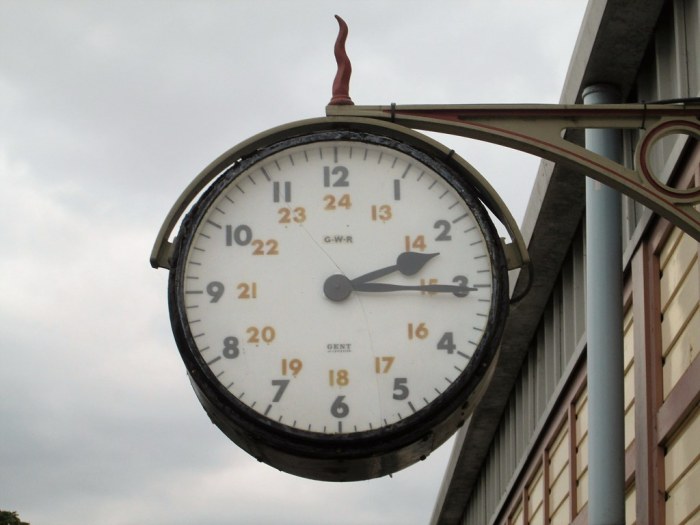
Even at their first meeting – on a train journey back from the Torbay Poetry Festival – the presence and absence of time was notable. Minutes were not to be wasted in the presence of the older poet, says the younger narrator. But mysteriously – this is in late October – the waitress at the station café is seen taking away the clock to change the hour. A photograph of the two poets at a reading shows the younger woman “less sure of herself”, while Abse is more comfortable with the attention. But at 85 years old, Abse begins appearing in these poems as more and more in decline. “Aged and dying you grew more tender”, as ‘A Second Whisper’ puts it. In this poem – as in several others – Hjelmgaard is visiting Abse at home.

I knew just how to open your front door quietly.

Its lock a whisper, a second whisper to shut.

This image – absolutely precise in its remembrance, yet also powerfully suggestive – is like the earlier line about walking through loss as through a room. The first whisper has a respectfulness, concerned with quietude, with the sensitivity of the artist, the closeness of death. The second whisper is full of ambivalence: protective perhaps from the noisy, nosey world, wanting to secure the intimacy, wanting to defend the loved one from the inevitable, yet a foreshadowing of that very inevitability.

‘A Thief Is in the House’ has death portrayed as an invader, breathing heavily, thumping up the stairs to the dying figure whose “eyes [are] prepared // for nothingness”. But these poems are not overwhelmed by grief. As if taking a leaf out of Abse’s own poems of mourning and remembrance, Hjelmgaard’s predominant tone is one of recall and revisiting – even of re-visitation. Walking alone on Hampstead Heath, she hears the lost lover chanting a Lorca poem; because one day they sheltered under an awning on Golders Green Road, every time it rains now, “the rain /stops everything / to think of you”. And in an exquisite lyric, ‘Speak to me Again at Dusk’, Hjelmgaard yearns to resume her conversations with the dead poet, yet her tone – which might have been one of pleading and despair – in fact retains a clear appreciation of the lasting value of what has been and a pleasured openness to the present (hear those noisy roosters in a moment!). Such deep-grained attitudes seem to have been a mutual common ground between these two writers and perhaps was one of the constitutive elements in their late-flowering love:

These lines among many lines

are words just for you

and the roosters that speak them

just before dawn.

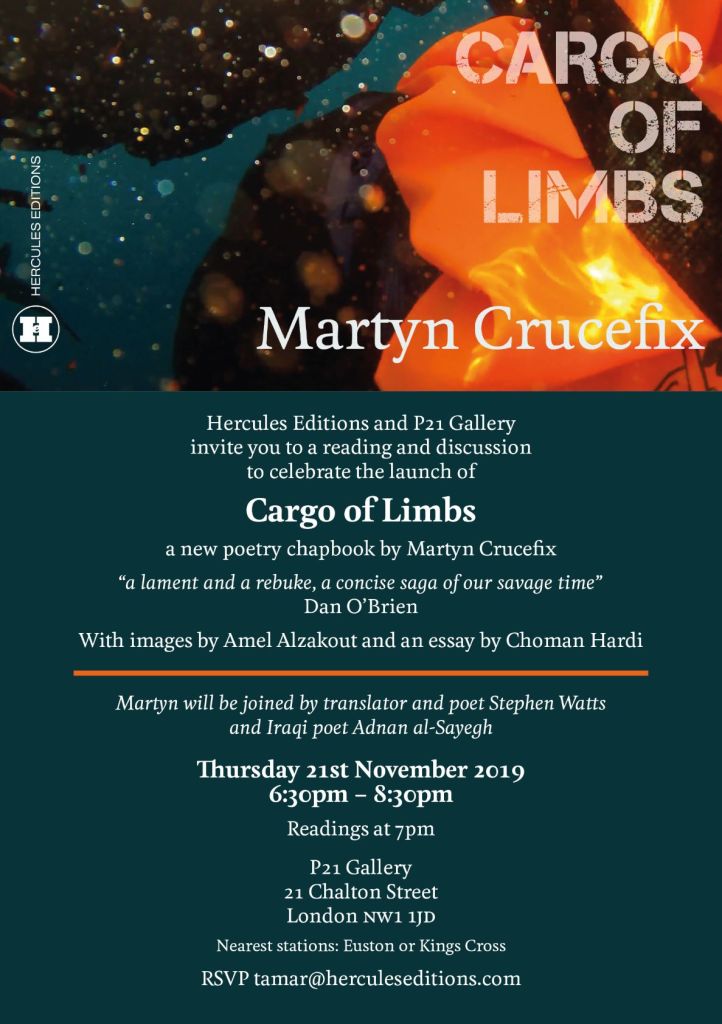
‘Cargo of Limbs’ launches Thurs 21st November

Apologies for the relative silence from my blog. I have been busy preparing and working to propel into the world two new books of poetry. The first out has been These Numbered Days, my new translations of the GDR poet, Peter Huchel, published by Shearsman Books.

The second book will be published by Hercules Editions, It’s called Cargo of Limbs more details of it can be found here. I’ll also post the launch event details below – it’s an open and free event and I would be delighted to see you there.

A Workshop with John Keats

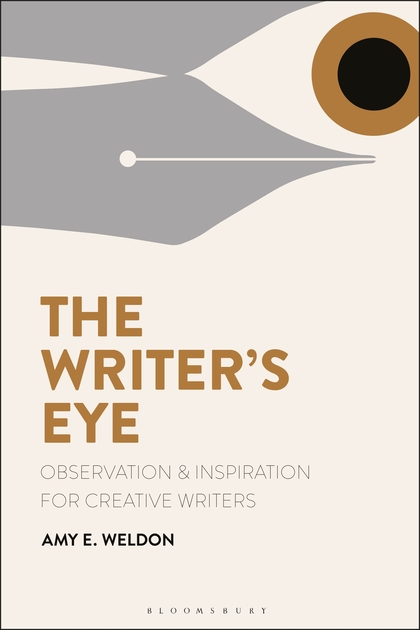
If you ask them, most teachers are very happy, occasionally, to replace their usual mask with the one of an eager student. I don’t often get to participate in writing workshops as a consumer, but when I do it’s always fascinating. For the last one I took part in, I chose it because of its intriguing promise to use Shakespeare’s work as its starting point. Last weekend I was drawn to Amy E. Weldon’s workshop at Keats House which promised to do the same with Keats’ work.

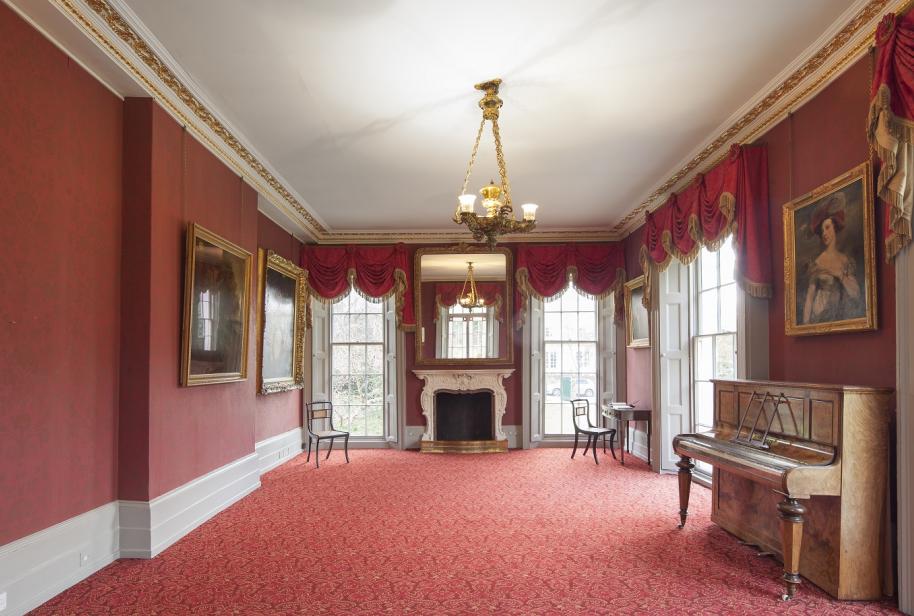
Chester Room resized

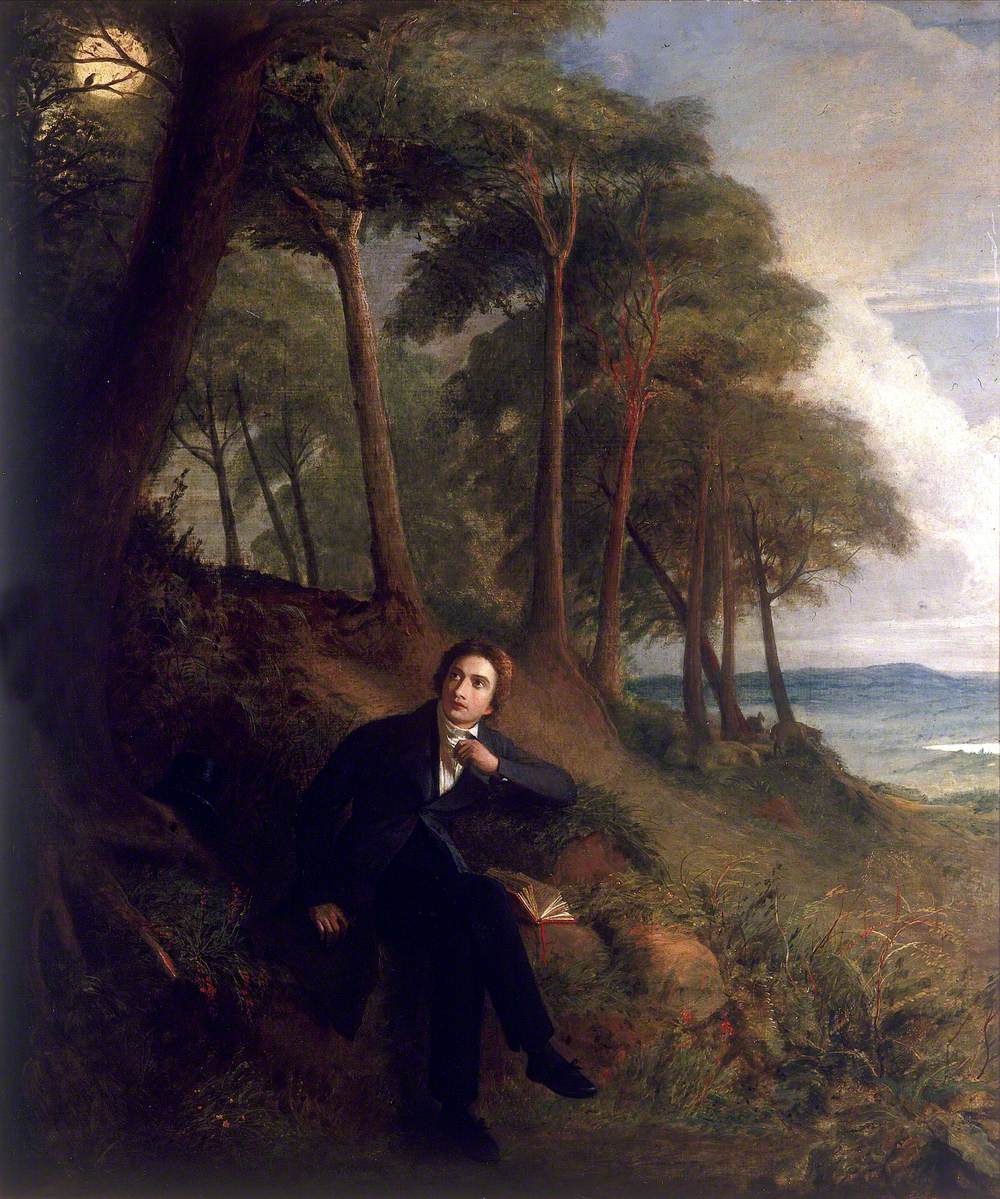
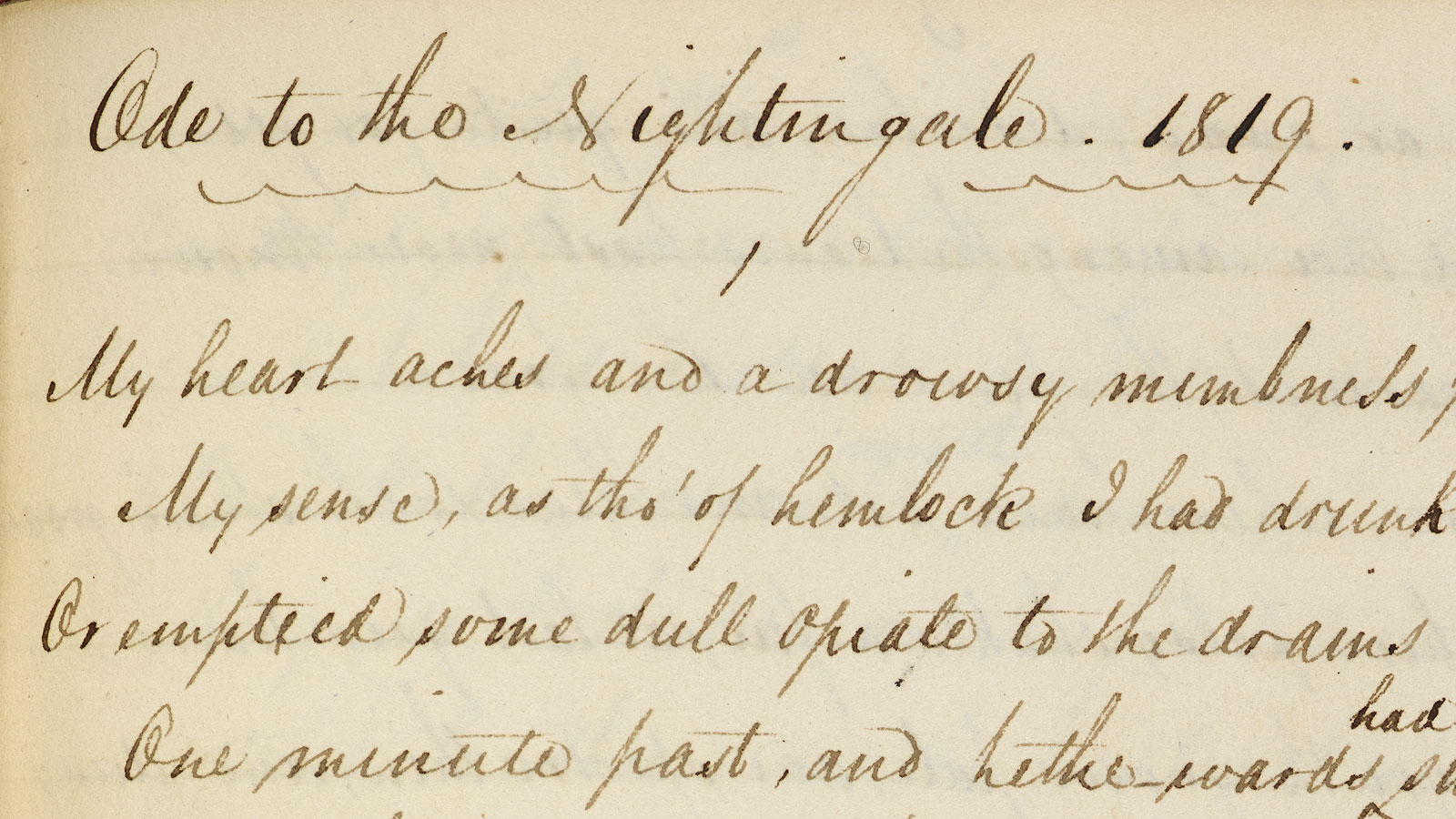
This event was part of Keats House’s bicentenary celebrations and a dozen of us gathered in the atmospheric Chester Room on a sunny day (Keats gazing down at us from Joseph Severn’s painting on the wall). Amy Weldon – a Professor of English at Luther College, USA, whose book on creative writing has recently been published by Bloomsbury – was very good at reminding us of the presence of ‘Brother John’ in the surrounding fabric of the house and its beautiful gardens, where he wrote his ‘Ode to a Nightingale’. Probably no-one there – teachers, journalists, writers of poetry and teen fiction, autodidacts – really needed it, but she also kicked off with an enthusiastic reminder of the importance of “books and ideas”. And it was a number of Keats’ own ideas – as expressed in his letters – that we discussed first of all.

Severn, Joseph, 1793-1879; Keats Listening to a Nightingale on Hampstead Heath

I’ve written elsewhere on this blog about the importance of Keats’ ideas for my own work and it powerfully struck me again, joining Amy and the other workshoppers in considering them, how coherent they are, despite being expressed and developed in scrawled letter form over a period of 2 or 3 years. From his ‘taking part’ in the sparrow’s existence, or that of the stoat or field-mouse, to the belief that poetry ought not to startle or amaze with itself (but with its subject), to his understanding that “extensive knowledge” is what gives a writer the kind of shoulders that are sufficiently “fledged” to enable creative flight, to his brilliant, improvised description of the gathering of such knowledge in the letter written in Spring 1819. The latter is the vale of soul-making letter to his brother George in which our identity (Keats’ word is ‘Soul’) is accumulated/created through the heart’s emotional encounters with the world. Without such encounters – the sparrow, the stoat and field-mouse, and this is what he means by extensive knowledge, we must extend ourselves in such encounters with the Other – we are not able to suck an Identity from experience and – like children who die tragically young – we have had “no time to learn of, and be altered by, the heart”.

Such encounters – vigorously and passionately advocated by the workshop leader – formed the basis for the creative side of the rest of the day. We were sent outside to roam around the garden in search of sensory images, in particular, the May-time flowers in their blooming colours and scents, the birdsong, the noise of traffic or quiet conversations of other visitors, the smooth or veined surface of leaves, the rough gravel paths. On the day, I didn’t taste anything myself – perhaps others successfully used all five senses! We jotted as if our lives depended on it – the task made easier by Amy’s insistence on the messiness of writers’ notebooks, on the provisional nature of whatever it was we were writing.

crop-keats-ode-to-a-nightingale

Amy’s approach on this occasion was to direct us towards fairly openly/widely-defined tasks – as in this first one – rather than setting out a framework within which to work. Such frameworks might be formal or linguistic (repetitions, the use of particular words and so on) or models derived from other writers and can often lead workshop participants towards experimenting, bumping us out of our usual modes, forms and tones. Nevertheless, we all returned from the task with plenty of notes and – for those who attend such events – Amy’s suggestions as to next steps were familiar enough. Circle the “interesting” moments in what you have written down (interesting here is wholly self-defined). Find and remove editorial (directive) words like ‘beautiful’. These latter tend to be adjectives and adverbs and, if not removed, they were to be replaced with more directly sensory words – so not ‘beautiful’ but ‘lime green’. Another suggestion – which I found very difficult to put into practice – was to remove all words of more than one syllable. But you can see the direction of travel here: the valuing of plainness and the directness of sensory experience over anything close to judgment or the writer looking to ‘persuade’ the reader.

dav

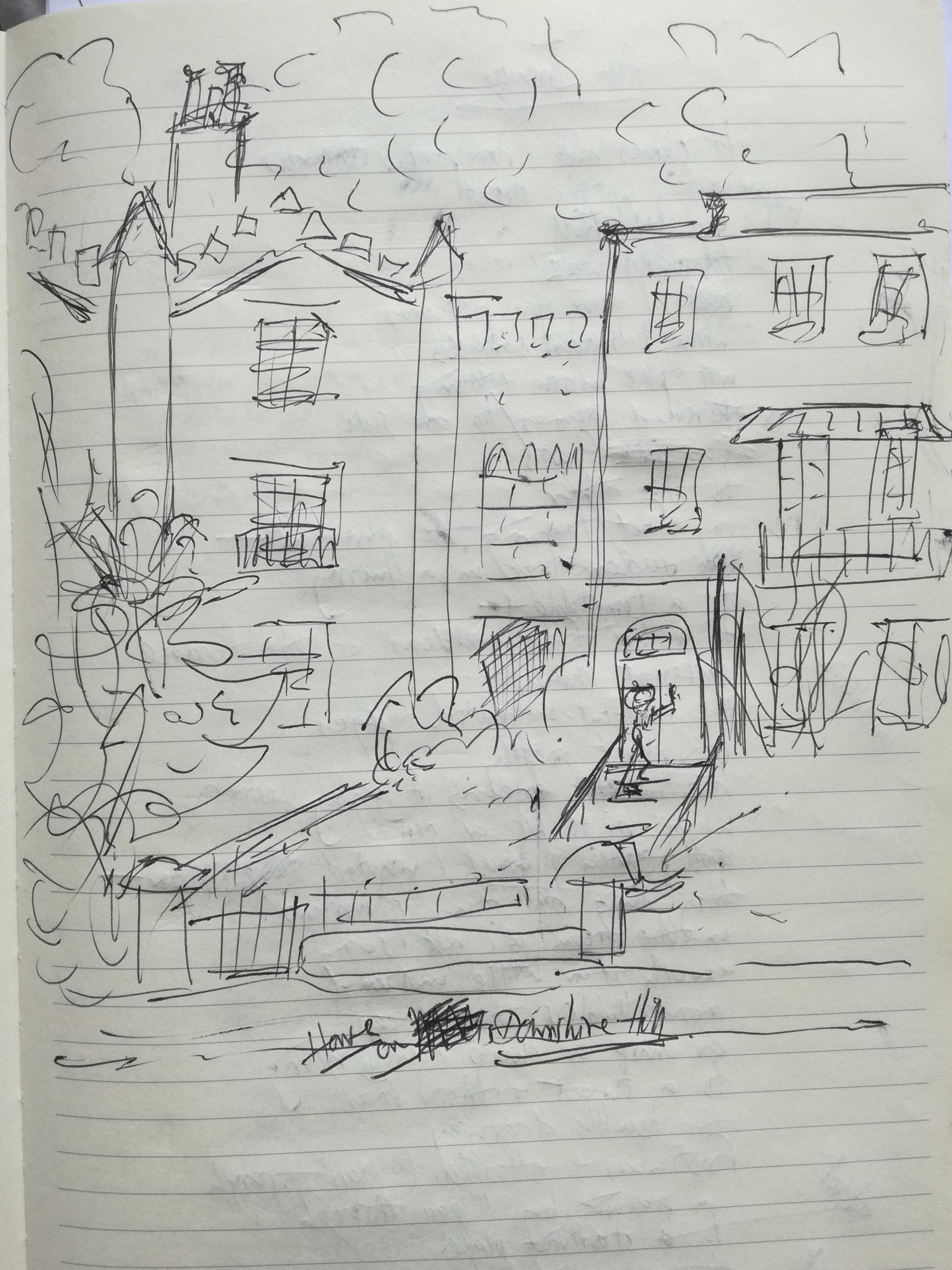
During lunchtime – apart from feeding and drinking – our tasks were to make a list of ten things we “noticed” and to actually make an attempt to draw one thing. In each case – Amy was always clear on this – anything was to be grist for the mill, so we had to resist bringing in censorship or evaluation: two people wearing identical hats; the type of cakes on sale down the road; overheard comments from passers-by; what they were promoting at Keats Pharmacy near the station. I drew a house on Devonshire Hill. Very badly.

Once we’d gathered again, Amy quoted John Ruskin on the value of drawing, I think to the effect that even writers ought to try to draw as in doing so they begin to see more “brutally” or clearly. I can’t find the actual quote itself but, having drawn my house on Devonshire Hill, I can testify that he’s right. It makes you look first – language comes second. However dismal the results, I’ll try drawing again. We also shared some of our ten observations – though interestingly neither the observations nor the drawings were developed any further on this occasion.

download (2)

Instead we read an extract from Amy’s book, The Writer’s Eye. The extract suggested that an ‘image’ is a mental picture (probably from the past) that releases emotions into your mind in the same way as a bunch of mint leaves from a garden releases flavour and colour when steeped in water (good image). These sorts of mental images can be starting points for poems or stories – much more so than (the common colloquialism of) starting with an ‘idea’. The latter tend to be dead, whereas the ‘image’ is by definition enlivened with emotions. So our next task was to find such an image in ourselves and to write on it (again our instructions were open as opposed to delimited or framed). Later we had the chance to re-cast what we had written – perhaps re-starting from ‘interesting’ things we had again circled ourselves.

There had so far been no reading round of anything we’d written (apart from some of the 10 things observed over lunchtime). Eventually, we were put into pairs to give some feedback on the final piece written, now read aloud. Amy’s instructions here were interesting. The listener was only to offer two types of comment. The more positive one was in the form of ‘More like this’. And to express reservations, rather than ‘I don’t like this’ or ‘I don’t get this’, we were to say simply, ‘This stops me’. I thought both these formulations worked well and I would use them again.

download (1)

It was a good day and I’m sure we all came away with several pages of material to work on. One of Amy’s stories stuck in my mind and, though about a prose writer, is applicable to poetry too. A friend of hers goes to a burger joint. Over the grill, with his back to the customers, the owner is flipping burgers, not looking round. The friend gives his order. Still the guy goes on flipping burgers, not looking round, not responding. After a moment or two, the friend orders again, verbatim, just to be clear what he wants, perhaps just a little louder. Still without turning round, the owner says simply: ‘Yuh said that already’. The writer friend, I presume, did get his burger, but he also came away with the guy’s phrase as a memorable maxim for those of us who write, then out of our anxiety to communicate, to be understood, write it again: ‘Yuh said that already’. Time to pick up your editing pen . . .

9781350025318

‘The Water’s Music’ as poem and Slow Radio

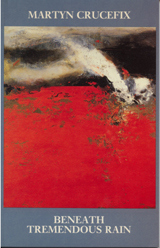
I was taken by surprise last week when BBC Radio Three contacted me to let me know that a line of poetry from a piece I’d published in Beneath Tremendous Rain back in 1990 has been used as the starting point for a Slow Radio programme, broadcast on the 17th May 2019, but available here for a month or so.

btr-cover

The connection was radio producer, Julian May, who I have worked with on several BBC radio programmes over the years. If you follow the link above, you’ll see Julian was responding to the opening two lines of the sequence of four poems which I will post in full below. His aim was to create a piece – ‘The Water’s Music’ – from recordings of the natural world.

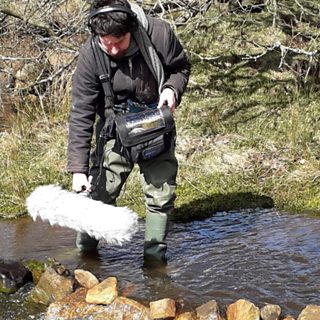
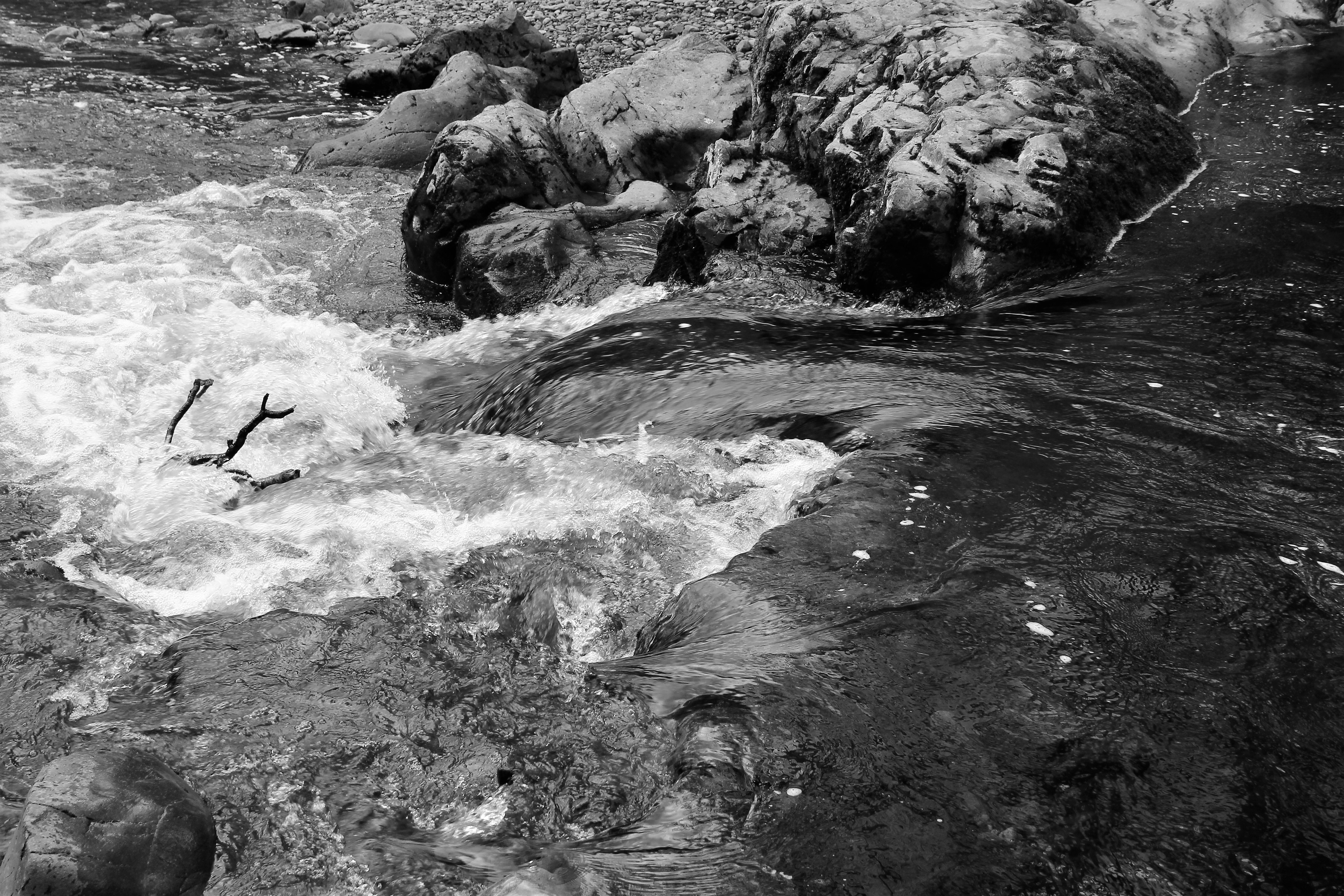
Do listen to the programme – it’s just 30 minutes in length and the first half of it consists of Julian and the sound artist and musician, Tim Shaw, splashing about in a Northumbrian burn to record the astonishing variety of sounds produced by it. This is all a little bit bonkers, of course, but the sense of the great outdoors, the evocation of the water’s flow – beside, across, above and below – is marvellous, and does what Slow Radio often does, opening out the listeners’ sensibility in a playful, vivid and open-ended fashion.

p079hj31

The final, edited piece begins at 15.30 if you wanted to listen to that bit alone. I found it curiously moving that a thought – and a form of words I had in mind so many years back – has now been given aural form. The ‘music’ is also brilliantly in keeping with the poem. As you’ll see below, the epigraph is a quote from Marc Chagall, putting a premium on fluidity as opposed to precision and the idea that the artist/writer’s role is to approach something which is really inexpressible is a core belief that has remained with me over the years. The culmination of this view of art (I can now see) is my version of the great Ancient Chinese classic text the Daodejing which I published with Enitharmon in 2016.

As expressed in the poem, water still remains a god for me – I can never pass a fishmonger’s stall without stopping to gaze at the “wealth of silver”.  The interesting graveyard inscription in the second poem (“Your ship, my love, is now mored / hed and starn for a fuldiew”) seems to be there to represent the fixity that all the images of water are in contrast to. Its words still affect me greatly: the lover’s desire for the permanence of what is quintessentially human being gradually eroded by the rain and the years. I will have had Thomas Hardy partly in mind, I’m sure, although the inscription I think is probably one I saw in Ireland many years ago.

IMG_1838 #2

The third poem contains memories of the Canary Islands – the island of Gomera, much more of a tourist haunt now than it was back then – and of the English Lakes in the fictional waterfall of Swirl Force, surely a version of the (again much-visited) Aira Force, beside Ullswater Lake (the same lake that recently featured in the concluding poems of my blog-posted but as yet unpublished sequence ‘Works and Days of Division).

I’m now amazed at how ‘Daoist’ the fourth and closing poem seems. It is a shock – largely in the sense that perhaps one keeps on re-writing the same poem for a lifetime. The concluding lines certainly express a great deal about how I’ve viewed poetry in the ensuing years – a grasping towards something which I know will always remain elusive; but achieved only through language – that monument to the human wish for and effort to achieve greater control and precision – can something of the fluidity of what is real be evoked: “I carry something of water / that in my hands must leak away – see / its silver threads ceaselessly falling.”

Here’s the poem in full:

Water Music

Divine fluidity, now that is truly precise – Marc Chagall

1.

I am a potter whose habitation

is beside the water’s music.

Its glittering’s, its clear truckling’s

endless fascination for me

might be the pull of like to like,

the riptides and rivers of my

almost nothing but water body.


Someone has said it’s the lure

of oblivion, pressing me to bow

and snort the sharp stunning solid

of water into my head,

that with a brief flickering

of its long-fixed content

would scour my mind clean forever.


Perhaps. Or something still

unevolved, still amphibian, wanting

to be rid of this self-consciousness

that cripples me – to shiver

a moment with mother-of-pearl,

folding of currents, sands, slime,

the swordfight of refracted rays.


At least I know my fascination

for the fishmonger’s wealth of silver,

that he is a diversion I often make,

though I cannot catch

any message his charges bring.


2.

Water has always been a god.

I fell in love with it as a boy,

would sit close by with the dusk,

determined to hook from it specimens

and secrets, calling to it

with words I’d let no adult hear.

Its glassy voices broke out

though too obscurely for a reply.


On the flaming beach at Thalassa,

where the crumbling glint of waves

marks the sea’s edge, I once

wanted to meet it open-mouthed,

though not driven by any love

of the cold confines of the drowned.

I hoped that I might simply

receive the unbounded horizon.


At the graveyard there is a stone

set by a girl for her dead sailor:

Your ship, my love, is now mored

hed and starn for a fuldiew.

Below, the etched ship is lashed hard

to the quay – all else has grown

too old and faint to be understood.

The rain is rubbing her words away.


3.

Then it’s everywhere with beauty,

at one with the darkness and moonlight

of the old poets for it transports us.

But I’ve seen it bending an iron bar.

The quiet cowl of October’s fog confuses,

comes to question the formulations

we keep – like the traveler who told me:

the hills of Gomera disappear for days

till the rain washes its own window clear.

At Swirl Force, under whitening hammers

of waterfall, everything is broken loose

and then the clouds’ anchors are weighed

and the dance starts up over the water:


every swollen-cheeked changeling face

stares at itself and floats away

with its glimpse on the heart of things.


4.

In my coercive dreams, there I am

pouring water into every available bowl

and setting them down as finished works.


I will have things as I want them,

though it is clear from whatever place

the water comes the bowls suffice –


though set to the river, their contents

fly to its night, are lost completely.

The river takes all that comes.


The river gives all that there is.

For I am a potter whose habitation

is beside the water’s music, who is


driven to his creations just as

the river is to its own. When I clasp

the rounded belly of a brimming bowl


I carry something of water

that in my hands must leak away – see

its silver threads ceaselessly falling.

IMG_1834

This Thing Called Bhakti: Vacanas and Ted Hughes

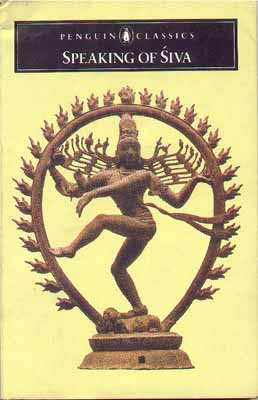
Sometime before 2015, I picked up an old copy of a Penguin Classics book called Speaking of Siva. Originally published in 1973, I liked the cover (a wonderfully rhythmic, eleventh century bronze figure of Siva as god of the dance) and flicking through it I liked the look of the brief, irregularly-lined poems inside. I lack a god but feel an appetite for the spiritual and, since my excitement and delight in translating the Daodejing texts for Enitharmon, I am always looking for something to feed that hunger. I found the poems inspiring (I was not the first to do so) and especially early in 2016 I wrote versions and impromptu original poems ‘in the style of’. These were laid aside for a couple of years, but I have recently returned to them – partly under pressure from the historical moment we find ourselves in, living in this most disunited of kingdoms. I hope to publish some of the results soon. Meantime, I was astounded later to discover the influence of this same little book on Ted Hughes. Here’s that story . . .

ramanujan_speaking_of_sivaOne day around 1973/4, Ted Hughes bought or was given A.K. Ramanujan’s just-published Penguin Classics collection of translations entitled, Speaking of Siva. Ramanujan was presenting to the English-speaking world a collection of free verse lyrics written in India around the 10/12th century. Hughes quickly wrote to his friends, Daniel Weissbort and Lucas Myers, urging them to read the book as well. A notebook survives with Hughes’ many creative responses to these still relatively little-known poems. Jonathan Bate has argued that Hughes found these poems attractive because they “squared the circle of being both depersonalised (tapping into the divine, the mythic, the archetypal patterns) and highly personal: “They are uttered, not through a persona or mask, but directly in the person of the poet himself”” (Bate, p. 338 and quoting Ramanujan).

Hughes later wrote to Ekbert Faas that he had first read Ramanujan’s translations after suffering from a chronically sore throat for about a year. He suspected that he might have cancer and “began to write these vacanas as little prayers”. Some of these poems are the only parts of Gaudete (1977) to be selected for Hughes’s Collected Poems (2003). The language of these poems is lean and starkly beautiful often addressing the theme of transformation in violent and graceful modes, often ambiguously autobiographical:

Once I said lightly

Even if the worst happens

We can’t fall off the earth.

And again I said

No matter what fire cooks us

We shall be still in the pan together.

And words twice as stupid.

Truly hell heard me.

She fell into the earth

And I was devoured.

(Gaudete, pp.181/2)

The term ‘vacana’ means something spoken, speech, or a word uttered, as in our phrase ‘my word is my bond’. And vacana poems consist mostly of simple, direct, honest speech – they have no formal metre or rhyme, and very little punctuation – and they present themselves as spontaneous, authentic, plain engagements with the divinity, in deliberate contrast to more established channels of worship. As Ramanujan’s title suggests, they are written to the god Siva and – at least start out from – the ideal of a mystical relationship or process of becoming one with the god or the divine Creative Source.

220px-A.K.RamanujanPic
A. K. Ramanujan

So they are a form of worship, the devotee speaking directly and truthfully to the god as one might speak to another person – a husband or wife – using natural, colloquial language to express love and devotion, but significantly they also give vent to anger, puzzlement and despair. The poems are full of repetitions, refrains and paradoxes and, although they are spontaneous and passionate and grounded in common everyday experiences and images, there is a spiritual meaning in their worldly metaphors. One common element of repetition is the naming of the God – for Dasimayya this is “O Ramanatha”, for Mahadeviyakka it is “O lord white as jasmine”. Another frequent trope is a concern about the inadequacy of language; no words or image or metaphor can adequately describe the mystery of the god. Above all, vacana poems are intensely personal forms of religious devotion which not only avoid formal creeds, rituals and dogma but frequently criticize such orthodoxy as misguided, superstitious and hypocritical.

So Basavanna’s poem #494 rejects traditional poetic devices for a plain and direct authenticity: “I’ll sing as I love”. Even so, as Ann Skea points out, “he also argues, pleads, demands, questions and berates. He acknowledges that a price must be paid in order that he may be worthy of this union, but he complains that he does not understand why he is treated so badly or know what, exactly, is required of him”. Ramanujan’s Introduction describes the spiritual development of such devotees as moving from devotion, through discipline and knowledge, to enlightenment and ecstasy and, finally, to complete union with the divinity or creative source. In making this ascent, the Indian poet-saints frequently considered themselves as husbands or wives of the god. Ann Skea again: “They dedicated their lives to their god, and became worldly brides or bridegrooms struggling to achieve the spiritual perfection which would allow them to become wholly one with the god. Constantly, they strove for that spiritual union; and worldly unions are seen in their vacanas as unfaithfulness to their spiritual spouse”.

white-jasmine-wallpaper
‘My lord, white as jasmine’

One of these vacana writers was the female poet-saint, Mahadeviyakka who defied social, cultural and gender conventions. For her, especially, ‘marriage’ to Siva meant that any relationship with a human male was adultery. ‘My lord, white as jasmine, is my husband’, she writes (Mahadeviyakka #283). Elsewhere, ‘I cannot take / any man in my arms but my lord’ (Mahadeviyakka #93). In fact, unfaithfulness was a common metaphor in Indian vacanas for the frail individual’s neglect of the divinity for more worldly things. But there are also warnings of the dangers of the commitments involved in becoming the bride or groom of a divine being. If, like a shaman, you have been called and you have accepted that call, there can be no going back. Basavanna gives due warning to those who might not survive: ‘Don’t you take on / this thing called bhakti [devotion]’ (#212). Such are the difficulties of any bridegroom or bride who is utterly devoted to a wife or husband whom he struggles either to please or fully understand. And this, of course, reflects the difficult quest for spiritual enlightenment in a world which makes demands on us and distracts us at every moment.

811073Ted Hughes began by modelling poems of his own closely on the work of the poet that Ramanujan places first in the collection, the 12th century Indian poet-saint, Basavanna. Early on Hughes adheres closely to the originals but gradually he distances himself, starting to create more original poems, often employing personal materials, and (as I have said) some of these little poems eventually found their way into the final section of Gaudete. The refrain and invocation that Basavanna uses in the majority of his poems is the address to Siva as “lord of the meeting rivers”. The influence of Robert Graves’ The White Goddess is well known on Hughes and he decided to experiment with addressing his own conception of the divinity – a female divinity – at once his muse and the fundamental animating force in the world, as “Lady of the Hill”.

The linguistic directness and simplicity of the vacana lyrics was clearly important to Hughes. They possessed the “swift, living voice of the oral style . . . a bare, point-blank, life-size poetry that hardly exists in English” which Hughes always admired though did not always write himself. This description comes from Hughes’ comments on Isaac Bashevis Singer in the New York Review of Books (1965). The vacana poems also possessed the rhythms of folk song, traditional folk tales and riddles. Their influence seems to have returned him to the kind of spontaneous inspiration and style of address that he used in the oldest poem that he always reprinted, ‘Song’. In that poem (written when Hughes was just 19 years old), after each of the 5 or 6 line stanzas, the poet cries out, “O my lady”. Hughes reported to Ekbert Faas that this poem was written in a “close and natural” style, one that he had used early in his career but had since “neglected”. It is also close to the directness of style of the Crow poems of 1970.

75887But as in the best poetry, such simplicity of language and tone belies the spiritual intentions of the originals and of Hughes’ experimental vacana poems too. As Ann Skea explains, in his turn, Hughes “becomes the spiritual bridegroom of the Lady of the Hill and struggles to be worthy of that union”. Unlike the original Indian poems, Hughes seems to see his Goddess in every human female and they are seen as testing and challenging the poet to further spiritual growth. In the end, just 18 of these experimental poems were chosen to form the Epilogue to Gaudete as the songs sung by the Reverend Nicholas Lumb on his return from the underworld: a man who had seen things and felt the need to communicate those things: “he saw the notebook again, lying on the table, and he remembered the otter and the strange way it had come up out of the lough because a man had whistled. He opened the notebook and began to decipher the words, he found a pen and clean paper and began to copy out the verses”.
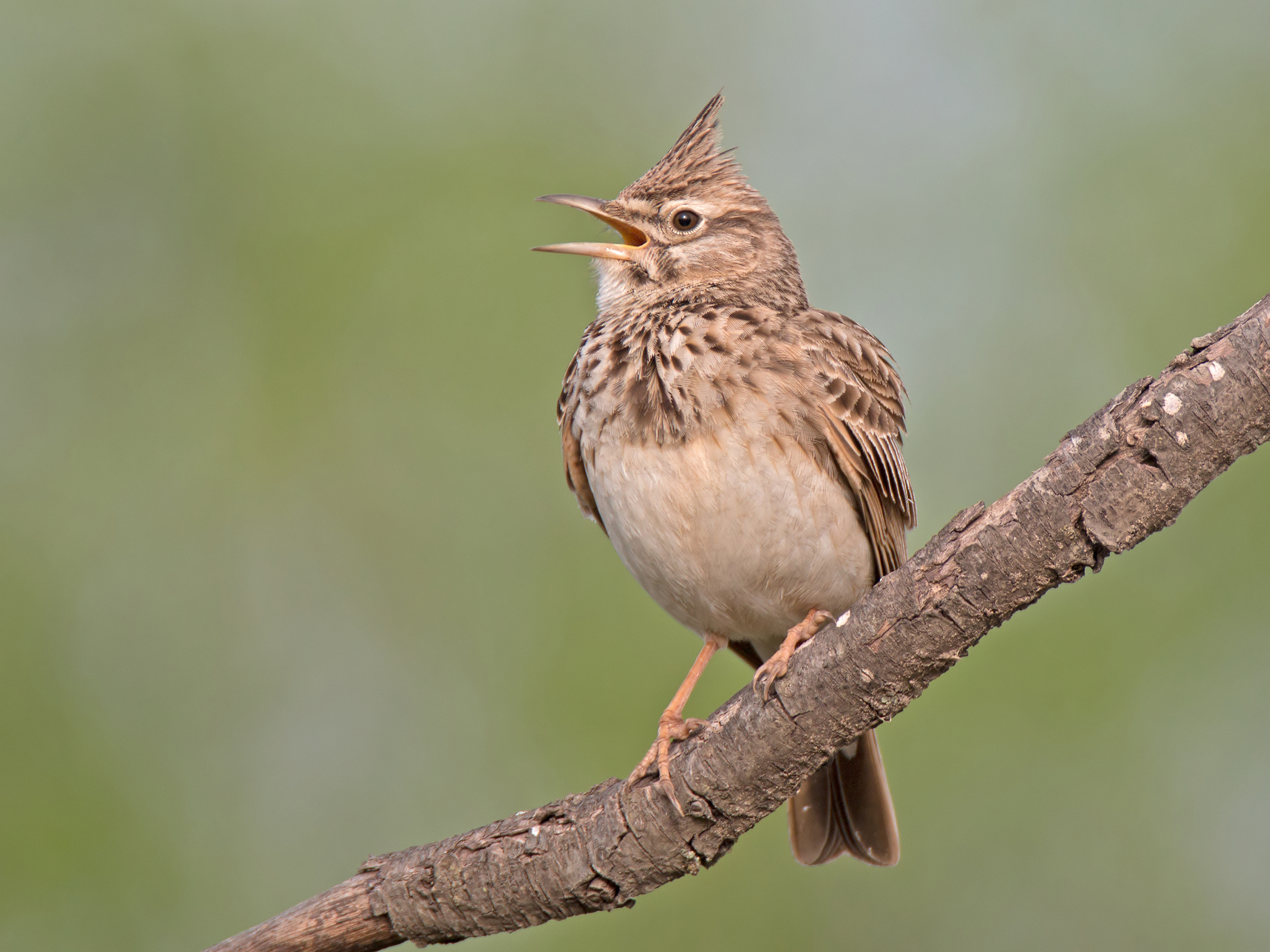
The lark sizzles in my ear

Like a fuse –

A prickling fever

A flush of the swelling earth –

When you touch his grains, who shall stay?

Over the lark’s crested tongue

Under the lark’s crested head

A prophecy

From the core of the blue peace

From the sapphire’s flaw

From the sun’s blinding dust

Perhaps the ‘nakedness’ of the vacana style had some influence on Hughes in the writing of the Moortown poems of 1978, though he was also tempted to return to the more self-protecting use of persona in sequences like Cavebirds (1978) and Adam and the Sacred Nine (1979). Only in the more obscurely published sequences such as Capriccio (1990) and Howls and Whispers (1998), did he again write in this more personal and direct fashion and (as we all now know) he did so once more in the late-published Birthday Letters (1998).

Crested_lark_singing

Hesiod Harangues His Lazy Brother

Happy New Year to all my readers. Stats from WordPress tell me that in 2018 there were 32,000 visitors to my website and they took a look at various pages on almost 50,000 occasions. Phew. It seems a lot to me. Many thanks.
discarded christmas trees piled on pavement for trash collection

But with Christmas now over – my local park has a stack of Christmas trees the size of several London buses waiting to be shredded – with resolutions having been left unmade or already in pieces, I suspect I’m not the only one to be suffering a horrible sense of deja vue as the great Brexit debate and debacle has started up again. You thought it was safe to go back into the water? You thought you’d heard the last of the Irish Back Stop? It seems not. I’m as tempted as many to shriek ‘Oh get on with it!’ but what is ‘on’ and what is ‘it’?
91lk9o2gr0l

Actually, I have a genuine fear that the depth of national disillusion with the process and with conventional politicians makes this country more vulnerable to even more coarsened debate and extremism of various kinds, all promising to solve problems at a stroke. But really we know that’s pie in the sky. Right? Hesiod, of Ancient Greece, would agree. His Works and Days sounds very familiar. It is about conflict in a family, the problematic (perhaps intractable) nature of the world and the sense of a sequential decline in the fortunes of a society – all of which he counterbalances with advice, particularly about the importance of work – of keeping on keeping on.

To be honest, for many years, I’ve only known Works and Days by name. The title always attracted me with its Antaeus-like focus on groundedness, labour, the need to start from where ever we are now; it’s rejection of flighty idealism that quickly shades into the unconsidered fundamentalism. We need to work – nothing is given on a plate. And work needs to be sustained (through days) to be effective. Boring? Only if untrue and this is as true as anything can be.

I first came across the title of Hesiod’s poem in T. S. Eliot’s ‘The Love Song of J. Alfred Prufrock’:


There will be time, there will be time

To prepare a face to meet the faces that you meet;

There will be time to murder and create,

And time for all the works and days of hands

That lift and drop a question on your plate;


download

My old student’s guide to Eliot (by B.C. Southam, published by Faber) told me the allusion was to the 8th century BC writer Hesiod – to a poem which “gives an account of the primitive conditions in the country, together with maxims and practical instructions adapted to the peasant’s life”. Last year, Penguin Classics published a new translation of the poem by A. E. Stallings. It’s a lively and very readable version, though her decision to convert Hesiod’s dactylic hexameters into iambic pentameter couplets makes the ancient poem sound too English and 18th century for me. Another older prose translation by H. G. Evelyn-White is freely available here. 

hesiod-smDid you know Hesiod probably pre-dates Homer? Hesiod is aware of the siege of Troy but he makes no reference to Homer’s Iliad. He’s usually placed before Homer in lists of the first poets. The other striking aspect of Works and Days is that (unlike Homer) he is not harking back to already lost eras and heroic actions. Hesiod talks about his own, contemporary workaday world, offering advice to his brother because they seem to be in a dispute with each other. Hesiod’ anti-heroic focus is an antidote to the Gods, the top brass and military heroes of Homer. Most of us live – and prefer to live – in Hesiod’s not Homer’s world.

Hesiod also talks about himself – his long poem has a lyric and personal quality to it. We hear that he grew up in the unremarkable town of Askra, in Boeotia. He disparagingly refers to it as “bad in winter, sultry in summer, and good at no time” (tr. Evelyn-White). In fact, his family were recent economic migrants from Aeolian Kyme in Asia Minor across the Aegean.  Hesiod’s father made the journey: “[he] used to sail on shipboard because he lacked sufficient livelihood. And one day he came to this very place crossing over a great stretch of sea; he left Aeolian Cyme and fled, not from riches and substance, but from wretched poverty” (tr. Evelyn-White). As Stallings points out, “Hesiod’s is not a static, stay-at-home sort of world, but one of opening horizons, widespread trade, far-flung Greek outposts with freedom of movement, cultural festivals [. . .] and social mobility.”

512pxannbrl._sx316_bo1,204,203,200_He seems to have been a poet-farmer who makes sure we are aware that he has already won a literary competition at a funeral games on the island of Euboea. His prize-winning piece may well have been his earlier Theogony, a cosmological work describing the origins and genealogy of the gods. But Works and Days presents him as something of a magpie writer rather than a poet with a neatly conceived architectonic design. The poem mashes together myth, allegory and personal asides, as well as more philosophical passages, theology, natural description, proverbial advice and an almanac or calendar based on phenology (the study of periodic plant and animal life cycle events and how these are influenced by seasonal variations in the climate).

The occasion of the poem is also very personal. Hesiod has a brother – Perses – and they seem to be in dispute (perhaps as a result of their intrepid and entrepreneurial father’s death and the inheritance of the estate). Stallings has this: “Already we’ve divvied up our lots, but you / Keep laying hold of more than is your due”. It is this inclination to give advice to his (younger?) brother that controls much of the text. The name ‘Perses’ is unusual and may mean something like ‘waster’ or ‘wastrel’ and the brother seems to be trying to take more than he is due and the motivation for this (according to Hesiod) is a mile-wide streak of laziness. Perses wants his fortune on a plate rather than having to work for it. His big brother intends to give him some “plain truths to steer him[self] by” (tr. Stallings).

By way of correcting his brother’s indolence, Hesiod firstly explains there are two types of strife. One of these is the kind of Brexit bickering (and potentially far worse) that we are all too familiar with: “One brings forth discord, nurtures evil war: / Wicked, there’s nothing mortals love her for” (tr. Stallings). But the other is a more benign sense of competitiveness based on envy: this sense of strife “spurs a man who otherwise would shirk, / Shiftless and lazy, to put his hands to work”. Wow! That’s telling your brother like it is. Is this being listened to? Hesiod makes sure: “Perses, take this to heart, lest Strife, whose quirk / Is mischief-making, draw your mind from work” (tr. Stallings).

pandora2There are further reasons to set to work in the very nature of the cosmos and the human world. Hesiod tells the Pandora story here. Zeus causes the creation of a female figure, Pandora, as a way of avenging Prometheus’ pro-humankind actions (stealing fire from the gods, for example). Her name suggests she is a concoction or committee-created figure from contributions from all the Olympian Gods. She is given a jar which she opens: “ere this the tribes of men lived on earth remote and free from ills and hard toil and heavy sickness [. . .] But the woman took off the great lid of the jar with her hands and scattered all these and her thought caused sorrow and mischief to men” (tr. Evelyn-White). Hesiod’s locating of the root of human sorrow in the actions of a woman echoes the Christian story of the loss of Paradise and it is one of the reasons why Hesiod has been accused of misogyny, though as Stallings suggests, he’s not any more complimentary about the males of the human race.

Plagued by the ills of Pandora’s jar (only Hope is said to get lodged in the rim of the jar), Perses is then given a longer lecture on the decline of the human condition in Hesiod’s portrayal of the five ages of man. Here is the classic description of the Golden Age of man when we imagine we once lived “like gods [. . .] with spirits free from care; / And grim old age never encroached” (tr. Stallings). The ages of Silver, Bronze and (present-day) Iron are described. Between the latter two, Hesiod locates a brief Heroic age (the age of Thebes, Oedipus and the Trojan war). But despite this diversion, Works and Days makes it plain to Perses that the age he lives in is unpleasantly harsh and demands work work work to survive: “For now truly is a race of iron, and men never rest from labour and sorrow by day, and from perishing by night; and the gods shall lay sore trouble upon them. [. . .] The father will not agree with his children, nor the children with their father, nor guest with his host, nor comrade with comrade; nor will brother be dear to brother” (tr. Evelyn-White).

An obscure natural symbolic passage follows (a “fable” Hesiod calls it) in which a hawk has seized a song bird and mocks its struggles and shrieks: “Miserable thing, why do you cry out? One far stronger than you now holds you fast, and you must go wherever I take you, songstress as you are. And if I please I will make my meal of you, or let you go. He is a fool who tries to withstand the stronger” (tr. Evelyn-White). It’s tempting to see the songbird as the poet savaged by philistine powers though, in the Perses context, perhaps the songbird is a lazy good-for-nothing who is being shaken up and challenged by the world of necessity and work. A bit later Hesiod suggests another interpretation: that the natural world is red in tooth and claw, unlike human society which is governed by “law and right” (tr. Stallings) and so Perses ought to be obedient to Zeus’ powers out of gratitude for that. It’s interesting to think this of this as the first passage in Western Literature open to a variety of critical interpretations.

imagesIt’s certainly the lazy, self-serving, arrogant younger brother who forms the focus of the rest of the poem: “So Perses, you be heedful of what’s right . . . So Perses, mull these matters in your mind . . . Fool Perses, what I say’s for your own good” (tr. Stallings). It’s true that his name gradually fades from the text in the final 500 lines but the torrent of imperatives, offering advice and guidance on a range of practical issues, often sounds like haranguing from a concerned, perhaps slightly pissed off, brother. Much of this material is phenological – when to sow crops, when to harvest, when to shear your sheep. In winter, don’t hang around the blacksmith’s forge where other wasters gather to chat and pass the time. It’s safe to put to sea when the new fig leaves are the size of crow’s feet.

s-l300These are the passages that, around 29BC, inspired Virgil to his own farmer’s manual, the Georgics. Hesiod ends his poem in a rather perfunctory manner, roughly saying he who follows this good advice will become “blessed and rich”. But given Pandora’s jar and the Iron Age we live in, even this seems a mite optimistic. And of course, Perses never gets the chance to speak for himself. But I guess the tensions between his brother’s call for social and religious conformity and Perses’ individualistic disobedience to the demands of the gods and the sense of what is best for a society have gone on to form the basis of the continuing Western literary canon. And does any of this help with Brexit? I conclude (largely with Hesiod) the bleeding obvious: it’s complicated – solutions must be negotiated, don’t hope for some golden age because in a fallen, less-than-ideal, complex society it’s better for the future to be decided in the glacier-slow committee rooms of a plurality of voices than in the stark divisions and dramas of the battlefield. Work hard – have patience – don’t buy into fairy tales of a recoverable golden age.