As in the previous five years, I am posting – over the summer – my reviews of the 5 collections chosen for the Forward Prizes Felix Dennis award for best First Collection. This year’s £5000 prize will be decided on Sunday 25th October 2020. Click here to see my reviews of all the 2019 shortlisted books (eventual winner Stephen Sexton); here for my reviews of the 2018 shortlisted books (eventual winner Phoebe Power), here for my reviews of the 2017 shortlisted books (eventual winner Ocean Vuong), here for my reviews of the 2016 shortlisted books (eventual winner Tiphanie Yanique), here for my reviews of the 2015 shortlisted books (eventual winner Mona Arshi).
The full 2020 shortlist is:
Ella Frears – Shine, Darling (Offord Road Books) – reviewed here.
Will Harris – RENDANG (Granta Books) – reviewed here.
Rachel Long – My Darling from the Lions (Picador) – reviewed below.
Nina Mingya Powles – Magnolia 木蘭 (Nine Arches Press) – reviewed here.
Martha Sprackland – Citadel (Pavilion Poetry) – reviewed here.
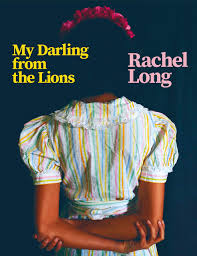 There is such ease and (apparent) directness of communication between the voices in Rachel Long’s poems and their readers/listeners that they could easily be misjudged. Darling from the Lions is filled with chatty, slangy storylines, some close to sentimental, others genuinely shocking, but the book’s title is instructive. In Psalm 35, David pleads with his God to protect him from those that strive against him, the mockers and false witnesses. He cries out: “rescue my soul from their destructions, my darling from the lions” (KJV). The preservation of the self intact, or at least relatively unharmed, against the multitudinous, multivarious threats of a modern adult female life is Long’s real concern.
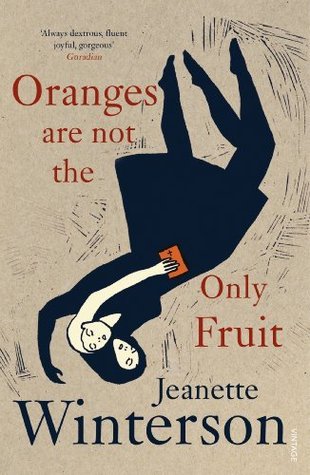 Given this focus, the number of child’s eye view poems in the collection is not surprising. Readers will be reminded of Jeanette Winterson’s account of growing up in a Christian evangelical household in Oranges Are Not the Only Fruit, and similarly here, religion proves more threatening than a source of safety. A young girl’s enthusiasm about staying up past midnight in ‘Night Vigil’ is clear: “How the minute and the hour stood to attention!” But the “smiling eyes” of the evangelist in the pulpit turn to “teeth” as he leads her, ominously, down and “incensed corridor, // and [she] followed”. The same threat seems more explicitly taken up in ‘8’ with its quotation from Psalm 51 as epigraph: “Purge me [. . . ] I shall be whiter than snow”. Long’s choices about form usually lead her to very free verse, controlled only by the colloquial voice and breath, but on this occasion the urgency and breathlessness of the 8 year-old child is reflected in unpunctuated, headlong, slippingly-enjambed, short-lined verse. What the child wishes to be cleansed of is an abusive sexual encounter, “that sunday / that school”, an incident in which she became “instantly older”.
Elsewhere, a child’s bicycle ride is likewise hedged around with vague threats of the “abbatoir” and startled invocations to “Run!” The inculcation of childhood religious belief again works as ironic backdrop:
Have you ever fled uphill –
hill of concrete,
acres of balconies identical
unanswerable doors –
reciting Psalm 23.
And in the extraordinary ‘Helena’ – the age of the speaker increasing still further here – we get a brilliant piece of ventriloquism as a young woman, who works in a seedy gentleman’s club, tells two women friends how she was all-but kidnapped by the bouncer, then raped, the man “acting out / some horror-porn shit” (Long’s unusual choice here of long, prosy lines of verse add to the almost unbearable intensity of the storytelling). These are some of the ‘lions’ by which the ‘darling’ is threatened. But ‘Hotel Art, Barcelona’, as the title suggests, indicates such threats come in all shapes and sizes and social/cultural guises. A young woman, in a relationship with a much older man, is staying in an expensive hotel. He’s concerned with their age gap; she with the fact she’s pregnant and he seems reluctant to acknowledge it. The power/wealth balance is unequal and, later, she allows him to fuck her on their balcony, her unconvincing/unconvinced question (“is love not this?”) left hanging in the air.
The Barcelona woman later throws up her expensively-bought dinner in the bathroom and there are other examples of purgative vomiting in Darling from the Lions. I’m not sure whether ‘The Clean’ is caused by morning sickness (as it is in ‘The Garden’) or an eating disorder, but the woman leans over the toilet bowl, insisting to herself, “Girl, you can be new, / surrender it all / into one bowl”. Often, the isolation of these female figures is relieved by examples of companionship with other women. ‘Sandwiches’ winds the clock back to school days again, as the narrator and her friend Tiff begin to experiment with their sexual attractiveness by stuffing unbuttered bread down their bras, because “the boys have clocked the difference between / a tissue and a tit, a sock and a tit, but not quite yet / a tit and a slice of bread”. This is a great example of Long’s brilliant control of timing, register and colloquial rhythm.
Funny though ‘Sandwiches’ is (and the poem is destined for many anthologies, I’m sure, where it’ll be taken out of context), the poem needs to be read alongside ‘The Yearner’, in which the woman deliberately sleeps on her own arm so that she can later re-acquaint herself with it, touching her numbed fingers like “strangers”, because her yearning is a dissatisfaction with how life has turned out, a wishing to be “another”. The opening section of the book is punctuated with 5 short poems, all called ‘Open’. They are about the seen and unseen. Watching a woman sleep, several people suggest she seems carelessly abandoned, surprised, working things out. Read the poems again and you see what the woman herself feels: it’s like she’s screaming, in hiding, or bracing for impact. She is beset by lions but it’s not always obvious to others.
The Psalmist’s cry was for protection by God, but it is Mum who affords most help in Darling from the Lions. The poems in the middle of the book are a hymn to the maternal figure, though the extent of her powers has already been shown to be compromised. ‘Referring to the House as the Whole Street’ is more plainly descriptive than most of Long’s poems, the mother returning after her night shift as a midwife, consoling herself as day breaks with sugared almonds, “in various shades of dawn”. Her care for her daughter is immediate, simple, physical: a cut finger is taken up and sucked. The mother spends all day Saturday plaiting her daughter’s hair into cornrows so she looks as “beautiful as Winnie Mandela!” It’s through the mother figure and several aunties that the religious element enters the household, the Christian evangelical beliefs shading rapidly into something more like of shamanism (‘Mum’s Snake’ and ‘Divine Healing’). It may be superstition that prevents the mother wanting to be photographed but her absence from the family album is a good metaphor for her selfless devotion to her family’s wellbeing, perhaps to the unseen presence of black women in society more generally.

Though the recurring father figure is said to be not “of our land”, it’s hard to identify any explicitly white voice in this collection; the black or mixed-race voices are so by implication. Long sees no need to labour the point. The one explicitly white voice I can find is that of a Barbie doll. This poem (‘Interview with B. tape II’) and its companion piece ‘steve’, mark a shift in perspective to a voice that does read the world in black and white. Long puts her ventriloquism to disturbing effect as she makes white-skinned Barbie talk about her stereotypical love/submissiveness to Ken and the way the arrival of a black-skinned doll, Steve, upsets things:
Steve wore bright red swim shorts. Too bright.
Everything about those people is so . . .
You know?
 The racism is casually thrown off; crime in the area goes up with Steve’s arrival. Ken takes on the vigilante role, beating Steve up in the back of his army jeep. This is a clever and skilful poem – the racist attitudes in the child’s doll’s mouth are very disturbing. ‘steve’ uses the child’s narrative voice we’ve become familiar with throughout the book but the racist, hatred of the steve doll is now internalised and comes from the child herself; “ken would beat steve up / for fun”. The violence of the earlier poem is now played out in toyland (but no less real for that) so that, one day, the father finds his lawnmower jammed: “on closer inspection / a tiny pair of shorts charred / torso”. In this year of the death of George Floyd and the shooting of Jacob Blake, Rachel Long finds unexpectedly effective ways to address the issues of racial discrimination alongside her main concerns in this never less than accessible collection.





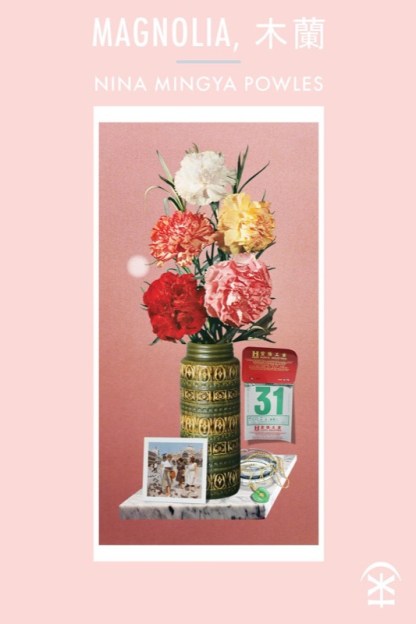 Nina Mingya Powles’ collection, Magnolia 木蘭, is an uneven book of great energy, of striking originality, but also of a great deal of borrowing. This is what good debut collections used to be like! I’m reminded of Glyn Maxwell’s disarming observation in On Poetry (Oberon Books, 2012) that he “had absolutely nothing to say till [he] was about thirty-four”. The originality of Magnolia 木蘭 is largely derived from Powles’ background and brief biographical journey. She is of mixed Malaysian-Chinese heritage, born and raised in New Zealand, spending a couple of years as a student in Shanghai and now living in the UK. Her subjects are language/s, exile and displacement, cultural loss/assimilation and identity. Shanghai is the setting for most of the poems here and behind them all loiter the shadows and models of
 I don’t think the intriguing glimpses of an individual young woman in this first poem are much developed in later ones. The Mulan figure makes a couple of other appearances in the book and is reprised in the concluding poem, ‘Magnolia, jade orchid, she-wolf’. This consists of even shorter prose observations. In Chinese, ‘mulan’ means magnolia so the fragments here cover the plant family Magnoliaceae, the film again, the Chinese characters for mulan, Shanghai moments, school days back in New Zealand and Adeline Yen Mah’s Chinese Cinderella. It’s hard not to think you are reading much the same poem, using similar techniques, though this one ends more strongly: “My mouth a river in full bloom”.
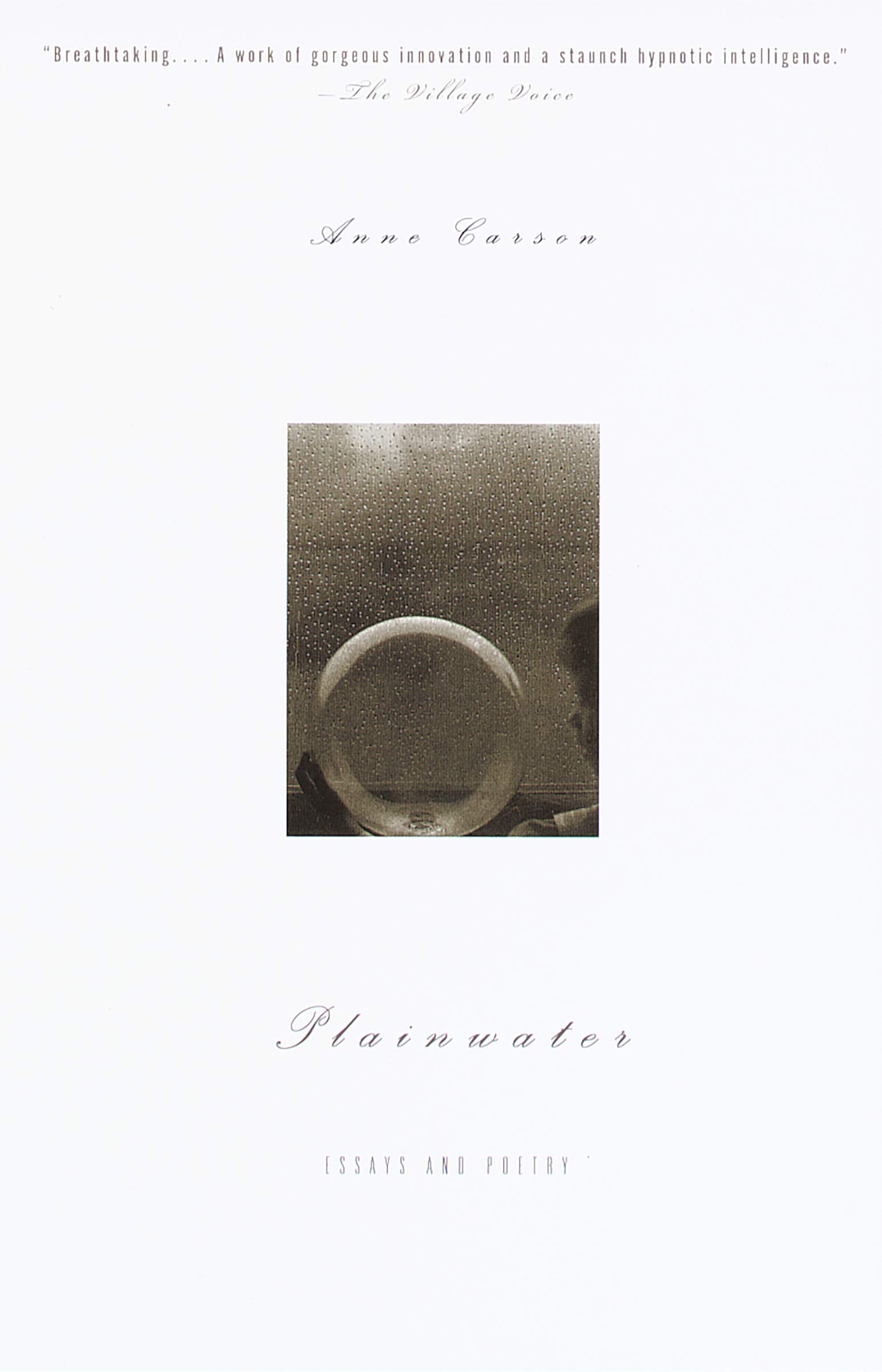 Unlike Carson’s use of fragmentary texts, Powles is less convincing and often gives the impression of casting around for links. This is intended to reflect a sense of rootlessness (cultural, racial, personal) but there is a willed quality to the composition. One of the things Powles does have to say (thinking again of Maxwell’s observation) is the doubting of what is dream and what is real. The prose piece, ‘Miyazaki bloom’, opens with this idea and the narrator’s sense of belonging “nowhere” is repeated. This is undoubtedly heartfelt – though students living in strange cities have often felt the same way. Powles also casts around for role models (beyond Mulan) and writes about the New Zealand poet, Robin Hyde and the great Chinese author Eileen Chang, both of whom resided in Shanghai for a time. ‘Falling City’ is a rather exhausting 32 section prose exploration of Chang’s residence, mixing academic observations, personal reminiscence and moments of fantasy to end (bathetically) with inspiration for Powles: “I sit down at one of the café tables and begin to write. It is the first day of spring”.

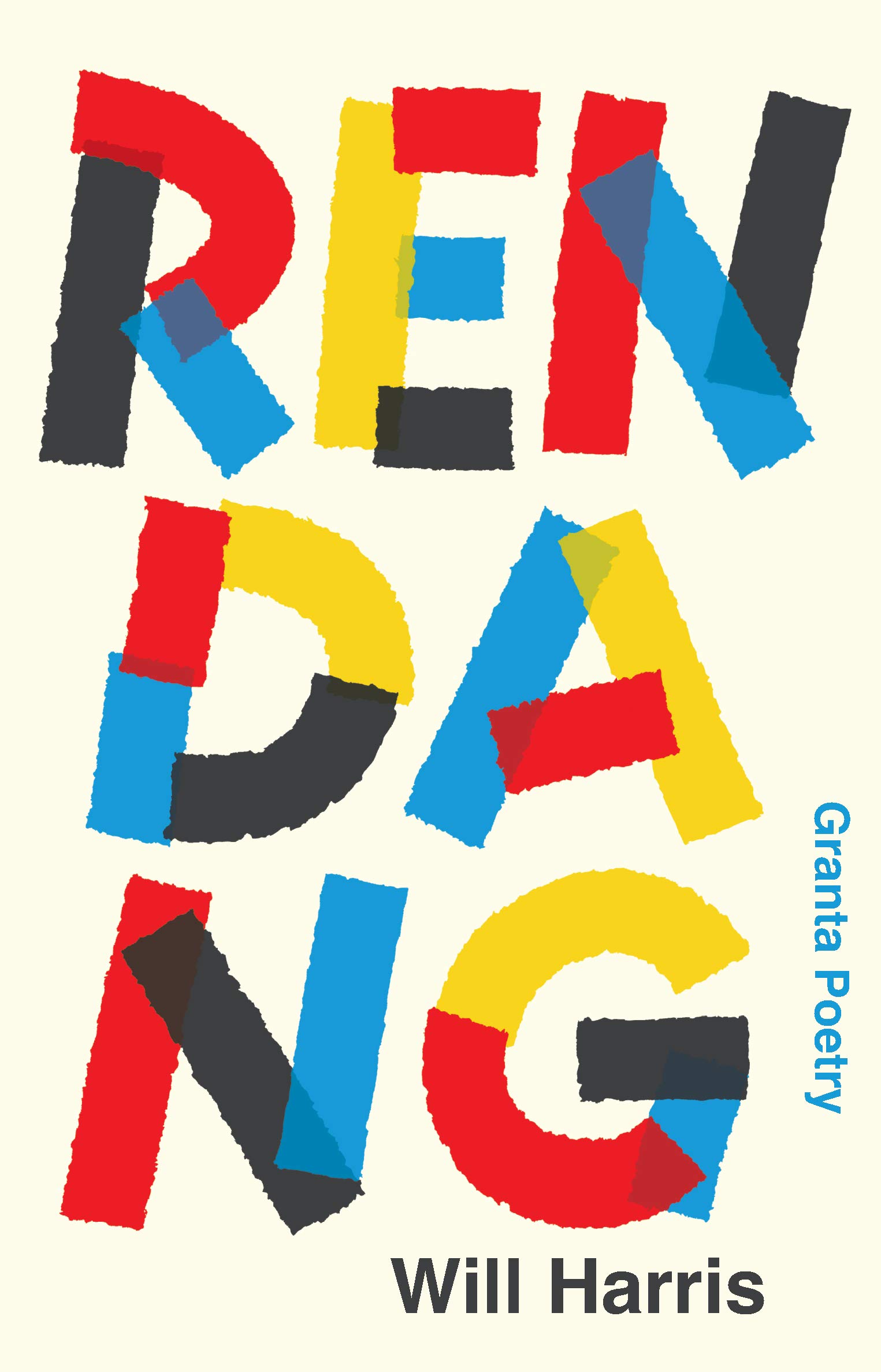 At the heart of Will Harris’ first collection is the near pun between ‘rendang’ and ‘rending’. The first term is a spicy meat dish, originating from West Sumatra, the country of Harris’ paternal grandmother, a dish traditionally served at ceremonial occasions to honour guests. In one of many self-reflexive moments, Harris imagines talking to the pages of his own book, saying “RENDANG”, but their response is, “No, no”. The dish perhaps represents a cultural and familial connectiveness that has long since been severed, subject to a process of rending, and the best poems here take this deracinated state as a given. They are voiced by a young, Anglo-Indonesian man, living in London and though there is a strong undertow of loss and distance, through techniques such as counterpoint, cataloguing and compilation, the impact of the book, if not exactly of sweetness, is of human contact and discourse, of warmth, of “something new” being made.
 This last phrase comes from ‘State-Building’, one of the more interesting, earlier poems in Rendang (a book which feels curiously hesitant and experimental in its first 42 pages, then bursts into full voice from its third section onwards). This poem characteristically draws very diverse topics together, starting from Derek Walcott’s observations on love (his image is of a broken vase which is all the stronger for having been reassembled). This thought leads to seeing a black figure vase in the British Museum which takes the poem (in a Keatsian moment, imagining what’s not represented there) to thoughts of “freeborn” men debating philosophy and propolis, or bee glue, metaphorically something that has to come “before – is crucial for – the building of a state”. The bees lead the narrator’s fluent thoughts to a humming bin bag, then a passing stranger who reminds the narrator of his grandmother and the familial connection takes him to his own father, at work repairing a vase, a process (like the poem we have just read) of assemblage using literal and metaphorical “putty, spit, glue” to bring forth, not sweetness, but in a slightly cloying rhyme, that “something new”.

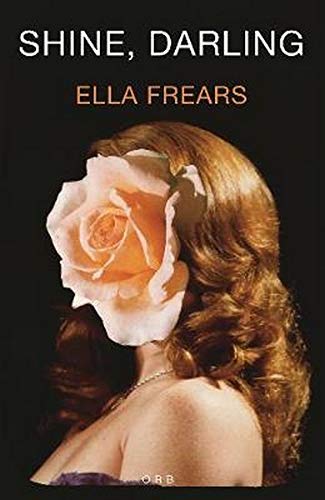 Ella Frears’ Shine, Darling is brimming with youthful exuberance and despair, yet not a jot lacking in thoughtful sophistication. Her subjects are boredom, sex, a woman’s body and the harassment that rushes to fill the void left by uncertain selfhood. A key poem is ‘The (Little) Death of the Author’, about a 13-year-old girl texting/sexting boys in her class, though the title is, of course, one Roland Barthes would have enjoyed. The narrator – looking back to her teen self – remembers pretending to be texting in the bath. The “triumph” is to make the boys think of herself naked (when she’s really eating dinner or doing homework). Hence “Text / and context are different things”. Her texts are careful constructions, evocative, alluring, full of tempting ellipses. On both sides, there is a filmic fictionalising going on (in the absence of any real sexual experience). The poem (which is a cleverly achieved irregularly lined sestina) ends with the authorial voice breaking cover: the poem itself is “a text I continue to send: Reader, I’m in the bath . . . / Nothing more to say than that. And if you like / you can join me”. The flirtation is a bit overdone (but other poems show Frears is wholly conscious of that) and the poem indicates one of this book’s chief concerns is with the difference between the truth of what happens and the truth of a poem.
 The obvious risk of such sexual adventuring is the subject of ‘Hayle Services (grease impregnated)’. The parenthetical allusion here is to Elizabeth Bishop’s ‘Filling Station’ where everything is “oil-soaked, oil-permeated [. . .] grease / impregnated”, a poem which concludes, against the odds of its grimy context, that “Somebody loves us all”. In contrast, Frears’ crappy, retail-dominated English motorway service station is (ironically) the stage for a pregnancy scare, a desperate search for a test kit in Boots and an anxious, “[p]issy” fumbling in the M&S toilet cubicle, then waiting for the “pink voila”. The headlong, impossible-to-focus, sordid anxiety here is brilliantly captured in the short, run-on lines. Frears also catches the young woman’s multiplicity of streams of consciousness, the scattershot: the potential father is present but soon forgotten, his reassurances dismissed, the pushy sales staff avoided in anger and embarrassment, the difficulty of urinating, the cringingly inappropriate joke-against-self in “et tu uterus”, the conventional moral judgement (“soiled / ruined spoiled”) and the final phone call to “Mamma, can you come pick me up?”

 And yet, poems in Shine, Darling do regularly turn to the moon for possible explanations of actions (‘Phases of the Moon / Things I Have Done’), for a witness if not for protection (‘Walking Home One Night’) and for directions (‘I Knew Which Direction’). The latter poem is a beautiful lyric opener to the book but is rather misleading. The repetition of the word “moonlight” seems to give an almost visionary access: “no longer a word but a colour and then a feeling / and then the thing itself”. It is curious that a poet asserts the transparency of language in this way (Frears is not much concerned with the nature, limits and impositions of language, unlike Nina Mingya Powles’ shortlisted Magnolia 木蘭), but also the idea of such an untrammelled access to “the thing itself” is countered by every poem that follows. Frears’ world view may not be too much troubled by words but the very idea of a unitary truth to be beheld with clarity is profoundly doubted.
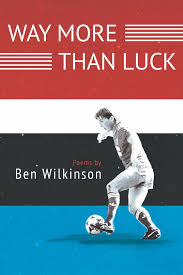 I’m not proud to admit that Way More Than Luck passed me by when it was first published. As you are probably aware, Wilkinson reviews poetry regularly for The Guardian, and he’s very familiar on social media as a poet and critic, a distance runner and a passionate Liverpool football fan. But the book’s cover (Dalglish, I think), its title and some of the publicity persuaded me that the football bit was going to be predominant. It’s certainly an almost unique aspect of the collection, but it turns out the debilitating darkness of psychological depression is an even more significant one. Wilkinson signals this concern via the book’s two epigraphs. One is about the nature of depression
 For me, it’s these psychological truths that Wilkinson is so good at conveying. There are other poems later in the book (and perhaps ‘Stag’ is an elusive example) which begin to sketch episodes of a foundering romantic relationship and ‘Building a Brighter, More Secure Future’ is a very effective excursion into witty political satire (a skilfully handled sestina based on the Conservative Party election manifesto, 2015). And there are the football poems. They comprise the central sequence of 14 poems, introduced with a heart-felt Prologue that says what follows is for the ordinary football fans, written out of “a love beyond the smear campaigns, / the media’s hooligans”. A large part of what Wilkinson has in mind here is the shocking response in parts of the media to the Hillsborough tragedy in 1989, when 96 men, women and children died (David Cain’s Forward prize shortlisted book, Truth Street, from Smokestack Books, movingly dealt with this event and the media and policing responses and
  But the poems also show how difficult it is to escape the miasma of cliché that seems to engulf football itself. Anfield is filled with a “fabled buzz”, then “the place erupt[s]”. Barnes unleashes a “a sweeping, goal-bound ball”, and a particular game offers one “last-ditch twist”. I’m reminded of Louis MacNeice’s observation (now sadly compromised in various ways, but the spirit of it remains valid, I think) that he wanted a poet not to be “too esoteric. I would have a poet able-bodied [sic], fond of talking, a reader of the newspapers, capable of pity and laughter, informed in economics, appreciative of women [sic], involved in personal relationships, actively interested in politics, susceptible to physical impressions’. There are many more of these poets around these days and to bring (even) football into the purview of poetry can hardly be a bad thing. Yet it is not an easy one and there may be some risks in deciding to headline the attempt. Ian Duhig’s blurb note to Way More Than Luck has gingerly to negotiate this issue: “The beautiful game inspires some beautiful poems in Ben Wilkinson’s terrific debut collection … but there’s far more than football to focus on here”. Yes, indeed.





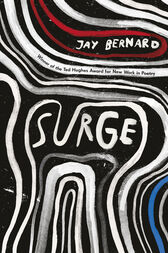
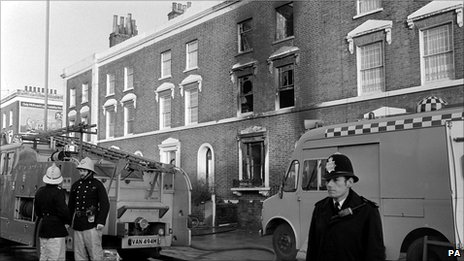 But Surge itself has since gone through various forms. There were 10 original poems written quickly in 2016. There was a performance piece (at London’s Roundhouse) in the summer of 2017 (it was this version that won the Ted Hughes Award for New Work in poetry in 2017). But it has taken 3 years for this Chatto book to be finalised. In an interview just last year, Bernard observed that they were still unclear what the “final structure” of the material would be. I’m possessed of no insider knowledge on this, but it looks as if this “final” version took some considerable effort – reading it makes me conscious of the strait-jacket that a conventional slim volume of poetry imposes – and I’m not sure the finalised 50-odd pages of the collection really act as the best foil for what are, without doubt, a series of stunningly powerful poems. The blurb and publicity present the book (as publishers so often do) as wholly focused on the New Cross and Grenfell fires but this isn’t really true and something is lost in including the more miscellaneous pieces, particularly towards the end of the book.
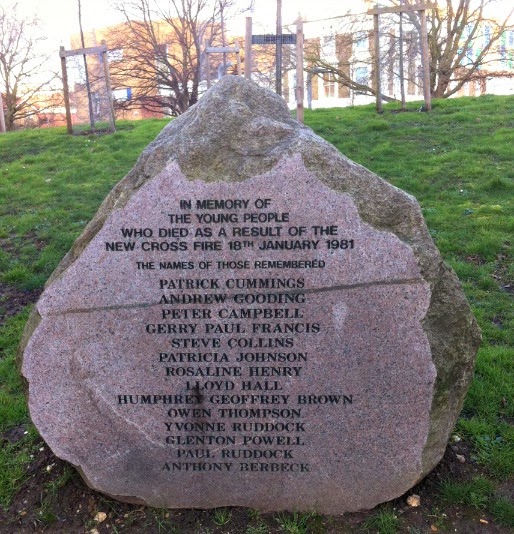 Bernard’s poetic voice is at its best when making full use of the licence of free forms, broken grammar, infrequent punctuation, the colloquial voice and often incantatory patois. So a voice in ‘Harbour’ wanders across the page, hesitantly, uncertainly, till images of heat, choking and breaking glass make it clear this is someone caught in the New Cross Fire. Another voice in ‘Clearing’ watches, in the aftermath of the blaze, as an officer collect body parts (including the voice’s own body): “from the bag I watch his face turn away”. The cryptically titled ‘+’ and ‘–’ shift to broken, dialogic prose as a father is asked to identify his dead son through the clothes he was wearing. Then the son’s voice cries out for and watches his father come to the morgue to identify his body. This skilful voice throwing is a vivid way of portraying a variety of individuals and their grief. ‘Kitchen’ offers a calmer voice re-visiting her mother’s house, the details and familiarity evoking simple things that have been lost in the death of the child:
 I’m guessing most of the poems I have referred to so far come from the early work of 2016. Other really strong pieces focus on events after the Fire itself. ‘Duppy’ is a sustained description – information slowly drip-fed – of a funeral or memorial meeting and it again becomes clear that the narrative voice is one of the dead: “No-one will tell me what happened to my body”. The title of the poem is a Jamaican word of African origin meaning spirit or ghost. ‘Stone’ is perhaps a rare recurrence of the author’s more autobiographical voice and in its scattered form and absence of punctuation reveals a tactful and beautiful lyrical gift as the narrator visits Fordham Park to sit beside the New Cross Fire’s memorial stone. ‘Songbook II’ is another chanted, hypnotic tribute to one of the mothers of the dead and is probably one of the poems Ali Smith is thinking of when she associates Bernard’s work with that of W.H. Auden.
 But when the device of haunting and haunted voices is abandoned, Bernard’s work drifts quickly towards the literal and succumbs to the pressure to record events and places (the downside of the archival instinct). A tribute to Naomi Hersi, a black trans-woman found murdered in 2018, sadly doesn’t get much beyond plain location, a kind of reportage and admission that it is difficult to articulate feelings (‘Pem-People’). There are interesting pieces which read as autobiography – a childhood holiday in Jamaica, joining a Pride march, a sexual encounter in Camberwell, but on their own behalf Bernard seems curiously to have lost their eagle eye for the selection of telling details and tone and tension flatten out:
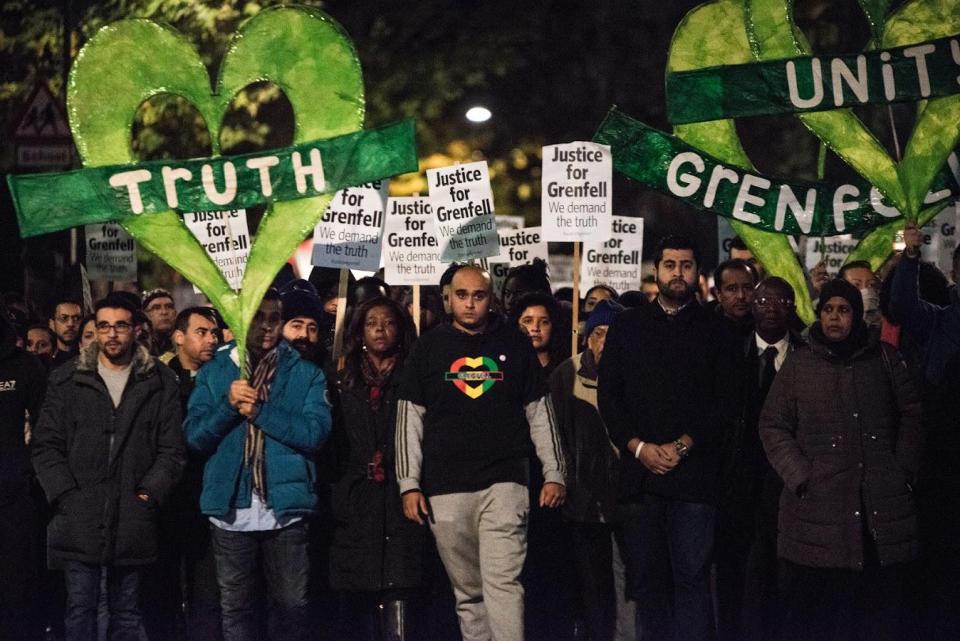 The mirroring architectonic of the collection emerges with the poems written about the Grenfell Tower fire. So we have ‘Ark II’, two pools of prose broken by slashes which seem to be fed by too many tributary streams: the silent marches in Ladbroke grove, the Michael Smithyman murder and abandoned investigation, Smithyman’s transition to Michelle, and the burning of the Grenfell Tower effigy, the video of which emerged in 2018.





 But Galleymore also sees dangers. In her 2014


 Martyn Crucefix