Remembering Geoffrey Grigson

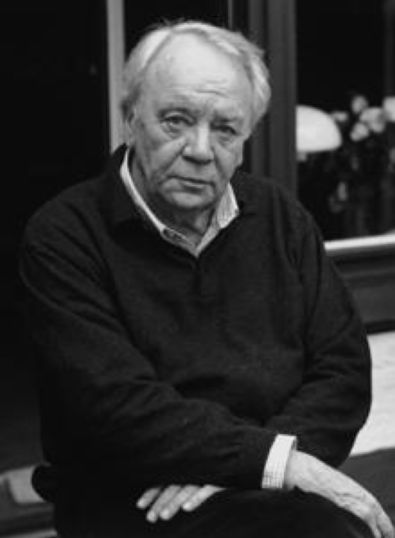
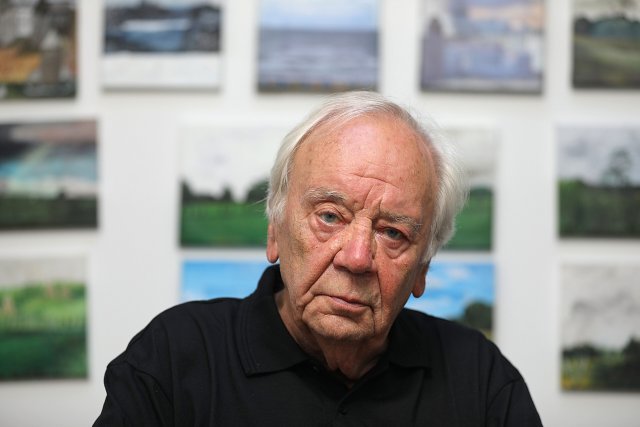
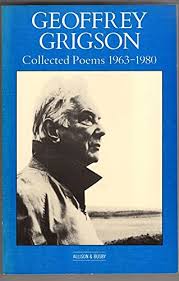
I’ve recently seen announced a celebration of the work of Geoffrey Grigson (1905-1985), scheduled to take place at 7.30pm, on Tuesday March 4th at West Greenwich Library. The event is called ‘In His Own Voice: Geoffrey’s Grigson’s Poetry’ and is being organised by John Greening with contributions from Grigson’s daughter, Caroline, his grandson, Joe Banks, and poets Graham High and Blake Morrison (and archive recordings of the poet himself). The event is free to attend (donations welcome), plus refreshments and books on sale. Texts will be projected on screen. As the event blurb reminds us, Grigson lived and worked through amazing times, culturally and politically, and was a prolific poet, writer, critic and editor. At the centre of English intellectual life, he knew the poetry grandees of his days and greatly admired those of the past. When he was only 27, he founded the bi-monthly journal ‘New Verse’, thus becoming hugely influential in the poetry world.  I reviewed John Greening’s selection of Grigson’s work when it came out in 2017, and this seems an opportune moment to re-post it here and on my new Substack. 

Surely we all have one or two Faber anthologies edited by Geoffrey Grigson on our shelves? Love Poems, Popular Verse, Reflective Verse, Nonsense Verse, Poems and Places, Epigrams and Epitaphs . . . As a critic he often wielded a savage power through his magazine New Verse. And as a big beast on the literary scene of the early 1980s, Hermione Lee interviewed him on Channel 4. But since his death in 1985, he’s better known merely as the husband of Jane Grigson, the celebrated cookery writer. His own poetry has been neglected which made John Greening’s 2017 Selected Poems from Greenwich Exchange a welcome opportunity to re-consider it. I think Grigson’s contrasting themes were established early on. The influence of two great poets (not Eliot, not Yeats) is clear from the start and it may be that the limits of Grigson’s poetic achievement and the absence of much development in his style, are because he never chose one path or fully escaped either.
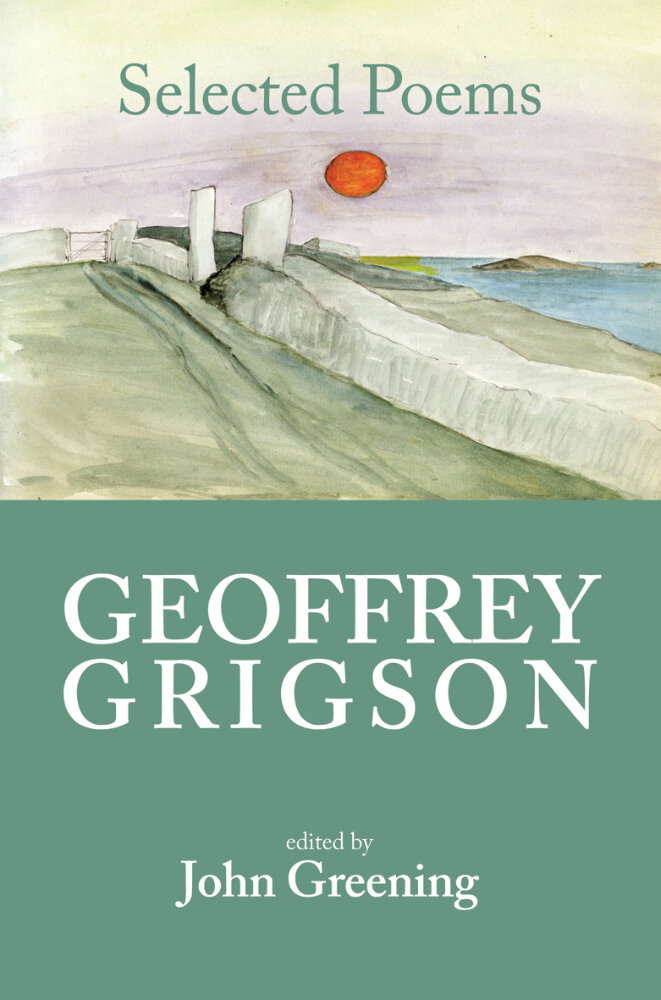
The influence of Auden was very clear in Grigson’s first collection, Several Observations (1939). ‘Meeting by the Gjulika Meadow’ presents an enigmatic narrative in a “frontier” landscape; a meeting between two men whose conversation is in large part concerned with “the thunder / about Europe”. There are sketched fragments of personal dependencies and guilts but the whole reads as a slice of narrative that has been carefully shorn of its explicatory elements. A poem from 1946 shows Grigson using similar methods but on matters much closer to home; ‘In a Dark Passage’ draws material from the deaths of two of Grigson’s brothers in WW1 and the early death of his first wife, Frances. The situations are still relatively distanced by being told in the third person and the timings of the incidents are compressed to form a litany of heartfelt if rhetorical griefs: “O floes of ice, you float downstream / But do not disappear”.

There is certainly a very dark river running through Grigson’s work. ‘Two A.M.’, from the 1970s, records a wakefulness at night filled – as so often – by nothing but questions: “all emptiness, all gravity, / Ultimacy, nothingness”. He captures vividly the way this kind of mood, at such an hour, insists on expanding exponentially, racing to fill the world’s “Sierras, monadnocks, lakes, prairies, taiga, ice”. On this occasion, there is the possibility of an erotic reply: “At least now, with our bodies close, / Be comforted”. But even that response is absent from ‘Again Discard the Night’ from the 1980 collection, History of Him. Written as a first person narrative this time, the poem pulls no punches in its flinty and unforgiving portrait of old age waking:

… you call, the kettle gathers

And talks, and Are you all right? comes your

Usual cry, and my habit insists, without sound, Reply,

Be bright, wash, shave, dress, and this once,

Again discard the night.

Of course, Grigson’s sense of an ungoverned and likely meaningless universe matched with his frequent backward glances also calls to mind Hardy’s work. One of Grigson’s earliest poems, ‘The Children’, has an 11-line stanza of complex rhyming that Hardy would have been proud of. The children are portrayed as playing in a natural environment and in a state of temporal innocence: “They looked for no clocks, noticed no hours”. But ending each stanza, the triple rhyme words with “hours” are (ambiguously) “sours” and “flowers”. Between the third and fourth stanza, there is the kind leap in time often found in folk song (and Hardy). We have instantaneously passed many years: “The rooms were pulled down, but they always abide / In the minds of the children born in them”. These are the best lines in the poem with the much cooler closing lines rather falling flat:

They see the clocks and notice the hour

And aware that restriction of love turns sour,

They feel the cold wind and consider the flower.

It is certainly Hardy that Grigson is thinking of in ‘In View of the Fleet’. The Fleet is the lagoon behind Chesil Beach in Dorset and the poem borrows phrases from Hardy, empathetically suggesting that each poet’s vision has the same sequential locus: “Things not as firstly well, a sparkling day, and / tolling of a bell”.
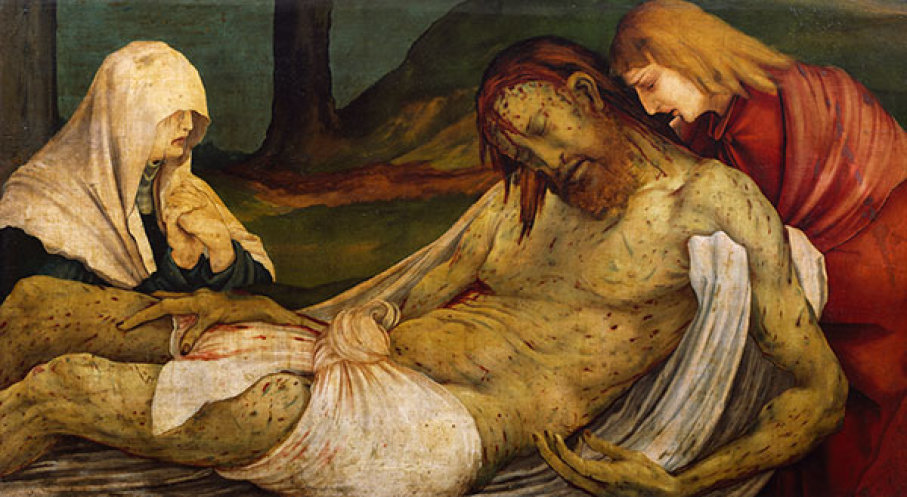
John Greening suggests in his very helpful Introduction that Grigson is also capable of an “extraordinary lyricism” and these are moments when he captures this “sparkling” quality of the natural world. In ‘A New Tree’, helped by the holding up of a child to a window, the narrator sees again with a newly cleansed perception, “a sun / being fiercely / let loose again”. Delight in the natural world recurs in a key poem, ‘Note on Grunewald’. In it, Grigson also expresses the scepticism about literary achievements which must have driven much of his own, often acerbic, critical comments on the work of others. In a man who devoted a lifetime to literary endeavours, it’s hard to take wholly seriously the poem’s assertion that he’d rather live to sniff the “scent of the flowers of lime” than to create lasting “poems”. But the scent is praised in contrast to the art of “Grunewald’s spotted green-rotted Christ”. Grigson sides with (“I join”) Cowper in deciding that death holds no attraction and that he too would choose to “leave this world never”. The perceived dichotomy between a vivid inhabiting of the world of the senses and the ‘rotten’ achievement of artists is by no means Grigson’s final comment on these issues, but the poem certainly expresses unresolved tensions.

As Greening reminds us, Grigson as a critic was a feared and fearsome creature, liable to “dismissiveness and intolerance of shoddy work”. Perhaps, in his own mind, he never quite resolved his assessment of his own poems. A lovely translation from Tu Fu was perhaps chosen because it laments lack of achievement, or at least of recognition: “Writing gives me no name”.* More vigorously, ‘Lecture Note: Elizabethan period’ is an hilarious and outrageous account of a poet’s final work. While the ink was still wet on the page, he dropped dead. The poem fell to the floor only for the maid to drop it in “the jakes”. The final lines laugh cynically, sarcastically, as if this illustrates the fate of most artistic endeavours: “Now irretrievably beshitten, it was, dear sirs, / The one immortal poem he had written”. Yet this is delicate stuff compared to Grigson taking aim with both barrels in ‘Perhaps So’. The premise is that too much is being written:

Too much is told. Banish polymath Steiners

And seventy-seven other British Shiners,

Naturalists, archaeologists, publishers

Of publications in parts,

Norman Mailer

And all long-winded farts . . .

It’s hard to reconcile this voice with that of ‘A New Tree’. Interestingly, Grigson’s address to an ancestor whose name was ‘Nazareth Pitcher’ is critical on the surface, disparaging of Nazareth’s “pride”, suggesting his “lips were too thin”, that he might “be pleased” if he was to witness the parlous state of the world now (1960s). But it’s also difficult to dismiss the feeling that Grigson chose to address Nazareth because he sensed a kinship with this judgemental, sceptical and meanly satirical man.
Having said that, Grigson did admire, if very judiciously. Greening draws attention to an Eliotesque belief in tradition, that the best poems are made by “members of a long narrow community through time”. The word “narrow” here indicates Grigson felt that much of what was truly best was not appreciated by many. In one word perhaps, we see here his motivation to be harsh with what he felt not good enough and his hard work in anthologising what was. There are two tribute poems in Greening’s selection which show Grigson at his complimenting best. ‘A Painter of Our Day’ is about Ben Nicholson and has the feel of a Coleridgean conversation poem. Its tone is confiding, admiring, ranging from observations about playing with children, shared days out, discussions of Nicholson’s work, ageing and the nature of art. Nicholson seems to teach an appreciation of “what is” and an avoidance of nostalgia. But at the same time, he recognises the value of the “reiterated wisdom of perceiving”. That both poet and artist set the bar of achievement very high indeed is suggested by Grigson’s admission that, of their chosen role models, “most have been / Long dead”. I find it hard to pin down a more precisely articulated aesthetic, but these lines are revealing of any artist’s relation to his/her elders:

Suddenly when young or in our first ability

We find them, slowly we find the reasons

For our love, finding ourselves, and what we lack

As well or need the most

Finally, ‘To Wystan Auden’ records the moment Grigson learned of Auden’s death in the “English September” of 1973. His admiration for the younger poet is fulsome. With the appearance of his early work, Auden became “living’s healer, loving’s / Magician”. From the other end of the temporal telescope, we can now see what the young Grigson gleaned from Auden’s poetry:

You were our fixture, our rhythm,

Speaker, bestower, of love for us all

And forgiving, not condemning, extending

To all who would read or would hear

Your endowment of words.

For all Auden’s own protesting about poetry making nothing happen, for Grigson, “time, after you, by you / Is different by your defiance”. One might ungratefully gripe that these are rather vague compliments from one poet to another. But Greening quotes Grigson suggesting that Auden’s achievement was in destroying “a too familiar, too settled monotony in manner and subject”. This is undeniable and this selection shows Grigson following Auden’s lead, yet at the same time, through his life, also being drawn back to a different, more traditional poetic style in the model of Hardy. Here, for example, in his last years, he recalls his childhood in Cornwall:

Staring down from that broken, one-arched bridge,

In that vale of water-mint, saint, lead-mine and midge,

I was amazed by that fat black-and-white water bird

Hunting under the current, not at all disturbed.

How could I tell that what I saw then and there

Would live for me still in my eightieth year?

*As a labouring translator myself, I have long remembered Grigson’s brilliant put-down in his Introduction to the Faber Book of Love Poems (1973). Explaining why he has not included any translations at all, he declares that their “unmeasured, thin-rolled short crust” would prove detrimental to the health of the nation’s poetic taste. Times have changed, thank goodness.
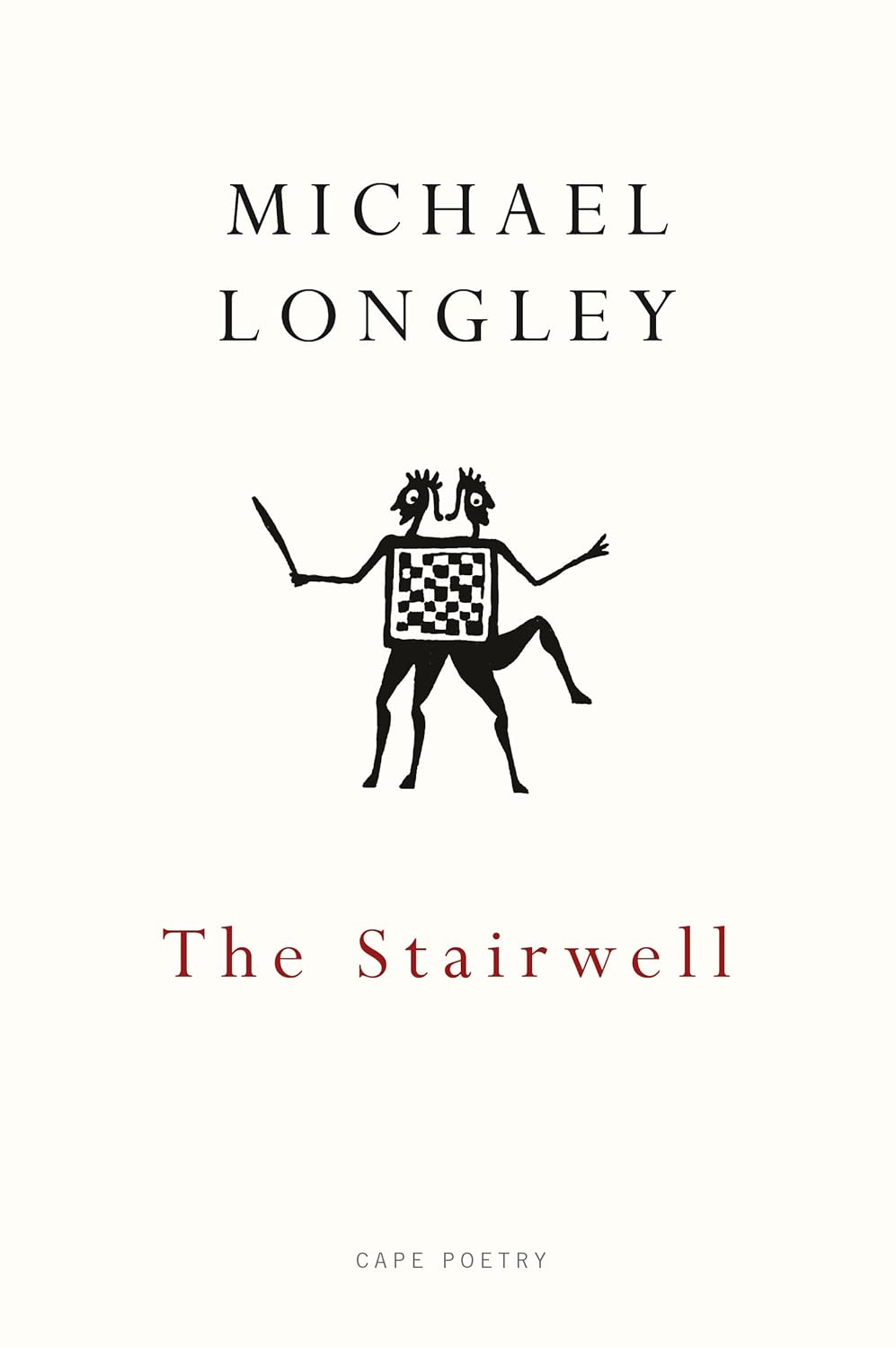
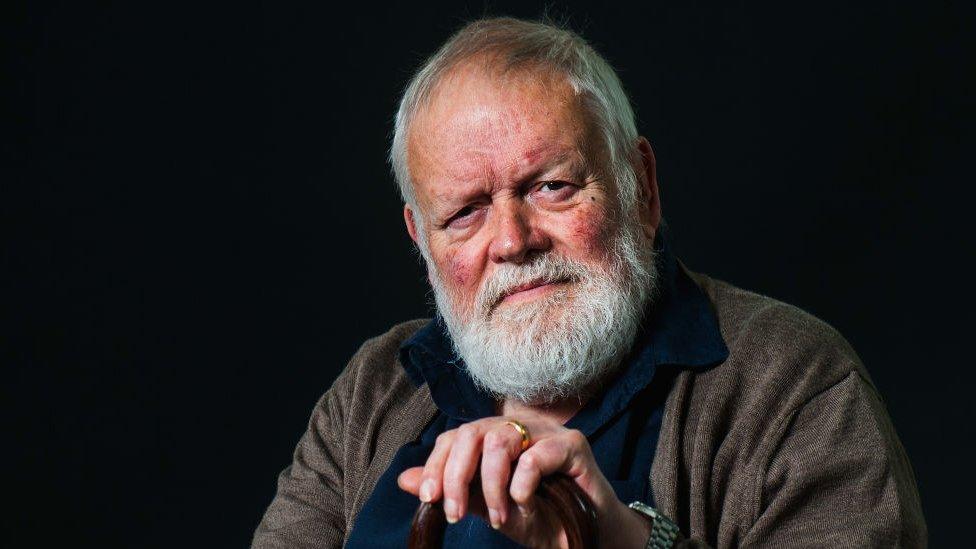
RIP Michael Longley

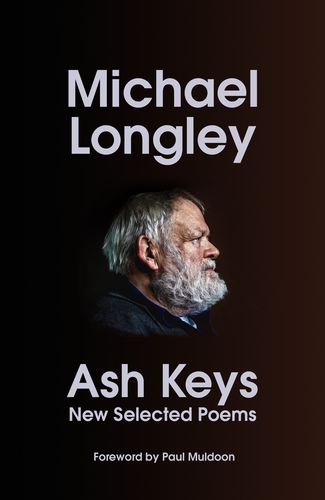
Social media – at least the bit of it that arrives on my screens – is alive this morning with many expressions of sadness at the announcement of the death of Michael Longley. I heard him read just a few months ago to launch his most recent new selected poems, Ash Keys, at the LRB Bookshop in London. He insisted then on trying to stand to read his poems, though his breathlessness and physical wobbling often made him have to take his seat again; but the humour and mischievous twinkle were as powerful as ever. Over the years, I have to admit it took me a while to really come to appreciate his work; I think I did not really ‘get’ the force of his brevity, his precision. If you have not seen it yet, do watch the brilliant, moving, inspiring BBC programme about him, his life and work here. I’m posting below my review of his 2014 collection, The Stairwell (the review originally published in Poetry London) and I hope it manages to say something useful to both new and older readers of this wonderful poet. Here he is reading ‘Remembering Carrigskeewaun’ on The Poetry Archive.

Keeper, custodian, traditionalist whose work is stringent, formalist, always elegant: critical judgments on Michael Longley’s work fence him round too closely, running the risk of misleading, even discouraging, new readers. It’s true, as a member of Philip Hobsbaum’s Group in Belfast in the 1960s, Longley’s poems were criticized for their elegance of form, rhetorical grace and verbal eloquence, though he found something of a kindred spirit in Derek Mahon. Longley wrote poems that were “polished, metrical and rhymed; oblique rather than head-on; imagistic and symbolic rather than rawly factual; rhetorical rather than documentary” (The Honest Ulsterman, November, 1976). But Seamus Heaney’s different aesthetic was Hobsbaum’s star turn and quickly became a national, then international preference. Attitudes solidified around Longley although (perhaps in the cause of self-definition) this was not something he resisted, casting himself and Mahon in the 1973 poem ‘Letters’ as “poetic conservatives”.

‘Epithalamium’, the poem that since 1969 has opened Longley’s selections and collecteds reinforces the caricature and in ‘Emily Dickinson’ he sees the need to dress “with care for the act of poetry”. But Longley’s long standing admiration of Edward Thomas was not for nothing and he shared a desire to dismiss Swinburnian “musical jargon that [. . . ] is not and never could be speech” so that in The Echo Gate (1979) he is experimenting, on the one hand with the plainly Frostian ‘Mayo Monologues’, and on the other with short, imagistic pieces in which the authorial voice seems to have taken a vow of non-intervention. ‘Thaw’ reads, in its entirety:

Snow curls into the coalhouse, flecks the coal.

We burn the snow as well in bad weather

As though to spring-clean that darkening hole.

The thaw’s a blackbird with one white feather.

This is a mode that Longley has continued to explore in accordance with another (surprisingly) early statement of poetic intent. The poet’s duty is to “celebrate life in all its aspects, to commemorate normal human activities. Art is itself a normal human activity. The more normal it appears in the eyes of the artist and his audience, the more potent a force it becomes” (Longley, ed. Causeway: The Arts in Ulster, 1971).

Subsequent collections have become concerned to list, to name, as it were ‘merely’ to record experience for its own sake, often in vivid short poems which run the risk of seeming inconsequence, though Longley has never lost his unerring eye and ear for the poetic line. Nor has he ever seriously questioned the adequacy of language (within conventional bounds) to represent experience. It’s in these ways that his work is conservative but his poems’ intention to encompass and witness is far more radical. To witness – whether it is the song of a wren near Longley’s beloved Carrigskeewaun, a Belfast bombing, or the camp at Terezin – is to acknowledge that we are bound together by what happens. From Gorse Fires (1991) to The Weather in Japan (2000) Longley comes to sound like Eliot’s Tereisias who, as the pages turn, has “seen and foresuffered all”. The beauty of nature, the horrors of mankind, birth and death, the present and the distant past are all absorbed into his steady gaze, a steady voice, intent on an anatomy of connection.

One such connection is the way Longley has been re-visiting the Iliad and Odyssey for years now, producing vivid, contemporary accounts of key scenes. Priam’s visit to Achilles tent in Book 24 of the Iliad famously became Longley’s poem ‘Ceasefire’, appearing in The Irish Times in 1994 when the IRA were considering a ceasefire themselves. The poem forges links and connections between enemies and across millennia. As ‘All of these people’ puts it, “the opposite of war / Is not so much peace as civilization” and civilization needs to be founded on a right relationship with even the smallest of things. Among many poems that articulate an ars poetica, ‘The Waterfall’ envisages the best place to read his own collected works as “this half-hearted waterfall / That allows each pebbly basin its separate say”. It is such civilized allowance, rather than the much-vaunted preservation of a tradition, that is the mark of Longley’s aesthetic, moral and political outlook.

His new collection, The Stairwell, is much obsessed with death though its inevitable reality has already been embraced by the poet’s allowance. An Exploded View (1973) already contained ‘Three Posthumous Pieces’ and twenty years later, ‘Detour’ mapped out his own funeral procession. Here, Longley has been “thinking about the music for my funeral” (‘The Stairwell’) and much of the book has the feeling of an ageing figure readying to depart. Longley himself refers to his “unassuming nunc dimittis” (‘Birth-Bed’) and the only ceremonial he anticipates is to be provided by robins, wrens, blackbirds: “I’ll leave the window open for my soul-birds” (‘Deathbed’). The counterweight to civilized allowance, even in the approach of death, is modesty and humility. If gifts are to be handed on to the future then they ought to include a little poem about a wren: “Its cotton-wool soul, / Wire skeleton [. . . ] / Its tumultuous / Aria in C” (‘Another Wren’).

Such unassuming gifts to future generations are balanced, in the civilized society Longley seeks out, by the commemoration of the past. This is something his poems continue to do with his re-imagining of his father’s experiences in the Great War and this new collection contains more of these poems; his father at ‘High Wood’ among “unburied dead”, befriending the future Hollywood star, Ronald Colman, or taking an ironic “breather before Passchendaele” (‘Second Lieutenant Tooke’). Whether looking forwards or backwards, the true gift lies in the specific, not the generalized. ‘Insomnia’ recalls Helen Thomas calming and consoling the mad Ivor Gurney, by guiding his “lonely finger down the lanes” of her husband’s map of Gloucestershire. Longley looks for this too. Here is the whole of ‘Wild Raspberries’:

Following the ponies’ hoof-prints

And your own muddy track, I find

Sweet pink nipples, wild raspberries,

A surprise among the brambles.

Having translated a poem by Mikhail Lermontov, Longley goes on to wonder what his “understated” neighbours around Carrigskeewaun would make of such “grandiloquence” (‘After Mikhail Lermontov’). It’s in the avoidance of a hyper-inflated language and tone that Longley’s re-makings of Homer are so good. The new book contains a fair sampling of these too, many of them in the second half which forms an extended elegy, commemorating Longley’s twin brother, Peter. The Homeric paralleling works less well in this context, though the unrhymed double sonnet, ‘The Apparition’, in which the ghost of Patroclus pleads to be buried by Achilles, addressing him as his “dear brother” is powerful. But I’m reminded of Heaney’s Station Island (1984) in which he revised and regretted his earlier use of “the lovely blinds of the Purgatorio” in writing a poem about the murder of Colum McCartney in Field Work (1979). Longley’s Homeric material casts such a strong shadow and the vital life of Peter is insufficiently conveyed, except in a few recollections of their shared childhood, tree-climbing, bows and arrows, boxing, visiting the zoo. Nevertheless, Longley’s determination to commemorate his twin, with whom he shared “our gloomy womb-tangle” (‘The Feet’), re-confirms human closeness, allowance, the giving of space to others, to nature, is what has driven this poet’s work for more than forty years. 

‘Muzzle’ – a new poem for the New Year

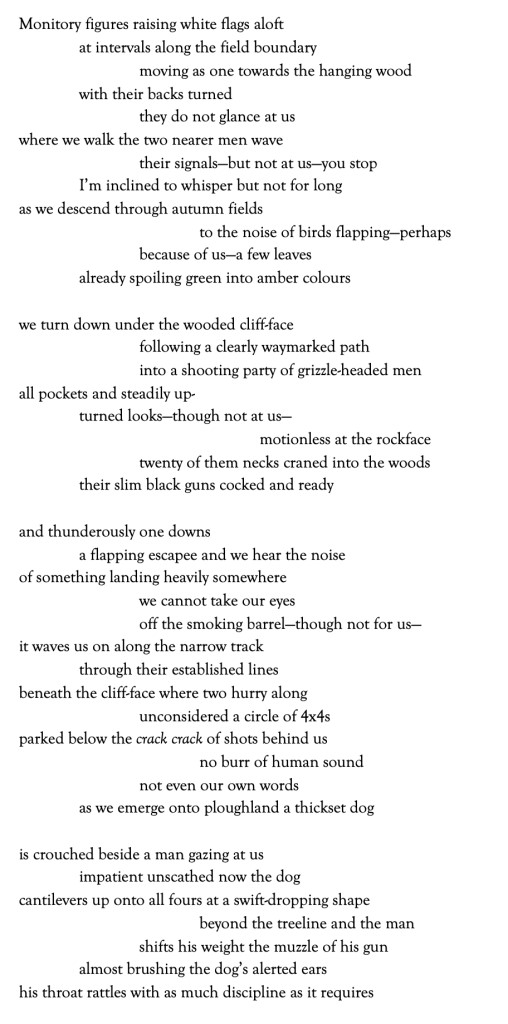
Happy New Year to all of you. We are hoping for the best aren’t we? Come rain, shine or named storm, the poems go on, saying something at least for the individual, the social, for careful consideration of the world out there, the world in here, and the languages we use. I’m posting a poem which has just appeared on New Year’s Day at the excellent Modron Magazine, its strap line is ‘Writing on Nature and the Ecological Crisis’. Glyn F Edwards also interviewed me about the making of the poem and I’ll post the text of that below, along with the link to Modron. Do go and take a good look at what other work they have put up in this new Issue 5. And then subscribe to them. My poem is weirdly formatted – so here is an image of it, lacking its title which is: ‘Muzzle’

On the Writing of ‘Muzzle’

MC: It’s so interesting to be encouraged to look back at the process of writing a poem. I seldom do it (I suspect I’m not alone), forever rushing on to the next ‘best’ thing (we think, we hope). In looking back at ‘Muzzle’ (I find I have the very first draft and several subsequent ones) two things strike me: that it took so long to get to a ‘finish’, and that I’d forgotten how important the context of the poem was to what it might be expressing.

The first draft was scribbled in a notebook in the autumn of 2016. Earlier in the same notebook, I was sketching out thoughts on my, then, just-published version of the classic Chinese poems, the Daodejing (Enitharmon, 2016), preparing for readings I was to give from the book. Elsewhere there are fragments about my parents’ growing difficulties at home and (later) in their care home, plus some quite late drafts of the longish poem about the plight of refugees in the Mediterranean which was published as Cargo of Limbs (Hercules, 2019), and even first drafts of the poems which have eventually come to make up my most recent collection, Between a Drowning Man (Salt, 2023). Remember, the Brexit referendum took place in June 2016 and if there is an idea that links all these differing creative endeavours (including ‘Muzzle’) it is the idea of ‘division’.

Q1 – Only with the word ‘dog’ at the end of the third stanza does the reader gain a semantic connection to the ‘Muzzle’ in the title of the poem. Of course, Chekhov’s gun was ‘cocked’ all along, and the ‘muzzle’ becomes the open end of a weapon where a bullet escapes. Can you explain a little more of the rationale for this subtle title? 

MC: To my surprise, I find, the first draft has no ‘muzzle’ mentioned in it at all. But the shape and a lot of the substance of the finished poem is already there: the flag-waving men during an idyllic autumn walk (on the Sussex Downs, as far as I remember), the shooting party, even the man and his dog at the end of the poem. The muzzle of a ‘smoking gun’ is clearly implied but the final dog’s muzzle does not make an appearance till quite late (I mean 2020 or so!). In fact, in the first draft I clearly don’t know how to end the poem. There, the walking couple emerge from the wood ‘unscathed’, the dog in the field grows tense, and there’s a sense of the man’s day being ‘interrupted’ by the couple. But these final 5 lines are crossed through. In the later draft, the dog now ‘cantilevers up’ onto all fours (the mechanisation of the creature is part of the male group’s malign influence in my mind) – but still no muzzle as such. That only comes via a reference to the man’s gun and, with its proximity to the dog’s head and ears, there is a transference of the word/idea to the dog itself. I’m pretty sure it wasn’t till this point that I thought of calling the poem ‘Muzzle’ and that I also wanted the word to apply to the walking couple who have been (by the experience, by their apprehension, if not their genuine fear) muted or muzzled themselves. The idea was actually there early on; the first draft briefly sketched in, ‘no human voice we do not talk’.

Q2 – The refrain ‘not at us’ is repeated, and echoes again in ‘not for us’ – amongst the ‘white flags’, and the reassurances of safety, there appears a growing threat to the speaker. The reader is left with the feeling that somehow this danger extends beyond the shooting party, and beyond bloodsports. Did you seek for the poem to act as a wider allegorical foreboding, and, if so, would you elaborate on the metaphor? 

MC: Yes, the ‘not at us’ phrase or versions of it are already in the first draft, indeed on four occasions. This is one of the main sources of the idea of ‘division’ in the poem. It’s a simple ‘us’ and ‘them’ situation. The white flags – I think these would simply be the shooting-party’s beaters’ flags being waved to move the birds across the field into the woods, or possibly they are genuinely ‘monitory’ (meaning simply to warn or admonish), but in being white they also have (ironic) resonances of surrender (these guys were not going to surrender anything). The repeating phrase emphasises the gulf between the two elements of the encounter and particularly the sense (clear on the actual occasion) that those holding guns did not seem much concerned that unsuspecting, endangered walkers might be near at hand. We felt ignored; they seemed not to look at us. Being England, there is a strong class element here, which does not map easily onto the question of the voting intentions by class in the Brexit referendum, but factions on all sides seemed not to be paying much attention to any other. The devastating Tory defeat of 2024 should be regarded as reflecting much of this: eventually the country at large felt those in government were simply not paying any attention ‘to us’. I’ve always been pleased with the adjective ‘established’ to describe the shooting-party’s positioning, their being arrayed as the ‘establishment’. The finished poem ends ambivalently. The walking couple escape the shooting-party but are faced with another threatening situation: the gun, the dog. The ‘guard-like’ posture now puts me in mind of prison camp patrols the world over and I’d be happy for readers to get there too: there is a policing of freedoms going on here, a sliding scale from rural pastimes, to political enforcement, to genocidal pograms.

Q3 – ‘Muzzle’ zigzags, indents, retraces its steps. Some stanzas loop longer, and when the final sestet ends abruptly, without full stop, the reader becomes aware of the absence of punctuation throughout. You have a very idiosyncratic approach to presenting and punctuating the poem – could you share your intentions in this poem, and elaborate on whether these ally or counter your conventional style?

MC: The final form of the poem – which you describe so well – came very late. Most often my poems ‘find’ their own form – they don’t begin with any sense of the shape they will eventually take. The 2020 draft was coming out in tercets and I remember liking the ‘walking pace’, step by step, which that shape suggested. But in the end I wanted the poem to be more radical, to suggest a sense of freedom (in contrast to what is felt by the couple during the incident), a freedom to roam as it were, for lines to wander across the page and back again, while also acknowledging that this meandering might well yield some uneasiness in the reader (where’s he going?!). Both freedom and anxiety would be appropriate here. The form and the absence of punctuation (the latter I have been working with for several years now) are intended to generate some ambiguity. For example, I’m hoping for a fluidity in the opening lines, with the putative subject or focus being the flag-waving men, eliding to the walking couple – the ‘you’, then the ‘I’ – the birds, the leaves turning, finally to the ‘grizzle-headed men’. Within this fluency, a bit later, I want several adjectives to be hovering between subjects. The word ‘unconsidered’ floats between the lack of consideration given to the couple and the waiting circle of parked cars. Similarly, ‘impatient unscathed’ buzzes between the couple (again) and the waiting man and dog. This culminates in the rattling throat in the final line which (I want) to be as much about the man as the dog itself and so the ‘discipline’ demanded of the situation ought to be seen as human as much as canine. I guess I’m trying for fertile ambiguities, trying to suggest two things at once. The opening of the Daodejing says: ‘the path I can put a name to / cannot take me the whole way’ (my version).

Q4 – The shooting party negatively influences their surroundings, their presence ‘Hanging’ and ‘spoiling’ the woods, and the walk of the speaker. How much familiarity do you have with these ‘grizzle-headed men’, and do any occasions, such as the one in ‘Muzzle’ stand out as memorable, or significant? 

MC: As you suggest, I have allowed the shooting-party to be, and remain, those wearing the black hats. More often than not I feel the need, the wish, to revisit such emphatic designations: what’s to be said ‘on the other hand’ (ever the wishy-washy liberal). The jaw-dropping presumption of the shooters in the original incident (the poem says pretty much exactly what happened), coupled with the generally felt anger and dividedness of the UK at the time (and since) goes to explain why I have not done so here. Do I know people like this? I guess not. A remote acquaintance likes to share his stories of attending such exciting shooting-parties, but it’s hard even to find the language to create much common ground. Perhaps I am just too urban, metropolitan even. About hunting wild animals, Rilke says, ‘to kill is one form of our restless grief’ (Sonnets to Orpheus, II, 11; my translation). Nothing I witnessed on that day in 2016 served to convince me otherwise; the taking out of another living thing for no useful purpose seems to require an arrogant presumption that I cannot get my head around and I find rather terrifying; the ‘monitory’ urgency in the final poem is as much concerned with how this sort of attitude plays out in the political, even in the military, sphere as it is with ‘blood sports’ more narrowly defined.

December 2024

Here’s the direct link to Modron – https://modronmagazine.com/a-poem-and-interview-with-martin-crucefix/


Two Poems by the late Jürgen Becker

The sad news that Jürgen Becker (1932-2024) died recently at the age of 92 was particularly poignant as I have been translating his work for the past 3 years. I first read about his poetry in an essay I was translating by Lutz Seiler (published in In Case of Loss (And Other Stories, 2024)). There, Seiler characterises Becker’s work as ‘a process that integrate[s] both immediate and more distant modalities of language, his own voice as well as materials drawn from other sources such as events, photos, maps as well as interjections from neighbouring rooms, from the mail, the news, weather conditions and whatever else stray[s] within range’ (my translation). History, politics, the importance of recording ‘small things’, an extraordinarly porous kind of poetry – these were the aspects that drew me to his work (as a writer of my own poems as much as translator).

Becker’s ‘typical’ poem works at length, resembling a stream-of-consciousness, but better thought of as a kind of collage or montage. His effects are slow-burning, allusive, even elusive, and I don’t think his work is likely to top any UK chart of popular poetry any time soon. But his revered status in Germany is remarkable and I have actually had a couple of successes recently with my translations: a Highly Commended in the 2024 Stephen Spender Trust Translation Competition, judged by Taher Adel and Jennifer Wong (with the poem ‘Meanwhile in the Ore Mountains’), and one of Becker’s longer poems in translation being published (‘Travel film; re-runs’ – see below).

Becker grew up in the German region of Thuringia which, after World War II, was in the Soviet occupation zone, later the GDR. By then, his family had moved to West Germany and, after the fall of the Berlin Wall in 1990, the writer often returned to his childhood landscape. I have concentrated my translation efforts on Becker’s 1993 poems in Foxtrot in the Erfurt Stadium, published by Suhrkamp. The full translation is due to be published by Shearsman Books in 2025. The Spender Trust Competition poem is a short piece which I can quote in full. The Competition requires entrants to say a few words about the poem and the translation process. Here is a video of the Intro and Reading of the poem for the prize event, and (alongside) the text that I originally submitted:

Commentary – The Ore Mountains lie along the Czech-German border. Borders are important in this poem. Born in the East German region, brought up in West Germany, after the fall of the Wall in 1990, Becker often returned to his childhood landscape. Though relatively brief, this poem is just one sentence, woven together with the conjunction ‘wie’ (translated here both as ‘how’ and ‘the way’). The weave is dense and it’s not possible to tell whether what is observed – the children, the oil spill, the tree stump (resembling a body) – are contemporaneous or from different eras. My translation keeps these possibilities open: borders here are temporal, as well as geographical. The German word ‘Avantgarde’ has artistic as well as political implications, but my choice of ‘vanguard’ also brings out the militaristic connotations which are reinforced by the ‘spitzen, grünen Lanzen’ (‘sharp, green spears’) which are swiftly transformed into a bunch of sprouting snowdrops. These flowers of Spring are referred to as a ‘Konvention’ and I retained the English equivalent, intending to suggest both a performance (something conventional, perhaps not genuine), as well as a political gathering or agreement (like the Convention on Human Rights). The ambiguity felt relevant. The final vivid, visual images – a TV screen seen through a window, a script on the screen, a woman talking, but inaudible to the observer – sum up Becker’s concerns about the media, political and historical change, borders real and imagined, exclusion, and the need to ask questions of those in power. Issues as real today as when the poem was written.

Sitting still, watching how the afternoon below

waits for the dusk, the way snipers vanish

behind the remains of a wall and children run

after a white, armoured vehicle, the way a line

of hills, which marks a boundary, divides

the nothingness of snow from the nothingness of sky,

and along the frontier, one this side, another

along the other, fly the only two crows

to be found in this treeless landscape, the way

the iridescent pattern of an oil spill develops

with darkening edges, the way a tree stump

in the field becomes the shape of a body with

severed arms and legs, how, under the cherry,

the vanguard shows with sharp, green spears,

which later, over the next few days, assumes

the convention of snowdrops, how dark windows

are lit by screens, and on each screen appears,

at first, lettering, and then the face of

a woman who is soundlessly moving her lips.

The longer poem – ‘Travel film; re-runs’ – which does indeed run to over 100 lines in full – has just appeared in The Long Poem Magazine, Issue 32, eds. Linda Black and Claire Crowther. This brilliant magazine is one of the few outlets for poems stretching beyond the ‘competition’ mark of 40/50 lines only. Poets/translators again have the opportunity to comment on the work being published. This was my Introductory paragraph:

Given his 1000 page Collected Poems (Suhrkamp, 2022), it’s remarkable that Jürgen Becker’s work has been so little translated into English.  This poem, published in his 1993 collection, Foxtrot in the Erfurt Stadium, is imbued with Becker’s sense of the changes in this particular part of Europe. The interleaving of the child’s and returning adult’s vision is what yields Becker’s characteristic poetic mode: a flickering between past and present, often without warning to the reader, a past frequently oppressed by the rise of fascism in the 1930s. The translator’s difficulties lie not in his word choices (Becker plainly describes, he states), but, to some degree, in his cultural references (here, the allusion to pimpf kids (cub, little rascal, little fart) is to members of the Hitler Youth), and, primarily, in dealing with his style of montage-composition, his commitment to ‘the apparently incidental’. Becker’s porous verse contains multitudes of perspectives, voices, inner and outer events, photos, maps, postcards, news, weather reports. In translation, it’s hard to flex, to permit these into English, and I have had to learn to trust Becker’s arrangements of them into long, semi-colon linked passages, utterly remote from conventional ‘lyric’. The opening 24 lines here elide landscape, weather, employment, domesticity, and history, then on to the natural world, compositional ideas, back to history. Becker is a great poet of the present moment and of the past. He grew up in Thuringia which, following World War II, lay in the Soviet occupation zone, later the GDR. By then, Becker’s family had moved to West Germany, and, after 1990, he often returned to these childhood landscapes. This poem was published in his 1993 collection, Foxtrot in the Erfurt Stadium. Becker worked for many years in German radio, and, in this poem, we might imagine a small production team visiting an un/familiar landscape in the East, perhaps where a childhood was spent, a place later abandoned.

Travel film; re-runs (extract)

the landscape: like corrugated cardboard, an enduring, fixed

motion, on a smoky grey day. The wind came

somewhere from below, from a region beneath

the weather chart; in the evening, we could no longer

reach our correspondents. We drove out

to the country house; we ate

Spanish green asparagus. It was a moment

from yesterday that rolled slowly past the shelf        

with its yellow calendars and diaries and pictures;

something had begun,

the sound of that reiteration. You can … and

you allow it … push the off button; outside the window,

the blackbird flutters up, simply waiting

to be mentioned. Now you notice the way the paint

has peeled from the window frame, and where

the ants are coming from, in January the only

living creatures in the house. Perseverance pays off

at some point, even if you have little alternative

but to gather piece after piece together. Paint pots

in the shed, shades of green and white, but

we are waiting for a consistent light,

on either side of the house. Is it too late now,

to leave again

        … lake shores, before they are all

accounted for, can still be appreciated, with sandy paths

reaching the purple horizon … subjunctive, without end;

a game of evasion that you can watch until you

whistle, or shout, and it’s nothing like awakening

from a dream. In the evening, we light a fire; it’s

a sudden, impromptu decision; then follows

the next draft of the letter: your sketches litter the table

… you no longer need a pass; highways,

the middle of the village … standing beside you

on the jetty; on the opposite side, the yellow ribbon

of the shoreline

      clips from the travel film just now

set going in the blink of an eye; then the meadow

is mown; there are a few old clumps of snowdrops

we leave standing. The fact is, we have missed out

on the moment of adulthood, even if, in the evening,

you say: never, not once, did the door open, from

which a little something left, and what you are now

entered in. The contrast, the changes … the fear has

been networked, so many of these shortcomings went

into production. Piano, from beyond French windows,

Shostakovich plays Shostakovich, and the life story

draws a curve out towards the northeast. Ice floes,

accumulating along the coast; in boots and furs,

walking over the frozen river, passing pimpf kids,

and old men, and a young woman who’s most likely

Polish, and you’re not going to stop staring at her

any time soon; freezing cold on the sledge back home,

your mother doesn’t live here anymore; the whole scene

darkens under the smoke of an engine pulling

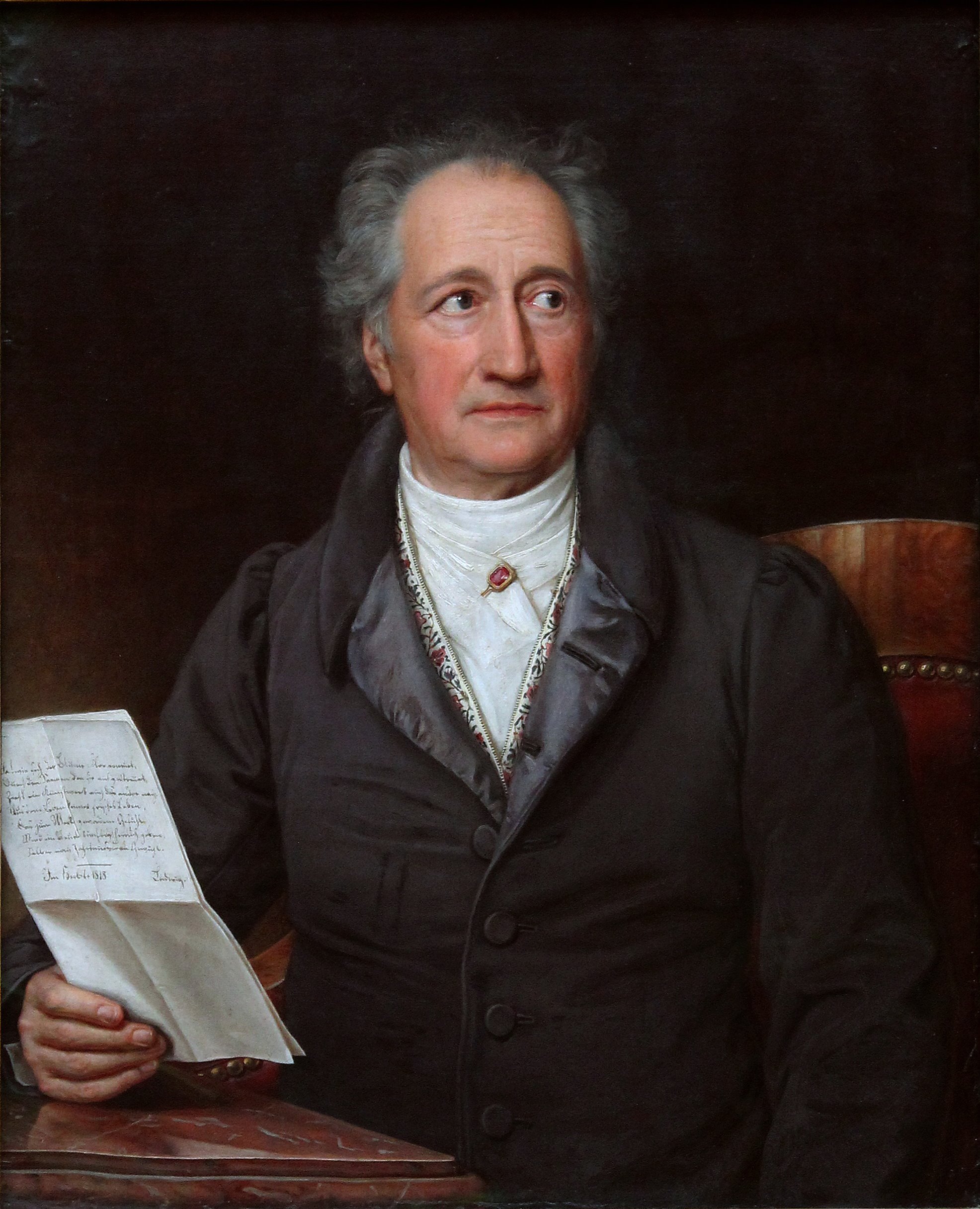
Goethe’s poetry – some new translations by John Greening

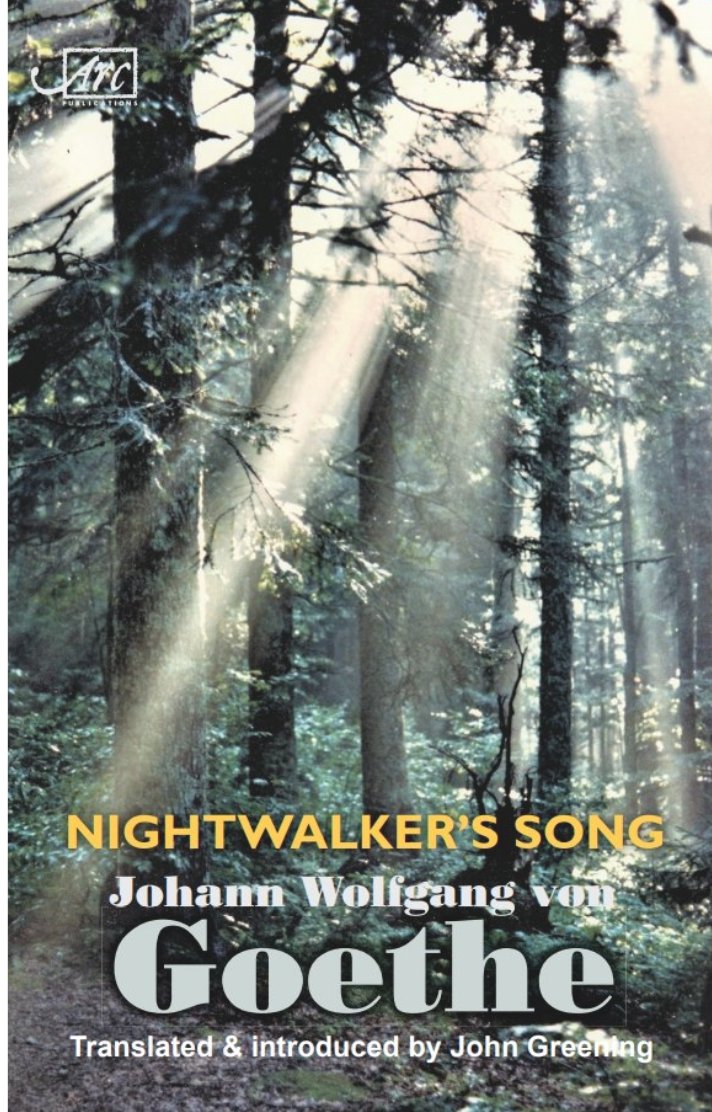
In this blog post, I am discussing John Greening’s new translations of a small selection (9 poems in all) from the works of Johann Wolfgang von Goethe. With the original German texts provided on facing pages, these translations are published as Nightwalker’s Song, by Arc Publications (2022). This review was originally commisioned and published by Acumen poetry magazine early in 2023. By the way, Acumen will be presenting a free to attend on-line celebration of its latest issue on Friday September 1st at 18.30 BST. It will include a brief reading of new work by yours truly, Gill McEvoy, Anthony Lawrence , Sarah Wimbush, Simon Richey, Dinah Livingstone, Michael Wilkinson, Jill Boucher, Jeremy Page, and others.

John Greening’s recent, self-confessedly ‘tightly-focused’ little selection from Goethe’s vast output is, in part, a campaigning publication. In his Introduction, Greening notes the difficulties surrounding the great German poet’s presence in English: the sheer volume of work, the range of that work, the man’s polymathic achievements (as poet, playwright, novelist, scientist, statesman, theatre director, critic), the long life untidily straddling all neat, period pigeon-holing. Christopher Reid has called him ‘the most forbidding of the great European poets’, but perhaps the English have come to see him as a mere jack-of-all-trades? And where do we turn to read and enjoy the poetry? Michael Hamburger’s and Christopher Middleton’s translations look more and more dated. David Luke’s Penguin Selected (1964; versified in 2005)is the most reliable source. But tellingly, as Greening says, one does not find young, contemporary poets offering individual translations of Goethe in their latest slim volume in the way we do with poems by Rilke or Hölderlin.

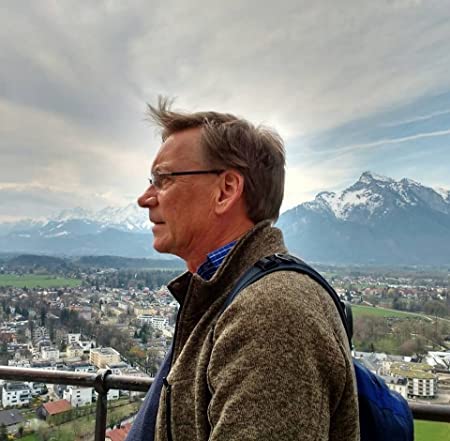
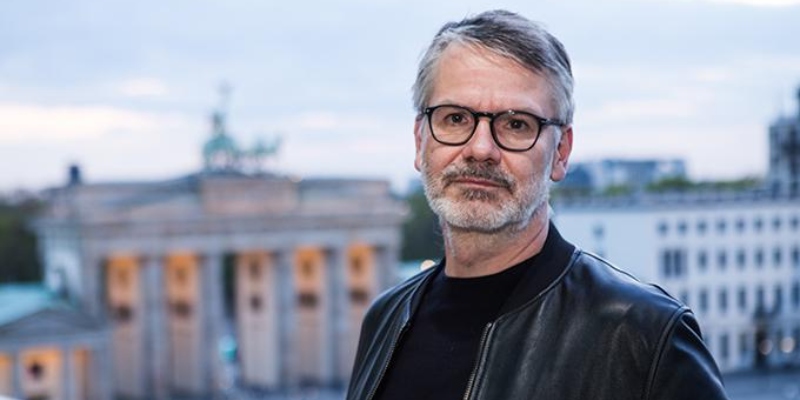
John Greening

So here Greening sets out a selection box of various Goethes to encourage other translators: we find nature poetry, romance, the artist as rebel, meditations on fate, erotic love poems, a rollicking ballad, dramatic monologue and a very fine sonnet. I like Greening’s determination not to lose the singing. Here, he has ‘shadowed’ the original metres and retained rhyme schemes, though he sensibly makes more use of pararhyme than Goethe’s full rhyming. While not approaching Lowellesque ‘imitations’, Greening has also sought a ‘contemporary texture’ by venturing to ‘modernise an image or an idea if it helped the poem adapt to a different age’. For example, in ‘Harz Mountains, Winter Journey’ (‘Harzreise im Winter’) Goethe’s buzzard has become the more familiar image, in southern England at least, of a red kite. The carriage or wagon (‘Wagen’) driven by Fortune becomes a car in a ‘motorcade’ and another vehicle is imagined ‘winking on to / the slip-road’. There’s also an enjoyable touch of Auden in Greening’s updating of ‘crumbling cliffs / and disused airfields’ (Middleton has ‘On impassable tracks / Through the void countryside’).

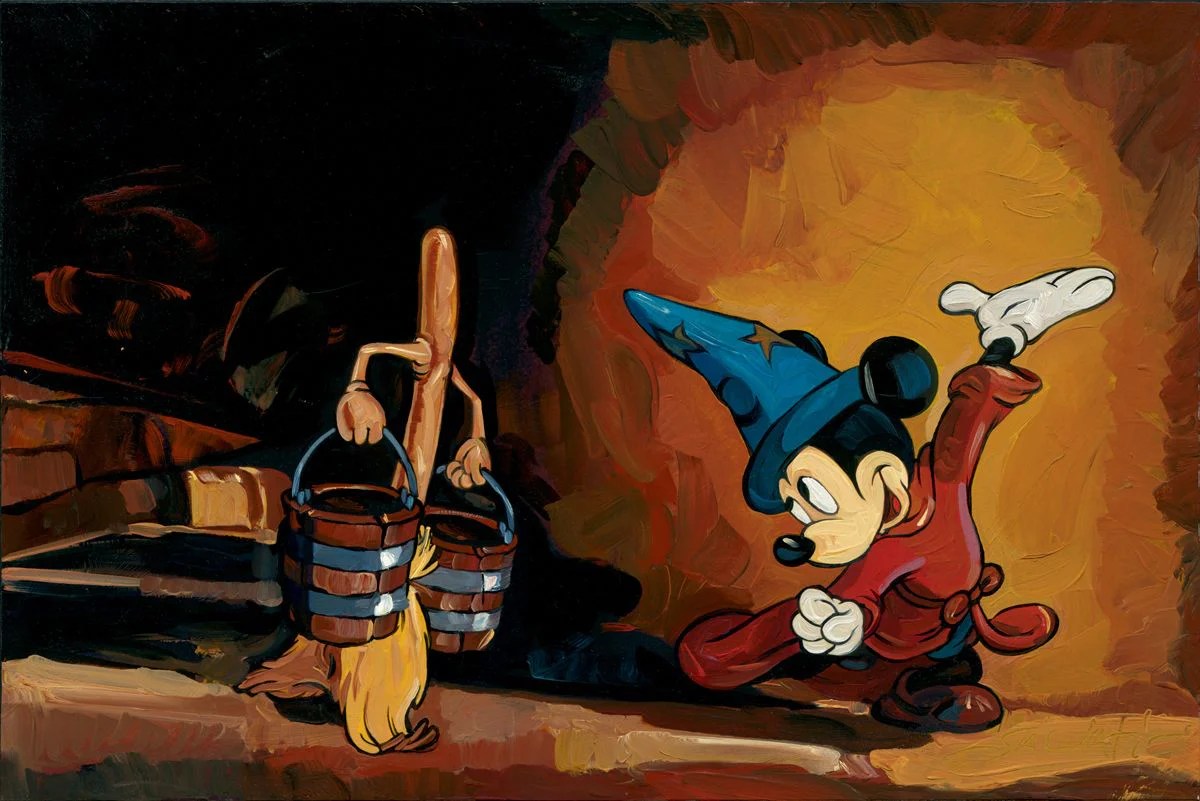
Walt Disney’s Sorcerer’s Apprentice

Greening’s skills in versification are well known and he deploys them all – and you can hear him enjoying himself – in ‘The Sorcerer’s Apprentice’: ‘Broomstick – up, it’s show time, haul your / glad rags on, so grey and grimy. / Seems you’ve seen long service, all you’re / fit for now is to obey me’. Though grace notes and fillers slow Goethe’s headlong verse (the opening line in German is simply ‘Und nun komm, du alter Besen!’ – ‘And now come on, you old broom!’), Greening’s rhyming is delightful and the modernising phrases (show time, glad rags) drive the poem along with a colloquial energy which is absolutely right.

Goethe’s ‘Prometheus’ – published in 1789, the year of revolution in France – is a growling dramatic monologue in which the rebel Titan (who stole fire from the gods to give to humankind) sneers and mocks the authority figure, Zeus. He belittles the top god in the opening lines by comparing him to a boy, thoughtlessly knocking the heads off thistles. Greening catches the mocking tone in the series of rhetorical questions later in the poem: ‘Honour you? For what? / Have you ever offered to lift / this agony?’ Prometheus ends – following one version of his story – by explaining he is creating the human race in his own image, ‘a new range’ translates Greening, neatly updating once more, ‘programmed / to suffer and to weep, or whoop and punch the air – / but who, like me, won’t care / about you’. In comparison, Luke’s version sounds rather fusty and less bolshie: ‘A race that shall suffer and weep / And know joy and delight too, / And heed you no more / Than I do!’

Johann Wolfgang von Goethe

Goethe is a great love poet. ‘Welcome and Farewell’ (‘Willkommen und Abschied‘) has a man approaching on horseback (Greening does not motorise on this occasion) through a moonlit landscape and the lover is spied at last: ‘how / I’d dreamt of (not deserved) all this’. The moment of union passes unspoken between stanzas three and four. As if instantaneously, now ‘the sun had risen’ and the parting must take place: ‘And yet, to have been loved – to love, / ye gods, such utter happiness’. It’s curious that Greening retains the rather archaic ‘ye gods’. One still hears the phrase, of course, but with more irony than I would have imagined here. The fifth of Goethe’s ‘Roman Elegies’ is a fabulous erotic piece. Written during the poet’s travels to Italy in the late 1780s, the narrator is studying classical culture by day and his female lover’s body by night. The latter nourishes the former: ‘I find I appreciate marble all the better for it, / and see with a feeling eye, feel with a seeing hand’. As he goes on, ‘compare and contrast’, I find Greening a little cool here. There is a selection of translations by D M Black (Love as Landscape Painter, from FRAS Publications in 2006) which generates more heat:

Yet how is it not learning, to scan that delectable bosom,

  Or when I slither my hands pleasantly over her hips?

Then I understand marble; then I discover connections,

  See with a feeling eye, feel with a seeing hand.

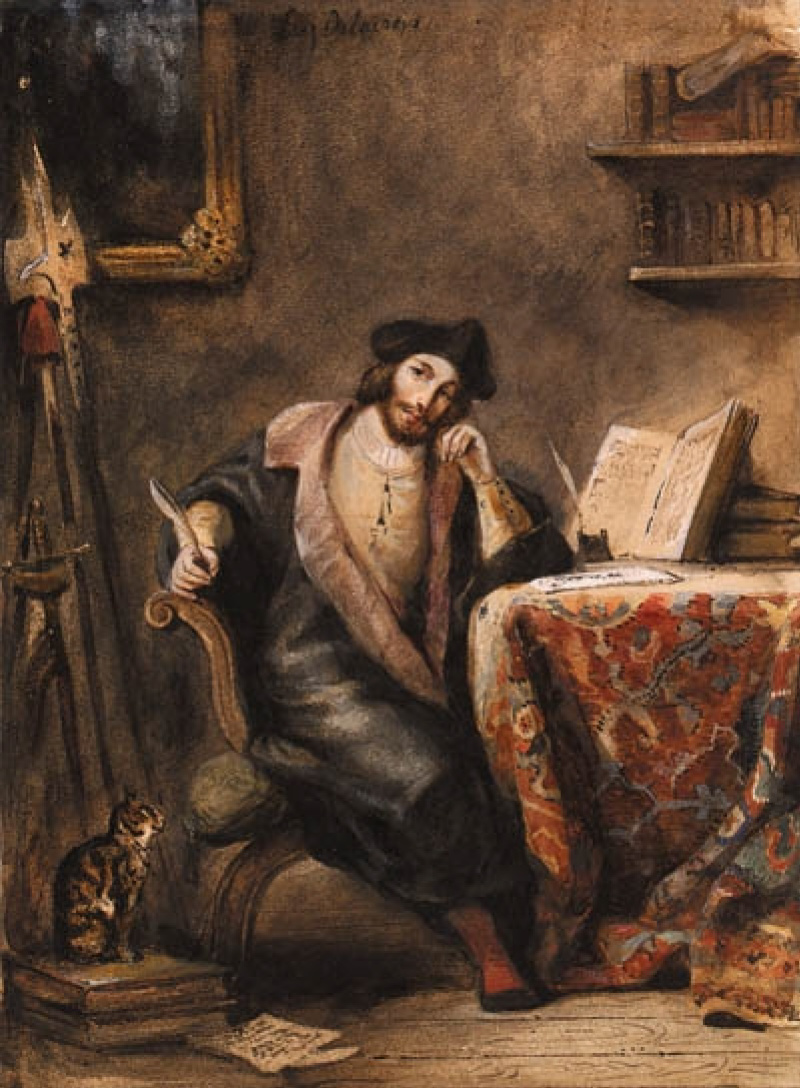
Faustus (by Eugene Delacroix)

Goethe’s Faust is represented here by the scholar’s opening speech to Part One (versioned, as it were, by Christopher Marlowe in the opening soliloquy of his Doctor Faustus). Greening excels in the handling of rhyme and line length, even compared to David Constantine’s 2005 Penguin translation. Perhaps most impressive of all is the sonnet ‘Nature and Art’ (‘Natur und Kunst’). Greening has the motor car in mind again in his updating of Goethe’s exploration of how the artist must labour incessantly to achieve the preparedness, the readiness to respond to Nature, to what is natural. Reading these lines, you feel Greening is translating as a skilled and experienced artist himself, triumphantly bringing a poem written in 1800 bang up to date:

It’s just a case of working long and late.

So once we’ve spent, let’s say, ten thousand hours

on steering, footwork, shifting through the gears,

it may be then some natural move feels right.

x

Creative though you be, you’ll strive in vain

to reach perfection if you’ve no technique,

however wired and woke your gifts may be.

x

You want a masterpiece? You’ll need to strain

those sinews, set your limits, drill and hack.

The rules are all we have to set us free.

For anyone yet to make the leap into Goethe-world, this little book is a terrific way into the great German writer’s work and such a reader will find Greening’s Introduction and his prefatory remarks to each of the chosen poems very helpful indeed. I recommend this collection.

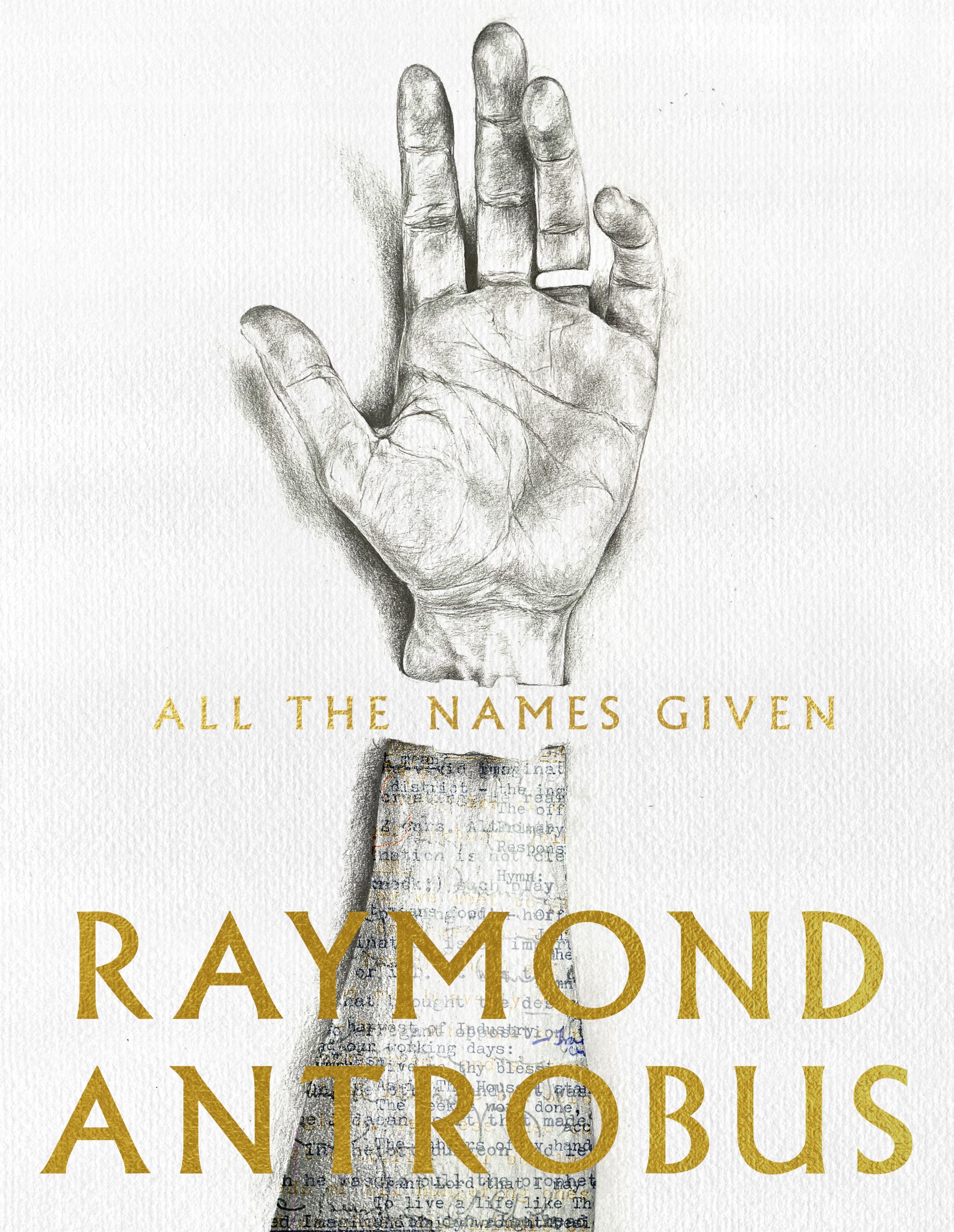
‘The Man Overstanding’ – on Raymond Antrobus’ ‘All The Names Given’

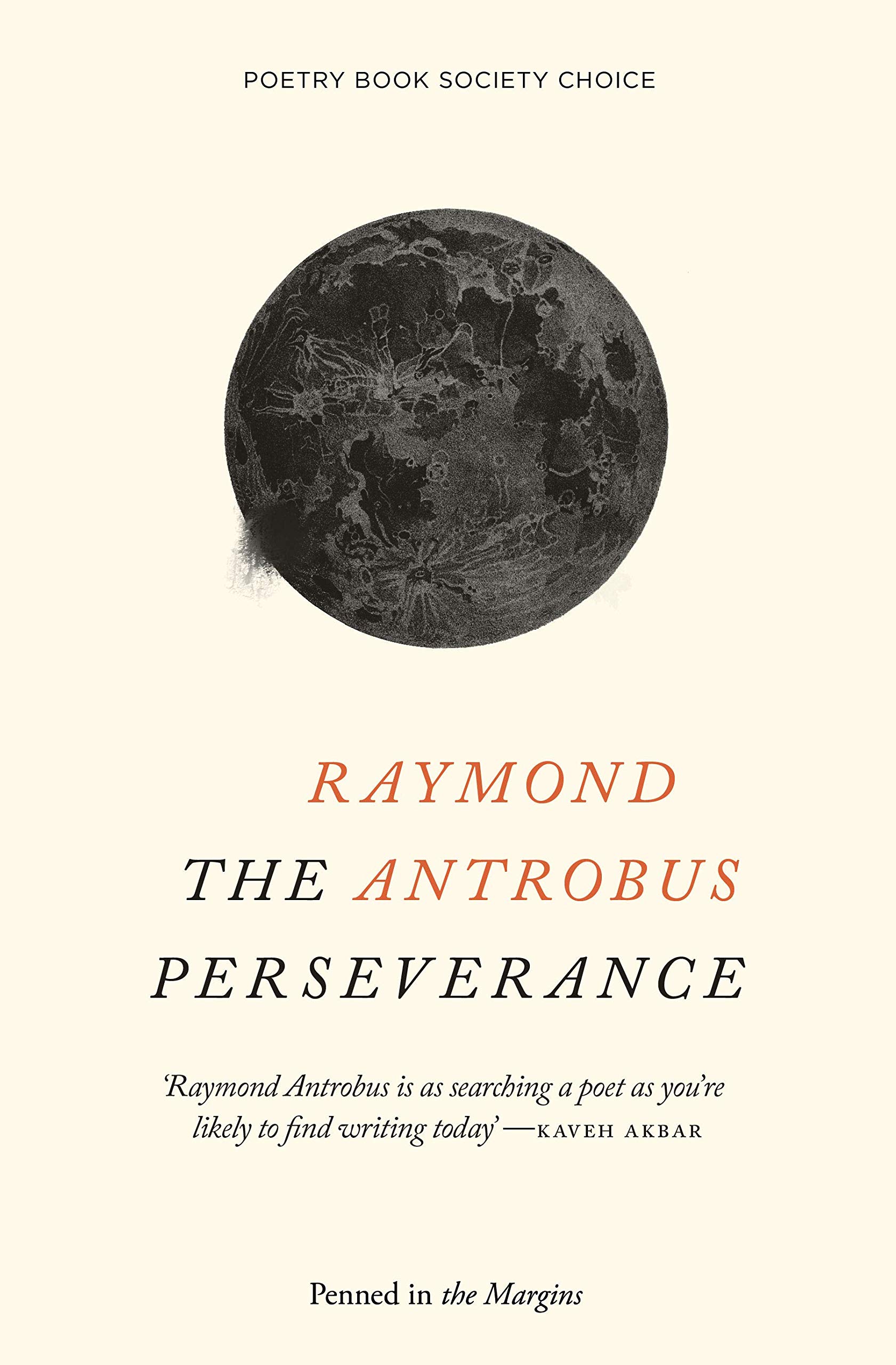
Genuinely acclaimed first books can be hard to follow up. Raymond Antrobus’ The Perseverance (Penned in the Margins, 2018) was a Poetry Book Society Choice and won the Ted Hughes Award and the Rathbone’s Folio Prize in 2019. I reviewed the book that year as one of the five collections shortlisted for the Forward Felix Dennis First Collection Prize. In many ways it was a conventional book of poems – its voice was colloquial, it successfully employed a range of (now) traditional forms (dramatic monologues, prose poem, sestina, ghazal, pantoum), its syntax and punctuation were nothing out of the ordinary. Its subject matter was to a large extent dominated by a son’s difficult relationship with his father, by questions of racial identity and (this is what made it especially distinctive) the experience of a young Deaf man. Besides the latter, what really marked the book out (I argued) was ‘that impossible-to-teach, impossible-to-fake, not especially ultra-modern quality of compassion’. Listen to Raymond Antrobus talking about his first collection here.

Now several years on and literary acclaim, a new publisher (this book is published by Picador Poetry – Penned in the Margins has since sadly ceased operations), a recent marriage and a broadening of perspective (particularly towards the USA) all place Antrobus in a very different environment. He has set aside a lot of the experimentation with recognised forms (which is not to say the new poems do not experiment with poetic form) and the book opens very positively:

Give thanks to the wheels touching tarmac at JFK,

give thanks to the latches, handles, what we squeeze

x

into cabins, the wobbling wings, the arrivals,

departures, the long line at the gates, the nerves held,

x

give thanks to the hand returning the passport [. . .]

In a similar tone, ‘The Acceptance’ concludes with the word ‘Welcome’ being signed. But the 30 lines preceding this hark back to that ‘complicated man’ (a phrase from ‘Dementia’, from The Perseverance), the poet’s father. Though dead for several years now, he continues to haunt his son’s dreams and a number of these new poems. In ‘Every Black Man’, the ‘dark dreadlocked Jamaican father’ meets his prospective, English mother-in-law for the first time. He’s already drunk, there is shouting, he lashes out, she racially insults him: they never meet in the same room again. The father’s ‘heartless sense of humour’ is turned into a slow blues: ‘I think that’s how he handled pain, drink his only tutor’ (‘Heartless Humour Blues’). And the man’s ‘complication’ is reaffirmed in the poem, ‘Arose’, in which, talking to his embarrassed son, the father boasts of the great sex had with the boy’s mother, but then is touchingly remembered, calling out her name: ‘Rose? And he said it like something in him / grew towards the light.’

But All The Names Given also pays more fulsome tribute to Antrobus’ mother. In ‘Her Taste’, despite her conventional, English, religious background, she drops out, joins a circus (literally, I think!), has various relationships, and eventually gets pregnant by Seymour, the ‘complicated man’ from Jamaica, who left her to raise the children. Thirty years on, she’s defiant, independent, ‘holding her head higher at seventy’. We see her leafing through a scrapbook of her past, ‘rolling a spliff on somebody’s balcony’ or again, ‘in church reading Bertrand Russell’s ‘Why I’m Not a Christian’.’ Despite such moments, the maternal portrait does not quite possess the vivid distinctiveness of the paternal one. But, with the benefit of the passing years, Antrobus can now write, ‘On Being A Son’, in which he unreservedly praises Rose in her neediness, her self-sufficiency, her helplessness with IT, her helpfulness in so much else. He concludes, channelling her voice: ‘mother / dyes her hair, / don’t say greying / say sea salt / and cream’.

This greater focus on the mother is partly a redressing of the previous book’s gender imbalance, but it is also at one with Antrobus’ interest in family and heritage as offering clues to his own identity. It turns out the Antrobus name – from his mother’s English side – is anciently English (or far distantly Norse) and associated with Antrobus in Cheshire. ‘Antrobus or Land of Angels’ records a visit (by mother and son) to the place, to face the suspicious looks in The Antrobus Arms, the guard dogs at the Hall:

A farmer appears, asks if we’re descended

from Edmund Antrobus.

x

Sir Edmund Antrobus, (3rd baronet)

slaver, beloved father,

over-seer, owner of plantations

x

in Jamaica, British Guiana and St Kitts.

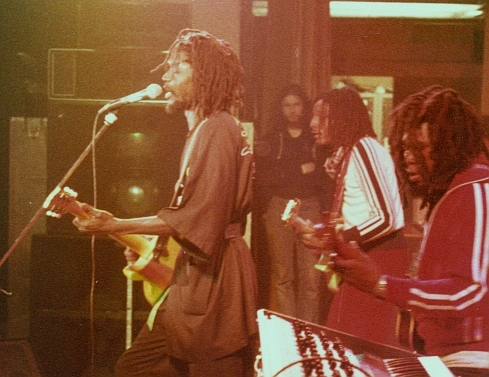
Peter Tosh with Robbie Shakespeare, 1978

The son’s quick denial of the line of descent is a complex moment. Despite carrying the same name, his mother is not truly a descendant. But given His Lordship’s slave-owning history, who is to say whether there is any genetic relation, ironically, through his Jamaican-born father, Seymour. The thought surfaces in ‘Horror Scene as Black English Royal (Captioned)’. Antrobus’ note tells us this poem was sparked by tabloid/CNN speculations in 2019 about the likely ‘blackness’ of the Sussexes’ royal baby. The poem’s narrator looks down at his own hands and sees ‘your great-great-great Grandfather’s owner’s hands’.

Tyrone Givans

So All The Names Given quickly reveals itself to be a book deeply troubled by the kinds of questions raised in the poem ‘Plantation Paint’: ‘Why am I like this? // What am I like? / Who does / it matter to?’ In this second book, Antrobus is still working towards an ‘overstanding’. The idea was alluded to in The Perseverance via a Peter Tosh lyric: ‘love is the man overstanding’. It is a form of understanding that emerges after all untruths have been overcome. The truths, untruths and complications of identity preoccupy the majority of these new poems. Only occasionally does Antrobus set aside such profound (perhaps irresolvable) anxieties. The African/Vietnamese waitress in ‘A Short Speech Written on Receipts’ is a figure who seems to outweigh the poet’s wrangling over his own selfhood, leading him to wonder: ‘Maybe kindness is how / you take down the stalls’. The gates of compassion also open frankly and to great effect in ‘At Every Edge’ and ‘A Paper Shrine’, two brief poems remembering very different students in creative writing classes. Likewise, ‘For Tyrone Givans’, commemorates a young Deaf man (a friend and contemporary of Antrobus) who committed suicide in Pentonville Prison in 2018. Here too, the vector of attention is outwards, towards Tyrone’s mistreatment by the authorities, his suffering and despair, rather than inwards towards the poet’s own ‘complications’:

Tyrone, the last time I saw you alive

I’d dropped my pen

on the staircase

x

didn’t hear it fall but you saw and ran

down to get it, handed it to me

before disappearing, said,

x

you might need this.

This review was originally commisioned and published by The High Window

‘Letter to my Younger Self’ – a third brief Royal Literary Fund talk

As a Royal Literary Fund Fellow based at The British Library in London (though working on-line for the most part), I was asked way back in May 2020 (feels like a different world) to write and record three brief talks. One of these was on ‘Writing and Technology’ which I posted (as text and audio file) on this blog a few months ago. Another commision was to be titled ‘How I Write’ – not an easy subject on which to be clear and succinct but with a little help from WH Auden and Louise Gluck I hope I managed to say something that might be of help to all kinds of writers – poets, novelists and (the target audience of the RLF project) those writing at the varied levels of academe.You can read my blog (and hear me read the essay) here. The third and final essay was an intriguing invitation to write a ‘Letter to My Younger Self’. The recording of that piece has now been released and is available as an audio file on the RLF’s VOX site. You can read the Letter below – or listen to me read it by clicking here – or both at the same time if you’d like. Afterwards I have also posted a poem relevant to that particular biographical moment. An earlier version of this poem first appeared, a long while back, in The London Magazine.

Letter to my Younger Self

Dear Martyn,

You will have just got off the train from London Bridge. It’s 1976. The end of a day studying Medicine which you begin to hate. And now back to Eltham Park, to digs you’ve loathed since you arrived (the well-meaning landlady is no substitute for your mother). Probably you walked past that little music shop somewhere near the station, spending minutes gazing at the red sunburst acoustic guitar in the window. If it doesn’t sound too weird, I can tell you – you’ll buy it and strum on it for 10 years or more. I can also confirm your fear: you fail your first-year exams. The Medical School allows you to leave . . . But listen, that sense of failure and lostness, it will pass.

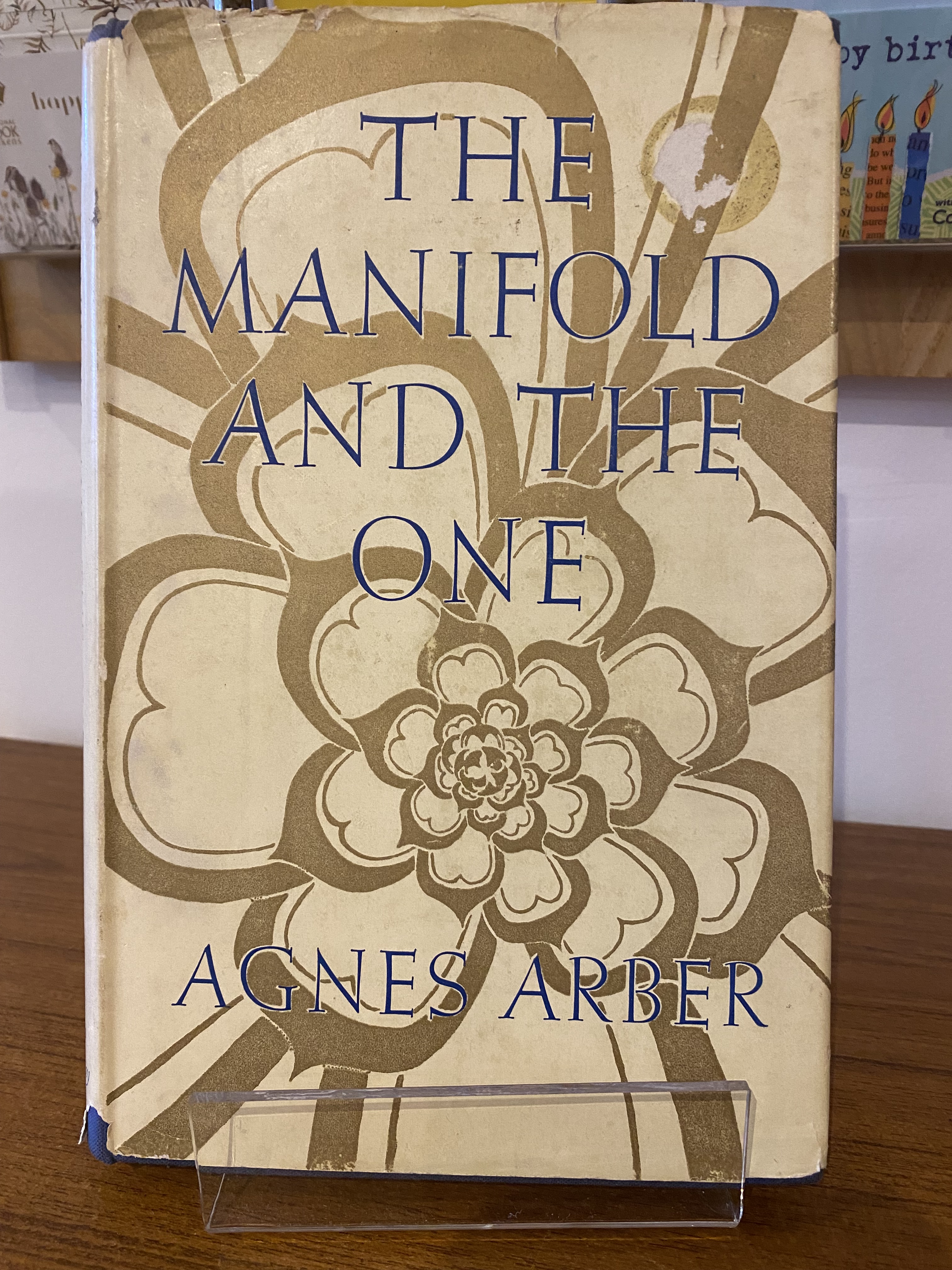
Keep on with the music, though your playing is not up to much and your singing . . . well, the less said. But writing songs will eventually lead somewhere. And the illicit books! You are supposed to be reading the monumental Gray’s Anatomy, textbooks on Pharmacology, Biochemistry, all emptying like sand out of your head. You’ve yet to go into that charity shop and pick up a book called The Manifold and the One by Agnes Arber. You’ll be attracted by the philosophical-sounding title; in your growing unhappiness at Medical School you have a sense of becoming deep. The questions you ask don’t have easy answers. You have a notion this is called philosophy. Amidst the dissections, test tubes and bunsens, you’ll find consolation in Arber’s idea that life is an imperfect struggle of “the awry and the fragmentary”.

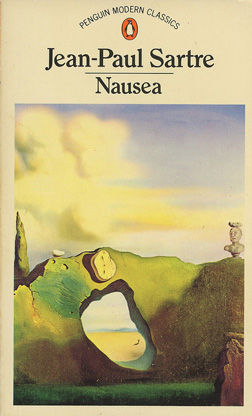
And those mawkish song lyrics you are writing? They will become more dense, exchanging singer-songwriting clichés for clichés you clumsily pick up from reading Wordsworth (you love the countryside), Sartre’s Nausea (you know you’re depressed) and Allan Watts’ The Wisdom of Insecurity (you are unsure of who you are). Up ahead, you take a year out to study English A level at an FE College. Your newly chosen philosophy degree gradually morphs into a literature one and with a good dose of Sartrean self-creativity (life being malleable, existence rather than essence) you edit the university’s poetry magazine, write stories, write plays, even act a little (fallen amongst theatricals!).

At some point, the English Romantic writers get a grip on you, taking you to Oxford where you really do conceive of yourself as a poet, get something published, hang out with others who want the same. Then guess what – for a teenager who’d so little to say for himself in class – teaching becomes a way of continuing to study and write while making a living. It suits. It takes us out of ourselves.

Along the way, you write some poems you are proud of. You will suffer the writer’s curse, of course: the recurrent fear of not being able to turn the trick again. But I’m sending you this to say, through all the years ahead, it is words that will infinitely enrich your life. So pick up the pad you doodle on in lectures. Write a line. Write another line. I see you hunched over a dim-lit desk, but no question – yes – you are heading in my direction.

With best wishes,

Martyn

x

How to fail at anatomy

x

This one believed

he maybe had the brains

another that he had

the right demeanour

x

but the Schools denied him

till it was too late

then reprieved him

with the offer of a place

x

that by then he knew

could not be refused

(such anticipation

had struck such roots)

x

so he has no recall

of the moment of choice

before those appalling

digs in Eltham

x

where he had to stow

his dislocated skeleton

under the bed—crammed

one side of his head

x

with tendons muscles

and pharmacol

with biochem and

bright sets of nerves

x

everything spilling out

the other side

into failure—fallen

to wandering streets

x

to stealing Everyman’s

Selected Wordsworth

he was John Stuart Mill

wishing his soul

x

saved though he felt

love etiolating

the girl from home

now a girl from home

x

her kisses like shrugs

at London Bridge

saying go your own way

at least not imposed

x

not merely allowed

and if you want to live

deliberately first

you slit the shroud

Five New Rilke Translations in ‘The Fortnightly Review’

Wishing all my blog readers this season’s greetings.

Quite unseasonally perhaps, here is an image of a gazelle – gazella dorcas – the kind of one Rilke is writing about in my translation below, with that ‘listening, alert’ look. The other extraordinary image that Rilke imcludes here is of the hind legs: ‘as if each shapely leg / were a shotgun, loaded with leap after leap’. This is one of the New Poems, written by Rilke under the influence of the sculptor, Auguste Rodin. Rilke learned from Rodin’s insistence on ‘looking’ closely at a subject, as well as his impressive work ethic!

Enchanted one: how could the harmony
of two chosen words ever match the rhyme
that comes and goes within you? The way
branch and lyre start from your brow like a sign

and every part of you is like a lover’s song,
the words falling tenderly as the rose
lets drop petals on one who does not read on,
but, shutting his eyes, lets the book close

to gaze at you: as if each shapely leg
were a shotgun, loaded with leap after leap,
undischarged, while your head tilts on your neck,

listening, alert: a girl who has ventured deep
into a wood, startled by sounds as she bathes,
the glint of forest pool on her upturned face.

This is one of five new translations which have just been posted at The Fortnightly Review. Click the link below to see the others – ‘Departure of the Prodigal Son’, ‘Pieta’, ‘God in the Middle Ages’ and ‘Saint Sebastian’.

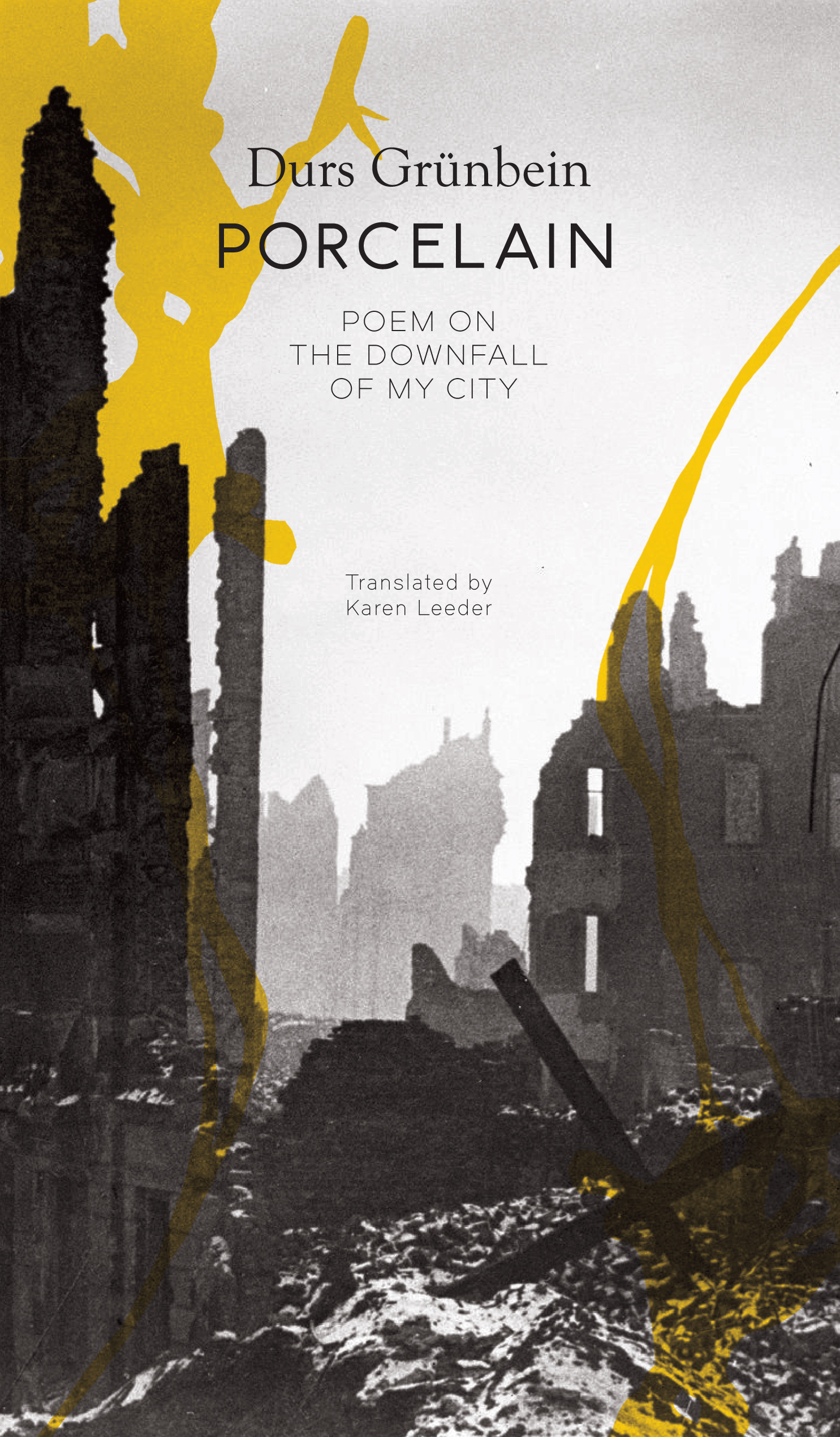
Ash-Hiccups: on ‘Porcelain’ (2005) by Durs Grünbein

This review of Durs Grünbein’s stunning long poem, Porcelain, tr. Karen Leeder (Seagull Books, 2020) first appeared in a recent issue of Agenda. Leeder’s clever, formal, utterly sympathetic translation has since rightly been awarded the 2021 Schlegel-Tieck Translation Prize by the Society of Authors.

For a writer who has published over 30 books of poetry and prose in his native Germany, we have had too little of Durs Grünbein in English. Michael Hofmann‘s Ashes for Breakfast (Faber, 2005) introduced some of the earlier work and described Grünbein as possessed of melancholia, amplitude, a love of Brodsky, a love of the Classics, plus wide-ranging interests in medicine, neuroscience, contemporary art and metaphysics. John Ashbery praised Grünbein, identifying his subject as “this life, so useless, so rich” and the challenge to any translator is precisely this breadth and ambition. Happily, Karen Leeder is proving to be a really fine conduit for Grünbein’s work and here she triumphantly tackles his 2005 sequence of poems about the firebombing of his hometown, Dresden, by American and British planes in February 1945.

Porcelain is a sequence of 49 poems, 10 lines each, rhymed and grounded in Classical metre and given an air of Classical elegy by its subtitle, ‘Poem on the Downfall of My City’ (‘Poem vom Untergang meiner Stadt’). But if resolution, consolation or summing-up might be expected, this is, definitively, not what we get. The title, of course, refers to the Meissen pottery which, from the eighteenth century on, brought Dresden its great wealth and fame. But it is also a pun on the poet to whom the sequence is dedicated: Paul Celan. In Celan’s poem ‘Your eyes embraced’ there is an effort to swallow the ashes of genocide but they return to the throat as ‘Ash- / hiccups’, an image repeated in Grünbein’s opening poem: “It comes back like hiccups: elegy”. The sequence does indeed hiccup in the sense of its jerky shifts of tone, its multi-faceted images of Grunbein himself and in its close to choking articulation of the horrors of the Dresden bombing.

Paul Celan

A self-conscious awkwardness or self-questioning is clear from the start: “Why complain, Johnny-come-lately? Dresden was long gone / when your little light first appeared”. Grünbein was born seventeen years after the bombing and accepts he cannot ‘witness’ the event in any simple way. But personal details do surface in the sequence such as in poem 8 where the young boy grows familiar with the still evident urban destruction: “proud and mute . . . the ravaged city”. He senses something of “that glory passed away” but can hardly know “the things [his] mother saw, / scarcely five years old” (poem 10). Later poems remember moments when his mother’s doll was in danger of the flames (“Flames as high as houses sucked the air along the streets”), but was rescued, unscathed, “or that is what they say” (poems 40/41). Leeder explains in her Introduction that Grünbein has been criticised in part for a sentimentality and this is perhaps such a moment. But the indication that this is reportage (family reportage at that) gives permission for sentiment and Grünbein is fully conscious of (and in control of) the massive swings in tone through the whole sequence. Poem 48 is one that might also lay itself open to charges of sentiment, focussing on a pair of lovers (Martha and Heinrich) seemingly caught up in the devastation: “Kids, the pair of you, first kisses in the thick of war, / until you met that night you’d grown up in uniform”. But Grünbein works repeatedly through allusiveness and intertextuality, so this Romeo and Juliet trope is hardened and complicated when we hear that, not only was the German air defence’s grid reference for Dresden code-named ‘Martha-Heinrich 8’, but also that both names recall characters in Goethe’s Faust.

In poem 38, Grünbein seems equally aware that some of his images of Dresden after the bombing might be open to the same criticism of a hyper-emotional tone. “Five long weeks upon the Altmarkt square, the horses / scratched the straw and watched the griddled corpses / burn. Mawkish? Ach, give over, late-born soul”. As this example shows, the sequence does confront the horrors unleashed on the city as in poem 22: “Are those people popping like chestnuts between / the gutted trams?” But looked at more carefully, even this grisly observation is nominally from the perspective of a stone angel on the cathedral roof. It is this continual innovation and manipulation of perspective that is important to the poems’ purpose and how we should read them. One important perspective Grünbein explores is the victim-narrative that predominated in thinking about the event in post-war East Germany and more recently. One aspect of this is the placing of the Dresden bombing in the historical context of German bombing of Warsaw in 1944 and the German’s systematic persecution of the Jews. Dresden’s fate did not rise ex nihilo. This latter myth, Grünbein embodies in the eroticisation of the bombing – the city as defenceless virgin – as in poem 45’s image of the city and the Elbe: “River like a sash of silver draped round her hips / enticing in the moonlight”.

Aerial View of Dresden circa 1930

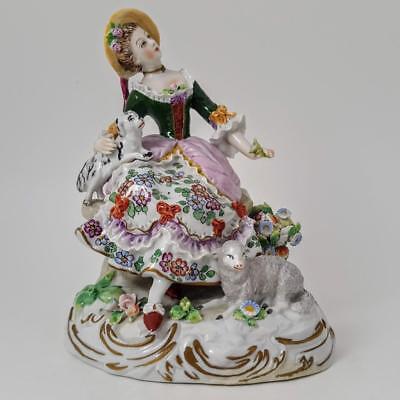
From such examples, it’s easy to see why Grünbein’s own position on the bombing has been vociferously discussed and questioned. But he warns against using the destruction of the city as any kind of exemplum: “Let Dresden be. You won’t find what you are looking for” (poem 6). The reader understands he is also advising himself here, while, at the same time, acknowledging the human drive to interpret, to search for meaning, even in the most appalling events. The sequence’s treatment of Arthur ‘Bomber’ Harris, the RAF Commander-in-Chief during the bombing of Dresden, is interestingly equivocal. Poem 4 alludes almost invisibly to Harris’ comment on the Dresden bombing, when he suggested that objections to it were based on a sentimental image of the city as full of “German bands and Dresden shepherdesses” when, in reality, it was a Nazi munitions and transportation centre. In fact, Harris was carrying out orders from Winston Churchill: “No sweat, Arthur, you only did what you had to do” (poem 13). And in poem 23, Grünbein also notes that some more recent left-wingers in Germany have chanted ‘Thank you, Harris!’ in their efforts to question and counter more simplistic, victim-narrative commemorations of the event.

Meissen Shepherdess Figure

In such ways, Porcelain revels in its own pluralities while acknowledging and itself attempting to make some sense of an epitome of senseless destruction. The final line of the book plainly states the human need to avoid finality, the fall into fixity, yet accepts the compulsion to explain, to create meaning: “Changing places, times, dimensions as he goes—goes on—creating”. And behind all this stand those exquisite china objects, the ‘white gold’ that made the city rich and famous:

Falconers are there, vintners, nymphs with conch-shell horns,

frog-faced putti, figures riding seahorses and swans.

Groups of shepherdesses, lovely gardeners, beasts of lore . . .

Porcelain—most fragile thing”

The collision of Allied bombs and Dresden’s fragile porcelain lies at the heart of Grünbein’s poems. There was no contest, of course, though some pieces and many fragments remained and were perhaps repaired. Grünbein’s poems enact this process, collecting perspectives, often incongruous, even contradictory, but bringing them into relation with each other, not to make any definitive statement, but to hold up a mirror to us, to the recurrent tension between our need to create and our drive to destroy.

Durs Grünbein

Five poems by Chen Xianfa – Translated by Martyn Crucefix and Nancy Feng Liang

So pleased to have these 5 poems published by The Galway Review. This is another of my translation projects (working with Nancy Feng Liang, without whom none of this would be possible of course). We ‘met’ during last year’s Cambridge Poetry Festival and she was looking for an English language poet to work on Chen Xianfa’s collection ‘Poems in Nines’ (2018). The more I have done so the more I love his work. I hope you enjoy these poems.

Admin's avatarThe Galway Review

Biographies of the three writers involved in this submission

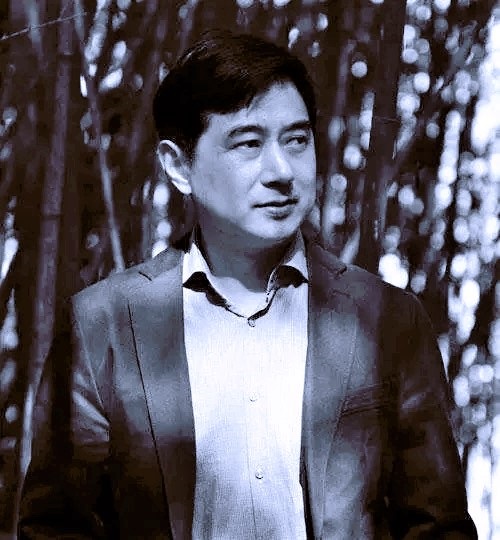
Chen Xianfa is a prize-winning poet and journalist, born in Anhui Province, China. He has published five books of poems: Death in the Spring (1994), Past Life (2005), Engraving the Tombstone (2011), On Raising Cranes (2015; in English tr. 2017) and Poems in Nines (2018; bilingual Chinese/English, tr. Nancy Feng Liang, publ. China) which was awarded the Lu Xun Prize. A Selected Poems appeared in 2019. He has published two collections of essays, Heichiba Notes (2014 and 2021). Other awards include China’s Top Ten Influential Poets (1998-2008), the Hainan Biennial Poetry Prize (2011), Yuan Kejia Poetry Prize (2013), Tian Wen Poetry Prize (2015) and the Chenzi’ang Poetry Prize (2016).


Translators

Martyn Crucefix – recent publications are Cargo of Limbs (Hercules Editions, 2019) and The Lovely Disciplines (Seren, 2017). These Numbered Days, translations of the poems of Peter Huchel (Shearsman, 2019) won…

View original post 952 more words