More than 10 years of blogging on poetry and translation – over 39,000 views in 2024 – now captured and preserved at the UK Web Archive: 'one of the top 10 poetry blogs' (Rogue Strands)
This review is an extended version of the one which first appeared in Acumen Poetry Magazine in the autumn of 2025. Many thanks to the reviews editor, Andrew Geary, for commissioning it.
Considered by Thomas Mann as ‘the first lady of German letters’ and as the first woman to receive the prestigious Goethe Award (1931), Ricarda Huch (1864-1947) was a literary superstar of her time, yet remains little known in English. She was an historian who published novels, philosophy, drama and poetry. With the rise of Hitler, she made her rejection of Nazi doctrine clear, remaining in Germany as an ‘inner émigré’, but surviving the war years. Autumn Fire (Poetry Salzberg, 2024) is her last collection, published in 1944, and powerfully reflects her lifelong fascination with the Romantic movement. As Karen Leeder’s scene-setting Introduction explains, this is evidenced in the poems’ formal choices as well as imagery, ‘a repertoire of sprites, flowers, scents, birdsong, gardens, moons, fairy tales, and love’. An English poetry reader would initially place this work in parallel to the least challenging of the Georgian poets of 1914.
There is frequently a faux medievalism at work, as in ‘The trees of autumn murmur’ which tells the story of a Prince who wanders into the woods and is bewitched by ‘fairies wild’ to live a sad, unloving, unhappy life. Other poems remind us of Hardy’s folkloric, time-obsessed lyrics in similarly challenging stanza forms:
On far-off floors the dancers face the middle,
The hems swing stiffly to the threshers’ drum.
Accordion and bass and fiddle
Ethereal hum.
(‘Autumn’)
Also from the stock Romantic image bank comes the isolated, tortured figure of the poet who, as spring days arrive, remains unmoved by them because mysteriously ‘troubled’ and when called upon to sing his songs (this is Huch’s own masculine gendering), finds that his creative efforts are ‘unwelcome’ to society at large (‘Morning of twittering birds’).
However, a closer reading of Huch’s poems clarifies their curiously hybrid effects, as in ‘The Old Minstrel’ in which the violent early years of the twentieth century come forward dressed in medieval garb. The narrative voice encourages the minstrel to sing and play his harp: ‘songs of golden treasure, / Times of playfulness and pleasure’. But the final lines of the poem are spoken (we must assume) by the minstrel who warns that what may come from him demands powerful trigger warnings:
Woe betide ye when I call
Forth my lions, every string,
Dumb in dusty ambuscade,
Torpid now, glistening
Thick with matted blood!
Huch boldly leaves the poem there, without any return to a possibly moderating, narrative voice. ‘The Heroes’ Tomb’ also makes use of familiar images (a tomb, a blustery November day, an old man, a passing shepherd, a youngster asking questions) to address a distanced ‘wicked war’. This poem similarly ends bloodily (though note, we are still in the era of swords rather than machine guns), as those who are inclined to stoop and listen at the tomb, can ‘make out far below the clash of swords, / And tell the drip, drip, drip, and hear the sound. / Can it be blood?’
Such lines contrast the lark’s song, the perfumed jasmine, the poplars and lime trees inhabiting so many of these pages and Huch herself seems to shuttle between a religious-based optimism and a much more modern sounding despair. In ‘Moonlit Night’, an owl flies through a wood and takes a mouse as prey. The moon seems to be portrayed as looking on, wholly indifferent, as it picks its way through the branches, ‘twinkle-toed and light’. Only the form and language here makes the poem feel less than genuinely Modern. As for the owl, it becomes proleptic of technological advances in air warfare as she sweeps off through the wood, ‘the murderess, / whose claws the victim hold, / airborne above black treetops’ emptiness’. Another predator image later provides the reader with a further shock. In ‘My heart, my lion, grasps its prey’, the latter is identified as ‘the hated’. And the passionate nature of Huch’s antagonism – though the object of her hate is never named – is startling, and she uses repetition, shortened lines and rhyme to make her point:
My heart hates yet the hated,
My heart holds fast its prey,
That none may palter or gainsay,
No liar gild the worst,
Nor lift the curse from the accursed.
Almost inevitably you feel, the elements of modern warfare seep into Huch’s poems. In the midst of another Hardyesque stanzaic poem, between the ‘honey-brown’ buds on the trees and the lark’s ‘music-making’, more familiar ‘war poem’ sounds provide the base notes: ‘The earth shakes with battle, the air with shellfire heaves’ (‘War Winter’). The ABAB quatrains of ‘The Young Fallen’ mourn those taken by war by first evoking the innocence of their childhoods, schooldays, their unfulfilled worldly ambitions. Then ‘War came’. And though much of the detail and imagery could be applied to wars fought anytime in the last few centuries, there are moments when the realities of the mid-twentieth century cannot be denied. The young men’s hands are a focus, as they ‘Not long ago reached out for toys and fun. / Those hands, conversant with the tools of murder, / Control the howitzer and grip the gun’.
In fact, Huch was living in Jena when the city was bombed by the Allies and ‘The Flying Death’ comes closer than any other poem in conveying her experiences of modern warfare. Though the Flying Death is an old-fashioned personification, its modus operandi is up to date: ‘The chimney reels, the roof-beams groan, / By distant thunder he is known’. Even as the air bombardment is imaged as approaching on ‘iron steeds’, its impact is plainly conveyed as ‘A whistling, hissing din, and more, / A jarring shriek is heard, a roar, / As if the earth would burst.’ This Poetry Salzberg publication unfortunately does not give the reader the original German, but Timothy Adès’ translations are quite brilliant in their preservation of form and rhyme, while at the same time conveying both the sweetness and the violence in Huch’s curious, powerful, under-appreciated poetry.
Excerpts from Autumn Fire, tr. Timothy Adès
Stralsund
The old grey town that blue sea girds: The swell of rust-red sails, The squawking, tumbling salt-sea birds, The flash of clean fish-scales.
On this church wall the pounding wave And tempest waste their fire: Though organ-thunder shakes the nave, No foe hurls down the spire.
The clouds with tender beating wing Caress its head, that dreams Of fierce-fought battles reddening Its foot with gory streams.
The dead are sleeping, stone by stone, The sounding bells request: Eternal memory, my son, Be thine, eternal rest!
Music
Melodies heal up our every smart; Happiness, Lost to us, they redress; They are balsam to our ailing heart.
From the earth where we without respite Toil enslaved, As on wings of blessed angels saved They transport us to a land of light.
Sound, sound forth, ye songs of mystery! Worlds fly far; Earth sinks down, our red and bloodstained star; Love distils its essence from on high.
I’ve recently seen announced a celebration of the work of Geoffrey Grigson (1905-1985), scheduled to take place at 7.30pm, on Tuesday March 4th at West Greenwich Library. The event is called ‘In His Own Voice: Geoffrey’s Grigson’s Poetry’ and is being organised by John Greening with contributions from Grigson’s daughter, Caroline, his grandson, Joe Banks, and poets Graham High and Blake Morrison (and archive recordings of the poet himself). The event is free to attend (donations welcome), plus refreshments and books on sale. Texts will be projected on screen. As the event blurb reminds us, Grigson lived and worked through amazing times, culturally and politically, and was a prolific poet, writer, critic and editor. At the centre of English intellectual life, he knew the poetry grandees of his days and greatly admired those of the past. When he was only 27, he founded the bi-monthly journal ‘New Verse’, thus becoming hugely influential in the poetry world. I reviewed John Greening’s selection of Grigson’s work when it came out in 2017, and this seems an opportune moment to re-post it here and on my new Substack.
Surely we all have one or two Faber anthologies edited by Geoffrey Grigson on our shelves? Love Poems, Popular Verse, Reflective Verse, Nonsense Verse, Poems and Places, Epigrams and Epitaphs . . . As a critic he often wielded a savage power through his magazine New Verse. And as a big beast on the literary scene of the early 1980s, Hermione Lee interviewed him on Channel 4. But since his death in 1985, he’s better known merely as the husband of Jane Grigson, the celebrated cookery writer. His own poetry has been neglected which made John Greening’s 2017 Selected Poems from Greenwich Exchange a welcome opportunity to re-consider it. I think Grigson’s contrasting themes were established early on. The influence of two great poets (not Eliot, not Yeats) is clear from the start and it may be that the limits of Grigson’s poetic achievement and the absence of much development in his style, are because he never chose one path or fully escaped either.
The influence of Auden was very clear in Grigson’s first collection, Several Observations (1939). ‘Meeting by the Gjulika Meadow’ presents an enigmatic narrative in a “frontier” landscape; a meeting between two men whose conversation is in large part concerned with “the thunder / about Europe”. There are sketched fragments of personal dependencies and guilts but the whole reads as a slice of narrative that has been carefully shorn of its explicatory elements. A poem from 1946 shows Grigson using similar methods but on matters much closer to home; ‘In a Dark Passage’ draws material from the deaths of two of Grigson’s brothers in WW1 and the early death of his first wife, Frances. The situations are still relatively distanced by being told in the third person and the timings of the incidents are compressed to form a litany of heartfelt if rhetorical griefs: “O floes of ice, you float downstream / But do not disappear”.
There is certainly a very dark river running through Grigson’s work. ‘Two A.M.’, from the 1970s, records a wakefulness at night filled – as so often – by nothing but questions: “all emptiness, all gravity, / Ultimacy, nothingness”. He captures vividly the way this kind of mood, at such an hour, insists on expanding exponentially, racing to fill the world’s “Sierras, monadnocks, lakes, prairies, taiga, ice”. On this occasion, there is the possibility of an erotic reply: “At least now, with our bodies close, / Be comforted”. But even that response is absent from ‘Again Discard the Night’ from the 1980 collection, History of Him. Written as a first person narrative this time, the poem pulls no punches in its flinty and unforgiving portrait of old age waking:
… you call, the kettle gathers
And talks, and Are you all right? comes your
Usual cry, and my habit insists, without sound, Reply,
Be bright, wash, shave, dress, and this once,
Again discard the night.
Of course, Grigson’s sense of an ungoverned and likely meaningless universe matched with his frequent backward glances also calls to mind Hardy’s work. One of Grigson’s earliest poems, ‘The Children’, has an 11-line stanza of complex rhyming that Hardy would have been proud of. The children are portrayed as playing in a natural environment and in a state of temporal innocence: “They looked for no clocks, noticed no hours”. But ending each stanza, the triple rhyme words with “hours” are (ambiguously) “sours” and “flowers”. Between the third and fourth stanza, there is the kind leap in time often found in folk song (and Hardy). We have instantaneously passed many years: “The rooms were pulled down, but they always abide / In the minds of the children born in them”. These are the best lines in the poem with the much cooler closing lines rather falling flat:
They see the clocks and notice the hour
And aware that restriction of love turns sour,
They feel the cold wind and consider the flower.
It is certainly Hardy that Grigson is thinking of in ‘In View of the Fleet’. The Fleet is the lagoon behind Chesil Beach in Dorset and the poem borrows phrases from Hardy, empathetically suggesting that each poet’s vision has the same sequential locus: “Things not as firstly well, a sparkling day, and / tolling of a bell”.
John Greening suggests in his very helpful Introduction that Grigson is also capable of an “extraordinary lyricism” and these are moments when he captures this “sparkling” quality of the natural world. In ‘A New Tree’, helped by the holding up of a child to a window, the narrator sees again with a newly cleansed perception, “a sun / being fiercely / let loose again”. Delight in the natural world recurs in a key poem, ‘Note on Grunewald’. In it, Grigson also expresses the scepticism about literary achievements which must have driven much of his own, often acerbic, critical comments on the work of others. In a man who devoted a lifetime to literary endeavours, it’s hard to take wholly seriously the poem’s assertion that he’d rather live to sniff the “scent of the flowers of lime” than to create lasting “poems”. But the scent is praised in contrast to the art of “Grunewald’s spotted green-rotted Christ”. Grigson sides with (“I join”) Cowper in deciding that death holds no attraction and that he too would choose to “leave this world never”. The perceived dichotomy between a vivid inhabiting of the world of the senses and the ‘rotten’ achievement of artists is by no means Grigson’s final comment on these issues, but the poem certainly expresses unresolved tensions.
As Greening reminds us, Grigson as a critic was a feared and fearsome creature, liable to “dismissiveness and intolerance of shoddy work”. Perhaps, in his own mind, he never quite resolved his assessment of his own poems. A lovely translation from Tu Fu was perhaps chosen because it laments lack of achievement, or at least of recognition: “Writing gives me no name”.* More vigorously, ‘Lecture Note: Elizabethan period’ is an hilarious and outrageous account of a poet’s final work. While the ink was still wet on the page, he dropped dead. The poem fell to the floor only for the maid to drop it in “the jakes”. The final lines laugh cynically, sarcastically, as if this illustrates the fate of most artistic endeavours: “Now irretrievably beshitten, it was, dear sirs, / The one immortal poem he had written”. Yet this is delicate stuff compared to Grigson taking aim with both barrels in ‘Perhaps So’. The premise is that too much is being written:
Too much is told. Banish polymath Steiners
And seventy-seven other British Shiners,
Naturalists, archaeologists, publishers
Of publications in parts,
Norman Mailer
And all long-winded farts . . .
It’s hard to reconcile this voice with that of ‘A New Tree’. Interestingly, Grigson’s address to an ancestor whose name was ‘Nazareth Pitcher’ is critical on the surface, disparaging of Nazareth’s “pride”, suggesting his “lips were too thin”, that he might “be pleased” if he was to witness the parlous state of the world now (1960s). But it’s also difficult to dismiss the feeling that Grigson chose to address Nazareth because he sensed a kinship with this judgemental, sceptical and meanly satirical man.
Having said that, Grigson did admire, if very judiciously. Greening draws attention to an Eliotesque belief in tradition, that the best poems are made by “members of a long narrow community through time”. The word “narrow” here indicates Grigson felt that much of what was truly best was not appreciated by many. In one word perhaps, we see here his motivation to be harsh with what he felt not good enough and his hard work in anthologising what was. There are two tribute poems in Greening’s selection which show Grigson at his complimenting best. ‘A Painter of Our Day’ is about Ben Nicholson and has the feel of a Coleridgean conversation poem. Its tone is confiding, admiring, ranging from observations about playing with children, shared days out, discussions of Nicholson’s work, ageing and the nature of art. Nicholson seems to teach an appreciation of “what is” and an avoidance of nostalgia. But at the same time, he recognises the value of the “reiterated wisdom of perceiving”. That both poet and artist set the bar of achievement very high indeed is suggested by Grigson’s admission that, of their chosen role models, “most have been / Long dead”. I find it hard to pin down a more precisely articulated aesthetic, but these lines are revealing of any artist’s relation to his/her elders:
Suddenly when young or in our first ability
We find them, slowly we find the reasons
For our love, finding ourselves, and what we lack
As well or need the most
Finally, ‘To Wystan Auden’ records the moment Grigson learned of Auden’s death in the “English September” of 1973. His admiration for the younger poet is fulsome. With the appearance of his early work, Auden became “living’s healer, loving’s / Magician”. From the other end of the temporal telescope, we can now see what the young Grigson gleaned from Auden’s poetry:
You were our fixture, our rhythm,
Speaker, bestower, of love for us all
And forgiving, not condemning, extending
To all who would read or would hear
Your endowment of words.
For all Auden’s own protesting about poetry making nothing happen, for Grigson, “time, after you, by you / Is different by your defiance”. One might ungratefully gripe that these are rather vague compliments from one poet to another. But Greening quotes Grigson suggesting that Auden’s achievement was in destroying “a too familiar, too settled monotony in manner and subject”. This is undeniable and this selection shows Grigson following Auden’s lead, yet at the same time, through his life, also being drawn back to a different, more traditional poetic style in the model of Hardy. Here, for example, in his last years, he recalls his childhood in Cornwall:
Staring down from that broken, one-arched bridge,
In that vale of water-mint, saint, lead-mine and midge,
I was amazed by that fat black-and-white water bird
Hunting under the current, not at all disturbed.
How could I tell that what I saw then and there
Would live for me still in my eightieth year?
*As a labouring translator myself, I have long remembered Grigson’s brilliant put-down in his Introduction to the Faber Book of Love Poems (1973). Explaining why he has not included any translations at all, he declares that their “unmeasured, thin-rolled short crust” would prove detrimental to the health of the nation’s poetic taste. Times have changed, thank goodness.
We were out in Essex recently. My daughter is planning to get married and she wanted to look at wedding venues! I know. Things you do. I’ll give nothing away but just to say the trip was a success – the happy day will be in 18 months time. But while checking google maps as to how to get to the venue, I noticed that we were going to be driving near the village of High Laver. All sorts of bells clanged as a friend of mine used to rent a house up near there and we visited him many years ago. The house was a classic English cottage, must have been 16/17th century; nothing in it was straight, wood paneling everywhere, and he told stories of ghostly presences, things moving about in the night. I remember him opening an old wooden chest – something out of Wolf Hall, I now think – and inside was a fine old vinyl record player. Nice mix of old and new. The landscape was Essex-flat in the main, large fields. It must have been summertime – water irrigators were spraying the fields, and the fields seemed to be full of potato plants coming into flower.
There was a party in the evening – of which I remember nothing – but at some point, we drove to High Laver itself, to All Saints’ Church. I imagine this was just a local ‘sight’, though it may well have been that I initiated the trip as I knew who was buried in the churchyard. Wikipedia tells me: High Laver is a village and civil parish in the Epping Forest district of the county of Essex, England. The parish is noted for its association with the philosopher John Locke. Yes – I may well have been fan-hunting an old philosopher’s grave. But this was not long after I’d completed my doctorate on the philosophy and poetry of PB Shelley and Locke’s influence on PBS formed a major chapter. Wiki again: one of the most influential of Enlightenment thinkers and commonly known as the ‘father of liberalism’, Locke was one of the first of the British empiricists in the tradition of Francis Bacon. His ideas include social contract theory and significant contributions to epistemology and political philosophy.
The poem – a sequence of 5 short lyrics – that came from this visit was eventually published in my first book, Beneath Tremendous Rain (1990). I don’t remember the truth of the chronology, but the poem suggests I’d been to my parents’ home in Wiltshire, perhaps immediately before. Remember, I was coming out of years of Higher Education, probably wondering what (if anything) I was now fit for, ceasing (at last) being a child, becoming an adult, looking back and forwards into my own and my parents’ futures. So the ‘journey’ motif with which the poem opens is both literally geographical and autobiographical – the long summer roads of childhood…
I’ve beaten roads dusty with summer to be here.
Left the two of them, hands held, then waving
before the groomed hedge. Both looked older
again, walking Wiltshire fields, where slopes
have browned and stained poppy-red in places
like a bloody graze across sun-burned knees:
a hurt from those days quickly soothed by Mum;
bragged up later to a great exploit for Dad.
The two of them . . .
I remember I was pleased with the image of the Wiltshire fields (to be contrasted a bit later with the fields of Essex) and I know I was thinking/seeing in my mind a particular field beside the A4 from Silbury Hill to Marlborough on my regular route from Wiltshire to London: the dry field browning, the red poppies drifted through it: a graze on a sunburned knee. The drive to Essex goes on in the poem….
Absentminded,
my body alone has felt the pedals, held the wheel
as I’ve unearthed older and younger days
as precisely as those thumb-nail steps carved
in the solid encyclopedia I homeworked from,
perched at a desk on the edge of my bed.
The process of psychological recovery – the unearthing – of past youth: hence both ‘older and younger days’. As a schoolkid, I’d take homework upstairs, exactly as described here, unfold a little card table (green baize), sit on my bed, and work. The dictionary, I still have it. The Universal English Dictionary, edited by Henry Cecil Wyld, in the Thirteenth Impression of 1960. It smells musty, but still somehow of home. Is there a technical name for the thumb-nail steps for each letter of the alphabet? It is the precision of these steps and the idea of dictionary definitions that enter the poem here in the shape of my childhood and teenage faith in reason and empirical accuracy as a way forward (till I was 19 I thought I was going to be a scientist). The second part of the poem runs:
I bolted knowledge then.
The cuckoo, beak biggest part of itself.
A schoolboy stealing coinage from lucid books,
laying instalments on a life of smart logic.
The irony being applied to my younger self, my self-(over-)confidence, is a bit obvious I guess in the choice of ‘bolted’, the cuckoo image, the thieving image, ‘lucid’ and ‘smart’ as easy adjectives, and the hire purchase image of ‘instalments’. The contrast is made immediately in the poem via natural images of earth and stars (the potato flowers):
Now I drive through the fecundity of earth,
through these hectares of flowering potato,
white constellations adrift on undulating green,
with the conviction that this is a watershed:
x
so much of the talk at home is of death;
how do I brazen that out with an argument?
My old subject: time. Against which there can be no argument. What does the reasonable man say to time and death?
The third part of the poem re-states this same idea through a rather caricatured version of John Locke (the ‘stodgy book’ is his Essay Concerning Human Understanding (1689) which I’d waded through for my thesis). Time and death are restated also via images of the graveyard at High Laver, trying to make sense of my inclination to visit graveyards, finally accepting that the impetus for this is of the ‘heart’ not of the head.
I’ve come to where jet-sprays of irrigation
relieve the cracked fields of hot midsummer.
I’ve come in self-conscious homage to High Laver,
burial place of that logical father,
whose stodgy book of rational commonsense,
sprung the tradition I’ve clung to long enough.
x
A laburnum sapling creaks in its rubber thong
at a stake, where I stalk the graveyard to find
the oldest stone . . . Always I’ve done this,
yet surreptitiously, plotting false explanations
for myself as it’s the heart that says this
is a powerful place, where generations
of local good and ill in swathes
have gone down like centuries of grass.
In the fourth part of the poem, I am caught off-guard on what began as a ‘reasoned’ piece of literary tourism by an access of powerful emotion in relation to the lives and (feared) deaths of my own parents: ‘there’s more than I feared / of the two of them’.
But I forget what I’m here for.
Stood beside this body volume of displaced earth,
piled weeks ago beneath the trees –
on that last day some stranger’s beloved mother
had more flowers than she ever dreamed of.
x
The blown wreathes outstare me.
In a blink aside there’s more than I feared
of the two of them, wrapped against coming cold:
Dad, hands stuffed in his pockets,
standing off on his own; Mum, struggling
to peg out snapping shirtfuls of wind.
The sequence ends with more ‘straight’ description of the rural landscape of Essex. I remember labouring hard over the image of the water irrigation system which directs its spray (often 40 feet into the air) in one direction and then (through some mechanism I don’t know about) it flips and begins spraying in a quite different direction. I knew this was the ‘objective correlative’ of what felt like a significant shifting of my own outlook; simply, a recognition of the importance of the ‘heart’, though ‘judder’ ‘slam’ and ‘sudden’ suggest a near traumatic shift at that. Nor did I want the ending of the poem to be too gloomy, and those white-flowering potato plants return in the final phrase to suggest the psychic shift I’m trying to explore will have a fertility of its own (even if yet unseen) personally and artistically.
I watch the flailing mare’s-tail, the jet-stream
spray of the irrigator beside the church.
Its white angle above the potato fields
seems to crumple to a vaporous nothing, yet
a judder slams sudden clouds of fizzing spray.
It’s drenching some different sector of the field,
In this blog post, I am discussing John Greening’s new translations of a small selection (9 poems in all) from the works of Johann Wolfgang von Goethe. With the original German texts provided on facing pages, these translations are published as Nightwalker’s Song, by Arc Publications (2022). This review was originally commisioned and published by Acumen poetry magazine early in 2023. By the way, Acumen will be presenting a free to attend on-line celebration of its latest issue on Friday September 1st at 18.30 BST. It will include a brief reading of new work by yours truly, Gill McEvoy, Anthony Lawrence , Sarah Wimbush, Simon Richey, Dinah Livingstone, Michael Wilkinson, Jill Boucher, Jeremy Page, and others.
John Greening’s recent, self-confessedly ‘tightly-focused’ little selection from Goethe’s vast output is, in part, a campaigning publication. In his Introduction, Greening notes the difficulties surrounding the great German poet’s presence in English: the sheer volume of work, the range of that work, the man’s polymathic achievements (as poet, playwright, novelist, scientist, statesman, theatre director, critic), the long life untidily straddling all neat, period pigeon-holing. Christopher Reid has called him ‘the most forbidding of the great European poets’, but perhaps the English have come to see him as a mere jack-of-all-trades? And where do we turn to read and enjoy the poetry? Michael Hamburger’s and Christopher Middleton’s translations look more and more dated. David Luke’s Penguin Selected (1964; versified in 2005)is the most reliable source. But tellingly, as Greening says, one does not find young, contemporary poets offering individual translations of Goethe in their latest slim volume in the way we do with poems by Rilke or Hölderlin.
John Greening
So here Greening sets out a selection box of various Goethes to encourage other translators: we find nature poetry, romance, the artist as rebel, meditations on fate, erotic love poems, a rollicking ballad, dramatic monologue and a very fine sonnet. I like Greening’s determination not to lose the singing. Here, he has ‘shadowed’ the original metres and retained rhyme schemes, though he sensibly makes more use of pararhyme than Goethe’s full rhyming. While not approaching Lowellesque ‘imitations’, Greening has also sought a ‘contemporary texture’ by venturing to ‘modernise an image or an idea if it helped the poem adapt to a different age’. For example, in ‘Harz Mountains, Winter Journey’ (‘Harzreise im Winter’) Goethe’s buzzard has become the more familiar image, in southern England at least, of a red kite. The carriage or wagon (‘Wagen’) driven by Fortune becomes a car in a ‘motorcade’ and another vehicle is imagined ‘winking on to / the slip-road’. There’s also an enjoyable touch of Auden in Greening’s updating of ‘crumbling cliffs / and disused airfields’ (Middleton has ‘On impassable tracks / Through the void countryside’).
Walt Disney’s Sorcerer’s Apprentice
Greening’s skills in versification are well known and he deploys them all – and you can hear him enjoying himself – in ‘The Sorcerer’s Apprentice’: ‘Broomstick – up, it’s show time, haul your / glad rags on, so grey and grimy. / Seems you’ve seen long service, all you’re / fit for now is to obey me’. Though grace notes and fillers slow Goethe’s headlong verse (the opening line in German is simply ‘Und nun komm, du alter Besen!’ – ‘And now come on, you old broom!’), Greening’s rhyming is delightful and the modernising phrases (show time, glad rags) drive the poem along with a colloquial energy which is absolutely right.
Goethe’s ‘Prometheus’ – published in 1789, the year of revolution in France – is a growling dramatic monologue in which the rebel Titan (who stole fire from the gods to give to humankind) sneers and mocks the authority figure, Zeus. He belittles the top god in the opening lines by comparing him to a boy, thoughtlessly knocking the heads off thistles. Greening catches the mocking tone in the series of rhetorical questions later in the poem: ‘Honour you? For what? / Have you ever offered to lift / this agony?’ Prometheus ends – following one version of his story – by explaining he is creating the human race in his own image, ‘a new range’ translates Greening, neatly updating once more, ‘programmed / to suffer and to weep, or whoop and punch the air – / but who, like me, won’t care / about you’. In comparison, Luke’s version sounds rather fusty and less bolshie: ‘A race that shall suffer and weep / And know joy and delight too, / And heed you no more / Than I do!’
Johann Wolfgang von Goethe
Goethe is a great love poet. ‘Welcome and Farewell’ (‘Willkommen und Abschied‘) has a man approaching on horseback (Greening does not motorise on this occasion) through a moonlit landscape and the lover is spied at last: ‘how / I’d dreamt of (not deserved) all this’. The moment of union passes unspoken between stanzas three and four. As if instantaneously, now ‘the sun had risen’ and the parting must take place: ‘And yet, to have been loved – to love, / ye gods, such utter happiness’. It’s curious that Greening retains the rather archaic ‘ye gods’. One still hears the phrase, of course, but with more irony than I would have imagined here. The fifth of Goethe’s ‘Roman Elegies’ is a fabulous erotic piece. Written during the poet’s travels to Italy in the late 1780s, the narrator is studying classical culture by day and his female lover’s body by night. The latter nourishes the former: ‘I find I appreciate marble all the better for it, / and see with a feeling eye, feel with a seeing hand’. As he goes on, ‘compare and contrast’, I find Greening a little cool here. There is a selection of translations by D M Black (Love as Landscape Painter, from FRAS Publications in 2006) which generates more heat:
Yet how is it not learning, to scan that delectable bosom,
Or when I slither my hands pleasantly over her hips?
Then I understand marble; then I discover connections,
See with a feeling eye, feel with a seeing hand.
Faustus (by Eugene Delacroix)
Goethe’s Faust is represented here by the scholar’s opening speech to Part One (versioned, as it were, by Christopher Marlowe in the opening soliloquy of his Doctor Faustus). Greening excels in the handling of rhyme and line length, even compared to David Constantine’s 2005 Penguin translation. Perhaps most impressive of all is the sonnet ‘Nature and Art’ (‘Natur und Kunst’). Greening has the motor car in mind again in his updating of Goethe’s exploration of how the artist must labour incessantly to achieve the preparedness, the readiness to respond to Nature, to what is natural. Reading these lines, you feel Greening is translating as a skilled and experienced artist himself, triumphantly bringing a poem written in 1800 bang up to date:
It’s just a case of working long and late.
So once we’ve spent, let’s say, ten thousand hours
on steering, footwork, shifting through the gears,
it may be then some natural move feels right.
x
Creative though you be, you’ll strive in vain
to reach perfection if you’ve no technique,
however wired and woke your gifts may be.
x
You want a masterpiece? You’ll need to strain
those sinews, set your limits, drill and hack.
The rules are all we have to set us free.
For anyone yet to make the leap into Goethe-world, this little book is a terrific way into the great German writer’s work and such a reader will find Greening’s Introduction and his prefatory remarks to each of the chosen poems very helpful indeed. I recommend this collection.
As mentioned in a post earlier in June, I spent a few days around that time trying to choose just 3 poems that I might take with me to a speculative desert island. I was asked to do this by The Friday Poem website and they have now posted the results of my labours.
In the end I chose work by Coleridge, Edward Thomas and Rainer Maria Rilke. Of course, the latter has been on my mind a great deal in the last 12 months or so, as I have been working on a new selection and translation of his work (spanning his career from 1899 to his death in 1926). It so happens that I have just signed off the final draft of this book – all 200 pages of it – and it is scheduled for publication by Pushkin Press in the Spring of 2024.
As for that desert island, do follow the link below to read the full text of my ruminations which also includes links to my own readings of the Thomas and Rilke poems. Do explore the rest of the FRIP website – it’s full of great poems and reviews:
As a Royal Literary Fund Fellow based at The British Library in London (though working on-line for the most part), I was asked way back in May 2020 (feels like a different world) to write and record three brief talks. One of these was on ‘Writing and Technology’ which I posted (as text and audio file) on this blog a few months ago. Another commision was to be titled ‘How I Write’ – not an easy subject on which to be clear and succinct but with a little help from WH Auden and Louise Gluck I hope I managed to say something that might be of help to all kinds of writers – poets, novelists and (the target audience of the RLF project) those writing at the varied levels of academe.You can read my blog (and hear me read the essay) here. The third and final essay was an intriguing invitation to write a ‘Letter to My Younger Self’. The recording of that piece has now been released and is available as an audio file on the RLF’s VOX site. You can read the Letter below – or listen to me read it by clicking here – or both at the same time if you’d like.Afterwards I have also posted a poem relevant to that particular biographical moment. An earlier version of this poem first appeared, a long while back, in The London Magazine.
Letter to my Younger Self
Dear Martyn,
You will have just got off the train from London Bridge. It’s 1976. The end of a day studying Medicine which you begin to hate. And now back to Eltham Park, to digs you’ve loathed since you arrived (the well-meaning landlady is no substitute for your mother). Probably you walked past that little music shop somewhere near the station, spending minutes gazing at the red sunburst acoustic guitar in the window. If it doesn’t sound too weird, I can tell you – you’ll buy it and strum on it for 10 years or more. I can also confirm your fear: you fail your first-year exams. The Medical School allows you to leave . . . But listen, that sense of failure and lostness, it will pass.
Keep on with the music, though your playing is not up to much and your singing . . . well, the less said. But writing songs will eventually lead somewhere. And the illicit books! You are supposed to be reading the monumental Gray’s Anatomy, textbooks on Pharmacology, Biochemistry, all emptying like sand out of your head. You’ve yet to go into that charity shop and pick up a book called The Manifold and the One by Agnes Arber. You’ll be attracted by the philosophical-sounding title; in your growing unhappiness at Medical School you have a sense of becoming deep. The questions you ask don’t have easy answers. You have a notion this is called philosophy. Amidst the dissections, test tubes and bunsens, you’ll find consolation in Arber’s idea that life is an imperfect struggle of “the awry and the fragmentary”.
And those mawkish song lyrics you are writing? They will become more dense, exchanging singer-songwriting clichés for clichés you clumsily pick up from reading Wordsworth (you love the countryside), Sartre’s Nausea (you know you’re depressed) and Allan Watts’ The Wisdom of Insecurity (you are unsure of who you are). Up ahead, you take a year out to study English A level at an FE College. Your newly chosen philosophy degree gradually morphs into a literature one and with a good dose of Sartrean self-creativity (life being malleable, existence rather than essence) you edit the university’s poetry magazine, write stories, write plays, even act a little (fallen amongst theatricals!).
At some point, the English Romantic writers get a grip on you, taking you to Oxford where you really do conceive of yourself as a poet, get something published, hang out with others who want the same. Then guess what – for a teenager who’d so little to say for himself in class – teaching becomes a way of continuing to study and write while making a living. It suits. It takes us out of ourselves.
Along the way, you write some poems you are proud of. You will suffer the writer’s curse, of course: the recurrent fear of not being able to turn the trick again. But I’m sending you this to say, through all the years ahead, it is words that will infinitely enrich your life. So pick up the pad you doodle on in lectures. Write a line. Write another line. I see you hunched over a dim-lit desk, but no question – yes – you are heading in my direction.
A friend of mine recently asked what I thought of Alice Oswald’s poem, ‘Swan’ – in fact, what did I think it meant. It appears in her 2016 collection Falling Awake (Cape Poetry). I’m not sure I can give a direct answer to her direct question, but it linked up with two other swan poems I have read recently. Baudelaire’s poem appears in The Flowers of Evil and I have been re-reading a couple of translations of that collection because of the French poet’s influence on Rilke. Rilke’s swan poem (included in New Poems) is one of the poems I have been translating for the projected 2023 Pushkin Press book mentioned in my previous two posts. So – by way of an oblique answer to my friend’s question and because these poems and (two of) the poets relate to my current project and out of sheer curiosity – I thought I’d read these three poems alongside each other here.
Baudelaire’s ‘Swan’ is the longest of the three, divided into two parts. Written in late 1859 and dedicated to Victor Hugo, Baudelaire described the poem as an attempt to “record rapidly all that a casual occurrence, an image, can offer by way of suggestions, and how the sight of a suffering animal can urge the mind towards all those beings that we love”. His definition of those we love is remarkable broad, as we’ll see. The poem is also remarkable for the range of its components: evocations of the modern city (Paris), the creature itself, anthropomorphism, personal memory, literary references and an imaginative and empathetic ‘lift off’ towards the end. I’m looking at Anthony Mortimer’s translation published by Alma Classics in 2016. Here is an older, clunky, but openly available translation.
The reader might be taken aback by the opening exclamation: this swan poem opens with ‘Andromache, I think of you!’ In Book 3 of The Aeneid, Andromache, wife of the killed Trojan hero, Hector, is living in exile (‘we, our homeland burned, were carried over / strange seas’ – tr. Mandelbaum) and now weeps for her husband beside a little stream, a paltry reminder (Baudelaire: ‘a poor sad mirror’) of the mighty river, Simoeis, near Troy. She is an image of an abused and displaced exile, a refugee and it is the narrator’s strolling through the Place du Carrousel in Paris that prompts this literary recall. It’s because he himself feels out of place. Between 1853-1870, the Paris Baudelaire had known was in the process of being re-designed and re-built by Georges-Eugene Haussmann. Cityscapes change ‘more swiftly than a mortal heart’ says the narrator and he prefers to recall the old, ramshackle state of the area, where there was once also ‘a menagerie’. One morning, in that previous era, he caught sight of an escaped swan that ‘[d]ragged his white feathers on the dirty road’.
Rapid cutting from literary allusion to gritty realism to anthropomorphism is part of Baudelaire’s boldly making it new. The swan is ‘doomed’ in a literal sense, yet also ‘mythical’, at least for the narrator, who makes the beast speak: ‘Water, when will you rain?’ The intertextual resonances are further extended: the narrator sees the bird ‘sometimes like the man in Ovid’. This is the moment of man’s first creation: ‘given a towering head and commanded to stand / erect, with his face uplifted to gaze on the stars’ (Metamorphoses, tr. David Raeburn). But Baudelaire’s allusion is ironic, confirming the swan’s standing for itself and humankind in 19th century Paris: the swan stretches ‘his writhing neck and hungry head / Towards the cruel sky’s ironic blue’.
Part II of ‘The Swan’ reverts to the changing vista of Paris. As the new is erected, the old buildings ‘turn allegorical’, working as allusions to objects and experiences that no longer exist. The diffuseness and proliferating resonance of the swan image itself suggests that ‘symbolic’ might be a better word than allegorical. Now strolling near the Louvre, thinking still of the swan memory, the narrator reflects on ‘how / All exiles are ridiculous and sublime’. The earlier Andromache reference now makes sense and it resurfaces. It is the ‘incessant longing’ of all exiles that fascinates Baudelaire and from the (passionately felt) literary figure, he turns to a real black woman, ‘thin and consumptive, / Trudging through mud’ (in Paris, I take it) who yearns for her African homeland, obscured by a northern European ‘wall of fog’. The narrator ‘seeks’ exile we are told or, in his alienation from the modern world, he is compelled to seek it in a (mental) forest in which a ‘distant memory winds its full-breathed horn’. Imprecise as the significance of this image is, it evokes a full-throated, rather nostalgic longing for something long past; somewhat ridiculous and yet sublime in its depth of feeling. But the poem’s final lines expand to encompass thoughts of ‘castaway sailors’ and ‘captives, the defeated . . . and of many, many more’. The memory of the swan has focused (and continues to do so) the narrator’s thoughts on the ubiquity of such states of alienation, of actual and psychological exile.
Charles Baudelaire
By comparison, the 12 lines of Rilke’s ‘The Swan’ are astonishingly compact. But, on its smaller scale, Rilke’s poem also opens as obliquely as Baudelaire’s. There are two lines before the creature appears and when it does so it seems to be in a figurative role: as an image of human life, which is itself characterised as a ‘struggling with a task not yet complete’. The contingencies and difficulties of a life lived are compared to the awkward movements of a swan’s movements out of water, weighed down, ponderous, ‘constrained’, as if its legs could not move freely. Baudelaire kept the two sides of his comparison (the swan and the experience of exile) clearly demarcated. Rilke balances the two sides of his comparison more evenly and potentially more confusingly. Is this a poem about a swan that conjures thoughts about life and death, or is it about life and death which now remind the narrator of the movements (in and out of water) of a swan?
Certainly, the initial topic seems to be life (its difficulties) and then in the second stanza, death itself: ‘that sense of our slackening grip / on the earth where we stand every day’. What is bold about this poem is how the final seven lines take off from this introduction of death into a second series of images related to the swan entering the water. But it is a series that does not return from the swan to the probable theme of human life/death. Instead, the poem records, in exquisite detail, the process of the swan entering the water and settling and then swimming away. It has the clarity of an Imagist poem (and I am hoping for that in my translation of it):
so, tentatively, he lowers himself down
x
and onto the waters that welcome him
gently, already, contentedly letting slip,
retreating beneath him, a moving tide,
while he, infinitely still and assured
and ever more majestic, more mature,
is content the more placidly to glide.
The growingly anthropomorphic quality of Rilke’s description (like Baudelaire’s before) implies the swan’s representative role in reflecting human life and in this instance, human death. Or at least, the idealised image of death that Rilke wants to convey: not something to be feared, but a gradual transition, a becoming, a maturing, an integral part of a life’s ‘struggling’. The poem’s playing with our perception of the swan/life divide is part of Rilke’s intention: life, as much as death, is not something Other, detached from the world of things, but something co-existing alongside it, within it. The creature’s placid transition from land to water, life into death, represents a true death for Rilke. This is not something available to all. In an earlier poem from the Book of Hours – in a poem which shows the influence of Baudelaire – Rilke portrays the poor of Paris, ‘wan-faced and petal-white’, frightened of being admitted to the hospitals of the city, knowing death awaits them. But this is a ‘petty death’, the demise of the body with no spiritual dimension; it is not ‘their real death’ which remains ‘hanging green, not yet sweet / like a fruit within that will never ripen’. So Rilke’s swan, as it glides placidly from life into death, is an image of such an ideal transition.
It’s possible Oswald’s poem, ‘Swan’, has Rilke’s in mind as its preoccupation is also with life and death. Compared to the Parisian perambulatory of Baudelaire’s regular ABAB quatrains and the meditative, imagistic, quasi-sonnet form of Rilke, Oswald’s poem wanders freely across the page echoing the disintegration of her already dead and rotting swan. The poem is composed of two elements: narrative description and the imagined voice or thoughts of the dead swan as it rises away (soul-like) from its own corpse. The only real puzzle here is the final speech of the swan.
The opening harks back to the sound world and imagery of Ted Hughes. The harsh assonance of the curt opening phrase (‘A rotted swan’) is an example, as is the following long line with its splashing sibilance and use of a technological image applied to the natural world: the swan is ‘hurrying away from the plane-crash of her wings’. Also like Hughes, Oswald likes to use the space of the page; the phrase ‘one here’, repeated for each of the wings, is placed as if the material of the words indicated the location of the wings set awry. The plane image is picked up again with the metaphor of the swan leaving the ‘cockpit’ of her own flying machine. The dualism of mind/self/spirit/soul versus body is adopted in what seems to be a simple manner.
Alice Oswald
Baudelaire’s swan in exile cried for rain in its natural watery homeland. Oswald’s is puzzled by its sudden divorce and alienation from its own body. In its first speech, it does not recognise its wings: ‘those two white clips that connected my strength / to its floatings’. The tone is similar in the second speech: ‘strange / strange’. The swan seems aware here of its own sense of ‘yearning’, experienced in its life, that the body’s ‘fastenings’ (wings? tendons? muscles?) were never able to ‘contain’. As with all these swan poems, the bird is being co-opted to represent humanity; here, our sense of being more than merely physical. The swan sees her own black feet, now ‘poised’ but unused. The corpse is an intricate, marvellous machine, but without whatever is now departing, it appears ‘a waste of detail’. Before the third and final speech, the body and all its ‘tools’ are now abandoned, with all its ‘rusty juices trickling back to the river’.
I think that last phrase is important. This is one of Oswald’s best poems but I’m uneasy with the conventionality of the spirit/body trope. Perhaps what is leaving the body is returning to the environment (an after-life of that sort)? In the final passage, the swan wants to address its own corpse before it ‘thaws’ or rots away. This suggests a desire for some ritual. The perspective of the poem now zooms in on the head, then the eye, which is visible and into its ‘cone of twilight’, the fading gleam within it, and into the cone, almost as if looking into a snow globe. The swan sees a scene there: a bride setting out to her wedding. Is this an image of the renewal of life after death? The ‘trickling back to the river’? But this return journey seems difficult: ‘it is so cold’. I’m not clear if I should be taking this in a narrow way: this individual creature will be extinguished. Or more broadly, the natural cycle of life-death-decomposition-new-life has been compromised (by human actions?). Oswald’s final image is of tolling bells, ringing in the putative wedding venue, bells like ‘iron angels’, insistently, ‘ringing and ringing’. Oswald’s swan is marvellously physical in its demise but its projected commentary on itself feels at times naively anthropomorphic (the death I’m left thinking of is a human death), at others puzzlingly obtuse.
This is the second and final part of an uncut version of my recent review of Charlie Louth’s excellent book on Rilke, Rilke: the Life of the Work (OUP, 2020). A shorter version of this review appeared in the latest Agenda magazine, ‘Altered Distances’ (Vol 54, Nos. 1/2). Many thanks to the editor, Patricia McCarthy for asking me to write it. As I mentioned last week, much of my time through lockdown has been taken up with translation. One of these projects is a commission by Pushkin Press to complete a new selection and translation of the work of Rainer Maria Rilke, scheduled to appear in 2023. Some of you will be aware of my earlier published versions of the Duino Elegies and the Sonnets to Orpheus (both available from Enitharmon Press). This new project will contain selections from those sequences and a significant number of earlier poems – from the Book of Hours, the Book of Images and the New Poems. I am includinga few of my new translations in these two posts (or at least these are reasonably progressed drafts – just as with original work, translations need to sit a drawer for a while before they can be more fairly judged)
Part II
Louth argues Rilke’s journey towards the poetics of the New Poems began in the period he resided in the artists’ community in Germany at Worpswede. A lot of his thinking there concerned images of man and landscape. For the majority of the time, humans and nature live “side-by-side with hardly any knowledge of one another” and it is in the ‘as if’ of the work of art that they can be brought closer, into a more conscious relation. These are the thoughts that preoccupied Rilke when he moved, in 1902, to Paris, in part to observe Rodin at work. Louth is right that the poet’s move towards a poetry that cultivated the “earthly”, the world of “things”, was already well under way. He then looked to Rodin’s methods for “dependability, concentration and craft” and in a poem like ‘The Panther’ the fruits of more compactness of diction, a more supple articulation of syntax, a lexis of more precise, everyday words and an increased emphasis on the visual are clearly seen.
Here is my translation of ‘The Panther’:
The Panther
in the Jardin des Plantes, Paris
With this pacing the bars’ back and forth, his gaze
grows so weary there is nothing it can hold.
To him, there appears to be a thousand bars
and beyond the thousand bars, no world.
x
The lithe, smooth steps of his powerful gait
(in the narrowest of circles he spins round)
is like a dance of power around a point
at which an immense will stands, stunned.
x
In moments only does the pupil’s curtain
sway noiselessly open – an image enters
and drives through the mute tension of each limb
into the heart, where it disappears.
Under Rodin’s influence, Rilke became a more self-conscious labourer in language. These are the poems that are held up as examples of ‘Kunst-Ding’ (art-thing). In August 1903, Rilke wrote to Lou: “The thing is definite, the art-thing must be even more definite; taken out of the realm of chance, removed from every unclarity, relieved of time and given to space’.
Gerard Manley Hopkins
Louth often draws comparisons between Rilke’s work and poets from the English language poetry sphere. Here he compares Hopkins’ ideas of ‘inscape’ and ‘instress’ as “akin” to Rilke’s ideas of object/form and its impact on the observing individual. Certainly, with Hopkins, Rilke valorises the moment of perception, the process of looking. This, from a letter to Clara Rilke in 1907, is worth quoting at length: “Looking is such a wonderful thing, and we know so little about it; with it, we are turned completely outwards, but precisely, when we are most so turned, things seem to go on inside us that have been longingly waiting not to be observed, and while, intact and curiously anonymous, they take place inside us, without us, their meaning grows in the object outside [. . .] without ourselves getting anywhere near it, grasping it only very faintly, from a distance, under the sign of a thing that was foreign to us and the next moment is estranged once more”. These are little contacts with God, transient though they may be. The way we are to put our conscious self into our gaze and let it stream out of us, so enabling us to ‘receive’ the object without, recalls the idea of kenosis. Louth’s account of it is cool and clear: “the whole process can be thought of as two parabolas intersecting at their tips, the mind going out as the gaze summons the object into its focus”. He goes on to say that the details of the process may seem mystical, or indeed oddly physical, but the point is that the precise perception and discovery of things is also self-discovery, suggesting that the New Poems are not objective (as is often blithely observed) and not subjective either, but complicatedly both at once.
T E Hulme
Another of Louth’s interesting contextualisations is the link he makes between Rilke’s practice and the Imagists in general and, in particular, T.E. Hulme’s essay from around 1911, ‘Romanticism and Classicism’. There, Hulme also associates poetry with “an extraordinary interest in a thing”, described with an accuracy that avoids “falling into the conventional curves of ingrained technique [. . .] from gliding through an abstract process”. For Hulme, the artist is one who simply can’t bear the idea of [. . .] ‘approximately’”; hence one who always struggles to get “the exact curve of the thing”. Rilke’s New Poems are on the same trail, though he complicated and extended it with what he learned about ‘surface’ from Rodin. Gazing at the sculptor’s work, Rilke began to understand that surface “consisted of infinitely many encounters of the light with the thing [. . .] There is no point on the surface of a statue that is dead, no point isolated from the others, not participating in the total effect and life of the whole”. In a Rodin sculpture – and this is what he wished for his poetry – Rilke saw that “[n]o part of the body was insignificant or slight: it lived”. Yet such an interconnected, encompassing vision is inevitably transient. Louth brilliantly concludes that the New Poems are “things which record moments that are over, at the very least strongly imply their loss”, hence revising the accepted reading of this work: “the collection is haunted by things rather than full of them”.
Here’s an example of close observation not a thing but an individual:
Going Blind
There she sat with the others, taking tea.
And beside the others, I felt, at first,
that she held out her cup differently.
At one point she smiled. It almost hurt.
x
And when at last they rose from their chairs
slowly, still talking, as it happened
(laughing and chatting), moving on elsewhere,
I noticed her again. She lagged behind,
x
reticent, more like a woman compelled
to sing in front of a crowd of people.
In her shining eyes, the light seemed to fall
as if from outside, reflected in a pool.
x
She followed on, slowly, biding her time,
as if something more had to be overcome,
and yet, as if following that translation,
she would never again walk, rather fly.
X
Louth’s chapters 7 and 8 are both titled ‘The Interim’, tracing Rilke’s life and work from 1914 to 1922. After the drafts of the first and second Duino Elegies in 1912, the following 10 years are often seen as a period of failure and difficulty, of writer’s block. Louth argues otherwise. Though Rilke felt it was a period of drought (and discussed it as such often in his letters), poems were being written (over 150 in 1913/4) and the poet seems to be deliberately marking a break in his writing career in order to spur himself on to greater experimentation. The interim is filled with reading and much translation work too. Also, the orientation toward the visual arts which was such an important aspect of the New Poems grows less strong and is replaced (in a poem like ‘Wendung’ in 1914) with ‘heart-work’ (‘Herz-Werk’). Louth explains, this “implies a stronger recognition that the qualities of things depend on being noticed, received and remembered and that these are processes which have to do with time”.
It was also his reading of Hölderlin that spurred Rilke forwards, both the poems and the novel Hyperion (1797/99). The New Poems are haunted by transience (as is the great ‘Requiem’ to Paula Modersohn-Becker (1909)), but Rilke comes to see poetry’s temporal nature not as something to be lamented and combated, but as its strength, what “allows it to enter into and elucidate the movement of life”. Years later, the unfolding of the Duino Elegies is just this: an initial lamentation at the transience of life, turning slowly towards celebration of that fact. Rilke learned from Hölderlin’s abrupt style, his winding, fractured or abbreviated syntax. The poem ‘To Hölderlin’ (1914) praises him and sets out a programme for Rilke himself. This is Louth’s translation:
To linger, even on what we know best,
is not for us; out of the fulfilled
pictures the spirit pitches to ones now to be filled; lakes
are only in eternity. Here falling is
the best we can do. Out of a feeling we’ve learnt,
falling onwards into one we divine, further.
Louth argues, “What Rilke apprehends in Hölderlin and works into the form of his poem to him, is movement itself, the poem as a passage ‘felt in departures’. It is ‘Herz-Werk’ in that it traces the flexion of time”.
Rilke’s last house, Muzot
The long-nurtured fruits of these lessons in poetic diction, syntax and a vision of life are what burst from Rilke years later at Muzot. Much has been written about the inspired “hurricane of the heart and mind” that resulted in the completion of both the Duino Elegies and the Sonnets to Orpheus in February 1922. Some may find Louth’s 100 pages on the Elegies – a systematic ‘going through’ each poem in detail – to be at risk of losing the uplift and often dizzying experience that readers can have with this text which Rilke called a “great white sail”. But Louth’s forensic approach is not a dismantling of the poems, rather “a way of inhabiting them”. The poems are not elegies in any formal or traditional sense but about the kind of loss that had always been Rilke’s subject: the necessary loss of our necessary preconceptions about the world so that we can (if only passingly) experience its ultimate nature as a wholeness of being. The angels who make brief appearances stand for all that we are not (but might briefly glimpse). The lack of self-consciousness Rilke perceives in animals – their capacity to see the Open (“das Offene”) without reflection – proves an alternative way of critiquing the way we live. The acrobats in the fifth poem (the last to be completed) serve to suggest that life itself is “a questionable kind of performance, a contrivance, endlessly failing and having to be begun again”. Once this is felt in the blood and we distance ourselves from a world view in which “theories, the conception of things, have come to dominate over the things themselves”, then (as the seventh Elegy proclaims) “Just being here is glorious” (‘Hiersein ist herrlich’).
The only chance of preserving such glory is (following Hölderlin) to ensure no particular interpretation of experience becomes “the fixed and solely valid one”. The language of poetry becomes a way of “hooking ourselves to things, tangling ourselves in them” while retaining a sense of inevitable provisionality. So poetry reflects the nature of a life “improvised into a makeshift whole which acknowledges the complexity of life while also showing how it can still be experienced as a rich, meaningful practice”. Louth’s methodical tracking through the poems is an effective approach because the work itself is “extensive, various, not linear in progression, and often hard to construe, to read it is also to live in it, and the kind of reading required—to be willing to take things on trust, to allow rhythms to inform arguments, to carry unresolved moments, to connect disparate images into promising patterns—is akin to the ways we have of getting through life itself”.
Likewise, the Orphic song of the Sonnets also “comes and goes” and the self-contained, episodic, yet intricately interconnected form Rilke chooses (over 55 sonnets) yields what is Rilke’s greatest work. Louth takes a thematic approach, looking at Poetry and Technology, Sense and the Senses as well as Vera Oukama Knoop (the putative addressee of the Sonnets) and the marvellously inventive use Rilke makes of the sonnet form. This works less well because these poems are far more light-footed, less “hard to construe” than the Elegies. They require less explication and dance away from the forensic. But Louth knows as much: “The language of the [Sonnets] has two particularly striking aspects. One is its allusiveness and elusiveness, a curious looseness and lightness of reference, as if the words have become detached from their normal task of signifying and approach pure form [. . .] The other is the way the language grows out of itself, unfolding genetically and responding to its own promptings, as if it were listening to itself”.
Interesting though it is to see Louth complete his grand project with a discussion of the many French poems that Rilke turned to after 1922, there is once more a sense of trying to pin down the ineffable. Many poems were responses to the Vallais countryside, a place where the restless poet at last felt more rooted. But the lightness and playfulness of the poetry makes it hard to evaluate. Brief poems often aspire to the condition of haiku, or in Louth’s words, “almost avoid being writing at all”. Philippe Jaccottet in 1970, found in them a delicacy, preciosity, even a kind of soppiness. Many poems do have the Sonnets’ light-footedness and grace, yet often without their intensity and reach. Louth’s final judgement is suitably delicate: “There is a definite sense of Rilke taking his foot off the pedal in his last phase, productive though it was, but not as mere relaxation: as a deliberate exploring of unburdened existence”. So there is a dwelling in simple things, through simple language which can hardly be begrudged a man approaching his death from leukaemia in December 1926. His last published poem listens to and ventures out with the hunters in the Vallais, envying them their energy and vitality, as the dying poet (still fascinated by paradox) describes them as “pressing up close to what’s living”. This last phrase is a fine formulation for precisely what Rilke tries and succeeds in doing in so many of his poems.
Last week I was invited to take part in an on-line discussion about Rilke’s Letters to a Young Poet, written to a young would-be poet in the early 1900s.This event was organised by the Kings Place group, Chamberstudio, and the panel included two other poets, Martha Kapos and Denise Riley, musicians Mark Padmore, Amarins Weirdsma and Sini Simonen and composer Sally Beamish. We had such a fascinating discussion on Rilke’s advice to young artists (though perhaps we hardly scratched the surface) that I wanted to re-visit it and re-organise my own thoughts about the letters; hence this blog post. Though warm in tone and supportive, the letters are a way of Rilke talking to himself, developing coherent ideas that can be traced through the New Poems (1907/8), Requiem to a Friend (1909), even to the Duino Elegies and Sonnets to Orpheusof 1922. I am quoting throughout from Stephen Cohn’s translation of the letters, included in his translation of Sonnets to Orpheus (Carcanet, 2000).
Rilke’s advice to Franz Kappus was evidently received with gratitude as the correspondence between them continued (if sporadically) from early 1903 to December 1908. We don’t have Kappus’ side of things, but from Rilke’s comments it’s clear the younger, aspiring poet’s letters were remarkably open, even confessional in substance, as suggested by the published letters’ recurring observations about sexual relations. But as for practical advice to a young poet, Rilke offers little, opening with, “I am really not able to discuss the nature of your poems” to “You ask if your poems are good poems . . . You doubtless send your poems out to magazines and you are distressed each time the editors reject your efforts . . . my advice is that you should give all that up”. Probably not what Kappus hoped to hear, though he will have quickly understood that Rilke has more profound points to make. But it means these letters ought to be read less as advice to aspiring writers and more as advice on the best ways to ripen (Rilke’s metaphor) the inner self, a consequence of which might be the conviction that creative work was a necessity for the individual. Peter Porter once suggested a better title for the sequence would have been, ‘Letters to a Young Idealist’ (Introduction to Cohn’s Carcanet translation).
Peter Porter
The advice given is carefully positive – what to seek – and fulsomely negative – what ought to be avoided. Friendly and remarkably sympathetic as his tone is through the series of letters, what Rilke asks, in truth, is extraordinarily demanding for mere ordinary mortals. Rilke urges a priest-like devotion to his High Romantic, Godless programme. In brief, what is to be sought is a clear, honest and open relationship with one’s own inner life and that demands a corresponding avoidance of everything that might distance us from it, especially the pernicious influence of social and cultural conventions, what has been thought, said, written or done before. Rilke makes no bones about how difficult the former is and how frightening the latter is going to feel.
Rilke at his writing desk
The only way, Letter 1 insists, is to “goinside yourself”. And in Letter 3, we need to “allow each thing its own evolution, each impression and each grain of feeling buried in the self, in the darkness, unsayable, unknowable, and with infinite humility and patience to await the birth of a new illumination”. For reasons discussed later, there has to be a degree of passivity about this process: we must “await with deep humility and patience the moment of birth”. In his reply, Kappus must have enumerated the pain and suffering he was experiencing as a young man because Letter 8 spins this positively: “did not these sorrows go right through you – and not merely past you? Has there not been a great deal in you that has changed? Were you not somewhere . . . transformed while you were so sorrowful?” These often rough inner weathers of our emotional lives are precisely what is required. Only then, “something unfamiliar enters into us, something unknown; our senses, inhibited, and shy, fall silent; everything within us shrinks back, there is silence, and at its centre this new thing, strange to us all, stands mutely there”. In one of several memorable images, Rilke explains, through such emotional experience (the pains as much as, or even more than, the pleasures) “we have been changed as a house changes when a guest enters it”.
Those familiar with Keats’ ideas (expressed in his 1819 Letters) about the world as a ‘vale of soul-making’ will find something very familiar here. But Rilke’s take on the process of ‘spirit creation’ lays far heavier emphasis on the need for solitude to achieve it. Letter 5 tells Kappus, “win yourself back from the insistence of the talk and the chatter of the multitude (and how it chatters!)”. The chattering world is a distraction from what ought to be the subject of our study (our inner selves): “What is required is this: solitariness, great inner solitariness. The going-into oneself and the hours on end spent without encountering anyone else: it is this we must be able to achieve” (Letter 6). Such solitude enables greater concentration but also more true (uninfluenced) perception of our inner life. Yet to turn away from so much that is familiar will be frightening. In Letter 8, Rilke compares this to someone “plucked from the safety of his own small room and, unprepared and almost instantaneously, set down upon the heights of some great mountain-range”. What must then be experienced is “a never-to-be-equalled sense of insecurity, of having fallen into the power of something nameless [and this] would virtually destroy him”.
The negative influences of those (us, the timid majority) who have pulled back from such a state of perception is explained. Rilke’s basic tenet is that we are all “solitary”. But the uncertainty of a ‘true’ perception of this is too much for most people: “mankind has been pusillanimous in this respect [and] has done endless harm to life itself: all phenomena we call ‘apparitions’, all the so-called ‘spirit-world’, death, all these things so closely akin to us have been fended off . . . and so thoroughly purged from our lives that the senses by which we might have grasped them have atrophied. To say nothing at all of God”. What Rilke describes here are a number of the conventional ideas – pure figments about the truth of spirituality, death and a deity – that people have populated their world with in seeking greater security. Kappus is told, “a perilous uncertainty is so very much more human” and the truly human, let alone the ambitious poet, must accept the principle that “we arrange our lives in accordance with the precept that teaches us always to hold to what is difficult – then everything that still appears most alien will become all that is best-trusted, most dependable”. Rilke’s chosen metaphor here is the folkloric/mythic image of the terrifying dragon that turns into a rewarding princess at the last moment.
John Keats in Hampstead
Herein lies also the wisdom of passivity. As Keats argued in parallel, with his idea of negative capability (the knack of remaining “in uncertainties, mysteries, doubts, without any irritable reaching after fact and reason”), so Rilke’s fourth Letter advises Kappus not to seek out answers now but to “love the very questions, just as if they were locked-up rooms or books in an utterly unknown language”. The key is to “live them” by which Rilke (like Keats) means to examine and attend to them as fully as possible. He goes so far as to advise a child-like incomprehension (which is at least based on an openness to the questions asked) over a cowardly defensiveness or contempt (which falls back on a distancing from those questions). This is why, in Letter 2, he sharply advises Kappus to avoid irony. There are, says Rilke, “great and serious subjects before which irony stands helpless and diminished” because irony is, by definition, a standing outside of a question or topic. For the same reason, Rilke distrusts engagement with literary or aesthetic criticism (precisely what Kappus has asked of him in relation to his own poems). Letter 3 argues such critical discussions are “received opinions, opinions grown petrified and meaningless, insensitive . . . clever word games”, hence far distant from life itself. The same Letter suggests the artist needs to retain an innocence, even a lack of awareness of his/her creative powers, lest self-consciousness diminish freedom and “purity”. Indeed language itself – the common method of exchange between people – is suspect in representing, in its unexamined use, conventional thought and feeling: “it is so often on the name of a transgression that a life is shipwrecked, and not on the individual, nameless act-in-itself”.
Even these letters, Rilke says in Letter 9, need to be treated with caution and patience: “receive them quietly and with not too many thanks, and let us, please, wait and see what may come of them”. This is a warning not enough heeded by subsequent generations of readers, but Rilke’s real humility is re-emphasised at the end of the preceding Letter. Perhaps feeling he has been delivering advice from ‘on high’, Rilke warns Kappus, “do not believe that he who seeks to console you dwells effortlessly among the quiet and simple words which sometimes content you. His own life holds much trouble and sorrow, and it falls far short of them”. Surely Rilke is not merely alluding here to the life of the creative artist. Prompted, as I have said, by Kappus’ own openness about what we might call ‘romantic’ aspects of his own life, Rilke devotes a lot of space to interpersonal relationships in these letters. His point in Letter 7 is that this area of human life too is poisoned (“well-furnished” – this topic brings out Rilke’s satirical side) with conventional thinking and language: “here are life belts of the most varied invention, boats and buoyancy packs . . . safety aids of all conceivable kinds”. Such ‘safety’ features are more fictions designed to forestall a true encounter with the kinds of questions that human relationships inevitably throw up. Letter 3 particularly criticises male sexual attitudes (lustful, drunken, restless, arrogant, prejudiced) and Letter 7 anticipates a “new and individual flowering” of female sexuality which will lead to relationships not defined as male/female but as “one person and another person”.
Some of Rodin’s sketches
Such a renovation of individuals, from the inside out, is the urgent call of this series of letters. As to advice to Kappus the wannabe writer, Rilke offers very little, but what he does suggest is wholly in keeping with his other ideas. Letter 1 urges close observation as the only viable method. As I have made clear, this is especially close observation of our inner lives. But one’s whole life needs to be built around this principle, so “you must approach the world of Nature… try to tell of what you see and experience”. Rilke says don’t try to write love poems or on other common subjects of poetry. This is because they will be infected with those conventions of thought and expression I have discussed above. Rather, “favour the subjects which your own day-to-day experience can offer you”. The poet’s approach to such everyday subjects needs to be “quiet, humble, [with] passionate sincerity” to avoid clichés of thought and feeling, hand-me-down solutions or worn out, petrified language. These are the methods Rilke learned from watching Rodin sketching in Paris. Pre-empting likely objections that such an approach would produce work of little importance, Rilke goes on: “If your daily life seems mean to you – do not find fault with it; rather chide yourself that you are not poet enough to evoke its riches” (Letter 1).
The everyday is rich and complex enough for Rilke without any irritable searching after more conventionally dramatic, sensational, controversial subjects to address. The images that Letter 3 associates with this humble creative process is of gestation (“to carry, come to term, give birth”) and the slow growth of trees (“letting the sap flow at its own pace”). In Letter 6 he compares it to bees gathering honey (“drawing what is sweetest from all that there is”). Whether focusing within or without, the artist must begin from what is “unremarkable” and we become better acquainted “with things” and if this is too frightening a prospect – with no off-the-shelf solutions to human fears and insecurities, no God above all – Rilke has few comforts to offer the young poet. As regards God (or, as letter 6 refers to him, the “one who never was”), Rilke allows the idea of God only as the ideal or terminus towards which we travel, a state of full comprehension – through knowing humble things: “Does he not have to be the last, if everything is to be comprehended in him? And what meaning would there be in us, if the one we crave had already been there?”. God, for Rilke, does not pre-date us as an origin. He is the goal towards which we travel, aspire, build, create – ‘he’ is no more nor less than our fullest comprehension of life and death, hence our fullest sense of being in the world.
Paula Modersohn-Becker
That the young Franz Kappus, after all this, decided to pursue a military career rather than a creative one is perhaps hardly surprising. It may be that the former presented the least frightening option! Rilke asks such a lot. His poem Requiem to a Friend of 1909 (the year after his correspondence with Kappus came to an end), dwells on the “old enmity / between life lived and great work to be done” (tr. Crucefix). The tragic lament of that particular poem arises from his conviction that the subject of its in memoriam, the painter Paula Modersohn-Becker, had proved herself strong enough to carry forward the huge burden of being an artist and that, therefore, her untimely death (just after the birth of her first child) was an irreparable loss to a world that needs all the true artists it can nurture.
Raymond Antrobus – The Perseverance (Penned in the Margins)
Jay Bernard – Surge (Chatto & Windus)
David Cain – Truth Street (Smokestack Books) – reviewed here.
Isabel Galleymore – Significant Other (Carcanet)
Stephen Sexton – If All the World and Love Were Young (Penguin Books)
Isabel Galleymore’s Significant Other cuts incisively and deliciously against several fashionable poetic grains in being committed yet dispassionate, quietly concise not shrill, impersonal rather than nakedly biographical. In Carcanet’s blurb, Rachael Boast praises the book for its “simplicity, empathy and sheer Blakean joy”; in truth, it needs to be praised for far tougher virtues such as its probing intelligence, its metaphorical brilliance, its lover’s relational sense of angst. Galleymore certainly possesses an astounding gift for figurative language. It’s tempting to allude to Craig Raine’s Martianism in this context, though Galleymore interrogates the metaphorical process in far more important and interesting ways.
Her main subject is the natural world and our relationship with it and the book is studded with a number of bravura pieces which – as Ted Hughes put it in Poetry in the Making (Faber, 1967) – manage to ‘capture’ something of creaturely lives. But rather than foxes and hawks, Galleymore writes about starfish, mussels, slipper limpets, goose barnacles, seahorses, whelks, frogs, spiny cockles and crabs. As Hughes’ versions of the natural world – even a harebell or snowdrop – tended towards violence, Galleymore’s creatures tend toward sensuality and – even when the behaviour is predatory – the descriptions have a sexual quality to them. So the starfish’s attack on a mussel rises to a climax when
[. . . ] the mussel’s jaw
drops a single millimetre. Into this cleft
she’ll press the shopping bag of her stomach
and turn the mollusc into broth.
There is indeed a sort of empathy here but, at its best, this kind of metaphorical language – the shopping bag, the broth – is accurately based on precise observation of actual behaviours.
But Galleymore also sees dangers. In her 2014 Worple Press pamphlet, Dazzle Ship, the poem ‘Forest’ sought to limit such likening of one thing to another: “It shouldn’t go further / than this flirt and rumour”. The consequence of this failure of (for want of a better word) tact is itself imaged in the sloth that mistakes her own limb for “an algae-furred branch” and plummets “through the tangle / of the forest canopy // holding only onto herself”. ‘Forest’ is not included in Significant Other, but a closely related image occurs in ‘Once’. This little poem tracks human relations with nature from our early fears of “being eaten”, through the beginnings of farming, the awakening of metaphors comparing ourselves to Nature, towards the Romantic notion of being “at one”. Yet often there is a bullying, colonising quality to such a sense of oneness – we co-opt Nature into our world on our own terms. In ‘Once’, we are “at one and lost / as the woman wrapped in her lover’s arms / who accidentally kisses herself”. Such ludicrous, solipsistic love-making echoes the sloth’s mistake and downfall.
Several commentators have picked out ‘Choosing’ as a significant poem in this book, most seem to take its statement about loving all “eight million differently constructed hearts” (the number of species currently living on earth) as a genuine example of environmental good practice. But there is irony at work here when the poem goes on to indicate the difficulty of achieving such a multiplicity of loves, using incomplete statements, awkward repetitions and – as Galleymore often does – the language of human lovers to express it. So:
To say nothing will come between us,
to stay benignly intimate was –
sometimes not calling was easier –
sometimes I’d forget to touch you
and you, and you [. . .]”
And these inevitable failures to live up to such ideally multivalent webs of relationships lead to “breakups” (in the lover’s parlance) which I take to mean extinctions (biologically speaking):
like the others it seemed you’d just popped out
for a pint of milk and now
nothing’s conjured hearing your name
So Galleymore sees figurative language not only in poetic terms, but also as its shapes all human knowledge. ‘Uprising’ (also in Dazzle Ship only) compares the fluffy seed-head of a dandelion to a microphone, ready to transmit “a hundred / smaller scaffoldings // of a thought or an idea”. But such likening of one thing to another (when taken beyond flirt and rumour) like any human relationship is at risk of an unbalanced power dynamic. ‘Seahorse’ is unusual in this collection, opening as it does in the human world, in a restaurant, a man speaking for the woman he’s with, his presumption described as “shocking”. Yet the narrator seems complicit in such a relationship too:
like a hand shaping itself inside another’s
the way my hand tucks into his
like a difference pretending it’s not.
Like two separate identities, one pretending not to be really separate at all. Or not being allowed to regard itself as separate at all. This is close to metaphor as a form of gaslighting.
In several poems, Nature is the exploited, submissive partner but in ‘No Inclination’ it is shown fighting back. The metaphors we have long used to domesticate and describe the natural world are shown to be breaking down:
[. . .] a surprising number of gales
didn’t know what it was to howl.
The woebegone voice of the willow
confirmed it had no reason to weep.
It is our presumptuous, mansplaining tendency not to see Nature for what it is – but only in our own invented metaphors for it – that contributes to our planet’s endangerment. Our assumption of the benign, life-giving smile of the sun (Telly Tubbies anyone?) is not something we can rely on for much longer (record UK temperatures anyone?):
It couldn’t be denied: that fiery mass
possessed no inclination to smile.
Household after household poured
whiskey-cokes to toast the news,
the ice melting fast in their drinks.
In ‘Significant Other’ itself, a cloud may be likened to a tortoise but the cocktail of power and presumption is complex; the relationship is not reciprocal. As the tortoise owner once erroneously anthropomorphised her pet, so in later life she mistook her lover’s sexual fidelity. The truth is not always as we wish it or as our metaphors construct it. At the close of the poem, the tortoise continues in its own “tortoisey” way, resisting any further efforts to colonise it, to humanise it. It is and remains significantly Other. And in this cool-toned, often fascinating book, Galleymore knows the Other needs to be allowed its distance, allowed its dynamic, changeable difference, its wealth of richness in being different, whether that Other is a lover or the natural world itself:


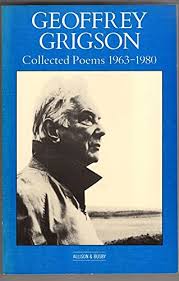
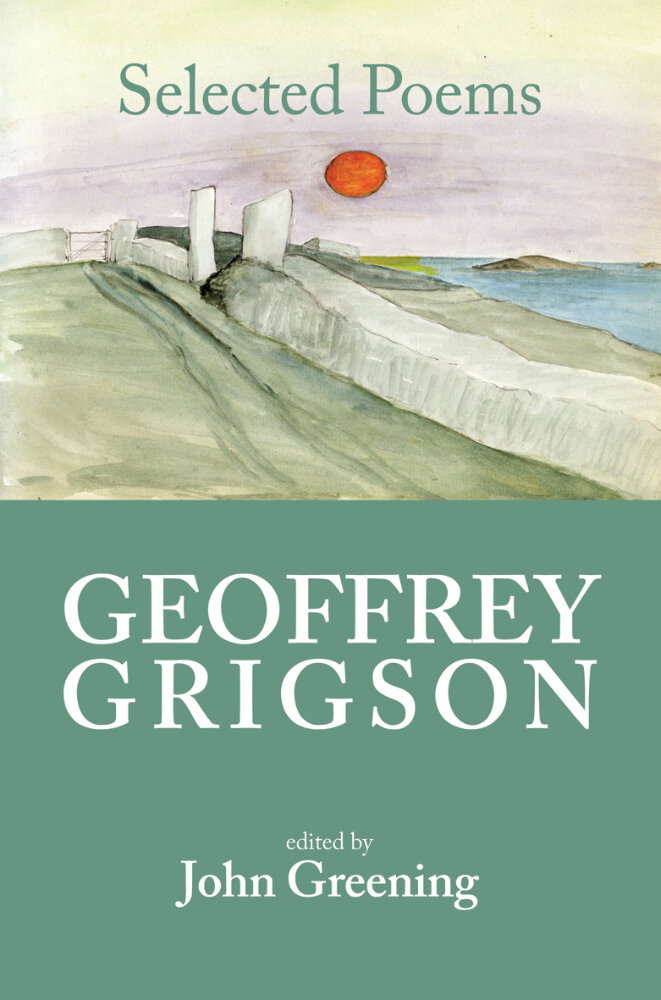
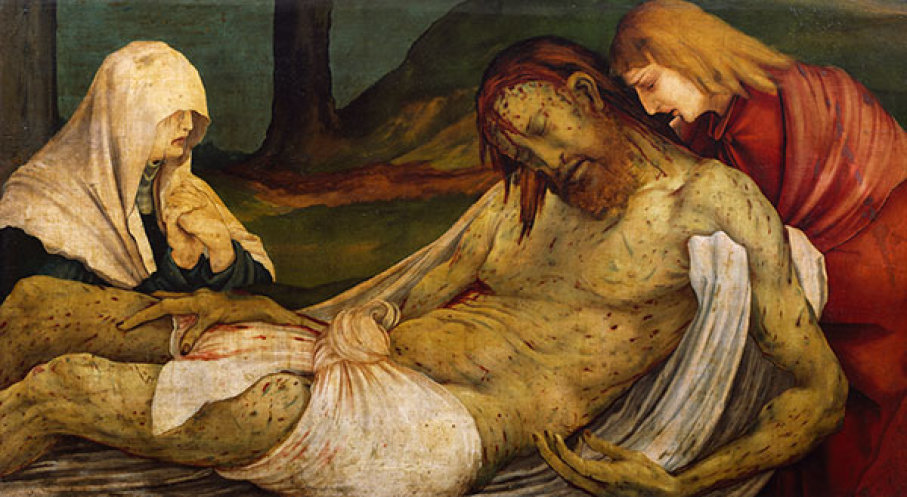
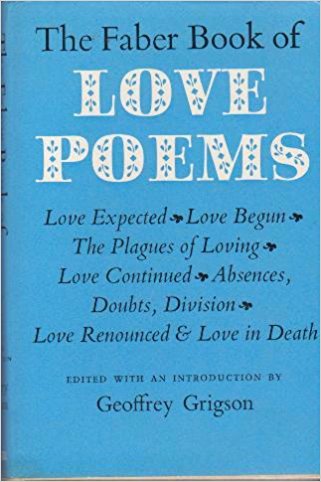
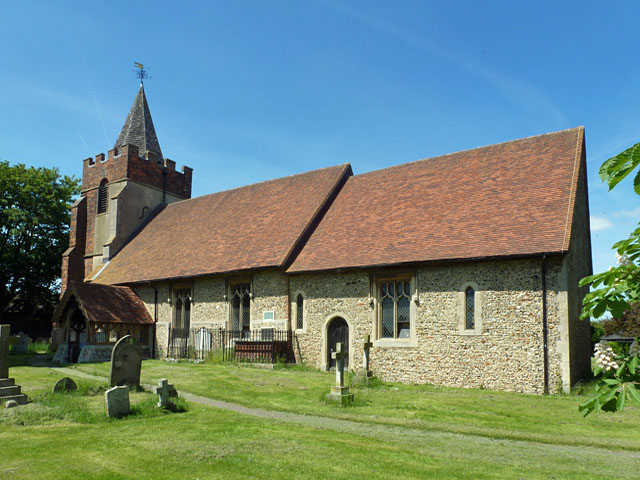
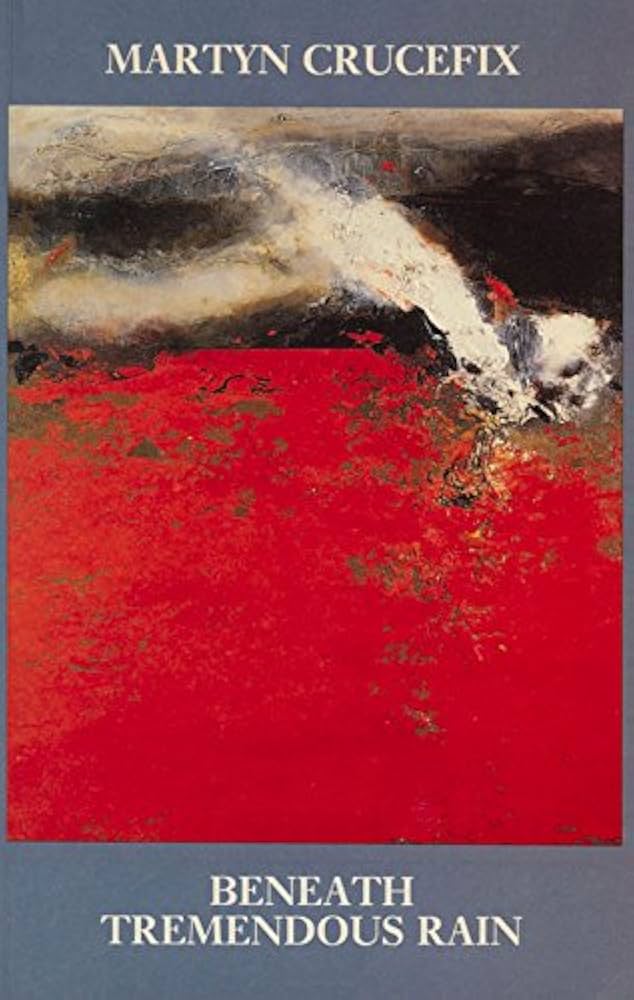
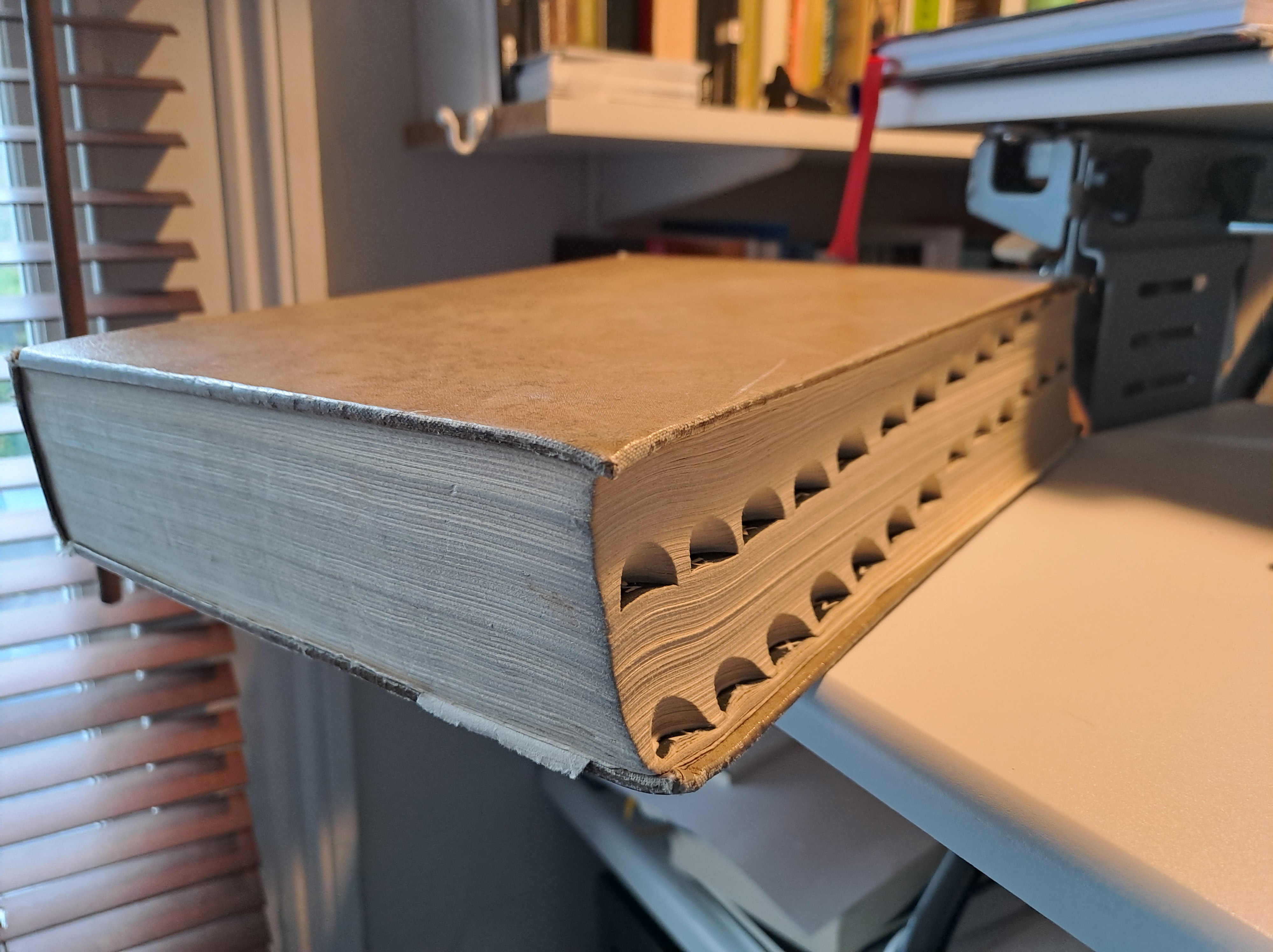


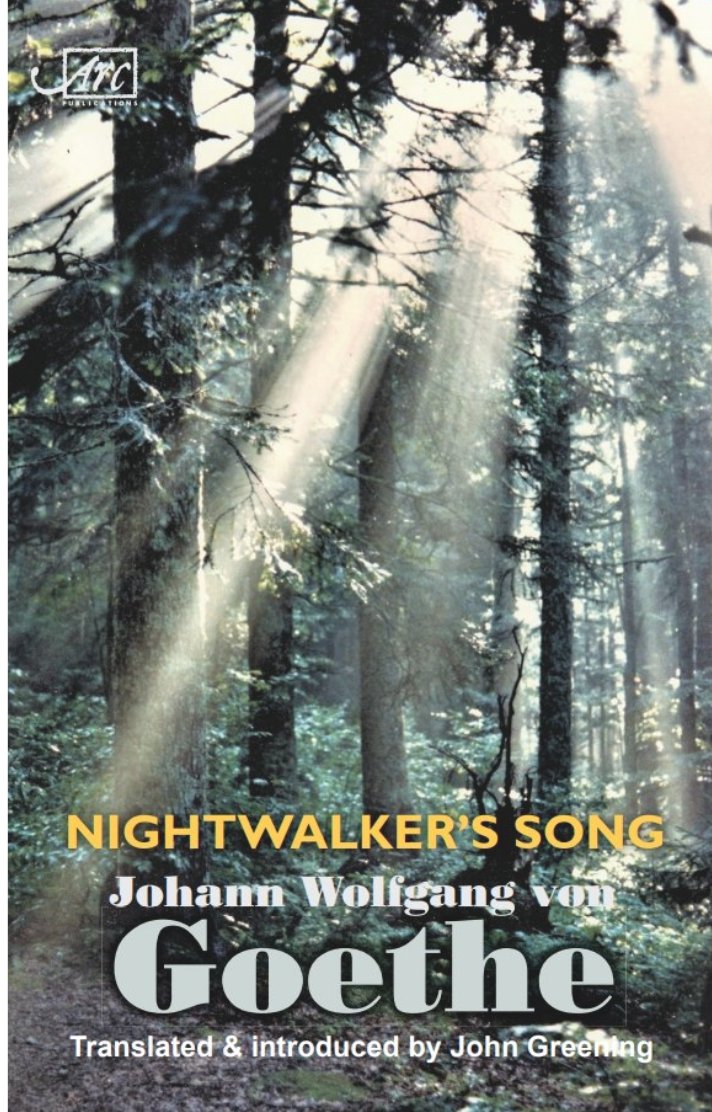
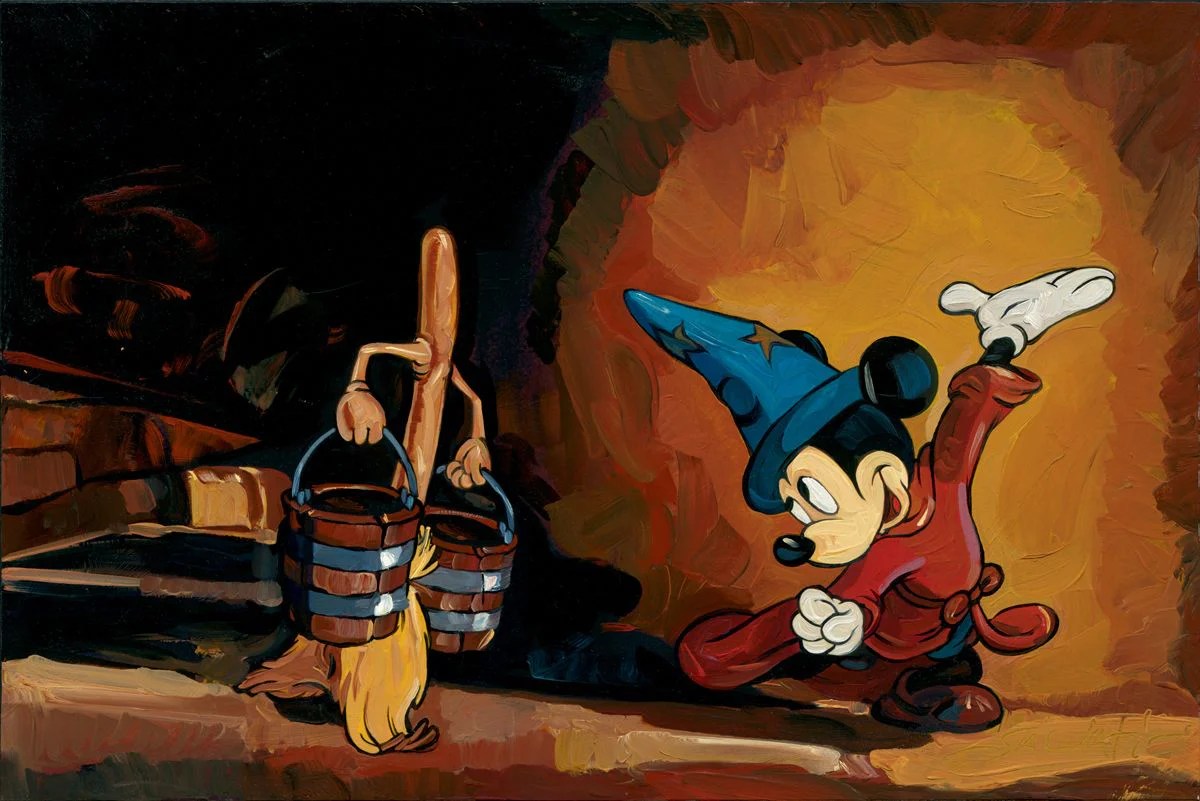
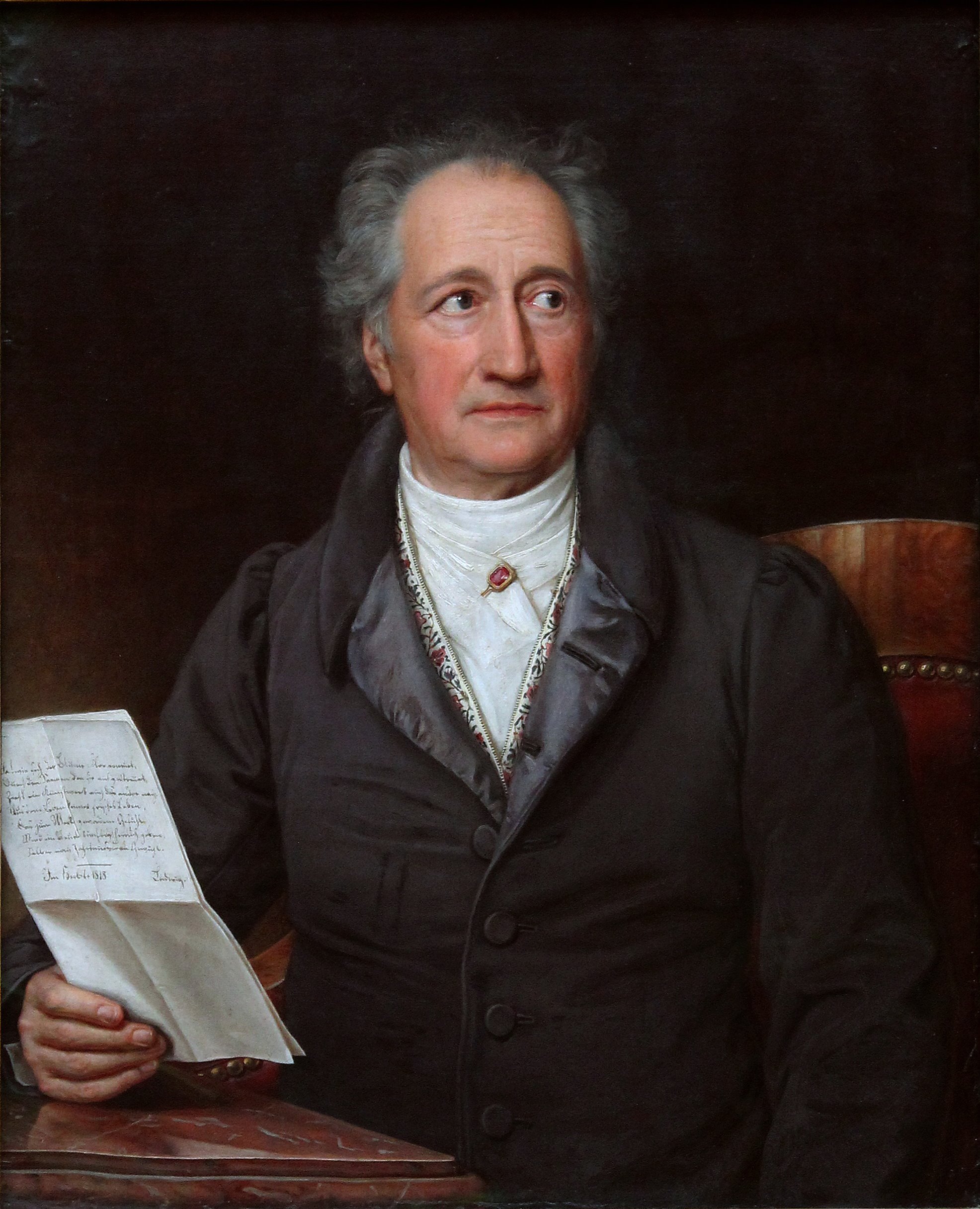
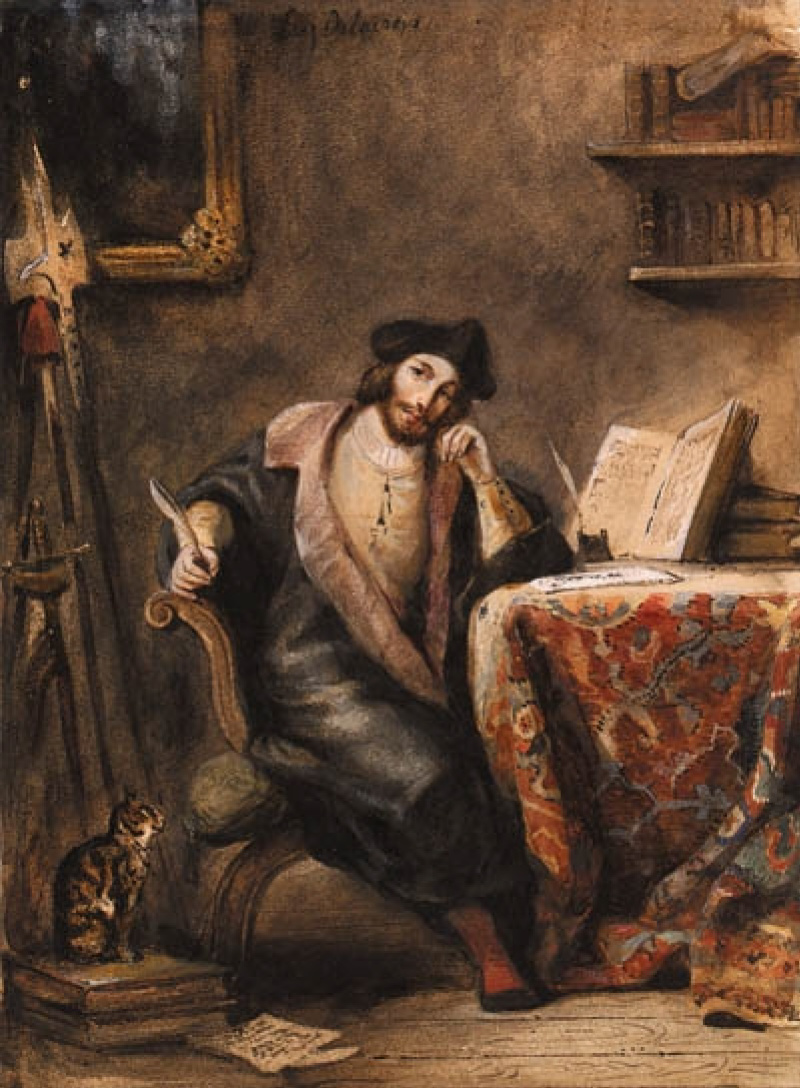


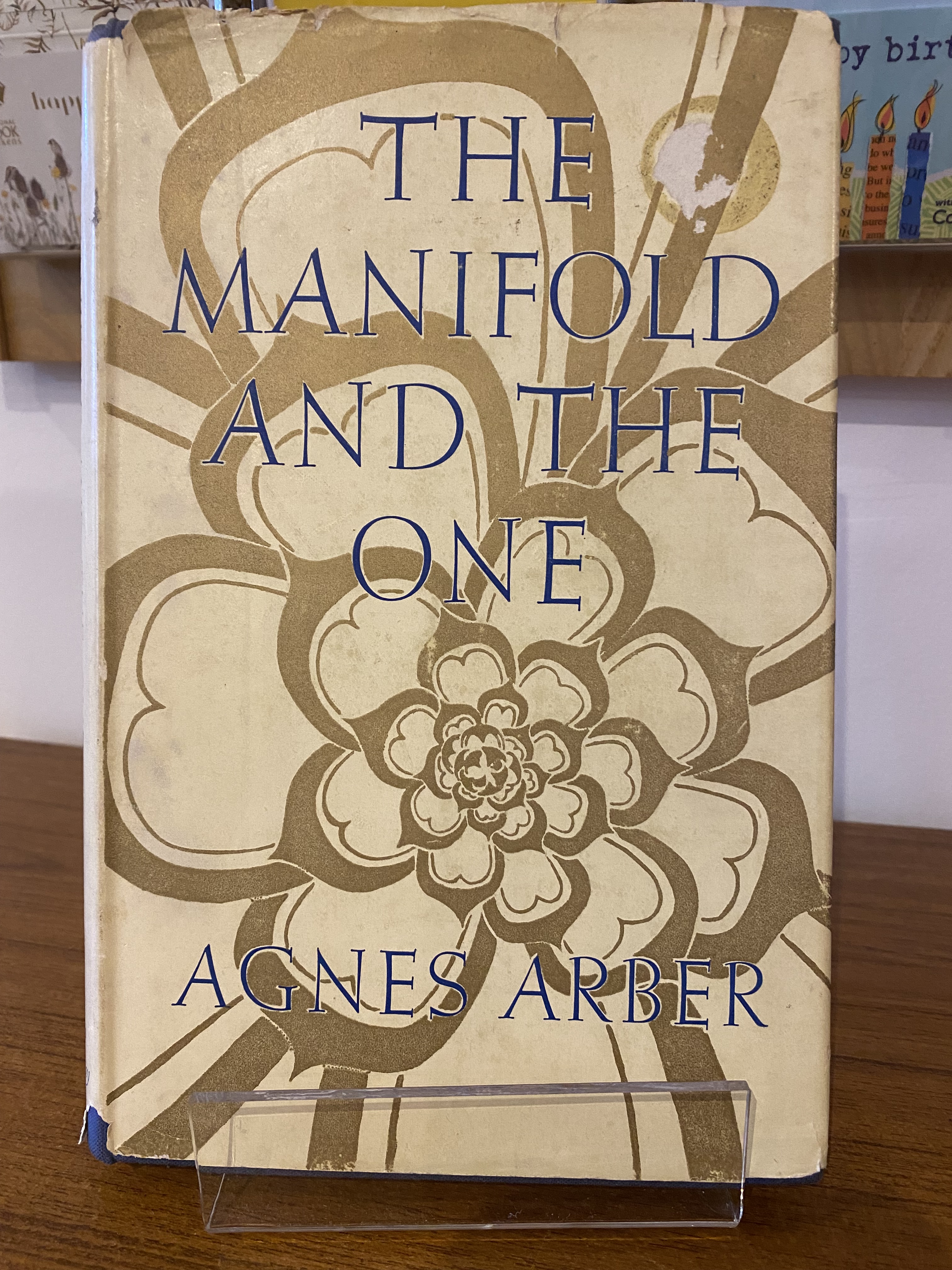
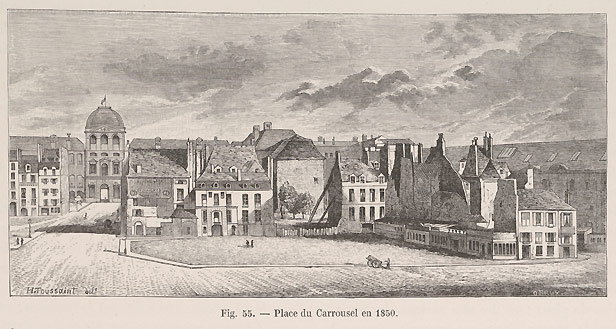
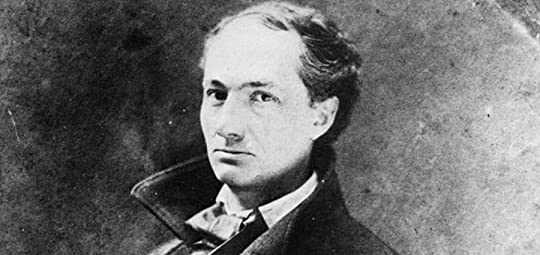
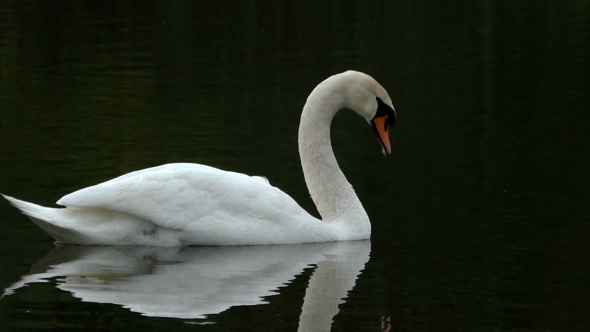
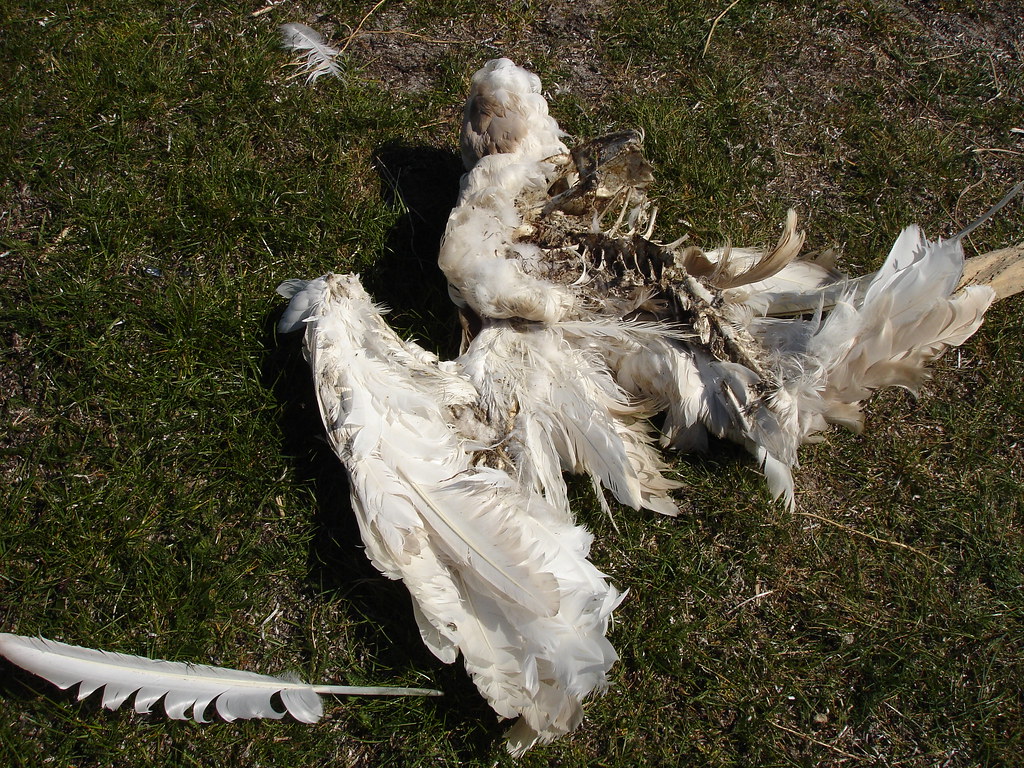
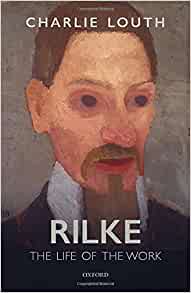
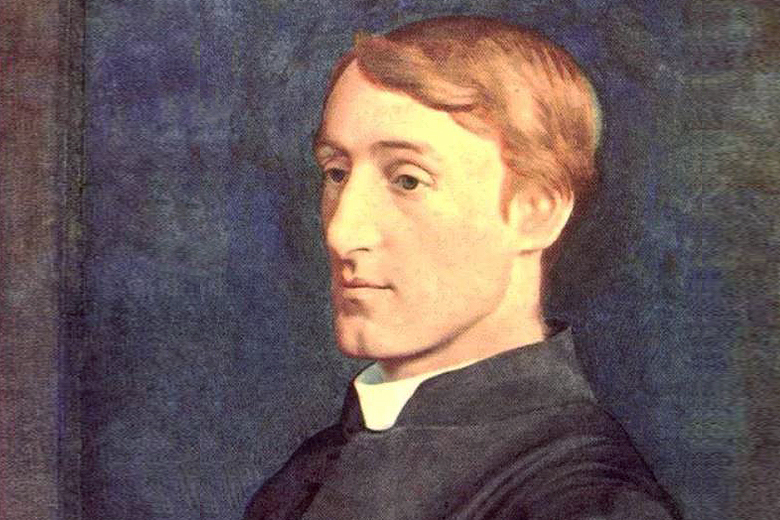
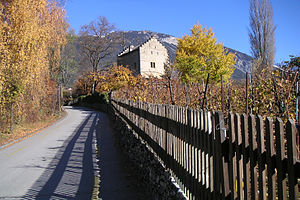

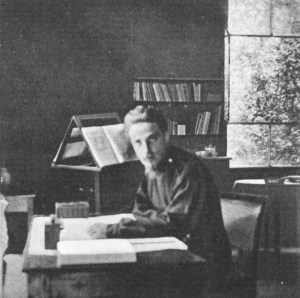
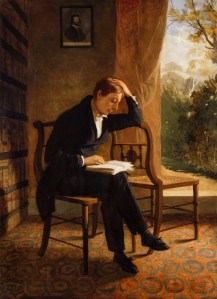
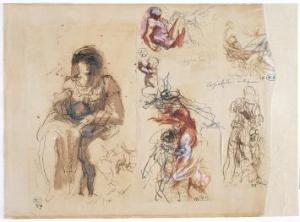
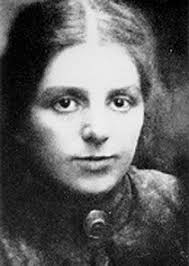
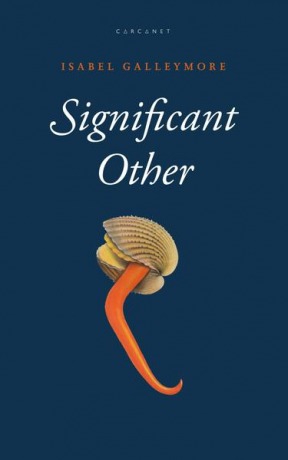
 But Galleymore also sees dangers. In her 2014


 Martyn Crucefix