More than 10 years of blogging on poetry and translation – over 39,000 views in 2024 – now captured and preserved at the UK Web Archive: 'one of the top 10 poetry blogs' (Rogue Strands)
As mentioned in a post earlier in June, I spent a few days around that time trying to choose just 3 poems that I might take with me to a speculative desert island. I was asked to do this by The Friday Poem website and they have now posted the results of my labours.
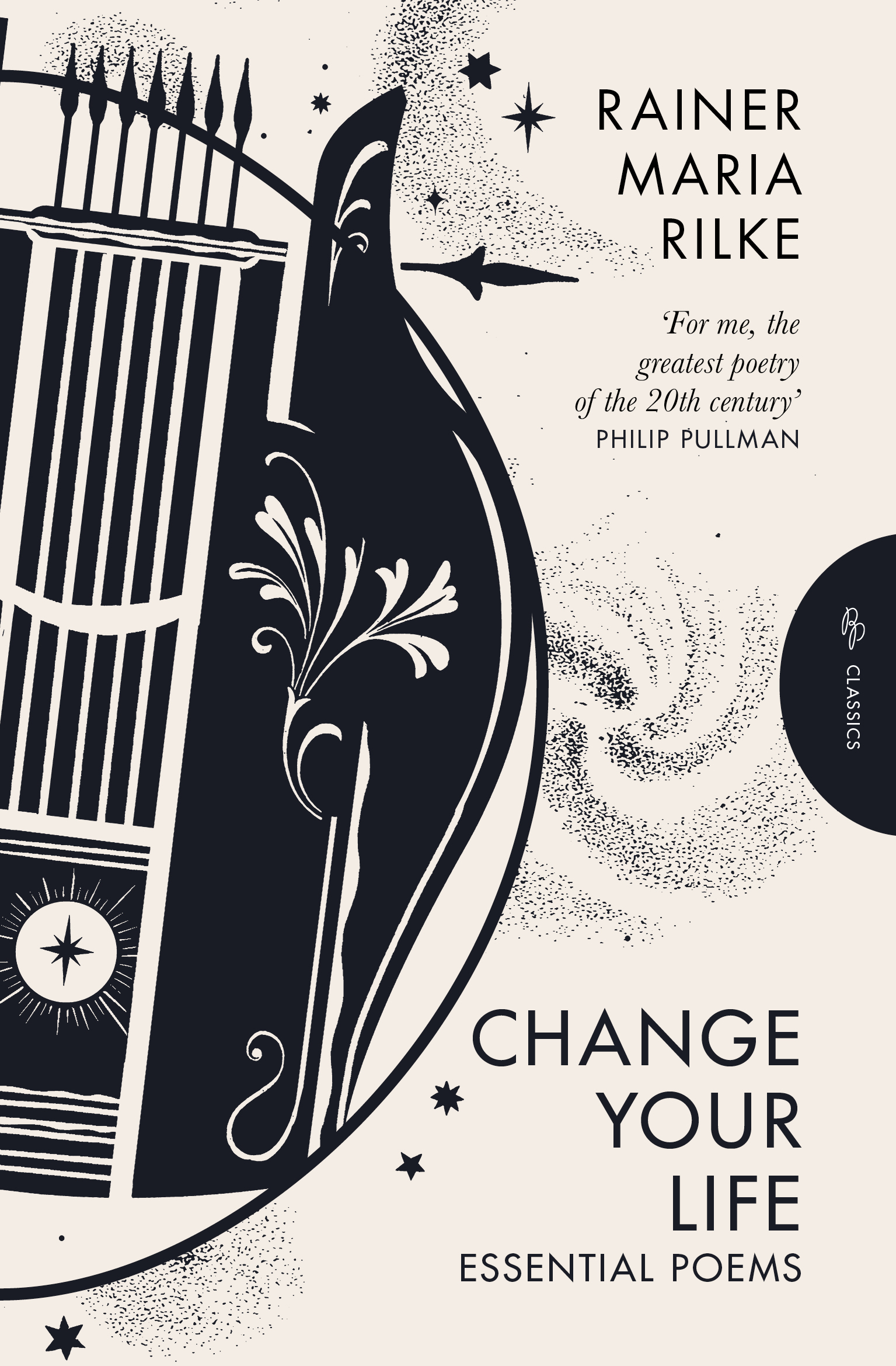
In the end I chose work by Coleridge, Edward Thomas and Rainer Maria Rilke. Of course, the latter has been on my mind a great deal in the last 12 months or so, as I have been working on a new selection and translation of his work (spanning his career from 1899 to his death in 1926). It so happens that I have just signed off the final draft of this book – all 200 pages of it – and it is scheduled for publication by Pushkin Press in the Spring of 2024.
As for that desert island, do follow the link below to read the full text of my ruminations which also includes links to my own readings of the Thomas and Rilke poems. Do explore the rest of the FRIP website – it’s full of great poems and reviews:
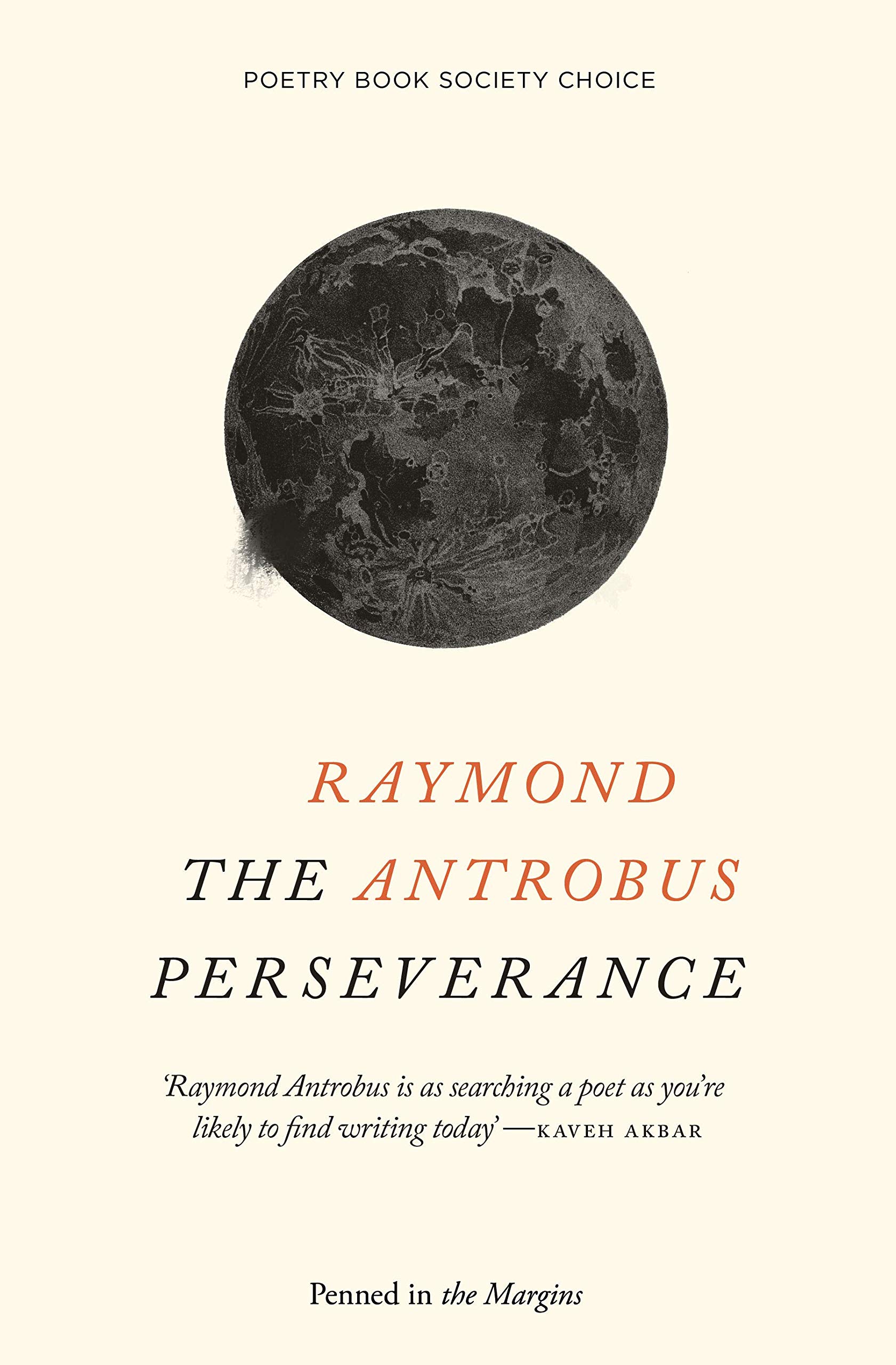
Genuinely acclaimed first books can be hard to follow up. Raymond Antrobus’ The Perseverance (Penned in the Margins, 2018) was a Poetry Book Society Choice and won the Ted Hughes Award and the Rathbone’s Folio Prize in 2019. I reviewed the book that year as one of the five collections shortlisted for the Forward Felix Dennis First Collection Prize. In many ways it was a conventional book of poems – its voice was colloquial, it successfully employed a range of (now) traditional forms (dramatic monologues, prose poem, sestina, ghazal, pantoum), its syntax and punctuation were nothing out of the ordinary. Its subject matter was to a large extent dominated by a son’s difficult relationship with his father, by questions of racial identity and (this is what made it especially distinctive) the experience of a young Deaf man. Besides the latter, what really marked the book out (I argued) was ‘that impossible-to-teach, impossible-to-fake, not especially ultra-modern quality of compassion’. Listen to Raymond Antrobus talking about his first collection here.
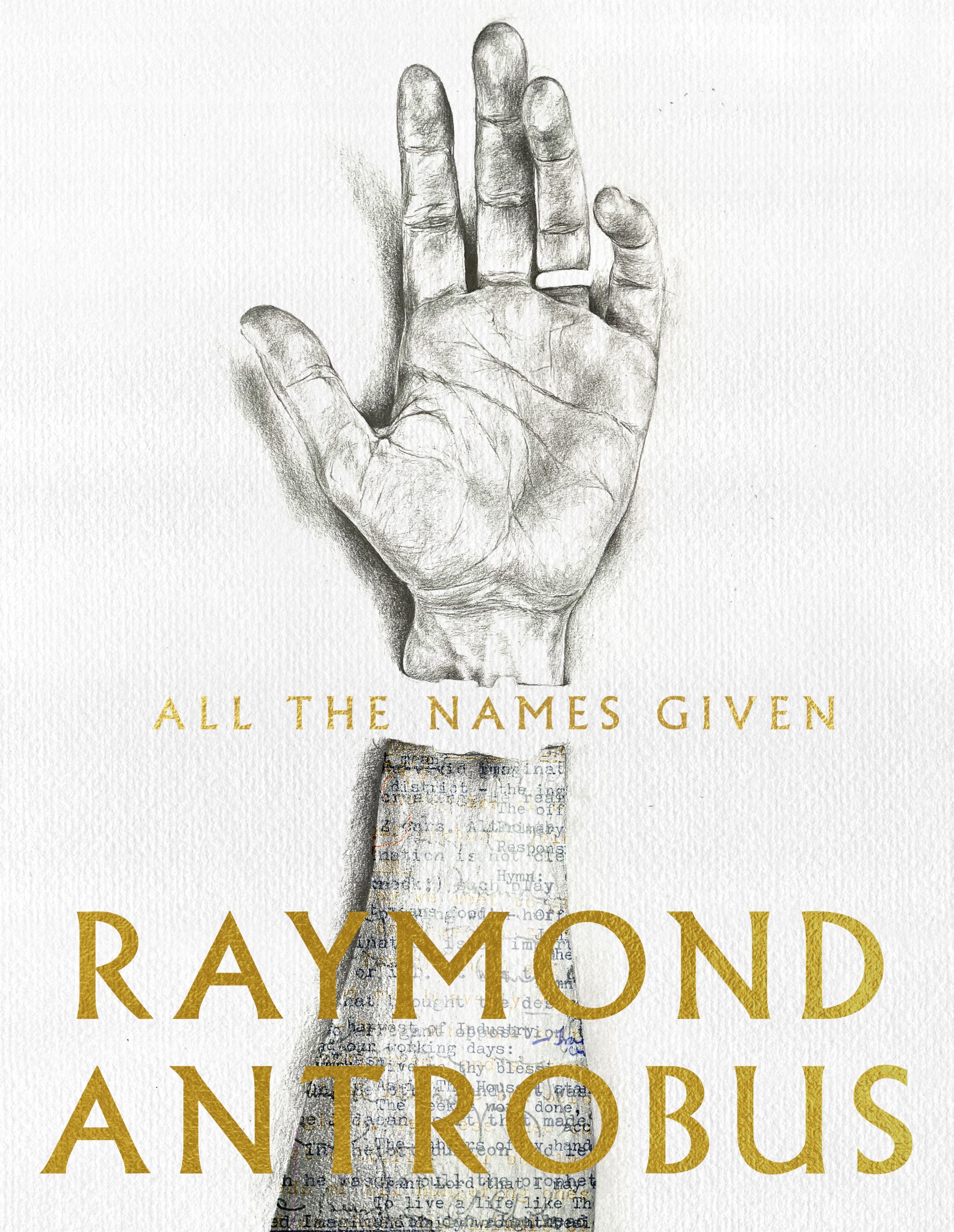
Now several years on and literary acclaim, a new publisher (this book is published by Picador Poetry – Penned in the Margins has since sadly ceased operations), a recent marriage and a broadening of perspective (particularly towards the USA) all place Antrobus in a very different environment. He has set aside a lot of the experimentation with recognised forms (which is not to say the new poems do not experiment with poetic form) and the book opens very positively:
Give thanks to the wheels touching tarmac at JFK,
give thanks to the latches, handles, what we squeeze
x
into cabins, the wobbling wings, the arrivals,
departures, the long line at the gates, the nerves held,
x
give thanks to the hand returning the passport [. . .]
In a similar tone, ‘The Acceptance’ concludes with the word ‘Welcome’ being signed. But the 30 lines preceding this hark back to that ‘complicated man’ (a phrase from ‘Dementia’, from The Perseverance), the poet’s father. Though dead for several years now, he continues to haunt his son’s dreams and a number of these new poems. In ‘Every Black Man’, the ‘dark dreadlocked Jamaican father’ meets his prospective, English mother-in-law for the first time. He’s already drunk, there is shouting, he lashes out, she racially insults him: they never meet in the same room again. The father’s ‘heartless sense of humour’ is turned into a slow blues: ‘I think that’s how he handled pain, drink his only tutor’ (‘Heartless Humour Blues’). And the man’s ‘complication’ is reaffirmed in the poem, ‘Arose’, in which, talking to his embarrassed son, the father boasts of the great sex had with the boy’s mother, but then is touchingly remembered, calling out her name: ‘Rose? And he said it like something in him / grew towards the light.’
But All The Names Given also pays more fulsome tribute to Antrobus’ mother. In ‘Her Taste’, despite her conventional, English, religious background, she drops out, joins a circus (literally, I think!), has various relationships, and eventually gets pregnant by Seymour, the ‘complicated man’ from Jamaica, who left her to raise the children. Thirty years on, she’s defiant, independent, ‘holding her head higher at seventy’. We see her leafing through a scrapbook of her past, ‘rolling a spliff on somebody’s balcony’ or again, ‘in church reading Bertrand Russell’s ‘Why I’m Not a Christian’.’ Despite such moments, the maternal portrait does not quite possess the vivid distinctiveness of the paternal one. But, with the benefit of the passing years, Antrobus can now write, ‘On Being A Son’, in which he unreservedly praises Rose in her neediness, her self-sufficiency, her helplessness with IT, her helpfulness in so much else. He concludes, channelling her voice: ‘mother / dyes her hair, / don’t say greying / say sea salt / and cream’.
This greater focus on the mother is partly a redressing of the previous book’s gender imbalance, but it is also at one with Antrobus’ interest in family and heritage as offering clues to his own identity. It turns out the Antrobus name – from his mother’s English side – is anciently English (or far distantly Norse) and associated with Antrobus in Cheshire. ‘Antrobus or Land of Angels’ records a visit (by mother and son) to the place, to face the suspicious looks in The Antrobus Arms, the guard dogs at the Hall:
A farmer appears, asks if we’re descended
from Edmund Antrobus.
x
Sir Edmund Antrobus, (3rd baronet)
slaver, beloved father,
over-seer, owner of plantations
x
in Jamaica, British Guiana and St Kitts.
Peter Tosh with Robbie Shakespeare, 1978
The son’s quick denial of the line of descent is a complex moment. Despite carrying the same name, his mother is not truly a descendant. But given His Lordship’s slave-owning history, who is to say whether there is any genetic relation, ironically, through his Jamaican-born father, Seymour. The thought surfaces in ‘Horror Scene as Black English Royal (Captioned)’. Antrobus’ note tells us this poem was sparked by tabloid/CNN speculations in 2019 about the likely ‘blackness’ of the Sussexes’ royal baby. The poem’s narrator looks down at his own hands and sees ‘your great-great-great Grandfather’s owner’s hands’.
Tyrone Givans
So All The Names Given quickly reveals itself to be a book deeply troubled by the kinds of questions raised in the poem ‘Plantation Paint’: ‘Why am I like this? // What am I like? / Who does / it matter to?’ In this second book, Antrobus is still working towards an ‘overstanding’. The idea was alluded to in The Perseverance via a Peter Tosh lyric: ‘love is the man overstanding’. It is a form of understanding that emerges after all untruths have been overcome. The truths, untruths and complications of identity preoccupy the majority of these new poems. Only occasionally does Antrobus set aside such profound (perhaps irresolvable) anxieties. The African/Vietnamese waitress in ‘A Short Speech Written on Receipts’ is a figure who seems to outweigh the poet’s wrangling over his own selfhood, leading him to wonder: ‘Maybe kindness is how / you take down the stalls’. The gates of compassion also open frankly and to great effect in ‘At Every Edge’ and ‘A Paper Shrine’, two brief poems remembering very different students in creative writing classes. Likewise, ‘For Tyrone Givans’, commemorates a young Deaf man (a friend and contemporary of Antrobus) who committed suicide in Pentonville Prison in 2018. Here too, the vector of attention is outwards, towards Tyrone’s mistreatment by the authorities, his suffering and despair, rather than inwards towards the poet’s own ‘complications’:
Tyrone, the last time I saw you alive
I’d dropped my pen
on the staircase
x
didn’t hear it fall but you saw and ran
down to get it, handed it to me
before disappearing, said,
x
you might need this.
This review was originally commisioned and published by The High Window
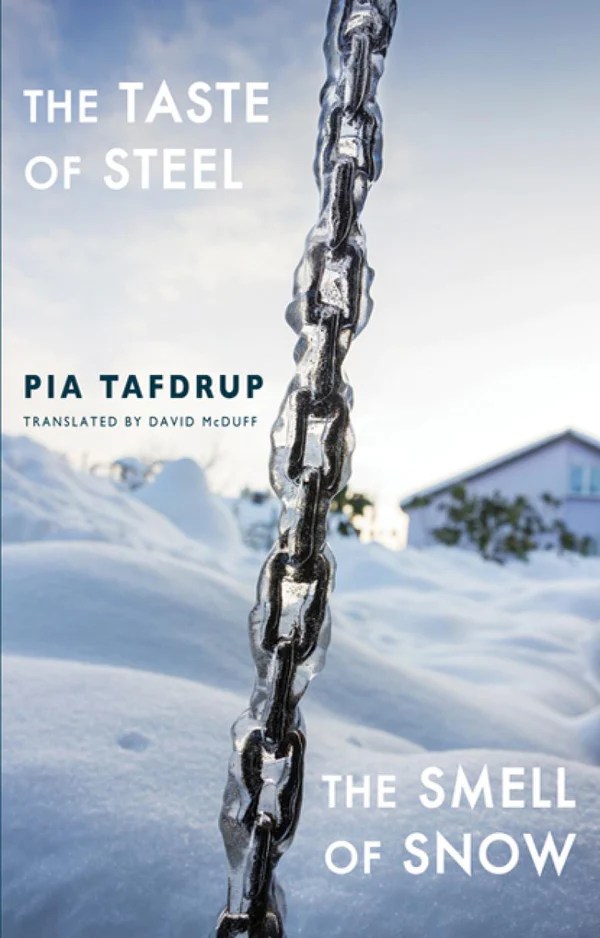
The Taste of Steel / The Smell of Snow, containing poems by Pia Tafdrup originally published in 2014 and 2016 and translated by David McDuff, was published by Bloodaxe Books last year. The Tafdrup/McDuff/Bloodaxe collaboration goes back more than 10 years now. The Danish poet’s work inclines to themed series of collections – The Salamander Quartet appeared between 2002 and 2012. The current volume presents in English the first two collections of another planned quartet of books, this time focusing on the human senses. In fact, the ‘taste’ book here feels much less conscious of its own thematic focus than the ‘smell’ one, not necessarily to the latter’s advantage. There is often something willed, rather laboured, about some of the work included here, which is most disappointing given Tafdrup’s earlier books. But her curiosity about the world remains engaging, her poems are observant of others, often self-deprecating, her concerns are admirable (environmental, the world’s violence), plus there are several fine pieces on desire and female sexuality.
Her world view though, is essentially tragic: loss and the passage of time predominate. ‘Chink’ ends in a resigned tone: “Slowly life takes / the life from us”. The Taste of Steel is particularly imbued with a sense of personal, romantic loss: “The moment I begin to love, / the separation starts, / at least the fear of separation” (‘Separation’). The awkward evidence of a partner’s infidelity – a broken sugar bowl, a coffee stain on a book – are “disasters” in what the narrator thought of as “my home” (‘Stages on life’s way’). In such circumstances, even the poet’s pen assumes the qualities of an “axe” (‘Unposted letter’) and unsuspecting visits to museums yield up pessimistic clues and conclusions:
In the absence of words
poisoned arrows sing through the air,
but behind the arrows’ decoration
the idea is the same: peace
is pauses between wars.
‘Not even in museums is there peace’
Impression of Cassini Space Probe
In both collections, Tafdrup gathers poems into brief, titled sections of about half a dozen poems each and the ‘War’ section extrapolates the sense of personal conflict and loss to more global/political concerns. ‘The darkness machine’ opens plainly, if irrefutably, with the sentiment that a child “should be playing, not / struck in the back by a bullet”. The point is made more powerfully (because less directly) in ‘Spring’s grave’ with its repeated pleas to “send small coffins”. ‘View from space’ adopts the even more remote perspective of the Cassini space probe’s view of the planet, but also ends with plainspoken directness: “that’s where we ceaselessly produce / more weapons, practise battle tactics, / turn our everyday lives into a night of hell”. The concluding genitive phrase makes me wonder about the quality of the translation; I have neither Danish, nor the original in front of me, but does Tafdrup really use such a cliché?
You might say the Cassini viewpoint is taken up more metaphysically elsewhere in Tafdrup’s frequent sense of the world’s ultimate mystery (“the fleeting, / the unbounded, the ever / changing” (‘Undercurrent’)), forever slipping beyond the grasp of human language, an idea imaged in ‘Loneliness’ as a God who “is born at every moment, it is said, // is the life of the endless deep, / and does not cease His revolt”. Only occasionally are we conscious of such a presence – unfamiliar moments, as in the poem ‘Power cut’, where it is an electrical outage that prompts a reshaping of perception to the point of “only now / discover[ing] the world, as though we are suddenly / noticing heart and lungs”. And – returning to the theme of these collections – Tafdrup’s use of (lengthy) listing in ‘Taste’ is perhaps intended to evoke the often unremarked, radical multiplicity of the world-as-it-is through the window of one of the human senses.
Pia Tafdrup
This is also a method adopted in The Smell of Snow, the lists of olfactory images are even more determinedly developed in poems like ‘Smell-trace of a morning’ and ‘Benchmarks from a long day’. In this second book, most poems contain some allusion to the ‘smell’ theme. The idea is put to powerful erotic effect in ‘Your fragrance wakes me’ in which the lover, coming from a bath, is tracked and anticipated; “Not yet the taste of your kiss, / not yet caresses”. Other ‘smell’ poems yield good results: to comic effect in Tafdrup’s close observation of the noses of other passengers on an airplane; an interesting exploration of gender in a poem on men’s proclivity to relieve themselves in public places; on environmental concerns in the evocation of the smells of cleaning products; racist undercurrents when a peculiar smell is detected during a stranger’s visit (a dead mouse is later found to be the cause).
But over the course of 189 pages, the imaginative pressure driving Tafdrup’s poems can flag. The human senses theme yields poems that feel like exercises in completing a brief. A poem on the 2015 terrorist attacks in Copenhagen works well enough, except one is left waiting for the ‘smell’ to feature (eventually we get the “smell / of bloodstained February”). When poems don’t need to be written they tend towards the banal. That these are poems in translation may be part of the problem. However many times I read these 6 lines, I am still puzzled:
I pour water
in abundant quantities
in the grey misty light,
sweep like the wind through a willow
the shadow from your face,
turn a stream magnetically.
‘Fresh snow’
David McDuff
Tafdrup’s language as rendered by McDuff is for the most part clear and unexceptional (this is one of the losses compared to earlier work which leaped and surprised its reader more frequently). Lines like the above give off the aura of a passage not fully resolved in English. The book’s concluding poem also seems problematic. Its (Englished) title might leave it open to the kind of schoolboyish humour that Tafdrup would not have sought: ‘The stream of smells from below’. Its opening three stanzas lack any sense of forward movement, seeming to repeat three times the same idea that individuals on the planet are similar but different to others. Then:
Each person is referred to their own sensations,
as I am now
with the sun in my face, June,
and the chill in my back
stop [ . . . ]
This reader has little stumblings over the verb ‘referred’, with the month/interlocutor, ‘June’, and the odd juxtaposition of ‘back / stop’. McDuff’s previous work with Tafdrup has been superb, but once doubts creep into the reader’s head about the ‘bringing over’ of poems into another language it is hard to contain them. This is not Tafdrup’s best work, nor is it McDuff’s; I, for one, will be going back to the earlier Bloodaxe books by this fine poet.
NB. This review was originally commisioned and published by The High Window.
One of the joys of social media (and there are plenty of aspects of them that are less than joyful) is that occasionally a notification pops up from an unexpected source and when you check it out there is something really worthwhile to be found. This happened the other day – via Instagram. Someone called Matt McGettrick had tagged me. I don’t know Matt, but he is a student on the BA course in TV and Radio Production at the University of Salford.
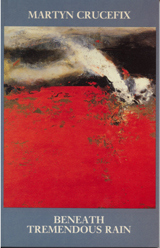
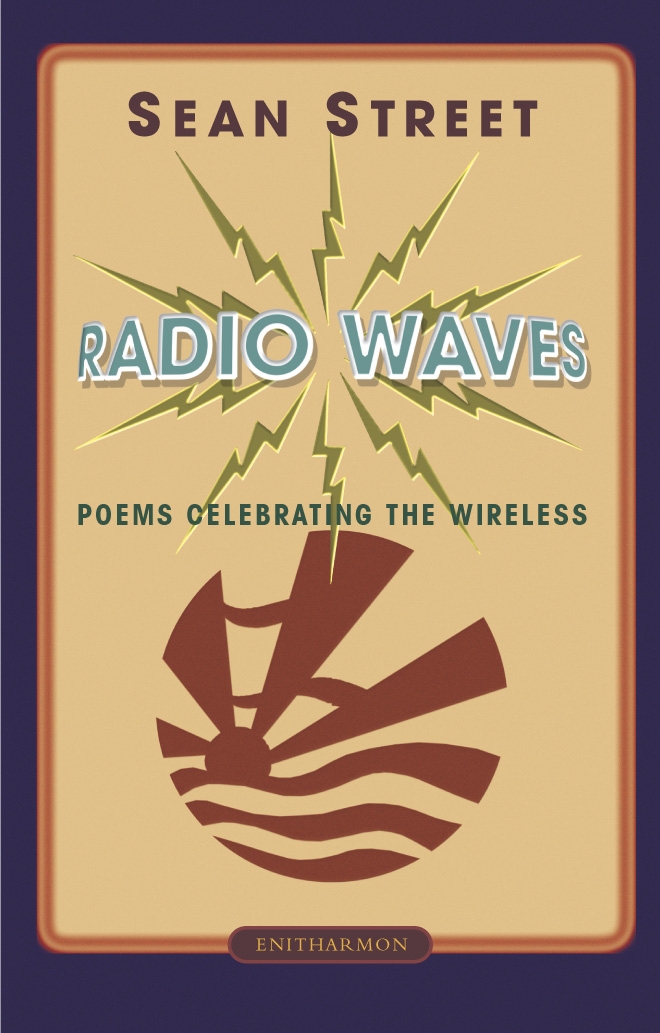
Matt’s instapost said he had recently created a soundscape based on a poem I published in 1990, in my first book from Enitharmon Press, called Beneath Tremendous Rain. It’s unlikely that the poem was found in that book itself, but I remember it was selected more than 10 years later by Sean Street to appear in an anthology called Radio Waves: poems celebrating the wireless (Entharmon, 2004). There, I was happily rubbing shoulders with the likes of Auden, Brecht, MacNeice, Heaney and Carol Ann Duffy. Sean – whose is a poet, broadcaster and recently retired Professor of Radio at Bournemouth University – had divided the anthology up into sections variously titled, Music Radio, Talk Radio, Weather, Listeners and Signals. My piece was in the section called ‘In the Car’.
Here’s that original poem. It’s voiced by a persona – I had no children at this point and had not moved out of the ‘dark’ streets of Manchester to the countryside.
Air-Waves
As I slowed up and shifted downgear,
a dance song thumping from the car radio
was stretched out and smashed to pieces.
x
But we barely noticed that first time –
all eager to see the house, where it stood
beneath the surfing crackle of the pylons.
x
The girls loved the sight of so much sky.
They slipped into new schools with ease
though Sue and I made it home more slowly.
x
And by then, there was Stephen, almost four,
suddenly ill, his rush of growing gone awry,
and the doctor’s face, closed up and dark
x
as the Manchester streets we had left behind.
He could tell me nothing. Inexplicable,
the pattern of disease. A year – maybe two.
x
Driving back across the hills, roadside wires
loop down, are yanked back to the blunted head
of each telegraph pole – and further off,
x
the pylons, hitching up skeins of darkness,
striding up country to a house where this car
and their sheaf of hot wires will converge,
x
where a young man’s voice on the radio
will melt down in a surge of boiling static
as I slow up, shift gear, and stop.
I remember a great deal of concern – this will have been in the late 1980s – about the possible harmful effects of living too close to the electrical fields generated by pylons. There was a particular study in 1979 that did conclude there might be a link between electromagnetic fields and childhood cancer (and this is the kind of scenario I am thinking of in the poem). However, other studies in the 2000s did not find an association or found an association only in homes with very high levels of magnetic forces, which is rare, according to the National Cancer Institute.
There was a personal connection, I remember, as my in-laws lived in a house which nestled in beneath a line of high voltage cables and pylons. But perhaps concerns about cancer-inducing lines of pylons have now gone the way of those early concerns about the dangers of mobile phones. Or has it even been consigned to the slightly cranky end of health concerns along with those people who sabotage 5G masts in the name of suspected links to the on-going pandemic? Even so, though it has dated a little, I’d like to think of the poem as one of my earliest expressions of environmental concern: if the electromagnetic fields do turn out to be perfectly safe, they are here acting as a metaphor for the kind of degradation of the lived-in environment caused by human action for which there is an indisputable and growing body of evidence.
Anyway – all this is simply by way of introducing Matt McGettrick’s excellent piece of work. The reader is Matthew Green. As the author of the original piece, it seems to me that both reading and soundscape engineering do a really fine job of responding sensitively to the text’s meaning, its structure and its rhythms. Have a listen – Matt suggests headphones are a good way to hear his work. It’s just over 5 minutes long.
I have been invited to give a 10 minute reading – on Zoom – this coming Friday 25th November @ 1pm alongside Hilary Watson and Sudeep Sen. The event is free to all but you will need to register for a ‘ticket’ (and Zoom link) here. I hope you can make it.
Details about the other two readers are as follows:
Poet, translator, artist, and editor Sudeep Sen studied English literature at the University of Delhi and was an Inlaks Scholar at Columbia University. Sen has published more than a dozen collections of poetry, including The Lunar Visitations (1990), Postmarked India: New and Selected Poems (1997), Lines of Desire (2000), Distracted Geographies (2003), Rain (2005), and Aria (2011), winner of the A.K. Ramanujan Translation Award. Two volumes of new and selected poems and translations were published as Fractals: New & Selected Poems | Translations 1978-2013 (2013) and Fractals: New & Selected Poems | Translations 1980-2015 (2015). Recent collections of poetry include Incarnat | Incarnadine (2017) and, with Setsuko Klossowska de Rola and Homa Arzhangi, Path to Inspiration (2017). The Government of India Ministry of Culture’s awarded him the senior fellowship for “outstanding persons in the field of culture.” Sen divides his time between New Delhi, London, and New York.
Hilary Watson grew up in and around Cardiff. She graduated from the University of Warwick Writers’ Programme with a BA in English Literature and Creative Writing and an MA in Writing. She was a Jerwood/Arvon Mentee 2015/16 with mentor Caroline Bird alongside fellow poets Rachel Long and Emma Simon. She was shortlisted for the Troubadour International Poetry Prize 2019 and the Live Canon Prize in 2015, and has recently been published in a number of UK and Irish magazine such as the Butcher’s Dog, Interpreter’s House, and Impossible Archetype. She works in the third sector and is currently writing her first collection.
I have not quite finalised what I will be reading but probably a couple of poems from my last full collection, The Lovely Disciplines and some more recent poems. No doubt I will plug the recent Christmas poetry anthology that I have co-edited with Michael Glover – also plugged in a recent blog post here. You might be interested to hear that we are planning a London launch for the anthology on Sunday December 4th @ 7pm at the Omnibus Theatre in Clapham. More details (and booking) can be found here. Readers will include Rowan Williams, Nancy Campbell, Hilary Davies and Denise Saul – and there will be plenty of music of a festive variety too.
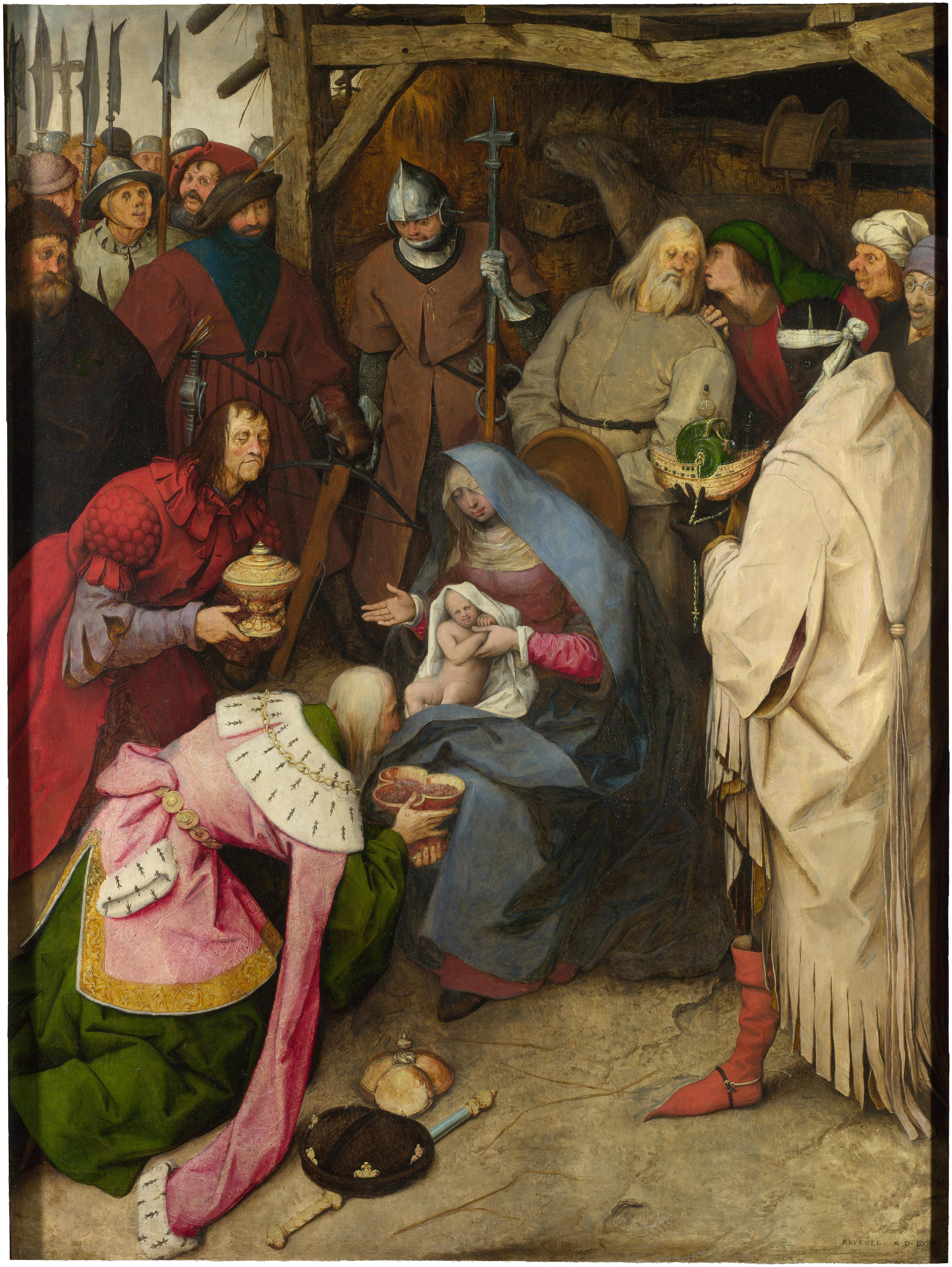
If I have time in the Live Canon reading, I’ll read this poem included in the Christmas anthology which I wrote in repsonse to Breughel’s fascinating painting of the same name (see above). It might be worth knowing that I imagine the voice of the poem to be that of the (blind? short-sighted?) man in the upper right corner of the image. He’s the one wearing the large blue-tinted spectacles:
As a Royal Literary Fund Fellow, I was asked in May 2020 to write and record three brief talks. One of these was on ‘Writing and Technology’ which I posted (as text and audio file) on this blog a few weeks ago. Another commision was to respond to the intriguing invitation to write a ‘Letter to My Younger Self’. The recording of that piece is still in the RLF pipeline, but the third of these short pieces has now been made available as an audio file on the RLF’s VOX site. The given topic of this newly published piece is ‘How I Write’ – not an easy subject on which to be clear and succinct but with a little help from WH Auden and Louise Gluck I hope I have said something here that might be of help to all kinds of writers – poets, novelists and (the target audience of the RLF project) those writing at the varied levels of academe.
Alternatively – or both at the same time if you’d like – you can read it below.
How I Write
Always I have to commit something to paper as soon as possible after the initial inkling of a poem. Most writers use notebooks. Some use audio recorders, others their phones. Though first drafts are always terrible, what I’m doing is laying a path back towards the first emotional impulse, a way for myself to return there. You’ll often find me re-reading notebooks to pick up such trails among barely readable, fragmentary scribbles.
These scraps are what may develop into poems. I like W. H. Auden’s view of the poem as a “verbal contraption”. It reminds me a poem (actually, any piece of writing you are doing) is a purposeful device. It needs to be an effective device and poems look to impact a reader’s feelings. This view downplays one of the commonest stumbling blocks about creative writing, which is that what poets try to do is express their own inner moods. If that’s all I focus on, I’ll pay too little attention to the writing’s receiver, my reader.
Anyway, what I want ‘to express’ is seldom fixed at this stage. It’s important I’m willing to add on – simply write more connected material – even beyond the point at which I might think the job done. That tempting voice claiming early completion may be a lazy demon or a censoring one. It’s my practice at this stage to draft loosely, with as much energy and freedom as possible. If I watch children playing, I see them enjoying an excess of energy, movement, voice, and it’s out of this that real creativity arises – new moves, ideas, developments, reformed, revised, played again, played better. So in writing, spinning off new phrases or metaphors leads not only to decorative grace-notes but often to the still-hidden, true heart of the poem. This is why poets often talk of writing as a process of discovery.
For me, most of these stages still take place using pen and paper. The shift to a screen, a keyboard remains a critical transition. On screen, or on a phone, typed lines acquire an inertial resistance to being changed. On screen, I find my eye starts to narrow down to look at the poem’s physical shape and appearance on a would-be page. Such aspects are important in the long run, but they can prematurely cool the fluidity of the molten drafting process if they dominate too early. Beware the linearity of the screen!
But once it’s there, now I’m thinking ‘economy’. A linguistic cosmetic surgeon, I cut off verbal flab, repetition, redundancy. Crossing out is my most familiar activity. The American poet, Louise Gluck, says that a writer’s only real exercise of will “is negative: we have toward what we write the power of veto”. One of the keys to this is reading aloud. I go the whole hog: standing as if to deliver to an audience. Loud. And. Clear. This helps me listen to rhythm and line breaks. Actually, for any writer of poetry, prose, essays for your course, reading aloud highlights stumbling blocks of all kinds. My sense of the ebb and flow of a poem is always clarified because I distract myself in the physical act of standing and speaking. I experience my words more objectively, more as my potential reader would. Try it. It’s a revelation!
It has been a long time since I last posted anything substantial on my blog. In the great scheme of things pandemic, this will not have been remarked upon; though for anybody out there who has noticed, I send my apologies. A particular disappointment is that I have not been able to review this year’s shortlisted Forward First Collections (and the announcement of the winner is almost upon us). For what it’s worth, I think Caleb Femi will win with his Penguin collection, Poor. I still hope to review some of the shortlist, in the near future.
Though I have managed a couple of book reviews (on Pia Tafdrup’s new Bloodaxe collection, on Charlie Louth’s excellent book about Rilke) to be published elsewhere, alongside this blogging drought there has been a more significant one (for me at least): I have hardly managed to write any poetry of my own for well over nine months now. Even the few things I managed to draft (especially at the height of the Covid second wave (last January)), I have signally failed to return to and they may all now fall by the wayside. In moments, it is as if I have forgotten HOW to write a poem; a questioning of the importance of this solitary business; a simple lack of external stimulation perhaps. The one thing I have been able to do during this awful period is more translation. I have (happily) been commissioned to complete exciting projects for two publishers (publication dates off into 2023 in both cases) and I hope to say more about these in later blogs. Yes, my intention is to get back to blogging more regularly.
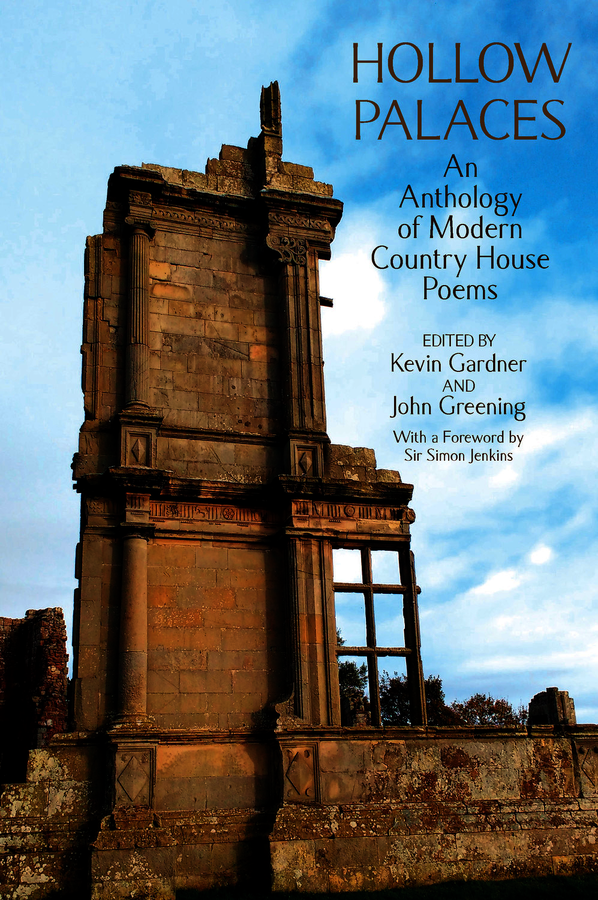
It has also been a long time since I gave anything resembling a public reading. But last Sunday afternoon I travelled with poet, Hilary Davies, out of London to Kimbolton School, north of Bedford for an actual in person book launch! The book was the sumptuous new anthology, Hollow Palaces, published by Liverpool University press and edited by John Greening and Kevin Gardner from Baylor University in the USA. The book is the first complete anthology of modern country house poems, including over 160 poets from Yeats and Betjeman to Heaney, Boland, Armitage and Evaristo.
Kimbolton Castle
The venue was fittingly grand. Kimbolton Castle is a country house in the little town of Kimbolton, Huntingdonshire and it was the final home of King Henry VIII’s first wife, Catherine of Aragon. Originally a medieval castle, it was later converted into a stately palace and was the family seat of the Dukes of Manchester from 1615 until 1950. It now houses Kimbolton School and this is where John Greening taught for a number of years (alongside Stuart Henson, another poet represented in the anthology).
With the declining sun streaming in through the opened French windows, looking out across the school playing fields, after an introduction from Kevin Gardner, we each read a couple of poems from the anthology. So – amongst others – John Greening read ‘A Huntingdonshire Nocturne’ about the very room we were assembled in, a subtle take on English history and education, Ulster and Drogheda. Hilary Davies’s poem rooted in Old Gwernyfed Manor in Wales, was a fantasy of lust, sacrifice, murder and hauntings. Stuart Henson’s compressed novelistic piece mysteriously described the murder or suicide of a Fourteenth Earl. Anne Berkeley remembered childhood isolation and bullying at a dilapidated Revesby Abbey. Rory Waterman re-visited the ruins of an old, tied lodge-house his grandmother once lived in. Lisa Kelly’s chewy foregrounded language (‘O drear, o dreary dreary dirge for this deer’) shaped itself into a sonnet. Rebecca Watts looked slant and briefly at Ickworth House, a glimpse of bees in lavender. Robert Selby was at Chevening, considering the clash of perspectives between the tourist’s casual gaze and the realities of tombs, time and history.
I chose to read Louis MacNeice’s brilliant, late poem ‘Soap Suds’. Written in 1961, he is remembering the grand house called Seapark which overlooks Belfast Lough. Jon Stallworthy has called the poem a ‘Proustian daydream’, the simple act of washing one’s hands acting as the trigger for remembrance of time past. What appeals to me about the poems is its subtle handling of several times periods: the ageing man washing his hands, looking back to idyllic occasional visits to the house, as well as later, less happy times there (the house belonged to Thomas Macgregor Greer, only brother of MacNeice’s step-mother), the imagery beginning to verge on the nightmarish. (For another blog on MacNeice’s work click here.)
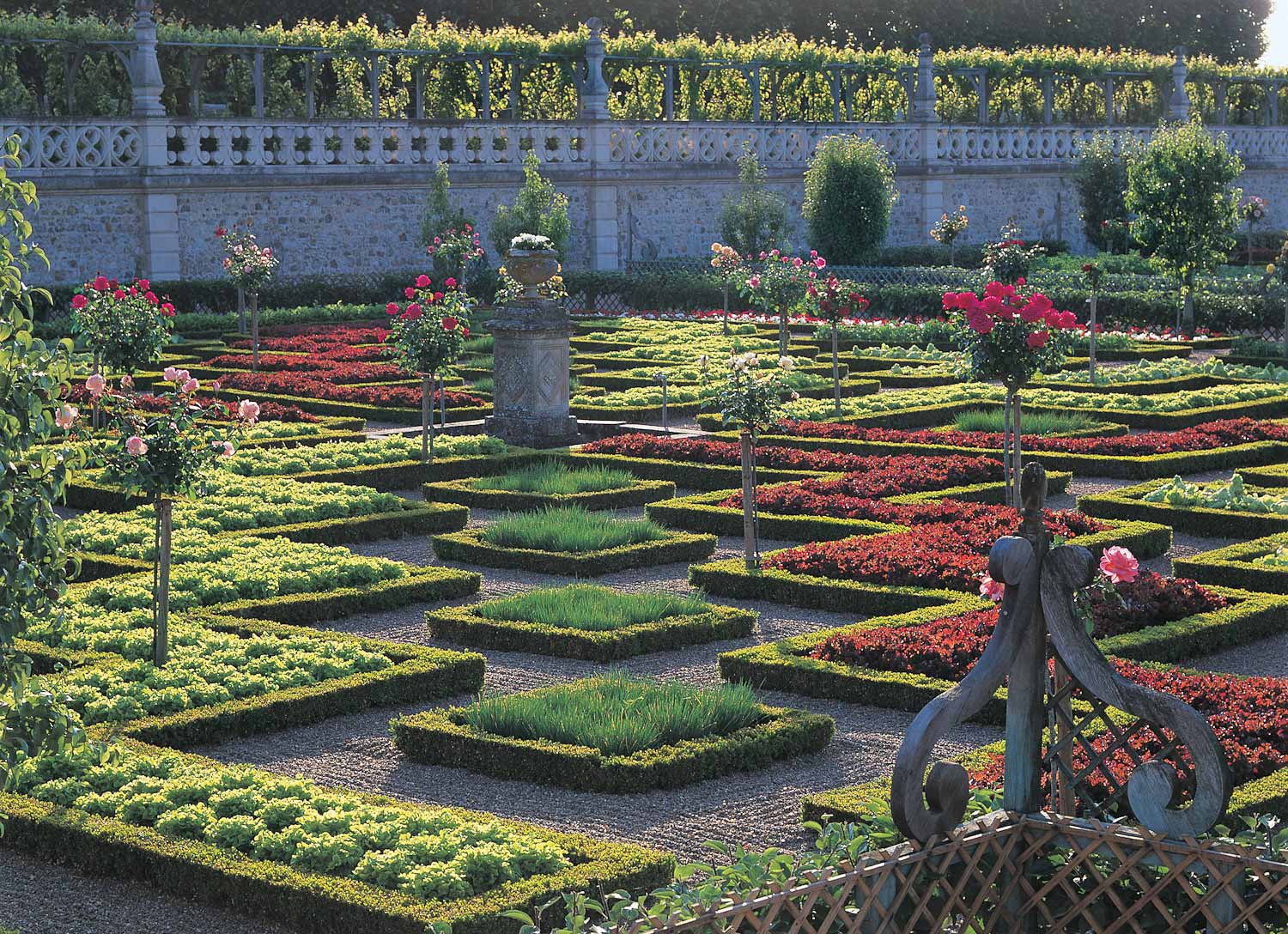
Chateau at Villandry
My own poem in the book, as yet unpublished elsewhere, is called ‘Our Weird Regiment’. The poems remembers a compilation of country house visits over the years. One was a visit to the French chateau at Villandry where the formal gardens, I remember, were not conventionally planted with flowers but with vegetables and herbs. I’m posting the text to MacNeice’s as well as my own poem, alongside the phone video (made by Jane Greening) of the 5/6 minute reading I gave at Kimbolton.
Soap Suds by Louis MacNeice
This brand of soap has the same smell as once in the big House he visited when he was eight: the walls of the bathroom open To reveal a lawn where a great yellow ball rolls back through a hoop To rest at the head of a mallet held in the hands of a child.
And these were the joys of that house: a tower with a telescope; Two great faded globes, one of the earth, one of the stars; A stuffed black dog in the hall; a walled garden with bees; A rabbit warren; a rockery; a vine under glass; the sea.
To which he has now returned. The day of course is fine And a grown-up voice, cries Play! The mallet slowly swings, Then crack, a great gong booms from the dog-dark hall and the ball Skims forward through the hoop and then through the next and then
Through hoops where no hoops were and each dissolves in turn And the grass has grown head-high and an angry voice cries Play! But the ball is lost and the mallet slipped long since from the hands Under the running tap that are not the hands of a child.
Martyn Crucefix is our headline reader. His recent publications include Cargo of Limbs (Hercules Editions, 2019), These Numbered Days, translations of the poems of Peter Huchel (Shearsman, 2019), which won the Schlegel-Tieck Translation prize 2020, and The Lovely Disciplines (Seren, 2017). O. at the Edge of the Gorge was also published by Guillemot Press in 2017. Martyn has translated the Duino Elegies – shortlisted for the 2007 Popescu Prize for European Poetry Translation – and Sonnets to Orpheus by Rainer Maria Rilke and the Daodejing – a new version in English (Enitharmon, 2016). He is currently a Royal Literary Fund Fellow at The British Library and blogs regularly on poetry, translation and teaching at http://www.martyncrucefix.com
Main Reader – Martyn will read both original poems and from his Schlegel-Tieck Translation prizewinning book of Peter Huchel’s work.
During lockdown there has been a proliferation of on-line poetry readings and launches and most of those I have attended have been very successful. I had to teach my (well educated) daughter the meaning of ‘necessity being the mother of invention’ the other day and the poetry world is not the only one learning new ways to do old things. My publisher, Seren Books, has been particularly active in this area, recently staging the launch of Katrina Naomi’s new collection, Wild Persistenceand running a mini festival, their Stay-At -Home series. It was during this series of events that I heard Ben Wilkinson read from his 2018 collection, Way More Than Luck. As part of his own reading, Wilkinson also read Louise MacNeice’s ‘Wolves’: “Come then all of you, come closer, form a circle, /Join hands…”
I’m not proud to admit that Way More Than Luck passed me by when it was first published. As you are probably aware, Wilkinson reviews poetry regularly for The Guardian, and he’s very familiar on social media as a poet and critic, a distance runner and a passionate Liverpool football fan. But the book’s cover (Dalglish, I think), its title and some of the publicity persuaded me that the football bit was going to be predominant. It’s certainly an almost unique aspect of the collection, but it turns out the debilitating darkness of psychological depression is an even more significant one. Wilkinson signals this concern via the book’s two epigraphs. One is about the nature of depression by Matt Haig and a second by John Hanc links challenging physical activities with mental strength, with “state of mind”. And the opening poem immediately suggests the un-put-downable burden of depression for those who struggle with it, while ‘Days’ obsessively lists multiple occasions blighted by it. Both poems use repetition as a device to evoke the persistent nature of depressive episodes, while ‘Pal’ uses that plus personification to convey its haunting, abusive nature:
Next time you’re trying to stand your ground –
argue your case, sprint the home straight,
stare yourself down in the mirror at eight –
he’ll be there alright. His smile is a frown.
His frown is a scowl. His scowl is the fear
you hoped was long gone. Still here. Still here.
Louis MacNeice
Wilkinson’s admiration for MacNeice can be heard in the vigorous syntax here, the use of form and rhyme and his liking for repetition perhaps reflects something of the 1930s poet’s “controlled flamboyance of diction”. Even more successfully, ‘Hound’ treats depression as a beast (an idea famously and perhaps erroneously linked with Winston Churchill):
Know it’s no dog but a phantom,
fur so dark it gives back nothing,
see your hand pass through
its come-and-go presence,
air of self-satisfied deception,
just as the future bursts in on
the present, its big I am, and that
sulking hound goes to ground again.
Troubling dreams feature in two powerful poems. ‘The Nightmare’ is all the more frightening in remaining aware of the real-life episode the dream is based on. A long drive, “to Newby, Lawkland, Cleatop”, is transmuted as the car shudders, the windscreen warps, roadside trees shrivel and the narrator’s companion is suddenly “nowhere to be found”. ‘Stag’ rehearses something similar – the real animal, “on the bypass that night – / antlers like a winter oak”, is, in the dreamed version, pursued vainly across a landscape, seemingly in hope that some secret communication might be recovered from “those cavernous eyes”.
David Foster Wallace
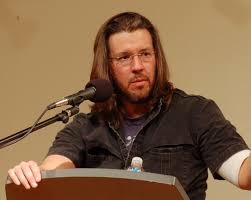
Perhaps the best poem in the book, ‘To David Foster Wallace’, is addressed to the American writer who himself struggled with depression and alcoholism. Wilkinson’s poem takes up a wholly convincing, chatty, MacNeicean tone to discuss – frankly – the experience of despair, “the unpindownable feeling / of hopelessness, hard frustration”. The poem itself declares it takes “courage” to appear weak and it certainly takes courage to write as nakedly as this. Of course, all lyric poetry is to some degree “dramatic”, but there seems a strong autobiographical element to this poem (and others). The poem ends with the narrator explaining that there are occasions, while out running (“my breath dogged on the fellside”), when he experiences something of “peace”, something of psychological relief. Wilkinson’s book title turns out to be not an allusion to a Fernando Torres wonder goal, but what the struggling narrator is left hoping for from David Foster Wallace, even from beyond the grave: “Wish me way more than luck”.
For me, it’s these psychological truths that Wilkinson is so good at conveying. There are other poems later in the book (and perhaps ‘Stag’ is an elusive example) which begin to sketch episodes of a foundering romantic relationship and ‘Building a Brighter, More Secure Future’ is a very effective excursion into witty political satire (a skilfully handled sestina based on the Conservative Party election manifesto, 2015). And there are the football poems. They comprise the central sequence of 14 poems, introduced with a heart-felt Prologue that says what follows is for the ordinary football fans, written out of “a love beyond the smear campaigns, / the media’s hooligans”. A large part of what Wilkinson has in mind here is the shocking response in parts of the media to the Hillsborough tragedy in 1989, when 96 men, women and children died (David Cain’s Forward prize shortlisted book, Truth Street, from Smokestack Books, movingly dealt with this event and the media and policing responses and I reviewed it last summer). Wilkinson obliquely refers to the occasion in ‘Kenny Dalglish’ and several poems have worthwhile things to say about racism in the game (‘John Barnes’) and how the game can offer an escape route for working class boys (‘Billy Liddell’ and ‘Steven Gerrard’).
But the poems also show how difficult it is to escape the miasma of cliché that seems to engulf football itself. Anfield is filled with a “fabled buzz”, then “the place erupt[s]”. Barnes unleashes a “a sweeping, goal-bound ball”, and a particular game offers one “last-ditch twist”. I’m reminded of Louis MacNeice’s observation (now sadly compromised in various ways, but the spirit of it remains valid, I think) that he wanted a poet not to be “too esoteric. I would have a poet able-bodied [sic], fond of talking, a reader of the newspapers, capable of pity and laughter, informed in economics, appreciative of women [sic], involved in personal relationships, actively interested in politics, susceptible to physical impressions’. There are many more of these poets around these days and to bring (even) football into the purview of poetry can hardly be a bad thing. Yet it is not an easy one and there may be some risks in deciding to headline the attempt. Ian Duhig’s blurb note to Way More Than Luck has gingerly to negotiate this issue: “The beautiful game inspires some beautiful poems in Ben Wilkinson’s terrific debut collection … but there’s far more than football to focus on here”. Yes, indeed.
Marvin Thompson’s debut collection from Peepal Tree Press is a PBS Recommendation and deservedly so. All too often we are informed of the arrival of a startling voice, usually a vital one, striking a new note in English poetry. Well, this is the real deal: a superbly skilled practitioner of the art whose work is driven by two seemingly opposing forces. Thompson writes with a disarming sense of autobiographical honesty, often about domestic life, as a father and a son. Yet he can also create fictional characters with detailed and convincing voices and backgrounds. What holds these divergent styles together is his demonstrated conviction that the past (as an individual or as a member of an ethnic or cultural group) interpenetrates the present.
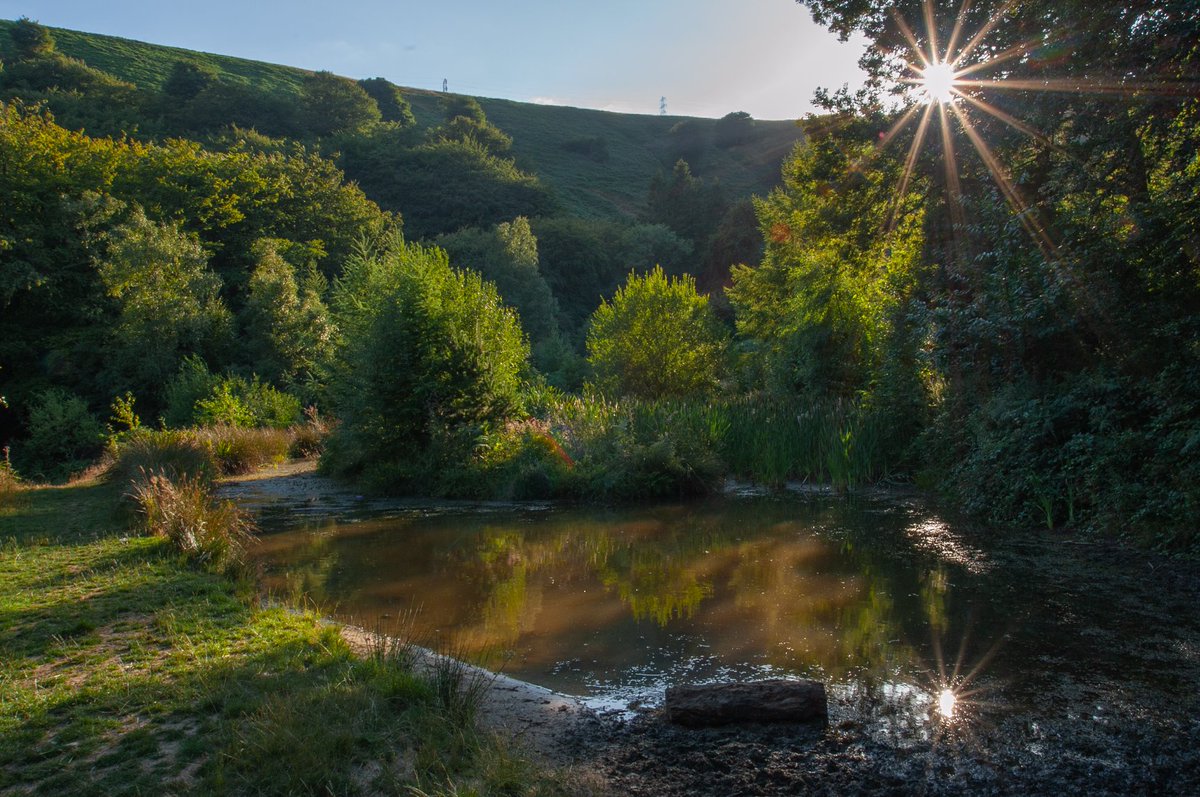
‘Cwmcarn’ is a poem in an apparently simple autobiographical mode, the narrator out camping in Wales with his two children. He has been reading them to sleep with pages from Maggie Aderin-Pocock’s biography but feeling a bit guilty about not finding a book about “a Mixed Race // scientist / for my // Mixed Race / children”. The thought leads him to reflect on his own childhood’s confusions about racial identity, being born in north London to Jamaican parents, but knowing he was ultimately “by ancestry, / African”. He recalls the hurt of being “branded” English, not Jamaican, and then worries about the consequences of his children identifying “as White / in a Britain // that will call them / Black”. As you can see, Thompson’s chosen form is reminiscent of what Heaney (around the time of North) called his ‘artesian’ form of skinny-thin poems and the same effect of drilling down into the past is achieved here.
Several of the same components are redeployed in the sequence ‘The One in Which…’ (with a nod to Friends). The narrator is driving his kids to the cinema, playing “Joe Harriott’s abstract jazz” in the car. The children not surprisingly consider the music angry, sad and crazy. The father is not unhappy with this: “my Mixed Race children are listening / to something I want them to love”. He himself wonders if it’s “upbringing // or brainwashing” but the music “sings // Africa’s diaspora and raises skin to radiance”. (Listen to Thompson read this poem here) This last phrase is a wonderful play on aspects of light and darkness and the consciousness of the power of the past is extended with the father’s memories of the 1985 disturbances on Broadwater Farm in Tottenham. What Thompson does so convincingly and without strain is to present the individual’s stream of consciousness as it streaks in and out of the past and present. The third section of this sequence opens with a simile that should come to be seen to rival the ground-breaking significance of Eliot’s Prufrockian evening spread out against the sky “Like a patient etherised upon a table”. Welsh storm clouds are the subject here and the comparisons that flood the poem are drawn from the past of Jamaican, American, Haitian and African roots:
as she sleeps beyond the sugarcane and soldier’s guns with her sons
and daughters in Jamaica’s hills – fists like Jack Johnson’s,
an 18th Century Haitian’s or an ANC activist’s.
It will be objected that there are one (or two) too many similitudes here but surely that is the point: the vividness, dynamism and vitality of these images drawn from the past make up an irresistible force to the father in the poem.
Blaen Bran Community Woodland
The astonishingly titled ‘Whilst Searching for Anansi with my Mixed Race Children in the Blaen Bran Community Woodland’ makes Thompson’s point over again: the (playful) search for an African folkloric trickster figure (in the shape of a spider) in the Welsh woodlands is not being flaunted here, it is taken to be perfectly normal. In fact, the family don’t discover Anansi at all but an apparently dead fox. But the father’s head is full of his previous night’s dream of Mark Duggan’s shooting by police in 2011 which is also mixed with memories of 1985 again, when “rage had spread / like an Arab Spring”. The delicacy of the descriptions of the fox, combined with the children’s concern for it (it is still alive), become correlatives for the father’s preoccupations with the past. These latter thoughts again streak backwards – in appropriately dream-like fashion – to finding Duggan lying now in the Gold Coast, in ancestral times, “chains ready on docked ships from London”. There is no wrench when the father suddenly resurfaces in the present, worrying, “Will Britain / learn to love my children’s melanin?” The compassion shown towards the injured fox by the family, taking it to a vet, reflects some hopefulness perhaps.
Road Trip does indeed indicate the possibilities of compassionate responses to racial and social divides, the importance of an empathetic imagination which yet does not iron out the kinds of historical differences that Thompson is clearly exploring. ‘Rochelle’ is a 6-poem sequence demonstrating this point as well as showcasing the more fiction-making aspects of Thompson’s talent. The narrative is from Rochelle’s point of view, a young black girl driving to London from Wales to support her sister who has had a miscarriage. On the way, she picks up a young black hitchhiker, Kite, and his back story is also developed in the poems. The form here – and used elsewhere in the book – is a form of loose terza rima, half rhymed mostly, with not much variation in the rhyme sounds. The effect is a kind of circling, interweaving with some sense of a slow progression – which is marvellously apt for the exploration of the past’s breaking into the present and this sequence’s sense of a tentative break-out of the established cycle. Rochelle’s mercy dash is actually undertaken pretty equivocally because she and her sister have much rivalry and bad blood from the past. This sense of distance and alienation is also reflected in the hiker who seems a silent, morose figure. But somewhere near the Hangar Lane gyratory, Rochelle pulls over because there is a horse in the road. The animal – like the fox earlier – provokes a tender response from Kite which opens up the relationship between the two people. Kite’s background has been as difficult as Rochelle’s and now he is returning home to care for his mother who has dementia. A friendship is struck up and the conversation with Kite’s mother persuades Rochelle to phone her sister with a good deal more sisterly compassion in her heart.
Broadwater Farm, north London
Thompson is good at sketching in such characters and developing relationships, investing moments and scenes with a mysterious intensity, but the tone is not usually so optimistic. ‘The Weight of the Night’ is a pair of prose pieces in which the past – of sexual guilt, male presumption and final reckoning – proves to be an immoveable obstacle to a marriage. And though there is something comic in the germ of the idea in ‘The Many Reincarnations of Gerald Oswald Archibald Thompson’ (a father’s ghost returns to his son, telling of his many previous lives), the reincarnations are all in the form of British military figures from Peterloo, the Boer War, Aden, the Bengal Famine of 1943 and the Falklands campaign. The theme is imperialism and social injustice and the father’s chuckling about his actions creates an uncrossable divide between him and his son. I don’t know that I fully understand Thompson’s intentions in this sequence which again uses the ‘artesian’ form, and the surreal quality of some of the fictionalising here makes things harder to interpret. But the past – and perhaps the older generations’ complicity in the many injustices adumbrated – falls as a dead weight onto the present, even in the son’s recalling his father’s recent death from cancer.
I’m impressed at the editorial control shown in this collection. I suspect there are many false starts or even other successes lying in Thompson’s files. There is a generosity of creative energy here which one suspects could display itself at much greater length (a novel perhaps?). The concluding sequence of 3 monologues, ‘The Baboon Chronicles’, is a case in point. Thompson creates a dystopian world (not far from our own – or at least Pontnewynydd) in which Black and White live uneasily beside each other but the streets are also occupied by baboons. These creatures are treated with disgust and abuse by the humans. The White characters also seem to abuse the Black people on a reflex with insults like “’boon”. In monologues by Stephen, Sally and Suzi, Thompson does make points about racism, the othering of those perceived as different, injustice and (latterly) police violence but what is more impressive is the empathetic imagination on show in the creation of these characters’ voices. Thompson possesses in abundance Keats’ negative capability and, as much as he shows how the past, racial and cultural upbringing and memories of injustice lays so heavily on individual identity, Road Trip also shows the possibility of imagining into the Other (of listening as all the great jazzers do) which, rather than a retreat behind the Pale, must be the way towards a more just and equitable world.









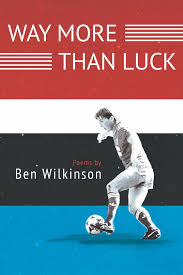 I’m not proud to admit that Way More Than Luck passed me by when it was first published. As you are probably aware, Wilkinson reviews poetry regularly for The Guardian, and he’s very familiar on social media as a poet and critic, a distance runner and a passionate Liverpool football fan. But the book’s cover (Dalglish, I think), its title and some of the publicity persuaded me that the football bit was going to be predominant. It’s certainly an almost unique aspect of the collection, but it turns out the debilitating darkness of psychological depression is an even more significant one. Wilkinson signals this concern via the book’s two epigraphs. One is about the nature of depression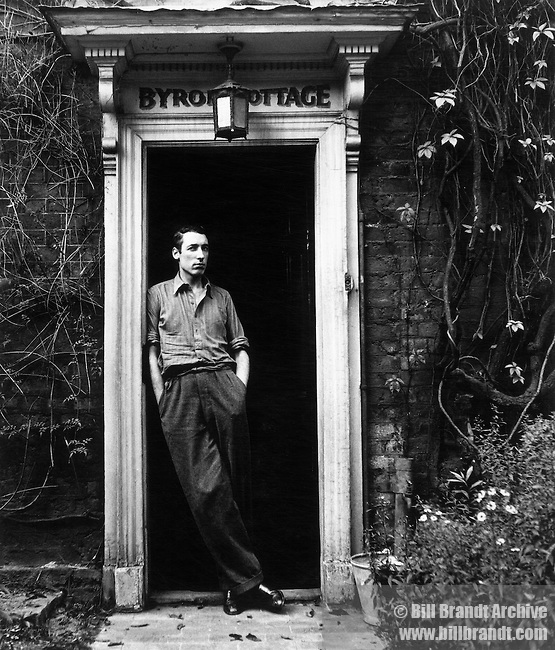
 For me, it’s these psychological truths that Wilkinson is so good at conveying. There are other poems later in the book (and perhaps ‘Stag’ is an elusive example) which begin to sketch episodes of a foundering romantic relationship and ‘Building a Brighter, More Secure Future’ is a very effective excursion into witty political satire (a skilfully handled sestina based on the Conservative Party election manifesto, 2015). And there are the football poems. They comprise the central sequence of 14 poems, introduced with a heart-felt Prologue that says what follows is for the ordinary football fans, written out of “a love beyond the smear campaigns, / the media’s hooligans”. A large part of what Wilkinson has in mind here is the shocking response in parts of the media to the Hillsborough tragedy in 1989, when 96 men, women and children died (David Cain’s Forward prize shortlisted book, Truth Street, from Smokestack Books, movingly dealt with this event and the media and policing responses and
  But the poems also show how difficult it is to escape the miasma of cliché that seems to engulf football itself. Anfield is filled with a “fabled buzz”, then “the place erupt[s]”. Barnes unleashes a “a sweeping, goal-bound ball”, and a particular game offers one “last-ditch twist”. I’m reminded of Louis MacNeice’s observation (now sadly compromised in various ways, but the spirit of it remains valid, I think) that he wanted a poet not to be “too esoteric. I would have a poet able-bodied [sic], fond of talking, a reader of the newspapers, capable of pity and laughter, informed in economics, appreciative of women [sic], involved in personal relationships, actively interested in politics, susceptible to physical impressions’. There are many more of these poets around these days and to bring (even) football into the purview of poetry can hardly be a bad thing. Yet it is not an easy one and there may be some risks in deciding to headline the attempt. Ian Duhig’s blurb note to Way More Than Luck has gingerly to negotiate this issue: “The beautiful game inspires some beautiful poems in Ben Wilkinson’s terrific debut collection … but there’s far more than football to focus on here”. Yes, indeed.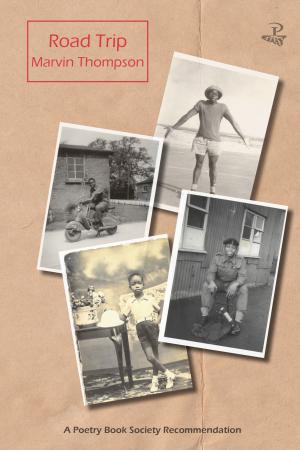

 Martyn Crucefix