‘Muzzle’ – a new poem for the New Year

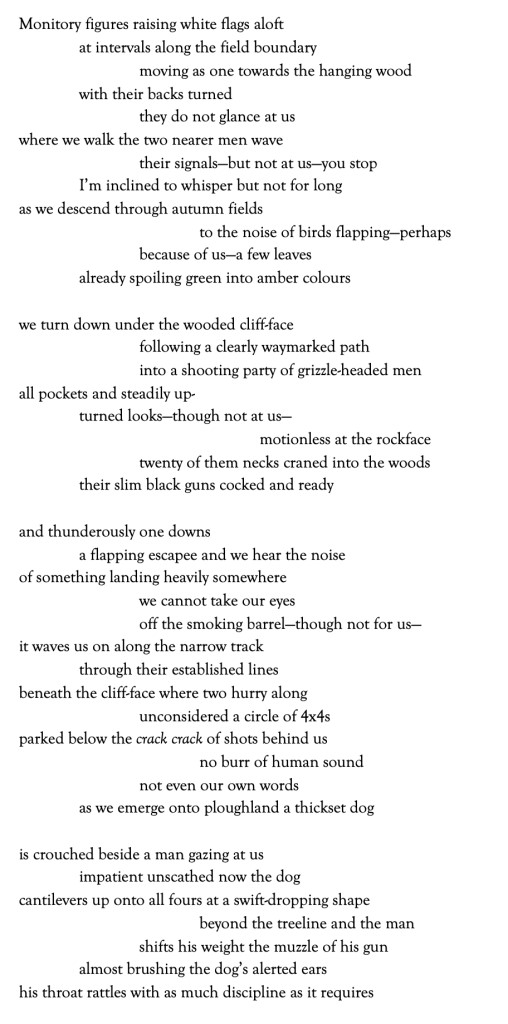
Happy New Year to all of you. We are hoping for the best aren’t we? Come rain, shine or named storm, the poems go on, saying something at least for the individual, the social, for careful consideration of the world out there, the world in here, and the languages we use. I’m posting a poem which has just appeared on New Year’s Day at the excellent Modron Magazine, its strap line is ‘Writing on Nature and the Ecological Crisis’. Glyn F Edwards also interviewed me about the making of the poem and I’ll post the text of that below, along with the link to Modron. Do go and take a good look at what other work they have put up in this new Issue 5. And then subscribe to them. My poem is weirdly formatted – so here is an image of it, lacking its title which is: ‘Muzzle’

On the Writing of ‘Muzzle’

MC: It’s so interesting to be encouraged to look back at the process of writing a poem. I seldom do it (I suspect I’m not alone), forever rushing on to the next ‘best’ thing (we think, we hope). In looking back at ‘Muzzle’ (I find I have the very first draft and several subsequent ones) two things strike me: that it took so long to get to a ‘finish’, and that I’d forgotten how important the context of the poem was to what it might be expressing.

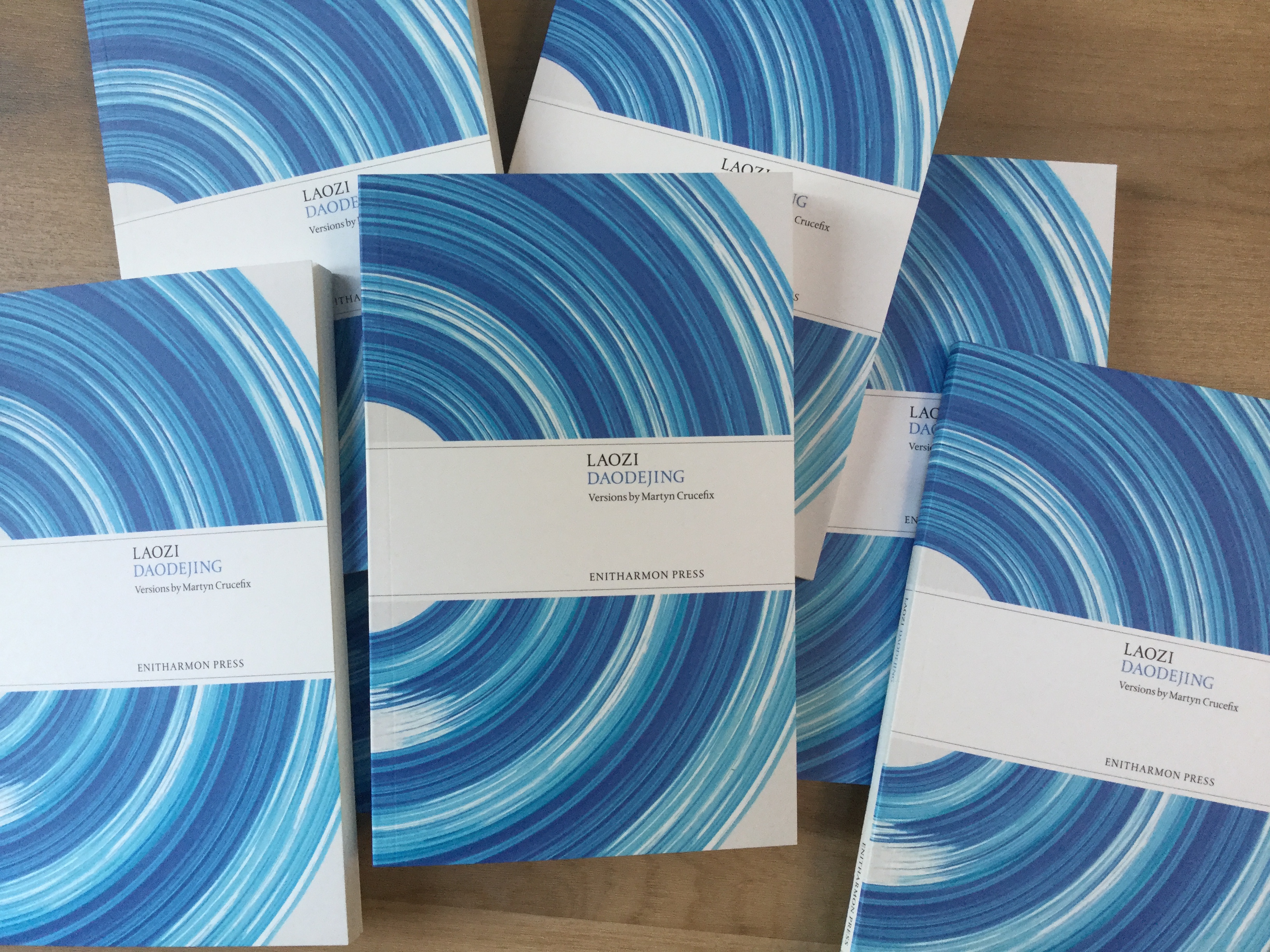
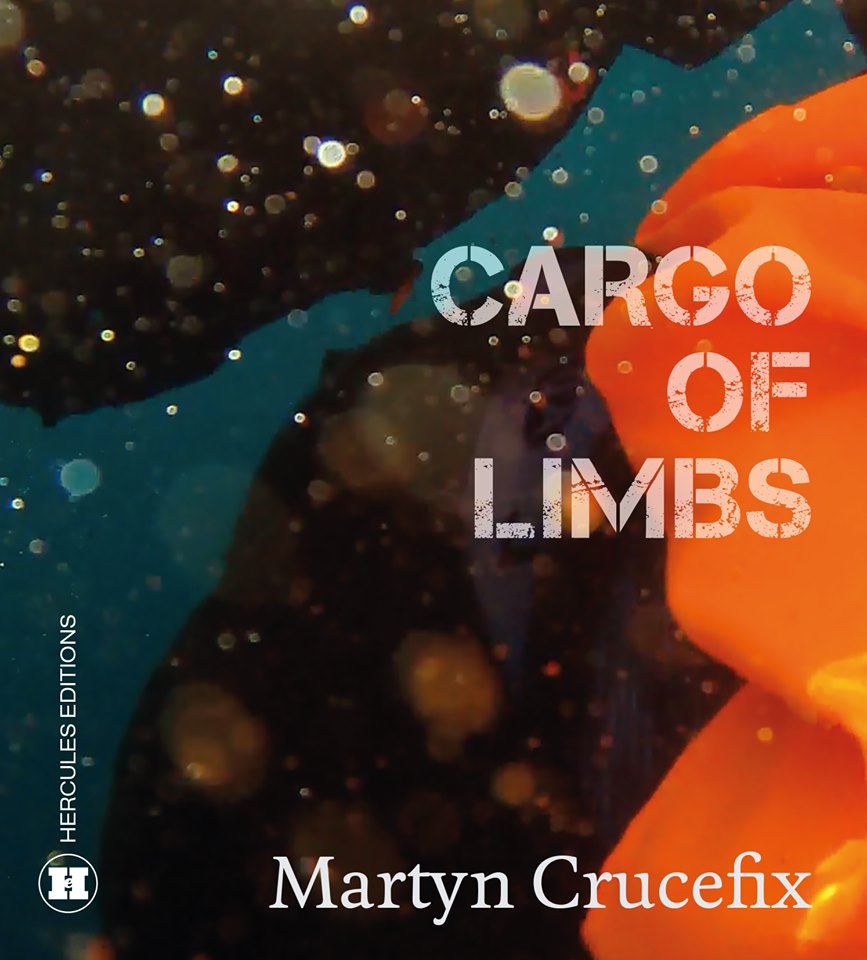
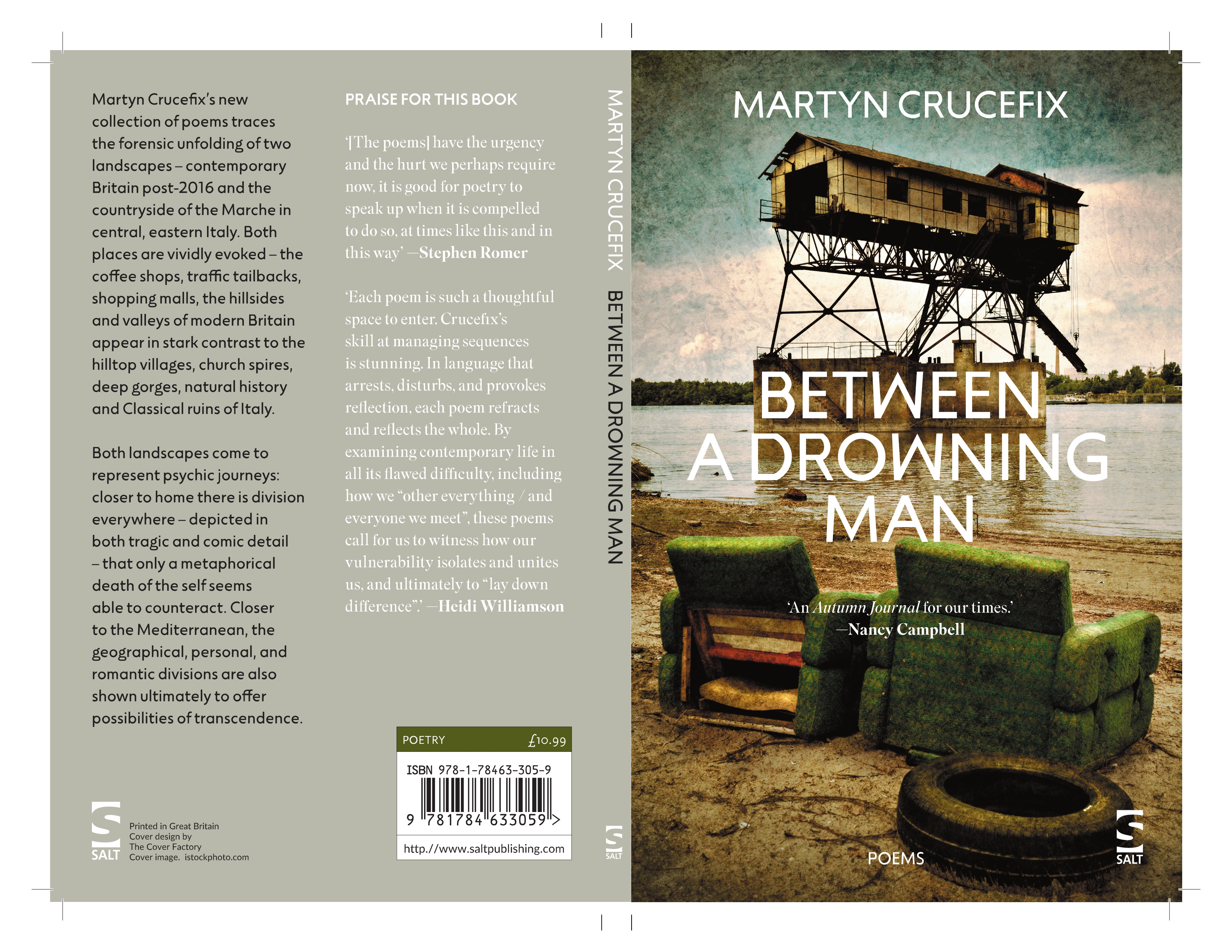
The first draft was scribbled in a notebook in the autumn of 2016. Earlier in the same notebook, I was sketching out thoughts on my, then, just-published version of the classic Chinese poems, the Daodejing (Enitharmon, 2016), preparing for readings I was to give from the book. Elsewhere there are fragments about my parents’ growing difficulties at home and (later) in their care home, plus some quite late drafts of the longish poem about the plight of refugees in the Mediterranean which was published as Cargo of Limbs (Hercules, 2019), and even first drafts of the poems which have eventually come to make up my most recent collection, Between a Drowning Man (Salt, 2023). Remember, the Brexit referendum took place in June 2016 and if there is an idea that links all these differing creative endeavours (including ‘Muzzle’) it is the idea of ‘division’.

Q1 – Only with the word ‘dog’ at the end of the third stanza does the reader gain a semantic connection to the ‘Muzzle’ in the title of the poem. Of course, Chekhov’s gun was ‘cocked’ all along, and the ‘muzzle’ becomes the open end of a weapon where a bullet escapes. Can you explain a little more of the rationale for this subtle title? 

MC: To my surprise, I find, the first draft has no ‘muzzle’ mentioned in it at all. But the shape and a lot of the substance of the finished poem is already there: the flag-waving men during an idyllic autumn walk (on the Sussex Downs, as far as I remember), the shooting party, even the man and his dog at the end of the poem. The muzzle of a ‘smoking gun’ is clearly implied but the final dog’s muzzle does not make an appearance till quite late (I mean 2020 or so!). In fact, in the first draft I clearly don’t know how to end the poem. There, the walking couple emerge from the wood ‘unscathed’, the dog in the field grows tense, and there’s a sense of the man’s day being ‘interrupted’ by the couple. But these final 5 lines are crossed through. In the later draft, the dog now ‘cantilevers up’ onto all fours (the mechanisation of the creature is part of the male group’s malign influence in my mind) – but still no muzzle as such. That only comes via a reference to the man’s gun and, with its proximity to the dog’s head and ears, there is a transference of the word/idea to the dog itself. I’m pretty sure it wasn’t till this point that I thought of calling the poem ‘Muzzle’ and that I also wanted the word to apply to the walking couple who have been (by the experience, by their apprehension, if not their genuine fear) muted or muzzled themselves. The idea was actually there early on; the first draft briefly sketched in, ‘no human voice we do not talk’.

Q2 – The refrain ‘not at us’ is repeated, and echoes again in ‘not for us’ – amongst the ‘white flags’, and the reassurances of safety, there appears a growing threat to the speaker. The reader is left with the feeling that somehow this danger extends beyond the shooting party, and beyond bloodsports. Did you seek for the poem to act as a wider allegorical foreboding, and, if so, would you elaborate on the metaphor? 

MC: Yes, the ‘not at us’ phrase or versions of it are already in the first draft, indeed on four occasions. This is one of the main sources of the idea of ‘division’ in the poem. It’s a simple ‘us’ and ‘them’ situation. The white flags – I think these would simply be the shooting-party’s beaters’ flags being waved to move the birds across the field into the woods, or possibly they are genuinely ‘monitory’ (meaning simply to warn or admonish), but in being white they also have (ironic) resonances of surrender (these guys were not going to surrender anything). The repeating phrase emphasises the gulf between the two elements of the encounter and particularly the sense (clear on the actual occasion) that those holding guns did not seem much concerned that unsuspecting, endangered walkers might be near at hand. We felt ignored; they seemed not to look at us. Being England, there is a strong class element here, which does not map easily onto the question of the voting intentions by class in the Brexit referendum, but factions on all sides seemed not to be paying much attention to any other. The devastating Tory defeat of 2024 should be regarded as reflecting much of this: eventually the country at large felt those in government were simply not paying any attention ‘to us’. I’ve always been pleased with the adjective ‘established’ to describe the shooting-party’s positioning, their being arrayed as the ‘establishment’. The finished poem ends ambivalently. The walking couple escape the shooting-party but are faced with another threatening situation: the gun, the dog. The ‘guard-like’ posture now puts me in mind of prison camp patrols the world over and I’d be happy for readers to get there too: there is a policing of freedoms going on here, a sliding scale from rural pastimes, to political enforcement, to genocidal pograms.

Q3 – ‘Muzzle’ zigzags, indents, retraces its steps. Some stanzas loop longer, and when the final sestet ends abruptly, without full stop, the reader becomes aware of the absence of punctuation throughout. You have a very idiosyncratic approach to presenting and punctuating the poem – could you share your intentions in this poem, and elaborate on whether these ally or counter your conventional style?

MC: The final form of the poem – which you describe so well – came very late. Most often my poems ‘find’ their own form – they don’t begin with any sense of the shape they will eventually take. The 2020 draft was coming out in tercets and I remember liking the ‘walking pace’, step by step, which that shape suggested. But in the end I wanted the poem to be more radical, to suggest a sense of freedom (in contrast to what is felt by the couple during the incident), a freedom to roam as it were, for lines to wander across the page and back again, while also acknowledging that this meandering might well yield some uneasiness in the reader (where’s he going?!). Both freedom and anxiety would be appropriate here. The form and the absence of punctuation (the latter I have been working with for several years now) are intended to generate some ambiguity. For example, I’m hoping for a fluidity in the opening lines, with the putative subject or focus being the flag-waving men, eliding to the walking couple – the ‘you’, then the ‘I’ – the birds, the leaves turning, finally to the ‘grizzle-headed men’. Within this fluency, a bit later, I want several adjectives to be hovering between subjects. The word ‘unconsidered’ floats between the lack of consideration given to the couple and the waiting circle of parked cars. Similarly, ‘impatient unscathed’ buzzes between the couple (again) and the waiting man and dog. This culminates in the rattling throat in the final line which (I want) to be as much about the man as the dog itself and so the ‘discipline’ demanded of the situation ought to be seen as human as much as canine. I guess I’m trying for fertile ambiguities, trying to suggest two things at once. The opening of the Daodejing says: ‘the path I can put a name to / cannot take me the whole way’ (my version).

Q4 – The shooting party negatively influences their surroundings, their presence ‘Hanging’ and ‘spoiling’ the woods, and the walk of the speaker. How much familiarity do you have with these ‘grizzle-headed men’, and do any occasions, such as the one in ‘Muzzle’ stand out as memorable, or significant? 

MC: As you suggest, I have allowed the shooting-party to be, and remain, those wearing the black hats. More often than not I feel the need, the wish, to revisit such emphatic designations: what’s to be said ‘on the other hand’ (ever the wishy-washy liberal). The jaw-dropping presumption of the shooters in the original incident (the poem says pretty much exactly what happened), coupled with the generally felt anger and dividedness of the UK at the time (and since) goes to explain why I have not done so here. Do I know people like this? I guess not. A remote acquaintance likes to share his stories of attending such exciting shooting-parties, but it’s hard even to find the language to create much common ground. Perhaps I am just too urban, metropolitan even. About hunting wild animals, Rilke says, ‘to kill is one form of our restless grief’ (Sonnets to Orpheus, II, 11; my translation). Nothing I witnessed on that day in 2016 served to convince me otherwise; the taking out of another living thing for no useful purpose seems to require an arrogant presumption that I cannot get my head around and I find rather terrifying; the ‘monitory’ urgency in the final poem is as much concerned with how this sort of attitude plays out in the political, even in the military, sphere as it is with ‘blood sports’ more narrowly defined.

December 2024

Here’s the direct link to Modron – https://modronmagazine.com/a-poem-and-interview-with-martin-crucefix/


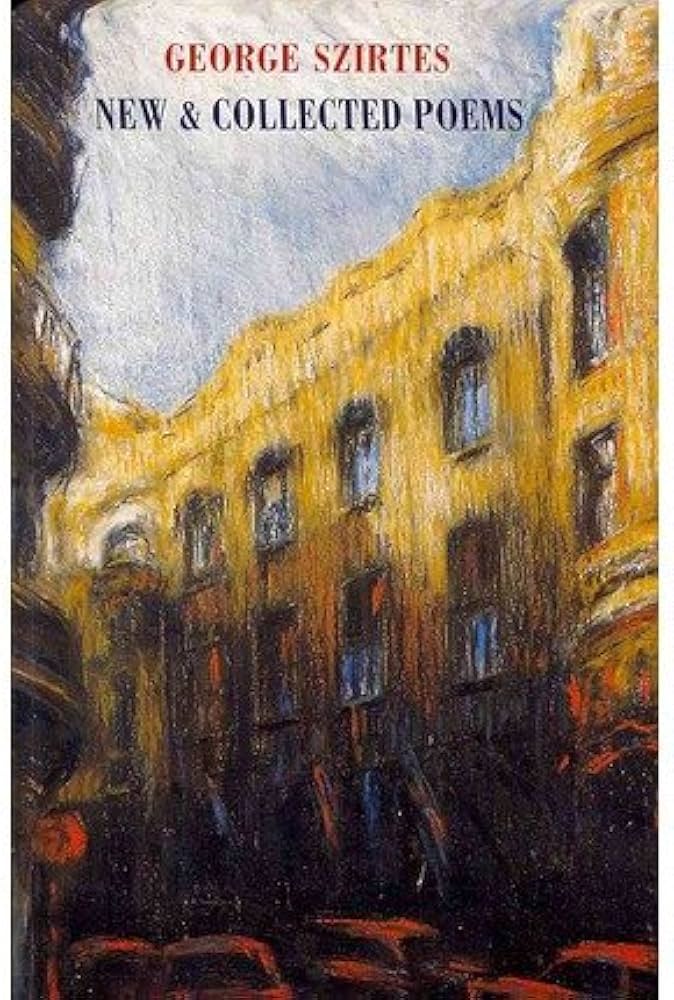
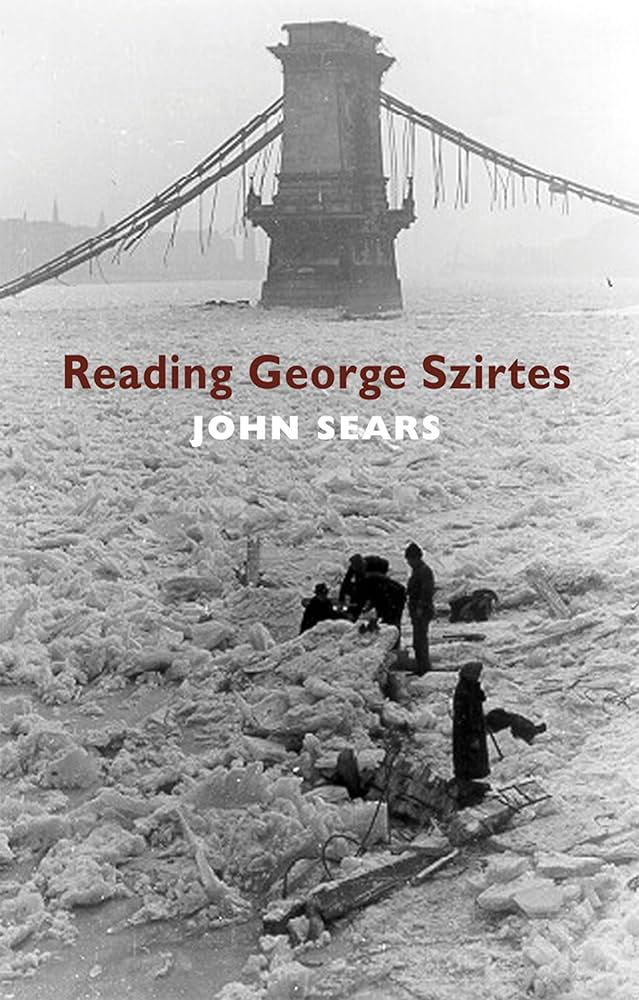
George Szirtes’ King’s Gold Medal for Poetry

This week’s announcement of the award of the King’s Gold Medal for Poetry to George Szirtes gives me the opportunity to re-post a long and detailed review I wrote (for Poetry London) of the two books that Bloodaxe Books published to celebrate Szirtes’ 60th birthday. These were the New and Collected Poems and a critical book about his work, Reading George Szirtes, written by John Sears. Though Szirtes has continued to publish a good deal since the late 2000s, this review still seems to me to have something useful to say about the development and poetical achievement of this outstanding writer and might be of interest to those not yet familiar with his work. (For WordPress readers, I am experimenting with posting also on Substack. Do subscribe here if you’d like to read in that format: https://open.substack.com/pub/mcrucefix/)

This 500-page New and Collected Poems demonstrates the breadth and depth of George Szirtes’ achievements and will bring his work to even wider notice, casting the poet as a recording angel. His lines of literary influence run from Eliot’s phrase-making and metaphysics, through Auden’s formalism and politics, to earlier contemporaries like Peter Porter and Martin Bell (at the Leeds College of Art and Design). There are distinct phases to Szirtes’ oeuvre, but his work tends to a density of fragmented detail, bound by a allegiance to visible form, shot through with explicit theorising about perception, language, time, memory, self, the art itself. This is a heady and immensely ambitious mix – not one likely to appeal to popular tastes, but there is no-one more dedicated to poetry, to playing the long game, to bringing a uniquely European perspective to the theme of our age, the search for personal identity.

Szirtes’ career illustrates what Pasternak discusses in An Essay in Autobiography (Harvill, 1990). Though our experience of the world is necessarily subjective, there is a sufficient underlying matrix that remains “the common property of man” – the hard-wiring implicit in being human. Superimposed on this is the softer wiring derived from upbringing, environment and education, and the self is ultimately a function of these base matrices in progressive interaction with individual decision-making in the flow of experience. So the objective world is processed through the individual’s particular matrices – his/her sets of harmonies and disharmonies – and must emerge coloured, spun, texturised as it were, accordingly. From this, Pasternak argues that when an individual dies he leaves behind his own unique “share of this . . . the share contained in him in his lifetime . . . in this ultimate, subjective and yet universal area of the soul”. This, of course, is where “art finds its . . . field of action and its main content . . . the joy of living experienced by [the artist] is immortal and can be felt by others through his work . . . in a form approximating to that of his original, intimately personal experience”. Art can be defined as the expression of experience playing across the matrices of the self, saying not this is me, but this is, this was, mine.

It is the raw imagery of stasis and movement that emerges in Szirtes’ early work as being truly his and it blooms into the maturity of the late 1980s. In short lyrical pieces the point of stasis is associated with the preservative of art in the spit ball gobbed by a foreign worker in ‘Anthropomorphosis’ which is caught and “suspended” by the poem. The afternoon rearranges itself around it and even the narrator “hung there / Encapsulated in that quick pearled light”. Versions of this encapsulation abound: girls creating a silver foil tree find themselves absorbed into a Keatsian “cold pastoral”. Such freeze-frame moments anticipate Szirtes’ sustained meditations on photography but early on, images of snow and frost suggest the ambivalent status of such suspension. In ‘The Car’ a snowfall is both beautiful and sepulchral: “Fantastic Gaudi-like structures hung / Under the mudguard . . . . / Wonderful, cried the girls under the snow”. A girl who is observed sewing causes consternation (“I do not like you to be quite so still”) caught in a stasis that can “eat away a life” that can “freeze the creases of a finished garment” (‘A Girl Sewing‘).

In contrast, it is movement in the shape of the passage of time that spurs many other early poems and the artist’s power is limited to “measure breath in a small space” (‘Group Portrait with Pets’). The enigmatic title poem of the first collection seems to teeter elegantly along the knife-edge of the sense of threat to domesticity and the desire to secure in a “cage” and convert to “metaphors” (‘The Slant Door’). It seems for time there is “no use, no cure” (‘Silver Age’) and Szirtes senses this especially in the domestic sphere. ‘House in Sunlight’ casts the busy sun as the agent of transience threatening the house itself and the life within it:

Whoever lives here knows what they are about –

Forms appear suddenly in mirrors and photographs,

We do not think however that they are entirely at home.

At night the doors are locked. We lock them now.

John Sears’ book is a comprehensive academic review of Szirtes’ career, tracing the development of both key themes and formal experimentation. He suggests Martin Booth’s 1985 critique of Szirtes’ early work as “withdrawn and laidback” was influential on the poet. Booth suggested that Szirtes might try writing about “his childhood” (Sears, p. 61). If true, we have reason to be thankful to Booth, but there are signs that Szirtes was moving in this direction already. He travelled to Hungary in 1984 and was casting his gaze beyond these shores towards people who “lie in complete unity / In graves as large as Europe and as lonely” (‘Assassins’). The title poem of Short Wave (1984) deploys its central image to suggest the deciphering of voices that are obscure yet seem suggestive of “all Europe in her song”. The self-deprecating picture of Szirtes “listening / and turning dials, eavesdropping” is something to be treasured given the explosive impact these deciphered voices will eventually have on his work.

Several members of Szirtes’ family were caught up in the Holocaust and later in the Soviet invasion of Hungary in 1956, escaping to the UK. Much of this was known to Szirtes only sketchily and he set himself the task of recovering what seemed lost. It is because Szirtes’ underlying matrices as an individual – stasis and movement, preservation and loss – mapped so powerfully onto his family’s own history and this history encompassed important European historical events that his work becomes in the late Eighties so much more complex, ambitious and important. History had determined his nature as a poet; his nature as a poet primed him to be able to encompass the burden of his own history.

So the title poem of The Photographer in Winter (1986) attempts the imaginative recovery of Szirtes’ mother from the Budapest of the 1940s and 50s. She was herself a photographer and her son traces her movements with “thoroughness and objectivity” as far as he can. Both as an artist and poet, Szirtes declares he has been “trained / To notice things” (the deliberate echo of Hardy’s ‘Afterwards’ is but one example of Szirtes’ very frequent intertextual allusions). But the recovery process seems often subject to disintegration, “trying to focus through this swirl / And cascade of snow”. At times the tone is more optimistic, like the final section of ‘The Swimmers’ in which a drowning girl survives the “icy Danube”. Elsewhere, intervening time destroys so much, and the later sequence ‘Metro’ (1988) uses the image of the Budapest underground system for “everything that is past, the hidden half”. His choice here of the deliberately curtailed thirteen-line sonnet is a characteristic recognition in formal terms that the search must remain incomplete.

The balance between one man’s search for his background and the conversion of this to poetry is a difficult one and if the marvelous sequence ‘The Courtyards’ is counted as one of the great successes, for me ‘Metro’ itself tips too far away from the memorial towards the monumental. There are occasions when Szirtes’ desire to recover and pay respects to his own history impels him to erect such elaborately formal accumulations of images that the reader may feel excluded, even if always impressed. The later ‘Transylvana’ is another occasion when the act of imaginative recovery can seem propelled for its own sake and despite the glittering formal achievement – terza rima in this case – the piling of detail on detail can become wearisome.

But Szirtes’ openness to theoretical thinking has always propelled his work forward and often derives more from his training in the visual rather than the literary arts. Blind Field (1994) draws on Barthes’ idea that in photography all that is not portrayed in an image may be implied by the presence of a “punctum” or detail within it. As Sears suggests (this is the sort of idea he is very good at elucidating) this bears some relation to Eliot’s objective correlative but is seen by Szirtes as a solution to the paradox that art stills the life it presents: “Out of this single moment a window opens” (‘Window’). This sense of the ballooning fluidity of experience, past and present, is one thing that marks his work as Modern and Post-Modern and it’s no surprise to see Szirtes countering Larkin’s belief that the passage of years makes us “smaller and clearer” arguing we grow “blurrier, vaster, ever more unfocused” (‘On a Young Lady’s Photograph Album’). It’s this slipperiness of personal identity that is Szirtes’ true theme and the one that elevates his work above the merely personal into a body of work addressing urgent contemporary concerns. As the poem ‘Soil’ puts it “there is nowhere to go / but home, which is nowhere to be found . . . / the very ground / on which you stand but cannot visit / or know”.

Everywhere these days, the recovery/re-construction of our own identities seems to be a pressing issue and the three sonnet sequences in Portrait of My Father in an English Landscape (1998) triumphantly present and simultaneously enact this process. Sears describes Szirtes’ form here as a “deliberately baroque form of the Hungarian sonnet sequence” or sonnets redouble (Sears, p. 145) in which the final line of each sonnet is repeated (approximately) as the opening line of the next and the final (fifteenth) sonnet is composed of approximations of each preceding sonnet’s closing line. Yet this is not an arid exercise in form as the recurrences and accumulations enact precisely what Szirtes believes is the process of the construction of the self – largely via language into a “lexical demesne” – in this case said to be “part Hungary, part England” (‘The Looking-Glass Dictionary’).

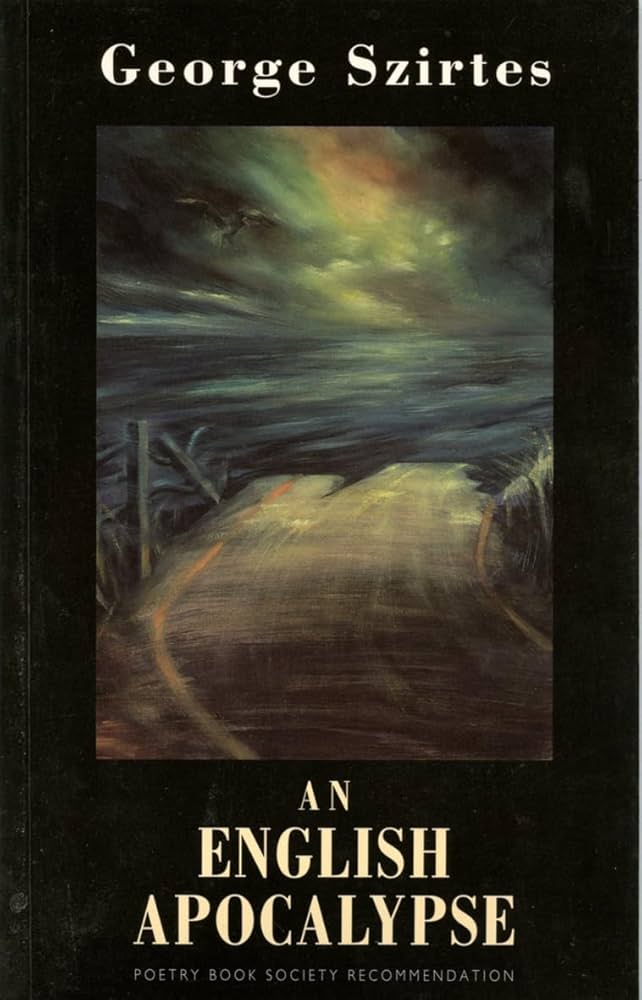
Retaining his love of the titled sequences, sections and subsections which had helped him draw a bead on his family’s obscured past – a tendency which produces the most typographically diverse and complex contents pages I’ve ever seen – from the late 1990s Szirtes’ work turns a firmly European gaze on the UK. An English Apocalypse ranges through Great Yarmouth, Keighley, Orgreave, Preston North End. all-in-wrestling and antisemitic violence towards images of “a tense / empire that could fall” (‘All In’), towards something “crumbling – a people possibly” (‘Dog-Latin’) and specific individuals “speaking the innate vernacular // of the trapped. He’s shit. Scum” (‘Offence’). Despite the success of Reel (2004), the new poems in this 2001 compilation, portraying an outmoded and disconnected England, are one of the high points of Szirtes’ career so far and they culminate in the extraordinary sequence of imagined apocalypses by meteor, power cut, deluge and suicide that caught the flip side of millennial euphoria and seem now years ahead of their time.

Apart from the sceptical cinematic pun Reel/real, the title of Szirtes’ 2004 T.S. Eliot prize-winning collection is an allusion to the predominance of the rolling, unravelling impact of his majestic terza rima. By this stage, there is a greater ease to the looping to and fro, the past and present, which Szirtes encompasses in this form.

Here I find bits of my heart. In these

Dark corridors and courtyards something true

Survives in such obsessive images

As understand the curtains of the soul

Drawing together in the frozen breeze.

(‘Reel’)

‘Sheringham’ also reinforces Szirtes’ familiar cumulative techniques remarking on the “boiled down particulars that regularly come / knocking at the skull”. Sonnets too continue to be a favoured form, though in the beautiful meditation on the aging processes, ‘Turquoise’, the neatly closing couplet of the “Shakespearian ending” is both employed and simultaneously questioned.

Indeed, echoes of the Bard’s obsessive negotiations with “swift-footed Time” (XIX) re-emerge as one of the most striking features of Szirtes’ more recent poems. A pizza can be enjoyed – but not to the exclusion of the river nearby, an unavoidable “emblem of time” (‘In the Pizza Parlour’). Szirtes is re-visiting the concerns of younger days from more slant-lit uplands. Now images of dust recur, here in the woman’s “dust-laden hair” while elsewhere birds are “swimming through dust” (‘Winter Wings’) and – in one of Szirtes’ most beautiful sonnets – a woman regards herself in the mirror, contemplating the impact of the passing years and gazing at her face “drowned in a cloud of dust: / How beautiful, she thought, and how unjust” (‘The Breasts’).

On Revisiting Blockley

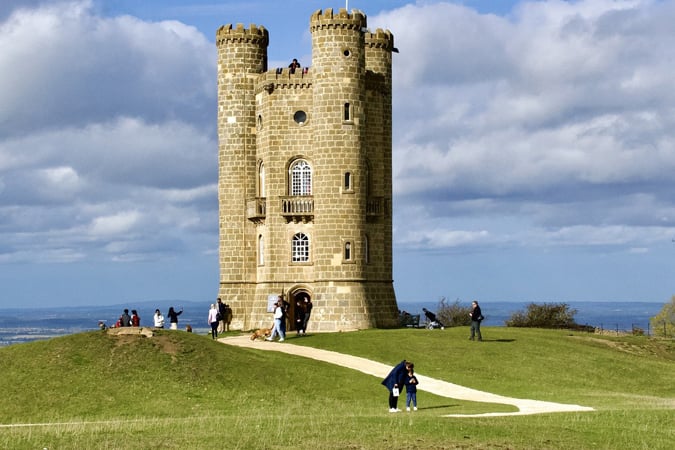
A rather more personal post than usual, though a poem (an older one of my own) is attached to it. Last week, I spent a few days with family in the beautiful village of Blockley, in the Cotswolds. The weather was very good for late November and we walked a couple of times – from Broadway up the muddy hill to the folly of Broadway Tower (once frequented by William Morris apparently) and around Hailes Abbey (now a ruin, local lore has it that Thomas Cromwell watched the destruction of the Abbey from a nearby hilltop). Blockley itself is near Moreton-in-Marsh, a place almost destroyed by the volume of traffic flowing through it (even in November), where The Bell Inn was once a favourite of JRR Tolkein, and is supposedly the model for The Prancing Pony in The Lord of the Rings. But Blockley, for me at least, had another powerful ghost haunting it.

As a couple, with young children, we stayed in the village over 20 years ago, in one of the original silk weavers cottages built along Park Road, which looks down over the village and valley. The house was owned by a colleague of mine at the time, Laurence Bowkett. He taught Classics and Latin and often spent the summer vacations away on archaeological digs of various kinds. That must have been the situation then as he’d allowed us to use the house in his absence. His early death, within a year or two of this, was a shock to us all. He had no family of his own and I don’t know what happened to the house later. So, fast forward to 2024, and here we are staying in Blockley again, only partly by coincidence. We have always had good memories of the place and (again, partly by an AirB&B chance) we ended up renting an almost identical cottage in the very same terrace above the village. Indeed, maybe it was the same cottage – I couldn’t remember enough of the details. The layout was certainly the same – the front door in off the road, straight into a little front room, a chilly basement kitchen and upstairs two small bedrooms.

Laurence’s was not the first death of a contemporary I knew well, but it greatly affected me and I tried to express something of this in the poem – an elegy – I wrote for him later. It is called ‘The umbrella and the bay tree’ and it mixes memories of him, his enthusiasms (he had a lot of those – all his students loved him for it), with details from my own family life at the time. It opens with an imagined scene, all his teaching colleagues gathered (as we often did then) in the local pub, remembering him in his absence. The ‘laral gods’ – the Lares – are Classical Roman guardian deities. The laurus nobilis refers to a little bay tree I bought after our first stay in Blockley as a thank you gift . . .

By seven-thirty, you are with us all

tonight in the gloom of The Washington,

though we omit you from every round.

Powerless as laral gods who gave you

no protection, even laurus nobilis,

the bay tree I bought you, proved no use.

Our children were at Infant and Junior School at the time and – to be honest – I can’t now remember if the details the poem goes on to mention are truth or fiction. But Laurence was the kind of guy who’d keep his own books in scrupulous order (as he did with his extensive collection of Marvel comics) so the library setting has always felt right . . .

Today, I searched 570 and 790,

in the Dewey decimal classification

your fingers ran through a thousand times,

for the facts of death and irrepressible life,

as if I looked for you now and you then.

You taught shard-life and careful fieldwork,

the near-dead language of not giving in.

You offered the heroic a modern face,

though death proved the more determined.

You understood lives alter what they touch:

a house, a street, a flowering tree,

for those who know us are not struck dumb,

a library unread the moment we die.

They roar like a lantern with our life inside.

The idea of lives of the dead altering the lives of those they have touched in life is familiar enough, though I was working on my translations of Rainer Maria Rilke around this time and I’m sure his influence is in here. It is not just the remembering of a friend who has passed away, but also that our own perceptions of ‘a house, a street, a flowering tree’, for want of a better word, spiritualises the material object, giving it a life, a light, an existence, beyond the ordinary. The resurrection of the bugs stomped by my daughter in what follows is probably an allusion to the early primitive computer games the kids used to play in which a failed – hence fatal – leap from a high building would result only in a brief ‘death’ and their 1st person avatar would soon revive and carry on in pursuit of adventure.

In Hornsey Central at 570

this morning, I found books to undermine

my daughter’s smiling confidence

that bugs she crushes beneath her shoe

lie dead a while, then revive good as new.

At 790, I leafed through life and death

in Ancient Egypt for her older brother:

how they wash their dead in water and oil,

then bind them in linen smeared with gum

and priests wrap lucky charms inside

in hope that none will break the seal

till the dead themselves in time of need.

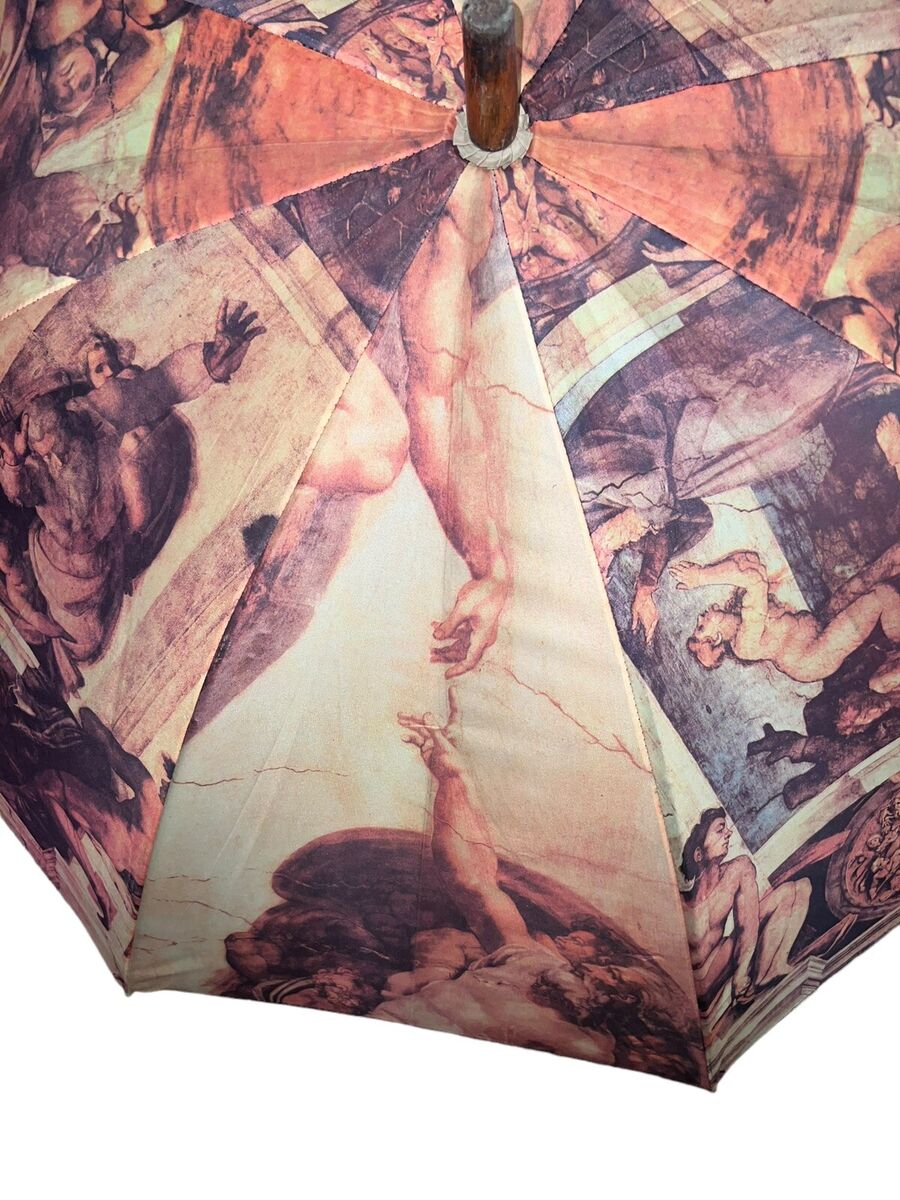
The ‘lucky charms’ idea naturally led the poem on to what I myself might place in a good friend’s sarcophagus and gave rise to a list of his multifarious likes and loves, concluding with the heartfelt wish that his (prematurely unhirsute) head might – even in death (though he had no religious belief as far as I know) – remain somehow protected. The image on the underside of Laurence’s umbrella is a truth!

Then I’ll wrap Homer for you, Wolves black-

and-gold, your Micra, Marvel, Blockley

and booze, moist, sweet cake for the road,

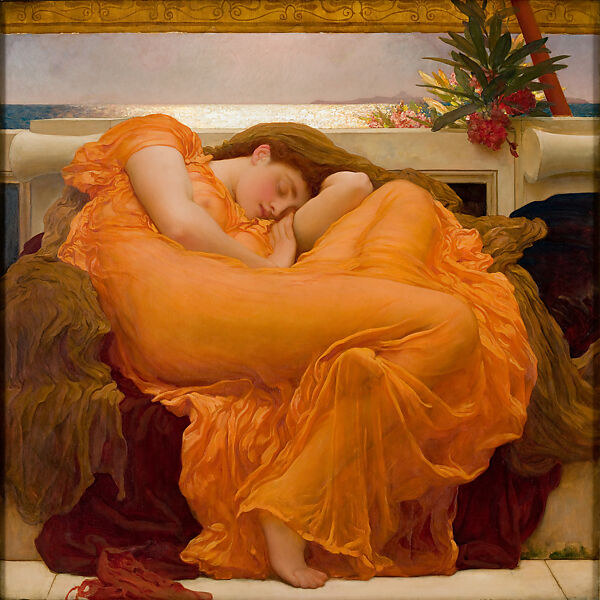
Frederick Leighton, Sir Frankie Howerd,

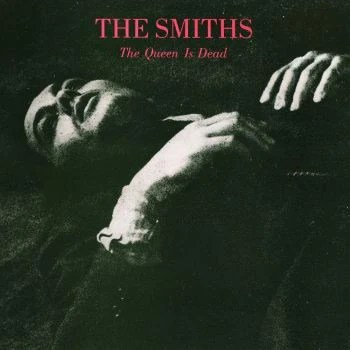
Wisden, The Smiths and that Italian umbrella

you flourished one day and thundered open –

behold! the Sistine roof appeared

to keep your bald head from the hissing rain.

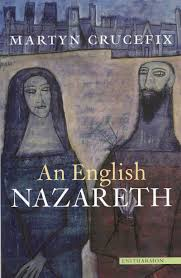
‘The umbrella and the bay tree’ was originally published in An English Nazareth (Enitharmon Press, 2004).

A Run of Readings in October/November

Talk to whomsoever (among the poets you may know) and a common theme is just how hard it can be to get invitations to read. It really is hard going and for those of us – most of us – who have an aversion to the push and flaunt that is required – it can even feel quite painful. But do it we must. So it’s really nice when it produces a few results. This, by way of saying that I have a few appearances – brief in the main – not as headline reader – coming up at the end of this month and the opening of November. A couple of these readings are translation-related, two others are to mark the publication of extracts from some more experimental work (in original poetry) that I have been pursuing in the last couple of years. I’m particularly happy that these more ‘odd’ compositions have found such warm responses and it makes me think I ought to be looking to publish them in full. Though I have another, other book sitting ready to go… publishers??

Some more event details….

On 26th October, 2pm, at The Library, Conway Hall, London, as part of the Small Publishers Fair, Wivenhoe-based Dunlin Press will be launching four new pamphlets of writing: Kathmandu by Andrew Shaw, Bomb by Samuel Reid, From Stone to Clay to Butter by Lily Petch, and A Raven on a Writing Desk by Julie Hogg. These talented people were the winners of the Press’ 2024 competition for experimental writing. Sad to say, I’ll not actually be reading here, but some of my work is included in the accompanying anthology (those who just missed out I like to think!). My contribution is an extract from A Shout Across Dursey Sound, a sequence of poems set on the Beara Peninsula in Ireland. The anthology’s title is Objects (buy it here) and it includes work by Galia Admoni, MW Bewick ,Emma Bolland, Richard Capener, Tessa Foley, Anthony Ogbonnaya Chukwu, Richard Skinner, Isabella Streffen, and others.

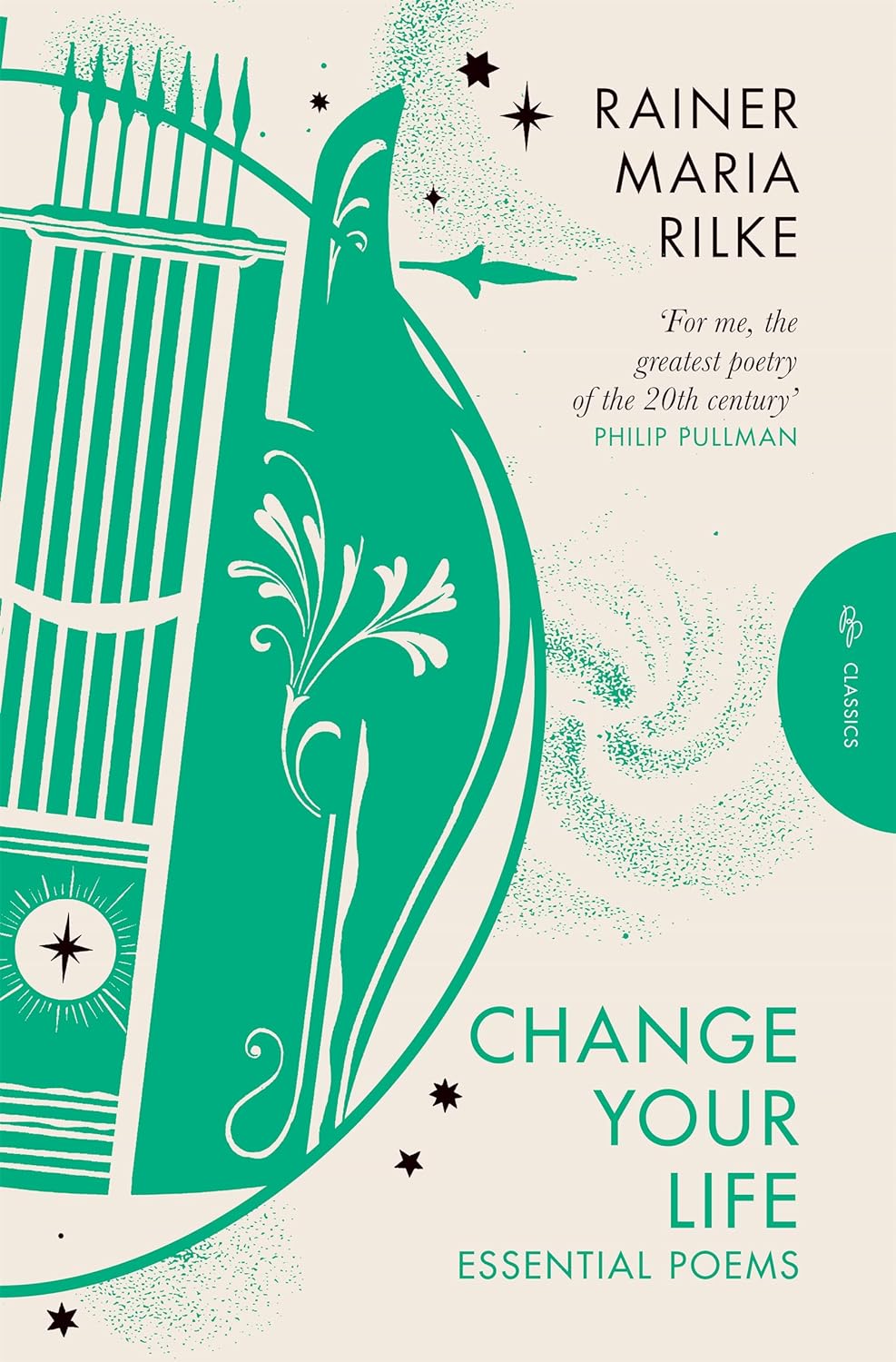
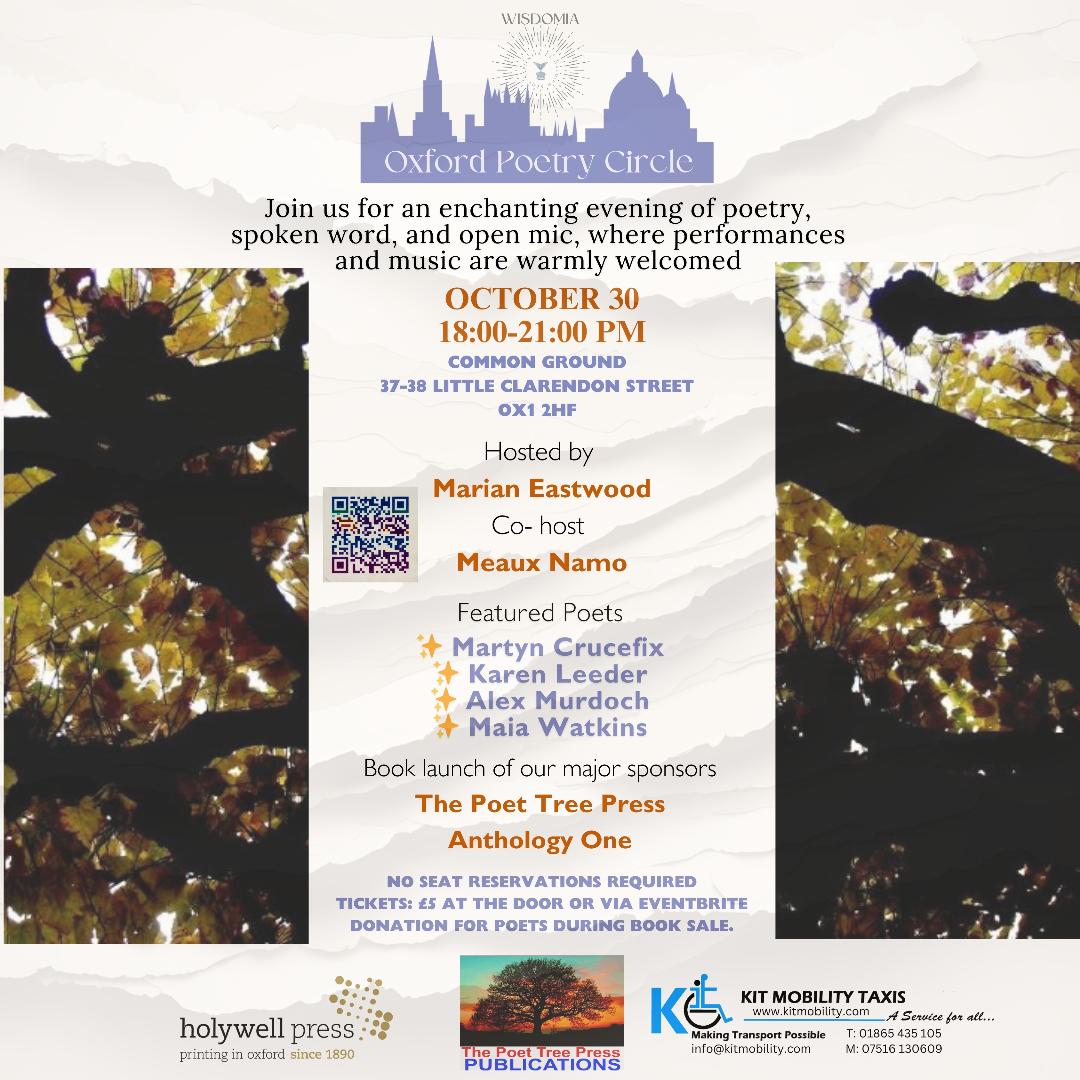
Then, on Wednesday, 30th October, 6pm-9pm, I’m off to Oxford to read for the Oxford Poetry Circle, as announced in a previous post. This is taking place at Common Ground, on Little Clarendon Street, Oxford. There, I’ll be reading work in translation only – from my recent Rilke book published by Pushkin Press (reviewed here on The Friday Poem by Victoria Moul) and from my 2019 Shearsman Books collection of poems by Peter Huchel. I’m particularly pleased to be reading on this occasion with the brilliant and super-industrious translator, academic and friend, Karen Leeder. Other readers are Alex Murdoch and Laia Watkins – and there will be readers from the floor.

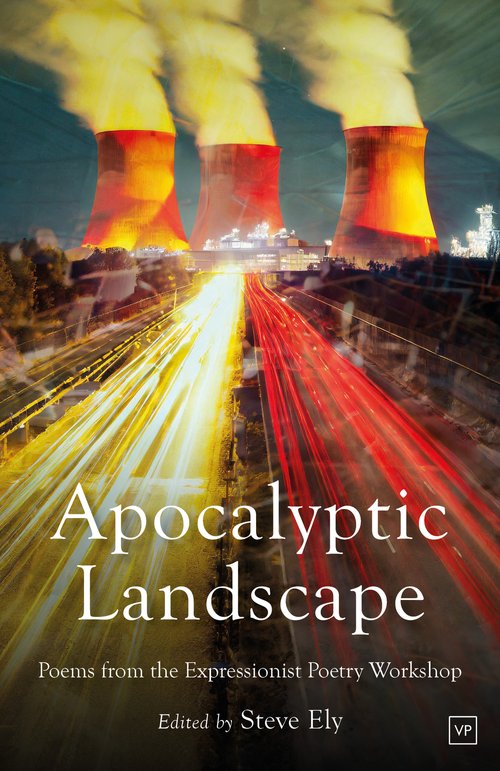
A couple of days later, the evening of Friday 1st November, I will be reading from a second experimental sequence of my own poems at the launch reading for Steve Ely’s anthology called Apocalyptic Landscape (Valley Press). My poems, a sequence called Olga Liking Sunflowers, roam through the pandemic experience, the work of David Jones, my local landscape and the delights (or otherwise) of social media. Contributors were encouraged to generate visionary responses to the crisis of the Anthropocene in the context of landscapes important to them. I will be reading alongside Steve, Jill Abram (who is organising the London launch for the book), as well as Katy Evans-Bush, JP Seabright, Anita Pati, and Caroline Maldonado. Steve Ely is also reading from his book Orasaigh, a collaboration between Steve and photographer Michael Faint, inspired by the landscape around the tidal island of Orasaigh, located on the coast of South Uist at Boisdale. This event will take place upstairs at the Devereux pub, 20 Devereux Ct, London WC2R 3JJ. Doors open 6:30, Poetry starts 7pm FREE event.

Finally, I have also been lucky enough to have a translated longer poem (by the contemporary German poet Jürgen Becker) accepted to appear in Issue 32 of The Long Poem Magazine and I will be reading ‘Travel film: re-runs’ at their launch event in the afternoon of Saturday 16th November 1.30 to 3.45, at the Barbican Library, Barbican Centre, Silk Street, London, EC2 8DS. Other readers will be: Angela Gardner, Charlie Baylis, Sue Burge, Sharon Holm, Claire Cox, Sian Thomas, Peter RobinsonKhaled HakimTimothy AdesJulian Stannard. FREE ENTRY and there will be a short interval for sales and chats. Refreshments are available downstairs from the Barbican Cafe and Bar. I hope to see you at one or another of these events. I’ll leave you with a few lines from my sequence in Steve Ely’s apocalyptic anthology:

Olga likes my post of the tall sunflowers in the square.

Through google translate, her post in Russian reads: adrenaline is my doping.

I draw for the soul.

There are hundreds of images of herself. Some with wild animals.

Surely, they’re not really wild.

In a zoo. Under lock and key.

Others touch the hem of the pornographic.

Others look like cheap advertisements for luxury cars.

The kind of posts, I wonder, that end with an offer of marriage from the viewer.

Another shows her bald headed, holding a snake, just weeks after the remission of her illness.

I want to ask her: what was the exact nature of the disease?

I want to ask her.

What mark will this make in history?

I want to ask her. When will this stop?


New Review of ‘Between a Drowning Man’ – from Shanta Acharya

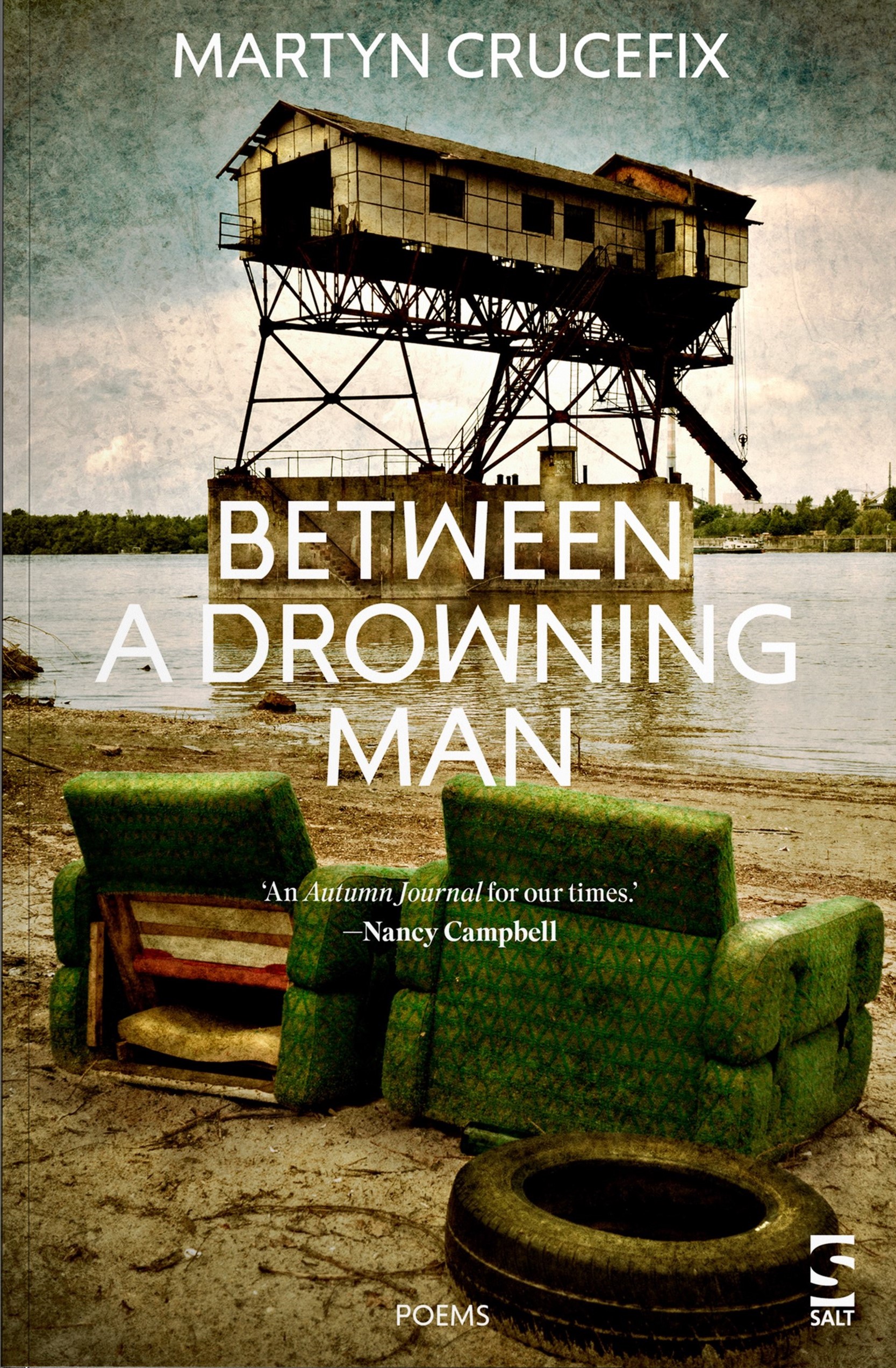
We all know that reviews of poetry books can take a long time to filter through whatever system they do come through. But then they always come as a pleasant surprise (if that’s not making too many assumptions about their likely contents). Any way – almost 12 months after the appearance of my most recent full collection, Between a Drowning Man (Salt, 2023), the ever-lively site, Everybody’s Reviewing, has just posted a detailed and insightful commentary on the book by poet and novelist, Shanta Acharya.

Amongst other things, the review comments: ‘A poet, translator, reviewer and poetry blogger, Martyn Crucefix has won prizes for his poetry and translation. As a translator of Rilke’s Duino ElegiesThe Sonnets to Orpheus, Laozi’s Daodejing, Huchel’s These Numbered Days, among others, Crucefix has been building bridges for those who want to cross the divide between cultures, countries, ways of seeing the world and each other. Words are bridges, language itself a bridge – yet we inhabit an increasingly complex world where loneliness and isolation are on the rise. In ‘fifteen kilometres of traffic’ an acceptance of this isolation is disconcerting: ‘you make a choice you go your own way … / because all the bridges are down.’ His understanding of the central role language plays in our lives, that creation of bridges between humans, is a fundamental aspect of his work’.

Here’s a link to the full review

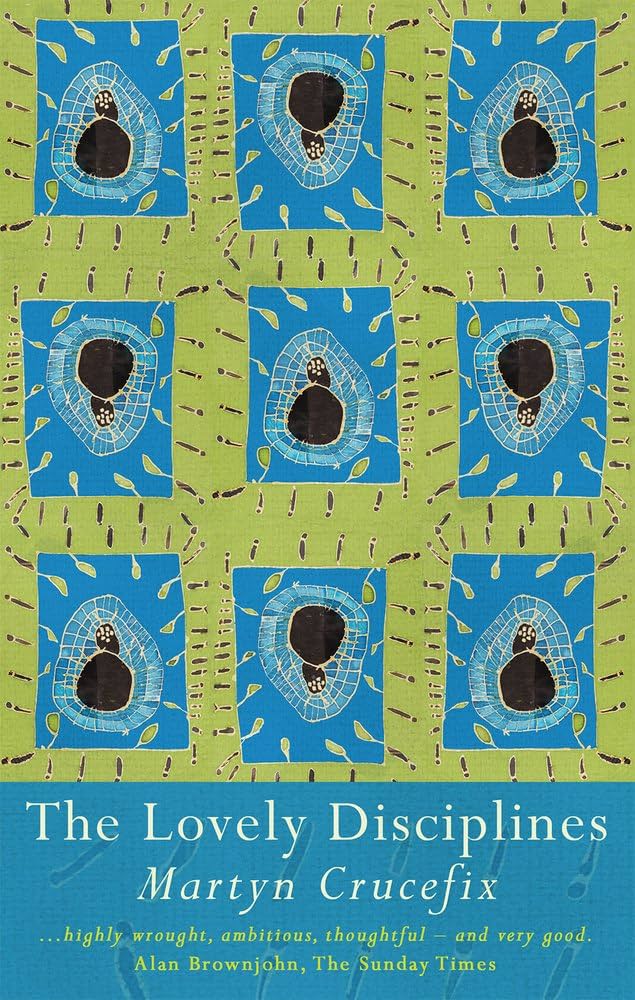
And coincidentally, Seren Books have also just recently posted a rather older poem of mine in their Poem of the Week slot. This is from my 2017 collection with Seren, The Lovely Disciplines. It’s about visiting the opticians for a check-up – though also about the desire (my desire) for clarity and absoluteness (if there is such a word), a desire, of course, never to be fulfilled. Read the full poem here.

Review of ‘Modern Fog’ by Chris Emery (Arc Publications, 2024)

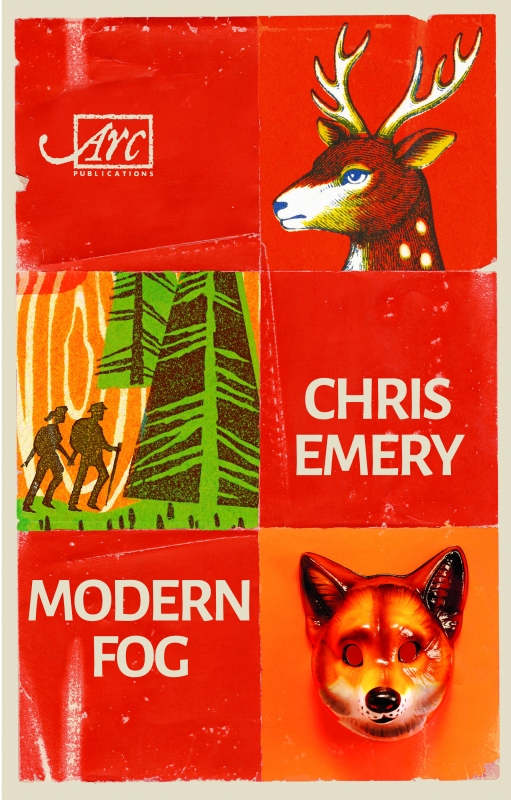
Chris Emery’s most recent collection both presents, and intends to see beyond, the Modern Fog of its title. The poems revel in describing aspects of this world and – in keeping with the images on the book’s cover – the occasions for such descriptions arise from journeys (often walking – the cover shows a hand-holding rambling couple) and the highlights of such journeys are frequently encounters with creatures (the cover has a deer and a fox). So ‘The Path’ leads us past ‘chalk beds’ and ‘clay beds’ and ‘dirt paths’ to excited sightings of a jay and a buzzard. Presenting more of a pause in such a walk, ‘The Day Storm’ is composed largely of the poet’s characteristic ‘noticing’ of blackthorn, blackberry and nettle. But once the eponymous storm has passed, the trees are now found to be ‘gashed . . . / splintered’ and this gives rise to one of Emery’s most interesting observations that, in their damaged state, the trees are in some mysterious way ‘clarified’. More of this later.

There is more than a little of Philip Larkin in Emery’s work – particularly the detail-listing-Larkin of ‘Here’ and ‘To the Sea’. Emery’s ‘All the Routes Home’ offers us an inclusive list of a Roman road, a Viking lane, an unclear path, a Puritan track. The poem ‘The Bay’ might be read as a more condensed version of Larkin’s ‘Here’ as, ‘after hours of hill torture’, the trail walker arrives at a bay, dotted with ruined buildings: ‘the afterthought of winter crofting’. This image of transience, of ultimate human failure, in effect a memento mori, is softened a little with Emery’s insistence that the homesteads ‘still hold their ounce of love’. In contrast to Larkin, and reminiscent of those earlier ‘gashed’ trees (somehow being advantaged by their damage), Emery is reluctant to accept death as an absolute ending and it is in this that the reader will find indications of his religious belief.

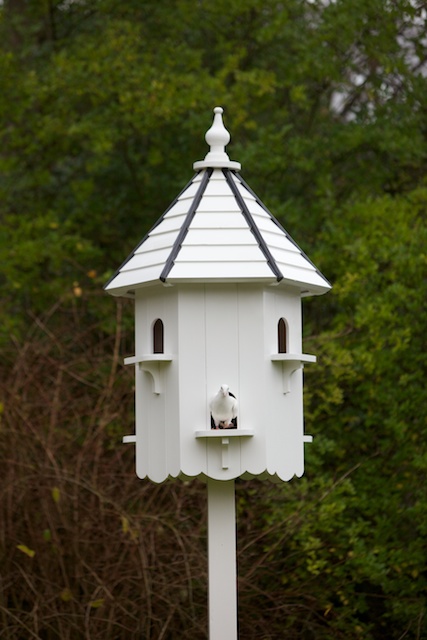
Similar spiritual themes emerge in the many encounters these poems have with creatures. ‘The Buzzard’ is another hill walk on a ‘churchless’ afternoon, but the flight of the bird on its thermal suggests an upward aspiration, a craving that the human observers also ‘hope to crave’. There is a beautiful little poem ostensibly about a dove returning to its dovecot:  

Small snatch of air, sole white arc,

crisp handclap, then ritual landing.

All followed by cossetting and fuss

at the stoop. The laughable dance

with lots of nodding and wittering

before the tricky hop up

to the dovecote . . .

The poem is transformed to something unconventionally angelic by being given the title ‘Pentecost’. The more lengthy ‘Day Fox’ vividly captures the ‘living amber’ of the creature against the green of grass, but its death at the roadside is equally clear: ‘his pelt was tar black and slicked back / on the tiny lump of him’. Here again, Emery goes a step or two beyond the plain facts of death as, in the corpse’s decomposition, ‘the world / relaxed into him with all its fiery prayers’. To suggest this is an image of an afterlife is to lack the poem’s own subtlety, but Emery is surely probing Eliot’s idea (not original to TSE) that ‘In order to arrive at what you are not / You must go through the way in which you are not’ (‘East Coker’). The remarkable poem ‘Stags’ does this more explicitly in that the momentary sighting of the creatures is (in the poem itself) now no more than a shaky memory, an ‘absence’ that stands ‘at the edge of what’s never / fully grasped’. But the recall of their passing still has a potency as a ‘store of grace and loss’ and is here declared ‘the last religion of these woods’.

St. Andrew’s, Wickhampton in Norfolk

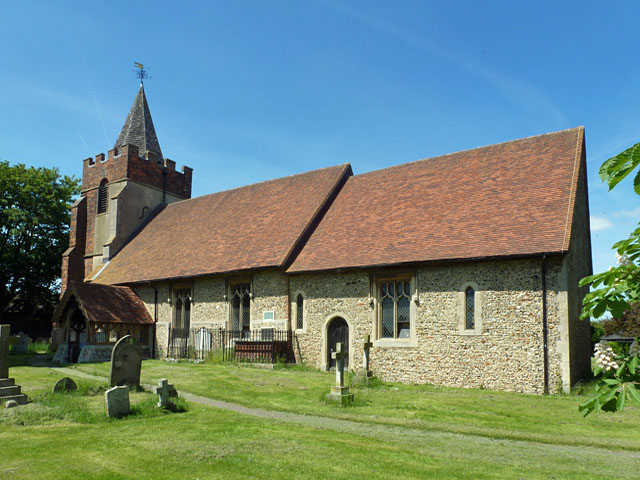
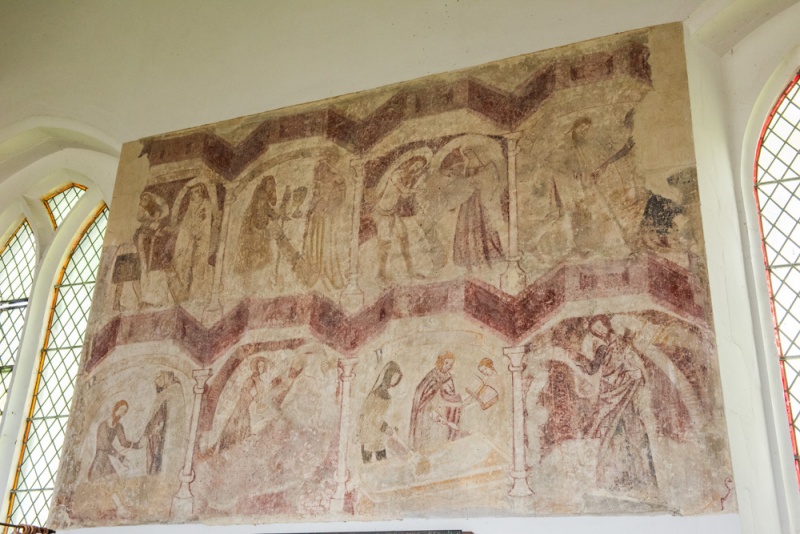
But Emery is equally at home describing the ‘dreck’ of our modern world. It’s surely more this sort of thing that constitutes the ‘modern fog’ of the book’s title. There is an NCP car park, the final destination perhaps of the couple in ‘Newbies’ who are driving along ‘old roads, lobbed estates seeping / by the rim of each roundabout’. The tacky nature of modern life is also found in ‘Edgeworlds’ which encompasses 4x4s parked up beside a ‘ratty beach’ and coach tours, detergent-smelling corridors and TV reruns. But such scenes function in this book partly as a foil to the (again) Larkinesque ‘churchgoing’ side of Emery’s character. ‘The Wall Paintings’ – a visit to St. Andrew’s, Wickhampton in Norfolk – opens, not with cycle clips, but with the equally evocative ‘thunk of a latch and then your eyes adjust’. And far more monumentally, ‘At St Helen’s, Ranworth’ is a 12-part sequence (each shaped like the church’s tower) more explicitly contemplating the building’s impact on the poet’s religious experience.

I guess I’m more attuned to Emery’s art when he is working up from the roots of the secular and material world, as in ‘One Drive in Winter’, in which the travelling couple go beyond satnav reach, the petrol tank close to empty, beyond any very obviously attractive destination, yet they still discover something worthy of a return, something about themselves, an opportunity to ‘solemnise the marginal and lost’. It may be that the great churches of the Norfolk Broads are themselves part of the category of the ‘marginal and lost’ these days and I do admire Emery’s attempts to bring them back into contemporary poetry, but I find his more slantwise and paradoxically inclined images (evocative of ‘East Coker’s ‘In my end is my beginning’) more accessible emotionally. To give one more example, in ‘The Elders’ – a poem written in memory of Adam Zagajewski – Emery again deploys an image of trees damaged after a storm (this time perhaps more metaphorically damaged by ‘revolution’) and these oak limbs also ‘lie / broken with new life’.

This intriguing collection’s two concluding poems are perhaps variations on this same theme. ‘The Start of It’ is – here’s the paradox again – the beginning of the end prior to the beginning: in this poem we read of frank intimations of mortality, of moments when ‘something abstract stiffens in the grace’ of a life, when we may come to glimpse ‘the formal shape [we] make in time’. In a completely different mode, ‘The Legacy’ eventually reveals itself to be a poem about the gentle removal of an empty wasps’ nest, its ‘featherweight’ and ‘strange paper weather’. In the transformative effect of real poetry, the nest comes to be seen as a human life lived, ‘sad and gorgeously dented’, but from which the creatures that made it have departed to another place: ‘to drone in apple acres / elsewhere darkening / with sweet ruin now.’ Whether we believe in such a place – and the oxymoronic ‘sweet ruin’ casts a shadowy doubt – is, with writing as good as this, hardly the point, appealing as it does, through vivid imagery, confidently written, to a fundamental human longing for continuation in the face of what we think we know of the end of life.

Remembering John Burnside

With yesterday’s announcement of John Burnside’s death, I thought of this review that I wrote in 2006 of his Selected Poems, published by Cape Poetry. His work meant a lot to me around that time and I enjoyed the chance to try to articulate what I found fascinating in it.

John Burnside’s poetry has, for some years now, been offering us a modern egotistical sublime. With Wordsworth, he shares a responsive delight in nature and daunting powers of self-analysis; also similarly, he can slip towards the prolix and portentous and there is something of the same difficulty with projection into another’s experience. But Burnside’s work frequently achieves a moving sublimity without loosening its grip on reality. He is the only contemporary poet who consistently demonstrates the power of a poetic form that is something other than mini fictional narrative, raw confessional, or condensed dramatic monologue. That he is also successful in writing prose makes his achievement all the more impressive.

His work was recognised in the early 1990s despite bucking the trends of secularism, formalism, and plain/street language. His poetry’s brooding intensity lacked laddish brouhaha. The palette was never broad – rural twilights, leaf litter, owls hunting, tracks across snow – but his eye was always on the margins of such things, where the human and the natural met and negotiated. It felt like something spiritual was about to be said or had been articulated and just missed. This was twinned with the powerfully felt absence of fixed personal identity that has remained so deeply engrained in his work. In poems that in many ways were hardly radical, it was this element that made Burnside feel modern. In a self-regarding culture ever more attached to the teats of mobility, individuality, celebrity and fashion, his relentless worrying away at the obscurity of the self, his flirting with its non-existence, struck dissonant but resonating chords.

Burnside’s themes are frequently disturbing. But in a poem like ‘Halloween’ (from The Myth of the Twin, published in 1994) his exquisite ability to conjure up the British countryside proves to be an essential part of the pleasure of reading him. As often, the season is autumn – cold, mostly deserted, snow, rain, “the fernwork of ice and water”. The narrator peels bark from a tree to smell “its ghost” in a characteristic movement from the precisely evoked physical to the almost casually implied spiritual. What the figure in the landscape is trying to do is to “define my place”. Even scraping down in the leaf mould, he finds fungal traces that look “like the first elusive threads / of unmade souls”. Nearby village bells provide “nothing” and the poem typically ends with the figure’s sense of “other versions of myself” on the periphery of vision and these can be taken to imply other futures, untaken pasts, other roles familiarly adopted, even selves beyond the physical – the inconclusiveness is the point.

Burnside has pursued experiments with differing perspectives that were first signalled by the opening and closing poems of The Myth of the Twin. For example, though in the end less successful than its predecessor, Swimming in the Flood (1995)dramatically broadened his poetry’s reach to include the experience of others, often in more extended form and in dramatic monologues. Persecutors and victims inhabit these poems and speak disturbingly of abuse and “the inexplicable / malice of being” (‘Schadenfreude’). This was a turning point in Burnside’s development as what now flooded into the poetry was what had lain buried in the delicacy and tentativeness of the earlier work. In the ‘The Old Gods’ he declares their power is strongest “when anger or fear / is fuzzing the surface, / making us dizzy and whole”. The process of uncovering is shown to be one of healing and this selection includes the sequence called ‘Burning a Woman’ which seems nakedly to speak of the poet’s mother and father. Equally, the ‘Parousia’ sequence (not included in this Selected) ends with what appear to be sceptical reflections on his earlier inquisition beyond the merely physical: “All resurrections are local . . ./ the sign I have waited to see / is happening now / and always”. Here Burnside seems to arrive at a sense of secular miracle (a version of Rilke’s “Hiersein ist herrlich”) less concerned with the reality of religious presence than with the individual’s response to its possibility.

And yet, the dramatic monologues proved something of a cul de sac. With his subsequent work, Burnside has returned to his best subject: himself. Partly what makes the award-winning The Asylum Dance such a magnificent achievement is the development of the fluid poetic form he combines with a second person plural address that achieves the universal without being either hectoring or twee. The influence of William Carlos Williams is obvious, but Burnside extends this beyond a fluent impressionism concerned with the truth of things to encompass a philosophical musing, the lines flickering across the page as if viewed through water. This new selection is too brief to achieve the full sense of his development, but one of the marvels of Burnside’s work is its continuing delivery of extraordinary evocations of the natural world that have become gradually melded with an introspective depth that does not merely offer insight, but sustained meditation. The four long sequences from The Asylum Dance are rightly given space here and constitute a masterpiece in which the poems offer up rich, disturbing, beautiful, precise, profound, and sustained experiences undergone in the act of reading, rather than a lesser poetry’s marshalling of moments of insight and feeling. Burnside’s career already provides ample proof of a fascinating and significant artistic development, and this selection will prove a good starting point for anyone not yet following it.

Ian Brinton reviews ‘Between a Drowning Man’

Here is Ian Brinton‘s recent review of my new Salt collection, Between a Drowning Man. It was first published by Litter Magazine in January 2024.

The invitation at the opening of these two remarkable sequences of poems by Martyn Crucefix emphasises both ‘difference’ and ‘ambiguity’, an ‘othering’ which hones attention rather than dulling it.

Divided into two sections, Works and Days (forty-nine poems) and O, at the Edge of the Gorge (fourteen poems) the two landscapes bring into focus a post-2016 Britain and the countryside of the Marche in central, eastern Italy. The leitmotif which threads its pathway, its recurring echo, through the first section is of ‘all the bridges’ being ‘down’ and the epigraph to section two is a quotation from Canto 16 of Dante’s Paradiso in which cities pass out of existence through warfare or disease and that which may have seemed permanent is continuously in movement. That second section of poems is a sequence of sonnets and in the final one the hawk’s resting place in the ‘shivering of poplars’ sways so that he is neither falling nor at ease

with these thinnest of airs beneath him

these shapes of loose knotted mesh

these whisperings that cradle him on a whim

That ‘othering’ prompts the poet to see the differences that are ‘like crimes woven into the weft’ and, in a way that William Blake would have recognised in his ‘A Poison Tree’, envy can be ‘buried long years in the black heart / of expressed admiration’ and ‘sunshine’ can be ‘really the withering of night’ which is ‘poured into soil where wheat grows’. And so it is—‘in and around and over and above’ because ‘all the bridges are down’. 

In April 2007 Jeremy Prynne wrote some notes for students about poems and translation:

Translation is for sure a noble art, making bridges for readers who want to cross the divide between their own culture and those cultures which are situated in other parts of the world; and yet a material bridge is passive and inert, without any life of its own, whereas a poetic translator must try to make a living construction with its own energy and powers of expression, to convey the active experience of a foreign original text.

As a translator of real distinction (Rilke’s Duino Elegies and The Sonnets to Orpheus) Crucefix has for many years made these living constructions offering readers a gateway into new experiences whether it be through the world of Laozi’s Daodejing (Enitharmon Press, 2016) or through these new poems which offer echoes both of Hesiod’s Work and Days and the poems known as a vacanna which originated in the bhakti religious protest movements in 10-12th century India. His understanding of the central role language plays in our lives, that creation of bridges between humans, was one of the deeply moving and memorable moments in his collection from Seren in 2017, The Lovely Disciplines. There the poem ‘Words and things’ presented an elderly individual who discovered ‘too late this absence of words’ which now ‘builds a prison’ and Crucefix recognised that ‘a man without language is no man’: as the world of objects becomes too difficult to dominate he can only have knowledge of a world which ‘turns in your loosening grip’. The echo of Yeats’s ‘The Second Coming’ is surely no accidental one!

Translations are bridges, language is a bridge, and the distressing recognition of isolation within numbers is the dominant image in ‘fifteen kilometres of traffic’ from the first section of this new book:

fifteen kilometres of traffic wait before us

behind us the infinite tail

we are offered Google Map options

yet those trumpeted ten minute economies

are nothing till they can be proved

you make a choice you go your own way –

this has been better said before of course –

you cannot take the other way

and remain a unitary being on two paths

or perhaps sane – all roads crawl north

because multiple millions of cars crawl north

because all the bridges are down

Those ten minute trumpetings bring the world of Orwell’s 1984 to my mind as loud announcements of positive news seem to possess a tinny emptiness to the understanding of the isolated human who exists in a world of no bridges.

However, in contrast to this wave of uniformity one reads moments of ‘othering’ in the second section of this book as in ‘sharpening gusts along the valley floor’ a scrap of air was birthed

whirling inches above a littered drain

in a back street of some hilltop town

like Urbisaglia or some place that has seen

and has survived change of use

from sacred temple to church to slaughterhouse

and no gully nor hill can stop it

In this moving world ‘great swathes of air’ gather strength to flex ‘all things to a scurrying to keep up / and the truth is some will and some will fail’.

In a poem titled ‘can you imagine’ (for my children) from the first section of Between a Drowning Man the power of language to translate the invisible onto the page is presented with an unerring eye focussed upon reality. In a world in which he no longer shares the companionship of others the poet is carried safely because although ‘you find the bridges between us fallen down’ and although ‘you mourn’ you can still ‘imagine’. That sense of continuity held in the imagination is far from the image of Alan Kurdi, the three-year-old Syrian boy drowned on the beach near Bodrum, Turkey, in 2015 whose death was recorded by Crucefix’s earlier book, Cargo of Limbs, from Hercules Editions in 2019. The boy’s family had fled from the war engulfing Syria in the hope of joining relatives in the safety of Canada and became ‘part of the historic movement of refugees from the Middle East to Europe at that time’:

In the early hours of September 2nd, the family crowded onto a small inflatable boat on a Turkish beach. After only a few minutes, the dinghy capsized. Alan, his older brother, Ghalib, and his mother, Rihanna, were all drowned. They joined more than 3,600 other refugees who died in the eastern Mediterranean that year.

In this new book that ‘whim’ of a resting place for the hawk, those ‘whisperings’ prompt the bird, the poet, ‘to call it yet more steady perhaps’:

this whim—this wish—this risky flight

in the fleeting black wake of the carpenter bees

Mat Riches reviews ‘Between a Drowning Man’

Many thanks to Mat Riches for this fulsome and acute reading of my recent collection from Salt Publishing. The review first appeared on The High Window – Jan 2024

The introduction to the first section of Between a Drowning Man states that it draws on two texts. The first is Hesiod’s Works and Days, and the second of which is described as

the type of poem known as a vacanna originated in the bhakti religious protest movements in 10-12th century India. using plain language, repetition and refrain they were written to praise the god, Siva, though also expressed a great deal of personal anger, puzzlement, even despair about the human condition […]

This helped put everything into context for what followed. One third of the way in I started to think of it as a man shouting at clouds in book form, of someone railing at things in the world that are beyond our control. And maybe it is all of this, but it also much more than this. I think it becomes a lesson in acceptance.

In a post on his own Blog, Crucefix describes these poems as starting to arrive after reading the vacanna poems in 2016, and how the poems began to accumulate after that while ‘staying in Keswick at the time and I vividly remember scribbling down brief pieces at all times of the day and night’ and of having been influenced by Brexit (the bridges are down indeed). However, he also describes in a follow up post that:

I thought of the poetry I was writing as a quite narrowly focused topical intervention, but in the last 4 or 5 years …the poems have come to seem less dependent on their times and more capable of being read as a series of observations – and passionate pleas – for a more generous, open-minded, less extremist, less egotistical UK culture.

And while the Brexit reading is there, these poems speak more to grounding a modern and disconnected world (despite plenty of references to devices for and modes of communication—we’ll come back to that shortly) in timeless themes like love and desire, parenting, ageing, joy in nature, false idols, and much more, and this is just in the first twenty or so pages.

Picking one of those themes at random, we can see how false idols are covered, but also how deftly he weaves in modern references to something that is both timeless, and of its time, and with that very human. In ‘the six pack on the side’ we are told:

the clock is a sinister and impassive god
for the ancients rumour was a kind of god

the god of WiFi when we curse its absence
and when did difference become a god

We have always been a narcissistic species that pays attention to gossip (‘rumour was a kind of god’), but while our gods have changed as the centuries have passed, we still curse our gods when they forsake us. Not a bad return for a 19-line poem in my opinion.

In order to achieve the ‘more generous, open-minded, less extremist, less egotistical UK culture’ we can see several pleas for more open lines of communication throughout the poems. Some are located in the specific and familial, as in ‘watch the child’ and its discussion of a child chattering away to herself in a coffee shop with her ‘bright picture book’ juxtaposed with ‘her mother at her cooling latte / at her macchiato / at her cooling skinny medium cappuccino // […] her mother’s ears wired casually // with two scarlet buds.

The child is broadcasting and communicating in a carefree way vs the mother’s more deliberate inward-looking approach, a shutting the world out for some respite. And while this could be a judgmental poem; it’s not. It feels like an invitation to consider both sides, both needs here. The refrain of ‘all the bridges are down’ lands particularly well here, both for the protagonists of the poem, but also for the reader.

However, while some pleas are located in the specific there are some more general ones to be found. In ‘he thought of this time’ one man recounts a litany of disappointments and emotions from his father. The poem draws from Hesiod and his idea of the fifth age where modern man was created by Zeus to be evil, selfish, weary, and burdened with sorrow. It’s a two-footed tackle on humanity from the whistle:

he thought of this time as a fifth age
that he’d be better off dead or not yet born
working all day he would fear the night
had heard of children born prematurely grey
and the fraying bond between fathers
and sons between mothers and daughters
between host and guest between different races

It continues without reprieve about a world where:

[…]the hopeless
are advanced and further advancement
lavished for no more than just chancing it
respect a word more spoken than heard
the educated full of corrosive cleverness
and compassion the greatest of virtues
an ebbing tide you see where it glints
on the horizon

At the time of writing, it’s easy to feel like these lines are as contemporary as it’s possible to be, and yet it’s arguable they are evergreen observations about humanity. However, I suspect that’s the point.

We’ve touched upon references to modern-day totems like WiFi, coffee types and headphones already, but this section is filled with them. Further examples include references to Google Maps and ‘five-star online reviews’ in ‘fifteen kilometres of traffic’ and ‘stoke a fire under your silk blouse’ respectively.

This all reaches its zenith in the final poem of the section, ‘this morning round noon’. The poem moves from personal notes about scattering ashes, a son’s birthday (and him being in huge debt at 21, one presumes from being at university) through to:

an American punk band form Nashville
posting abuse about a young Buddhist woman
refusing anaesthetic

The lines are punctuated by phrases like ‘likesharelike’ or ‘likeclicklike’ or ‘smileyfaceicon’. It’s the diaristic nature of the whole section writ large and transmitting thoughts to the page (albeit the printed page, not the Facebook page) as they occur. As an aside, this running together of words, coupled with the entire book’s distinct and clearly deliberate lack of punctuation (save a few dashes here and there) add to the observational nature of the poems, of thoughts being pulled from the ether. However, this is very much not to say that these poems aren’t considered and crafted—they very much are.

The final line of the poem and section is ‘I say the Pantone chart is one of my favourite things’, and while the poem that proceeds this line could be read as a darker version of the Sound of Music classic, less Raindrops on roses and more ‘I was hit by a car likeshare’, but I prefer to take it as a sign that the poem end on acceptance of nuance, variation and being able to communicate the same needs.

As the first section comes to an end there are two poems where the last line of one resurfaces as the start of the next, and it feels like a teaser for what follows in the second section, O. at the Edge of the Gorge.

This was previously published as a pamphlet by Guillemot Press in 2017 and is a crown of sonnets. After the hectic modernity of the first section, there is much to be said for the relative calm of following a traveller, Orpheus, on a journey through Italian countryside observing ‘Glossy fleet black clods of carpenter bees / swirl at the corner of the house / then sink onto spindly lavender stems / alight on blooms stooped // with the weight of insect lives’.

It’s a beautiful opening and a beautiful image that should perhaps be filmed and used as a fine example of what was briefly known as slow TV and shown on BBC4, but in the second poem he describes ‘astronomical time marked by light’ as the sun descends the gorge and church bells tolling, but:

yet come nightfall a different sense
these same sounds sound notes more chilling…

A very real sense of for whom the bell tolls, indeed. As the traveller wends their way round the area, taking notes and sketches of birds, a ‘flock of white doves’, that darkness returns in the form of a buzzard in the eighth sonnet, and gets deeper still in the ninth where he mentions:

like Urbisaglia or some place has seen
and survived change of use
from sacred temple to church to slaughterhouse
and no gully nor hill can stop it

Urbisaglia is an ancient town in Mid-East Italy that became the site of an internment camp during the second world war, and that knowledge adds further weight to the stanza that begins sonnet ten:

The truth is some survive a while most fail
to conceive the scale of paperwork
to follow change of use from church to temple
next to slaughterhouse.

The cruelty of humanity to itself is mirrored in the “bloody festival / of the bird” in sonnet thirteen as it discusses a raptor above the gorge, and the final sonnet off this crown muses on the fragility of life:

All creatures die sooner blind to the hawk—
left clutching no more than this
as if the hammock he occupies each
and all night too as if strung out

[…]
not falling yet not ever at ease

‘not ever at ease’ could so easily be a final motif for the whole collection. There is a sense that the learnings of this collection are hard won, but there is a connection to the wider world to be had, and that we can find comfort in travelling through it. The final lines of ‘you are not in search of’ in the first section seem apt as a place to leave it:

you might say this aloud—by way of ritual—
there goes one who thought much of life

who found joy in return for a little gratitude.

Mat Riches is ITV’s unofficial poet-in-residence. Recent work has been in Wild Court, The New Statesman, The Friday Poem, Bad Lilies, Frogmore Papers and Finished Creatures. He co-runs Rogue Strands poetry evenings. A pamphlet called Collecting the Data is out via Red Squirrel Press. Twitter @matriches Blog: Wear The Fox Hat

Two new prose poems at Black Nore Review

Many thanks to Ben Banyard for accepting these two recent experiments in prose poetry. Do check out other postings on Ben’s site at Black Nore Review. Click on Martyn Crucefix – two poems below to read the pieces.

Ben’s details are as follows: Ben Banyard lives in Portishead, near Bristol. His three collections to date are Hi-Viz (Yaffle Press, 2021), We Are All Lucky (Indigo Dreams, 2018) and Communing (Indigo Dreams, 2016). He blogs at https://benbanyard.wordpress.com