More than 10 years of blogging on poetry and translation – over 39,000 views in 2024 – now captured and preserved at the UK Web Archive: 'one of the top 10 poetry blogs' (Rogue Strands)
This review is an extended version of the one which first appeared in Acumen Poetry Magazine in the autumn of 2025. Many thanks to the reviews editor, Andrew Geary, for commissioning it.
Considered by Thomas Mann as ‘the first lady of German letters’ and as the first woman to receive the prestigious Goethe Award (1931), Ricarda Huch (1864-1947) was a literary superstar of her time, yet remains little known in English. She was an historian who published novels, philosophy, drama and poetry. With the rise of Hitler, she made her rejection of Nazi doctrine clear, remaining in Germany as an ‘inner émigré’, but surviving the war years. Autumn Fire (Poetry Salzberg, 2024) is her last collection, published in 1944, and powerfully reflects her lifelong fascination with the Romantic movement. As Karen Leeder’s scene-setting Introduction explains, this is evidenced in the poems’ formal choices as well as imagery, ‘a repertoire of sprites, flowers, scents, birdsong, gardens, moons, fairy tales, and love’. An English poetry reader would initially place this work in parallel to the least challenging of the Georgian poets of 1914.
There is frequently a faux medievalism at work, as in ‘The trees of autumn murmur’ which tells the story of a Prince who wanders into the woods and is bewitched by ‘fairies wild’ to live a sad, unloving, unhappy life. Other poems remind us of Hardy’s folkloric, time-obsessed lyrics in similarly challenging stanza forms:
On far-off floors the dancers face the middle,
The hems swing stiffly to the threshers’ drum.
Accordion and bass and fiddle
Ethereal hum.
(‘Autumn’)
Also from the stock Romantic image bank comes the isolated, tortured figure of the poet who, as spring days arrive, remains unmoved by them because mysteriously ‘troubled’ and when called upon to sing his songs (this is Huch’s own masculine gendering), finds that his creative efforts are ‘unwelcome’ to society at large (‘Morning of twittering birds’).
However, a closer reading of Huch’s poems clarifies their curiously hybrid effects, as in ‘The Old Minstrel’ in which the violent early years of the twentieth century come forward dressed in medieval garb. The narrative voice encourages the minstrel to sing and play his harp: ‘songs of golden treasure, / Times of playfulness and pleasure’. But the final lines of the poem are spoken (we must assume) by the minstrel who warns that what may come from him demands powerful trigger warnings:
Woe betide ye when I call
Forth my lions, every string,
Dumb in dusty ambuscade,
Torpid now, glistening
Thick with matted blood!
Huch boldly leaves the poem there, without any return to a possibly moderating, narrative voice. ‘The Heroes’ Tomb’ also makes use of familiar images (a tomb, a blustery November day, an old man, a passing shepherd, a youngster asking questions) to address a distanced ‘wicked war’. This poem similarly ends bloodily (though note, we are still in the era of swords rather than machine guns), as those who are inclined to stoop and listen at the tomb, can ‘make out far below the clash of swords, / And tell the drip, drip, drip, and hear the sound. / Can it be blood?’
Such lines contrast the lark’s song, the perfumed jasmine, the poplars and lime trees inhabiting so many of these pages and Huch herself seems to shuttle between a religious-based optimism and a much more modern sounding despair. In ‘Moonlit Night’, an owl flies through a wood and takes a mouse as prey. The moon seems to be portrayed as looking on, wholly indifferent, as it picks its way through the branches, ‘twinkle-toed and light’. Only the form and language here makes the poem feel less than genuinely Modern. As for the owl, it becomes proleptic of technological advances in air warfare as she sweeps off through the wood, ‘the murderess, / whose claws the victim hold, / airborne above black treetops’ emptiness’. Another predator image later provides the reader with a further shock. In ‘My heart, my lion, grasps its prey’, the latter is identified as ‘the hated’. And the passionate nature of Huch’s antagonism – though the object of her hate is never named – is startling, and she uses repetition, shortened lines and rhyme to make her point:
My heart hates yet the hated,
My heart holds fast its prey,
That none may palter or gainsay,
No liar gild the worst,
Nor lift the curse from the accursed.
Almost inevitably you feel, the elements of modern warfare seep into Huch’s poems. In the midst of another Hardyesque stanzaic poem, between the ‘honey-brown’ buds on the trees and the lark’s ‘music-making’, more familiar ‘war poem’ sounds provide the base notes: ‘The earth shakes with battle, the air with shellfire heaves’ (‘War Winter’). The ABAB quatrains of ‘The Young Fallen’ mourn those taken by war by first evoking the innocence of their childhoods, schooldays, their unfulfilled worldly ambitions. Then ‘War came’. And though much of the detail and imagery could be applied to wars fought anytime in the last few centuries, there are moments when the realities of the mid-twentieth century cannot be denied. The young men’s hands are a focus, as they ‘Not long ago reached out for toys and fun. / Those hands, conversant with the tools of murder, / Control the howitzer and grip the gun’.
In fact, Huch was living in Jena when the city was bombed by the Allies and ‘The Flying Death’ comes closer than any other poem in conveying her experiences of modern warfare. Though the Flying Death is an old-fashioned personification, its modus operandi is up to date: ‘The chimney reels, the roof-beams groan, / By distant thunder he is known’. Even as the air bombardment is imaged as approaching on ‘iron steeds’, its impact is plainly conveyed as ‘A whistling, hissing din, and more, / A jarring shriek is heard, a roar, / As if the earth would burst.’ This Poetry Salzberg publication unfortunately does not give the reader the original German, but Timothy Adès’ translations are quite brilliant in their preservation of form and rhyme, while at the same time conveying both the sweetness and the violence in Huch’s curious, powerful, under-appreciated poetry.
Excerpts from Autumn Fire, tr. Timothy Adès
Stralsund
The old grey town that blue sea girds: The swell of rust-red sails, The squawking, tumbling salt-sea birds, The flash of clean fish-scales.
On this church wall the pounding wave And tempest waste their fire: Though organ-thunder shakes the nave, No foe hurls down the spire.
The clouds with tender beating wing Caress its head, that dreams Of fierce-fought battles reddening Its foot with gory streams.
The dead are sleeping, stone by stone, The sounding bells request: Eternal memory, my son, Be thine, eternal rest!
Music
Melodies heal up our every smart; Happiness, Lost to us, they redress; They are balsam to our ailing heart.
From the earth where we without respite Toil enslaved, As on wings of blessed angels saved They transport us to a land of light.
Sound, sound forth, ye songs of mystery! Worlds fly far; Earth sinks down, our red and bloodstained star; Love distils its essence from on high.
With the sad news of the passing of Tony Harrison, who as a working class poet had a great impact on me during my formative years of writing in the 1980s, I went back to a piece I was commissioned to write for an OUP collection of essays on his writing – both poetic and dramatic – in 1997. The book, Tony Harrison: Loiner, was edited by Sandie Byrne and included articles from Richard Eyre, Melvyn Bragg, Alan Rusbridger, Rick Rylance, and Bernard O’Donoghue. This is the full text of what I contributed: an intense focus on and close analysis of two of Harrison’s key poems, ‘A Cold Coming’ (for Harrison reading this poem click here) and ‘Them & [uz]’ (for the text of this poem click here).
The Drunken Porter Does Poetry:Metre and Voice in the Poems of Tony Harrison
Part I
Harrison’s first full collection, entitled The Loiners after the inhabitants of his native Leeds, was published in 1970 and contained this limerick:
There was a young man from Leeds
Who swallowed a packet of seeds.
A pure white rose grew out of his nose
And his arse was covered in weeds.
Without losing sight of the essential comedy of this snatch, it can be seen as suggestive of aspects of Harrison’s career. For example, the comic inappropriateness of the Leeds boy swallowing seeds becomes the poet’s own ironic image of his classical grammar school education. As a result of this, in a deliberately grotesque image, arises the growth of the white rose of poetry – from the boy’s nose, of course, since Harrison in the same volume gave credence to the idea that the true poet is born without a mouth (1). The bizarrely contrasting weed-covered arse owes less to the intake of seeds (rose seeds wherever transplanted will never yield weeds) than to the harsh conditions Harrison premises in the Loiner’s life, as indicated in an early introduction to his work, where he defines the term as referring to “citizens of Leeds, citizens who bear their loins through the terrors of life, ‘loners'”(2).
Harrison’s now-legendary seed-master on the staff of Leeds Grammar School was the one who humiliated him for reciting Keats in a Yorkshire accent, who felt it more appropriate if the boy played the garrulous, drunken Porter in Macbeth.(3) The truth is that the master’s attitudes determined the kind of poetic rose that grew, in particular its technical facility which Harrison worked at to show his ‘betters’ that Loiners could do it as well as (better than?) they could. Yet this was no sterile technical exercise and Harrison’s success lies in the integrity with which he has remained true to those regions “covered with weeds” and in the fact that his work has always struggled to find ways to unite the weed and the rose. Perhaps the most important of these, as the limerick’s anatomical geography already predicted in 1970, is via the rhythms of his own body.
Harrison has declared his commitment to metrical verse because “it’s associated with the heartbeat, with the sexual instinct, with all those physical rhythms which go on despite the moments when you feel suicidal” (4). In conversation with Richard Hoggart, he explains that without the rhythmical formality of poetry he would be less able to confront, without losing hope, the unweeded gardens of death, time and social injustice which form his main concerns. “That rhythmical thing is like a life-support system. It means I feel I can go closer to the fire, deeper into the darkness . . . I know I have this rhythm to carry me to the other side” (5). There are few of Harrison’s poems that go closer to the fire than the second of his Gulf War poems, ‘A Cold Coming’ (6). Its initial stimulus, reproduced on the cover of the original Bloodaxe pamphlet, was a photograph by Kenneth Jarecke in The Observer. The picture graphically showed the charred head of an Iraqi soldier leaning through the windscreen of his burned-out truck which had been hit by Allied Forces in the infamous ‘turkey-shoot’ as Saddam’s forces retreated from Kuwait City. In the poem, Harrison makes the Iraqi himself speak both with a brutal self-recognition (“a skull half roast, half bone”) as well as a scornful envy of three American soldiers who were reported to have banked their sperm for posterity before the war began (hence, with a scatological nod to Eliot, the title of the poem). There are undoubtedly echoes in the Iraqi’s speech of the hooligan alter ego in the poem ‘V’, yet Harrison worries little over any narrow authenticity of voice in this case, and he does triumphantly pull off the balancing act between the reader’s emotional engagement with this fierce personal voice and a more universalising portrayal of a victim of modern warfare. Furthermore, it is Harrison’s establishment and then variation of the poem’s metrical “life-support system” that enables him to achieve this balance, to complete a poem which weighs in against Adorno’s view that lyric poetry has become an impossibility in the shadow of this century’s brutality.
The poem’s form – rhymed iambic tetrameter couplets – seems in itself chosen with restraint in mind, as if the photographic evidence of the horror lying in front of him led Harrison to opt for a particularly firm rhythmical base “to carry [him] to the other side”. Indeed, the opening five stanzas are remarkable in their regularity with only a brief reversed foot in the fourth line foreshadowing the more erratic energies soon to be released by the Iraqi soldier’s speech:
I saw the charred Iraqi lean
towards me from bomb-blasted screen,
his windscreen wiper like a pen
ready to write down thoughts for men.
The instant the Iraqi’s voice breaks in, the metre is under threat. Each of his first four stanzas opens with trochaic imperatives or questions and at one point he asks if the “gadget” Harrison has (apparently a tape-recorder but a transparent image of poetry itself) has the power to record “words from such scorched vocal chords”. Apart from the drumming of stresses in lines such as this, Harrison deploys sibilance, the alliteration of g’s and d’s, followed by an horrific mumbling of m’s to suggest the charred figure’s effortful speech in the first moments of the encounter. Regularity is re-established the moment the tape-recorder’s mike is held “closer to the crumbling bone” and there is a strong sense of release from the dead man’s initial aggressive buttonholing as his voice (and the verse) now speeds away:
I read the news of three wise men
who left their sperm in nitrogen,
three foes of ours, three wise Marines,
with sample flasks and magazines . . .
In the stanzas that follow, the dead man’s angry, envious sarcasm is controlled within the bounds of the form and it is rather Harrison’s rhymes which provide much of the kick: God/wad, Kuwait/procreate, fate/ejaculate, high tech’s/sex. It is only when the man demands that Harrison/the reader imagines him in a sexual embrace with his wife back home in Baghdad that the metrical propulsion again begins to fail. It is in moments such as this that the difficult emotional work in the poem is to be done. This is our identification with these ghastly remains, with the enemy, and it is as if the difficulty of it brings the verse juddering and gasping to an incomplete line with “the image of me beside my wife / closely clasped creating life . . .”
The difficulty of this moment is further attested to by the way the whole poem turns its back upon it. Harrison inserts a parenthetical section, preoccupied not with the empathic effort the dead Iraqi has asked for but with chilly, ironic deliberations on “the sperm in one ejaculation”. Yet all is not well, since this section stumbles and hesitates metrically as if Harrison himself (or rather the persona he has adopted in the poem) is half-conscious of retreating into safe, calculative and ratiocinative processes. Eventually, a conclusion yields itself up, but it is once again the metrical change of gear into smooth regularity (my italics below) that suggests this is a false, defensive even cynical avoidance of the difficult issues raised by the charred body in the photograph:
Whichever way Death seems outflanked
by one tube of cold bloblings banked.
Poor bloblings, maybe you’ve been blessed
with, of all fates possible, the best
according to Sophocles i.e.
‘the best of fates is not to be’
a philosophy that’s maybe bleak
for any but an ancient Greek . . .
That this is the way to read this passage is confirmed by the renewed aggression of the Iraqi soldier who hears these thoughts and stops the recorder with a thundering of alliterative stresses: “I never thought life futile, fool! // Though all Hell began to drop / I never wanted life to stop”. What follows is the Iraqi soldier’s longest and most impassioned speech, by turns a plea for attention and a sarcastic commentary on the collusion of the media whose behaviour will not “help peace in future ages”. Particular mention is given to the “true to bold-type-setting Sun” and, as can be seen from such a phrase, Harrison once more allows particular moments of anger and high emotion to burst through the fluid metrical surface like jagged rocks. There is also a sudden increase in feminine rhyme endings in this section which serves to give a barely-caged impression, as if the voice is trembling on the verge of bursting its metrical limits and racing across the page. This impression is further reinforced in the series of imperatives – again in the form of snapping trochees at the opening of several stanzas – that form the climax to this section of the poem:
Lie that you saw me and I smiled
to see the soldier hug his child.
Lie and pretend that I excuse
my bombing by B52s.
The final ten stanzas culminate in a fine example of the way in which Harrison manipulates metrical form to good effect. In a kind of atheistic religious insight, the “cold spunk” so carefully preserved becomes a promise, or perhaps an eternal teasing reminder, of the moment when “the World renounces War”. However, emphasis falls far more heavily on the seemingly insatiable hunger of the present for destruction because of the way Harrison rhythmically clogs the penultimate stanza, bringing it almost to a complete halt. The frozen semen is “a bottled Bethlehem of this come- /curdling Cruise/Scud-cursed millennium”. Yet, as we have seen, Harrison understands the need to come through “to the other side” of such horrors and the final stanza does shakily re-establish the form (though the final line opens with two weak stresses and does not close). However, any naive understanding of the poet’s comments about coming through the fire can be firmly dismissed. This is not the place for any sentimental or rational synthetic solution. Simply, we are returned to the charred face whose painful, personal testament this poem has managed to encompass and movingly dramatise but without losing its form, thus ensuring a simultaneous sense of the universality of its art and message:
I went. I pressed REWIND and PLAY
and I heard the charred man say:
Part II
It was Wordsworth whose sense of physical rhythm in his verse was so powerful that he is reported to have often composed at a walk. It should come as no surprise that Harrison has been known to do the same. Though it was Keats’ ‘Ode to a Nightingale’ Harrison ‘mispronounced’ at school, it is actually Wordsworth who is more important to him because both share a belief in poetry as the voice of a man speaking to men. This conception of poetry as speech is a powerful constituent in Harrison’s work and perhaps one not clearly understood. John Lucas, for example, has attacked what he sees as loose metrics in the poem ‘V’ (7) but, to reverse Harrison’s comment that all his writing (theatrical or otherwise) is poetry, all his poetry needs to be read as essentially dramatic and deserves to be tested in the spoken voice as much as in the study. On occasions, Harrison, only half-humourously, draws attention to the fact that two uncles – one a stammerer, the other dumb – had considerable influence on his becoming a poet and it is the struggling into and with voice that such a claim highlights.(8) I have already mentioned Harrison’s interest in the curious idea that the true poet is born without a mouth. This too, implies the difficult battling for a voice or voices which can be found everywhere in his work and it is in this clamour that I find its dramatic quality. In a public poem like ‘A Cold Coming’, Harrison makes use of the contrasting and conflicting voices by playing them off against a regular form. This is almost always the case, but in what follows I prefer to concentrate less on metrical effects than on the way voices interweave, in this case, in more personal work from The School of Eloquence sequence.
The very title of the pair of sonnets, ‘Them & [uz]’, seems to promise conflict, at best dialogue, and it opens with what could be taken as the howl of inarticulacy. In fact each pair of these opening syllables gestures towards crucial worlds in Harrison’s universe. The αίαι of classical dramatic lament is echoed by the “ay, ay!” of the musical hall comedian cheekily working up an audience. Immediately, the reader is plunged into the unresolved drama of two differing voices, instantly implying the two cultures of the sonnets’ title. The line and a half which follows, sketching Demosthenes practicing eloquence on the beach, is intriguing in that its locus as speech is hard to pin down. It is perhaps intended at this stage (apart from introducing the poems’ central issue) to hover in an Olympian fashion above the ruck of dialogue that follows, implying the heroic stance which will be taken up in the second sonnet.
Line 3 opens again into a dramatic situation with the voice of the narrator (the adult Harrison), repeating his own interrupted recital of Keats in the classroom, while the master’s scornful comments appear fresh, unreported, as if still raw and present, in speech marks. The narratorial comment on this – “He was nicely spoken” – confirms this poem’s tendency to switch voices for its effects, this time its brief sarcasm barely obscuring the unironic comment likely to be made by an aspiring Loiner, or by an ambitious parent. The example of nice speaking given (again in direct quotes in the following line) is the master’s claim to possession, to authority in matters of language and culture and the separated-off reply of the narrator – “I played the Drunken Porter in Macbeth – with its full rhyme and sudden regular iambic pentameter, implies both a causal link between the two lines, painting Harrison as dispossessed specifically by the master’s attitudes, as well as conveying the tone of resignation in the young schoolboy.
It will be clear that much of the tension and success of the poem has already arisen from the dramatic interchange of voices and the master’s voice asserts itself again in line 7, ironically claiming a kind of monolithic, aristocratic purity to poetry which this poem has already attempted to subvert:
Poetry’s the speech of kings. You’re one of those
Shakespeare gives the comic bits to: prose!”
The following lines contain a curious wavering in the clear interplay of dramatic voices, only part of which is resolved as the poem proceeds. Evidently, the intrusive, even hectoring, parenthesis (at line 9) is the narrator’s questioning of what appears to be the master’s voice’s continuing argument that “All poetry” belongs to Received Pronunciation. Yet the aggression of this attack, with its harsh alliteration and sarcastic question mark, is out of key with the other narratorial comments in part I, though the tone is re-established in part II. In addition, I have some difficulty in accepting the master’s words as appropriate to the situation which – with no break – continues the speech made to the young Harrison. For example, the word “dubbed”, with its implication of the deliberate laying of a second voice over an ‘original’, already hands victory in the argument to Harrison’s claim for the authenticity of ‘dialect’ and, as such, would not be used by the believer in “the speech of kings”. Equally, the apparent plea, “please believe [Λs] / your speech is in the hands of the Receivers”, does not accord with the voice that summarily dismissed the pupil as a “barbarian” 7 lines earlier. In this case, Harrison’s desire for the dramatic has foundered momentarily on that old dramatist’s rock, the necessity for exposition which compromises the integrity of the speaking voice.
The true note of the master returns – interestingly, following one of Harrison’s moveable stanza breaks, as if confirming a shift in voice though the speech actually continues across the break – with “We say [Λs] not [uz], T.W.!” The tone of the responding voice, after the suggestion of a more spirited response in the Keats comment, has returned to the resignation of the brow-beaten pupil. This is reinforced by the more distant comparison of the boy to the ancient Greek of the opening lines, heroically “outshouting seas”, while the young Harrison’s mouth is “all stuffed with glottals, great / lumps to hawk up and spit out”. This first sonnet draws to a close with this tone of frustrated defeat for the boy, yet the drama has one final twist, as the voice of the master, sneering, precise and italicised, has the last word – “E-nun-ci-ate!“. There can be little doubt that the boy must have felt as his father is reported to have done in another sonnet from The School of Eloquence, “like some dull oaf”. (9)
The second part of ‘Them & [uz]’ contrasts dramatically with the first, though the seeds of it lie in the image of heroic Demosthenes and the accusatory tone of the reference to Keats which seemed a little out of place in part I. This second sonnet’s opening expletive aggression strikes a new tone of voice altogether. “So right, yer buggers, then! We’ll occupy / your lousy leasehold Poetry”. The poem’s premise is that it will redress the defeat suffered in part I in an assertive, unopposed manner. Not the master, nor any spokesman for RP is allowed a direct voice, yet the interchange of speech and implied situation can still be found to ensure a dramatic quality to the verse.
Demosthenes
The passionate and confrontational situation of the opening challenge is clear enough, yet it’s striking how it has taken the autobiographical incident in part I and multiplied it (“yer buggers . . . We’ll occupy”) to present the wider political and cultural context as a future battlefield. Even so, there is no let up in the clamour of voices raised in the poem. Immediately, the narratorial voice shifts to a more reflective, past tense (at line 3) as the rebel reports actions already taken – and with some success, judging from the tone of pride and defiance: “[I] used my name and own voice: [uz] [uz] [uz]”. Even within this one line, the final three syllables are spat out in a vivid reenactment of Harrison’s defiant spoken self-assertion. It is this slippery elision of voice and situation which creates the undoubted excitement of these and many of Harrison’s poems as they try to draw the rapidity and short-hand nature of real speech, its miniature dramas and dramatisations into lyric poetry. A further shift can be found in lines 9 and 10, in that the voice now turns to address a different subject. The addressee is not immediately obvious as the staccato initials in the line are blurted out in what looks like a return to the situation and voice with which this sonnet opened. Only at the end of line 10 does it become clear that the addressee is the poet’s younger self, or the self created as the “dull oaf” by the kind of cultural repression practised by the schoolmaster. The reader is further drawn into the drama of the situation by this momentary uncertainty: RIP RP, RIP T.W. / “I’m Tony Harrison no longer you!”.
The remaining 6 lines are, as a speech act, more difficult to locate. There is an initial ambiguity in that they may continue to address “T.W.”, though the stanza break suggests a change and, anyway, this makes little sense as T.W. is now dead (“RIP T.W.”). In fact, these lines use the second person pronoun in the impersonal sense of ‘one’, addressing non-RP speakers in general, and it is the generalised nature of these lines which disarms the effectiveness of the passage. This is particularly important in line 14, “[uz] can be loving as well as funny”, the tone of which, commentators like John Haffenden have questioned. (10) The difficulty here is that if Harrison is addressing those who might use [uz] anyway, though there may well be many amongst them for whom the fact that “Wordsworth’s matter / water are full rhymes” is useful ammunition and reassurance, the same cannot be said of the “loving as well as funny” line which might be variously construed as patronising, sentimental or just plain unnecessary. Nevertheless, the poem regains a surer touch in the final lines in its use of the reported ‘voice’ of The Times in renaming the poet “Anthony“. The effect here is both humorous (this, after all the poet’s passionate efforts!) and yet ominous in that the bastions of cultural and linguistic power are recognised as stubborn, conservative forces, still intent on re-defining the poet according to their own agenda, imposing their own voice where there are many.
Harrison’s use of both metre and voice reflect the struggle in much of his work between the passion for articulation, especially of experiences capable of overwhelming verse of less conviction, and the demands of control which preserve the poet’s utterance as art. Harrison’s more recent work – especially that written in America – is more relaxed, meditative, less inhabited by differing and different voices, more easily contained in its forms. There are undoubtedly great successes amongst these (‘A Kumquat for John Keats’, ‘The Mother of the Muses’, part III of ‘Following Pine’) but there are moments when Harrison seems to idle within his technique, perhaps too able to ruminate aloud without the clamour of voices rising around him. It is likely that Harrison’s legacy will eventually be seen as a reassessment of the uses of formal verse and an exploration of the dramatic potential of lyric verse. These elements are rooted ultimately in his attempts to unite the rose of poetry with the weeds of truth and (often painful) experience, by trusting to the measures of his own body and to a language he returns to the mouth.
Footnotes
1. In a note to section III of ‘The White Queen’, Harrison records that “Hieronymus Fracastorius (1483-1553), the author of Syphilis, was born, as perhaps befits a true poet, without a mouth”. Selected Poems, p.30.
2. ‘The Inkwell of Dr. Agrippa’, reproduced in Tony Harrison: Critical Anthology, p.34.
3. See Richard Hoggart, ‘In Conversation with Tony Harrison’, Critical Anthology, p.40.
4. John Haffenden, ‘Interview with Tony Harrison’, Critical Anthology, p.236.
5. Hoggart, Critical Anthology, p.43.
6. The Gaze of the Gorgon, pp.48-54.
7. John Lucas, ‘Speaking for England?’, Critical Anthology, pp.359/60.
An edited (shorter) version of this review first appeared in Poetry Salzberg Review in June 2025. Many thanks to the editor, Wolfgang Görtschacher, for commissioning the writing of it.
As the editor, Grevel Lindop, says in his Introduction to Collusive Strangers: New Selected Poems (Shearsman Books, 2024), the literary world has not taken enough notice of the remarkable oeuvre of Jeremy Reed. Many of his recent collections have appeared without much, if any, critical notice, so it’s to be hoped that this substantial new selection, from 1979 -2016, will bring this misfit-poet’s work back to more general attention. The problem is that the protean Reed fits no pigeonhole, plus the fact that he’s been astonishingly prolific. Intensity of perception and a phenomenal dynamism of language and creativity are his hallmarks, and he matches the best in nature poetry (Clare and Hughes), the decadent, urban flaneur (Baudelaire), then writes as Symbolist and Surrealist (Gascoyne), pursues sci-fi, focuses on pop and fashion, next becomes a portraitist and moving elegist. Even given these 300 pages, Reed – a sometime Peter Pan now into his 70’s – continues to be elusive. Compared to the prolific poet/novelist John Burnside, the difference is clear: we all knew what the brilliant, much-missed John was up to. With Reed, we are endlessly being caught by surprise.
Even Reed’s earliest work arrived fully formed. In the late 1970s and early 1980s, the urban, neurasthenic wanderer appears in ‘Claustrophobia (Kings Cross)’, the narrator’s need being ‘so strong it might involve the police’. In contrast, ‘Dwight’s Brother’ is an early stanzaic, sci-fi piece, a character from the future obsessed with Manson’s and Nixon’s careers, and ‘the monomania that burns planets’. And the magnificent ‘John Clare’s Journal’ ventriloquises the nature poet’s concerns for the natural world of Helpston, his stumbling literary repute, and fear for the future of his children, ‘laid / out as corpses’. Reed’s ambition is clear from the start, and in a poem like ‘Visit to George Barker’ he evidently empathises with the older poet’s withdrawal and seclusion, his writing contemporaries being harshly judged for a lack of ambition as ‘poets whose very aim is minimal / gesture, earning [Barker’s] dismissal’.
My own first acquaintance with Reed’s writing was in the two volumes from Cape in 1984/5, By the Fisheries and Nero, when James Lasdun edited him. These particularly highlighted the Nature poems, for example ‘Conger’ which outdid Ted Hughes: ‘They’ll shave a finger off with precision, / clean as a horse bite, or close round a hand / and leave it as taut gristle strung on bone.’ In a quieter poem, the narrator is fishing in a harbour, near a ‘desalination plant’, the tautly strung reactions of a shoal of mullet seemingly reflected in the fisherman’s own alertness and nerves (‘By the Fisheries’). ‘Spider Fire’ plays brilliantly with perspectives as every sort of tiny beast and insect flees a wildfire, while the narrator, at a distance, observes ‘a black hoop / ironed into the shire’. Though the first-person pronoun recurs in many poems, Reed is usually not much interested in self-revelation. One wonders, if he was/had been, he might be more widely appreciated, because it’s not that he can’t do it. ‘Visiting Hours’, for example, is enough to make a grown wo/man weep as the narrator visits his father in hospital, economical with the truth that this is ‘terminal’, the child compelled to play the father, the father, ‘like a diver gone on down // to find an exit that was always there, / but never used’. In characteristic ABCB quatrains, ‘Changes’ perhaps records the poet’s re-visiting Jersey and a brother, or boyhood friend, who stayed behind as a farmer, both recognising ‘our youth survives, the present is a gap’. And Lindop includes two remarkable poems from the Nineties collection, in which we seem to get close to Reed’s own autobiographical difficulties, when personal survival seems ‘to be the question’ (‘Samaritans’), and, in ‘Prayer’, Reed addresses a divinity of an uncertain variety, pleading for illumination, for help, a hearing, a pointing of a way out, from guilt, dread, self-injury, poverty, ‘the unappeasable, involuntary / inheritance of lucklessness’.
But Reed deals with topics, rather than ‘issues’, and his work is descriptive in character, never preachy or judgemental, so he seldom offers us his ‘views’. The work is driven by his ‘curiosity’, which both ‘holds us to life and feeds us to the flame’ (‘Moth-Trapper’). His praise of the artist, in ‘Cezanne’, is revealing of his fascination for the ‘ordinary’ and for the shared knowledge that ‘the beautiful / is inherent in all that lives, / and once externalised in its true form, / remains as that’. Over and over again, Reed captures – hence externalises – the true form of things in the colourful, vigorous, unblinking poems selected here. And as the millennium approached, Reed extended his range even further towards ‘all that lives’. There are uncharacteristic political poems (Tony Blair is a particular target), but Reed also writes of the experience of AIDS, and with a Baudelairean dwelling on sexuality, in poems like ‘Transsexual’ and ‘Brothels’, and is drawn closer to popular culture, its fashions, music, and iconic figures. But many of the poems on Madonna, Billie Holiday, Elvis and The Rolling Stones drift to looser forms of summary and the decade from 1993 to the early 2000s contains less brilliant work, though 2006’s Orange Sunshine with its evocations of 1960s London marks a return to form.
Reed as elegist, as in This Is How You Disappear (Enitharmon Press, 2007), was perhaps unexpected, but poems like ‘Paula Stratton’ and ‘John Berger’ (not the art critic) must rate amongst the finest in that genre produced in the last 100 years. The honesty, attention to detail, the empathy extended to his subjects (Stratton was a drug addict; Berger a difficult Jersey friend and Nazi-collaborator), and the apparent ease and beauty of the writing, mean these poems ought to have been anthologised everywhere. The elegiac note is hardly surprising as Reed moves through his seventh decade and poems about socks, potted plants, tea, honey, and cupcakes seem to mark shifts in focus though Reed remains true to his repeated maxim that ‘everything I see [is] poetry’ (‘London Flowers’). The poems retain the vigour and speed that he admires in Plath’s work: ‘her fast ball imagery / on speed-trajectories [. . .] her plugged-in dare-all energies’ (‘Re-reading Sylvia Plath’). As he puts it in an extract from ‘White Bear and Francis Bacon’, Reed has remained true to his early ambitions ‘to kick poetry into near sci-fi / [. . .] like dirty-bombing the dictionary into my face’ and there are thrills to be had by any reader on every one of these 300 pages in which Reed makes so many contemporary poets look sluggish, mired in virtue signalling, lumbering in form, and monotone compared to his vivid technicolours.
Here is the whole of ‘Elegy for a Polka Dot Shirt’ from Orange Sunshine (2006):
Unreconstructed 60s ostentation snowed on blue labelled Jacques Fath, tailored fit, fished from Retro on a simmmery cloud hung-over August day, bought for pop connotations – high collar with flouncy points, cotton married to the skin. Medium size: 38 cm: structured for a defined waist sexless to the vanity of ownership. Affordable at £15, the item begged me to retrieve its showy staginess. Outside, airless haze, W11 backpacking crowds random like footage spilled into a documentary.
Later I tore a fragile seam tracking towards left underarm, the fissure sounding like hot oil pronouncing itself in a pan. The tear backtracked through history to the anonymous wearer, who bought sensation, sold it on into a chain, the onion skin thinning from use; the scar re-sewn, but evident, a little glitch caught in the fabric like a blues lament, the singer head-bowed on a stool, cooking up trouble, while the club tug at his vulnerability and modulate applause from hot to cool.
The Brecht-related poem arose after I’d attended a discussion on the German poet/dramatist by David Constantine. One of the poems he presented to those attending (with his translation) was ‘Buying Oranges’. This is one of the poems Brecht wrote for his lover, Margarete Steffin, in the 1930s. Constantine’s translation (from The Collected Poems of Bertolt Brecht (Norton, 2019) goes like this (hear it read by Daisy Lafarge here):
It was the circumstances surrounding my first acquaintance with this poem that led me to write a very loose version of it. I’d booked the event with David Constantine months before, but it happened that my mother sadly (but not unexpectedly) died in her Wiltshire care home the night before. I debated what I should do but decided in the end to attend the talk (I figured there was nothing urgently to be done; Dad had died a year or two before). The world looked different of course. In fact the day was bright and sunny. The event was near Holborn (not far from Southampton Street itself). As you’ll see, I turned oranges into chrysanthemums (my mother’s favourite flowers) and I find now that I lengthened BB’s irregular sonnet to 16 lines. Here’s my version:
ON SOUTHAMPTON STREET after Bertolt Brecht
A mizzling cold fog on Southampton Street then suddenly a market stall with its spectral blooms under a bare bulb preternaturally lit
a sullen frizz-haired girl cutting stems and I’m dumbstruck as one who’s found the thing he looked for here—at arm’s length—chrysanthemums—
nothing but them! I blow on stiff fingers plunge them into a pocket for coins but between fumbling silver and glancing back up to check the price
scrawled on a yellow card it feels as if I interrupt myself—a dull under-voice lifted in bleak remembrance— since last night you’re not here or any place
The second poem appearing on The High Window this week had a much more mundane beginning. Several years ago (how long can some poems take to arrive in their proper form?) I was staring from a window (in a classroom – perhaps I was invigilating a test) and down in the car park below I saw a car valet parking up his van next to a much fancier car. I seem to have watched him pretty carefully if the poem is to be believed (which I’d usually say not to). Gradually, the poem acquired its erotic undertones (the lovers back to back in bed, the intimacy of the hand-washing, the moisture, the smells, the final turning away) which surprised me as I thought the poem was mostly a comment on work, labour (I love poems about processes) and ultimately about class differences (for money, one man cleans another man’s car). The epigraph is, of course, from Donne’s great love poem ‘To His Mistress Going To Bed’ but here is intended to reflect the working man’s thoroughness!
MOBILE CAR VALET ‘Before, behind, between, above, below’
Like a pair of lovers back-to-back bored in bed his white van closes rear bumper to bumper
he opens the doors wide and starts to squeegee the mucky hubs of the big black German
from a sudsy bucket he works the dusty body with a chamois leather inscribing S-shapes
like the briefest foaming of bold graffiti over and round wing mirrors and shining roof rails
then balanced on a tyre sweeps half the roof now the other side and inside across the length
of the dash a pale duster the armrests especially working the driver’s side then a jet-spray
jumps into hissing life spilling gassy whites over the wings and the tyres his best weapon
set back in the van then out with the ancient Henry its scarlet chess piece and snaking black hose
used to scour the seats deep into the footwells and the chamois is back again to buff stray drops
on windows with windolene it smells good to him now the doors slammed the remote locking chirps
as he carries the fob back into the marble foyer like a hatchling his van waits out the length
of one smoke nothing to say to the big German where it glitters alongside already turning away
Please Note: this blog and website are now captured and preserved at the UK Web Archive held at The British Museum. Many thanks to them.
The highlight of last week was attending Durs Grünbein’s reading at The Goethe- Institute, where he was in discussion with his English translator, Karen Leeder. At the beginning of the evening, Grünbein joked that he’d not been in the UK for a few years and this was the first time he’d had to produce his passport (the blessings of Brexit). Interestingly, in the light of last weekend’s German election results, Grünbeinhas often been described as a poet of the reunified Germany, having been born in Dresden and now living with his family in eastern Berlin. Grünbein’s poetry is witty, wry, perceptive, and influenced by a broad range of literary texts and often presents the disillusionment of having grown up in East Germany and explores Germany’s identity in post-Cold War Europe. He has been very vocal in recent years on the issues of immigration and the defence of Ukraine. Helen Vendler commented on the ‘sardonic humour, the savagery, the violent candor—all expressed in lines of cool formal elegance’ and Philip Ottermann, in The Independent, noted ‘Grünbein loves to jump from one register to another—one moment he is the street poet of Berlin, the next … all marble and ancient philosophy’.
Grünbein’s earlier poems were translated into English by Michael Hofmann and published in Ashes for Breakfast: Selected Poems (Faber, 2005). Karen Leeder has now published Psyche Running, a selection of more recent poems from 2005–2022 (Seagull Books). During the evening, Grünbein commented on the process of those earlier translations as ‘strange’ and the results (as is Hofmann’s wont) as being very free, very sparky, and Leeder suggested there was a particular excitement in the ‘to and fro’ between author and translator to be found in them. She then suggested her approach has been rather different, perhaps a more dutiful one, still needing to make the poems ‘live’ in the target language, but also demanding a fidelity, to capture the original’s form and architecture as closely as possible. The work read during the evening suggests that her translations triumphantly achieve these goals.
Leeder said that his work can have a ‘marble’-like quality, a firm (unbending?) Classicism, and also that he has himself been labelled a ‘poeta doctus’, given the learned, wide-ranging references he incorporates. Grünbein rather demurred at these descriptions and (an idea he repeated a couple of times in slightly different forms) any interesting poem must be the result of two steps, the first poetic, the second, a more critical, a process of reflection (a later formulation suggested the two steps were ‘perceptual’ and ‘conceptual’). These two phases result in the finished poem as ‘a form of knowledge’; Grünbein pointed out that philosophy arose out of poetry in Classical times (not the other way round). The first poem he read, ‘Childhood in the Diorama’, does have a ‘marble’-like quality to it: longish, unrhymed lines in a solid verse paragraph and the child’s preference for the posed scenes of a museum’s diorama, their ‘inert’ quality. But on one occasion, the boy sensed some movement, a ‘draught, perhaps, had blown through the displays’, perhaps suggestive of the child’s development into a more unstable, fluid view of the world.
Other poems read that evening included ‘Nee Wachtel’, ‘Exaltations in Sleep’, and ‘Inspector Kobold’ which is a ‘Martian’ sort of piece describing seahorses, in ‘their whalebone corsets, like ‘tiny ocean Lipizzaners’ (here’s an alternative translation by Michael Eskin). If we are to take Grünbein’s poems as ‘forms of knowledge’ then they certainly range widely through the natural sciences, language, science more generally, astronomy, history and politics. He felt what binds all this together is the one individual life, the single life perspective, poetry as a sort of anthropological study, at which Leeder suggested there was a ‘fragility’ to much of his work, the vulnerability of the single life as much as all life (ecologically?). The poet was happy to agree to this, suggesting ‘marble’ was not at all the right term for his poetry, that there was always something ‘flowing’ about it, multiple angles and perspectives. He once claimed not to be a ‘German’ poet, but simply someone who wrote in the German language. This evening he stood by that statement: his own identity is wrapped up in language use, the mother’s language, used daily for years, and is not a function of birthplace alone (remember Grünbein grew up in East Germany and now lives in the unified Germany).
But his birthplace has been undoubtedly important in Porcelain (Seagull, 2020), the long sequence of poems (written slowly, we learned, on the February anniversaries of the Allies’ bombing of his hometown, Dresden). I reviewed this book here, when it was published). Grünbein read 10 poems from this sequence (some poems were read only in German with the English translation projected above), other poems read in both languages. Porcelain is an elegy the poet suggested, a Classical form, longing for what is lost. Poem #7 is one of the most remarkable, another museum visit by the young poet, who’d stare at a cherry stone from the 16th century, carved with 185 tiny heads. The poem comes to regard the curious object as an ‘emblem of the future’ of Dresden, presenting as it seemed to, faces, ‘eyes wide with terror, on every tiny screaming face, / inferno on a needle tip’.
The poet suggested the whole sequence of poems is also a kind of ‘sound system’ containing echoes or samples of other poets’ work, including Paul Celan, with Grünbein’s title (Porce-lain) being a pun on the earlier poet’s name. Leeder added that it should not be read in a narrowly nationalistic fashion, that a lot more (bombed) cities than just Dresden were alluded to by the poem (Coventry, Warsaw, Odessa, Guernica). She asked Grünbein what was it that kept drawing him back to Dresden as a subject matter for poems. He thought it had something to do with the moment when he realised that his own childhood was ‘historical’, in the sense of being intimately connected to major historical events. He recalls seeing truckloads of Russian soldiers passing where he grew up, heading to the nearby Russian military barracks. This produced a sense in the young boy that much in (his) life had been determined before his arrival on the scene. In this sense, his hometown acquired a ‘mythic’ quality.
KL: You mean it was a ‘world place’?
DG: Yes – I realised it was a reference point, worldwide, its splendour and its ruins. From the city of Dresden one can draw out a lot of history, a seed point, or like a jigsaw, that can be slowly pieced together.
Perhaps half a dozen more poems were presented from more recent collections. ‘Flea Market’ is a peerless poem about German history, starting from the bric-a-brac found in such markets – the spoons, brooches, bird cages, tables – and wondering ‘what / do they say, what do they hide’? Quiet allusions to ‘uniforms and daggers of honour’, seque into the next, even more troubling, question: ‘How can one’s thoughts not go astray / faced with the piles of glasses, / and old leather suitcases?’ The poem ‘Lumière’ also alludes to the Holocaust and starts out from descriptions of the Lumière brothers’ 1896 film of a train pulling into a station. The first film-goers were frightened at the image of the train’s approach, ‘but not yet the horror / at all the implacable trains / that have criss-crossed the century, / the endless rows of sealed trucks.’
Asked where his poetry might be heading, Grünbein surprisingly suggested that he felt a more prose-like quality entering his work – not so Classical then! A soberness in some ways – but with flashes of magic, magic spells even. His earlier suggestion that the good poem is a 2-step process – perceptual, conceptual – seems to be still important, though in the final result (I’m guessing Grünbein would agree with this) the two stages must be simultaneously present in the reader’s experience.
I have to say, one of the great pleasures of the evening was the way in which both participants took the poetry seriously and gave it a good outing. This may sound odd for a poetry reading, but often these days, I find too many readings/launches contain too little poetry and rather too much gossiping, drinking and networking (all of which can be excluding for those not in the swim). Can I make a plea for more reading at readings, a little less career-building? Of course, at The Goethe-Institute we were listening to two writers at the very top of their game and what they are creating – in German and in English – is vital, lasting stuff. But, if we are publishing poetry, we should not be shy of reading it (remember, not everyone attending will be able to afford to buy the book and take it home).
I’ve recently seen announced a celebration of the work of Geoffrey Grigson (1905-1985), scheduled to take place at 7.30pm, on Tuesday March 4th at West Greenwich Library. The event is called ‘In His Own Voice: Geoffrey’s Grigson’s Poetry’ and is being organised by John Greening with contributions from Grigson’s daughter, Caroline, his grandson, Joe Banks, and poets Graham High and Blake Morrison (and archive recordings of the poet himself). The event is free to attend (donations welcome), plus refreshments and books on sale. Texts will be projected on screen. As the event blurb reminds us, Grigson lived and worked through amazing times, culturally and politically, and was a prolific poet, writer, critic and editor. At the centre of English intellectual life, he knew the poetry grandees of his days and greatly admired those of the past. When he was only 27, he founded the bi-monthly journal ‘New Verse’, thus becoming hugely influential in the poetry world. I reviewed John Greening’s selection of Grigson’s work when it came out in 2017, and this seems an opportune moment to re-post it here and on my new Substack.
Surely we all have one or two Faber anthologies edited by Geoffrey Grigson on our shelves? Love Poems, Popular Verse, Reflective Verse, Nonsense Verse, Poems and Places, Epigrams and Epitaphs . . . As a critic he often wielded a savage power through his magazine New Verse. And as a big beast on the literary scene of the early 1980s, Hermione Lee interviewed him on Channel 4. But since his death in 1985, he’s better known merely as the husband of Jane Grigson, the celebrated cookery writer. His own poetry has been neglected which made John Greening’s 2017 Selected Poems from Greenwich Exchange a welcome opportunity to re-consider it. I think Grigson’s contrasting themes were established early on. The influence of two great poets (not Eliot, not Yeats) is clear from the start and it may be that the limits of Grigson’s poetic achievement and the absence of much development in his style, are because he never chose one path or fully escaped either.
The influence of Auden was very clear in Grigson’s first collection, Several Observations (1939). ‘Meeting by the Gjulika Meadow’ presents an enigmatic narrative in a “frontier” landscape; a meeting between two men whose conversation is in large part concerned with “the thunder / about Europe”. There are sketched fragments of personal dependencies and guilts but the whole reads as a slice of narrative that has been carefully shorn of its explicatory elements. A poem from 1946 shows Grigson using similar methods but on matters much closer to home; ‘In a Dark Passage’ draws material from the deaths of two of Grigson’s brothers in WW1 and the early death of his first wife, Frances. The situations are still relatively distanced by being told in the third person and the timings of the incidents are compressed to form a litany of heartfelt if rhetorical griefs: “O floes of ice, you float downstream / But do not disappear”.
There is certainly a very dark river running through Grigson’s work. ‘Two A.M.’, from the 1970s, records a wakefulness at night filled – as so often – by nothing but questions: “all emptiness, all gravity, / Ultimacy, nothingness”. He captures vividly the way this kind of mood, at such an hour, insists on expanding exponentially, racing to fill the world’s “Sierras, monadnocks, lakes, prairies, taiga, ice”. On this occasion, there is the possibility of an erotic reply: “At least now, with our bodies close, / Be comforted”. But even that response is absent from ‘Again Discard the Night’ from the 1980 collection, History of Him. Written as a first person narrative this time, the poem pulls no punches in its flinty and unforgiving portrait of old age waking:
… you call, the kettle gathers
And talks, and Are you all right? comes your
Usual cry, and my habit insists, without sound, Reply,
Be bright, wash, shave, dress, and this once,
Again discard the night.
Of course, Grigson’s sense of an ungoverned and likely meaningless universe matched with his frequent backward glances also calls to mind Hardy’s work. One of Grigson’s earliest poems, ‘The Children’, has an 11-line stanza of complex rhyming that Hardy would have been proud of. The children are portrayed as playing in a natural environment and in a state of temporal innocence: “They looked for no clocks, noticed no hours”. But ending each stanza, the triple rhyme words with “hours” are (ambiguously) “sours” and “flowers”. Between the third and fourth stanza, there is the kind leap in time often found in folk song (and Hardy). We have instantaneously passed many years: “The rooms were pulled down, but they always abide / In the minds of the children born in them”. These are the best lines in the poem with the much cooler closing lines rather falling flat:
They see the clocks and notice the hour
And aware that restriction of love turns sour,
They feel the cold wind and consider the flower.
It is certainly Hardy that Grigson is thinking of in ‘In View of the Fleet’. The Fleet is the lagoon behind Chesil Beach in Dorset and the poem borrows phrases from Hardy, empathetically suggesting that each poet’s vision has the same sequential locus: “Things not as firstly well, a sparkling day, and / tolling of a bell”.
John Greening suggests in his very helpful Introduction that Grigson is also capable of an “extraordinary lyricism” and these are moments when he captures this “sparkling” quality of the natural world. In ‘A New Tree’, helped by the holding up of a child to a window, the narrator sees again with a newly cleansed perception, “a sun / being fiercely / let loose again”. Delight in the natural world recurs in a key poem, ‘Note on Grunewald’. In it, Grigson also expresses the scepticism about literary achievements which must have driven much of his own, often acerbic, critical comments on the work of others. In a man who devoted a lifetime to literary endeavours, it’s hard to take wholly seriously the poem’s assertion that he’d rather live to sniff the “scent of the flowers of lime” than to create lasting “poems”. But the scent is praised in contrast to the art of “Grunewald’s spotted green-rotted Christ”. Grigson sides with (“I join”) Cowper in deciding that death holds no attraction and that he too would choose to “leave this world never”. The perceived dichotomy between a vivid inhabiting of the world of the senses and the ‘rotten’ achievement of artists is by no means Grigson’s final comment on these issues, but the poem certainly expresses unresolved tensions.
As Greening reminds us, Grigson as a critic was a feared and fearsome creature, liable to “dismissiveness and intolerance of shoddy work”. Perhaps, in his own mind, he never quite resolved his assessment of his own poems. A lovely translation from Tu Fu was perhaps chosen because it laments lack of achievement, or at least of recognition: “Writing gives me no name”.* More vigorously, ‘Lecture Note: Elizabethan period’ is an hilarious and outrageous account of a poet’s final work. While the ink was still wet on the page, he dropped dead. The poem fell to the floor only for the maid to drop it in “the jakes”. The final lines laugh cynically, sarcastically, as if this illustrates the fate of most artistic endeavours: “Now irretrievably beshitten, it was, dear sirs, / The one immortal poem he had written”. Yet this is delicate stuff compared to Grigson taking aim with both barrels in ‘Perhaps So’. The premise is that too much is being written:
Too much is told. Banish polymath Steiners
And seventy-seven other British Shiners,
Naturalists, archaeologists, publishers
Of publications in parts,
Norman Mailer
And all long-winded farts . . .
It’s hard to reconcile this voice with that of ‘A New Tree’. Interestingly, Grigson’s address to an ancestor whose name was ‘Nazareth Pitcher’ is critical on the surface, disparaging of Nazareth’s “pride”, suggesting his “lips were too thin”, that he might “be pleased” if he was to witness the parlous state of the world now (1960s). But it’s also difficult to dismiss the feeling that Grigson chose to address Nazareth because he sensed a kinship with this judgemental, sceptical and meanly satirical man.
Having said that, Grigson did admire, if very judiciously. Greening draws attention to an Eliotesque belief in tradition, that the best poems are made by “members of a long narrow community through time”. The word “narrow” here indicates Grigson felt that much of what was truly best was not appreciated by many. In one word perhaps, we see here his motivation to be harsh with what he felt not good enough and his hard work in anthologising what was. There are two tribute poems in Greening’s selection which show Grigson at his complimenting best. ‘A Painter of Our Day’ is about Ben Nicholson and has the feel of a Coleridgean conversation poem. Its tone is confiding, admiring, ranging from observations about playing with children, shared days out, discussions of Nicholson’s work, ageing and the nature of art. Nicholson seems to teach an appreciation of “what is” and an avoidance of nostalgia. But at the same time, he recognises the value of the “reiterated wisdom of perceiving”. That both poet and artist set the bar of achievement very high indeed is suggested by Grigson’s admission that, of their chosen role models, “most have been / Long dead”. I find it hard to pin down a more precisely articulated aesthetic, but these lines are revealing of any artist’s relation to his/her elders:
Suddenly when young or in our first ability
We find them, slowly we find the reasons
For our love, finding ourselves, and what we lack
As well or need the most
Finally, ‘To Wystan Auden’ records the moment Grigson learned of Auden’s death in the “English September” of 1973. His admiration for the younger poet is fulsome. With the appearance of his early work, Auden became “living’s healer, loving’s / Magician”. From the other end of the temporal telescope, we can now see what the young Grigson gleaned from Auden’s poetry:
You were our fixture, our rhythm,
Speaker, bestower, of love for us all
And forgiving, not condemning, extending
To all who would read or would hear
Your endowment of words.
For all Auden’s own protesting about poetry making nothing happen, for Grigson, “time, after you, by you / Is different by your defiance”. One might ungratefully gripe that these are rather vague compliments from one poet to another. But Greening quotes Grigson suggesting that Auden’s achievement was in destroying “a too familiar, too settled monotony in manner and subject”. This is undeniable and this selection shows Grigson following Auden’s lead, yet at the same time, through his life, also being drawn back to a different, more traditional poetic style in the model of Hardy. Here, for example, in his last years, he recalls his childhood in Cornwall:
Staring down from that broken, one-arched bridge,
In that vale of water-mint, saint, lead-mine and midge,
I was amazed by that fat black-and-white water bird
Hunting under the current, not at all disturbed.
How could I tell that what I saw then and there
Would live for me still in my eightieth year?
*As a labouring translator myself, I have long remembered Grigson’s brilliant put-down in his Introduction to the Faber Book of Love Poems (1973). Explaining why he has not included any translations at all, he declares that their “unmeasured, thin-rolled short crust” would prove detrimental to the health of the nation’s poetic taste. Times have changed, thank goodness.
Chris Emery’s most recent collection both presents, and intends to see beyond, the Modern Fog of its title. The poems revel in describing aspects of this world and – in keeping with the images on the book’s cover – the occasions for such descriptions arise from journeys (often walking – the cover shows a hand-holding rambling couple) and the highlights of such journeys are frequently encounters with creatures (the cover has a deer and a fox). So ‘The Path’ leads us past ‘chalk beds’ and ‘clay beds’ and ‘dirt paths’ to excited sightings of a jay and a buzzard. Presenting more of a pause in such a walk, ‘The Day Storm’ is composed largely of the poet’s characteristic ‘noticing’ of blackthorn, blackberry and nettle. But once the eponymous storm has passed, the trees are now found to be ‘gashed . . . / splintered’ and this gives rise to one of Emery’s most interesting observations that, in their damaged state, the trees are in some mysterious way ‘clarified’. More of this later.
There is more than a little of Philip Larkin in Emery’s work – particularly the detail-listing-Larkin of ‘Here’ and ‘To the Sea’. Emery’s ‘All the Routes Home’ offers us an inclusive list of a Roman road, a Viking lane, an unclear path, a Puritan track. The poem ‘The Bay’ might be read as a more condensed version of Larkin’s ‘Here’ as, ‘after hours of hill torture’, the trail walker arrives at a bay, dotted with ruined buildings: ‘the afterthought of winter crofting’. This image of transience, of ultimate human failure, in effect a memento mori, is softened a little with Emery’s insistence that the homesteads ‘still hold their ounce of love’. In contrast to Larkin, and reminiscent of those earlier ‘gashed’ trees (somehow being advantaged by their damage), Emery is reluctant to accept death as an absolute ending and it is in this that the reader will find indications of his religious belief.
Similar spiritual themes emerge in the many encounters these poems have with creatures. ‘The Buzzard’ is another hill walk on a ‘churchless’ afternoon, but the flight of the bird on its thermal suggests an upward aspiration, a craving that the human observers also ‘hope to crave’. There is a beautiful little poem ostensibly about a dove returning to its dovecot:
Small snatch of air, sole white arc,
crisp handclap, then ritual landing.
All followed by cossetting and fuss
at the stoop. The laughable dance
with lots of nodding and wittering
before the tricky hop up
to the dovecote . . .
The poem is transformed to something unconventionally angelic by being given the title ‘Pentecost’. The more lengthy ‘Day Fox’ vividly captures the ‘living amber’ of the creature against the green of grass, but its death at the roadside is equally clear: ‘his pelt was tar black and slicked back / on the tiny lump of him’. Here again, Emery goes a step or two beyond the plain facts of death as, in the corpse’s decomposition, ‘the world / relaxed into him with all its fiery prayers’. To suggest this is an image of an afterlife is to lack the poem’s own subtlety, but Emery is surely probing Eliot’s idea (not original to TSE) that ‘In order to arrive at what you are not / You must go through the way in which you are not’ (‘East Coker’). The remarkable poem ‘Stags’ does this more explicitly in that the momentary sighting of the creatures is (in the poem itself) now no more than a shaky memory, an ‘absence’ that stands ‘at the edge of what’s never / fully grasped’. But the recall of their passing still has a potency as a ‘store of grace and loss’ and is here declared ‘the last religion of these woods’.
St. Andrew’s, Wickhampton in Norfolk
But Emery is equally at home describing the ‘dreck’ of our modern world. It’s surely more this sort of thing that constitutes the ‘modern fog’ of the book’s title. There is an NCP car park, the final destination perhaps of the couple in ‘Newbies’ who are driving along ‘old roads, lobbed estates seeping / by the rim of each roundabout’. The tacky nature of modern life is also found in ‘Edgeworlds’ which encompasses 4x4s parked up beside a ‘ratty beach’ and coach tours, detergent-smelling corridors and TV reruns. But such scenes function in this book partly as a foil to the (again) Larkinesque ‘churchgoing’ side of Emery’s character. ‘The Wall Paintings’ – a visit to St. Andrew’s, Wickhampton in Norfolk – opens, not with cycle clips, but with the equally evocative ‘thunk of a latch and then your eyes adjust’. And far more monumentally, ‘At St Helen’s, Ranworth’ is a 12-part sequence (each shaped like the church’s tower) more explicitly contemplating the building’s impact on the poet’s religious experience.
I guess I’m more attuned to Emery’s art when he is working up from the roots of the secular and material world, as in ‘One Drive in Winter’, in which the travelling couple go beyond satnav reach, the petrol tank close to empty, beyond any very obviously attractive destination, yet they still discover something worthy of a return, something about themselves, an opportunity to ‘solemnise the marginal and lost’. It may be that the great churches of the Norfolk Broads are themselves part of the category of the ‘marginal and lost’ these days and I do admire Emery’s attempts to bring them back into contemporary poetry, but I find his more slantwise and paradoxically inclined images (evocative of ‘East Coker’s ‘In my end is my beginning’) more accessible emotionally. To give one more example, in ‘The Elders’ – a poem written in memory of Adam Zagajewski – Emery again deploys an image of trees damaged after a storm (this time perhaps more metaphorically damaged by ‘revolution’) and these oak limbs also ‘lie / broken with new life’.
This intriguing collection’s two concluding poems are perhaps variations on this same theme. ‘The Start of It’ is – here’s the paradox again – the beginning of the end prior to the beginning: in this poem we read of frank intimations of mortality, of moments when ‘something abstract stiffens in the grace’ of a life, when we may come to glimpse ‘the formal shape [we] make in time’. In a completely different mode, ‘The Legacy’ eventually reveals itself to be a poem about the gentle removal of an empty wasps’ nest, its ‘featherweight’ and ‘strange paper weather’. In the transformative effect of real poetry, the nest comes to be seen as a human life lived, ‘sad and gorgeously dented’, but from which the creatures that made it have departed to another place: ‘to drone in apple acres / elsewhere darkening / with sweet ruin now.’ Whether we believe in such a place – and the oxymoronic ‘sweet ruin’ casts a shadowy doubt – is, with writing as good as this, hardly the point, appealing as it does, through vivid imagery, confidently written, to a fundamental human longing for continuation in the face of what we think we know of the end of life.
Many thanks to Mat Riches for this fulsome and acute reading of my recent collection from Salt Publishing. The review first appeared onThe High Window – Jan 2024
The introduction to the first section of Between a Drowning Man states that it draws on two texts. The first is Hesiod’s Works and Days, and the second of which is described as
the type of poem known as a vacanna originated in the bhakti religious protest movements in 10-12th century India. using plain language, repetition and refrain they were written to praise the god, Siva, though also expressed a great deal of personal anger, puzzlement, even despair about the human condition […]
This helped put everything into context for what followed. One third of the way in I started to think of it as a man shouting at clouds in book form, of someone railing at things in the world that are beyond our control. And maybe it is all of this, but it also much more than this. I think it becomes a lesson in acceptance.
In a post on his own Blog, Crucefix describes these poems as starting to arrive after reading the vacanna poems in 2016, and how the poems began to accumulate after that while ‘staying in Keswick at the time and I vividly remember scribbling down brief pieces at all times of the day and night’ and of having been influenced by Brexit (the bridges are down indeed). However, he also describes in a follow up post that:
I thought of the poetry I was writing as a quite narrowly focused topical intervention, but in the last 4 or 5 years …the poems have come to seem less dependent on their times and more capable of being read as a series of observations – and passionate pleas – for a more generous, open-minded, less extremist, less egotistical UK culture.
And while the Brexit reading is there, these poems speak more to grounding a modern and disconnected world (despite plenty of references to devices for and modes of communication—we’ll come back to that shortly) in timeless themes like love and desire, parenting, ageing, joy in nature, false idols, and much more, and this is just in the first twenty or so pages.
Picking one of those themes at random, we can see how false idols are covered, but also how deftly he weaves in modern references to something that is both timeless, and of its time, and with that very human. In ‘the six pack on the side’ we are told:
the clock is a sinister and impassive god for the ancients rumour was a kind of god …
the god of WiFi when we curse its absence and when did difference become a god
We have always been a narcissistic species that pays attention to gossip (‘rumour was a kind of god’), but while our gods have changed as the centuries have passed, we still curse our gods when they forsake us. Not a bad return for a 19-line poem in my opinion.
In order to achieve the ‘more generous, open-minded, less extremist, less egotistical UK culture’ we can see several pleas for more open lines of communication throughout the poems. Some are located in the specific and familial, as in ‘watch the child’ and its discussion of a child chattering away to herself in a coffee shop with her ‘bright picture book’ juxtaposed with ‘her mother at her cooling latte / at her macchiato / at her cooling skinny medium cappuccino // […] her mother’s ears wired casually // with two scarlet buds.
The child is broadcasting and communicating in a carefree way vs the mother’s more deliberate inward-looking approach, a shutting the world out for some respite. And while this could be a judgmental poem; it’s not. It feels like an invitation to consider both sides, both needs here. The refrain of ‘all the bridges are down’ lands particularly well here, both for the protagonists of the poem, but also for the reader.
However, while some pleas are located in the specific there are some more general ones to be found. In ‘he thought of this time’ one man recounts a litany of disappointments and emotions from his father. The poem draws from Hesiod and his idea of the fifth age where modern man was created by Zeus to be evil, selfish, weary, and burdened with sorrow. It’s a two-footed tackle on humanity from the whistle:
he thought of this time as a fifth age that he’d be better off dead or not yet born working all day he would fear the night had heard of children born prematurely grey and the fraying bond between fathers and sons between mothers and daughters between host and guest between different races
It continues without reprieve about a world where:
[…]the hopeless are advanced and further advancement lavished for no more than just chancing it respect a word more spoken than heard the educated full of corrosive cleverness and compassion the greatest of virtues an ebbing tide you see where it glints on the horizon
At the time of writing, it’s easy to feel like these lines are as contemporary as it’s possible to be, and yet it’s arguable they are evergreen observations about humanity. However, I suspect that’s the point.
We’ve touched upon references to modern-day totems like WiFi, coffee types and headphones already, but this section is filled with them. Further examples include references to Google Maps and ‘five-star online reviews’ in ‘fifteen kilometres of traffic’ and ‘stoke a fire under your silk blouse’ respectively.
This all reaches its zenith in the final poem of the section, ‘this morning round noon’. The poem moves from personal notes about scattering ashes, a son’s birthday (and him being in huge debt at 21, one presumes from being at university) through to:
an American punk band form Nashville posting abuse about a young Buddhist woman refusing anaesthetic
The lines are punctuated by phrases like ‘likesharelike’ or ‘likeclicklike’ or ‘smileyfaceicon’. It’s the diaristic nature of the whole section writ large and transmitting thoughts to the page (albeit the printed page, not the Facebook page) as they occur. As an aside, this running together of words, coupled with the entire book’s distinct and clearly deliberate lack of punctuation (save a few dashes here and there) add to the observational nature of the poems, of thoughts being pulled from the ether. However, this is very much not to say that these poems aren’t considered and crafted—they very much are.
The final line of the poem and section is ‘I say the Pantone chart is one of my favourite things’, and while the poem that proceeds this line could be read as a darker version of the Sound of Music classic, less Raindrops on roses and more ‘I was hit by a car likeshare’, but I prefer to take it as a sign that the poem end on acceptance of nuance, variation and being able to communicate the same needs.
As the first section comes to an end there are two poems where the last line of one resurfaces as the start of the next, and it feels like a teaser for what follows in the second section, O. at the Edge of the Gorge.
This was previously published as a pamphlet by Guillemot Press in 2017 and is a crown of sonnets. After the hectic modernity of the first section, there is much to be said for the relative calm of following a traveller, Orpheus, on a journey through Italian countryside observing ‘Glossy fleet black clods of carpenter bees / swirl at the corner of the house / then sink onto spindly lavender stems / alight on blooms stooped // with the weight of insect lives’.
It’s a beautiful opening and a beautiful image that should perhaps be filmed and used as a fine example of what was briefly known as slow TV and shown on BBC4, but in the second poem he describes ‘astronomical time marked by light’ as the sun descends the gorge and church bells tolling, but:
yet come nightfall a different sense these same sounds sound notes more chilling…
A very real sense of for whom the bell tolls, indeed. As the traveller wends their way round the area, taking notes and sketches of birds, a ‘flock of white doves’, that darkness returns in the form of a buzzard in the eighth sonnet, and gets deeper still in the ninth where he mentions:
like Urbisaglia or some place has seen and survived change of use from sacred temple to church to slaughterhouse and no gully nor hill can stop it
Urbisaglia is an ancient town in Mid-East Italy that became the site of an internment camp during the second world war, and that knowledge adds further weight to the stanza that begins sonnet ten:
The truth is some survive a while most fail to conceive the scale of paperwork to follow change of use from church to temple next to slaughterhouse.
The cruelty of humanity to itself is mirrored in the “bloody festival / of the bird” in sonnet thirteen as it discusses a raptor above the gorge, and the final sonnet off this crown muses on the fragility of life:
All creatures die sooner blind to the hawk— left clutching no more than this as if the hammock he occupies each and all night too as if strung out
[…] not falling yet not ever at ease
‘not ever at ease’ could so easily be a final motif for the whole collection. There is a sense that the learnings of this collection are hard won, but there is a connection to the wider world to be had, and that we can find comfort in travelling through it. The final lines of ‘you are not in search of’ in the first section seem apt as a place to leave it:
you might say this aloud—by way of ritual— there goes one who thought much of life
who found joy in return for a little gratitude.
Mat Riches is ITV’s unofficial poet-in-residence. Recent work has been in Wild Court, The New Statesman, The Friday Poem, Bad Lilies, Frogmore Papers and Finished Creatures. He co-runs Rogue Strands poetry evenings. A pamphlet called Collecting the Data is out via Red Squirrel Press. Twitter @matriches Blog: Wear The Fox Hat
I’m very pleased to announce that Mark McGuinness’ excellent poetry podcast, A Mouthful of Air, which has recently featured poets such as Mona Arshi, Judy Brown, Rishi Dastidar, Ian Duhig, Mimi Khalvati, Clare Pollard, Tom Sastry, and Denise Saul, has recorded a discussion about my new Salt collection, Between a Drowning Man.
Mark’s method is to focus on one particular poem and between us we chose the poem ‘you are not in search of’, on page 57 of the new book, from the latter end of the ‘Works and Days’ sequence. You can listen to the podcast here. It’s about 40 minutes in length and includes a reading of the poem at the beginning and end. There is also a helpful transcription of our discussion.
Here is the poem text – though without the indents which are hard to reproduce here:
Last week, with the imminent arrival of my new book of poems, Between a Drowning Man, I decided it would be useful – for those who would like to know – if I re-blogged a piece I wrote and posted early in 2019 about one of the key sources and inspirations of the new book’s main sequence of poems called ‘Works and Days’. The focus then was on my reading of AK Ramanujan’s collection of vacana poems. But later in the process of completing the full sequence, it was further formed (or reformed or deformed) by rather different pressures derived from a second literary antecedent, the reading of which was itself influenced by the febrile and divided atmosphere surrounding political events in the UK between 2016 and 2019. I mean, of course, Brexit.
At the time, I thought of the poetry I was writing as a quite narrowly focused topical intervention, but in the last 4 or 5 years (partly with the greater clarity with which the Brexit heist can be now seen to have been foisted on the country), the poems have come to seem less dependent on their times and more capable of being read as a series of observations – and passionate pleas – for a more generous, open-minded, less extremist, less egotistical UK culture. It was Hesiod’s pre-Homeric poem, Works and Days, that suddenly felt oddly familiar: in it he is not harking back to an already lost era, nor to past heroic (in our case imperial) events. Instead, Hesiod talks about his own, contemporary workaday world, offering advice to his brother because the pair of them seem to be in some sort of a dispute with each other (a squabble over limited resources – that sounded familiar).
So my developing sequence took over from Hesiod the idea of familial disputes, the importance of the persistence of Hope (in the Pandora’s jar story), the idea that we need to understand that we are living in an Age of Iron (not idealised Gold). Poetry can never be summarised by its own conclusions but the poems seemed to me to be arguing the need to work hard – to have patience – not to buy into fairy tales of a recoverable golden age that probably never existed anyway. If all this sounds interesting, do click on the blog title below to read the whole of my original post. After a bit of New Year 2019 preamble, the discussion of Hesiod begins at paragraph 3.
My first public reading of these poems from my new book will be on the evening of Tuesday 24th October at The Betsey Trotwood in Clerkenwell. I’ll be reading alongside 2 other Salt poets: Elisabeth Sennitt-Clough – ‘My Name is Abilene’ (Shortlisted for the 2023 Forward Prize); and Becky Varley-Winter – ‘Dangerous Enough’ (‘daring, danger and risk in poems that are packed with imagery from the natural world’).


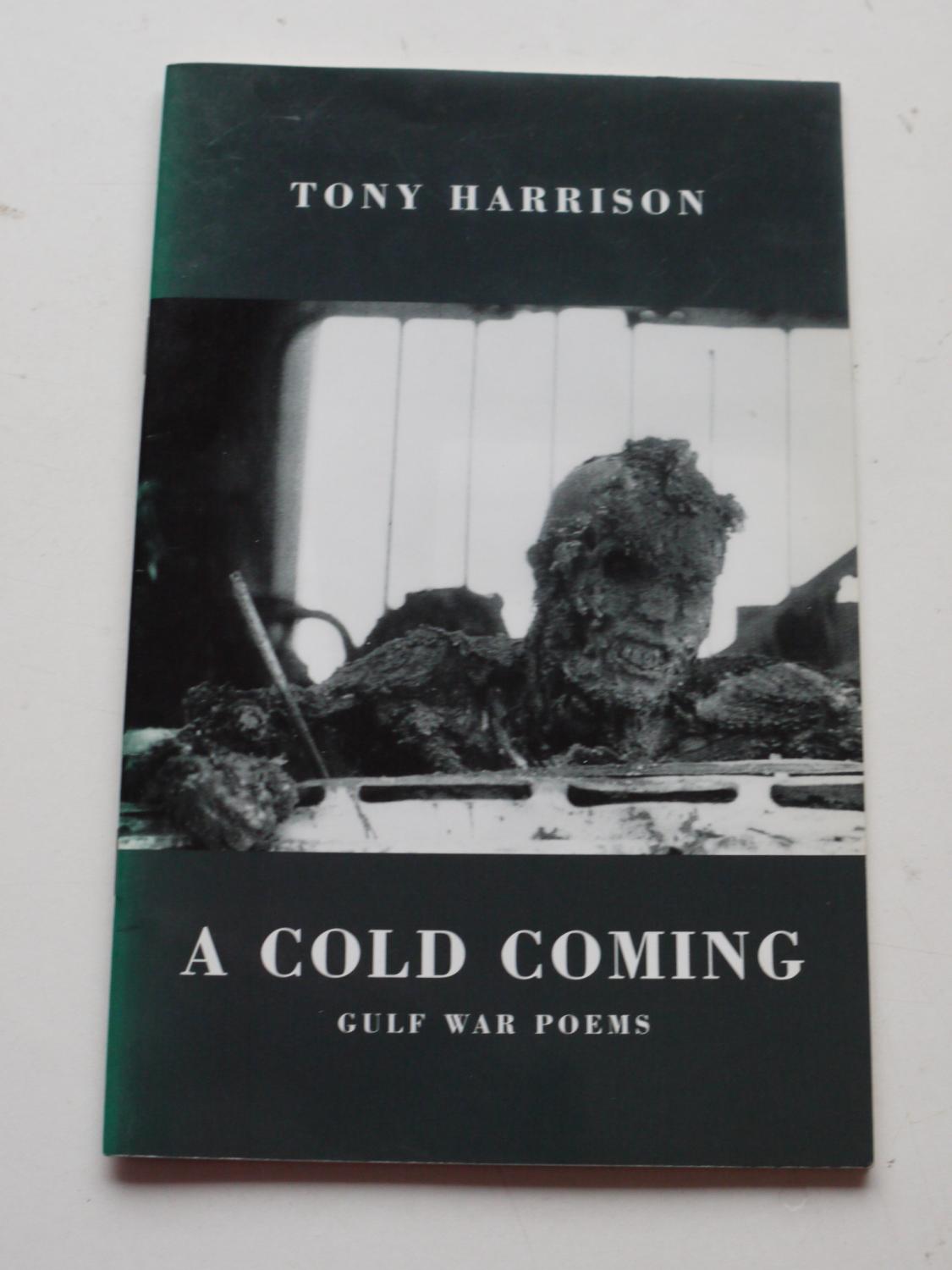
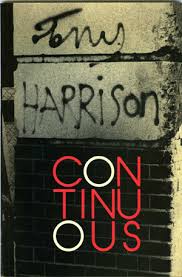
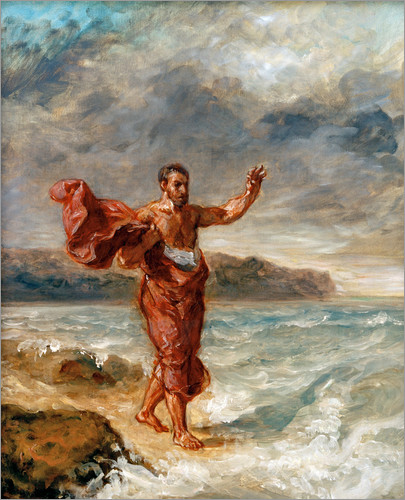
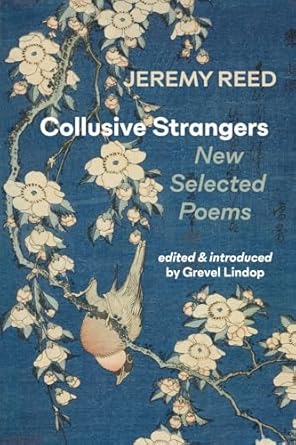
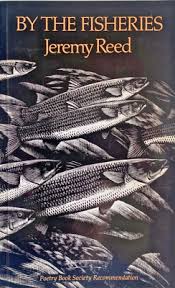
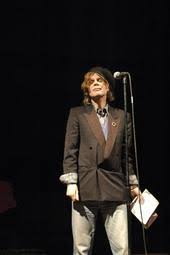
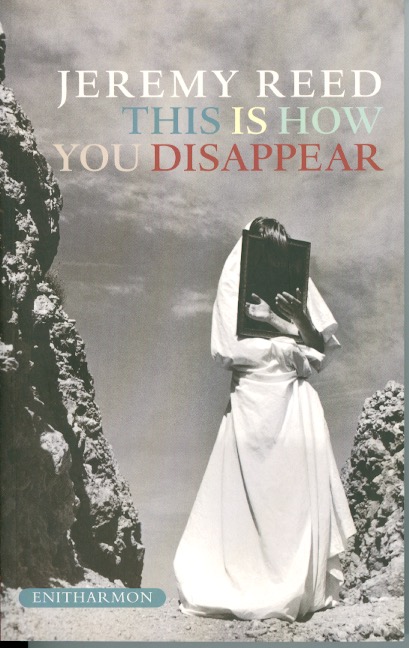
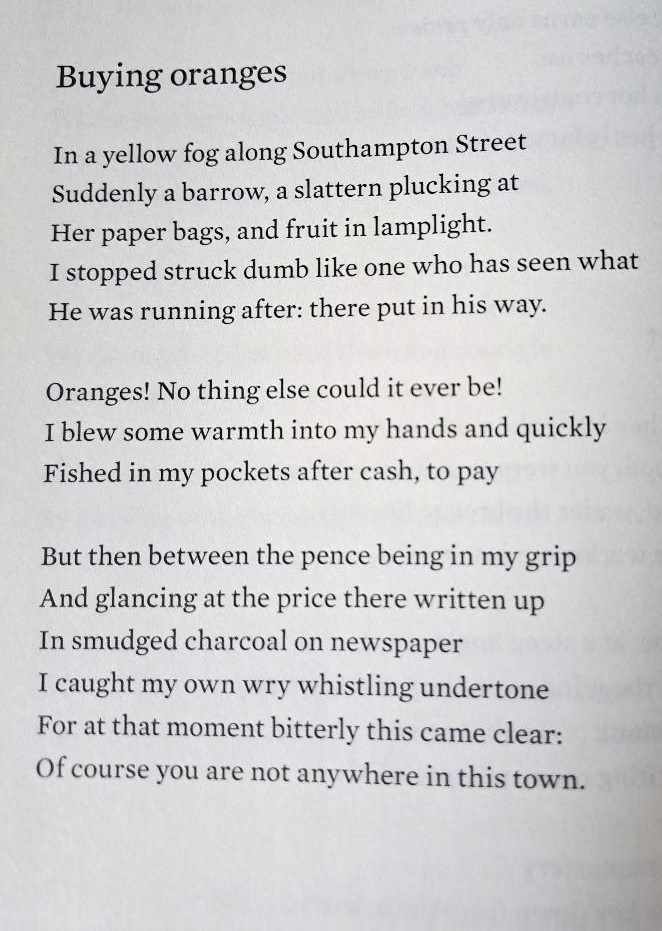

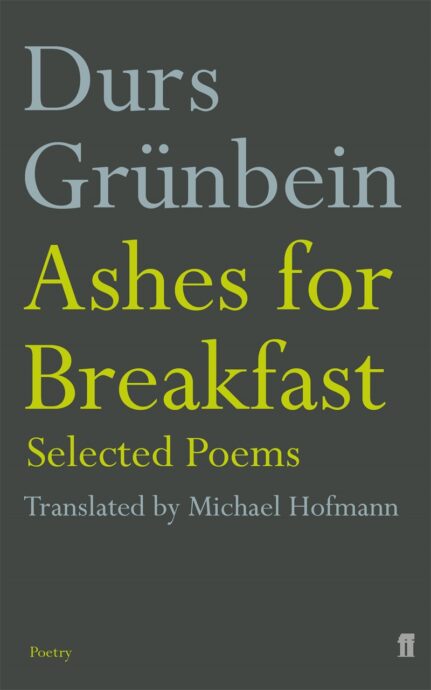
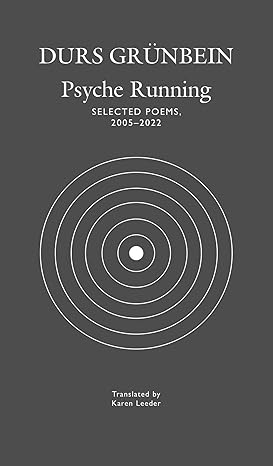
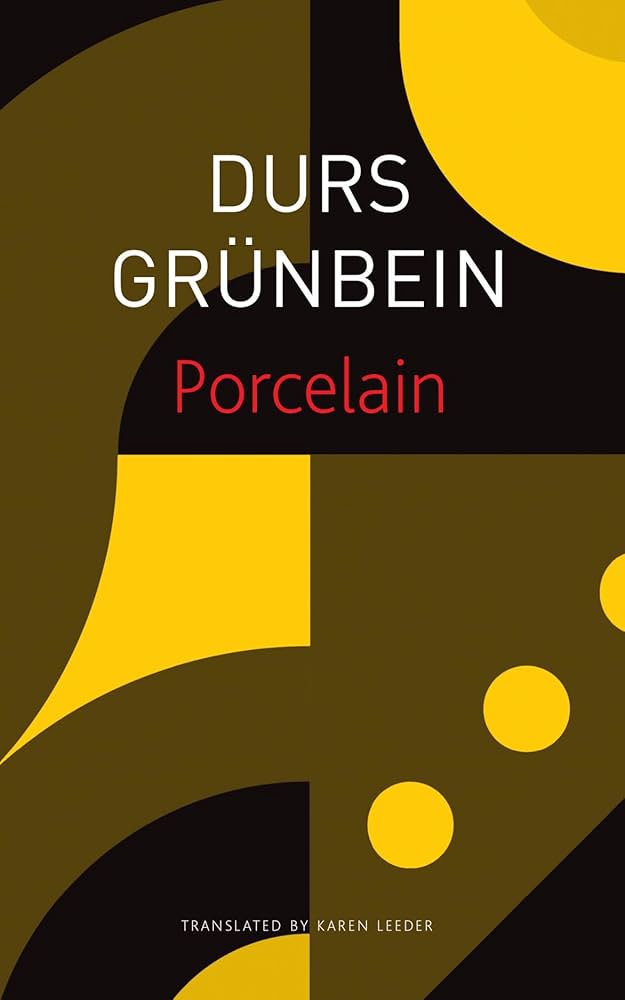
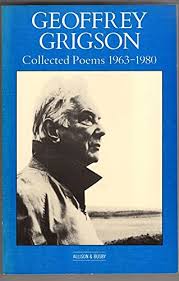
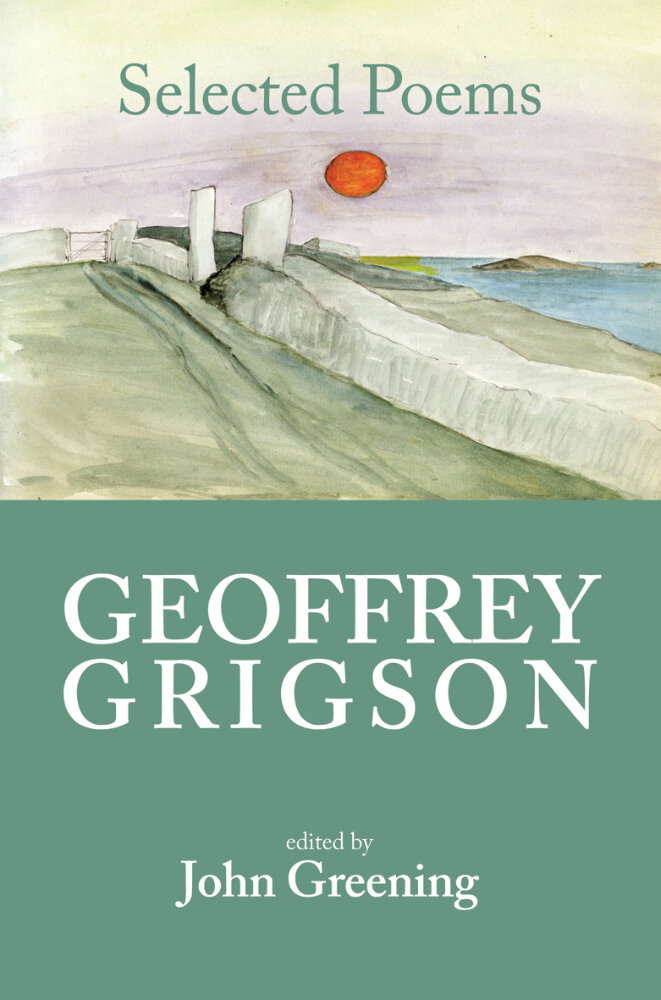
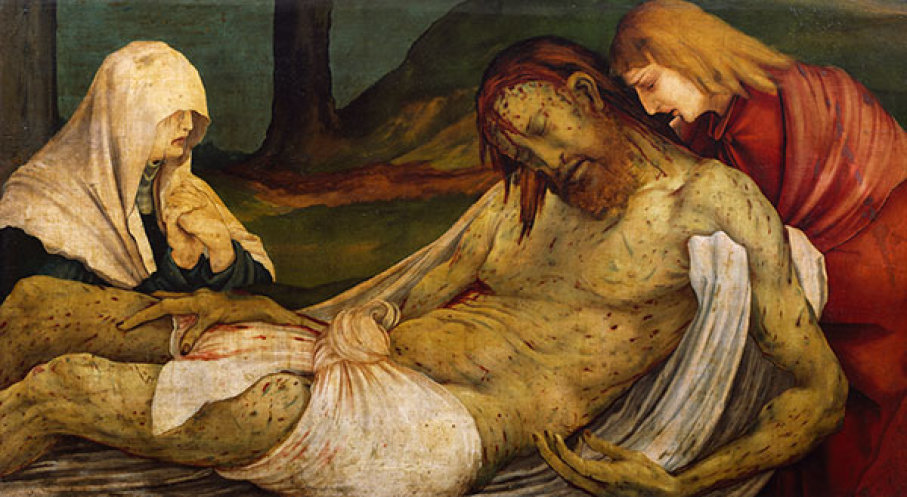
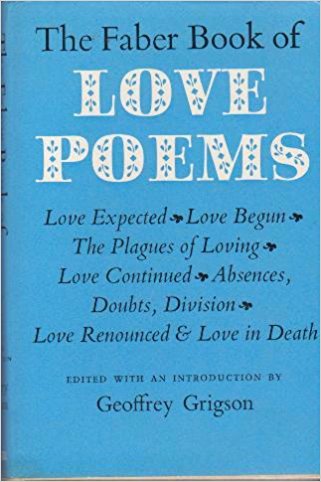
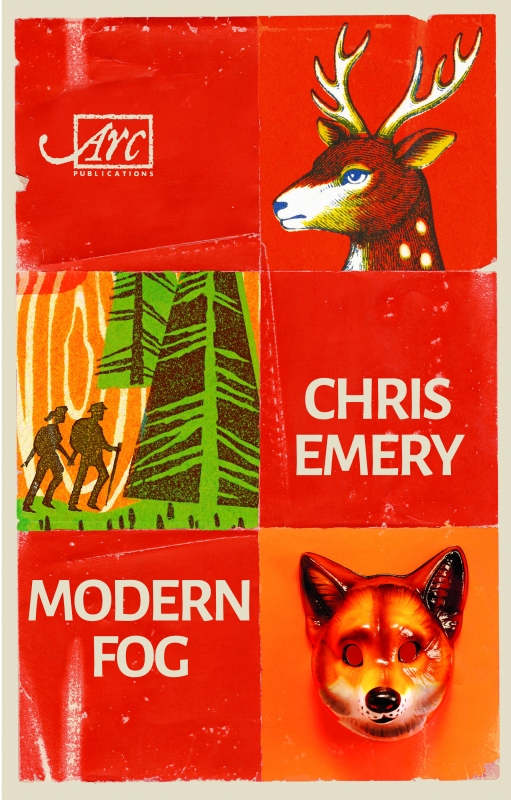


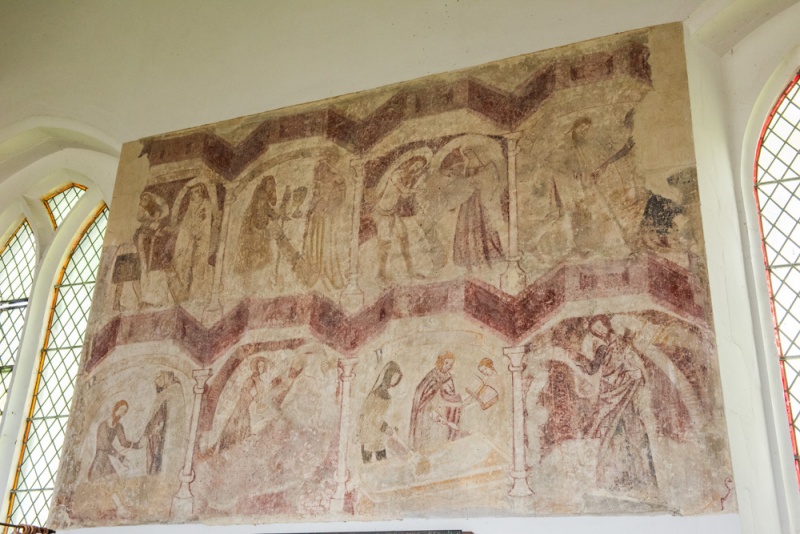

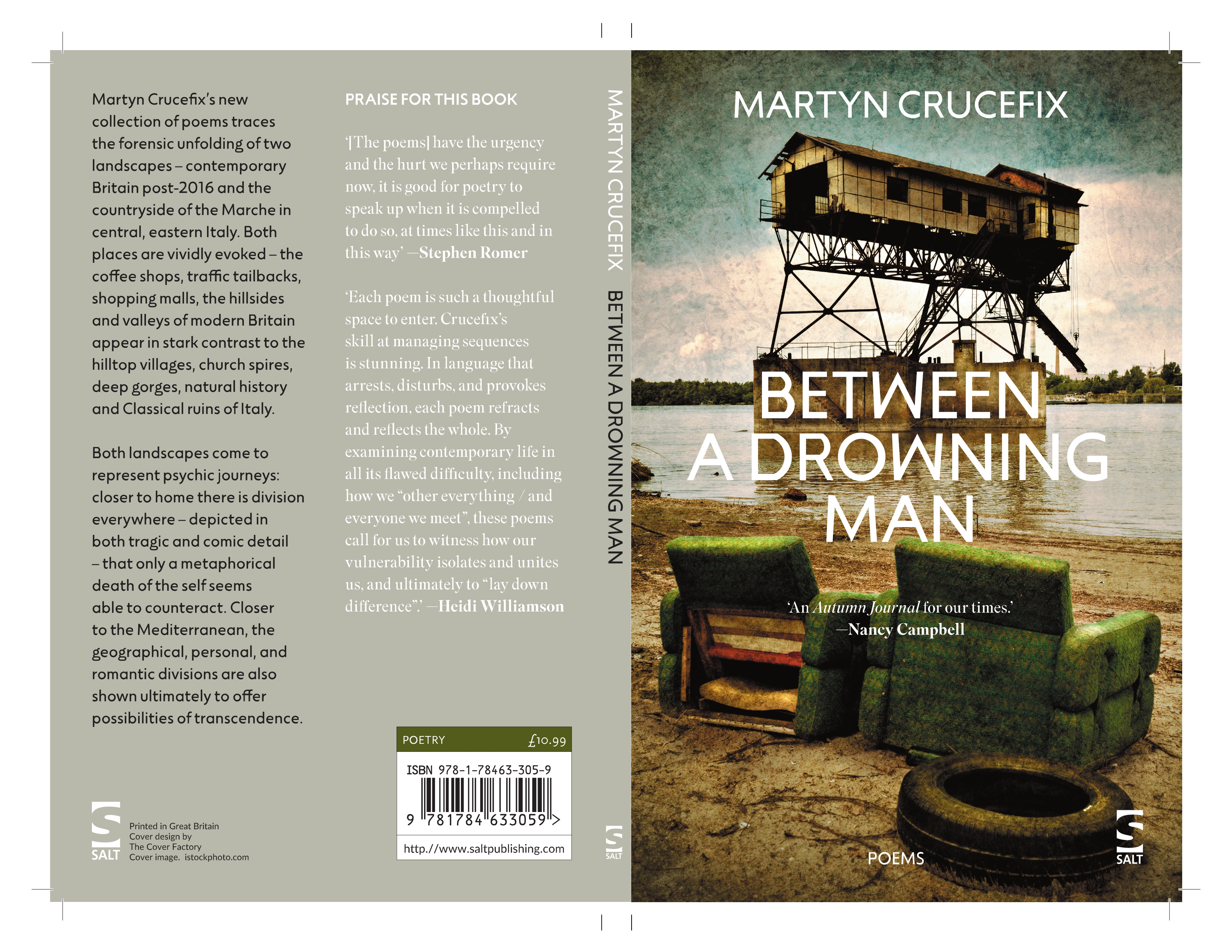


 Martyn Crucefix