On the Importance of Considering Nothing #2

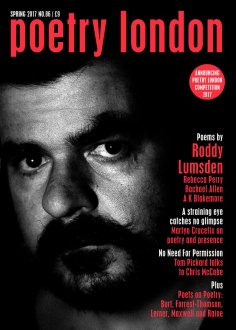
Last week I blogged the first part of a longer essay first published in the Spring 2017 issue of Poetry London. What follows is the second half of it. The whole piece starts and ends with thoughts prompted by my experiences with my father and his growing dementia. Dad has since suffered a series of heart attacks and died on May 24th. I am re-producing the essay unchanged in the hope that it still says something of value about types of ‘confusion’ and in memory of a man who would have had little time for such morbid reflections. Thanks to Tim Dooley who commissioned the essay for Poetry London and published it under the original title: A Straining Eye Catches no Glimpse.

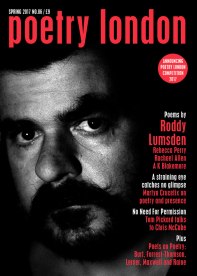
PL-COVER-Spr17-web

In Part 1, I linked my father’s forgetfulness and confusion with recurrent references to “nothing” in King Lear and to Anne Carson’s concept of “the dementia of the real”. I suggested this was also a correlative of Yves Bonnefoy’s interest in the “state of indifferentiation” he often refers to as “Presence”. For Bonnefoy, Presence contrasts the conceptual/linguistic world through which we most often move and we take to be real.

Part 2

Yves Bonnefoy’s poem ‘Wind and Smoke’ (from The Wandering Life (1993)) has the abduction of Helen as its nominal subject. But he allows the poem to be taken over by dissenting voices, irritably seeking to “explain, to justify, ten years of war”. Such an expense of men, ships and spirit (argues one such “commentator”) must have been for the sake of something more permanent than the merely human figure of Helen. The poem entertains the suggestion that she herself was never abducted, “only an image: a statue”, something of great beauty to be displayed on the terraces of Troy, a fixed image of Helen, blessed with permanence, “always [. . .] this smile”. The poem is concerned then with the limitedness of the conceptual view which finds worth only in things of assured, definable permanence. In contrast, Part One of the poem ends with a proliferation of images of “spilling”, lovers as “clouds” or “lightning” on an “earthly bed”, so fully involved with time that their pleasures in the moment are “already empty, still full”. [i]


search-helen-troy
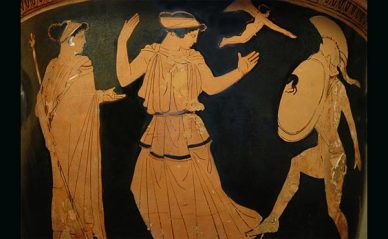
Helen of Troy (Red Figure Vase)


There’s that paradox again and Bonnefoy’s versions of it articulate the impossibility of capturing Presence because it encompasses and exists in time (and language wishes to stop time):


Every time that a poem,

A statue, even a painted image,

Prefers itself as form, breaks away

From the cloud’s sudden jolts of sparkling light,

Helen vanishes [. . . ][ii]


The “jolts” here are akin to Lily Briscoe’s “jar on the nerves” as our paradigms and preconceptions are challenged. The figure of Helen has become that visionary experience – for Bonnefoy usually of beauty, for Carson more often a violent disturbance – that we intuit exists just beyond the range of our usual instruments. Helen, the poem argues, “was only / That intuition which led Homer to bend / Over sounds that come from lower than his strings / In the clumsy lyre of earthly words”.

Part Two of ‘Wind and Smoke’ concludes with a child, an image of the poet, the last person to see the figure of Helen as Troy burns:


singing,

He had taken in his hands a little water,

The fire came to drink there, but the water

Leaked out from the imperfect cup, just as time

Ruins dreams and yet redeems them.[iii]


download
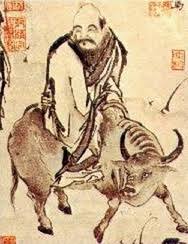
Traditional image of Laozi


This same image of water slipping from our human grasp is recurrent in the Ancient Chinese writings that make up Laozi’s 4th/5th century BCE text, the Daodejing. Since they were published earlier this year, I have been reading my versions of these texts up and down the country and the one thing audiences want to say about them is they contain “wisdom”.[iv] It’s an old-fashioned word but it’s also bound up with the nothing that is really a fuller something we seldom manage to grasp. The Daodejing texts use water as an image of the ineffable One, the plenitude that lies behind all things. They employ water metaphors in such a way that the vehicles are clear and recurrent (ocean, pool, river, stream) but the tenor remains an empty set, never defined. So Chapter 1 deploys water imagery but is clear about the short-comings of all language: “the path I can put a name to / cannot take me the whole way”. Even what can be named can only be grasped through further metaphors: the “nursery where ten thousand things / are raised each in their own way”. What lies behind the phenomenal world can only be gestured towards through figures such as “mould”, “source”, “mystery”. Even then it’s “a riddle set adrift on a mystery”. The original Chinese text shifts its metaphors rapidly in just this way and this is what gives this opening Chapter the peculiar sensation of telling a clear truth that remains beyond our grasp. Chapter 14 puts it this way:


because a straining eye catches no glimpse

it is called elusive


as the ear attends but latches onto nothing

it is called rarefied


since a hand reaches but clasps only thin air

it is called infinitesimal


and these are resistant to further analysis

File 03-03-2016, 09 03 15

The difficulty of grasping this something that seems nothing is revisited in Chapter 4. There, the tenor of the metaphor is reduced to “it”, the context indicating this refers to the Dao itself, the One, that state of wholeness and plenitude towards which the path of the Dao leads. The opening formulation emphasises the Dao’s infinite nature, its resource as “a vessel to be drawn from / one that never needs to be re-filled // the bottomless source of all things”. But the image is revised a few lines later in the form of a question: “is it rather a pool that never runs dry”, yet this follows four other metaphorical formulations of the Dao’s beneficial effects: “fretted edges are smoothed within it / knots untangled all dazzle eased / all blinding clouds of dust slowly cleared”. The poem calmly declares its own ineffectiveness: “we cannot know it as a bodiless image / it must pre-date every beginning”. Even the concept of origin or beginning is not adequate to convey the nature of the Dao. But the fluidity of water – impossible to grasp, capable of taking any shape, a life-giving source – comes close.

That there is wisdom to be gained from such visionary encounters with the mystery of nothing is clear in Chapter 66. It’s no coincidence that these lines can serve as a commentary on Lear, his suffering bringing him low till he realises he has paid too little attention to the “looped and ragged” nature of his own nation:


—how do rivers and seas secure mastery

over the hundreds of lesser streams

through lying lower than they do


so to govern or teach you must stand

and acknowledge you are beneath the people

to guide them put yourself at the rear


md1187823288

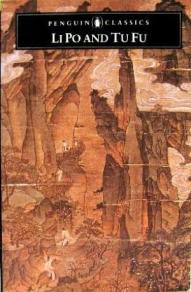
But as Auden suggested and Chinese tradition affirms, such visionary insight cannot be actively sought or taught. This is one of the points of the traditional narrative trope in Chinese poetry of ‘Visiting a Hermit and Not Finding Him’. Don Paterson turned this into a good joke in a poem called ‘On Going to Meet a Zen Master in the Kyushu Mountains and Not Finding Him’.[v] The reader’s eye descends from this lengthy title only to look in vain – it’s a blank page. Perhaps Paterson had been reading the Penguin Classics selection of Li Po and Tu Fu.[vi]  The Li Po selection opens with the poem ‘On Visiting a Taoist Master in the Tai-T’ien Mountains and Not Finding Him’. But such poems were never just an excuse for descriptive nature poetry but related to the frequent ‘spirit-journeys’ that Li Po was fond of writing. We are all like that student in Li Po’s poem, seeking out certainties and facts, a something to depend on when true wisdom gently (or violently) deflects us away from shelter towards a world where we glimpse a more full-blooded, full-bodied, open-minded encounter with what really is.


download
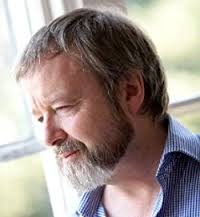
Iain McGilchrist


I have really been talking about two attitudes to knowledge or to put it more carefully, two contrasting “ways of being”.  This is how Iain McGilchrist’s book, The Master and his Emissary (Yale, 2009) expresses it.[vii] McGilchrist argues parts of the human brain deliver quite different kinds of attention to the world. The left brain perceives the world as “static, separable, bounded, but essentially fragmented [. . .] grouped into classes”.[viii] This is the attitude to knowledge and education the anxious student of Li Po’s poem possesses as well as the place where most of us live amongst Carson’s clichés and Bonnefoy’s conceptual language. In contrast, McGilchrist associates the right brain with the perception of “the live, complex, embodied, world of individual, always unique beings, forever in flux, a net of interdependencies, forming and reforming wholes, a world with which we are deeply connected”[ix] yet one at risk of being perceived or judged as a mere confusion, a seeming nothing.

This is the view of the Daoist master whose teaching evokes the as-yet-uncarved block of wood, who teaches best without words. Ordinary language usage, dependent as it is on conceptual thought, is left-brain work – ordering, categorising, re-presenting the minute particulars of the world as they are perceived by the right brain. Li Po’s teacher is surely hiding somewhere beyond the cherry blossom – and this is part of the student’s lesson. Don Paterson’s blank page represents a rather glib, post-modern joke, a scepticism about language in danger of throwing out the interconnected but bewildering “dementia” of the real world along with the suspect tokens and counters of left-brain language: “To say that language holds truth concealed is not to say that language simply serves to conceal truth [. . .] or much worse, that there is no such thing as truth”[x]. Bonnefoy, engaging in his own battles with the early stirrings of French post-modernism, declared: “This world here exists, of that I am certain [. . .] It is simply with us.”[xi] The right brain knows this and it’s from there we want to write poems; the left brain serves to fragment it, utilise it, get it under control, disappear it. And yet . . . there’s no much here suitable for a chat with a forgetful father. His visions are more frightening and may get worse; here, for a while, his son has been imagining ways of seeing that need not be so.

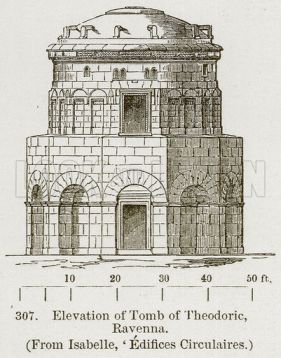
Elevation of Tomb of Theodoric, Ravenna

Notes

[i] tr. Naughton, Naughton and Rudolf, pp. 197-203.

[ii] tr. Naughton, Naughton and Rudolf, p. 201.

[iii] tr. Naughton, Naughton and Rudolf, p. 203.

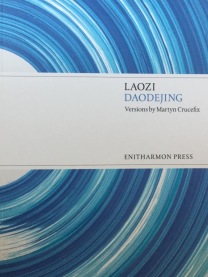
[iv] Laozi, Daodejing, versions by Martyn Crucefix (Enitharmon, 2016). All quotations are from this version.

[v] Don Paterson, God’s Gift to Women (Faber, 1997).

[vi] Li Po and Tu Fu, selected and translated by Arthur Cooper (Penguin Classics, 1973).

[vii] Iain McGilchrist, The Master and His Emissary (Yale UP, 2009), p. 25.

[viii] McGilchrist, p. 31.

[ix] McGilchrist, p. 31.

[x] McGilchrist, p. 6.

[xi] Yves Bonnefoy, The Tombs of Ravenna, tr. John Naughton (1953; PN Review (No. 226, Nov-Dec 2015), p. 62).

On the Importance of Considering Nothing #1

I have not blogged regularly since April 2017  as, having managed to get both my parents settled into a Care Home in Wiltshire, Dad suffered a series of heart attacks and died – fairly quickly and peacefully – on May 24th. Not wholly coincidentally, the Spring 2017 issue of Poetry London published an essay I had written which starts and ends with some thoughts on my experiences with my father and his growing dementia. In the next two blogs, I re-produce this essay unchanged in the hope that it still says something of value about types of ‘confusion’ and in memory of a man who would have had little time for such (in his view morbid and abstruse) reflections. Thanks to Tim Dooley who commissioned the essay for Poetry London and published it under the original title: A Straining Eye Catches no Glimpse.

 PL-COVER-Spr17-web

Part 1

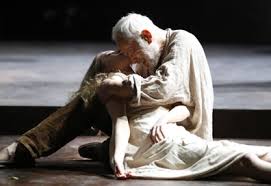
An old king leans over his daughter’s body seeking signs of life, yet he finds “Nothing, nothing, nothing, nothing, nothing”. Given that I teach literature and this is one of Shakespeare’s more famous lines with its repetition and trochaic revision of the iambic pentameter, I’m not proud of mis-remembering this moment in King Lear (the repeated word is, of course, ‘Never’). Yet I know why I mistake it, this year, in these fretful months. Seeing Anthony Sher play the role recently – haranguing a foot-stool, giving toasted cheese to a non-existent mouse – put me in mind of my father, though he’s not quite so far gone. These days he has trouble recognising the house he’s lived in for 60 years; he will refer to his wife as a woman from the village who has come to look after him; he seeks news of his mother (she died in the 1970s). What can this feel like? Years of memories gone; a whirling fantasmagoria that evidently frightens him; a something becoming nothing he makes too little sense of.

download

So it’s not just that the idea of nothing is prominent from the very start of Shakespeare’s play. Cordelia fails to reply flatteringly to Lear’s question about which of his daughters loves him most. The gist of her brutal answer is “Nothing, my lord”. Lear warns her: “Nothing will come of nothing. Speak again”. But she sticks to what she sees as her truth (as against her elder sisters’ oleaginous falsehoods) and pays the consequences. But so does the King. Reduced eventually to a wholly unexpected state of wretched nothingness in the storm scenes and beyond, he learns much from this nothing in pointed contradiction of his earlier warning. It doesn’t stop there; once reunited with Cordelia and faced with the prospect of prison, possible execution, what is remarkable is the King’s acceptance of his fate. Confronting this further reductio, he declares he’ll go and finds a reason to be cheerful: “we will take upon’s the mystery of things”. I’ve always been struck by Shakespeare’s phrasing here. The mystery of things is imaged not as some modernly pedagogic check-list, tabulated and absorbed like a set of principles, rather it’s something to be folded about us – a garment, an investiture, a way of seeing, feeling, not quite of self, not quite other either – and Shakespeare’s point is that Lear’s encounter with nothingness in various guises is what has prepared him for such a re-vision of his place in the world.

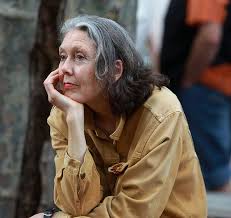
I’m interested in the idea that such a nothing can be worth something. Of course, it’s not exactly nothing, a void, that Cordelia’s father encounters. It is a bewildering set of experiences of which he can make nothing. Lear – I don’t know how far this is like my father – suffers because his previous paradigms are failing: he is shocked into his encounter with the mystery of things or what Anne Carson calls the “dementia of the real”. When my father talks, he yearns for the ordinary reassuring certainties of his old life, as if they would close round him with the feel of a comfortable coat. Carson has explored this reliance we all have on the familiar in her 2013 Poetry Society lecture concerned with ‘Stammering, Stops, Silence: on the Methods and Uses of Untranslation’.[i]  She explores moments when language ceases to perform what we consider its primary function and we are confronted with nothingness in the form of silence. In the fifth book of The Odyssey when Hermes gives Odysseus the herb “MVLU”, Homer intends the name of the plant to be untranslatable since this sort of arcane knowledge belongs only to the gods. In a second example, under interrogation at her trial, Joan of Arc refuses to employ any of the conventional tropes, images or narratives to explain the source of her inspiration. Carson wants to praise Joan’s genius as a “rage against cliché”, the latter defined as our resort to something pre-resolved, pre-shaped, because, in the face of something so unfamiliar that it may seem more like nothing, “it’s easier than trying to make up something new”.


images
Anne Carson


Carson associates this rage to ‘out’ the real with Lily Briscoe’s problems as an artist in Woolf’s To the Lighthouse. She struggles to complete her painting, aware that the issue is to “get hold of something that evaded her”.[ii] She dimly senses “Phrases came. Visions came. Beautiful pictures. Beautiful phrases. But what she wished to get hold of was that very jar on the nerves, the thing itself before it had been made anything”. Unlike Homer and Joan of Arc, the knowledge Lily seeks (undistracted by the divine) is not so much prohibited as, in a profound sense, beyond conception (it is a nothing before it has been made something). For Carson, we each dwell behind the “screens” of cliché for most of our lives, so when the artist pulls them aside the impact of the revelation may well have the force of violence. She suggests artistic freedom and practice lie in such a “gesture of rage”, the smashing of the pre-conceived to find the truth beyond it, her goal remaining the articulation of the nothing she insists is actually the “wide-open pointless meaningless directionless dementia of the real”.

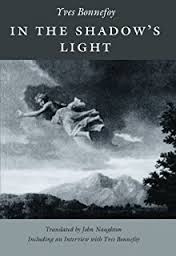
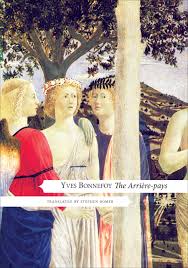
This is the nothing I am interested in: it is no void or vacancy but, paradoxically, a wealth of experience, a “flux of phenomena” about which we cannot think in conventional ways. We cannot name the parts of it, so for convenience, maybe a bit defensively, we prefer to designate it nothing. The artist seeks to articulate such an “experience of what goes beyond words: call it the fleeting perception [. . . ] a state of indifferentiation”. [iii] This is one of the many formulations of the issue by the late Yves Bonnefoy who unrelentingly explored the limits of conceptual thinking in terms similar to Carson’s distrust of cliché: “It is not that I incriminate the concept – which is merely a tool we use to give form to a place where we can dwell. I am merely pointing out a bad tendency [ . . . ] of its discourse to close discussion down, to reduce to the schematic and to produce an ideology existing in negation of our full relation to what is and to whom we are”. He concludes it is a “temptation to stifle dissenting voices” – the kind of voices who see something in nothing. [iv]

images

The always evangelical Bonnefoy terms the mystery encountered in a “state of indifferentiation” as “Presence”. In 1991, Bonnefoy’s temporary residence in the snowy landscapes of Massachusetts gave him a new way of evoking these ideas. In The Beginning and the End of the Snow (1991) he reads a book only to find “Page after page, / Nothing but indecipherable signs, / [. . .] And beneath them the white of an abyss”[v]. Later, the abyss is more explicitly, if paradoxically, identified: “May the great snow be the whole, the nothingness”.[vi] These occasional moments when the screens of cliche and conceptual thought fall are moments of vision as sketched by Auden in his discussion of Shakespeare’s sonnets – they are given, not willed; are persuasively real, yet numinous; they demand a self-extinguishing attentiveness.[vii] The inadequate, provisional, always suspect nature of language to record such moments is clear in these lines from Bonnefoy’s poem ‘The Torches’:


. . . in spite of so much fever in speech,

And so much nostalgia in memory,

May our words no longer seek other words, but neighbour them,

Draw beside them, simply,

And if one has brushed another, if they unite,

This will still be only your light,

Our brevity scattering,

Our writing dissipating, its task finished.[viii]


Rather than the forced disjunctions and the quasi-dementia of Carson’s recommended methods, Bonnefoy is reluctant to abandon the lyric voice, though he still intends to acknowledge the provisional nature of language in relation to Presence. The “fever” and “nostalgia” we suffer is the retrogressive lure of conceptual simplification. Bonnefoy’s imagery suggests a more delicate, tentative relationship between words, a neighbouring, a brushing up against each other (like snowflakes), though even then, if they “unite” or manage to cast “light” on what is, this can only be brief, always subject to dissipation.

(to be continued)

download

Footnotes

[i] Poetry Review, Vol. 103, No. 4 (Winter 2013).

[ii] Virginia Woolf, To the Lighthouse (1927; Penguin Modern Classics, 1992), p. 209.

[iii] Yves Bonnefoy, In the Shadow’s Light, tr. Naughton (Chicago Press, 1991), interview with John Naughton, p. 162.

[iv] Yves Bonnefoy, ‘The Place of Grasses’ (2008), in The Arriere-pays, tr. Stephen Romer (Seagull Books, 2012), pp. 176/7.

[v] Yves Bonnefoy, ‘Hopkins Forest’, tr. Naughton in Yves Bonnefoy: New and Selected Poems, eds. Naughton and Rudolf (Carcanet, 1996), p. 181.

[vi] Yves Bonnefoy, ‘The Whole, the Nothingness’, tr. Naughton, Naughton and Rudolf, p. 187.

[vii] W. H. Auden, ‘Introduction to Shakespeare’s Sonnets’ (1964; reprinted in William Shakespeare: The Sonnets and Narrative Poems, ed. William Burto (Everyman, 1992)).

[viii] tr. Naughton, Naughton and Rudolf, p. 177.

Two poems by Martyn Crucefix

I’m afraid I have been unusually silent on the blog for the last few weeks. My last posting was in early April, a review of Jacob Polley’s book, Jackself. Life has been getting in the way of blogging and though I appreciate a lot of people like to read a lot of personal stuff on blogs that’s not really why I write. Suffice to say that I have been preoccupied with organising my parents move into a Care Home and the selling of their house, my house I should say; we moved into it when I was a year old and I left to go to university at 18. I imagine there will be poems emerging from the experience – but they tend to take a long time.

Added to this I was called up to do jury service at the Old Bailey during the last 3 weeks and this proved both fascinating and dull at the same time. The case was strange and disturbing (the defence consisting of the claim that what was done was done as research for a novel, so throwing up questions about the boundaries between fact and fiction). The dullness was, of course, the slowness with which the wheels of the law roll round (in the name of clarity, precision and fairness). The events and characters of the people involved were wholly consuming for the period we were sitting as a jury.

Emerging from that in the last couple of days, the news came that my father has gone back into hospital after a heart attack.

So – with no headspace for poetry really, I’m resorting to re-blogging a couple of poems which very recently appeared on Jo Corcoran’s great website And Other Poems. Both poems will also appear in my new book, The Lovely Disciplines, to be published by Seren Books this summer.

images

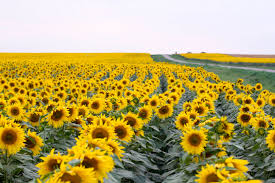
Both these poems have had a long gestation. ‘East-running road’ originated with observations about the angles of sunlight on sunflower fields in the north-west of France, slowly becoming concerned with the idea of writing and seeing, which then became associated in my mind with the dedicatee of the poem, the poet Katherine Gallagher. ‘Boy-racer’ is even older in origins. But I do still recall the central image as a real event: on some dusty European road down to a beach, a kid on a motorbike skidding out from a side track, wobbling to regain balance and powering off ahead. The wind ruffling his carefully un-helmeted head . . .

Read the two poems here: Two poems by Martyn Crucefix

7926ca533543e64e15591592aae83fd8

‘From Palette to Pen’ – a bit more ekphrasis

My blog post a couple of weeks ago on ekphrastic poems (ie. poems stimulated by visual art) proved to be one of the most popular I’ve ever written. This was in part the ‘how to’ aspect of the blog. In preparing to run a workshop at the Holburne Museum in Bath in February, 2017, I’d been reading a wide variety of poems derived in some fashion from the poet’s encounter with visual art and I tried to categorise the various approaches. I came up with 14: 

  1. Describe – and do no more.
  2. Describe but imagine beyond the frame
  3. Describe but incorporate researched materials
  4. Make Main Figure Speak – the most common approach
  5. Make Minor Figure/s Speak
  6. Make Objects Speak
  7. Make the Artist Speak
  8. Interrogation of the Artist
  9. Interrogation of illustrated Figure/s
  10. Interrogation of Yourself
  11. An Account of Your Encounter with the Art
  12. An Account of Gallery Visitors’ Experience
  13. An Account of Others’ Experience
  14. Come at a Tangent – the ekphrastic experience as after-thought or illustration

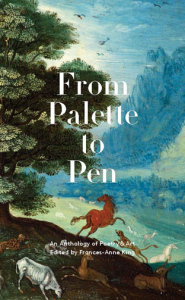
From-Palette-to-Pen-185x300

While at the Holburne Museum I was given their recent anthology of ekphrastic poems, From Palette to Pen, edited by Frances-Anne King in 2016. It contains 20 poems stimulated by art objects in the Holburne and as well as recommending it as a great resource for ekphrastic writing, I thought I’d use it to test my earlier analysis of the form to see if it held water.

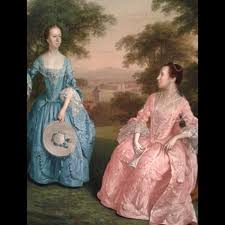
It did pretty well. It goes without saying that all the poems engaged to some degree in method 1 – description of the art object itself. But beyond that, by far the commonest approach was method 4 – making the main figure speak. This was adopted by Anna-May Laugher, Claire Dyer, Carrie Etter, Frances-Anne King, Pascale Petit, Linda Saunders and Lesley Saunders. Petit manages to make Adam speak, remembering his naming of the animals; Claire Dyer makes Rosamund Sargent speak from her own portrait by Allan Ramsay; Lesley Saunders makes one of the sisters, Alicia and Jane Clarke, speak and so betray their “little sisterly difficulties”.

imgres

Another common approach was my method 8, an interrogation of the artist (without getting the artist to actually speak for themselves (method 7)). Jenny Lewis’ poem on a 17th century Rosewater basin began in this way, inquiring “What’s on his mind as he hammers / the silver, makes light flower”. Her poem goes on to incorporate some obvious research into the object too (my method 3) which takes her poem away from a narrow view into the colonial world of “London, the world, New England” in which it was made. David Hale, writing about Jan Asselyn’s ‘Landscape with Drover’ also imagines and interogates the artist’s approach, gazing at his own picture in process:

Ah, the south. He feels the heat of it

on his face and hands, smells dust, dung

and crushed thyme as he sips his coffee,

wonders again what the bull is looking at –

where time and life have gone.

imgres

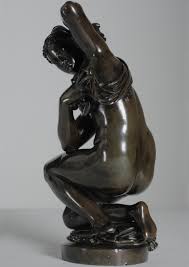
I’d be tempted to widen this category of approach – or even introduce a new one – because several poems in the anthology interrogate the artist specifically about the artistic methods used to create the art object. Sue Boyle does this in detail about the making of Antonio Susini’s bronze figure, ‘Crouching Venus’: “Coated in plaster, lowered into fire, / she must be negated, melted from her mould”. There are also elements of this approach in the poems by Dawn Gorman and Phillip Gross, the latter dwelling as much on the making of a Beadwork Basket as on its illustrations of Charles II and Catherine of Braganza. Gill Learner’s poem also looks over the artist’s shoulder as he glazes a 15th century earthenware dish.

My method 9 – interrogating or engaging with one of the figures in the art work – was used by Caroline Heaton, Wendy Klein and Tim Liardet. Klein and Liardet both directly address figures in the image (for example, “Someone chose the best for you, Mary Bourchier” and “You let the baby grip his fingers”). Heaton’s engagement with Plura’s marble statue of ‘Diana and Endymion’ is a bit less direct, using the third person (rather than a second person address) to think herself into Diana’s state of mind:

Confined to the island

of the self, she laments

the chill of her lunar circuit,

its lonely eminence.

imgres

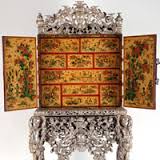
Rosie Jackson approached a piece of furniture, ‘The Witcombe Cabinet’, via a brief description of it but quickly developed thoughts about her own mother and indeed herself which I’d take to be my method 10 – using the art object to interrogate or enquire into one’s own life: “”My mother would have loved it here, / the roped off beauty […] But I ask questions of locked drawers”.

imgres

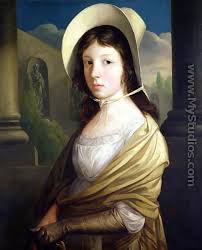
I think Claire Williamson mostly used method 3 – describe and make use of researched materials – in her poem on Thomas Barker’s painting of ‘Priscilla Jones’. The relationship between the sitter and the artist is the focus here, their romantic engagement and subsequent “passionless” marriage. In fact, I’ve not checked details of the painting/poem and I suppose it maybe that Williamson is making all this up – in which case she’s adopting method 2 – describe and imagine beyond the frame as George Szirtes does in anticipating the adult life of the boy in ‘Garton Orme at the Spinet’.

So the methods used in this anthology are fairly limited – seven of the fourteen I proposed. Those not adopted here are several varieties of ventriloquism (getting minor figures or objects to speak up; getting the artists to speak directly), the kinds of poem that more narratively describe encounters with art objects in a gallery or other location and a more tangential approach.

imgres

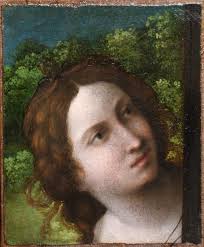
Finally, Lawrence Sail’s poem describes a Mantuan School ‘Female Head’ and is probably the ‘purest’ ekphrastic poem in the anthology in that it does little more than describe the image – method 1. However, Sail addresses the woman imaged as “Our lady of the liminal” and as such he breaches the borders (“offstage”) a fair bit, beginning to imagine beyond the frame to some degree (method 2). It’s a lovely poem and deserves quoting in full:

Female Head, about 1525

Our lady of the liminal –

witness at her back the margins of

the unruly forest,

and the focus of all her attention

being offstage.


But the heart of the story is locked

in the ghost of her gaze – its candour,

the early signs

of grief, a drift to the verge

where hope wavers.


And everywhere, time on the make –

in the darkening turquoise of the sky,

the slow swell

of the trees, the craquelure moving up

to infect her soft features.

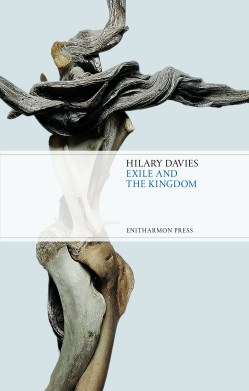
What Love Is: Hilary Davies’ ‘Exile and the Kingdom’

9781910392171

I met poet, translator and critic, Hilary Davies, back in the early 1980s and our paths have kept crossing since. She was one of the first intake of women undergraduates at Wadham College, Oxford, where she read French and German. She won an Eric Gregory award in 1983, has been a Hawthornden Fellow and chair of the Poetry Society (1992–3). With David Constantine, she co-founded and edited the poetry magazine Argo and has three previous collections of poetry (published by Enitharmon): The Shanghai Owner of the Bonsai Shop (1991); In a Valley of This Restless Mind (1997); Imperium (2005). She was head of languages at St Paul’s Girls’ School, London, for 19 years and was married to the poet, Sebastian Barker, who died in 2014.

hilarydavies-180x235

Davies’ new collection, Exile and the Kingdom (Enitharmon, 2016), is framed by two very powerful sequences. It opens with ‘Across Country’, a series of seven poems which add up to an autobiographical ‘growth of the poet’s mind’. The book concludes with ‘Exile and the Kingdom’ itself, a further eight poems which are nothing less than a meditation on the poet’s raw grief and re-discovery, or reassertion, of her religious faith. Both sequences contain weddings.

‘Across Country’ opens with an evocation of a child’s first moments, “what gets forgotten”, in a state of inarticulacy, no ability to exert our own will, with no will even, language-less and effectively silent, being “carried by gods”.  Passive in the hands of mother and father, the journey variously begins in “The reindeer saddle and the motor car, / the sighing desert and the plateau wind”. Davies seems to suggest these first human experiences fall onto a tabula rasa as they “Etch the first surfaces of particularity / And settle in our souls”. The particular development traced here is Davies’ own, of course, and crucially this involves a later period of travel in France. Happily alluding to Wordsworth’s own tracing of his youthful days and Revolutionary enthusiasm in France (“Bliss it was in that dawn to be alive /But to be young was very heaven” – The Prelude, Book 11), Davies praises “the glory of the cornfield and belltower, / Granite, limestone, vineyard and cloister”. As with Wordsworth, France offers an experience of human love, but Davies is also drawn to intellectual pursuits, the thrilling confusion of “many minds passing”, arguments of “polity and governance” and to the “meretricious fruit / Of the ideology tree”. We are being told this in order for such concerns to be ultimately dismissed:


The lords of existence

Are neither economist nor philosopher

The Lord of existence

Shows himself not in systems


The fourth poem in ‘Across Country’ seems to record the young woman’s first realisation that religion was to be the answer to many of the questions she was asking: “I crossed into church after church that summer, / Thinking of erudition, but beside me trod Love”. The capitalisation and conventional personification makes it clear that Davies is deliberate and happy to place herself in a long tradition of poetry dealing with religious experience; there is no radical re-making of poetic form or language. Davies does not use masks. Discursive passages are in unrhymed, fairly irregular paragraphs which are punctuated every so often with more lyrical rhyming passages, song-like.

Poem five of ‘Across Country’ is just such a lyrical piece, portraying a wedding, but not one that lasts:


Hate has eaten my bridegroom’s heart

And remorse is become my fury

Now I must go the road of affliction

Searching for mercy.


That search, Davies argues, is more a matter of “Waiting, not willing”. It is the traditional negative road in the sense of the centrality of “self-surrender”, imaged in the seventh poem as the sensation of being on a boat on a threatening ocean: “No measure but the dark blue breathing of the opening deep, / Where personhood dissolves beyond mere terror”. I don’t share Davies’ faith but I share her belief that, in terms of our daily acts and choices, we are to be judged in the long run: “Only perdurance delivers”. And in terms of the nature of those acts and choices, whatever set-backs are faced, we need to be accompanied by that same figure who walked beside her into the churches in France: “what love is, and does”. Read as the record of the poet’s experiences, it’s likely that this opening sequence concludes with Davies meeting with Sebastian Barker, the beginning of new happiness (“I knew instantly I had to go the hard way with you / To learn how to love better”).

.

p46-sebastian-barker
Sebastian Barker


The central sections of this collection are made up of poems more directly engaged with the contemporary world of north London, Stamford Hill, Walthamstow, the valley of the River Lee, Abney Park in Stoke Newington (I blogged one of these poem’s a few weeks ago). There are also poems more explicitly concerned with the relationship with Barker with titles like ‘Night’s Cloak’, ‘Aubade’, ‘Love Song’. I’ve always thought it a premature admission of defeat to declare ‘happiness writes white’ but some of these poems slip too easily into a mode in which this reader feels more like eavesdropping than sharing the experience of years of happy marriage; technically there is a flowering of lyricism and some softening of the vocabulary. On the other hand nobody is going to read these poems and not be thinking of Hardy’s tributes to Emma Gifford – it seems whether the marriage was mutually loving or not, the sense of loss remains overwhelming.

Lee Valley Park.  Photo: Eleanor Bentall 2nd June 2007 Tel: 07768 377413
River Lee and Valley Park

This is where the concluding sequence picks up though there is no need to narrow Davies’ focus wholly to the autobiographical. As I’ve said, these poems are in the tradition of religious verse and there are passages here that stand comparison with the Eliot of the Four Quartets. The opening poem – a little sequence in itself – paints a state of despair, initially social and political, latterly more personal:


Then there’s the heartache

At the core of things: attachment, the blank certainty

Of letting go, the arbitrary wing of accident,

Wrong gene or partner, a lifetime bled into the dusty ground

Of non-fulfilment, the waste [. . . ]”


The temptation is to try to counter this by accepting “ourselves as measure”, to focus simply on career, material gain, simply being busy, keeping warm. That this is never enough in itself is suggested when Davies recalls a favourite uncle who, having apparently a comfortable and successful life kills himself. For the young Davies what this taught was clear: “the impossibility of loving begets despair, / And despair kills”. The third poem of ‘Exile and the Kingdom’ seems to mark the beginning of the end of exile and returns to one of the many French churches mentioned in the earlier sequence.


300px-facade_st-gervais_st-protais
Church of St-Gervais-et-St-Protais, Paris


Out of the bustling Parisian streets, the narrator turns aside and understands, “Even if I have all gifts without love I am nothing”. As in Four Quartets, Davies mixes philosophical discursiveness with personal reminiscence and poem four recalls a Christmas morning in a country church. The priest, apparently ill, still takes the service, his gasping for breath making his faith even more memorable, a Wordsworthian spot of time worthy of recall in darker moments in the struggle to “retain that sudden downrush / Of the numinous that was supposed to change us”.  Poem seven expresses the sense of hard-won joy through another lyrical presentation of a second wedding. On this occasion, no clouds foreshadow failure but as the bride stands at the door, a wind blows her veil up like a candle flame or flower:


The guests are gathered in the church at Salle

The light falls on the floor;

For all eternity the rose

Stands at heaven’s door.
 

But the sequence and whole book ends in the altogether wilder landscape of St David’s, Wales. The final poem suggests such rose and flame moments are but parts of the coherence of a life where experience must inevitably consist of “Innocence and loss, hope, wisdom, regret and thanksgiving”. Exile and the Kingdom intends to convey this in full. Although propelled most often by loss of a loved one, the burden of the book remains love not grief. It matters little whether we share Davies’ particular form of faith, since what comes strongly from these pages is her concern for the way we treat each other, our overloaded preoccupation with ourselves, how our acts and choices are affected. Poems like these themselves form spots of time for the reader and I’m not going to forget their human concern for what love is and does.

In the Fire-Frost Morning

To wish everybody a peaceful Christmas and to apologise for my absence from blogging in recent weeks, I hope you will enjoy this poem from Hilary Davies’ new collection Exile and Kingdom (Enitharmon Press, 2016). Though I don’t share her faith, I do share her hope, though too often the world seems determined to test both faith and hope.

pfg-crop

In the Fire-Frost Morning

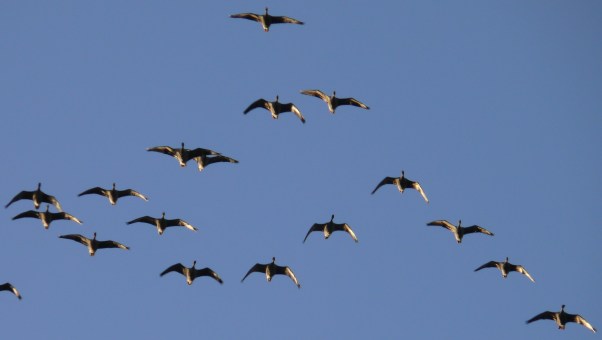
In the fire-frost morning the geese drive south

Trailing hosannas over the estuaries

And the beasts on the clockhouse stir.
From Tottenham Hale to Hackney Downs

The trumpets of day sound

And the gulls swarm up like heralds

Over the sleepers. ‘Awake! Awake!’
Throw open your skylights, thrust your heads to see:

Horseshoe thicket is afire with dawn

And the waters of Spring Hill teem.

Doors, dance. Fill the houses with praises.

God’s promise blazes in the reedbeds,

Bursting over the winter willows and sallows

All the way down to waiting Walthamstow.


9781910392171

The Poetry of Peter Huchel #2

This is the second blog posting arising from my work over the last year or so on translating the third collection by the German poet, Peter Huchel. I hope to complete this for publication in the next few months and here (and in my previous blog) I have been gathering information about his life and times. In a working life that saw him through some of the most traumatic events of European history, Huchel published only 4 collections of poetry in 1948, 1963, 1972 and 1979. Throughout his career the substance of much of his work is his vivid observation of the natural world, moving gradually towards a usually brief, free verse form, a withdrawal from the personal and a steadily darkening vision which comes to be dominated by elegy and lament. Quotations from the poems in this blog are from my own translations.

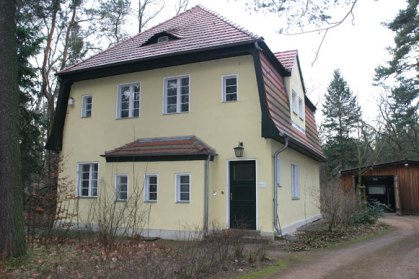
Huchel divorced in 1946 and married Monica Rosental in 1953. In his work at the journal Sind und Form he was always determined to maintain editorial freedom and the publication had an international outlook with contributions from Aragon, Bloch, Brecht (two special issues), Camus, Eluard, Langston Hughes, Thomas Mann, Marcuse, Neruda, Russell, Sartre, Yevtuchenko and Zweig. Inevitably he came into conflict with the authorities and came under immense pressure to conform. He resisted them for 13 years – in part because of the determined support of Brecht. Brecht’s death in 1956 left Huchel more exposed. He was asked to resign his editorship, refused and so compelled the East German government publicly to force his resignation. A year after the building of the Berlin Wall in 1961, Huchel was banished at the age of 59 to effective house arrest in Wilhelmshorst. The poem ‘Hubertsweg’ vividly portrays this period of his life, from 1962 to 1971, living in isolation and under Stasi surveillance:

huchel3

And at night

the roaring at the keyholes.

The fury of stems

splitting the earth.

And come morning

light roots out the dark.

Pine trees rake the mist from windowpanes.


He stands down there,

wretched as stale tobacco smoke,

my neighbour, my shadow

right on my heels as I leave the house.

Yawning sullenly

in flurries of rain from the bare trees,

he tinkers today with the rusty chicken wire.

What’s in it for him, scribing investigations

in his blue octavo book, my friends’ car numbers,

keeping watch on this hardly vulnerable street

for contraband,

forbidden books,

scraps for the belly,

stached in a coat lining.

A single twig to stoke the feeble fire.


Only his second collection of poems, Chausseen, Chausseen (‘Roads, Roads’) appeared in 1962. In defiance of the GDR authorities, he published it in the West. It was much praised – in the author’s absence. Henry Beissel has described the leanness and density of these new free verse poems: “images are more insistent on turning concreteness into code; sadness emanates from a sense of the inevitability of loss and from a world bent on self-destruction”.

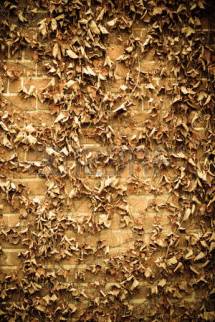
48935464-red-brick-wall-background-with-dry-withered-ivy-leaves-plants

Fuse-wires

of withered leaves

glint on the wall.

Salt-white air.

The flight of cranes,

arrowheads of autumn,


In bright boughs

the hour’s pulse subsides.

Spiders deploy

their rims and spokes,

veils of dead brides.


Huchel’s images from nature are left to speak for themselves; his is often an impersonal, Symbolist poetry of a haunted and pessimistic kind. There is stoic survival and brutishness reflected in the curbed, elliptical, briefly allusive verse. Yet the poems remain marvellous acts of observation; the weather seems forever cold, wintry, foggy:


Estates,

disordered,

dust across the ground,

the heirs dead.

And grim skies,

grey cellars

of fogbanks.

The cold breathes

in echoing colonnades.


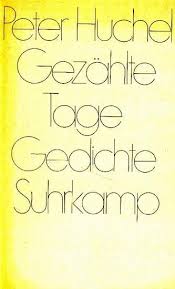
Huchel applied for an exit visa for himself, his wife and son on numerous occasions. He was supported by an internationally orchestrated campaign and eventually in 1971 the Ulbricht government granted his release. He lived first in Rome, then in a borrowed house near Freiburg in West Germany. Gezählte Tage (‘Numbered Days’)  appeared in 1972, the title suggesting the counted days of Huchel’s years under house arrest, his poems recording them, marking them, but also a residual sense of them actually counting towards something, his legacy as a poet, his final release. But like many GDR artists who moved to the West, Huchel was equivocal about what he found there. Because the GDR had failed to bring about a truly democratic and socialist society did not mean that Huchel had given up his ideals and the West’s materialism, egotism and faithless profiteering were repellent to him.


Beside the whitewashed wall

a monk clambers up steps,

sweat trickling from his brows.


Everything fades in light and heat,

the rough ochre of walls,

the fragile, scant moss on stones,

the spare green by the river.

The bellringer walks in ripped canvas shoes,

soon midday will sound.

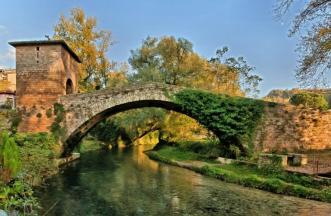
269285_4f92e840dfee5ec5e313ce224dfb8064_large
The medieval bridge at Subiaco, Italy

Huchel’s religious beliefs are difficult to pin down but certainly the poems of Gezählte Tage show a modern wasteland not confined to the East, a spiritual emptiness where, as in ‘Subiaco’, set in Italy, Pilate’s bowl stands emptied of water so the accumulation of guilt cannot be washed away. Nature still provides some recourse but not much of one. Huchel’s gloom is partly determined by his own nature, partly his background, political persecution, his divorce from his Brandenburg homeland. He often uses deliberate anachronism to make a point as well as Shakespearean and fairy tale motifs to evoke a lost time, a lost race, a golden age gone – with which he bears witness to his time. ‘Middleham Castle’ – where Richard III spent some of his youth – is a major poem in which Shakspeare’s tyrant lives on through the centuries as an image of oppressive power:


His foot is worm-eaten.

Gloucester walks to the stables,

the flagstones groaning.

The mastiffs lower their heads

anticipating the whip.


We are his servants,

we go in fear of his blade,

though his skull,

picked clean by so many winters,

lies deep in the ground.


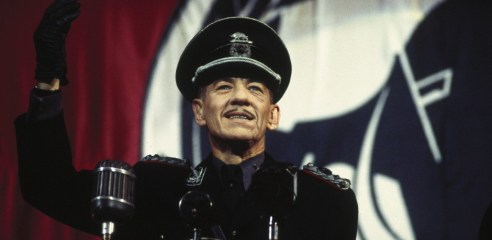
richard-iii-5-940x460
Ian McKellen as Richard III

In Huchel’s brief years in the West he was lauded and awarded literary prizes but this was just another form of exile. His final book Die Neunte Stunde (‘The Ninth Hour’) appeared in 1979. It is a book almost exclusively of elegy and lament; the ninth hour is the hour of despair, the hour in which Christ is said to have died on the Cross, crying out, “My God, my God, why have you forsaken me?” Huchel himself died in 1981, aged 78. I think I hear something of his more personal voice, attuned to the natural world but gifted only a tragic place in history, compelled to labour against the odds, in the unnamed peasant who Huchel has narrate ‘Middleham Castle’:


Familiar with the ways of great forests –

the year streaked with the jays’ colours,

painful brightness of frosted boughs,

the winter hair of deer stuck to bark,

fawns huddled together at evening,

warming themselves in the cloud of their breathing –

up the gorse-clad hill with rope and horses

I haul tree trunks to Middleham Castle.

76799569

The Poetry of Peter Huchel #1

I have been working off and on over the last year on translating the third collection by the German poet, Peter Huchel. I hope to complete this for publication in the next few months and here (over this and my next blog post) I have been gathering information about his life and times. I’ve found people know of his work but not in much detail. In a working life that saw him through some of the most traumatic events of European history, Huchel published only 4 collections of poetry in 1948, 1963, 1972 and 1979. Throughout his career the substance of much of his work is his vivid observation of the natural world, moving gradually towards a usually brief, free verse form, a withdrawal from the personal and a steadily darkening vision which comes to be dominated by elegy and lament.

huchel

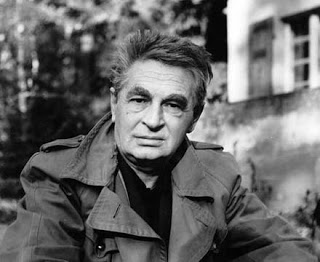
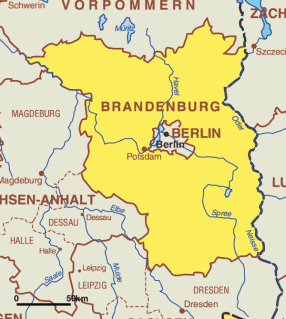
Peter Huchel was born Hellmut Huchel in 1903 in Lichterfelde (now part of Berlin). As a result of his mother’s ill health he was taken from the city to grow up on his grandfather’s farm at Alt-Langewisch, in the Brandenburg countryside near Potsdam. Huchel himself later argued “it is precisely the experiences of childhood, roughly between the ages of five and ten, that exercise a decisive influence in later years” (acceptance speech for the 1974 Literature Prize of the Free Masons). If this period was something of an idyll then it was shattered dramatically and forever by the death of the eleven year old boy’s grandfather and the outbreak of war in Europe.

brand-c-eu-komm

After defeat and his country’s humiliation at Versailles, Huchel, now 17 years old, took part in the conservative Kapp-Putsch against the Weimar Republic in 1920 which was fuelled by a resentment against the German government for signing up to the punishing conditions of the Treaty of Versailles. In the fighting associated with the failed coup, Huchel was wounded and it was during his recovery in hospital that his sympathies for socialism and Marxism fully developed.

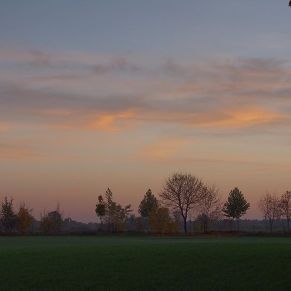
From 1923 to 1926, Huchel studied literature and philosophy at the universities of Berlin, Freiberg and Vienna. Though always temperamentally an outsider, these were years of political, economic and artistic ferment (though ultimately something Huchel would react against) and in the final years of the 1920s he travelled to France, Italy, Greece, Hungary, Romania, Turkey. In 1930, he changed his first name to Peter. His early poems were being written and published from 1924 onwards and were already strongly marked by the atmosphere and landscape of Brandenburg. He appeared out of step with the times, writing nature lyrics, using conventional metre and rhyme, though the natural landscapes he portrayed were far from pastoral. The rural world he grew up in was providing ways of articulating concerns about the shortcomings of the world about him: his close observations of Nature showed her as a harsh mistress and the poverty and suffering of Huchel’s Brandenburg peasants were both very real and politically charged.

12106280_641080319366623_520747277_n

Working as an editorial assistant for Die Literarische Welt by 1932, Huchel’s poems won a prize and his first manuscript was accepted for publication under the title Der Knabenteich (‘The Boy’s Pond’). In 1934, Huchel married Dora Lassel but with the rise of Hitler in 1933, Die Literarische Welt ceased publication and Huchel withdrew his book partly for political reasons. He fled to Romania for a while and was deeply troubled that the Nazi’s liked his work, reading into it as they did a version of the blood and soil nationalism they hoped to foster. A few of his poems were published but by 1936 he was refusing permission and he did not publish a new poem during the rest of Hitler’s rule. Instead, he withdrew to the Brandenburg countryside but was eventually drafted in 1941, ending the war in a Russian prisoner of war camp.

With the fall of the Third Reich, Huchel enthusiastically shared the democratic and socialist optimism of many of his compatriots about the reconstruction of Eastern Germany offering a vision of freedom and equality to all. He began working for East German radio, published his first collection, Gedichte (‘Poems’), in 1948 and in 1949 became editor of the influential poetry magazine Sind und Form (Sense and Form’). Huchel’s poems were applauded both for their craft and evident socialist undercurrents though he did not satisfy some who demanded much more explicit support for the German Democratic experiment. Huchel’s dark rural landscapes offered at best equivocal support for the socialist regime and his instinctively conservative harking back to childhood and the natural world (rather than the modern revolutionary transformations of human society) were rightly seen by many as falling far short of the expected unquestioning celebration of the GDR’s project.

imgres

Here’s Huchel’s ‘The Polish Reaper’ – from this period – as translated by Michael Hamburger. Compared to Huchel’s later work, there is an exclamatory and ‘poetic’ quality to many of these lines (despite being nominally spoken by a migrant worker in Germany). Also the political content is more explicit in the fields mowed but not owned, the poor conditions of the workers and the rather hefty symbolism of the returning eastwards to a red dawn!


Do not cry, golden-eyed frog,

in the pond’s weedy water.

Like a great conch

the night sky roars.

Its roaring calls me home.


My scythe shouldered

I walk down the bright main road,

Dogs howling round me,

past the smithy’s grime

where darkly the anvil sleeps.


Down by the outwork

poplars are drifting

in the moon’s milky light.

Still the meadows exhale heat

in the crickets’ screeching.


O fire of the earth,

my heart holds a different glow.

Field after field I mowed,

not one blade was my own.


Blow, autumn gales!

On the bare boards of lofts

hungry sleepers awaken.

Not alone I walk

down the bright main road.


At the rim of night

the stars glitter

like grain on the threshing-floor,

where I go home to the eastern country,

into morning’s red light.


I’ll continue Peter Huchel’s life story in my next post.

How to Grow your Own Iambics Part 1

I have been teaching 3 sessions for the Poetry School in the last few weeks. I have been contributing to the ongoing course called The Construction of the Poem which takes students through the various constituent elements that go to make up a poem. It is advertised as on ‘the history and application of formal techniques’ and my brief is to cover metrical issues. Though the course is directed more at learning about such techniques than the application of them (this is partly just a matter of time restrictions), one exercise we have played around with is growing our own iambics – from little monometers great fourteeners may grow!

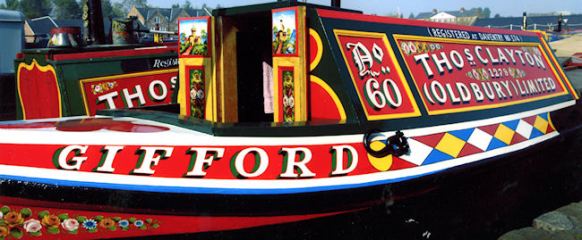
gifford1

The first dab of culture in the experimental petri dish is the simplest of forms, the iambic monometer. If you want to join in with this, it hardly matters what you come up with (and I certainly make no claims for what follows) partly because the exercise is also exploring Glyn Maxwell’s claim that using form will propel the poet towards “words you didn’t expect, matter you never chose, resonances that crept up around you” (from On Poetry (Oberon Books, 2012)). Michael Donaghy often suggested something similar: “Like good poets whom the tyranny of rhyme forces into the discovery of their finest lines, I’m in it for the discovery. If writing poems were merely a matter of bulldozing ahead with what you’d already made up in your mind to say I’d have long ago given it up for something more dignified” (from ‘My Report Card’ – 2000).


Because

I hope

To speak

To her

I walk

Again

Along

The way

The path

Beside

The old

Canal


Here I’m more concerned with choosing regular iambs than making much sense. The hesitating movement of the short lines works quite well.  In the Poetry School sessions we looked at Robert Herrick’s famous poem in this metre, ‘Upon His Departure Hence’, as well as one by Karen McCarthy Woolf (‘Mort-Dieu’). Both poems use the curbed tentativeness of the metre to reflect on mortality – almost as if the form offered a safe form, a containment of (too) powerful emotion.

Now re-organise the same material as a dimeter. This will involve the composition (if that’s quite the word) of further lines simply to complete the form and this will take you into unexpected territory perhaps . . .


Because I hope

To speak to her

I walk again

Along the way


The path beside

the old canal

where children play

and mothers come


The dimeter remains a very brief line (I don’t feel much need for punctuation yet) but here the short reach of each line gives some urgency to the narrator’s hoping to speak to “her”. The reader (as much as the writer at this stage) is wondering who both narrator and hoped-for interlocutor is. The extra material begins to suggest maternal possibilities, partners, other children . . . The “again” of line 3 is also interesting – a recurrent search. Why can’t she be found. What is this need to speak to her? Why come to this location?

Now re-organise further to make a trimeter:


Because I hope to speak

to her I walk again

along the way, the path

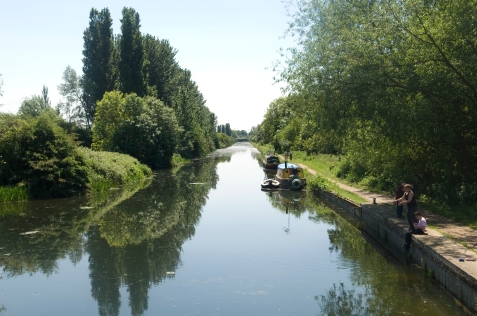
beside the old canal,


where children play and mothers

come, where thistles bloom

in purple knots that grey

and drift across the path.


It feels natural to want to punctuate these lines now with their greater complexity and greater risk of ambiguity. The three beat lines perhaps begin to evoke the pacing of the walker? There is an issue with the 5th line in which (keeping to a strict iambic metre) the word “mothers” ought to be broken across the line break. I’ve decided to allow an extra syllable into line 5, so ending it with a feminine, weak, seventh syllable. Line 6 I’ve therefore left with one syllable short. It’s happenstance but I like the extra dwelling of a reader’s attention on “mothers” (I begin to think the “she’ is a mother, or the narrator may be a mother searching for a female child). The shortening of line 6 which refers to “thistles” also feels right; it introduces a spiky, perhaps threatening image and the shortened line creates an uneasy feel. These undoubtedly ‘fortuitous’ developments are just the sort of thing the poet has a veto over – we decide whether they stand or need to be revised further. Here, I let them stand.

imgres

Next stage is an iambic tetrameter – four iambs per line:


Because I hope to speak to her

I walk again along the way,

the path beside the old canal,

where children play and mothers come,

where thistles bloom in purple knots

that grey and drift across the path,

here strewn with wrappers torn from sweets,

with needles dropped another day,

where users lean and drift, ascend

above the clouds and steeple cock.


Woah! No – I don’t know where this is heading . . . The longer length of line now begins to give a more conversational feel. This four beat line (either with accentual-syllabic or plain stress metre) is probably the most common in English verse. I think of it (and the good old iambic pentameter) as sort of neutral spots on the metrical continuum – neither too tightly bound nor loosely adrift). The greying of the thistles now seems to allude to aging (of the narrator?), certainly to time passing, time on her mind. The sweet wrappers make a clear gesture towards childhood; the discarded needles strike a far more ominous note (if a bit clichéd). Is the narrator seeking a child, no longer a child, has she become involved with drug abuse?


If you want to see this poem developing into an iambic pentameter – and find out (with me) what the poem is really about – I’ll post the remainder of this blog on Monday.

Lots of Poetry, Too Little Cake

breakingsmall

Last Saturday I attended one of the half-yearly poetry events in Palmers Green, north London. These are always very good evenings, these days full of music as well as poetry as the Helios Consort of recorders play before and after the interval. Kevin Crossley-Holland was reading (a superb poet, as well as all his other literary achievements) as was Sarah Westcott (recently published by Pavilion – having just won the Manchester Cathedral Poetry Competition) and Katherine Gallagher, launching her new Arc collection – about which someone called Crucefix has blurbed:

This new collection is bejewelled throughout with haiku-like moments of vivid observation. Her delighted responses – in particular to the natural world – serve to peel away the film of familiarity through which we usually gaze. Yet Gallagher combines such excited observation with a quality of restraint, a respect for what she encounters in a process of self-creation – “from myself into myself” as her epigraph from Rose Auslander puts it. Sequences about her Australian mother and the loss of her brother are imbued with this same gift: life is celebrated in poems that never forget our mortality: “This is time we have underlined, / remembering what we’ve done, where we’re going” (‘Quotidian’).

On the following morning I was taking part in the Bloomsbury Festival, talking about the art of translation with Chris Campbell, Literary Manager, Royal Court Theatre and Gregory Thompson, Creative Entrepreneur in Residence at UCL. Chaired by Geraldine Brodie, Lecturer in Translation Theory and Theatre Translation at UCL, the talk – in the very comfortable, wood-panelled surroundings of the Churchill Room, Goodenough College, London House, Mecklenburgh Square, London – was really wide-ranging from Gregory’s experiences of directing Shakespeare in the Indian sub-continent and the kind of cultural translation that takes place on such occasions to Chris’s translations of drama texts to and from the French and French-Canadian. One issue there is the translation of comic references such as cricket allusions or types of motor cars (I think he suggested a Vauxhall Cavalier equivalent in a French cultural context would be a Renault 21). I thought there was quite a bit of common ground when I was explaining how I fell into translation through the need to stand up and declaim/read/perform translations which I felt did not really convince in English. This is how I began the idea that I might try to translate Rilke’s 9th Duino Elegy many, many years ago – I could not find a version that read well aloud. I still regard that as a key test.

c45407b1ab4103bca137a0808bc8c042

This idea that poetry ought to be read aloud is common enough in most writing workshops but I do wonder how many people really adhere to it. This came up again with my third engagement of the busy weekend – teaching my first session for the Poetry School on ‘music and metre’ on Monday evening. As I explained to the class, formal verse is not especially my thing but it is also an area I have had to teach on various occasions. I kicked off by reading James Fenton’s powerful poem ‘Tiananmen’ – see below – and Auden’s observations about the benefits of form:

images

The poet who writes ‘free’ verse is like Robinson Crusoe on his desert island: he must do all his cooking, laundry and darning for himself. In a few exceptional cases, this manly independence produces something original and impressive, but more often the result is squalor – dirty sheets on the unmade bed and empty bottles on the unswept floor.

I love the swipe at “manly independence” there. Not very surprisingly, this observation is quoted by Stephen Fry in his The Ode Less Travelled (Hutchinson, 2005) which also suggests modern poetry, because of its abandonment of formal constraints is now “laughably easy” to write. Elsewhere Fry describes most contemporary poetry as suffering from anaemia; it’s a lifeless trickle, rhetorically listless . . . Fry doesn’t mind setting himself up like this – and tucked away in the book you’ll also find his appreciation of Whitman, Anne Carson, Denise Riley and many others.

imgres

I told the class, having spoken to a fair number of poets recently about form, that they’d be surprised (or maybe not) how few published poets would confidently declare their own grasp of metrical matters. On the night, we didn’t get along as fast as I’d anticipated – there was good discussion, especially of the areas of inevitably uncertainty in scanning a poem etc – it’s like jazz?? – so I’m looking forward to picking up the themes again next Monday evening with Tony Harrison, Wordsworth, Stevens, Elizabeth Jennings . . .

Now I’m feeling a bit poetry-ed out. Coffee and cake are required . . . after this:


Tiananmen – James Fenton

Tianamen
Is broad and clean
And you can’t tell
Where the dead have been
And you can’t tell
What happened then
And you can’t speak
Of Tianamen.

You must not speak.
You must not think.
You must not dip
Your brush in ink.
You must not say
What happened then,
What happened there
In Tiananmen.

The cruel men
Are old and deaf
Ready to kill
But short of breath
And they will die
Like other men
And they’ll lie in state
In Tianamen.

They lie in state.
They lie in style.
Another lie’s
Thrown on the pile,
Thrown on the pile
By the cruel men
To cleanse the blood
From Tianamen.

Truth is a secret.
Keep it dark.
Keep it dark.
In our heart of hearts.
Keep it dark
Till you know when
Truth may return
To Tiananmen.

Tiananmen
Is broad and clean
And you can’t tell
Where the dead have been
And you can’t tell
When they’ll come again.
They’ll come again
To Tiananmen.

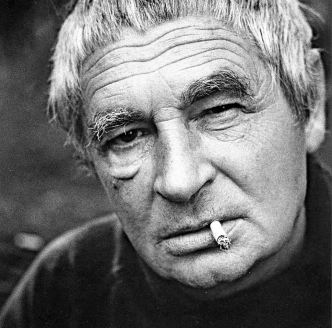
imgres
James Fenton