Judging Poetry Competitions: some notes on the process

I am half way through the process of judging this year’s Segora Poetry Competition. I’ve been lucky enough to judge several such competitions in recent years and in 2015 I published a version of what follows on my blog as a compilation of my thoughts on the judging process. I’m tweaking and re-blogging it here in response to my experience of judging this new competition in 2020. As I have always found, the initial sifting of so many poems can be a slog, but the latter stages are unfailingly fascinating as the best poems – those that set little hooks in you from first reading – gradually rise to the top, their internal coherence emerging, alongside their skills with language, tone and form. So what follows is inevitably a personal take on the business – becoming more so, perhaps, as the process unfolds – but I hope it may cast some light on it for those (of us) tempted to spend hard-earned cash on entering the numerous competitions now running. Follow this link to see more upcoming competitions.

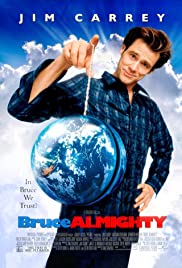
MV5BNzMyZDhiZDUtYWUyMi00ZDQxLWE4NDQtMWFlMjI1YjVjMjZiXkEyXkFqcGdeQXVyNjU0OTQ0OTY@._V1_UX182_CR0,0,182,268_AL_Some films stick in the mind for reasons beyond the cinematic, don’t they? In the 2003 comedy Bruce Almighty, Jim Carey plays the character of God and, along with more obviously useful powers, he has to respond to the prayers of the world. But people are always praying! He rapidly approaches a kind of madness as voices swim around him, clamouring for attention. He takes to reading the prayers in the form of e-mails. He tries to answer them individually but is receiving them faster than he can possibly respond. He decides to set his e-mail account to automatically answer “yes” to all, assuming that this will make everybody happy. Of course, it does not.
Now – a poetry competition judge comparing himself to a character playing God lays him/herself open to some obvious criticism – but I have indeed found the initial phases of judging poetry competitions rather like Jim Carey’s experience. There are so many and such a variety of voices clamouring to be heard and every one of them is heart-felt, recording significant moments in people’s lives. There is a similar sense of responsibility too – the raw nature of much of the writing submitted is impossible to deny. There are moments when I’d like to set my response mechanism to say ‘yes’ to everybody, but the judge’s task has to be how to distinguish submissions as poetry.

What does that mean? The numbers involved are always a bit daunting. Many hundreds of poems have been submitted. Perhaps only 10% of these will demand a further reading after the brutal first sifting. Poems face an early, red stoplight from most judges because the basic poetic elements are not competently done. Here are some of the obvious failings:

  • Competitions are full of pieces where a particular verse form or rhyme pattern tyrannises the sentiment and/or sense. The writer’s submission to this tyranny becomes clear quickly through the contortions imposed on the language to achieve a rhyme.
  • The writer’s choice of language can be devastating to the life of the poem. It just isn’t right to opt for forms of language or abbreviations that died out early in the nineteenth century. Thankfully, this problem seems to be fading as more and more people actually read contemporary poetry books.
  • Choice of diction can also derail an entry if it is doggedly abstract. Sure, there remains much debate about whether it is the narrow English tradition that insists on things rather than ideas – but poems about Fear, Ignorance, Poverty, Eternity and Love which refuse to dip a toe into anything resembling a real life situation are going to find progress hard.
  • A fourth error is using language without being fully conscious of its likely resonance with a reader. A poem using the verb ‘gaslight’ without knowing its current slang meaning or another called ‘Mother’s Pride’ which seems unaware of the loaf of bread, well, they are going to have unanticipated clutter to climb over in any reader’s mind. Louis MacNeice wanted the poet not to be an ivory tower type, but rather “able-bodied, fond of talking, a reader of the newspapers, capable of pity and laughter, informed in economics . . . actively interested in politics”. All a bit Boys Own perhaps, but if this means the poet stays bang up to date with the way words live then he’s right.
download
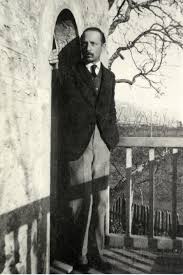
Rainer Maria Rilke

If you are still thinking of submitting to a competition, it’s worth recalling Wordsworth’s formulation – familiar though it will feel to most – that poetry is built from “emotion recollected in tranquillity”. Poems forged in the heat of the moment (and not revised or reviewed) are seldom without their flaws. And this is the kind of distinction Rainer Maria Rilke makes when he denies poetry is composed of feelings. Its constituents (he says) are rather “experiences” which he clarifies as “memories” though even with these, we “must be able to forget them when they are many and one must have the immense patience to wait until they come again . . . Only when they have turned to blood within us, to glance and gesture, nameless and no longer distinguished from ourselves – only then can it happen that in a most rare hour the first word of a poem arises in their midst and goes forth from them”. On the other hand, such recollection can sometimes create an intellectualised distance that may do harm to a good poem. Who said writing a poem was easy?

41Stephen1books
Stephen Spender

Stephen Spender argued that a poet should try to acquire skill and virtuosity through the study and interpretation of other poetic works in the way Mozart and Beethoven did in playing the music of their predecessors. Spender suggests translating poetry is the best possible exercise in interpretation. But the really important lessons (Spender says) are those of the eye, the ear, the athletic/poetic muscles. A poet can go a long way without a developed heart, but, he says, can get nowhere at all without these skills. The poet must ask continually of his lines: ‘Do they make the reader see, or hear, or feel, this experience which I am trying to re-create?’

Reaching the final stages, the judge will be focusing more on positives and hence more precisely on the sense, the story, the thought and feeling of a poem. Personally, I like poems that focus on small things and, in effect, make arguments for the ways in which they communicate the bigger issues that concern us all. I’m with Thomas Hardy in believing that “he used to notice such things” is one of the greatest of compliments. Edward Thomas’ poem about Spring, ‘But these things also’, likewise echoes this focus on what most people tend to overlook:

The shell of a little snail bleached
In the grass; chip of flint, and mite
Of chalk; and the small birds’ dung
In splashes of purest white . . .

download (1)Perhaps one explanation of why the question ‘what is poetry?’ is so difficult to answer is because it is, to a large extent, an art of the negative, of avoidance. The Daodejing says what is rigid and inflexible is a companion of death; what is flexible is a companion of life. I’d guess there would be general agreement that poetry is an art on the side of life. So poetry must eschew the inflexible; we must avoid the posture. And that’s very hard. In judging a competition, one comes across the Wordsworth-posture, the Ginsberg-posture, alongside those of Hughes, Plath, Duffy, Oswald . . . But we also posture like mad in ‘real life’. We may take up the pose of grief, melancholy, love, liberalism, environmentalism . . . For me, the mark of the absence of posturing is an instability, an openness, an awareness of time (which posture tries to deny) and this is something I look for in a good poem. If a poem strikes an attitude my attention diminishes (even if the attitude is one that wants to show a rejection of attitudinising through the hall of mirrors of ironic distancing). When the poem unearths a pulsing, shifting, live relationship between the self and the other, then I am captivated, recognising something that is both commonly human and uniquely personal.
4756
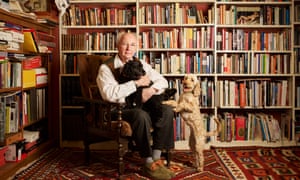
Philip Pullman

But having said all this, I’d assure potential competition entrants that anything resembling a rule is there to be broken. Philip Pullman has said, “We don’t need a list of rights and wrongs, tables of dos and don’ts: we need books, time, and silence. Thou shalt not is soon forgotten, but Once upon a time lasts forever.” So any poem in any form can work its magic. It will haunt its reader for days; it will make me change the way I think and feel; make me see the world differently. Ultimately, a poem contributes to who the reader is becoming. That is an exciting prospect for the writer. It is an even more exciting one for the judge who settles down to read.

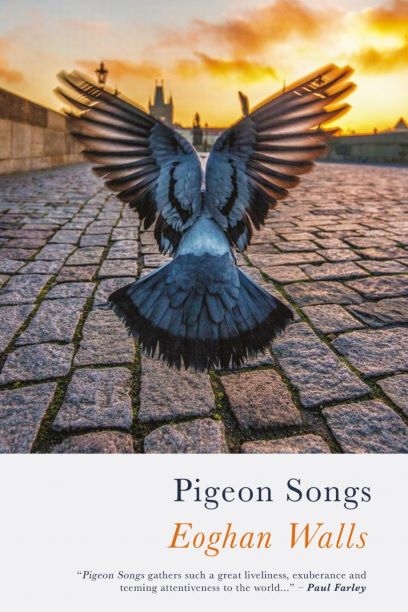
Quickdraw Review – Eoghan Walls’ ‘Pigeon Songs’

Dear Readers,

As I said in my last blog – before we were all locked down – I’ve always enjoyed using this space as an experimental play area, a sand pit in which I can think through ideas about poetry, teaching and translation. In the last couple of years, a lot of this thinking aloud has been done through reviews of new poetry collections. And I have always wanted to give myself (and the book) enough space (usually over 1000 words). But several recent conversations with other writers about how very few poetry books get critical notice these days has persuaded me there is also a place here for shorter reviews – quick drawing in the sense of a rapid sketch of a book, a shooting from the hip. Here’s my second go at this sort of thing.

Eoghan Walls, Pigeon Songs (Seren Books, 2019).

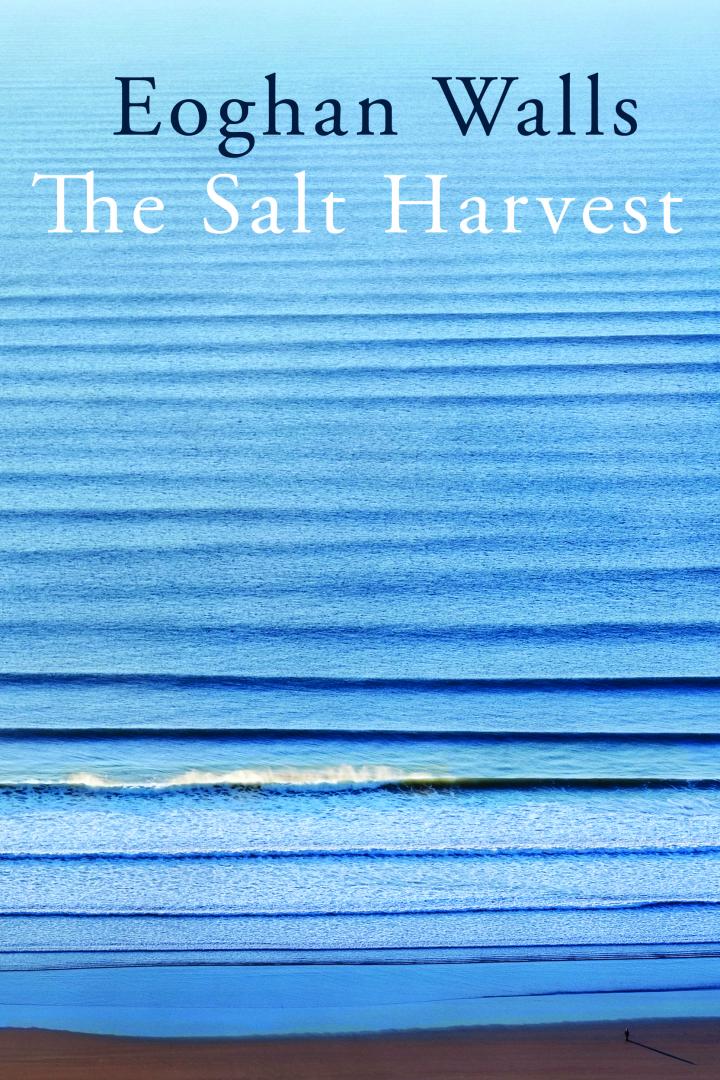
Eoghan Walls’ second collection from Seren Books will make you think hard about how poets use rhyme. As in his earlier The Salt Harvest (2011), Walls reaches as it were by default-setting for rhymes, full, half and oblique, in pretty much every poem. Though the overt forms vary – couplets, triplets, quatrains – he favours longish, driven, consonant-heavy lines and the rhythms of the poems are more about the arrival of the rhyme words than anything else. The overall effect for me is rather double-edged. The achieved musicality is more about a sustained ground bass, a pedal note, or drone (I think sometimes of MacNeice’s 1937 poem ‘Bagpipe Music’) than subtle variations in the reader’s anticipation of harmony, counterpoint or disharmony, of the kind of dynamism and flight that rhyme can evoke.

There is instead a sort of digging-in, a very deliberate gaining of traction which is also reflected in a lot of the subject matters. This may be also reflected in Walls’ bird of choice: the humble pigeon, at once capable of flight (and often rapid flight too) but also the ‘rat of the air’, the urban dweller and scavenger. In a parody of Christopher Smart’s eighteenth-century paean to his cat Jeoffrey, Walls’ ‘Jubilate Columbidae’ praises the pigeon’s flight, shit, panic and feeding habits. The subject matter of Pigeon Songs likewise ranges from touching and gentle poems about the poet’s children to far more brutalist pieces on sex and death, a range matched by a characteristic shifting of perspectives from up-close details to observations on a more cosmic scale. ‘The Principles of Collision’ probably suggests what lies behind these techniques in Walls’ mind: “Once there is a collision you can have an event. / Two things bumping is the way change happens”.

Many of the child-focused poems are excellent: father and daughter fascinated and appalled at the relics in a church; the trials (for both parents and child – I remember it well) of swimming lessons in the local pool; the father carrying the child on his shoulders. ‘To Half-Inchling’ is startling in addressing a miscarried child, imagining a world where she might have grown to “[her] full potential”, a world in which it would have been more “legitimate to mourn”. The use of the rhymed sonnet form here feels very apt, the whole carrying a powerful emotional thrust that is often absent elsewhere. And such dark emotions are never far distant. On holiday in Sardinia, father and daughter cook calamari but later the child wakes “screaming about the dead squid, / whether it hurts to be dead, and if she really has to die”. Part of the father’s response is to point to the stars: “I tell her life is massive”. I don’t know how effective a parenting manoeuvre this proved to be, but it reflects a great deal about this collection: the massive scope and range of life is always present and the shifting of perspectives is an instrument used to try to make sense of what happens.

Which also means that thoughts of death are seldom far away. In ‘De Pneuma’, routine jogging leads to thoughts of car accidents or heart failure, the body, damaged irrevocably is brutally evoked: “the whole meat could be cast like a coat in the ditch”. Walls is drawn to such high dramatic stakes. ‘The Law of the Galapagos’ sees the culling of goats on the island from the poor goat’s perspective, bullets whizzing and splintering until the creature’s “jelled electrics go clinically dead”.

There are strong poems about the poet’s mother and father too. The book is interspersed with right-justified ‘pigeon’ poems and other birds and creatures make regular appearances. But – a bit like Wall’s insistence on rhyme which can dull the ear through a collection of over 60 pages – there is something rather willed about the connections this creates as in ‘The Early Days’ which records a relationship’s beginnings in half-rhyming couplets, each of which includes some allusion to bees. So raindrops falling on a shirt are shoe-horned in by being described as “bee-large”. Despite the blunt factuality of a lot of Wall’s lines, there is often also a poetical effortfulness which I do find distracting.

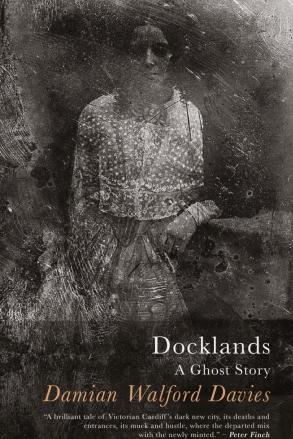
Quickdraw Review – Damian Walford Davies, ‘Docklands’ (Seren)

Dears Readers,

I’ve always enjoyed using this blog as my own experimental play area, a sand pit in which I can think through ideas about poetry, teaching and translation. In the last couple of years, a lot of this thinking aloud has been done through reviews of new poetry collections. And I have always wanted to give myself (and the book) enough space (usually over 1000 words). But several recent conversations with other writers about the very few poetry books that get critical notice these days has persuaded me there is also a place here for shorter reviews – quick drawing in the sense of a rapid sketch of a book, a shooting from the hip. Here’s my first try at this sort of thing.

Damian Walford Davies, Docklands: A Ghost Story (Seren Books, 2019).

Docklands-–-Damian-Walford-Davies-1This is Walford Davies’ fourth book from Seren and it is an ambitious project, combining narrative and lyric form (every poem is 16 lines long, in unrhymed couplets, most in four beat lines). It’s also a dramatic monologue, in effect, as the speaker is a thoroughly unpleasant, arrogant, but haunted architect engaged in several large urban projects in Cardiff between the years 1890 and 1982. Talk about the male gaze, this man epitomizes it. He and his wife have recently buried a child lost in stillbirth (“they wrapped it in a pall // not bigger than my handkerchief”) and while she mourns the loss, he gets on with his work and frequents bars and prostitutes in Cardiff’s docklands. The sympathetic reader is probably going to try to read this man’s cruel and dismissive treatment of his wife (and his exploitative relationships with other women) as his own rather twisted way of dealing with grief. But it’s hard to maintain that view, as Walford Davies is often shockingly good at catching his loathsome attitudes, especially towards women: “This quarter grows on me. / In shabby rooms in Stuart Street // my new friend swears // she’ll tackle anything for oranges”.
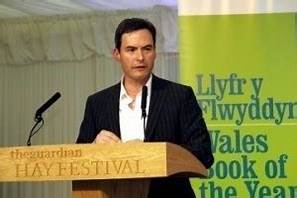
 The ghost story element arises when the architect starts to see a young girl on the streets of Cardiff. She is initially a haunting – but probably real – presence (perhaps somehow also related to the lost child?) but it eventually emerges that she is “Dead Em Foley”, an abused girl, murdered by her father a few years before. This narrative device yields up brief thrills for the reader, inexplicable sightings, eventually moments of dialogue between the two (it’s not clear if he tries to take the relationship any further). But through the five sections of the book, the architect’s wife seems to surface from her grief, returning to polite society (“Ah, Eleanor! So good to see you // out”) and there are signs of a warming of the marital relationship too. These indications seem to parallel the disappearance of Em Foley’s ghost too, though the architect memorialises her in a statue for a municipal fountain. The man sounds pleased that the local people “came out / to recognise a dead girl risen” when the statue is unveiled though it’s not clear if Walford Davies intends this as a more profound recognition of those marginalised by bourgeois Cardiff or whether it is a more personal and erotic tribute to the girl by the architect.

thWalford Davies, in an end note, talks of the ambiguity of the female figures – wife, prostitutes, dead girl – who do tend to float without clear identity, disembodied, through the text. It adds something to the ghost-like quality of the book, but the loss is any more powerful evocation of them. Also, the choice of brief lyrics to develop what could well have been a novel, gives the reader some powerful moments but few prolonged engagements with any of the characters. And the nature of the central male figure is problematic because of his downright unpleasantness (though, I suppose, Browning managed it in ‘My Last Duchess’) and in 2020 there will be plenty of readers who find such a portrayal an absolute bar to reading. I don’t think Walford Davies ironises and critiques his male figure enough, or clearly enough.

Everything Moving: Tamar Yoseloff’s ‘The Black Place’

Last week I attended the launch of Tamar Yoseloff’s new collection, published by Seren Books. Tammy and I have known each other for a long while, are both published by Seren and, in her role at Hercules Editions, she has just published my own recent chapbook, Cargo of Limbs. So – in the small world of British poetry – I’m hardly an unconnected critic, but I have the benefit of having followed her work over the years, reviewing her most recent New and Selected, A Formula for Night (2015) here.

In an earlier blog post, I spoke – in rather tabloid-y terms – of the tension in Yoseloff’s poems between the “sassy and the sepulchral”. In 2007’s Fetch (Salt), there were “racy, blunt narratives” which in their exploration of female freedom, restraint and taboo made for vivid, exciting reading. The other side of her gift inclines to an “apocalyptic darkness”, a preoccupation with time, loss, the inability to hold the moment. In A Formula for Night, the poem ‘Ruin’ invented a form in which a text was gradually shot to pieces as phrases, even letters, were gradually edited out, displaying the very process of ruination. Interestingly, The Black Place develops this technique in 3 ‘redaction’ poems in which most of a text has been blacked out (cut out – see Yoko Ono later), leaving only a few telling words. A note indicates the source text in all three cases was the booklet Understanding Kidney Cancer and the author’s recent experience of illness is an important element in this new collection.

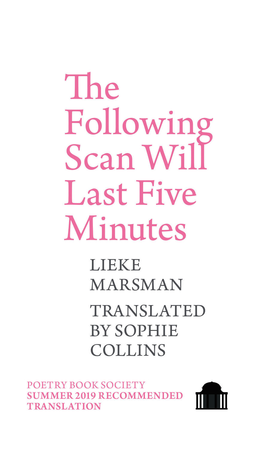
But unlike, for example, Lieke Marsman’s recent The Following Scan Will Last Five Minutes (Pavilion Poetry, 2019 – discussed here), Yoseloff’s book is not dominated by the experience of illness (and one feels this is a deliberated choice). The book opens with ‘The C Word’ which considers the phonetic parts of the word ‘cancer’, as well as its appearance: “looks like carer but isn’t”. But – within its 12 lines – Yoseloff also considers the other C word, “detonated in hate / murmured in love”. The poem is really about how an individual can contain such divergent elements, “sites of birth / and death”. So unanticipated personal experience is here being filtered through the matrix of this writer’s naturally ambivalent gift.

Illness re-emerges explicitly later in the collection, but for much of it there is a business as usual quality and I, for one, am inclined to admire this:

I refuse the confessional splurge,

the Facebook post, the hospital selfie.

I’m just another body, a statistic,

nothing special. Everyone dies –

get over yourself.

So Yoseloff gives us a marvellous send-up of Edward Thomas’ ‘Adlestrop’ in ‘Sheeple’, a central place on the darker side of Yoseloff-country: “The heartland. Lower Slaughter”. There is urbanite humour in ‘Holiday Cottage’ with its “stygian kitchen”, bad weather, boredom and kitsch:

We stare at the knock-off Hay Wain

hung crooked over the hearth

and dream of England: the shire bells,

the box set, the M&S biscuit tin

‘The Wayfarer’ is one of many ekphrastic poems here – this one based on a Bosch painting – but the “sunless land” is patently an England on which “God looked down / and spat”. These are poems written in the last 3 years or so and, inevitably, Brexit impinges, most obviously in ‘Islanders’ (“We put seas between ourselves, / we won’t be rescued”) but the cityscape equally offers little in the way of hope. There is a caricaturing quality to the life lived there: everything “pixilates, disneyfies” (‘Emoji’) and gender relationships seem warped by inequitable power, by self-destructive urges and illness: “I’d super-shrink my dimensions, / wasting is a form of perfection” (‘Walk All Over Me’).

Perhaps ‘Girl’ shows us the figure of a survivor in such a hostile environment, her energy reflecting those female figures in Fetch – “a slip, a trick, a single polka dot” – but the darkness seems thicker now, the lack of lyricism, the impossibility of a happy ending more resolved:

She’s good for nothing because nothing’s

good: sirens drown out violins

and crows swoop to carnage in the street.

As the blurb says, the book boldly eschews the sentimental sop, the capitalist hype, for truths that are hard, not to say brutal. ‘Little Black Dress’ takes both the archetypal ‘girl’ and the author herself from teen years to widowhood in a dizzyingly rapid sonnet-length poem:

drunk and disorderly, dropping off bar stools one

by one, until the time arrives for widow’s weeds

and weeping veils, Ray-Bans darkening the sun.

And it is – unsurprisingly – mortality (the sepulchral) that eventually comes to the fore. A notable absence is the author’s mother, who has often been a powerful presence in previous books. Here she re-appears briefly in ‘Jade’. The stone is reputed to be efficacious in curing ailments of the kidneys and a jade necklace inherited from Yoseloff’s mother leads her to wonder about the inheritance of disease too: “a slow / release in her body, passed down, // down”. Both parents put in a fleeting appearance in the powerful sequence ‘Darklight’, the third part of which opens with the narrator standing in a pool of streetlight, “holding the dark / at bay”. She supposes, rather hopelessly, that “this must be what it’s like to have a god”. Not an option available to her; the dark holds monsters both within and without and not just for the child:

                                                Back then

my parents would sing me to sleep;

now they’re ash and bone. Our lives are brief

like the banks of candles in cathedrals,

each a flame for someone loved;

It’s these thoughts that further the careful structuring of this collection and return it to the experience of a life-threatening illness. ‘Nephritic Sonnet’ is an interrupted or cut off – 13 line – sonnet that takes us to the hospital ward, the I.V. tubes and – as she once said of the city – the poet finds “no poetry in the hospital gown”. Except, of course, that’s exactly what we get. The determination or need to write about even the bleakest of experiences is the defiant light being held up. Yoseloff does not rage; her style is quieter and involves a steady, undeceived gaze and also – in the sequence ‘Cuts’ – the powerful sense that (as quoted above) “I’m just another body, a statistic, / nothing special. Everyone dies”.

It’s this sense of being “nothing special” that enables ‘Cuts’ dispassionately to record very personal experiences of hospital procedures alongside the contemporaneous facts of the Grenfell Tower fire and (another ekphrastic element) a 1960s performance piece by Yoko Ono called ‘Cut Piece’. These elements are ‘leaned’ against each other in a series of 13 dismembered sonnets, each broken up into sections of 6/3/4/1 lines. The fragmentary, diaristic style works well though there are risks in equating personal illness with the catastrophic accident and vital political questions surrounding Grenfell. Ono’s performance piece offers a further example of victimhood, one more chosen and controllable perhaps. What’s impressive is how Yoseloff avoids the magnetic pull of the ego, displaying – if anything – a salutary empathy for others in the midst of her own fears.

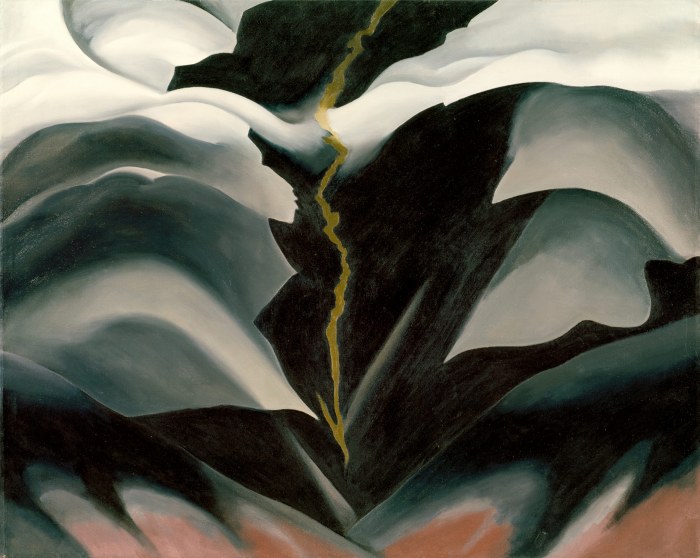
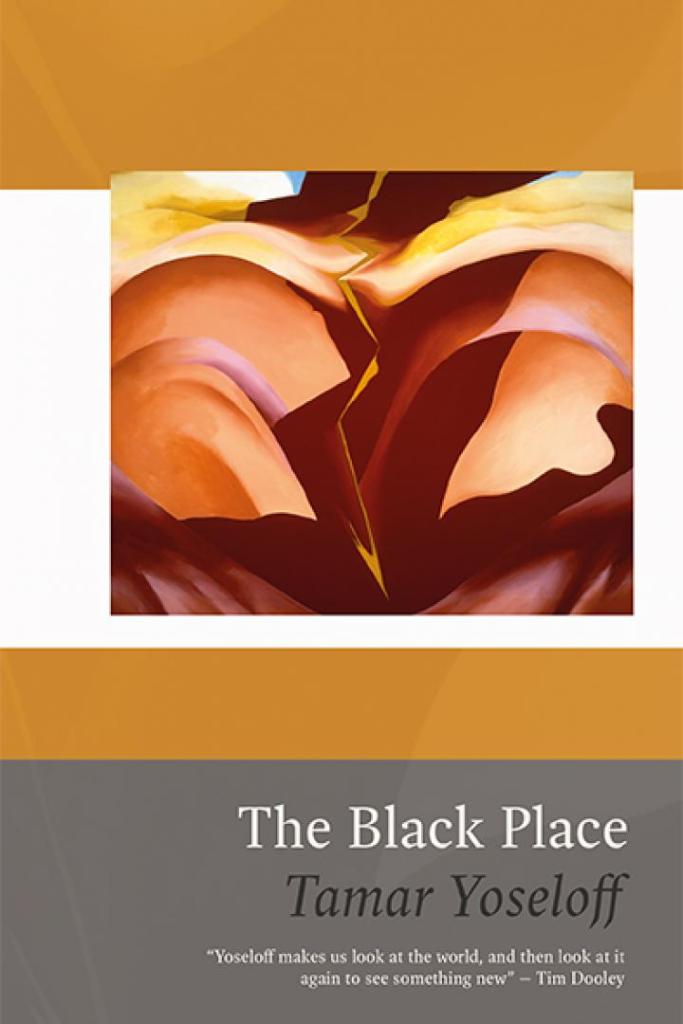
The book is titled after a Georgia O’Keefe picture, reproduced on the cover. O’Keefe’s steady gaze into the darkness created by the jagged relief of the Navajo country is something to which Yoseloff aspires, though it “chills me / just to think it into being”. It is the ultimate reality – a nothing, le néant – though like the ultimate presence of other writers (Yves Bonnefoy’s le presence, for example), can at best only be gestured towards:

We’ll never find it; as soon as we arrive,

the distance shifts to somewhere else,

we remain in foreground, everything moving

around us, even when we’re still.

Along such a difficult path, Yoseloff insists, O’Keefe’s art found “the bellow in a skull, / the swagger in a flower”. And, even in the most frightening brush with her own mortality, the poet will follow and does so in a way that is consistent with her own nature and work over many years.

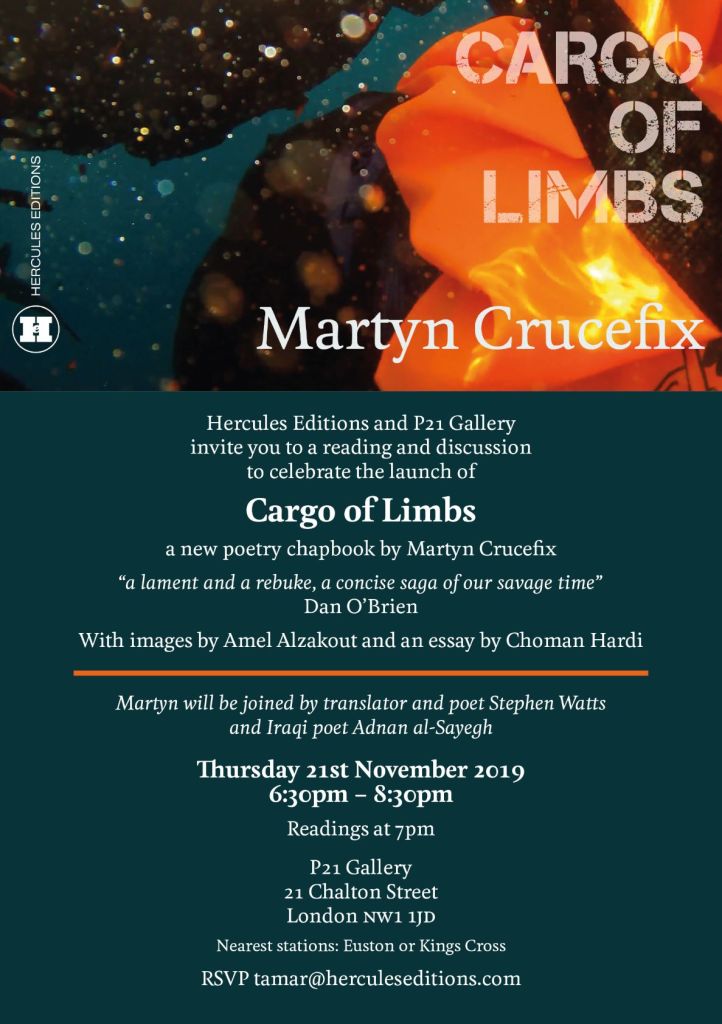
‘Cargo of Limbs’ launches Thurs 21st November

Apologies for the relative silence from my blog. I have been busy preparing and working to propel into the world two new books of poetry. The first out has been These Numbered Days, my new translations of the GDR poet, Peter Huchel, published by Shearsman Books.

The second book will be published by Hercules Editions, It’s called Cargo of Limbs more details of it can be found here. I’ll also post the launch event details below – it’s an open and free event and I would be delighted to see you there.

A Workshop with John Keats

If you ask them, most teachers are very happy, occasionally, to replace their usual mask with the one of an eager student. I don’t often get to participate in writing workshops as a consumer, but when I do it’s always fascinating. For the last one I took part in, I chose it because of its intriguing promise to use Shakespeare’s work as its starting point. Last weekend I was drawn to Amy E. Weldon’s workshop at Keats House which promised to do the same with Keats’ work.

Chester Room resized

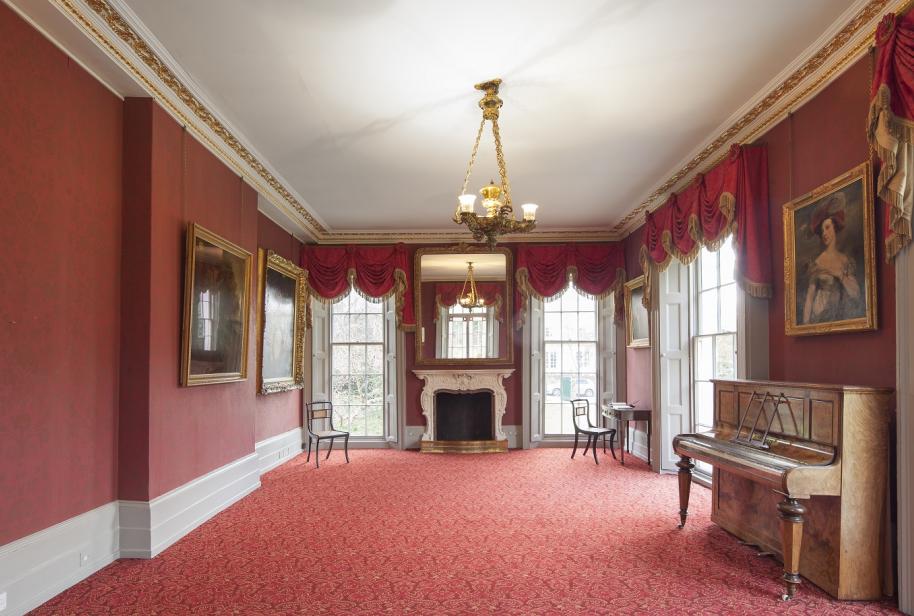
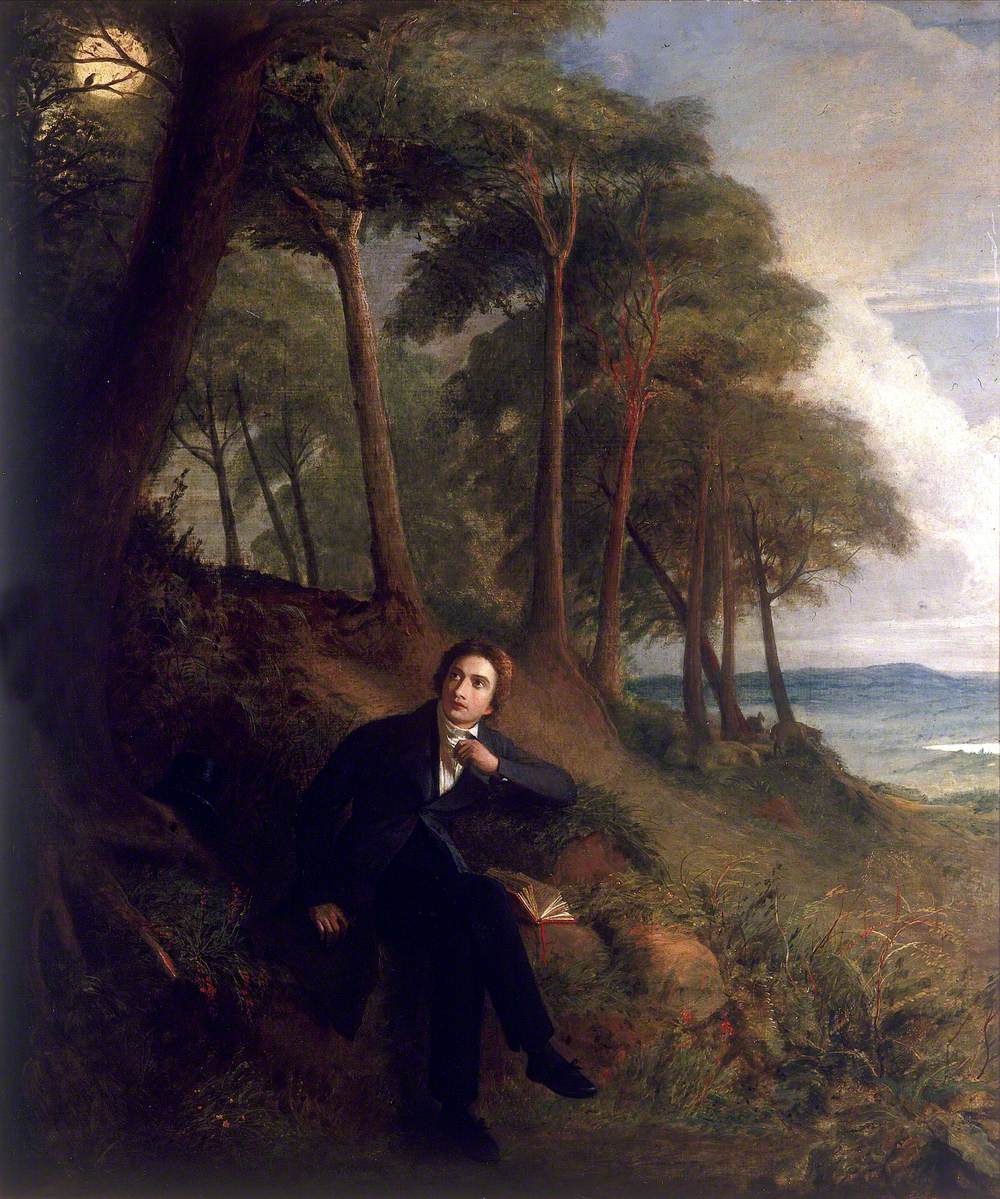
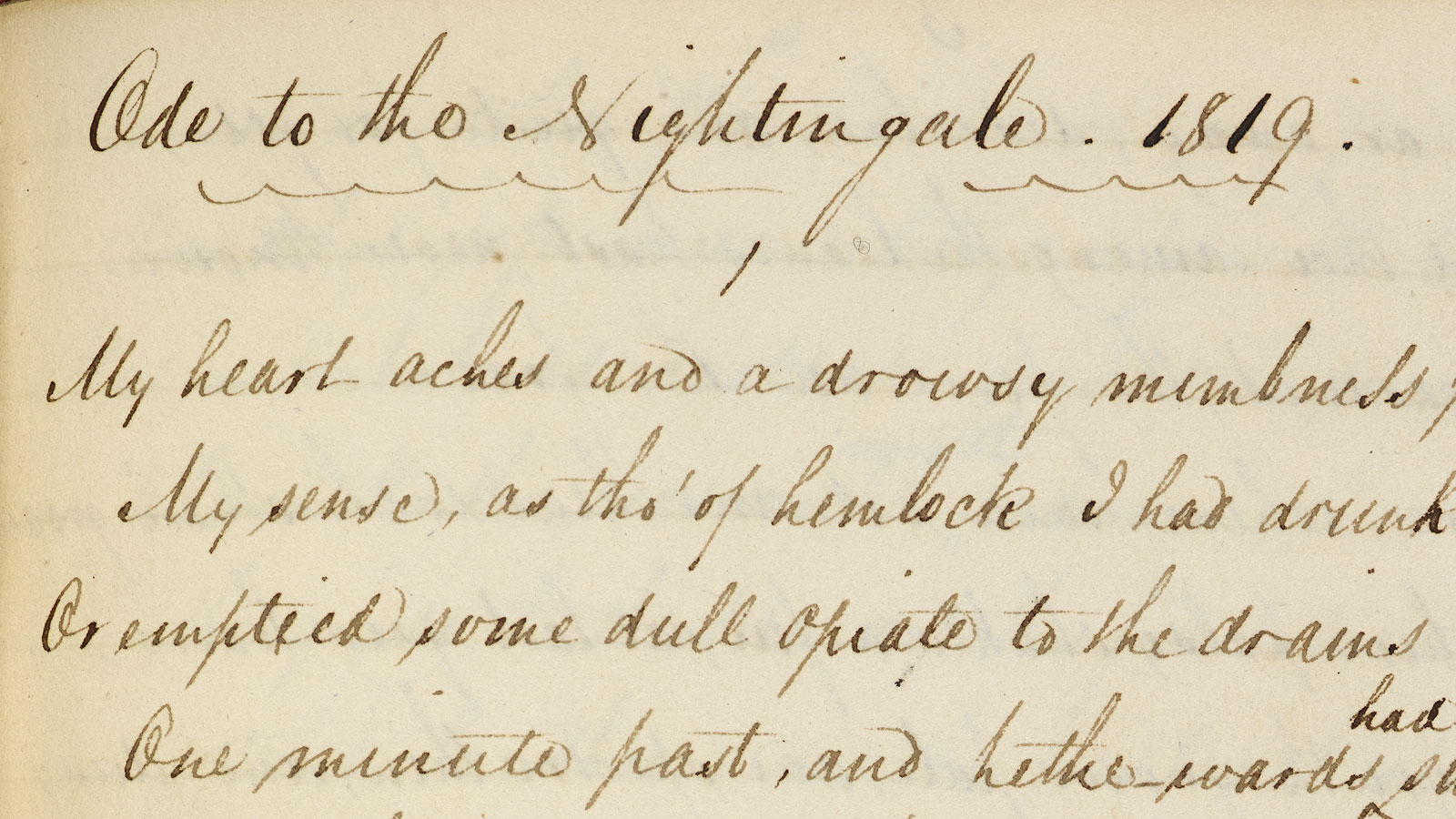
This event was part of Keats House’s bicentenary celebrations and a dozen of us gathered in the atmospheric Chester Room on a sunny day (Keats gazing down at us from Joseph Severn’s painting on the wall). Amy Weldon – a Professor of English at Luther College, USA, whose book on creative writing has recently been published by Bloomsbury – was very good at reminding us of the presence of ‘Brother John’ in the surrounding fabric of the house and its beautiful gardens, where he wrote his ‘Ode to a Nightingale’. Probably no-one there – teachers, journalists, writers of poetry and teen fiction, autodidacts – really needed it, but she also kicked off with an enthusiastic reminder of the importance of “books and ideas”. And it was a number of Keats’ own ideas – as expressed in his letters – that we discussed first of all.

Severn, Joseph, 1793-1879; Keats Listening to a Nightingale on Hampstead Heath

I’ve written elsewhere on this blog about the importance of Keats’ ideas for my own work and it powerfully struck me again, joining Amy and the other workshoppers in considering them, how coherent they are, despite being expressed and developed in scrawled letter form over a period of 2 or 3 years. From his ‘taking part’ in the sparrow’s existence, or that of the stoat or field-mouse, to the belief that poetry ought not to startle or amaze with itself (but with its subject), to his understanding that “extensive knowledge” is what gives a writer the kind of shoulders that are sufficiently “fledged” to enable creative flight, to his brilliant, improvised description of the gathering of such knowledge in the letter written in Spring 1819. The latter is the vale of soul-making letter to his brother George in which our identity (Keats’ word is ‘Soul’) is accumulated/created through the heart’s emotional encounters with the world. Without such encounters – the sparrow, the stoat and field-mouse, and this is what he means by extensive knowledge, we must extend ourselves in such encounters with the Other – we are not able to suck an Identity from experience and – like children who die tragically young – we have had “no time to learn of, and be altered by, the heart”.

Such encounters – vigorously and passionately advocated by the workshop leader – formed the basis for the creative side of the rest of the day. We were sent outside to roam around the garden in search of sensory images, in particular, the May-time flowers in their blooming colours and scents, the birdsong, the noise of traffic or quiet conversations of other visitors, the smooth or veined surface of leaves, the rough gravel paths. On the day, I didn’t taste anything myself – perhaps others successfully used all five senses! We jotted as if our lives depended on it – the task made easier by Amy’s insistence on the messiness of writers’ notebooks, on the provisional nature of whatever it was we were writing.

crop-keats-ode-to-a-nightingale

Amy’s approach on this occasion was to direct us towards fairly openly/widely-defined tasks – as in this first one – rather than setting out a framework within which to work. Such frameworks might be formal or linguistic (repetitions, the use of particular words and so on) or models derived from other writers and can often lead workshop participants towards experimenting, bumping us out of our usual modes, forms and tones. Nevertheless, we all returned from the task with plenty of notes and – for those who attend such events – Amy’s suggestions as to next steps were familiar enough. Circle the “interesting” moments in what you have written down (interesting here is wholly self-defined). Find and remove editorial (directive) words like ‘beautiful’. These latter tend to be adjectives and adverbs and, if not removed, they were to be replaced with more directly sensory words – so not ‘beautiful’ but ‘lime green’. Another suggestion – which I found very difficult to put into practice – was to remove all words of more than one syllable. But you can see the direction of travel here: the valuing of plainness and the directness of sensory experience over anything close to judgment or the writer looking to ‘persuade’ the reader.

dav

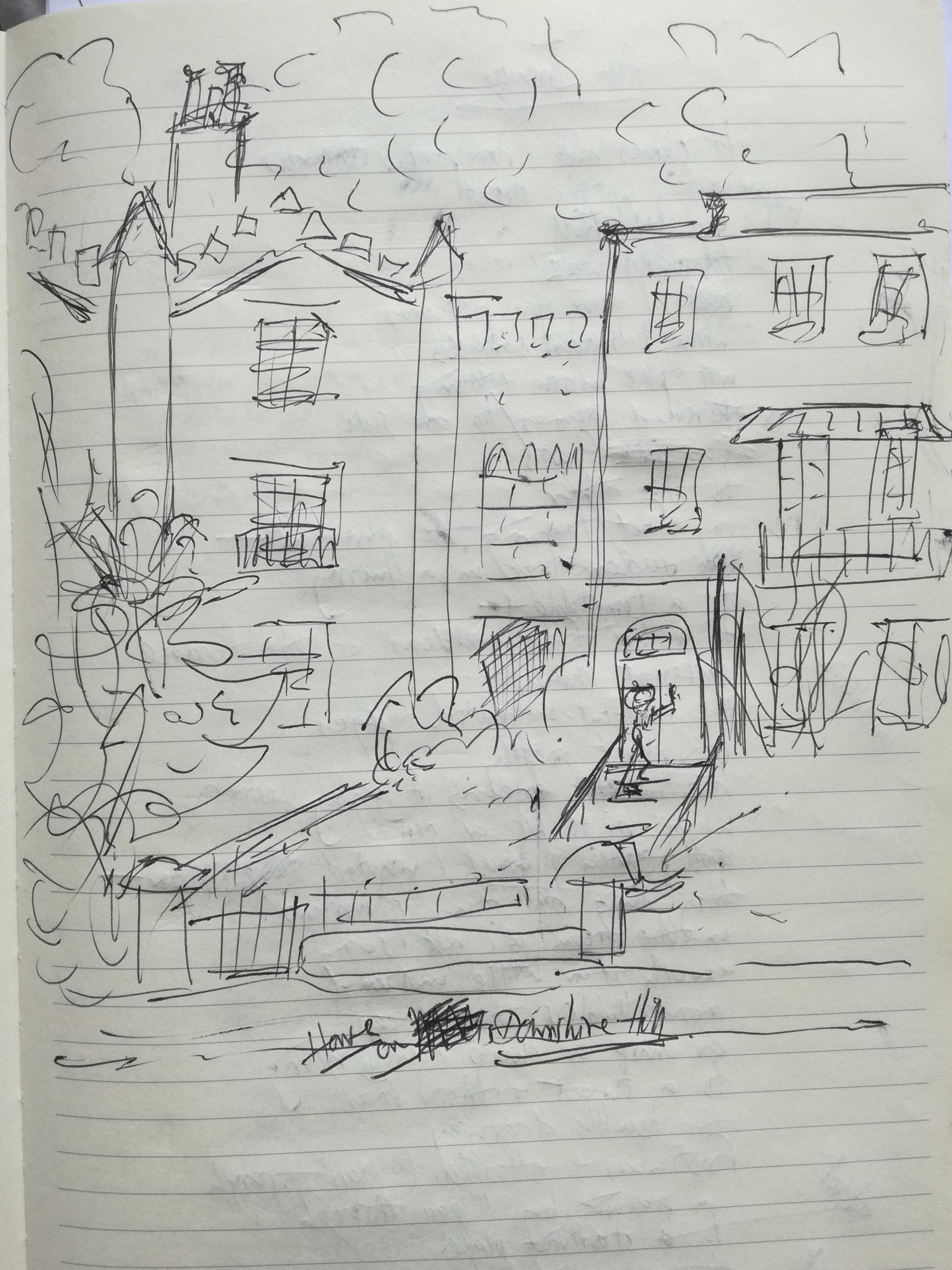
During lunchtime – apart from feeding and drinking – our tasks were to make a list of ten things we “noticed” and to actually make an attempt to draw one thing. In each case – Amy was always clear on this – anything was to be grist for the mill, so we had to resist bringing in censorship or evaluation: two people wearing identical hats; the type of cakes on sale down the road; overheard comments from passers-by; what they were promoting at Keats Pharmacy near the station. I drew a house on Devonshire Hill. Very badly.

Once we’d gathered again, Amy quoted John Ruskin on the value of drawing, I think to the effect that even writers ought to try to draw as in doing so they begin to see more “brutally” or clearly. I can’t find the actual quote itself but, having drawn my house on Devonshire Hill, I can testify that he’s right. It makes you look first – language comes second. However dismal the results, I’ll try drawing again. We also shared some of our ten observations – though interestingly neither the observations nor the drawings were developed any further on this occasion.

download (2)

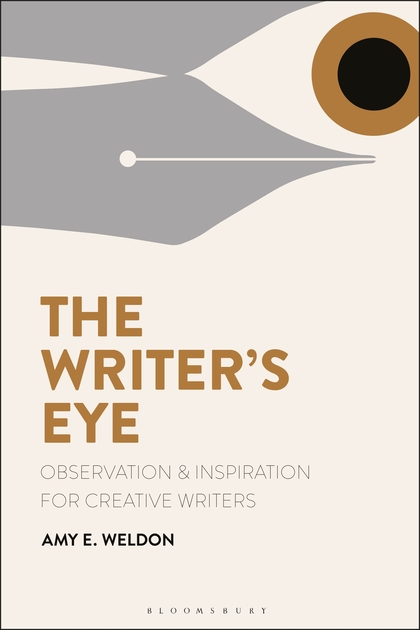
Instead we read an extract from Amy’s book, The Writer’s Eye. The extract suggested that an ‘image’ is a mental picture (probably from the past) that releases emotions into your mind in the same way as a bunch of mint leaves from a garden releases flavour and colour when steeped in water (good image). These sorts of mental images can be starting points for poems or stories – much more so than (the common colloquialism of) starting with an ‘idea’. The latter tend to be dead, whereas the ‘image’ is by definition enlivened with emotions. So our next task was to find such an image in ourselves and to write on it (again our instructions were open as opposed to delimited or framed). Later we had the chance to re-cast what we had written – perhaps re-starting from ‘interesting’ things we had again circled ourselves.

There had so far been no reading round of anything we’d written (apart from some of the 10 things observed over lunchtime). Eventually, we were put into pairs to give some feedback on the final piece written, now read aloud. Amy’s instructions here were interesting. The listener was only to offer two types of comment. The more positive one was in the form of ‘More like this’. And to express reservations, rather than ‘I don’t like this’ or ‘I don’t get this’, we were to say simply, ‘This stops me’. I thought both these formulations worked well and I would use them again.

download (1)

It was a good day and I’m sure we all came away with several pages of material to work on. One of Amy’s stories stuck in my mind and, though about a prose writer, is applicable to poetry too. A friend of hers goes to a burger joint. Over the grill, with his back to the customers, the owner is flipping burgers, not looking round. The friend gives his order. Still the guy goes on flipping burgers, not looking round, not responding. After a moment or two, the friend orders again, verbatim, just to be clear what he wants, perhaps just a little louder. Still without turning round, the owner says simply: ‘Yuh said that already’. The writer friend, I presume, did get his burger, but he also came away with the guy’s phrase as a memorable maxim for those of us who write, then out of our anxiety to communicate, to be understood, write it again: ‘Yuh said that already’. Time to pick up your editing pen . . .

9781350025318

Explaining Robert Frost’s ‘Education by Poetry’

An earlier post in which I talked my way through Frost’s essay ‘The Figure a Poem Makes’  has proved to be one of my most visited pieces. As both teacher and poet, I wanted to explore Frost’s often teasing pronouncements and here I want to do the same with his longer essay, ‘Education by Poetry’. This was originally a talk delivered at Amherst College. It was subsequently revised for publication in the Amherst Graduates’ Quarterly (1931). Frost also separately printed an extract from the conclusion of the essay under the title ‘The Four Beliefs’. Frost’s full text can be accessed here.   In the essay, Frost argues that nothing (other than mathematics)is known in itself – our knowledge is only via relations. So we must live by crediting metaphors of self, love, art, nation and deity, among others. Yet all these break down at some point and it this awareness that education ought to provide us with. There is a clear connection to Frost’s idea of a poem as a “clarification of life [. . .] a momentary stay against confusion” (‘’The Figure a Poem Makes’).


download

Paragraphs 1-7

Frost does not do rebarbative. Even when ultimately – as here – he has complex and profound issues to discuss, he invites us in and we follow trustingly. Here, he lulls us with the idea that he will “urge nothing”, will merely consider and describe. Only once he has finished will we grasp that his sometimes infuriating reluctance to commit lies at the core of his thinking.

His subject is how poetry is treated in American education. One approach is to bar it which, he admits with full-on irony, “takes the onus off the poetry of having to be used to teach children anything”.

Only slightly less ridiculous is the method of other institutions which permit a few examples of traditional poetry but “bar all that is poetical in it by treating it as something other than poetry”. What Frost means by “poetical” emerges later but here he mocks the way that poems are treated as no different to other conventional knowledge-based texts (“science”) or are examined merely for their linguistic and technical illustrations (“syntax, language”).

In a passage that all English teachers will recognise, Frost ironically concedes that education treats poetry in this way in large part because we have to submit marks for assessment. The brute simplicity of a marking regime has its attractions, but it inevitably narrows our focus until we mark for little else but “for accuracy, for correctness”. Still keeping what constitutes the “poetical” up his sleeve, Frost tempts us on by suggesting that such accuracy is “the least part of my marking. The hard part is the part beyond that, the part where the adventure begins”. The adventure is the real nature of a poetic text.

The Big Idea

Paragraphs 8-9

Having considered the abolition and the denaturing of poetry as ways of dealing with its “nuisance” value in education, Frost considers a third way of neutralising it. Mockingly once more, he describes those who accept poetry as a separate discourse but assign it to a “nowhere”, exile it to the “flowery”, to a place diametrically opposed to the “rigorous and righteous”. Poetry here becomes mere entertainment with no truth value, no concern for, or capacity for, knowledge. Poetry occupies only that part of the curriculum that “scatter[s] brains over taste and opinion” but this is hard to assess. Teachers may resort to “a general indefinite mark of X” in such courses and if a marking regime cannot be imposed then such a course can hardly be graced with the description of ‘education’. Frost’s tone is simultaneously sarcastic and passionately concerned: “How shall a man go through college without having been marked for taste and judgment? What will become of him? What will his end be? He will have to take continuation courses for college graduates. He will have to go to night schools”.

Coming closer to his real intention, Frost really does lament this lack of education in taste and opinion. Look at the rising seriousness of concern in this passage: “they have not been educated enough to find their way around in contemporary literature. They don’t know what they may safely like in the libraries and galleries. They don’t know how to judge an editorial when they see one. They don’t know how to judge a political campaign”.

This is a key moment because Frost makes it clear that for all his self-deprecatory tone, the foolery and sarcasm, he is leading us to a declaration that education does have a responsibility to prepare young people to be citizens as well as members of a skilled work force. Frost expects education to inculcate interpretative skills and too many Americans leave school/college ill-equipped to “know when they are being fooled by a metaphor, an analogy, a parable”. This is not science, nor is it merely syntax or language: “metaphor is, of course, what we are talking about”. For Frost, an understanding of how metaphor works is a key part of understanding the world (he will explain this later in the essay) and an understanding of metaphor is best learned through a study of how poetry works. Education about metaphor is education through poetry and “Education by poetry is education by metaphor”.

Paragraphs 10-11

I find the next two paragraphs hard to follow. Frost’s end point is to return to the importance of metaphor but here he detours through the idea of enthusiasm. As much as taste, enthusiasm is not something the academy can easily mark, but Frost wants it, or at least he wants enthusiasm “taken through the prism of the intellect”. This prism metaphor suggests that enthusiasm, when processed through the intellect, refracts a pure-blooded enthusiasm (Frost calls this latter “crude” and likens it to the “oh’s and ah’s” of someone admiring – without any thought? – a sunset). Such a refraction gives rise to a continuum of different levels of enthusiasm, from “something of overstatement, something of statement, and something of understatement”. The prism of the intellect is now re-named as “an idea”. I think Frost wants a not-unsurprising blend of passion and thought in his enthusiasm – neither cold assessment (marking?) nor the oh’s and ah’s of thoughtless fanaticism.

flowermoonPNG[1]

Paragraphs 12-14

Frost now returns to his main theme via a slight revision of his thought, suggesting he’s really been discussing “enthusiasm tamed by metaphor”. His next point is much clearer: “I do not think anybody ever knows the discreet use of metaphor, his own and other people’s, the discreet handling of metaphor, unless he has been properly educated in poetry”. Metaphor is the prism (spawned from intellect, something of an idea) through which our emotional responses are projected to achieve knowledge. But Frost is convinced that an awareness of this fact is not shared equally amongst us and that education through poetry will serve to increase this awareness.

Now Frost begins to talk more clearly about metaphor itself. The importance of it lies in the fact that it “begins in trivial metaphors, pretty metaphors, “grace” metaphors” but (as his essay argues) metaphor also “goes on to the profoundest thinking that we have”. Frost talks elsewhere of what Tim Kendall calls “ulteriority”, glossed here as the method of poetry of “saying one thing and meaning another”. The way Frost discusses this he is sure it is not an abstruse poetic idea but a day to day, almost instinctive human preference: “People say, “Why don’t you say what you mean?” We never do that, do we, being all of us too much poets. We like to talk in parables and in hints and in indirections—whether from diffidence or some other instinct”.

untitledFrost wants to make big claims for metaphorical thinking: “I have wanted in late years to go further and further in making metaphor the whole of thinking”. He allows the exception of “mathematical thinking” but wants all other knowledge, including “scientific thinking” to be brought within the bounds of metaphor. He suggests the Greeks’ foundational thought about the world, the “All”, was fundamentally metaphorical in nature, especially Pythagoras’ concept of the nature of things as comparable to number: “Number of what? Number of feet, pounds and seconds”. This is the basis for a scientific, empirical (measurable) view of the world and hence “has held and held” in the shape of our still-predominating scientific view of it.

Paragraphs 15-19

Frost refers to a visiting scientist who tried to mix spatial and temporal metaphors: “The two don’t go together”. Another such modern metaphor is that a thing is “an event”. Another is that space “is something like curved”. Another is that individual particles possess a freedom. Another is the “metaphor of evolution” or indeed that the whole universe, the whole of everything, “is like unto a growing thing”. Frost wants to alert his audience to the role of such metaphors – often unrecognised as such – in both our everyday and more refined scientific views of the world. He briefly dwells on the metaphor of evolution, accepting its brilliance (in terms of its still-continuing applicability) but insisting that even this “will break down at some point”.

evolution

Paragraph 20-23

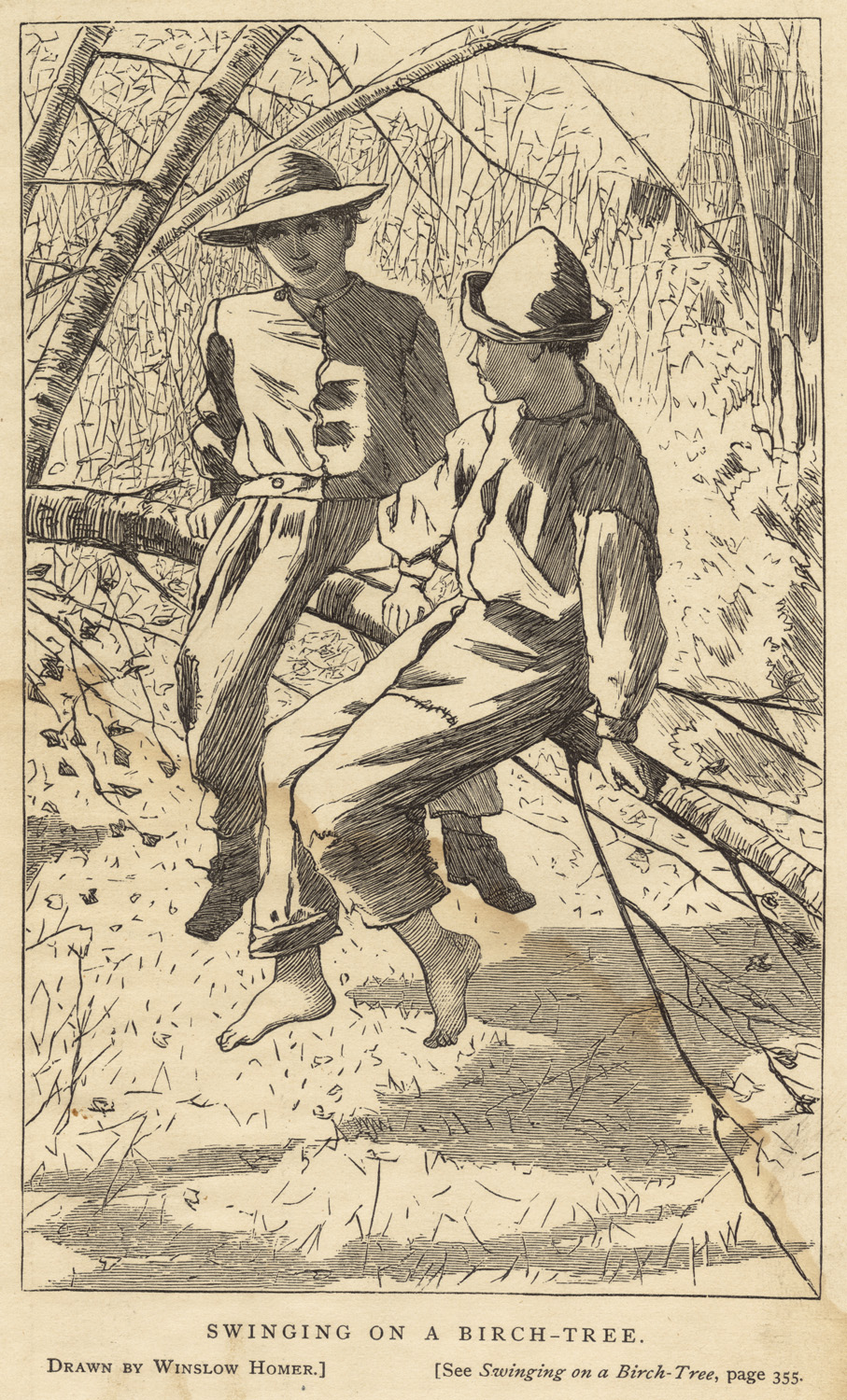
These are the key paragraphs. Frost argues that our lack of understanding of how metaphor works will leave us “not safe”. We must understand “figurative values” and so be able to assess “the metaphor in its strength and its weakness”. In an image that brings to mind his poem ‘Birches’, he explains we will not “know how far [we] may expect to ride it and when it may break down”. The point is that it will break down (the boy riding the birch always comes back to earth) and education ought to give us the experience and the equipment to recognise a “good metaphor, as far as it goes, and [we] must know how far”. As I understand it, Frost wants us to approach human knowledge more tentatively, more sceptically, recognising its provisional nature because it is based in metaphors which will at some moment break down and need to be replaced by a better, more “brilliant” metaphor. The study of poetry offers us experiences of figurative thinking and (if we think of Frost’s poems) the sense of provisionality they often inculcate.

5727567383_f719380140_oThat we have a tendency to forget this provisional nature of knowledge and understanding seems to be Frost’s next point. We take up arms (as it were) by taking up certain metaphorical ideas and making totems of them. He berates Freudianism’s focus on “mental health” as an example of how “the devil can quote Scripture, which simply means that the good words you have lying around the devil can use for his purposes as well as anybody else”. That this is dangerous (makes us not safe) is illustrated by the passage of dialogue Frost now gives between himself and somebody else. The other argues that the universe is like a machine but Frost (adopting a sort of Socratic interrogation technique) draws out the limits of the metaphor, concluding he “wanted to go just that far with that metaphor and no further. And so do we all. All metaphor breaks down somewhere. That is the beauty of it. It is touch and go with the metaphor, and until you have lived with it long enough you don’t know when it is going. You don’t know how much you can get out of it and when it will cease to yield. It is a very living thing. It is as life itself”.

Paragraphs 24-26

Frost now returns us to the school room and what it is for a student to “Think”. It is now clear that this frequent exhortation from teachers really means “just putting this and that together; it is just saying one thing in terms of another”. In a clear allusion to his poem ‘After Apple-picking’, Frost says to explain to students about the workings of metaphor is to “set their feet on the first rung of a ladder the top of which sticks through the sky”. The most significant example of such metaphorical thinking is “the philosophical attempt to say matter in terms of spirit, or spirit in terms of matter.” This – like all metaphors in the end – is an attempt that must fail but “it is the height of poetry, the height of all thinking, the height of all poetic thinking, that attempts to say matter in terms of spirit and spirit in terms of matter”. Frost clearly feels each realm is more clearly understood via metaphors of the other but (speaking in the 1930s) the main danger he foresees is a too-materialist vision of the world: “The only materialist – be he poet, teacher, scientist, politician, or statesman – is the man who gets lost in his material without a gathering metaphor to throw it into shape and order. He is the lost soul”. He is lost because blind to metaphors.

Paragraphs 27-37

Frost starts to look at metaphors through some “trivial ones” from the Odyssey – a shield and seeds of fire. These are the raw materials for an education by metaphor and recall his definition of a poem as “a momentary stay against confusion” in The Figure a Poem Makes where he arguesI would rather have trivial ones of my own to live by than the big ones of other people. But there are more significant metaphors: “the ones we live by”. Frost repeats: “[metaphor] is all there is of thinking”. He explains we do not have to write poetry to understand metaphor. Reading it serves as long as we read it “not as linguistics, not as history, not as anything but poetry”. The only form of assessment a teacher can apply to someone reading poetry is how “close” they come to it. This remains vague, to say the least, but Frost insists “everything depends on the closeness with which you come, and you ought to be marked for the closeness, for nothing else”.

Paragraphs 38-43

Evidence of such closeness to the true nature of poetry (and hence metaphor) is now termed a form of “belief”. He gives five different forms of such belief. Frost makes each sound like a sense of conviction, arising from the perception of a metaphorical connection between two things. Our giving credence to this sense of connection is also what can give rise to a fulfilling of such a connection, almost as if our belief in it gives rise to it.

His first illustration of this is in a young person’s self-belief. Is this like a young woman seeing herself as an engineer, giving that vision credit and hence pursuing it towards fulfilment? Of course, such metaphors break down and this is something more clearly acknowledged in Frost’s second example: “the belief of love”. The metaphor of a romantic relationship between two individuals must be given credence (on both sides) to be pursued but “the disillusionment that novels are full of is simply the disillusionment from disappointment in that belief. That belief can fail”.

kadın-türk-mühendis-790x445

The third form of belief is literary or art belief. Frost focuses on the creation of a work of art which should arise not from cunning or calculation but from “belief. The beauty, the something, the little charm of the thing to be.” This is more “felt than known” (again recalling The Figure a Poem Makes) and we need to see the artist sensing a connection to something other, giving it credence, and trying to fulfil the insight, working towards it, bringing it in existence (not merely recording something already known). This is also the model for Frost’s fourth belief –  the God-belief. He’s most brief on this but the implication seems to be that God is something we bring into existence through our belief. Again, we need to remember that both literary- and God-belief is liable to failure and break down.

Here, Frost’s final belief is national belief, a belief in a nation to which we give credence and hence bring about its fulfilment, bringing it into existence. The particular and personal nature of each of these beliefs is brought out when Frost reaches for the metaphor of the painter’s palette. As he says elsewhere, being forced to adopt others’ metaphors, even a whole culture’s metaphors, becomes a form of tyranny that he would resist. This is partly because all metaphors break down eventually, but also because “I want my palette, if I am a painter, I want my palette on my thumb or on my chair, all clean, pure, separate colours. Then I will do the mixing on the canvas”. Whether we are engaged in self-, love-, art-, God- or nation-creation, we must make our own.

Paragraph 44

Interestingly, Frost concludes by reviewing and re-ordering the five areas of metaphorical belief. Each has a “shyness” about it in that we are reluctant or incapable of pronouncing upon it until we have tried to pursue it: “only the outcome can tell”. This must be, in part, the source of Frost’s slipperiness, the sense we often have that his commitment is always provisional, or yet forthcoming. Even in national-belief, “it has got to be fulfilled, and we are not talking until we know more, until we have something to show”. This is understandably true of writing a poem which arises “not of cunning and craft [. . .] but of real art”. This is now glossed as “believing the thing into existence, saying as you go more than you even hoped you were going to be able to say, and coming with surprise to an end that you foreknew only with some sort of emotion”. In this conclusion, Frost holds back God-belief for its more traditional, ultimate position: “And then finally the relationship we enter into with God to believe the future in – to believe the hereafter in”.

cri_000000136377


Twenty Pointers to Translating Poetry

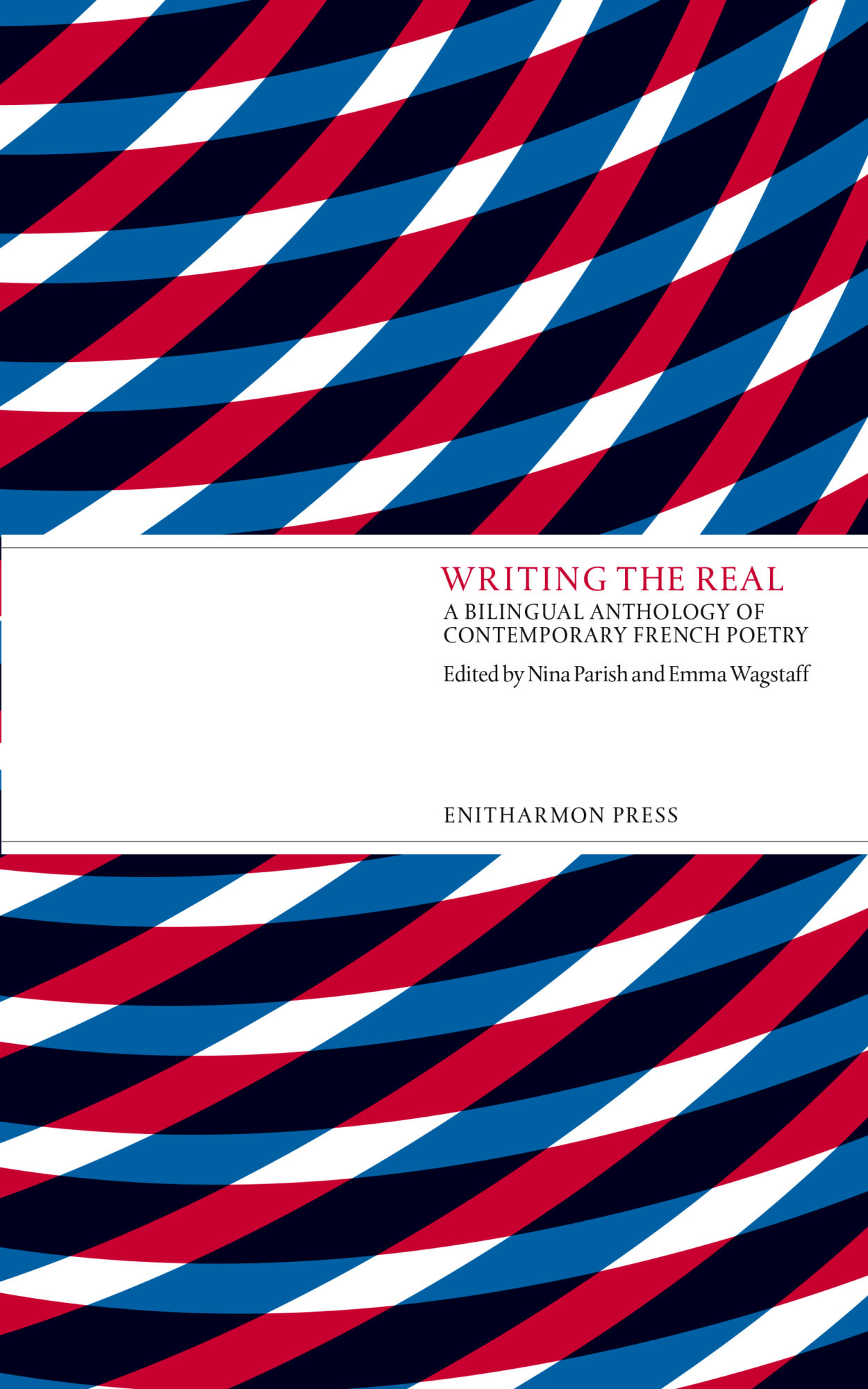
Writing_Real-

Recently I took part in a panel discussion about the art of translating poetry. It was chaired by Connie Bloomfield from UCL and held at the Enitharmon Gallery in Bloomsbury. I was joined by David Harsent (translating Yannis Ritsos), Emma Wagstaff and Nina Parish (co-editors of Writing the Real: A Bilingual Anthology of Contemporary French Poetry) and Jane Duran (translating Lorca). Part of the evening was spent comparing our differing approaches to translating a poem in Catalan by Josep Lluis Aguilo. Inevitably, we differed on our approaches both to the specific and general issues raised by poetry translation. But it has prompted me to gather up these 20 thoughts on the issues in this blog post.

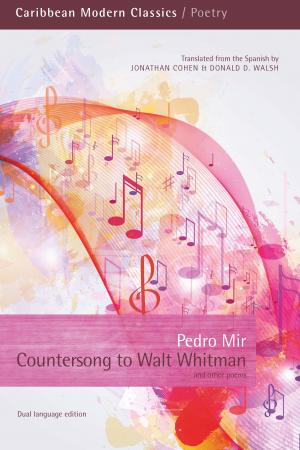
While preparing it, I also happened across further observations on the issue as quoted in the recently published Peepal Tree Press translation of Pedro Mir’s Countersong to Walt Whitman. The late Donald Walsh is quoted as saying “The translator’s first task is to discover exactly what the author has said . . . He must try to re-create in his language the miraculous fusion of thought and expression that produced the original work . . . the translator’s role is humble and secondary . . . he must do his best to circumvent obstacles . . . his duty is to express not himself but his author”.

As what follows will suggest, I find myself largely in agreement with such views – though the compromising, tentative, humble processes that Walsh describes here and the inevitably pyrrhic kind of victories one can expect from them are unlikely to make for dramatic headlines in literary journals or publishers’ blurbs – but I believe this is what the best translators do.

9781845233563_0

Twenty Pointers to Translating Poetry

  1. Ask the big question: can we translate a poem? Because there are so many uncertainties, so many sacrifices, the absolute and perhaps only truly safe reply is to say: ‘No – too much will be lost’. But see #13 below – and now go to #2 (who wants to be safe anyway?)


  1. Ignore such crushing absolutism as expressed in #1. Roll up your sleeves and, like Shakespeare’s Ferdinand believe “some sports are painful, and their labour / Delight in them sets off”. Whatever the apparent obstacles, just do it: start shifting those logs of poetry translation if only because you want the challenge, if only because it’s a fascinating process – but mainly because it’s important (see #20)


  1. Know that to translate is to incur guilt. The moralistic tone in discussions of translation proves the importance of the task and suggests the passionate intimacies involved in this weird relationship between source author, translator and reader

images91M7X9MY

  1. Define translation broadly (1): responding to the emoji on my phone is an act of translation. Plus, it is not merely to transpose to another language, but from one language period to another, one language level to another (formal to vernacular), to paraphrase with clarity, to lay out logical and grammatical links more clearly, to interpret signs, symbols, gestures, facial expressions


  1. Define translation broadly (2): any good poem is a form of translation. Transtromer saw poems as manifestations of invisible poems written beyond languages themselves. Rita Dove says translators often understand best that any poem is merely a silhouette of our attempt to capture elusive original communications – like stepping stones across a river, the better to hear the silence

floral_silhouette_vector_pack_572116

  1. Think of turning the original source into something in the target language with the same information and with the same force as the original


  1. Use these simple methods (naturally used by native speakers to achieve greater clarity in communication – thanks, David Bellos) to begin to convey information and force:
    1. Synonymy – word for word replacement (literal translation)
    2. Expansion – replacement of problematic words with longer versions in the target
    3. Contraction – replacement with nothing, elision, skipping, abbreviations – turning a blind eye
    4. Topic Shifting – rearranging the sequence of the expressions for more clarity
    5. Change of Emphasis – other methods of making parts of the original expression stand out from the rest, in order to assist communication
    6. Clarification – adding expressions (not in the original) – making what was implicit in the original more explicit

 9780865478763

  1. Accept it – poetry is poetry so its translation is mostly a question of force – the shades and emotional colours, the rhetorical temperature, the ramifications of meaning of a word/phrase/form


  1. Discuss this: force is what Robert Frost called the sound of sense – poetry’s confessedly ineffable tones, gestures, interrelations, patterns – and to convey it we need to match such constituents (though not necessarily preserve them like lifeless bones)

download

  1. Measure the force in a source poem via a process of triangulation – determine your direction of travel via multiple reference points connected to the source text – not only the text but also good old-fashioned literary interpretation, wider cultural perspectives, the source author’s wider oeuvre, anything you can lay your hands on


  1. Empathise and keep ego quiet – imagination is the major part of this triangulation process: so work hard to imagine what motivated the poem, re-live the act which gave rise to it and is enmeshed in it (thanks, Yves Bonnefoy). In translation we hope to release it from its source form into a new form that resembles/matches its original intention, intuition, yearning


  1. Measure the success of your empathetic act not by a term-for-term resemblance to the original poem (thanks again, Yves) but by the ontological necessity of your new words/forms/images


  1. Contradict my #1 – so it turns out, translation is possible if, with Bonnefoy, we regard the process of translation as poetry re-begun                                                                       . .
    images.
  2. Be inspired by Charles Tomlinson’s formulation of the task: we look to preserve not the metre, but the movement of each poem – its flight, or track through the mind


  1. Close the source text, says Michael Hofmann, rightly, once your translation is beginning to gain some height in its flight. Close it!

InternationalFlight_B2C_22-min

  1. Don’t confuse translation with versioning – the permission we give ourselves is different. To translate puts us in a position of responsibility to both the source text and a working English poem, equally. Versioning puts us in a position of responsibility only to a final working English poem


  1. Ask yourself how might I like my own poems to be treated – translation or version? Will you feel well served or misrepresented? Pleased or aggrieved? I’m not pre-judging your choices, but they will affect your view of your own translating processes


  1. Discuss this: Peter Robinson argues versions result in failures of tone or meaning, that they impoverish and almost invariably lower the tone, reducing the complexity of the original. But surely, such radical revisions might equally result in a better poem than the original? Still – neither will be a translation

 images0VYVDXZC

  1. Label versions and translations appropriately – we have a responsibility to the paying public who, in my experience, are always very clear about what they want to read


  1. Keep translating – because the desire to translate and read in translation is optimistic, humanistic and hopeful. Contra Babel, it provides evidence of a powerful urge towards community and communication. It shows there is more that unites us than divides us

untitled

How to Answer the Poetic Influence Question #2

With my new collection just out from Seren Books, I’m happy to have a number of promotional events and readings coming up over the next couple of months. As I discussed in an earlier blog, though I love the business of giving a reading, there’s often a moment that arises that I’m always uneasy about. It’s the question of influence. In that previous blog I followed through, chronologically, those poets who have had a powerful influence over the style and direction of my work. That provides one possible answer to the question ‘what other poets do you consider to have been an influence on your poems?’ Another reply might be to look closely at very recent work to see which poets are present in it as ghosts. This is what I’m doing here.

A Boat..._quicksand cover

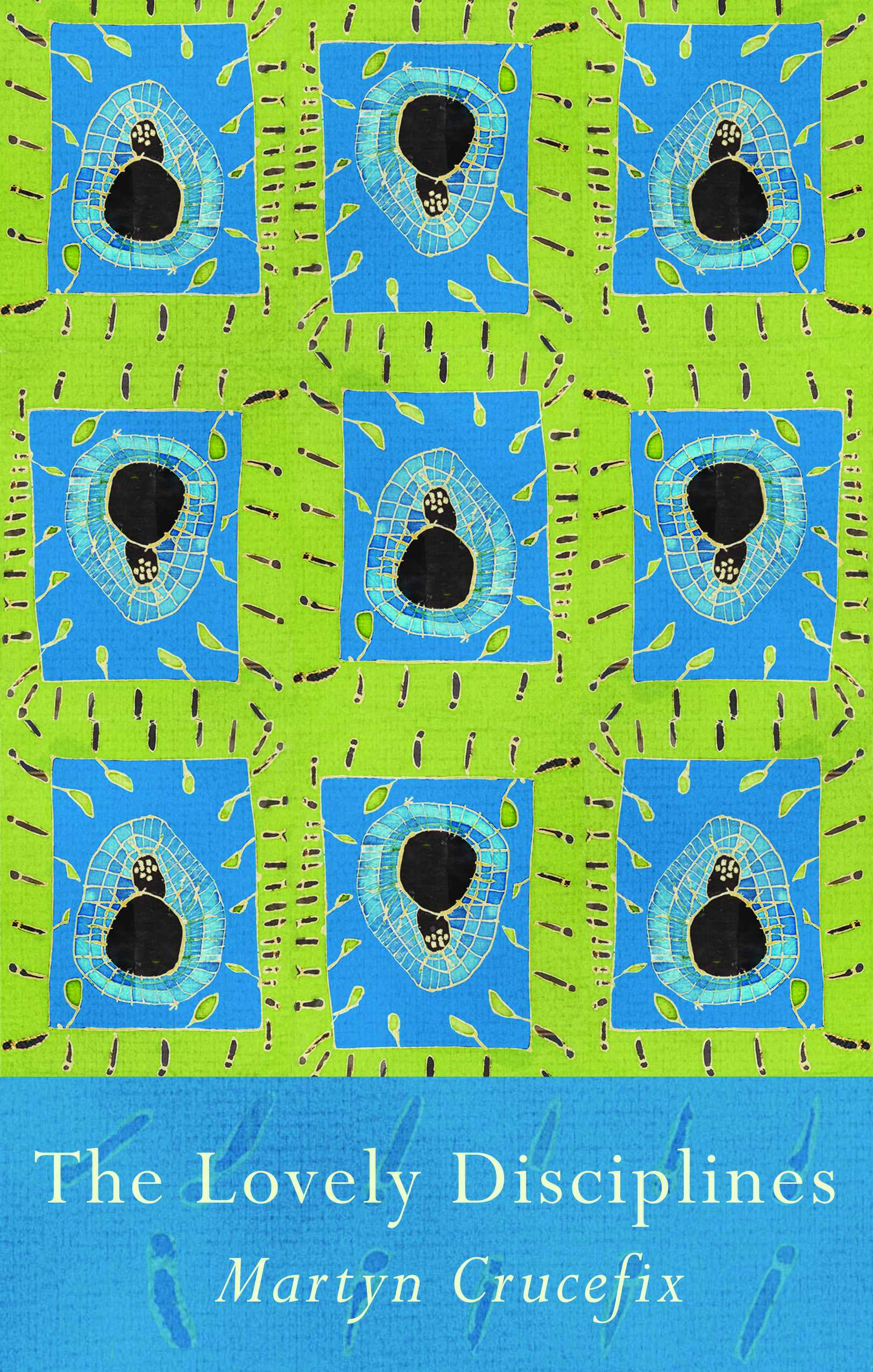
In preparing a new book for public reading, I tend to work through every poem making notes on the kind of thing an audience might need/like to know before hearing it (once and once only, in performance). I will often draw attention to the presence of a powerful poet figure that I’m aware of in the vicinity of the poem. So in The Lovely Disciplines, I can see influential roles of substance for Robert Hass (with Czeslaw Milosz), Ivan Lalic, Mary Oliver (with Emerson), Whitman and Edward Thomas.

Before looking at those in a little more detail, there are also two translations/versions from other poets in the collection. One is a version of Boris Pasternak’s poem from the 1950s called ‘In Hospital’. In the process of my versioning, the gender of the main protagonist was switched to female, more in line with most of the poems from the middle section of my book which forms a composite portrait of the passing of my parents’ generation.

Abbaye_de_Valsainte_2
Abbaye de Valsainte

I also include a loose translation of (plus a poem alluding to) the work of the French poet, Yves Bonnefoy, who I referred to in my earlier post on Poetic Influence. My poem ‘Valsaintes’ is named after the rural retreat in Haute-Provence where Bonnefoy lived in the 1960s. In many ways an idyllic place, in the end the renovation and up-keep of what was little more than an ancient ruin proved too much for him and the property was sold. For years afterwards, he harked back to it as a favoured, lost place. Bonnefoy’s ideas about what he calls ‘presence’ continue to fascinate me. My version, called ‘After Bonnefoy’, ends:


let’s bring ourselves one to another


as if each was at last all creatures

and all things all empty ways

all stones all metals and all streams

download
Sir Michael Tippett

Sir Michael Tippett’s 1944 secular oratorio, A Child of Our Time, is explicitly relevant to my poem ‘Listening to Tippett twice’. Tippett also wrote the libretto, inspired by the assassination in 1938 of a German diplomat by a young Jewish refugee and the Nazi government’s reaction to it. This took the form of a violent pogrom against its Jewish population – the infamous Kristallnacht, so called because of the broken glass which littered the streets the following morning. Tippett’s text and music deals with these incidents in the context of the experience of oppressed people more generally and the whole work carries a strongly pacifist message of understanding and the need for reconciliation.

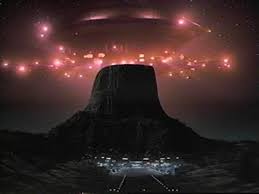
I’m certainly aware of echoes of Wordsworth on a couple of occasions. In ‘The Toll Cottage’ – a dream-poem in which I am being driven by my father – there’s a mangled remembrance of a phrase Wordsworth uses in ‘Tintern Abbey’ – “Once again I see / These hedgerows, hardly hedgerows, little lines / Of sportive wood run wild”. Also ‘The girl who returned to Aix’, a sequence of three sonnets, includes the awkward fact that I cried on first seeing Steven Spielberg’s Close Encounters of the Third Kind. It was that moment when the huge alien spaceship finally appears, rising up from behind a mountain – just as Wordsworth’s mountain, Black Crag, rises up in the boat-stealing episode of The Prelude Book 1.

download
Enough to make a grown man weep

In my poem ‘Nocturne’, I was partly thinking of Whistler’s painting, ‘Nocturne in Black and Gold’ (c. 1875) but I like to think my (love) poem has more light in it than that, set as it is in the same Tuscan landscape as another poem called ‘The renovation near Sansepolcro’. ‘Nocturne’ also makes reference to ‘the poet’s kelson’ and this is Walt Whitman who, in the fifth part of ‘Song of Myself’, refers to love as a kelson of creation. A kelson (or keelson) is the structure running the length of a ship and fastening the timbers or plates of the floor to its keel giving stability and strength.

download

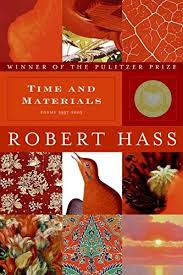
In his book, Time and Materials (2007), introducing the sequence ‘Czeslaw Milosz: In Memoriam’, Robert Hass recounts a discussion he had with Milosz (as his translator) about the different connotations in English of Oh! and O! As it turned out, the one Milosz intended in his poems was the second and this is the one that most interests me too. My poem opens:


Oh! is longer drawn already

beginning the button-down

of understanding

that well-I-never

with its freighting

of verb tense and identity

whereas O! is more sudden

more urgent surely

of the moment rapt

when we are prised open

by desire [. . .]


I wanted the title of my poem, ‘The lovely disciplines’, to feel paradoxical and in my mind it was related to the Serbo-Croat poet, Ivan Lalic. I remember reading his 1981 collection, translated by Francis R. Jones as The Passionate Measure. I remember Lalic explaining he hoped to suggest the fluidity or fluency of emotion as well as the orderliness or measured nature of a dance or verse. I hoped my title would suggest something of the same – a balanced response to experience, both our taking pleasure in it and searching it for order. My poem takes place on a women’s hospital ward.

download

Mary Oliver’s book, Swan, is not her best but I bought it in a secondhand bookshop once and inside discovered an ATM receipt with some cryptic notes on it. This provided the start of ‘As we live’, a poem which takes up Oliver’s sensitivity to nature (which she often gazes at with such precision of feeling as to achieve a visionary intensity) as well as her epigraphs from Rilke’s Duino Elegies and Ralph Waldo Emerson’s essay ‘Beauty’ in The Conduct of Life: “’Tis curious that we only believe as deep as we live”.

Finally, Edward Thomas (Ted Hughes’ “father of us all”) appears explicitly in relation to two poems in my book. Not a million miles from Oliver’s example, it’s his directness and love of what lies before him that I like. I like his sense that, in Robert Frost’s words, this world is the right place for love, combined with his intuitions about the human need to look beyond, perhaps into an inexpressible obscurity. ‘These things I remember’ is almost a found poem on these issues – taking phrases from a memoir written by Thomas’ friend Jesse Berridge (published with letters by Enitharmon Press).

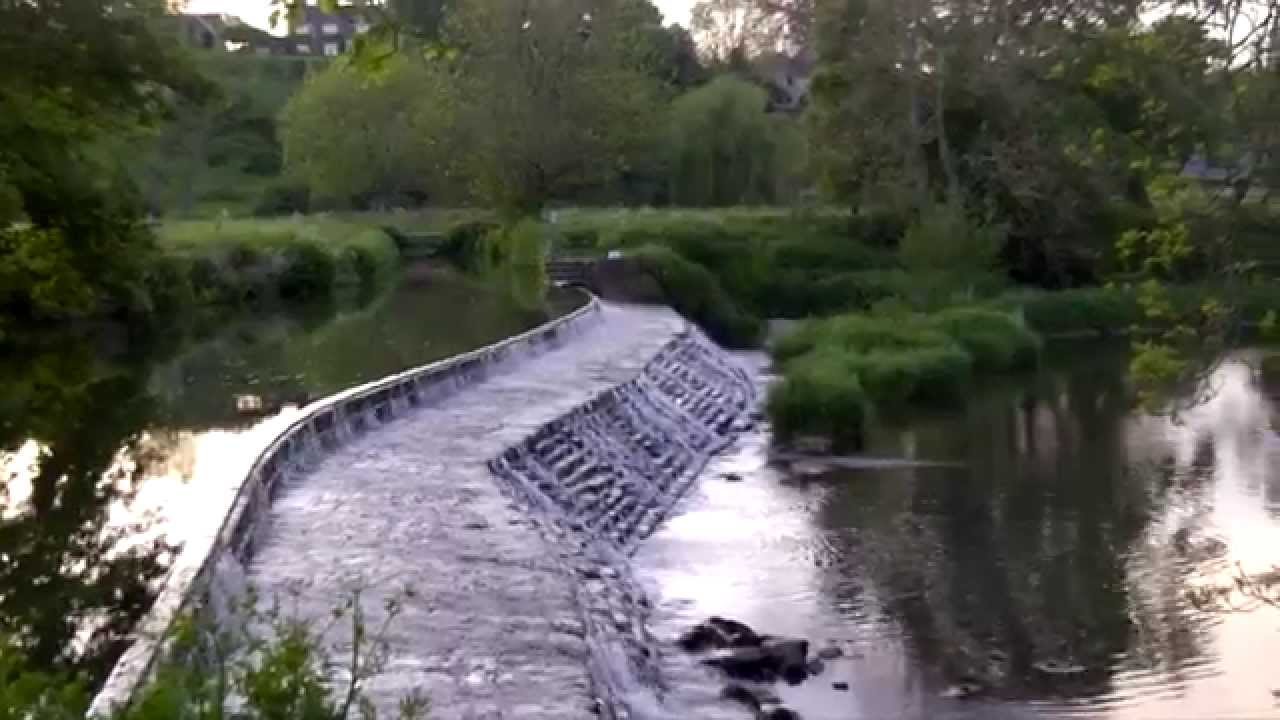
And ‘Rebuilding Tellisford weir’ has an epigraph from Thomas’ 1914 prose book, In Pursuit of Spring. His book recounts his 1913 journey – by bicycle – across southern England from London to the Quantock Hills. I was delighted to discover him passing through the landscape of my childhood: cycling down off Salisbury Plain, through Erlestoke and Edington, Steeple Ashton, North Bradley to stay with friends at Dillybrook Farm just outside Trowbridge, where I lived for 18 years. He writes about waking at night to the sound of falling water. The next day he is persuaded to visit Tellisford and its weir by the mysterious Other Man (a kind of alter ego for Thomas). My poem mixes some of these details with my own memories of visits to Tellisford. I like to think the poem has a lot of Thomas in it: a sense of history, the beauty of nature, strange encounters with others, a sad loneliness, the transience of all things.

maxresdefault
The weir at Tellisford, Wiltshire

This Must Be All: Robert Frost’s ‘Two Look at Two’

I have recently posted about Robert Frost’s brief essay ‘The Figure a Poem Makes’ as well as on one of his lesser known poems, ‘A Soldier’. The latter is one of the poems I’ll be teaching this coming academic year as set by the Cambridge International Exam Board: see page 47. Student essays are supposed to offer a close analysis of one (or two poems) while also exploring a wider understanding of what the poet is doing in terms of methods and concerns (techniques and themes). Another of the set poems is discussed in what follows: ‘Two Look at Two’. I read the poem here:

220px-TheDyersHand

In The Dyer’s Hand (1963), Auden’s essay on Frost opens by observing that, if asked who said ‘Beauty is Truth, Truth Beauty’, most people would reply ‘John Keats’. Auden differs, arguing the famous phrase is really something Keats makes the Grecian urn say so the author maintains some dramatic distance between himself and the poem’s questionable statement. This is also a very Frostian device – though not one that Auden probes in his subsequent discussion of the poems. Whenever we read Frost, it’s important to be alert to such ironic distancing from the (simply understood) lyric voice or ‘I’. In fact, ‘Two Look at Two’ is a poem which does not obviously lend itself to this ‘dramatic’ sort of interpretation as its narrative voice seems more reliably omniscient, or at least impersonal. And yet the obvious meaning of the poem is not characteristic of a poet whose work can be dark and pessimistic, indeed labelled “terrifying” by Lionel Trilling in 1959. In the poem, a couple of lovers, walking up a mountain, encounter a corresponding pair of deer – a doe and buck. At the end of the brief, uneventful encounter the narrator reports that the human couple sense a “wave” of reciprocated love emanating from the “earth”. At the conclusion of this discussion, I’ll look again at whether the narrator’s confident assertion of this should be taken at face value.

The first and last words in the poem are the same: “love”. The opening 3 lines are full of qualifying equivocations with the choice of verb form “might” and the vague but limiting phrases about how far up the mountain side the couple will go: “A little further up” and “not much further up”. It is the twin forces of “love and forgetting” which have the potential to drive them higher up the mountain. The two are probably linked in that, absorbed in their mutual love, they may become forgetful, neglectful of the potential dangers in the landscape. The risk of self-absorption (even in the cause of romantic love) is raised here by Frost, a risk encountered by other narrators in poems like ‘An Encounter’, ‘The Wood-Pile’ and most clearly in ‘Stopping by Woods…’ In the latter, the allure of the snowy woods is strongly felt by the narrator (“The woods are lovely, dark, and deep”) but his work and social responsibilities probably prevent him from abandoning the road and risking/welcoming death by exposure.

carlwarkwall

In many cases, the chief risk is a neglect of the boundaries that in Frost’s world it seems wiser to acknowledge and adhere to. In ‘Two Look at Two’ this is clear in the forceful verbs used in the following few lines (“They must have halted” and “they must not go”) and it may explain the optimistic nature of this poem that we see the lovers in fact do adhere to the limits set. Lines 5/6 suggest they have thoughts not of over-reaching or dizzying aspiration but rather of the dangers present to them: “With thoughts of the path back, how rough it was / With rock and washout, and unsafe in darkness”. Frost’s music here is suitably rough and threatening with its harsh consonants and internal rhyme (path/back), the growling ‘r’ sounds followed by a swilling of sibilance (washout /unsafe /darkness) suggestive of the water-eroded path on the hillside. When they encounter the actual physical barrier of a wall, Frost bulks it up (despite its ruined state) in the reader’s ear with heavy plosive ‘b’ sounds: “they were halted by a tumbled wall / With barbed-wire binding”.

This is not a barrier to be passed easily – and the lovers do not even try. They possess a sort of Frostian piety or reverence most clearly seen also in ‘Mending Wall with its repeated maxim: “Good fences make good neighbours”. ‘Two Look at Two’ does allow its lovers a residual “onward impulse” which they spend, or expend, simply by gazing up along the path “they must not” now follow. The dangers that lie there are again described with a telling adjective (it is a “failing path”) and a haunting moment of hypothetical personification: “if a stone / Or earthslide moved at night, it moved itself”. It is at this point that we hear some words spoken by the lovers. Their words are brief and (effectively) firmly monosyllabic – “This is all [. . . ] Good-night to woods”. But they are accompanied by a sighing of regret that the walk has reached its limit. Frost here is accepting the reality of human desire – that “limitless trait of ‘There Are Roughly Zones’ –but he and the lovers see the risks of its limitless pursuit.

download

The lovers’ clipped statements are answered in kind by the narrative voice: “But not so; there was more.” The clipped, heavily punctuated nature of lines 13/14 make them a clear, early turning point in the poem, a moment of stasis and some tension. The unpunctuated and enjambed line 15 then sets the narrative flowing again as it records the sudden presence of the doe, staring back across the wall at the lovers. The mirroring effect is most important and presented through the plain language of lines 16/7: the doe is looking at them “Across the wall, as near the wall as they. / She saw them in their field, they her in hers”.  In each line the caesura acts as the wall, dividing and join the two halves of the lines. The repetitions of ‘wall’, ‘they’, ‘their’ and ‘her’ slow and focus the reader on what the title suggests is the mutual regard occurring on either side of the wall.

Frost’s narrative slides seamlessly into the doe’s perspective, imagining her difficulty in seeing the couple. Though watched carefully, their alien appearance is conveyed in a simile: they are “like some up-ended boulder split in two”. But the couple perceive no “fear” in the creature and Frost’s formulation – “they saw no fear there” – also suggests they feel no fear on their part either. In fact, lines 21-24 rather suggest the couple, “though strange”, do not possess much interest for the doe:

She could not trouble her mind with [them] too long,

She sighed and passed unscared along the wall.

Notably, she also shares the ‘sigh’ with the couple and in this way the shared mutuality of the encounter is emphasised, preparing us for the final affirmative moments of the poem.

download

The couple’s speech (line 25) suggests – through italicisation, short phrases and the rhetorical question – that they are breathlessly impressed. They think this is “all” but there is more to come. Frost’s poem ‘The Most of It’ comes to mind, recording as it does the appearance of another creature (“As a great buck”), its advent perhaps a response to a man’s demand for “counter-love, original response”. There, the creature seems brutish, indifferent, unaware, alien and incomprehensible as it stumbles off into the underbrush. ‘The Most of It’ (bafflingly not a poem included in CIE’s set poem list) is a key poem to contrast with ‘Two Look at Two’. In the latter, a buck also appears and, despite its more challenging even arrogant tone, it is never as frighteningly remote as the creature in ‘The Most of It’.

The buck of ‘Two Look at Two’ announces itself with a “snort” and is a more stereotypically masculine presence with its antlers, “lusty nostril”, its jerking head and its (imagined) arrogantly dismissive questioning of the couple. But his difference from the doe is minor as we recognise a whole line repeated: the buck also stands looking at the couple, “Across the wall, as near the wall as they”. It’s perhaps not clear who is interpreting the shaking of the buck’s head as questions. It’s either the narrative voice itself or that voice reporting (omnisciently) on the thoughts of the couple. His questions verge on the belligerent:

Why don’t you make some motion?

Or give some sign of life? Because you can’t.

I doubt if you’re as living as you look.

download

If we are going to find disharmony in this seemingly mutual encounter, this is where it might lie. The buck’s questions portray the couple as standing respectfully, perhaps in awe, certainly in silence. The impact of the (imagined) questions is to make the human couple “almost” feel “dared / to stretch a proffering hand – and a spell-breaking one”. So the buck’s obstreperous attitude strikes the couple as a dare to reach out across the divide. Such an action would be to proffer, “to hold out or put forward (something) to someone for its acceptance”, hence a gesture of friendship. But Frost also makes it clear such a reaching across the divide would break the spell of mutual regard which has been the subject of the whole poem. In fact, the moment of choice – a topic of so many other Frost poems, most famously ‘The Road Not Taken’ – is passed over as the buck, just like the doe, moves away, “unscared along the wall”.

The final 5 lines deal with the impact on the lovers. Again, they briefly speak: “This must be all”. And on this occasion, the narrative voice agrees: “It was all”. The final phrase in ‘The Most of It’ is “and that was all”. Is this the cry or half-question of the disappointed man asking, ‘Is there no more than this’? Or is it a rapt, stunned whispering in the face of a vision of a unitary world declaring, ‘So this is all and all’s connected’? You could ask the same questions about the end of ‘Two Look at Two’ though the couple’s italicised emphasis in line 39 and the fact they continue to stand, as if rapt and wrapped still in the experience they have just had, surely does not suggest disappointment. Frost uses the metaphor of the “wave” sweeping over them, suggesting an irresistible inundation, a largeness of feeling derived from this minor incident. It is “As if the earth in one unlooked-for favour / Had made them certain earth returned their love”.

But the “As if” that opens line 41 cannot be ignored. This is how it felt – for the lovers. I don’t think Frost wants to deny them their experience. But perhaps they are still too absorbed in their own “Love and forgetting”. This is where the sense of the poem as a dramatic performance perhaps is relevant, in this case the incident rosily-coloured by the perceptions of the lovers. We ought to hesitate before we conclude that Frost himself sees the earth as in fact mutually responding with love. This would be exactly the “counter-love, original response” that so signally does not occur in ‘The Most of It’. The optimism of ‘Two Look at Two’ cannot be dismissed – but nor can it be taken in any simple way as the real and final ‘message’ of its author.

download