Now Published: ‘Foxtrot in the Erfurt Stadium’ by Jürgen Becker

Now published, my translation of the great German poet Jürgen Becker’s 1993 collection, Foxtrot in the Erfurt Stadium. Shearsman Books have done a marvellous job with this book. The poems are introduced by a brilliant essay by Lutz Seiler (also in my translation) and an extract from Becker’s early statement of literary intent, ‘Against the Conservation of the Literary Status Quo’ (1964). I love the choice of cover image: the receding blue remembered hills evoking the way Becker’s poems layer, and intermingle, the past and present of his life and his country’s history so seamlessly. Becker’s work is hugely admired in Europe but almost unknown over here (and in the USA). To celebrate the appearance of the book – and do please go to the Shearsman website and buy one (or a signed copy directly from me) – I’m reproducing below the Preface I wrote for the collection. And below that, one of the poem’s from the book, which happily appeared recently in Poetry Review.

In her Afterword to Jürgen Becker’s monumental 1000-page Gesammelte Gedichte (2022), Marion Poschmann praises the poet as being ‘the writer of his generation who has most consistently exposed himself to the work of remembrance, who approaches the repressed with admirable subtlety and is able to reconcile his personal biography with the great upheavals of history.’  Becker grew up in the German region of Thuringia which, after World War II, was in the Soviet occupation zone, later the GDR. By then, his family had moved to West Germany and, after the fall of the Berlin Wall in 1989, Becker often returned to his childhood landscape.
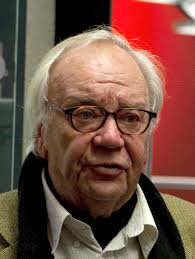
It is, in part, such biographical happenstance that has made Becker a poet of historical change which, as he says in the poem ‘Dressel’s Garden’, is ‘not yet / a completed process’. The poems achieve their ambitious goals through a layering of time periods, a multiplicity of voices, strands of association and networks of memory. He collages fragments and juxtaposes elements of everyday speech, popular music, neutral description, higher tones, and historical quotation. What holds the poems together are recurring leitmotifs, focal points of personal and historical memory, familiar places, to such a degree that it is ‘possible to read 17 volumes totalling 1000 pages as a single, enormous poem’ (Poschmann).

I first encountered Becker’s work while translating an essay on the poet by Lutz Seiler (published in In Case of Loss (And Other Stories, 2024)). Seiler reads Becker’s work as ‘a process that integrate[s] both immediate and more distant modalities of language, his own voice as well as materials drawn from other sources such as events, photos, maps, as well as interjections from neighbouring rooms, from the mail, the news, weather conditions and whatever else stray[s] within range.’ I am very happy that permissions have been granted to enable Seiler’s brilliant essay to stand as an Introduction to this volume.
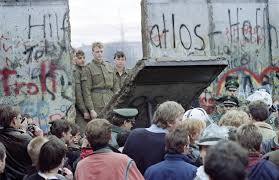
Selecting from the 1000-page poem that Poschmann envisages would be difficult indeed, so I have chosen to present the whole of Becker’s crucial 1993 collection, Foxtrot in the Erfurt Stadium. Following the fall of the Berlin Wall in 1989 and reunification the following year, this is the collection in which Becker explores his relationship with his own childhood in Thuringia and the continuing impact of the Second World War and the division of Germany. I have also included a substantial extract from Becker’s important 1963 lecture, ‘Against the Conservation of the Literary Status Quo’, because it suggests clearly the poet’s dissatisfaction with the literary forms of that time and his belief that a form of ‘journalling’ was to be his own way forward. Becker’s baggy, comprehensive, allusive, meditative, brilliantly detailed poems (surely at their best at length) can also be viewed as a response to Czeslaw Milosz’s lines in the 1968 poem ‘Ars Poetica?’: ‘I have always aspired to a more spacious form / that would be free from the claims of poetry or prose’ (tr. Milosz and Lillian Vallee). These then are poems of great historical importance, but my interest in them has also been sustained by the belief that they are extraordinary technical achievements and present an extension of the concept of what makes a poem, an extension too long absent from the English language poetry world.

My heartfelt thanks to Tony Frazer at Shearsman Books for his enthusiasm for Becker’s work and ensuring this book came to be.

Blackbirds, then other voices. It doesn’t stop

in the snow, when along with the snow

comes a piece of news that, this morning,

is absolutely essential. Or how

do you see it? I see the pear tree and how it

(the pear tree) responds to the wind (to the

wind). This morning, once again, the

decision has been taken. War

between magpies and crows, simply this war,

no fuss, just this clear understanding.

Another voice, the next remark; it’s all (again)

a matter of the whole. Are you standing

in the garden? Then you know, tuck tuck, the blackbird

warned at first, you know it, I’ll say it

again, in the war, in the fresh snow, in the wind.

How to Answer the Poetic Influence Question #2

With my new collection just out from Seren Books, I’m happy to have a number of promotional events and readings coming up over the next couple of months. As I discussed in an earlier blog, though I love the business of giving a reading, there’s often a moment that arises that I’m always uneasy about. It’s the question of influence. In that previous blog I followed through, chronologically, those poets who have had a powerful influence over the style and direction of my work. That provides one possible answer to the question ‘what other poets do you consider to have been an influence on your poems?’ Another reply might be to look closely at very recent work to see which poets are present in it as ghosts. This is what I’m doing here.

A Boat..._quicksand cover

In preparing a new book for public reading, I tend to work through every poem making notes on the kind of thing an audience might need/like to know before hearing it (once and once only, in performance). I will often draw attention to the presence of a powerful poet figure that I’m aware of in the vicinity of the poem. So in The Lovely Disciplines, I can see influential roles of substance for Robert Hass (with Czeslaw Milosz), Ivan Lalic, Mary Oliver (with Emerson), Whitman and Edward Thomas.

Before looking at those in a little more detail, there are also two translations/versions from other poets in the collection. One is a version of Boris Pasternak’s poem from the 1950s called ‘In Hospital’. In the process of my versioning, the gender of the main protagonist was switched to female, more in line with most of the poems from the middle section of my book which forms a composite portrait of the passing of my parents’ generation.

Abbaye_de_Valsainte_2
Abbaye de Valsainte

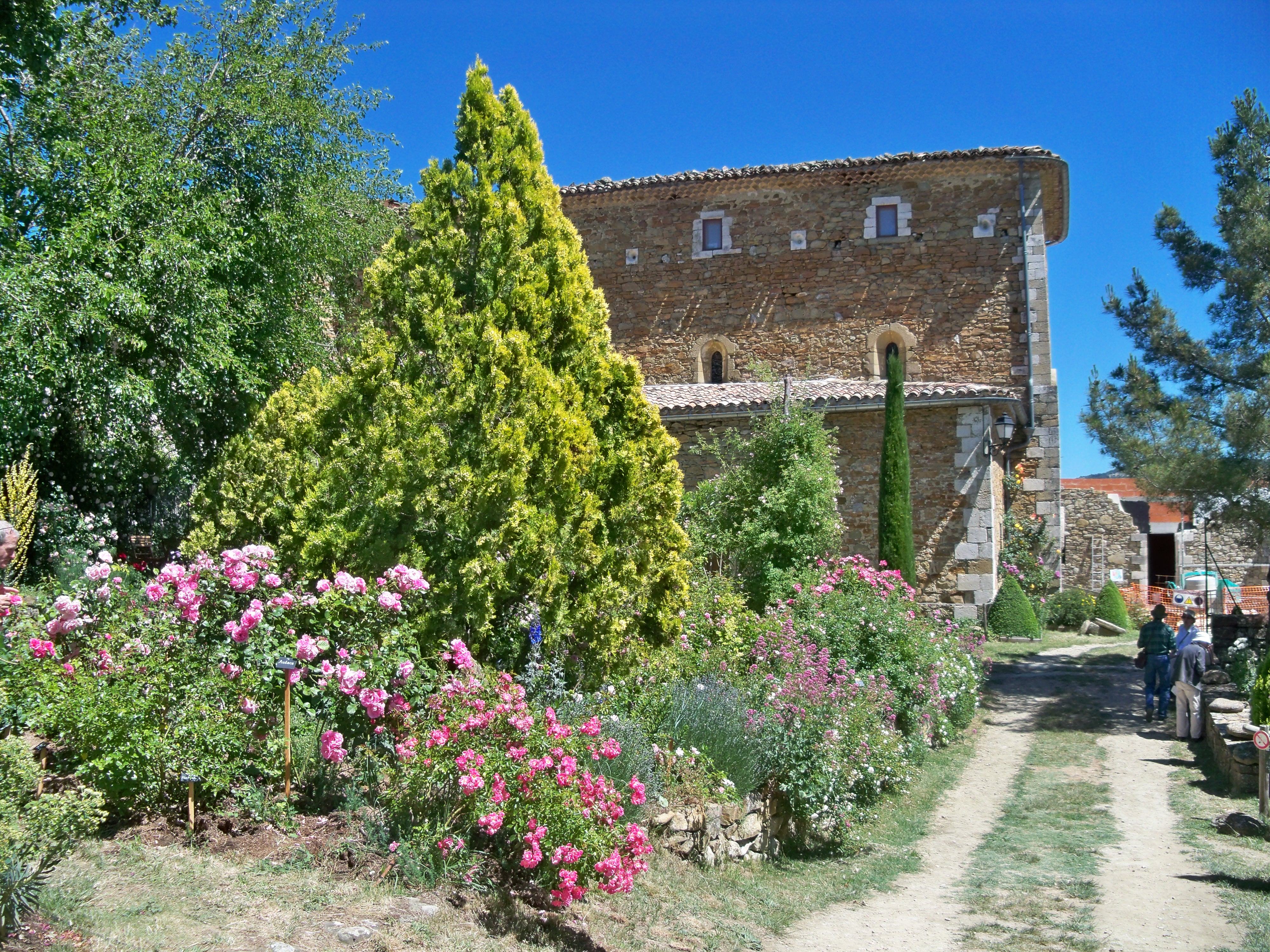
I also include a loose translation of (plus a poem alluding to) the work of the French poet, Yves Bonnefoy, who I referred to in my earlier post on Poetic Influence. My poem ‘Valsaintes’ is named after the rural retreat in Haute-Provence where Bonnefoy lived in the 1960s. In many ways an idyllic place, in the end the renovation and up-keep of what was little more than an ancient ruin proved too much for him and the property was sold. For years afterwards, he harked back to it as a favoured, lost place. Bonnefoy’s ideas about what he calls ‘presence’ continue to fascinate me. My version, called ‘After Bonnefoy’, ends:


let’s bring ourselves one to another


as if each was at last all creatures

and all things all empty ways

all stones all metals and all streams

download
Sir Michael Tippett

Sir Michael Tippett’s 1944 secular oratorio, A Child of Our Time, is explicitly relevant to my poem ‘Listening to Tippett twice’. Tippett also wrote the libretto, inspired by the assassination in 1938 of a German diplomat by a young Jewish refugee and the Nazi government’s reaction to it. This took the form of a violent pogrom against its Jewish population – the infamous Kristallnacht, so called because of the broken glass which littered the streets the following morning. Tippett’s text and music deals with these incidents in the context of the experience of oppressed people more generally and the whole work carries a strongly pacifist message of understanding and the need for reconciliation.

I’m certainly aware of echoes of Wordsworth on a couple of occasions. In ‘The Toll Cottage’ – a dream-poem in which I am being driven by my father – there’s a mangled remembrance of a phrase Wordsworth uses in ‘Tintern Abbey’ – “Once again I see / These hedgerows, hardly hedgerows, little lines / Of sportive wood run wild”. Also ‘The girl who returned to Aix’, a sequence of three sonnets, includes the awkward fact that I cried on first seeing Steven Spielberg’s Close Encounters of the Third Kind. It was that moment when the huge alien spaceship finally appears, rising up from behind a mountain – just as Wordsworth’s mountain, Black Crag, rises up in the boat-stealing episode of The Prelude Book 1.

download
Enough to make a grown man weep

In my poem ‘Nocturne’, I was partly thinking of Whistler’s painting, ‘Nocturne in Black and Gold’ (c. 1875) but I like to think my (love) poem has more light in it than that, set as it is in the same Tuscan landscape as another poem called ‘The renovation near Sansepolcro’. ‘Nocturne’ also makes reference to ‘the poet’s kelson’ and this is Walt Whitman who, in the fifth part of ‘Song of Myself’, refers to love as a kelson of creation. A kelson (or keelson) is the structure running the length of a ship and fastening the timbers or plates of the floor to its keel giving stability and strength.

download

In his book, Time and Materials (2007), introducing the sequence ‘Czeslaw Milosz: In Memoriam’, Robert Hass recounts a discussion he had with Milosz (as his translator) about the different connotations in English of Oh! and O! As it turned out, the one Milosz intended in his poems was the second and this is the one that most interests me too. My poem opens:


Oh! is longer drawn already

beginning the button-down

of understanding

that well-I-never

with its freighting

of verb tense and identity

whereas O! is more sudden

more urgent surely

of the moment rapt

when we are prised open

by desire [. . .]


I wanted the title of my poem, ‘The lovely disciplines’, to feel paradoxical and in my mind it was related to the Serbo-Croat poet, Ivan Lalic. I remember reading his 1981 collection, translated by Francis R. Jones as The Passionate Measure. I remember Lalic explaining he hoped to suggest the fluidity or fluency of emotion as well as the orderliness or measured nature of a dance or verse. I hoped my title would suggest something of the same – a balanced response to experience, both our taking pleasure in it and searching it for order. My poem takes place on a women’s hospital ward.

download

Mary Oliver’s book, Swan, is not her best but I bought it in a secondhand bookshop once and inside discovered an ATM receipt with some cryptic notes on it. This provided the start of ‘As we live’, a poem which takes up Oliver’s sensitivity to nature (which she often gazes at with such precision of feeling as to achieve a visionary intensity) as well as her epigraphs from Rilke’s Duino Elegies and Ralph Waldo Emerson’s essay ‘Beauty’ in The Conduct of Life: “’Tis curious that we only believe as deep as we live”.

Finally, Edward Thomas (Ted Hughes’ “father of us all”) appears explicitly in relation to two poems in my book. Not a million miles from Oliver’s example, it’s his directness and love of what lies before him that I like. I like his sense that, in Robert Frost’s words, this world is the right place for love, combined with his intuitions about the human need to look beyond, perhaps into an inexpressible obscurity. ‘These things I remember’ is almost a found poem on these issues – taking phrases from a memoir written by Thomas’ friend Jesse Berridge (published with letters by Enitharmon Press).

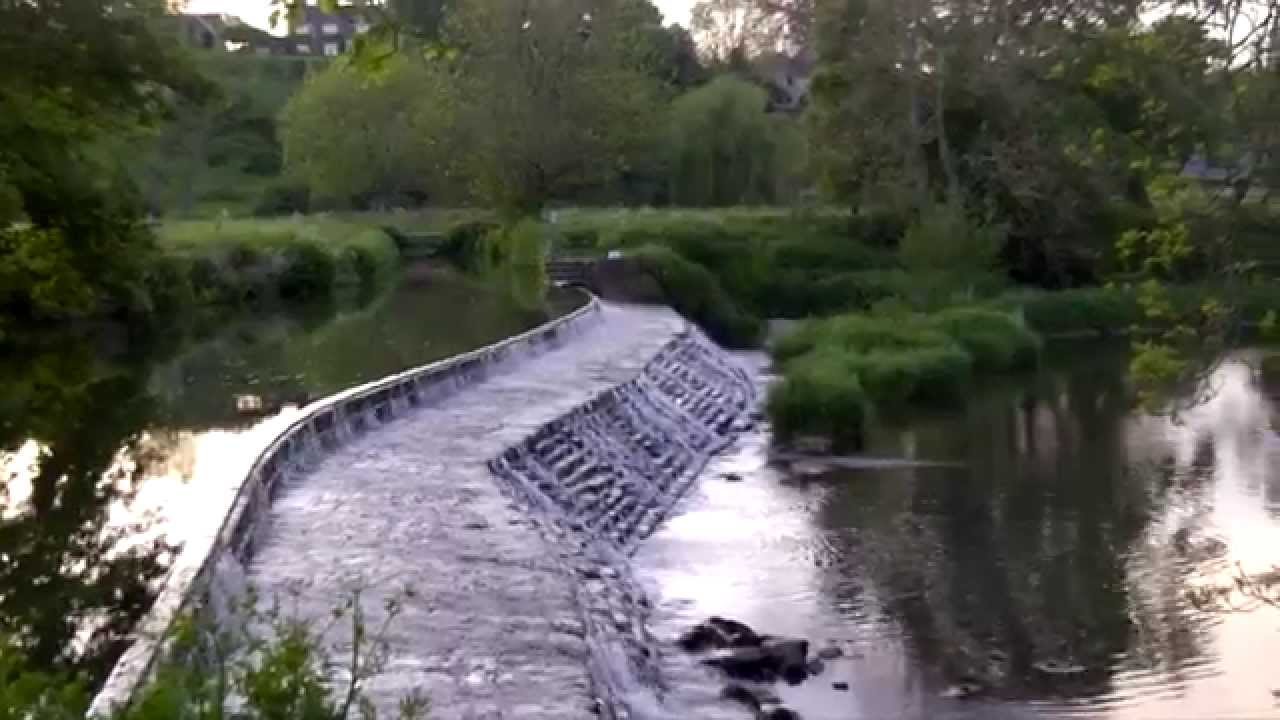
And ‘Rebuilding Tellisford weir’ has an epigraph from Thomas’ 1914 prose book, In Pursuit of Spring. His book recounts his 1913 journey – by bicycle – across southern England from London to the Quantock Hills. I was delighted to discover him passing through the landscape of my childhood: cycling down off Salisbury Plain, through Erlestoke and Edington, Steeple Ashton, North Bradley to stay with friends at Dillybrook Farm just outside Trowbridge, where I lived for 18 years. He writes about waking at night to the sound of falling water. The next day he is persuaded to visit Tellisford and its weir by the mysterious Other Man (a kind of alter ego for Thomas). My poem mixes some of these details with my own memories of visits to Tellisford. I like to think the poem has a lot of Thomas in it: a sense of history, the beauty of nature, strange encounters with others, a sad loneliness, the transience of all things.

maxresdefault
The weir at Tellisford, Wiltshire