Let Me Murmur a Few Spells for My Mother

I have spent these last several days in Wiltshire as my mother has had a fall and broken her hip. Dad is not able to look after himself around the house so we are trying to patch things as best we can for a couple of weeks. She says her feet got muddled as she turned from the microwave and went down hard on one side. The ambulance (from Bath, in these days of centralised medical care) took an appalling 2 hours to reach her. She seems pretty well considering she’s in her 90s but now the ward has been closed to all visitors due to an outbreak of Novovirus in the hospital. I have an atavistic sense that muttering a few spells about her, in trying to describe her in younger more vigorous days might help her recovery (and it sort of helps me too).

*

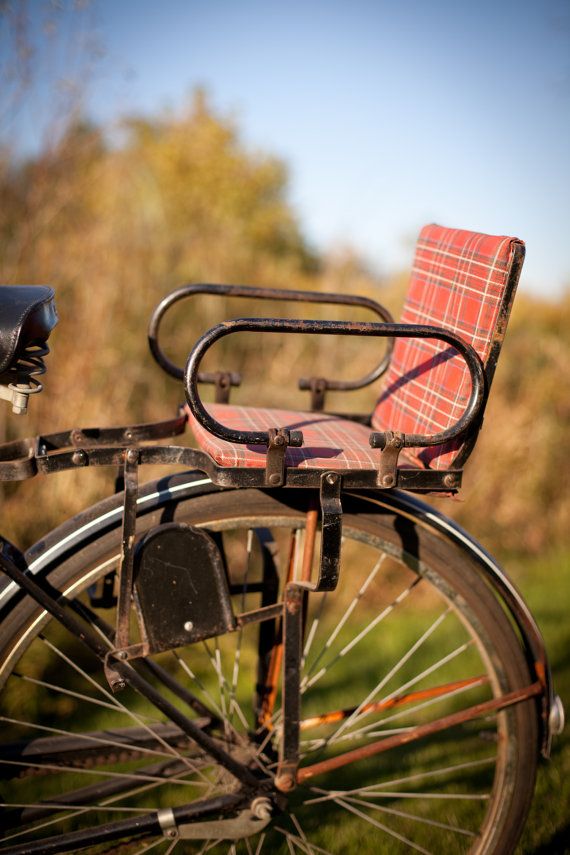
I am lifted then strapped into the child’s seat on the rear carrier of Mum’s bike. I remember the simple folding mechanism: the two sides inwards, then the back-rest folding forwards on top. She opens it and settles me in while the bike leans in the Passage (the covered pathway along one side of the house, outside the back door). Then I am wheeled out, up the front garden path, a little bump up the step onto the public path, now right and out to the main road. My limbs vividly remember the sense of her scooting for a few feet, gathering speed, then a more violent wobble to either side as she kicks off, begins to balance, threading her right leg through the bike frame onto the peddle. Steadying now, speeding up, the sense of her wide hips beginning to roll there before my face as we start to bowl along, lean into the left hand corner into Horse Road, heading for Trowbridge.
deaf32a26d5d3e990b449191ed45572e

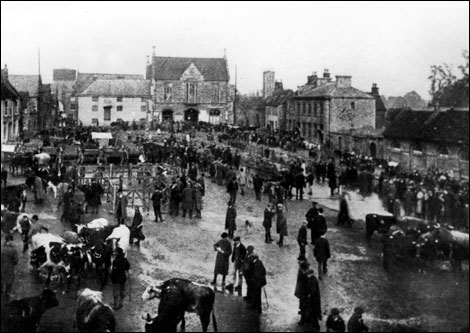
Perhaps we go to the old market hall. I have the sensation of progressing through it, through the high wrought-iron ribbed roof of the echoing hall with stalls of all kinds around. Then Mum and I emerge into sunlight out of the rear door which overlooks the old cattle market which is suddenly right there, spread out beneath us. There are steps down to the lower level; all the sounds of animals and people welling up from below. It seems a huge and dizzying prospect, an image of a far wider and utterly unmanageable society to a child unused to such things.
2880e0c5de74d08e6997f318b59d48eae3a495cf

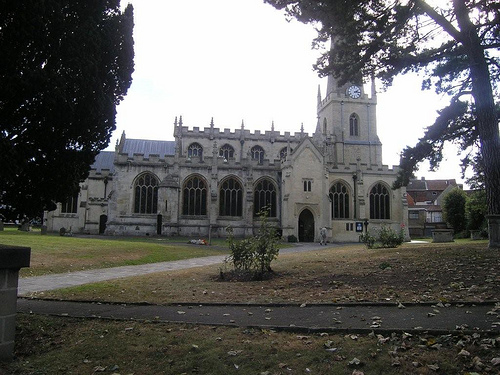
I am moving or more likely being moved in a push chair or (again) on the back seat of Mum’s bike, in through the rectory gate that stands at the corner of Church Street, across from the main gate of St James’ Parish Church. Little more than a sensation of broad lawns with a grand old house beyond them and in the foreground a gathering of people – women mostly, with their high voices – around trestle tables at some sort of sale, perhaps cakes. Perhaps it has been organised by the Young Wives group that meets in the strange narrow gothic building – accessed by a worn flight of steps – across the road.
3975485172_bc361c22dc

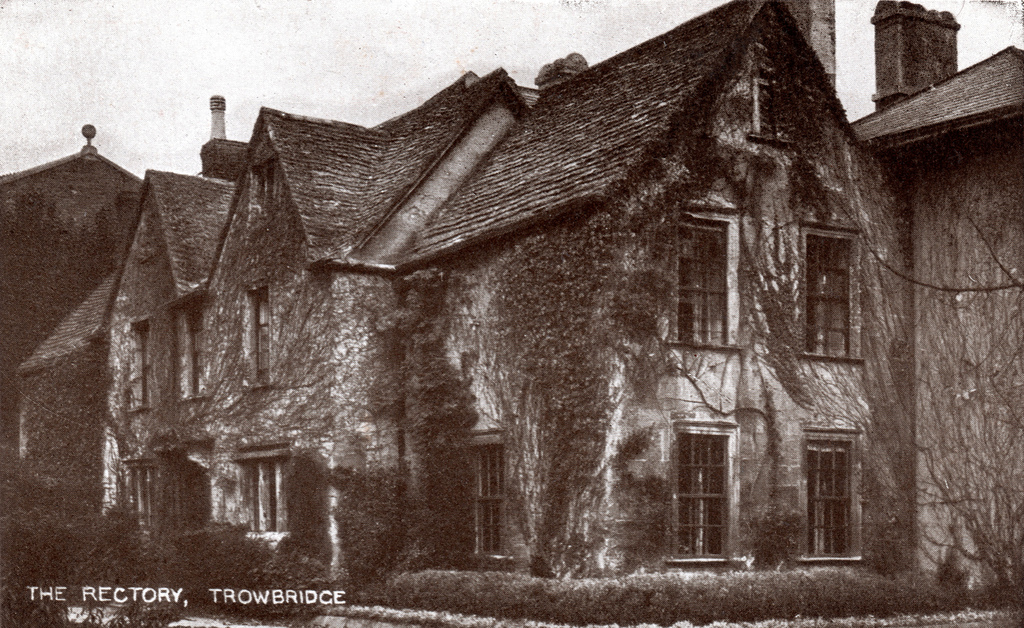
The Young Wives is more of a play group really. We go there each week and probably I have been there today but now I am being taken to the rectory, though whether we are going to buy or to help behind the stalls I don’t know. This is where the poet George Crabbe lived the last 18 years of his life as parish vicar, inspired to write whilst sitting under the mulberry tree in these rectory grounds. In one of the town’s earlier, spasmodic efforts at self-harm, the building was summarily demolished in 1964, only a year or two after this memory of the broad lawns of Crabbe’s old house.
8741286739_7da097588a_b

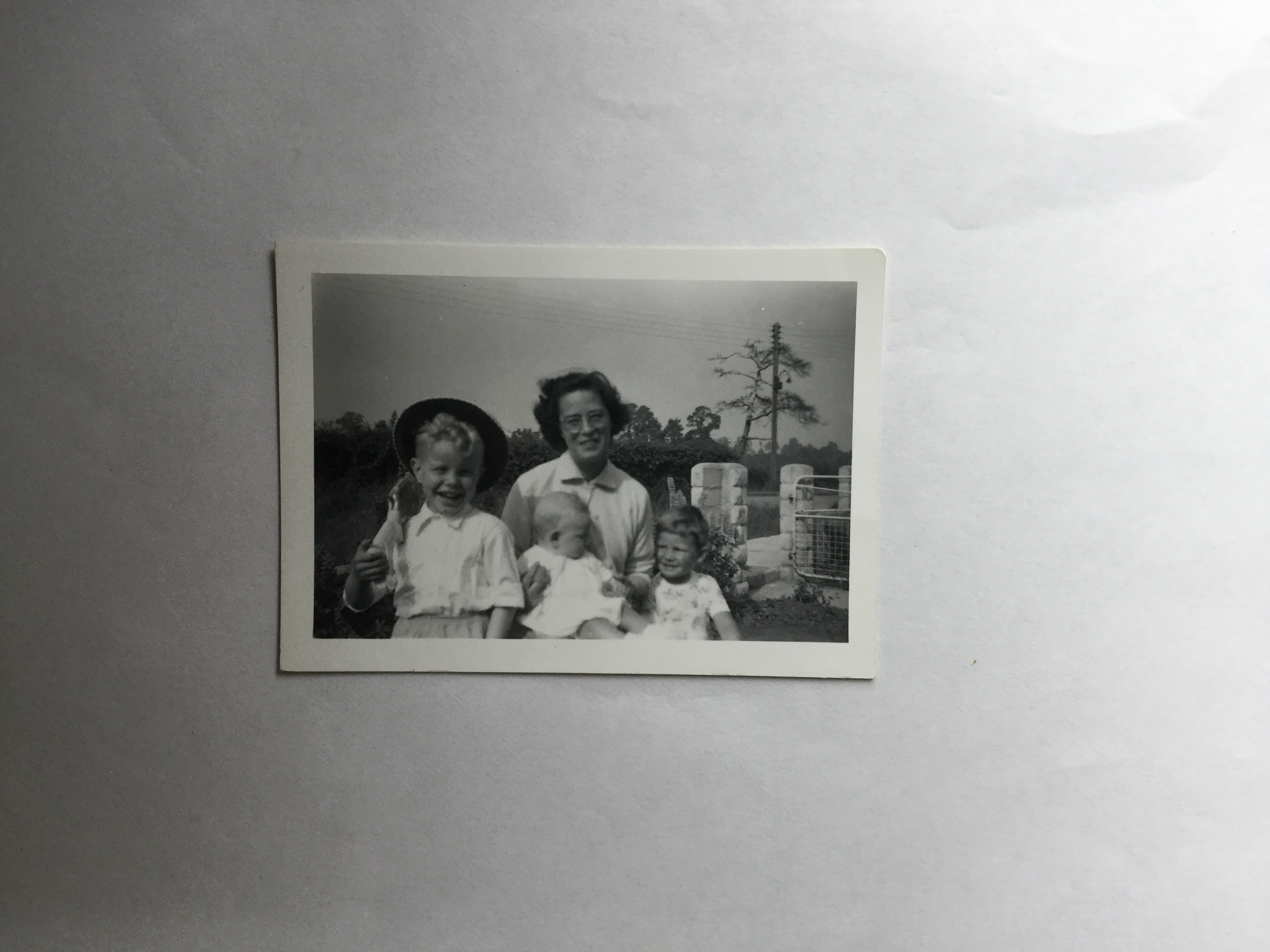
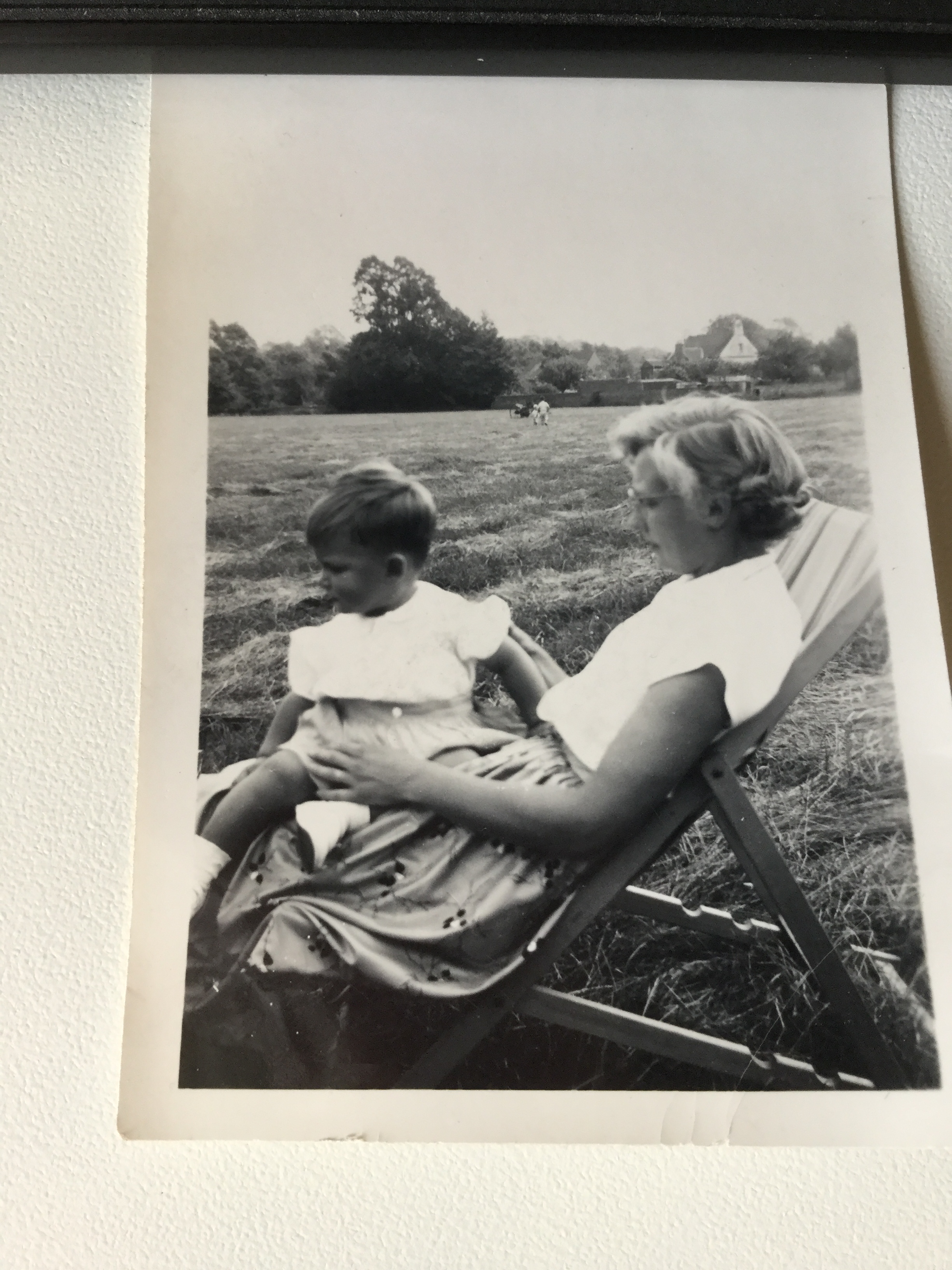
There is a photograph of her around the same time. We must have walked across the main road, down the lane to Oatley’s farm and then on to where the Kennet and Avon canal crosses the flat landscape. Dad has carried a deck chair or perhaps two and set it down, rakishly on the lowest rung for his wife who reclines in her white blouse and flowered skirt. A grassy field stretches into the distance – the shape of a cow, the field edged by darker trees, a brick wall and the whitewashed gable end of a house.

*

The sky is white so there is really no distinction between the upper part of the picture and the thick white border of the print. I am on her lap. Her right hand is at my back, her left reaching towards me as I seem to be twisting away to look at something out of view. Her gaze is fixed on me, mine is fixed elsewhere. Perhaps Andrew is running too far off. Or a bee is buzzing too close in what must be the summer heat. My 1960s children’s top seems the same pure white as hers but in the instant of the shutter falling all my energies are directed beyond the invisible white frame.
Me and Mum

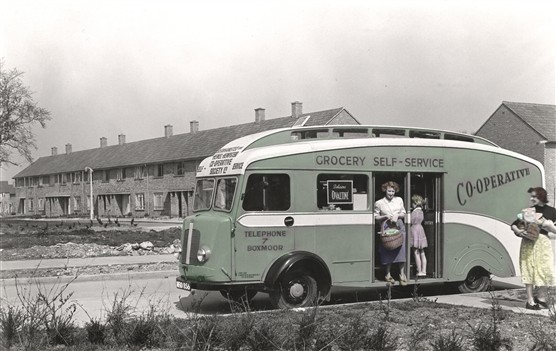
There is knocking at the back door and Mum moves hurriedly, perhaps glancing a moment into the mirror on her way to open it. A figure blocks the light, wearing a brown overall or a working coat of some kind, over his right arm a huge wicker basket. Over his other shoulder, a worn leather money bag is slung. In the basket are loaves and rolls of all sorts. On a different day, a small grocer’s van is pulling up, its rear doors open and the smell of earthy potatoes spills out to where I stand, knuckles pressed to Mum’s skirt. Onions are like dusky suns, cabbages dripping with moisture and in the winter there are brussel sprouts, mushrooms still wrapped in the cold dark in which they grew. Other afternoons, a honking from the main road and the same flurry from Mum which – in hindsight – has something of a woman preparing to meet a lover about it. The callers are always men, punctuating her long days at home with the children, bringing gossip, simple treats, decisions to be made and a little flirting, merely oiling the wheels of commerce.
Grocery_van_in_Windmill_Road_1952.CNTHH.S371

Tuesday it’s the Co-op van stopping right outside our house. A folding step or two up into the back of the van, a high counter flap, an array of colours I can barely see. This must also have been the van that brought the pink paraffin for the living-room heater that clanked resonantly when moved and emitted a harsh warmth and oily fumes when lit. More on my diminutive level, the paraffin for sale flowed from a large container into a can Mum brought with her from the outhouse – a pink ribbon twisting and glinting like pop, its acrid smell the only sign of its poisonous combustibility.

*

Her calm rooted in humility – despite her evident brains and the few brief opportunities to exercise them. Her fear of upsetting the balance of a greater world. Her reluctance, as she will often express it while we are children, of ‘saying boo to a goose’. Shy certainly – but her social background was always part of that baggage. Extraordinary that this worked in partnership with his restive nature. That in part due to the pressures of disappointed expectations. Yet also driven by his reluctance to remain too long in one place, to forestall unwelcome thoughts, questions that might slow the skittering across the surface of himself from one completed DIY job to the next.

*

And now without her presence and without the holdfast of his own memory he skitters more and more out of control. All families nurture and elaborate their own particular myths for the hard times ahead.

Douglas Dunn’s ‘Terry Street’ and Thoughts of 1969

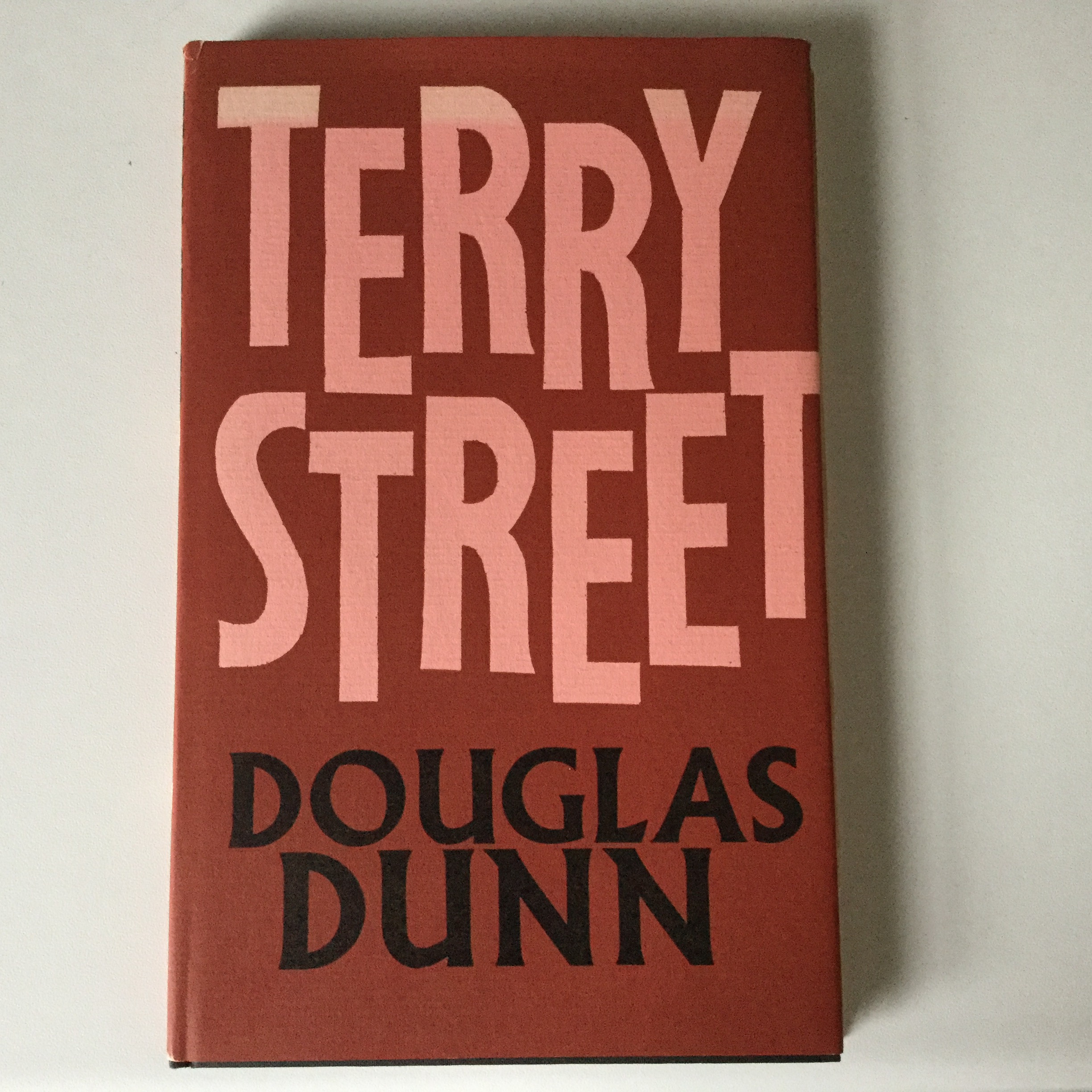
Recently, in my local Oxfam shop, I found a remarkably well-preserved hardback first edition of Douglas Dunn’s debut collection, Terry Street (Faber, 1969). Since living in a very similar street in Lancaster exactly 10 years after Dunn’s book was published (Aberdeen Road, up on the northwest-facing terraced streets above the town, looking out across Morecambe Bay to the – occasionally snow-capped – peaks of Cumbria), I’ve always had a soft spot for the book. But I hadn’t read it in years, I now realise.

images
Aberdeen Road, Lancaster, in a recent photo

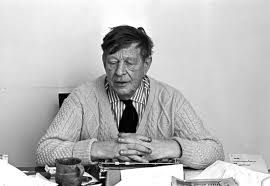
The particular copy I bought (for £2.50) still had the Poetry Book Society’s Bulletin in it as Terry Street was the PBS Choice for Autumn 1969. It printed a review by Julian Jebb of the PBS’s second Poetry International staged at the QEH, South Bank, in July 1969. Jebb praises the organisers for attending to the faults of the first such event (noted as an over-crowded audience and over-running readings by poets). WH Auden is there in the “blackest of spectacles”, reciting recent work from memory including ‘On the Circuit’ (1963) in which he satirises the lecture/reading round he has been treading in the USA: “so large / So friendly, and so rich”. He read precisely: “15 minutes and hardly a fluff”, reports Jebb.

images

He was followed by “a ponchoed American poet, Robert Bly”. Jebb’s tone here will have been addressed to the original readership of his review (it appeared in The Financial Times) but it’s still an interesting period piece. Bly seems to have flailed his arms while reading “in tragic-comic, uncoordinated circles, strongly reminiscent of Peter Cook’s imitation of Macmillan in Beyond the Fringe”. Later he over-ran shockingly with 20 minutes of his “sloppy, deranged images about Vietnam”. This was delivered, Jebb tells us, to a growing slow hand-clap.

bly
A young-ish Robert Bly

Later in the evening, Edward Brathwaite, Derek Walcott, Ogden Nash, Miroslav Holub, Vasko Popa and Janos Pilinszky also read. Few details are given on these contributions unfortunately, but the experience of the latter three poets of the Second World War and Eastern Europe in the first half of the 20th century prompts Jebb to observe: “We have felt safer than these three men and we are grateful to them for their eloquence in telling us so”. Here is evidence that poetry was making very little happen when it came to the heavy lifting required to shift the entrenched sense of superiority and national egocentricity of the period.

So the review both evokes an earlier age of extraordinary poetry and also shows how far we have come. With Ted Hughes’ and Daniel Wiessbort’s founding of Modern Poetry in Translation in 1965. British poetry was just at this moment becoming exposed to worldwide influences (even if some were hardly listening). In this light, Douglas Dunn’s PBS Choice reads like the dying edge of the 1950s, of The Movement. The Terry Street poems themselves may be memorable evocations of working class life in Hull but what I notice now more than anything is Dunn’s obsessive use of the plural subject: young women, girls, the children, mothers, old men, the chatty women, men of Terry Street, old women, revellers, neighbours, street tarts, trawlermen, young women, the people who live here, men on bikes. These are versions of Larkin’s typological  “cut-price crowd” (‘Here’), the women in ‘Faith Healing’ and the fathers and mothers and newly married couples of ‘The Whitsun Weddings’. The difference is that Larkin would as often turn his acerbic gaze on himself. In Terry Street, Dunn makes the choice to keep himself out of the picture (behind glass) and there are hardly any delineated individuals in the book (though we all remember the man who wheels an optimistic lawnmower down Terry Street).

File 22-10-2015, 15 18 59

Dunn viewed ‘these people’ through a window – “our window” says a self-lacerating, retrospective poem of mourning addressed to his late wife, Lesley (‘Envoi’ in 1981). While the belief that these people were a fit subject for poetry is admirable, many of the poems now read as patronising, still mired in the English class system (despite Dunn’s Scottishness). To that extent I disagree with Terry Eagleton who, in 1970, praised Dunn for being able to “transcend the two major pitfalls of poetry concerned with working people – bourgeois voyeurism or sympathetic mythification”. Dunn seems to me to fall foul of both of these.

imgres

In the 1969 PBS Bulletin, the young Dunn himself wrote “Terry Street became for me a place of sad sanity . . . an alternative to the gaudy shams everywhere”. It was this sense of the real that Dunn needed (for himself) as a mature student in Hull, pursuing an English degree, and perhaps was a substitute for what he was already declaring: “Scotland is what I most want to write about and what I am least able to”. Later, Morrison and Motion’s 1982 Penguin anthology of contemporary British poets, pigeon-holed Dunn with Tony Harrison in being “sharply conscious of background and upbringing, which sets them at an angle to the cultural establishment”. But Dunn’s chosen strategy in the longer run was to acquire the ‘language’ of the poetic establishment in formal terms and try to speak up for those men and women of Terry Street (or their Scottish equivalent) rather than merely observe them from afar. ‘The Come-On’ appeared in Barbarians (1979):

Our level is the popular, the media,

  The sensational columns,

Unless we enter through a narrow gate

  In a wall they have built

To join them in the ‘disinterested tradition’

  Of tea, of couplets dipped

In sherry, and the decanted, portentous remark.

  Therefore, we will deafen them

With the dull staccato of our typewriters.

  But do not misbehave –

Threats and thrashings won’t work: we’re outnumbered.

Whatever piece it was Bly read that night in July 1969, the voice of the establishment regarded it as threats and thrashings and was too easily able to dismiss it.

How far have we come? Is it still the case that alternative poetic voices look to disguise themselves – whether with formal display like Dunn’s or with an obscuring erudition – to pass through the narrow gate into poetic acceptability? Or is it now that we anxiously seek out and fetishise what is different so poets and their publishers feel the need to define and confine work with USPs like race, gender, sexual orientation, locality, even disease – whole books focused on life events that begin to sound like the prose genre known as ‘misery memoirs’? Do poets actually articulate this to themselves: in my Creative Writing graduation ceremony, how do I ensure I stand out?

My Brief Career in Medicine

Last week I posted about my daughter’s absence, away now studying Medicine. As some of you will know, this is where I once began too, many years ago. Without any shred of exaggeration, it was a formative time and the following account of it (which first appeared in an earlier version in Agenda) tries to make some sense of it. 

1.

It was a hot August and I had a vision of a child, a baby staring at me, wanting to be lifted up. It lasted only a few seconds but I returned to the red-roofed Wiltshire house where I’d spent most of my 18 years, happier and now resolved. I could not turn my back on such an opportunity.

I’d applied to study Medicine for reasons I cannot now recover and may not have been clear even at the time. I’d had a series of interviews during the Upper Sixth year but only rejections had come back though I was held on a short list at Guys in London. Yet I’d already been struggling to focus on Biology, Chemistry and Physics, preferring to pick up the blonde, resonant body of a guitar and play Neil Young, David Bowie, Lindisfarne, you know the sort of thing. I had written songs but very few poems and those few from an almost complete ignorance of poetry. Shakespeare and Chaucer at O-level really was about it. My models were exclusively song lyrics which I listened to intently, following them on the lyric sheets inside the unfolding gates of album covers. My head was unhelpfully full of phrases from Van der Graaf Generator’s Peter Hammill and Jon Anderson of Yes – one a merchant of genuine, existential, gothic angst, the other a lyrical fantasist. Then Guys rang to offer me a reserve place to start in ten days time. Then came the vision of the child.

images

2.

Because of the lateness of the arrangements in getting to London, I lodged in a room in Crookston Road, Eltham Park and commuted into London Bridge. The city I’d been parachuted into was in the midst of the Provisional IRA bombing campaign. The Medical School worked us hard though I never found it easy, or easy to devote myself to it. Within a week or so, we filed into the long upper room overlooking the inner quad. The windows down one side were filled with pallid light, a cloud-light flooding in from the London morning. We had watched a film which included queasy moments of blades easing through human skin though, even as I watched, it struck me as less informative, more likely to be readying us for the shock of encountering our first lifeless body.
His head was to the pale light of the morning. His feet were dry and yellowy and up-turned from the horizontal table where he lay. Though he’d once been human, he hardly seemed to be any longer. His skin was tough and thick-seeming, exactly like leather. The mound of a belly rose and fell to his groin dusted with greying pubic hair, a shrivelled prick and half-hidden balls. His legs ran on, thin and bony at the knee down to the up-turned toes. We all avoided looking at his face.

I wish I could remember who made the first cut. One of us must have done: into the leathery skin above the sternum. The blade needed pressing firmly and the upper layers peeled open a bit like a zip fastener, down towards the abdomen. We did not give him a name though we turned up to visit him every week for the rest of term. But then, he wasn’t ours alone. As we gradually opened up thorax and abdomen, arms and legs, students in the year above us were coming at other times and we’d arrive to find his skull opened, his cheeks slipping down his face, his eyes suddenly gaping and exposed to the light that greyed and wizened as the winter term progressed.
imgres

3.
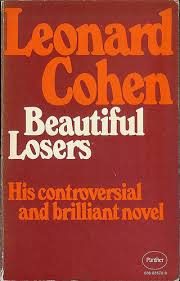
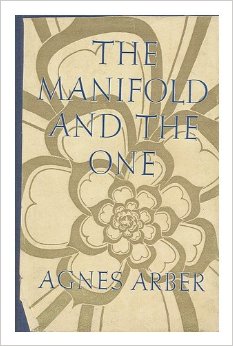
By November, I’d already bolted back to Wiltshire a couple of times and instead of medical text books, I’d started reading Hardy, Lawrence and H.E. Bates. In a poignant reminder of happier times, the school asked me to choose books for a prize-giving at Christmas. On a trip to Bath, I bought Graham Greene’s The End of the Affair, Leonard Cohen’s Beautiful Losers and Lawrence’s England, My England. In Trowbridge, I scoured the second-hand bookshelves of Newbury’s, a bric-a-brac shop long since demolished and one morning I found a copy of George Eliot’s Silas Marner and a book called The Manifold and the One by Agnes Arber. I knew nothing of the latter but must have been attracted to the philosophical sounding title. In my growing tribulations at Guys, I was becoming deep. The questions I seemed to ask myself more and more yielded no easy answers and I had a notion this was called philosophy.

51SBKs67qkL._SY344_BO1,204,203,200_

The Arber book is a wide-ranging and syncretic survey, drawing on literary, scientific, religious, mystical and philosophical traditions, in pursuit of the experience which Arber defines as “that direct and unmediated contemplation which is characterised by a peculiarly intense awareness of a Whole as the Unity of all things”. Amidst the dissections, test tubes, bunsens, the red- and blue-dyed lung trees and chemical equations with which I uneasily engaged back in Southwark, I found consolation in Arber’s idea that life is an imperfect struggle. In those winter months, failing to work hard enough or get a firm footing in a bewildering city, I did not read passages about the “inevitable appearance of the awry and the fragmentary which we isolate in our minds” in a philosophical fashion. Rather this was my daily diet, strap-hanging on a delayed train into London Bridge, sneaking into emergency exits to catch the second half of Diana Rigg in Pygmalion on St Martin’s Lane, trudging up a drizzly Charing Cross Road to buy sheet music I could ill afford, drinking with others in The Bunch of Grapes on St Thomas Street, complaining how much work I had yet to do. Not doing it.

Already letters to old school friends were raising the prospect of leaving Medical School. When Arber wrote of the limited and artificial confinement of conventional thought (“a hard and fast orthodox system of logical regulations – many of which resemble the rules of a complicated game and have little concern with the attainment of truth”) I felt she was talking of my current studies. I had developed an attraction to the esoteric – it made me feel more justifiably the outsider I felt myself to be – and I got untold pleasure from hearing that masters of Zen Buddhism might declare to my lecturers, “Supreme Enlightenment goes beyond the narrow range of intellection – Cease from measuring heaven with a tiny piece of reed”.

19c5f9549acf91e938a127defa9d0739

4.

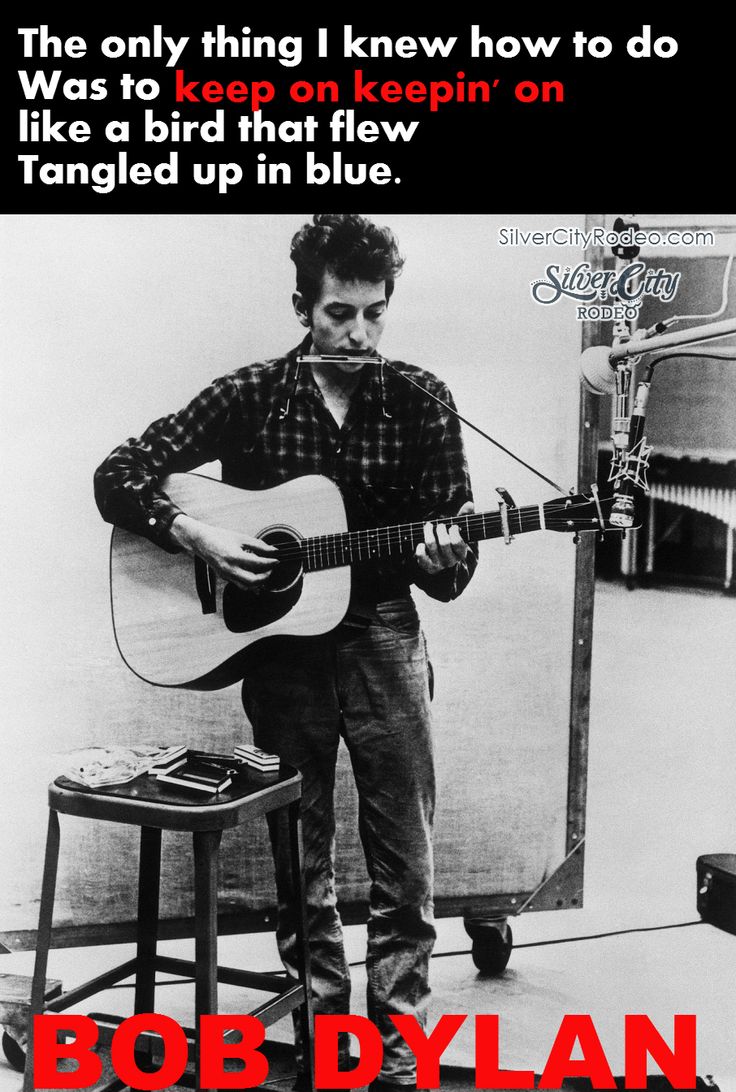
But work piled up rapidly in the new term and after renewed attempts to devote myself to it, the old patterns of neglect and procrastination returned. Even though there were months left before I managed to act on my desire to leave, to beat a retreat from the big city, to set a new and more deliberate course, still the length of remembered time seems short. After Lawrence’s Apocalypse and Sartre’s The Age of Reason, I raced through Cohen’s Beautiful Losers, bewildered by its episodic narrative, its explicit sexuality. But it was Arber’s utterly different book that haunted me. One evening, staring out at Eltham, I wrote: “Down in the street / the puddles turn to raging light / night-time folds away the day / packing up the sun. Turning / through the broken stars, over, under / the chosen Far, making for homeward”. I listened to Radio Caroline in the evenings when I’d managed – not always and increasingly less often – a couple of hours of legitimate work. Dylan’s “keep on keeping on” fell on reluctant ears.

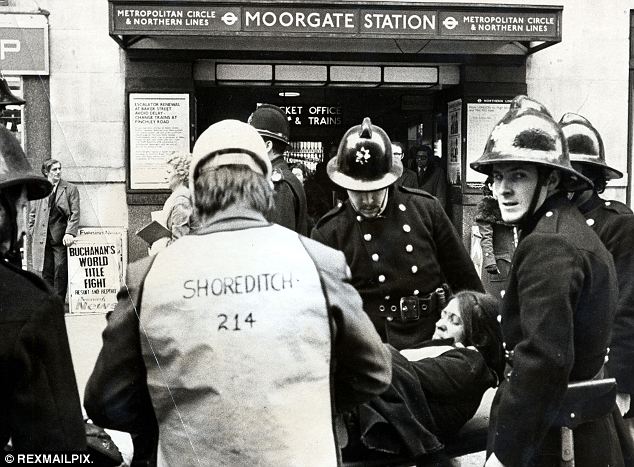
Then travelling blearily east from London Bridge, I forgot to grab my briefcase before stepping down onto the platform. It was a self-inflicted injury but had little real influence on the string of failures I achieved in the final exams. On another day – it was my nineteenth birthday – Margaret Thatcher defeated Ted Heath for the Conservative leadership. One day – it was a Friday – a train from Drayton Park failed to stop at Moorgate, overshooting the platform into a dead-end tunnel at 8.46 in the morning. As I walked gloomily from London Bridge through the black, wrought-iron gates of Guys, forty-three people had died.

Three months later I found myself sitting in my bedroom in Crookston Road, the growl of the busy A2 in the distance. I stared at packed bags and felt calm if utterly becalmed. One day, months later again – this was now the end of a second strangely untethered summer – the thought had begun to form that I might see myself as a student of philosophy, maybe work harder at the writing.

article-1240625-02D9D46B0000044D-949_634x467

Into the Swims – or She’s Leaving Home

A remarkable thing has happened in our house this week. My daughter’s room has been tidied – and it has remained that way.

The duvet is unrumpled on the bed. A phone charger remains thoughtfully unplugged on the floor beside the bed. The pages of Donna Tartt’s The Little Friend have not been turned any further. The few coins on the desk wait to be spent. No rubbish is accumulating in the plastic bin beside the desk. A laundry basket has been emptied and seems not to be refilling as it usually does. There are few clothes hanging in the wardrobe. The door stands open onto the landing for days on end. There is hardly a movement in the wave-shaped mirror beside which, vertically, a friend wrote in pencil  ‘Don’t crack the mirror’. Actually, to be truthful, there is the slightest of motions to be seen there – it’s me standing in the centre of the room, staring around.

We took her to university last weekend. We miss her. And in the absence of more detailed news we’re pretty sure she’s having a good time. She’s never friended us on Facebook but she somehow did so ages ago with my parents. So we hear remotely about smiling pictures, roseate cheeks in flashlight, black backdrops. I think yesterday she was supposed to be attending her first dissection (I remember that vividly – more of that in a later post perhaps).

In the mean time, to wish her well and permit myself some lovely sentimental thoughts of her in younger days, I thought I’d post a couple of older pieces I wrote which feature her.

2007_0413Northumberland0139

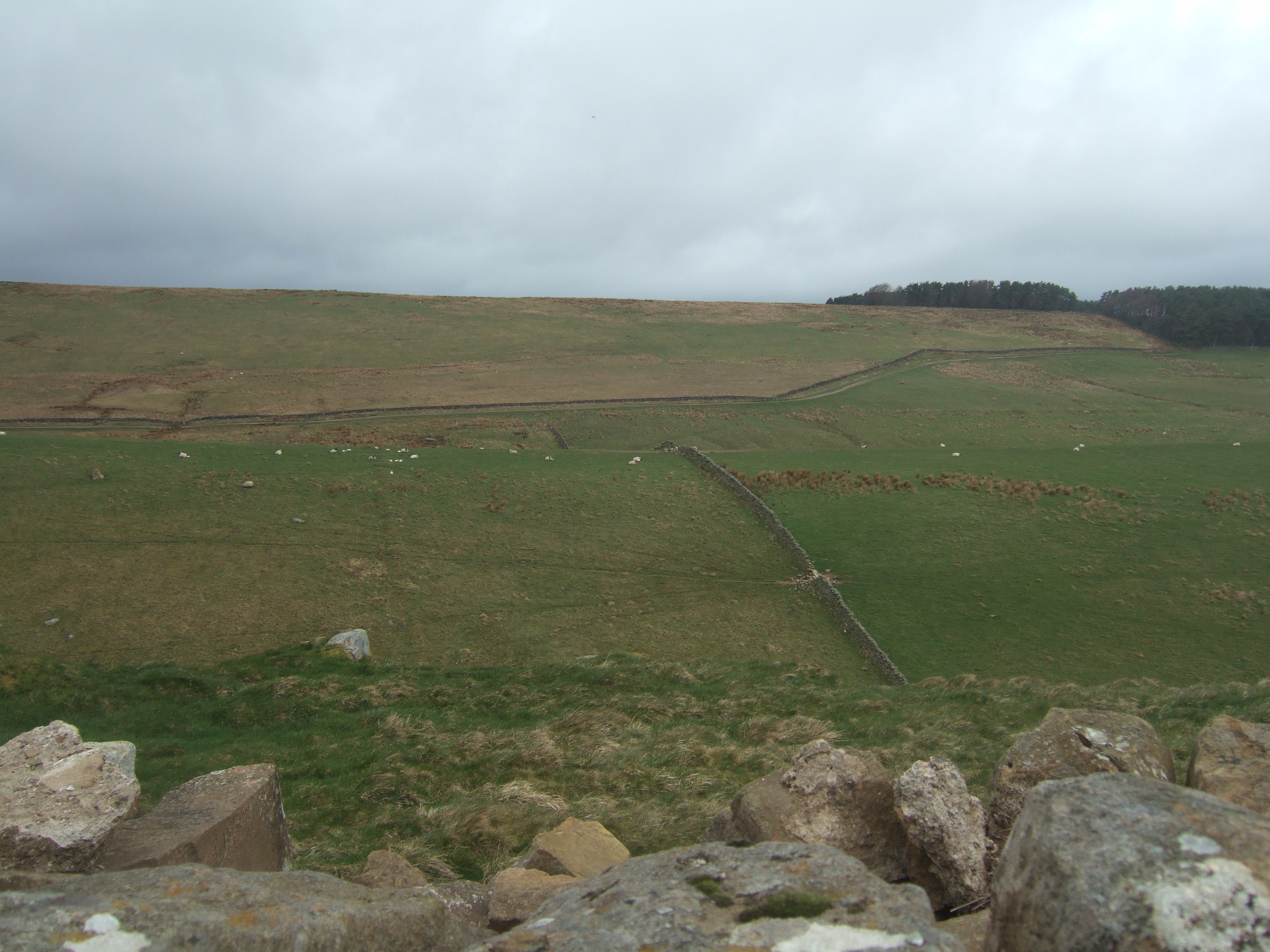
Both these poems originally appeared in Hurt (Enitharmon, 2010). The first derives from a walk we pursued when she was about 5, I think. By walk I mean, she walked a bit and I carried her on my shoulders the rest of the way. This was probably in the hills near Sedburgh – sheep country, close-cropped grass, heather, little stony paths. I suspect we plotted a waterfall or two into the route for a few squares of chocolate (temptation) for her and her older brother.

One thing after another

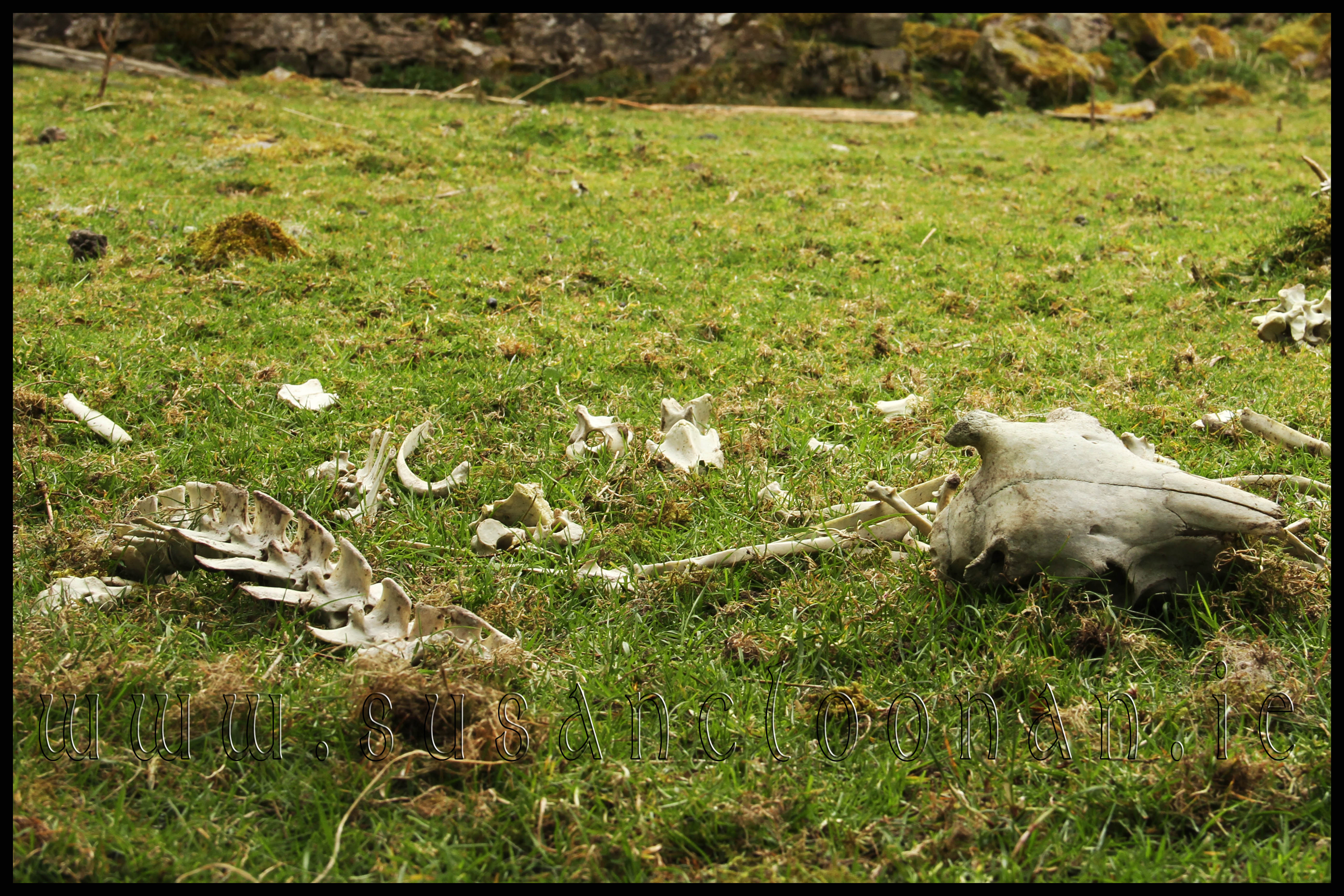
The ivory, angular vertebra I found
the day after the day my daughter found

and tried out her new word – fuck –
was bony, spiky to touch, rough as fuck.

I thought: Depths! Essence! Bone!
She bent to it, touched it, turning bone.

Leave it, I called. She said, Is it real?
White in the grass the contrast was real.

skull4

The second poem is later, from an occasion when we were visiting Canadian cousins, staying in a house in the Lake Country north of Toronto. To me it felt like something out of early Margaret Atwood and we spent ages fishing from the rickety wooden dock, paddling in a rowing boat and (as here) swimming out to a tethered raft (she has always been a good swimmer).

2008_0809Canada20080117

There is a well-buried allusion to Milton’s Paradise Lost in the middle of this poem – from the description in Book 1 of the fallen angels or devils closing in around Satan (“their doubl’d ranks they bend / From wing to wing, and half enclose him round / With all his peers” ll. 616-8). This is the second part of a sequence called Wilderness:

See my flesh and blood

here, bright and true

as a sun on the rise,

she launches herself

from the anchored platform,

flies into the air

over the blue-lit water,

unaware of tethers

beneath the surface,

of ropes, trailing weed,

slime, mud and scales

stiffening in reaction

to her vigorous action.

Here she is, hanging,

all parts my daughter,

curling like a ball,

the sudden black water,

while the white trunks

of ten thousand trees

cram the lake shore

and enclose her round.

All sounds hang back

as she arcs and peaks,

begins her slow bow

to the pull of gravity,

the smash of water,

the great churning

of foam and white limbs

yellowing as they spread

to carve out stroke

after buoyant stroke

into the swims of joy

and grief she’ll tread.

2007_0413Northumberland0079

A bundle of 50 sticks to start a fire

I have used this form – derived from Lee Harwood – for a blog-poem before. I rather like its loose encompassment and also as a welcome change to the often ‘lit crit’ nature of my usual blogs. Just roll with it . . . it’s what I say to myself. This one is dedicated to Stephen Stuart-Smith and all at Enitharmon Press.

images


A bundle of 50 sticks to start a fire

(for Stephen)

I did not break my fast Thursday last

Rose and showered at 7am before realizing and getting back under the covers for another 20 minutes

The street strangely lit there seemed to be so much more sky

The council have cut down flowering cherries claiming they are diseased but the word is it is to prevent – in both senses – claims against them for subsidence

At the surgery I was sixth in line

reading Blake Morrison on Ted Hughes published 5 September 1993 on yellowing newspaper pages that had tumbled out of a book I was re-shelving

As for his marriage to Plath, one day he may choose to speak about it, but for now –

I glimpse an old neighbor now divorced his wife and children have moved out we nod but very remotely

never watch when the blood is taken

images

Starbucks trade in the medical centre I watched being built years ago when I’d swim more often even then imagining myself at one of the windows waiting for news of some test or other

T. has woken by the time I return to eat but it’s me who puts away the groceries that have been delivered

handed me the bottle of wine laughing you don’t want to lose that he said my hesitation as I re-envisaged him as a romantic gift-bringer left an awkward pause I couldn’t cover

How does I have plenty of time transform itself swiftly into running late

hardly anywhere to park

Queens Wood stretches up behind these houses then bridges a road then sinks following its contours to the pond then rises again climbing to Muswell Hill and this is to be boxed into the word ‘topography’

A half empty carriage

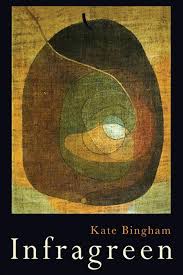
‘Ultragreen’ in which what is out there seems to come inside in a process Kate cleverly likens to photosynthesis and cleverly this gets away from me

imgres

The Whitehill Food Market I have passed that place

Walking up from the Emirates when I can’t get my mind off the strange limps and weaves of the way other people walk they are not hell but merely unfamiliar ways of moving

the fountains flow in the centre of the square

A dog wets its feet and drops a red ball into the pool and I guess its owner will be irritated by that

Brecht refused to award the prize to any of the five hundred entries. In none, he said, was there any successful attempt to communicate anything of any value

‘Nothing makes me feel more like a poet than being unable to talk’

Pub date Isobel calls it pub date

The absence of punctuation is in the spirit of the Daodejing it is the water course way one drop of water in the ocean no trace of it but don’t tell me it’s not there

A house in Selbourne

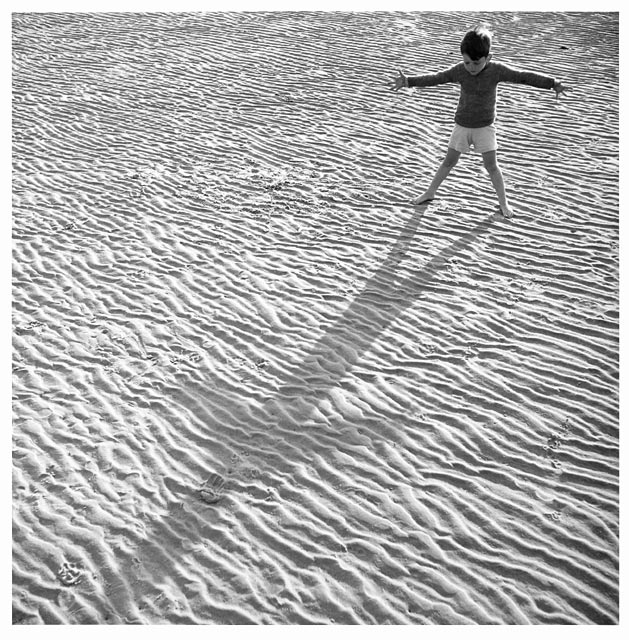
An image of a child with arms outstretched fingers widespread so much he might be a tree

Ripples of damp sand are the footprints of the shaggy oceanic beast

‘To embrace’

y30

A plain cheese and tomato brown bread roll and I am back madeleine-like to dinner-time sandwiches at Junior School during which we’d meet Mum from work and sit in Trowbridge Park why did we do that

It must have saved money

A timetable is the opposite of the way water flows and this grid dominates my life

Poems not even by rote but by the hour of the day

‘Pike’ so we watched YouTube clips of fish ducklings kittens being devoured it gets them started

Town kids city dwellers

as out of place as John Wyndham’s alien creatures like little pink M&Ms on four legs two of which are really arms they carry fire sticks

‘A sort of genocide’

The original Homer Simpson whose hands are uncontrollable

‘his thumb received a nasty cut. Although the wound must have hurt, the calm, slightly querulous expression he usually wore did not change’

images

Explore how far West’s presentation of Homer suggests he is a trapped man

The spider plant on the windowsill looks anaemic in its white pot against white painted window frames against thunderheads miles off

I am free at 17.10

I don’t need most of this

Occasionally there are evenings I can’t remember where I parked the car once I thought I’d left it on the garage forecourt after filling it up and I went in and got them to review the CCTV footage which told me that I had driven it away earlier that day and like some log-jam shifting slightly I had a vision of parking it on First Avenue and there it was all along

I need a framework perhaps

‘Echo Beach far away in time Echo Beach far away in time’

I like to change my clothes after a day’s work

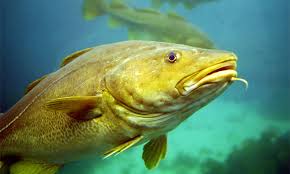
So I asked them to bring in pictures of pike and this one brought in a picture of a cod

A Delia recipe

The evening is filled with cakes of varying heights

42

How to write about ‘sacred objects’

Recently, I spent a weekend at the house I now know as ‘Wiltshire’. It’s where I grew up through the late 1950s, 1960s and early 1970s. I’ve been living elsewhere for so many years now and ‘home’ is in north London so the old county name suffices in most conversations to communicate what I mean: ‘I’m going back to stay in the house of my childhood’.

File 01-09-2015 09 18 16
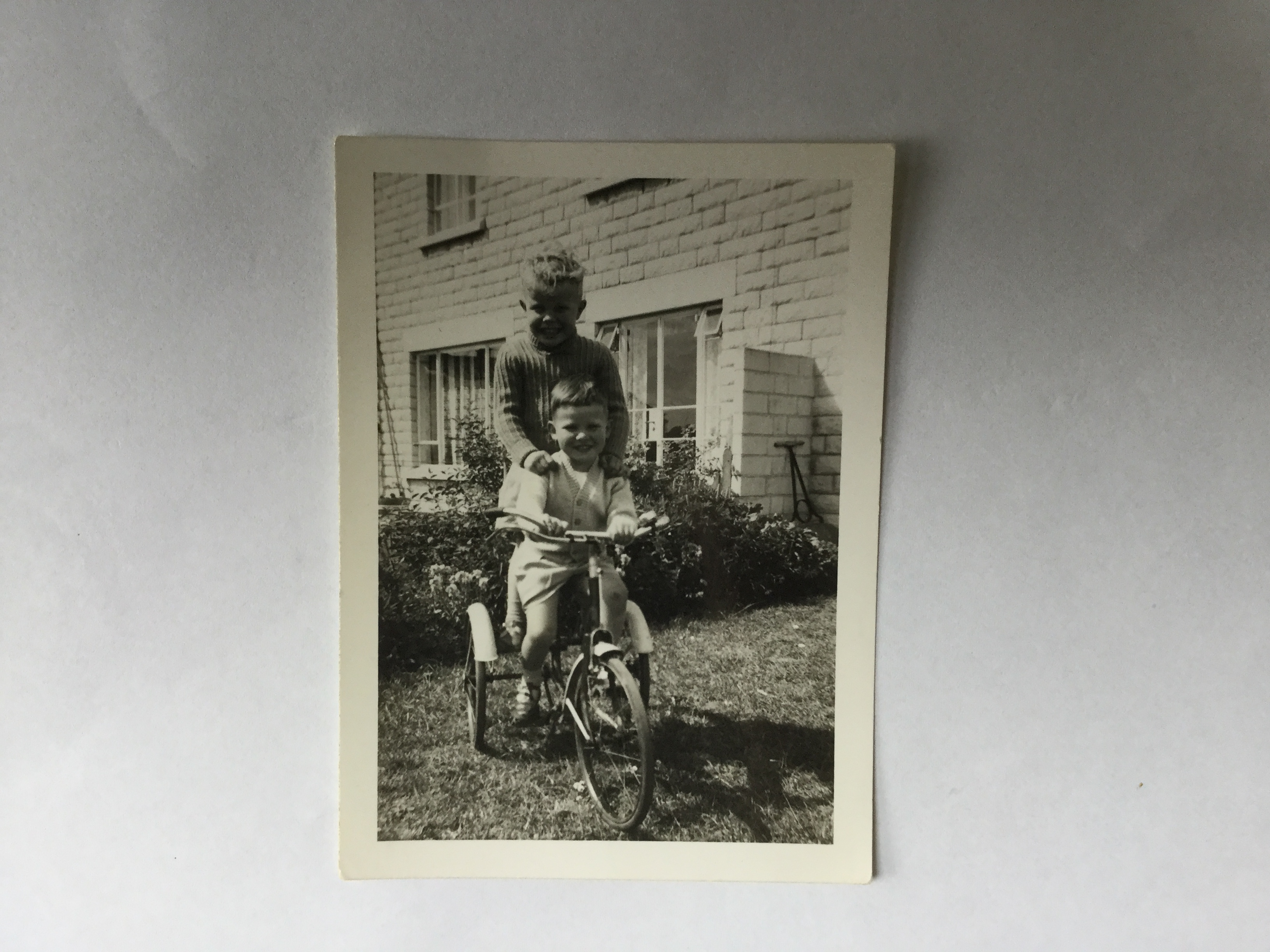
I’m doing the pedaling here – circa 1960

My parents still live there, both into their 90s, but managing with a little help to live independently. (See my earlier blog on memory and nostalgia here) It’s what has happened there over the years that makes me want to label it ‘sacred’ ground. From the Latin ‘sacer’ meaning holy, the word originally meant connected with God, sanctioned by religion, a valorisation that was religious rather than secular, a value determined from outside the sphere of the self and in the Latin words ‘sacerdos’ and ‘sanctum’ implying something cut off from the mundane, something distant.

But even in the continuing absence of any religious sense in my life, certainly any external religious authority that might determine this or that object or action as ‘sacred’ I still want to use the word – even as I confess this is a value determined solely by my own view of the world. But I do think that my sense of the ‘sacred’ is coupled with the passage of time. I don’t think anything can be instantly ‘sacred’. It has to be re-examined, worn, re-visited.

File 14-09-2015 08 33 42

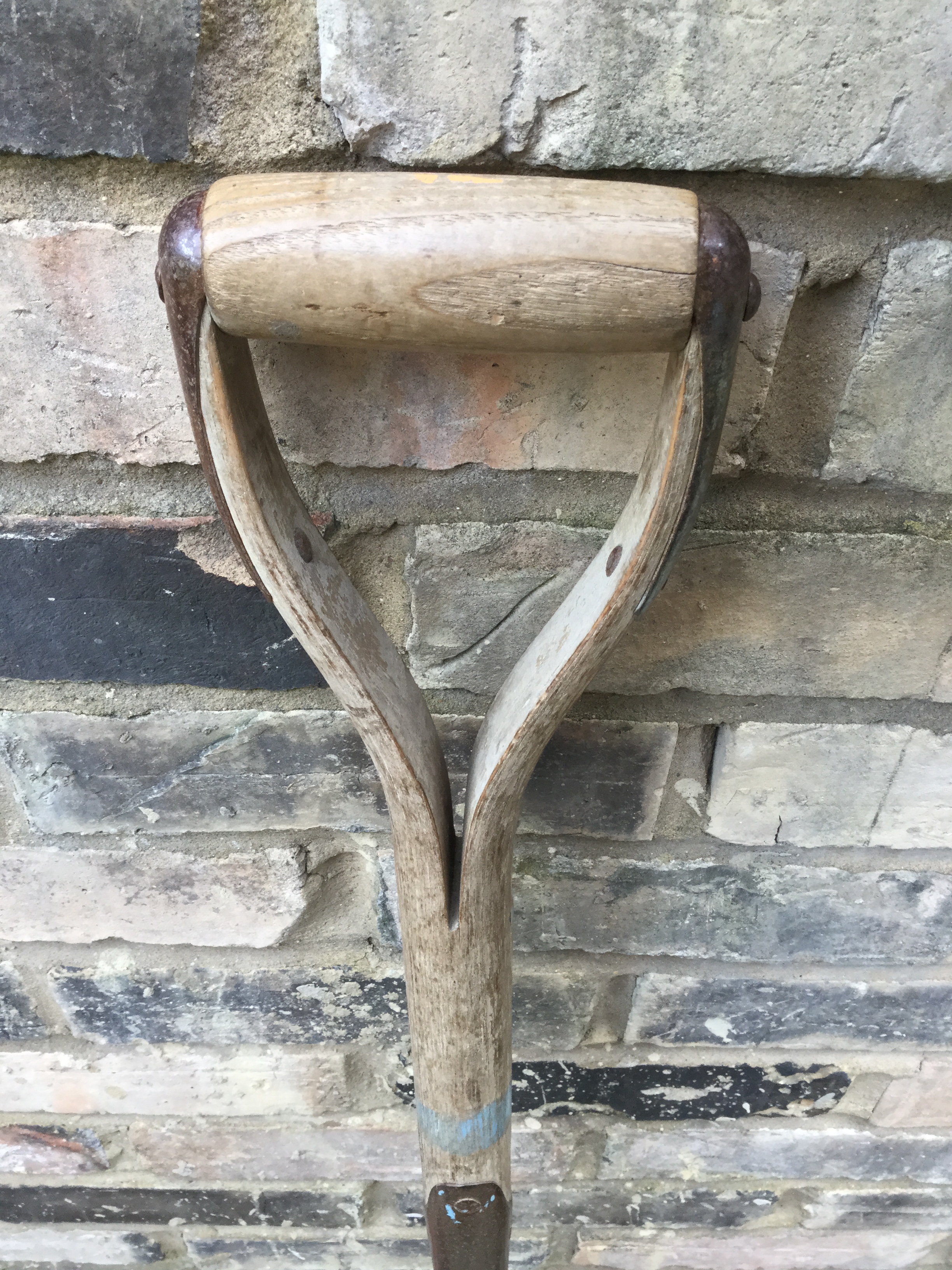
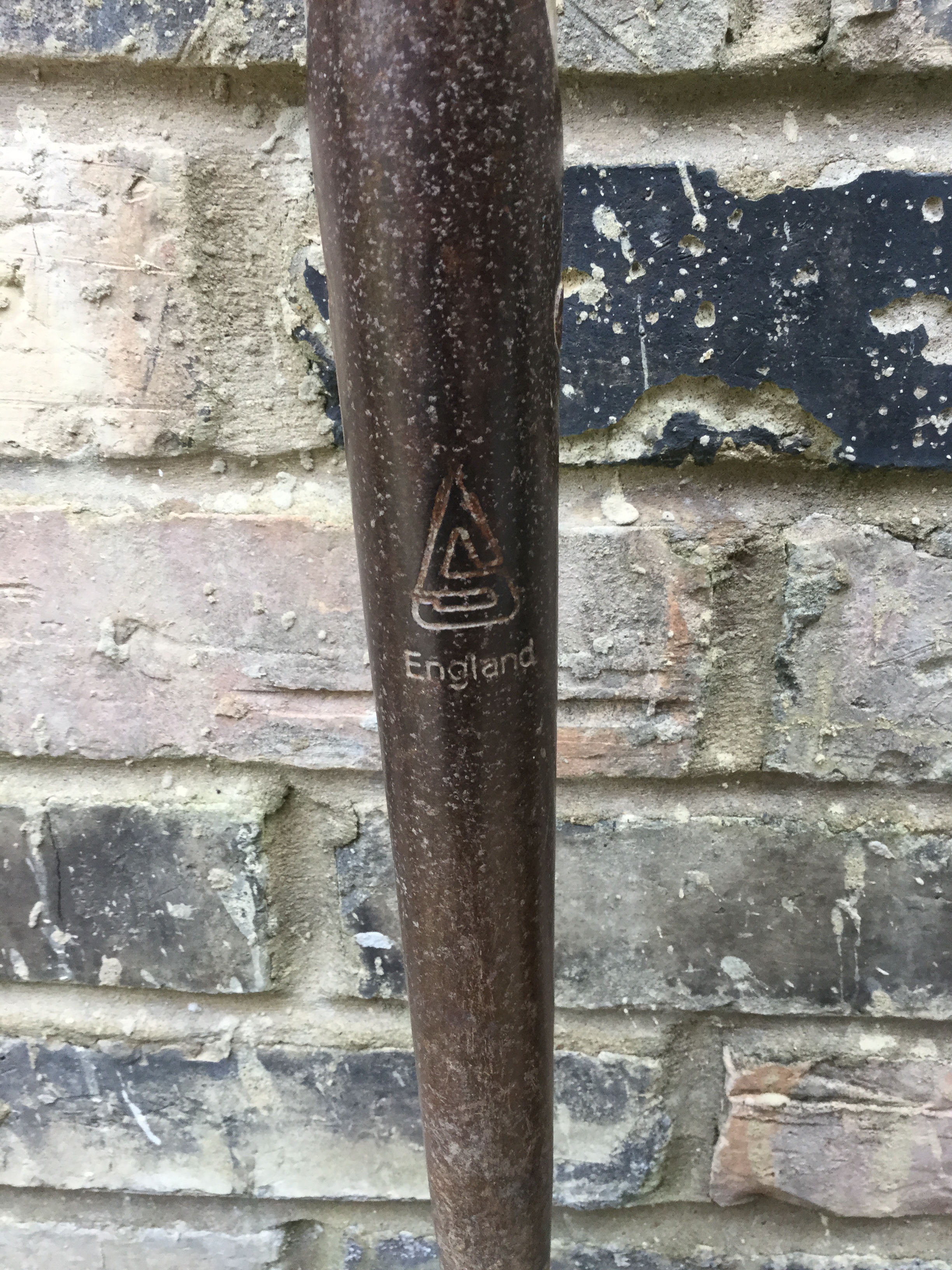
My Dad is well into that phase of old age when he wants to give everything away. There has never been very much to give, of course, and recently he has taken to wandering round the car-empty garage, picking out old tools and rather hopelessly asking myself and my two brothers whether we have any need of them, because he doesn’t any longer. The answer is really ‘no’ but occasionally I relent not to appear too ungrateful. However, on my last visit, I’d broken my flimsy Homebase-bought garden fork a couple of weeks earlier, trying to lever out a slab of paving. So when Dad offered me his old fork I took it.

File 14-09-2015 08 33 25

It’s unpromising material for sacred eminence but because his hands have held it for over 60 years, wearing the shaft smooth, because his muscles and the instep of his right foot have pressed and shoved and pulled at it over that length of time it makes the grade. Sacredness is sort of metonymic here then. It stands for him. This is something I respond to in Seamus Heaney’s poems, in particular the first part of ‘Mossbawn’, dedicated to his aunt, Mary Heaney. (Read the full poem here)

Reading it over again I’m struck by its focus on particular ‘sacred’ objects – the “helmeted pump”, the “slung bucket”, the warm wall, the bakeboard, the stove projecting its “plaque” of heat (that perfect choice of word suggestive of decorative and commemorative without becoming over-blown or monumental). His aunt’s actions and her domestic implements are likewise noted and linguistically nailed (the poet’s precision echoes his aunt’s):

Now she dusts the board
with a goose’s wing,
now sits, broad-lapped,
with whitened nails

and measling shins:
here is a space
again, the scone rising
to the tick of two clocks.

The final quatrain reverses the more usual order of figurative language to begin with the abstraction which is said to be “like” the actual object, love embedded in its everyday setting as much as the meal scoop is submerged, absorbed, integral to the meal bin, sustaining domestic life:

And here is love
like a tinsmith’s scoop
sunk past its gleam
in the meal-bin.

Heaney performs this magic in the present tense (a fact he rather flaunts with that “Now [. . .] now”) despite it being evidently a long-harboured, cherished memory. What might have been lost to the ravages of time is brought back into the present. I like to note that the word ‘holy’ dates back to the 11th century and the Old English word ‘hālig’, an adjective derived from hāl meaning “whole”, used to mean “uninjured, sound, healthy, entire, complete”. Lacking the authority of an external God, what is sunk deep into our past lives can be simultaneously brought back into the present, whole and holy, and this is what we might designate as ‘sacred’.

File 01-09-2015 09 17 39

One object from ‘Wiltshire’ I once managed to write about is the garden gate. You can just glimpse it in the background of the picture above. The adult is my own aunt (not really an aunt but my mother’s best friend). I’m on the left of her here. The poem originated in workshop exercises directed by Myra Schneider (her website is here) a few years ago now. With thanks to her, what follows is my own formulation of her process.

  1. This is an exercise in memory and tapping into feelings surrounding specific objects. It seems to work for most people and I have tried it among school children as well as with experienced writers.
  2. List a few – 2 or 3 – objects which have significance to you. They may be possessions, objects once possessed now lost, toys, gifts, even houses or rooms, but try to think of specific objects – your sense of it needs to be precise rather than diffuse.
  3. From your list select one you feel now particularly drawn to
  4. Now write a description of it. Try to avoid infusing it with any particular feeling – the more objective the better to begin with.
  5. Now underline a few phrases in what you have written which you find interesting.
  6. Now write more freely around your object, allowing in specific memories and feelings which perhaps cluster around this object, people associated with it.
  7. Again underline particular phrases and passages you like.
  8. From all this material, especially what you have underlined, try to assemble a more finished piece.

And here’s my poem – originally published in ‘An English Nazareth’ (2004)

The gate

was inch-tubular for economy’s sake,

a post-war issue for a self-built house –

Hammerite black now, but once white,


earlier cream, its soft curves and corners

a rough square between cement gate-posts.

A big-thumbed latch on the left,


beside it, a schematic sun-rise of tubing,

beneath, the squared-off wire grid

I’d work my toes into, find the springy dip


of my weight on the straining hinges,

hook in elbows and I’d swing, I’d swing.

Then a jarring crash and decrescendo:


the muddy-booted, casual back-heel

of my brother after football on the grass.

Gentle click-clank of the sneck as Mum


bent to secure it with as much care as

she shook slippy fried eggs onto my plate.

The half-way firm, suddenly stunned


impact as Dad’s hand swiped, held shut –

his sluggish pirouette and up the path,

coming home with an empty Thermos.


And then me, arms shaking at the ridges

of concrete under my trike, Dad stooping

to frame the cream gate, the hedge beyond,


the telegraph wires converging on clouds,

wires dividing the bright air at my every

effort to remember until it appears


all that muddle of love has so long gone

unremarked between us, there is no need

to hearken to it, though a bad day shows


every possible latch broken while another

is effortless, finds the point of purchase

into the give and spring and swerve and space.


Forward First Collections Reviewed – #2 Karen McCarthy Woolf

This is the second in a series of reviews I will post over the next two months of the 5 collections chosen for the 2015 Forward Prizes Felix Dennis award for best First Collection. The £5000 prize will be decided on 28th September. The shortlist is:

Mona Arshi – Small Hands (Liverpool University Press, Pavilion Poetry) reviewed here;
Sarah Howe – Loop of Jade (Chatto & Windus); reviewed here;
Andrew McMillan – physical (Cape Poetry); reviewed here;
Matthew Siegel – Blood Work (CB Editions) reviewed here;
Karen McCarthy Woolf – An Aviary of Small Birds (Carcanet) reviewed here.

*

Karen McCarthy Woolf – An Aviary of Small Birds (Carcanet/Oxford Poets): Woolf’s website.

imgres

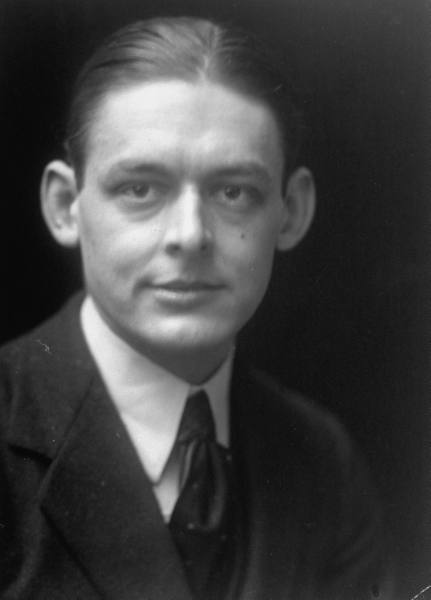
Carcanet’s colourful cover image of fluttering songbirds belies the terrific freight of grief that this book carries. The poems are presented as highly autobiographical and there are actually three deaths involved: that of a friend from cancer, a mother-in-law, and the central focus is the stillbirth of the author’s son in August 2009. The very personal nature of the materials makes critical discussion difficult but, in reading the poems, I found myself thinking of T S Eliot’s observations about what he regarded as the failure of Hamlet. This is the 1919 essay in which Eliot proposes his idea of the objective correlative, “a set of objects, a situation, a chain of events which shall be the formula of [a] particular emotion”. The emotion is re-evoked in the reader when the objective correlative is supplied by the writer. But Eliot argues Shakespeare could never quite unearth or disentangle the true emotions which he hoped would empower the play’s chain of events of a father’s untimely death and a mother’s remarriage.

tseliot_03

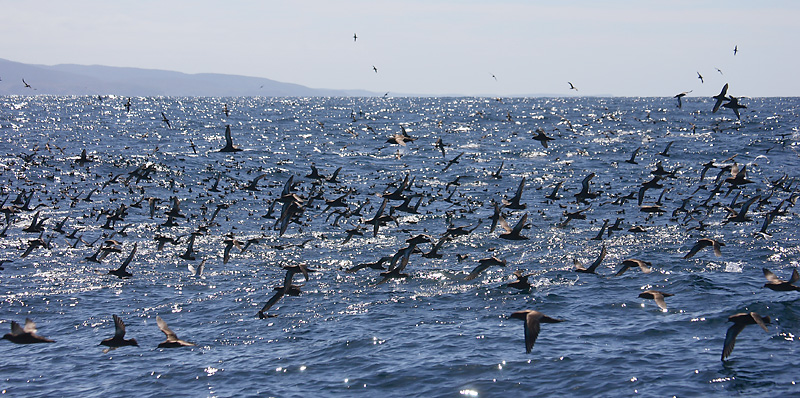
McCarthy Woolf’s book suggests something quite the opposite in that the specific emotions and key events of the child’s death always form the underlying premise on which every single one of these poems runs. This is both a strength and a weakness. The problem can be seen in ‘The Sooty Shearwaters’ which plainly describes the birds heading out to sea to feed. Their return at night time is aided by the switching off of TVs and streetlamps so the birds can “navigate by starlight / to find their young”. The birds’ cry is unique we are told; DJs come to sample it. But what the poem gives us is a chain of events, an objective correlative, which fails to evoke a strong response unless and until the reader brings to the poem the prior knowledge of the stillborn child’s loss. Only when plugged into that does the shearwaters’ determined, instinctive return to their young (and the island population’s touching assistance to that end), really gain force.

76557098.meqOaT2U.000sootyOZ9W1835

Also, as an exploration of the experience of grief, the book faces inevitable limitations because of the nature of the loss. There are several poems set in the acute moments surrounding the stillbirth and immediately afterwards but the majority are set sometime later (the book was six years in the making). Poems are arranged in a broadly chronological fashion and in an interesting reflection of the way a reader must keep in mind the premise of the original loss, many of the poems record the mother’s inability to move on from that same loss so that she, and the world around her, is repeatedly haunted by it. There are powerful moments here to be sure but no broadening religious dimension (Tennyson’s In Memoriam), no political thread (Tony Harrison’s The School of Eloquence), nor can there be any development (other than speculatively) about the nature of the lost one as in Hardy’s 1912 poems, Douglas Dunn’s Elegies, Anne Carson’s Nox, or Rilke’s Requiem for a Friend. The utterly tragic nature of the child’s loss in still birth imposes its own limits on the artistic response.

Nevertheless, An Aviary of Small Birds is admirably experimental in formal terms, some successful, others reading (surprisingly) like exercises carried out. For example, ‘The Museum of Best Laid Plans’ is a prose listing of the items on a bedside shelving unit, ending with a lock of infant hair. In contrast, ‘Morbleu’ takes us into the panic-stricken, semi-chaos of the delivery room, which is frighteningly conveyed through typographical layout and spacing: “ – we haven’t got – / a heart beat”. These are examples of the poems that stand up well independently, communicating fully to any reader whether in the context of this intensely-focused collection or not. Some of the best and most moving of other pieces take a markedly tangential approach to the tragic circumstances (perhaps the only way to approach such a grief). So ‘The Paperwork’ focuses on filling in a post-mortem form and makes powerful use of the tone and language of formality and administration so that one of the last options to be considered acquires, by contrast, even greater emotional weight: “Eyes not to be touched. / The doctor bites her lip, writes it in the box”. ‘The Registrar’s Office’ also manages to contain and convey its grief through indirectness as the bereaved mother, in a lightly punctuated flow and flurry of words, unburdens herself to the Registrar, but ends being more concerned about the windowless room in which the woman works. This illogical transference of the mother’s grief to a separate object is clear and credible and powerfully communicated to the reader.

imgres

What the book does not offer in a sustained fashion is a more forensic analysis of grief, its impact and evolution; it says mainly that grief does not go away. ‘Where Steel Clatters’ is a strong poem describing a threatening-seeming landscape of whining saws, bullet holes, “a burnt-out Renault” – but the bereaved mother is unmoved by it, having learned that “the worst things happen in brash, / fluorescent rooms where steel clatters / and silence is the total absence of movement”. ‘Starlight’ is a curbed, curtailed, halting poem – as if it were weighed down by grief – expressing more directly the desire to be “away / from the gurney // and the empty metal cot”. It is perhaps through experiences with the natural world that some sort of consolation begins to be felt. ‘The Calf’ is set off the Canary Islands and makes untypical but important use of the islanders mythic belief that “the animal you need // always comes to you”. What the bereaved mother wants is to swim with a pilot whale calf, though this is “against the law”. There is a sighting from a boat: “then he’s gone // down into the dark. / Something is better than nothing.” In fact, the poem, which has surely ended here, goes on for another four lines (over a page break) and there are a few other moments where a final edit might have been considered.

pilot-1

McCarthy Woolf has great empathy with the many animals in her poems and not only concerning the bird motif that runs through the collection. A dead hawk lying in a stream provides some “comfort” in a godless and faithless age; the “return to water, to the stream, to the earth” suggests some sort of cycle of life thing. And this is one of the most moving aspects of these poems of contemporary grief – the signal lack of outlets or rituals that might serve as ways of dealing with the loss. Latterly, rivers are imagined as speaking of the need to “endure” and the title poem itself redeploys the image of the lost child as a small bird in an aviary. The instinct of the natural creature, its need to be let go, is what teaches right action to the atomised, isolated, faithless individual of the mother in this book: though there is precious little evidence of moving on to be found in the collection, there is a realisation that it will be achieved only when the mother learns “to leave the door ajar”.

So: critical comment feels inappropriate at times with this book but it is presented to the reader as a poetry collection not a memoir. There is, throughout, a reaching for poetic variety not wholly matched by a variety of perspectives on the fundamental grief portrayed. There are several very powerful poems which I admire as technical achievements (given the powerful emotions from which they are derived, I don’t mean that as faint praise). But there are also a few make-weight pieces. McCarthy Woolf, whose book runs to only 63 pages, might, even so, have learned from the ultra-brevity and resultingly intense focus and consistency of a book like Colette Bryce’s The Whole and Rain-domed Universe (Picador), which weighed in last year at just 49 pages.

Forward First Collections Reviewed – #1 Mona Arshi

This is the first in a series of reviews I will post over the next two months of the 5 collections chosen for the 2015 Forward Prizes Felix Dennis award for best First Collection. The £5000 prize will be decided on 28th September. The shortlist is:

Mona Arshi – Small Hands (Liverpool University Press, Pavilion Poetry) reviewed here;
Sarah Howe – Loop of Jade (Chatto & Windus); reviewed here;
Andrew McMillan – physical (Cape Poetry); reviewed here;
Matthew Siegel – Blood Work (CB Editions) reviewed here;
Karen McCarthy Woolf – An Aviary of Small Birds (Carcanet) reviewed here.

************

Mona Arshi – Small Hands (Liverpool University Press, Pavilion Poetry) Mona Arshi’s webpage

imgres

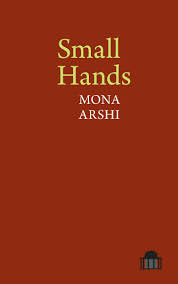
Despite the ironic lack of capaciousness implied by its title, Small Hands is a brimming miscellany of poems. Many of them suggest interesting growing points for the future, but Sathnam Sanghera’s claim that Arshi is “Britain’s most promising writer” and Moniza Alvi’s talk of “genius” is premature and liable to drag the reputation of blurb-writing even deeper into the mire. A trying-on of various recognisable styles or voices is expected of any first book, compiled as they usually are over years awaiting a publisher’s call, but Arshi’s arrival at a full collection has been swift. Publicity suggests she only turned from a profession in law to poetry around 2008. It’s for this reason that her influences (Alvi, Petit and Khalvati most obviously, perhaps Emily Berry) are so clear.

Two early poems in the book allude to the idea of catastrophe. ‘Practising Your Skills’ faces an accusation about a “tendency to catastrophise everything” and this also emerges in ‘Bad Day in the Office’ where the narrator is trying not to regard rainfall as “catastrophic”. These instances may be ‘character’ points but such a ramping or ratchetting up of the ordinary is often evident elsewhere in the book and tends to caricature, a dramatic arc-lighting, unexpected (literally cata-strophic) links between disparate ideas or images and hence a love of listing: in other words, forms of surrealism. This is something Arshi has spoken about, regarding and admiring poetry as a discourse utterly counter to the kind of language-use she once employed in the law. So ‘The Lion’ is out of Angela Carter’s The Bloody Chamber via Pascale Petit and evokes a strange relationship between a woman and an older man. It’s a powerfully disturbing poem because the male figure is accorded such power, language, sensuality, wisdom and a sort of droit de seigneur over the female narrator who seems disinclined to question the set up. As with several of the quasi-pornographic pieces by Sam Riviere, the critical question here is where lies the irony? Hard to tell, especially as this is the book’s opener.

imgres

Arshi’s somewhat whimsical surrealism is better seen in her portraits of female figures alone. ‘Cousin Migrant’ is a visitant “from the skies” as well as a paradox (“her arms are thin as margins yet she can lift my children / with ease”). The Cousin’s transgressive – or more accurately, indefinable qualities – are conveyed clearly, humourously, the narrator, in contrast, is nothing more than “a storm in a tea-cup”. The confines or otherwise of female lives are treated in more conventional poetic form in the object and memory piece, ‘The Gold Bangles’, evoked as a cultural inheritance of value though the narrator prefers to think of their owner’s wrists before the gift, “still unadorned and naked”. As here, there are several other poems that draw on Arshi’s background, born to Punjabi Sikh parents in West London. ‘Jesus Saves’ is also a more conventional poem of childhood memory, on this occasion hearing a racist speaker in 1979, on Hounslow High Street, “long after Enoch”. But elsewhere, Arshi prefers to construct enigmatic poems, hovering just beyond the edge of anything one might regard as a clear and present body of evidence. This is especially so in what seem to be ‘relationship’ poems like ‘Entomological Specimens’, ‘Practising Your Skills’ or ‘Insomniac’ which cryptically advises: “Never marry an insomniac. You will have / to mind yourself”.

At the centre of the book are several poems about the tragic loss of Arshi’s brother, Deepak, at the age of 41. These poems are moving and suggest contrasting aspects of her work: deep levels of tact and restraint. Moving through the experiences of learning of his death and the family’s adjustment to his loss in slant poems about a phone call, practical details of the mourning process, officialdom, the family garden, the urn, the loss still feels raw and unresolved and there will be more poems to come on this topic I’m sure.

Mona Arshi

The other prominent and enjoyable aspect of Arshi’s work is its sensuality and awareness of the body; this is a collection full of hands, feet, mouths, lips, eyes, wrists, hair and, ubiquitously, skin. In ‘Lost Poem’ she talks of “taking in language / through my skin” and there is a clear project developing here in that, at their best, these poems unfold through a language of the senses rather than the intellect. Elsewhere, Arshi writes of wanting to “sequester” and “foreignate” words, de-familiarising them, wresting them away from conventional denotation. I first heard her read aloud when she won the Magma Poetry Competition in 2011 with the ghazal-like poem, ‘Hummingbird’, here tucked away at the back of the book. I now read that poem against ‘The Lion’ and this is the one I prefer for its originality. The narrative voice (undefined) addresses the ‘you’ which is mostly the hummingbird itself, though as with ‘The Lion’ the creature is also interchangeably / metaphorically human. The tender, persuasive imperatives almost immediately carry an erotic charge, though where the “fingers” probe and slip is mostly into “spaces”, lacunae. But the hummingbird figure has none of the over-bearing masculinity of the lion; we are told it is capable of “curing”, dissolving, even pronouncing the speaker. But the speaker here is not as passive and compliant as in the earlier poem. Though she will allow him/her to open the “bone-zip of my spine”, the insistence of her voice gives her an active role in the relationship. The hummingbird is invited to “anoint” the speaker, a significant contrast to the shallowness of the lion’s crude “undressing”. (Arshi discusses this poem on the Magma website here)

black-n-white-hummingbird-tattoo-design

George Szirtes’ rather more restrained blurb observations suggest that he reads in Arshi’s work an “erotics of the spirit”. Without doubt, ‘The Hummingbird’ is a sexy, enigmatic, yet precisely expressed poem that is going to repay our re-reading of it. And if that is not the case with many other poems in Small Hands we should not be surprised. Arshi combines a liking for obliqueness, sometimes even coolness, with a desire to push what language can do and a willingness to experiment with form. Her cultural background is relatively unexplored here, yet promises much if that is the way she wishes to go. Not a winner of the 2015 Forward First Book award for me, but an intriguing writer, potentially a unique voice if she can achieve the right distance between herself and her powerful formative influences.

A bundle of 50 sticks for William and Juliet

Last Saturday I travelled down to Chepstow to read at an event organized by William Ayot who, with his wife Juliet, runs the On the Border series of readings. They tend to bill a Welsh poet with A. N. Other; I was the latter and Richard Gwyn the former. Richard runs the Creative Writing MA at Cardiff University and is a brilliant poet and translator from the Spanish (especially South American poetry). He read some heart-stoppingly powerful new work from three Mexican poets recently published in Poetry Wales and some of his own prose poems from Sad Giraffe Café (Arc Publications). I read from my translations of Rilke’s Sonnets to Orpheus and also extracts from The Time We Turned.

Richard Gwyn

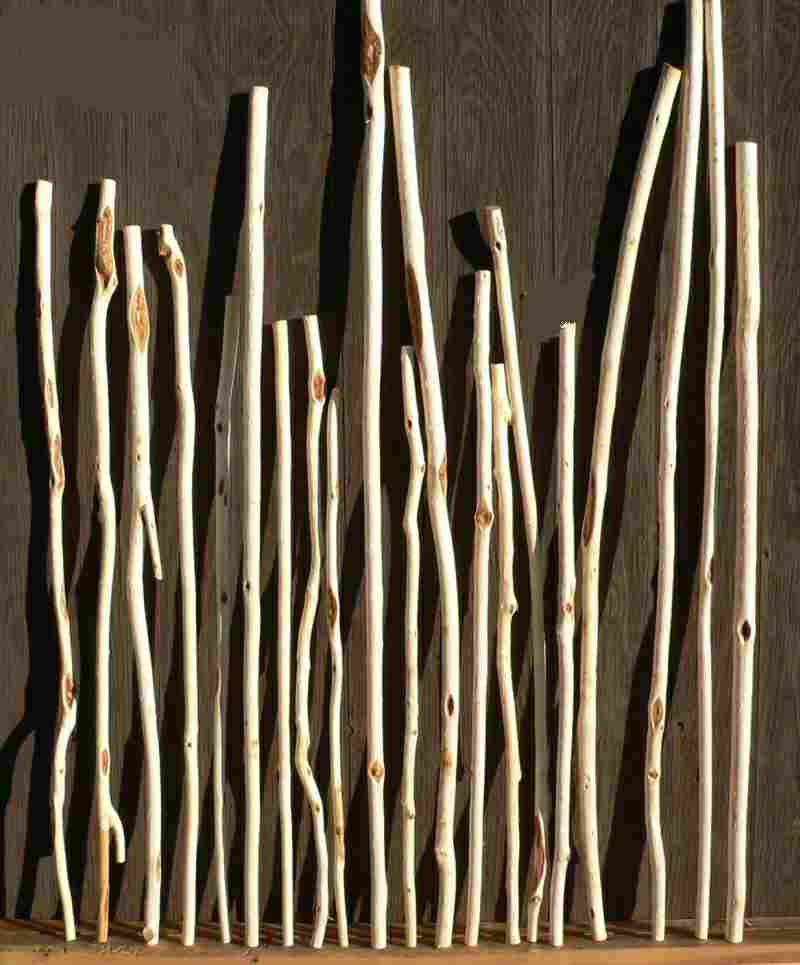
On the train down I was again reading Lee Harwood’s work (see my last blog post) and came across ‘Days and Night: Accidental Sightings – a bundle of 50 sticks for Joseph Cornell and others’. I’ve put together my own loose bundle of sticks as a modest thank you to William and Juliet for their hospitality in their extraordinary house, their passion for poetry in its widest sense, and that marvellous coronation chicken!

scout-sticks1

A bundle of 50 sticks for William and Juliet

At the track side willow belts always unkempt trunks leaning some broken

*

luminous blue sky in early May

*

On a diversionary loop the train slows as if to allow the doe standing knee deep in meadow grass to watch us as we pass we watch her

*

She wears muddy walking boots and has brought out a flask of something hot

*

clipping tickets he is careful to be polite though from those upgrading to First Class he has had money already

*

‘why do you do this’ the effect is never quite the same twice

*

In a faded green t-shirt a man walking with arms folded across his chest as if he had breasts he hoped to steady

*

mud-brown canal waters held eight of nine feet high behind a lock gate

*

An upturned wheelbarrow on a long houseboat its purple paint job a statement of optimistic intent

*

Words carve out sense as tractor tyres embrown the field’s new growth each year their lines down the hillside conclude at an iron gate

*

I feel with each mile nearer home I mean nearing the place I grew up in

*

Hills like the scarp edge of Salisbury Plain wait O this is not a likeness this is ‘the actual place’

*

a diversion to a chalk white horse full of memories

*

the Tory heartlands a tractor slowly turning over the ground

*

I ring home and wake my sleeping parents

*

‘Let’s make flying fun again’

*

a basket of split logs waits for the fire

*

On a wooden writing desk three animal skulls

*

‘quietude not inquietude’

*

Nine owl feathers in a china mug a sort of chalice

*

A glazed bowl with an assortment of matte pebbles from the beach

*

His son spoke out but the police were in bed with the FARC who saw to it he and his friends were tortured and killed can you believe it

*

I like to work I prefer to work with those who want to want to stop

*

a tall poplar tree like an exclamation mark he wrote as if to say this is it

*

One skull another skull then another skull beside another skull

*

rose gardens and orchards

*

If they haven’t killed enough by their early 20s they’re losers whose life expectancy is anyway no more than 24

*

Down to the underworld but returns if somewhat empty-handed he does return

*

mausoleums for themselves a cult of death

*

Bluebells in the hedgerows on either side of the road

*

left hand short by two digits his wife’s wrist broken by a fall

*

shut-eyed Blake above the flat-screen TV seems to offer the room a challenge

*

the watercourse way

*

Everything is a fiction the novel in your shoulder bag is the bank statement you use as a bookmark inside it that too

*

The narrative of the oh-eight crash there are other ways for it to be recounted that’s not a joke

*

Oppositional to a large degree I guess we are not pebbles from the same beach but it’s more than just rubbing along

*

A chimney balloon

*

On-line so many ‘friends’ devastated by the surprise results

*

It’s staying in places like this makes me feel a Londoner

*

He waves his paddle to let the train go then flips it up inside the back of his orange hi-viz jacket and pushing the handle into his back pocket it’s safely stowed

*

A speck of thistledown drifting up the aisle

*

attentiveness

*

banked blue rectangles squat in meadows to scoop the sunlight

*

Dirt is matter out of place but this is not dirt it is marvelously out of place

*

Red kite above the monkey puzzle

*

on an elevated hillside ahead yellow rape now level with me receding away behind

*

In tunnels my ears close as if valved

*

either that or everything is a metaphor I see myself turning socks inside out little involved packages

*

What will Rose and Richard be doing this morning

*

Wishing Iolo courage for his father’s passing

images

Visiting Cheltenham Poetry Festival 2015

Piles and piles of books: literally covering the walls of the room. Shelves labelled children’s books, philosophy, modern novels, poetry, drama, politics – my eye catches a tottering stack of those old Ladybird books I used to love to read as a kid: evocative pictures of Stone Age man bringing down a mammoth, of happy passengers on modes of public transport, of prisoners from the American Civil War. Well OK – the back room of an Oxfam book store may not seem the most pre-possessing place to listen to poetry, but there are worse, such as scrubbed-sterile galleries, cramped cellar-spaces, overly reverent thee-ay-ters, noisy pub rooms. This place – it’s in Cheltenham town centre, at the Poetry Festival – has the live feel of untidy contingency, of work in progress, a vibrant culture that is literate, ideas and books readily swopped to and fro. That feels right. Piles and piles of books in transit from one hand to another.

At Cheltenham pic
Olivia Byard and MC at Cheltenham Poetry Festival

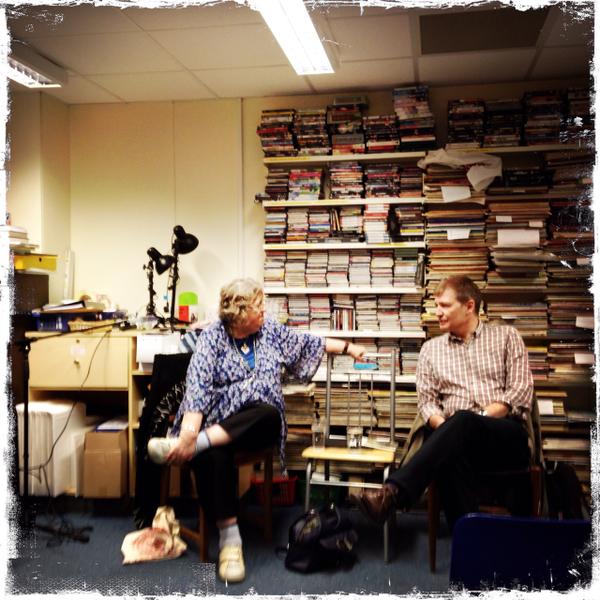
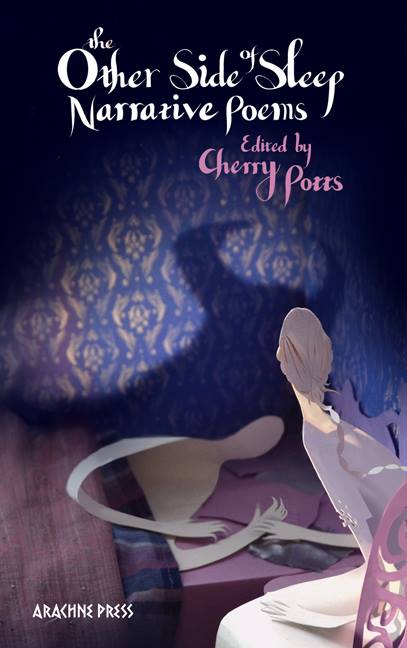
I was there on Saturday afternoon reading with Olivia Byard, both presenting work from the great Worple Press. Following our own performances there was the launch of The Other Side of Sleep, an anthology devoted to longer narrative poems. Published by Arachne Press, it’s intended as a welcome antidote to all those competitions that stipulate the standardised ‘no more than 40 lines’. Cherry Potts, the editor, introduced several voices. Jeremy Dixon read an entertaining piece about serving customers in Boots which was funny and (appropriately) repetitive – “Would you like a bag with that? Please enter your PIN”. Apart from writing his own work Jeremy produces intriguing, limited edition books at Hazard Press. Kate Foley was disappointingly unable to read her long poem (a double disappointment to me as she had also been unable to attend the recent Torriano Poetry Competition award evening I hosted in London (read my blog about the evening here).

Other side

Angela France read a fascinating poem about a story teller’s life that she cast in the form of a crown of sonnets, or corona. Wikipedia: a sequence of 14 sonnets concerned with a single theme, each linked to the preceding and succeeding sonnets by repeating the final line of the preceding sonnet as its first line. The first line of the first sonnet is repeated as the final line of the final sonnet, thereby bringing the sequence to a close. She read beautifully and with great pacing and conviction. Math Jones (a self-declared pagan) read from ‘Grithspell’, full of declarative lines and much spitting in which gods (rather belligerently to my ear) declared an end to war. In contrast, Bernie Howley (a relative new-comer to poetry) read ‘I Have No Feet’, a poem about leaping off a cliff into an Italian pool, while just behind her stood a banner with Emily Dickinson’s declaration about feeling the top of your head coming off.

imgres

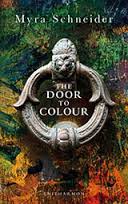
After a coffee break mid-afternoon, an event called ‘The Minotaur is Not a Monster’ featured Myra Schneider (from whose recent Enitharmon book, The Door to Colour, the event title was taken) reading alongside Anna Saunders, poet, Executive Director and Founder of the Cheltenham Poetry Festival. Myra’s work (an earlier book reviewed here) is firmly based in the real world yet capable of addressing the yearnings and concerns of the spirit, as revealed in her reading of ‘Oranges’. In Crete, on one of those coach trips round the island, groups ushered in and out of suitable sites of interest – on this occasion a café and orange grove. As a leaving gift: “a giant orange with bumps, dents, niggles / and an off-beat attempt at rotundity, / a fruit unabashed by its rusticity”. Schneider’s work shares that same unabashed quality as the poem’s narrator later stuffs her mouth with huge orange segments, juice spurting all over the sheets. But this is no sensual liberation (or not that only). The taste is as much evocative of hard work, ritual, friendship, “those rare moments / when silence suspends the ordinary / and the unattainable seems within reach”.

Saunders

One of Saunders’ poems, ‘Silks’, is rather more steamy in its sensuality and shape-shifting. A female eye; the male as snail, belly down, as “if the earth were using him / for an accordion”. A little stroking makes him “rise”, morph into butterfly, pupa, silk-worm, perhaps back to snail, its trail leaving behind his “pearlescent signature scribbled / from wall to door”. Saunder’s poems are fast-moving, flash-edited, pronouns and main verbs often jettisoned as scurf. She was a bit awkwardly introduced as a poet who had greatly improved – rightly Bernard O’Donaghue has admired her original and fresh technique – and no-one listening on Saturday would gainsay that.

Byard

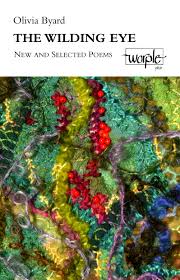
Earlier in the afternoon, Olivia Byard had read from her new and selected poems from Worple Press, The Wilding Eye: here. The title poem boldly trashes thousands of “years of husbandry” (the latter being the right word on several counts) in deciding to allow a manicured lawn to go wild. Within a couple of weeks it bears a “crown” of daisies, a “spurt of purple bloom”. One of the barriers being dismantled here is language as the very word “lawn” is forgotten, enthusiasm ramping up to addiction with each “new fix – of the rough / tough leggy fallow”. This is a ‘zoom’ poem, rapidly propelled without a backward glance towards a new world, ending breathlessly, jaggedly, venturing personal and ecological liberties, “gulping breaths, of sweet riot / and tangle”. Exciting stuff – and appropriate too as Saturday also saw the launch of Dear World, the Festival anthology with a preface by Andrew Motion. It’s sponsored by the Campaign for the Preservation of Rural England (Motion is their current President) and he argues, nodding to Wordsworth and Clare, that “big pictures are made of small details”, the ecological health of our world is reliant on the kind of observational attentiveness reflected in the writing of a poem: “use this book to inspire [. . .] to redouble our efforts to say why the countryside matters, and why it needs defending”.

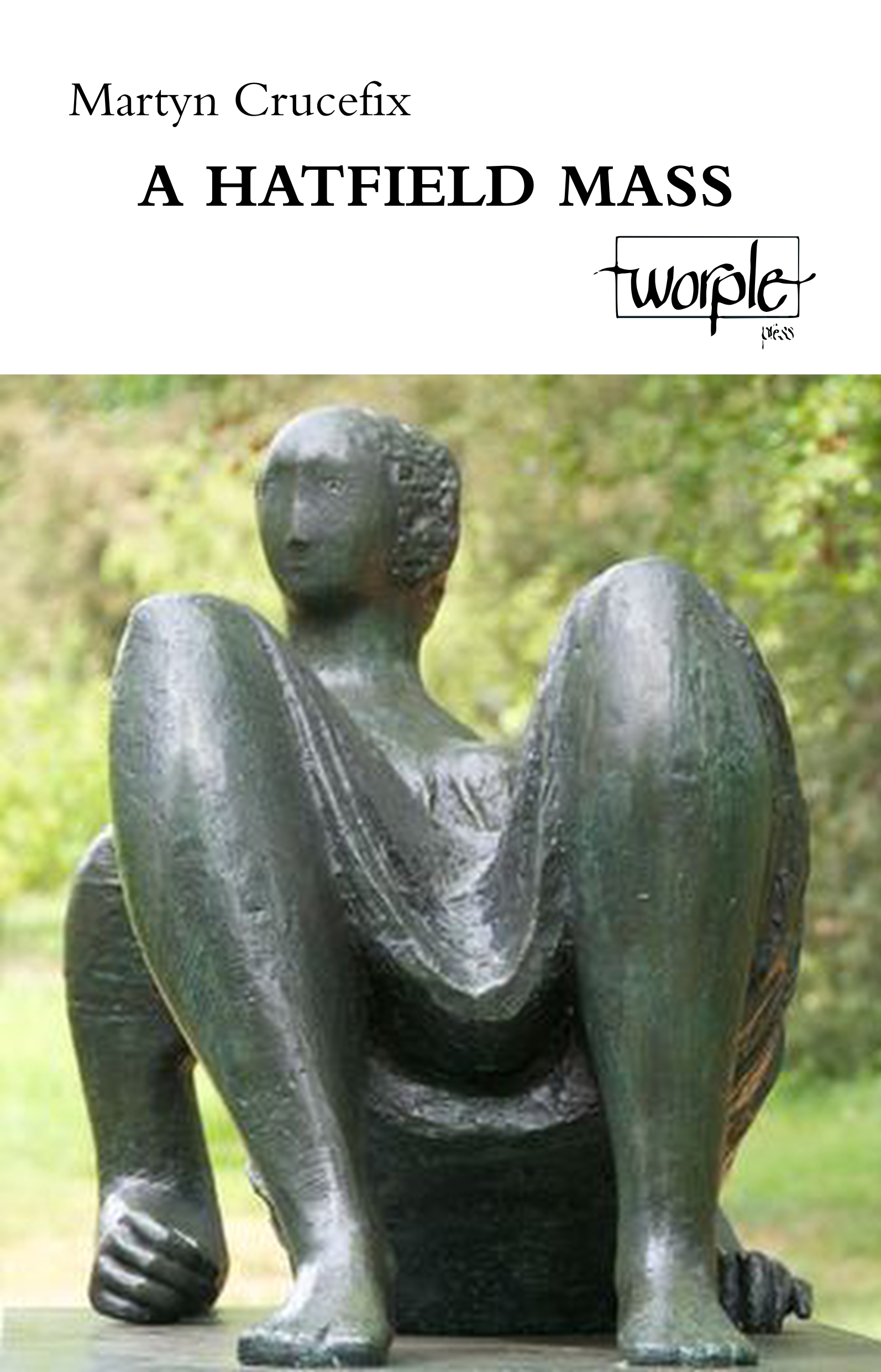
Earlier, I had the pleasure of reading from my own Worple sequence, A Hatfield Mass, subtitled ‘voice and shape in an English landscape’: here.

Back to London later, exhausted . . .

Hatfield_Mass cover 300