How to Grow your Own Iambics Part 1

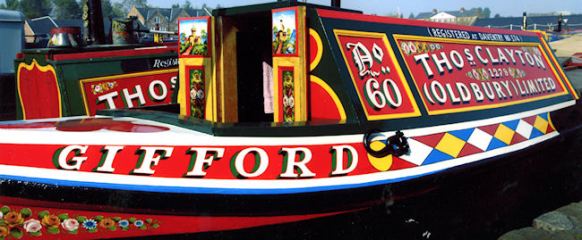
I have been teaching 3 sessions for the Poetry School in the last few weeks. I have been contributing to the ongoing course called The Construction of the Poem which takes students through the various constituent elements that go to make up a poem. It is advertised as on ‘the history and application of formal techniques’ and my brief is to cover metrical issues. Though the course is directed more at learning about such techniques than the application of them (this is partly just a matter of time restrictions), one exercise we have played around with is growing our own iambics – from little monometers great fourteeners may grow!
gifford1

The first dab of culture in the experimental petri dish is the simplest of forms, the iambic monometer. If you want to join in with this, it hardly matters what you come up with (and I certainly make no claims for what follows) partly because the exercise is also exploring Glyn Maxwell’s claim that using form will propel the poet towards “words you didn’t expect, matter you never chose, resonances that crept up around you” (from On Poetry (Oberon Books, 2012)). Michael Donaghy often suggested something similar: “Like good poets whom the tyranny of rhyme forces into the discovery of their finest lines, I’m in it for the discovery. If writing poems were merely a matter of bulldozing ahead with what you’d already made up in your mind to say I’d have long ago given it up for something more dignified” (from ‘My Report Card’ – 2000).


Because

I hope

To speak

To her

I walk

Again

Along

The way

The path

Beside

The old

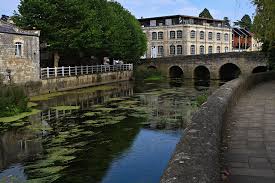
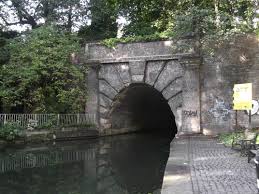
Canal


Here I’m more concerned with choosing regular iambs than making much sense. The hesitating movement of the short lines works quite well.  In the Poetry School sessions we looked at Robert Herrick’s famous poem in this metre, ‘Upon His Departure Hence’, as well as one by Karen McCarthy Woolf (‘Mort-Dieu’). Both poems use the curbed tentativeness of the metre to reflect on mortality – almost as if the form offered a safe form, a containment of (too) powerful emotion.

Now re-organise the same material as a dimeter. This will involve the composition (if that’s quite the word) of further lines simply to complete the form and this will take you into unexpected territory perhaps . . .


Because I hope

To speak to her

I walk again

Along the way


The path beside

the old canal

where children play

and mothers come


The dimeter remains a very brief line (I don’t feel much need for punctuation yet) but here the short reach of each line gives some urgency to the narrator’s hoping to speak to “her”. The reader (as much as the writer at this stage) is wondering who both narrator and hoped-for interlocutor is. The extra material begins to suggest maternal possibilities, partners, other children . . . The “again” of line 3 is also interesting – a recurrent search. Why can’t she be found. What is this need to speak to her? Why come to this location?

Now re-organise further to make a trimeter:


Because I hope to speak

to her I walk again

along the way, the path

beside the old canal,


where children play and mothers

come, where thistles bloom

in purple knots that grey

and drift across the path.


It feels natural to want to punctuate these lines now with their greater complexity and greater risk of ambiguity. The three beat lines perhaps begin to evoke the pacing of the walker? There is an issue with the 5th line in which (keeping to a strict iambic metre) the word “mothers” ought to be broken across the line break. I’ve decided to allow an extra syllable into line 5, so ending it with a feminine, weak, seventh syllable. Line 6 I’ve therefore left with one syllable short. It’s happenstance but I like the extra dwelling of a reader’s attention on “mothers” (I begin to think the “she’ is a mother, or the narrator may be a mother searching for a female child). The shortening of line 6 which refers to “thistles” also feels right; it introduces a spiky, perhaps threatening image and the shortened line creates an uneasy feel. These undoubtedly ‘fortuitous’ developments are just the sort of thing the poet has a veto over – we decide whether they stand or need to be revised further. Here, I let them stand.
imgres

Next stage is an iambic tetrameter – four iambs per line:


Because I hope to speak to her

I walk again along the way,

the path beside the old canal,

where children play and mothers come,

where thistles bloom in purple knots

that grey and drift across the path,

here strewn with wrappers torn from sweets,

with needles dropped another day,

where users lean and drift, ascend

above the clouds and steeple cock.


Woah! No – I don’t know where this is heading . . . The longer length of line now begins to give a more conversational feel. This four beat line (either with accentual-syllabic or plain stress metre) is probably the most common in English verse. I think of it (and the good old iambic pentameter) as sort of neutral spots on the metrical continuum – neither too tightly bound nor loosely adrift). The greying of the thistles now seems to allude to aging (of the narrator?), certainly to time passing, time on her mind. The sweet wrappers make a clear gesture towards childhood; the discarded needles strike a far more ominous note (if a bit clichéd). Is the narrator seeking a child, no longer a child, has she become involved with drug abuse?


If you want to see this poem developing into an iambic pentameter – and find out (with me) what the poem is really about – I’ll post the remainder of this blog on Monday.

Lots of Poetry, Too Little Cake

breakingsmall

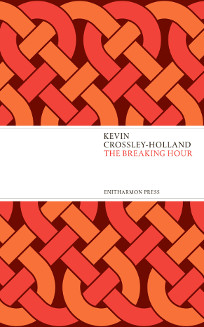
Last Saturday I attended one of the half-yearly poetry events in Palmers Green, north London. These are always very good evenings, these days full of music as well as poetry as the Helios Consort of recorders play before and after the interval. Kevin Crossley-Holland was reading (a superb poet, as well as all his other literary achievements) as was Sarah Westcott (recently published by Pavilion – having just won the Manchester Cathedral Poetry Competition) and Katherine Gallagher, launching her new Arc collection – about which someone called Crucefix has blurbed:

This new collection is bejewelled throughout with haiku-like moments of vivid observation. Her delighted responses – in particular to the natural world – serve to peel away the film of familiarity through which we usually gaze. Yet Gallagher combines such excited observation with a quality of restraint, a respect for what she encounters in a process of self-creation – “from myself into myself” as her epigraph from Rose Auslander puts it. Sequences about her Australian mother and the loss of her brother are imbued with this same gift: life is celebrated in poems that never forget our mortality: “This is time we have underlined, / remembering what we’ve done, where we’re going” (‘Quotidian’).

On the following morning I was taking part in the Bloomsbury Festival, talking about the art of translation with Chris Campbell, Literary Manager, Royal Court Theatre and Gregory Thompson, Creative Entrepreneur in Residence at UCL. Chaired by Geraldine Brodie, Lecturer in Translation Theory and Theatre Translation at UCL, the talk – in the very comfortable, wood-panelled surroundings of the Churchill Room, Goodenough College, London House, Mecklenburgh Square, London – was really wide-ranging from Gregory’s experiences of directing Shakespeare in the Indian sub-continent and the kind of cultural translation that takes place on such occasions to Chris’s translations of drama texts to and from the French and French-Canadian. One issue there is the translation of comic references such as cricket allusions or types of motor cars (I think he suggested a Vauxhall Cavalier equivalent in a French cultural context would be a Renault 21). I thought there was quite a bit of common ground when I was explaining how I fell into translation through the need to stand up and declaim/read/perform translations which I felt did not really convince in English. This is how I began the idea that I might try to translate Rilke’s 9th Duino Elegy many, many years ago – I could not find a version that read well aloud. I still regard that as a key test.

c45407b1ab4103bca137a0808bc8c042

This idea that poetry ought to be read aloud is common enough in most writing workshops but I do wonder how many people really adhere to it. This came up again with my third engagement of the busy weekend – teaching my first session for the Poetry School on ‘music and metre’ on Monday evening. As I explained to the class, formal verse is not especially my thing but it is also an area I have had to teach on various occasions. I kicked off by reading James Fenton’s powerful poem ‘Tiananmen’ – see below – and Auden’s observations about the benefits of form:

images

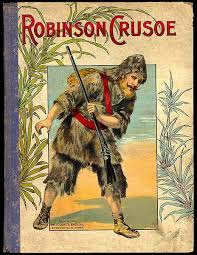
The poet who writes ‘free’ verse is like Robinson Crusoe on his desert island: he must do all his cooking, laundry and darning for himself. In a few exceptional cases, this manly independence produces something original and impressive, but more often the result is squalor – dirty sheets on the unmade bed and empty bottles on the unswept floor.

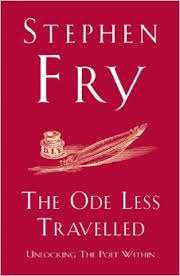
I love the swipe at “manly independence” there. Not very surprisingly, this observation is quoted by Stephen Fry in his The Ode Less Travelled (Hutchinson, 2005) which also suggests modern poetry, because of its abandonment of formal constraints is now “laughably easy” to write. Elsewhere Fry describes most contemporary poetry as suffering from anaemia; it’s a lifeless trickle, rhetorically listless . . . Fry doesn’t mind setting himself up like this – and tucked away in the book you’ll also find his appreciation of Whitman, Anne Carson, Denise Riley and many others.

imgres

I told the class, having spoken to a fair number of poets recently about form, that they’d be surprised (or maybe not) how few published poets would confidently declare their own grasp of metrical matters. On the night, we didn’t get along as fast as I’d anticipated – there was good discussion, especially of the areas of inevitably uncertainty in scanning a poem etc – it’s like jazz?? – so I’m looking forward to picking up the themes again next Monday evening with Tony Harrison, Wordsworth, Stevens, Elizabeth Jennings . . .

Now I’m feeling a bit poetry-ed out. Coffee and cake are required . . . after this:


Tiananmen – James Fenton

Tianamen
Is broad and clean
And you can’t tell
Where the dead have been
And you can’t tell
What happened then
And you can’t speak
Of Tianamen.

You must not speak.
You must not think.
You must not dip
Your brush in ink.
You must not say
What happened then,
What happened there
In Tiananmen.

The cruel men
Are old and deaf
Ready to kill
But short of breath
And they will die
Like other men
And they’ll lie in state
In Tianamen.

They lie in state.
They lie in style.
Another lie’s
Thrown on the pile,
Thrown on the pile
By the cruel men
To cleanse the blood
From Tianamen.

Truth is a secret.
Keep it dark.
Keep it dark.
In our heart of hearts.
Keep it dark
Till you know when
Truth may return
To Tiananmen.

Tiananmen
Is broad and clean
And you can’t tell
Where the dead have been
And you can’t tell
When they’ll come again.
They’ll come again
To Tiananmen.

imgres
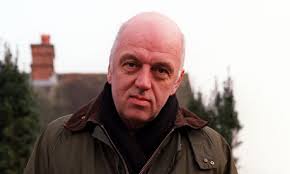
James Fenton


The Politics of the ‘Daodejing’

IMG_0217.JPG

I travelled north to Bradford earlier this week to read from my versions of the Daodejing. For the first time a reader of Mandarin was present to read from something approaching the original texts. Bradford artist Yan Wang read beautifully as well as providing the evening with a couple of large banner-scrolls of chapters from the text. The whole evening had been organised by an old friend, Bruce Barnes, a poet and tireless organiser and more recently translator of long-neglected work by Kosuke Shirasu, a Japanese proletarian writer from the 1920/30s. I read Bruce’s ‘interpretations’ of Shirasu’s work (done with the help of Jun Shirasu and published as Out of his struggles (Utistugu Press, Bradford) on the train back to London and it reminded me that I had wanted for a while to organise my thoughts about the political elements in the Daodejing poems. (Poem titles in brackets are those I have given to the individual ‘chapters’ of the text).

img_0215

It’s generally accepted that one of the purposes of the collection of texts called the Daodejing is to instruct about good government. Chapter 46 (Annexation) argues that when government adheres to the Way – the teachings of the Daoist ideas – then its great parades of horses “are put out to grass to fertilise the ground”. It’s when government neglects the Way that its “war horses sire and foal / even on sacred ground”. Such neglect leads to personal and political “unsteadiness” which Chapter 26 (‘Breath-taking Scenes’) identifies as the “loss of all authority”. This is authority in its truest sense because in other poems we read of aggressive, power-grabbing behaviour which is also a way of neglecting Daoist ideas. Chapter 29 (‘What is Fixed’) describes those who grab at “earthly power” who are as liable to smash it as gain any advantage.

One of the key chapters, 67 (‘Three Treasures’) goes so far as to suggest that “only one reluctant to grasp power / is properly capable of government”. One clear attitude in these poems is that busy, hyperactive government – one that “grows brisk full of initiatives” – is an error:


those who hope

to rule by dishing out

press releases

a multiplicity of choices

are the con-men

of the nation

Chapter 65 (‘Blizzard’)

imgres

This distrust of big government is compounded when those with power try to ingratiate themselves with those they rule. With very little modernisation, the Daodejing is suspicious of those politicians who “style themselves ‘man of the people’ / sometimes ‘housewife’ / they like to say ‘we are all in this together’” (Chapter 39). What lies behind such cynical declarations is a real hunger for power as an exercise of ego (not true government). Laozi is very clear that such egoistic motives lead only in one direction for a nation: war.


–those who govern my teacher says

must oppose conquest by force of arms


such methods swiftly rebound

thorn and bramble where troops assemble

Chapter 30 (‘Scorched Earth’)

nuclear_artillery_test_grable_event_-_part_of_operation_upshot-knothole

Leaders (and the Daodejing never really doubts that human society needs leaders of a sort) need to adhere to the Way and encourage their people to do the same. Chapter 37 (‘Dispassion’) puts it succinctly:


—the way enacts nothing yet through it all things are achieved

if the powerful

possessed themselves of it

the ten thousand would be transformed


once transformed if they begin

to demand action

they ought to be constrained

with the uncarved wood quality of namelessness


the unconditional quality of the nameless

evokes dispassion—

hence it is to be still


so the nation pursues its way in peace


This idea of ‘constraint’ begins to sound authoritarian again but elsewhere it appears our political leaders are being advised not to over-encourage our expectations. Chapter 19 (‘Fewer Wishes’) advises that a people’s restlessness ought to be dealt with by offering them “simplicity / to behold give them the uncarved block // give them selflessness give fewer wishes”. In our world of unconfined desire and acquisitiveness (the point of being alive?) this sounds suspect perhaps but is perfectly in line with those who choose to opt out of modern life towards simplicity, fewer possessions etc. The uncarved block is a recurring image representing the fullest presence of life and experience before we begin to hack away at it with our self-centred preconceptions. The three virtues of the Daodejing are to be compassionate, to be frugal and to lack ambition.

daodejing

The point is that Daoist thinking is optimistic about human nature. There is a Rousseauistic quality to its belief in the goodness of mankind as a noble savage who has for too long been corrupted by interference, too many codes of behaviour imposed from above. This is where the poems’ anti-Confucian elements are most obvious. Chapter 18 (Codes of kindness’) argues it’s only when the Way “falls into disuse / codes of kindness thoughts / of morality evolve”. Laozi argues we are better off without such rules of codified behaviour. This is not quite anarchism but certainly a powerfully libertarian thread runs through the work. In one of the most striking images in the whole sequence, Chapter 60 (‘Recipe’) compares true government to the cooking of a “delicate fish”. It requires the gentlest of touches:


no agitation

or any demon

or the fretting

of your own spirit


no shuffle or harm

or sudden injury

but aid and attend

gain advantage


the power to feed

the common purpose

maxresdefault

It’s this delicacy, gentleness, almost passivity of government that leads Laozi to associate this approach with the stereotypically ‘female’. Early on, in Chapter 6 (‘Valley’) we are told the spirit of the Way is “[a] valley without end / it is female it is called mysteriousness”. This translates politically into government playing a largely passive role (as does the good teacher) to show, facilitate, enthuse, give space, watch and approve. Government must be honest, give the tools, give opportunities, do its job well. Its role is to synthesise and connect (not disconnect or sever), shed light (but without dazzling, even inadvertently), use a delicate touch, be tangential. Its actions call forth responses to the fact it acts, plans, demands. Better back off, do not intervene, don’t use imperatives, perhaps use no words at all. It is better to play the female part, be passive, give space, encourage desired behaviours, neglect all else.


Tributaries

chapter 61


—strong nations must play the low ground

to which all contributing waters flow

the point to which all things converge

so their invitations issue from stillness

through quiescence they gather power

let’s call that female and the male cannot

resist he brings his watery tributes

and she gains adherents he procures favour

as she looks to embrace and empower

he finds himself part of a greater thing

in this way becomes part of creation

so both thrive both discovering bliss—

real power is female it rises from beneath

Study of a Kneeling Boy Bending a Bow, for Dorchester House c.1860 by Alfred Stevens 1817-1875

Like the cooked fish, another memorable image is the bending of a bow. As it is bent the top (of society) descends earthwards while what is “nearest the earth is raised up”. This is the ideal process of government in the Daodejing. Only in Chapter 80 (‘The Commonwealth’) does Laozi give something of a portrait of the contentedly ruled society. It is small, hard-working, has basic needs met; it has the capability of greater luxury (and also weapons) but none of these are made use of. This little society is aware of others around it (perhaps run on different lines) but its people are so content they feel no desire to travel.

Idealistic without doubt. But does this even sound attractive? It’s unlikely to – given our absorption into our consumerist society, our expectations that government ought to provide and lead. But we don’t need to look far to see systems breaking down and at the least what the Daodejing offers is an alternative vision of the exercise of power in society. It’s a vision that is over 2000 years old which means it’s either well past its sell-by-date or that it contains some wisdom that we ought not to ignore.

Autosave-File vom d-lab2/3 der AgfaPhoto GmbH
Martyn and Yan Wang reading from the ‘Daodejing’ for Beehive Poets, Bradford

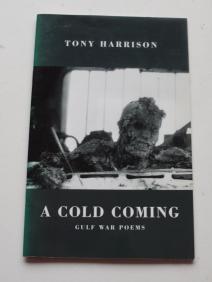
Tony Harrison’s ‘A Cold Coming’

I have been thinking about the role of metre in poetry in preparation for 3 evening sessions I have been asked to teach for the Poetry School in London. The sessions are part of a wide-ranging course on some of the basics of poetry (other parts of it will be taught by Tim Dooley, Judy Brown, Claire Crowther and Matthew Caley). Also, last Saturday I attended the Free Verse Poetry Book Fair in Red Lion Square, London. There – apart from spending too much money on poetry books and chatting with people who had come from all over the country – I listened to a discussion about the role of poetry in relation to politics. Fiona Moore chaired a discussion involving Choman Hardi, Bill Herbert, Sophie Mayer and R A Villanueva. Ideas put forward included the delicate issue of ‘using’ the experience of others in political poetry as well as the need to work polyvalently or collaboratively to combat the influence of unquestioned language and form. Herbert quoted W S Graham’s line: “What is the language using us for?” At the confluence of these two biographical moments I found myself thinking of Tony Harrison’s solutions to the poetry/politics issue – in part through his use of formal metre. The following discussion of Harrison’s Iraq War poem, ‘A Cold Coming’, originally appeared in book form in Tony Harrison: Loiner (Clarendon Press, 1997), edited by Sandie Byrne.

imgres

Harrison has declared his commitment to metrical verse because “it’s associated with the heart beat, with the sexual instinct, with all those physical rhythms which go on despite the moments when you feel suicidal”. In conversation with Richard Hoggart, he explains that without the rhythmical formality of poetry he would be less able to confront, without losing hope, his favoured themes of death, time and social injustice. “That rhythmical thing is like a life-support system. It means I feel I can go closer to the fire, deeper into the darkness . . . I know I have this rhythm to carry me to the other side”.

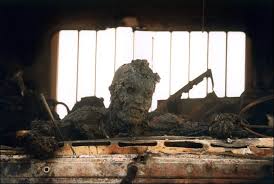
There are few of Harrison’s poems that go closer to the fire than the second of his Gulf War poems, ‘A Cold Coming’. Its initial stimulus, reproduced on the cover of the original Bloodaxe pamphlet, was a photograph by Kenneth Jarecke in The Observer. The picture graphically showed the charred head of an Iraqi soldier leaning through the windscreen of his burned-out truck which had been hit by Allied Forces in the infamous ‘turkey-shoot’ as Saddam’s forces retreated from Kuwait City. In the poem, Harrison makes the Iraqi himself speak both with a brutal self-recognition (“a skull half roast, half bone”) as well as a scornful envy of three American soldiers who were reported to have banked their sperm for posterity before the war began (hence, with a scatological nod to Eliot, the title of the poem). There are undoubtedly echoes in the Iraqi’s speech of the hooligan alter ego in the poemV’, yet Harrison worries little over any narrow authenticity of voice in this case, and he does triumphantly pull off the balancing act between the reader’s emotional engagement with this fierce personal voice and a more universalising portrayal of  a victim of modern warfare. Furthermore, it is Harrison’s establishment and then variation of the poem’s metrical “life-support system” that enables him to achieve this balance, to complete a poem which weighs in against Adorno’s view that lyric poetry has become an impossibility in the shadow of this century’s brutality.

imgres

The poem’s form – rhymed iambic tetrameter couplets – seems in itself chosen with restraint in mind, as if the photographic evidence of the horror lying in front of him led Harrison to opt for a particularly firm rhythmical base “to carry [him] to the other side”. Indeed, the opening five stanzas are remarkable in their regularity with only a brief reversed foot in the fourth line foreshadowing the more erratic energies soon to be released by the Iraqi soldier’s speech:


I saw the charred Iraqi lean

towards me from bomb-blasted screen,


his windscreen wiper like a pen

ready to write down thoughts for men.


The instant the Iraqi’s voice breaks in, the metre is under threat. Each of his first four stanzas opens with trochaic imperatives or questions and at one point he asks if the “gadget” Harrison has (apparently a tape-recorder but a transparent image of poetry itself) has the power to record “words from such scorched vocal chords”. Apart from the drumming of stresses in lines such as this, Harrison deploys sibilance, the alliteration of g’s and d’s, followed by an horrific mumbling of m’s to suggest the charred figure’s effortful speech in the first moments of the encounter. Regularity is re-established the moment the tape-recorder’s mike is held “closer to the crumbling bone” and there is a strong sense of release from the dead man’s initial aggressive button-holing as his voice (and the verse) now speeds away:


I read the news of three wise men

who left their sperm in nitrogen,


three foes of ours, three wise Marines,

with sample flasks and magazines . . .

10051408090


In the stanzas that follow the dead man’s angry, envious sarcasm is controlled within the bounds of the form and it is rather Harrison’s rhymes which provide much of the kick: God/wad, Kuwait/procreate, fate/ejaculate, high tech’s/sex. It is only when the man demands that Harrison/the reader imagines him in a sexual embrace with his wife back home in Baghdad that the metrical propulsion again begins to fail. It is in moments such as this that the difficult emotional work in the poem is to be done. This is our identification with these ghastly remains, with the enemy, and it is as if the difficulty of it brings the verse juddering and gasping to an incomplete line with “the image of me beside my wife / closely clasped creating life . . .”

The difficulty of this moment is further attested to by the way the whole poem turns its back upon it. Harrison inserts a parenthetical section, preoccupied not with the empathic effort the dead Iraqi has asked for but with chilly, ironic deliberations on “the sperm in one ejaculation”. Yet all is not well, since this section stumbles and hesitates metrically as if Harrison himself (or rather the persona he has adopted in the poem) is half-conscious of retreating into safe, calculative and ratiocinative processes. Eventually, a conclusion yields itself up, but it is once again the metrical change of gear into smooth regularity (my italics below) that suggests this is a false, defensive even cynical avoidance of the difficult issues raised by the charred body in the photograph:


Whichever way Death seems outflanked

by one tube of cold bloblings banked.


Poor bloblings, maybe you’ve been blessed

with, of all fates possible, the best


according to Sophocles i.e.

‘the best of fates is not to be’


a philosophy that’s maybe bleak

for any but an ancient Greek . . .

imgres

That this is the way to read this passage is confirmed by the renewed aggression of the Iraqi soldier who hears these thoughts and stops the recorder with a thundering of alliterative stresses: “I never thought life futile, fool! // Though all Hell began to drop / I never wanted life to stop”. What follows is the Iraqi soldier’s longest and most impassioned speech, by turns a plea for attention and a sarcastic commentary on the collusion of the media whose behaviour will not “help peace in future ages”. Particular mention is given to the “true to bold-type-setting Sun” and, as can be seen from such a phrase, Harrison once more allows particular moments of anger and high emotion to burst through the fluid metrical surface like jagged rocks. There is also a sudden increase in feminine rhyme endings in this section which serves to give a barely-caged impression, as if the voice is trembling on the verge of bursting its metrical limits and racing across the page. This impression is further reinforced in the series of imperatives – again in the form of snapping trochees at the opening of several stanzas – that form the climax to this section of the poem:


Lie that you saw me and I smiled

to see the soldier hug his child.


Lie and pretend that I excuse

my bombing by B52s.


The final ten stanzas culminate in a fine example of the way in which Harrison manipulates metrical form to good effect. In a kind of atheistic religious insight, the “cold spunk” so carefully preserved becomes a promise, or perhaps an eternal teasing reminder, of the moment when “the World renounces War”. However, emphasis falls far more heavily on the seemingly insatiable hunger of the present for destruction because of the way Harrison rhythmically clogs the penultimate stanza, bringing it almost to a complete halt. The frozen semen is “a bottled Bethlehem of this come- /curdling Cruise/Scud-cursed millennium”. Yet, as we have seen, Harrison understands the need to come through “to the other side” of such horrors and the final stanza does shakily re-establish the form (though the final line opens with two weak stresses and does not close). However, any naive understanding of the poet’s comments about coming through the fire can be firmly dismissed. This is not the place for any sentimental or rational synthetic solution. Simply, we are returned to the charred face whose painful, personal testament this poem has managed to encompass and movingly dramatise but without losing its form, thus ensuring a simultaneous sense of the universality of its art and message:


I went. I pressed REWIND and PLAY

and I heard the charred man say:


i.m. Yves Bonnefoy: love the bouquet for its hour

images

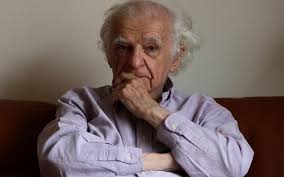
The death of Yves Bonnefoy (on 1st July 2016) was marked last week by The Guardian and The New York Times and many others. Anybody who has followed this blog for a while will know that I have found considerable inspiration in Bonnefoy’s poetry and writing about poetry. John Naughton in The Guardian obit sums up the nub of Bonnefoy’s thought: “we tend to replace the reality of things and other people with an image or concept, which deprives us of a more direct and immediate experience he called the experience of “presence”, in which one has a fleeting apprehension of the essential oneness of all being”. That latter phrase will explain how I have stumbled my way in recent years from translating Rilke to versioning the texts of the Daodejing.

imgres

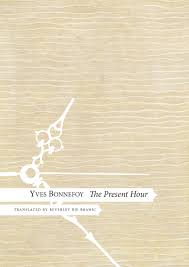
The NYT obit suggests Bonnefoy’s poetry has often been found “highly abstract and often obscure” and to counter this misleading impression I thought I’d post four sonnets from his 2011 collection L’heure presente (The Present Hour) in Beverley Bie Brahic’s pellucid translations. Bonnefoy is thinking of his own father here (who died when the poet was young) but the valedictory tone seemed right for the occasion. Bonnefoy translated a great deal of Shakespeare and (in part – he’s also arguing with Mallarme) the fourth of Bonnefoy’s sonnets is in dialogue with the ideas of Sonnet 63 (“His beauty shall in these black lines be seen, / And they shall live, and he in them still green”). It’s a mark of Bonnefoy’s achievement that even in such an emotional, personal context, he can still articulate ideas about language (“words cut”) and the way in which “the real flower becomes metaphor” by bleeding the temporal and in doing so yields up a great deal of what it means to be real. Instead, we must “love the bouquet for its hour. / Only at this price is beauty an offering”.


A Photograph

This photograph—what a paltry thing!

Crude colour disfigures

The mouth, the eyes. Back then

They used colour to mock life.


But I knew the man whose face

Is caught in this mesh. I see him

Climbing down to the boat. Obol

Already in his hand, as if for death.


Let the wind rise in the image, driving rain

Drench it, deface it! Show us

Under the colour the stairs streaming water!


Who was he? What were his hopes? I hear

Only his footsteps descending in the night,

Clumsily, no one to give him a hand.


Another Photograph

Who is he, astonished, wondering

Whether he should recognise himself in this picture?

Summer, it seems, and a garden

Where five or six people gather.


And when was it, and where, and after what?

What did these people mean to one another?

Did they even care? Indifferent

As their death already required of them.


But this person, who looks at—this other,

Intimidated all the same! Strange flower

This debris of a photograph!


Being crops up here and there. A weed

Struggling between house fronts and the sidewalk.

And some passers-by, already shadows.


A Memory

He seemed very old, almost a child;

He walked slowly, hand clutching

A remnant of muddied fabric.

Eyes closed, though. Oh—isn’t believing


You remember the worst kind of lure,

The hand that takes ours to lead us on?

Still, it struck me he was smiling

When, soon, night enveloped him.


It struck me? No, I must be wrong.

Memory is a broken voice,

We hardly hear it, even from up close.


Yet we listen, and for so long

That sometimes life goes by. And death

Already says no to any metaphor.


I Give You These Lines . . .

I give you these lines, not that your name

Might ever flourish, in this poor soil,

But because trying to remember—

This is cut flowers, which makes some sense.


Some, lost in their dream, say ‘a flower’,

But it’s not knowing how words cut

If they think they denote it in what they name,

Transmuting flower into its idea.


Snipped, the real flower becomes a metaphor,

This sap that trickles out is time

Relinquishing what remains of its dream.


Who wants now and then to have visits

Must love the bouquet for its hour.

Only at this price is beauty an offering.

06bonnefoy-obit-master768

Reading Archive: April – June 2016

Up-dated June 2016

This is turning out to be the place where I often admit my lacks and ignorance. Elizabeth Bishop – apart from 3 or 4 of the obvious poems – has always been something of a blank spot with me. I have been re-reading her Complete Poems and understanding maybe my problem lies in getting to like her earlier work before A Cold Spring (1955). What I do begin to appreciate more clearly is her modesty, accuracy of observation and own-furrow-ploughing determination as a poet.

imgres

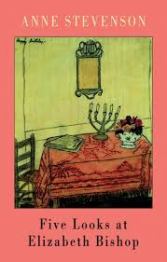
Anne Stevenson’s Five Looks at Elizabeth Bishop has been helpful with thoughts such as “Bishop’s instinct was to look hard enough at nature to lose herself in it – and thus, as in the Biblical paradox, find herself”.

imgres

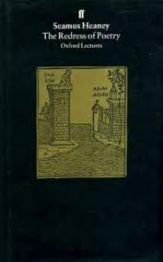
As has Seamus Heaney’s ‘Counting to a Hundred: on Elizabeth Bishop’ (from The Redress of Poetry). He argues, at her best, she reveals how “obsessive attention to detail can come through into visionary understanding  [. . .] intense focus can amplify rather than narrow our sense of scope” (something I have written about in recent thoughts on McGilchrist’s ideas about right/left brain work).

images

I’ve also been reading two collections by friends . . .

imgres

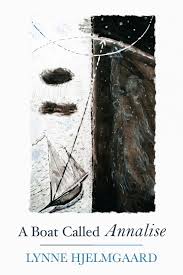
Lynne Hjelmgaard’s A Boat Called Annalise (Seren) is a sequence of love poems to a husband and a sailing boat and vies with Bishop in some of its evocations of tropical harbours: “We fell asleep with the roosters, / the waves, rumblings in the bay”. For a land-lubber like me, there are powerful portraits of life at sea such as ‘That Feeling of Boat’: “We confide and trust in twenty tons, / talk to it, nurture it”. ‘White Clover’ is a delicately symbolic poem dedicated to the late, much-missed Dannie Abse.

imgres

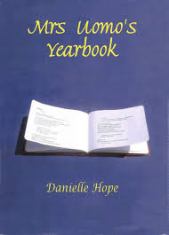
Danielle Hope’s Mrs Uomo’s Yearbook (Rockingham), which I mentioned in an earlier blog, again shows how effective the Mrs Uomo character is (a near relation of Zbigniew Herbert’s Mr Cogito) as a vehicle for social commentary which is quirky, engagingly funny and incisive, particularly about the NHS for which Hope works as a doctor.

Up-dated May 2016

imgres

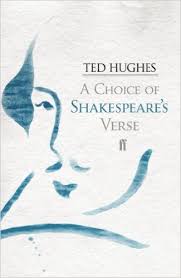
Last month it was heavy-Hughes (as you’ll see from my April up-date below) so half following that lead and half influenced by the 400th anniversary celebrations across the media, I have been swimming my way through Hughes’ A Choice of Shakespeare’s Verse. First published in 1971 and up-dated in 1991, Hughes is right in suggesting it’s been hard to “place” the bard amongst the “poets in English”. It’s not just because he wrote mostly drama (if mostly in verse) but also that critics retreat before his work feebly flapping and gesturing towards a special case. So Hughes’ “looting [of] portable chunks” from the plays serves largely to confirm two things: his plays consist often of the most astounding poetry and that – yes – special case status is hard to withhold.  But Hughes is onto something suggesting that Shakespare’s Catholicism in a world of Puritan jihad (Hughes’ word) has much to do with it. An astonishing read – whatever the rights and wrongs of the case.

imgres

Gill McEvoy’s HappenStance chapbook, The First Telling, is terrific. Told with exquisite poise, it recounts the after-shocks of a rape, the adjustments, the progressive self-forgiveness, the therapy sessions. You need to know the sequence is punctuated by poems about birds – this is not a plain sort of confessionalism, but rather work of great artistry, to be recommended for its use of the blank spaces on the page as much as for its exploration of traumatic experiences.

imgres

McEvoy’s book was noticed (winning the 2014 Michael Marks award); Simon Richey published Naming the Tree (Oversteps Books) in the same year and I’d not heard of it till I heard him read at Poetry in Palmers Green. Richey writes about abstract matters – language, time, consciousness – and material events with a wonderful precision and approaching a philosophical elegance. Something of the impersonality of TS Eliot is matched with personal attentiveness to detail – highly recommended.

Up-dated April 2016

imgres

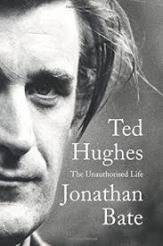
It’s been a heavy-weight Ted Hughes month since I’ve been reading Jonathan Bates’ biography over several weeks and then supplementing it with the poems themselves. The Bate is far more comprehensive than Elaine Feinstein’s earlier biography and if nothing else shows how much material Hughes left behind (100,000 pages of unpublished drafts) so the academic exploration of it will clearly take many years. On the poetry itself Bate gets a bit irritating in relating  just everything back to Plath –  even the late work apparently shows unmistakable evidence of his continuing obsession with her!

imgres

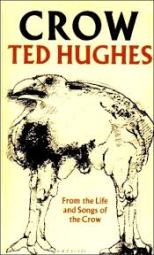
Crow remains extraordinary though it makes more sense to see it as Bate suggests as the unfinished epic that Hughes had hoped to complete. There was to be a phase of restoration but Hughes never managed that – perhaps because this was too close to the two suicides of Plath and Assia Weevil.

imgres

I’d missed Remains of Elmet when it was originally published. With Bate’s help and Hughes’ own Note from 1993, it’s clear now that this is a very coherent and powerful portrait of the region of his childhood.

imgres

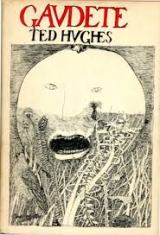
I loved Gaudete when it first appeared in 1977 as I was in the first flush of my Hughes period! Most commentators (including Hughes it seems) now consider the ‘filmic’ loosely-constructed narrative poems as not quite the real thing. It’s the strange, tough little songs of Nicholas Lumb that conclude the book that pay more dividends.

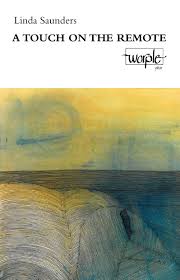
Here There Now Then – A Touch on the Remote

There are occasions when events from the past seem to become so fully present in the moment as we live it that it’s as if a gulf has been bridged between them. It’s a sort of redemption – though the events themselves may need no redeeming. What is salved is the permanent vanishing of the earlier through the intensity of attention accorded it by the later, perhaps especially so if our attention is manifested in language, a poem. There is an aspect here of Seamus Heaney’s idea of the redress of poetry which I ought to figure out more clearly.

images

But I was left with thoughts such as these last week, having read for Dawn Gorman’s Words and Ears series of poetry readings in Bradford-on-Avon, Wiltshire. We’d set it up many months ago and I had been looking forward to it especially as this is close to my home town, Trowbridge, and my mother’s childhood and adolescence were spent in Bradford. I was also delighted to be reading with Linda Saunders who has just published a new collection with Worple Press, A Touch on the Remote. I’d had a few meetings with Linda many years ago (in the 1980s) when she would go up to Oxford to visit my old friend and mentor, Tom Rawling. There were several workshops at his house, I think, in that peculiarly intense summer sunshine of the past, full of hope and literary expectation. Like much of Rawling’s work, the opening sequence of Saunder’s new collection is composed of poems concerned with acutely observed landscape – in several cases observed with an almost visionary sense of history . . .

imgres
Linda Saunders

My mother was christened Bernice, first child of Graham and Elsie Hale in 1922. Her sister, Gwen, quickly followed. There was no immediate prospect of their leaving the White Hill house which was a one-up, one-down with attic. The two girls had to share the middle room with ‘Gran’ (as they called Elsie’s mother, Rhoda). They walked up White Hill to school at Christ Church. They skipped down to the sweet shop, to the ‘bake house’, to the centre of town. On Sundays they climbed Coppice Hill to the Methodist church and Sunday School.  In good weather, the two girls hooked their arms over the iron railings outside the house with Elsie in the doorway warning them not to stray far. They jumped up and down the high kerb stones, played whips and tops on the steep, quiet street. On wet days, they stared through the front window, across the roofs of the town below to the spire of Holy Trinity. Bernice was badly ill with scarlet fever when she was eight years old and for a long while afterwards was so weakened that she had to be helped everywhere in an old pushchair.

imgres

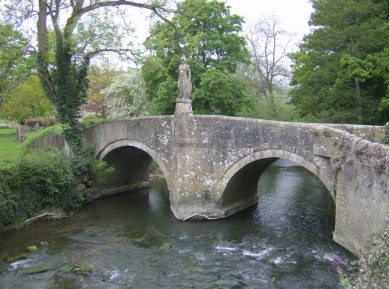
Saunders’ own strong sense of history can be seen in ‘Washing the Horses’ where the narrator watches people who “sleek soap-lather” on their horses’ wet hides. A bit later, the horses dry off on the bankside, “bays, pintos, strawberry roans, a shetland / with a foal no taller than an Eohippus. // This has been happening forever”. In ‘The Bridge at Iford’, a couple kneel as if in a ritual act, “like pilgrims” to watch the water flow under the bridge, themselves being watched by statues of “Greco-Roman deities”. Then the arrival of a newly-betrothed couple for photographs at the picturesque scene leads to thoughts of the future too – “Live happily. I think to them in passing, / ever after – the wish as ultrasonic as / the pipistrelle’s twitter”.

Britannia_at_Iford_Bridge_-_geograph.org.uk_-_438784
The Bridge at Iford Manor

The narrator’s image of the pipistrelle bat’s piercing signal could serve as one of the key images in Saunders’ work. Elsewhere she jokes about the onset of deafness: “Something I say, something she said / flies past us into the wood” (‘Hidden Valley’). It’s these forms of strained/successful communications across time and across distance (with a son living in the USA) that also provide material for a later sequence of poems: “I see him stepping over the door sill / across a crack of time” (‘Into the Blue’).

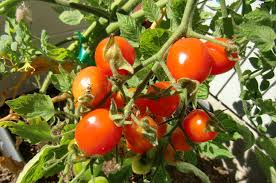
We would squeeze into the Standard 10 to visit my grandparents on Winsley Road, Bradford. It was a dark, terraced house which had an immense front garden with a pleasingly straight path from the front gate to the door in the centre of the facade. This path was lined with planted borders, the earth heaping up from the lower level of the path and there were roses and vegetables elsewhere and I am sure an allotment somewhere. At the back of the house was a tiny yard containing the outdoor toilet, a fascinatingly musty dark cramped garden shed, a sweltering little green house which seemed always full of tomato plants. There was also a raised piece of grass – you could not call it a lawn – where we tried to play football or cricket but the risk of the low walls was really too great. Instead, we often played on that long front path; Corgi cars pushed to and fro as we breathed in the acrid-sweet smell of lush cushions of blooming white alyssum.

images

Saunders’ background is in History of Art as well as literature. You can see this in ‘Reserve’ where she describes the processes of a painter preparing the ground for an object on the canvas, in this case an apple. The poet is interested in the absence, the vast potentiality before the object appears: “There are moments I sense // the inter-touch of me with everything – / this unselving reach”. During the Words and Ears evening, I read a number of poems from my Daodejing versions which also suggest that such an “unselving” might prove a happier and more fulfilling line to take in life. With our own “unselving”, the more aware we become of our surroundings, our context in both space and time.

It is Saturday tea – laid out on the living room table. There is a second front room hardly ever used which, if you open the door and peer in, feels chilled, dark, a little musty and formal and a baffling waste of space. We sit round the table and eat sandwiches, perhaps crumpets, malt loaf, Victoria sponge or the pink and yellow check of Battenberg cake which I loathe because of the marzipan covering. Nan or Mum often slice the rounded ribbed milk loaf that I have never seen anywhere else, turning it on its end and slicing horizontally, perilously.

imgres

In ‘Love Portrait’, Saunders describes a window on another canvas as yet “unpainted”. She wonders “could this be the light that slips / past time”. Because the artist has yet to define it, perhaps this is also the light that communicates between times.

We wore short trousers, of course, and I still can feel the way the thick dark tablecloth with its tasselled edges brushed my thighs making me want to scratch them. Elsie’s husband, Graham, was a quiet mild man, always limping because of a shrapnel wound in the leg from the battle of the Somme. He sang in a local choir, had worked all his life at Nestle in Staverton, gardened keenly and seemed a loving husband and father though to us he was a rather remote, taciturn grandfather. Just once he exploded at us for something I have now forgotten – perhaps just making too much noise or not clearing the table of toys or drawing books quickly enough when he wanted to swing the heavy cloth across it in readiness for the meal. Given his generally gentle demeanour, his blazing, brutal anger astonished and appalled us.

walk-15

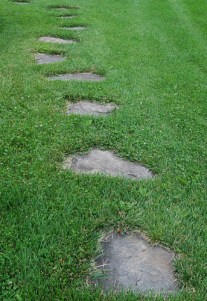
The final poem of Saunders collection is ‘Stepping Stones’. Another artist, a sculptor this time, makes “foot-shapes of stone”: “The child found them one at a time, / spotting the next from where she stood on the last / up to her thighs in seedheads and buttercups. / Where will they go? she asked the sculptor”. They lead onwards inevitably into the next moment, then the next – but to live wholly in the present, only in a language composed of present participles, is a form of dementia, a quite different and destructive form of “unselving”. Our making sense of things requires our awareness and exploration of the temporal.

Where’s My Master Gone – Don Paterson v Li Po

Don Paterson’s 1997 book, God’s Gift to Women (Faber) includes a poem sporting the title ‘On Going to Meet a Zen Master in the Kyushu Mountains and Not Finding Him’. The reader’s eye hops off the perch of this lengthy title only to flutter down, looking in vain for a foothold, for a line, even a word – it’s a completely blank page. In a collection that includes a poem called ‘Postmodern’ and another on ‘The Alexandrian Library’, the joke is obvious enough. Any search for ‘masterly’ advice in the Kyushu Mountains or closer to home in a post-modern, relativist world in which language hides as much as it might reveal, must draw a blank. I remember seeing the poem – probably heard Paterson ‘read’ it too – the long title building expectation, a too-long pause, the announcement of the next poem (cue laughter) – and something bothered me. I think now I know what it was.

imgres

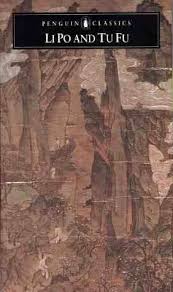
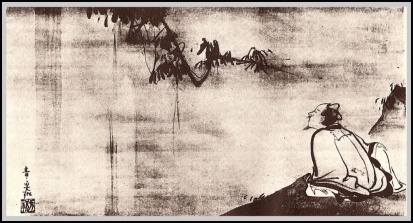
I wondered if Paterson had been reading the Penguin Classics selection of Li Po and Tu Fu (tr. Arthur Cooper, 1973). The Li Po selection opens with the poem ‘On Visiting a Taoist Master in the Tai-T’ien Mountains and Not Finding Him’. Cooper’s note tells us that ‘Visiting a Hermit and Not Finding Him’ is actually a very common theme in Chinese poetry. Such a poem (we are told) is not just an excuse for a “nature poem” but relates to the frequent “spirit-journeys” that Li Po was fond of writing. Here is Cooper’s translation:


Where the dogs bark

by roaring waters,

whose spray darkens

the petals’ colours,

deep in the woods

deer at times are seen;


the valley noon:

one can hear no bell,

but wild bamboos

cut across bright clouds,

flying cascades

hang from jasper peaks;


no one here knows

which way you have gone:

two, now three pines

I have leant against!

3-li-po

I had come across this poem while compiling my first book, Beneath Tremendous Rain (Enitharmon, 1990). I liked it for reasons I didn’t then understand and, in a very simple form of translation, I wrote an up-dated version:


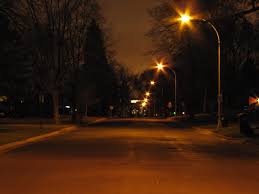
Looking for an Old Man


Where red dogs bark

on the sodium ring-road

and traffic noise

blackens adjacent houses,

I’ve come to seek you.


In each garden I pass,

pale heads of bindweed.

The night is undistinguished.

The savour of coalsmoke

flattens across the kerb.


No-one here knows

which way you have gone:

two, now three lampposts

I’ve leant against.

images

Li Po is the more Daoist of the two poets presented as a complementary pair in this Penguin book. Now, with a bit more understanding of this tradition, I’m sure that 26 years ago I was responding to something at the heart of the poem. The fact that the Daoist master cannot be found by the searching student is precisely the point since the Daoist teacher teaches “in the absence of words” (Chapter 43, ‘Best Teaching’) as I translated it in my version of the Daodejing (Enitharmon, 2016).

Interestingly, Li Po’s poem expresses this not with a blank page but (as Cooper says) through further encounters with “nature” (petals, woods, deer, valley, bamboo, clouds) or, in my version, the natural and urban world (ring-road, traffic, houses, garden, bindweed, coalsmoke, kerb). Whether we designate this a ‘spiritual’ journey or not, the point remains that the student’s search for knowledge in the form of a direct download from some master must be denied. The student’s anxious search for guidance is reflected in the number of pines/lampposts he leans against as well as the geographical over-specificity of the titles of such poems. The student’s dependency and naïve optimism is the satirical butt of the poem as he is directed back to the source of all knowledge (the world surrounding him) even as he wanders in search of his master. So Paterson’s 1997 version achieves three things: it misrepresents the spirit of the original, it’s more dramatic (comic), it’s more superficial.

imgres

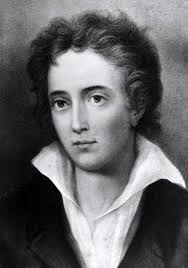
When I first read Li Po’s poem I was coming off the back of doctoral work on the Romantics, especially Shelley whose ‘A Defence of Poetry’ (1821) argues that the “poetry in [our] systems of thought is concealed by the accumulation of facts and calculating processes [. . .] we want the creative faculty to imagine that which we know”. This is succinctly put in Keats’ idea of Negative Capability, defined as a passive openness to the fullest range of human experience (“uncertainties, Mysteries, doubts”) without any imposition of preconceived notions, ideas or language: “without any irritable reaching after fact & reason”. The student in Li Po’s poem seeks just such certainties and facts and is gently deflected back into the world of observation where (I take it) he is encouraged to pursue a more full-blooded, full-bodied, open-minded encounter with the 10,000 things which (in Daoism) constitute the One, ‘what is’.

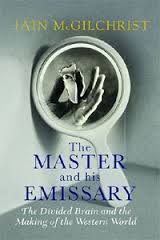
The two attitudes to knowledge here are really two ‘ways of being’ as Iain McGilchrist’s fascinating book, The Master and his Emissary (Yale, 2009) phrases it. McGilchrist argues that right and left human brain hemispheres deliver quite different kinds of attention to the world. The left perceives the world as “static, separable, bounded, but essentially fragmented [. . .] grouped into classes”. Shelley described this in 1821 and linked it to the processes of Reason and this is the attitude to knowledge and education that the anxious student of Li Po’s poem possesses. In contrast, what Shelley calls Poetry or the Imagination is what McGilchrist associates with the right brain. It tends to perceive “the live, complex, embodied, world of individual, always unique beings, forever in flux, a net of interdependencies, forming and reforming wholes, a world with which we are deeply connected”.

imgres

Without doubt, this is also the viewpoint of the Daoist master whose teaching evokes the uncarved block, the One, and who teaches best without words. Ordinary language usage is dependent on conceptual thought which is left-brain work – ordering, categorising, re-presenting the minute particulars of the world as they are perceived by the right brain. I imagine that Li Po’s master-teacher and sage is deliberately hiding somewhere beyond the bamboo canes – and this is part of the student’s lesson.

So Don Paterson’s blank page bothers me because – as McGilchrist expresses it – it represents a rather glib, post-modern position, a scepticism about language which is in danger of throwing out the interconnected real world along with the suspect tokens and counters of left-brain language: “To say that language holds truth concealed is not to say that language simply serves to conceal truth [. . .] or much worse, that there is no such thing as truth” (McGilchrist, p. 6). I’m also reminded of Yves Bonnefoy, engaging in his own battle with the early stirrings of French post-modernism. He writes: “This world here exists, of that I am certain [. . .] It is simply with us. In what can be felt and sensed”. In The Tombs of Ravenna (1953), he names this underlying truth, not as existence, but as “presence”. The right brain knows this; the left brain sets about fragmenting it, making use of it, disappearing it.

images
Yves Bonnefoy

Workshopping With Will Shakespeare

Last weekend – what with the 400th anniversary of Shakespeare’s death just gone by and seeing an advertisement on Facebook I think it was – I signed up to be a participant in a Shakespeare and writing poetry workshop. Being an English teacher, love of Shakespeare rather comes with the territory but I’m sure I’m not the only teacher who enjoys being a participant in classes. So much of my time is spent initiating, organising, timing carefully and concluding that it’s a wonderful holiday-feeling to be initiated, organised, timed carefully and concluded by somebody else. (In what follows I am able to quote the work of nobody else but myself – for which apologies).

shakespeare-first-folio-title-page-introduction

The workshop was part of a series organised through the South Bank Poetry magazine, co-edited by Peter Ebsworth (its founder) and Katherine Lockton. They were both present for the workshop – upstairs, above the Poetry Society’s Cafe in Betterton Street, Covent Garden – but it was Katherine who ran the session. We gathered about 10.45 for 11am, most of us arriving clutching the mandatory take-out coffee from the cafe or elsewhere on our walks from the Tube. A big table, a plate of biscuits, greetings, sign in (whose name do I know here?). Upstairs at the PS is a strange mix of store room, kitchen, second hand bookshop, classroom. I thought it could do with a tidy-up myself – then tried to curb my flicker of nerves, that need for control. Actually, I’ve not taken part in a public workshop like this for ages. We were probably all feeling the same: what if I write total crap and Katherine asks me to read it out. Maybe a biscuit . . .

images

We started with free writing for 5 minutes or so – “to loosen up”. Katherine wanted us to set off from “My Shakespeare is . . .” What sprang vividly to mind was an occasion teaching not Shakespeare, in fact, but Marlowe’s Doctor Faustus. A student read the “face that launched a thousand ships” speech so very badly that it achieved a weird sort of beauty in her inarticulacy. A bit like those ruins of classical statues (not far from where we were, in the British Museum) that seem to have acquired an added poignancy in not remaining whole. I rather like free writing (it’s how most of my own poems begin, a sudden splurge of material that then gets worked on) and as I wrote I ended up (from that halting reading of Marlowe) to love in a life or its opportunity missed:


Those encounters where you don’t have the words

Just stops pauses some musical sense

Of the word order but no –not the words themselves

And she turns away dips her head

Laughs at something somebody across the room has just said

eb296389fb62a4e2e059249bf0021f0e

Katherine then dished out the text of Sonnet 18: “Shall I compare thee to a summer’s day?” On the Tube in I had been wondering how I’d tackle Shakespeare in such a setting and I thought I’d not go for the more familiar moments. Katherine did and I have to say she was probably right. I’d have ended up explaining too much perhaps (too teacherly) when the point was to respond creatively to the poems. So most of us were familiar enough with this poem in which the narrator does compare his love to a summer’s day and the summer’s day turns out to be liable to be windy, over too soon, too hot, over too soon . . . The lover apparently suffers from none of these things not even death itself – because the poet has preserved her in “this” poem: “So long lives this, and this gives life to thee”. We wondered, among others things, at the manly arrogance of this.

We picked a phrase or even just a word to respond to from the poem and set off for 30 minutes or so. On this first occasion, many of us seemed to get sucked into the vortex of the sonnet form and rhyme especially. But the quality of the group that day was extraordinary. Several produced sonnets which worked well (in 30 minutes!) and all the pieces eventually read out were interesting responses. I chose the phrase “By chance, or nature” and was exploring (again) the chance or fate of meetings with the one’s you love. I was imagining the alternative worlds we jettison or turn our back on with every choice we make:


So that in one of those plural worlds

We might have met before, or later, even not

At all – through pram and playground, into school

To college, old flames, chance turn, random plot.


You can see what I mean about getting locked into a formal mode. It may be that most of us realised this as when Katherine then tried us with Sonnet 130, more of the group struck out – away from formality, probably into something more like our natural mode. This was also probably encouraged by the fact that Katherine was showing us contemporary responses to these poems as we went. Several of these were quite encouraging in that they were pretty poor as poems – there are a number of anthologies where contemporary poets respond to Shakespeare (especially this year) but so many of the poets try too hard to up-date originals into some hip idiom; embarrassing like Dad-dancing). I guess that at least gave us permission to try something more adventurous of our own.

daodejing

I found myself interested in the way the Sonnet 130 tries to define the lover through a kind of via negativa, what she is not. It’s a kind of anti-poetic in that the poet dismisses the ability of comparison (one of the poet’s main tools) to capture her in truth. This was reminding me of repeated occasions in the Daodejing poems I have been working on for 3/4 years (just published now – so fully on my mind last weekend) in which the text also argues the elusiveness of the One. The latter is often given female characteristics so it was an easy step to my scribble:


She lives in the live darkness between

The opening and shutting of my eye-lids


Between ascender and descender

Of this pen this white expanse


This Microsoft space not knowing what to do

With itself not being busy


In the moment when instructions cease

And what opens is that snow-field


Beneath the first or second chair-lift not yet

Inscribed [. . . ]

tumblr_m4v3ij8TgU1r2tbuso1_500

The third piece Katherine gave us were extracts from Romeo and Juliet (the balcony scene, the “what’s in a name” speech” and Juliet’s “O serpent heart”). We discussed these and annotated them to pick out certain patterns and concerns. We then compiled a small list of words of our own and set off with the aim of writing in the voice of a character from Shakespeare. I’ve always had a soft spot for Horatio and especially Hamlet’s gentle, though firm, put-down: “There are more things in heaven and earth, Horatio, / Than are dreamt of in your philosophy”. I had Horatio realising the truth of this, a bit Prufrock-like realising that he was not meant to play the Prince, but be an observer, something of a by-stander at the big events:


O but it’s enviousness I breed

Here listening to you roar

And glitter you go on to the very point

Or way off kilter

And patronise me yet even this you do

With such grace with warmth making me love you.

images

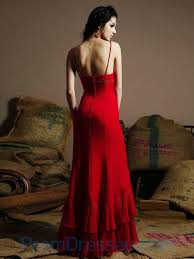
The rhythm of this particular workshop was a lot of time for individual writing. We shared all we wrote (no one objected – and absolutely none of it was “crap”), and Katherine introduced the extracts quite briskly while still allowing plenty of time for people’s reactions to them. The time was now about 4pm. The final piece was stimulated with small bits of cloth from Katherine’s Mum’s sewing box but also with a story she told (no details – it’s her story) which we could incorporate if we wanted to.  My final piece was the strangest I’d produced so far. My cloth was a rich red – a bit sexy – and the encounter was on a staircase, I was coming down to meet someone. Perhaps by this time I was more Juliet than myself, or I’d carved myself into two:


Everything possessed

Of that clarity

And the weight

Of heraldry—


So the long dress

I wear is gules

Its blood-red

Slit to the thigh


Its plunging neck

A sunlight wedge

At the foot

Of the shallow stair


I lift my chin

As if called for [. . . ]


I don’t know if the 4 pieces I produced will come to anything further but I can honestly say they would not have been written otherwise. In running my own workshops, I always say the simple thing they achieve is to take your writing to places you’d not have got to alone. That certainly happened the other day and I’m grateful to South Bank Poetry for the chance to participate: now back to the front of the class.

DR FAUSTUS
DR FAUSTUS  – Elizabeth Taylor Richard Burton

They Will Have Their Rights: Ted Hughes’ ‘Her Husband’

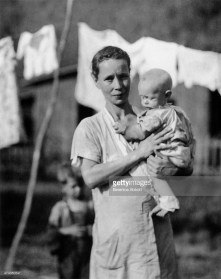
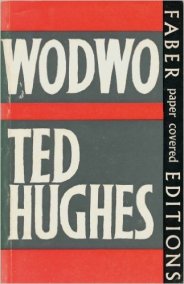
My AS level students are in the last throes of revising for exams coming in May. One question will be on a selection of Ted Hughes poems and what follows is an essay in the style required of them by the exam board (a single poem analysis of the Practical Criticism kind). ‘Her Husband’ first appeared in 1961 and then in Hughes’ 1967 collection Wodwo which mostly contained poems written before Sylvia’s Plath’s suicide in 1963 but also a few others (such as ‘The Howling of Wolves’) written after it. Hughes’ next major publication was Crow in 1970. Leonard Scigaj has noted how many of the Wodwo poems contain “recurring feuds and destructiveness” and ‘Her Husband’ is a domesticated, Lawrentian version of this.
images

Her Husband

Comes home dull with coal-dust deliberately
To grime the sink and foul towels and let her
Learn with scrubbing brush and scrubbing board
The stubborn character of money.

And let her learn through what kind of dust
He has earned his thirst and the right to quench it
And what sweat he has exchanged for his money
And the blood-weight of money. He’ll humble her
With new light on her obligations.
The fried, woody, chips, kept warm two hours in the oven,
Are only part of her answer.
Hearing the rest, he slams them to the fire back

And is away round the house-end singing
‘Come back to Sorrento’ in a voice
Of resounding corrugated iron.
Her back has bunched into a hump as an insult.

For they will have their rights.
Their jurors are to be assembled
From the little crumbs of soot. Their brief
Goes straight up to heaven and nothing more is heard of it.


Introduction

Ted Hughes is more renowned for his portraits of animals and natural landscape than people. Especially early on, he is more interested in, as he expressed it, capturing animal and natural life in language as he does so brilliantly in poems like ‘The Jaguar’, ‘Wind’ and ‘Thrushes’. However, it’s not true to say Hughes does not write about human life and some would argue that a poem like ‘Hawk Roosting’ though on the face of it about a creature is really about human behaviour. In ‘Her Husband’ Hughes is clearly focussed on the human in a marriage which is full of bitterness and resentment.

images

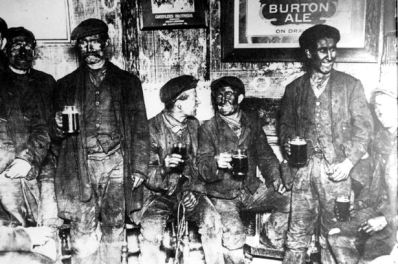
‘Her Husband’ is written in the third person, giving a distanced but vivid portrait of a marriage through the events of one evening. The title of the poem forms part of the opening sentence so the poem’s opening line, starting with “Comes home”, already gives the impression of the husband as an almost impersonal force, unnamed perhaps because already all too familiar to his wife. The thumping alliteration of the opening line (dull – dust – deliberately), reinforces the man’s brute entry into the house. As a working miner he spreads “coal-dust” about the house but Hughes emphasises his inconsiderate nature with the adverb “deliberately” and the forceful, unpleasant verbs associated with his arrival: “grime” and “foul”. This opening quatrain flows quickly, being unpunctuated from start to finish, evoking an arrival which is sudden, sweeping, unstoppable. The ugly internal rhyme of “foul towels” also contributes to the impression of his disruptive arrival and Hughes conveys the husband’s resentful attitude with the idea that he intends to teach his wife about the “stubborn character of money”. This personification of money as a person difficult to deal with, to persuade, cleverly conveys the husband’s own difficulties with the exhausting character of his day’s work. But he intends to impress this resentment on his wife who he wants to work (repetitively) with “scrubbing brush and scrubbing board”. This is not a relationship in which we see any love, compromise or mutual respect, though we have yet to be shown much of the wife’s perspective.

coal

In fact the second quatrain continues in much the same vein with a repetition of the phrase “let her learn”. All this repetition conveys the husband’s determined intentions. Lines 4-8 also introduce a vocabulary of a more moralistic kind. The narrative voice echoes what must be the husband’s thoughts about the way he has “earned” the “right” to go drinking in the pub before he returns home. He regards the earning of his wage as a physical and personal “exchange” of his physical “sweat” for cash and the hyphenated phrase describing money as possessing “blood-weight” particularly conveys the sense of his personal sacrifice as a working man, how he feels the day’s work metaphorically costs him “blood” (as a miner this might be sometimes literal too). I think Hughes goes some way here to encouraging sympathy from the reader for the husband’s situation but the quick return to his aggressive, even vicious, attitude to his wife in the heavily alliterated and emphatic phrase “He’ll humble her” (line 8) definitely lessens any sympathy I may be feeling.

474360547

The simple metaphor of casting “new light” on his wife’s role is used in line 9. There is a sort of tired familiarity throughout this poem (on both husband and wife’s sides) and I suspect this sort of encounter is not the first of its kind so the idea of him casting/teaching “new” light probably really reflects his sense that however much he tries to do this she does not “learn” to behave as he expects by more obediently taking note of what he sees as her “obligations”. I doubt whether he himself would have used many of the moral terms that the third person narrative voice employs in these lines, so the distancing voice Hughes has chosen to use enables these more abstract points to be made. It’s only at line 10 that we get a sense of the wife’s “answer” to her husband’s demands. As has been implied already, her reply to his demands is not at all submissive. We are told “part of her answer” is the disgusting-sounding meal with its “fried, woody chips” though it’s partly unpleasant because it has had to be kept warm in the oven “for two hours” (the fact that he’s so late home increases our sympathy for his wife). But her fight back is sustained it seems; the other “part” of her answer to his demanding and bullying attitudes must be spoken to him or probably shouted. Interestingly, Hughes gives us none of this directly as it is only implied in the brief phrase “Hearing the rest” in line 12.

The husband’s corresponding response to his wife’s uncooperative (surely complaining) reply is immediate and violent. The husband’s vigorous determination causes Hughes to run-on sentences at the end of both stanza 2 and 3. Here, the violent verb “slams” shows how he disposes of her cooked meal in the fire and sweeps out of the house and “away round the house-end” all in one flowing, swift, uninterrupted sentence. The husband’s singing voice is described as “resounding corrugated iron” in a typical Hughesian metaphor (linking the organic with the metallic or industrial). Also the song he chooses to sing is full of irony and deliberately insulting as it is a romantic song of lost love. Line 16 gives us a brief last glimpse of the wife’s response, her body language suggesting her own stubborn resentment, “bunched into a hump”. Hughes adds a simile to make her antagonism even more clear: “as an insult”.

1890_A_miners_dream_of_home

The final quatrain now departs from the specific actions of the married couple and returns to the more moralistic and even legalistic language that I noted earlier in the poem. Here the narrator’s distance from the domestic argument is clear again. This poem was first published in Wodwo (Faber, 1967) and, as a relatively early Hughes poem, it is unusual in its focus on individual people though this distancing effect suggests he may be observing their behaviour in the same way as he does a jaguar in a cage or the power of the wind. Line 17 is the shortest sentence in the whole poem and declares, in firm monosyllables, that both sides in this conflict “will have their rights”. This makes it clear there is no room or desire for compromise. The final three lines introduce the language of the law court (a divorce court perhaps?) though the jury are “to be assembled / From the little crumbs of soot”. This soot reminds us of the coal-dust he brings into the house in line 1, but also of the burnt dinner thrown into the fire-back in line 12. These tiny black specks suggest to me that such a jury will never come to any clear conclusion in this dispute. They suggest the hopelessness of the couple’s situation. This rather depressing ending to the portrait of a marriage is confirmed in the final line and a half as we are told that the legal “brief” (a technical term for one side’s case in a law court) follows the smoke and soot up the chimney. This suggests that the arguments on both sides metaphorically go up in smoke. Hughes concludes in the plainest language: “nothing more is heard of it”. The way in which the events of the dismal evening vanish up the chimney suggest the likelihood that something similar may happen again tomorrow and the day after.

Conclusion

So Hughes’ portrait of a marriage is very bleak indeed. The narrative voice describes events at a distance and though there are occasions when the reader does feel sympathy for the people involved, the language of the poem itself is not at all emotional. The poem’s voice sees events from both husband and wife’s perspectives though it’s interesting that we are never given any actual dialogue in this domestic row. Hughes’ irregularly-lined and unrhymed quatrains suit the poem’s plain description in a mostly colloquial tone: this is not a poem or situation where any lyricism or poetically-charged language would really be appropriate.

5113sBWRWFL._SX321_BO1,204,203,200_