More than 10 years of blogging on poetry and translation – over 39,000 views in 2024 – now captured and preserved at the UK Web Archive: 'one of the top 10 poetry blogs' (Rogue Strands)
This review first appeared in Acumen Poetry Magazine in the autumn of 2025. Many thanks to the reviews editor, Andrew Geary, for commissioning it.
As a female writer, talented in a variety of genres, living in a difficult political climate, Hungarian born Krisztina Tóth shares a good deal with Huch (my review of Tim Adès translation of Huch’s final book was posted here). Coming to the fore around the revolutionary year, 1989, Tóth has written poetry, children’s books, fiction, drama and musicals. My Secret Life (Bloodaxe Books, 2025) is her first sole author publication in English, ably translated and introduced by George Szirtes, presenting an overview of her poetry from 2001 to the present. Szirtes tells us that Tóth is no longer living in Hungary because of unbearable frictions with the Orbán regime. Like Huch she is drawn to poetry as personal expression, often to the formal elements of the art, both perhaps offering a redoubt against values she finds unacceptable. If there is little redemption to be found in her poems, there is some consolation to be had through the twin imperatives she expresses, to remain compassionate and to persist in trying to articulate human experience. Neither goal is easy.
Szirtes argues Tóth’s style is conversational, plain, precise, offering ‘a kind of kitchen-sink realism’. The personal also features and in these self-selected poems we get glimpses of a barely affectionate mother, a father who dies young, children, lovers, and a difficult grandmother. It’s not clear if these are genuinely autobiographical portraits and, anyway, they are most often absorbed into Tóth’s emblematic writing. An example would be ‘Barrier’ in which a couple are crossing a bridge, seemingly discussing ending their relationship. With the river below and trams thundering past, ‘the pavement was juddering’ and the poem is really about this instability in relationships as much as the (social/political) world, concluding there were ‘certain matters that couldn’t be finalised’. Such uncertainty drives roots even into the self: ‘I’m somebody else today or simply elsewhere’ (‘Send me a Smile’). Tóth uses the image of the ‘professional tourist’ in one of the major poems included here. With little background given, the narrator visits town after town, apparently hoping to be joined by a ‘you’ who never appears. Obviously a ‘stranger’, she wanders aimlessly, haplessly, buys a few things, the poem inconclusively ending with an image of a used toothbrush, ‘like an angry old punk, / its face turned to the tiles, / its white bristles stiff with paste’ (‘Tourist’).
Alienation, expressed through a profound sense of homelessness, is Tóth’s real subject. With the irony turned up to 11, the poem ‘Homeward’ ends quizzically, ‘But where’s home?’ In such a world view, the ability to remain compassionate is important to the poet, however hard it may be. The painfully brilliant ‘Dog’ presents a couple driving at night, seeing a badly injured dog at the roadside, and the woman wants the man to stop. I think they do, but the poem’s focus is on the powerful impetus to help versus the powerful sense that whatever can be done will prove futile. More weirdly, in ‘Duration’, the narrator finds a Mermaid Barbie doll stuck in the ground outside her flat. The childhood associations, the vulnerability of the frail figure, seem to compel action, but ‘what’?
Should I pull the thing out of the ground so it
sheds earth every night, because however often
we wash it, or wrap it in a tissue or leave it
on the radiator we’ll only have to bin it in the end?
Tóth’s wry, highly original lament, on deciding not to buy a universal plug adaptor, perhaps suggests what is being wished for in many of these poems. It is a way for a feeling human being to feel more at home in a world of suffering: ‘how to adapt the world / and its gizmos to the pounding of so many hearts’.
‘Song of the Secret Life’ pulls together many of these strands with the life as much the inner life of the self (the heart) as the life kept hidden in an unsympathetic personal or political environment. In the case of an artist, it is also the creative life, and as much ‘an utter mystery, a puzzle undone’, to the writer herself. But in order ‘to survive it needs telling’ and – like Huch’s creative figure in ‘The Poet’ – even if current conditions do not welcome such efforts, the individual must continue to write, to use language, to affirm the validity of the individual viewpoint. This is the burden of the magnificently hypnotic long concluding poem, ‘Rainy Summer’, in which the long-lined, rhymed couplets, express an unrelenting haunting of the speaker by ‘a sentence’. The latter phrase opens many of the lines, and it goes talking, throbbing, pulsing, dancing and rushing through the poem itself, though as much as the sentence might prove to be some sort of ‘home’ we are never told what it expresses. This is largely because it is a ‘rhythmic unit without words’, it is ‘the bodiless body of language’, it is the ‘speech that knows no speech’, it is ‘a sentence that contained you, gone yet here, some of each’.
Szirtes’ emphasis on the political backdrop to Tóth’s poems might lead us to expect more obvious political engagement and subject matter. That’s not what we get here, though no doubt her surroundings have determined many aspects of the work. Hers is a profound voice, finding in the menace, alienation, and instability around her emblems of more universally shared experiences of rootlessness, troubled self-questioning, of sensibilities that find the world as it is a painful and difficult place to navigate, of the pull of pity and compassion versus an overwhelming sense of the futility of individual action. ‘Sleeper’ addresses what might be a transmigrating soul or spirit, a ‘little pulse box’, asking question after question about where it has been, what it has seen, the mysterious passage from life to death, or vice versa: ‘what’s it like to step into such cold, unlit fiefdoms, / does anything remain’? Tóth’s poems ask such questions and like the best modern poems offer us equivocal answers only, consolatory but not redemptive.
Here is the whole of one poem included here:
Where – Kristina Toth, tr. George Szirtes
Not there, on the tight bend of the paved highway,
where cars are occasionally prone to skidding,
chiefly in winter, though no one dies there,
x
not there where streets are greener and leafier
where lawns are mowed and there’s a dog in the garden
and the head of the family gets home late at night,
x
nor there in front of the school where every morning
a man is waiting regular as clockwork,
nor inside the gates on the concrete playground,
x
nor in the neglected, dehydrated meadow
where a discarded dog-end hits the ground and glows
With the sad news of the passing of Tony Harrison, who as a working class poet had a great impact on me during my formative years of writing in the 1980s, I went back to a piece I was commissioned to write for an OUP collection of essays on his writing – both poetic and dramatic – in 1997. The book, Tony Harrison: Loiner, was edited by Sandie Byrne and included articles from Richard Eyre, Melvyn Bragg, Alan Rusbridger, Rick Rylance, and Bernard O’Donoghue. This is the full text of what I contributed: an intense focus on and close analysis of two of Harrison’s key poems, ‘A Cold Coming’ (for Harrison reading this poem click here) and ‘Them & [uz]’ (for the text of this poem click here).
The Drunken Porter Does Poetry:Metre and Voice in the Poems of Tony Harrison
Part I
Harrison’s first full collection, entitled The Loiners after the inhabitants of his native Leeds, was published in 1970 and contained this limerick:
There was a young man from Leeds
Who swallowed a packet of seeds.
A pure white rose grew out of his nose
And his arse was covered in weeds.
Without losing sight of the essential comedy of this snatch, it can be seen as suggestive of aspects of Harrison’s career. For example, the comic inappropriateness of the Leeds boy swallowing seeds becomes the poet’s own ironic image of his classical grammar school education. As a result of this, in a deliberately grotesque image, arises the growth of the white rose of poetry – from the boy’s nose, of course, since Harrison in the same volume gave credence to the idea that the true poet is born without a mouth (1). The bizarrely contrasting weed-covered arse owes less to the intake of seeds (rose seeds wherever transplanted will never yield weeds) than to the harsh conditions Harrison premises in the Loiner’s life, as indicated in an early introduction to his work, where he defines the term as referring to “citizens of Leeds, citizens who bear their loins through the terrors of life, ‘loners'”(2).
Harrison’s now-legendary seed-master on the staff of Leeds Grammar School was the one who humiliated him for reciting Keats in a Yorkshire accent, who felt it more appropriate if the boy played the garrulous, drunken Porter in Macbeth.(3) The truth is that the master’s attitudes determined the kind of poetic rose that grew, in particular its technical facility which Harrison worked at to show his ‘betters’ that Loiners could do it as well as (better than?) they could. Yet this was no sterile technical exercise and Harrison’s success lies in the integrity with which he has remained true to those regions “covered with weeds” and in the fact that his work has always struggled to find ways to unite the weed and the rose. Perhaps the most important of these, as the limerick’s anatomical geography already predicted in 1970, is via the rhythms of his own body.
Harrison has declared his commitment to metrical verse because “it’s associated with the heartbeat, with the sexual instinct, with all those physical rhythms which go on despite the moments when you feel suicidal” (4). In conversation with Richard Hoggart, he explains that without the rhythmical formality of poetry he would be less able to confront, without losing hope, the unweeded gardens of death, time and social injustice which form his main concerns. “That rhythmical thing is like a life-support system. It means I feel I can go closer to the fire, deeper into the darkness . . . I know I have this rhythm to carry me to the other side” (5). There are few of Harrison’s poems that go closer to the fire than the second of his Gulf War poems, ‘A Cold Coming’ (6). Its initial stimulus, reproduced on the cover of the original Bloodaxe pamphlet, was a photograph by Kenneth Jarecke in The Observer. The picture graphically showed the charred head of an Iraqi soldier leaning through the windscreen of his burned-out truck which had been hit by Allied Forces in the infamous ‘turkey-shoot’ as Saddam’s forces retreated from Kuwait City. In the poem, Harrison makes the Iraqi himself speak both with a brutal self-recognition (“a skull half roast, half bone”) as well as a scornful envy of three American soldiers who were reported to have banked their sperm for posterity before the war began (hence, with a scatological nod to Eliot, the title of the poem). There are undoubtedly echoes in the Iraqi’s speech of the hooligan alter ego in the poem ‘V’, yet Harrison worries little over any narrow authenticity of voice in this case, and he does triumphantly pull off the balancing act between the reader’s emotional engagement with this fierce personal voice and a more universalising portrayal of a victim of modern warfare. Furthermore, it is Harrison’s establishment and then variation of the poem’s metrical “life-support system” that enables him to achieve this balance, to complete a poem which weighs in against Adorno’s view that lyric poetry has become an impossibility in the shadow of this century’s brutality.
The poem’s form – rhymed iambic tetrameter couplets – seems in itself chosen with restraint in mind, as if the photographic evidence of the horror lying in front of him led Harrison to opt for a particularly firm rhythmical base “to carry [him] to the other side”. Indeed, the opening five stanzas are remarkable in their regularity with only a brief reversed foot in the fourth line foreshadowing the more erratic energies soon to be released by the Iraqi soldier’s speech:
I saw the charred Iraqi lean
towards me from bomb-blasted screen,
his windscreen wiper like a pen
ready to write down thoughts for men.
The instant the Iraqi’s voice breaks in, the metre is under threat. Each of his first four stanzas opens with trochaic imperatives or questions and at one point he asks if the “gadget” Harrison has (apparently a tape-recorder but a transparent image of poetry itself) has the power to record “words from such scorched vocal chords”. Apart from the drumming of stresses in lines such as this, Harrison deploys sibilance, the alliteration of g’s and d’s, followed by an horrific mumbling of m’s to suggest the charred figure’s effortful speech in the first moments of the encounter. Regularity is re-established the moment the tape-recorder’s mike is held “closer to the crumbling bone” and there is a strong sense of release from the dead man’s initial aggressive buttonholing as his voice (and the verse) now speeds away:
I read the news of three wise men
who left their sperm in nitrogen,
three foes of ours, three wise Marines,
with sample flasks and magazines . . .
In the stanzas that follow, the dead man’s angry, envious sarcasm is controlled within the bounds of the form and it is rather Harrison’s rhymes which provide much of the kick: God/wad, Kuwait/procreate, fate/ejaculate, high tech’s/sex. It is only when the man demands that Harrison/the reader imagines him in a sexual embrace with his wife back home in Baghdad that the metrical propulsion again begins to fail. It is in moments such as this that the difficult emotional work in the poem is to be done. This is our identification with these ghastly remains, with the enemy, and it is as if the difficulty of it brings the verse juddering and gasping to an incomplete line with “the image of me beside my wife / closely clasped creating life . . .”
The difficulty of this moment is further attested to by the way the whole poem turns its back upon it. Harrison inserts a parenthetical section, preoccupied not with the empathic effort the dead Iraqi has asked for but with chilly, ironic deliberations on “the sperm in one ejaculation”. Yet all is not well, since this section stumbles and hesitates metrically as if Harrison himself (or rather the persona he has adopted in the poem) is half-conscious of retreating into safe, calculative and ratiocinative processes. Eventually, a conclusion yields itself up, but it is once again the metrical change of gear into smooth regularity (my italics below) that suggests this is a false, defensive even cynical avoidance of the difficult issues raised by the charred body in the photograph:
Whichever way Death seems outflanked
by one tube of cold bloblings banked.
Poor bloblings, maybe you’ve been blessed
with, of all fates possible, the best
according to Sophocles i.e.
‘the best of fates is not to be’
a philosophy that’s maybe bleak
for any but an ancient Greek . . .
That this is the way to read this passage is confirmed by the renewed aggression of the Iraqi soldier who hears these thoughts and stops the recorder with a thundering of alliterative stresses: “I never thought life futile, fool! // Though all Hell began to drop / I never wanted life to stop”. What follows is the Iraqi soldier’s longest and most impassioned speech, by turns a plea for attention and a sarcastic commentary on the collusion of the media whose behaviour will not “help peace in future ages”. Particular mention is given to the “true to bold-type-setting Sun” and, as can be seen from such a phrase, Harrison once more allows particular moments of anger and high emotion to burst through the fluid metrical surface like jagged rocks. There is also a sudden increase in feminine rhyme endings in this section which serves to give a barely-caged impression, as if the voice is trembling on the verge of bursting its metrical limits and racing across the page. This impression is further reinforced in the series of imperatives – again in the form of snapping trochees at the opening of several stanzas – that form the climax to this section of the poem:
Lie that you saw me and I smiled
to see the soldier hug his child.
Lie and pretend that I excuse
my bombing by B52s.
The final ten stanzas culminate in a fine example of the way in which Harrison manipulates metrical form to good effect. In a kind of atheistic religious insight, the “cold spunk” so carefully preserved becomes a promise, or perhaps an eternal teasing reminder, of the moment when “the World renounces War”. However, emphasis falls far more heavily on the seemingly insatiable hunger of the present for destruction because of the way Harrison rhythmically clogs the penultimate stanza, bringing it almost to a complete halt. The frozen semen is “a bottled Bethlehem of this come- /curdling Cruise/Scud-cursed millennium”. Yet, as we have seen, Harrison understands the need to come through “to the other side” of such horrors and the final stanza does shakily re-establish the form (though the final line opens with two weak stresses and does not close). However, any naive understanding of the poet’s comments about coming through the fire can be firmly dismissed. This is not the place for any sentimental or rational synthetic solution. Simply, we are returned to the charred face whose painful, personal testament this poem has managed to encompass and movingly dramatise but without losing its form, thus ensuring a simultaneous sense of the universality of its art and message:
I went. I pressed REWIND and PLAY
and I heard the charred man say:
Part II
It was Wordsworth whose sense of physical rhythm in his verse was so powerful that he is reported to have often composed at a walk. It should come as no surprise that Harrison has been known to do the same. Though it was Keats’ ‘Ode to a Nightingale’ Harrison ‘mispronounced’ at school, it is actually Wordsworth who is more important to him because both share a belief in poetry as the voice of a man speaking to men. This conception of poetry as speech is a powerful constituent in Harrison’s work and perhaps one not clearly understood. John Lucas, for example, has attacked what he sees as loose metrics in the poem ‘V’ (7) but, to reverse Harrison’s comment that all his writing (theatrical or otherwise) is poetry, all his poetry needs to be read as essentially dramatic and deserves to be tested in the spoken voice as much as in the study. On occasions, Harrison, only half-humourously, draws attention to the fact that two uncles – one a stammerer, the other dumb – had considerable influence on his becoming a poet and it is the struggling into and with voice that such a claim highlights.(8) I have already mentioned Harrison’s interest in the curious idea that the true poet is born without a mouth. This too, implies the difficult battling for a voice or voices which can be found everywhere in his work and it is in this clamour that I find its dramatic quality. In a public poem like ‘A Cold Coming’, Harrison makes use of the contrasting and conflicting voices by playing them off against a regular form. This is almost always the case, but in what follows I prefer to concentrate less on metrical effects than on the way voices interweave, in this case, in more personal work from The School of Eloquence sequence.
The very title of the pair of sonnets, ‘Them & [uz]’, seems to promise conflict, at best dialogue, and it opens with what could be taken as the howl of inarticulacy. In fact each pair of these opening syllables gestures towards crucial worlds in Harrison’s universe. The αίαι of classical dramatic lament is echoed by the “ay, ay!” of the musical hall comedian cheekily working up an audience. Immediately, the reader is plunged into the unresolved drama of two differing voices, instantly implying the two cultures of the sonnets’ title. The line and a half which follows, sketching Demosthenes practicing eloquence on the beach, is intriguing in that its locus as speech is hard to pin down. It is perhaps intended at this stage (apart from introducing the poems’ central issue) to hover in an Olympian fashion above the ruck of dialogue that follows, implying the heroic stance which will be taken up in the second sonnet.
Line 3 opens again into a dramatic situation with the voice of the narrator (the adult Harrison), repeating his own interrupted recital of Keats in the classroom, while the master’s scornful comments appear fresh, unreported, as if still raw and present, in speech marks. The narratorial comment on this – “He was nicely spoken” – confirms this poem’s tendency to switch voices for its effects, this time its brief sarcasm barely obscuring the unironic comment likely to be made by an aspiring Loiner, or by an ambitious parent. The example of nice speaking given (again in direct quotes in the following line) is the master’s claim to possession, to authority in matters of language and culture and the separated-off reply of the narrator – “I played the Drunken Porter in Macbeth – with its full rhyme and sudden regular iambic pentameter, implies both a causal link between the two lines, painting Harrison as dispossessed specifically by the master’s attitudes, as well as conveying the tone of resignation in the young schoolboy.
It will be clear that much of the tension and success of the poem has already arisen from the dramatic interchange of voices and the master’s voice asserts itself again in line 7, ironically claiming a kind of monolithic, aristocratic purity to poetry which this poem has already attempted to subvert:
Poetry’s the speech of kings. You’re one of those
Shakespeare gives the comic bits to: prose!”
The following lines contain a curious wavering in the clear interplay of dramatic voices, only part of which is resolved as the poem proceeds. Evidently, the intrusive, even hectoring, parenthesis (at line 9) is the narrator’s questioning of what appears to be the master’s voice’s continuing argument that “All poetry” belongs to Received Pronunciation. Yet the aggression of this attack, with its harsh alliteration and sarcastic question mark, is out of key with the other narratorial comments in part I, though the tone is re-established in part II. In addition, I have some difficulty in accepting the master’s words as appropriate to the situation which – with no break – continues the speech made to the young Harrison. For example, the word “dubbed”, with its implication of the deliberate laying of a second voice over an ‘original’, already hands victory in the argument to Harrison’s claim for the authenticity of ‘dialect’ and, as such, would not be used by the believer in “the speech of kings”. Equally, the apparent plea, “please believe [Λs] / your speech is in the hands of the Receivers”, does not accord with the voice that summarily dismissed the pupil as a “barbarian” 7 lines earlier. In this case, Harrison’s desire for the dramatic has foundered momentarily on that old dramatist’s rock, the necessity for exposition which compromises the integrity of the speaking voice.
The true note of the master returns – interestingly, following one of Harrison’s moveable stanza breaks, as if confirming a shift in voice though the speech actually continues across the break – with “We say [Λs] not [uz], T.W.!” The tone of the responding voice, after the suggestion of a more spirited response in the Keats comment, has returned to the resignation of the brow-beaten pupil. This is reinforced by the more distant comparison of the boy to the ancient Greek of the opening lines, heroically “outshouting seas”, while the young Harrison’s mouth is “all stuffed with glottals, great / lumps to hawk up and spit out”. This first sonnet draws to a close with this tone of frustrated defeat for the boy, yet the drama has one final twist, as the voice of the master, sneering, precise and italicised, has the last word – “E-nun-ci-ate!“. There can be little doubt that the boy must have felt as his father is reported to have done in another sonnet from The School of Eloquence, “like some dull oaf”. (9)
The second part of ‘Them & [uz]’ contrasts dramatically with the first, though the seeds of it lie in the image of heroic Demosthenes and the accusatory tone of the reference to Keats which seemed a little out of place in part I. This second sonnet’s opening expletive aggression strikes a new tone of voice altogether. “So right, yer buggers, then! We’ll occupy / your lousy leasehold Poetry”. The poem’s premise is that it will redress the defeat suffered in part I in an assertive, unopposed manner. Not the master, nor any spokesman for RP is allowed a direct voice, yet the interchange of speech and implied situation can still be found to ensure a dramatic quality to the verse.
Demosthenes
The passionate and confrontational situation of the opening challenge is clear enough, yet it’s striking how it has taken the autobiographical incident in part I and multiplied it (“yer buggers . . . We’ll occupy”) to present the wider political and cultural context as a future battlefield. Even so, there is no let up in the clamour of voices raised in the poem. Immediately, the narratorial voice shifts to a more reflective, past tense (at line 3) as the rebel reports actions already taken – and with some success, judging from the tone of pride and defiance: “[I] used my name and own voice: [uz] [uz] [uz]”. Even within this one line, the final three syllables are spat out in a vivid reenactment of Harrison’s defiant spoken self-assertion. It is this slippery elision of voice and situation which creates the undoubted excitement of these and many of Harrison’s poems as they try to draw the rapidity and short-hand nature of real speech, its miniature dramas and dramatisations into lyric poetry. A further shift can be found in lines 9 and 10, in that the voice now turns to address a different subject. The addressee is not immediately obvious as the staccato initials in the line are blurted out in what looks like a return to the situation and voice with which this sonnet opened. Only at the end of line 10 does it become clear that the addressee is the poet’s younger self, or the self created as the “dull oaf” by the kind of cultural repression practised by the schoolmaster. The reader is further drawn into the drama of the situation by this momentary uncertainty: RIP RP, RIP T.W. / “I’m Tony Harrison no longer you!”.
The remaining 6 lines are, as a speech act, more difficult to locate. There is an initial ambiguity in that they may continue to address “T.W.”, though the stanza break suggests a change and, anyway, this makes little sense as T.W. is now dead (“RIP T.W.”). In fact, these lines use the second person pronoun in the impersonal sense of ‘one’, addressing non-RP speakers in general, and it is the generalised nature of these lines which disarms the effectiveness of the passage. This is particularly important in line 14, “[uz] can be loving as well as funny”, the tone of which, commentators like John Haffenden have questioned. (10) The difficulty here is that if Harrison is addressing those who might use [uz] anyway, though there may well be many amongst them for whom the fact that “Wordsworth’s matter / water are full rhymes” is useful ammunition and reassurance, the same cannot be said of the “loving as well as funny” line which might be variously construed as patronising, sentimental or just plain unnecessary. Nevertheless, the poem regains a surer touch in the final lines in its use of the reported ‘voice’ of The Times in renaming the poet “Anthony“. The effect here is both humorous (this, after all the poet’s passionate efforts!) and yet ominous in that the bastions of cultural and linguistic power are recognised as stubborn, conservative forces, still intent on re-defining the poet according to their own agenda, imposing their own voice where there are many.
Harrison’s use of both metre and voice reflect the struggle in much of his work between the passion for articulation, especially of experiences capable of overwhelming verse of less conviction, and the demands of control which preserve the poet’s utterance as art. Harrison’s more recent work – especially that written in America – is more relaxed, meditative, less inhabited by differing and different voices, more easily contained in its forms. There are undoubtedly great successes amongst these (‘A Kumquat for John Keats’, ‘The Mother of the Muses’, part III of ‘Following Pine’) but there are moments when Harrison seems to idle within his technique, perhaps too able to ruminate aloud without the clamour of voices rising around him. It is likely that Harrison’s legacy will eventually be seen as a reassessment of the uses of formal verse and an exploration of the dramatic potential of lyric verse. These elements are rooted ultimately in his attempts to unite the rose of poetry with the weeds of truth and (often painful) experience, by trusting to the measures of his own body and to a language he returns to the mouth.
Footnotes
1. In a note to section III of ‘The White Queen’, Harrison records that “Hieronymus Fracastorius (1483-1553), the author of Syphilis, was born, as perhaps befits a true poet, without a mouth”. Selected Poems, p.30.
2. ‘The Inkwell of Dr. Agrippa’, reproduced in Tony Harrison: Critical Anthology, p.34.
3. See Richard Hoggart, ‘In Conversation with Tony Harrison’, Critical Anthology, p.40.
4. John Haffenden, ‘Interview with Tony Harrison’, Critical Anthology, p.236.
5. Hoggart, Critical Anthology, p.43.
6. The Gaze of the Gorgon, pp.48-54.
7. John Lucas, ‘Speaking for England?’, Critical Anthology, pp.359/60.
The shortlist for the eco-poetry/nature poetry Laurel Prize 2025 has just been announced. The finalists – judged this year by the poets Kathleen Jamie (Chair), Daljit Nagra, and the former leader & co-leader, Green Party of England and Wales Caroline Lucas – are (in alphabetical order):
Judith Beveridge Tintinnabulum (Giramondo Publishing) JR Carpenter Measures of Weather (Shearsman Books)Carol Watts Eliza O’Toole A Cranic of Ordinaries (Shearsman Books) Katrina Porteous Rhizodont (Bloodaxe Books) Carol Watts Mimic Pond (Shearsman Books)
It turns out I have reviewed two of these collections – one of them I have been bending the ears of anyone who will listen about how very very good it is. I reviewed Katrina Porteous’s Rhizodont (Bloodaxe Books) for Poetry Salzberg Review fairly recently and posted an extended version of the review here. I concluded that ‘The people and landscapes of ‘Carboniferous’ are far more successful as poems to be read and enjoyed, while ‘Invisible Everywhere’ is a bold, well-intentioned experiment that fails’.
It is Eliza O’Toole’s A Cranic of Ordinaries (Shearsman Books) that I have been telling everybody about. Interestingly – and demonstrating the great enthusiasm the publisher shares for this poet – Shearsman have just published her NEXT collection: Buying the Farm (a georgics of sorts). The nominated collection was published in 2024.
I reviewed it in brief for The Times Literary Supplement recently, as follows:
The premise of Eliza O’Toole’s superb debut collection, A Cranic of Ordinaries, is unpromising: a year’s cycle of diaristic pieces in which the poet walks her dog through the Stour valley. But the result is a sublime form of ecopoetry which is visionary, yet creaturely and incarnate, and to achieve this O’Toole channels two great nineteenth century writers. Gerard Manley Hopkins’ ‘Hurrahing in Harvest’ joys in the things of Nature which are always ‘here and but the beholder / Wanting’. When self and natural world do communicate, Hopkins named that flash of true relationship ‘instress’. O’Toole’s ‘Stour Owls’ records just such a moment, listening to the calls of a female tawny owl, the ‘slight pin-thin / hoot’ of the male, followed by a tense silence: ‘then the low slow of the barn owl as the / white slide of her glide brushes the air we / both hold & then breathe’ (12).
O’Toole also adopts Emerson’s idea of the ‘transparent eyeball’, seeing all, yet being itself ‘nothing’. The excision of the self’s perspective is systematically pursued. Seldom is the landscape ‘seen’ but is rather subject to plain statement: ‘It was a machine-gun of a morning’ (11), ‘a vixen-piss of a morning’ (13), ‘a muck spread of a morning’ (34). O’Toole has an extraordinarily observant eye, but this repeated trope counters any taint of the constructed picturesque, the human-centring of vanishing points and perspective. The observer grows ‘part or parcel’ of the world. Such a vision makes demands on language because in truth, ‘It is necessary / to write what cannot be written’ (94), and this yields one of the most exciting aspects of this collection as the poet deploys varieties of plain-speaking, scientific, ancient, and esoteric vocabularies as well as a Hopkinsesque ‘unruly syntax’. She describes ‘young buds. Just starting from / the line of life, phloem sap climbing, / a shoot apical meristem and post / zygotic. It was bud-set’ (26).
O’Toole’s choices about form are also bold, almost all the poems being both right and left justified, creating blocks (windows?) opening on each page. The realm the reader is invited into (not told about, not shown) is one where the manifold particularities of the natural world are also and at once a whole. O’Toole’s dog digs a hole: ‘In / the hole and out of it, the soil was / whole. There was a unity and no lack. / In the hole was soil. It was a / comprehensive various entirety; it / was a universe of relatings’. (38) In such ways O’Toole’s ordinaries are made ‘strange’ (33) and the toxic divide between modern humanity and the natural is momentarily, repeatedly, bridged.
Here’s one of the poems from A Cranic of Ordinaries. Apologies are due for formatting accuracy as – as we all know – WordPress is rubbish at dealing with poetry. But you’ll get the idea…..
Perpetual gravity – Box Tombs at Wiston
(the quality of appearing to recede, essential to the landscape tradition)
Now illegible, the children of John
Whitmore and Susanna his wife,
Sarah aged 11 Months,
Robert aged 2 Years,
Rebeckah aged 11 Months,
Elizabeth aged …. Weeks,
Lucy aged 1 Week,
Susanna aged 20 Years,
Thomas Aged 6 Years.
John Whitmore departed this life Jany
the ….6th 1746 Aged (6)6. He was a
good husband loving father faithful
friend and a Good Christian. Susanna
Whitmore died / Jany. 25 1789 Aged
(?8)6. To dwell until all the world
inscribed when it was still possible to
die. To lie slightly foxed, mortared in
a brick box irregularly repaired, alive
with stone-devouring lichen and
littered with dry lime, leaves and
frass. Fin* pees antimony and sees off
the squirrel, wards off unbelievers we
have no need for having no place
amongst toppling tombs. A litany
indescribable, a conjugation beyond
reach, an accent mark over a vowel,
an entire landscape made grave. It
was October, the same fields were
ditched, furrowed, carved, still dug
over and still the Stour was flowing. In
the picture’s distant plain, the sun
like other yellows, was still fading.
Generally, a history remains unsure.
*O’Toole’s dog
The Laurel Prize awards £5,000 for the winner of the prize and £1,000 for the other four finalists – so congratulations are due to all of them. The winner will be announced at the Laurel Prize Ceremony which is taking place on Friday 19 September at 5.30pm (BST), and will be aired via a free live-stream. This year’s ceremony is a part of BBC Contains Strong Language which takes place in Bradford from 18-21 September.
An edited (shorter) version of this review first appeared in Poetry Salzberg Review in June 2025. Many thanks to the editor, Wolfgang Görtschacher, for commissioning the writing of it.The collection, The Penny Dropping, was shortlisted for the TS Eliot Prize in 2024.
Tennessee Williams once wrote that ‘memory takes a lot of poetic licence’, but Helen Farish’s memory poems in The Penny Dropping (Bloodaxe Books, 2024) declare from the outset that their intention is to set things (here quoting TS Eliot) ‘in order’, by settling ‘life accounts bravely in the face of now and then, and [to] settle them honestly’ (here quoting Charlotte Bronte’s Villette). This is quite a task given the love affair the book recalls and reflects on occurred almost 40 years ago (the absence of mobile phones, internet and social media is particularly striking and hence evokes the ‘period’). But how ‘honest’ these poems are, of course, we cannot tell, though Farish’s commitment to autobiographical fidelity means any potential reviewer must be warily self-conscious – we do not want to criticise a (real) life, with all its choices good and bad, but to focus on the artistry of the poems. This commitment to honesty also has implications for the poet: a plain-speaking truth demands (as did Othello’s) a plain, unvarnished re-telling.
Indeed, Farish’s lyric poems are very plainly told (readers tiring of a lot of contemporary poetry’s tricksy obfuscation and language ‘breaking’ will be delighted to read poems here which are immediately direct and accessible) and formally they are unrhymed, irregularly lined verse paragraphs, attuned to the colloquial, the storytelling. But, with its age-old narrative (girl meets boy, they fall in love, fall out of love, difficult break up) and insistence on plain-speaking, Farish runs the risks of cliché. Often, she does not steer clear of very (over-) familiar phrases such as ‘pick up the pieces’, ‘a weight off his mind’ (‘Premonition’), ‘on the breadline’, ‘when push came to shove’ (‘Qui e Li’), ‘winning smiles’, doing ‘things by the book’ (‘The Butcher’s Boy’). Moreover, the male love interest is stereotypically a ‘hero’ in the poem of that name, is even designated ‘Tall, Dark, Handsome’ (‘Thanking the Universe’), and the rather feeble title of the collection – the penny dropping, the realisation of the end of the relationship – seems all rather too familiar for contemporary poetry (in fact, Farish is better than this and the penny that drops is not quite so obvious – more of this later).
So, the collection traces – in old-fashioned chronological order – the start, middle, end, and aftermath of a decades old love relationship. It’s a little bit Shirley Valentine, a little bit The End of the Affair, though the role model Farish herself suggests is Woody Allen’s Annie Hall. Despite the long distance recall, there is a vivid, sensuous immediacy to the writing. In lesser hands, a likely recourse would be to old photograph albums, but Farish is as liable to start a poem from an old map, still in her possession, on which the young lovers scribbled notes for their anticipated, future return (which never happened). And there must have been a lot of maps, as the book unfolds in an almost picaresque fashion with the lovers meeting in Morocco, travelling to Italy, and Sicily, onto Greece, and Crete, before a return to the UK in Oxford. One of the key methods Farish uses to convey the thrill, freedom and passion of early love is through these exotic locations, the colours and customs, the names, the booze, the food. ‘Things We Loved’ – the book’s first poem – does this via Morocco’s markets, rose sellers, taxis, tagines, its acrobats and a dilapidated cinema. In Palermo, we’re along the Via Maqueda, sampling gelato, or polishing off a bottle of Donnafugata in bed (‘Mozart’s 233rd Birthday’). Later in the book, the woman – now looking back over the decades – finds it’s still a bold Italian red, penne, gorgonzola, and oranges that conjure those long-lost days in true Proustian fashion (‘Pasta alla Gorgonzola’).
Bernard O’Donoghue praises The Penny Dropping not only as a book of poems but also as possessing the ‘coherence of a novel’. There is a clear narrative, but the characterisation of the male lover is very sketchy and, if the genders were reversed, surely we’d be railing against the male writer’s disservice to the female figure’s reality? Though a photograph (in ‘Exposure’), taken in Fez, is said to have caught him unawares, with his ‘own barriers down’, we never get much more about him than that he is sociable (more than the woman), is ‘too much the gentleman’ (‘May Day’), is good with children (and wants them; she doesn’t), has bouts of unexplained illness, and is eventually unfaithful to her. Bloodaxe’s unattributed cover image – in shadowy, ‘memoir’ sepia – has a self-absorbed, book-reading man almost out of frame and this seems about right. But, fair enough, the book is (a la Bronte) the author’s settling of her own accounts and Farish really does do this with tremendous honesty and an astonishing absence of blame (though plenty of self-criticism).
Even in the early days of the affair, she is conscious of the couple’s differences. At a Greek Orthodox Easter celebration, he is at ease and happy, ‘good with the little ones’ but she has ‘said no to the tripe and only joined in / for one glass of tsikoudia / before going back to [their] room to write’ (‘Christ Has Risen! He Has Risen Indeed!’). In ‘May Day’ he ‘would have joined in’ another local celebration and (in retrospect) she berates herself: ‘I should have said You go’. The self-blame here feels truthful, and is so commonly gendered, and the same perhaps for her (perceived) faults of passivity and sense that ‘I always had guilt inside’ (‘Scapegoat’). ‘In Seville That Spring’, at the moment of crisis (you ‘couldn’t go on, / you wanted space’) the woman again regrets and self-lacerates: ‘I should have made you talk to me, / I should have fought for you, stomping my feet [. . .] Instead, British-style, I drove north, / three hundred miles’.
These are painful poems in the end and the reader may well share in some of the criticism Farish levels at herself. But we are often wrong-footed. In the book’s title poem, there are two pennies dropping: one is the man’s sudden realisation that the relationship (in his view) is finished, but the other (in the poem, presented as an explicatory parallel to his realisation) is Farish’s sudden grasping that her mother is terminally ill. And it’s not until close to the end of the book, in ‘Beauty Spot’, that we are given to understand that her mother’s early death traumatised Farish, so much so that (speaking of herself), ‘she’ll lose you if she doesn’t absorb / how self-absorbed she is, / [. . .] you’ll look elsewhere’. Perhaps this is what happened. The story valorises truth, rather than being any sort of role model narrative for young women (or men for that matter). This is admirable and it’s in these final few poems that the emotional complexity of the relationship really emerges, the woman, now in her sixties, is left with a Goethean ‘blessed longing’, an emotional state, ‘not sorrow, and more sinuous than sadness’, not resolved, no longer rawly anguished, but with a desire to place, to settle, what has happened, to ‘have the memory / and be through the loss itself’ (‘That Selige Sehnsucht Feeling’).
That Selige Sehnsucht Feeling
I’d name it Selige Sehnsucht, that feeling
my home gave me yesterday, words
you used once in a note –
I must have forgotten something,
I have that Selige Sehnsucht feeling.
It’s an indefinable ache – not melancholy,
ot sorrow, and more sinuous than sadness –
a feeling on a journey, picking up
strands of other like-hearted feelings on its way.
Is it possible to be sick for home while still there?
I think you were saying you missed me
before you’d even left. And yesterday,
as the red sun lowered, picking up other reds
on its way – flame red, orange red, ember red –
I ached for what I was looking at:
the long tawny-brown grass which,
from across the field, the house seemed
to grow out of putting me in mind
of an Edward Hopper house in a timeless
American field and the house retreating
into itself in the restful silence.
The bats came out. A barn owl flew close.
And the wind which often stirs at the end
of a summer’s day stirred. Take the place from me,
I almost thought, so I can have the memory
and be through the loss itself.
Was it something similar, a feeling in the same family
of feelings, that prompted your use of Selige Sehnsucht
in that long-ago note? I must have forgotten something,
you wrote, though whatever it was that was
taking you away for a few nights hadn’t even begun:
An edited (shorter) version of this review first appeared in Poetry Salzberg Review in June 2025. Many thanks to the editor, Wolfgang Görtschacher, for commissioning the writing of it. The collection, Rhizodont, was shortlisted for the TS Eliot Prize in 2024.
The ‘rhizodont’ which provides the title for Katrina Porteous’ fourth collection (Bloodaxe Books, 2024) is not some niche root-canal dental work, but a large predatory species of fish, which became extinct 310 million years ago. It’s thought to be the first creature to transition from water to land and hence the ancestor of all four-limbed vertebrates (including humans). The poems here are divided into two superficially very separate books (titled ‘Carboniferous’ and ‘Invisible Everywhere’) but what Porteous insists holds them together is her exploration of this notion of transition. As ‘#rhizodont’ puts it, ‘We’re all on a journey’, and the ambition of this book touches upon transformations various: geological, natural, industrial, cultural (and linguistic) and technological. There can be no faulting the ambition of this and there are many fine poems, though Porteous insists on Notes explaining a great deal of what she is doing/writing about which gives the whole a rather teacherly quality that will divide her readership. Here’s the title poem in full, plus a video of the author reading it:
#rhizodont
Then, in a flash,
It claps shut – an ambush –
Teeth, fangs, tusks – crunch, rip,
x
Snap. The rhizodont,
Dragging itself out of water.
The old world sinks and slips
x
Beneath its tilted strata.
We’re all on a journey.
This one’s about us
x
Unearthing ourselves from a place –
Somatic, interlaced –
To be conjured from light, and sent
x
Invisible, everywhere,
For everyone to possess.
The children stare at their phones,
x
A fervent, lit up,
Incorporeal congregation,
Some deep, residual
x
Root in a life everlasting
Outlasting them, like a fossil
Sarcopterygian fish.
The longer ‘Carboniferous’ section is loosely glued together by a geographical journey from the former coalmining communities of East Durham, moving up the Northumberland coast to Holy Island. This is familiar territory, important to Porteous’ earlier collections, and she again writes well (with great local knowledge) of the geological conditions that have eventually given rise to the important fishing and mining industries (and cultural communities) in the area. Both industries are now in decline and in ‘A Short Walk from the Sea’s Edge’, while the older folk still use ‘old words’ (like stobbie, skyemmie, and gowdspink), the younger generation ‘checks in with Insta before school’. This also illustrates Porteous’ belief that the post-war generations’ transition ‘from analogue to digital technologies’ is a particularly dividing and challenging shift such that ‘the analogue island we lived on’, will seem as incomprehensible as ‘Latin and Greek’ to future generations (‘Hermeneutics’).
The poems also portray the natural wildlife of the region – dragonflies, sandhoppers, crabs and a wide variety of birds and plants. Despite coastal erosion and industrial pollution, Porteous focuses on such ‘small and local’ species as have been around for (often) millions of years. The glowworms in ‘Tiny Lights’ are ‘alien, ancient’ and for most residents of the area, completely ignored, though their continuing existence offers some sense of a continuity amidst vast change. The sounds and sights of the birds in ‘Goldcrests’ are marvellously observed, and they serve both to mark the season and, ‘bringing // Wildness’, they remind us of the natural world’s wider perspectives. The ‘Grey Heron’ is likewise superbly captured in the course of 18 shortish lines, but does the poem really need its 25 line prose Note, detailing the setting’s geographical history, the life cycle of Atlantic salmon, conservation measures being taken and the poet’s intention to place ‘the timeless drama of the ‘prehistoric’ grey heron against [the town of] Amble’s history, first as a coal port then as a salmon fishing harbour, and depict the bird as an explorer, venturing into Amble’s still-to-be-decided future’? I’m not convinced, though you don’t have to read them, and it’s true Porteous’ stated intent is merely to inform, and stimulate further reading.
But can a poet’s commitment and enthusiasm spill over too much? Rhizodont contains 111 pages of poetry and 30 pages of Notes and explicatory Introduction, containing lots of interesting facts and figures, but also a good deal of over-explanation as in the Note to the poem ‘Wishbone’: ‘The poem juxtaposes recent cultural evolution with this enormous timescale, and asks what we, with our plastic waste, will leave behind us’. Most poets would leave such interpretation up to the reader and Porteous’ (admirable) compulsion to write about things she believes are important, is also conducive to poems being written under less than compelling conditions, perhaps to fill a gap in a sequence, or to make a point not yet covered elsewhere. It’s almost certainly deliberately excluded, but this reader misses a bit more of the poet’s involvement, either personally, as in ‘Begin Again’ in which, confronted with the vastness of geological time and Nature’s endurance, the speaker’s suddenly ‘ glad / Of tea-cups, hands, companionable laughter’, or of the poet’s love of words and music as in the several balladlike pieces included here ( like ‘The Tide Clock’ and ‘Low Light’).
The collection’s second section ‘considers aspects of the latest waves of industrial and technological revolution’ and, rather than dwelling on alternative energy sources, Porteous writes about technologies which ‘extend human senses and reasoning’, by which she means remote sensing devices, robotics, autonomous systems and AI. She is unusually optimistic about such developments, arguing (in poems and Notes) that such technology will be used to ‘understand more’ about the world we live in (but there’s precious little here about the commercial exploitation of such developments). And the poems themselves? They often suffer from the abstract nature of scientific terminology and don’t convincingly convey much emotion about the tech. It’s interesting how often personification / anthropomorphism is used in these poems; the Antarctic ice speaks, or is spoken to, and here is the voice of a Miniature Robot for Restricted Access Exploration (‘MIRRAX’): ‘Omnidirectional – versatile, nimble, [I] glide / On four independent wheels, weasel my way / In continual metamorphosis, changing form, // Amorphous’. Other poems versify descriptions of analytical processes (‘Sample Analysis on Mars’) or praise certain aspects of the natural world from which science gains understanding (‘Cosmogenic Nuclide’, ‘Basal Shear’). It is this ingenuity that is the point, but the poems fall short on informativeness (hence the need for Notes), but also fall short on emotional engagement (poetry?), failing in the end to convey Porteous’ stated intention: to reflect ‘in awe and wonder that human consciousness is able to gather and interpret [all this] information’ [my italics]. The people and landscapes of ‘Carboniferous’ are far more successful as poems to be read and enjoyed, while ‘Invisible Everywhere’ is a bold, well-intentioned experiment that fails.
I recently attended the launch of Philip Gross’ new collection, The Shores of Vaikus (Bloodaxe Books, 2024) at the Estonian Embassy (the poems and prose pieces in the book refer to Gross’ father’s Estonian heritage and the poet’s visits to that country). I’ve followed his poetry since Faber published The Ice Factory in 1984. Neither of us could recall when we’d last met up but, after the event, I remembered that Philip was one of the first poets to read at the series of poetry readings (and associated workshops) I helped curate in the late 1980s/early 1990s, the Blue Nose Poetry series in London. I introduced him on the occasion (I still have the notes I made for the event in a Notebook for Spring 1989). I checked out the precise date in The Blue Nose Poetry Anthology (1993) which has sat on my shelves for many years now. The Blue Nose Poets (for personnel see below) invited all those who had read in the series to submit work and it strikes me now that it would be a shame if a record of our endeavours over a number of years was lost to sight completely. So, I’m posting here the Introduction to the Anthology and the full list of readers who appeared (often being paid nothing or a mere pittance) between 1989 and 1993. Interesting? I think so – given we hosted the likes of Dannie Abse, Patience Agbabi, Moniza Alvi, Simon Armitage, James Berry, Robert Creeley, Fred D’Aguiar, Michael Donaghy, Carol Ann Duffy, Michael Horowitz, Jackie Kay, Adrian Mitchell, Peter Porter, Peter Reading, Michèle Roberts, Ken Smith, and many more.
Introduction to The Blue Nose Poetry Anthology
This anthology celebrates four years of Blue Nose Poetry in London. Its beginnings can be traced back to 1988, when Sue Hubbard advertised for members to join a small poetry workshop at her house in Highbury. Amongst others who began meeting regularly were the four founder members of the Blue Nose: Sue, Martyn Crucefix, Mick Kinshott and Denis Timm. At that time, poetry readings in London seemed to be in the doldrums. Uninviting rooms and draughty halls with chairs in impersonal ranks were often depressingly matched by poor organisation. The Blue Nose Poetry activities were set up with the express intention of providing workshops and readings in a friendly, accessible and organised atmosphere for new voices, up and coming writers and the already established. We were convinced that a cabaret setting of tables, candles and a drink with other enthusiasts could make poetry enjoyable. It was only with the discovery of The Blue Nose Cafe in Mountgrove Road, close to Highbury Stadium, that we found a name for the project and the real success of the Blue Nose began.
Our first poets came to the Cafe and read out of the goodness of their hearts. We thank them all once again. The first event with Michèle Roberts was packed and exceeded our wildest expectations. Within the course of one evening we had proved that exciting contemporary poetry could be presented really successfully. Soon, in response to Blue Nose’s track record of commitment and quality, GLA (later LAB) and Islington Borough agreed to support the project. Since then, there have been various changes. Mick Kinshott felt unable to continue as an organiser in 1990 and his commitment and humour was a great loss. His place was taken for two years by Bruce Barnes, whose knowledge of the poetry and arts funding world in London proved invaluable to the development of the project. More recently, Mimi Khalvati and Mario Petrucci have joined the three original members. In the middle of the Spring 1991 season, the Cafe where we held the events went into liquidation and a reading by Tom Pickard and Rosemary Norman sadly had to be called off. Regular events did not begin again until May 1991, when we moved into the more accessible, roomy and centrally located Market Tavern in Islington. Despite the many advantages of this new venue, there are a few who still regret the passing of the old Café which, though tiny, disorganised and terminally broke, did have a superb atmosphere for poetry.
In an appendix to this anthology, we list all the readers who have appeared at the venue/s – a genuinely comprehensive survey of poetry in recent years. This, of course, does not include the many poets who have had the opportunity to read from the floor at Blue Nose events. More importantly, this book contains no record of the hundreds and hundreds of people who have enjoyed and supported Blue Nose Poetry. This book is dedicated to them.
Martyn Crucefix / Sue Hubbard / Mimi Khalvati / Mario Petrucci / Denis Timm
Full List of Main/Support Readers for Blue Nose Poetry Seasons 1989 – 1993
March – July 1989
Michèle Roberts read with Martyn Crucefix; Philip Gross read with Sue Hubbard; Jeremy Silver read with Mick Kinshott; Jo Shapcott read with Denis Timm; Leo Aylen read with Gerda Mayer; Alison Fell read with Hume Cronyn; The Blue Nose Poets; Carole Satyamurti read with Barbara Zanditon; Michael Donaghy read with Rupert Slade; Adam Thorpe read with Al Celestine.
Philip Gross
September – December 1989
Ken Smith read with Mimi Khalvati; Anna Adams and Julian May; Gerda Mayer read with Chris Powici; The Blue Nose Poets; The Performing Oscars; Maura Dooley read with Sara Boyes; Fred D’Aguiar read with Matt Caley; Matthew Sweeney read with Hilary Davies.
January – April 1990
Fleur Adcock read with John Harvey; Dannie Abse read with Myra Schneider; Elaine Randell read with Frances Presley; Hugo Williams read with Keith Spencer; Pitika Ntuli read with Bruce Barnes; John Cotton read with Bridget Bard; Michele Roberts read with Peter Daniels.
Robert Creeley
May – July 1990
The Blue Nose Poets; Sarah Maguire read with Vicki Feaver; Jeni Couzyn read with W N Herbert; James Berry read with Susan McGarry; Simon Armitage read with Chris Gutkind; E A Markham read with Mimi Khalvati; Brian Patten.
September – December 1990
In the Gold of Flesh anthology with Valerie Sinason, Dinah Livingstone, Pascal Petit, Jenny Vuglar; George Szirtes read with Gabriel Chanan; Kit Wright read with Candice Lange; The Blue Nose Poets; Michael Horovitz read with Raggy Farmer; Patience Agbabi and Judi Benson; Jenako Arts Writers; Carol Ann Duffy read with Steve Griffiths.
January – March 1991
Judith Kazantzis read with Mario Petrucci; Robert Creeley read with Mick Kinshott; Jackie Kay read with the Speech Painters; Peter Forbes and Eva Salzman; [Blue Nose Cafe in Highbury suddenly closes]; Lemn Sissay read with Adam Acidophilus.
May – July 1991
Peter Porter read with Elizabeth Garrett; The Blue Nose Poets; Carole Satyamurti read with Leon Cych; Peter Scupham read with Lucien Jenkins; Leo Aylen read with Rosemary Norman.
October – December 1991
Sylvia Kantaris read with Andrew Jordan; Gillian Allnutt read with Helen Kidd; Alan Jenkins read with Eric Heretic; Sean Street and Hubert Moore; Lee Harwood and Richard Cadell; Xmas Party – Tony Maude, Speech Painters and music from Dean Carter.
January – April 1992
Adrian Mitchell; David Constantine read with Tim Gallagher; David Morley with Martyn Crucefix; Sue Stewart read with Bruce Barnes; Glyn Maxwell read with Sue Hubbard; Peter Abbs read with Nicky Rice.
Adrian Mitchell
May – July 1992
Jo Shapcott read with Mick Kinshott; Bobbie Louise Hawkins read with Robert Sheppard; Birdyak – Bob Cobbing and Hugh Metcalfe; Colin Rowbotham read with Richard Tyrrell; Ken Smith read with Eric Heretic.
October – December 1992
Connie Bensley and Felicity Napier; The Poetry Show at Rebecca Hossack Gallery; Donald Atkinson read with Jane Duran; Ruth Fainlight read with Moniza Alvi.
January – April 1993
Peter Reading read with Briar Wood; Ruth Valentine; Myra Schneider read with Mario Petrucci; Carol Rumens read with Daphne Rock.
I’ve always enjoyed Ladybird spotting the ways poets present themselves in a reading situation. Last night’s TS Eliot prize readings at the Festival Hall was a grand opportunity for such a pursuit. Ten readers in a row. Here are a few jotted down impressions, gleaned from the on-line version of the show. Before you crucify me for such poor, ill-informed critical judgements, I do hereby declare I have only thoroughly read two of the contenders, so these are very much impressions of ‘what happened on the night’. I’ll leave mentioning my favourite and my predicted winner (not the same poet) to the end. The award will be announced this evening (Monday 13th January 2025).
The housekeeping…. This year, the shortlist was chosen by judges Mimi Khalvati (Chair), Hannah Sullivan and Anthony Joseph. The TS Eliot Prize (it says on their website) is among the world’s most celebrated awards. Inaugurated in 1993 to celebrate the Poetry Book Society’s 40th birthday and to honour its founding poet, the prize is now awarded by the TS Eliot Foundation. The evening was introduced by Ian McMillan.
In the order the shortlist for this year’s prize was presented last night:
Katrina Porteous Rhizodont (Bloodaxe Books) – KP was described as a northern lighthouse by Ian McMillan – finding the universal in the local – the north east of England – Holy Island – this is poetry full of its concrete ‘subject’ – details and actuality, a powerful wish to communicate (the book is full of explanatory Notes) – here, the coal beginning (to be formed) again – Our Billie – a local girl, forms the backbone of one poem – some unfortunate ‘down with the kids’ moments, referencing Insta and emojis – KP reads in a bobbing, fidgeting sort of way – does stillness evoke more power? – ‘The children STARE at their phones’ – particular words picked out for heavy emphasis – a bit over insistent on their significance – a robot explores the moon surface now – an interest in new technology – but then, the Antarctic without ice – the book title, rhizodont, is a fish transitioning onto land a very long time ago – the delivery here surely too mimetic – snarly, is that how a fish sounds? But passionately held views without a doubt.
Rachel Mann Eleanor Among the Saints (Carcanet Press) – McMillan suggested that Mann takes up liturgical language and re-invents it (for a modern audience?) – Eleanor the central figure is a trans woman of the 14th century – at one point she’s in conversation with Julian of Norwich and Margery Kemp, so lots of hazelnut references – but thank goodness I didn’t hear ‘all shall be well’ – the delivery a slow emphatic one, I actually wrote ‘from the pulpit’ before I noticed (I think) the dog collar – am I right? – lots of first person voice going on here – often in an ecstatic (religious) mode, a few grand arm gestures – the language often moving towards Hopkins (why not?) – masculinity? –embroidering a priest, sanctus, sanctus, then love – the murdering of a trans girl, drawing a bead on contemporary relevance – in 1394 Eleanor was arrested – the dark shades worn by RM curiously out of keeping with the verse lines.
Carl Phillips Scattered Snows, to the North (Carcanet Press) – from the US –‘quiet’ being the word here – rather sweetly alluded to his sponsors for the evening – Lemsip – welcome to England – the lines being read in the cadence of a breath, a dying fall – suggestive here of an interior communion, very delicate, exploration of an emotional life – McMillan suggested this is where time and intimacy meet – what do they say to each other I wonder? – a taking off of clothes – then he also takes his clothes off – colours and a bell – a concern (as technique and subject matter) for precision, for what is true? (how unfashionable in the US) – snows in the title poem, Phillips manages to take us to Roman history and love without us getting lost along the way – quietly persuasive and good company – a forest journey – things almost said – a vulnerability to this writer (someone else posted this idea) I’ll borrow it.
Gustav Parker Hibbett High Jump as Icarus Story (Banshee Press) – opening with allusions to Ovid for the Icarus link – reaching for the sunlight (not the best of phrases) – but athletics as a metaphor it seems at first – sliding into athletics for real – practising high jumps with a friend – in a world where they are regarded as ‘interchangeable’ because of ethnicity – the dark body hanging – the poems delivered head down, reading from the page, a whispering voice, not coming from the throat or diaphragm, so intimate as to be rather too in-turned – these are plain narratives, lots of ‘stuff’ – one later poem is longer, more sustained and the insistence on these real details begins to transform the poem into something a bit more visionary – jumping 6’ 8” – Noah, all he wanted was the stars – black boys doing anything – the USA and Mexico – to customise paradigms if they don’t fit.
Karen McCarthy Woolf Top Doll (Dialogue Books) – this turns out to be a verse novel so rather hard to convey a clear impression of it – Hugette a female recluse who lived with lots of dolls – KMW read several dramatic monologues this evening – Maman being spoken by a French doll – a rag doll speaking as if a military general, denying that he is a ‘gollywog’ – big pause on that – these are probably funny in many ways – but with their points to be made – but Woolf is acting them out with neck, eyes and eyebrows – male dolls, deep-voiced, female, light, a dancer doll flighty voiced – Ballerina Barbie is all en pointe and pirouette (arms being waved on stage) – yes, fictional and imaginative recreation, but this begins to feel like a sort of ventriloquism in the delivery – the mask is evident – being acted out – I can’t hear the verse of this verse novel – a Japanese doll to finish off with – cherry blossom, bento, the moon. My review of KMW’s earlier collection An Aviary of Small Birds.
Interval
Helen Farish The Penny Dropping (Bloodaxe Books) – a book-long retrospective on an old ended relationship – trying to say what is perhaps inarticulate – joy and ache – biographical narrative as universal – McMillan suggests the relationship is merely a ‘hook’ rather than the ‘focus’ that it surely is? – the delivery is slow and fluting, very deliberate and clear almost as if Farish is finding the words (for the first time) as she goes – effective I think – again poetry with a lot of subject stuff – lists of local colour, places, events, food and drink – things we loved, a list – though spoken of as ‘a’ relationship this feels really quite narrowly autobiographical – driving the M40 discussing having (not having) children – a bit toe-curling, some allusions to film Pretty Woman with Gere and Roberts – who is it says ‘we were made for each other’ these days – a valentine card? – nice recipe at the end, pasta and red wine – but surely a candle was on the table too?
Peter Gizzi Fierce Elegy (Penguin Poetry) – also from the US – the delivery here a steady pulsing (these are short lines, I think, and Gizzi seems to be breathing and voicing that – a rich, resonant voice (the kind you’re born with) – a terrific flow and a shifting from concrete to abstract – the moon and then ‘kinda real, kinda not’ – the ingenious light – a letting out of inner weather – a rather self-conscious making of fine phrases and with the ‘self’ as the primary subject (not the outer) there are passages of pure lyricism – risks even allusions to the Muse, a lyre, but bedded in American colloquial – neatly done – forests, shapes, landscapes all becoming the inner life, representing it – shapes become the beloved – without reading more I’m none the wiser as to what is elegiac here or fierce – but interesting poems.
Hannah Copley Lapwing (Pavilion Poetry) – McMillan suggesting Copley’s book pushes language to the state of music – do we expect Mallarme? – not at all – the lapwing gives the chance for some birdsong – but lapwing does not speak but is rather spoken about – another bird, a daughter… Peet? – all the folksy names for a lapwing, of course – the bird is found to be missing – a mosaic, otherwise know as – the bird becoming person – a poem about addiction – our creaturely behaviours – the difficulty of caring for someone (some bird) – raggedy, slugs, let him disintegrate, love – Copley also reads in cadences that fall every time, not quite clear whether these are the lines of verse or her grammatical units – the lapwing figure is anthropomorphised or a human being is birdified – a nice balancing act mostly – though some less so – a family tree and (very human) grief – something to feather – ready to give – think I’d have liked more musicality.
Gboyega Odubanjo Adam (Faber & Faber) – Odubanjoof course not present after his tragic, untimely death – this his first and only collection – Adam the name given to the torso of a boy pulled from the Thames some years back – a couple of recordings of the author were played – poems read by Joe Carrick-Varty and Gabriel Akamo – the latter the much better reader – a memorial set of poems to the disappeared, the dispossessed – the dead boy’s imagined journey through Germany to the UK – thank you to the woman, the people, the police – this language is more like music – a montage-like, even Whitmanesque feel to the rolling cadences, a riffing and use of repetition, the material rising towards the mythic – blow trumpet as if apocalyptic – chorus, musical bridge transition, outro – a burned CD, its track-listing – a weird fairy tale about water – frog and scorpion, two sisters, ocean and sun in a dialogue – gosh – yes this is good work.
Raymond Antrobus: Signs, Music (Picador Poetry) – this was introduced as a book about fatherhood and masculinity – wasn’t that the 1990s? – a subject for all time – the pleasures (and anxiety) about bathing with your own child – coded with scripture – the son doesn’t pee, but it would have been OK if he did – this is poetry with a lot of ‘I’ – but surreal little flights and often incantatory, an enjoyable allowance of the musical nature of language – I broke up with, I broke up with – anaphora-driven here – the buying of a second hand noise – but I said nothing is where it ends – the intrigue of what remains silent – poems are being performed but not acted out – though there’s a bit of surf-board business, arms keeping balance, as the poem is read – teaching his son BSL – for music – another swaying, conducting sort of motion – yes – very engaging – ‘poetry is music from the place we were born’ (though that’s a very constricting definition). I reviewed two of RA’s earlier collections – The Perseverance and All the Names Given.
On the night, my favourite was Carl Phillips (despite his sore throat). But Gboyega Odubanjo’s work was also powerful in ways that I cannot articulate and for that reason – but also for reasons external to the poetry – I think he will be posthumously awarded the TS Eliot Prize 2025.
Late Addendum (11pm Monday 13th January) – and the winner was Peter Gizzi Fierce Elegy (Penguin Poetry)
This week’s announcement of the award of the King’s Gold Medal for Poetry to George Szirtes gives me the opportunity to re-post a long and detailed review I wrote (for Poetry London) of the two books that Bloodaxe Books published to celebrate Szirtes’ 60th birthday. These were the New and Collected Poems and a critical book about his work, Reading George Szirtes, written by John Sears. Though Szirtes has continued to publish a good deal since the late 2000s, this review still seems to me to have something useful to say about the development and poetical achievement of this outstanding writer and might be of interest to those not yet familiar with his work. (For WordPress readers, I am experimenting with posting also on Substack. Do subscribe here if you’d like to read in that format: https://open.substack.com/pub/mcrucefix/)
This 500-page New and Collected Poems demonstrates the breadth and depth of George Szirtes’ achievements and will bring his work to even wider notice, casting the poet as a recording angel. His lines of literary influence run from Eliot’s phrase-making and metaphysics, through Auden’s formalism and politics, to earlier contemporaries like Peter Porter and Martin Bell (at the Leeds College of Art and Design). There are distinct phases to Szirtes’ oeuvre, but his work tends to a density of fragmented detail, bound by a allegiance to visible form, shot through with explicit theorising about perception, language, time, memory, self, the art itself. This is a heady and immensely ambitious mix – not one likely to appeal to popular tastes, but there is no-one more dedicated to poetry, to playing the long game, to bringing a uniquely European perspective to the theme of our age, the search for personal identity.
Szirtes’ career illustrates what Pasternak discusses in An Essay in Autobiography (Harvill, 1990). Though our experience of the world is necessarily subjective, there is a sufficient underlying matrix that remains “the common property of man” – the hard-wiring implicit in being human. Superimposed on this is the softer wiring derived from upbringing, environment and education, and the self is ultimately a function of these base matrices in progressive interaction with individual decision-making in the flow of experience. So the objective world is processed through the individual’s particular matrices – his/her sets of harmonies and disharmonies – and must emerge coloured, spun, texturised as it were, accordingly. From this, Pasternak argues that when an individual dies he leaves behind his own unique “share of this . . . the share contained in him in his lifetime . . . in this ultimate, subjective and yet universal area of the soul”. This, of course, is where “art finds its . . . field of action and its main content . . . the joy of living experienced by [the artist] is immortal and can be felt by others through his work . . . in a form approximating to that of his original, intimately personal experience”. Art can be defined as the expression of experience playing across the matrices of the self, saying not this is me, but this is, this was, mine.
It is the raw imagery of stasis and movement that emerges in Szirtes’ early work as being truly his and it blooms into the maturity of the late 1980s. In short lyrical pieces the point of stasis is associated with the preservative of art in the spit ball gobbed by a foreign worker in ‘Anthropomorphosis’ which is caught and “suspended” by the poem. The afternoon rearranges itself around it and even the narrator “hung there / Encapsulated in that quick pearled light”. Versions of this encapsulation abound: girls creating a silver foil tree find themselves absorbed into a Keatsian “cold pastoral”. Such freeze-frame moments anticipate Szirtes’ sustained meditations on photography but early on, images of snow and frost suggest the ambivalent status of such suspension. In ‘The Car’ a snowfall is both beautiful and sepulchral: “Fantastic Gaudi-like structures hung / Under the mudguard . . . . / Wonderful, cried the girls under the snow”. A girl who is observed sewing causes consternation (“I do not like you to be quite so still”) caught in a stasis that can “eat away a life” that can “freeze the creases of a finished garment” (‘A Girl Sewing‘).
In contrast, it is movement in the shape of the passage of time that spurs many other early poems and the artist’s power is limited to “measure breath in a small space” (‘Group Portrait with Pets’). The enigmatic title poem of the first collection seems to teeter elegantly along the knife-edge of the sense of threat to domesticity and the desire to secure in a “cage” and convert to “metaphors” (‘The Slant Door’). It seems for time there is “no use, no cure” (‘Silver Age’) and Szirtes senses this especially in the domestic sphere. ‘House in Sunlight’ casts the busy sun as the agent of transience threatening the house itself and the life within it:
Whoever lives here knows what they are about –
Forms appear suddenly in mirrors and photographs,
We do not think however that they are entirely at home.
x
At night the doors are locked. We lock them now.
John Sears’ book is a comprehensive academic review of Szirtes’ career, tracing the development of both key themes and formal experimentation. He suggests Martin Booth’s 1985 critique of Szirtes’ early work as “withdrawn and laidback” was influential on the poet. Booth suggested that Szirtes might try writing about “his childhood” (Sears, p. 61). If true, we have reason to be thankful to Booth, but there are signs that Szirtes was moving in this direction already. He travelled to Hungary in 1984 and was casting his gaze beyond these shores towards people who “lie in complete unity / In graves as large as Europe and as lonely” (‘Assassins’). The title poem of Short Wave (1984) deploys its central image to suggest the deciphering of voices that are obscure yet seem suggestive of “all Europe in her song”. The self-deprecating picture of Szirtes “listening / and turning dials, eavesdropping” is something to be treasured given the explosive impact these deciphered voices will eventually have on his work.
Several members of Szirtes’ family were caught up in the Holocaust and later in the Soviet invasion of Hungary in 1956, escaping to the UK. Much of this was known to Szirtes only sketchily and he set himself the task of recovering what seemed lost. It is because Szirtes’ underlying matrices as an individual – stasis and movement, preservation and loss – mapped so powerfully onto his family’s own history and this history encompassed important European historical events that his work becomes in the late Eighties so much more complex, ambitious and important. History had determined his nature as a poet; his nature as a poet primed him to be able to encompass the burden of his own history.
So the title poem of The Photographer in Winter (1986) attempts the imaginative recovery of Szirtes’ mother from the Budapest of the 1940s and 50s. She was herself a photographer and her son traces her movements with “thoroughness and objectivity” as far as he can. Both as an artist and poet, Szirtes declares he has been “trained / To notice things” (the deliberate echo of Hardy’s ‘Afterwards’ is but one example of Szirtes’ very frequent intertextual allusions). But the recovery process seems often subject to disintegration, “trying to focus through this swirl / And cascade of snow”. At times the tone is more optimistic, like the final section of ‘The Swimmers’ in which a drowning girl survives the “icy Danube”. Elsewhere, intervening time destroys so much, and the later sequence ‘Metro’ (1988) uses the image of the Budapest underground system for “everything that is past, the hidden half”. His choice here of the deliberately curtailed thirteen-line sonnet is a characteristic recognition in formal terms that the search must remain incomplete.
The balance between one man’s search for his background and the conversion of this to poetry is a difficult one and if the marvelous sequence ‘The Courtyards’ is counted as one of the great successes, for me ‘Metro’ itself tips too far away from the memorial towards the monumental. There are occasions when Szirtes’ desire to recover and pay respects to his own history impels him to erect such elaborately formal accumulations of images that the reader may feel excluded, even if always impressed. The later ‘Transylvana’ is another occasion when the act of imaginative recovery can seem propelled for its own sake and despite the glittering formal achievement – terza rima in this case – the piling of detail on detail can become wearisome.
But Szirtes’ openness to theoretical thinking has always propelled his work forward and often derives more from his training in the visual rather than the literary arts. Blind Field (1994) draws on Barthes’ idea that in photography all that is not portrayed in an image may be implied by the presence of a “punctum” or detail within it. As Sears suggests (this is the sort of idea he is very good at elucidating) this bears some relation to Eliot’s objective correlative but is seen by Szirtes as a solution to the paradox that art stills the life it presents: “Out of this single moment a window opens” (‘Window’). This sense of the ballooning fluidity of experience, past and present, is one thing that marks his work as Modern and Post-Modern and it’s no surprise to see Szirtes countering Larkin’s belief that the passage of years makes us “smaller and clearer” arguing we grow “blurrier, vaster, ever more unfocused” (‘On a Young Lady’s Photograph Album’). It’s this slipperiness of personal identity that is Szirtes’ true theme and the one that elevates his work above the merely personal into a body of work addressing urgent contemporary concerns. As the poem ‘Soil’ puts it “there is nowhere to go / but home, which is nowhere to be found . . . / the very ground / on which you stand but cannot visit / or know”.
Everywhere these days, the recovery/re-construction of our own identities seems to be a pressing issue and the three sonnet sequences in Portrait of My Father in an English Landscape (1998) triumphantly present and simultaneously enact this process. Sears describes Szirtes’ form here as a “deliberately baroque form of the Hungarian sonnet sequence” or sonnets redouble (Sears, p. 145) in which the final line of each sonnet is repeated (approximately) as the opening line of the next and the final (fifteenth) sonnet is composed of approximations of each preceding sonnet’s closing line. Yet this is not an arid exercise in form as the recurrences and accumulations enact precisely what Szirtes believes is the process of the construction of the self – largely via language into a “lexical demesne” – in this case said to be “part Hungary, part England” (‘The Looking-Glass Dictionary’).
Retaining his love of the titled sequences, sections and subsections which had helped him draw a bead on his family’s obscured past – a tendency which produces the most typographically diverse and complex contents pages I’ve ever seen – from the late 1990s Szirtes’ work turns a firmly European gaze on the UK. An English Apocalypse ranges through Great Yarmouth, Keighley, Orgreave, Preston North End. all-in-wrestling and antisemitic violence towards images of “a tense / empire that could fall” (‘All In’), towards something “crumbling – a people possibly” (‘Dog-Latin’) and specific individuals “speaking the innate vernacular // of the trapped. He’s shit. Scum” (‘Offence’). Despite the success of Reel (2004), the new poems in this 2001 compilation, portraying an outmoded and disconnected England, are one of the high points of Szirtes’ career so far and they culminate in the extraordinary sequence of imagined apocalypses by meteor, power cut, deluge and suicide that caught the flip side of millennial euphoria and seem now years ahead of their time.
Apart from the sceptical cinematic pun Reel/real, the title of Szirtes’ 2004 T.S. Eliot prize-winning collection is an allusion to the predominance of the rolling, unravelling impact of his majestic terza rima. By this stage, there is a greater ease to the looping to and fro, the past and present, which Szirtes encompasses in this form.
Here I find bits of my heart. In these
Dark corridors and courtyards something true
x
Survives in such obsessive images
As understand the curtains of the soul
Drawing together in the frozen breeze.
(‘Reel’)
‘Sheringham’ also reinforces Szirtes’ familiar cumulative techniques remarking on the “boiled down particulars that regularly come / knocking at the skull”. Sonnets too continue to be a favoured form, though in the beautiful meditation on the aging processes, ‘Turquoise’, the neatly closing couplet of the “Shakespearian ending” is both employed and simultaneously questioned.
Indeed, echoes of the Bard’s obsessive negotiations with “swift-footed Time” (XIX) re-emerge as one of the most striking features of Szirtes’ more recent poems. A pizza can be enjoyed – but not to the exclusion of the river nearby, an unavoidable “emblem of time” (‘In the Pizza Parlour’). Szirtes is re-visiting the concerns of younger days from more slant-lit uplands. Now images of dust recur, here in the woman’s “dust-laden hair” while elsewhere birds are “swimming through dust” (‘Winter Wings’) and – in one of Szirtes’ most beautiful sonnets – a woman regards herself in the mirror, contemplating the impact of the passing years and gazing at her face “drowned in a cloud of dust: / How beautiful, she thought, and how unjust” (‘The Breasts’).
The Taste of Steel / The Smell of Snow, containing poems by Pia Tafdrup originally published in 2014 and 2016 and translated by David McDuff, was published by Bloodaxe Books last year. The Tafdrup/McDuff/Bloodaxe collaboration goes back more than 10 years now. The Danish poet’s work inclines to themed series of collections – The Salamander Quartet appeared between 2002 and 2012. The current volume presents in English the first two collections of another planned quartet of books, this time focusing on the human senses. In fact, the ‘taste’ book here feels much less conscious of its own thematic focus than the ‘smell’ one, not necessarily to the latter’s advantage. There is often something willed, rather laboured, about some of the work included here, which is most disappointing given Tafdrup’s earlier books. But her curiosity about the world remains engaging, her poems are observant of others, often self-deprecating, her concerns are admirable (environmental, the world’s violence), plus there are several fine pieces on desire and female sexuality.
Her world view though, is essentially tragic: loss and the passage of time predominate. ‘Chink’ ends in a resigned tone: “Slowly life takes / the life from us”. The Taste of Steel is particularly imbued with a sense of personal, romantic loss: “The moment I begin to love, / the separation starts, / at least the fear of separation” (‘Separation’). The awkward evidence of a partner’s infidelity – a broken sugar bowl, a coffee stain on a book – are “disasters” in what the narrator thought of as “my home” (‘Stages on life’s way’). In such circumstances, even the poet’s pen assumes the qualities of an “axe” (‘Unposted letter’) and unsuspecting visits to museums yield up pessimistic clues and conclusions:
In the absence of words
poisoned arrows sing through the air,
but behind the arrows’ decoration
the idea is the same: peace
is pauses between wars.
‘Not even in museums is there peace’
Impression of Cassini Space Probe
In both collections, Tafdrup gathers poems into brief, titled sections of about half a dozen poems each and the ‘War’ section extrapolates the sense of personal conflict and loss to more global/political concerns. ‘The darkness machine’ opens plainly, if irrefutably, with the sentiment that a child “should be playing, not / struck in the back by a bullet”. The point is made more powerfully (because less directly) in ‘Spring’s grave’ with its repeated pleas to “send small coffins”. ‘View from space’ adopts the even more remote perspective of the Cassini space probe’s view of the planet, but also ends with plainspoken directness: “that’s where we ceaselessly produce / more weapons, practise battle tactics, / turn our everyday lives into a night of hell”. The concluding genitive phrase makes me wonder about the quality of the translation; I have neither Danish, nor the original in front of me, but does Tafdrup really use such a cliché?
You might say the Cassini viewpoint is taken up more metaphysically elsewhere in Tafdrup’s frequent sense of the world’s ultimate mystery (“the fleeting, / the unbounded, the ever / changing” (‘Undercurrent’)), forever slipping beyond the grasp of human language, an idea imaged in ‘Loneliness’ as a God who “is born at every moment, it is said, // is the life of the endless deep, / and does not cease His revolt”. Only occasionally are we conscious of such a presence – unfamiliar moments, as in the poem ‘Power cut’, where it is an electrical outage that prompts a reshaping of perception to the point of “only now / discover[ing] the world, as though we are suddenly / noticing heart and lungs”. And – returning to the theme of these collections – Tafdrup’s use of (lengthy) listing in ‘Taste’ is perhaps intended to evoke the often unremarked, radical multiplicity of the world-as-it-is through the window of one of the human senses.
Pia Tafdrup
This is also a method adopted in The Smell of Snow, the lists of olfactory images are even more determinedly developed in poems like ‘Smell-trace of a morning’ and ‘Benchmarks from a long day’. In this second book, most poems contain some allusion to the ‘smell’ theme. The idea is put to powerful erotic effect in ‘Your fragrance wakes me’ in which the lover, coming from a bath, is tracked and anticipated; “Not yet the taste of your kiss, / not yet caresses”. Other ‘smell’ poems yield good results: to comic effect in Tafdrup’s close observation of the noses of other passengers on an airplane; an interesting exploration of gender in a poem on men’s proclivity to relieve themselves in public places; on environmental concerns in the evocation of the smells of cleaning products; racist undercurrents when a peculiar smell is detected during a stranger’s visit (a dead mouse is later found to be the cause).
But over the course of 189 pages, the imaginative pressure driving Tafdrup’s poems can flag. The human senses theme yields poems that feel like exercises in completing a brief. A poem on the 2015 terrorist attacks in Copenhagen works well enough, except one is left waiting for the ‘smell’ to feature (eventually we get the “smell / of bloodstained February”). When poems don’t need to be written they tend towards the banal. That these are poems in translation may be part of the problem. However many times I read these 6 lines, I am still puzzled:
I pour water
in abundant quantities
in the grey misty light,
sweep like the wind through a willow
the shadow from your face,
turn a stream magnetically.
‘Fresh snow’
David McDuff
Tafdrup’s language as rendered by McDuff is for the most part clear and unexceptional (this is one of the losses compared to earlier work which leaped and surprised its reader more frequently). Lines like the above give off the aura of a passage not fully resolved in English. The book’s concluding poem also seems problematic. Its (Englished) title might leave it open to the kind of schoolboyish humour that Tafdrup would not have sought: ‘The stream of smells from below’. Its opening three stanzas lack any sense of forward movement, seeming to repeat three times the same idea that individuals on the planet are similar but different to others. Then:
Each person is referred to their own sensations,
as I am now
with the sun in my face, June,
and the chill in my back
stop [ . . . ]
This reader has little stumblings over the verb ‘referred’, with the month/interlocutor, ‘June’, and the odd juxtaposition of ‘back / stop’. McDuff’s previous work with Tafdrup has been superb, but once doubts creep into the reader’s head about the ‘bringing over’ of poems into another language it is hard to contain them. This is not Tafdrup’s best work, nor is it McDuff’s; I, for one, will be going back to the earlier Bloodaxe books by this fine poet.
NB. This review was originally commisioned and published by The High Window.
‘I always write that which is not’ says one of Alireza Abiz’s poems, because ‘[t]hat which is is too terrifying / to wear the garment of the word’. To understand what Abiz means here – how can / why should a poet avoid writing of what is real? – we have to understand his historical and political contexts.
Abiz belongs to the 1990s generation of Iranian writers. The unattributed Introduction to The Kindly Interrogator (Shearsman Books, 2021) provides help for those of us who don’t know much about the development of modern Iranian poetry. It was Nima Yushij who, at the opening of the twentieth century, felt the then-current forms of Persian poetry had become too abstract, subjective and metaphysical. He advocated a more modern, objective approach, a more natural diction and the use of forms closer to what we would regard as blank verse. By the 1960s such freshness and freedom had yielded some of the best modern Persian poets, writing diversely, mostly in free verse. But both before and after the 1979 Revolution (which replaced a millennia old monarchical system with the Islamic Republic), poets continued to engage in political struggles and were often prosecuted by the authorities for their writings. Following 1979, and during the 8 years of war with Iraq, the artistic atmosphere continued to be both difficult and repressive.
The political reforms of the 1990s – Abiz’s period – saw a new optimism and revival in the arts, yet still prosecution and censorship remained a fact of life. Many artists left Iran and – especially after the 2009 uprising – there was a considerable migration into exile. Though currently resident in the UK (he lives in London and has a Creative Writing doctorate from Newcastle University) Abiz does not consider himself an exile as such, though inevitably his perspective has an ex patria quality, looking both dispassionately at Iran’s nature and continuing development, as well as harking back to an affective homeland.
Alireza Abiz
In these translations by the author and WN Herbert, Abiz’s free verse poems are not always reluctant to address realities, but they do tend to deploy (what the Introduction calls) a kind of ‘dialled-down or even buttoned up surrealism’. ‘The Tired Soldier’ is brief and universal. His weariness is symptomatic of a lengthy war, as well as his disillusionment with it. Jackals wail, bugles “cough” like roosters – the real and figurative creatures here close to anthropomorphic portraits of societal/political elements, close to the derangement of the surreal which is also signaled in the soldier’s action which (besides the obvious disrespect for his military service) involves an overturning, a literal inversion (feet to head, head to feet) of the norm:
The tired soldier
hangs his boots around his neck
and pisses in his helmet.
The surreal is inevitably emergent when we cease to trust our senses, or our interpretation of what we think we witness (think of Rene Magritte’s Ceci n’est pas une pipe). A black cat watches the narrator from the veranda. Given a political context in which persecution (even elimination) has become common currency, the narrator seems to fear for his own life:
It’s been a long time since I was a sparrow,
since I was a dove,
even since I was a backyard hen.
The sense of danger and paranoia here is obvious, but perhaps vague enough, quirkily surreal enough, to elude the censors. The Introduction suggests parallels with the Menglong Shi or so-called ‘Misty Poetry’ generation of writers in China in the 1980s. Then, the ‘Misty’ handle was initially a disparaging one given by officially sanctioned reviewers, suggesting these writers were creating ‘obscure, vague, incomprehensible work’ (for a good account of these issues see Yang Lian’s introductory essay to Jade Ladder: Contemporary Chinese Poetry (Bloodaxe, 2012) edited by WN Herbert and Yang Lian). But their obscurity was only really in comparison to official Chinese poetry of the period full of banal (but never obscure) sloganizing about the virtues of Socialism and the evils of Capitalism. Yang argues the mistiness of the new 1980s Chinese poets was really a return to ‘Sun, Moon, Earth, River, Life, Death, Dream’ – to the territory of Classical Chinese poetry (Li Bai and Du Fu), though often encoded within it were observations about contemporary political life. So also with Abiz’s poetry in which images of ‘doves, rabbits, ghouls, lemons, feasting, wine’ develop and imply their own slant or misty significances.
Inevitably, death and the threat of it is a preoccupation of many of these poems. The mundane incident of a fly buzzing in a kitchen leads to a meditation on conflict, guilt and futility. Looking through a window into ‘The Anatomy Hall’, the narrator sees a surgeon? a mortician? a torturer? leaning over a body on a table. He senses the man’s fear; he glimpses the flash of a knife. Then:
He bends over my head and smiles,
looking at me like a butcher looks at a carcass.
X
On the table in the middle of the hall,
relaxed, I sleep.
The relaxation of the victim comes as an additional surprise, but it gestures towards the sense of complicity that is another of Abiz’s concerns. A lengthy quotation in the Introduction, which I take to be in Abiz’s own words, argues: ‘the corrupting influence of dogmas is so insidious that no-one remains entirely innocent, or, if carried along by the paranoias of ideological purity, should be considered completely guilty’.
W N Herbert
So in ‘The Informer’ the narrator (in a Kafkaesque sort of world) has been invited to attend a ceremony to select the ‘finest informer’. There appears to be a confident pride in the way he dresses up for the occasion. In the hall, the candidates (those you expect to be on the ‘inside’) are in fact excluded. It turns out, in a detail suggestive of the elusive nature of truth and the levels on levels of surveillance in such a repressive society, that all the seats are to be taken ‘by the officers responsible for informing on the ceremony’. There is a calculated bewilderment to all this as is also revealed in the oxymoronic title of the eponymous poem, ‘The Kindly Interrogator’. Nothing so simple as a caricatured ‘bad cop’ here:
He’s interested in philosophy and free verse.
He admires Churchill and drinks green tea.
He is delicate and bespectacled.
He employs no violence, demands no confession, simply urging the narrator to ‘write the truth’. The narrator’s reply to this epitomises the uncertainties a whole society may come to labour under. He cries, ‘on my life!’. Is this the ‘I will obey’ of capitulation or the ‘kill me first’ of continued resistance? Is this the repressed and persecuted ‘life’ of what is, of what is the case, or an expression of the inalienable freedom of the inner ‘life’? Abiz is very good at exploring such complex moral quandaries and boldly warns those of us, proud and self-satisfied in our liberal democracies, not to imagine ourselves ‘immune from [the] temptation towards unequivocality’. Fenced round with doubt, with a recognition of the need for continual watchfulness, with a suspicion of the surface of things, perhaps these poems never really take off into the kind of liberated insightfulness or expression of freedom gained that the Introduction suggests a reader might find here. Abiz – the ‘melancholic scribbler of these lines’ – is the voice of a haunted and anxious conscience, a thorn in the side of repressive authorities, as much as a monitory voice for those of us easily tempted to take our eye off the ball of moral and political life nearer home.


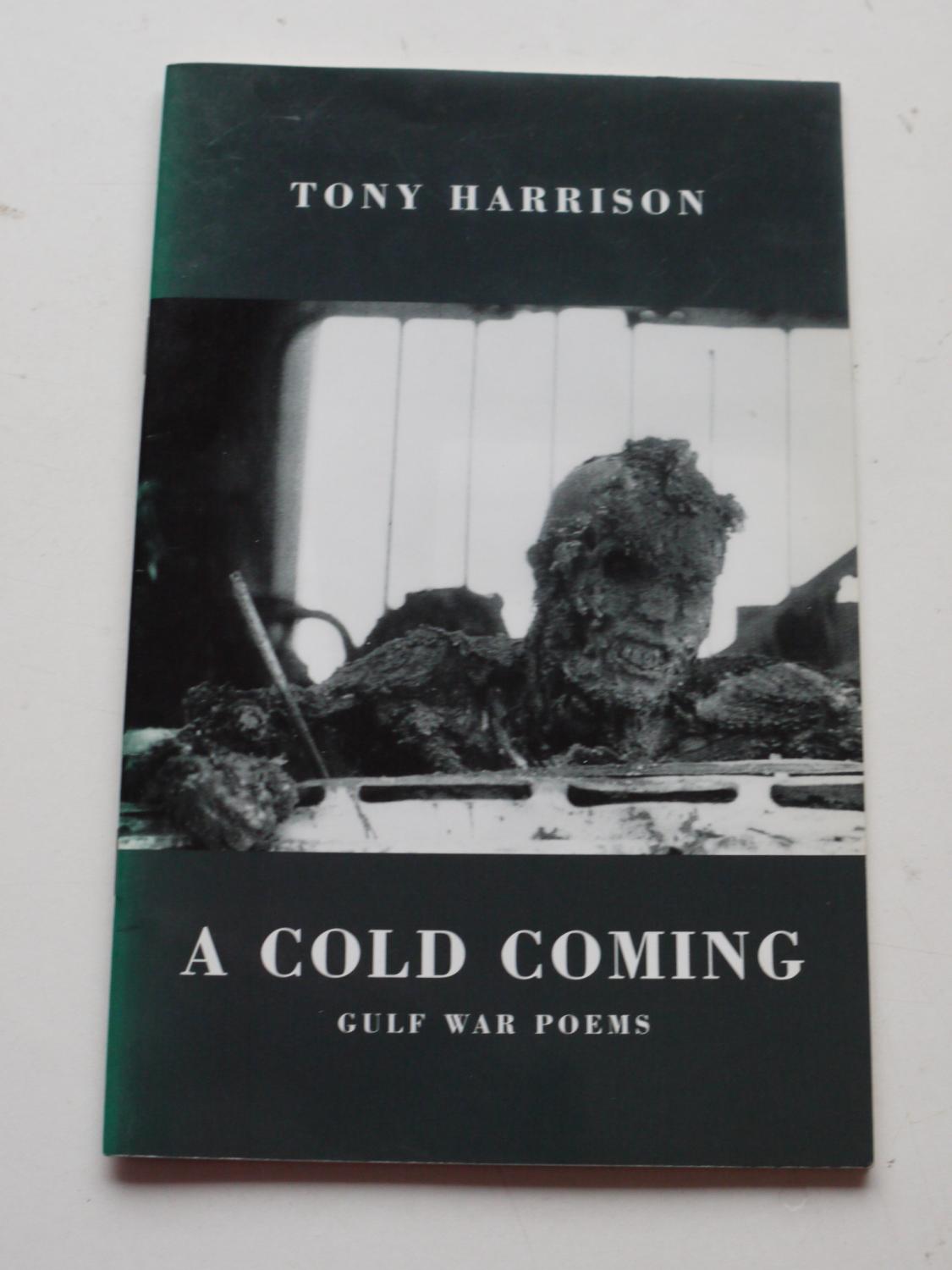
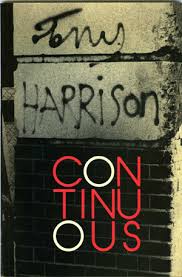
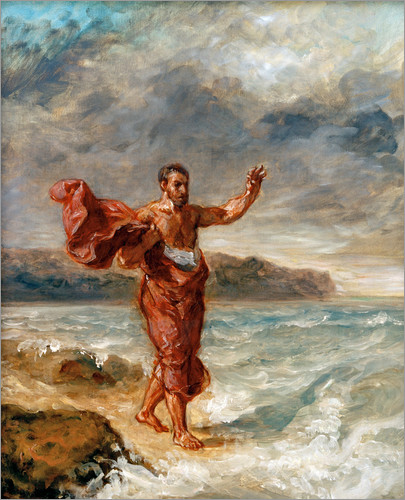


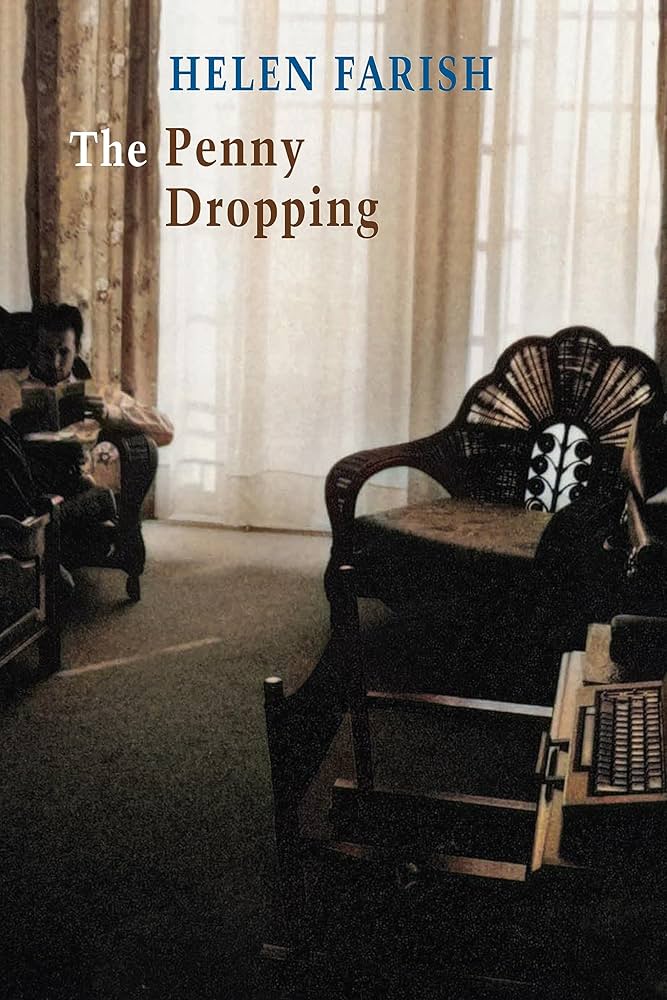

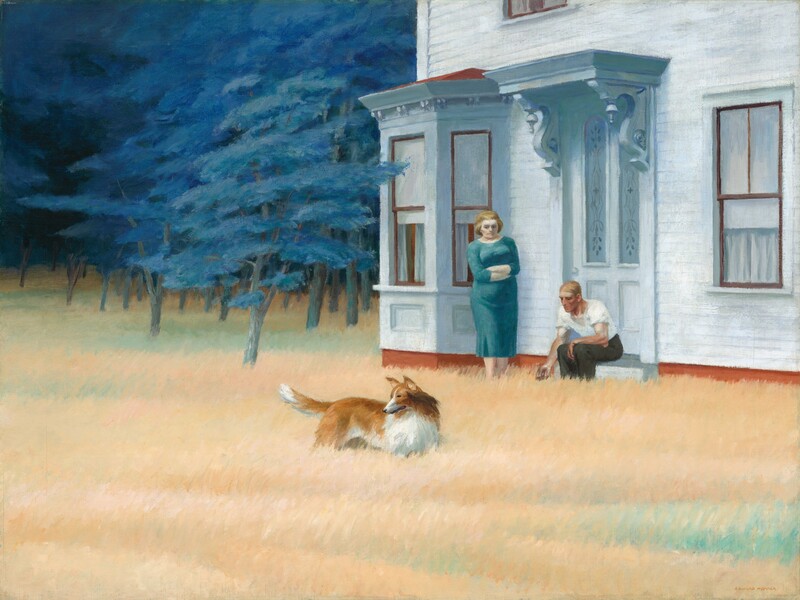
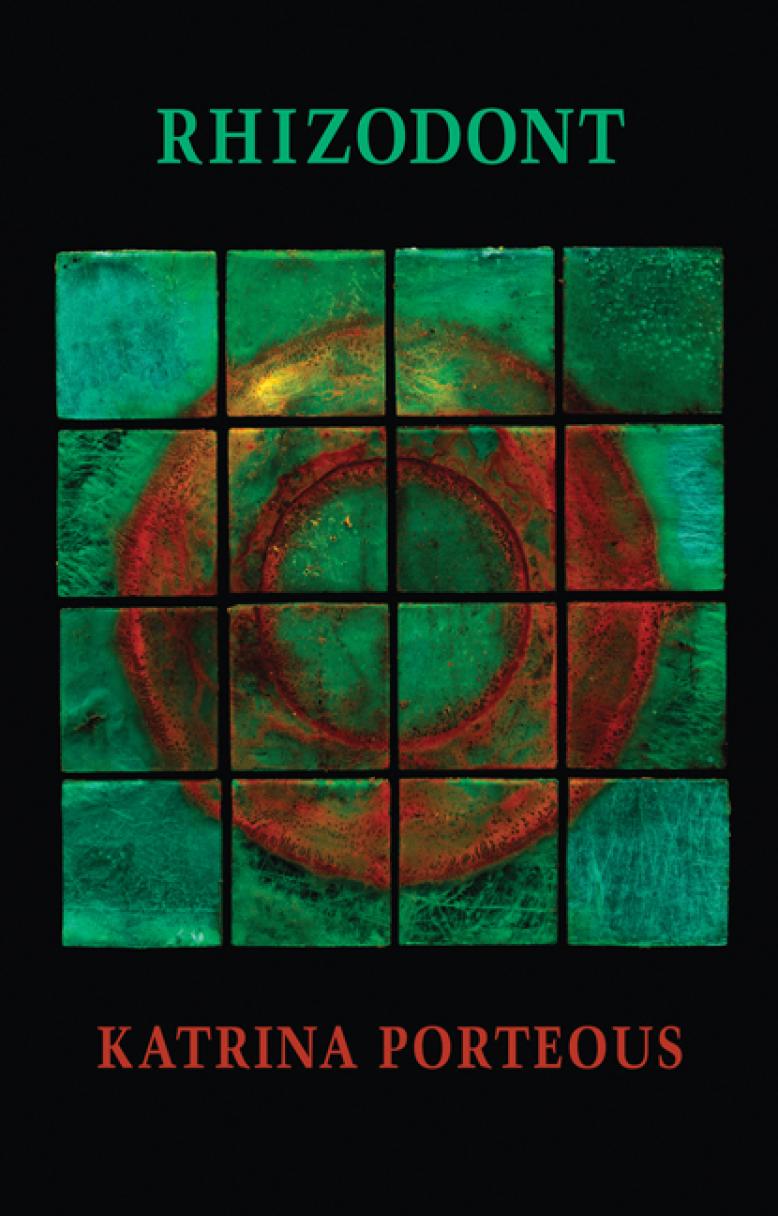
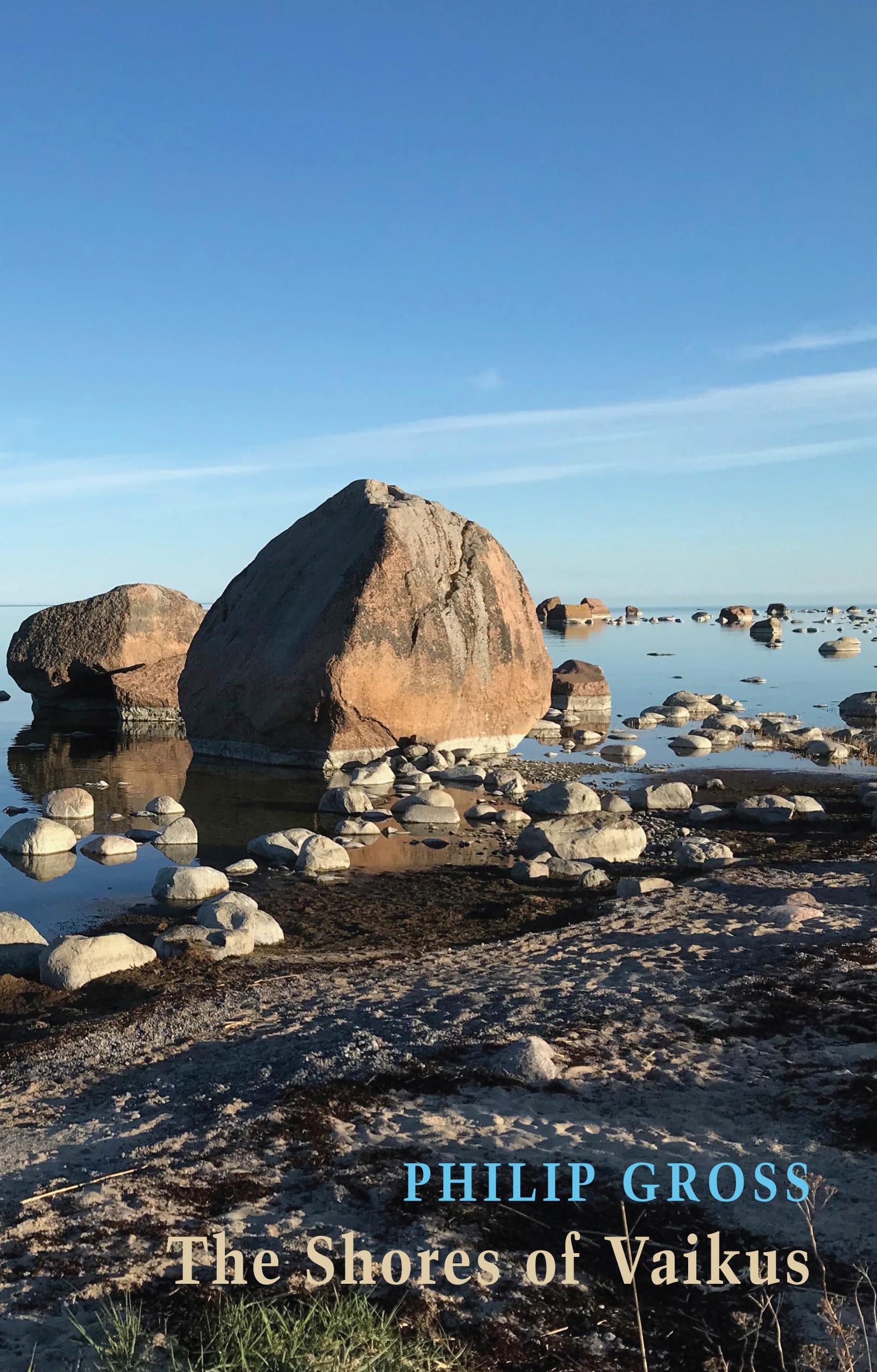
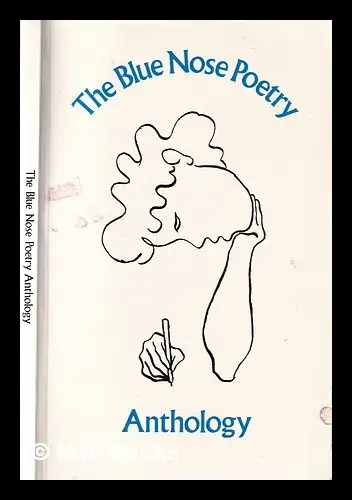

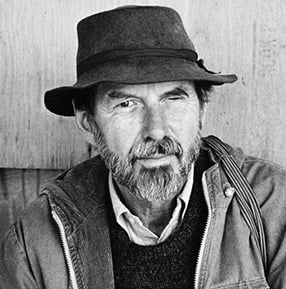

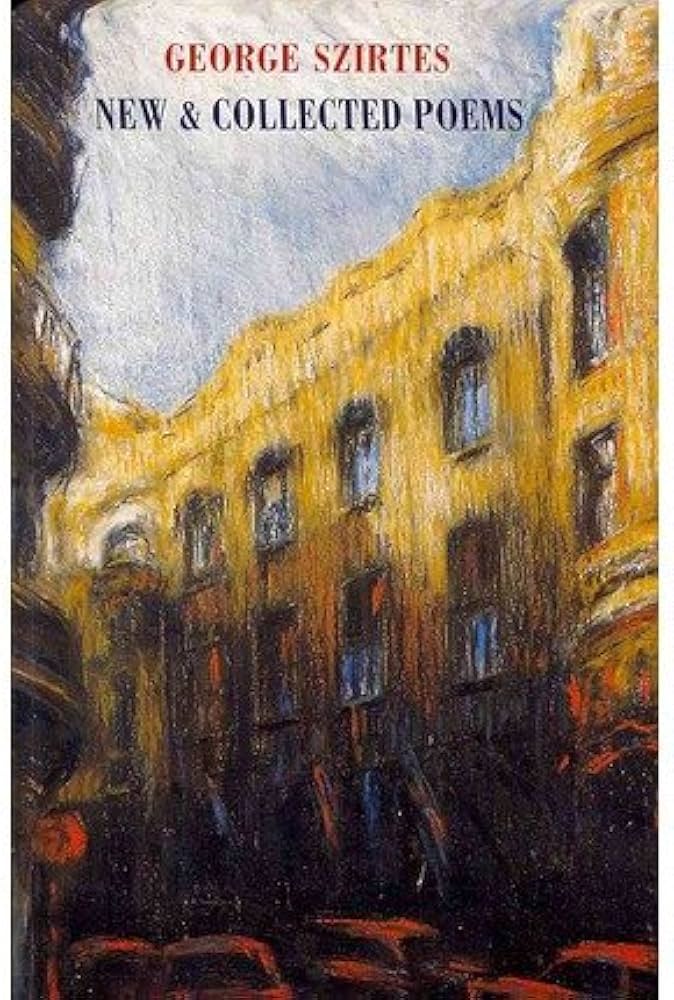
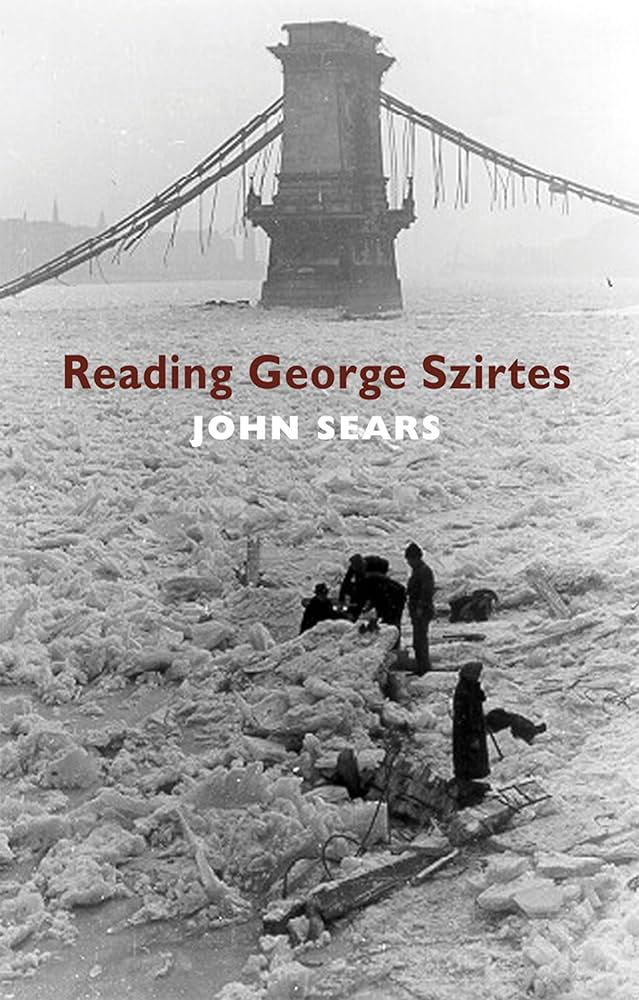

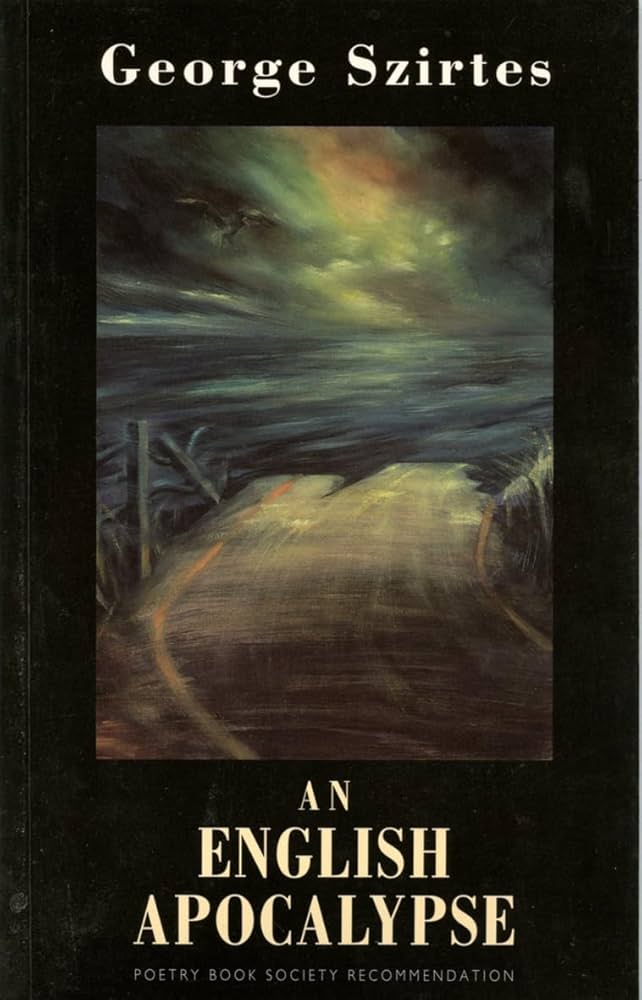





 Martyn Crucefix