Inner Emigres – Heaney and Huchel

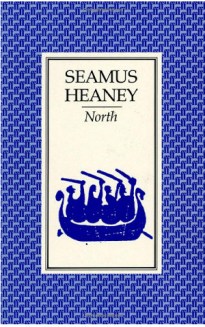
Googling the term ‘inner émigré’ I come up mostly with links to Seamus Heaney’s use of it in the poem ‘Exposure’, the poem with which he ended North (1975):

I am neither internee nor informer;

An inner émigré, grown long-haired

And thoughtful . . .
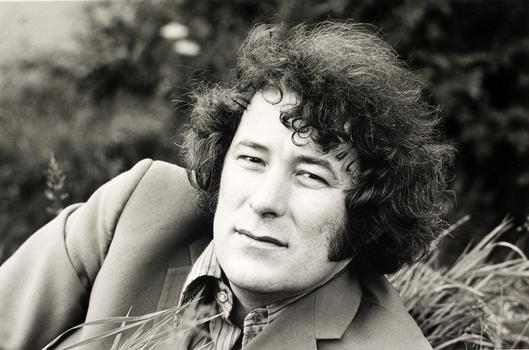
heany_profile

In a 1998 interview, Heaney discussed his use of the term: As far as possible, you try to remain a mystery to yourself. Living in Ireland, not being an exile, living in Ireland as a social creature, as a familiar citizen, I think there is a great danger that one’s social persona might overwhelm one’s daimon — if you’ll permit me such a grand term . . . And so what one is always trying to do is displace oneself to another place or space . . .Wicklow is where I first thought of myself as being an inner émigré. Since 1988 . . . I’ve been able to own the cottage and to think of it as my “place of writing.” When I said “inner émigré,” I meant to suggest a state of poetic stand-off, as it were, a state where you have slipped out of your usual social persona and have entered more creatively and fluently into your inner being. I think it is necessary to shed, at least to some extent, the social profile that you maintain elsewhere.

Heaney’s explanation of the term here is almost wholly personal and uncontroversial. Most of us would agree that we need to slip the moorings of our more socially tied selves in order to find the place of poetry. This is in part simply the required liberation from the way we use language to operate in (utilitarian) society though it’s also a shaking loose from the (again utilitarian) intentions and feelings of the quotidian. Having said that, Heaney does not mean a retreat into some up-dated Celtic Twilight world, soft-focused and fey, an abandonment of MacNeice’s requirement that modern poets are readers of newspapers, capable of pity and laughter, involved in personal relationships, actively interested in politics, susceptible to physical impressions.

This is more clear when Heaney acknowledges the term ‘inner émigré’ once had a specific meaning in the 1920s and 30s in Soviet Russia. It referred to someone “who had not actually gone into exile but who lived at home disaffected from the system. Well, to some extent that was true of myself. Certainly, in relation to Northern Ireland.”
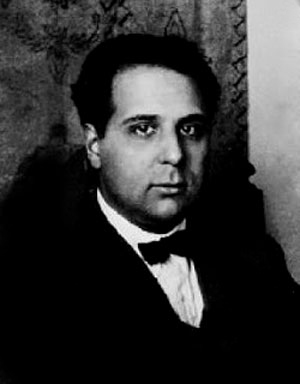
seferisbio
George Seferis

Heaney goes on to talk of finding in George Seferis’ work a connected idea, developed in The Redress of Poetry (1995): Seferis is reading Greek poetry during the war in the nineteen forties and he’s trying to write an article. There is distress, uncertainty, destruction all round him, with civil war looming. And he’s reading poetry and he’s really testing it. Does this thing have any value? And at one point he says: “Reading X this morning, I found that poetry is a help.” I think that what he means is that poetry secures some final place in your being, some little redoubt in your consciousness that will not be taken over by history or the world or disaster . . . Poetry’s value is established and promulgated by people who have known that feeling or something like it.

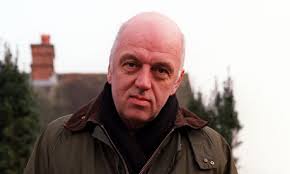
The term ‘inner émigré’ is also often used to describe Peter Huchel’s work though he was in the unusual situation of having to develop the strategy twice over.  His very early poems were linked to the sort of art fostered around 1920 by the League of Proletarian Revolutionary Writers. There’s no doubt he was on the side of the proletariat, the servants and exploited farmhands. He once said: “What did I care about in those days? I wanted to make visible in the poem a deliberately ignored, suppressed class, the class of the people, the maidservants and coachmen”. Even at this early stage his work did not include any proposals for a political solution and his concerns over social deprivation (witnessed from childhood days in the Brandenberg countryside) led him not to public proclamation but more inward to articulate a vision of a more fundamental relationship between productive human activity and the natural environment. It’s no surprise that Huchel felt close ties to the work of Robert Frost, though Huchel’s early verse (more than the American poet) is concerned with a representation of harmony and continuity, more fulfilment than frustration of fulfilment.
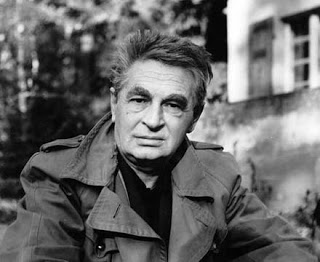
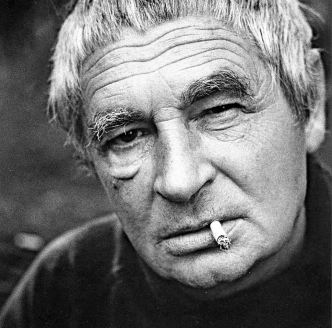
huchel
Peter Huchel

But with the rise of Hitler in the 1930s, Huchel began to develop the strategy of the ‘inner émigré’, publishing very little, even deciding to withhold an entire collection of poems, fearing it might be associated with the kind of blood-and-soil nature verse approved by National Socialism. His response to political changes was silence and non-cooperation.

It’s best to understand Huchel’s short-lived flash of faith in East German land reform in the immediate Soviet-Occupied post-war years in terms of his earlier social concerns. As John Flores argues, Huchel’s praise of the “law” of land reform is “not to be viewed as a sudden sacrifice in answer to official decrees, an unwilling turn to a theme totally incongruous with all his earlier poetic concerns, but as a logical continuation, in a way the culmination of his sympathy for the unprivileged classes inhabiting the countryside of his origins.” Within a few years, as the poet grew increasingly discouraged by developments in DDR society, his emphasis shifts from the praise of productive human activity in nature and the social order, to a concern for the enduring misery of men, regardless of the structure of society.
imgres

Huchel again had to adopt the role of ‘inner émigré’ being now at odds with East German politics yet still writing (and editing Sinn und Forme). His work becomes characterised “less by sympathy with those denied the privileges and rights due to them, more by meditations on the pain and uncertainty which permeates all human existence” (Flores again). Huchel’s tone becomes sombre and melancholy, poetic diction cryptic, his palette narrows, full of recurrent symbols. Poems from the 1950s are implicit statements of his ‘counterposition’ to the ‘construction of socialism’. Franz Schonauer suggests Huchel’s poems are not the expression of a direct opposition or political protest and express a loss of confidence. These poems are winter psalms. What is at stake is the human intellect and its power of resistance when reason and culture seem brutally damaged, in a frozen motionless state. This is from ‘Exile’, published in 1972:


With evening, friends close in,

the shadows of hills.

Slowly they press across the threshold,

darkening the salt,

darkening the bread

and strike up conversation with my silence.


Outside in the maple

the wind stirs:

my sister, the rainwater

in the chalky trough,

imprisoned,

gazes up at the clouds.


Huchel could still write: “The creative, even eruptive, element in lyric poetry only rarely exists without rules; it needs a container, a form, so as not to disperse. Spring water spilled on the floor has only a dim glow – but when poured into a glass it is full of light”. This is the same little redoubt that Seamus Heaney found in Seferis; each hard-won poem as a receptacle of something that will not be taken over by history or the world or by disaster.
north


Stand-to-Arms: David Jones’ ‘In Parenthesis’ (1937)

31kdwrvzonl-_sy344_bo1204203200_

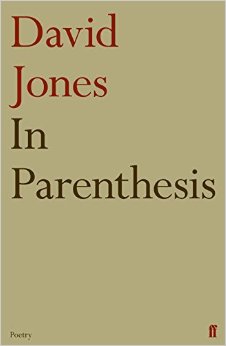
There’s an extraordinary moment in the final pages of David Jones’ magnificent poem-novella, In Parenthesis (1937), when his hero, John Ball, dying at the Battle of the Somme in 1916, imagines the tourist industry that has since grown up around the World War One battlefields. In his last moments, he abandons his rifle: “leave it for a Cook’s tourist to the Devastated Areas”. Jones’ footnote acknowledges the risk of this sounding anachronistic but insists he remembers such discussions among the soldiers, how holiday-makers will later be photographed “on our parapets”. It’s the unexpected sense of territorial ownership that makes him angry (not the sense of injustice at different lives unfolding so differently): he compares it to strangers “occupying a house you live in, and which has, for you, particular associations”.

entrance-to-a-sandbag-dugout

This searing, revelatory sense of the documentary – what it was like to be there – is just one of the reasons to read Jones’ book. Another extended footnote considers the multiple usage of the hessian material of sandbags. In their intended role “they constituted, filled with earth, the walls, ceiling, and even floor surface of half our world”. But it was also “utilized as a wrapping for food; for a protection to the working parts of a rifle, and cover for bayonet against rust. The firm, smooth contour of a steel-helmet was often deprived of its tell-tale brightness [. . .] by means of a piece of stitched-on sack-cloth. The sand bag could be cut open and cast over the shoulders against the weather or tied round the legs against the mud or spread as a linen cloth on the fire-step for a meal, or used in extremity as a towel or dish-cloth; could be bound firmly as an improvised bandage or sewn together as a shroud for the dead”. Such human and humane improvisation in the midst of nightmare reminds us that Jones did not intend In Parenthesis to be a “War Book”, but rather one about a “good kind of peace”. He himself gives us another reason to read his book in these contemporary times that we consider so ‘difficult’: “We find ourselves privates in foot regiments. We search how we may see formal goodness in a life singularly inimical, hateful, to us”.

51navnxu-nl-_sx331_bo1204203200_

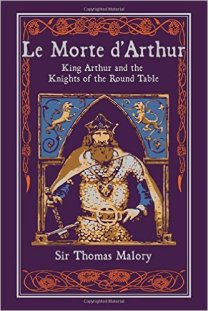
For those interested in poetic techniques, Jones mixes prose and verse as naturally as walking and running. He is fiercely allusive throughout, particularly drawing on Shakespeare, Malory, The Mabinogion, The Song of Roland, other Welsh and Anglo-Saxon poems, Romantic and Classical poetry. TS Eliot tends to use his intertextual or allusive techniques forensically to dissect our Modern condition, how far we fall short of heroism, how far we are from spiritual pilgrimage, how sordid and smutty our lives have become. Curiously, Jones achieves something opposite, managing to elevate his fallible, cursing Tommies to some sort of reflection of the heroism of the past. The fields of northern France are compared to Malory’s Le Morte d’Arthur in ways that establish rather than sever the links between myth and legend and the twentieth century. Bursts of shrapnel are associated with “the Thunder God” as discussed in Fraser’s The Golden Bough; the death of soldiers is rhymed with the myth of the king buried to protect and make the land fruitful. Jones’ interest in and identification with the ordinary soldiers is also expressed through his use of their words, in vivid, direct, often (knowingly) hilarious forms of demotic which put Eliot’s awkward efforts at doing the ordinary people’s voices into the shade.

antic-dispositionhenry-v-12

For a certain type of soldier, Jones tells us, trench life in 1916 with the “infantry in tin-hats, with ground-sheets over their shoulders, with sharpened pine-stakes in their hands”, brought Shakespeare’s Henry V “pretty constantly to the mind”. It’s from that play that one of the recurring phrases in In Parenthesis is drawn. In Part 3, Lance-Corporal Lewis sings as he walks, yet he sings softly, “because of the Disciplines of War”. Jones’ soldiers treat the idea with both respect and sarcasm on differing occasions though it’s striking that in the midst of battle, as things begin to turn against them:


Captain Cadwaladr restores

the Excellent Disciplines of the Wars.

3118806_orig

The book invites the reader in with knockabout drill on the parade ground at home to begin with. Then a long march to the port of embarkation, the troops looking smart as they march through town but once beyond civilian observation “with a depressing raggedness of movement and rankling of tempers they covered another mile between dismal sheds, high and tarred”. Proleptic of what lies ahead, they get lost among the port buildings, eventually waiting for departure to France in a “spacious shed [. . .] open at either end, windy and comfortless”.

Part 2 has the men marching through France, Jones capturing their first naïve witnessing of war’s destruction where a shell has fallen on the road they are pursuing: “men were busy here shovelling rubble into a great torn upheaval in the paving. A splintered tree scattered its winter limbs, spilled its life low on the ground. They stepped over its branches and went on”. One of the great themes of In Parenthesis ironically is the presence of Nature, often offering some consolation, some mythic pattern of life, death and re-birth to the soldiers, as well as (here) being subject to the destructions of human warfare. The natural processes of time, night and day, the seasons turning – also offer some consolation. Here is the magnificent opening to Part 4, John Ball seeing dawn break over the trenches:

standto

So thus he sorrowed till it was day and heard the foules sing, then somewhat he was comforted.


Stand-to.

Stand-to-arms.

Stealthily, imperceptibly stript back, thinning

night wraps

unshrouding, unsheafing—

and insubstantial barriers dissolve.

This blind night-negative yields uncertain flux.

At your wrist the phosphorescent dial describes the equal seconds.


The flux yields up a measurable body; bleached forms emerge and stand.


Where their faces turned, grey wealed earth bared almost of last clung weeds of night weft—

behind them the stars still shined.


The final seventh Part breaks more consistently into verse. Jones seldom uses line breaks to create the swaying rhythmic units of lyric verse but more usually for disjunction. His free verse recreates the soldier’s eye swinging from one thing to another, often in panic and confusion, the sudden bursting of danger from left field, from shells above, mines below. It allows him also to recreate the thrilling illogic of the stream of consciousness of his fighting men. Private Ball survives longer than many but is eventually wounded.


[. . .] it came as if a rigid beam of great weight flailed about his calves, caught from behind by ballista-baulk let fly or aft-beam slewed to clout gunnel-walker

below below below.


When golden vanities make about,

you’ve got no legs to stand on.


He thought it disproportionate in its violence considering the fragility of us.


He crawls away, encumbered by the weight of his rifle which he eventually leaves behind. An Ophelia-like figure, the Queen of the Woods, cuts garlands for the dying soldiers, whispering quietly to each of them, according respect (when the real circumstances of their deaths received anything but) elevating their passing to ritual. (Here is a brief animation and reading of this moment). That Jones can achieve this mythic sense, simultaneously dwelling on the clumsy encumbrance of Private Ball’s rifle, and allowing his fleeting thoughts about the future Cook’s tourists is a breath-taking moment of literary achievement. The whole is “a work of genius” (TS Eliot) and “a masterpiece” (WH Auden). For Adam Thorpe it “towers above any other prose or verse memorial of that war (indeed, of any war)”; for Thomas Dilworth it is “probably the greatest work of British Modernism written between the wars”.


david_jones_artist_poet
David Jones


I have been reading little other than In Parenthesis for the last few weeks. The narrative precision clarifies with each re-reading, as does the characterisation, the recurring motifs become more significant, the gem-like passages of exquisite poetry leap out. I have come to it very late; a reason for some regret but it is the best thing I have read in years. Perhaps the title put me off. It sounds arid and a bit tricksy. Jones suggests the parenthesis was the war itself (perhaps again indicating his real concern with how we live our peace), though he also cryptically adds “because our curious type of existence here is altogether in parenthesis”. The whole work concludes with lines taken from The Song of Roland: “the man who does not know this has not understood anything”.


In the Fire-Frost Morning

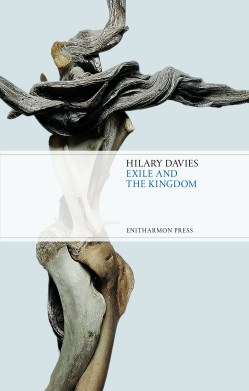
To wish everybody a peaceful Christmas and to apologise for my absence from blogging in recent weeks, I hope you will enjoy this poem from Hilary Davies’ new collection Exile and Kingdom (Enitharmon Press, 2016). Though I don’t share her faith, I do share her hope, though too often the world seems determined to test both faith and hope.

pfg-crop

In the Fire-Frost Morning

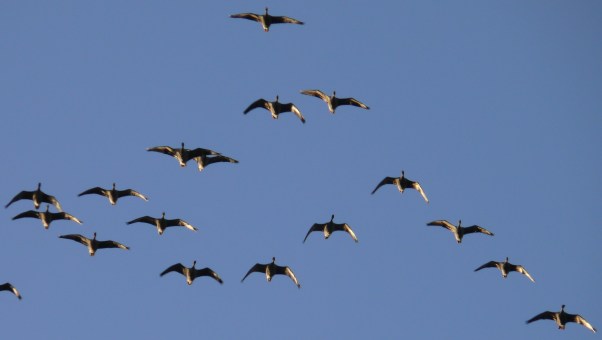
In the fire-frost morning the geese drive south

Trailing hosannas over the estuaries

And the beasts on the clockhouse stir.

From Tottenham Hale to Hackney Downs

The trumpets of day sound

And the gulls swarm up like heralds

Over the sleepers. ‘Awake! Awake!’

Throw open your skylights, thrust your heads to see:

Horseshoe thicket is afire with dawn

And the waters of Spring Hill teem.

Doors, dance. Fill the houses with praises.

God’s promise blazes in the reedbeds,

Bursting over the winter willows and sallows

All the way down to waiting Walthamstow.


9781910392171

The Poetry of Peter Huchel #2

This is the second blog posting arising from my work over the last year or so on translating the third collection by the German poet, Peter Huchel. I hope to complete this for publication in the next few months and here (and in my previous blog) I have been gathering information about his life and times. In a working life that saw him through some of the most traumatic events of European history, Huchel published only 4 collections of poetry in 1948, 1963, 1972 and 1979. Throughout his career the substance of much of his work is his vivid observation of the natural world, moving gradually towards a usually brief, free verse form, a withdrawal from the personal and a steadily darkening vision which comes to be dominated by elegy and lament. Quotations from the poems in this blog are from my own translations.

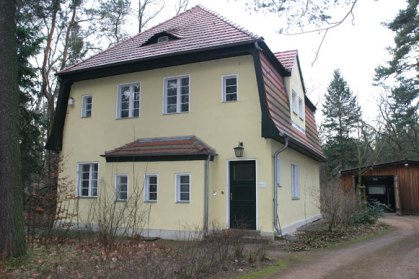
Huchel divorced in 1946 and married Monica Rosental in 1953. In his work at the journal Sind und Form he was always determined to maintain editorial freedom and the publication had an international outlook with contributions from Aragon, Bloch, Brecht (two special issues), Camus, Eluard, Langston Hughes, Thomas Mann, Marcuse, Neruda, Russell, Sartre, Yevtuchenko and Zweig. Inevitably he came into conflict with the authorities and came under immense pressure to conform. He resisted them for 13 years – in part because of the determined support of Brecht. Brecht’s death in 1956 left Huchel more exposed. He was asked to resign his editorship, refused and so compelled the East German government publicly to force his resignation. A year after the building of the Berlin Wall in 1961, Huchel was banished at the age of 59 to effective house arrest in Wilhelmshorst. The poem ‘Hubertsweg’ vividly portrays this period of his life, from 1962 to 1971, living in isolation and under Stasi surveillance:

huchel3

And at night

the roaring at the keyholes.

The fury of stems

splitting the earth.

And come morning

light roots out the dark.

Pine trees rake the mist from windowpanes.


He stands down there,

wretched as stale tobacco smoke,

my neighbour, my shadow

right on my heels as I leave the house.

Yawning sullenly

in flurries of rain from the bare trees,

he tinkers today with the rusty chicken wire.

What’s in it for him, scribing investigations

in his blue octavo book, my friends’ car numbers,

keeping watch on this hardly vulnerable street

for contraband,

forbidden books,

scraps for the belly,

stached in a coat lining.

A single twig to stoke the feeble fire.


Only his second collection of poems, Chausseen, Chausseen (‘Roads, Roads’) appeared in 1962. In defiance of the GDR authorities, he published it in the West. It was much praised – in the author’s absence. Henry Beissel has described the leanness and density of these new free verse poems: “images are more insistent on turning concreteness into code; sadness emanates from a sense of the inevitability of loss and from a world bent on self-destruction”.

48935464-red-brick-wall-background-with-dry-withered-ivy-leaves-plants

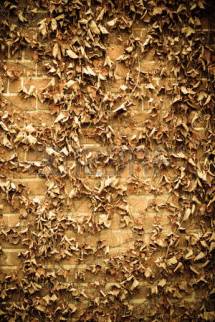
Fuse-wires

of withered leaves

glint on the wall.

Salt-white air.

The flight of cranes,

arrowheads of autumn,


In bright boughs

the hour’s pulse subsides.

Spiders deploy

their rims and spokes,

veils of dead brides.


Huchel’s images from nature are left to speak for themselves; his is often an impersonal, Symbolist poetry of a haunted and pessimistic kind. There is stoic survival and brutishness reflected in the curbed, elliptical, briefly allusive verse. Yet the poems remain marvellous acts of observation; the weather seems forever cold, wintry, foggy:


Estates,

disordered,

dust across the ground,

the heirs dead.

And grim skies,

grey cellars

of fogbanks.

The cold breathes

in echoing colonnades.


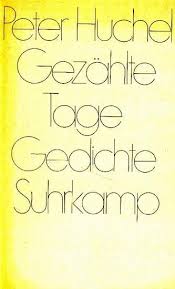
Huchel applied for an exit visa for himself, his wife and son on numerous occasions. He was supported by an internationally orchestrated campaign and eventually in 1971 the Ulbricht government granted his release. He lived first in Rome, then in a borrowed house near Freiburg in West Germany. Gezählte Tage (‘Numbered Days’)  appeared in 1972, the title suggesting the counted days of Huchel’s years under house arrest, his poems recording them, marking them, but also a residual sense of them actually counting towards something, his legacy as a poet, his final release. But like many GDR artists who moved to the West, Huchel was equivocal about what he found there. Because the GDR had failed to bring about a truly democratic and socialist society did not mean that Huchel had given up his ideals and the West’s materialism, egotism and faithless profiteering were repellent to him.


Beside the whitewashed wall

a monk clambers up steps,

sweat trickling from his brows.


Everything fades in light and heat,

the rough ochre of walls,

the fragile, scant moss on stones,

the spare green by the river.

The bellringer walks in ripped canvas shoes,

soon midday will sound.

269285_4f92e840dfee5ec5e313ce224dfb8064_large
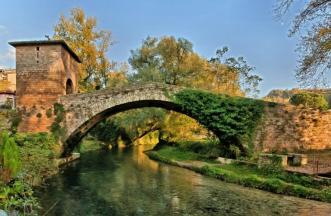
The medieval bridge at Subiaco, Italy

Huchel’s religious beliefs are difficult to pin down but certainly the poems of Gezählte Tage show a modern wasteland not confined to the East, a spiritual emptiness where, as in ‘Subiaco’, set in Italy, Pilate’s bowl stands emptied of water so the accumulation of guilt cannot be washed away. Nature still provides some recourse but not much of one. Huchel’s gloom is partly determined by his own nature, partly his background, political persecution, his divorce from his Brandenburg homeland. He often uses deliberate anachronism to make a point as well as Shakespearean and fairy tale motifs to evoke a lost time, a lost race, a golden age gone – with which he bears witness to his time. ‘Middleham Castle’ – where Richard III spent some of his youth – is a major poem in which Shakspeare’s tyrant lives on through the centuries as an image of oppressive power:


His foot is worm-eaten.

Gloucester walks to the stables,

the flagstones groaning.

The mastiffs lower their heads

anticipating the whip.


We are his servants,

we go in fear of his blade,

though his skull,

picked clean by so many winters,

lies deep in the ground.


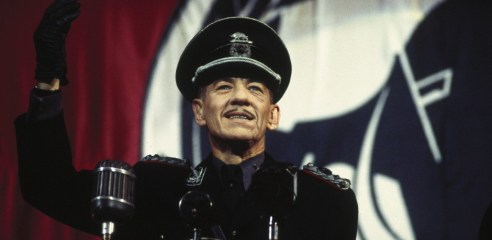
richard-iii-5-940x460
Ian McKellen as Richard III

In Huchel’s brief years in the West he was lauded and awarded literary prizes but this was just another form of exile. His final book Die Neunte Stunde (‘The Ninth Hour’) appeared in 1979. It is a book almost exclusively of elegy and lament; the ninth hour is the hour of despair, the hour in which Christ is said to have died on the Cross, crying out, “My God, my God, why have you forsaken me?” Huchel himself died in 1981, aged 78. I think I hear something of his more personal voice, attuned to the natural world but gifted only a tragic place in history, compelled to labour against the odds, in the unnamed peasant who Huchel has narrate ‘Middleham Castle’:


Familiar with the ways of great forests –

the year streaked with the jays’ colours,

painful brightness of frosted boughs,

the winter hair of deer stuck to bark,

fawns huddled together at evening,

warming themselves in the cloud of their breathing –

up the gorse-clad hill with rope and horses

I haul tree trunks to Middleham Castle.

76799569

The Poetry of Peter Huchel #1

I have been working off and on over the last year on translating the third collection by the German poet, Peter Huchel. I hope to complete this for publication in the next few months and here (over this and my next blog post) I have been gathering information about his life and times. I’ve found people know of his work but not in much detail. In a working life that saw him through some of the most traumatic events of European history, Huchel published only 4 collections of poetry in 1948, 1963, 1972 and 1979. Throughout his career the substance of much of his work is his vivid observation of the natural world, moving gradually towards a usually brief, free verse form, a withdrawal from the personal and a steadily darkening vision which comes to be dominated by elegy and lament.

huchel

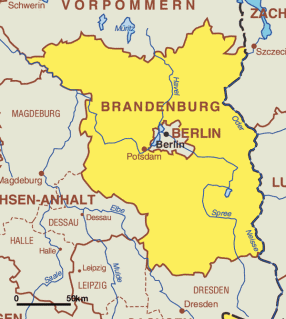
Peter Huchel was born Hellmut Huchel in 1903 in Lichterfelde (now part of Berlin). As a result of his mother’s ill health he was taken from the city to grow up on his grandfather’s farm at Alt-Langewisch, in the Brandenburg countryside near Potsdam. Huchel himself later argued “it is precisely the experiences of childhood, roughly between the ages of five and ten, that exercise a decisive influence in later years” (acceptance speech for the 1974 Literature Prize of the Free Masons). If this period was something of an idyll then it was shattered dramatically and forever by the death of the eleven year old boy’s grandfather and the outbreak of war in Europe.

brand-c-eu-komm

After defeat and his country’s humiliation at Versailles, Huchel, now 17 years old, took part in the conservative Kapp-Putsch against the Weimar Republic in 1920 which was fuelled by a resentment against the German government for signing up to the punishing conditions of the Treaty of Versailles. In the fighting associated with the failed coup, Huchel was wounded and it was during his recovery in hospital that his sympathies for socialism and Marxism fully developed.

From 1923 to 1926, Huchel studied literature and philosophy at the universities of Berlin, Freiberg and Vienna. Though always temperamentally an outsider, these were years of political, economic and artistic ferment (though ultimately something Huchel would react against) and in the final years of the 1920s he travelled to France, Italy, Greece, Hungary, Romania, Turkey. In 1930, he changed his first name to Peter. His early poems were being written and published from 1924 onwards and were already strongly marked by the atmosphere and landscape of Brandenburg. He appeared out of step with the times, writing nature lyrics, using conventional metre and rhyme, though the natural landscapes he portrayed were far from pastoral. The rural world he grew up in was providing ways of articulating concerns about the shortcomings of the world about him: his close observations of Nature showed her as a harsh mistress and the poverty and suffering of Huchel’s Brandenburg peasants were both very real and politically charged.

12106280_641080319366623_520747277_n

Working as an editorial assistant for Die Literarische Welt by 1932, Huchel’s poems won a prize and his first manuscript was accepted for publication under the title Der Knabenteich (‘The Boy’s Pond’). In 1934, Huchel married Dora Lassel but with the rise of Hitler in 1933, Die Literarische Welt ceased publication and Huchel withdrew his book partly for political reasons. He fled to Romania for a while and was deeply troubled that the Nazi’s liked his work, reading into it as they did a version of the blood and soil nationalism they hoped to foster. A few of his poems were published but by 1936 he was refusing permission and he did not publish a new poem during the rest of Hitler’s rule. Instead, he withdrew to the Brandenburg countryside but was eventually drafted in 1941, ending the war in a Russian prisoner of war camp.

With the fall of the Third Reich, Huchel enthusiastically shared the democratic and socialist optimism of many of his compatriots about the reconstruction of Eastern Germany offering a vision of freedom and equality to all. He began working for East German radio, published his first collection, Gedichte (‘Poems’), in 1948 and in 1949 became editor of the influential poetry magazine Sind und Form (Sense and Form’). Huchel’s poems were applauded both for their craft and evident socialist undercurrents though he did not satisfy some who demanded much more explicit support for the German Democratic experiment. Huchel’s dark rural landscapes offered at best equivocal support for the socialist regime and his instinctively conservative harking back to childhood and the natural world (rather than the modern revolutionary transformations of human society) were rightly seen by many as falling far short of the expected unquestioning celebration of the GDR’s project.

imgres

Here’s Huchel’s ‘The Polish Reaper’ – from this period – as translated by Michael Hamburger. Compared to Huchel’s later work, there is an exclamatory and ‘poetic’ quality to many of these lines (despite being nominally spoken by a migrant worker in Germany). Also the political content is more explicit in the fields mowed but not owned, the poor conditions of the workers and the rather hefty symbolism of the returning eastwards to a red dawn!


Do not cry, golden-eyed frog,

in the pond’s weedy water.

Like a great conch

the night sky roars.

Its roaring calls me home.


My scythe shouldered

I walk down the bright main road,

Dogs howling round me,

past the smithy’s grime

where darkly the anvil sleeps.


Down by the outwork

poplars are drifting

in the moon’s milky light.

Still the meadows exhale heat

in the crickets’ screeching.


O fire of the earth,

my heart holds a different glow.

Field after field I mowed,

not one blade was my own.


Blow, autumn gales!

On the bare boards of lofts

hungry sleepers awaken.

Not alone I walk

down the bright main road.


At the rim of night

the stars glitter

like grain on the threshing-floor,

where I go home to the eastern country,

into morning’s red light.


I’ll continue Peter Huchel’s life story in my next post.

Beyond Caravaggio and an old ekphrastic poem

51mrxjcbqcl-_sx351_bo1204203200_

Two things dove-tailing this week . . . My thoughts way ahead of time about ekphrastic poems (poems stimulated by visual art) in relation to the workshop I am scheduled to run at the Holburne Museum in Bath in February 2017. The particular exhibition was in the news this last week as they will be showing, amongst many others, a newly-rediscovered painting by Peter Breughel. Also I went to the Beyond Caravaggio exhibition at The National Gallery a couple of days ago. There, though the numbers of Carravaggios per square metre of wall space is relatively low, much of what’s on display by those who came under his influence is well worth seeing.

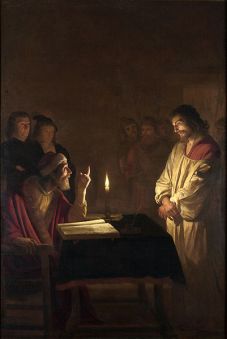
At the end of the 16th century Caravaggio brought an almost photographic precision to painting, mixing elements of still life with portraits and religious subjects. His people are caught (again almost photographically) in realistic seeming mid-gesture, twisting, stooping, hands wide or aloft. Then there’s the light: powerful light sources cast illumination and correspondingly deep shadows across the figures, darkening the brows of a face, across a hand at a card game, on exposed flesh. One of the ‘followers’ turns out to be Gerrit van Honthorst whose towering ‘Christ before the High Priest’ is displayed in the final room. As I came across it I had one of those moments of recognition. The picture has been in the National Gallery collection for many years and it provided the (ekphrastic) stimulation for one of my earliest poems.

401px-gerard_van_honthorst_-_christ_before_the_high_priest_-_wga11650

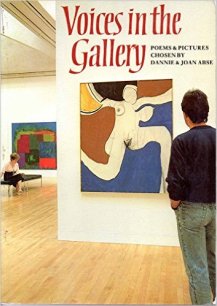
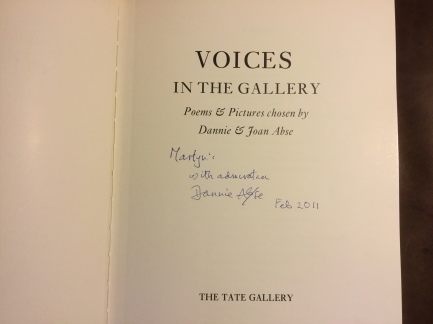
The poem eventually appeared in my first book, Beneath Tremendous Rain (Enitharmon, 1990) and I’ve always had a soft spot for it as Dannie Abse chose to include it in the plush, coffee-table anthology called Voices in the Gallery (Tate Gallery Publications) he edited 1986 with Joan, his wife and art historian. For a wannabe poet with no book yet it was a dizzying moment – a not-to-be repeated moment – being sandwiched between Zbigniew Herbert, W. H. Auden and Thomas Hardy! Year later I got Dannie to sign my original copy of it.

img_0229

The voice in my poem is naïve and unknowing, an art historian ignoramus (close to the autobiographical truth). But he looks hard, starting with a bewildered rationalism as he tries to get to grips with the stylised, stiff religious images of the “early galleries”. He understands he’s nothing more than one of the “casual visitors” who prefer to gaze at something familiar, the “recognisable gesture”, the more simply realistic and identifiable images contained in later works. But gradually he recognises the thorough-going empiricism of “dimension, distance and the need for accuracy” has its own limits (I still like the dig against my own gender’s devotion of facts, though the portrayal of the too submissive female partner I’d not let through these days).

The Expressionistic distortions of Van Gogh (“inconsistent with the camera”) begin to appeal to him as he understands the impossibility of a truly objective view (“eyes jaundiced / only with being human and limited”) which – he seems to be on a circular walk round the National Gallery – then allows him to re-assess the earlier images. With the passage of time and the loss of religious faith (I was sure of it then, back in the 1980s), these pictures also openly admit their distortions. Their “dogma is laughable now, or / almost so”. They obviously possess no camera-like claim to objectivity or all-inclusiveness. Rather they now seem to him to admit “in all self-consciousness, / other possibilities multiplying beyond the frame”. It’s at that point the image of Honthorst’s ‘Christ before the High Priest’ comes to mind. It seemed to me then an image that was interesting and powerful at least as much for what lies just out of sight as for what the casual visitor can see plainly.

Years later, in different poetic modes, I’m still intrigued by what lies just beyond our reach – the Daoist’s uncarved block of wood – still think it has as much power as what we plainly see. Here’s the old poem in full:


At The National Gallery


What am I to do with these angels’ wings,

with the literalness of these gaping heavens

and haloes in the early galleries?

No-one believes them. Beyond meaning,

they are absurd – mannered and posed figures

as unlikely as the nude’s fig-leaf, the wooden

gestures of saints staring straight through you:

uncomfortable attitudes, seeming content

with their fantasies of transfiguration and myth.


Yet casual visitors walk right past. They’re drawn

to quotidian scenes, the scruffy breeches, old hats

in later pictures where they scribble notes,

trying to capture the vanishing feelings

of viewing these captured moments

of vanishing things – the recognisable gesture

at an execution, on the river, in the boudoir.

And I with them, yet always end uncomfortably

tracing holiday strolls through Canaletto’s

Venice or impatient somehow with men

who explain to their quiet partners about

dimension, distance and the need for accuracy.


But Van Gogh’s crippled chair confounds them,

restores a sense of things perceived in ways

inconsistent with the camera, eyes jaundiced

only with being human and limited which is

other than the capture of fleeting things,

the stunned insect, and like verse that must

struggle to avoid its final stop: another fairy-tale

though there are no haloes, no heaven here.

And I go back to those old pictures to find

their appeal, uncovered, is the honesty, almost

innocence, time has forced upon them,

for what was then dogma is laughable now, or

almost so. Uncameralike, their contentment admits,

rather asserts in all self-consciousness,

other possibilities multiplying beyond the frame:


like the one candle, illuminating a room,

the gleaming tabletop, across which one detailed,

serious face confronts another, unnaturally

bound in by a darkness in which we make out

nothing, yet know someone moves inches beyond

vision, rising, strained forward and demanding:

Give me some light, I say, lights! Now! A taper!

img_0231

How to Grow your Own Iambics Part 2

This is the second posting on a metrical exercise on iambics. I have been teaching 3 sessions for the Poetry School in the last few weeks, contributing to the ongoing course called The Construction of the Poem which takes students through the various constituent elements that go to make up a poem. It is advertised as on ‘the history and application of formal techniques’ and my brief is to cover metrical issues. Though the course is directed more at learning about such techniques than the application of them (this is partly just a matter of time restrictions), one exercise we have played around with is growing our own iambics – this began with an iambic monometer and grew into an iambic tetrameter as detailed in my previous posting.

images

Starting from the tetrameter again, the poem will now grow some more . . . This is where I got to last time:


Because I hope to speak to her

I walk again along the way,

the path beside the old canal,

where children play and mothers come,

where thistles bloom in purple knots

that grey and drift across the path,

here strewn with wrappers torn from sweets,

with needles dropped another day,

where users lean and drift, ascend

above the clouds and steeple cock.


From this pretty regular iambic tetrameter, grow on further lines while at the same time lengthened these lines to iambic pentameter (5 iambic feet per line). New material indicated in italics:


Because I hope to speak to her, I walk

again along this way, the path beside

the old canal where children play and mothers

come, where thistles bloom in purple knots

that grey and drift across the path. It’s strewn

with wrappers torn from sweets, with needles dropped

another day, where users lean and drift,

ascend above the clouds and steeple cock.

Its glint I glimpse where water stands, its gold

a coin, a drowned, two-headed coin she tossed.

A bird is panicked from the reeds, its wings

slapping the surface like a window smashed.


I’ve slightly re-jigged line 2 here and feel the need to punctuate more heavily with the lengthening lines. The di-syllabic “mothers” again presents an issue at line 3 – I’ve made the same choice here as before, not breaking the word, allowing 11 syllables in line 3, shortening line 4 to 9 syllables. “Slapping” – given the sudden violence of the bird’s flight – I have allowed to stand as a reversed, trochaic foot opening line 12. I’m now thinking of the narrator as a mother (though as easily a father) who has come to a place remembered as visited with a daughter, now more grown up. The coin toss image seems to allude to some life-chance or choice and the inclusion in the poem – in the narrator’s observations – of the discarded needles probably tells its own story.


Beyond the pentameter lies the less common reaches of the hexameter or alexandrine – six iambic feet per line:


Because I hope to speak to her, I walk again

along the path, this way beside the old canal

where children play and mothers come, thistles

bloom into purple knots that grey and drift across

the path strewn here with wrappers torn from sweets, needles

dropped on another day, where users lean and drift,

ascend above the clouds and steeple cock. Its glint

I glimpse where water stands, its gold a coin, a drowned

two-headed coin she tossed. A bird is panicked from

the reeds, its wings beat the water like a window

smashed. If I stand inside the door and gaze across

the pews towards the brightly coloured glass of saints

and martyrs, mother, child in arms, its chubby limbs

each filled with sun, her robe is blue, her arms are full.


The lengthened line now begins to drag a little and is feeling rather clumsy here (it would need more work if I wanted to go with this) but as a reader I think of the slow, rather mournful walk of what now seems to be the possibly bereaved narrator. In line 3 the two syllables of “thistles” again ought to be broken across the line break – this time I cut the preceding word (“where”) to give more of a jolt to this threatening word so line 3 ends with a trochaic foot – “come” and “thist-” forming a spondee. Line 4 opens with a trochee too. The word “needles” presents the same problem at the end of line 5 – this I’ve re-jigged as above (though it does not read well to my ear at the moment). But I guess I’m happier to disrupt the predominant iambic by this stage – partly because it’s clearer to me now that this poem has a dark edge to it – but also because the longer lines give (maybe they need?) the chance of more variation. Line 10 has also been altered a little, “slapping” is replaced by the stronger monosyllable “beat”. The unexpected leap into the church interior seemed a good idea – a change of scene – and an intuitive link to the smashed rippling of the canal water, reminding the narrator of stained-glass. The image of Madonna and child is maybe too obvious but actually feels right for both writer (me) and the narrator (definitely now a mother of a child lost somehow). It’s also more acceptable as the church steeple had already been alluded to in the poem.


I’m now going to take this as far as the iambic heptameter line or fourteener:


Because I hope to speak to her, I walk again along

the way, this path beside the old canal, where children play

and mothers come and thistles bloom in purple knots that grey

and drift across the path. It’s strewn with wrappers torn from sweets,

with needles dropped another day, where users lean and drift,

ascend above the clouds and steeple cock. I glimpse its glint

where water stands, its gold a coin, a drowned two-headed coin

she tossed. A bird is panicked from the reeds, its wing-beats break

the water like a window smashed. I stand inside the door

and gaze across the pews towards the brightly coloured glass

of saints and martyrs, mother, child in arms, its chubby limbs

each filled with sun. Her robe is blue, her arms are full of blood,

the red of ribbons, red of nails, the red of every month.

It’s her I think I need to find. Beyond the traffic noise,

I cross the bridge. A narrow boat is gliding down below,

its brightly painted tubs, its name a girl’s, I watch it pass

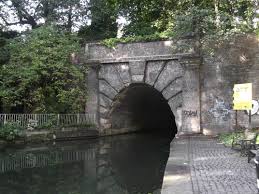
into the dark, a stink of smoke, a swirl, a wink of light.

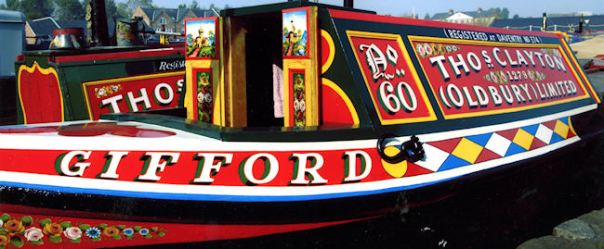
 gifford1

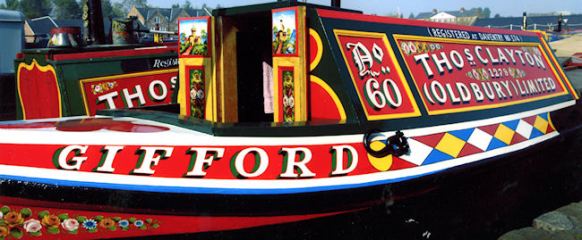
That the Madonna’s arms are full of blood surprised me but probably I am echoing those earlier thoughts of veins and needles. The repetitions of “red” felt quite bold, I think following the maturing of the narrator’s daughter. I grew up near the Kennet and Avon canal and still walk there often watching the narrow boats pass. Many of them are carefully decorated by their owners and this was coming to mind at the end though I still think this is a very urban part of the canal network. Obviously the passing boat, with its girl’s name, reminds the mother of her daughter (I guess we still don’t know exactly what happened to her) and though there is something positive in the painted colours of the boat (echoing the coloured windows in church I now realize), its passing into the tunnel is ominous and the fragmenting of the lines (these long lines are good for this) suggest a dissolving or passing away.

I don’t know how this reads yet as a poem and it’s certainly to raw and new to think which of these forms suit it best (if any). But it’s not a poem or a place I might have entered into without the use of this very methodical exercise. It’s worth a try, I think, and whatever the results, it’ll set you thinking about line lengths generally and patterned rhythm or metre more specifically – essential tools of the poet at any stage.

How to Grow your Own Iambics Part 1

I have been teaching 3 sessions for the Poetry School in the last few weeks. I have been contributing to the ongoing course called The Construction of the Poem which takes students through the various constituent elements that go to make up a poem. It is advertised as on ‘the history and application of formal techniques’ and my brief is to cover metrical issues. Though the course is directed more at learning about such techniques than the application of them (this is partly just a matter of time restrictions), one exercise we have played around with is growing our own iambics – from little monometers great fourteeners may grow!

gifford1

The first dab of culture in the experimental petri dish is the simplest of forms, the iambic monometer. If you want to join in with this, it hardly matters what you come up with (and I certainly make no claims for what follows) partly because the exercise is also exploring Glyn Maxwell’s claim that using form will propel the poet towards “words you didn’t expect, matter you never chose, resonances that crept up around you” (from On Poetry (Oberon Books, 2012)). Michael Donaghy often suggested something similar: “Like good poets whom the tyranny of rhyme forces into the discovery of their finest lines, I’m in it for the discovery. If writing poems were merely a matter of bulldozing ahead with what you’d already made up in your mind to say I’d have long ago given it up for something more dignified” (from ‘My Report Card’ – 2000).


Because

I hope

To speak

To her

I walk

Again

Along

The way

The path

Beside

The old

Canal


Here I’m more concerned with choosing regular iambs than making much sense. The hesitating movement of the short lines works quite well.  In the Poetry School sessions we looked at Robert Herrick’s famous poem in this metre, ‘Upon His Departure Hence’, as well as one by Karen McCarthy Woolf (‘Mort-Dieu’). Both poems use the curbed tentativeness of the metre to reflect on mortality – almost as if the form offered a safe form, a containment of (too) powerful emotion.

Now re-organise the same material as a dimeter. This will involve the composition (if that’s quite the word) of further lines simply to complete the form and this will take you into unexpected territory perhaps . . .


Because I hope

To speak to her

I walk again

Along the way


The path beside

the old canal

where children play

and mothers come


The dimeter remains a very brief line (I don’t feel much need for punctuation yet) but here the short reach of each line gives some urgency to the narrator’s hoping to speak to “her”. The reader (as much as the writer at this stage) is wondering who both narrator and hoped-for interlocutor is. The extra material begins to suggest maternal possibilities, partners, other children . . . The “again” of line 3 is also interesting – a recurrent search. Why can’t she be found. What is this need to speak to her? Why come to this location?

Now re-organise further to make a trimeter:


Because I hope to speak

to her I walk again

along the way, the path

beside the old canal,


where children play and mothers

come, where thistles bloom

in purple knots that grey

and drift across the path.


It feels natural to want to punctuate these lines now with their greater complexity and greater risk of ambiguity. The three beat lines perhaps begin to evoke the pacing of the walker? There is an issue with the 5th line in which (keeping to a strict iambic metre) the word “mothers” ought to be broken across the line break. I’ve decided to allow an extra syllable into line 5, so ending it with a feminine, weak, seventh syllable. Line 6 I’ve therefore left with one syllable short. It’s happenstance but I like the extra dwelling of a reader’s attention on “mothers” (I begin to think the “she’ is a mother, or the narrator may be a mother searching for a female child). The shortening of line 6 which refers to “thistles” also feels right; it introduces a spiky, perhaps threatening image and the shortened line creates an uneasy feel. These undoubtedly ‘fortuitous’ developments are just the sort of thing the poet has a veto over – we decide whether they stand or need to be revised further. Here, I let them stand.

imgres

Next stage is an iambic tetrameter – four iambs per line:


Because I hope to speak to her

I walk again along the way,

the path beside the old canal,

where children play and mothers come,

where thistles bloom in purple knots

that grey and drift across the path,

here strewn with wrappers torn from sweets,

with needles dropped another day,

where users lean and drift, ascend

above the clouds and steeple cock.


Woah! No – I don’t know where this is heading . . . The longer length of line now begins to give a more conversational feel. This four beat line (either with accentual-syllabic or plain stress metre) is probably the most common in English verse. I think of it (and the good old iambic pentameter) as sort of neutral spots on the metrical continuum – neither too tightly bound nor loosely adrift). The greying of the thistles now seems to allude to aging (of the narrator?), certainly to time passing, time on her mind. The sweet wrappers make a clear gesture towards childhood; the discarded needles strike a far more ominous note (if a bit clichéd). Is the narrator seeking a child, no longer a child, has she become involved with drug abuse?


If you want to see this poem developing into an iambic pentameter – and find out (with me) what the poem is really about – I’ll post the remainder of this blog on Monday.

Lots of Poetry, Too Little Cake

breakingsmall

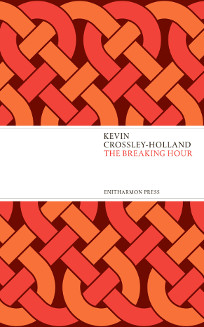
Last Saturday I attended one of the half-yearly poetry events in Palmers Green, north London. These are always very good evenings, these days full of music as well as poetry as the Helios Consort of recorders play before and after the interval. Kevin Crossley-Holland was reading (a superb poet, as well as all his other literary achievements) as was Sarah Westcott (recently published by Pavilion – having just won the Manchester Cathedral Poetry Competition) and Katherine Gallagher, launching her new Arc collection – about which someone called Crucefix has blurbed:

This new collection is bejewelled throughout with haiku-like moments of vivid observation. Her delighted responses – in particular to the natural world – serve to peel away the film of familiarity through which we usually gaze. Yet Gallagher combines such excited observation with a quality of restraint, a respect for what she encounters in a process of self-creation – “from myself into myself” as her epigraph from Rose Auslander puts it. Sequences about her Australian mother and the loss of her brother are imbued with this same gift: life is celebrated in poems that never forget our mortality: “This is time we have underlined, / remembering what we’ve done, where we’re going” (‘Quotidian’).

On the following morning I was taking part in the Bloomsbury Festival, talking about the art of translation with Chris Campbell, Literary Manager, Royal Court Theatre and Gregory Thompson, Creative Entrepreneur in Residence at UCL. Chaired by Geraldine Brodie, Lecturer in Translation Theory and Theatre Translation at UCL, the talk – in the very comfortable, wood-panelled surroundings of the Churchill Room, Goodenough College, London House, Mecklenburgh Square, London – was really wide-ranging from Gregory’s experiences of directing Shakespeare in the Indian sub-continent and the kind of cultural translation that takes place on such occasions to Chris’s translations of drama texts to and from the French and French-Canadian. One issue there is the translation of comic references such as cricket allusions or types of motor cars (I think he suggested a Vauxhall Cavalier equivalent in a French cultural context would be a Renault 21). I thought there was quite a bit of common ground when I was explaining how I fell into translation through the need to stand up and declaim/read/perform translations which I felt did not really convince in English. This is how I began the idea that I might try to translate Rilke’s 9th Duino Elegy many, many years ago – I could not find a version that read well aloud. I still regard that as a key test.

c45407b1ab4103bca137a0808bc8c042

This idea that poetry ought to be read aloud is common enough in most writing workshops but I do wonder how many people really adhere to it. This came up again with my third engagement of the busy weekend – teaching my first session for the Poetry School on ‘music and metre’ on Monday evening. As I explained to the class, formal verse is not especially my thing but it is also an area I have had to teach on various occasions. I kicked off by reading James Fenton’s powerful poem ‘Tiananmen’ – see below – and Auden’s observations about the benefits of form:

images

The poet who writes ‘free’ verse is like Robinson Crusoe on his desert island: he must do all his cooking, laundry and darning for himself. In a few exceptional cases, this manly independence produces something original and impressive, but more often the result is squalor – dirty sheets on the unmade bed and empty bottles on the unswept floor.

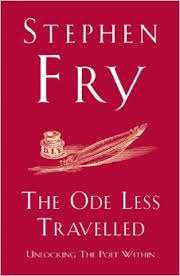
I love the swipe at “manly independence” there. Not very surprisingly, this observation is quoted by Stephen Fry in his The Ode Less Travelled (Hutchinson, 2005) which also suggests modern poetry, because of its abandonment of formal constraints is now “laughably easy” to write. Elsewhere Fry describes most contemporary poetry as suffering from anaemia; it’s a lifeless trickle, rhetorically listless . . . Fry doesn’t mind setting himself up like this – and tucked away in the book you’ll also find his appreciation of Whitman, Anne Carson, Denise Riley and many others.

imgres

I told the class, having spoken to a fair number of poets recently about form, that they’d be surprised (or maybe not) how few published poets would confidently declare their own grasp of metrical matters. On the night, we didn’t get along as fast as I’d anticipated – there was good discussion, especially of the areas of inevitably uncertainty in scanning a poem etc – it’s like jazz?? – so I’m looking forward to picking up the themes again next Monday evening with Tony Harrison, Wordsworth, Stevens, Elizabeth Jennings . . .

Now I’m feeling a bit poetry-ed out. Coffee and cake are required . . . after this:


Tiananmen – James Fenton

Tianamen
Is broad and clean
And you can’t tell
Where the dead have been
And you can’t tell
What happened then
And you can’t speak
Of Tianamen.

You must not speak.
You must not think.
You must not dip
Your brush in ink.
You must not say
What happened then,
What happened there
In Tiananmen.

The cruel men
Are old and deaf
Ready to kill
But short of breath
And they will die
Like other men
And they’ll lie in state
In Tianamen.

They lie in state.
They lie in style.
Another lie’s
Thrown on the pile,
Thrown on the pile
By the cruel men
To cleanse the blood
From Tianamen.

Truth is a secret.
Keep it dark.
Keep it dark.
In our heart of hearts.
Keep it dark
Till you know when
Truth may return
To Tiananmen.

Tiananmen
Is broad and clean
And you can’t tell
Where the dead have been
And you can’t tell
When they’ll come again.
They’ll come again
To Tiananmen.

imgres
James Fenton


The Politics of the ‘Daodejing’

IMG_0217.JPG

I travelled north to Bradford earlier this week to read from my versions of the Daodejing. For the first time a reader of Mandarin was present to read from something approaching the original texts. Bradford artist Yan Wang read beautifully as well as providing the evening with a couple of large banner-scrolls of chapters from the text. The whole evening had been organised by an old friend, Bruce Barnes, a poet and tireless organiser and more recently translator of long-neglected work by Kosuke Shirasu, a Japanese proletarian writer from the 1920/30s. I read Bruce’s ‘interpretations’ of Shirasu’s work (done with the help of Jun Shirasu and published as Out of his struggles (Utistugu Press, Bradford) on the train back to London and it reminded me that I had wanted for a while to organise my thoughts about the political elements in the Daodejing poems. (Poem titles in brackets are those I have given to the individual ‘chapters’ of the text).

img_0215

It’s generally accepted that one of the purposes of the collection of texts called the Daodejing is to instruct about good government. Chapter 46 (Annexation) argues that when government adheres to the Way – the teachings of the Daoist ideas – then its great parades of horses “are put out to grass to fertilise the ground”. It’s when government neglects the Way that its “war horses sire and foal / even on sacred ground”. Such neglect leads to personal and political “unsteadiness” which Chapter 26 (‘Breath-taking Scenes’) identifies as the “loss of all authority”. This is authority in its truest sense because in other poems we read of aggressive, power-grabbing behaviour which is also a way of neglecting Daoist ideas. Chapter 29 (‘What is Fixed’) describes those who grab at “earthly power” who are as liable to smash it as gain any advantage.

One of the key chapters, 67 (‘Three Treasures’) goes so far as to suggest that “only one reluctant to grasp power / is properly capable of government”. One clear attitude in these poems is that busy, hyperactive government – one that “grows brisk full of initiatives” – is an error:


those who hope

to rule by dishing out

press releases

a multiplicity of choices

are the con-men

of the nation

Chapter 65 (‘Blizzard’)

imgres

This distrust of big government is compounded when those with power try to ingratiate themselves with those they rule. With very little modernisation, the Daodejing is suspicious of those politicians who “style themselves ‘man of the people’ / sometimes ‘housewife’ / they like to say ‘we are all in this together’” (Chapter 39). What lies behind such cynical declarations is a real hunger for power as an exercise of ego (not true government). Laozi is very clear that such egoistic motives lead only in one direction for a nation: war.


–those who govern my teacher says

must oppose conquest by force of arms


such methods swiftly rebound

thorn and bramble where troops assemble

Chapter 30 (‘Scorched Earth’)

nuclear_artillery_test_grable_event_-_part_of_operation_upshot-knothole

Leaders (and the Daodejing never really doubts that human society needs leaders of a sort) need to adhere to the Way and encourage their people to do the same. Chapter 37 (‘Dispassion’) puts it succinctly:


—the way enacts nothing yet through it all things are achieved

if the powerful

possessed themselves of it

the ten thousand would be transformed


once transformed if they begin

to demand action

they ought to be constrained

with the uncarved wood quality of namelessness


the unconditional quality of the nameless

evokes dispassion—

hence it is to be still


so the nation pursues its way in peace


This idea of ‘constraint’ begins to sound authoritarian again but elsewhere it appears our political leaders are being advised not to over-encourage our expectations. Chapter 19 (‘Fewer Wishes’) advises that a people’s restlessness ought to be dealt with by offering them “simplicity / to behold give them the uncarved block // give them selflessness give fewer wishes”. In our world of unconfined desire and acquisitiveness (the point of being alive?) this sounds suspect perhaps but is perfectly in line with those who choose to opt out of modern life towards simplicity, fewer possessions etc. The uncarved block is a recurring image representing the fullest presence of life and experience before we begin to hack away at it with our self-centred preconceptions. The three virtues of the Daodejing are to be compassionate, to be frugal and to lack ambition.

daodejing

The point is that Daoist thinking is optimistic about human nature. There is a Rousseauistic quality to its belief in the goodness of mankind as a noble savage who has for too long been corrupted by interference, too many codes of behaviour imposed from above. This is where the poems’ anti-Confucian elements are most obvious. Chapter 18 (Codes of kindness’) argues it’s only when the Way “falls into disuse / codes of kindness thoughts / of morality evolve”. Laozi argues we are better off without such rules of codified behaviour. This is not quite anarchism but certainly a powerfully libertarian thread runs through the work. In one of the most striking images in the whole sequence, Chapter 60 (‘Recipe’) compares true government to the cooking of a “delicate fish”. It requires the gentlest of touches:


no agitation

or any demon

or the fretting

of your own spirit


no shuffle or harm

or sudden injury

but aid and attend

gain advantage


the power to feed

the common purpose

maxresdefault

It’s this delicacy, gentleness, almost passivity of government that leads Laozi to associate this approach with the stereotypically ‘female’. Early on, in Chapter 6 (‘Valley’) we are told the spirit of the Way is “[a] valley without end / it is female it is called mysteriousness”. This translates politically into government playing a largely passive role (as does the good teacher) to show, facilitate, enthuse, give space, watch and approve. Government must be honest, give the tools, give opportunities, do its job well. Its role is to synthesise and connect (not disconnect or sever), shed light (but without dazzling, even inadvertently), use a delicate touch, be tangential. Its actions call forth responses to the fact it acts, plans, demands. Better back off, do not intervene, don’t use imperatives, perhaps use no words at all. It is better to play the female part, be passive, give space, encourage desired behaviours, neglect all else.


Tributaries

chapter 61


—strong nations must play the low ground

to which all contributing waters flow

the point to which all things converge

so their invitations issue from stillness

through quiescence they gather power

let’s call that female and the male cannot

resist he brings his watery tributes

and she gains adherents he procures favour

as she looks to embrace and empower

he finds himself part of a greater thing

in this way becomes part of creation

so both thrive both discovering bliss—

real power is female it rises from beneath

Study of a Kneeling Boy Bending a Bow, for Dorchester House c.1860 by Alfred Stevens 1817-1875

Like the cooked fish, another memorable image is the bending of a bow. As it is bent the top (of society) descends earthwards while what is “nearest the earth is raised up”. This is the ideal process of government in the Daodejing. Only in Chapter 80 (‘The Commonwealth’) does Laozi give something of a portrait of the contentedly ruled society. It is small, hard-working, has basic needs met; it has the capability of greater luxury (and also weapons) but none of these are made use of. This little society is aware of others around it (perhaps run on different lines) but its people are so content they feel no desire to travel.

Idealistic without doubt. But does this even sound attractive? It’s unlikely to – given our absorption into our consumerist society, our expectations that government ought to provide and lead. But we don’t need to look far to see systems breaking down and at the least what the Daodejing offers is an alternative vision of the exercise of power in society. It’s a vision that is over 2000 years old which means it’s either well past its sell-by-date or that it contains some wisdom that we ought not to ignore.

Autosave-File vom d-lab2/3 der AgfaPhoto GmbH
Martyn and Yan Wang reading from the ‘Daodejing’ for Beehive Poets, Bradford