Remembering Blue Nose Poetry events in London

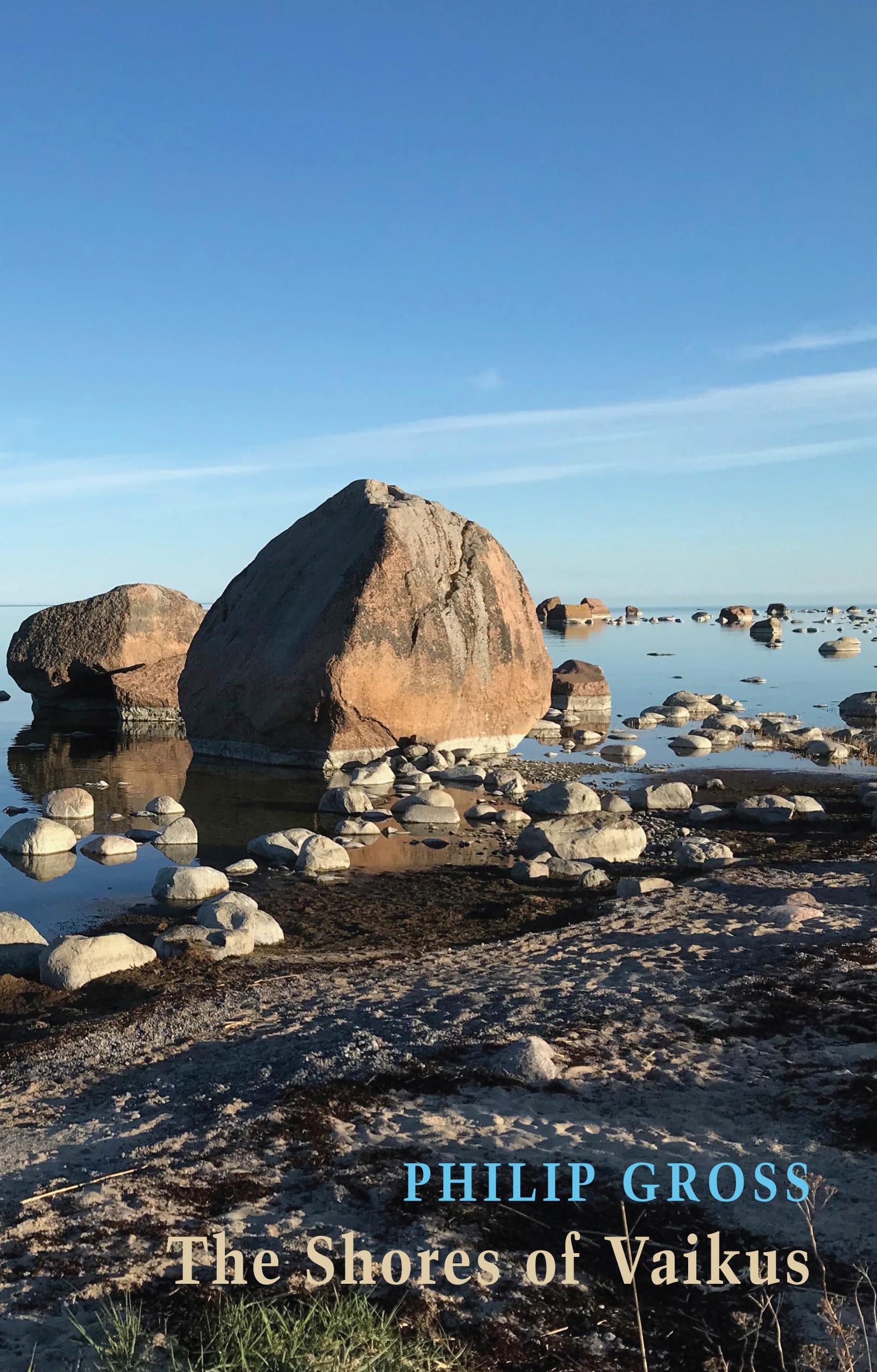
I recently attended the launch of Philip Gross’ new collection, The Shores of Vaikus (Bloodaxe Books, 2024) at the Estonian Embassy (the poems and prose pieces in the book refer to Gross’ father’s Estonian heritage and the poet’s visits to that country). I’ve followed his poetry since Faber published The Ice Factory in 1984. Neither of us could recall when we’d last met up but, after the event, I remembered that Philip was one of the first poets to read at the series of poetry readings (and associated workshops) I helped curate in the late 1980s/early 1990s, the Blue Nose Poetry series in London. I introduced him on the occasion (I still have the notes I made for the event in a Notebook for Spring 1989). I checked out the precise date in The Blue Nose Poetry Anthology (1993) which has sat on my shelves for many years now. The Blue Nose Poets (for personnel see below) invited all those who had read in the series to submit work and it strikes me now that it would be a shame if a record of our endeavours over a number of years was lost to sight completely. So, I’m posting here the Introduction to the Anthology and the full list of readers who appeared (often being paid nothing or a mere pittance) between 1989 and 1993. Interesting? I think so – given we hosted the likes of Dannie Abse, Patience Agbabi, Moniza Alvi, Simon Armitage, James Berry, Robert Creeley, Fred D’Aguiar, Michael Donaghy, Carol Ann Duffy, Michael Horowitz, Jackie Kay, Adrian Mitchell, Peter Porter, Peter Reading, Michèle Roberts, Ken Smith, and many more.

Introduction to The Blue Nose Poetry Anthology
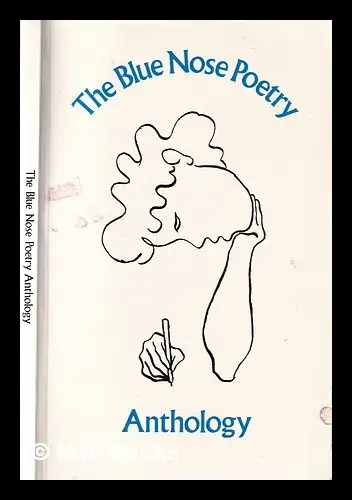
This anthology celebrates four years of Blue Nose Poetry in London. Its beginnings can be traced back to 1988, when Sue Hubbard advertised for members to join a small poetry workshop at her house in Highbury. Amongst others who began meeting regularly were the four founder members of the Blue Nose: Sue, Martyn Crucefix, Mick Kinshott and Denis Timm. At that time, poetry readings in London seemed to be in the doldrums. Uninviting rooms and draughty halls with chairs in impersonal ranks were often depressingly matched by poor organisation. The Blue Nose Poetry activities were set up with the express intention of providing workshops and readings in a friendly, accessible and organised atmosphere for new voices, up and coming writers and the already established. We were convinced that a cabaret setting of tables, candles and a drink with other enthusiasts could make poetry enjoyable. It was only with the discovery of The Blue Nose Cafe in Mountgrove Road, close to Highbury Stadium, that we found a name for the project and the real success of the Blue Nose began.

Our first poets came to the Cafe and read out of the goodness of their hearts. We thank them all once again. The first event with Michèle Roberts was packed and exceeded our wildest expectations. Within the course of one evening we had proved that exciting contemporary poetry could be presented really successfully. Soon, in response to Blue Nose’s track record of commitment and quality, GLA (later LAB) and Islington Borough agreed to support the project. Since then, there have been various changes. Mick Kinshott felt unable to continue as an organiser in 1990 and his commitment and humour was a great loss. His place was taken for two years by Bruce Barnes, whose knowledge of the poetry and arts funding world in London proved invaluable to the development of the project. More recently, Mimi Khalvati and Mario Petrucci have joined the three original members. In the middle of the Spring 1991 season, the Cafe where we held the events went into liquidation and a reading by Tom Pickard and Rosemary Norman sadly had to be called off. Regular events did not begin again until May 1991, when we moved into the more accessible, roomy and centrally located Market Tavern in Islington. Despite the many advantages of this new venue, there are a few who still regret the passing of the old Café which, though tiny, disorganised and terminally broke, did have a superb atmosphere for poetry.

In an appendix to this anthology, we list all the readers who have appeared at the venue/s – a genuinely comprehensive survey of poetry in recent years. This, of course, does not include the many poets who have had the opportunity to read from the floor at Blue Nose events. More importantly, this book contains no record of the hundreds and hundreds of people who have enjoyed and supported Blue Nose Poetry. This book is dedicated to them.

Martyn Crucefix / Sue Hubbard / Mimi Khalvati / Mario Petrucci / Denis Timm

Full List of Main/Support Readers for Blue Nose Poetry Seasons 1989 – 1993

March – July 1989

Michèle Roberts read with Martyn Crucefix; Philip Gross read with Sue Hubbard; Jeremy Silver read with Mick Kinshott; Jo Shapcott read with Denis Timm; Leo Aylen read with Gerda Mayer; Alison Fell read with Hume Cronyn; The Blue Nose Poets; Carole Satyamurti read with Barbara Zanditon; Michael Donaghy read with Rupert Slade; Adam Thorpe read with Al Celestine.
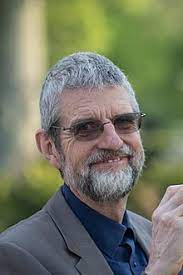
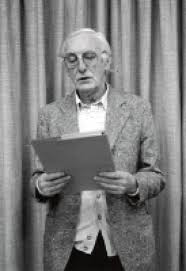
Philip Gross

September – December 1989

Ken Smith read with Mimi Khalvati; Anna Adams and Julian May; Gerda Mayer read with Chris Powici; The Blue Nose Poets; The Performing Oscars; Maura Dooley read with Sara Boyes; Fred D’Aguiar read with Matt Caley; Matthew Sweeney read with Hilary Davies.

January – April 1990

Fleur Adcock read with John Harvey; Dannie Abse read with Myra Schneider; Elaine Randell read with Frances Presley; Hugo Williams read with Keith Spencer; Pitika Ntuli read with Bruce Barnes; John Cotton read with Bridget Bard; Michele Roberts read with Peter Daniels.
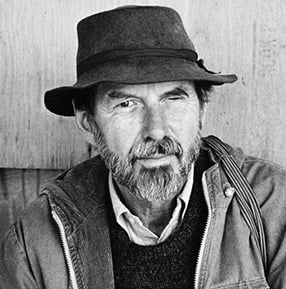
Robert Creeley

May – July 1990

The Blue Nose Poets; Sarah Maguire read with Vicki Feaver; Jeni Couzyn read with W N Herbert; James Berry read with Susan McGarry; Simon Armitage read with Chris Gutkind; E A Markham read with Mimi Khalvati; Brian Patten.

September – December 1990

In the Gold of Flesh anthology with Valerie Sinason, Dinah Livingstone, Pascal Petit, Jenny Vuglar; George Szirtes read with Gabriel Chanan; Kit Wright read with Candice Lange; The Blue Nose Poets; Michael Horovitz read with Raggy Farmer; Patience Agbabi and Judi Benson; Jenako Arts Writers; Carol Ann Duffy read with Steve Griffiths.

January – March 1991

Judith Kazantzis read with Mario Petrucci; Robert Creeley read with Mick Kinshott; Jackie Kay read with the Speech Painters; Peter Forbes and Eva Salzman; [Blue Nose Cafe in Highbury suddenly closes]; Lemn Sissay read with Adam Acidophilus.

May – July 1991

Peter Porter read with Elizabeth Garrett; The Blue Nose Poets; Carole Satyamurti read with Leon Cych; Peter Scupham read with Lucien Jenkins; Leo Aylen read with Rosemary Norman.

October – December 1991

Sylvia Kantaris read with Andrew Jordan; Gillian Allnutt read with Helen Kidd; Alan Jenkins read with Eric Heretic; Sean Street and Hubert Moore; Lee Harwood and Richard Cadell; Xmas Party – Tony Maude, Speech Painters and music from Dean Carter.

January – April 1992

Adrian Mitchell; David Constantine read with Tim Gallagher; David Morley with Martyn Crucefix; Sue Stewart read with Bruce Barnes; Glyn Maxwell read with Sue Hubbard; Peter Abbs read with Nicky Rice.
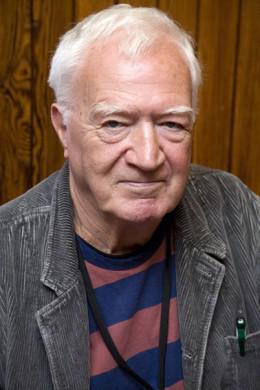
Adrian Mitchell

May – July 1992

Jo Shapcott read with Mick Kinshott; Bobbie Louise Hawkins read with Robert Sheppard; Birdyak – Bob Cobbing and Hugh Metcalfe; Colin Rowbotham read with Richard Tyrrell; Ken Smith read with Eric Heretic.

October – December 1992

Connie Bensley and Felicity Napier; The Poetry Show at Rebecca Hossack Gallery; Donald Atkinson read with Jane Duran; Ruth Fainlight read with Moniza Alvi.

January – April 1993

Peter Reading read with Briar Wood; Ruth Valentine; Myra Schneider read with Mario Petrucci; Carol Rumens read with Daphne Rock.

Impressions of the TS Eliot Prize Readings 2025

I’ve always enjoyed Ladybird spotting the ways poets present themselves in a reading situation. Last night’s TS Eliot prize readings at the Festival Hall was a grand opportunity for such a pursuit. Ten readers in a row. Here are a few jotted down impressions, gleaned from the on-line version of the show. Before you crucify me for such poor, ill-informed critical judgements, I do hereby declare I have only thoroughly read two of the contenders, so these are very much impressions of ‘what happened on the night’. I’ll leave mentioning my favourite and my predicted winner (not the same poet) to the end. The award will be announced this evening (Monday 13th January 2025).

The housekeeping…. This year, the shortlist was chosen by judges Mimi Khalvati (Chair), Hannah Sullivan and Anthony Joseph. The TS Eliot Prize (it says on their website) is among the world’s most celebrated awards. Inaugurated in 1993 to celebrate the Poetry Book Society’s 40th birthday and to honour its founding poet, the prize is now awarded by the TS Eliot Foundation. The evening was introduced by Ian McMillan.

In the order the shortlist for this year’s prize was presented last night:

Katrina Porteous Rhizodont (Bloodaxe Books) – KP was described as a northern lighthouse by Ian McMillan – finding the universal in the local – the north east of England – Holy Island – this is poetry full of its concrete ‘subject’ – details and actuality, a powerful wish to communicate (the book is full of explanatory Notes) – here, the coal beginning (to be formed) again – Our Billie – a local girl, forms the backbone of one poem  – some unfortunate ‘down with the kids’ moments, referencing Insta and emojis – KP reads in a bobbing, fidgeting sort of way – does stillness evoke more power? – ‘The children STARE at their phones’ – particular words picked out for heavy emphasis – a bit over insistent on their significance – a robot explores the moon surface now – an interest in new technology – but then, the Antarctic without ice – the book title, rhizodont, is a fish transitioning onto land a very long time ago – the delivery here surely too mimetic – snarly, is that how a fish sounds? But passionately held views without a doubt.

Rachel Mann Eleanor Among the Saints (Carcanet Press) – McMillan suggested that Mann takes up liturgical language and re-invents it (for a modern audience?) – Eleanor the central figure is a trans woman of the 14th century – at one point she’s in conversation with Julian of Norwich and Margery Kemp, so lots of hazelnut references – but thank goodness I didn’t hear ‘all shall be well’ – the delivery a slow emphatic one, I actually wrote ‘from the pulpit’ before I noticed (I think) the dog collar – am I right? – lots of first person voice going on here – often in an ecstatic (religious) mode, a few grand arm gestures – the language often moving towards Hopkins (why not?) – masculinity? –embroidering a priest, sanctus, sanctus, then love – the murdering of a trans girl, drawing a bead on contemporary relevance – in 1394 Eleanor was arrested – the dark shades worn by RM curiously out of keeping with the verse lines.

Carl Phillips Scattered Snows, to the North (Carcanet Press) – from the US –‘quiet’ being the word here – rather sweetly alluded to his sponsors for the evening – Lemsip – welcome to England – the lines being read in the cadence of a breath, a dying fall – suggestive here of an interior communion, very delicate, exploration of an emotional life – McMillan suggested this is where time and intimacy meet – what do they say to each other I wonder? – a taking off of  clothes – then he also takes his clothes off – colours and a bell – a concern (as technique and subject matter) for precision, for what is true? (how unfashionable in the US) – snows in the title poem, Phillips manages to take us to Roman history and love without us getting lost along the way – quietly persuasive and good company – a forest journey – things almost said – a vulnerability to this writer (someone else posted this idea) I’ll borrow it.

Gustav Parker Hibbett High Jump as Icarus Story (Banshee Press) – opening with allusions to Ovid for the Icarus link – reaching for the sunlight (not the best of phrases) – but athletics as a metaphor it seems at first – sliding into athletics for real – practising high jumps with a friend – in a world where they are regarded as ‘interchangeable’ because of ethnicity – the dark body hanging – the poems delivered head down, reading from the page, a whispering voice, not coming from the throat or diaphragm, so intimate as to be rather too in-turned – these are plain narratives, lots of ‘stuff’ – one later poem is longer, more sustained and the insistence on these real details begins to transform the poem into something a bit more visionary – jumping 6’ 8” – Noah, all he wanted was the stars – black boys doing anything – the USA and Mexico – to customise paradigms if they don’t fit.

Karen McCarthy Woolf Top Doll (Dialogue Books) – this turns out to be a verse novel so rather hard to convey a clear impression of it – Hugette a female recluse who lived with lots of dolls – KMW read several dramatic monologues this evening – Maman being spoken by a French doll – a rag doll speaking as if a military general, denying that he is a ‘gollywog’ – big pause on that – these are probably funny in many ways – but with their points to be made – but Woolf is acting them out with neck, eyes and eyebrows – male dolls, deep-voiced, female, light, a dancer doll flighty voiced – Ballerina Barbie is all en pointe and pirouette (arms being waved on stage) – yes, fictional and imaginative recreation, but this begins to feel like a sort of ventriloquism in the delivery – the mask is evident – being acted out – I can’t hear the verse of this verse novel – a Japanese doll to finish off with – cherry blossom, bento, the moon. My review of KMW’s earlier collection An Aviary of Small Birds.

Interval

Helen Farish The Penny Dropping (Bloodaxe Books) – a book-long retrospective on an old ended relationship – trying to say what is perhaps inarticulate – joy and ache – biographical narrative as universal – McMillan suggests the relationship is merely a ‘hook’ rather than the ‘focus’ that it surely is? – the delivery is slow and fluting, very deliberate and clear almost as if Farish is finding the words (for the first time) as she goes – effective I think – again poetry with a lot of subject stuff – lists of local colour, places, events, food and drink – things we loved, a list – though spoken of as ‘a’ relationship this feels really quite narrowly autobiographical – driving the M40 discussing having (not having) children – a bit toe-curling, some allusions to film Pretty Woman with Gere and Roberts – who is it says ‘we were made for each other’ these days – a valentine card? – nice recipe at the end, pasta and red wine – but surely a candle was on the table too?

Peter Gizzi Fierce Elegy (Penguin Poetry) – also from the US – the delivery here a steady pulsing (these are short lines, I think, and Gizzi seems to be breathing and voicing that – a rich, resonant voice (the kind you’re born with) – a terrific flow and a shifting from concrete to abstract – the moon and then ‘kinda real, kinda not’ – the ingenious light – a letting out of inner weather – a rather self-conscious making of fine phrases and with the ‘self’ as the primary subject (not the outer) there are passages of pure lyricism – risks even allusions to the Muse, a lyre, but bedded in American colloquial – neatly done – forests, shapes, landscapes all becoming the inner life, representing it – shapes become the beloved – without reading more I’m none the wiser as to what is elegiac here or fierce – but interesting poems.

Hannah Copley Lapwing (Pavilion Poetry) – McMillan suggesting Copley’s book pushes language to the state of music – do we expect Mallarme? – not at all – the lapwing gives the chance for some birdsong – but lapwing does not speak but is rather spoken about – another bird, a daughter… Peet? – all the folksy names for a lapwing, of course – the bird is found to be missing – a mosaic, otherwise know as – the bird becoming person – a poem about addiction – our creaturely behaviours – the difficulty of caring for someone (some bird) – raggedy, slugs, let him disintegrate, love – Copley also reads in cadences that fall every time, not quite clear whether these are the lines of verse or her grammatical units – the lapwing figure is anthropomorphised or a human being is birdified – a nice balancing act mostly – though some less so – a family tree and (very human) grief – something to feather – ready to give – think I’d have liked more musicality.

Gboyega Odubanjo Adam (Faber & Faber) – Odubanjoof course not present after his tragic, untimely death – this his first and only collection – Adam the name given to the torso of a boy pulled from the Thames some years back – a couple of recordings of the author were played – poems read by Joe Carrick-Varty and Gabriel Akamo – the latter the much better reader – a memorial set of poems to the disappeared, the dispossessed – the dead boy’s imagined journey through Germany to the UK – thank you to the woman, the people, the police – this language is more like music – a montage-like, even Whitmanesque feel to the rolling cadences, a riffing and use of repetition, the material rising towards the mythic – blow trumpet as if apocalyptic – chorus, musical bridge transition, outro – a burned CD, its track-listing – a weird fairy tale about water – frog and scorpion, two sisters, ocean and sun in a dialogue – gosh – yes this is good work.

Raymond Antrobus: Signs, Music (Picador Poetry) – this was introduced as a book about fatherhood and masculinity – wasn’t that the 1990s? – a subject for all time – the pleasures (and anxiety) about bathing with your own child – coded with scripture – the son doesn’t pee, but it would have been OK if he did – this is poetry with a lot of ‘I’ – but surreal little flights and often incantatory, an enjoyable allowance of the musical nature of language – I broke up with, I broke up with – anaphora-driven here – the buying of a second hand noise – but I said nothing is where it ends – the intrigue of what remains silent – poems are being performed but not acted out – though there’s a bit of surf-board business, arms keeping balance, as the poem is read – teaching his son BSL – for music – another swaying, conducting sort of motion – yes – very engaging – ‘poetry is music from the place we were born’ (though that’s a very constricting definition). I reviewed two of RA’s earlier collections – The Perseverance and All the Names Given.

On the night, my favourite was Carl Phillips (despite his sore throat). But Gboyega Odubanjo’s work was also powerful in ways that I cannot articulate and for that reason – but also for reasons external to the poetry – I think he will be posthumously awarded the TS Eliot Prize 2025.

Late Addendum (11pm Monday 13th January) – and the winner was Peter Gizzi Fierce Elegy (Penguin Poetry)

Interviewed on ‘Poetry Worth Hearing’

Just before the Christmas break, I was pleased to be asked by Kathleen McPhilemy to contribute to the January 2023 edition of her on-going series of podcasts, Poetry Worth Hearing.

Kathleen’s own introductory remarks about what the podcast includes are as follows:

Jessica Mookherjee reading from two recent collections, Tigress and Notes from a Shipwreck (both published by Nine Arches Press), and Martyn Crucefix talking about the poetry he thinks worth reading. We also have new poems from Beth Davyson, Stephen Paul Wren, Pat Winslow, Suzannah Houston and Chris Beckett. To learn more about the poets and the publications mentioned as well as to see the texts of new poems, go to https://www.poetryworthhearing.biz.

You can find the podcast here. Scroll down a little to Episode 11. My discussion starts at around 28 mins in – but do listen to all the contributors.

Helen Kidd

I was especially pleased to hear Pat Winslow’s poem ‘As for the owl’ which carries a dedication to the late, much-missed Helen Kidd. By a strange coincidence, Helen was one of the members of the Old Fire Station Poetry Workshop (led by Tom Rawling by in the 1980s) ) about which I talk in my piece.

I also talk about growing up in rural Wiltshire in a house with few books. My years spent pursuing science – beginning to study medicine at Guys Hospital in London – then my drastic shift to studying Philosophy and English at Lancaster University, where I worked with the Scottish poet, David Craig, on one of the first Creative Writing courses in the UK. At Worcester College, Oxford, in the 1980s I was writing a DPhil thesis on the poet Shelley while also attending poetry workshops with WN Herbert, Peter Forbes, Pauline Stainer, Keith Jebb, Anne Born (and Tom and Helen).

Kathleen also asked me to say something about the poets I go back to and I talk a little (and read from) Walt Whitman, Robert Frost and WS Merwin. Trying to pick contemporary poets to highlight is an impossible task but, on this occasion at least, I speak about Marvin Thompson, Nancy Campbell and John McCullough.

Tom Rawling

‘How I Write’ – a second brief Royal Literary Fund talk

As a Royal Literary Fund Fellow, I was asked in May 2020 to write and record three brief talks. One of these was on ‘Writing and Technology’ which I posted (as text and audio file) on this blog a few weeks ago. Another commision was to respond to the intriguing invitation to write a ‘Letter to My Younger Self’. The recording of that piece is still in the RLF pipeline, but the third of these short pieces has now been made available as an audio file on the RLF’s VOX site. The given topic of this newly published piece is ‘How I Write’ – not an easy subject on which to be clear and succinct but with a little help from WH Auden and Louise Gluck I hope I have said something here that might be of help to all kinds of writers – poets, novelists and (the target audience of the RLF project) those writing at the varied levels of academe.

So – you can hear me reading the piece here.

Alternatively – or both at the same time if you’d like – you can read it below.

How I Write

Always I have to commit something to paper as soon as possible after the initial inkling of a poem. Most writers use notebooks. Some use audio recorders, others their phones. Though first drafts are always terrible, what I’m doing is laying a path back towards the first emotional impulse, a way for myself to return there. You’ll often find me re-reading notebooks to pick up such trails among barely readable, fragmentary scribbles.

These scraps are what may develop into poems. I like W. H. Auden’s view of the poem as a “verbal contraption”. It reminds me a poem (actually, any piece of writing you are doing) is a purposeful device. It needs to be an effective device and poems look to impact a reader’s feelings. This view downplays one of the commonest stumbling blocks about creative writing, which is that what poets try to do is express their own inner moods. If that’s all I focus on, I’ll pay too little attention to the writing’s receiver, my reader.

Anyway, what I want ‘to express’ is seldom fixed at this stage. It’s important I’m willing to add on – simply write more connected material – even beyond the point at which I might think the job done. That tempting voice claiming early completion may be a lazy demon or a censoring one. It’s my practice at this stage to draft loosely, with as much energy and freedom as possible. If I watch children playing, I see them enjoying an excess of energy, movement, voice, and it’s out of this that real creativity arises – new moves, ideas, developments, reformed, revised, played again, played better. So in writing, spinning off new phrases or metaphors leads not only to decorative grace-notes but often to the still-hidden, true heart of the poem. This is why poets often talk of writing as a process of discovery.

For me, most of these stages still take place using pen and paper. The shift to a screen, a keyboard remains a critical transition. On screen, or on a phone, typed lines acquire an inertial resistance to being changed. On screen, I find my eye starts to narrow down to look at the poem’s physical shape and appearance on a would-be page. Such aspects are important in the long run, but they can prematurely cool the fluidity of the molten drafting process if they dominate too early. Beware the linearity of the screen!

But once it’s there, now I’m thinking ‘economy’. A linguistic cosmetic surgeon, I cut off verbal flab, repetition, redundancy. Crossing out is my most familiar activity. The American poet, Louise Gluck, says that a writer’s only real exercise of will “is negative: we have toward what we write the power of veto”. One of the keys to this is reading aloud. I go the whole hog: standing as if to deliver to an audience. Loud. And. Clear. This helps me listen to rhythm and line breaks. Actually, for any writer of poetry, prose, essays for your course, reading aloud highlights stumbling blocks of all kinds. My sense of the ebb and flow of a poem is always clarified because I distract myself in the physical act of standing and speaking. I experience my words more objectively, more as my potential reader would. Try it. It’s a revelation!

One being walked – on Ricky Ray’s ‘The Sound of the Earth Singing to Herself’

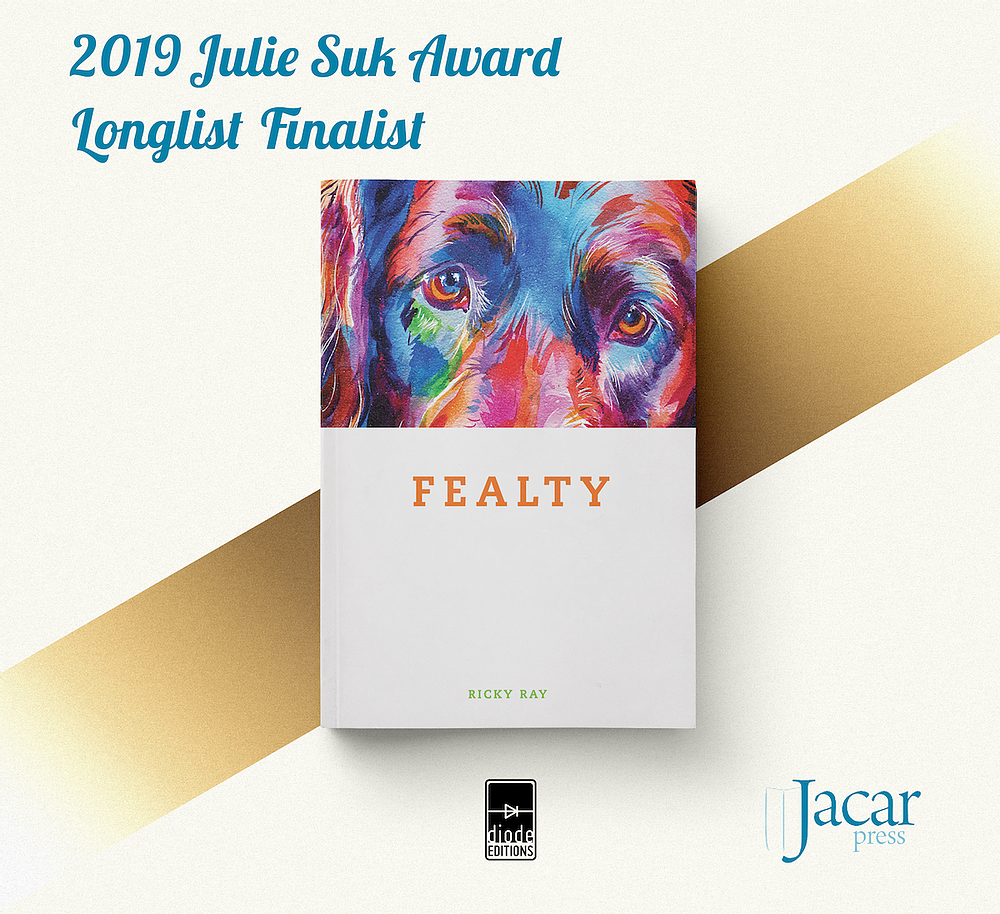
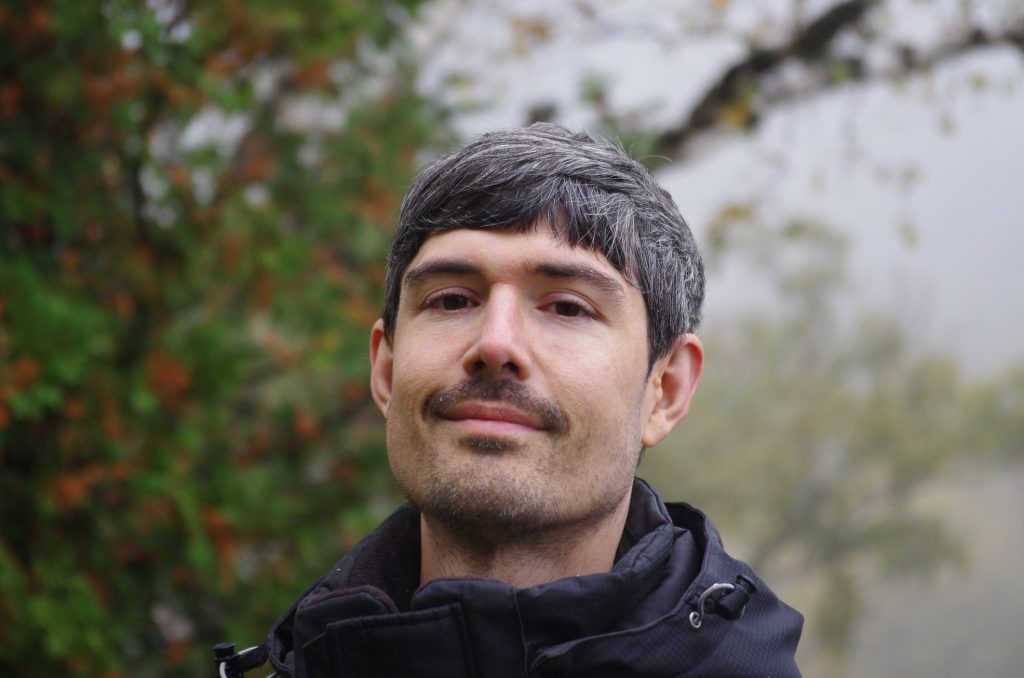
This is the second of Ricky Ray’s chapbooks to be published in the UK this year (2020) – the other is appearing with Broken Sleep Books under the title, Quiet, Grit, Glory. A full collection, Fealty, also appeared in the UK through Eyewear Publishing in 2018 and it is now republished in the US by Diode Editions. The biographical note from Fly on the Wall Press refers to Ray as “a disabled poet, critic, essayist and founding editor of Rascal: a Journal of Ecology, Literature and Art– all this suggesting that Ray has several highly ‘categorizable’ aspects to his work, but from the evidence in The Sound of the Earth Singing to Herself, he manages, to the benefit of us all, to elude being pigeon-holed in any neat way. See Ricky Ray reading poetry on the completion of his MFA degree – featuring poems about “dogs, disability, waywardness, childhood, childlessness, ecological consciousness, despair, and the search for hope”. 

If poems can withstand the pressure of readers drawing biographical conclusions, Ray’s upbringing was difficult. ‘Sometimes Vision Withers on the Vine’ portrays a chaotic, poverty-stricken household with erratic running water and power supply because “crack was more alluring than the bills”. The boy’s drug-using father’s drug-using friend burns candles on the palm of his hand, apparently feeling no pain. The vision seen in the light seems to be nothing more than a death’s head, a version of the future in which “nothing happens”. Another poem remembers the putting down of a pet dog: “the news // had blown out all moisture and made of my body / Oklahoma”. This is an amazing image of a sudden expansiveness of the self, or its wiping out, in a state of grief at the loss of a creature the boy regarded as closer to a brother. The father had the dog destroyed, as we say, out of kindness, and the boy/poet comments: “a kindness I never wanted, still don’t”, thereby broaching the subject of his own ‘viability’.

Ray’s physical disabilities give him relentless pain, the prospect of comfort realistically being merely “pain / that relents / from a knife-twist / to a dog gnawing / an old / bone” (‘What’s Left’). ‘Toward What’ records a good day in which he falls only once and “take[s] three / minutes to ascend six stairs”. Yet there are some days, “my body is so beautiful / I can’t believe I get to live here” (‘(Dis)ability’). It’s somewhere along this existential line, between the confines of a body in pain and the expansive, close to out of body experience, signalled by that Oklahoma image, that Ray’s poems really come into their own. He can celebrate an incarnated, ‘being in the world’, with both a sense of its pleasures and a sense of what it costs to remain here.

Such a celebration is ‘So Long as There is Light, There is Song’. The narrator and his dog, Addie, are in a field, the dog’s pleasurable ease in the world engendering similar feelings in the poet. There’s a Whitmanesque quality to the loafing in the grass, the blessing of ants, of the grass itself, the dawning sense of a life larger than any of the individuals present:

                        You could call it continuity.

You could call it the field itself. I like to call it what calls.

And I like to live in her song.

For want of a better label, what is sensed is the Earth, “singing her duet with the sun”, the natural world for sure, but Ray’s language implies a close to sentient being, sensed in the co-habiting of the multitude of separate living things. In considering the ravaging of ‘My Favourite Sweater’ by moths, Ray shows how the human heart might respond to such a sense of “continuity”, in the generosity of his wishing “the moths no ill”:

[I] say to myself it’s all down to pattern, a shifting

pattern, a thread of wool raveling into a thread of moth,

the moth’s wings the stitchwork of the hand that knits us all,

the hand itself a stitch along a seam my mind unravels

It’s Whitman’s long lines and levelling up of all phenomena that comes to mind as the poem goes on to “thank until I run out of things to thank”. Even in the midst of natural danger – in this case a hurricane – the poet/narrator seems to revel in the ominous signals of the storm’s approach, promising to protect his dog. Like the Oklahoma image earlier, this poem (‘On Hurricanes’) ends in mid-flight, the storm raging, the individual consciousness being smashed and scattered, “like fusion, like retribution—/ bang bang bang”. Yet the final image of peril in the face of nature is also an image of becoming one with it, of realising a kind of incarnation: “the roar of it so loud / I can hear the lion’s mouth around my head”.

Ricky Ray

If ‘On Hurricanes’ reaches apocalyptic levels, the final poem in this chapbook is calmer, more meditative. ‘A Walk in the Woods’ opens with nature and Ray’s ever-present dog, Addie, being company enough for an individual who, for a variety of alienating reasons, has never felt humanity was “a species I was given to understand”. He identifies more with trees, “which may be a function of how poorly my legs work”. The presence of trees consoles, inspires, as Ray again approaches the trailing hem of the divine: “I see a mind at work. Whose, though?” The questioning is not pursued by the rational mind; rather the experiential pleasure – a drifting in an “amniotic ocean” – is allowed to be all. Instead, of an individual walking through a wood, the poem offers us a sensation not of “one walking” but rather of “one being walked”, a moment we might think of as disembodied from the physical world but is as much incarnated within it and is perhaps the most heightened state of environmental consciousness.

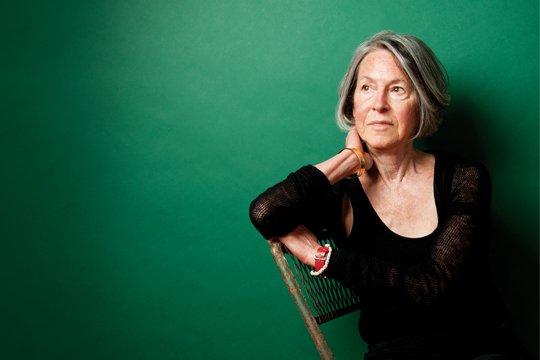
Louise Gluck’s Poetry: Whole But Not Final

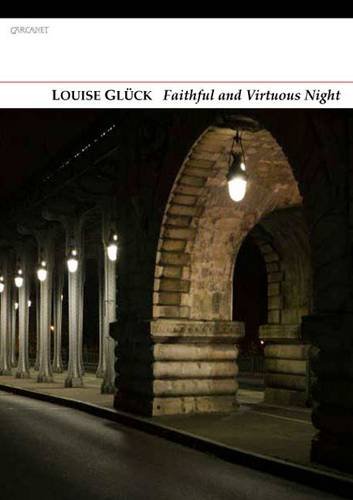
Lots of hits in the last 24 hours on my earlier blog post about Louise Gluck. Being awarded the Nobel Prize in Literature tends to have that effect… She’s a fascinating writer, always experimenting, but Anne Carson or Claudia Rankine would have come before her on my list. But given the obvious interest in her work, I’m posting here the text of the review I wrote for Poetry London in 2014 of Gluck’s last (ie. latest, though 6 years old now) book, Faithful and Virtuous Night (Carcanet). The review was paired with Michael Longley’s The Stairwell (Cape, 2014).

Louise Gluck’s comments on George Oppen remain one of the best ways into her own poetry. In praising Oppen, she declares her own hand: “I love white space, love the telling omission [. . .] find oddly depressing that which seems to have left out nothing. Such poetry seems to love completion too much, and like a thoroughly cleaned room, it paralyses activity” (Proofs and Theories, Carcanet, 1994). The homely metaphor here is also characteristic. She shares with Oppen (and surprisingly with Longley) a preference for what is singular, common, small, for “solid nouns”, a language restored “to natural health [. . .] for common use”, rather than a Stevensian “hermetic patois” (‘On George Oppen’ ). So her style has been variously called spare, stripped down, deflated, thinned (especially so since Ararat (1990)). Yet the miraculous paradox her poems evoke is suggested by a further observation from 1994, that “precision is not the opposite of mystery”. Gluck’s dreamlike, enigmatic narratives are all the more powerful – convincing one might say – precisely because of the directness, plainness of her language.

It’s appropriate then that in her new book one of the protagonists paints canvases which are “immense and entirely white” (‘The White Series’). There is mystery enough in this new collection which (as often with Gluck) gestures towards a narrative but whose narrators switch gender, are much concerned with parents (who have perhaps died in a car crash), a caring aunt, a brother (perhaps a sister). These are scenes from (at least one) life. The dominant voice is that of a male artist who, after a career interruption, begins to paint white on a visit to America. He takes on a nephew as a companion as he approaches death. In ‘A Summer Garden’, he discovers a photo of his mother slipped into a translation of Thomas Mann’s Death in Venice (1912) and a studied, fin de siècle fastidiousness over language surfaces in many poems. Gluck’s novelistic skills in drawing a world in a few strokes and character in even fewer are evident, though once again action is missing; Gluck’s characters, whether male or female, are passive.

Like Mann’s Gustav von Aschenbach, Gluck’s figures contemplate mortality while turning over their past. Though less obviously personal and less contented, as with Longley, the term nunc dimittis seems appropriate. The loss of parental figures is a recurrent trope and in ‘An Adventure’ love too is stripped away in a vain hope of “profound discoveries”. Poetry is lost too, again anticipating “the vast territory / opening to us with each valediction”. In A Village Life (2009), such a via negativa was doubted as “illumination / of the kind [that] destroys / creatures who depend on things” (‘Bats’) and here too it seems ineffectual. The quasi-Victorian cosiness evoked by the book’s title is exposed as false as remembered days “become unstable”, time leaps to and fro, seemingly at random and, if the soul travels at all, the puzzle remains that it always returns “empty-handed”:

[. . .] there is no perfect ending.

Indeed, there are infinite endings.

Or perhaps, once one begins,

there are only endings.

                                                                        ‘Faithful and Virtuous Night’

This is a bleak world not unfamiliar to readers of Gluck. In 1985 she asked, “Why love what you will lose?” only to answer, “There is nothing else to love” (From the Japanese’). Here, her real subject is the way we create our own meanings. ‘Afterword’ reflects on an earlier poem in the collection, suspicious of the “instinct / [to] discern a shape, the artist in me / intervening to stop traffic, as it were”. A meeting with an old woman yields the anticipation “that some important secret / was about to be entrusted” but on reflection her words are “pointless” (‘A Sharply Worded Silence’). Gluck (again like Longley) has used Homeric and Greek mythic material to ironise her more contemporary subjects. Faithful and Virtuous Night instead makes reference to T H White’s The Sword in the Stone to evoke the same kind of focused, watershed moment, indubitably saturated with meaning that the events of her narrator’s lives lack. Even the analyst’s couch offers nothing more than “my ingenuity versus / his evasiveness: our little game” (’The Sword in the Stone’).

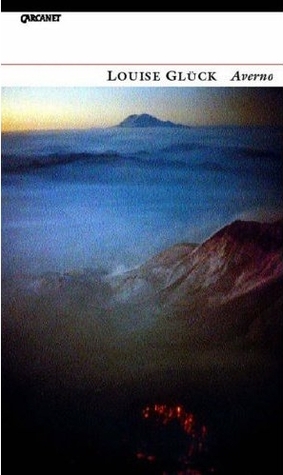
In recent years, the Italian settings of Averno (2006) and A Village Life have seemed to warm Gluck’s empathy, developing a more dramatic quality to her work in portraits less obviously autobiographical. This new collection perhaps reverts, but still she engages and moves her readers and there do seem to be eventual gains along this apparently bleak road. These lie in the poems’ openness, the way they seem capable of encompassing such varieties of experience, of saying ‘yes’. Of Oppen, she wrote that his work had the power to seem “simultaneously, whole and not final, the power to generate, not annul, energy”. As in sitting before a Samuel Beckett drama, the paradox is we are not drained of energy by the apparently fruitless search for meaning, but are thrown back onto the road all the more attuned to the clues, to the activity demanded of us. In his last days, Gluck’s artist has his nephew sing Jacques Brel’s ‘The Old Folks’ (“The little cat is dead and no more do they sing“) as well as Rodgers and Hammerstein’s ‘The Hills are Alive’. The insight is that “we do not, in the main, need to choose between them” (‘The White Series’).

To end at the beginning, Faithful and Virtuous Night opens with ‘Parable’ in which, “as St. Francis teaches”, a group of people divest themselves of worldly goods, better to focus on their goals, better to move unencumbered towards them. But the direction of travel is unclear, as is their purpose. Much debate ensues; time passes. In the background, perhaps we hear Brel’s “old silver clock” ticking. The group grows old in debate and their ageing (some believe) is their true purpose, while others believe the passage of time is the truth they hoped to be revealed. Both seem satisfied and perhaps we need not choose between them, only admire Gluck’s precise evocation of the mystery.

2020 Forward First Collections reviewed: #3 Nina Mingya Powles’ ‘Magnolia 木蘭’

As in the previous five years, I am posting – over the summer – my reviews of the 5 collections chosen for the Forward Prizes Felix Dennis award for best First Collection. This year’s £5000 prize will be decided on Sunday 25th October 2020. Click here to see my reviews of all the 2019 shortlisted books (eventual winner Stephen Sexton); here for my reviews of the 2018 shortlisted books (eventual winner Phoebe Power), here for my reviews of the 2017 shortlisted books (eventual winner Ocean Vuong), here for my reviews of the 2016 shortlisted books (eventual winner Tiphanie Yanique), here for my reviews of the 2015 shortlisted books (eventual winner Mona Arshi).

The full 2020 shortlist is:

Ella Frears – Shine, Darling (Offord Road Books) – reviewed here.

Will Harris – RENDANG (Granta Books) – reviewed here.

Rachel Long – My Darling from the Lions (Picador)

Nina Mingya Powles – Magnolia 木蘭 (Nine Arches Press)

Martha Sprackland – Citadel (Pavilion Poetry)


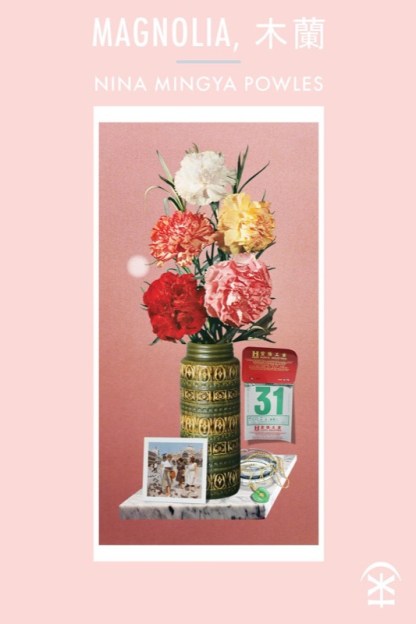
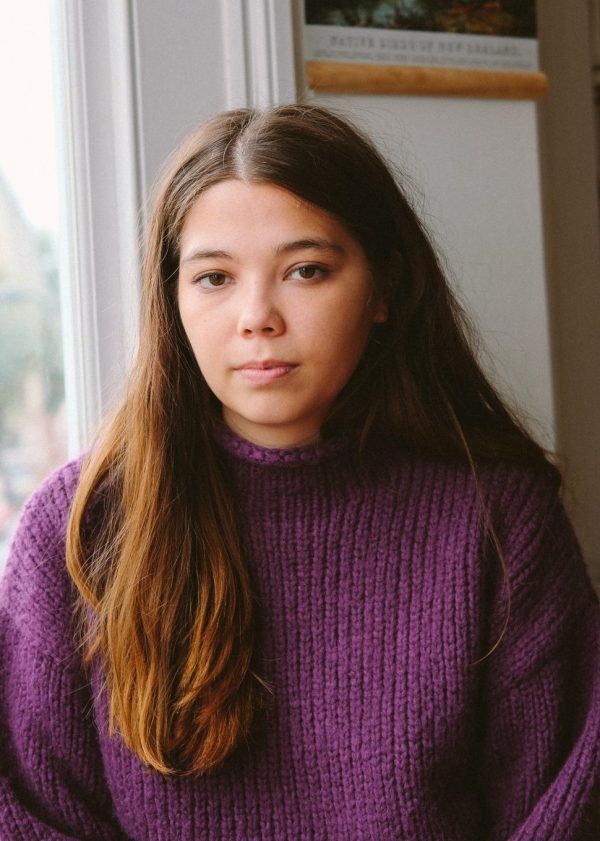
EaFGv9OWkAE6KuFNina Mingya Powles’ collection, Magnolia 木蘭, is an uneven book of great energy, of striking originality, but also of a great deal of borrowing. This is what good debut collections used to be like! I’m reminded of Glyn Maxwell’s disarming observation in On Poetry (Oberon Books, 2012) that he “had absolutely nothing to say till [he] was about thirty-four”. The originality of Magnolia 木蘭 is largely derived from Powles’ background and brief biographical journey. She is of mixed Malaysian-Chinese heritage, born and raised in New Zealand, spending a couple of years as a student in Shanghai and now living in the UK. Her subjects are language/s, exile and displacement, cultural loss/assimilation and identity. Shanghai is the setting for most of the poems here and behind them all loiter the shadows and models of Ocean Vuong, Sarah Howe and, especially, Anne Carson. Powles refers to the impact of reading Carson’s Sappho versions but a much earlier book like Plainwater (1995) with its extraordinary inventiveness of form, gives an idea of what Magnolia 木蘭 contains. (See also Carson’s lecture, ‘Stammering, Stops, Silence: on the Methods and Uses of Untranslation’ (2008), revised for Poetry Review (2013)).

mulan-animated-film-1024x580

Powles has said that the opening poem is the oldest. Called ‘Girl Warrior, or: watching Mulan (1998) in Chinese with English subtitles’, it is written sections of prose (though divided by / every so often as if to suggest line breaks). The Disney animation – about a young Chinese girl who pretends to be a man in order to fight and prove herself – turns out to be an important reference point for the whole collection. The Mulan figure is recognised as idealised (disneyfied) compared to the narrator who laments her “thick legs / and too much hair that doesn’t stay”. Mulan cuts her hair short; the narrator’s mother trims hers. The issue of the subtitles raises the language question (“I understand only some of the words” of the spoken Chinese). There are suggestions of early encounters with boys, her mother dressing her up as Mulan and (later, presumably) what sounds like a writing workshop comment: “Why don’t you ever write about yourself”. All this works well as a cryptic, cut up sort of a bildungsroman, though the ending fades away less effectively and the earlier hair-cutting episode ends with a disproportionately hyperbolic image of the trimmed hair falling out of place, “ungracefully caught / in the wind of some perpetual / hurricane”.

Nina-Headshot-credit-Sophie-Davidson-1-scaled-e1591794392875I don’t think the intriguing glimpses of an individual young woman in this first poem are much developed in later ones. The Mulan figure makes a couple of other appearances in the book and is reprised in the concluding poem, ‘Magnolia, jade orchid, she-wolf’. This consists of even shorter prose observations. In Chinese, ‘mulan’ means magnolia so the fragments here cover the plant family Magnoliaceae, the film again, the Chinese characters for mulan, Shanghai moments, school days back in New Zealand and Adeline Yen Mah’s Chinese Cinderella. It’s hard not to think you are reading much the same poem, using similar techniques, though this one ends more strongly: “My mouth a river in full bloom”.
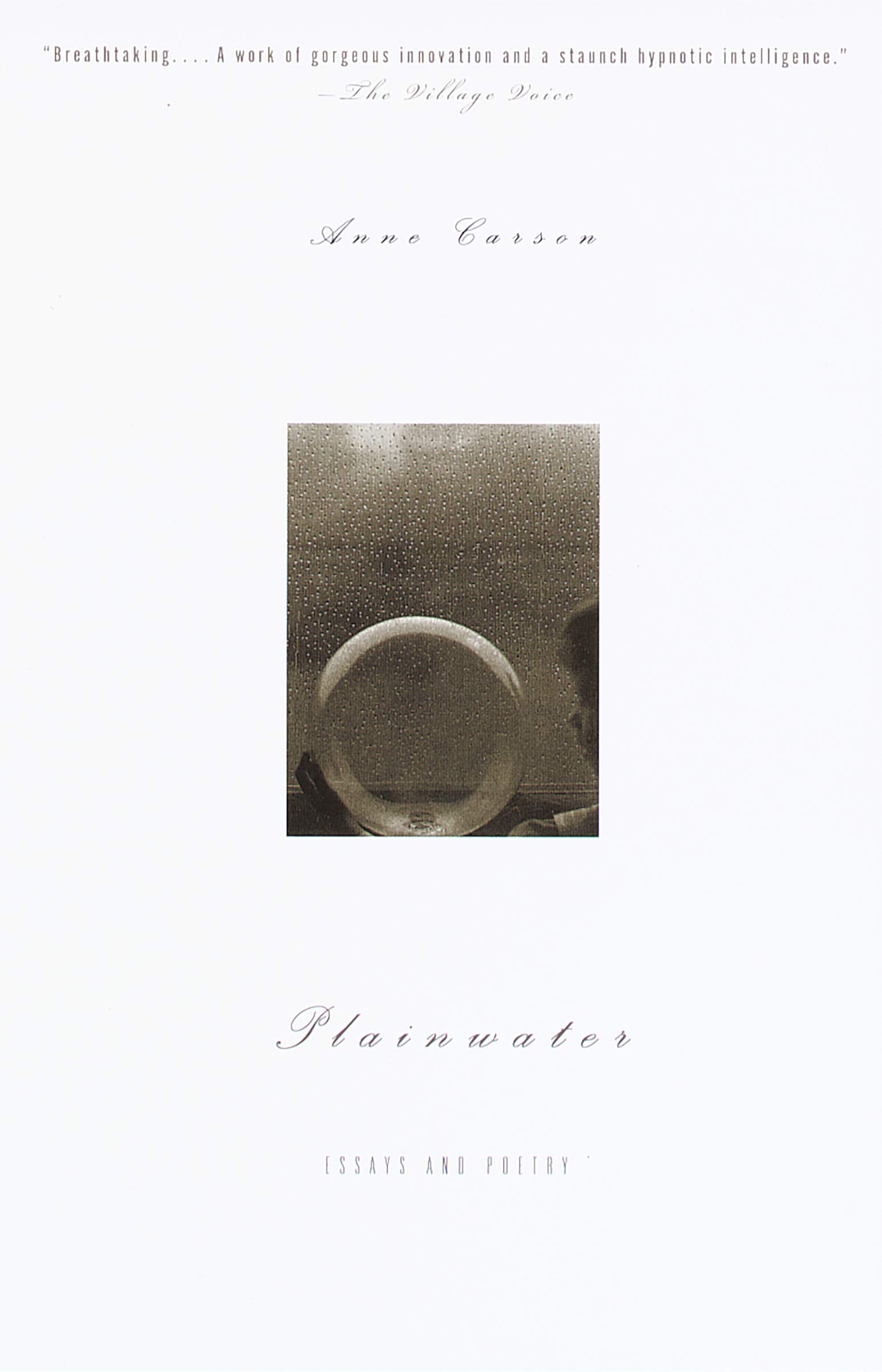
71W8RjV7VrLUnlike Carson’s use of fragmentary texts, Powles is less convincing and often gives the impression of casting around for links. This is intended to reflect a sense of rootlessness (cultural, racial, personal) but there is a willed quality to the composition. One of the things Powles does have to say (thinking again of Maxwell’s observation) is the doubting of what is dream and what is real. The prose piece, ‘Miyazaki bloom’, opens with this idea and the narrator’s sense of belonging “nowhere” is repeated. This is undoubtedly heartfelt – though students living in strange cities have often felt the same way. Powles also casts around for role models (beyond Mulan) and writes about the New Zealand poet, Robin Hyde and the great Chinese author Eileen Chang, both of whom resided in Shanghai for a time. ‘Falling City’ is a rather exhausting 32 section prose exploration of Chang’s residence, mixing academic observations, personal reminiscence and moments of fantasy to end (bathetically) with inspiration for Powles: “I sit down at one of the café tables and begin to write. It is the first day of spring”.

Zhang_Ailing_1954
Eileen Chang

But there’s no doubting the range of reference in Magnolia 木蘭 is refreshing and bringing something new to UK poetry. Poems allude to writers like Hyde and Chang, filmmakers like Miyazaki, the actor Maggie Cheung, Princess Mononoke (a Japanese spirit figure) as well as images from her New Zealand home. Powles’ enthusiasm is also infectious when it comes to formal experimentation. There is little conventional ‘verse’ to be found here. Prose in various guises is frequent, lists and fragments predominate. There are instructional texts, quiz and QandA forms, text and footnote, quoting and re-purposing of other texts, two-column poems (read two ways) and (very frequently) a jotting or journalistic form. This latter gives rise to the best sequence in the collection, ‘Field Notes on a Downpour’. Its 8 short sections return to the question of what is real, expressing a fear of things/words slipping away: “There are so many things I am trying to hold together”. Powles’ time studying Mandarin is contributory here as each section explores the homophonic/polysemic nature of Chinese characters. The first character of her mother’s name, for example, also suggests rain, language, warm, lips and lines/veins. Such moments are fascinating and often poetically suggestive. Another character, ‘zong’, encompasses assemble, trace and the uneven flight of a bird; all aspects of Powles’ technique as a writer. The sequence ends with a sense of language having been lost, though the image of a dropped jar of honey perhaps suggests something holds, something remains: “The glass broke but the honey held its shards together, collapsing softly”.

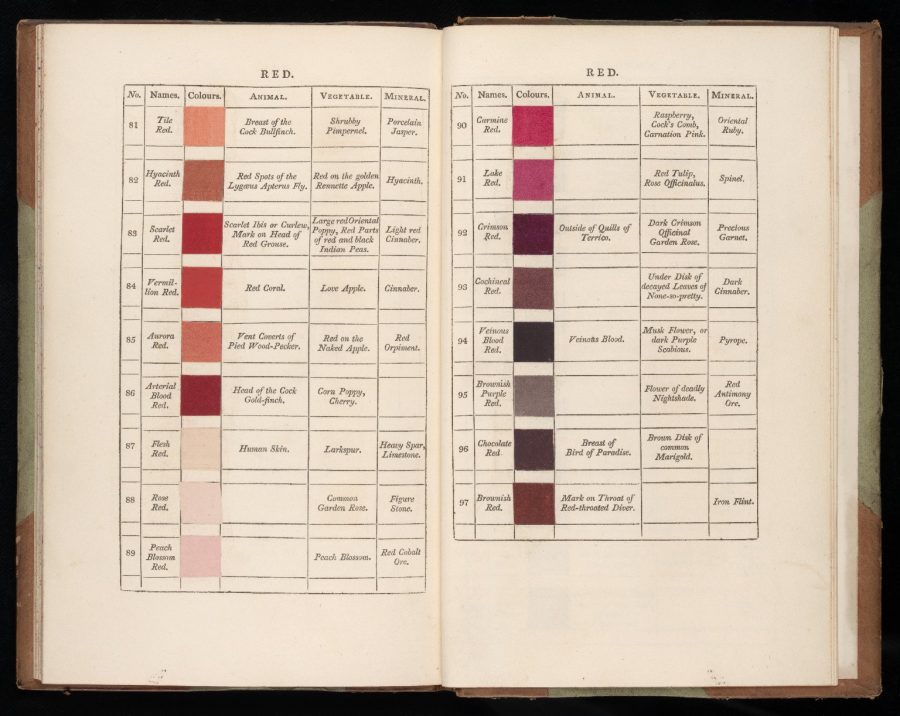
Werners-Nomenclature-Reds-e1517815279400
‘Nomenclature of Colours’

Indeed, another of the pleasures of Powles’ poems is her vivid writing about food. She has said the book is a love poem to Shanghai and it certainly does justice to its culinary offerings. There are four options for ‘Breakfast in Shanghai’, egg noodles crisping in a wok, dumplings, white cabbage and pork and a whole dishful of pink-hearted pomelo fruit. She also has a heightened sense of colour (reflected in Nine Arches’ cover perhaps) and there are ekphrastic responses to Agnes Martin, Lisa Reihana and Werner’s ‘Nomenclature of Colours’ (1814).

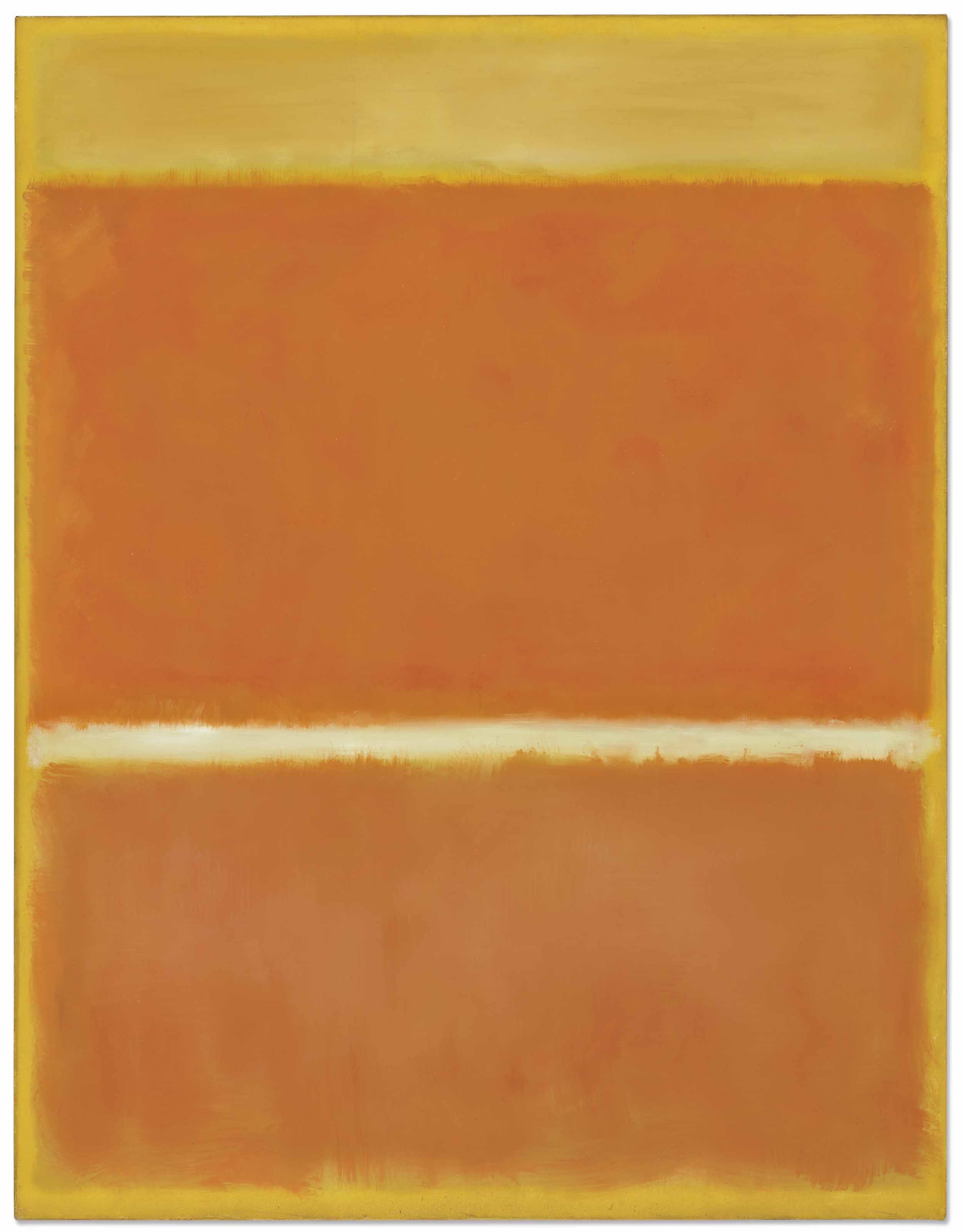
2017_NYR_14995_0006B_000(mark_rothko_saffron)
Rothko’s ‘Saffron’

Mark Rothko’s ‘Saffron’ (1957) makes an appearance in ‘Colour fragments’ and, after a vivid evocation of the original image, Powles’ response is too unremarkable in that she  imagines climbing into the painting, “and you are floating or drowning or both at the same time”. This is not original (or originally expressed) and has something of an undergraduate feel to it. That’s harsh – but what Powles has to say at the moment does not live up to the impressive technical and referential aspects of her writing. I don’t think listing ‘Some titles for my childhood memoir’ (none of them very striking, all dealt with in other poems) or ‘Faraway Love’, a re-purposing of Tate gallery notes on a piece by Agnes Martin, should have made the cut to this first book. The book Nine Arches Press presents here is quite a feast – unselfconsciously delighting in colour, taste and a strong sense of place – but it’s also too self-conscious about its nature as poetry and hence I’m left with the less pleasing taste of a poet in hiding or at least one often arrayed in other writers’ clothes.

Everything Moving: Tamar Yoseloff’s ‘The Black Place’

Last week I attended the launch of Tamar Yoseloff’s new collection, published by Seren Books. Tammy and I have known each other for a long while, are both published by Seren and, in her role at Hercules Editions, she has just published my own recent chapbook, Cargo of Limbs. So – in the small world of British poetry – I’m hardly an unconnected critic, but I have the benefit of having followed her work over the years, reviewing her most recent New and Selected, A Formula for Night (2015) here.

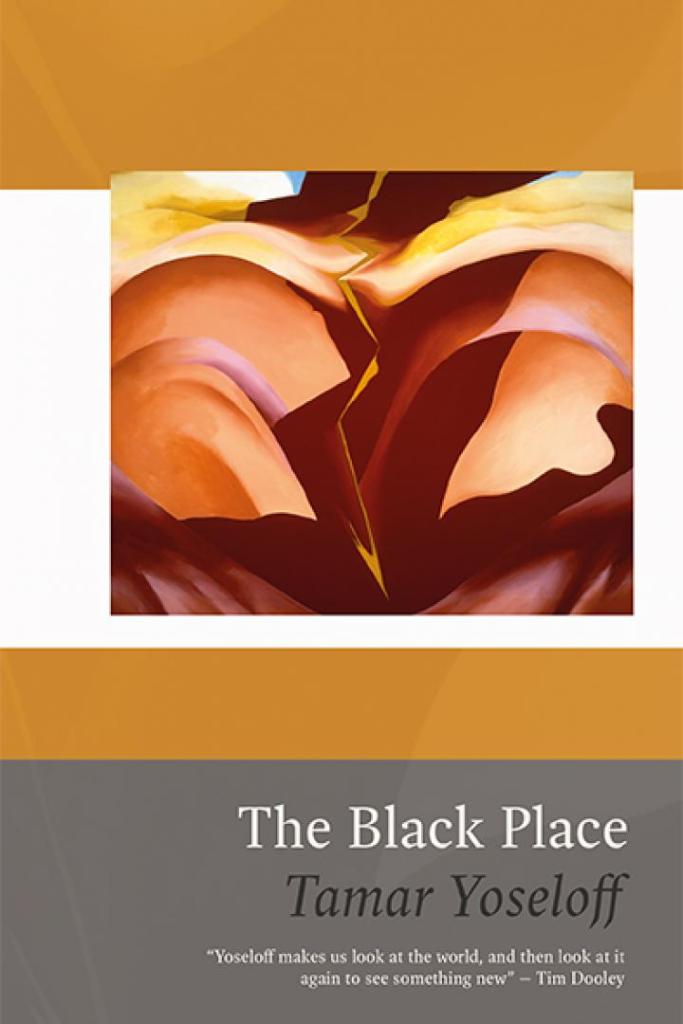
In an earlier blog post, I spoke – in rather tabloid-y terms – of the tension in Yoseloff’s poems between the “sassy and the sepulchral”. In 2007’s Fetch (Salt), there were “racy, blunt narratives” which in their exploration of female freedom, restraint and taboo made for vivid, exciting reading. The other side of her gift inclines to an “apocalyptic darkness”, a preoccupation with time, loss, the inability to hold the moment. In A Formula for Night, the poem ‘Ruin’ invented a form in which a text was gradually shot to pieces as phrases, even letters, were gradually edited out, displaying the very process of ruination. Interestingly, The Black Place develops this technique in 3 ‘redaction’ poems in which most of a text has been blacked out (cut out – see Yoko Ono later), leaving only a few telling words. A note indicates the source text in all three cases was the booklet Understanding Kidney Cancer and the author’s recent experience of illness is an important element in this new collection.

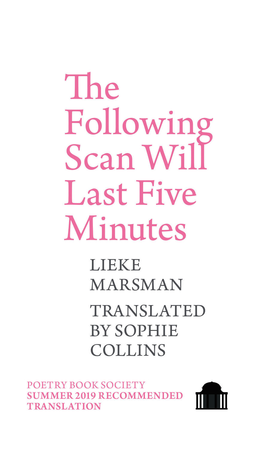
But unlike, for example, Lieke Marsman’s recent The Following Scan Will Last Five Minutes (Pavilion Poetry, 2019 – discussed here), Yoseloff’s book is not dominated by the experience of illness (and one feels this is a deliberated choice). The book opens with ‘The C Word’ which considers the phonetic parts of the word ‘cancer’, as well as its appearance: “looks like carer but isn’t”. But – within its 12 lines – Yoseloff also considers the other C word, “detonated in hate / murmured in love”. The poem is really about how an individual can contain such divergent elements, “sites of birth / and death”. So unanticipated personal experience is here being filtered through the matrix of this writer’s naturally ambivalent gift.

Illness re-emerges explicitly later in the collection, but for much of it there is a business as usual quality and I, for one, am inclined to admire this:

I refuse the confessional splurge,

the Facebook post, the hospital selfie.

I’m just another body, a statistic,

nothing special. Everyone dies –

get over yourself.

So Yoseloff gives us a marvellous send-up of Edward Thomas’ ‘Adlestrop’ in ‘Sheeple’, a central place on the darker side of Yoseloff-country: “The heartland. Lower Slaughter”. There is urbanite humour in ‘Holiday Cottage’ with its “stygian kitchen”, bad weather, boredom and kitsch:

We stare at the knock-off Hay Wain

hung crooked over the hearth

and dream of England: the shire bells,

the box set, the M&S biscuit tin

‘The Wayfarer’ is one of many ekphrastic poems here – this one based on a Bosch painting – but the “sunless land” is patently an England on which “God looked down / and spat”. These are poems written in the last 3 years or so and, inevitably, Brexit impinges, most obviously in ‘Islanders’ (“We put seas between ourselves, / we won’t be rescued”) but the cityscape equally offers little in the way of hope. There is a caricaturing quality to the life lived there: everything “pixilates, disneyfies” (‘Emoji’) and gender relationships seem warped by inequitable power, by self-destructive urges and illness: “I’d super-shrink my dimensions, / wasting is a form of perfection” (‘Walk All Over Me’).

Perhaps ‘Girl’ shows us the figure of a survivor in such a hostile environment, her energy reflecting those female figures in Fetch – “a slip, a trick, a single polka dot” – but the darkness seems thicker now, the lack of lyricism, the impossibility of a happy ending more resolved:

She’s good for nothing because nothing’s

good: sirens drown out violins

and crows swoop to carnage in the street.

As the blurb says, the book boldly eschews the sentimental sop, the capitalist hype, for truths that are hard, not to say brutal. ‘Little Black Dress’ takes both the archetypal ‘girl’ and the author herself from teen years to widowhood in a dizzyingly rapid sonnet-length poem:

drunk and disorderly, dropping off bar stools one

by one, until the time arrives for widow’s weeds

and weeping veils, Ray-Bans darkening the sun.

And it is – unsurprisingly – mortality (the sepulchral) that eventually comes to the fore. A notable absence is the author’s mother, who has often been a powerful presence in previous books. Here she re-appears briefly in ‘Jade’. The stone is reputed to be efficacious in curing ailments of the kidneys and a jade necklace inherited from Yoseloff’s mother leads her to wonder about the inheritance of disease too: “a slow / release in her body, passed down, // down”. Both parents put in a fleeting appearance in the powerful sequence ‘Darklight’, the third part of which opens with the narrator standing in a pool of streetlight, “holding the dark / at bay”. She supposes, rather hopelessly, that “this must be what it’s like to have a god”. Not an option available to her; the dark holds monsters both within and without and not just for the child:

                                                Back then

my parents would sing me to sleep;

now they’re ash and bone. Our lives are brief

like the banks of candles in cathedrals,

each a flame for someone loved;

It’s these thoughts that further the careful structuring of this collection and return it to the experience of a life-threatening illness. ‘Nephritic Sonnet’ is an interrupted or cut off – 13 line – sonnet that takes us to the hospital ward, the I.V. tubes and – as she once said of the city – the poet finds “no poetry in the hospital gown”. Except, of course, that’s exactly what we get. The determination or need to write about even the bleakest of experiences is the defiant light being held up. Yoseloff does not rage; her style is quieter and involves a steady, undeceived gaze and also – in the sequence ‘Cuts’ – the powerful sense that (as quoted above) “I’m just another body, a statistic, / nothing special. Everyone dies”.

It’s this sense of being “nothing special” that enables ‘Cuts’ dispassionately to record very personal experiences of hospital procedures alongside the contemporaneous facts of the Grenfell Tower fire and (another ekphrastic element) a 1960s performance piece by Yoko Ono called ‘Cut Piece’. These elements are ‘leaned’ against each other in a series of 13 dismembered sonnets, each broken up into sections of 6/3/4/1 lines. The fragmentary, diaristic style works well though there are risks in equating personal illness with the catastrophic accident and vital political questions surrounding Grenfell. Ono’s performance piece offers a further example of victimhood, one more chosen and controllable perhaps. What’s impressive is how Yoseloff avoids the magnetic pull of the ego, displaying – if anything – a salutary empathy for others in the midst of her own fears.

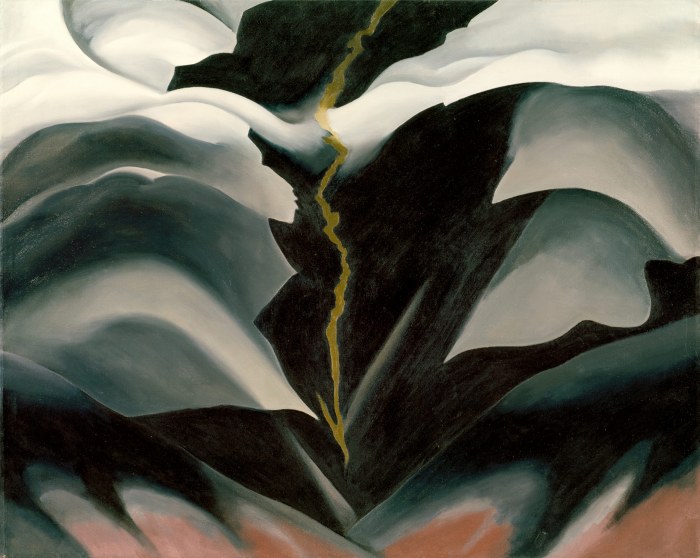
The book is titled after a Georgia O’Keefe picture, reproduced on the cover. O’Keefe’s steady gaze into the darkness created by the jagged relief of the Navajo country is something to which Yoseloff aspires, though it “chills me / just to think it into being”. It is the ultimate reality – a nothing, le néant – though like the ultimate presence of other writers (Yves Bonnefoy’s le presence, for example), can at best only be gestured towards:

We’ll never find it; as soon as we arrive,

the distance shifts to somewhere else,

we remain in foreground, everything moving

around us, even when we’re still.

Along such a difficult path, Yoseloff insists, O’Keefe’s art found “the bellow in a skull, / the swagger in a flower”. And, even in the most frightening brush with her own mortality, the poet will follow and does so in a way that is consistent with her own nature and work over many years.

A Robert Frost Primer or ‘All Life is Cellular’

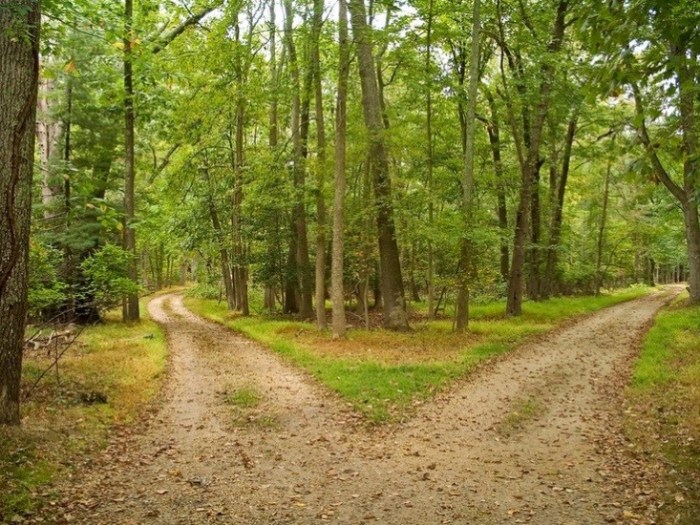
A few weeks back, I was asked to contribute to an afternoon event in Palmers Green Library, north London, with the title – from Robert Frost’s poem – ‘The Road Not Taken’. It was introduced by Maggie Butt, with readings of their own poetry around the theme by Mark Holihan and Denise Saul. I was also asked to deliver a few thoughts on the work of Robert Frost. What follows is an edited transcript of what I said then and I think of it as a basic introduction for the general reader to Frost’s work and some of the ideas which I see recurring in it. As previous posts have mentioned, I’ve been teaching Frost for a few years recently – thanks to all those students who made me go back and read the poems again!

Despite the apparent simplicity of many of his poems, the real identity of Robert Frost (1874-1963) is hard to pin down. Though raised in late 19th century America, his first book was published in England. Though on the brink of the Modern, a year before the First World War, these poems used plain language and traditional forms. He loved Europe, befriending Edward Thomas – stirring him from prose into poetry – yet Frost sailed back to the US, to farming, north of Boston. By all accounts he was never a very successful farmer, though he often presented himself as talking downright farmer-like common sense. Some find his work consolatory; but he was famously called a ‘terrifying’ poet, a bleak Modernist.

If all this sounds slippery, then Frost took it into his poetics too. He said that, while writing a poem, he was conscious of saying two things at once. But he always wanted to say the first thing so well that any reader who liked that part of the poem might feel able to rest there. Yet, he implies, for those interested in going further, beyond the particular, overt or explicit meaning – say, two farmers re-building a wall between their properties, a man stopping to watch snow fall in a wood, a mower and a butterfly – there is always an ulterior meaning (at least one) that might also be opened up.

At all levels, such defining walls, barriers and boundaries – physical, mental, spiritual – proliferate in Frost’s work. But his view of them is complex. These walls are often porous. But sometimes they can seem impenetrable. I can’t vouch for the accuracy of his biological knowledge, but here is something else Frost repeatedly jotted down in his Notebooks: “All life is cellular. No living particle of matter however small has yet been found without a skin – without a wall.”

On one side, these secure boundaries seem necessary for a successful life – like the wall round all cellular organisms. He would say: “I want to be a person. And I want you to be a person”. But the dangers are obvious. The cellular wall of identity becomes more than a means of self-definition and grows to become an exclusion zone, a solitary place, a state of solipsism. Many of Frost’s figures and narrators are found to be struggling with this state. Yet Frost’s comments about identity, wanting to be a person, wanting you to be a person, in fact continue: “then we can be as interpersonal as you please. We can pull each other’s noses – do all sorts of things”.

So the presence of these cellular walls do not necessarily hold us back. They are as often porous or permeable. Yet they seem also to offer a firm foundation from which we may reach out, we can humanly interact. We can pull each other’s noses. And there is indeed much pulling of noses in Frost’s poems. In particular, he liked to pull the nose of the person he chose to narrate many of his poems. There is very often an irony at work against the speaker. His poems are often more dramatic than lyric.

We might ask why is Frost so concerned about being a person, about the relative security of identity? Because, in other moods, he knows the dangers posed by the absence of any functioning cellular membrane: the leaking out of personality into the surrounding world, of identity dissipating to become nothing, the risk – as it were – of personal extinction.

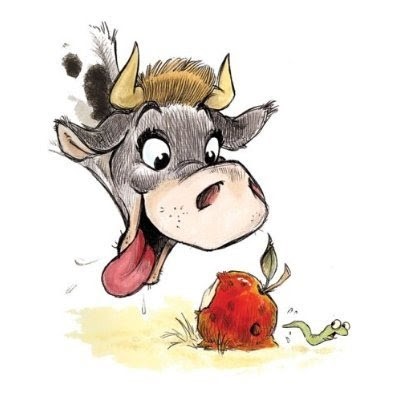
There is a little poem called ‘The Cow in Apple Time’ which (on the face of it) is about a cow who is driven by an unspecified desire to disregard the walls about her pasture. The wall is no more than an open gate to her. She charges through and greedily eats fallen apples, growing intoxicated, her face splattered with apple juice. But in this kind of gluttonous state she grows sick, in pain:

She bellows on a knoll against the sky.

Her udder shrivels and the milk goes dry.

It’s a perfectly satisfying poem about a rural incident – perhaps Farmer Frost, had once witnessed it himself. But there is Frost’s ulteriority too. The cow is consistently described using terms which anthropomorphise her. The wall breaker is perhaps on one level really human, a rebel, a sinner – written in 1914, some have even suggested the cow is an invasive force. However we see her, she is punished for her disregard of, her undervaluing of, those walls and boundaries which perhaps ought to serve to define her life.

Remember this is the same Robert Frost who disparaged the writing of free verse, by many of his more obviously Modernist contemporaries, as trying to play tennis with the net down. The same Robert Frost who disparaged the, then fashionable, interest in Surrealism with its wild leaps over convention, its dislocation of the senses, the shock value of the illogical. For Frost such practices could lead only “to undirected associations and kicking ourselves from one chance suggestion to another in all directions as of a hot afternoon in the life of a grasshopper”.

The cow with the aching stomach is paralleled by a dying peach tree in ‘There Are Roughly Zones’. The narrator has moved “far north” and has transplanted a peach tree and now the northern winter is threatening it. He sits indoors and frets about it, trying to blame the weather rather than himself. But self-criticism arises all the same and it is human “ambition” that gets the blame, that “limitless trait in the hearts of men”. More precisely:

[. . .] though there is no fixed line between right and wrong,

There are roughly zones whose laws must be obeyed.

I love the messy pragmatism implied by “roughly zones”. One of his recurring concerns, Frost said, was with “the impossibility of drawing sharp lines and making exact distinctions” – no red lines, lines in the sand, defined boundaries, but zones of negotiation, places calling for compromise, no fundamental clarity, rather a feeling-out, a region requiring a dialogue.

As in a poem like ‘The Tuft of Flowers’. A man comes to a mown field to turn the cut grass, the hay, to help its drying. He looks about for the man who had earlier mowed the grass:

But he had gone his way, the grass all mown,

And I must be, as he had been, – alone,

‘As all must be,’ I said within my heart

The hermetically cellular, or as we would now say, atomised nature of society seems to be assumed by the narrator. It looks like there is going to be no breaking of boundaries here. But a “[be]wildered” butterfly passes him, looking for flowers that grew there yesterday, now cut down. The butterfly leads him to a “leaping tongue of bloom” left deliberately, out of “sheer morning gladness” by the mower. The narrator hears the message from this “tongue of bloom” which speaks of each man as a “spirit kindred” to the other. It’s as if they now enter into a dialogue, revising the earlier solipsistic observation. Now:

‘Men work together,’ I told him from the heart,

‘Whether they work together or apart.’

There is a rosy-edged hint of sentimentality here perhaps. But the fanciful dialogue between the two men (who actually never meet) represents a successful negotiation into that rough zone between individuals, the cellular membrane is actually permeable, and the result here is consolatory.

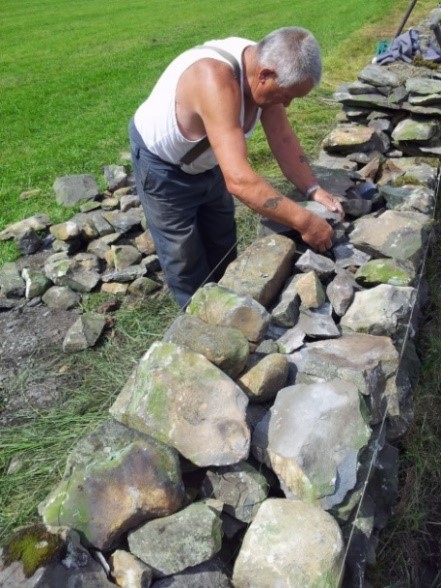
In ‘Mending Wall’, two farmers meet to patrol on either side of a dry-stone wall marking the boundary between their farms. Parts of it are always falling down. They build it back up. But the paradox is that the action of building up what separates them, brings them together each year to perform the task. The wall does not prevent or act as a brake on their relationship – rather it facilitates it – it perhaps is their relationship, what links them. From their respective sides – from their respective identities or persons – they are free to become ‘interpersonal’. But the mischievous, sceptical, modern-minded narrator expresses doubts about the importance of walls, particularly when “He is all pine and I am apple orchard”. His neighbour is a more traditional, unquestioning man, who likes to repeat his father’s advice: “Good fences make good neighbours”. The narrator mocks him (though in silence, in his head) as “an old-stone savage”, lost in actual and intellectual “darkness”. But it is significant that the wall-believer has the last word. For me, it is the moderniser is the one being ironised. If he was a versifier, he’d be trying to write poems with the net down.

Why Frost’s concern with the importance of walls? Because – in still other moods – he has looked into the abyss of experience without them. One example is given in the 16 terrifying lines of ‘Desert Places’. The narrator here seems to have taken the more modern, sceptical wall-mender’s view to heart. It seems there are no bounds here – all have vanished under “Snow falling and night falling fast oh fast”. That note of fear there adds to the nightmare feeling and when the outward-looking eye turns to look within – to find himself – he finds nothing: “I am too absent-spirited to count”. That phrase is an echo of ‘absent-minded’. There is a vacancy within and without – no mind, spirit, self, identity. There is only the concluding, devastating rhymes of “empty spaces . . . where no human race is . . . my own desert places”.  

And if ‘Desert Places’ evokes the desolation of a world viewed in the absence of a relatively secure cell-walled self, then ‘The Most of It’ shows us the horrifying effects of being walled in. In this poem, the narrator “thought he kept the universe alone”. There seems nothing else but him, only a “mocking echo of his own [voice]”. Yet he does remotely feel a desire for dialogue – perhaps just in being human – and does express a desire not for “copy speech. / But counter-love, original response”. But when the universe does eventually break into his consciousness, it arrives not in the form of dialogue or a negotiated relationship but as an utterly alien thing.

It emerges only as a strange, vague “embodiment” that “crashed” and “splashed” towards him and is recognised only by means of a simile. Perhaps it is an elk.

As a great buck it powerfully appeared,

Pushing the crumpled water up ahead,

And landed pouring like a waterfall,

And stumbled through the rocks with horny tread,

And forced the underbrush—and that was all.

There, Frost captures the egoist’s struggle to comprehend what is other than him; followed by the arrogance of his dismissal of it. And perhaps this is a particularly masculine thing. Yet there is no need to attribute these feelings to Frost himself. The speaker is best read as a dramatic representation of one extreme of Frost’s concern for borders and boundaries that are vital for our own selfhood yet must be porous enough to allow for knowledge and experience.

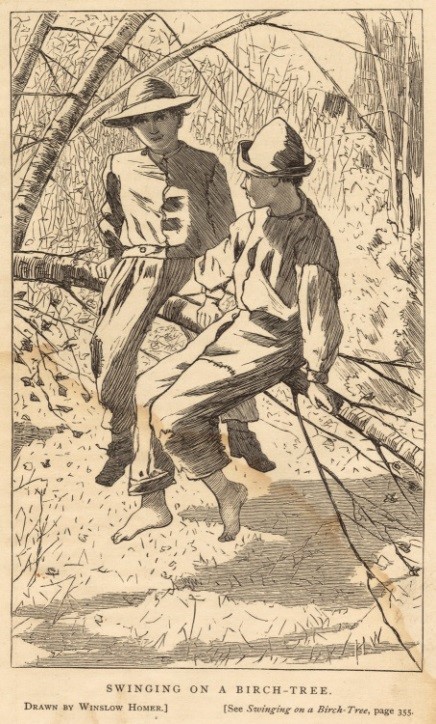
So in ‘Birches’ the narrator remembers – as a boy – climbing slender birch trees, to the top, only to leap out and bend them down with his weight. This swinging of birches can be seen – ulteriorly – as representing Frost’s belief in those negotiated rough zones of a life. We climb up, out of our element, but not too far:

It’s when I’m weary of considerations,
And life is too much like a pathless wood
Where your face burns and tickles with the cobwebs                                   
Broken across it, and one eye is weeping
From a twig’s having lashed across it open.
I’d like to get away from earth awhile
And then come back to it and begin over.
May no fate wilfully misunderstand me                                                              
And half grant what I wish and snatch me away
Not to return. Earth’s the right place for love:
I don’t know where it’s likely to go better.

And if we find this frustratingly ambivalent – Frost sitting carefully on the fence – then he often rubs our noses in it. ‘Stopping by Woods on a Snowy Evening’ famously concludes with two lines which are identical. For me, the repetition introduces greater ambiguity into the moment. Does the narrator stop, perhaps to die, entranced by the snowfall? Or does he shake himself up, turn back to his life in the village, his roles and responsibilities?

Whose woods these are I think I know.
His house is in the village, though; 
He will not see me stopping here
To watch his woods fill up with snow.

My little horse must think it queer                                           
To stop without a farmhouse near
Between the woods and frozen lake
The darkest evening of the year.

He gives his harness bells a shake
To ask if there is some mistake.                                                
The only other sound’s the sweep
Of easy wind and downy flake.

The woods are lovely, dark, and deep,
But I have promises to keep,
And miles to go before I sleep,                                                    
And miles to go before I sleep. 

Frost throws the question back to the reader. What Frost knows is that we do not keep the universe alone. We are parts of a whole – but the borderlands are uncertain – sometimes we cross them and lose touch with ourselves, at other times we too easily accept them and fall into egotistical isolation. There maybe be a happy medium – but Frost’s dynamic poems suggest the truth is we can never find and hold to that; we are always involved in the complicated fraught business of negotiation, of swinging birches, of chasing butterflies, of building walls that will promptly fall down again.

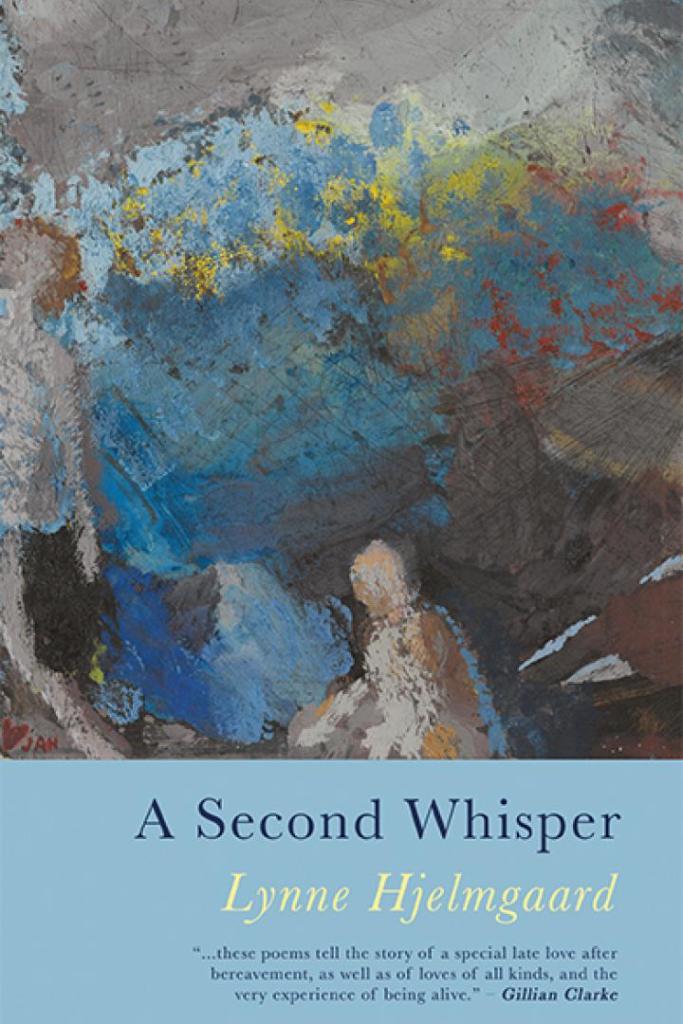
A Thief in the House: London Launch of Hjelmgaard’s ‘A Second Whisper’

Last night I was at the Poetry Café in Covent Garden for the launch of two new collections from Seren Books. Lynne Hjelmgaard was reading from A Second Whisper and Mary J. Oliver was launching her debut collection, Jim Neat: the Case of a Young Man Down on His Luck. Oliver’s book is a curious, thought-provoking mix of family research and prose/poetic fictions. But I’ve known Hjelmgaard for a few years now as a workshop colleague and as a friend of Dannie Abse and I wanted to gather some thoughts here on her new poems.

In her playfully titled poem, ‘Ode to a Danish Lamp’, Lynne Hjelmgaard constructs a paean to a piece of electrical equipment which ends rhetorically, “Why do you move me so?” Some clues to the answer are scattered through the poem; they lie in comparisons. The lamp is an example of “Nordic metallic cool”, beside which the speaker – “a mere human” – feels humbled. She and the rest of the room, we are told, arrange themselves about the lamp which hence serves as a focal point and even a source of “answers”. It’s as if the lamp is wired up to a clearer, less divided, perhaps purer world:

[. . . ] the charged interior, a territory,

where no country nationality race

or religion has any significance.

In contrast, the human figure is more embedded in a world of time, place and quotidian specificity while the lamp emerges with its “fine, oh so thin aluminium rim” as a denizen of a less troubled realm. The speaker is moved because excluded from such a realm and the majority of the poems in A Second Whisper focus precisely on our more compromised, familiar world, particularly the ‘merely human’ experiences of time, memory and loss.

Without being a particularly philosophical poet, Hjelmgaard writes as someone who is an “expert at loss”. Another less typical poem describes – in great detail – Brooklyn Bridge and the area around it (the poet was born in New York City). She remembers sailing out under the bridge:

Manhattan is a chain with many links,

some are broken, lost and never repair,

but others can be retrieved even at a distance.

For what can shine so brightly at sea

but a city, once loved, left behind?

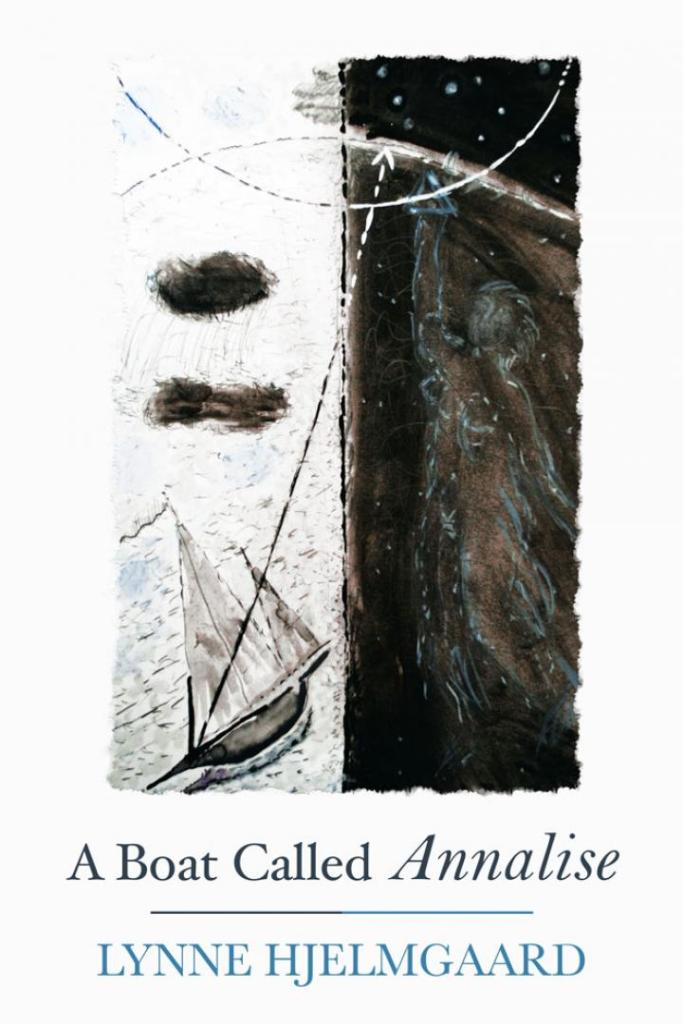
Hjelmgaard’s focus on links lost or remembered is probably hard-wired into her constitution (these thematic roots usually are) but it has also been provoked by biographical influences. Her 2011 book, The Ring (Shearsman Books) was dedicated to the memory of her Danish husband, Stig – who died in 2006 – and followed an American woman’s travels around Europe, mourning and negotiating that loss. Dannie Abse, among others, praised those poems: “Widowhood allows them to acquire a poignant universality”. Five years later, A Boat Called ‘Annalise’ (Seren Books), was full of more poems of remembrance, evoking the sea journey the newly married couple made out of New York to Europe, via the Caribbean.

There are further poems written to and about her husband in this new book. In ‘As We Silently Agree’, the husband appears to the widow, “in some kind of afterlife”, and is seen busying with a boat’s anchor chain, searching the ship’s log and weather charts. This is perhaps a dream poem:

Our fingers clasp in recognition

as we silently agree:

what does it matter now

if you don’t keep the course?

And ‘Scorpion Hill’ may be another example of dreamwork, the wife this time revisiting a once-shared house in the Caribbean. Its final image is of many moths clustering round “a single light bulb / left on during the night”. These are fine poems of time and sustaining memory – that bulb still burning – in which the past and those lost within it are shown to revisit the survivor.

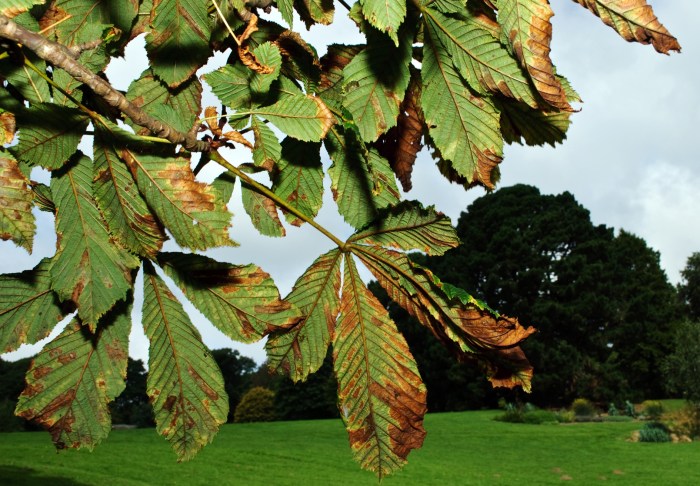
Hjelmgaard’s treatment of this traditional theme is neither religious nor consolatory in any facile way. The pain of great loss is heartfelt and yet she manages to persuade the reader – it’s less intellectual than that, maybe she draws her readers in to the actual experience – that what lies in the past still retains is power to evoke pleasure and even that the future’s gifts are to be welcomed, even anticipated. In ‘To a Chestnut Tree’, addressing the tree in its autumnal state, the narrator is sure, “There will always be another one. / And another. // Loss can be moved through like a room”. What a magnificent line that last one is. There is a wisdom in it, however modestly it may be presented.

Time takes – but time also provides. Another poem of trees has a fir leaning eventually into a “beloved palm” – though it may take a century or two of slow growth. A lonely tamarisk on a cliff top also has the capacity to “wait until it can drink / from the bay eighty feet below”. Hjelmgaard finds her themes in the smallest incidents. Unpacking a suitcase after a journey, she finds she has brought two extra items home with her. One is a fossil of a snail which seems to represent a determined persistence through time (60 million years perhaps, in this case). The other – a flighty stowaway – is a spider which she finds “already busy / making yourself at home”. The spider evokes an improvisatory optimism, an adaptability, even an adventurousness, which I see as some of the most distinctive elements in the themes of Hjelmgaard’s work.

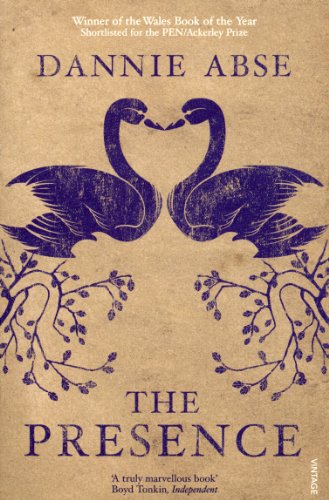
It’s these qualities to which Gillian Clarke is responding in her comment on A Second Whisper, where she finds in the book “the story of a special late love after bereavement”. In recent years, the British poet who has written most powerfully and movingly about bereavement and the encroachment of the past into the present is Dannie Abse. This is from his poem ‘The Presence’ about the loss of his wife, Joan:

It’s when I’m most myself, most alone

with all the clamour of my senses dumb,

then, in the confusion of Time’s deletion

by Eternity, I welcome you and you return

improbably close, though of course you cannot come.

The opening 14 poems of A Second Whisper explore the loving relationship that sprung up between Hjelmgaard and Dannie Abse after the deaths of Stig and Joan. Her opening prose piece takes us directly into everyday details. The two bereaved poets meet: “And for a time it was the four of us. Though one day, without ceremony, we noted their absence”. Thus set free, the ones still living proceed, though along no clear path, “wherever poetry and Eros chose to take [them]”

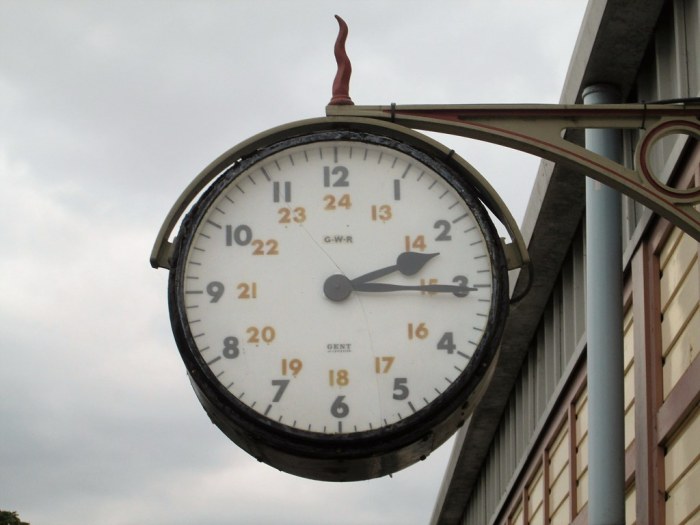
Even at their first meeting – on a train journey back from the Torbay Poetry Festival – the presence and absence of time was notable. Minutes were not to be wasted in the presence of the older poet, says the younger narrator. But mysteriously – this is in late October – the waitress at the station café is seen taking away the clock to change the hour. A photograph of the two poets at a reading shows the younger woman “less sure of herself”, while Abse is more comfortable with the attention. But at 85 years old, Abse begins appearing in these poems as more and more in decline. “Aged and dying you grew more tender”, as ‘A Second Whisper’ puts it. In this poem – as in several others – Hjelmgaard is visiting Abse at home.

I knew just how to open your front door quietly.

Its lock a whisper, a second whisper to shut.

This image – absolutely precise in its remembrance, yet also powerfully suggestive – is like the earlier line about walking through loss as through a room. The first whisper has a respectfulness, concerned with quietude, with the sensitivity of the artist, the closeness of death. The second whisper is full of ambivalence: protective perhaps from the noisy, nosey world, wanting to secure the intimacy, wanting to defend the loved one from the inevitable, yet a foreshadowing of that very inevitability.

‘A Thief Is in the House’ has death portrayed as an invader, breathing heavily, thumping up the stairs to the dying figure whose “eyes [are] prepared // for nothingness”. But these poems are not overwhelmed by grief. As if taking a leaf out of Abse’s own poems of mourning and remembrance, Hjelmgaard’s predominant tone is one of recall and revisiting – even of re-visitation. Walking alone on Hampstead Heath, she hears the lost lover chanting a Lorca poem; because one day they sheltered under an awning on Golders Green Road, every time it rains now, “the rain /stops everything / to think of you”. And in an exquisite lyric, ‘Speak to me Again at Dusk’, Hjelmgaard yearns to resume her conversations with the dead poet, yet her tone – which might have been one of pleading and despair – in fact retains a clear appreciation of the lasting value of what has been and a pleasured openness to the present (hear those noisy roosters in a moment!). Such deep-grained attitudes seem to have been a mutual common ground between these two writers and perhaps was one of the constitutive elements in their late-flowering love:

These lines among many lines

are words just for you

and the roosters that speak them

just before dawn.